



Heroes of the Air: Major Lionel Rees
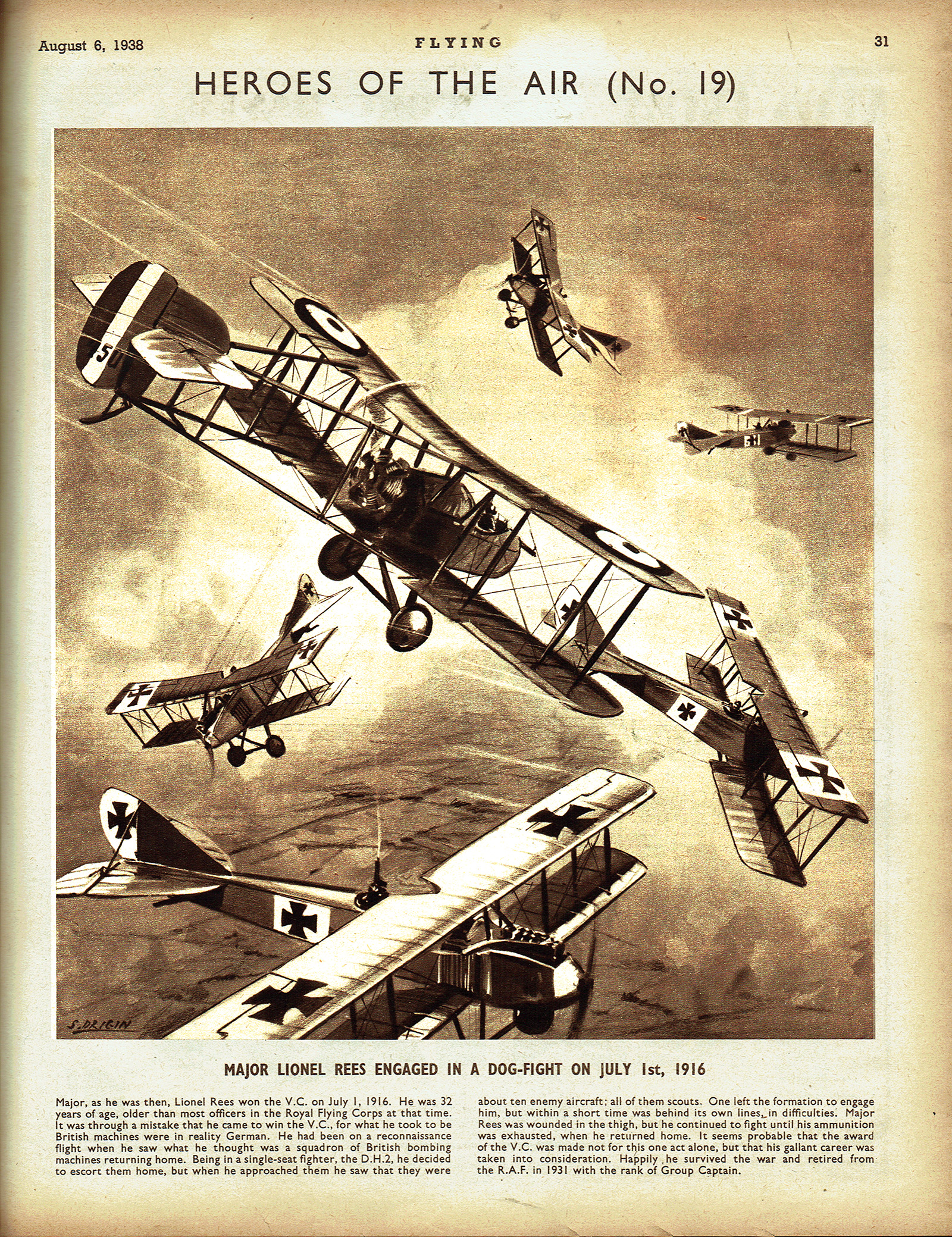
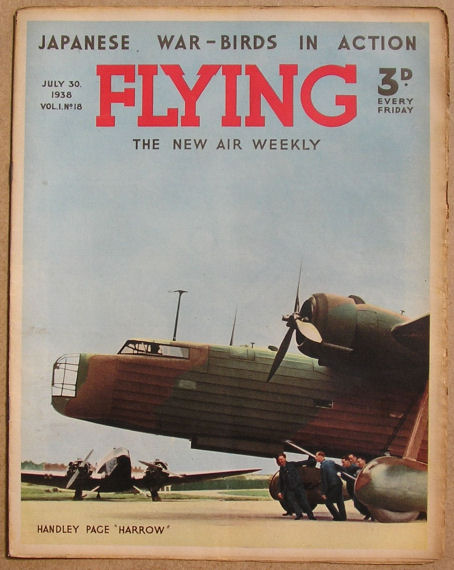
WHEN Flying, the new 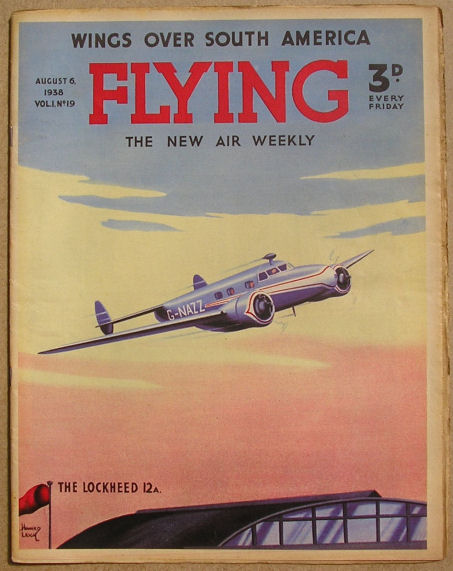 weekly paper of all things aviation, started up in England in 1938, amongst the articles and stories and photo features was an illustrative feature called “Heroes of the Air.” It was a full page illustration by S. Drigin of the events surrounding how the pictured Ace got their Victoria Cross along with a brief explanatory note.
Russian born Serge Drigin became a successful illustrator in the UK in the 1920s with his work regularly appearing in such British magazines as The Detective Magazine, Modern Boy and Chums. He is probably best known for his startling covers for Scoops, Air Stories, War Stories, Fantasy and others in the 30s.
From the 6 August 1938 issue of Flying:
MAJOR LIONEL REES ENGAGED IN A DOG-FIGHT ON JULY 1st, 1916
MAJOR, as he was then, Lionel Rees won the V.C. on July 1, 1916. He was 32 years of age, older than most officers in the Royal Flying Corps at that time. It was through a mistake that he came to win the V.C., for what he took to be British machines were in reality German. He had been on a reconnaissance flight when he saw what he thought was a squadron of British bombing machines returning home. Being in a single-seat fighter, the D.H.2, he decided to escort them home, but when he approached them he saw that they were about ten enemy aircraft; all of them scouts. One left the formation to engage him, but within a short time was behind its own lines in difficulties. Major Rees was wounded in the thigh, but he continued to fight until his ammunition was exhausted, when he returned home. It seems probable that the award of the V.C. was made not for this one act alone, but that his gallant career was taken into consideration. Happily, he survived the war and retired from the R.A.F. in 1931 with the rank of Group Captain.
 weekly paper of all things aviation, started up in England in 1938, amongst the articles and stories and photo features was an illustrative feature called “Heroes of the Air.” It was a full page illustration by S. Drigin of the events surrounding how the pictured Ace got their Victoria Cross along with a brief explanatory note.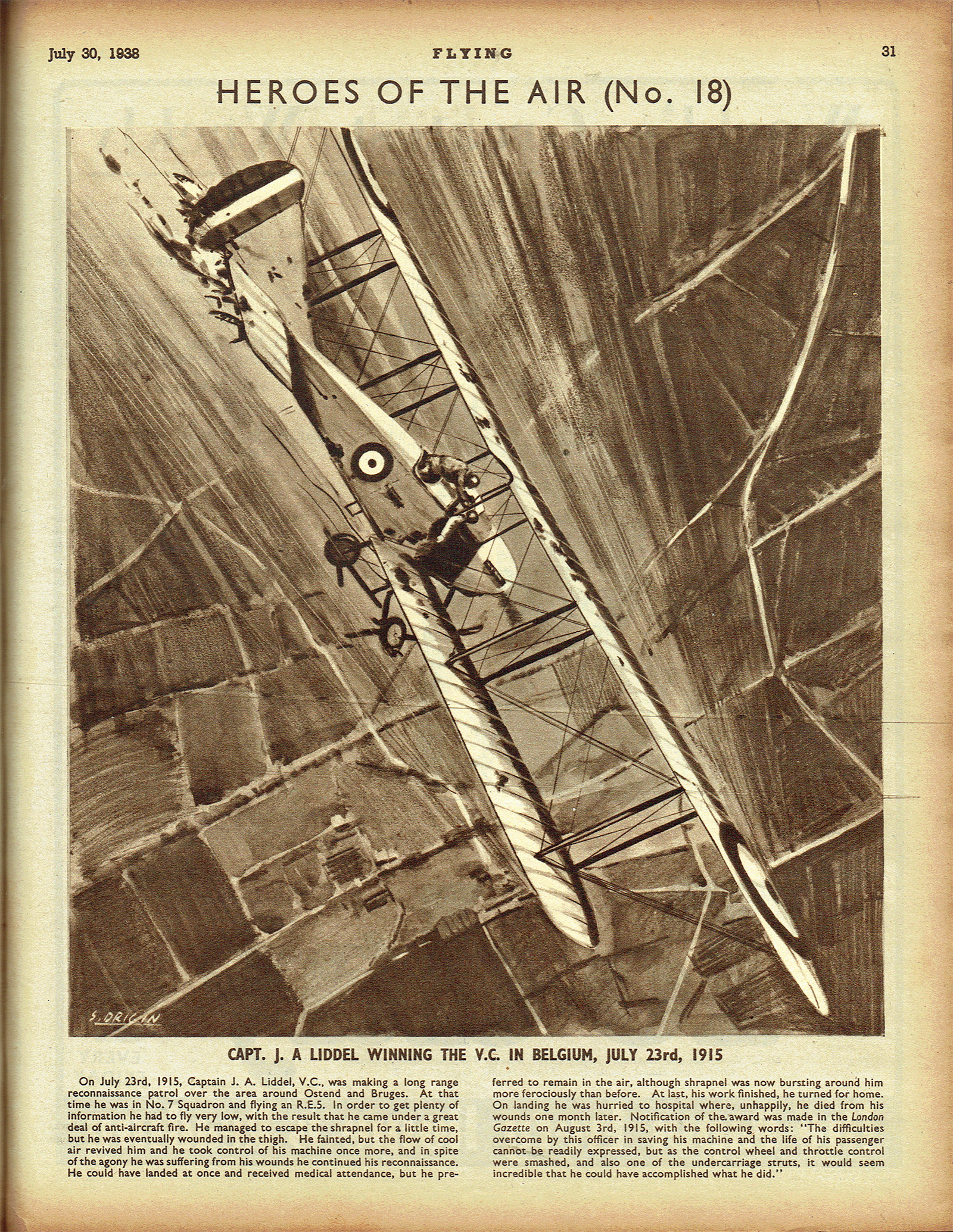
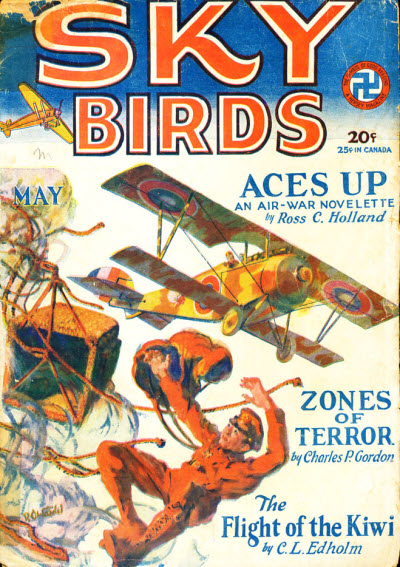 another story from one of the new flight of authors on the site this year—Andrew A. Caffrey. Caffrey, who was in the American Air Service in France during The Great War and worked for the air mail service upon his return, was a prolific author of aviation and adventure stories for both the pulps and slicks from the 1920’s through 1950. Here Caffrey tells the tale of Loop Murry, stunt flier for the movies who learns there’s sometime more to a man than meets the eye. From the May 1929 number of Sky Birds, it’s Andrew A. Caffrey’s “The Vanishing Ace!”
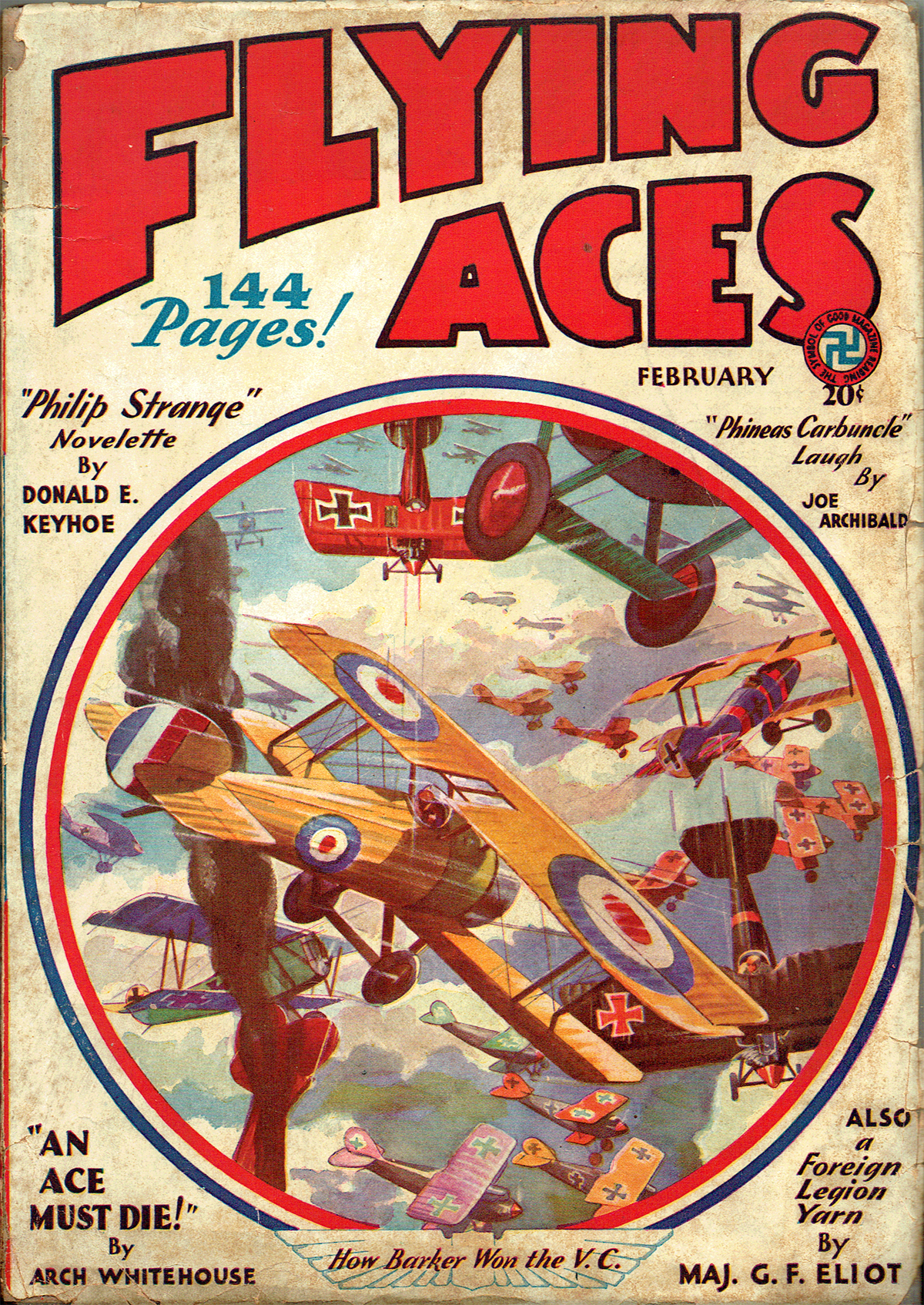 That sound can only mean one thing—that Bachelor of Artifice, Knight of Calamity and an alumnus of Doctor Merlin’s Camelot College for Conjurors is back to vex not only the Germans, but the Americans—the Ninth Pursuit Squadron in particular—as well. Yes it’s the marvel from Boonetown, Iowa himself—Lieutenant Phineas Pinkham!
 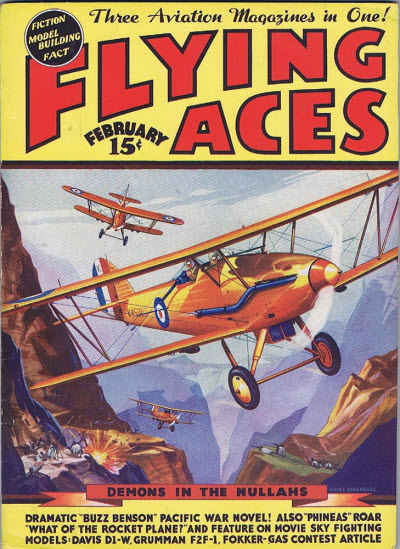 a story by Orlando Rigoni. Rigoni was a very prolific author of western and flying stories appearing in such magazines as Battle Birds, Dare-Devil Aces, Sky Birds, War Birds, Fighting Aces, Sky Fighters, Western Aces, Real Western Round-Up, Thrilling Sports, Air Trails, Western Romances, The Lone Eagle and Flying Acesamong others from roughly 1934 to 1948. He went on to have his stories appear in the slicks; wrote radio and movie scripts; write numerous western novels; and gothic romance novels using the pseudonym “Leslie Aimes.”
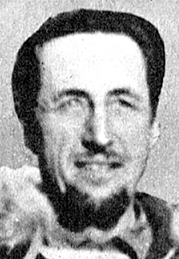 ORLANDO RIGONI, author of “I Want to Know Why” in this issue, appears at the left in a photograph taken in the Yukon last winter while he was working on the Alcan Highway, which, as you doubtless know, is the new road through Canada connecting the United States and Alaska. He is a writer by trade and was working on the road to get material for a novel for young people.
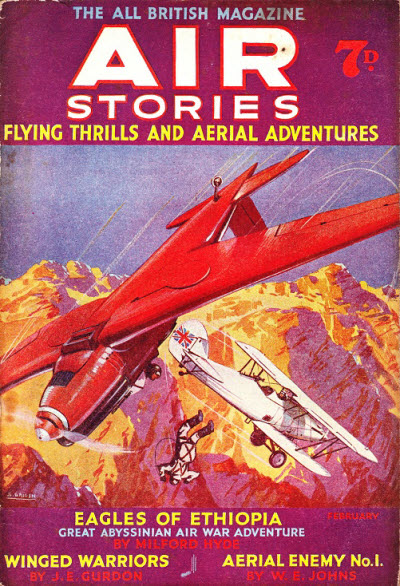 a story from the pen of British Ace,
  exciting air adventure with Rusty Wade from the pen of Frank Richardson Pierce. Pierce is probably best remembered for his prolific career in the Western Pulps. Writing under his own name as well as two pen names—Erle Stanly Pierce and Seth Ranger. Pierce’s career spanned fifty years and produced over 1,500 short stories, with over a thousand of these appearing in the pages of Argosy and the Saturday Evening Post.
 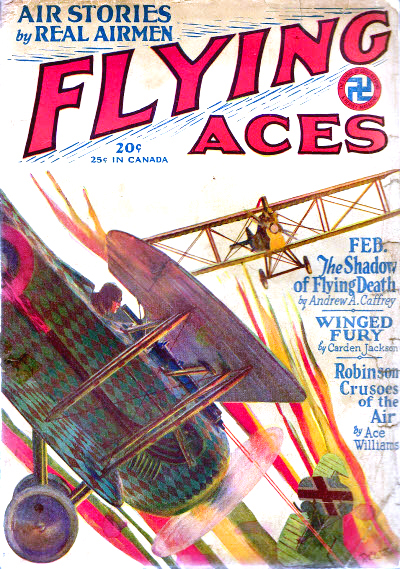 another story by Franklin M. Ritchie. Ritchie only wrote aviation yarns and his entire output—roughly three dozen stories—was between 1927 and 1930. Today we have another one from the lawyer who wrote pulp stories on the side to satisfy his yen for flying. From an early issue of Flying Aces, Ritchie gives us a tale of bomber Jim Barker who longed to show everyone that even a bombing pilot can get Germany’s most ruthless Ace, by any means necessary! From the February 1929 issue of Flying Aces, it’s Franklin M. Ritchie’s “Say It With Bombs!”
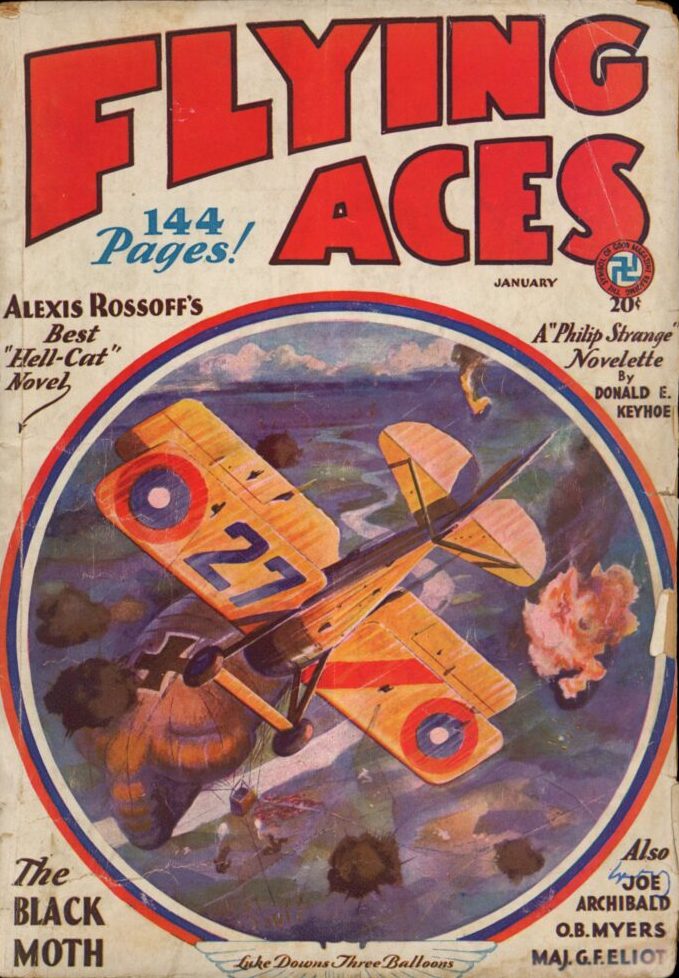 That sound can only mean one thing—that Bachelor of Artifice, Knight of Calamity and an alumnus of Doctor Merlin’s Camelot College for Conjurors is back to vex not only the Germans, but the Americans—the Ninth Pursuit Squadron in particular—as well. Yes it’s the marvel from Boonetown, Iowa himself—Lieutenant Phineas Pinkham!
 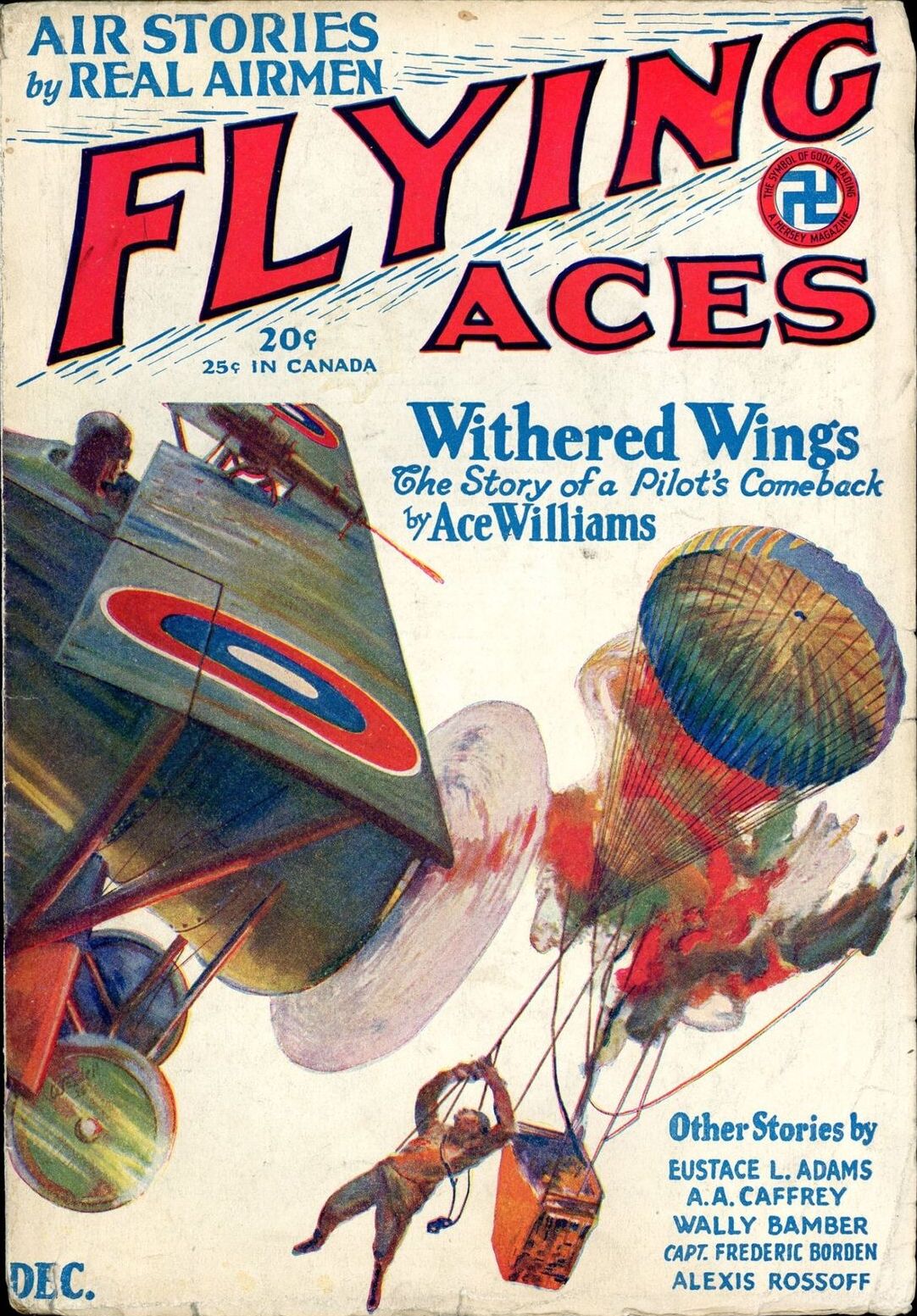 another story from one of the new flight of authors on the site this year—Andrew A. Caffrey. Caffrey, who was in the American Air Service in France during The Great War and worked for the air mail service upon his return, was a prolific author of aviation and adventure stories for both the pulps and slicks from the 1920’s through 1950. Here Caffrey tells the tale of Lieutenant Harry Pond.
 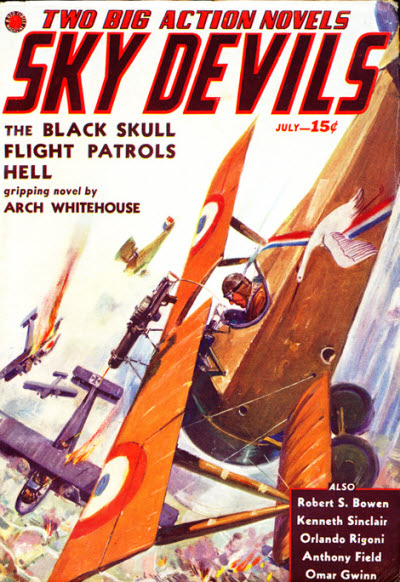 a story by Kenneth Sinclair. Born in 1910, Sinclair had a lengthy run in the pulps. Writing mainly aviation and western stories, his first was in 1932 and his last in 1956. He also published a couple boys adventure novels in the ’50’s where the back covers state Sinclair is a mechanical engineer as well as writer. He died in 1980. “Spandau Salute” finds Terry Ralton going down behind enemy lines convinced that his plane had been tampered with back at the field. If he could just get his hands on that Hawley… And there he was at the German drome he finds himself at!
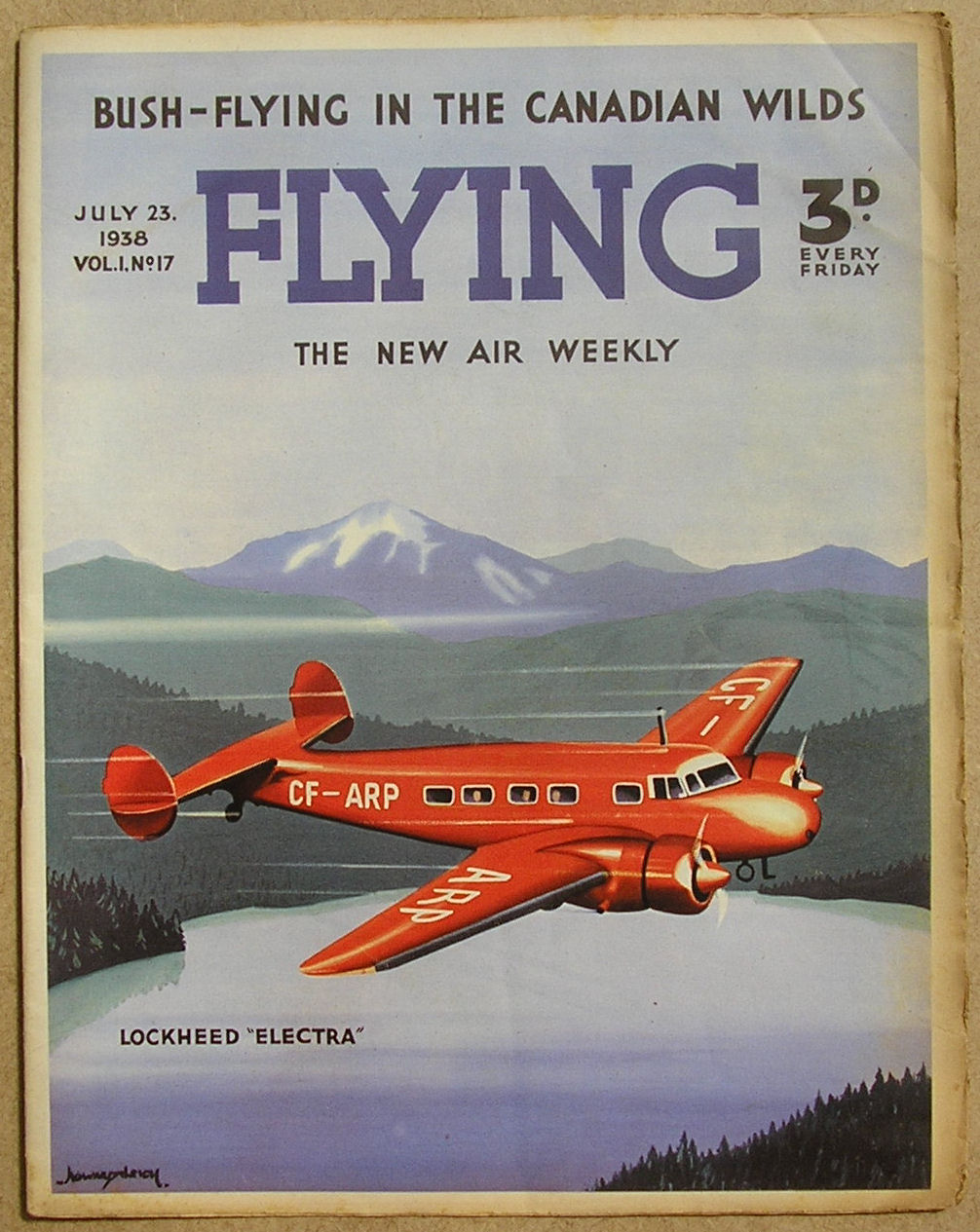 weekly paper of all things aviation, started up in England in 1938, amongst the articles and stories and photo features was an illustrative feature called “Heroes of the Air.” It was a full page illustration by S. Drigin of the events surrounding how the pictured Ace got their Victoria Cross along with a brief explanatory note.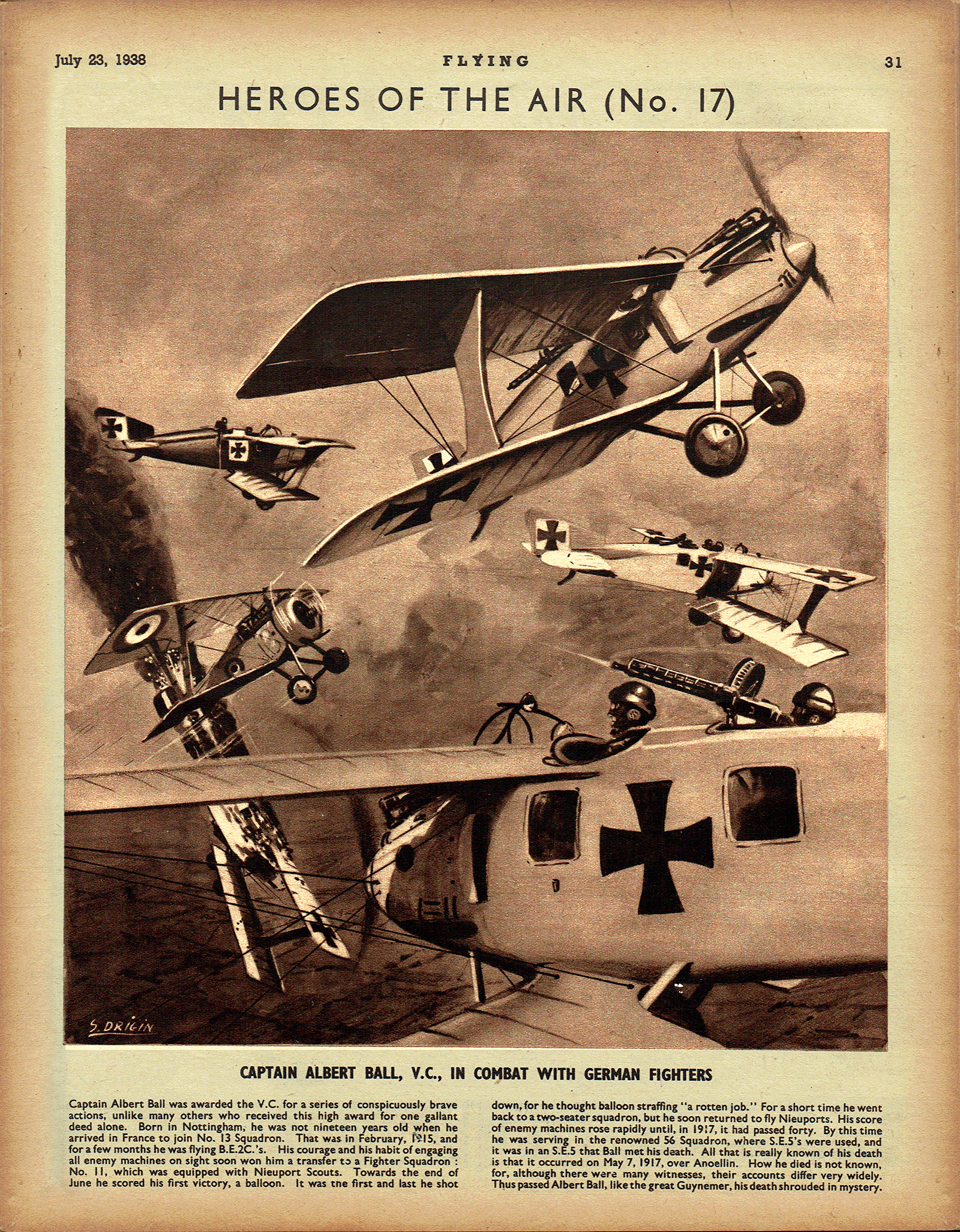
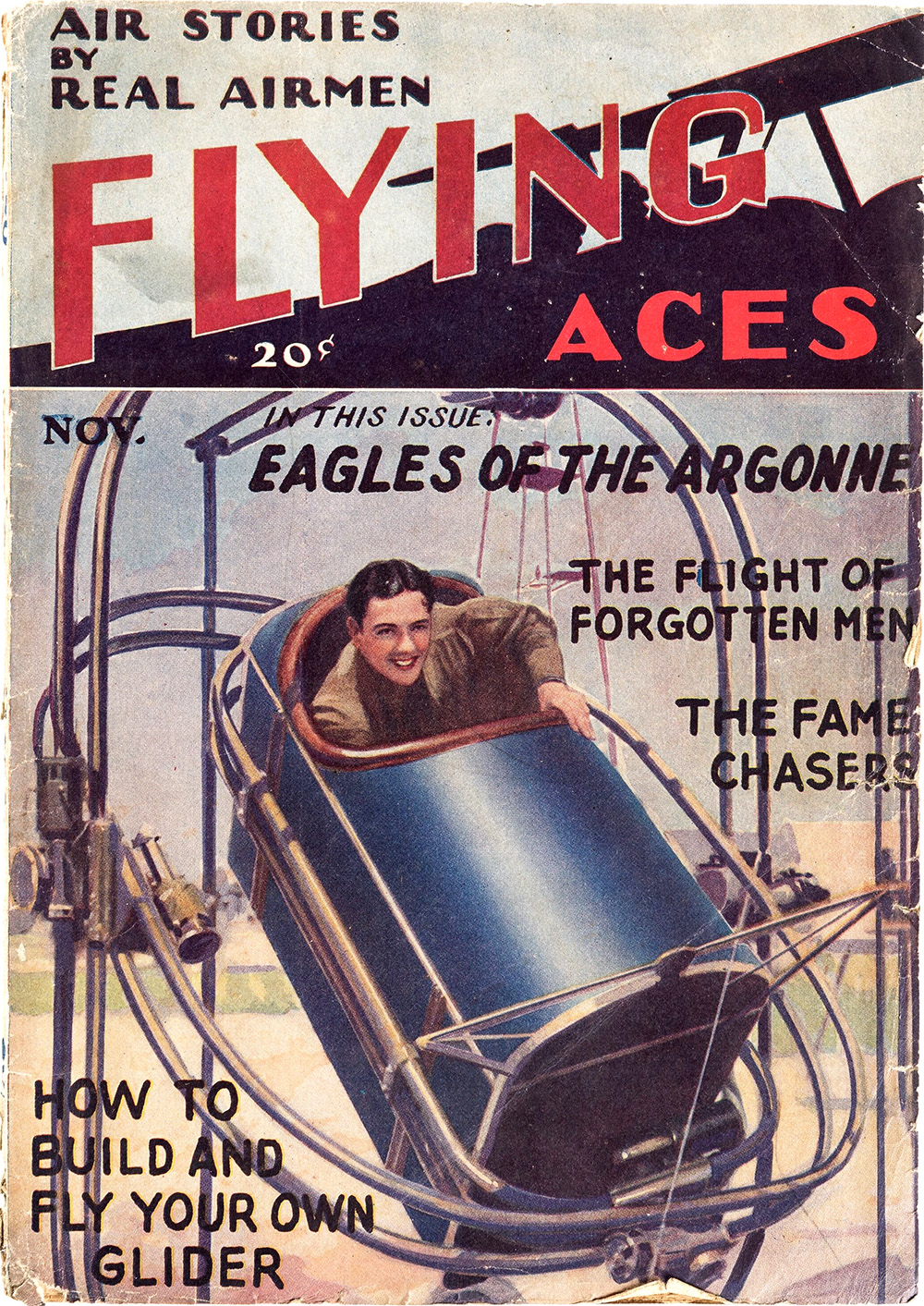 exciting air adventure from the pen of F.H. Griggs, Jr. Griggs is a rather enigmatic figure with just two stories to his name from those issues indexed by Fiction Mags.
 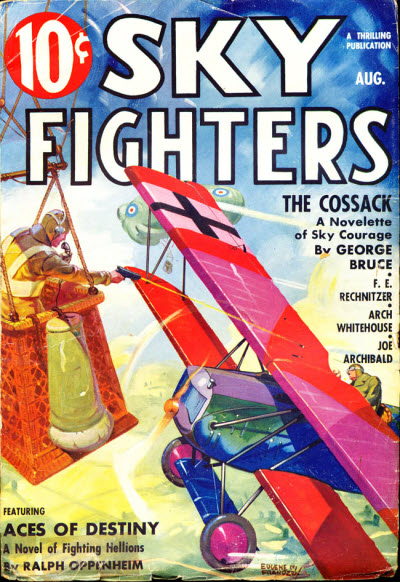 Mosquito Month we have a non-Mosquitoes story from the pen of Ralph Oppenheim. In the mid thirties, Oppenheim wrote a half dozen stories for Sky Fighters featuring Lt. “Streak” Davis. Davis—ace and hellion of the 25th United States Pursuit Squadron—was a fighter, and the speed with which he hurled his plane to the attack, straight and true as an arrow, had won him his soubriquet. Once more it’s a battle against time—B Flight is sent out on a perilous mission to destroy the new Boche anti-tank gun munitions factory by noon in hopes of preventing a massacre when the Allies push forward in their new Whippet tanks. However, after B flight has taken off, Streak learns a spy may have fouled their mission somehow and flies off like a streak to stop them before it’s too late! From the August 1936 issue of Sky Fighters it’s Ralph Oppenheim’s steak Davis in “Aces of Destiny!”
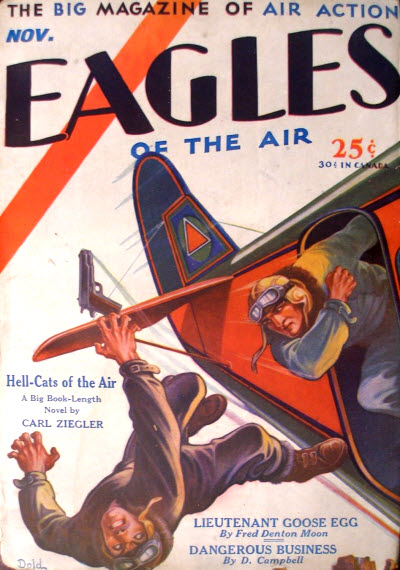 of three stories featuring D. Campbell’s The Three Wasps—stories plagiarized right from The Three Mosquitoes! So instead of the young impetuous leader Kirby of the Mosquitoes, we have the young and impetuous Gary heading up the Wasps. Similarly, Campbell changed “Shorty” Carn to “Shorty” Keen complete with briar pipe and eldest and wisest Travis to Cooper. This time we have their first of five appearances in Harold Hersey’s Eagles of the Air, a short lived pulp that didn’t even run a year. From October 1929 to August 1930, Eagles of the Air had nine issues; The Wasps ran in five of them.