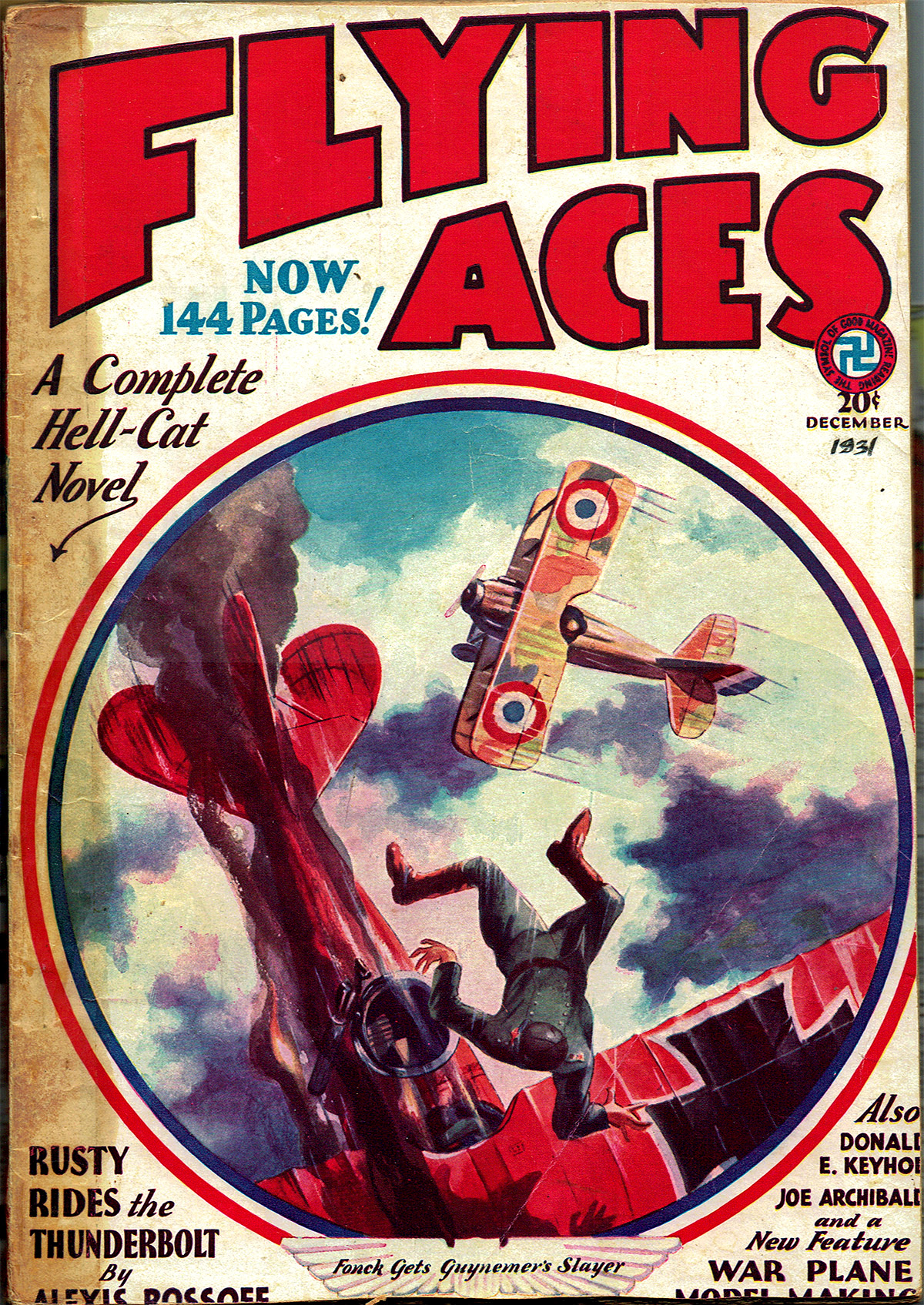
THIS week we present another of Paul Bissell’s covers for Flying Aces! Bissell is mainly known for doing the covers of Flying Aces from 1931 through 1934 when C.B. Mayshark took over duties. For the October 1931 cover Bissell renders Quentin Roosevelt’s last flight…
Quentin Roosevelt’s Last Flight
 THE death of Lieutenant Quentin Roosevelt on July 14th, 1918, while serving with the 95th Aero Squadron, First Pursuit Group, probably brought the war-in-the-air home to more Americans than any single instance.
The youngest son of former President Theodore Roosevelt, Quentin joined the Air Service a few days after America entered the Great War in 1917. He was commissioned and trained for his pilot’s wings at Mineola, and in July sailed for England. Later on ho went to Paris, where he was given a post at the Aviation Headquarters until October.
Quentin was not satisfied with an S.O.S. job and finally prevailed upon the Staff to let him get in more flying. He went to Issoudun and completed his course and later was put in charge of one of the training fields there. Still dissatisfied with his lot, he managed to get transferred to Orly, where he did considerable testing of planes. An order sending him to the Front came in June, 1918, and he joined the 95th Squadron.
On July 14th, less than a month after joining his squadron, Roosevelt went on patrol with his flight. Seven Nieuports were in the formation. They reached the line with considerable difficulty, due to the grouping of much cumulus cloud. They patrolled their area for nearly half an hour before any real action occurred. Then out of nowhere came an equal number of Fokker D-7s.
A dogfight followed at once. Nieuports and Fokkers milled in and out of a fantastic design of tracer. The battle lasted several minutes before visibility conditions compelled both sides to withdraw.
Eye-witnesses of the fight declared that two Fokkers went down, apparently out of action, but whether they crashed could not be told, because a layer of thin vapor cut off most of the view of the ground.
The Nieuports, having been shot about badly, decided to head off home. It was not until the ships were about to land that their pilots realized one of their machines was missing. Then as they landed, the terrible realization came that Quentin Roosevelt, the most beloved of the famous White House Gang, was missing.
For hours they made frantic inquiries—with no trace of young Roosevelt. Then two days later, a German two-seater came over and dropped a wreath. Along with it was an envelope containing a message that stated that Lieutenant Quentin Roosevelt had been shot down in flames and buried with the highest military honors where he had fallen. The grave had been photographed and a print of the picture was enclosed. The letter also explained that the grave might be found at Chamery.
Immediately the word was cabled back to America. It was a distinct shock to everyone in the United States. Quentin Roosevelt’s death was followed by a wild surge of intense patriotism. Thousands of young men flocked to the recruiting offices demanding their acceptance in the Air Corps.
After the Armistice there was some talk of bringing his body back to this country, but the Roosevelt family decided against this, saying that it was better that his remains should lie in the soil of the country for which he had made the Great Sacrifice. Today his body lies with hundreds of other Americans in one of the great war cemeteries that are cared for by America.

Quentin Roosevelt’s Last Flight
Flying Aces, October 1931 by Paul J. Bissell





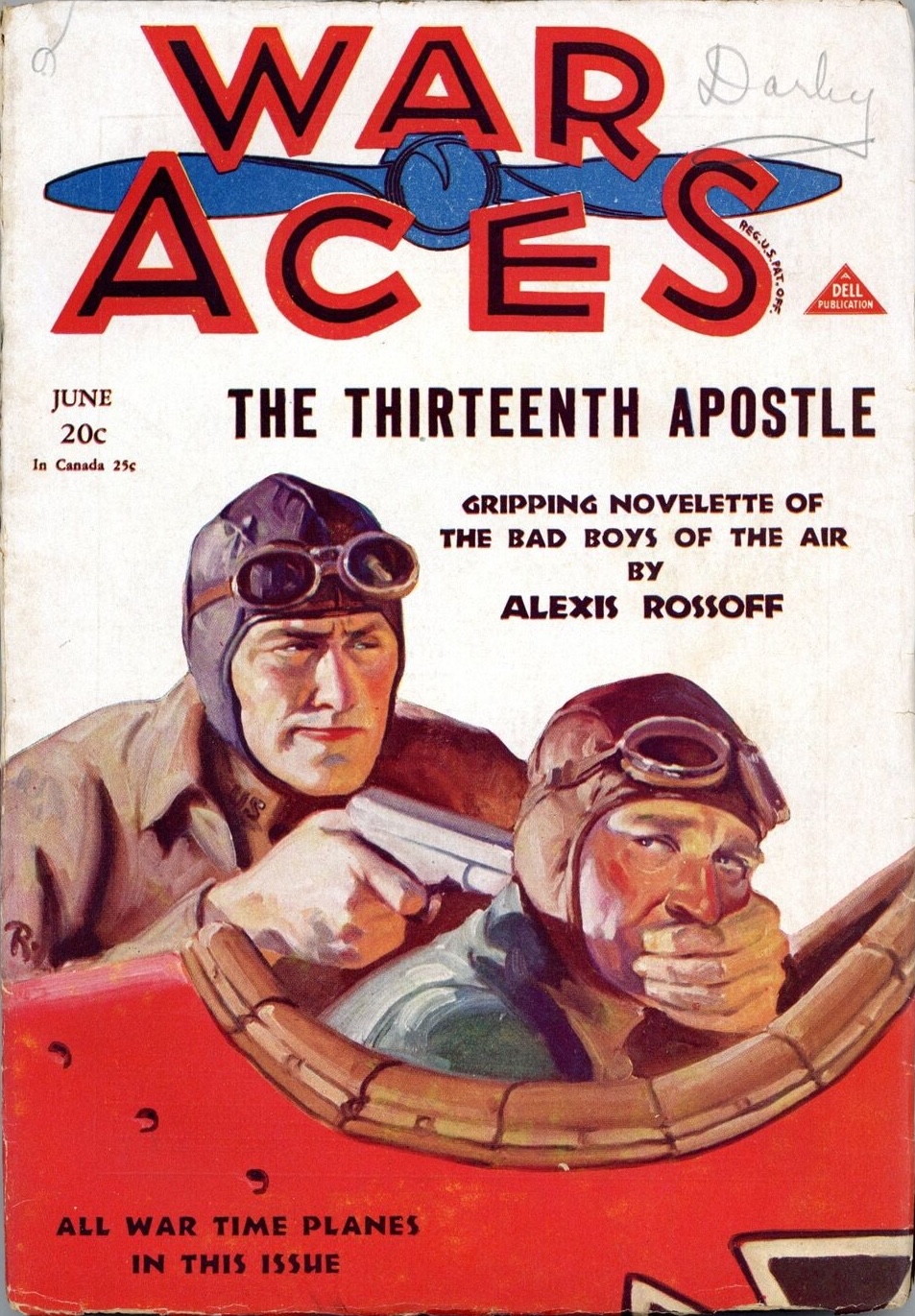 pen of the Navy’s own Allan R. Bosworth. Bosworth wrote a couple dozen stories with Humpy & Tex over the course of ten years from 1930 through 1939, mostly in the pages of War Aces and War Birds. The stories are centered around the naval air base at Ile Tudy, France. “Humpy” Campbell, a short thickset boatswain’s mate, first class who was prone to be spitting great sopping globs of tabacco juice, was a veteran seaplane pilot who would soon rate two hashmarks—his observer, Tex Malone, boatswain’s mate, second class, was a D.O.W. man fresh from the Texas Panhandle. Everybody marveled at the fact that the latter had made one of the navy’s most difficult ratings almost overnight—but the answer lay in his ability with the omnipresent rope he constantly carried.
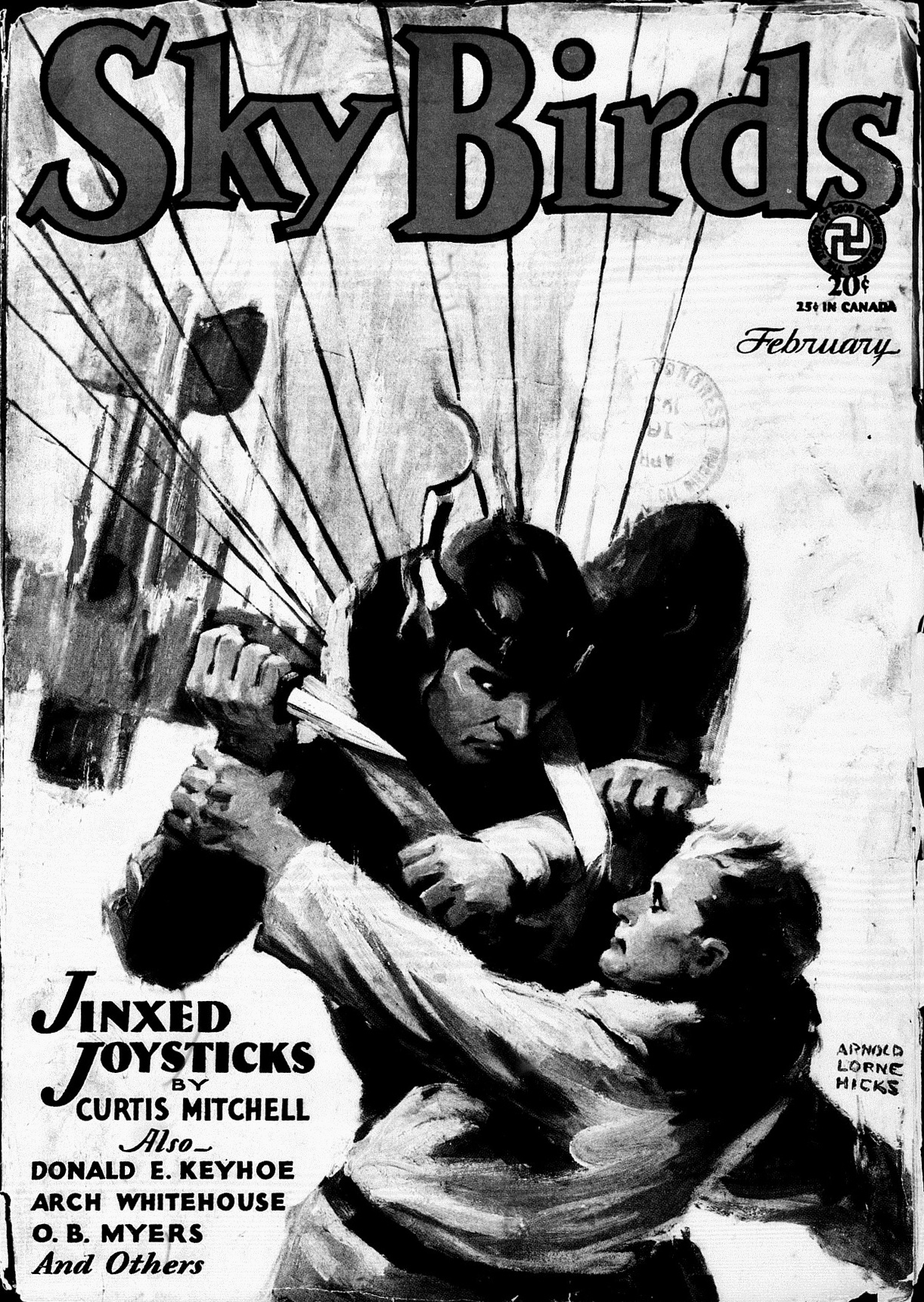 by the prolific O.B. Myers! Myers was a pilot himself, flying with the 147th Aero Squadron and carrying two credited victories and awarded the
 Franklin H. Martin. Not much is known about Martin aside from the fact he worked as a reporter on Newark newspapers. He had almost a hundred stories published in the pulps with roughly three quarters being detective or weird menace stories and the remaining quarter being air stories in the pages of Sky Birds, War Birds and Wings. In fact, his very first published pulp story was a brief aviation tale in Wings. It was the “Hanger Yarn” for the month. The Hanger Yarn was a round-table of airmen, where airmen would gather after hours to smoke and tell yarns and make you feel like you’re right at home in the hanger with them!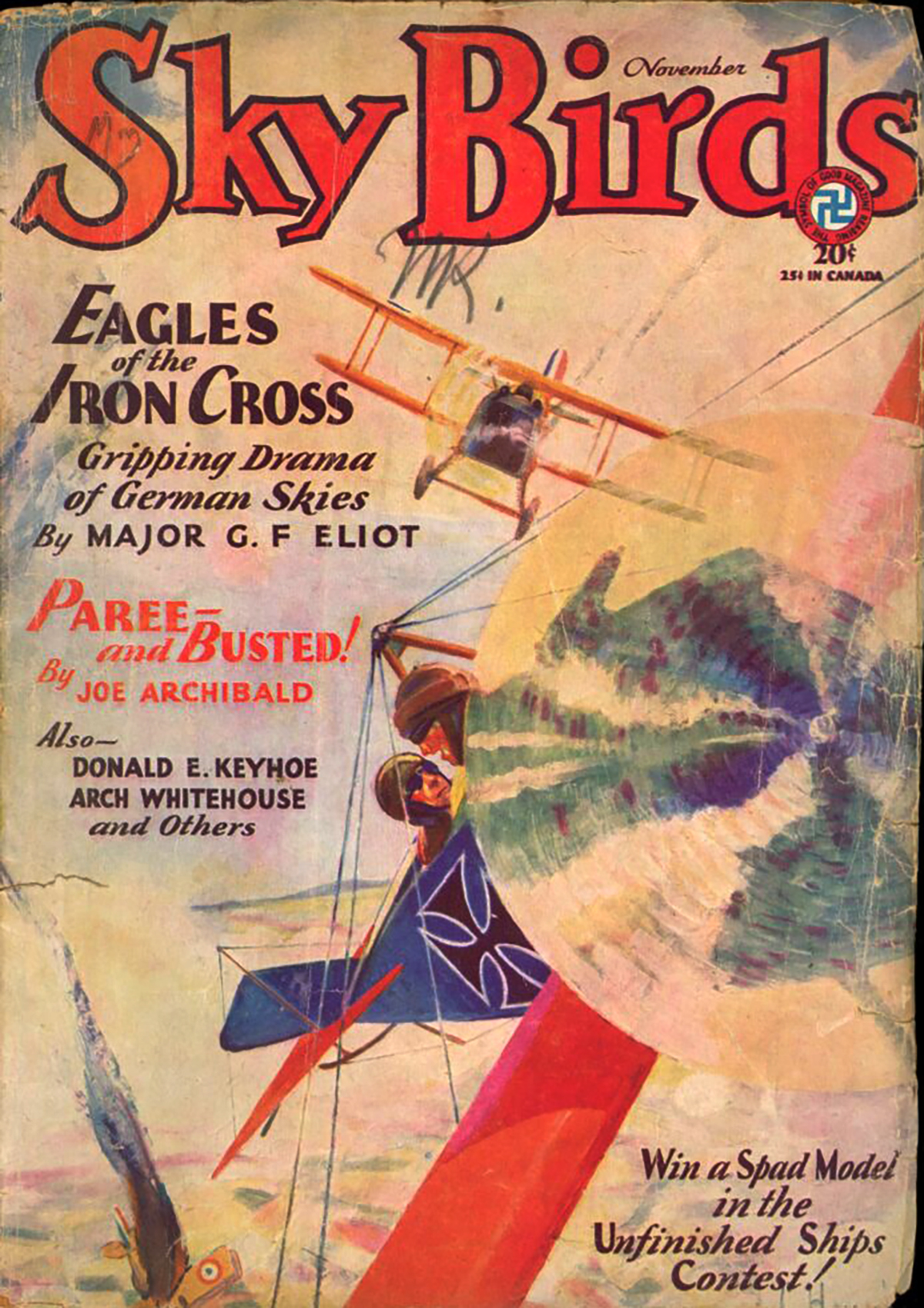

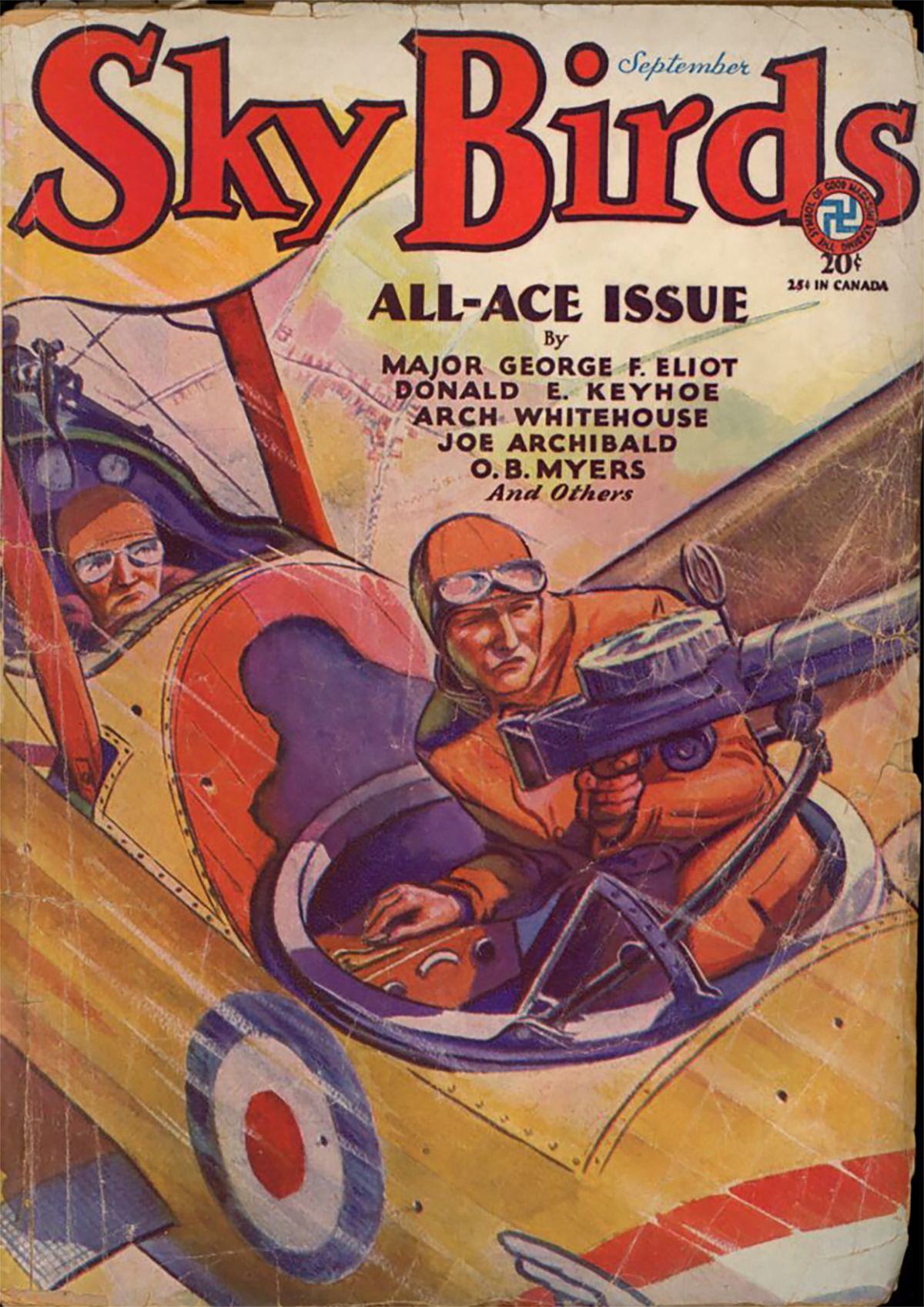
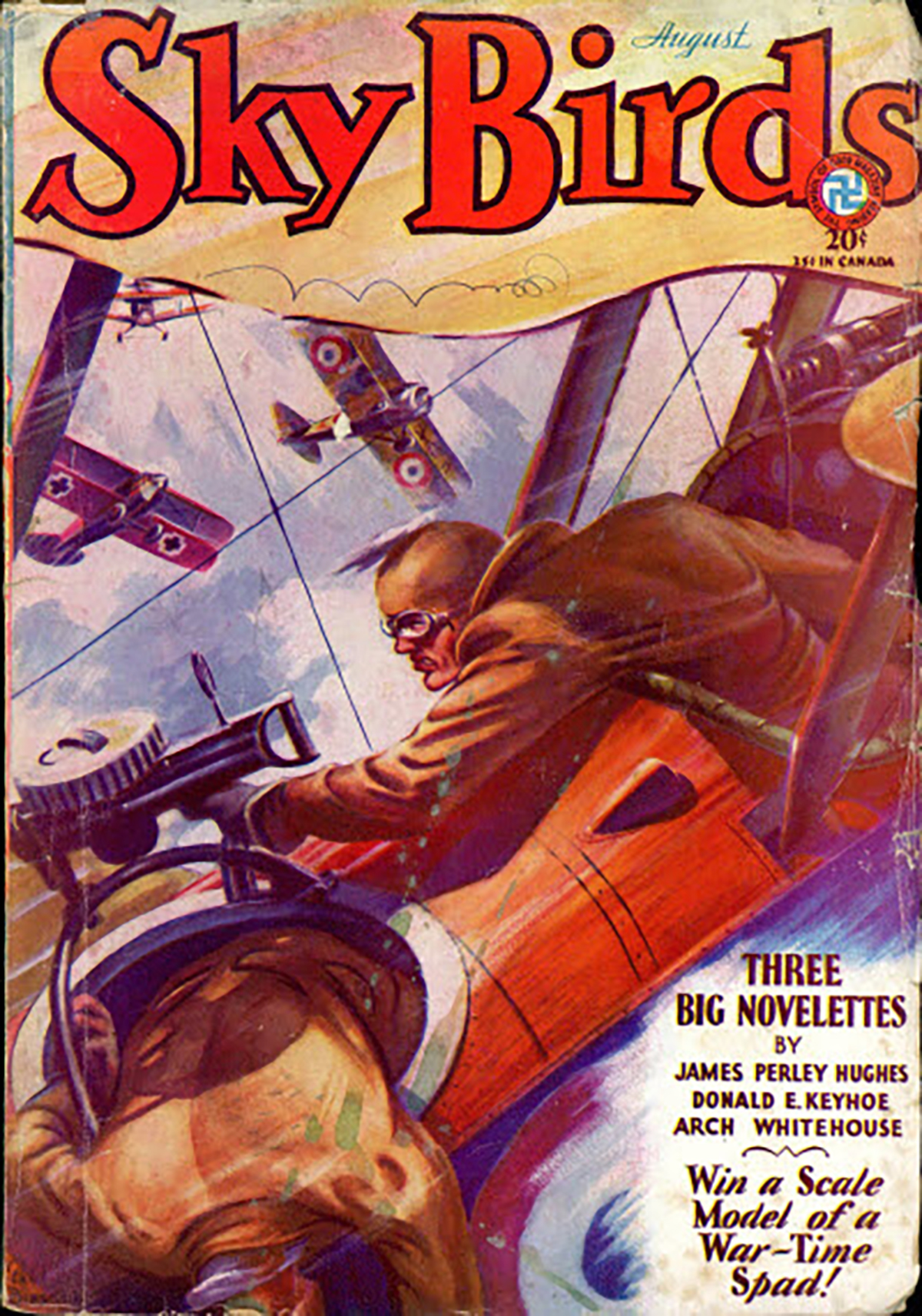
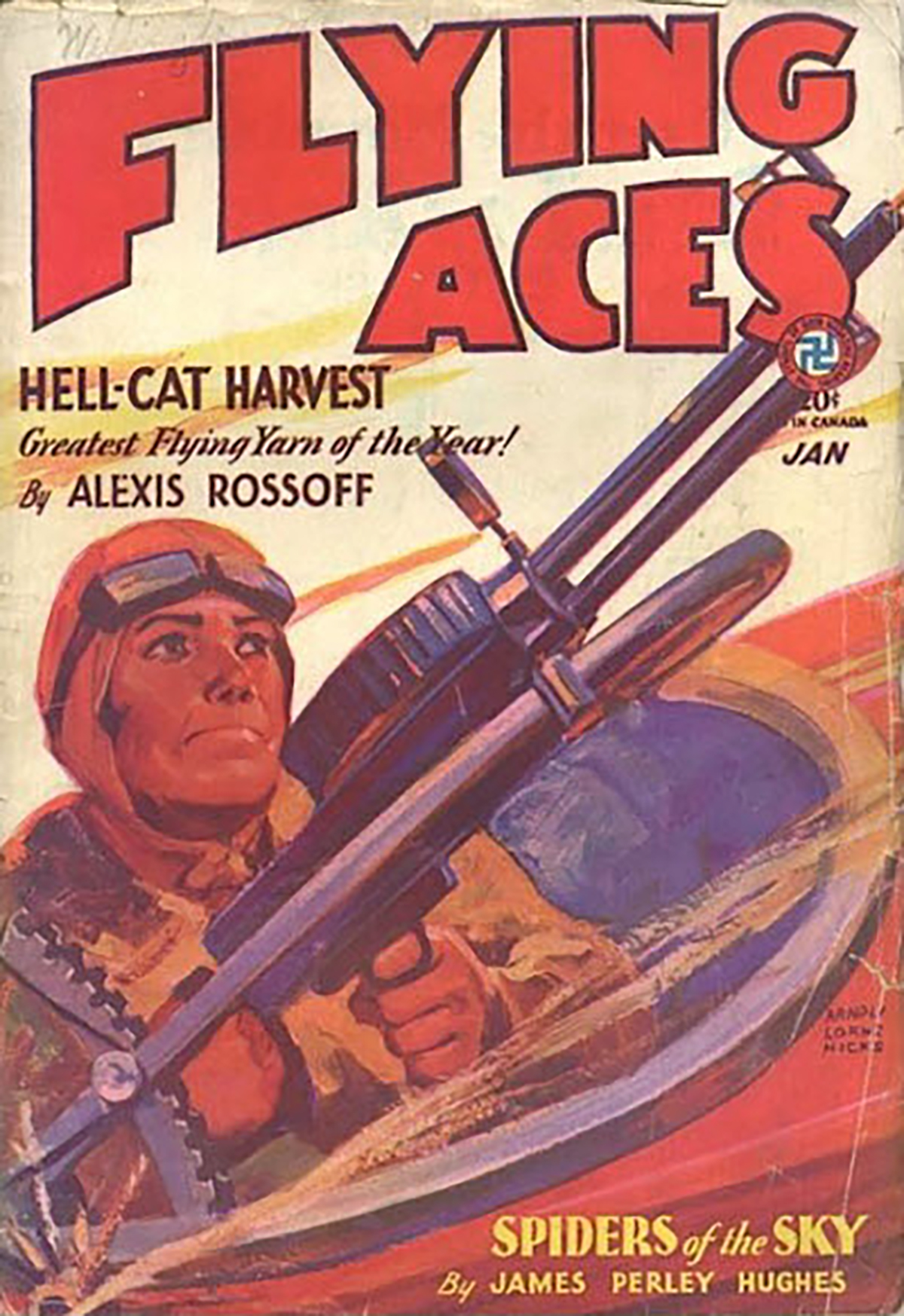
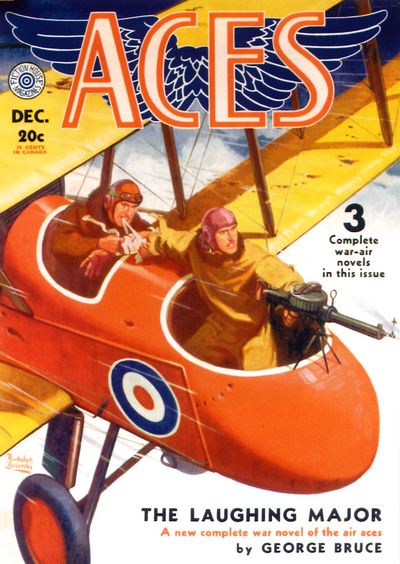 by H.P.S. Greene.
 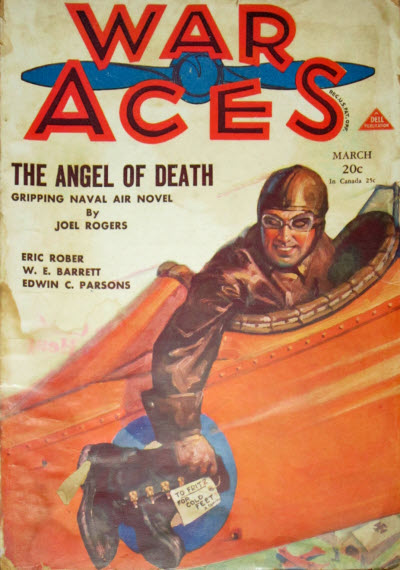 pen of the Navy’s own Allan R. Bosworth. Bosworth wrote a couple dozen stories with Humpy & Tex over the course of ten years from 1930 through 1939, mostly in the pages of War Aces and War Birds. The stories are centered around the naval air base at Ile Tudy, France. “Humpy” Campbell, a short thickset boatswain’s mate, first class who was prone to be spitting great sopping globs of tabacco juice, was a veteran seaplane pilot who would soon rate two hashmarks—his observer, Tex Malone, boatswain’s mate, second class, was a D.O.W. man fresh from the Texas Panhandle. Everybody marveled at the fact that the latter had made one of the navy’s most difficult ratings almost overnight—but the answer lay in his ability with the omnipresent rope he constantly carried.
 That sound can only mean one thing—that Bachelor of Artifice, Knight of Calamity and an alumnus of Doctor Merlin’s Camelot College for Conjurors is back to vex not only the Germans, but the Americans—the Ninth Pursuit Squadron in particular—as well. Yes it’s the marvel from Boonetown, Iowa himself—Lieutenant Phineas Pinkham!
  That sound can only mean one thing—that Bachelor of Artifice, Knight of Calamity and an alumnus of Doctor Merlin’s Camelot College for Conjurors is back to vex not only the Germans, but the Americans—the Ninth Pursuit Squadron in particular—as well. Yes it’s the marvel from Boonetown, Iowa himself—Lieutenant Phineas Pinkham!