MARCH is Mosquito Month! We’re celebrating Ralph Oppenheim and his greatest creation—The Three Mosquitoes! We’ll be featuring three action-packed tales of the Mosquitoes over the next few Fridays as well as another Streak Davis story. So, let’s get things rolling, as the Mosquitoes like to say as they get into action—“Let’s Go!”
Their familiar war cry rings out—“Let’s Go!” The greatest fighting war-birds on the Western Front are once again roaring into action. The three Spads flying in a V formation so precise that they seemed as one. On their trim khaki fuselages, were three identical insignias—each a huge, black-painted picture of a grim-looking mosquito. In the cockpits sat the reckless, inseparable trio known as the “Three Mosquitoes.” Captain Kirby, their impetuous young leader, always flying point. On his right, “Shorty” Carn, the mild-eyed, corpulent little Mosquito, who loved his sleep. And on Kirby’s left, completing the V, the eldest and wisest of the trio—long-faced and taciturn Travis.
Were back with 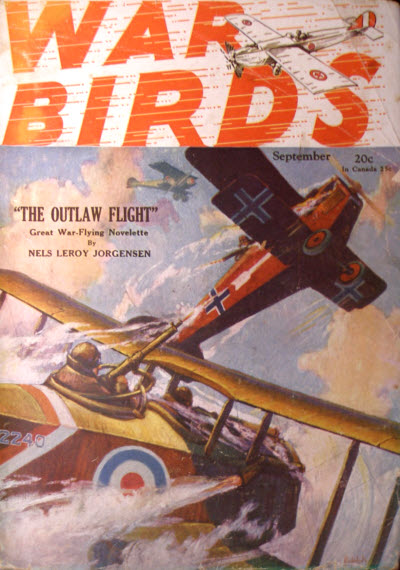 the first of three Three Mosquitoes stories we’re presenting to celebrate Ralph Oppenheim’s inseparable Trio this month. To get the ball rolling, it’s “Crashing Through” from the pages of the September 1928 War Birds in which Kirby is tasked with delivering a much needed load of ammunition to a rag tag group of troops valiantly trying hold a ridge until reinforcements arrive!
Their C.O. explains:
“Of course there is some danger of such a thing. But it’s up to you, Kirby, to drop the stuff from a low enough altitude to make the impact harmless. Yes,” he repeated, grimly, “I admit the whole thing is extremely perilous. I admit that if you run into Jerry planes, there’ll be hell to pay—their incendiary bullets could set that cargo off. But just remember that the dangers you have to face are nothing compared to the dangers which that handful of men down in that trench are facing.
“Put yourself in their places—stuck in a muddy, filthy ravine, cut off from the rest of our troops, surrounded on all sides by Germans, getting killed off like flies until only two dozen of that whole valiant company remain—perhaps even less now. Yet they refuse to be daunted; they’re clinging stubbornly to the little strip of ground which they were ordered to hold, despite the fact that their ammunition is practically exhausted.
“They need food, drink, clothing, and yet when, by sheer luck, one of our wireless planes found them and managed to communicate with them, they asked only for ammunition, nothing more. They’ve done more than could be expected of any soldiers, and now it’s up to you fellows to help them through. As I told you, Kirby, I don’t know just how you’ll manage to drop that ammunition to them, but I’m convinced you can do it, provided you other two fellows protect him from above with your scout planes. You must get to them before daybreak. The Germans are sure to spring another attack on them at that time. Without ammunition, they’ll be slaughtered. Even with ammunition,”—he shook his head—“it is hard to believe that they can hold out until our troops break through and save them.”
Kirby, the daring leader of the “Three Mosquitoes,” had been on some strange flights, but this looked almost impossible—and more dangerous than ever. Of course he would have his two flying buddies with him, but carrying ammunition to those surrounded doughboys was no easy job—in a heavy De Haviland plane!
If you enjoyed this tale of our intrepid trio, check out some of the other stories of The Three Mosquitoes we have posted by clicking the Three Mosquitoes tag or check out one of the five volumes we’ve published on our books page! And come back next Friday or another exciting tale.





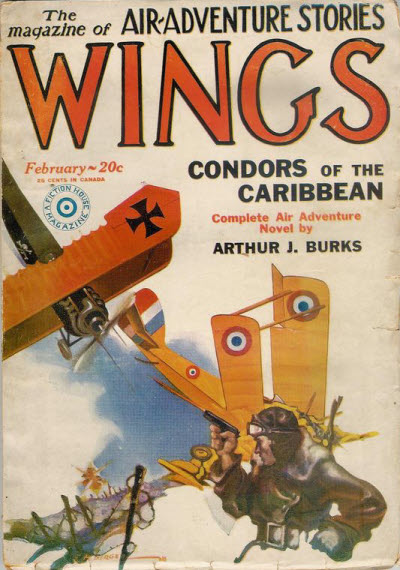 a short story by renowned pulp author Frederick C. Davis. Davis is probably best remembered for his work on Operator 5 where he penned the first 20 stories, as well as the Moon Man series for Ten Detective Aces and several other continuing series for various Popular Publications. He also wrote a number of aviation stories that appeared in Aces, Wings and Air Stories.
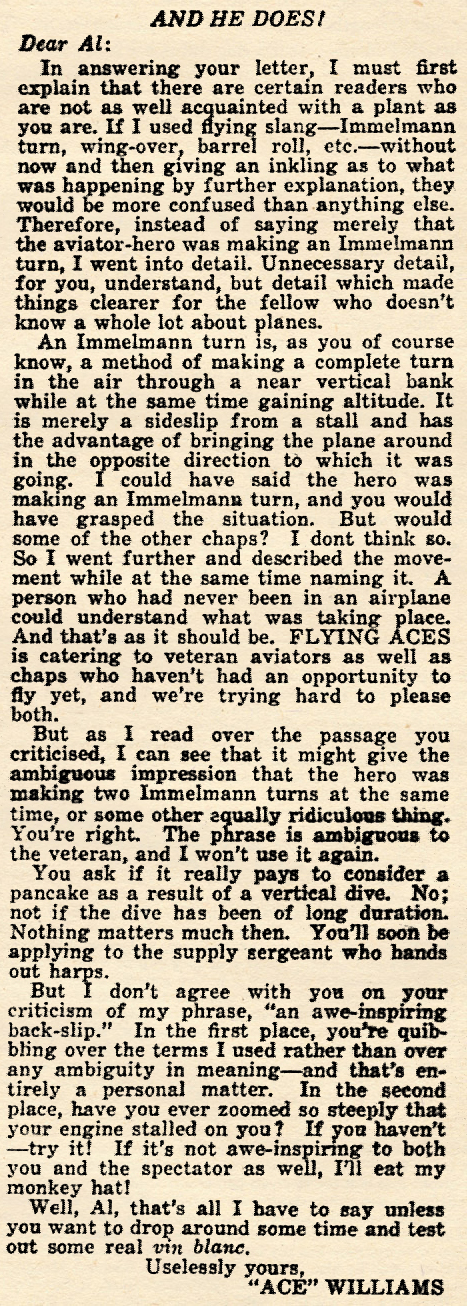
  story by “Ace Williams.” I put his name in quotes because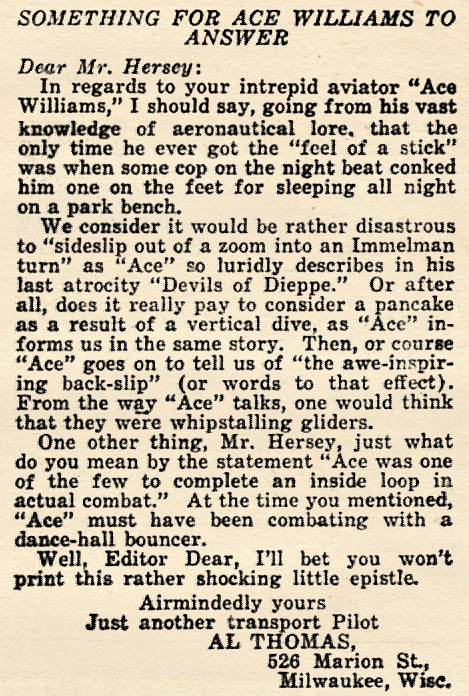

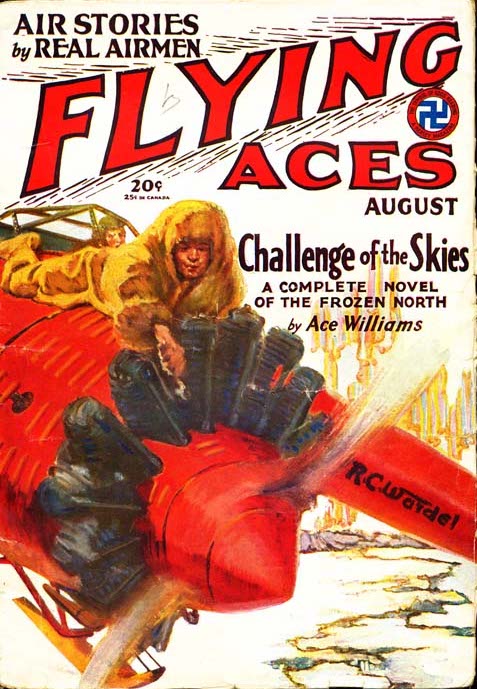 Frank Sumner’s “Hell Birds” from the August 1929 Flying Ace!
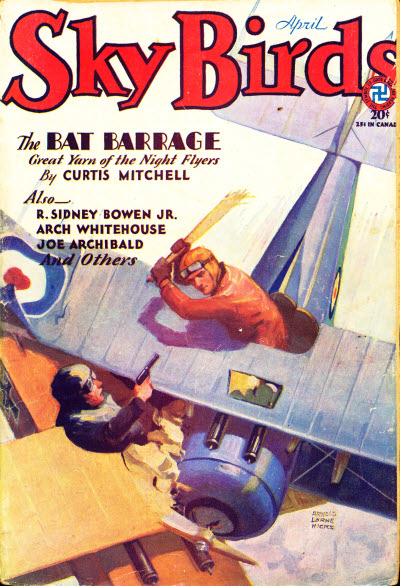 an early story from the pen of Donald E. Keyhoe from the pages of the April 1930 Sky Birds magazine. Keyhoe started appearing regularly in the aviation pulps—Wings, Air Stories, Sky Birds, Flying Aces—starting in December 1929. His series characters started in August 1931.
 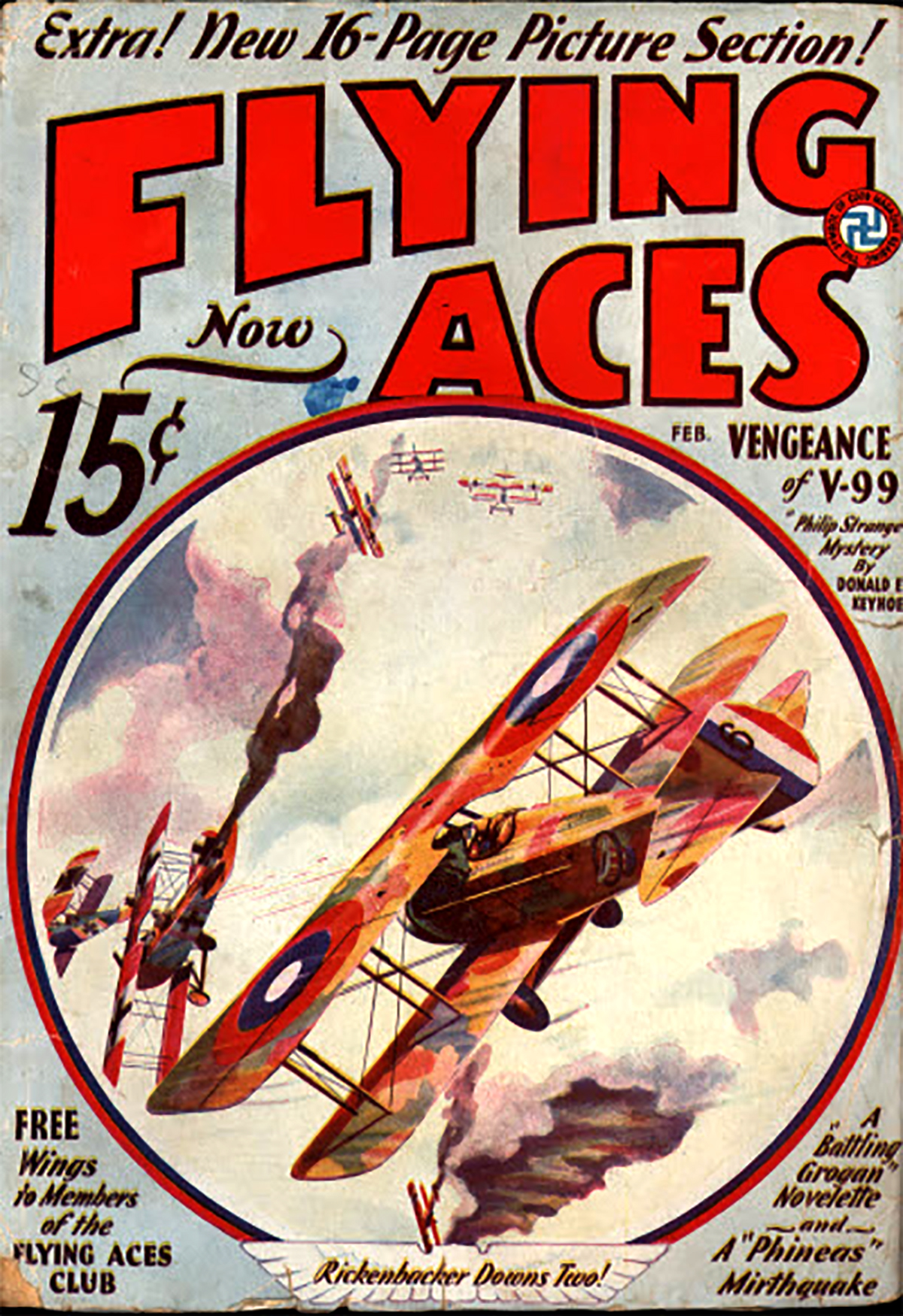 That sound can only mean one thing—that Bachelor of Artifice, Knight of Calamity and an alumnus of Doctor Merlin’s Camelot College for Conjurors is back to vex not only the Germans, but the Americans—the Ninth Pursuit Squadron in particular—as well. Yes it’s the marvel from Boonetown, Iowa himself—Lieutenant Phineas Pinkham!
 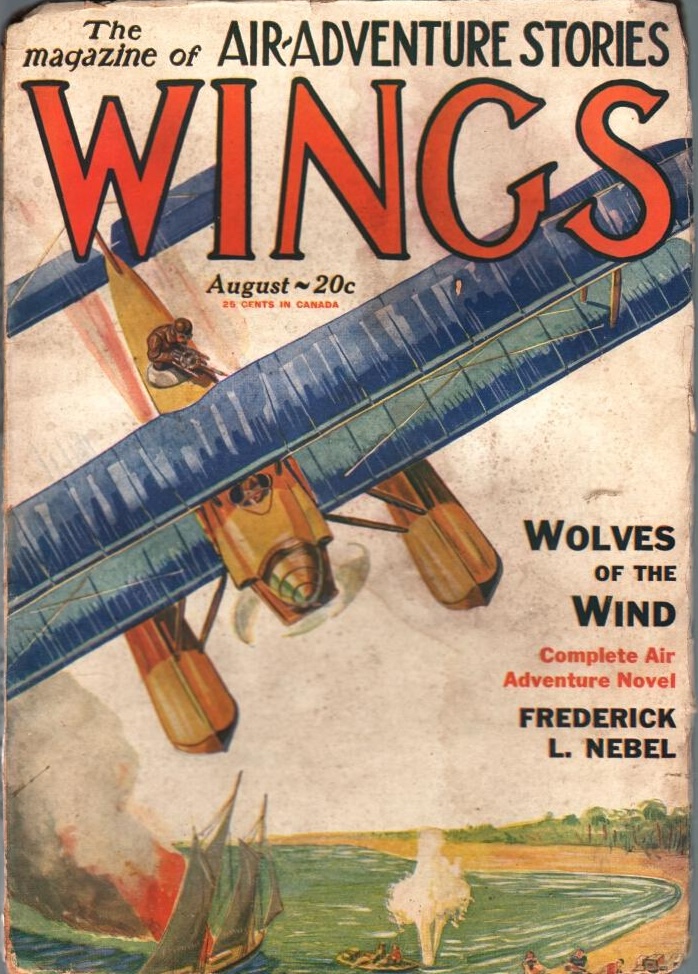 a short story by renowned pulp author Frederick C. Davis. Davis is probably best remembered for his work on Operator 5 where he penned the first 20 stories, as well as the Moon Man series for Ten Detective Aces and several other continuing series for various Popular Publications. He also wrote a number of aviation stories that appeared in Aces, Wings and Air Stories.
 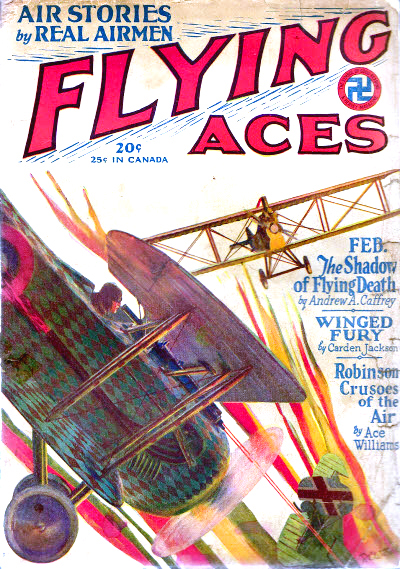 another story from Andrew A. Caffrey. Caffrey, who was in the American Air Service in France during The Great War and worked for the air mail service upon his return, was a prolific author of aviation and adventure stories for both the pulps and slicks from the 1920’s through 1950.
 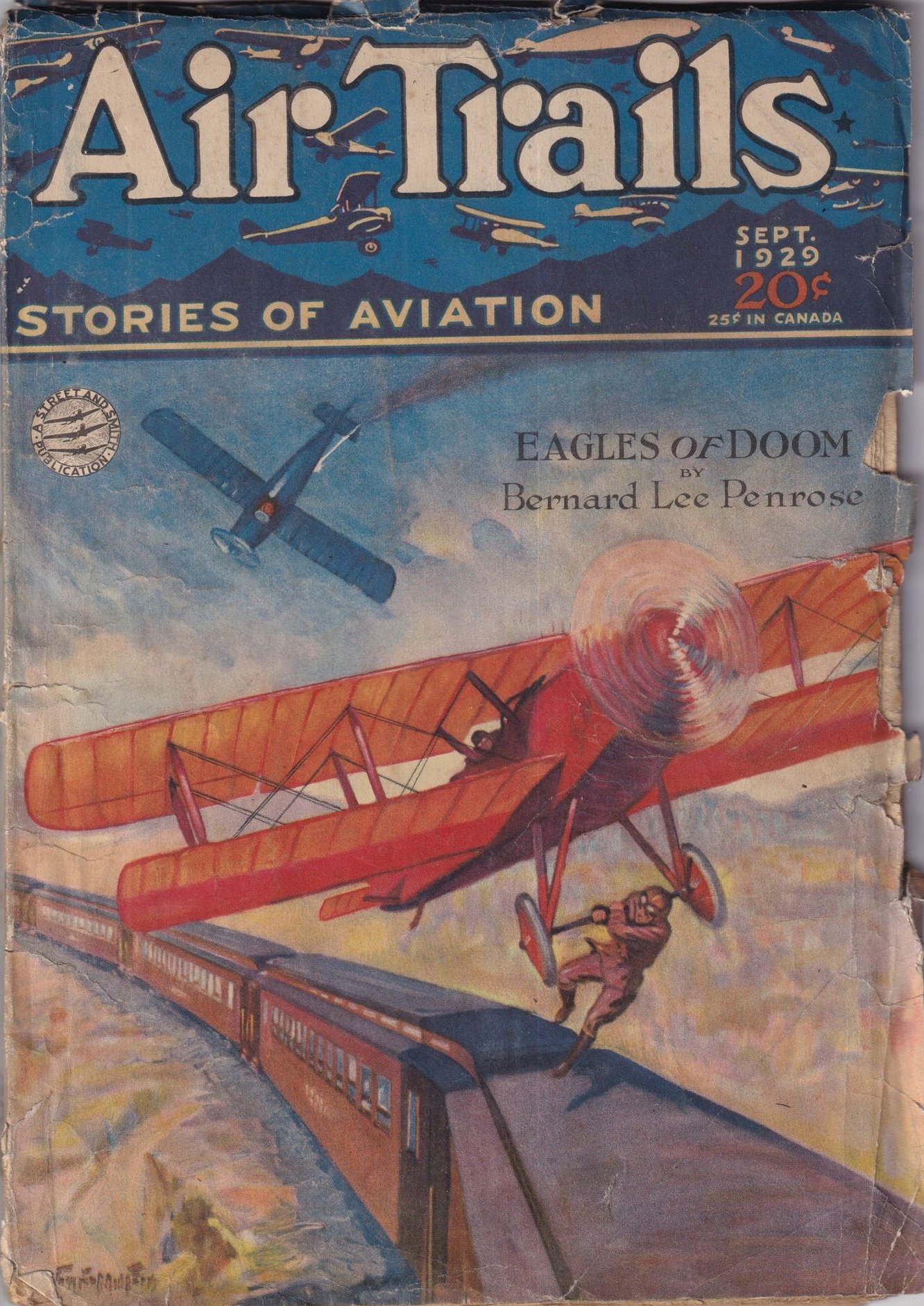 another of
 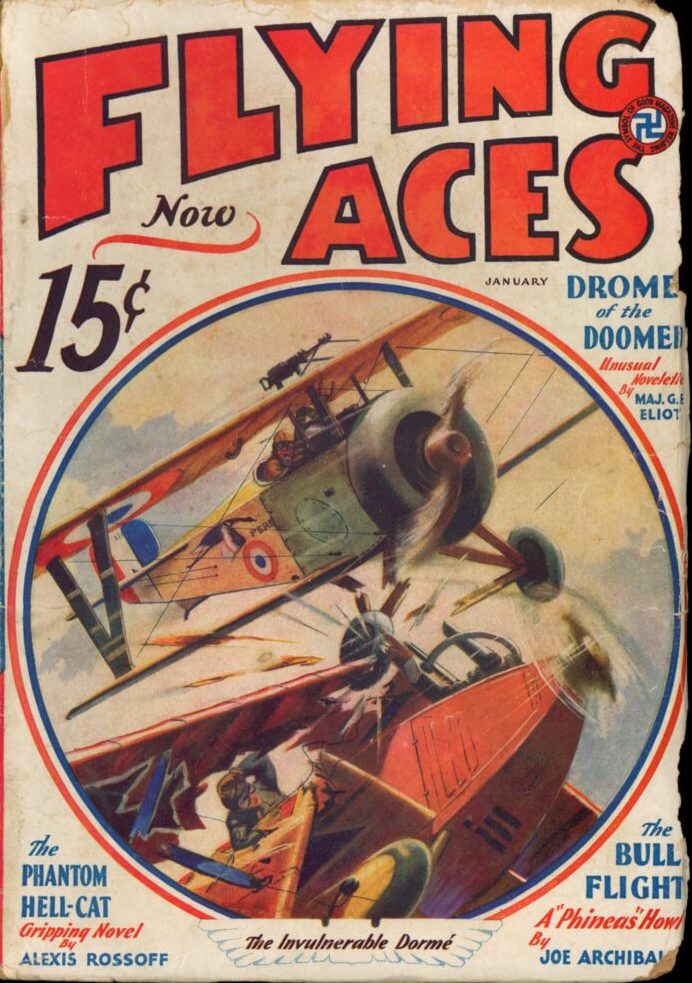 That sound can only mean one thing—that Bachelor of Artifice, Knight of Calamity and an alumnus of Doctor Merlin’s Camelot College for Conjurors is back to vex not only the Germans, but the Americans—the Ninth Pursuit Squadron in particular—as well. Yes it’s the marvel from Boonetown, Iowa himself—Lieutenant Phineas Pinkham!
 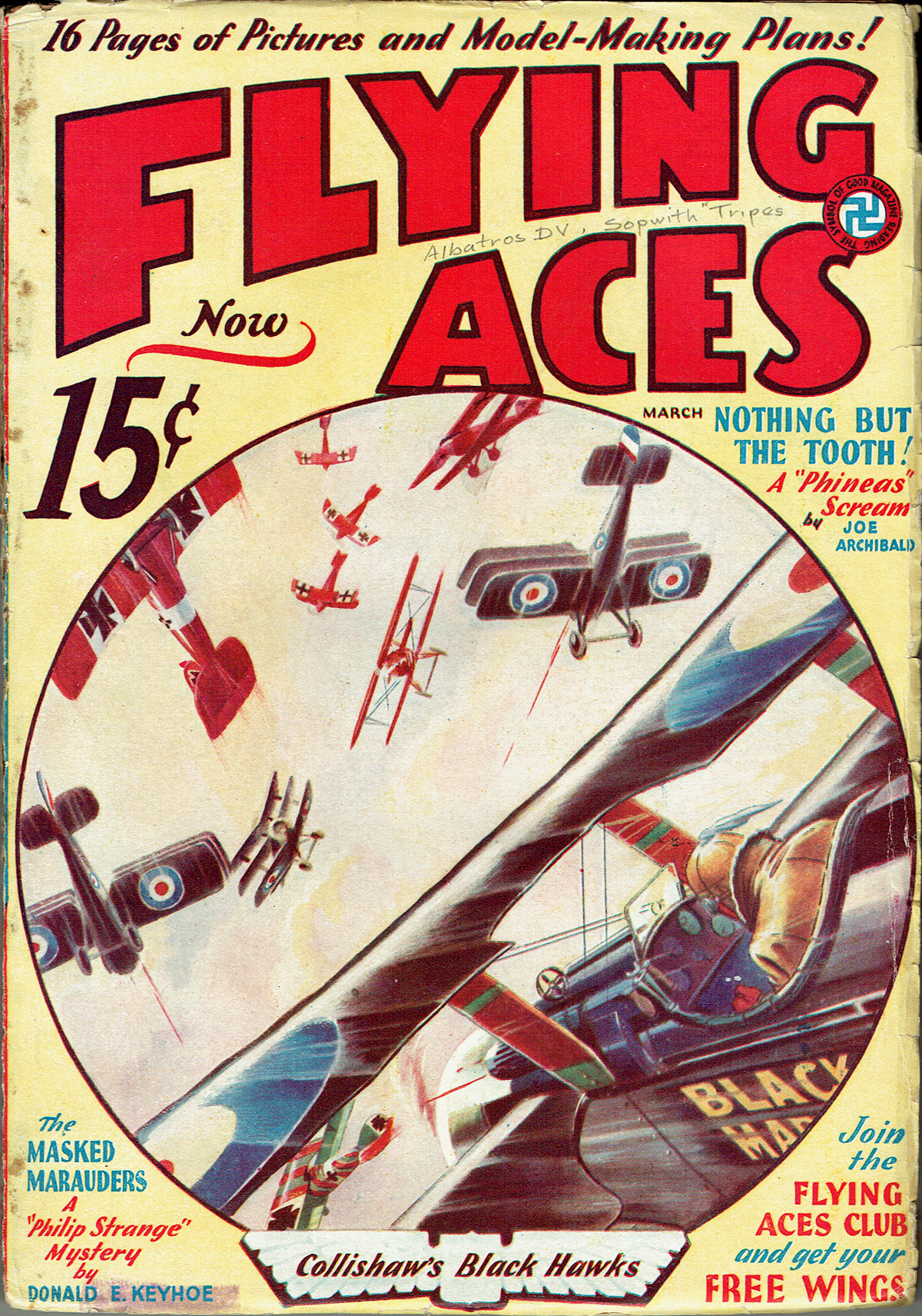 a story by Syl MacDowell! MacDowell was an inveterate traveler—traveling across and all over the country many times—even living for a time in a trailer. Born June 16,1892, in Denver, Colorado, MacDowell found transitory homes on both coasts when not on the road. He worked as a foreign correspondent for the UPI and a free lance writer and rewrite man on various newspapers in New York and on the West Coast. He had a large following as a magazine columnist and general adviser on matters concerning Western travel, traditions, attractions, and opportunities. Somehow he found the time to also write numerous pulp stories. Although he’s best known for his westerns—the Painted Post series is probably his most well known—he was a regular in the pages of Navy Stories, War Birds, Sky Riders, War Aces, The Lone Eagle, Sky Fighters, and Flying Aces from the late twenties through the mid thirties.
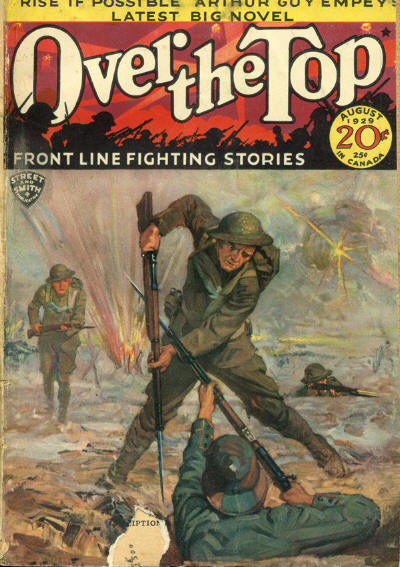 a story from
 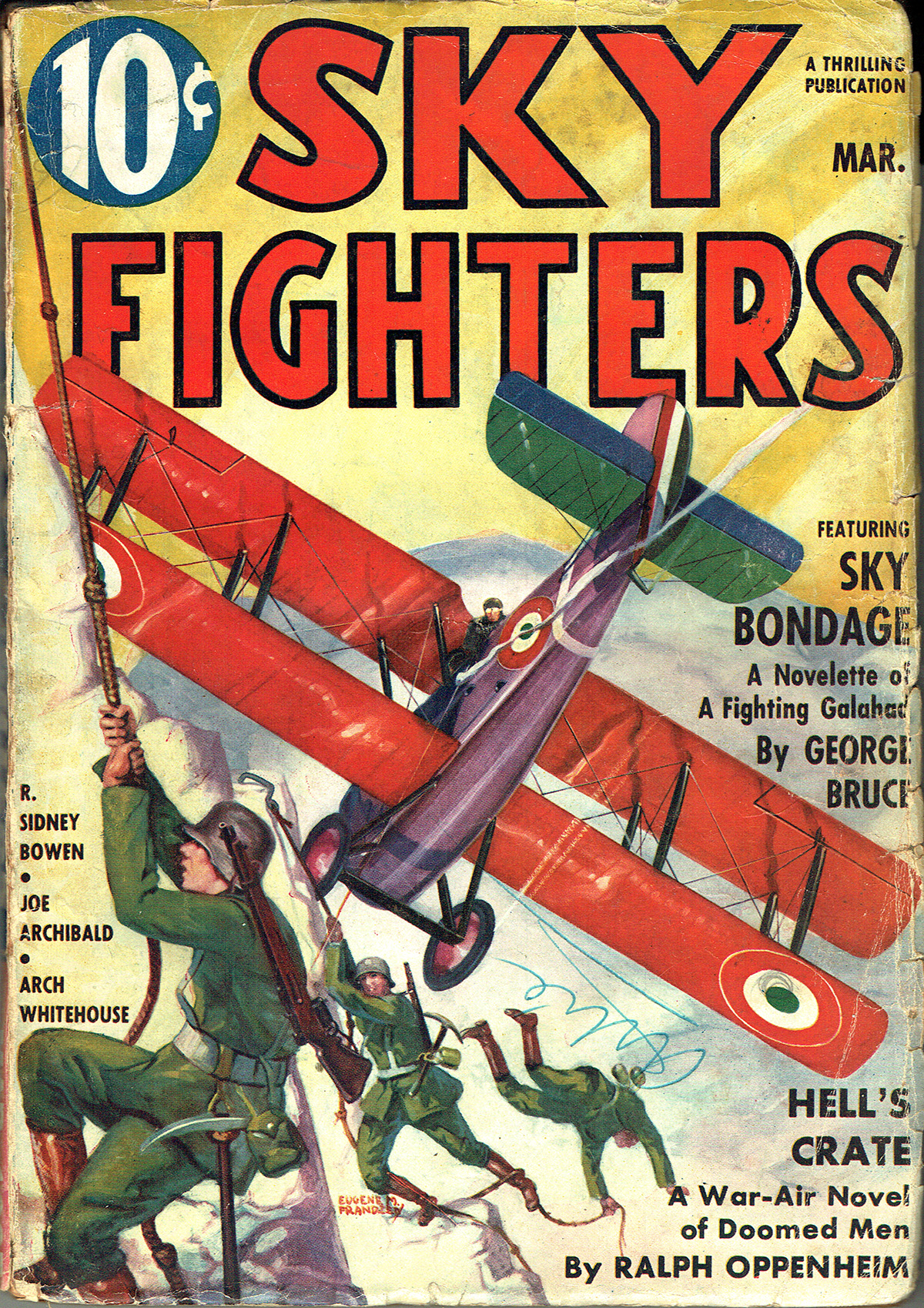 Mosquito Month we have a non-Mosquitoes story from the pen of Ralph Oppenheim. In the mid thirties, Oppenheim wrote a half dozen stories for Sky Fighters featuring Lt. “Streak” Davis. Davis—ace and hellion of the 25th United States Pursuit Squadron—was a fighter, and the speed with which he hurled his plane to the attack, straight and true as an arrow, had won him his soubriquet.
 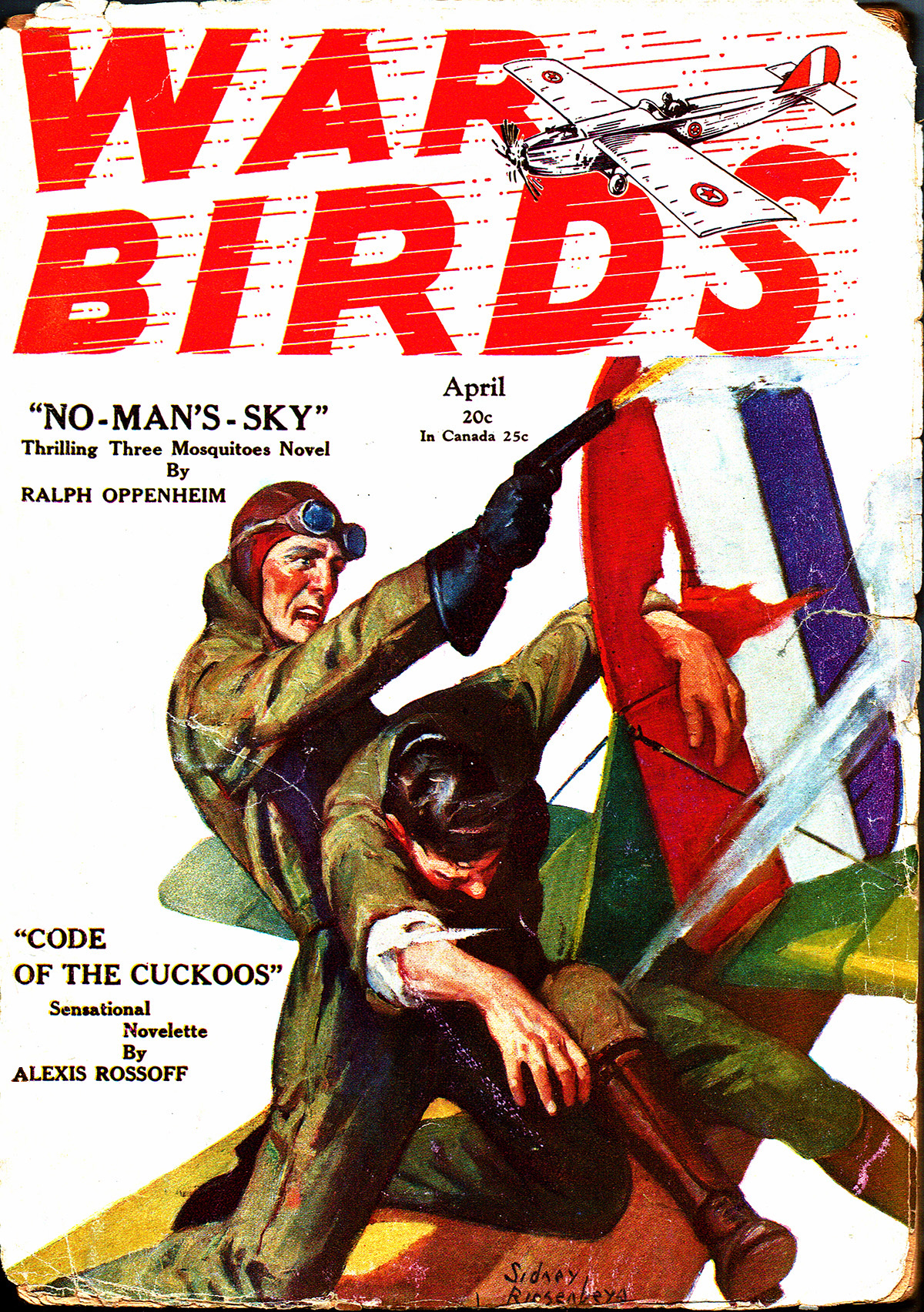 get things off the ground with Oppenheim’s very first Three Mosquitoes tale from the pages of War Stories from July 1927! This premier tale finds the inseparable trio separated following a stunting attack on the front line trenches that resulted in Carn and Travis going down behind enemy lines and captured and an humiliated Kirby being sent down to ferrying new ships to their assigned fields. Mindless, boring work for the beaten Ace—his instructions are to avoid all altercations and steer far clear of any action what so ever. Especially since the plane he’s flying and those of the other ferried ships have no guns! But that doesn’t stop Kirby when he sees the Block brothers sniffing around the very secluded forrest the Allies are amassing troops and supplies—he tries to find a way to stop them from getting that information back across the lines without the benefit of guns!
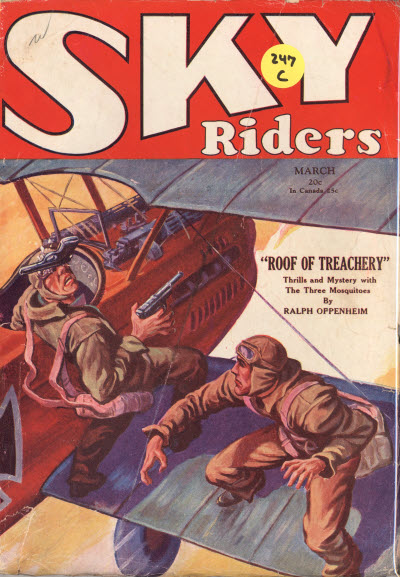 the second of three Three Mosquitoes stories we’re presenting this month. This week it’s “Roof of Treachery” from the March 1930 issue of Sky Riders. The city of Remiens could not be taken. It is continuously ranged and shelled and whole battalions of crops are sent in to take it, but they all die in the undertaking. Pilots are sent over during these skirmishes, but they never return. The Brass turn to The Three Mosquitoes to try to find the secret behind Remiens’ invulnerability just hours before a great push is set to take the town. Can they discover it’s deadly secret in time?