



“Send Him Up with Sanders” by Wallace R. Bamber
THIS week we have a story by a new writer to this site, Wallace R. Bamber.
Wallace Rugene Bamber was 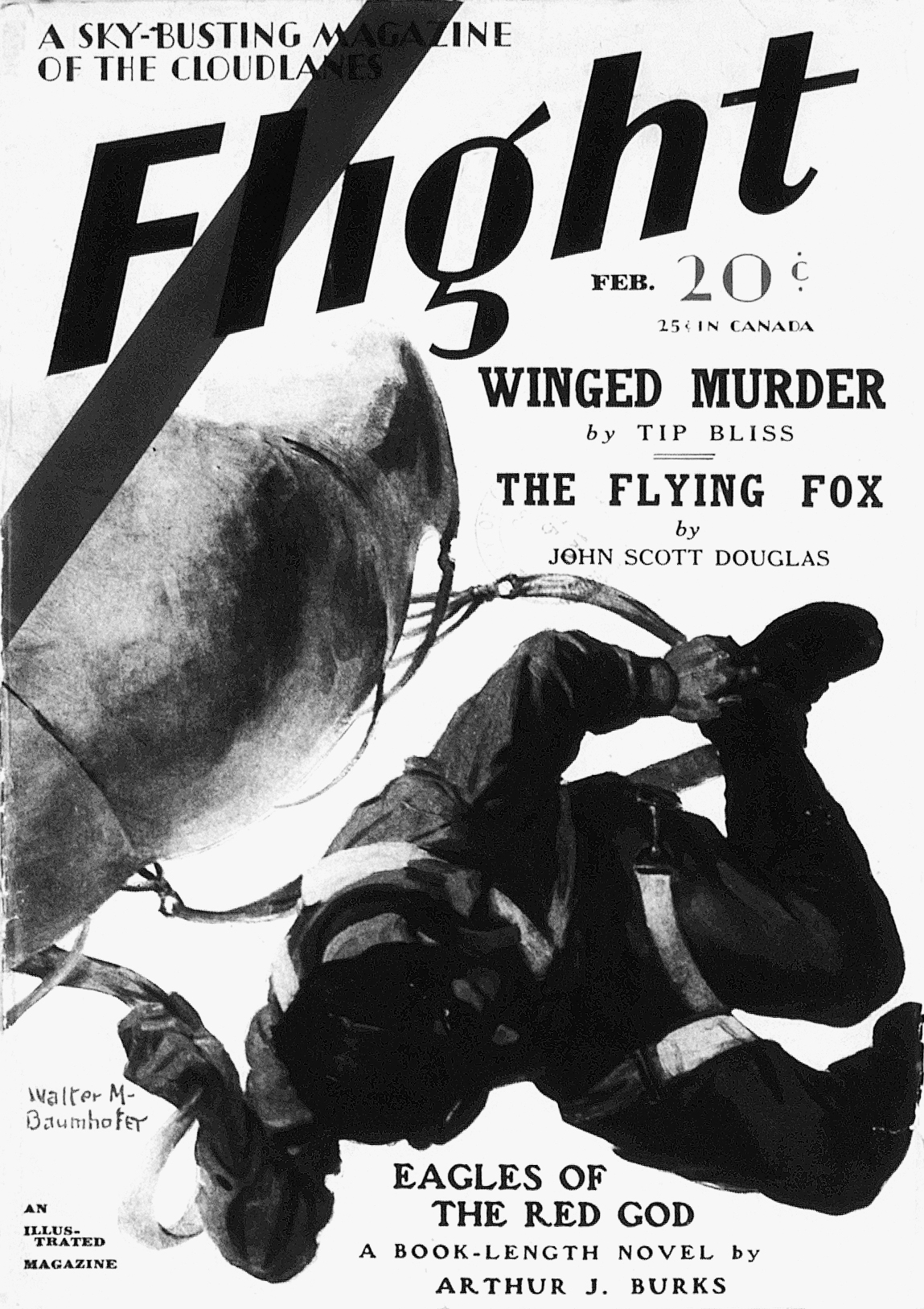 born in 1895 in Tacoma. A veteran of the First World War, serving in the A.E.F. from 1917-19, during the 20’s he lived in New York City and became a well-known writer of air fiction for pulp magazines. Later he branched out as an editor and publisher of the short-lived Far East Adventure, a fiction magazine of the Orient with a dozen issues from 1930-32, and Amazing Detective Stories with five issues published in 1931. Later he became a traveling representative of the American Fiction guild, and moved to Seattle. He was with the federal writers’ project there, and later a WPA administrative staff official. Bamber also worked for a time as editor of the Port Orchard Independent, and was active in Democratic party affairs. A newspaperman at heart, in 1944 he started publication of a weekly paper, The Bainbridge Merchant, on Bainbridge island where he was then residing, but illness forced him to curtail this venture after two issues. He passed away in November of that year.
From the February 1930 issue of the short lived Flight, we have Bamber’s “Send Him up with Saunders.”
The C.O. kept Sanders as a free lance, for more than one reason perhaps. But mainly, no doubt, because there were other observers who could do the regular air work as well or better than Sanders could, while none of them could do the special work that he did. He had one exceptional quality that all the others observers lacked—He could tell a good pilot from a poor one far sooner than the commanding officer, himself, could. When a new pilot came up to the squadron, the first thing the C.O. would say to the operations officer, was: “Send him up with Sanders.”
When a new pilot came up to the Squadron the C.O. said “Send him up with Sanders”—and Sanders never failed to know at once a good pilot from a bad one. And no one knew his method!
- Download “Send Him Up with Sanders” (February 1930, Flight)
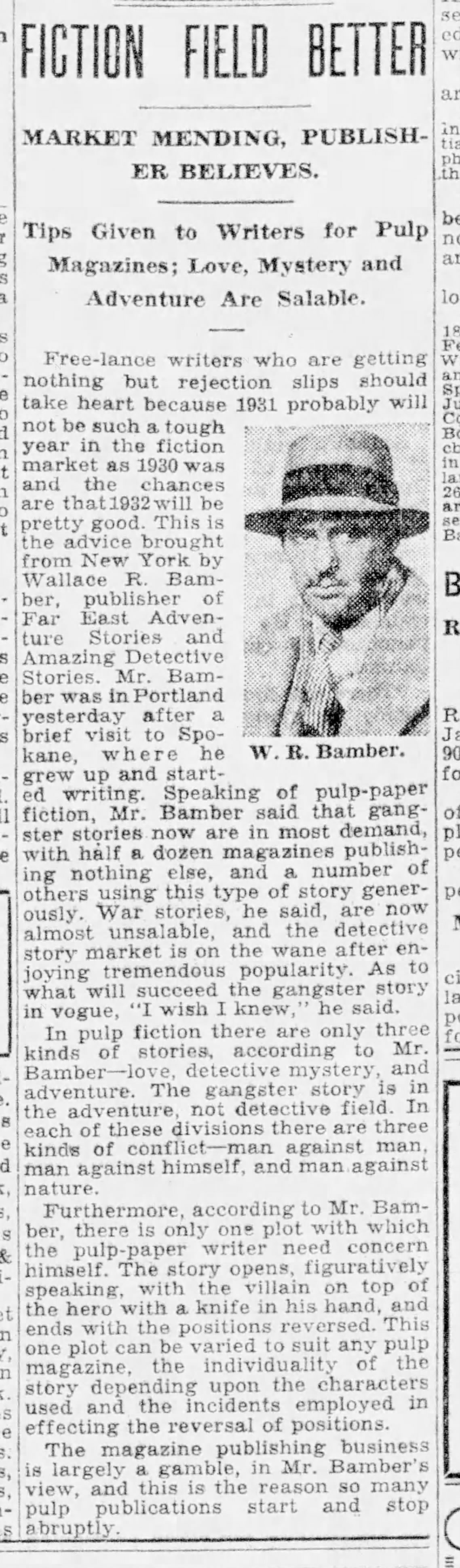
As a bonus, here’s an article from THE OREGONIAN where Mr. Bamber discusses what he sees as the state of Pulp fiction writing from February 17, 1931:

FREE-LANCE writers who are getting nothing but rejection slips should take heart because 1931 probably will not be such a tough year in the fiction market as 1930 was and the chances are that 1932 will be pretty good. This is the advice brought from New York by Wallace R. Bamber, publisher of Far East Adventure Stories and Amazing Detective Stories. Mr. Bamber was in Portland yesterday after a brief visit to Spokane, where he grew up and started writing. Speaking of pulp-paper fiction, Mr. Bamber said that, gangster stories now are in most demand, with half a dozen magazines publishing nothing else, and a number of others using this type of story generously. War stories, he said, are now almost unsalable, and the detective Story market, is on the wane after enjoying tremendous popularity. As to what will succeed the gangster story in vogue, “I wish I knew,” he said.
In pulp fiction there are only three kinds of stories, according to Mr. Bamber—love, detective mystery, and adventure. The gangster story is in the adventure, not detective field. In each of these divisions there are three kind’s of conflict—man against man, man against himself, and man against nature.
Furthermore, according to Mr. Bamber, there is only on® plot with which the pulp-paper writer need concern himself. The story opens, figuratively speaking, with the villain on top of the hero with a knife in his hand, and ends with the positions reversed. This one plot can be varied to suit any pulp magazine, the individuality of the story depending upon the characters used and the incidents employed in effecting the reversal of positions.
The magazine publishing business is largely a gamble, in Mr. Bamber’s view, and this is the reason so many pulp publications start and stop abruptly.
- Download “Fiction Field Better” (February 17, 1931, The Oregonian)
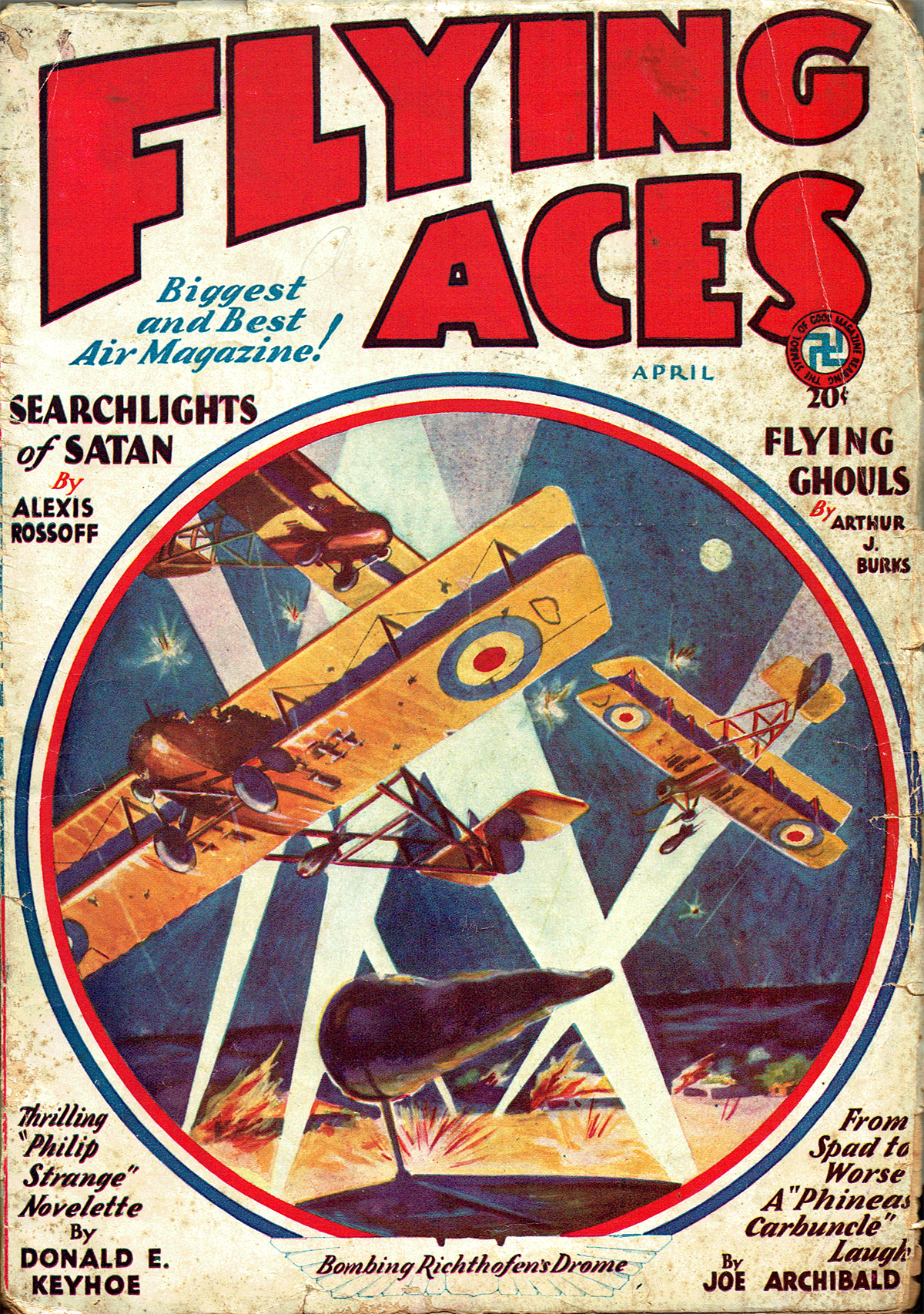 That sound can only mean one thing—that Bachelor of Artifice, Knight of Calamity and an alumnus of Doctor Merlin’s Camelot College for Conjurors is back to vex not only the Germans, but the Americans—the Ninth Pursuit Squadron in particular—as well. Yes it’s the marvel from Boonetown, Iowa himself—Lieutenant Phineas Pinkham!
 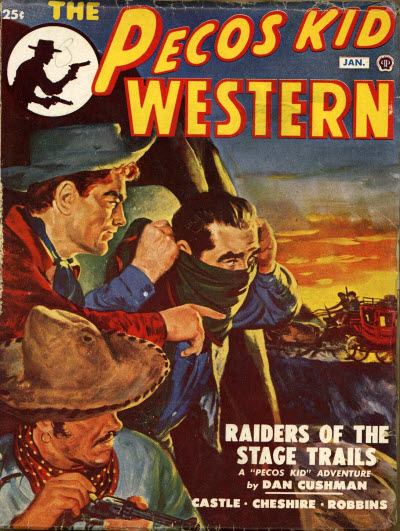 “The Roaring Town” featurettes. Blakeslee only produced three installments of his two-page illustrated looks into the boom towns of the Wild West in Pecos Kid Western. Authored by Jhan Robbins, the prolific western story author and editor of pulp magazines, and deftly illustrated by Blakeslee, the feature delves into the story behind noted boom towns of the old west. This time Robbins and Blakeslee tell us the tale of Weaverville, California—a gold rush boom town that made it and still stands
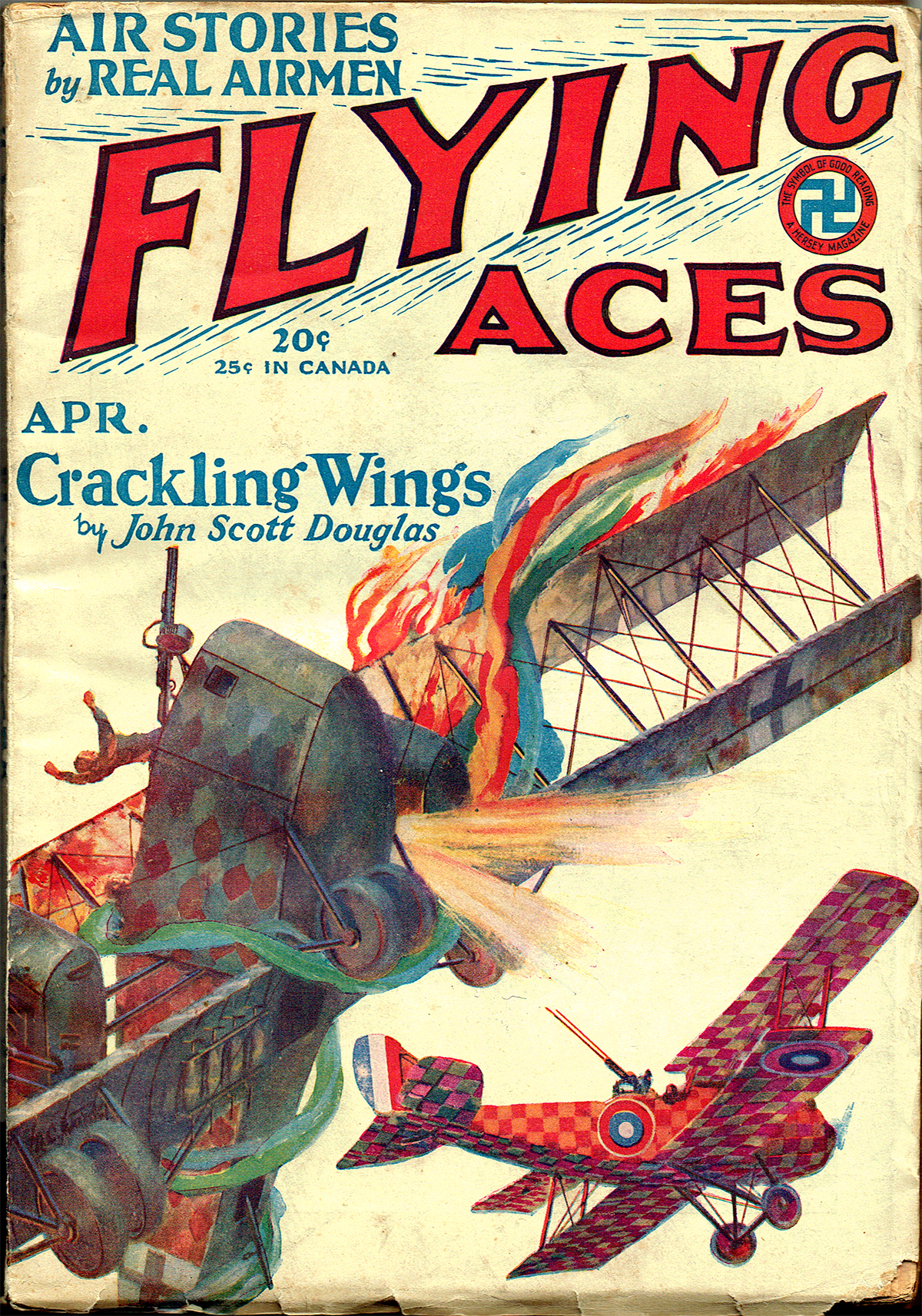 a story by Franklin M. Ritchie. Ritchie only wrote aviation yarns and his entire output—roughly three dozen stories—was between 1927 and 1930, but Ritchie was not your typical pulp author—he was a lawyer who wrote pulp stories on the side to satisfy his yen for flying.
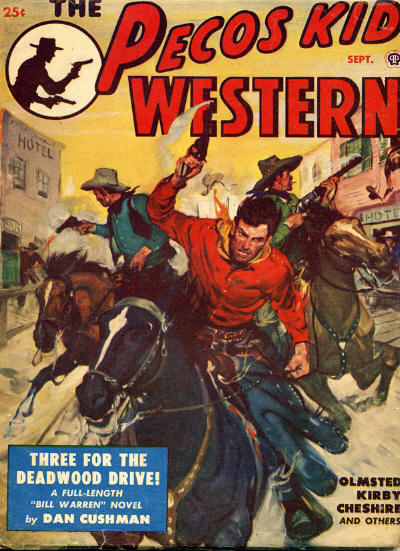 “The Roaring Town” featurettes. Blakeslee only produced three installments of his two-page illustrated looks into the boom towns of the Wild West in Pecos Kid Western. Authored by Jhan Robbins, the prolific western story author and editor of pulp magazines, and deftly illustrated by Blakeslee, the feature delves into the story behind noted boom towns of the old west. This time Robbins and Blakeslee tell us the tale of Soya, Texas—a town now lost to the sands of time.
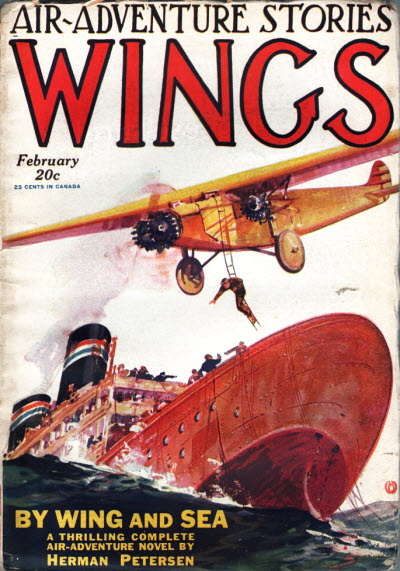 a short story by renowned pulp author Frederick C. Davis. Davis is probably best remembered for his work on Operator 5 where he penned the first 20 stories, as well as the Moon Man series for Ten Detective Aces and several other continuing series for various Popular Publications. He also wrote a number of aviation stories that appeared in Aces, Wings and Air Stories.
 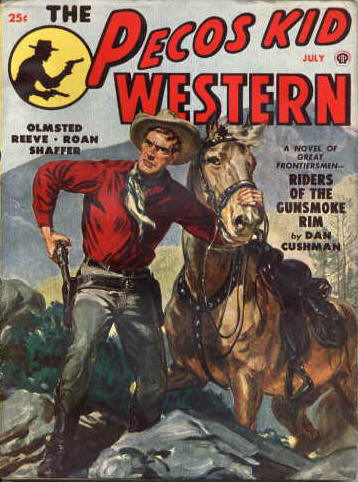 feature that ran in several mystery magazines, “The Roaring Towns” was a two page feature focusing on a different Wild West frontier town each time. Blakeslee teamed with writer Jhan Robbins for the “The Roaring Towns.” Robbins was a Brooklyn-born writer who became an editor for pulp magazines like Big Book Western and Dime Mystery after WWII. With his wife June Stumpe he became a widely known for writing articles—one being nominated for a Pulitzer Prize—and later biographies.
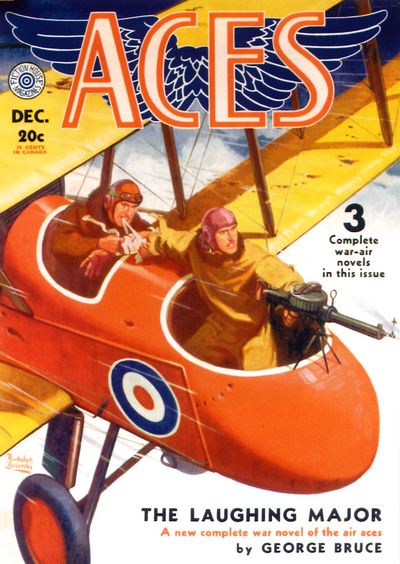 by H.P.S. Greene.
 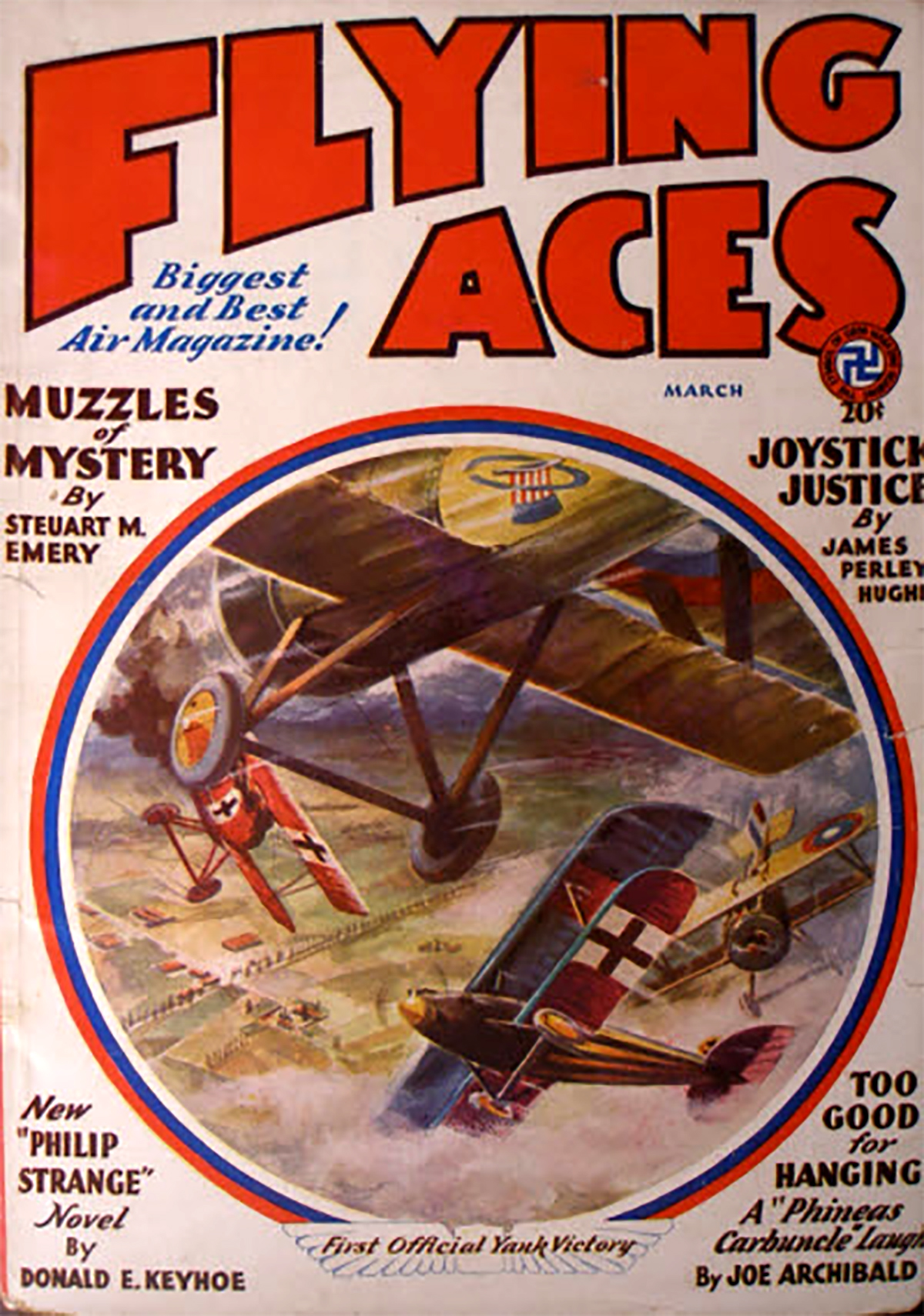 That sound can only mean one thing—that Bachelor of Artifice, Knight of Calamity and an alumnus of Doctor Merlin’s Camelot College for Conjurors is back to vex not only the Germans, but the Americans—the Ninth Pursuit Squadron in particular—as well. Yes it’s the marvel from Boonetown, Iowa himself—Lieutenant Phineas Pinkham!
 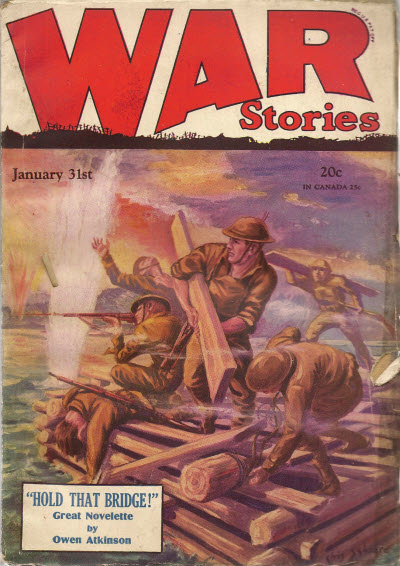 by the prolific O.B. Myers! Myers was a pilot himself, flying with the 147th Aero Squadron and carrying two credited victories and awarded the
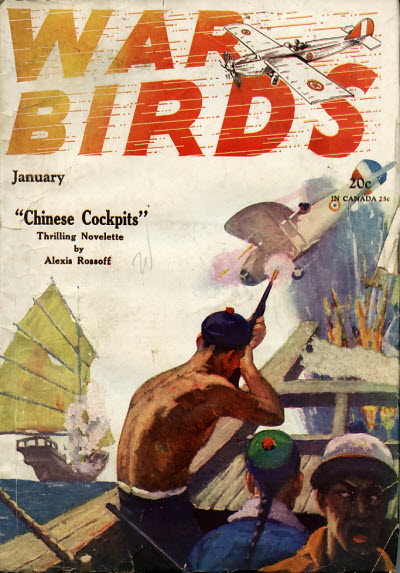 by the prolific O.B. Myer’s! Myers was a pilot himself, flying with the 147th Aero Squadron and carrying two credited victories and awarded the
 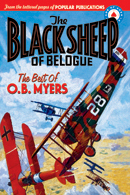 O.B. Myer’s didn’t really have any series characters. The few recurring characters he did have in the pages of Dare-Devil Aces, we’ve collected into a book we like to call “The Black Sheep of Belogue: The Best of O.B. Myers” which collects the two Dynamite Pike and his band of outlaw Aces stories and the handful of Clipper Stark vs the Mongol Ace tales. If you enjoyed this story, you’ll love these stories!
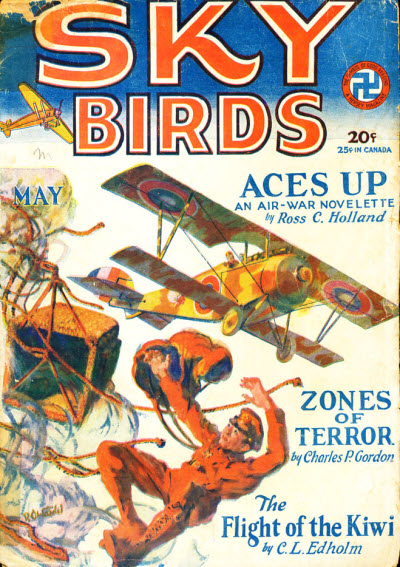 another story by Franklin M. Ritchie. Ritchie only wrote aviation yarns and his entire output—roughly three dozen stories—was between 1927 and 1930. Today we have another one from the lawyer who wrote pulp stories on the side to satisfy his yen for flying. From the May 1929 issue of Sky Birds, Ritchie gives us a tale of Lieutenant Hank Durant.
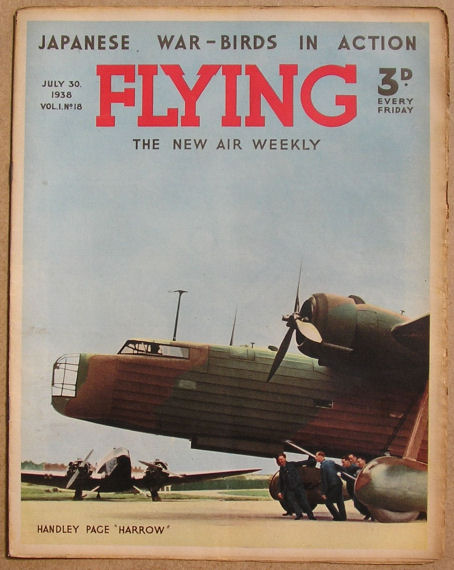 weekly paper of all things aviation, started up in England in 1938, amongst the articles and stories and photo features was an illustrative feature called “Heroes of the Air.” It was a full page illustration by S. Drigin of the events surrounding how the pictured Ace got their Victoria Cross along with a brief explanatory note. Today’s full page illustration is not an installment in that series, but rather tells the story of how Flight-Lieutenant G.E. Jackson won the Distinguished Flying Cross.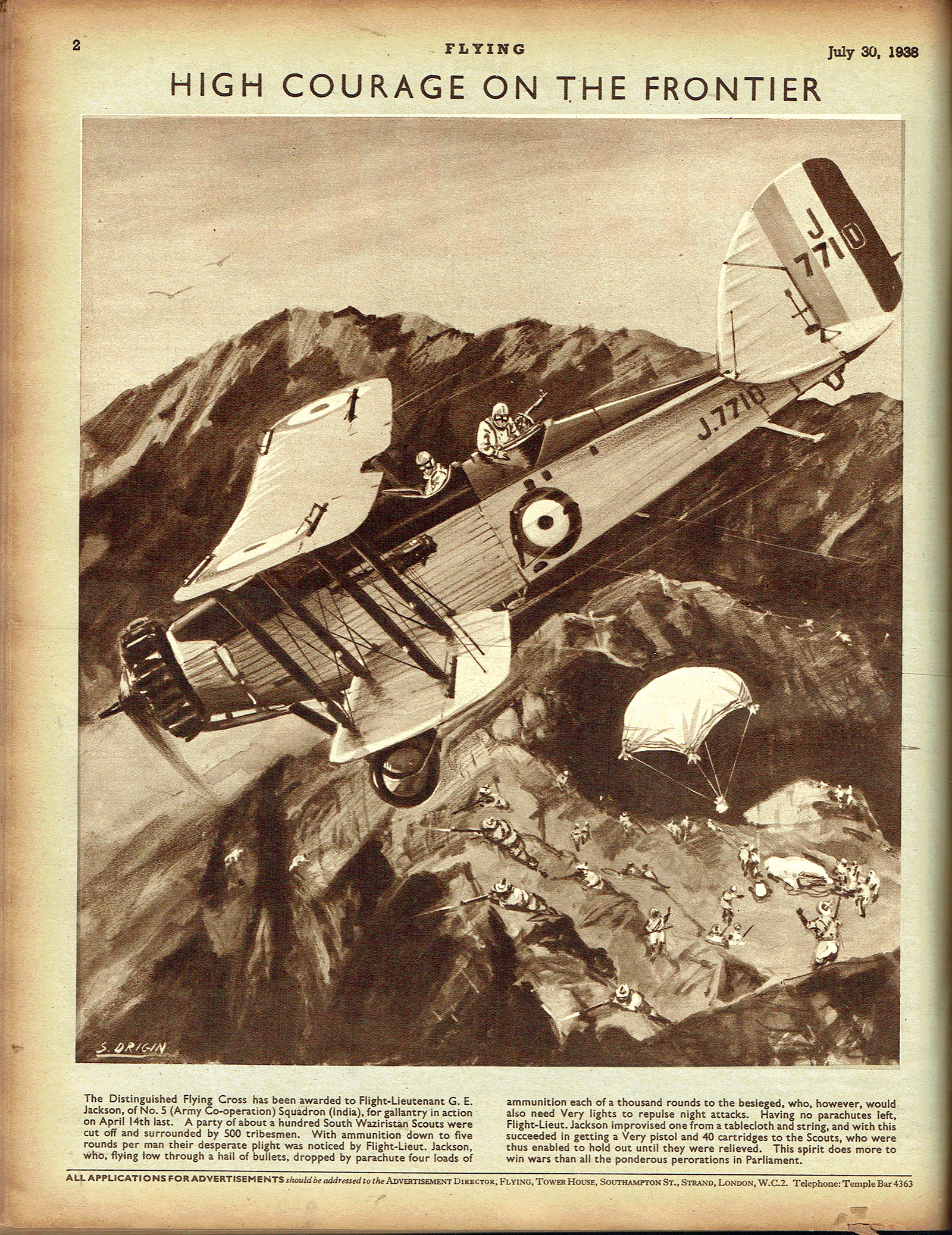
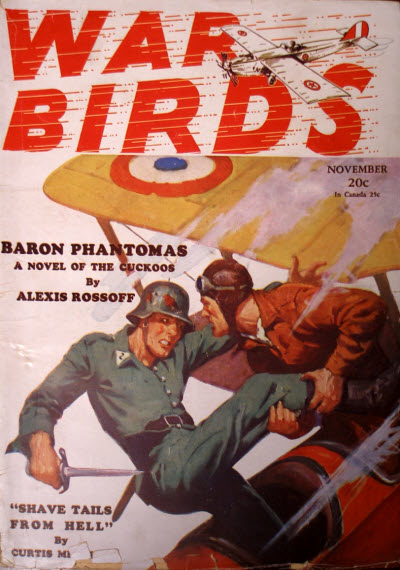 fourth and final tale of the Cuckoo’s Nest from the prolific pen of Alexis Rossoff. The Cuckoo’s Nest stories ran in War Birds in 1930. The Cuckoo’s are an outfit a lot like Keyhoe’s
 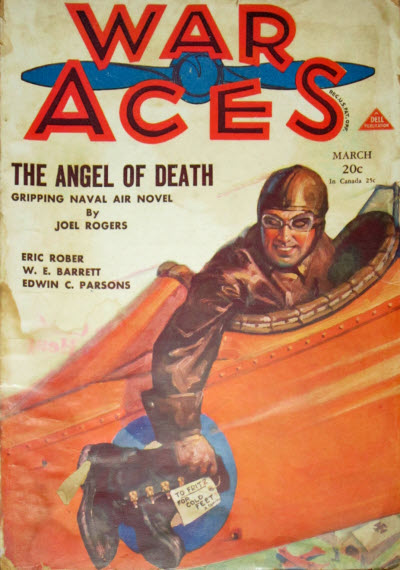 pen of the Navy’s own Allan R. Bosworth. Bosworth wrote a couple dozen stories with Humpy & Tex over the course of ten years from 1930 through 1939, mostly in the pages of War Aces and War Birds. The stories are centered around the naval air base at Ile Tudy, France. “Humpy” Campbell, a short thickset boatswain’s mate, first class who was prone to be spitting great sopping globs of tabacco juice, was a veteran seaplane pilot who would soon rate two hashmarks—his observer, Tex Malone, boatswain’s mate, second class, was a D.O.W. man fresh from the Texas Panhandle. Everybody marveled at the fact that the latter had made one of the navy’s most difficult ratings almost overnight—but the answer lay in his ability with the omnipresent rope he constantly carried.