WE’RE celebrating the holidays with Harold F. Cruickshank—creator of those great Aces of the Western Front’s Hell Skies—Red Eagle, Sky Wolf, and Sky Devil. But this holiday season it’s going to be a down home Christmas featuring Cruickshank’s Pioneer Folk stories from the pages of Range Riders Western (1945-1952) on Mondays and Fridays; and Cruickshank’s own recollections of homesteading life from The Edmonton Journal’s The Third Column on Wednesdays.
The Edmonton Journal regularly set aside the third column on its editorial page for submissions from freelance writers, of which Cruickshank was an occasional contributor over the years. His columns frequently focused on his life growing up as a homesteader with his father and brother who had all immigrated from Scotland in 1905 to Barrhead, Canada along the famed Klondike Trail, just to the northwest of Fort Edmonton.
It’s Wednesday, so here’s another of Cruickshank’s Third Columns.
The Third Column
by Harold F. Cruickshank • Edmonton Journal, Edmonton, Canada • Saturday, 23 May 1953
Bad Seasons and Good
AFTER forty-seven years of residence in these latitudes, I have found that nature balances her seasons fairly well. Over the long term and as a whole, we haven’t suffered too much through weather capers.
I think today, especially, of our first springtime in this country our first spring (question mark) in the hinterland.
We had trekked in, in the summer of 1906, and had somehow thrived as we survived that most terrible winter on record, the winter of 1906-07. We had, by back-breaking toll, with other work accomplished, cleared five acres of heavy willow-studded land. When the snows at last started to melt, we looked eagerly to the firing of the brush piles, the plowing and the sowing of that first patch of “chocolate-loam” soil. (The descriptive phrase is from publicity pamphlets we had read In Britain in 1905.)
We had, in the winter, hauled in seed oats a distance of seventy miles, over drifted trails. We now saw miniature creeks become raging rivers, for the snow had been heavy, and the spring season tardy indeed.
As I remember it, it was the first week in June before we, at last, got our first few bushels of oats harrowed in.
Five acres of oats! How insignificant now, but how important then! We watched for the first green blades to shoot up through the inadequately tilled sod. When we saw them, we were thrilled!
It was a reward, indeed, for those endless days of toil—grubbing out those horrible willow clumps with axe and mattock, or grub-hoe.
* * *
We were informed by more experienced settlers that the crops of 1907 would never ripen. We were more optimistic, especially as we watched the rapid growth of the green oats.
The “more experienced” settlers were right: An early frost struck the ripening grain and all we had for our efforts was feed oats, though that was something. We had a fairly good harvest of feed oats. Our horses would need them, in bundles and as threshed grain. Sadly enough, though, my father, who in his boyhood had herded sheep in the Highlands of Scotland, bought a small band of sheep. He had visions of quick-turn-over—lambs and wool crop. We, his two sons and George, a youth we had brought out with us, had visions of endless sheep-herding in a wild, coyote-infested wilderness. . . .
Our “visions,” pessimistic as they were, bore material fruit. . . .
It might have been better, or not so bad, had it not been for Samantha-Jane, the bell ewe. Samantha-Jane was the homeliest, most exasperating creature I have ever known—a she-devil if there ever was one.
Tall, rich peavine grass grew close to the homestead area, but Samantha-Jane spurned it. She started out at a trot and kept trotting, always for distant pastures. The flock followed, and of course the herder tried to follow, or to swing the flock back. Samantha-Jane led us over, under, or through twisted labyrinths of fallen brush and timber, through mazes of rosebush scrub, alders, and willows, in her ceaseless search for heaven knew what.
A year or so later, we were extremely sorry for a young Scot who bought the sheep band, when he had the misfortune to fall into a swollen creek. We regarded him as our greatest friend, for he was taking Samantha-Jane away. He was rescued, of course; so were the sheep. . . . Needless to say, Samantha-Jane was the first ashore.
I feel reasonably sure that if, today, I could take a trip up to some of those old haunts. I would see her impudent, mottled face leering at me through a port in a rosebush maze, and hear her blatting. . . .
* * *
Up in the wilds, in those early days, we learned to take the bitter with the better. We established a sense of gratitude for the “better,” which helped us to forget the bitter.
Then, there were no drive-in theatres, or local baseball tournaments, or radios, or regular mail service. . . . We were happy enough, after riding through muskeg or circumnavigating swampland, to be able to pick up long overdue mail which might include a seed catalogue, a letter or newspaper from the homefolk, or that always welcome periodical—the fat weekly which came from Montreal.
* * *
Soon, again, June will be “bustin’ out all over,” and we shall be able to forget all about a rather miserable April, as we bounce right into summer.
But, for those readers who cannot agree with me, there is the philosophy of that priceless frontline character, Old Bill: “If you know of a better ’ole, go to it. . .”
After nearly half a century hereabouts, this writer is sticking around. He wants to see what John Ducey’s Eskimos have to offer and what those other Eskimos, in football harness, will have to offer. . .
Old Lady Nature will take care of our crops. . . . Just wait and see!





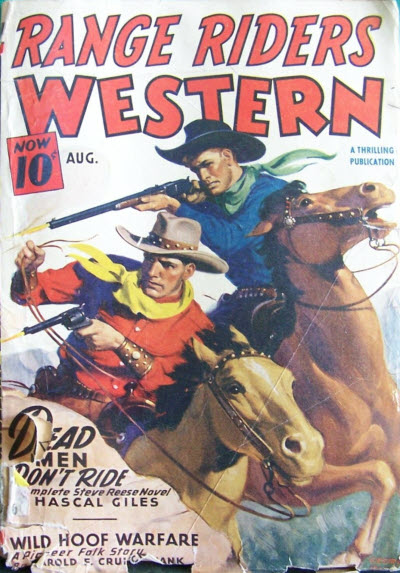 the trials and tribulations of Dal and Mary Baldwin as they carved out their piece of the Wilderness in Sun Bear Valley, Wyoming and establish a growing community. Looking to strengthen his horse breeding stock, Dal goes in search of King, the great wild stallion he had seen when he and Mary had first arrived in the valley, who has been absent from Sun Bear Valley and in the process discovers another valley beyond with close to two hundred and fifty acres of tillable land, and pasture range beyond.
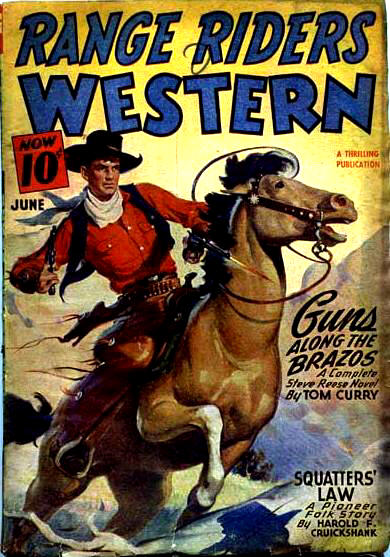 the trials and tribulations of Dal and Mary Baldwin as they carved out their piece of the Wilderness in Sun Bear Valley, Wyoming and establish a growing community. The Sun Bear Valley settlers start to worry about their rights as squatters and plan to get government surveyors in to draw up their claims as a salty outfit of owlhoots lead by a nasty piece of work known as Runkin herding about a hundred head of the mangiest looking cattle heads toward their valley.
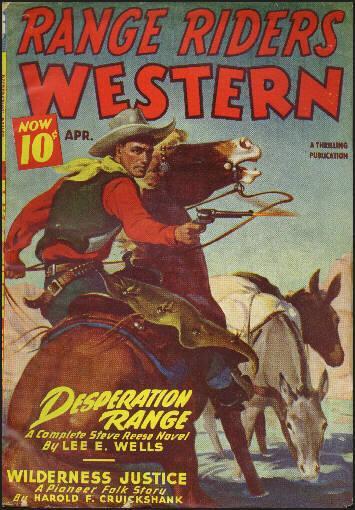 the trials and tribulations of Dal and Mary Baldwin as they carved out their piece of the Wilderness in Sun Bear Valley, Wyoming and establish a growing community. Doc runs afoul of Malotte the half-breed who has returned to rustle Dal’s horses and another wagon arrives in the valley with more settlers—The Morrisons—Jud and Olga, their eleven year old fraternal twins Martin and Maureen and eldest son Jack who is married to Rhona and has three young kids of his own—little baby Jud, five months; Nell, four, and Ollie, five. With little Jimmy Baldwin a husky four year old now and his recently born younger brother Tenby, looks like Sun Bear Valley will be needing the services of the Morrison’s niece who is a school-marm.
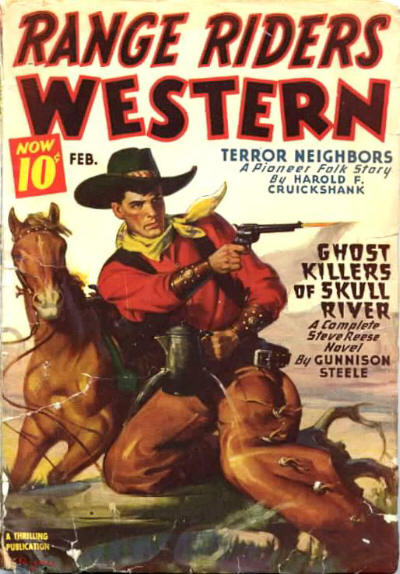 the trials and tribulations of Dal and Mary Baldwin as they carved out their piece of the Wilderness in Sun Bear Valley, Wyoming and establish a growing community. The Sun Bear settlers are menaced by Mishe, the she-grizzly, and Acheeta, the cougar and Dal knew that to grizzly and cougar alike, there was no more succulent food in all the wilds than young horseflesh. In a night, either species of varmint could wipe out the whole of Dal’s horse stock and his cow and her calf as well.
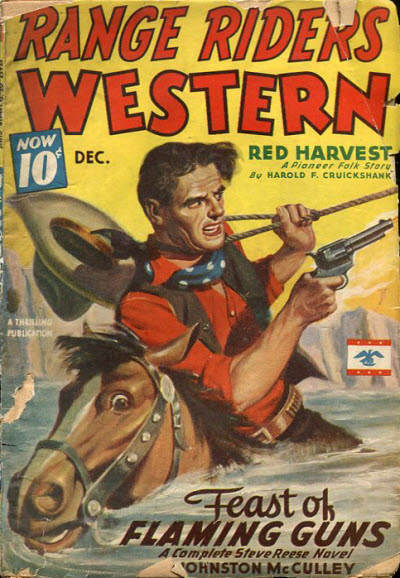 the trials and tribulations of Dal and Mary Baldwin as they carved out their piece of the Wilderness in Sun Bear Valley, Wyoming and establish a growing community. Another family arrives in the valley in the form of Tom and Ella Bruce and their infant daughter. Unfortunately for Dal, they took the advice of that rascally half-breed Quirt Malotte on their way there and their dog and flock of sheep they’ve brought with them arrive first and trample through Dal’s crop and Mary’s garden. The Bruces more than make up for it when lightning touches off a fire in the valley.
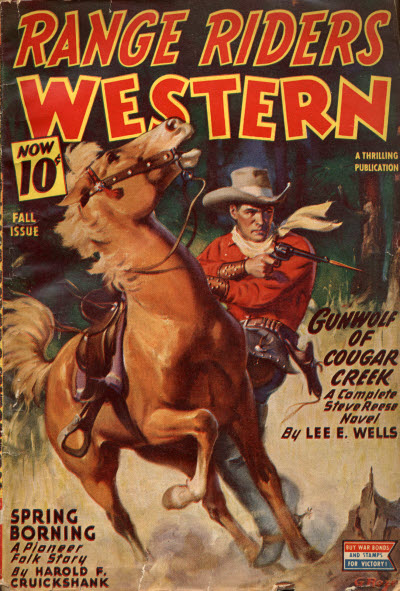 the trials and tribulations of Dal and Mary Baldwin as they carved out their piece of the Wilderness in Sun Bear Valley, Wyoming and establish a growing community. The Baldwins are settled in to their cabin in Sun Bear Valley, but an old nemesis returns and a new couple arrive in the valley just as Mary is about to give birth.
 a story from the short-lived Sky Devils magazine by Anthony Field. Anthony Field was a pseudonym used by Anatole Feldman who specialized in gangland fiction—appearing primarily in Harold Hersey’s gang pulps, Gangster Stories, Racketeer Stories, and Gangland Stories. His best-known creation is Chicago gangster Big Nose Serrano. But he also wrote a number of aviation stories including four stories for Sky Devils featuring Quinn’s Black Sheep Squadron!
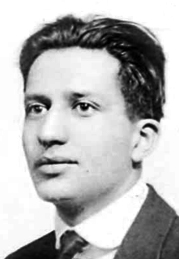 Anatole France Feldman (1901-1972) is primarily known as a pulp magazine writer from the late-’20s to the late-’30s. He specialized in gangland fiction, appearing primarily in Harold Hersey’s gang pulps, Gangster Stories, Racketeer Stories, and Gangland Stories. He also appeared in the rival magazines, Gun Molls and The Underworld.
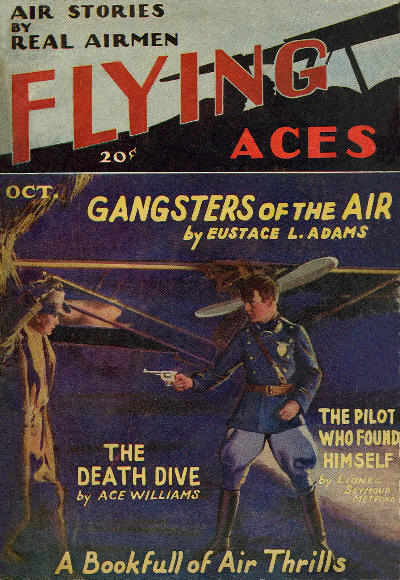 another story from one of the new flight of authors on the site this year—Andrew A. Caffrey. Caffrey, who was in the American Air Service in France during The Great War and worked for the air mail service upon his return, was a prolific author of aviation and adventure stories for both the pulps and slicks from the 1920’s through 1950. Here Caffrey tells the tale of a group of service men filling out the last months of their service stateside after the end of the war before being discharged. From the very first issue of Flying Aces October 1928 it’s Andrew A. Caffrey’s “A Fine Man—The Colonel!”
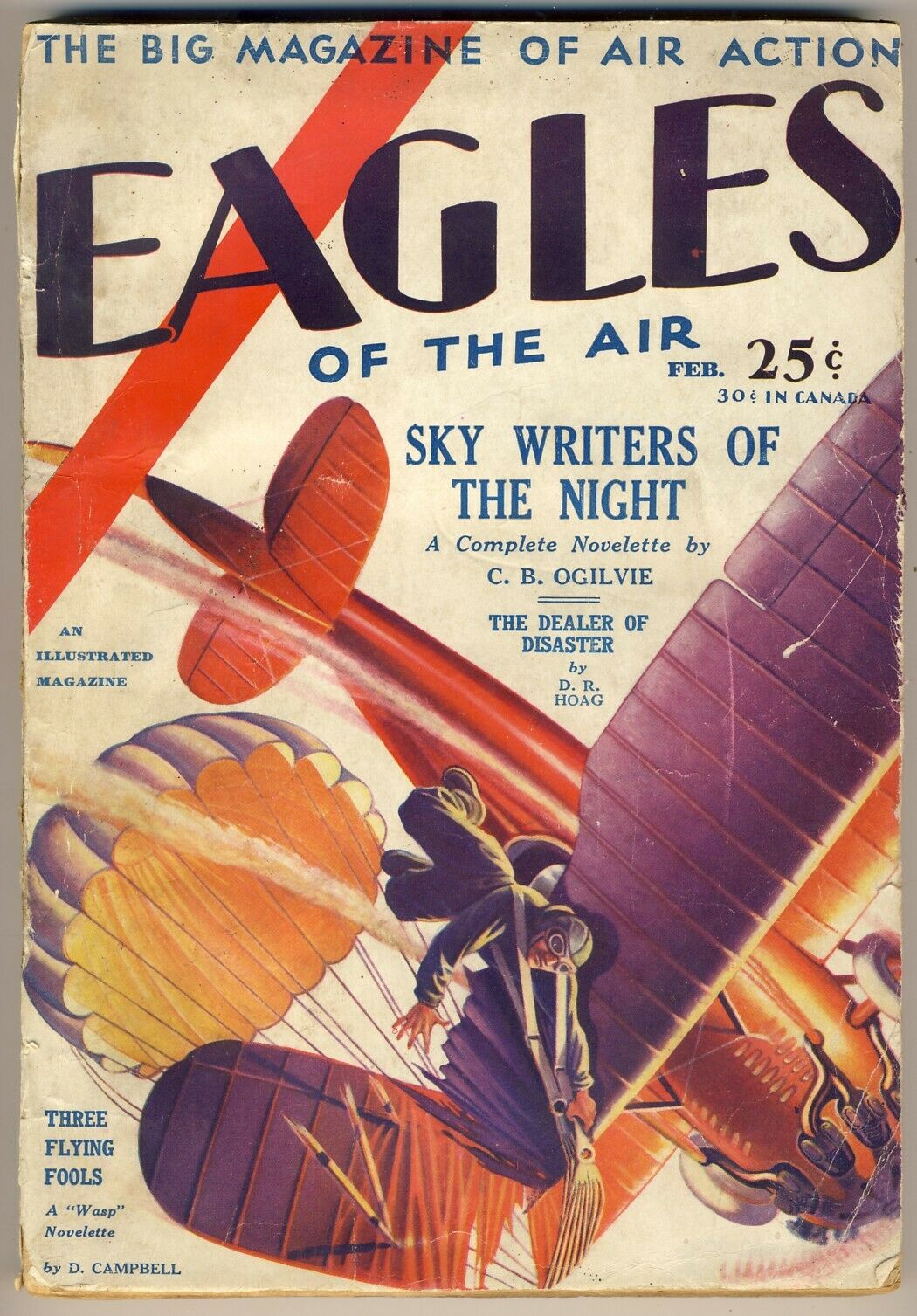 air intrigue by E.W. Chess. Elliot W. Chess was a prominent author in the pulps—his name frequently appearing on the covers to entice readers. His pulp career spanned from 1929 to 1940, but a majority of his output was in the early thirties. Equally adept at both westerns having grown up in El Paso, Texas and air war stories having served in the Royal Flying Corp in the First World War and the 7th Squadron of the Polish Air Force afterward when Russians tried to invade the country. Here, Chess tells a tale of a “Doomed Squadron” whose pilots are mysteriously disappearing one by one. . . .
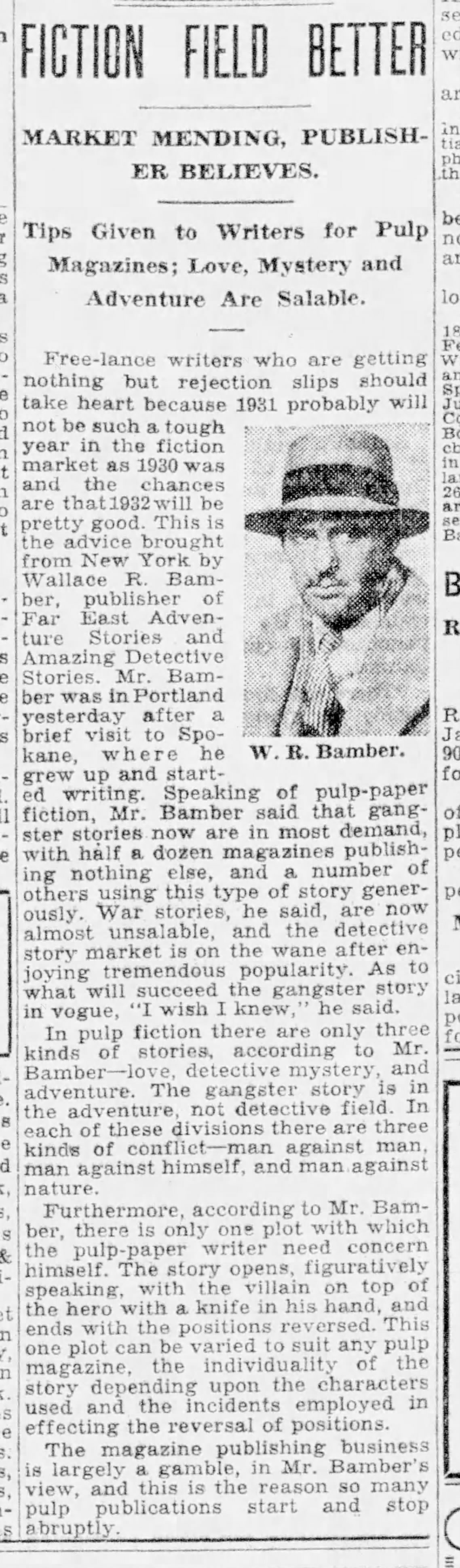
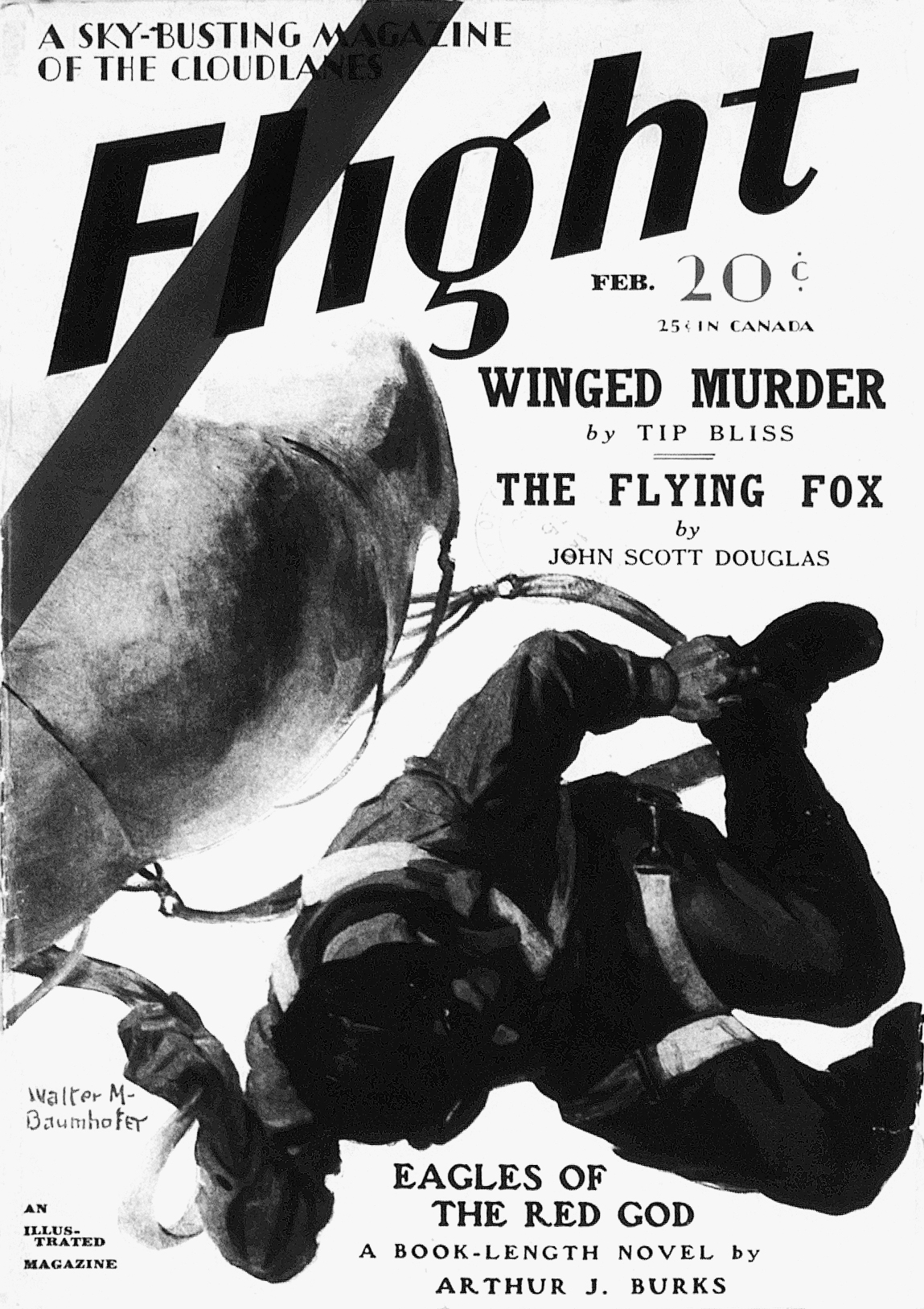 born in 1895 in Tacoma. A veteran of the First World War, serving in the A.E.F. from 1917-19, during the 20’s he lived in New York City and became a well-known writer of air fiction for pulp magazines. Later he branched out as an editor and publisher of the short-lived Far East Adventure, a fiction magazine of the Orient with a dozen issues from 1930-32, and Amazing Detective Stories with five issues published in 1931. Later he became a traveling representative of the American Fiction guild, and moved to Seattle. He was with the federal writers’ project there, and later a WPA administrative staff official. Bamber also worked for a time as editor of the Port Orchard Independent, and was active in Democratic party affairs. A newspaperman at heart, in 1944 he started publication of a weekly paper, The Bainbridge Merchant, on Bainbridge island where he was then residing, but illness forced him to curtail this venture after two issues. He passed away in November of that year.
 FREE-LANCE writers who are getting nothing but rejection slips should take heart because 1931 probably will not be such a tough year in the fiction market as 1930 was and the chances are that 1932 will be pretty good. This is the advice brought from New York by Wallace R. Bamber, publisher of Far East Adventure Stories and Amazing Detective Stories. Mr. Bamber was in Portland yesterday after a brief visit to Spokane, where he grew up and started writing. Speaking of pulp-paper fiction, Mr. Bamber said that, gangster stories now are in most demand, with half a dozen magazines publishing nothing else, and a number of others using this type of story generously. War stories, he said, are now almost unsalable, and the detective Story market, is on the wane after enjoying tremendous popularity. As to what will succeed the gangster story in vogue, “I wish I knew,” he said.
 That sound can only mean one thing—that Bachelor of Artifice, Knight of Calamity and an alumnus of Doctor Merlin’s Camelot College for Conjurors is back to vex not only the Germans, but the Americans—the Ninth Pursuit Squadron in particular—as well. Yes it’s the marvel from Boonetown, Iowa himself—Lieutenant Phineas Pinkham!