THIS week we have 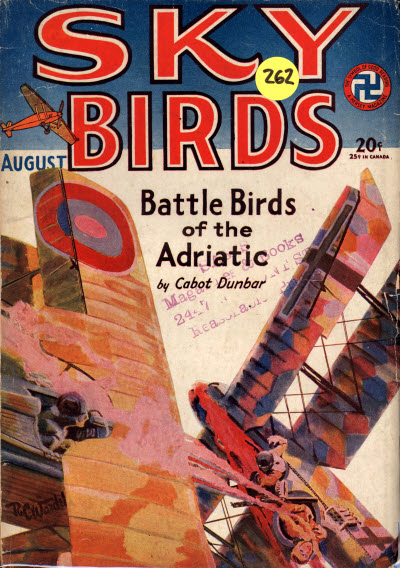 a story from the prolific pen of Eustace L. Adams. Born in 1891, Adams was an editor and author who served in the American Ambulance Service and the US Naval Service during The Great War. His aviation themed stories started appearing in 1928 in the various war and aviation pulps—Air Trails, Flying Aces, War Stories, Wings, War Birds, Sky Birds, Under Fire, Air Stories and Argosy. He is probably best remembered for the dozen or so airplane boys adventure books he wrote for the Andy Lane series.
Lieutenant Bull Meehan, U.S.N., was in a mood. And when Bull was in a mood, let it be said that the United States Naval Air Station at Souilly-sur-mer was a place over which the sun hid behind lowering clouds; where red wine soured on the mess table; where flatfooted gob sentries paced their beats with the snap and the devotion to duty of Imperial Household Guardsmen and where the young naval aviators gathered in the lee of the hangars and cursed with great feeling and remarkable fluency. It was at this time, Ensign Wadsworth arrived wearing his Croix de Guerre under his gold naval aviator’s badge and had a record of two years’ flying service with the French Army…
From the August 1929 issue of Sky Birds, it’s Eustace Adams’ “The Night-Raid Patrol!”
A smashing hit! Follow this plucky Yankee flier through hell-popping adventure. See him zig-zag through the air, spewing havoc and destruction, locking wings with his venomous C.O. Here is a thrilling yam from the pen of a master of tale-spinner!
As a bonus, here’s an article about the author himself from the Akron Beacon Journal in 1940!

Argument With Wife Started Eustace Adams’ Career; Author of Adventure Tales Now Wants To Do ‘Better’ Things
by Naomi Bender • Akron Beacon Journal, Akron, Ohio • Sunday, March 24, 1934, p.9-D
MIAMI, Fla., March 23.— Ever hear of Eustace L. Adams? Probably not, yet he’s in “Who’s Who”—there’s three inches of small type about him—he writes serials and short stories for most of the better magazines.
He’s had dozens of boys’ books published, as well as a few adventure novels. His works have been published in England. They’re called “Sovereign Thrillers” there, or, in the vernacular, “Shilling Shockers.” He’s 49 and he makes enough money out of his writing to be in the upper income brackets. He calls himself just a good “potboiler.”
“And I have no message for suffering humanity,” the athletic-looking author said, with a grin, as he puffed on a cigaret. We were seated in his workroom, at the rear of his home on Palm island overlooking the bay.
He’s a likable fellow, this Adams, with a nice grin, kindly blue eyes and a nautical air about him. That’s probably because, when he’s not working, you’ll usually find him on his tiny sailboat, for sailing is his one and only pastime.
Argument Changes Career
He was an aviator during the war. After that, he became a salesman for an advertising concern. Then fate stepped in and shoved him into a completely different profession.
It all started over an argument with his wife. Well, not exactly an argument, but it was like this:
Mr. Adams traveled quite a bit so his wife decided to take a course in journalism to keep herself busy. That started her writing short stories but, like many an amateur writer, her intentions were better than the results. She rarely, if ever, finished her stories.
So naturally, one day, friend husband said, with a very superior air: “I bet I could write one of those confession stories you’re always playing around with. I’ll show you how to do it.”
And naturally, friend wife, knowing her husband had never written a line in his life, reacted just as any wife would—with a big raspberry.
But this time the husband won the decision. He not only wrote the story, but he received a handsome check as first prize winner of a confession story contest.
This was very nice indeed, but Adams still thought a good job with an advertising concern was better than the doubtful security of writing.
Then Lindbergh made his sensational hop across the Atlantic, which might seem to have no connection with the life of Eustace L. Adams but did.
Adams had been a professional aviator; he had also won a confessional story contest. Lindbergh’s flight put a premium on stories with a factual aviation background. And the pulp magazine editor thought of Adams.
”It just happened that at the time I was one of the few literate persons who knew anything about flying,” Adams modestly explained.
He wrote a serial and five short stories in 60 days and sold them all.
From that time on, he has been a professional writer.
Starts Early, Quits Early
He says he keeps “regular office hours” but there are few offices where the employees arrive at 5 o’clock every morning. Adams works until noon each day on an electric typewriter and then he’s through for the day.
“I take only two holidays a year,” he said, “the 4th of July and Christmas.”
He reads a lot, chiefly better fiction and magazines, plenty of magazines.
“I’m just like an architect looking at other architects’ houses,” he stated. “Times change in popular fiction; each year there’s a tiny shift in fashions and I have to keep up with them if I want to sell my stuff.”
There are days when he’s wished he were a plumber or a dentist. “Anything,” he said, with a wry grin, “but what I am, which forces me to sit here at the typewriter whether I want to or not.”
And he does sit there, without doodling, for a stipulated time each day even when he can’t write a line he thinks is worth a hoot.
For, as with all authors, there are dry periods when things just won’t come through
“Then I try to remember what Edith Wharton once said. It’s helped me over many a tough spot when my mind’s as empty as a bass drum. ’Just put one word after another laboriously,’ she said, ’juat carry your hero along and keep on plodding, then all of a sudden things begin to go.’”
He works on one story at a time even though he does turn out millions of words each year. He doesn’t use a plot machine, either He’s tried it, he confesses, but it didn’t work. He sells the majority of the stories he writes. He has a little card file on which he keeps a record of each story he has written and its fate. If the story sells, the amount is marked down neatly, with the date and the publication to which it was sold. If it flopped, this is noted on cards that go into the rear of the file, marked “Rejected.” The number of these cards is very small.
Like all authors who depend on their writing for a living. Adams fears the day when he may run out of ideas or may not be able to sell his stories.
But when that day comes he hopes to have enough money so that he can sit back and relax and enjoy life.
Influence Isn’t Necessary
Here’s how he would advise those who aspire to be professional “entertainment writers.”
Study the magazines to which you want to sell your stories. “You can’t just write a story, send it around to every magazine from the pulps to the slicks and get it sold. It has to be directed to a particular publication.”
You don’t need any influence with magazine editors. If your stories are good, they’ll grab them.
“About the only break I get,” the author said, “is that if I send a story in that Isn’t quite right, I’ll get It back with something like this written on it. ‘On page 33, you stink. Or your heroine is out of line, fix her up.’ Then I revise the story, send it back and it has a good chance of being accepted.
“The chief handicap any young writer has to overcome,” Adams continued, “Is getting gun shy in front of the typewriter. Most amateurs have to cure themselves of buck fever before they can do their best. Once that’s licked, half battle is won.”
Tucked somewhere back in his mind is the thought that some day he may do a “real job of writing ”
He knows most popular authors feel that way and he’s not kidding himself.
“Naturally I would like to do better things,” he confessed frankly. “It would be swell to have real genius, like Hemingway in ‘The Killer’ or ’The Sun Also Rises,’ or Steinbeck In ‘The Grapes of Wrath.’ I would like to say to myself that, if I had five years I could do something good, too. I know it may be just an illusion, but I also know that many of our best writers got their training first in the pulp magazine field.”





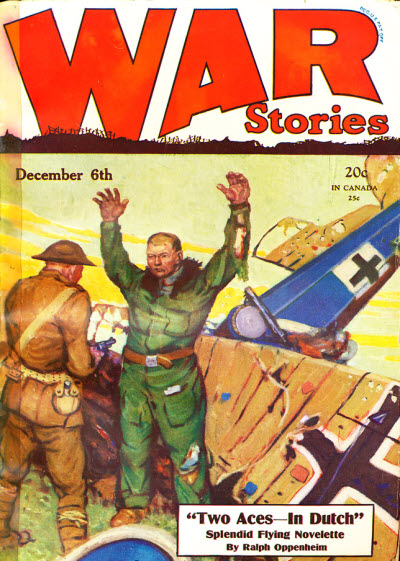 the third and final of three Ralph Oppenheim’s Three Mosquitoes stories we’re featuring this March for Mosquito Month! And this one’s a doozy! In a dogfight to the death, Kirby and the German Ace known as “The Killer” both end up going down—unfortunately, their fight had taken them off course and they have cashed in neutral Holland where both are taken into custody and are sentenced to remain in the country until the war’s end. The two bitter enemies in the air, build a fast friendship on the ground and must rely on one another if they are to escape and get back to their own squadrons! Read this incredible story in Ralph Oppenheim’s “Two Aces—in Dutch” from the December 6th, 1928 issue of War Stories!
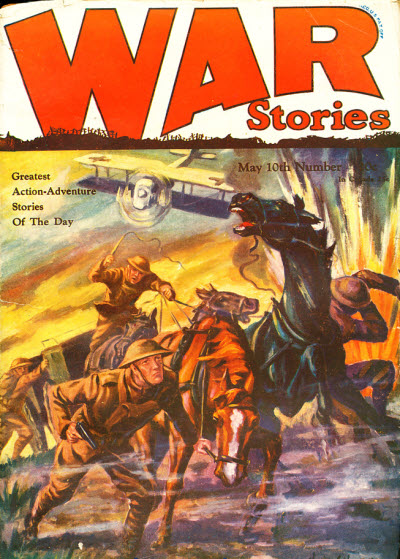 the second of three tales of Ralph Oppenheim’s Three Mosquitoes we’re featuring this March for Mosquito Month! This week, our intrepid trio hunt for the Invisible Ace!
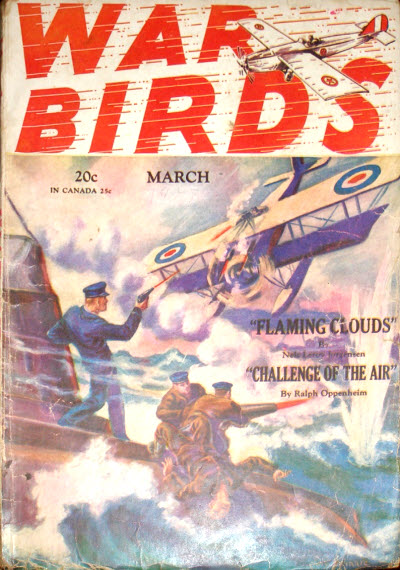 off the ground with an early Mosquitoes tale from the pages of War Stories from January 1928! The enterprise was extremely dangerous, though simple. The Three Mosquitoes had been assigned to escort a flight of bombers that were to go across the lines to Staffletz, where, besides an important railroad junction, there were some Zeppelin sheds. The railway was to be damaged as much as possible, and then the machines were to ‘‘lay their eggs” on the Zeppelin sheds. Complicating matters—Kirby was flying in an unfamiliar, old Sopwith rather than his usual Spad!
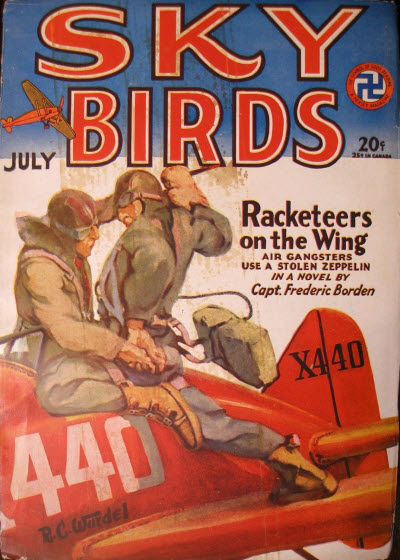 another story from one of the new flight of authors on the site this year—Andrew A. Caffrey. Caffrey, who was in the American Air Service in France during The Great War and worked for the air mail service upon his return, was a prolific author of aviation and adventure stories for both the pulps and slicks from the 1920’s through 1950. Here Caffrey tells the tale of Lieutenant Paul Storm.
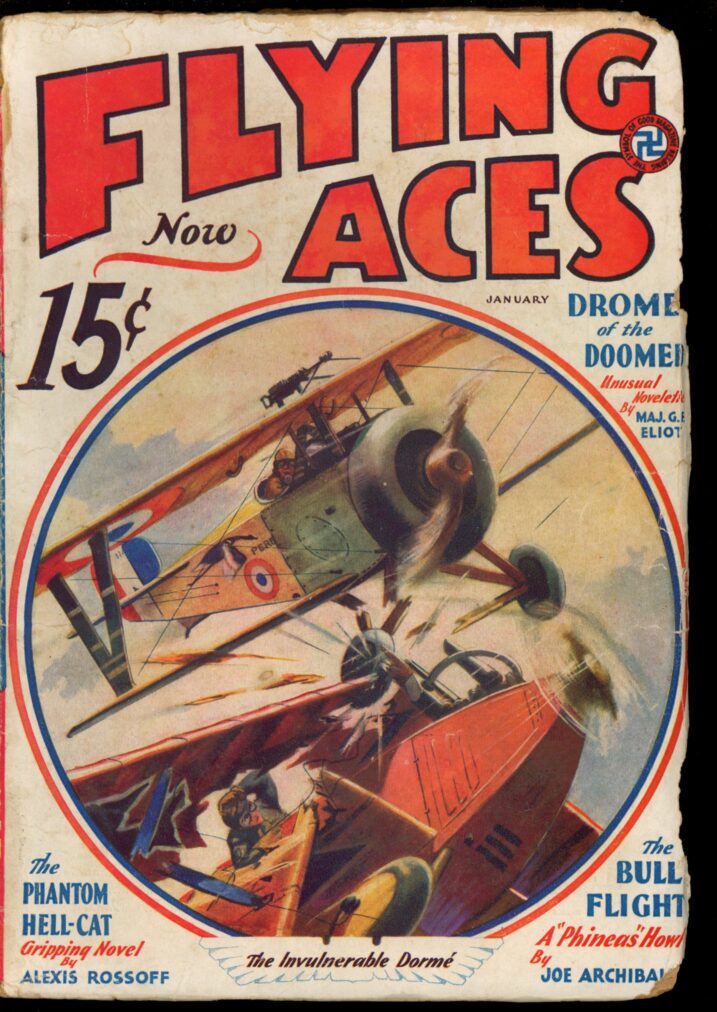 a story from the pen of a prolific pulp author O.B. Myers! Myers was a pilot himself, flying with the 147th Aero Squadron and carrying two credited victories and awarded the
 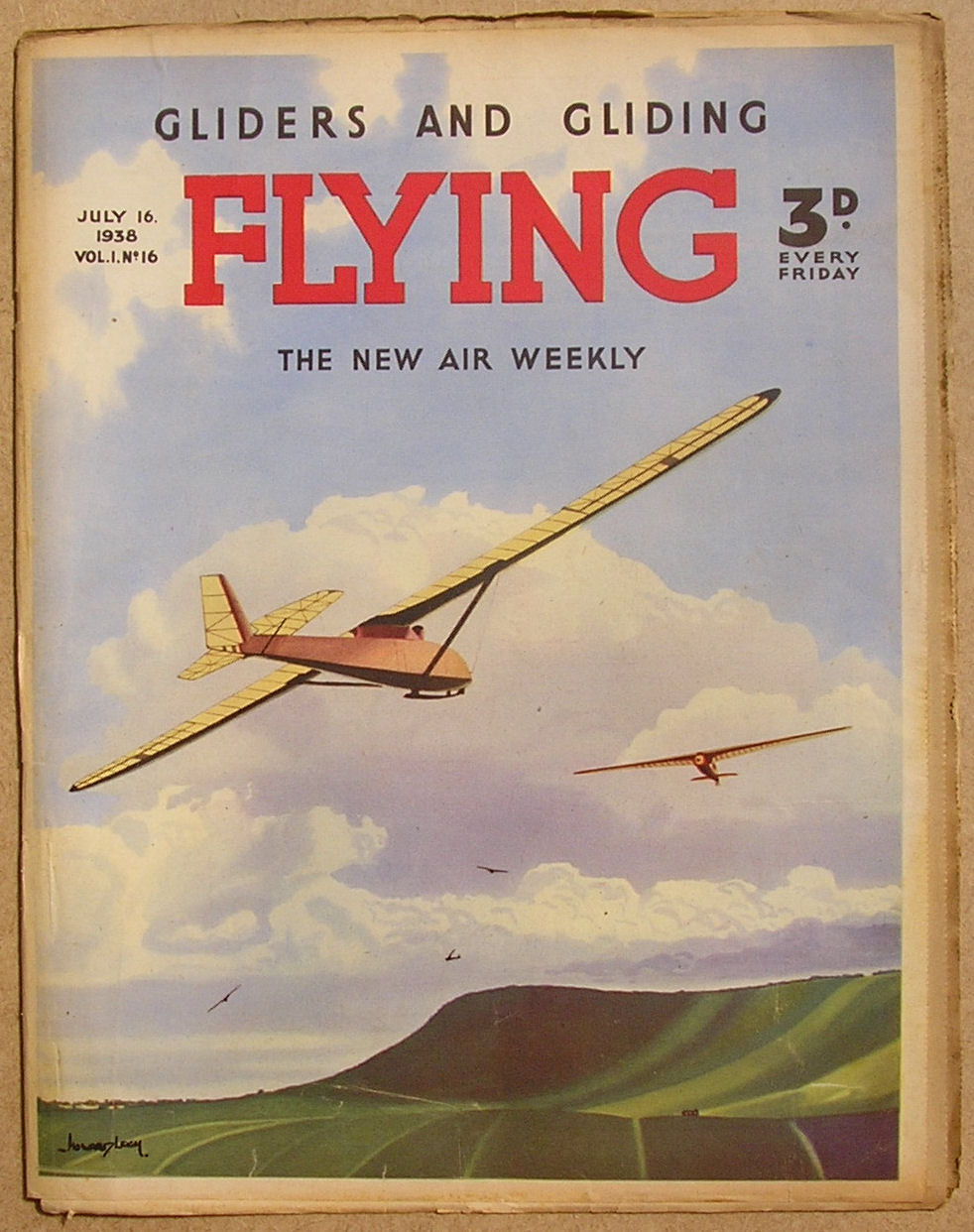 weekly paper of all things aviation, started up in England in 1938, amongst the articles and stories and photo features was an illustrative feature called “Heroes of the Air.” It was a full page illustration by S. Drigin of the events surrounding how the pictured Ace got their Victoria Cross along with a brief explanatory note.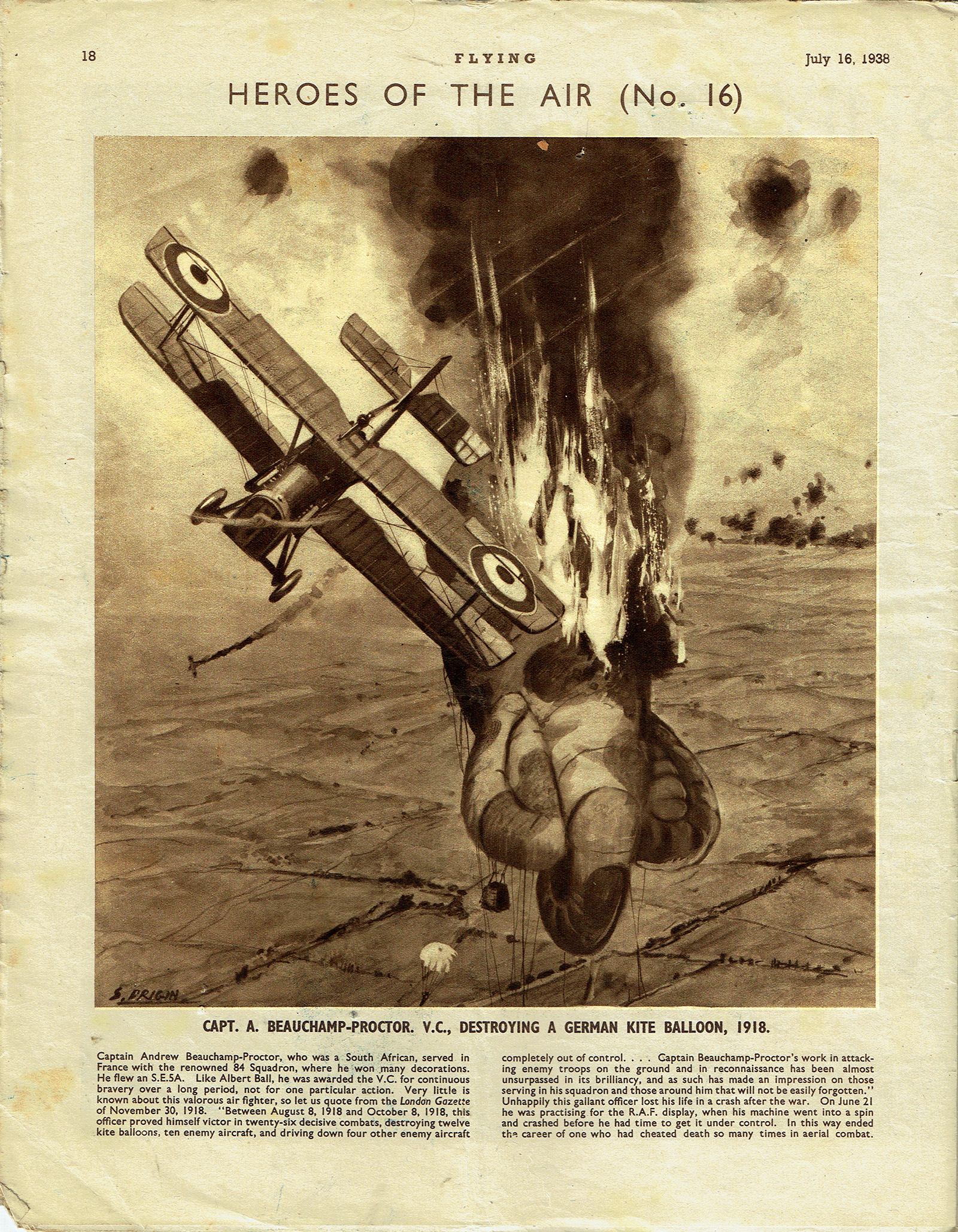
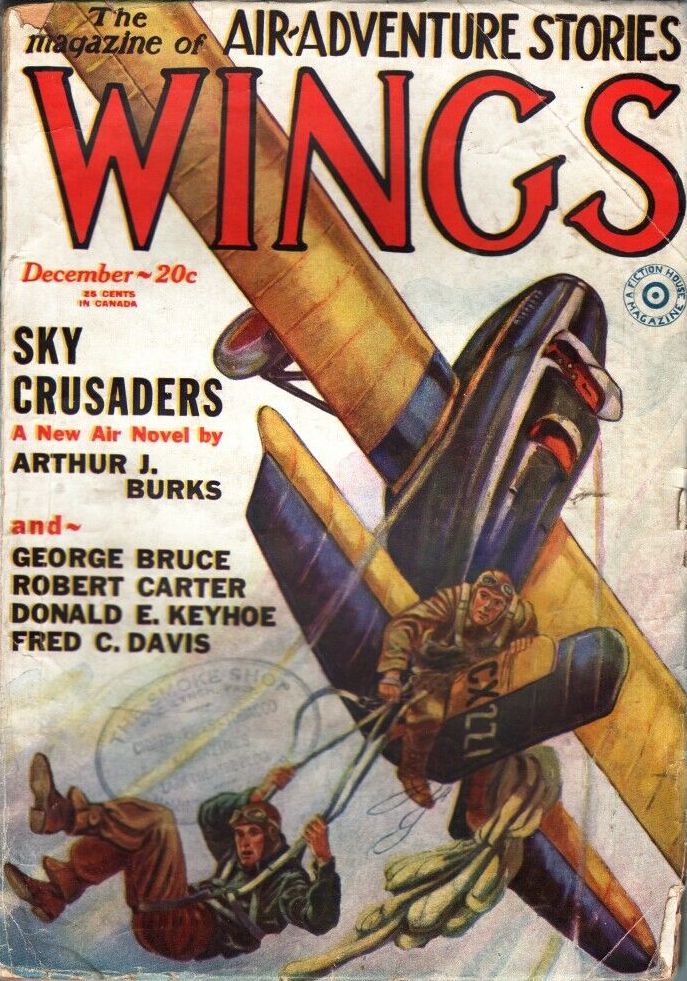 exciting air adventure from the pen of Robert Carter. Carter was a decorated WWI aviator who flew Bristol Fighters along the Italian front and poured this experience into the pulp stories he wrote from 1927 to 1929 for magazines like Aces, Air Trails, Air Stories, Battle Stories, War Birds and Wings.
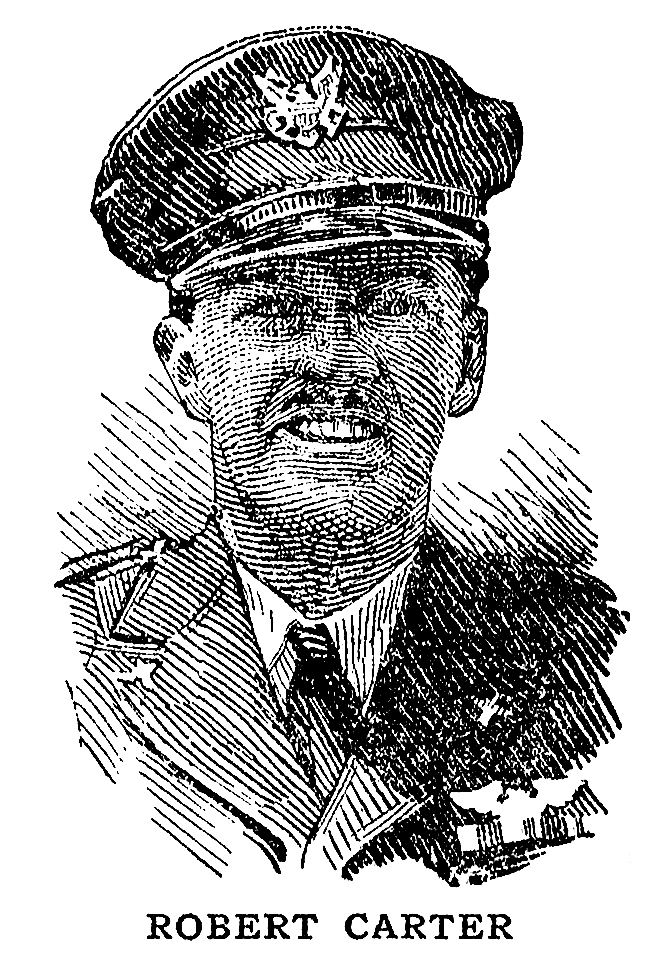 THIS month we’ve dragged another one of Air Trails’ pilot-writers out of his cockpit so that you folks can take a look at him. It’s hard to get these flying fellows to pose for their pictures. Most of them are so darned camera shy that you have to chase them all over the sky and shoot their props off before they’ll come down and act sensible. But sometimes you can catch them off guard.
 That sound can only mean one thing—that Bachelor of Artifice, Knight of Calamity and an alumnus of Doctor Merlin’s Camelot College for Conjurors is back to vex not only the Germans, but the Americans—the Ninth Pursuit Squadron in particular—as well. Yes it’s the marvel from Boonetown, Iowa himself—Lieutenant Phineas Pinkham!
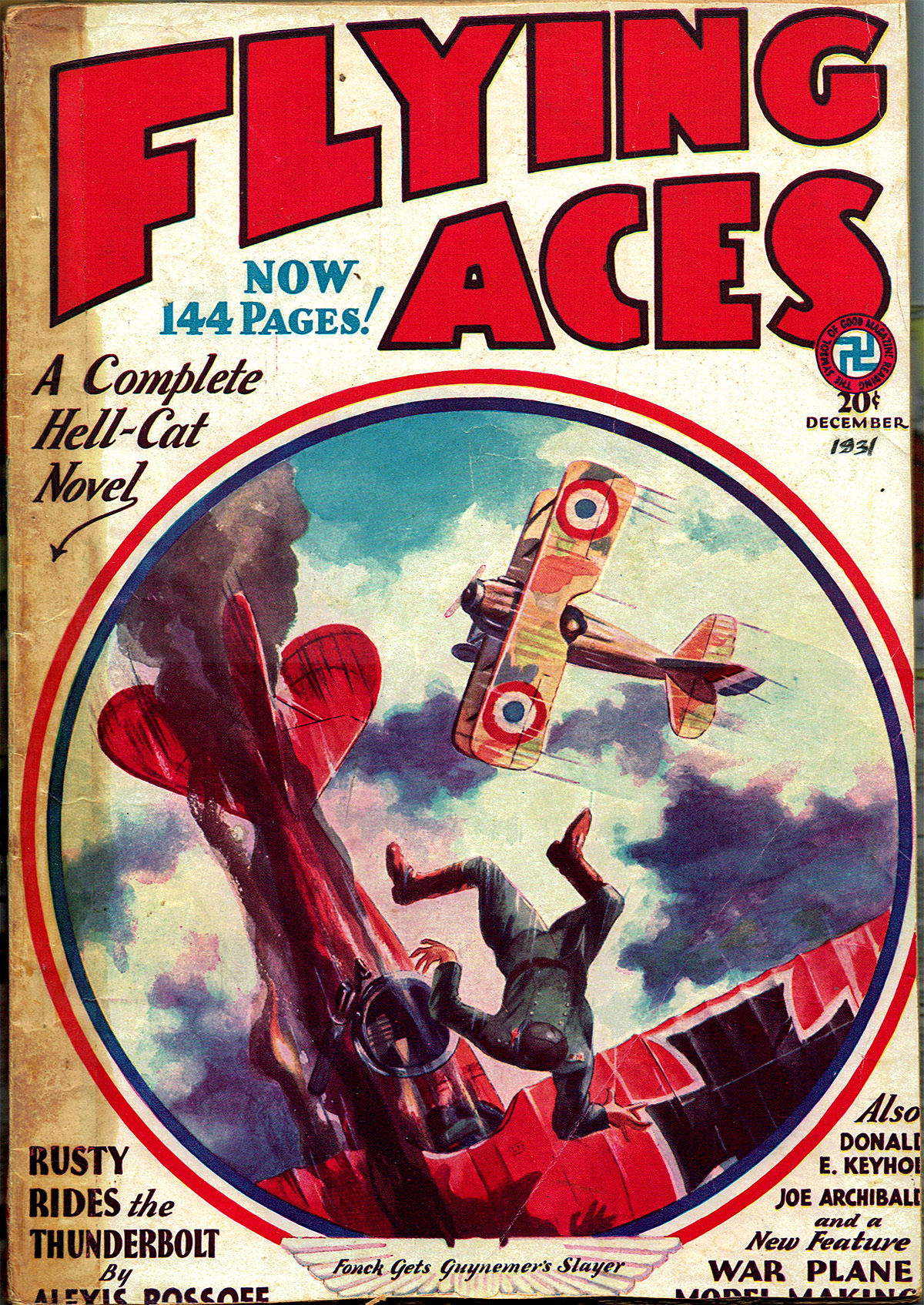
  a short story by renowned pulp author Frederick C. Davis. Davis is probably best remembered for his work on Operator 5 where he penned the first 20 stories, as well as the Moon Man series for Ten Detective Aces and several other continuing series for various Popular Publications. He also wrote a number of aviation stories that appeared in Aces, Wings and Air Stories.
 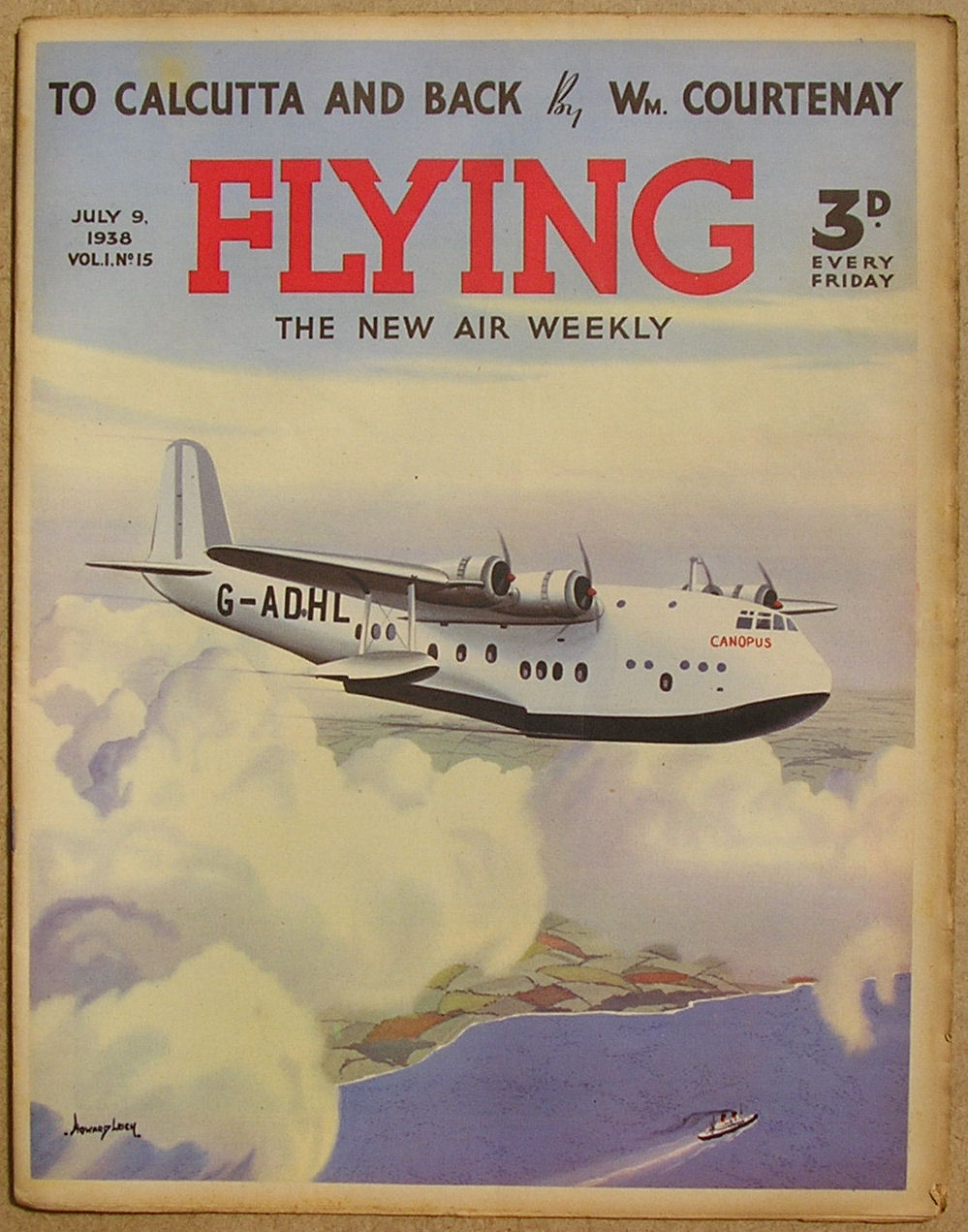 weekly paper of all things aviation, started up in England in 1938, amongst the articles and stories and photo features was an illustrative feature called “Heroes of the Air.” It was a full page illustration by S. Drigin of the events surrounding how the pictured Ace got their Victoria Cross along with a brief explanatory note.
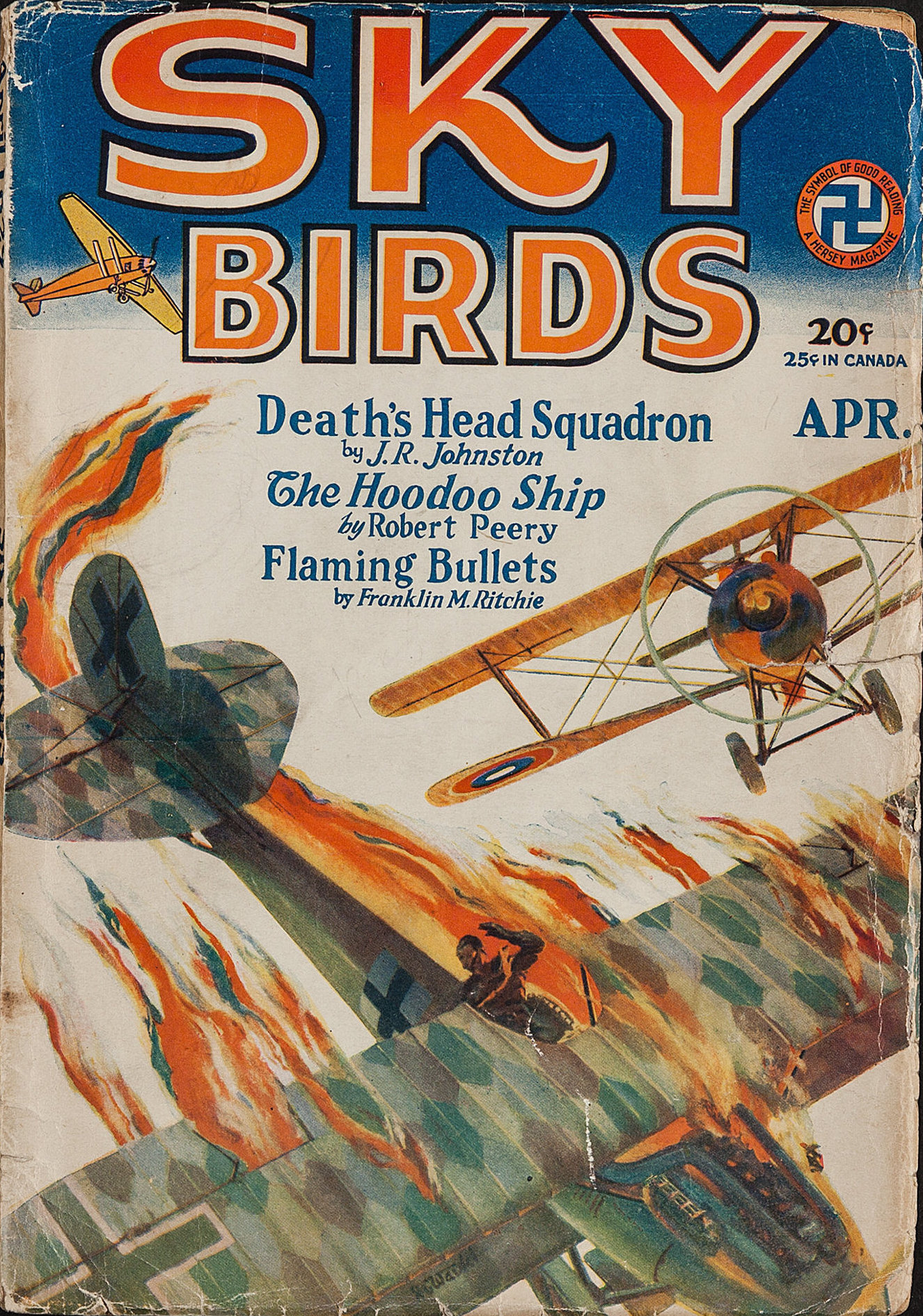 another story by Franklin M. Ritchie. Ritchie only wrote aviation yarns and his entire output—roughly three dozen stories—was between 1927 and 1930. Today we have another one from the lawyer who wrote pulp stories on the side to satisfy his yen for flying. From an early issue of Sky Birds, Ritchie gives us a tale of the chivalry of the air—but from the German point of view. Enter young Oberleutnant Fritz von Hullesheim who gets himself into a real mess over his flight leaders use of incendiary bullets in his air battles.
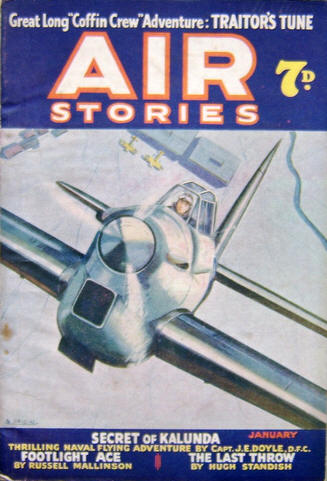 the Christmas Season with The Coffin Crew! Yes, Arch Whitehouse’s hell-raising Handley Page bomber crew! Piloting the bus is the mad Englishman, Lieutenant Graham Townsend, with the equally mad Canadian Lieutenant Phil Armitage serving as reserve pilot and bombing officer with Private Andy McGregor, still wearing his Black Watch kilts, rounding out the front end crew in the forward gun turret. And don’t forget the silent fighting Irishman Sergeant Michael Ryan, usually dragging on his short clay pipe while working over the toggle board dropping the bombs with Alfred Tate and crazy Australian Andy Marks or Horsey Horlick manning the rear gun turret.
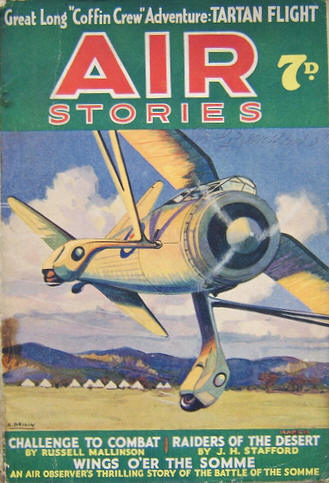 the Christmas Season with The Coffin Crew! Yes, Arch Whitehouse’s hell-raising Handley Page bomber crew! Piloting the bus is the mad Englishman, Lieutenant Graham Townsend, with the equally mad Canadian Lieutenant Phil Armitage serving as reserve pilot and bombing officer with Private Andy McGregor, still wearing his Black Watch kilts, rounding out the front end crew in the forward gun turret. And don’t forget the silent fighting Irishman Sergeant Michael Ryan, usually dragging on his short clay pipe while working over the toggle board dropping the bombs with Alfred Tate and crazy Australian Andy Marks or Horsey Horlick manning the rear gun turret.
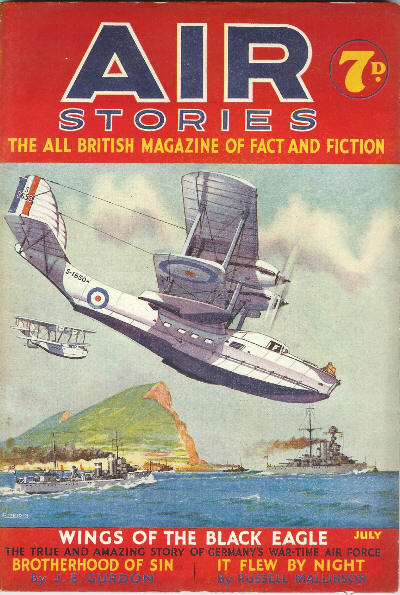 the Christmas Season with The Coffin Crew! Yes, Arch Whitehouse’s hell-raising Handley Page bomber crew! Piloting the bus is the mad Englishman, Lieutenant Graham Townsend, with the equally mad Canadian Lieutenant Phil Armitage serving as reserve pilot and bombing officer with Private Andy McGregor, still wearing his Black Watch kilts, rounding out the front end crew in the forward gun turret. And don’t forget the silent fighting Irishman Sergeant Michael Ryan, usually dragging on his short clay pipe while working over the toggle board dropping the bombs with Alfred Tate and crazy Australian Andy Marks or Horsey Horlick manning the rear gun turret.