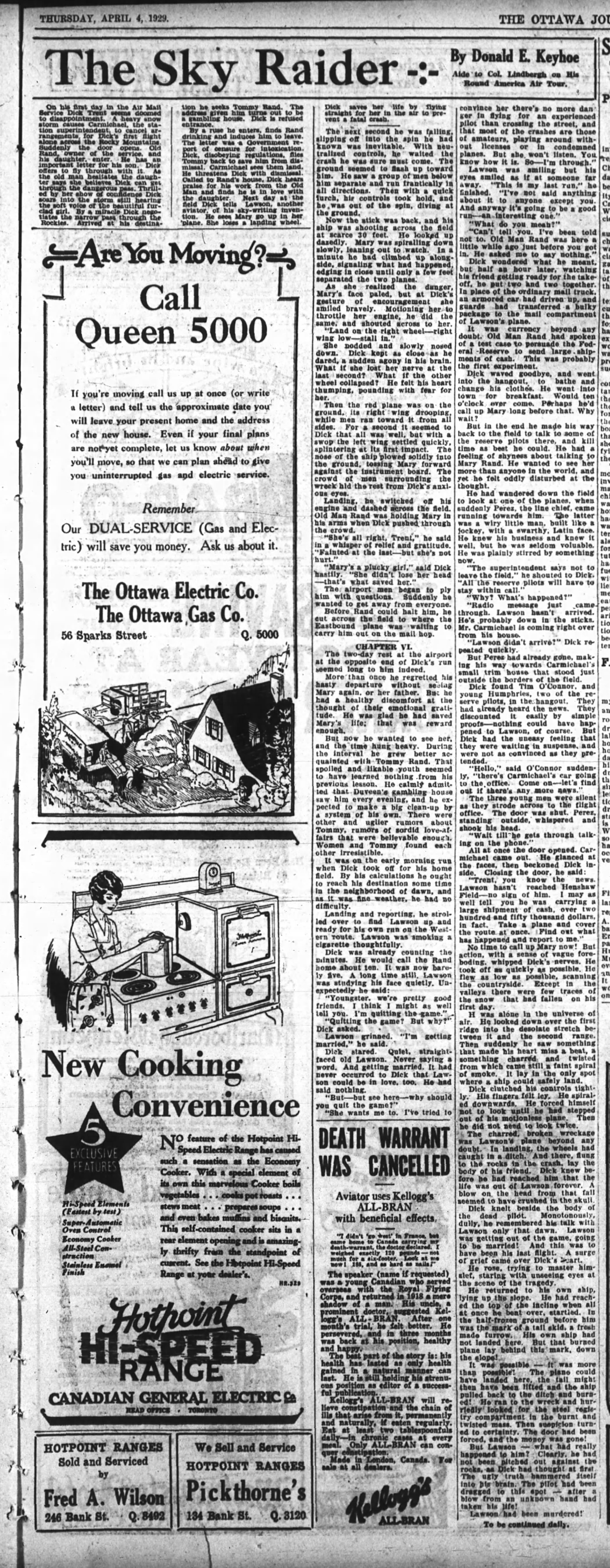
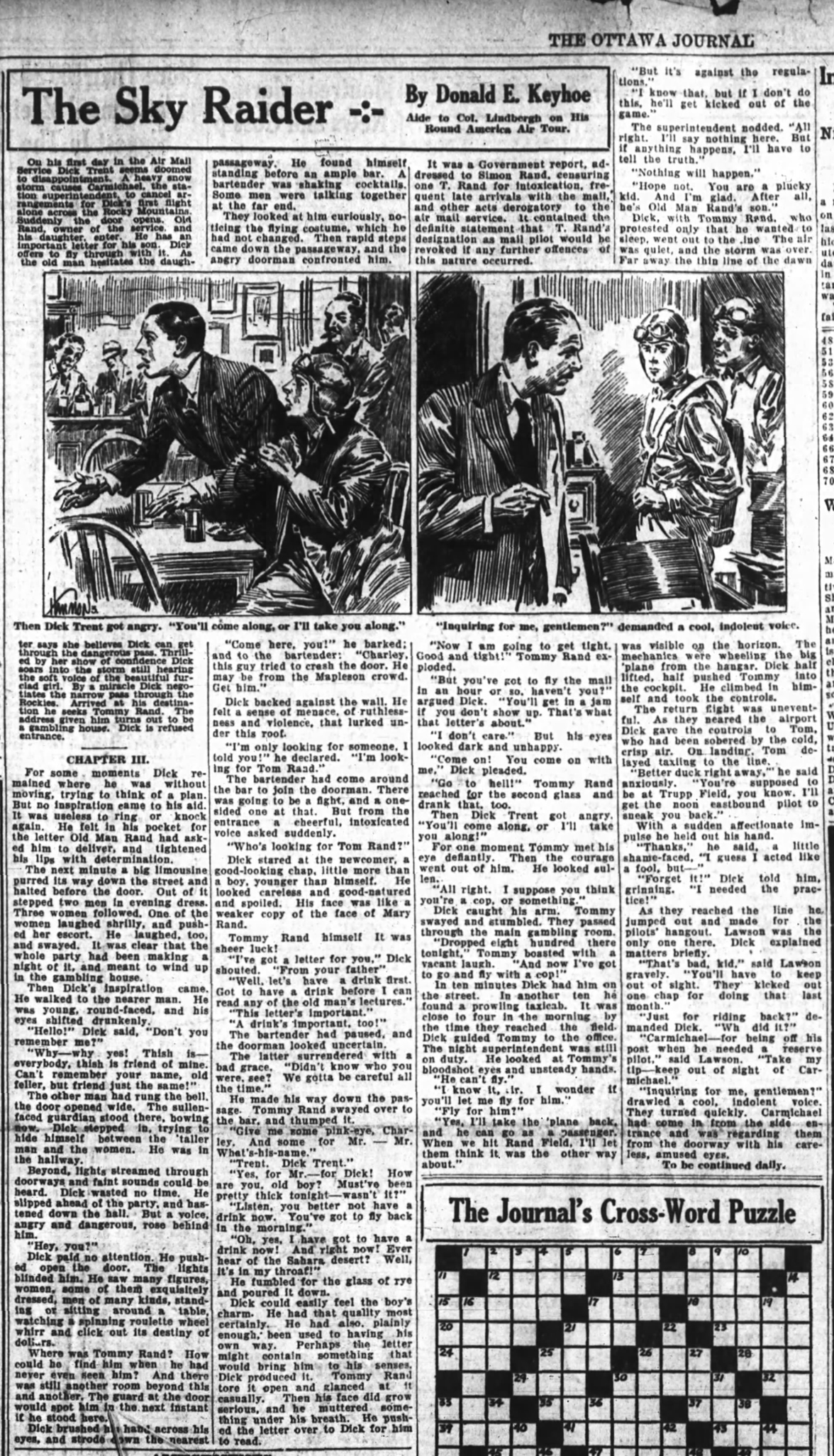
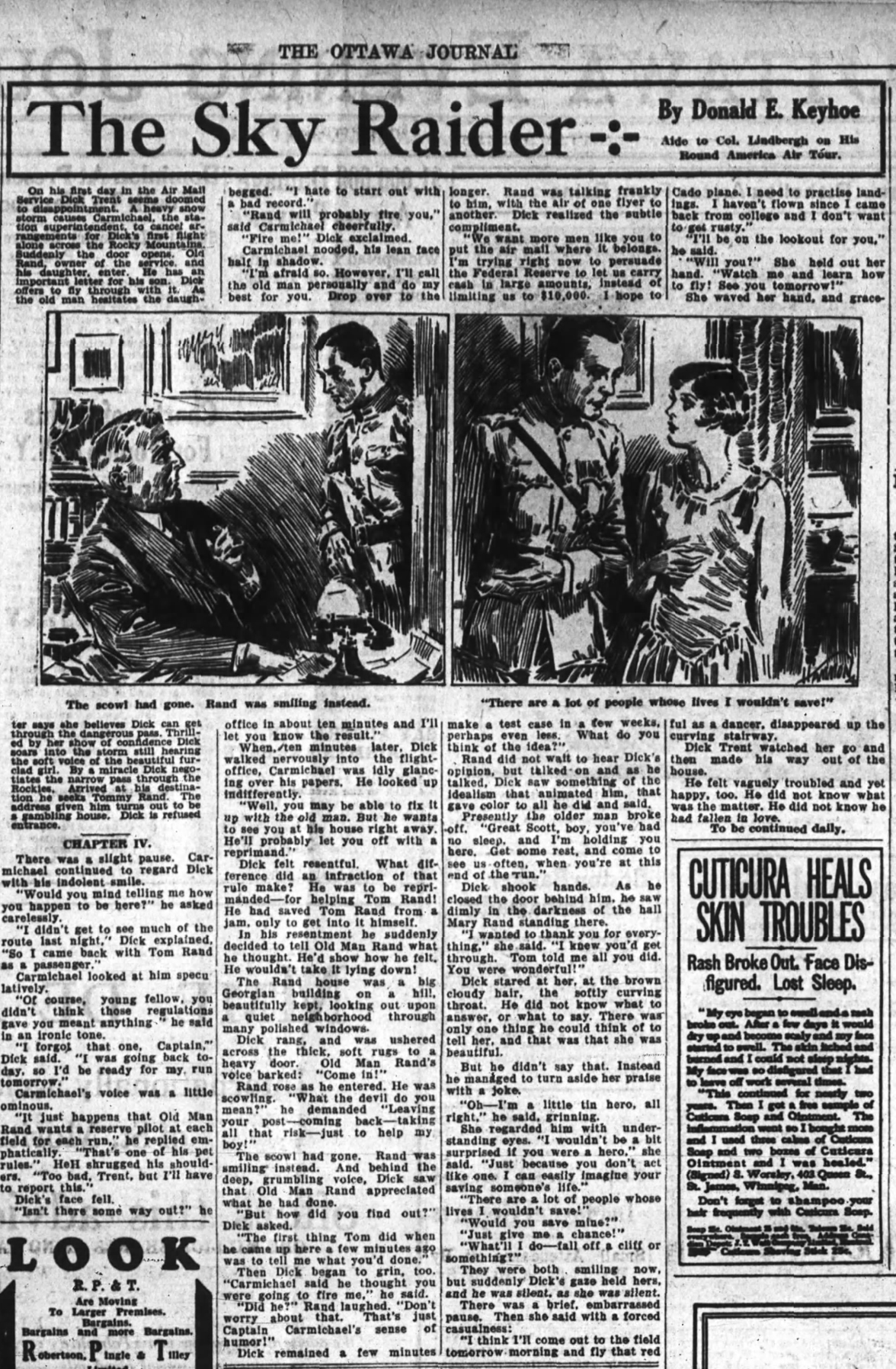
Here it is—the first of a thrilling series of True Air Adventures—amazing yarns based on the real adventures of airmen all over the world today! This month, read the true story of what happened to a pilot who stuck to the motto of the Air Mail—”The Mail Must Go Through!”
The Mail Must Go Through
By Arch Whitehouse (Sky Birds, March 1933)
OVER the facade of the New York Post Office building runs a word motto reading to the effect that, in spite of wind and weather, the postal department must remain true to its trust and carry out the business of the Postal Department. But the Air Mail pilot has chopped it all down to a few words: “The Mail Must Go Through!”
It is upon this motto that an almost unbelievable esprit de corps has been founded by the men who carry Uncle Sam’s mail over the skyways.
Things have changed a lot in the past few years, as far as flying the mail goes. The ships are better and faster. The motors are more reliable.
The routes are carefully marked with flashing beacons every ten miles. The airports are no longer cleared cow pastures with a shed at one end. Radio has come to guide the knights of the muzzle-mike. An efficient meteorological system has been worked out, and pilots are warned every few minutes what weather they can expect ten miles ahead.
Above all, every pilot is provided with the airman’s life-preserver—the parachute. If things go wrong, all he has to do is to cut the switch and step off. A billowing canopy of silk blossoms out above him, and he descends slowly to the ground.
But there are airmen in the Air Mail who balk at stepping off and letting the mail go down to a splintering crash—perhaps to a flaming finish. There may be valuable papers in those bags. There may be some widow’s pension stowed away. A love-letter, perhaps, reconciling two youngsters who have been parted by a petty quarrel. There may be the evidence that will save an innocent man from the chair. Or, perhaps, just a letter to some old lady who waits patiently for a happy word from her boy, who has gone away to try his fortunes in some other part of the country. One never knows what’s in the mail bag.
John Wolf, an Air Mail pilot, took off from Cleveland one night for Newark, 390 miles away. In the back pit of his Douglas mail ship lay 900 pounds of Uncle Sam’s choicest postal cargo. Pilot Wolf had often wondered what was in this mail. He’d pondered over it many times as he pounded his way across “the hump” of the Allegheny Mountains.
The airmen have named the hump the Mail Pilots’ Graveyard, for the whole trail is scored and marked with the numberless crashes that have occurred there. Pilot Wolf often wondered whether it was worth it. Then he’d stare at the insignia on the side of his ship—”U. S. Mail”—make an imaginary salute, and climb into the cockpit.
But on this night in question—about a year ago, to be exact—Pilot Wolf would have had all the excuse in the world for saying, “Bad weather upstairs. No use risking a crash tonight.” For there was a welter of fog and rain sweeping across the Cleveland field when he went out to the throbbing Douglas. He had been inside the operations office to look at the weather report coming through from Newark—and it was none too encouraging.
But Wolf took off. The mail had to go through!
Fifteen minutes after he took off, his radio set went dead. This would have been sufficient for most people, but Wolf kept on. There might be a break near Newark. After all, there were 900 pounds of mail in the back pit. He climbed to 12,000 feet to make sure that he’d clear the hump, but ice began to form on his wings, changing the camber and choking the controls. He had to go down lower and risk a crash in the Mail Pilots’ Graveyard.

For four hours he flew, averaging about 115 miles per hour, but no sign of Newark could he find. He was above a fog blanket that shrouded everything. On eastward he continued to push—hoping for a break. His ship bounced and pounded against the icy winds. New and amazing things happened to his instruments, and at times he found himself flying on his back. He kept fighting the Douglas, got back on the course and peered down again. No sight of Newark—or of anything else.

“Look here, John,” Pilot Wolf must have argued with himself. “You only have so much gas in this boiler. How about going down and taking a chance? Or how about slipping off and taking to the silk? Why risk your neck for 900 pounds of mail that is probably only bills, advertisements or dunning letters?”
But he glared at himself in the reflections cast by the dials of the in struments and shook his head. He had to go on.
He finally realized that there was none too much fuel left, however, and common sense prevailed.

He went down—down—down until he felt that he must crash into some buildings. Then he steadied himself and released a parachute flare. The big flaming ball of fire seeped away and went down farther and then, Pilot Wolf saw the cruel, reaching whitecaps of the Atlantic Ocean!
“Whew! Where am I?” he growled yanking back on his stick and pulling the Douglas out of the glide.
Turning westward, he tore back toward land, expecting any minute to find himself impaled on the lofty masts of some fog-bound transatlantic liner. He sat tense for nearly half an hour and raced westward peering over the cowling into the blanket of fog.

Then, a light! A dim but heaven sent gleam twinkled ahead. Pilot Wolf shot his Douglas for it with every ounce of power in the big Liberty engine. It was a lighthouse, he could tell by the time of the flashes. He tore up toward it and recognized it as Montauk Light on Long Island. Evidently he had passed over Newark without seeing it.
Now should he bail out? He was over ground, he was certain of that. There was not much gas left, so it would be wise to get out while the getting was good. No, the mail must go through!
He circled the village twice, seeking a place to land. He couldn’t get back to Newark now. He dropped more flares in an effort to find a level space to set the big mail ship down. There was nothing in sight.
Then one of those things happened that people think can happen only in fiction. Some one—a member of the village fire department—was air-minded enough to realize what was the matter. He probably had been a reader of a good aviation magazine—like Sky Birds, for instance. The pounding of the big Liberty up there in the soup and the trickling pathetic flares coming down through the fog told their story.
A fire alarm was sounded, and all the volunteer firemen were sent to the widest fairway of the North Fork Country Club. The air-minded fireman, who goes nameless, superintended the placing of the cars so that their headlights lit up a wide swath of level turf.

Wolf, amazed at the sudden appearance of this uncharted landing field, took a chance. He cut his motor and glided down to a perfect landing—just as the idling Liberty spluttered its last gasp. The tanks were dry.
Wolf slept at the firehouse that night, after seeing the mail safely aboard a train for New York. The next morning he calmly told his story to the air-minded fireman who had unconsciously adopted the Air Mail motto, “The Mail Must Go Through!”




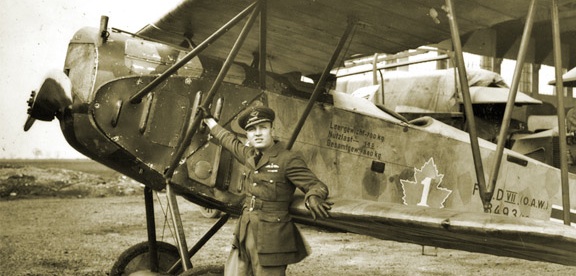 Here’s another of Eugene Frandzen’s “Lives of the Aces in Pictures” from the pages of Flying Aces Magazine. The series ran for almost four years with a different Ace featured each month. This week we have the his illustrated biography from the October 1934 issue, that famous Canadian Ace—
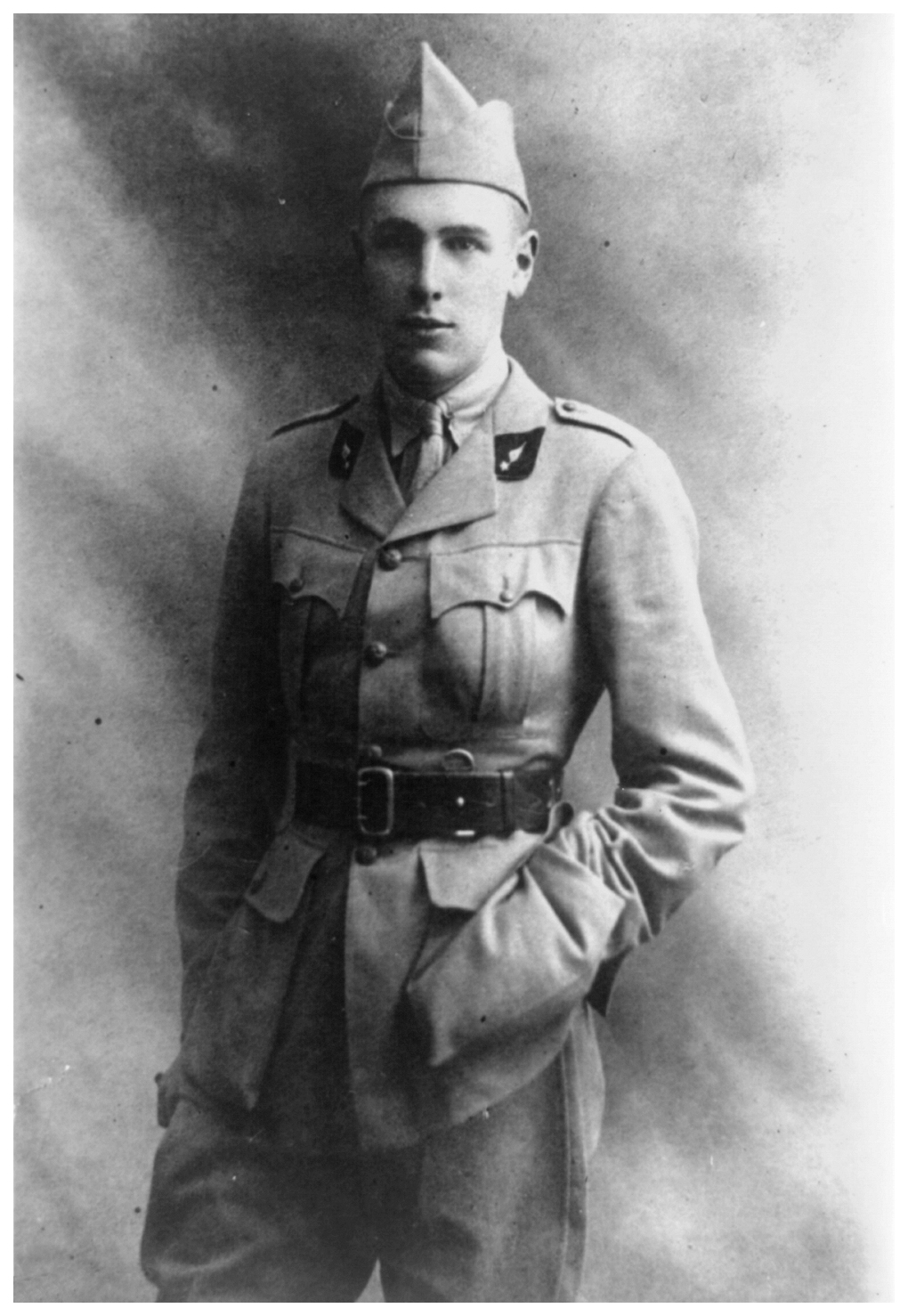 Here’s another of Eugene Frandzen’s “Lives of the Aces in Pictures” from the pages of Flying Aces Magazine. The series ran for almost four years with a different Ace featured each month. This week we have the August 1934 installment which pictorialized the life of