“Hans Up!” by Joe Archibald
Haw-w-w-w! It’s another Phineas Pinkham howl. We present another humerous tale of Phileas Pinkham from the prolific pen of Joe Archibald. Pinkham appeared in almost every issue of Flying Aces from November 1930 through November 1943! As if Archibald didn’t have enough to do, he also supplied the artwork for the story.
It was a nice trip. It began with Phineas knocked out cold after a crack-up. It continued with a couple of doughboys loading him onto an ambulance bound for the hospital. And it ended with a couple of doughboys knocked out cold in an ambulance. What do you expect?
“Lives of the Aces in Pictures – Part 24: Captain Quigley” by Eugene Frandzen
Back with another of Eugene Frandzen’s “Lives of the Aces in Pictures” from Flying Aces Magazine. The series ran for almost four years with a different Ace featured each month. This time we have the June 1934 installment which pictorialized the life of that great Canadian Ace—Captain Francis Granger Quigley!
Private Quigley enlisted in 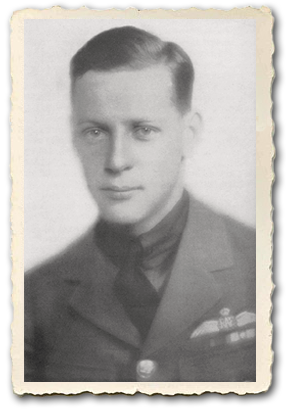 December 1914 and served with the 5th Field Company of the Canadian Army Engineers on the Western Front. He transfered to the RFC in September of 1917 where he was assigned to the 70th Squadron RFC. By this time he had made the rank of Captain and flying a Sopwith Camel, he is credited with 33 victories! He earned the Distinguished Service Order, the Military Cross and the Military Cross with Bar!
Wounded in March of 1918 when a bullet shattered his ankle, he was sent to Le Touquet Hospital to recover. He finished his convalescence in Canada where he served as an instructor at Amour Heights. Requesting a return to action in France when his ankle had heeled, Guigley came down with the influenza on the way back to England. He died in a hospital two days after his ship docked in Liverpool.
“Lives of the Aces in Pictures – Part 23: William P. Erwin” by Eugene Frandzen
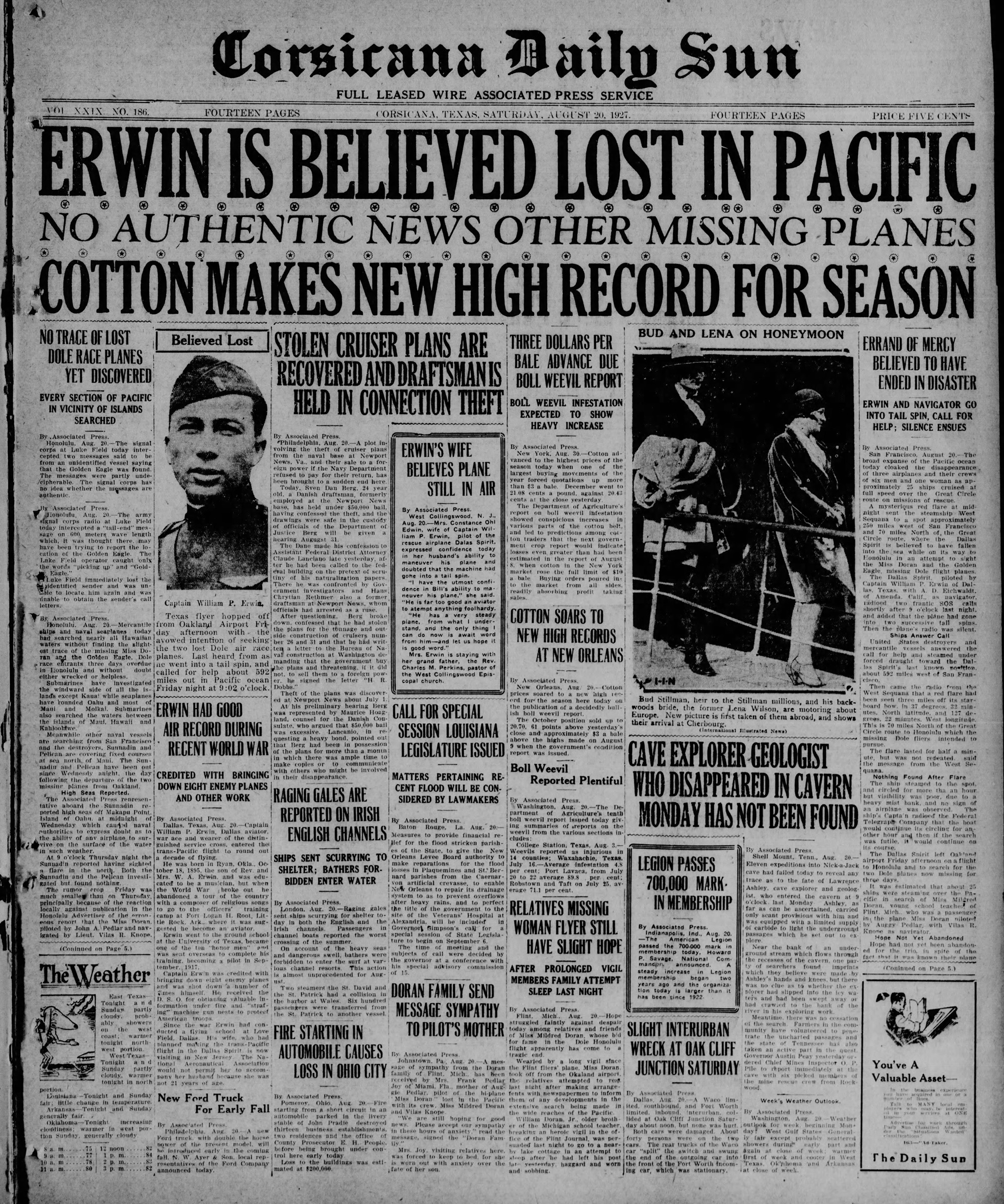
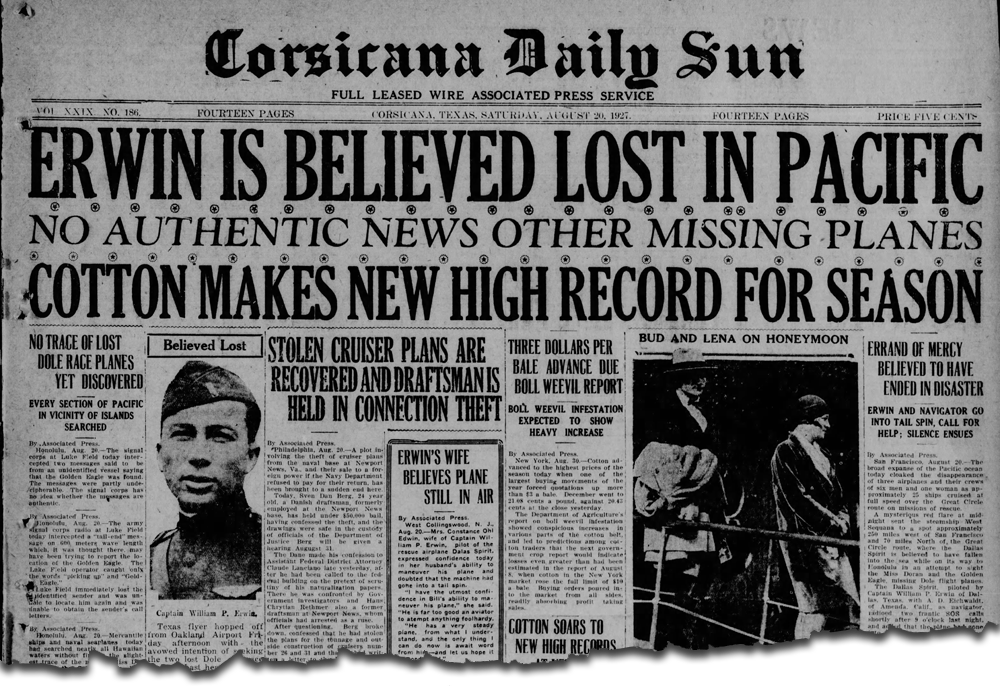
Back with another of Eugene Frandzen’s Lives of the Aces in Pictures from Flying Aces Magazine. The series ran for almost four years with a different Ace featured each month. This week it’s Lt. William Portwood Erwin, featured in the May 1934 issue.
Erwin was assigned to the 1st Observation Squadron in July of 1918. Flying Salmson 2A2s, he and his observers are credited with eight victories! He was awarded the Distinguished Service Crossfor extrodinary heroism in action in the Chateau-Thierry and St Mihiel Salients theaters. And for a dangerous infantry liaison mission at night that he had volunteered for—on his third day with the 1st Observation, he recieved the French Croix de Guerre!
He continued in aviation after the war, conducting a flying school at Love Field, Dallas.
The Dole Air Race of 1927—a race from California to Hawaii. While searching for two lost air race planes and their passengers, he was last heard radio that his plane went into a tail spin and he called for help about 592 miles out in the Pacific Ocean. His plane, “Dallas Spirit” and its occupants were never found.
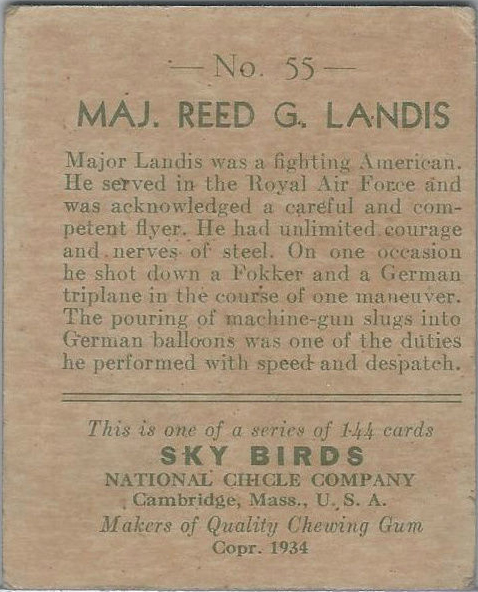
“Lives of the Aces in Pictures – Part 22: Major Reed G. Landis” by Eugene Frandzen
From May 1932 through March 1936, Flying Aces ran a pictorial feature illustrated by Eugene Frandzen on the ” Each month they featured a different ace from The Great War—telling his story. Very similar to Alden McWilliams’ “They Had What It Takes” which would run in the magazine after LOTAIP had run it’s course. When Flying Aces was a traditional pulp magazine size of 7×10″, it was a two page feature, but when they changed formats and went with a bedsheet size, the feature became one page.
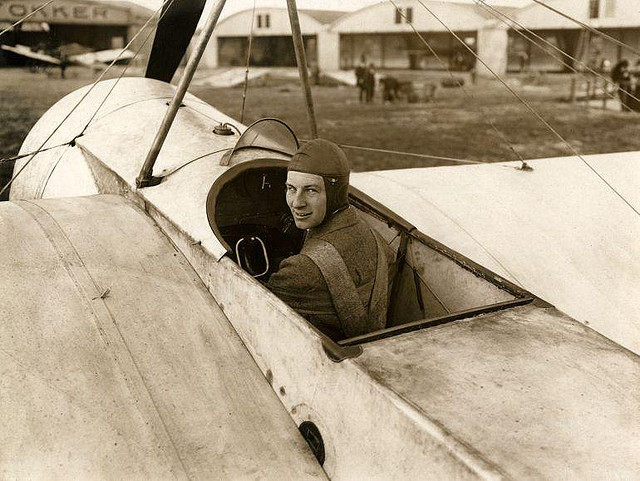
This week we have the twenty-second installment featuring the American aviation Ace, Major Reed Gresham Landis! Landis was flying with the RFC when he scored his dozen victories, all from an S.E.5. Landis was awarded the British Distinguished Flying Cross and the American Distinguished Service Cross. He would survive the war and go on to become chairman of the American Legion during the 1920’s, but returned to service in 1942 where he rose to the rank of colonel—stationed in Washington, D.C.
He passed away May 30th, 1975, aged 78 near Hot Springs, Arkansas.
“Return of the Sky Devil” by Harold F. Cruickshank
The Sky Devil is back! 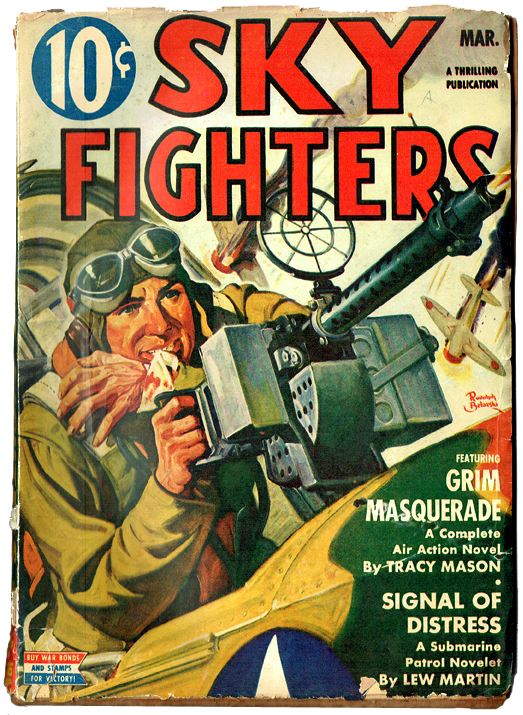 Harold F. Cruickshank’s hero of the hell skies over the Western front returns to action once again in another WWII adventure. Bill Dawe had to change his name and lie about his age to join the RAF’s fight against Hitler’s Luftwaffe. Restricted from fighting, The Sky Devil trains a new generation of eager aces, including his own son until the 77th is suddenly and brutally attacked! This is the second of four WWII Sky Devil stories from Harold F. Cruickshank.
Years drop from a natural born fighter pilot, and “no combat” rules are forgottenf as he sheds his role of instructor to zoom through war-torn skies on a self-appointed mission of revenge!
“They Had What It Takes – Part 41: “Lon” Yancey†by Alden McWilliams
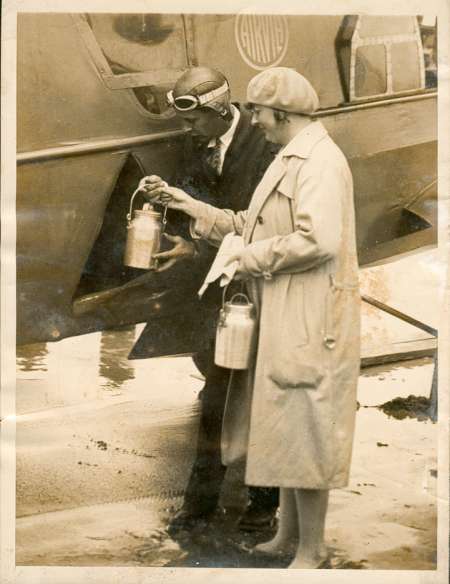 We have arrived at the final installment of Alden McWilliam’s illustrated biographies he did for Flying Aces Magazine—They Had What It Takes. For this last article he features world famous navigator Captain Lewis Alonzo “Lon” Yancey.
Yancey became interested in aviation and the science of navigation while in the Coast Guard after a stint in the Navy. He quickly became a sought after navigator making his first trans-continental flight as a co-pilot in 1927. In 1929 he and Roger Q. Williams flew from Old Orchard Beach, Maine to Rome (in the picture at left, Yancey is loading provisions on his plane while German aviatrix, Thea Rasche looks on); and the first flight from New York to Bermuda in 1930. In 1938 he flew to New Guinea with Richard Archbold for the American Museum of Natural History.
He unfortunately died suddenly of a cerebral hemorrhage at the age of 44 in 1940.
“They Had What It Takes – Part 40: Donald Douglas†by Alden McWilliams
Here we are with the penultimate installment of 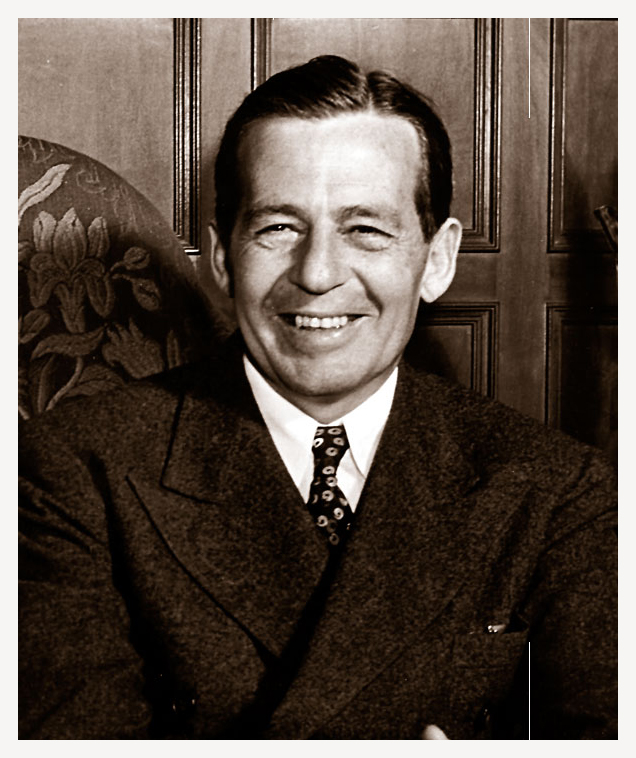 Alden McWilliam’s illustrated biographies he did for Flying Aces Magazine. And this time around we have that giant of American Aviation—Donald Wills Douglas!
Douglas was an influential American aircraft industrialist and engineer who founded his Douglas Aircraft Company in 1921 which would become one of the leaders in the commercial aircraft industry. He went head to head with arch-rival Boeing gaining the early advantage throughout production during WWII, but then sadly fell behind with the advent of the jet age. Douglas retired in 1957 and passed away in 1981 at the age of 88.
He was such a big figure in Aeronautics that Popular Science also ran an illustrated feature on his life and career in their December 1940 issue. Illustrated by B.W. Schlatter.
“The Hanger of Hate” by Donald E. Keyhoe
In honor of the release of 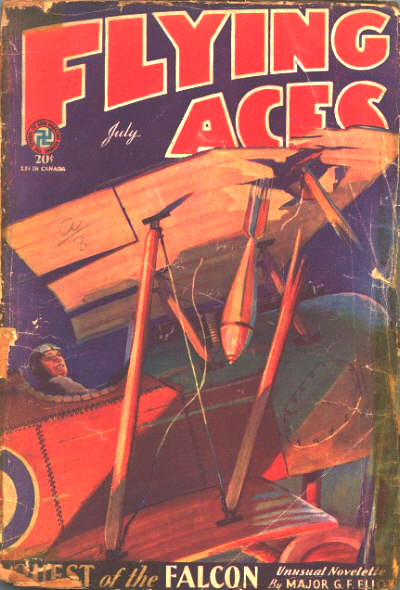 Strange Operators, this time we’re featuring a novelette by Donald Keyhoe that appeared in the pages of Flying Aces the month before the first Philip Strange story. Keyhoe gives us a precursor of sorts to his Brain-Devil in Arnold Trent—a former Broadway female impersonator who took jibes and enmity from his squadron mates until at the end he flew into Germany and, posing as a countess, rescued a captured fellow pilot. Enjoy!
Ahead of trent lay the 77th—and escape from the mocking fate that pursued him. But one man who knew his secret waited on the tarmac.
“Fly ‘Em Cowboy” by Robert J Hogan
With the publication of volume two of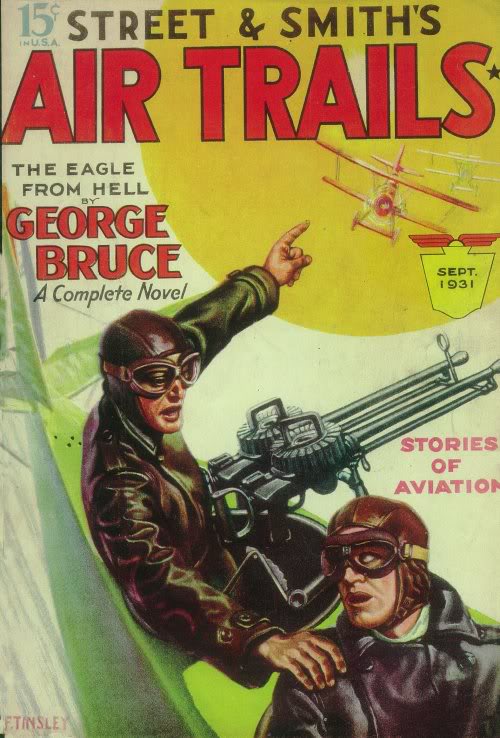 The Adventures of Smoke Wade, we thought now would be as good a time as any to release the last of the pre-Popular Smoke Wade stories. This is the second of the Street & Smith stories to appear in Air Trails, following Smoke debut in the previous issues’ “Wager Flight”.
In “Fly ‘Em Cowboy” we find Quinn has just been sent up from Insoudon—just another green replacement with visions of taking down the best German ace on the Western Front, and Smoke Wade concocts his wildest plan yet to help Quinn and win a bet in the process. (Quinn would later become leader of C flight at the 66th Pursuit Squadron)
With the wings of a plane, or the bullets of a six-gun, Smoke Wade could cut circles around his enemy.
“Patrols of Peril” by Frederick C. Davis
This week we have a short story by renowned pulp author Frederick C. Davis. Davis is probably best remembered for his work on Operator 5 where he penned the first 20 stories, as well as the Moon Man series for Ten Detective Aces and several other continuing series for various Popular Publications. He also wrote a number of aviation stories that appeared in Aces, Air Stories and Wings. “Patrols of Peril” was published in the premiere issue of Air Stories magazine in 1927.
Tragedy and spitting lead fly swiftly in the wake of a joke with a startling climax on the brink of Eternity.
“Soft Thunder” by Frederick C Painton
The Strange Enemy of our new book Captain Philip Strange: Strange Enemies, Fraulein Doktor, pops up in the oddest places. Here she is causing trouble in Frederick C Painton’s “Soft Thunder” a year and a half before her first appearance in Donald Keyhoe’s Philip Strange stories.
We’ve posted a number of Frederick C. Painton’s stories in this space already including a few of his Dirty Dozen-esque Squadron of the Dead stories. He’s a great writer with a background in newspapers as this short autobiography from the April 1942 issue of Blue Book Magazine attests:
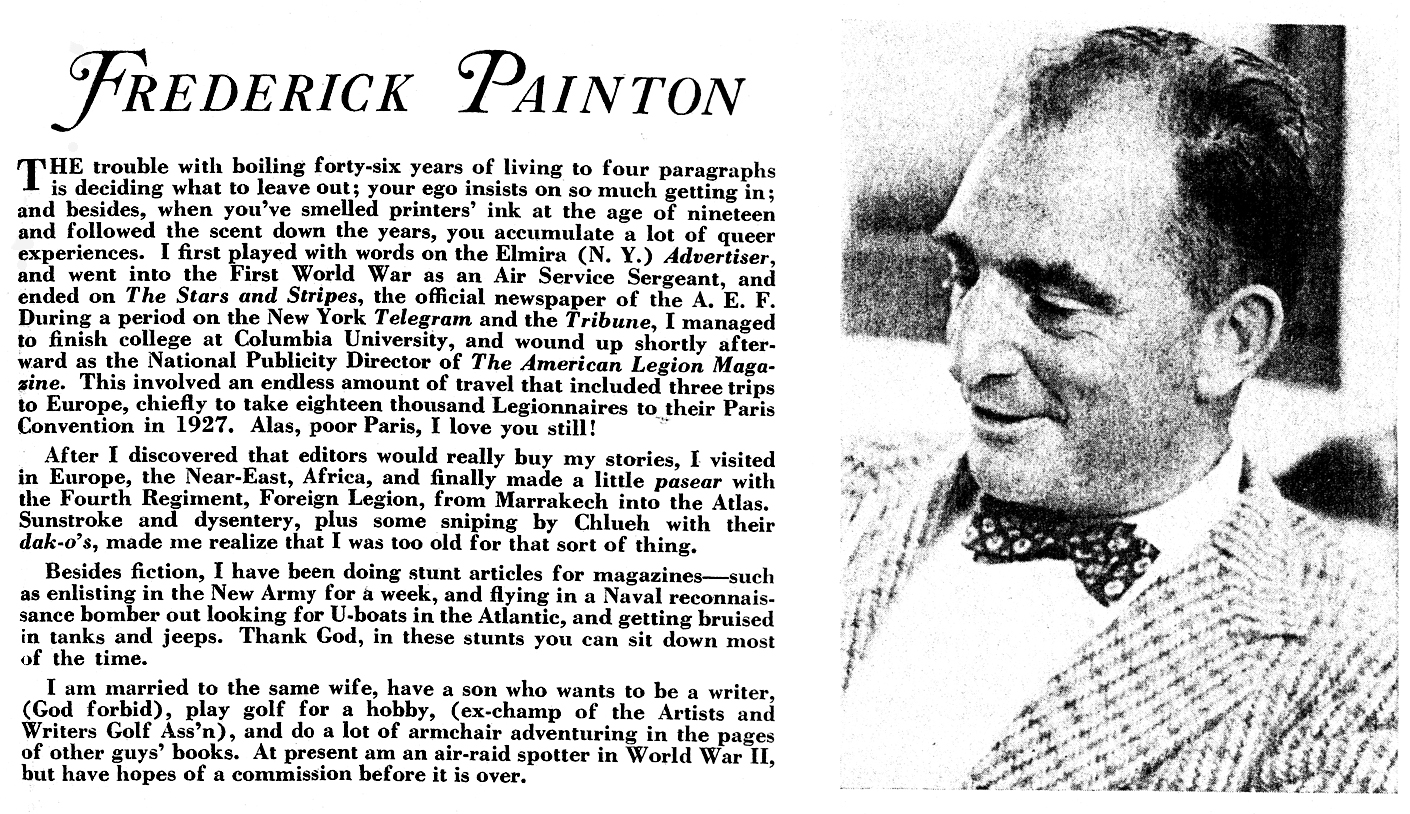
Click to enlarge in a new window.
Unfortunately he died of a heart attack on a Guam airfield while covering the Pacific war.
He was just a kid who played Tennis to those two hard-boiled soldiers—but there was stuff in his make-up that kept him battling in the flaming skies. It was a grim game they played—they stuck to the rules and played like sports, but they knew that the loser would find flying death. And then into their game kited a kid who seemed soft—but there is lightning with even soft thunder.
“The Sky Cop” by Donald E. Keyhoe
To get you excited about the new Captain Philip Strange book set to come out soon, we have a story from the fertile mind of Donald E. Keyhoe. This story has everything: An amazing new invention—smashing battles and cold-blooded murder high above New York skyscrapers—take-offs from catapults atop huge city buildings—parachutes coming to earth along the Great White Way. The first story of its kind and you’re sure to enjoy it!
We’ve posted several stories by Donald E. Keyhoe on the site and collected his Vanished Legion stories from Dare-Devil Aces into a volume as well as our new series of his Captain Philip Strange stories that ran for nine years in Flying Aces. The first of which appeared just a year after this story in August 1931.
“They Had What It Takes – Part 39: Tony Fokker†by Alden McWilliams
With the 39th installment of Alden McWilliams’ “They Had What It Takes” in Flying Aces, he chronicles the man who is maybe the greatest aircraft designer of all time—The Flying Dutchman himself, Anthony Fokker!

Fokker was training as an automotive mechanic in Germany when he built his first plane—”The Spider”—in 1910. That plane was subsequently destroyed when his partner flew it into a tree. Fokker built another and managed to gained his piolt’s licence flying it. By 1912 he had started his own Airplane Company and quickly established a reputation for building some of the fastest and most stable planes flying at the time. One of the keys to his success is that he personally tested all the planes he designed and kept the pilot in mind asking their opinions on the planes. He sought out the advice of the men on the flight line and brought in the best engineers he could find.
With the outbreak of WWI, Fokker’s designs were very much in demand and soon the greatest names in German aviation—Voss, Immelmann, Boelke and Richtoffen—were being cursed at while flying his planes.
After the war he returned to his native Holland establishing a company there and later emigrating to America where his tri-motor planes helped establish the fledgling airlines and some of the great airplane records of the 30’s. Fokker unfortunately died at 49 in 1939 from pneumococcal meningitis after having been ill for three weeks.
“They Had What It Takes – Part 38: Grover Loening†by Alden McWilliams
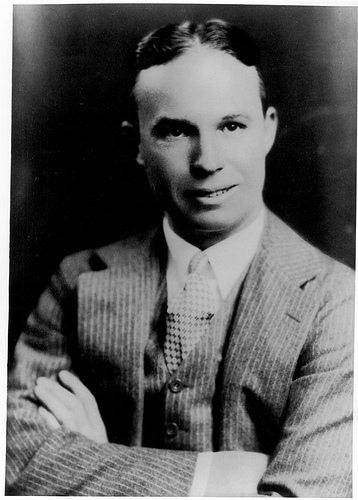 Alden McWilliams continues his look at the great airplane designers in his “They Had What It Takes” feature from Flying Aces. It’s March 1940, and this time we have Grover Loening.
Grover Loening was a noted American aircraft manufacturer, who got his start as an assistant engineer to Orville Wright before starting his own company. He was known for test flying his own planes and at one time employed Leroy Grumman, William T. Schwendler, and Jake Swirbul who left to form Grumman. Of his many accomplishments, Loening was appointed chief aero-engineer for the Army Signal Corps in World War I and was chief consultant to the War Production Board, NACA and Grummand during the Second World War.
Grover Loening lived to the ripe old age of 87, passing away in 1976.
“They Had What It Takes – Part 37: Leroy E. Grumman†by Alden McWilliams
In this and the next few installments of 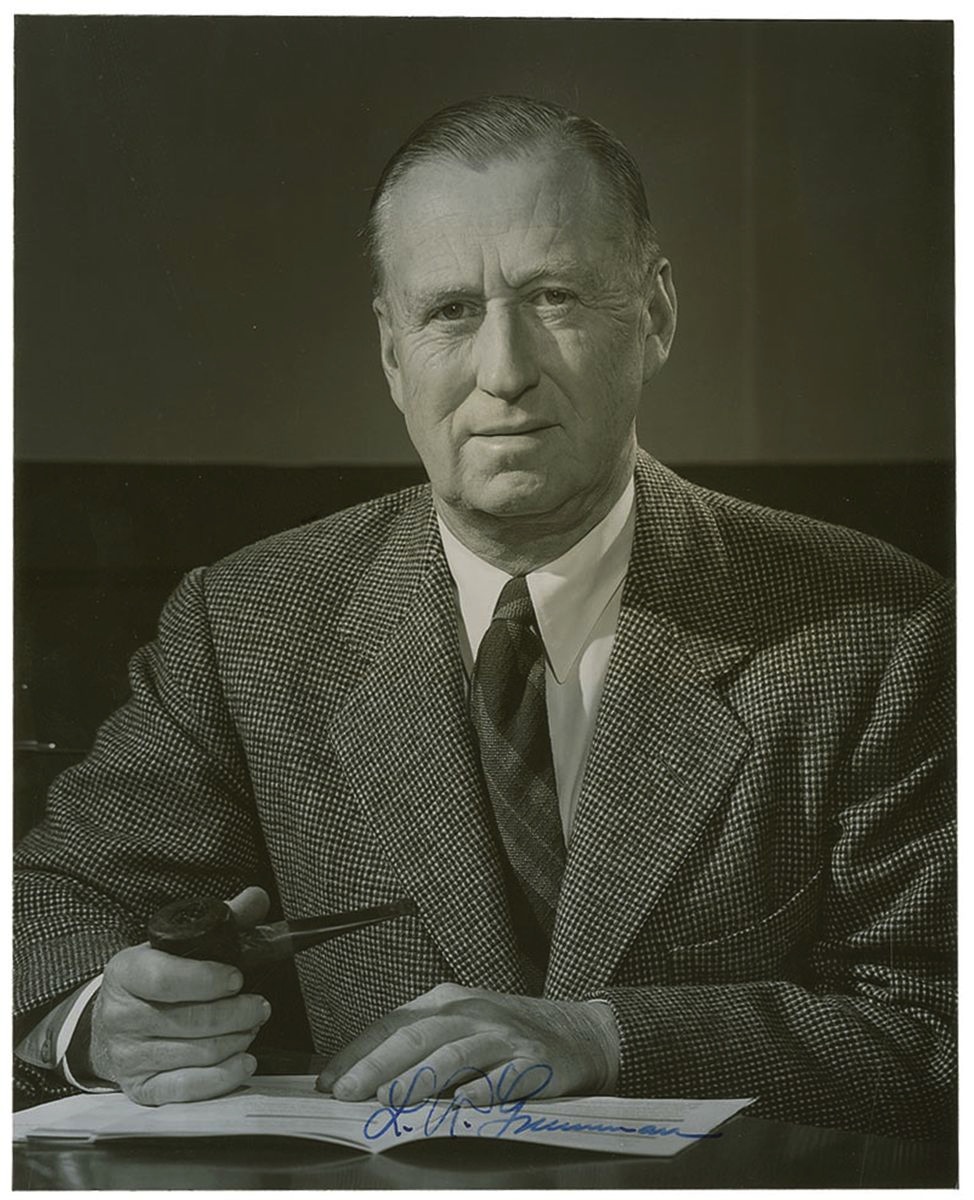 Alden McWilliam’s “They Had What It Takes,” McWilliams turns his pen to those who designed the planes. First up, from the February 1940 issue of Flying Aces we have Leroy E Grumman (or Leroy R. Grumman as history records him).
Grumman may have started out as a Navy flier, but he went on to become one of the leaders in Aircraft design and beyond. The company he founded in 1930 by mortgaging his house and pooling that money with several other investors would go on to build some of the key planes of WWII—The F4F Wildcat, F6F Hellcat and the TBF Avenger torpedo bomber. After the war the company continued to supply the Navy with excellent fighter aircraft like the A-6 Intruder in the 1960’s and the F-14 Tomcat of the 1970’s, but sought out new markets as well. They developed the Gulfstream series of corporate Jets and the Apollo program’s Luner Excursion Module (LEM) that landed astronauts on the moon!
Grumman passed away in 1982 at the age of 87, but his company, which had been aquired by Northrop lives on as Northrop Grumman, one of the largest defence contractors in the world.