“Patrols of Peril” by Frederick C. Davis
This week we have a short story by renowned pulp author Frederick C. Davis. Davis is probably best remembered for his work on Operator 5 where he penned the first 20 stories, as well as the Moon Man series for Ten Detective Aces and several other continuing series for various Popular Publications. He also wrote a number of aviation stories that appeared in Aces, Air Stories and Wings. “Patrols of Peril” was published in the premiere issue of Air Stories magazine in 1927.
Tragedy and spitting lead fly swiftly in the wake of a joke with a startling climax on the brink of Eternity.
“Soft Thunder” by Frederick C Painton
The Strange Enemy of our new book Captain Philip Strange: Strange Enemies, Fraulein Doktor, pops up in the oddest places. Here she is causing trouble in Frederick C Painton’s “Soft Thunder” a year and a half before her first appearance in Donald Keyhoe’s Philip Strange stories.
We’ve posted a number of Frederick C. Painton’s stories in this space already including a few of his Dirty Dozen-esque Squadron of the Dead stories. He’s a great writer with a background in newspapers as this short autobiography from the April 1942 issue of Blue Book Magazine attests:
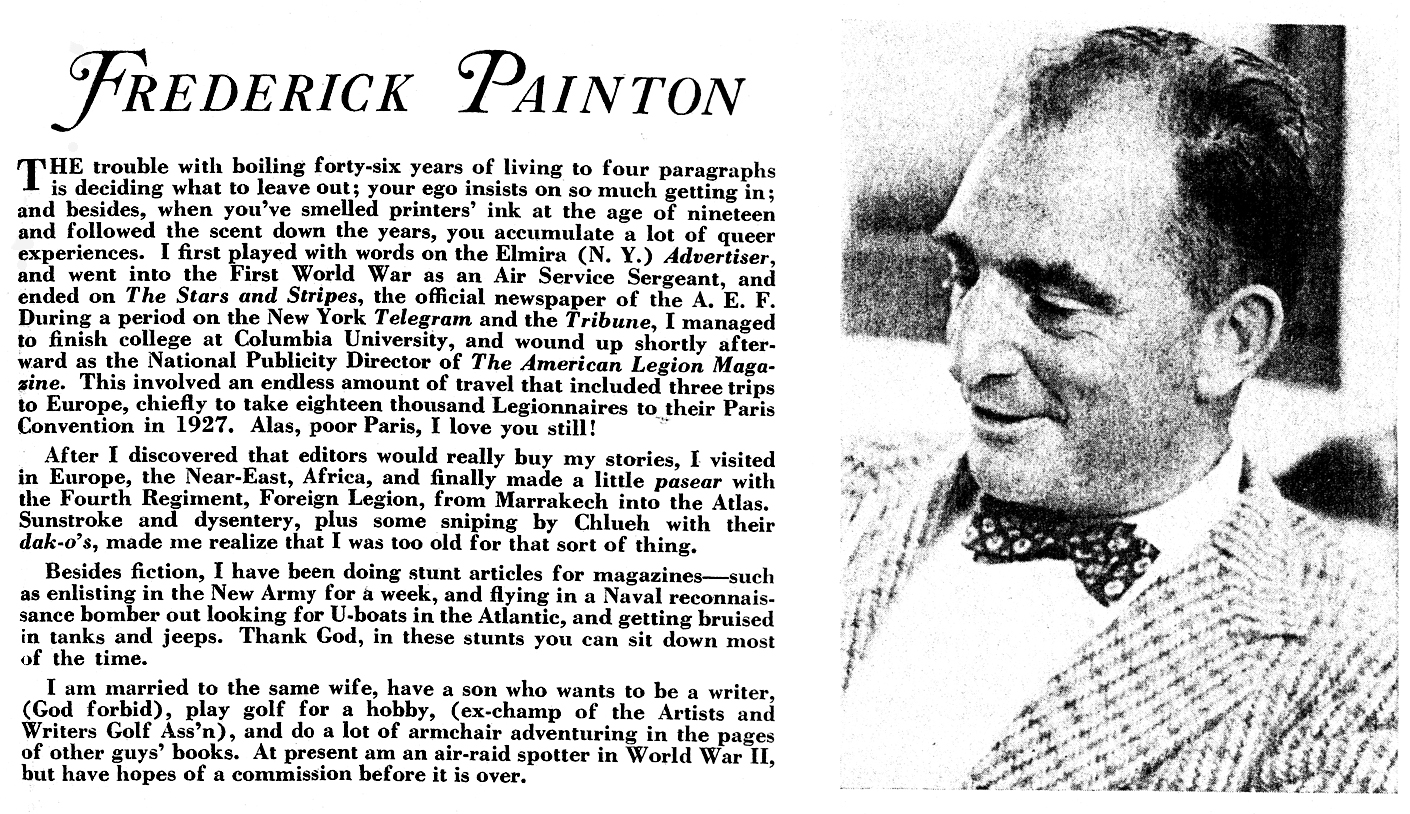
Click to enlarge in a new window.
Unfortunately he died of a heart attack on a Guam airfield while covering the Pacific war.
He was just a kid who played Tennis to those two hard-boiled soldiers—but there was stuff in his make-up that kept him battling in the flaming skies. It was a grim game they played—they stuck to the rules and played like sports, but they knew that the loser would find flying death. And then into their game kited a kid who seemed soft—but there is lightning with even soft thunder.
“The Sky Cop” by Donald E. Keyhoe
To get you excited about the new Captain Philip Strange book set to come out soon, we have a story from the fertile mind of Donald E. Keyhoe. This story has everything: An amazing new invention—smashing battles and cold-blooded murder high above New York skyscrapers—take-offs from catapults atop huge city buildings—parachutes coming to earth along the Great White Way. The first story of its kind and you’re sure to enjoy it!
We’ve posted several stories by Donald E. Keyhoe on the site and collected his Vanished Legion stories from Dare-Devil Aces into a volume as well as our new series of his Captain Philip Strange stories that ran for nine years in Flying Aces. The first of which appeared just a year after this story in August 1931.
“They Had What It Takes – Part 39: Tony Fokker†by Alden McWilliams
With the 39th installment of Alden McWilliams’ “They Had What It Takes” in Flying Aces, he chronicles the man who is maybe the greatest aircraft designer of all time—The Flying Dutchman himself, Anthony Fokker!

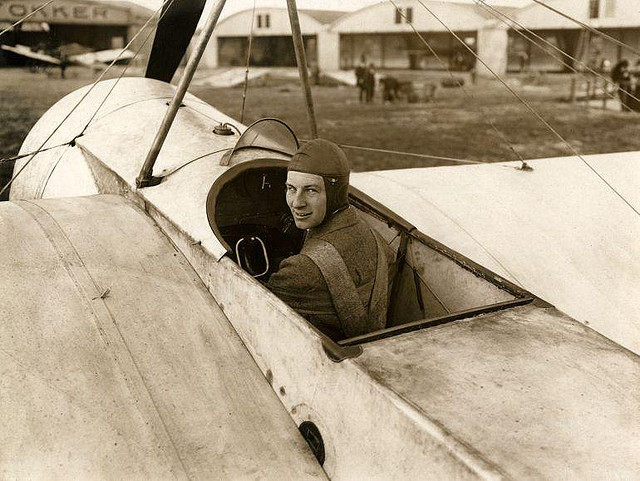
Fokker was training as an automotive mechanic in Germany when he built his first plane—”The Spider”—in 1910. That plane was subsequently destroyed when his partner flew it into a tree. Fokker built another and managed to gained his piolt’s licence flying it. By 1912 he had started his own Airplane Company and quickly established a reputation for building some of the fastest and most stable planes flying at the time. One of the keys to his success is that he personally tested all the planes he designed and kept the pilot in mind asking their opinions on the planes. He sought out the advice of the men on the flight line and brought in the best engineers he could find.
With the outbreak of WWI, Fokker’s designs were very much in demand and soon the greatest names in German aviation—Voss, Immelmann, Boelke and Richtoffen—were being cursed at while flying his planes.
After the war he returned to his native Holland establishing a company there and later emigrating to America where his tri-motor planes helped establish the fledgling airlines and some of the great airplane records of the 30’s. Fokker unfortunately died at 49 in 1939 from pneumococcal meningitis after having been ill for three weeks.
“They Had What It Takes – Part 38: Grover Loening†by Alden McWilliams
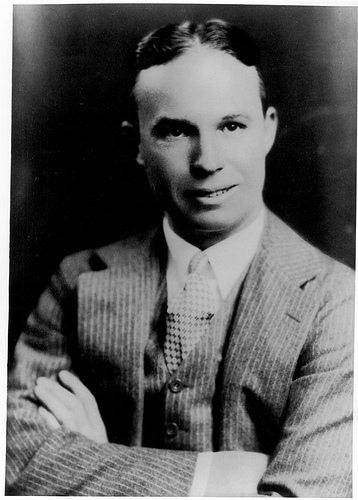 Alden McWilliams continues his look at the great airplane designers in his “They Had What It Takes” feature from Flying Aces. It’s March 1940, and this time we have Grover Loening.
Grover Loening was a noted American aircraft manufacturer, who got his start as an assistant engineer to Orville Wright before starting his own company. He was known for test flying his own planes and at one time employed Leroy Grumman, William T. Schwendler, and Jake Swirbul who left to form Grumman. Of his many accomplishments, Loening was appointed chief aero-engineer for the Army Signal Corps in World War I and was chief consultant to the War Production Board, NACA and Grummand during the Second World War.
Grover Loening lived to the ripe old age of 87, passing away in 1976.
“They Had What It Takes – Part 37: Leroy E. Grumman†by Alden McWilliams
In this and the next few installments of 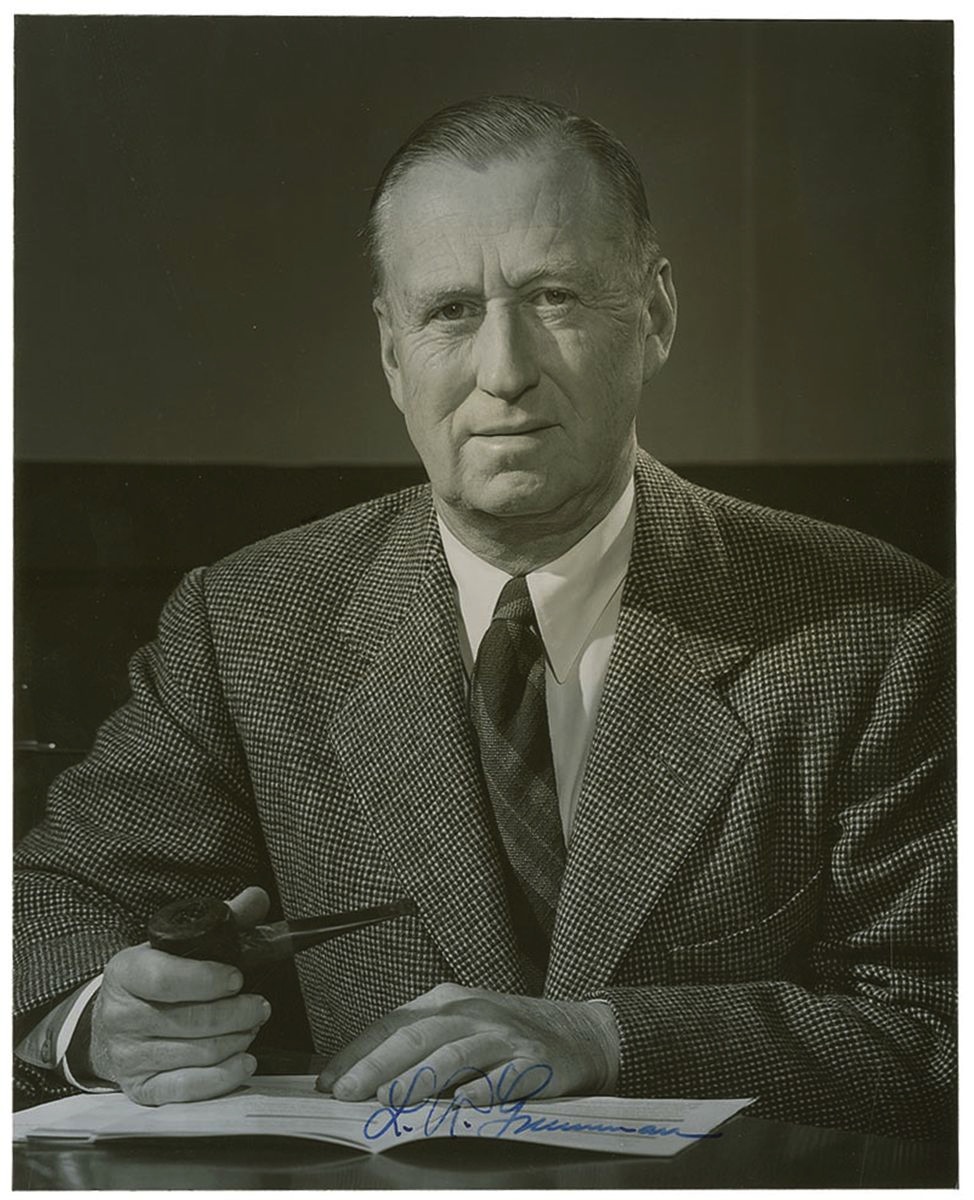 Alden McWilliam’s “They Had What It Takes,” McWilliams turns his pen to those who designed the planes. First up, from the February 1940 issue of Flying Aces we have Leroy E Grumman (or Leroy R. Grumman as history records him).
Grumman may have started out as a Navy flier, but he went on to become one of the leaders in Aircraft design and beyond. The company he founded in 1930 by mortgaging his house and pooling that money with several other investors would go on to build some of the key planes of WWII—The F4F Wildcat, F6F Hellcat and the TBF Avenger torpedo bomber. After the war the company continued to supply the Navy with excellent fighter aircraft like the A-6 Intruder in the 1960’s and the F-14 Tomcat of the 1970’s, but sought out new markets as well. They developed the Gulfstream series of corporate Jets and the Apollo program’s Luner Excursion Module (LEM) that landed astronauts on the moon!
Grumman passed away in 1982 at the age of 87, but his company, which had been aquired by Northrop lives on as Northrop Grumman, one of the largest defence contractors in the world.
“They Had What It Takes – Part 36: Billy Bishop†by Alden McWilliams
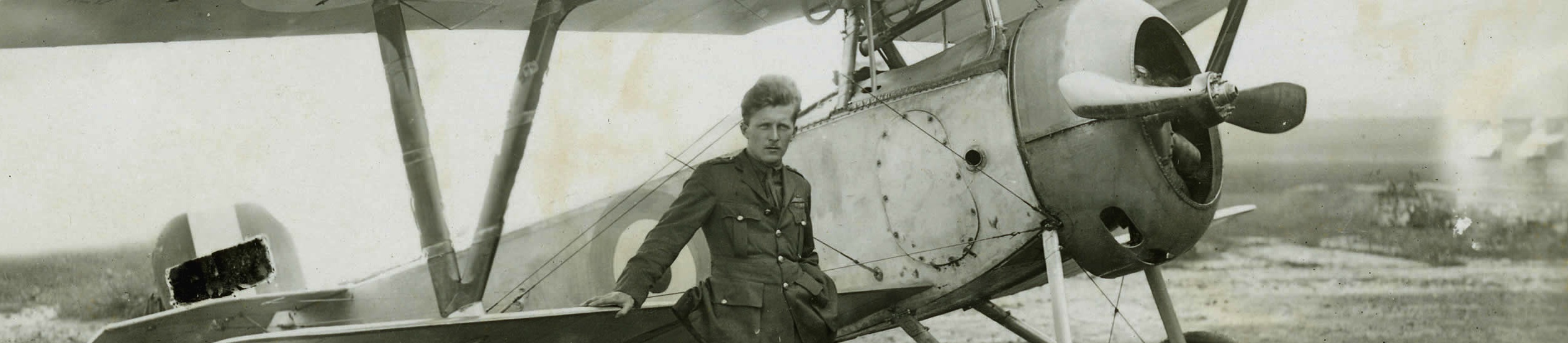 This week we bring you the thirty-sixth installment of Alden McWilliams’ illustrated tribute to the pioneer fliers of the early days of aviation which he called “They Had What it Takesâ€. We’re up to the January 1940 issue of Flying Aces where McWilliams featured Canada’s Greatest WWI Ace—Billy Bishop!
William Avery “Billy” Bishop, V.C. has been credited with 72 victories making him the fourth greatest Ace of the First World War. He was made an honorary Air Marshall of the Royal Canadian Air Force and placed in charge of recruitment in 1938 and developed a training program for pilots across Canada during the Second World War. Stress would eventually see him resign his post in the RCAF in 1944, but remained active in aviation, even offering to return to his recruitment role with the RCAF with the outbreak of the Korean War (he was politely refused by the RCAF due to poor health).
Billy passed in his sleep in 1956 while wintering in Palm Beach, Florida and was buried in Greenwood Cemetery in Owen Sound, Ontario where he was born 62 years earlier.
“They Had What It Takes – Part 35: Major Fred Lord†by Alden McWilliams
Alden McWilliams’ illustrated tributes 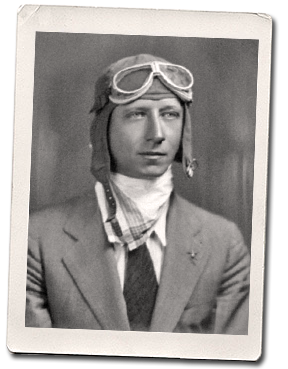 to the pioneer fliers of the early days of aviation ran in Flying Aces from 1937 through 1940. McWilliam’s bio-graphical sketch for the December 1939 issue was Major Frederic Ives Lord—a real life version of Chinese Brady! A self-described soldier for hire, Major Lord flew in five different wars: The First World War, The Russian Cival War, The Mexican Revolution, The Spanish Cival War, and The Second World War.
According to his wikipedia entry, Major Lord was a keen writer, often chronicalling his exploits. A number of these appeared in Flying Aces while his unpublished papers are held in the archives of the Rabb Collection along with hundreds of photographes of Lord frequently with his plane. Lord even “approached movie production companies in the hopes that his story would be turned into a feature film.”
He lived to the age of 70 when he was killed by a vagrant in Apple Valley, California in 1967.
“They Had What It Takes – Part 34: Clarence Chamberlin†by Alden McWilliams
Alden McWilliams’ illustrated tribute to the 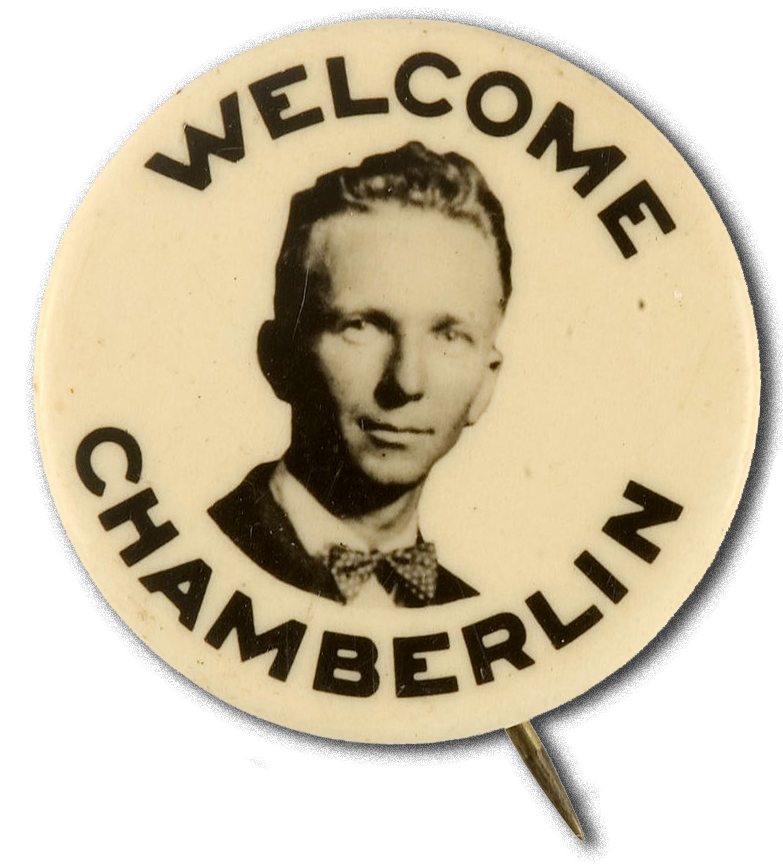 pioneer fliers of the early days of aviation was called “They Had What it Takesâ€, and this week we bring you the 34th installment, which appeared in the November 1939 Flying Aces. . In this week’s installment McWilliams brings his talents to rendering the life of that Trans-Atlantic vet, Clarence Chamberlin.
Clarence Chamberlin just missed out on being the household name that Lindbergh became. When Lindbergh took off, the plane’s owner Levine was still tinkering with the plane and arguing with who would pilot it—thus preventing Chamberlin from becoming the first to fly solo across the Atlantic. However, several weeks later, Chamberlin took off with Levine as a passenger and became the second man to pilot a fixed wing aircraft across the Atlantic to the European mainland, but the first to take a passenger! And he flew further setting a distance record, landing in Eisleben, Germany when he ran out of gas—just 110 miles short of his goal of Berlin.
“They Had What It Takes – Part 33: Arch Whitehouse†by Alden McWilliams
This week we bring you Part 33 of 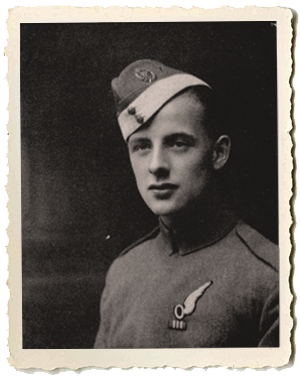 Alden McWilliams’ illustrated tribute to the pioneer fliers of the early days of aviation. He called it “They Had What it Takes†and this installment appeared in the October 1939 Flying Aces. It features our old pal here at Age of Aces—Arch Whitehouse. Whitehouse was a prolific writer, both for the pulps and aviation-themed books after the pulps ended. We’ve posted a number of Whitehouse’s stories from Flying Aces and Sky Birds with some of his long running characters like Buzz Benson, Crash Carringer, Coffin Kirk, The Casket Crew, Tug Hardwick and The Griffon!
Arch Whitehouse was blessed with a fertile imagination which seemed to spill over into the acounts of his own war record. McWilliams piece and Whitehouse’s own biography, Hell in Helmets, credit Whitehouse with shooting down 16 German aeroplanes—at most he may have had 4 kills—it seems that he was something of a serial exaggerator.
We’ve posted this installment long before we started posting the entire series of Alden McWilliam’s “They Had What It Takes”, but here it is in sequence in case you missed it.
Next time: Clarence Chamberlin—Trans-Atlantic Vet.
“They Had What It Takes – Part 32: “Casey” Jones†by Alden McWilliams
Age of Aces presents the thirty-second installment of Alden McWilliams’ illustrated tribute to the pioneer fliers of the early days of aviation. This week McWilliams chronicles the life and contributions to aviation of aero booster No.1—Charles S. “Casey” Jones. Jones, a veteran of the hell skies of WWI, would rise to prominance as one of the great air racers of his time. He used his popularity to sell the American public on aviation, contributing to radio shows and having columns in two leading aviation magazines—”Flying Colors” in Air Adventures (1928-29) and “Casey Jones’ Flying Course” in Sky Birds (1933-34).
In 1932 he founded the Casey Jones School of Aeronautics along with Lee D. Warrender and George A. Vaughn Jr. The school went through a number on name changes, the most recent was in 2004 when it was remamed after Vaughn.
Casey passed away in February 1976.
“They Had What It Takes – Part 31: Charles E. Rosendahl†by Alden McWilliams
In the late thirties Flying Aces ran Alden McWilliams’ monthly illustrated tribute to the pioneer fliers of the early days of aviation which was called They Had What it Takes. In the August 1939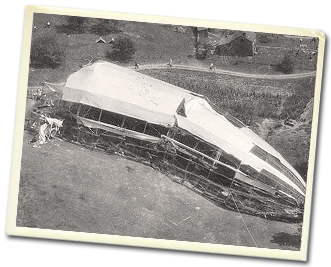 issue they featured American Air Ship Ace Charles E. Rosendahl!
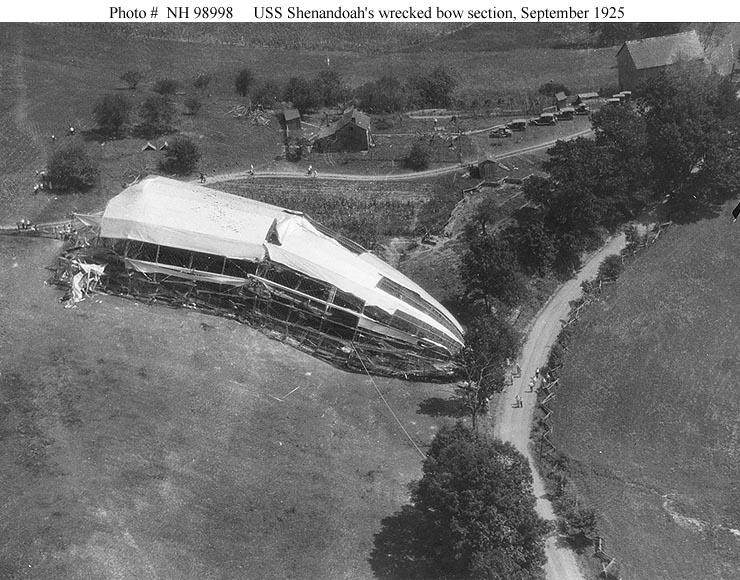
Rosendahl started his Naval career aboard battleships and moved into rigid airship duty after the Navy’s Bureau of Navigation circulated a letter asking for volunteers. He distinguished himself by successfully bringing the bow section of the the dirigible Shenandoah after she broke apart in the air! He rose through the ranks serving aboard a number of lighter-than-air craft. Eventually achieving the rank of Vice Admiral in the US Navy, Rosendahl never stopped advocating the virtues of lighter-than-air flight writing several books about them (his papers are archived in the McDermott Library at The University of Texas at Dallas) and was aboard the N class blimp ZPG-3W on its final flight in August 1962 when the US Navy ended airship operations. Rosendahl passed away in May 1977.
“They Had What It Takes – Part 30: Lee Gehlbach†by Alden McWilliams
This week we bring you Part 30 of Alden McWilliams’ illustrated tribute to the pioneer fliers of the early days of aviation. He called it “They Had What it Takes†and this installment appeared in the July 1939 Flying Aces. It features that top-flight test pilot Lee Gehlbach.
In 1935, Time Magazine described him as “a leader in his highly hazardous profession at 32, Lee Gehlbach became an aeronautical engineer because he was “a farmer’s son who couldn’t get used to getting up at 4 in the morning.” Graduated from the University of Illinois in 1924, he enlisted in the Army Air Corps, resigned five years later to become a free-lance pilot and consultant. Best known as a racing pilot, he won first place and $15,000 in the 5,541-mi. All-America Flying Derby of 1930, beating such famed speed merchants as the late Lowell Bayles and Jimmy Wedell.”
Here Gehlbach tests out the Grumman F3F-2 “Flying Barrel.”
“Double Death” by William E. Barrett
Here is a smashing complete novelette of strange wings over the Italian front!
Ships were being blown to shambles in pairs—two or four at time, never three or five or just one—and none knew why. Until Jack Lannigan came. Find out why in William E. Barrett’s intriguing novelette “Double Death.”
William E. Barrett wrote a number of aviation themed stories for the air pulps in the 1930s. His nine Iron Ace stories which ran in Sky Birds in the mid ’30s have been collected in one volume and available from our books page. Barrett would later become famous as the author of “Lilies of the Field†and “The Left Hand of God†amung other books.
“They Had What It Takes – Part 29: Ernst Udet” by Alden McWilliams
This week we bring you Part 29 of Alden McWilliams’ illustrated tribute to the pioneer fliers of the early days of aviation. He called it “They Had What it Takes†and this installment appeared in the June 1939 Flying Aces. It features that Ace of The Black Cross, Ernst Udet. Udet was the highest scoring Ace to survive the Great War. With 62 victories he was second only to his commander in the Flying Circus, Manfred von Richthofen.