



My Most Thrilling Sky Fight: Lieut. Col. William Bishop
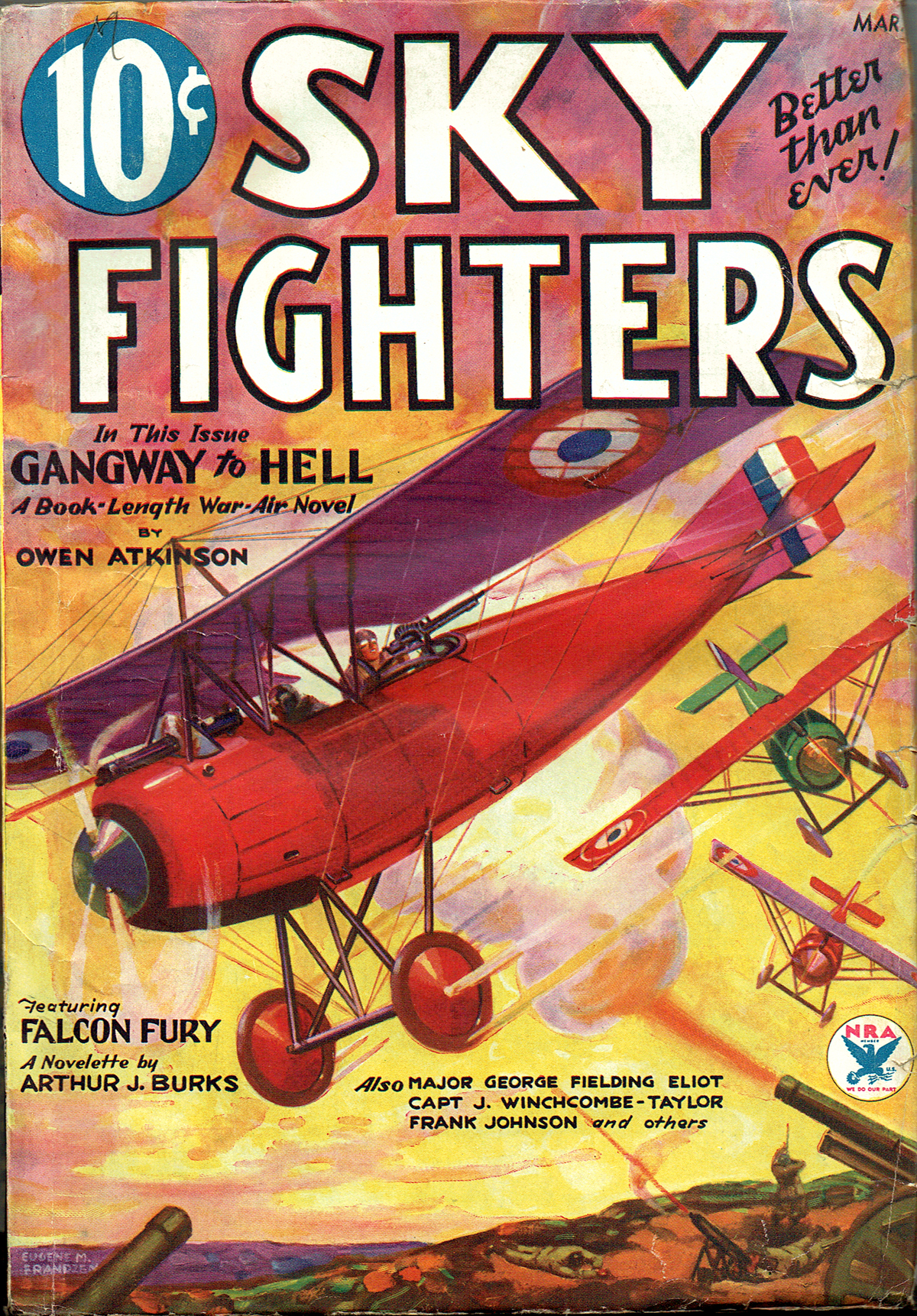
Amidst all the great pulp thrills and features in Sky Fighters, they ran a true story feature collected by Ace Williams wherein famous War Aces would tell actual true accounts of thrilling moments in their fighting lives! This time it’s Lieutenant Colonel William Bishop’s Most Thrilling Sky Fight!
Colonel William Bishop 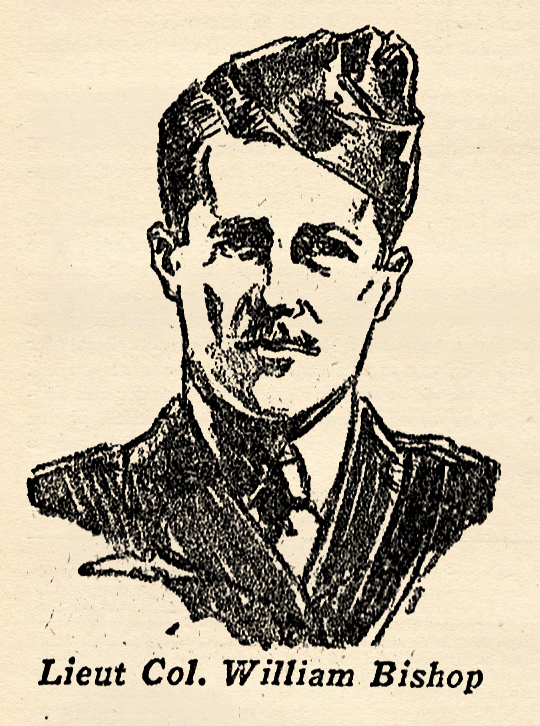 is one of the few great war Aces still living. And he probably owes his life to the fact that the British General Staff ordered him to Instruction duty in London while the war was still on. Bishop first served in the Second Canadian Army as an officer of cavalry, but tiring of the continuous Flanders mud, he made application for transfer to the Royal Flying Corps. He was first sent up front as an observer. When he went up later as a pilot he immediately began to compile the record which established him as the British Ace of Aces. He won every honor and medal possible. He was an excellent flyer, but attributed most of his success to his wizardry with the machine-gun. When the war ended he was officially credited with downing 72 enemy planes and balloons. The account below is from material he gathered for a book.
THE DECOY MAJOR
by Lieut. Col. William Bishop • Sky Fighters, February 1934
OUR WING received orders to take some pictures seven miles inside the enemy lines. This was a hazardous mission, and the Major in command of Wing volunteered to do it alone, but his superiors ordered that he be given protection. My patrol was assigned to furnish that protection. We were to meet the Major in his photo plane just east of Arras at the 6,000 foot level.
The rendezvous came off like clockwork. I brought my patrol to the spot at 9:28 and cruised lazily about. Two minutes later we spied a single Nieuport coming towards us. I fired a red signal flare and the Nieuport answered. It was the Major.
I climbed slightly then, leading my patrol about 1,000 feet above the Major’s Nieuport, protecting him from attack from above as we kited over the lines. The formation kept just high enough to avoid the German archies.
We got to the area to be photographed without too much trouble, flying through a sea of big white clouds which made it difficult for the archie gunners to reach us. We circled round and round the Major while he tried to snap his pictures.
But the clouds made it as difficult for him as for the archie gunners.
During one of our sweeping circles I suddenly saw four enemy scouts climbing between two immense clouds some distance off. I knew they would see us soon, so I got the brilliant idea of making the enemy scouts think that there was only one British machine by taking my patrol up into the clouds.
I knew the Huns would dive to attack on the Major the instant they spotted him, then the rest of us could swoop down and surprise them. I did not want to make it hard on the Major, but I couldn’t resist the chance of using him as a decoy.
The enemy scouts saw the Major and made for him in a concerted dive. He didn’t see them until one of them opened fire prematurely at a long range of over 200 yards.
His thoughts then—he told me afterwards—immediately flew to the patrol. He glanced back over his shoulder to see where we were—and saw nothing! He pulled up and poured a burst at a German who came down on his right. Then he banked to the left for a burst at another German. The two Huns flew off, then returned.
I dived with my patrol now. One Hun fired at the Major as I flashed by. I opened both my guns on him at a ten-yard range, then passed on to the second enemy scout, firing all the while, and passing within five feet of his wing tip. I turned quickly to get the other two, but they dived out of range and escaped.
When I looked back over my shoulder the first two were floundering down through the clouds out of control. Ten seconds of firing had accounted for both of them in a single dive. The Major finished his photo job in fifteen minutes without further interruption, and we made our way home through heavy aircraft fire.
Later, I apologized to him for using him as a decoy. “Don’t worry about me,” he said. “Carry on.”
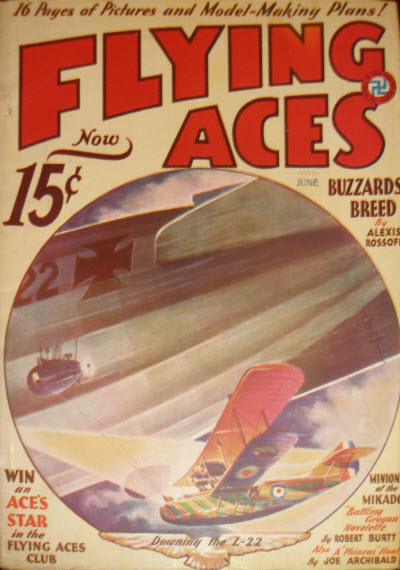 we have a tale from the man that brought us
 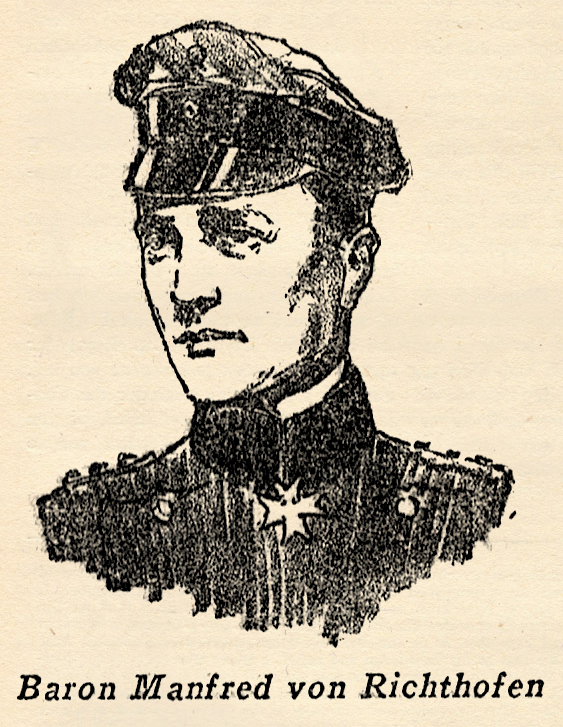 was the greatest of all the German flyers. He had more victories to his credit than any other battle flyer. He began in the Imperial Flying Corps, on the Russian Front. Soon afterwards he was transferred to the German North Seas station at Ostend, where he served as a bomber. Backseat flying never appealed to him, so he took training, soon won his wings, and was sent to join the jagdstaffel commanded by Oswald Boelke. After his sixteenth victory, he was promoted to Lieutenant and assigned to command a squadron. This became the Flying Circus, the most famous of all the German squadrons, the scourge of the western skies.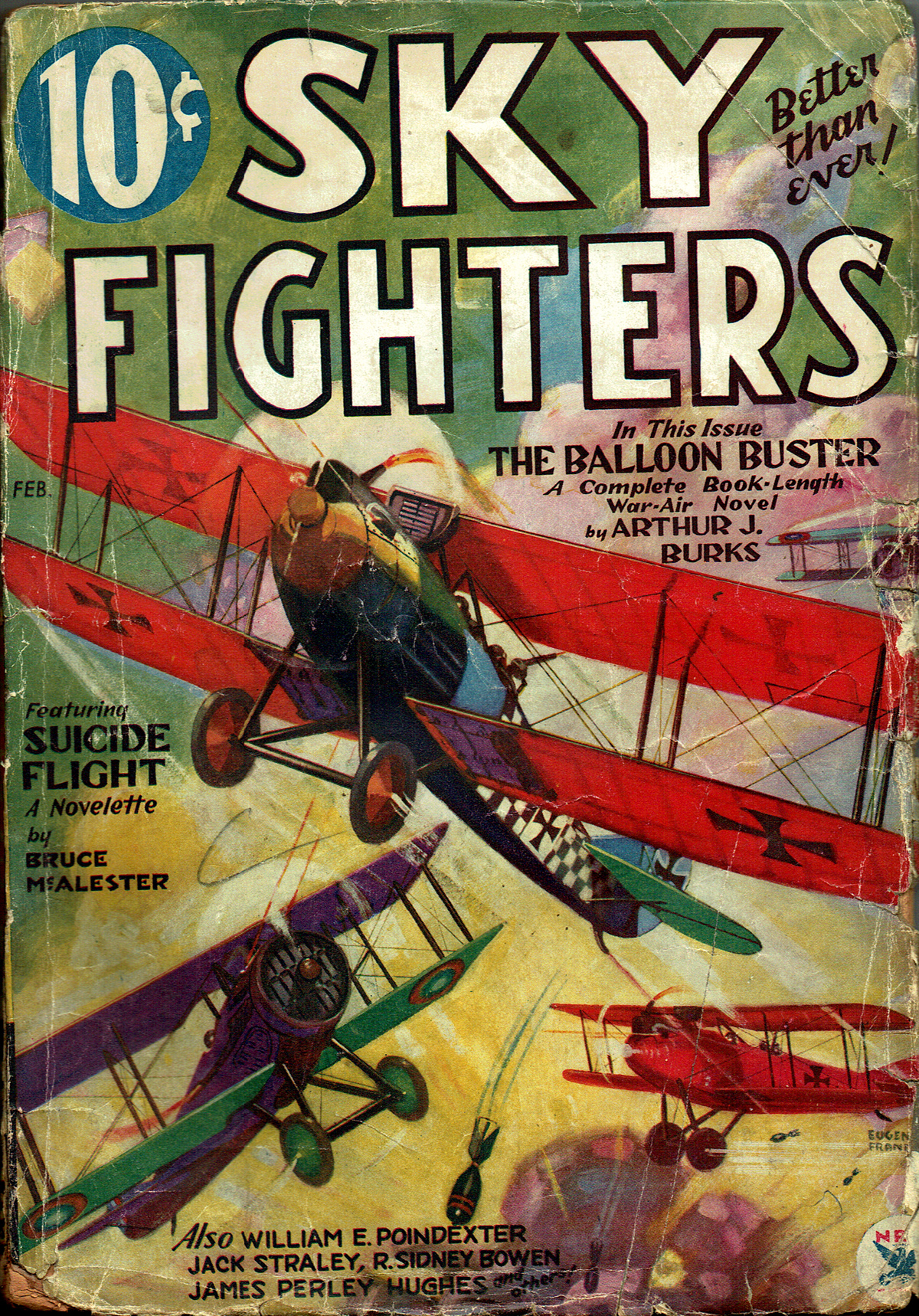

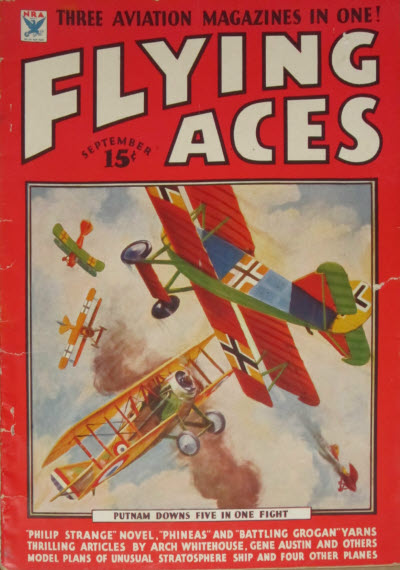 That sound can only mean one thing—it’s time to ring out the old year and ring in the new with that Bachelor of Artifice, Knight of Calamity and an alumnus of Doctor Merlin’s Camelot College for Conjurors—Phineas Pinkham. And it’s a festive one—It’s Major Rufus Garrity’s birthday and he’d like to keep it a secret, but it’s impossible to keep a secret from the Boonetown marvel!


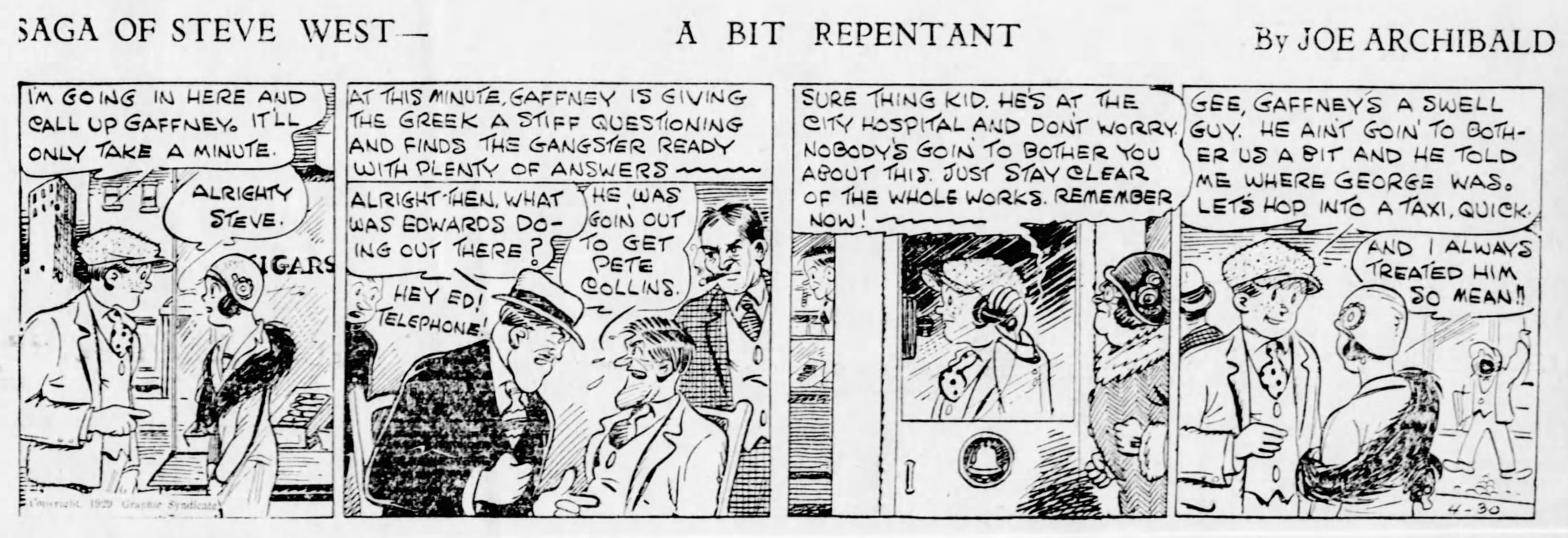


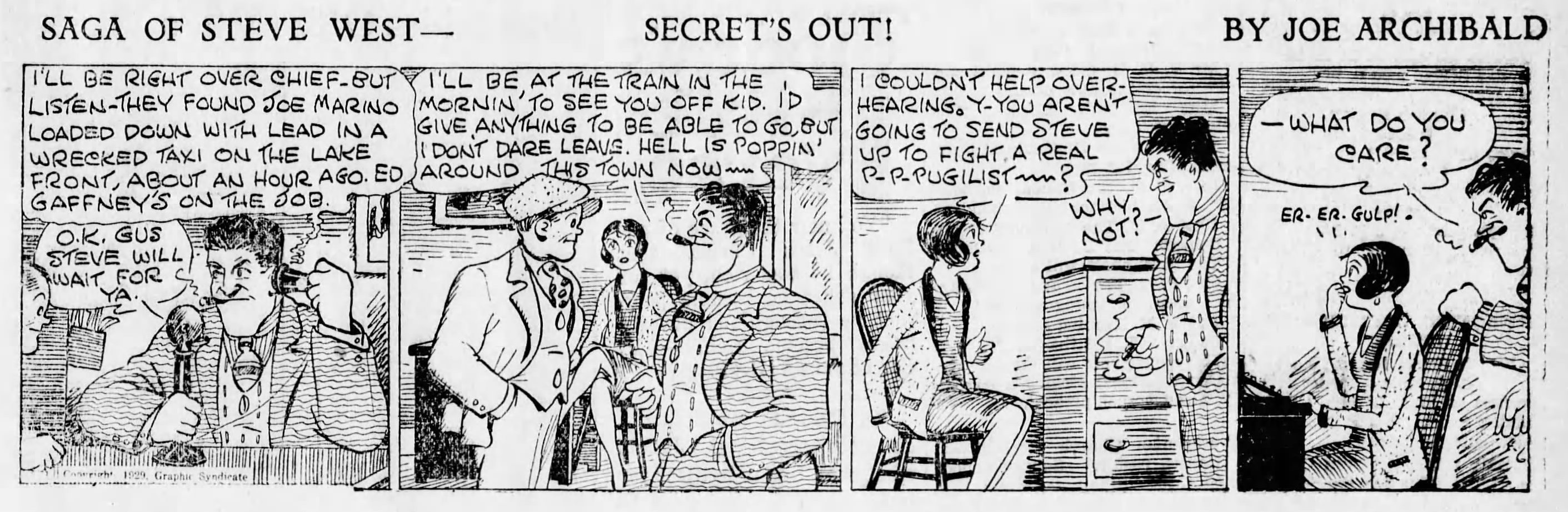

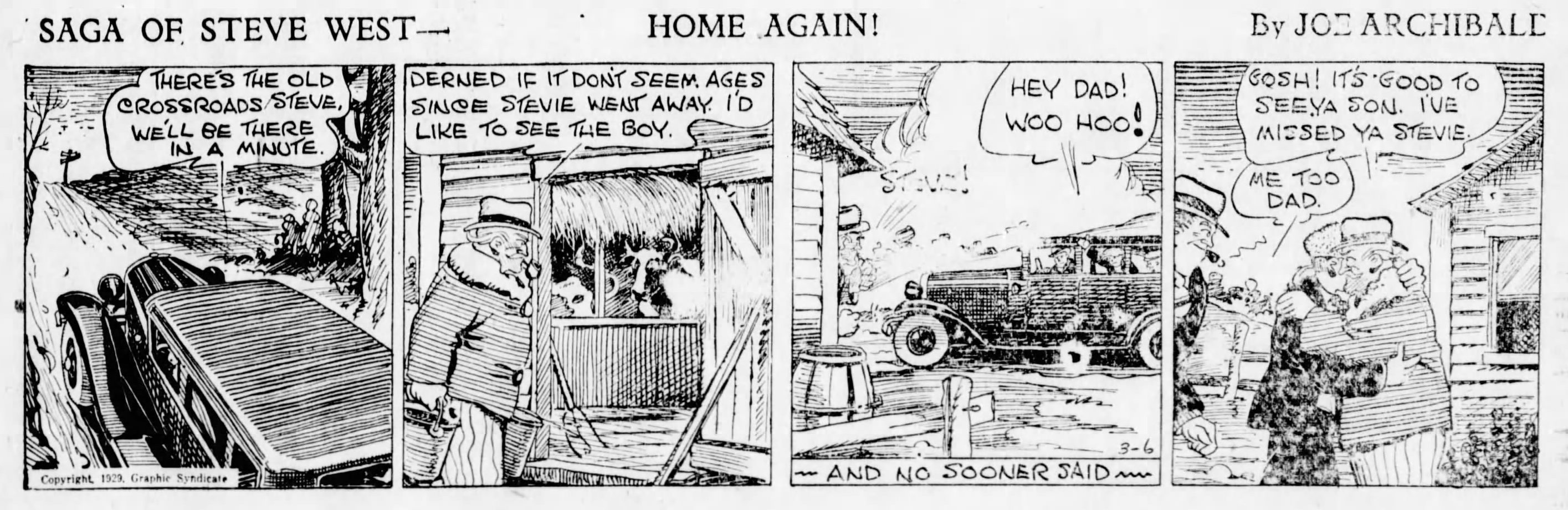
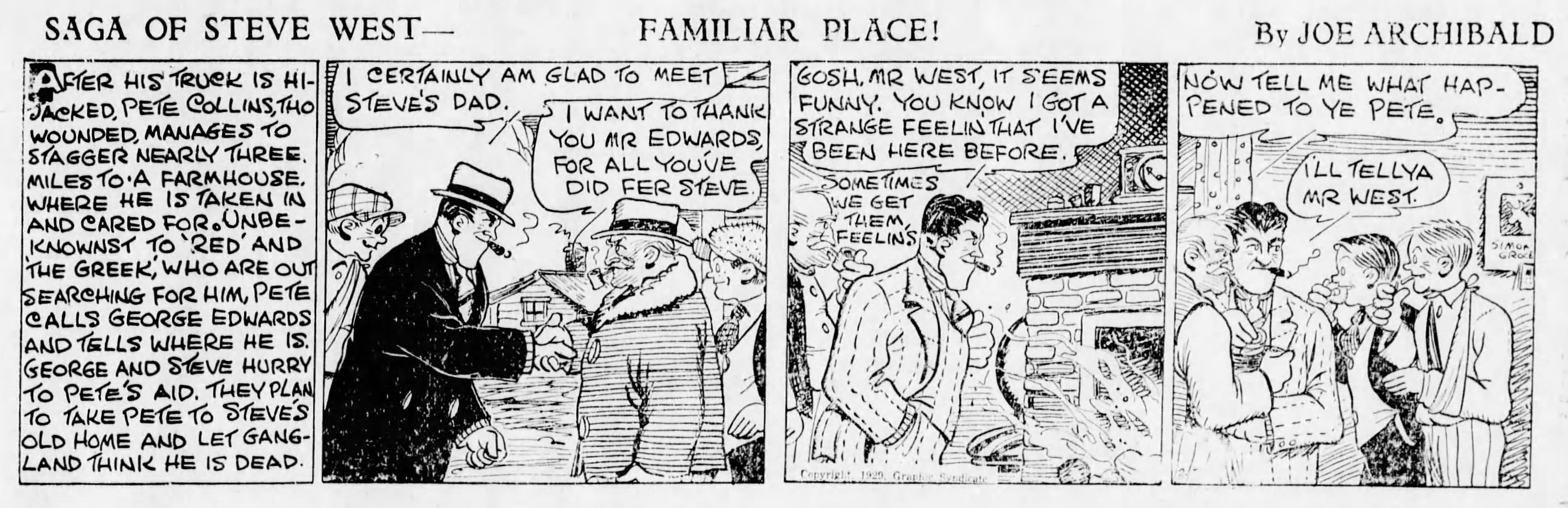
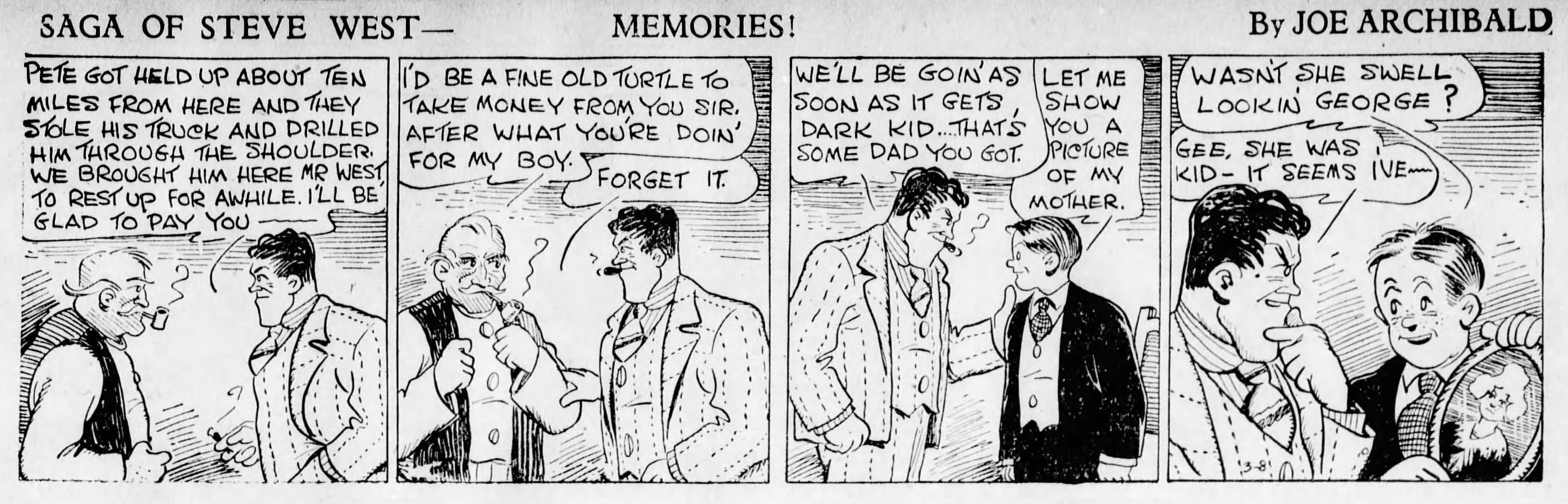
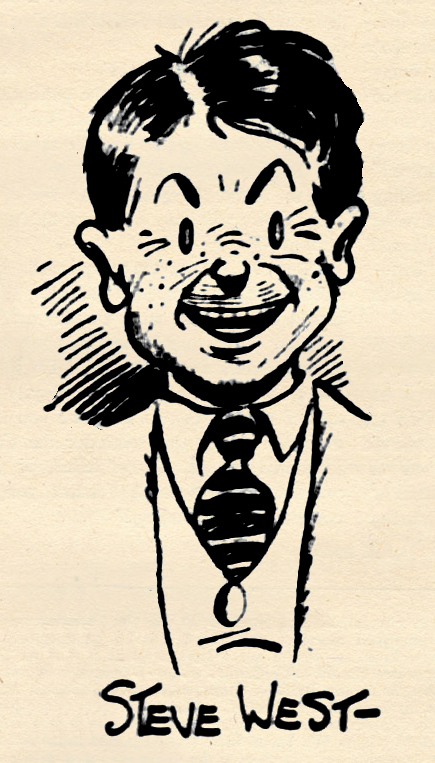 he created his first comic strip syndicated by the New York Evening Graphic. Here he had characters, continuity and action. What he came up with was “Saga of Steve West,” a strip about a young man who leaves the farm and heads to the big city to find his way in life. The principle characters are: Steve West, the young man in question who appears to be in his late teens or early twenties; George Edwards who is Steve’s friend and benefactor and—a bootlegger; Edwards’ secretary and sometimes girlfriend, Helen Wyatt, who has a secret warm spot in her heart for Steve; Detective Gaffney who has matched wits with Edwards in gangland; and rounding out the main cast is Steve’s pal Pete Collins.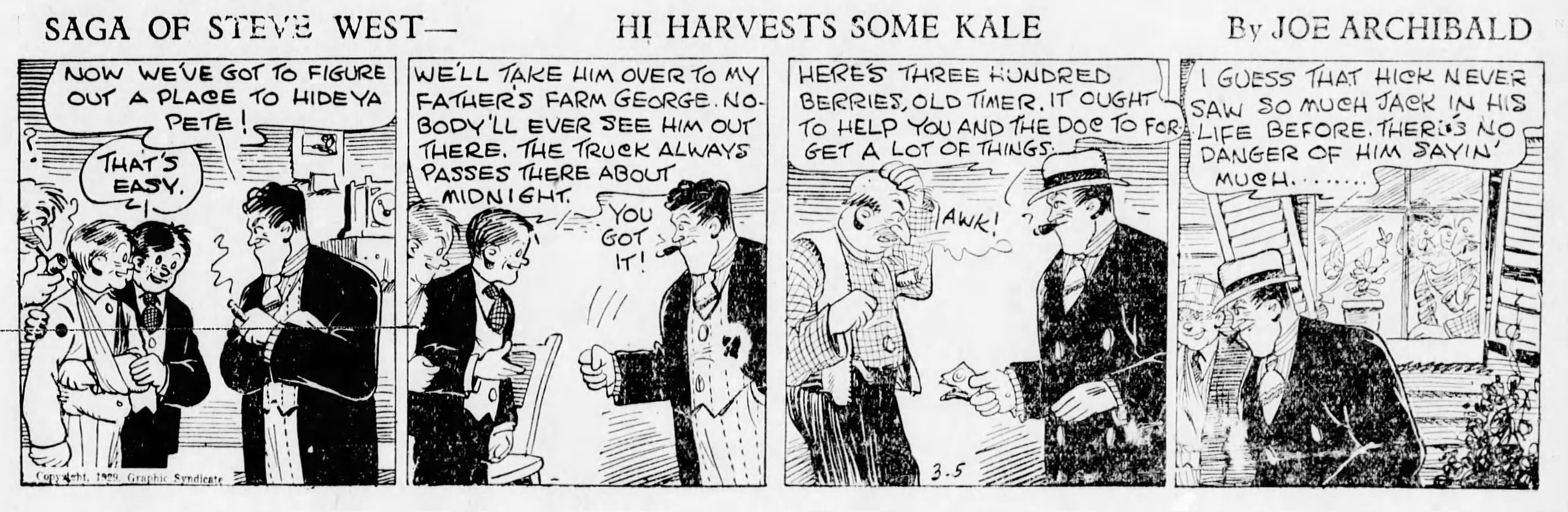
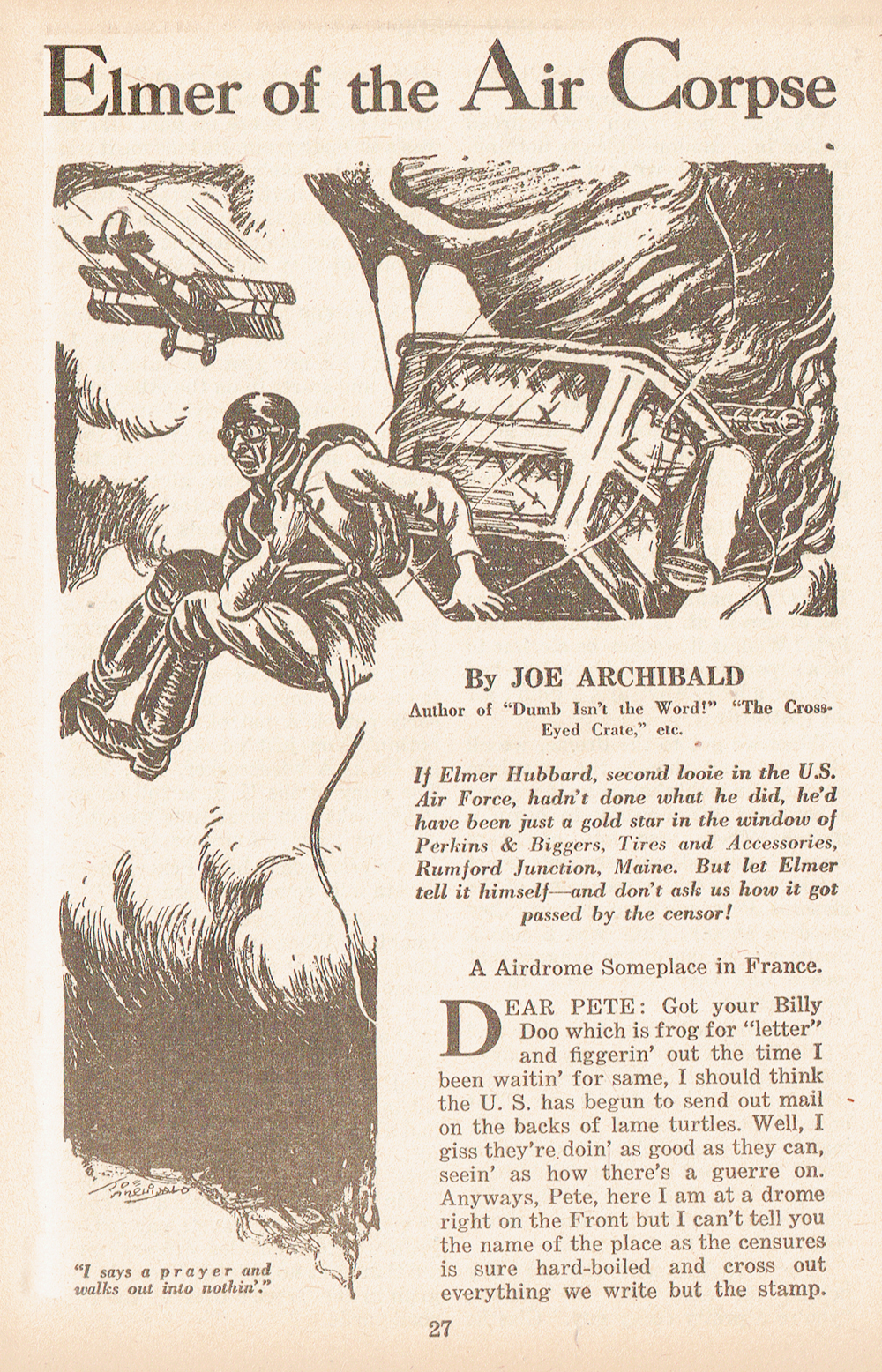

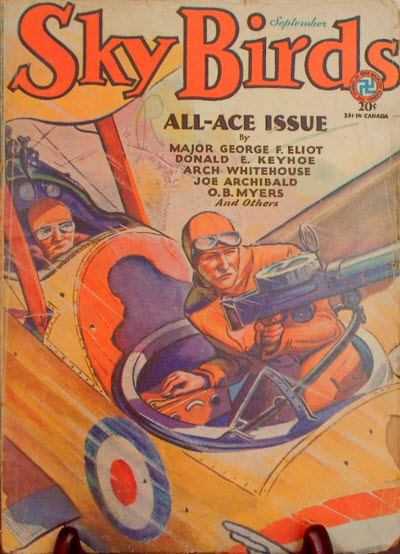 as a bonus, Joe Archibald’s first tale of Elmer Hubbard. Elmer writes his first letter to Pete back in Rumford Junction telling him all about his first days in France as a second lieutenant in the U.S. Air Force with Pokey Cook.


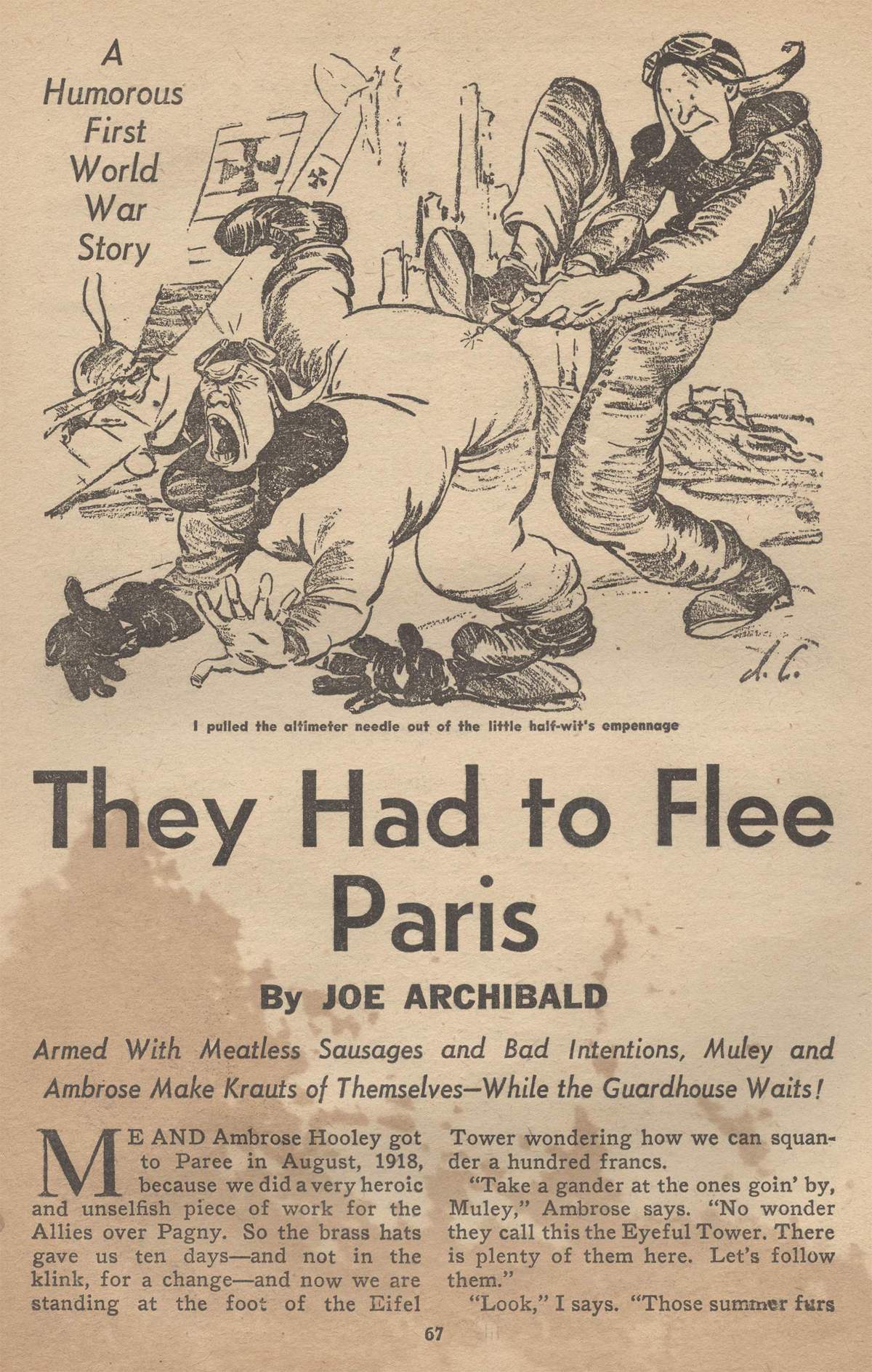
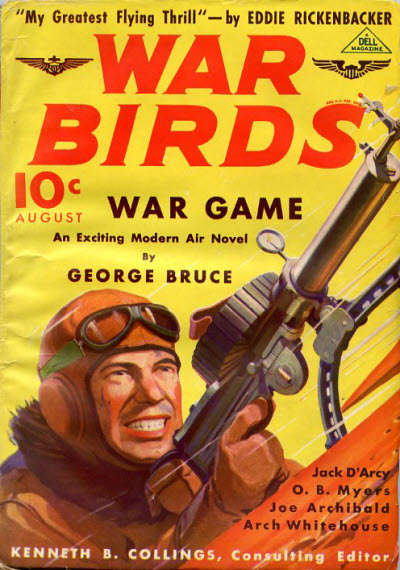 as a bonus, Joe Archibald’s first tale of Ambrose Hooley. No Muley Spinks as yet, but all the other elements are there—the 93 Pursuit Squadron, Major Bagby and Ambrose shooting krauts out of the sky like ducks in a barrel while simultaneously working all the angles. The tale of assumed identity is illustrated by our old friend