


My Most Thrilling Sky Fight: Captain Oswald Boelke
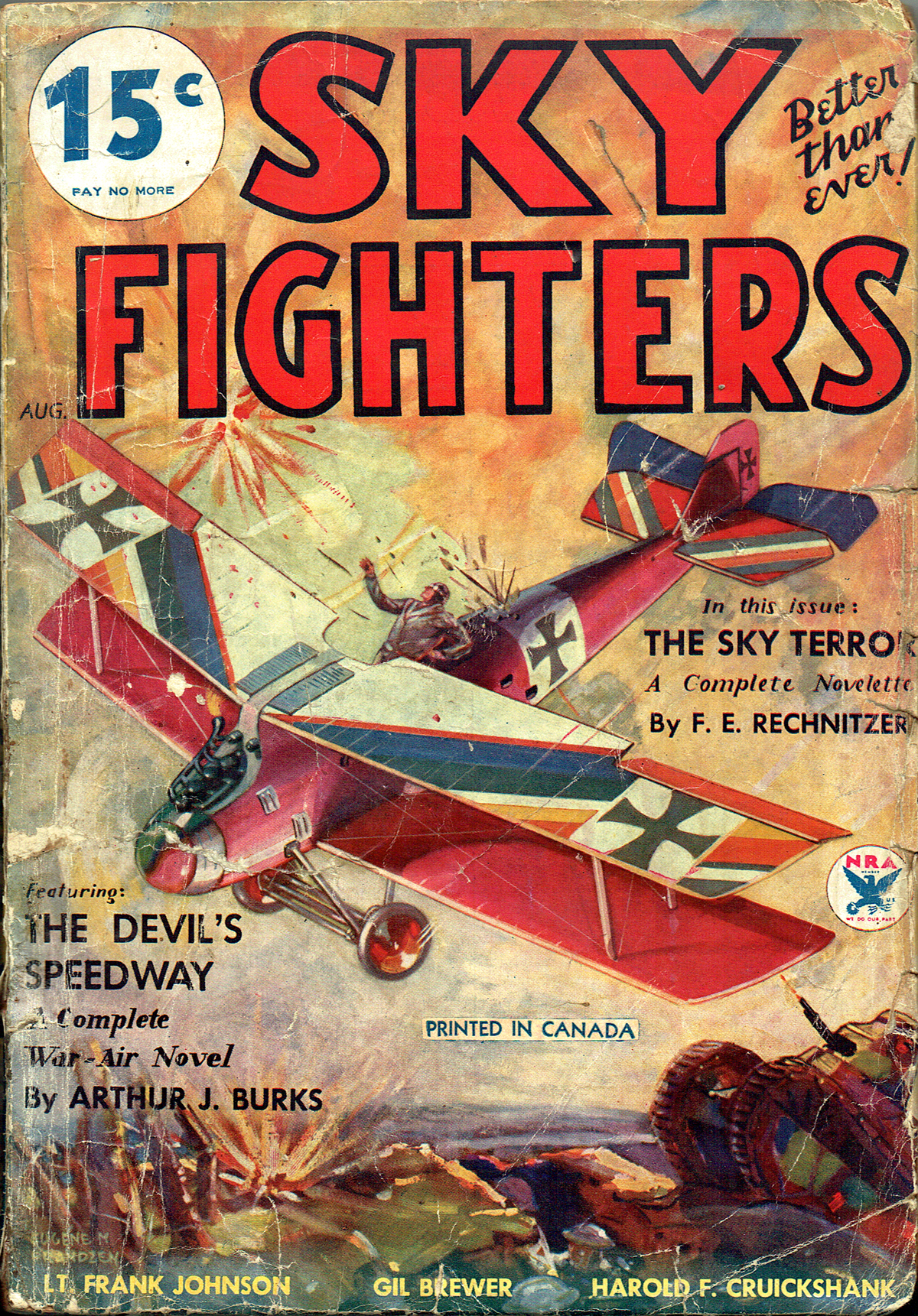
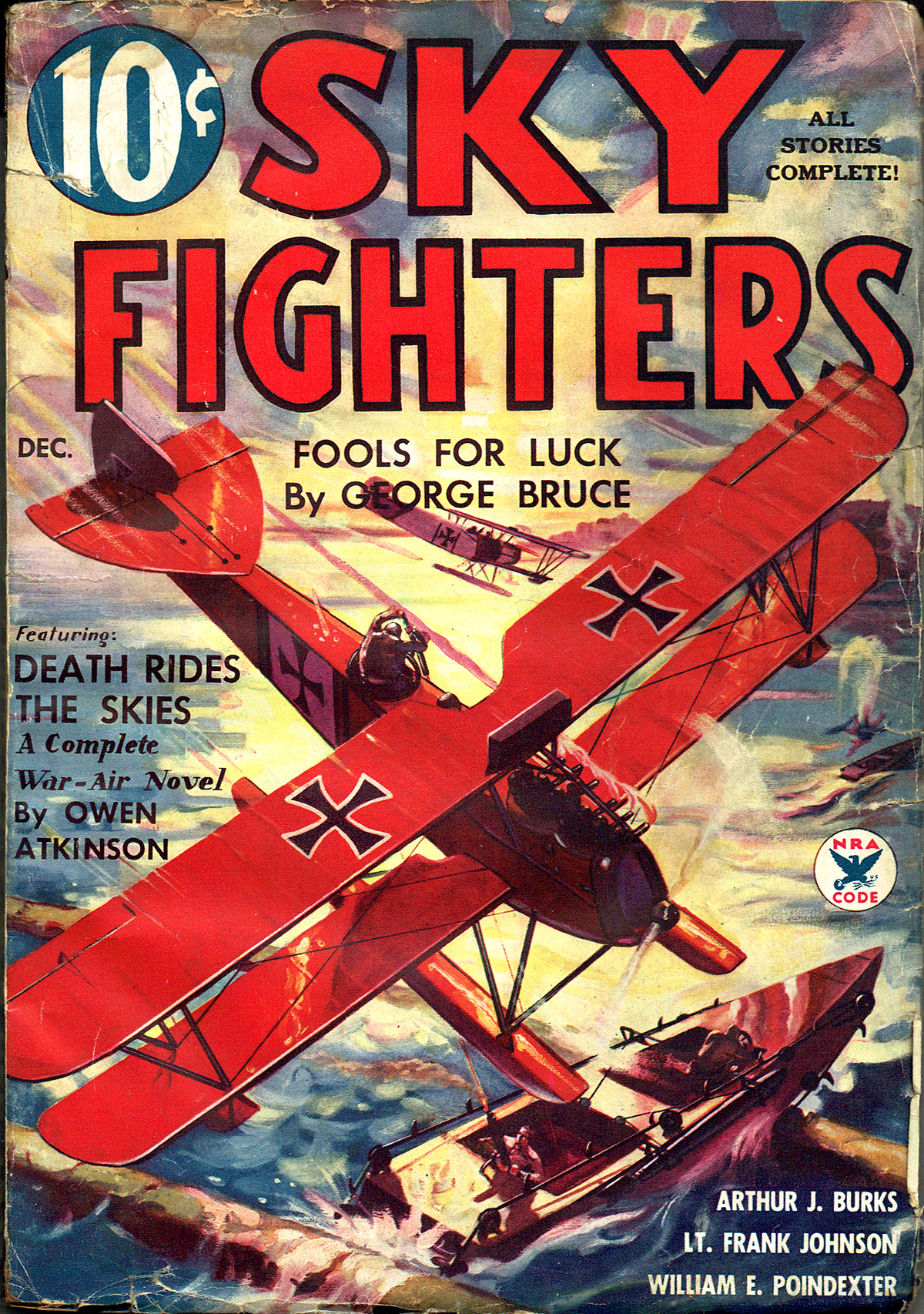
Amidst all the great pulp thrills and features in Sky Fighters, they ran a true story feature collected by Ace Williams wherein famous War Aces would tell actual true accounts of thrilling moments in their fighting lives! This time it’s one of Germany’s greatest air fighters—Captain Oswald Boelke!
All the heroes 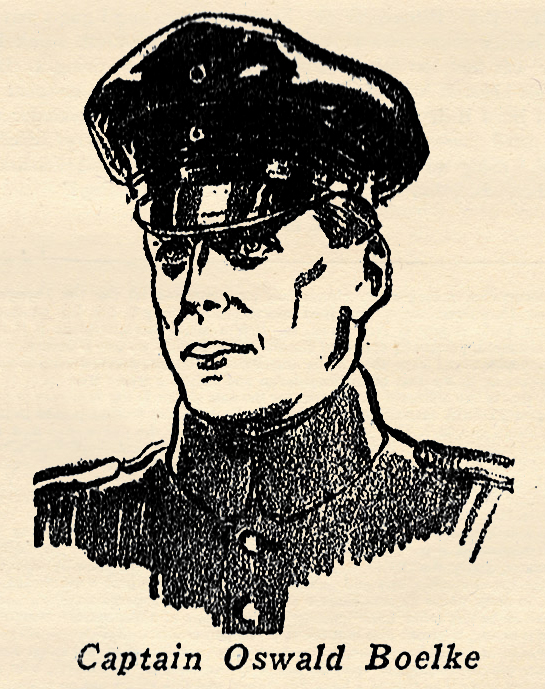 of the flying forces were not on the Allied side. The enemy also had its heroic figures.
Captain Boelke was among the greatest of the enemy air fighters. He reigned supreme until his death; then Baron von Richtofen came along to carry on where Boelke left off.
The German air fighting tactics varied somewhat from those of the Allies, tending more towards mass attack, emulating in that respect the German system of arms to attack in force with superior number, For that reason accounts of German air fights are not usually as spectacular or glamorous as accounts of Allied fights. Boelke’s account of his fight with a dead pilot, however, borders on the realms of fiction, and could hardly he believed if it did not come from such a practical-minded, stolid figure as was the German flying Captain.
THE PHANTOM PILOT
by Captain Oswald Boelke • Sky Fighters, November 1933
ON THE 27th of September (1916) I attacked with my patrol a flight of six English single-seaters. I knocked down one of them, and immediately picked on another. But as I whirled into the second attack, the first machine, whose pilot I thought I had killed, having seen my tracer stream right into his face, made for me. I tried to escape the charge, but nothing I did seemed to avail. The enemy plane glued right on my tail. I was very much surprised at his tenacity.
After all, I was certain that I had killed the English pilot minutes before, yet here he was, still flying around in a circle stubbornly. The fact was mysterious indeed. I flew over very close to the enemy machine to investigate, and saw that the pilot was prostrate over the gunwales of his cockpit. He certainly seemed dead.
Sure, then, that the plane could do me no harm, I left it and banked off, to tackle another Englishman whom my comrades had rounded up for me. I got him without difficulty, sending him down in a slow spin.
Then the mysterious plane with the dead pilot at the controls veered around and headed toward me.
And what a strange thing! It crept up to within fifty meters of my plane. Next thing I knew, a stream of tracer spewed from its nose. The bullets rattled through my fuselage. I nosed down to escape the slugs. The plane shot overhead, so I banked around and slid down after the spinning Englishman. When the Englishman crashed in a shell crater, the other plane seemed suddenly to straighten out and scoot for its own lines.
I followed and watched, saw it land easily in an open space behind its own lines. When it stopped rolling, soldiers from the trenches came out and pulled the pilot from the pit. They laid him out on the ground and covered him with a blanket, face and all. One of the soldiers crossed himself. I knew then my own conclusions were confirmed. The pilot was really dead. But the way that plane maneuvered with a dead hand on the control stick was positively uncanny.
It had me in a cold sweat. I finally figured out that the plane was rigged so perfectly that it really flew itself.
That it seemed to tail me was pure coincidence. As for the slugs that poured from its nose, they were merely the result of a last convulsive muscular movement of the dying pilot. But I tell you, one experience like that is enough! I would rather fight ten daring, darting Englishmen all at once, than do solitary battle with a ghost plane with dead hands at the controls.


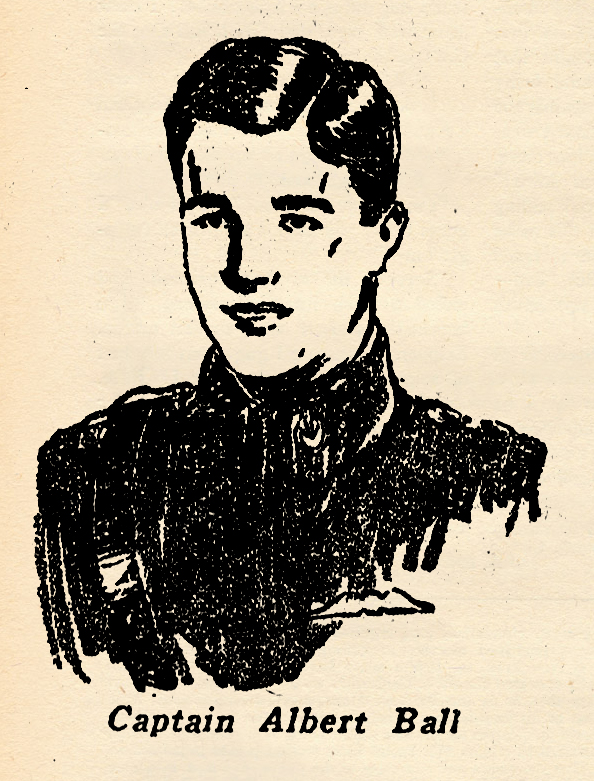 was the first of the Royal Flying Corps pilots to make a distinguished record. Unlike the French, the British made no mention of their air pilot’s victories. One day Ball wrote home that he had just counted his 22nd victory. His mother proudly showed this letter to her friends. Ball was disbelieved.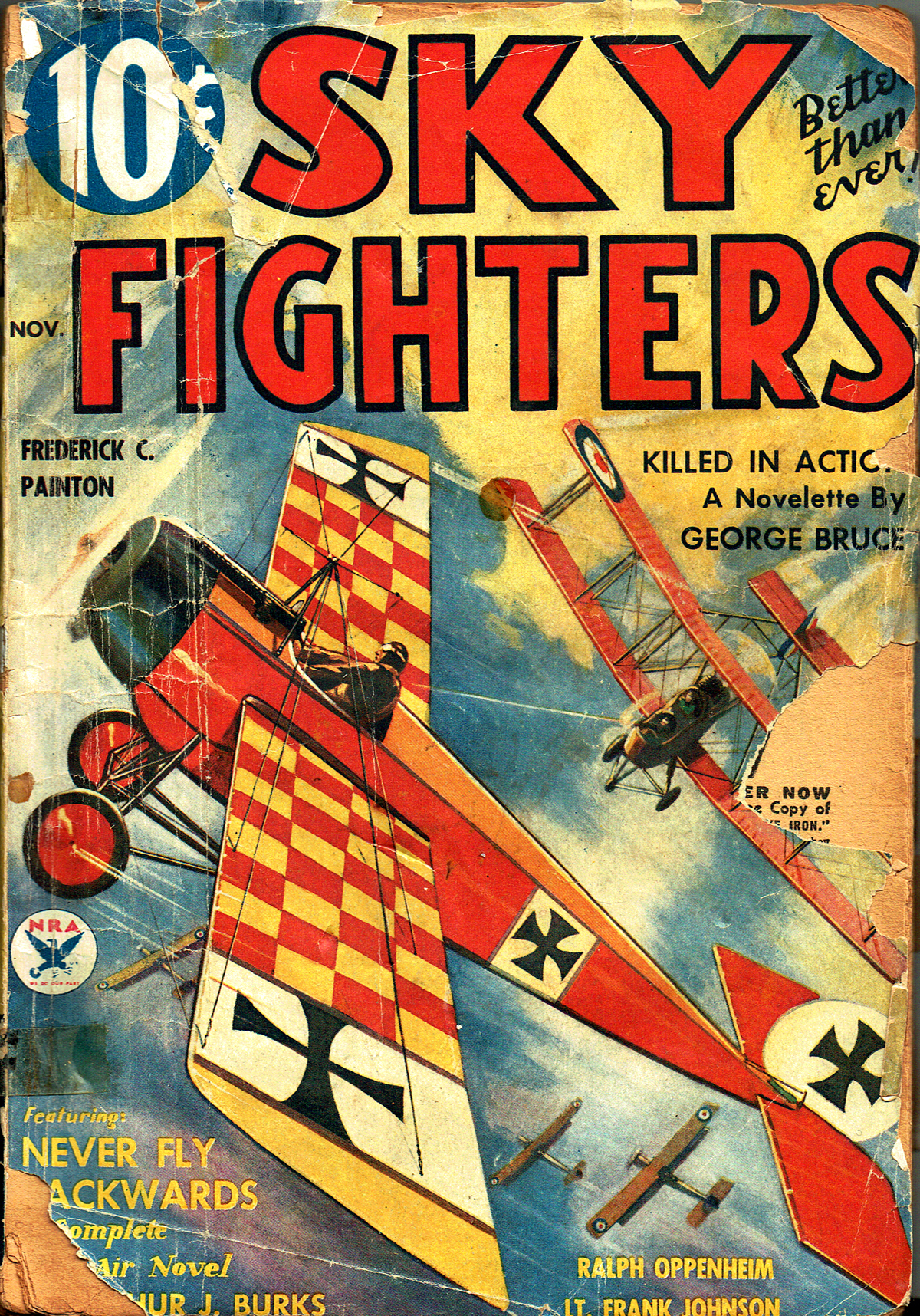
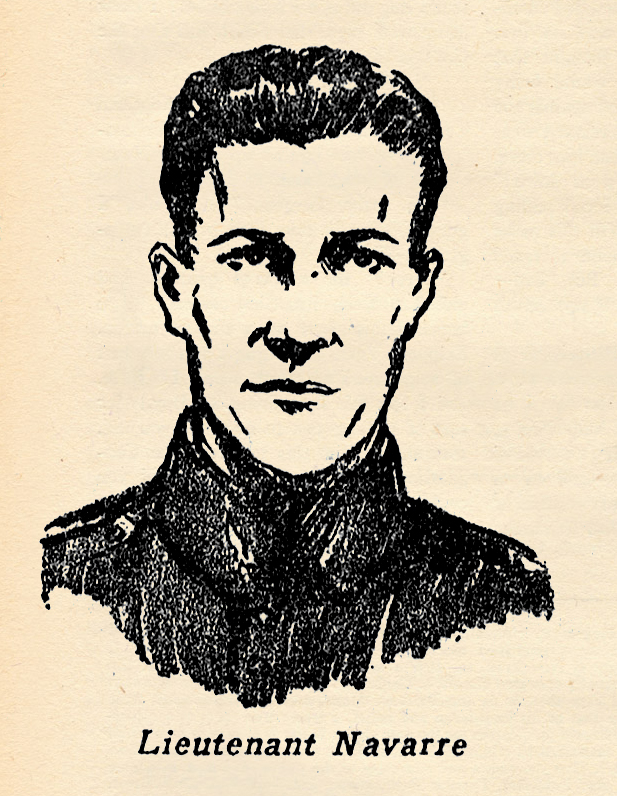 America entered the War, there was one name that was consistently emblazoned in the papers along with Marshal Joffre, Earl Kitchner, and the other high ranking generals. It was the name of Navarre, the “Sentinel of Verdun.” Navarre was the first Ace, the first man to destroy live enemy aircraft in plane to plane combat. At the first battle of Verdun he did yeoman duty. It was his reports brought in after solo patrols far in the rear of the German lines that enabled Marshal Joffre to so dispose his defense troops at Verdun that the attacking armies under the command of the German Crown Prince were never able to take the city.


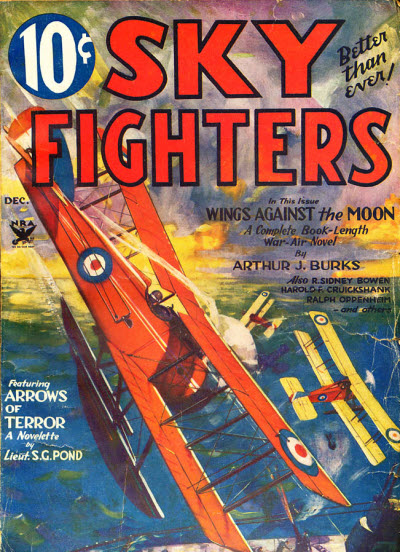 another exciting air adventure from the pages of the pulp magazines of the 1930’s. This week we have a tale from the pen of that Canadian stalwart—
 by Harold F. Cruickshank, check out
 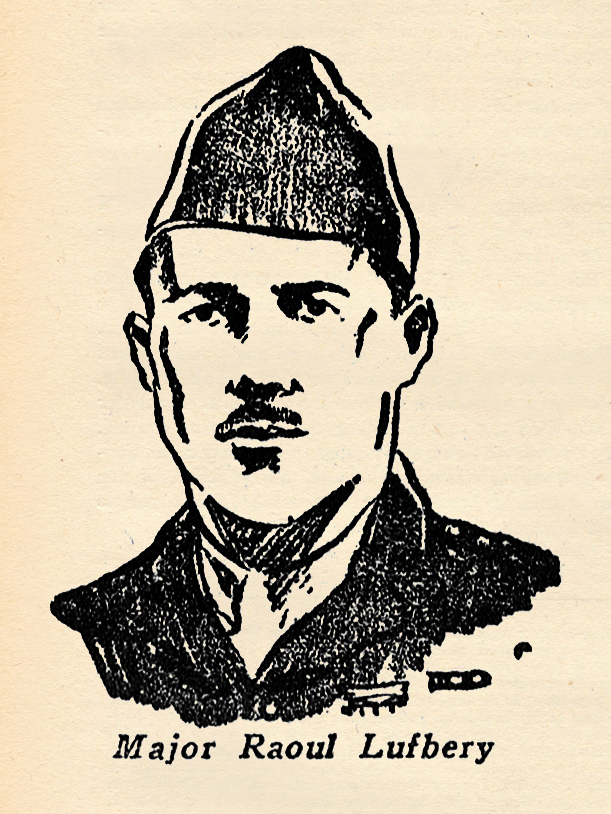 already famous when America entered the War. For some time he was the mechanic of Marc Pourpe, famous French flyer. Pourpe was killed in aerial combat. Lufbery who was with the Foreign Legion, asked to take his place in order to avenge his death. The French army, defying usual procedure sent him to join Escadrille de Bombardmente V. 102, where he made a distinguished record.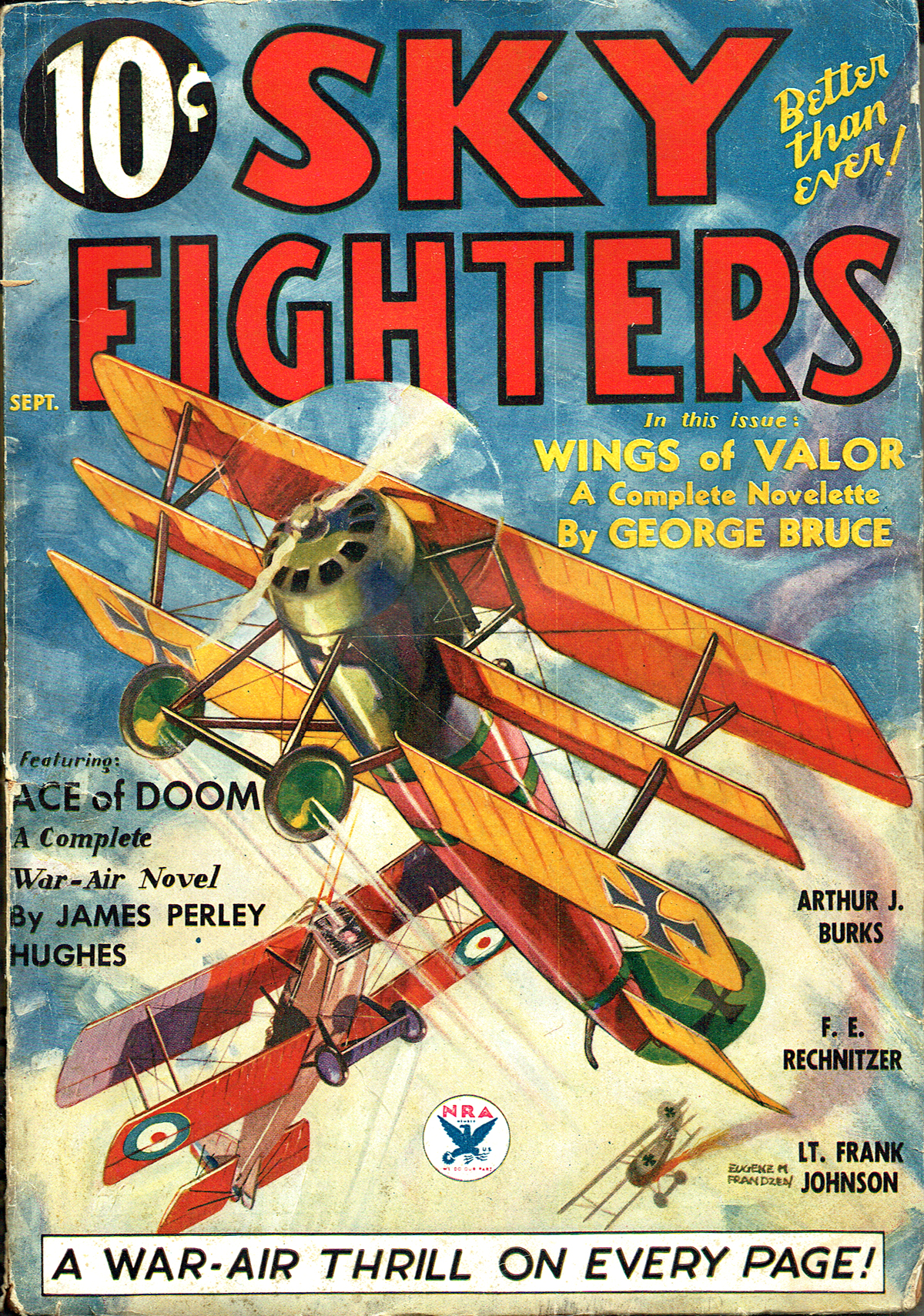
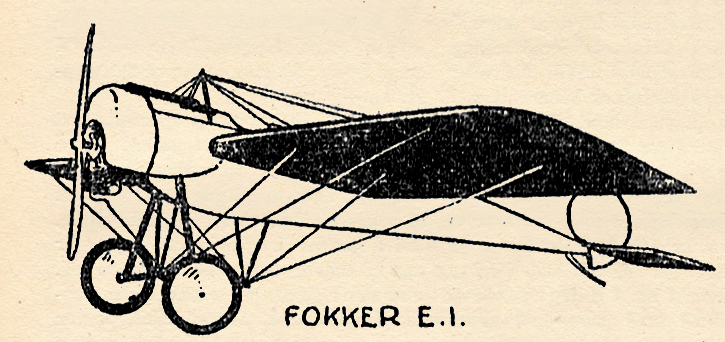
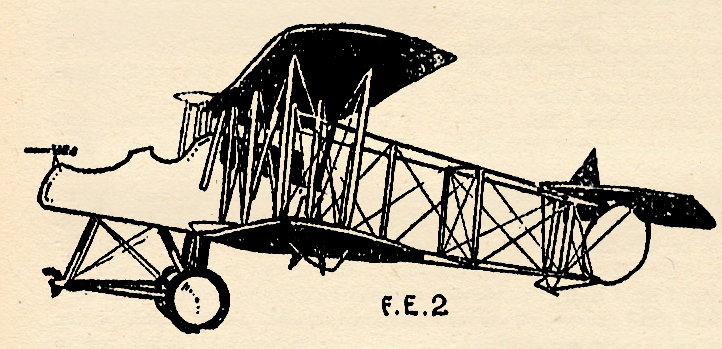
 Royal Flying Corps and quickly developed a reputation as an aggressive pilot. In April 1915, armed with just a few bombs and some hand gernades, he successfully attacked a Zeppelin plant at Gontrobe while flying a
 remembered as the man behind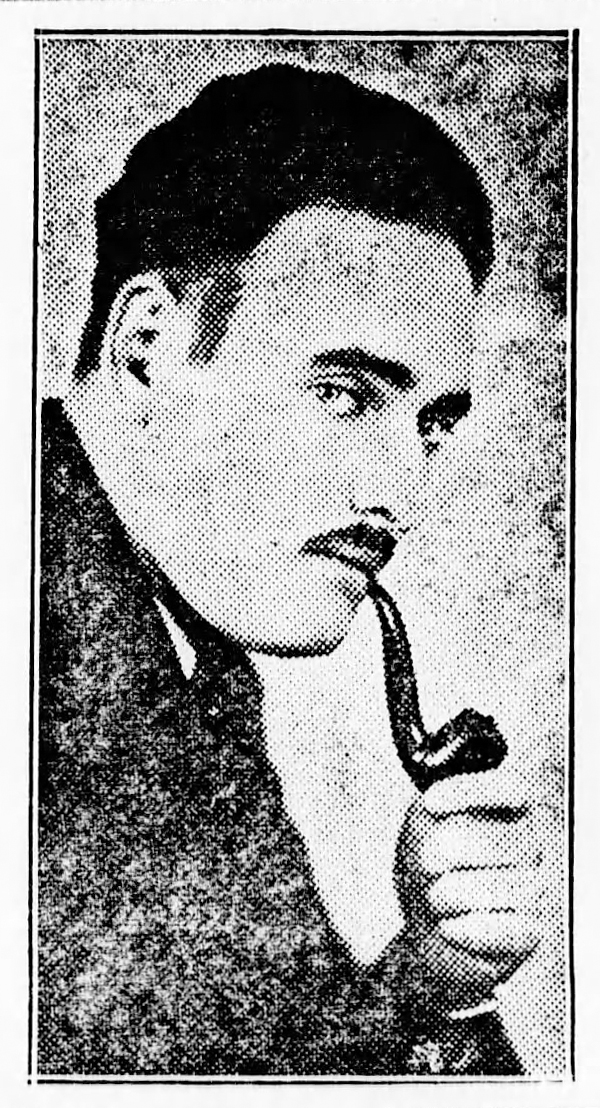
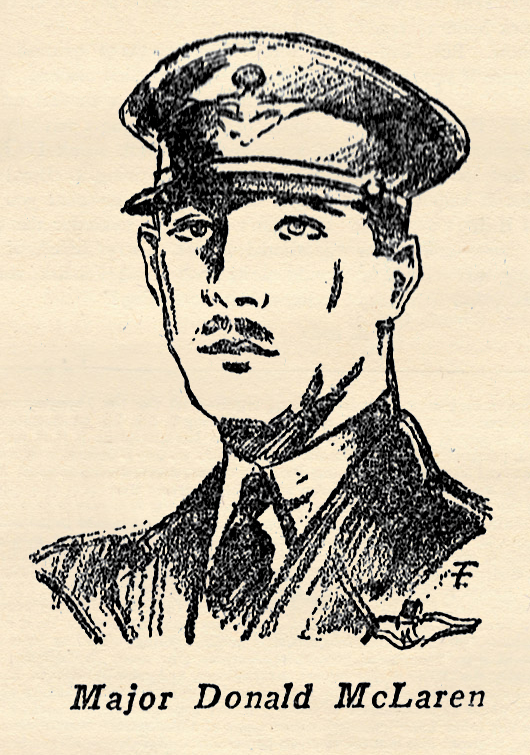 Donald McLaren was born in Ottawa, Canada, in 1893, but at an early age his parents moved to the Canadian Northwest, where he grew up with a gun in his hands. He got his first rifle at the age of six, and was an expert marksman by the time he was twelve. When the war broke out he was engaged in the fur business with his father, far up in the Peace River country. He came down from the north in the early spring of 1917 and enlisted in the Canadian army, in the aviation section. He went into training at Camp Borden, won his wings easily and quickly, and was immediately sent overseas. In February, 1918, he downed his first enemy aircraft. In the next 9 months he shot down 48 enemy planes and 6 balloons, ranking fourth among the Canadian Aces and sixth among the British. No ranking ace in any army shot down as many enemy aircraft as he did in the same length of time. For his feats he was decorated with the D.S.O., M.C., D.F.C. medals of the British forces, and the French conferred upon him both the Legion d’Honneur and Croix de Guerre. Oddly, just before the war ended, he was injured in a wrestling match with one of his comrades and spent armistice day in a hospital nursing a broken leg. He had gone through over a hundred air engagements without receiving a scratch. The air battle he describes below is unusual because almost 100 planes took part in it.