


My Most Thrilling Sky Fight: Lieutenant Frank Baylies
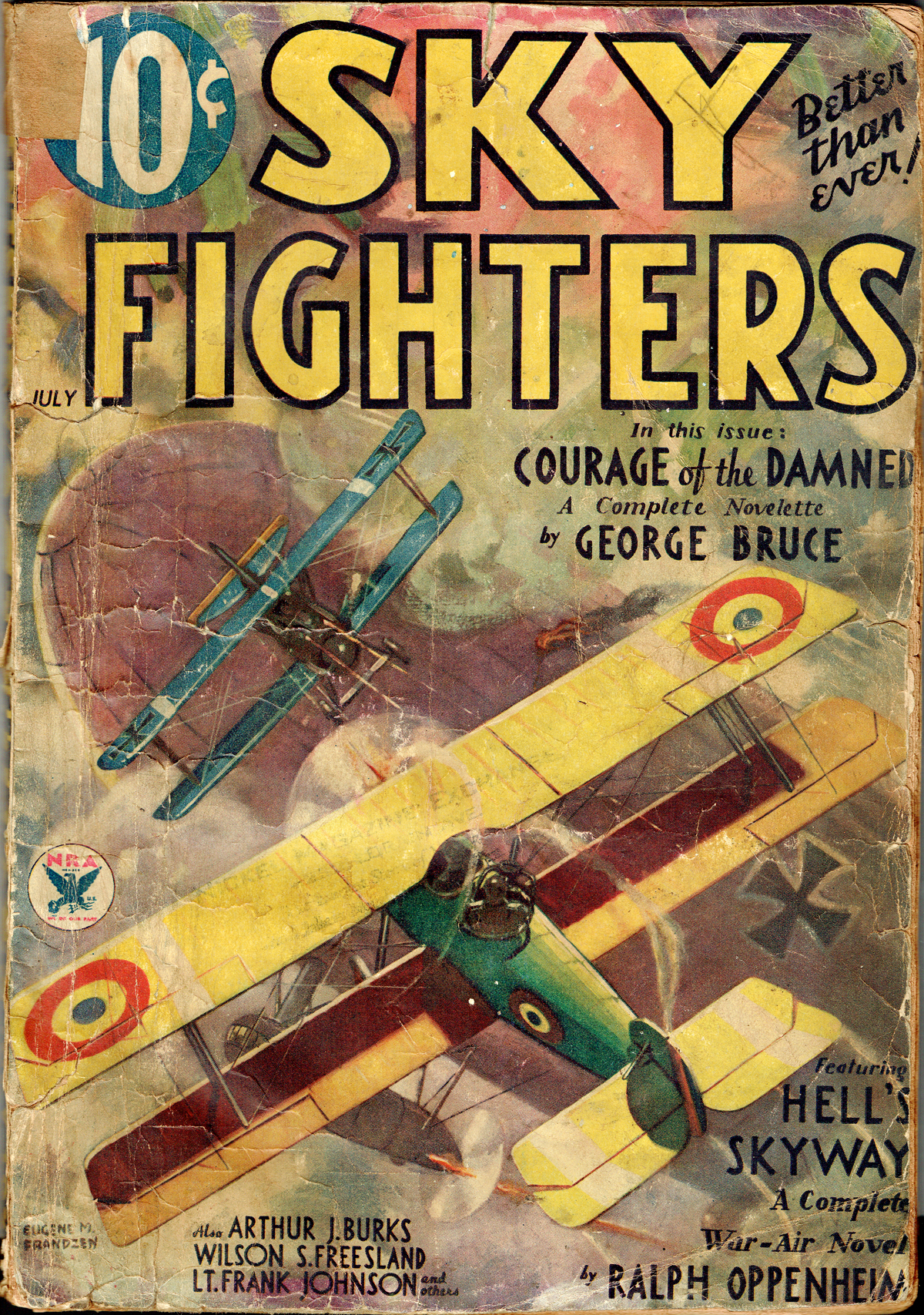
Amidst all the great pulp thrills and features in Sky Fighters, they ran a true story feature collected by Ace Williams wherein famous War Aces would tell actual true accounts of thrilling moments in their fighting lives! This time we have Lieutenant Frank Baylies’ most thrilling sky fight!
FRANK BAYLIES volunteered in the 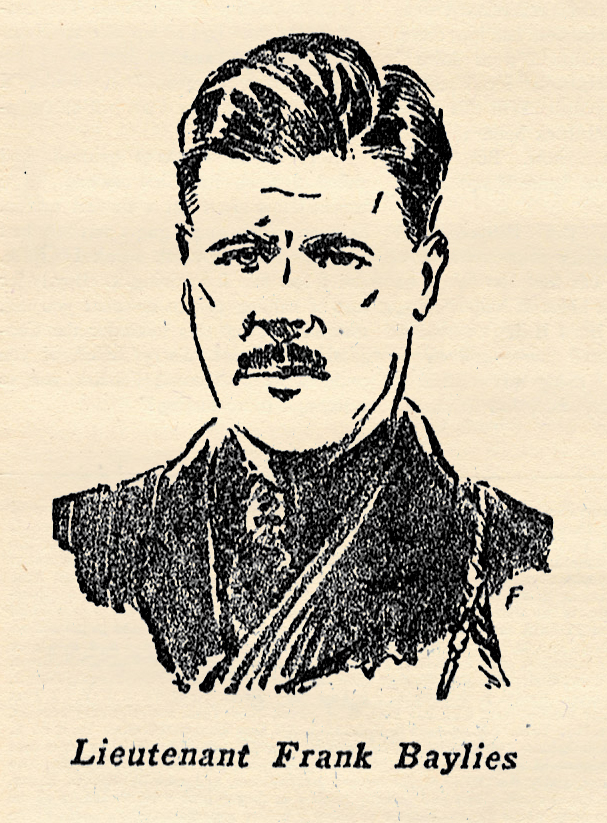 American Ambulance section, serving in that unit attached to the French armies from February 26th, 1916, to May 11th, 1918. In the early spring of ‘18 he transferred to the aviation. He became a member of the famous Stork squadron of the French Flying Corps.
He made an exceptional record there which he carried on to the Lafayettes.
After a short blasting meteoric career he disappeared in action on June 17th, 1918. He and Edwin C. Parsons, his American flying mate in the Storks, went out on a late afternoon patrol that day.
Soon after they took off at 5 p.m. Parsons lost sight of Baylies who was flying a much swifter machine. But he caught up with him later when it was almost dark. Baylies was far back in Germany in a dog fight with four Huns. Parsons saw his plane go down with smoke issuing from it.
Baylies never returned. Afterwards a German plane flew low over the French lines and dropped a weighted Streamer, carrying a simple message from the Germans: “Pilot Baylies killed in action. Burled with military honors.†Thus he died after marking up a record of over 20 Victories, 13 of which were officially observed. The account below is taken from one of his letters home.
STOPPING A PHOTO MISSION
by Lieutenant Frank Baylies • Sky Fighters, January 1934
I WAS out on solo patrol looking for Hun scouts who were supposed to clear the skies for a following photo mission. I had been zigzagging across the lines for some time when I got a glimpse of my prey, spewing down from a cloud formation.
I turned and started climbing. Number One passed me overhead. Number Two was vertical, standing on a wing-tip and heading me off. I pulled back on my stick, stood my Spad on its tail, and pressed my trigger trips, letting Number One Hun have it from both guns. He didn’t have much to say in reply—his ship went spinning down without a moment’s hesitation. His plane hit the ground with a terrific smash, flattened out there a crumpled mass of debris.
“Poor devil,” I thought. “That’s his last ride!” Still I had the consolation of knowing that he’d have got ten men if he could. I wheeled around to attack the second, but both my guns jammed on the first burst.
I went home to clear them, then I tried out again. I was nearly five miles in when I spied the four Hun two-seaters out after photos, flying very low in perfect formation, with rear guns elevated for perfect cross fire. I dove at the last ship, shooting as I passed, but my burst missed.
The gunners in the rear seats swung their guns down, opened up full blast. But I pulled up through the fire, swiftly, hung right under the Hun’s belly and let him have it. Tac-tac-tac! My tracer streams scorched through the pilot’s seat. He crumpled. I pulled back further on the stick, still firing. The slugs stitched up the fuselage to the gunner’s pit. Then the two-seater slid off on a wing, went sliding down. That Hun would fight no more!
By that time the others figured they had enough, I guess. I chased them clear back to their field, dodging archies all the way. Then calling it a day, I wheeled about and went racing for home, landing just in time to douse my face and hands with water, change my shirt and dash into the mess. Happy as hell, but famished with hunger. You know I have an appetite like a bear, I eat more, and more often, than any of the other boys in the squadron.
 was one of the American flying aces who saw service under two flags. He began his career with the French before America entered the war. At first he served with the Ambulance Corps, but was later transferred to aviation, where he established a reputation as one of the most daring flyers on the front.
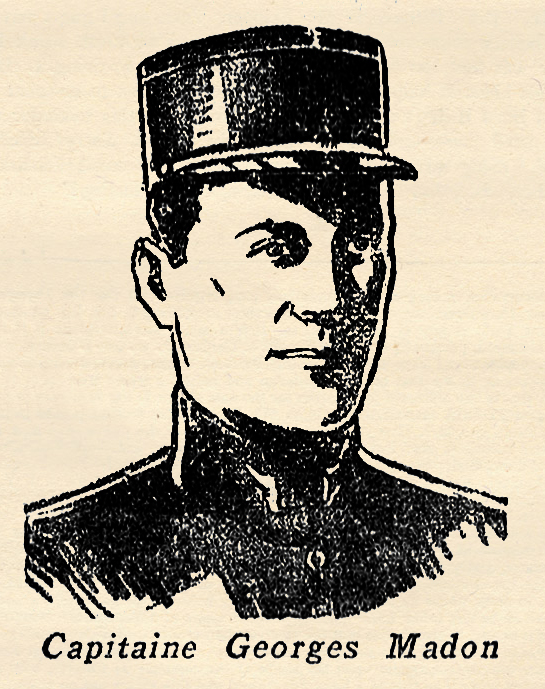 was one of the most famous of the French flying aces. Along with Guynemer, Navarro and Nungesser, he furnished the spectacular flying news that filled the newspapers in the early days of the World War. He was credited with over forty victories and only the great Guynemer topped him in the list of French aces during his time on the battle front.
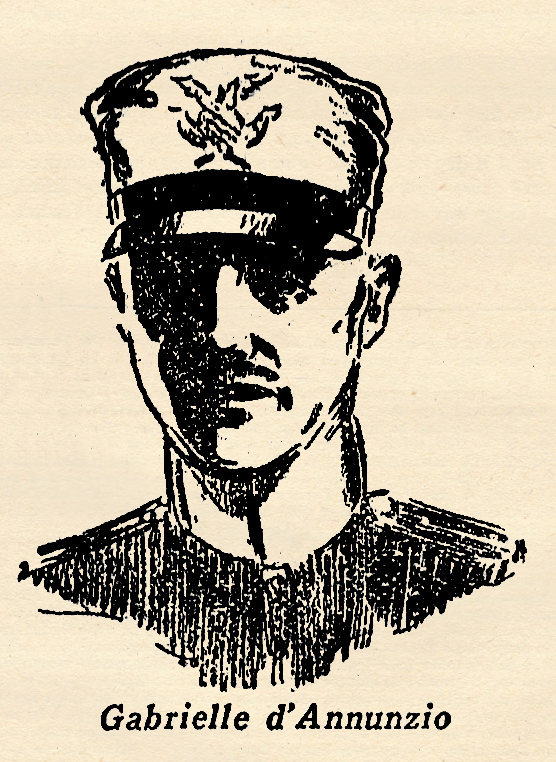 famous Italian poet and dramatist and enthusiastic patriot, was one of the most colorful and forceful of Italian flyers in the early days of the World War. He enlisted early in the most spectacular branch of the army, the Italian Air Corps. Soon after completing his training he was assigned to a bombardment squadron which was charged with harassing the then fast-advancing Austro-German armies, which threatened to overwhelm the brave Italian defenders and take the capitol at Home. By exerting superhuman efforts the Italians prevented that.


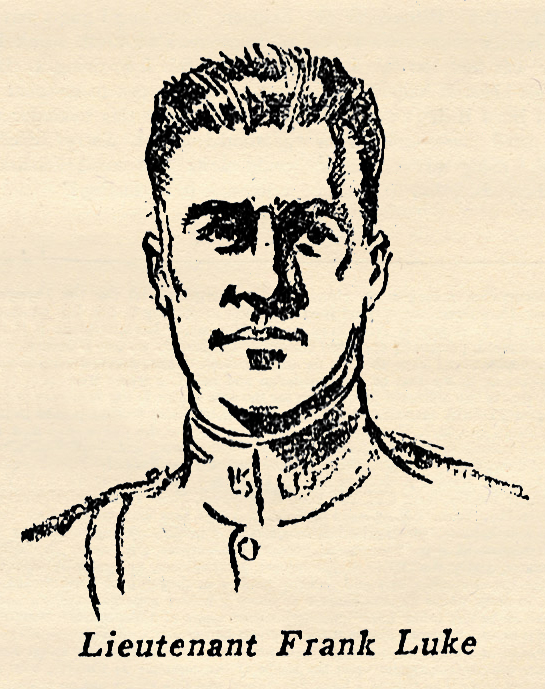 much the name means to those few who knew how he fought and died. His front line career was short, hectic and dynamic. He blazed across the war-torn skies of France like a flaming meteor. Very few people ever heard of Luke during his short but Sensational career on the Western Front. His fame and name came after he died. He is recognized now as the most courageous, the most audacious war bird that ever handled a control stick and pressed the Bowden triggers mounted on it. Only Eddie Rickenbacker topped him in the final list of American Aces after the War was ended. Rickenbacker was officially credited with 26 victories. Frank Luke had 21. But the comparison is hardly fair to Luke, for Rickenbacker was on the front for almost six months, while Luke’s front line career lasted only a little over two weeks. Even in that short space of time he had worked up to the top and was the American Ace of Aces when he died. There is no telling what, score he would have run up, if fortune had been more in his favor. The story below he told to Sergeant John Monroe, who was a favorite of his.
 another of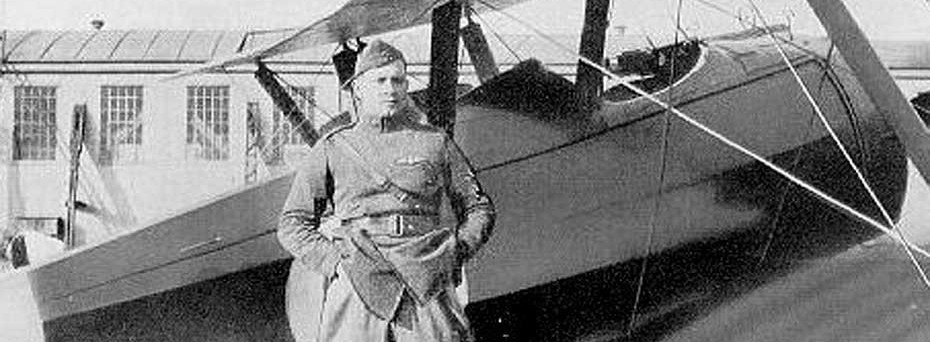
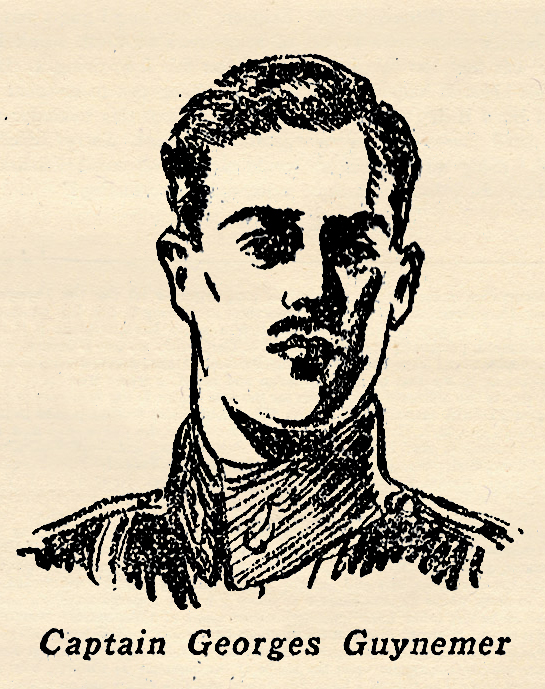 French flier, was the moat spectacular and colorful of all the flying Aces. Young, tall, slender, but in very poor physical health, he was a veritable demon in the air, He had absolutely no regard for his own personal safety. Time after time be attacked single-handed whole squadrons of enemy planes. On the ground he was shy, reserved, and spoke very few words to anyone. Whenever he came to Paris on his very infrequent leaves from the front to secure medical aid, the whole city was decorated in festive attire in his honor. He was the toast of the boulevards, the darling of the French populace. And the whole world mourned his passing when he died, shot down by a comparatively obscure German pilot, who got in a chance shot from exceedingly long range. The German pilot, Wisseman, never knew until afterward that it was the great Guynemer that he had shot down. When Guynemer passed mysteriously into the blue, he was officially credited with 57 enemy aircraft and universally recognized as the Ace of Aces of all the armies.


 You heard right! That marvel from Boonetown, Iowa is back and this time Phineas goes in for hypnotism!