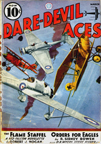
Frederick Blakeslee painted all the covers for the entire run of Dare-Devil Aces. And each of those covers had a story behind it. This time Mr. Blakeslee brings another of his “scrambled time” covers pitting planes of the great war against modern day planes (those from the 1930’s), from the March 1936 issue of Dare-Devil Aces it’s a plane so new it doesn’t have a name yet—The Handly-Page 47!
 THE HANDLY-PAGE has steadily progressed in design, since before the war to the present day. The pre-war Handly-Page would be a joke today, but in those early days, it was looked upon as the last word in aircraft. It was a two place biplane, but so queer in construction that it would be impossible to describe it. But still, if you want a laugh, look up the pre-war Handly-Page and you’ll get the idea.
Then came the war, and with it, the big twin engined Handly-Page 0/400, which was so far superior to the earlier ship that comparisons would be ridiculous.
It was considered the wonder ship of its day, and with its span of one hundred feet, it would still be considered large, even today. However, with its top speed of only 97 m.p.h. it would hardly be in the same class as the same sized ships of today.
The next step in the design of the Handly-Page was the V/1500, which was still larger. It had a span of one hundred and twenty-six feet, while its four engines gave it a speed of 103 m.p.h. This ship was originally built to bomb Berlin, but the signing of the Armistice, of course, removed the opportunity.
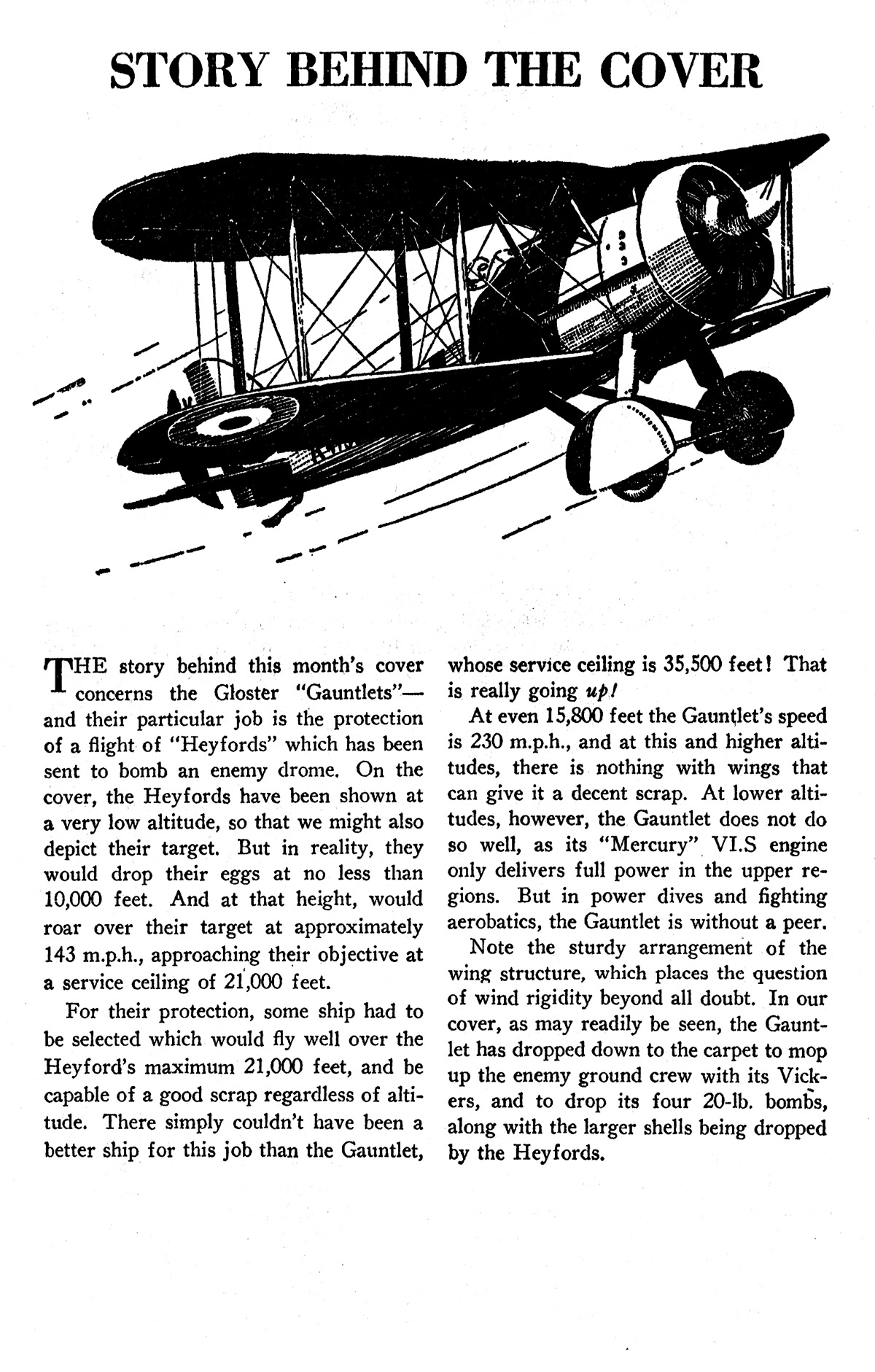
Not much was heard from Handly-Page after the war until 1933, when type 38, more generally known as the “Heyford,” made its appearance : We have already shown this ship on the January cover, so we shall not discuss it here.
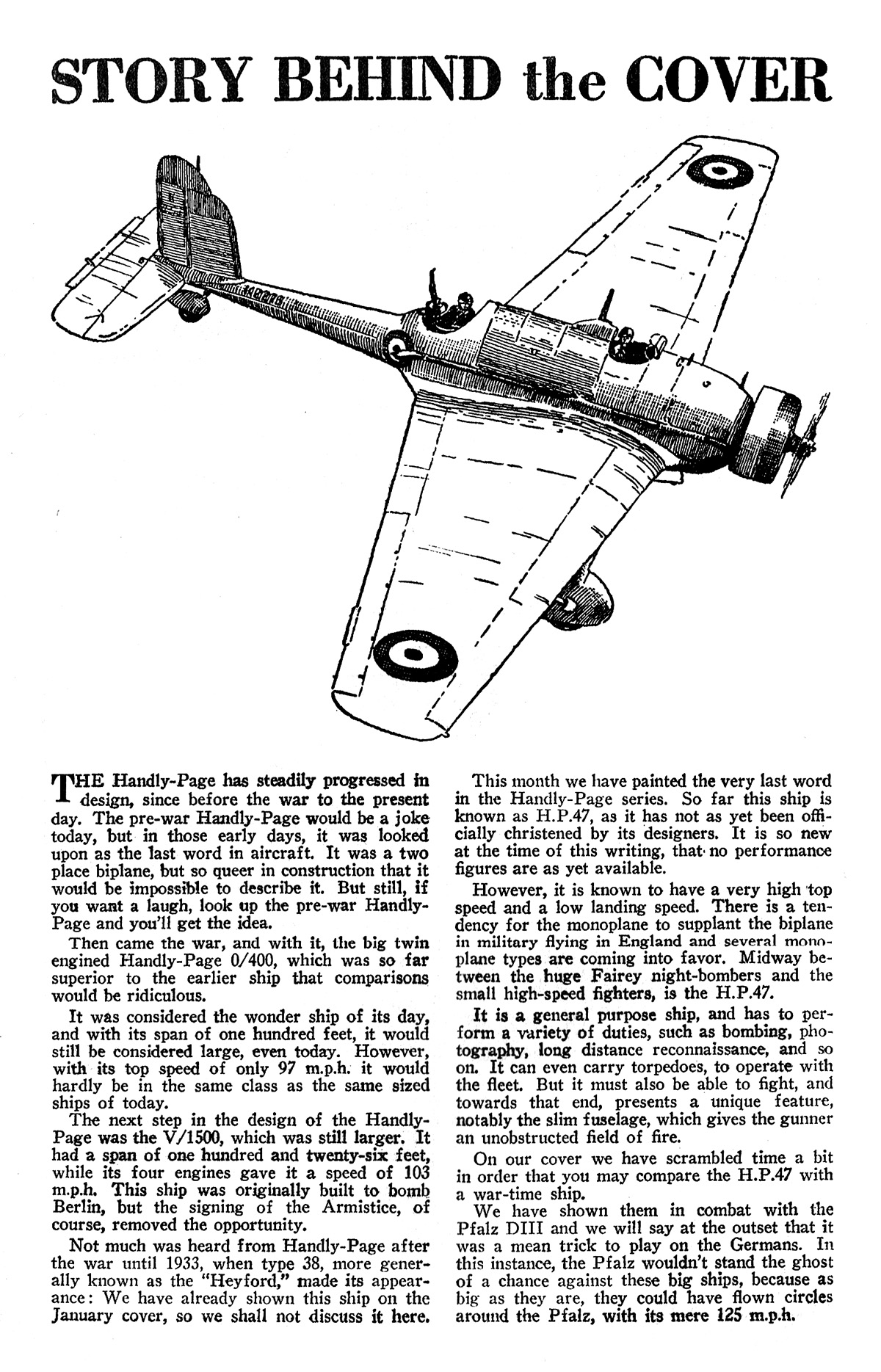
This month we have painted the very last word in the Handly-Page series. So far this ship is known as H.P.47, as it has not as yet been officially christened by its designers. It is so new at the time of this writing, that no performance figures are as yet available.
However, it is known to have a very high top speed and a low landing speed. There is a tendency for the monoplane to supplant the biplane in military flying in England and several monoplane types are coming into favor. Midway between the huge Fairey night-bombers and the small high-speed fighters, is the H.P.47.
It is a general purpose ship, and has to perform a variety of duties, such as bombing, photography, long distance reconnaissance, and so on. It can even carry torpedoes, to operate with the fleet. But it must also be able to fight, and towards that end, presents a unique feature, notably the slim fuselage, which gives the gunner an unobstructed field of fire.
On our cover we have scrambled time a bit in order that you may compare the H.P.47 with a war-time ship.
We have shown them in combat with the Pfalz DIII and we will say at the outset that it was a mean trick to play on the Germans. In this instance, the Pfalz wouldn’t stand the ghost of a chance against these big ships, because as big as they are, they could have flown circles around the Pfalz, with its mere 125 m.p.h.
“H.P.47: The Story Behind The Cover” by Frederick Blakeslee
(March 1936, Dare-Devil Aces)




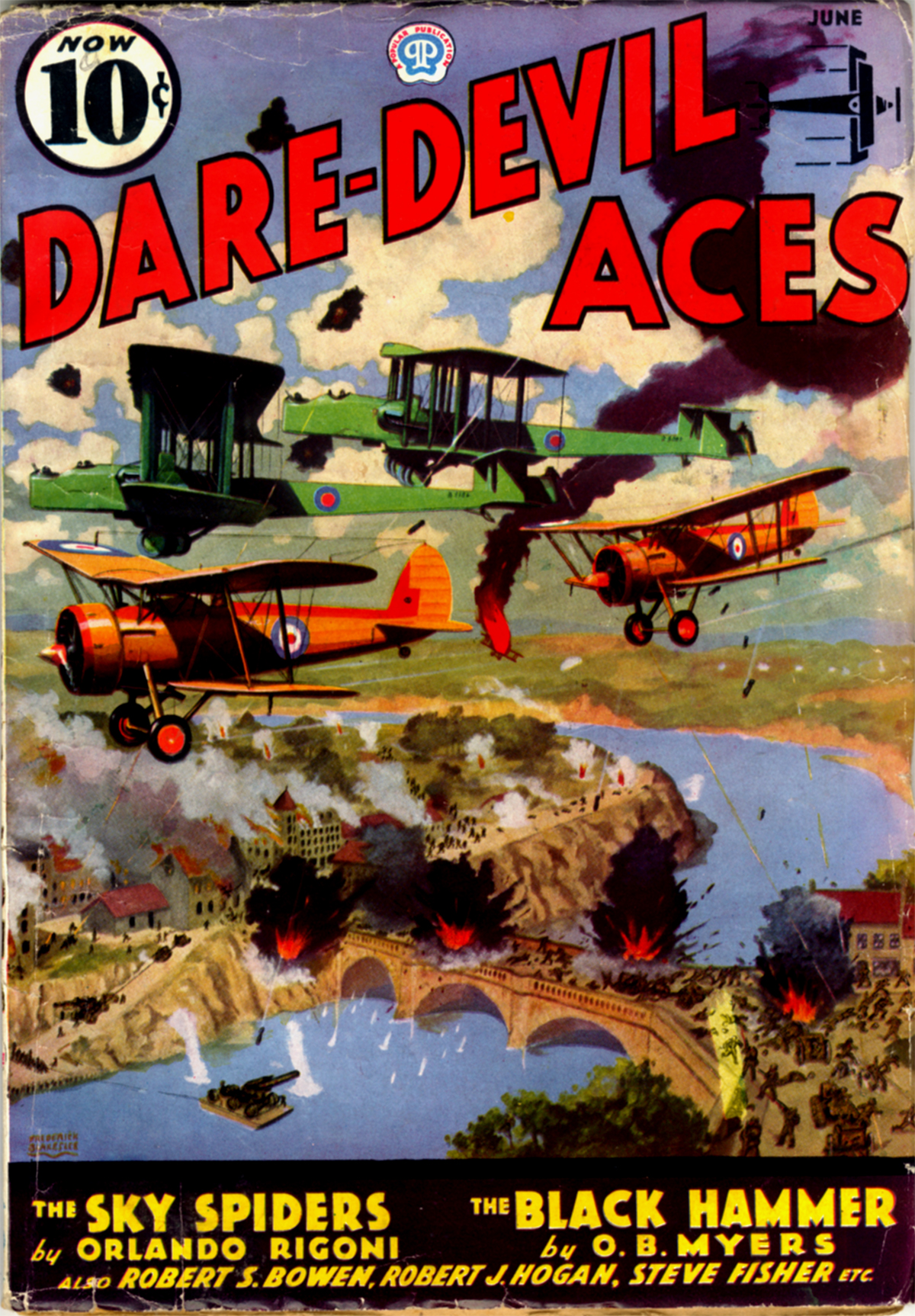 THE two yellow ships on this month’s cover are Bristol “Bulldogs”. There are two types of this ship, both of them one-place fighters. One type is powered by a 450 h.p. Bristol Jupiter motor and has a top speed of 170 m.p.h. The other has a 645 h.p. Bristol Mercury motor, and can be pushed up to 230 m.p.h. This second ship is known as the Mark IV, and is the ship shown on the cover, escorting a flight of Vicker “Virginias”.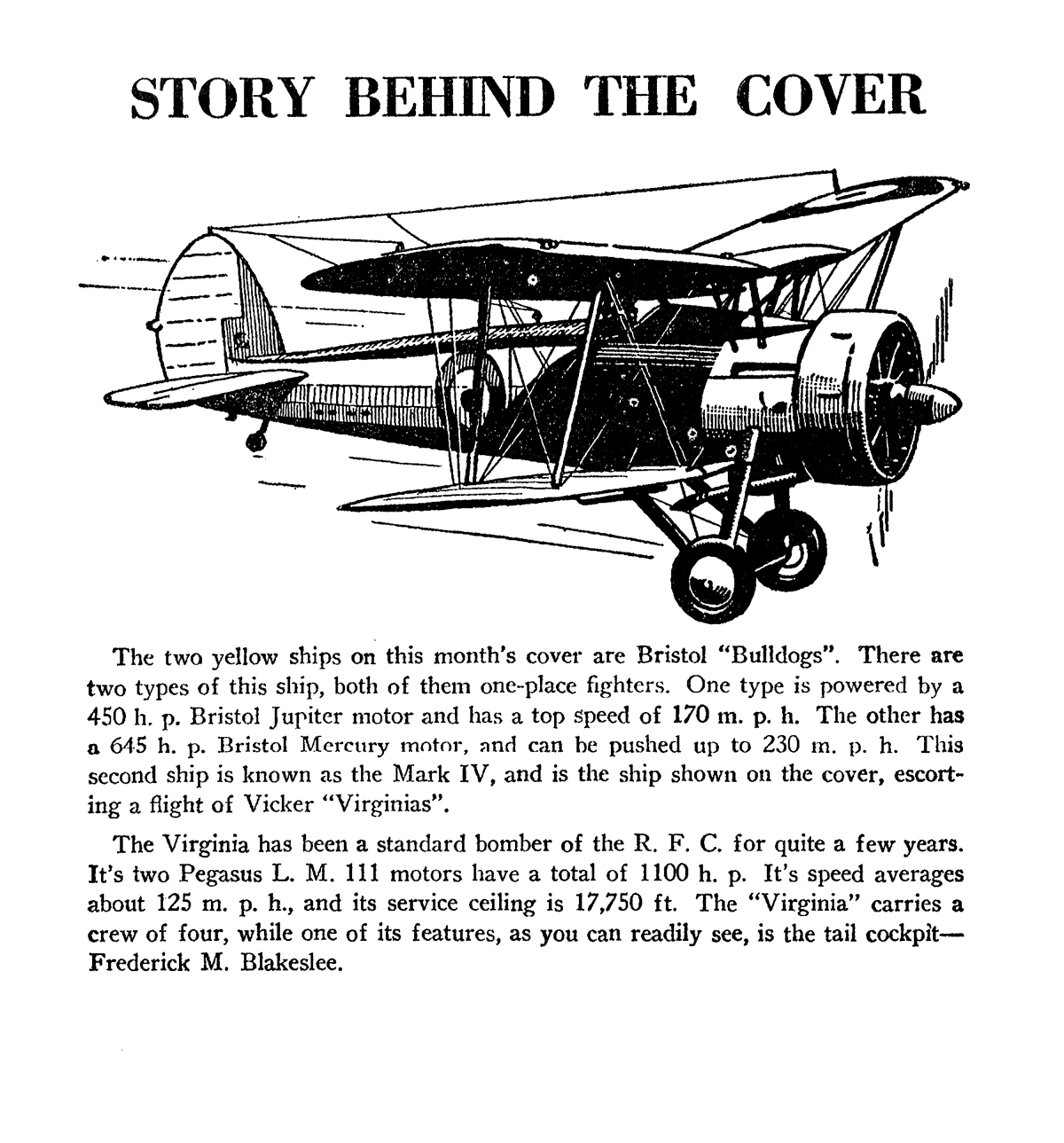
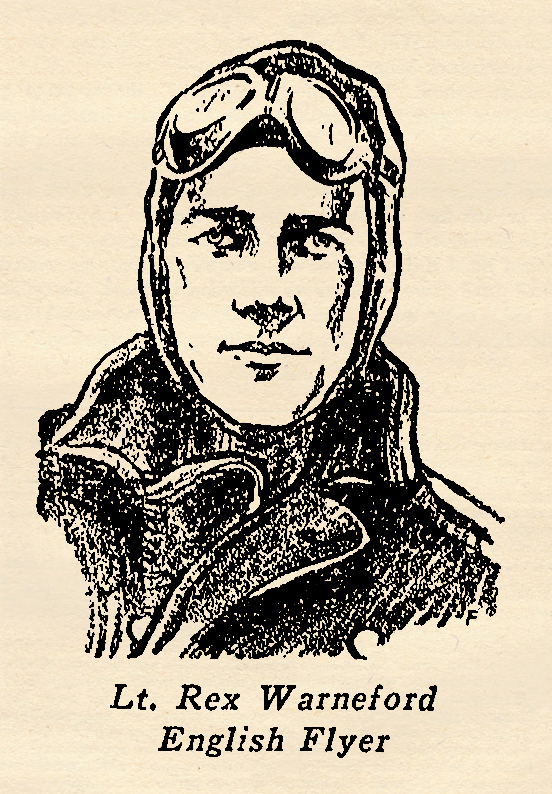 of the British Royal Flying Corps was the first airman to shoot down an enemy Zeppelin, likewise he was the first war pilot to win the coveted Victoria Cross. Previous to his epic fight with the raiding Zeppelin young Warneford was a comparatively obscure pilot. After this amazing and brilliant victory he leaped to the highest pinnacle of fame, he escaped from the German lines with his plane after being forced down fully five miles from his own territory. A troop of German cavalrymen rode up to take him prisoner, but using his machine-gun to the greatest advantage he managed to hold them off until he had completed temporary repairs on his plane. Then, amidst a continual hail of fire, he took off in flight, running the gauntlet of fire successfully, eventually to land within his own lines. Unhappily, two days after the V.C. had been conferred on him, he was killed in an air accident near Paris. In the account below he tells the story of this fight in his own words: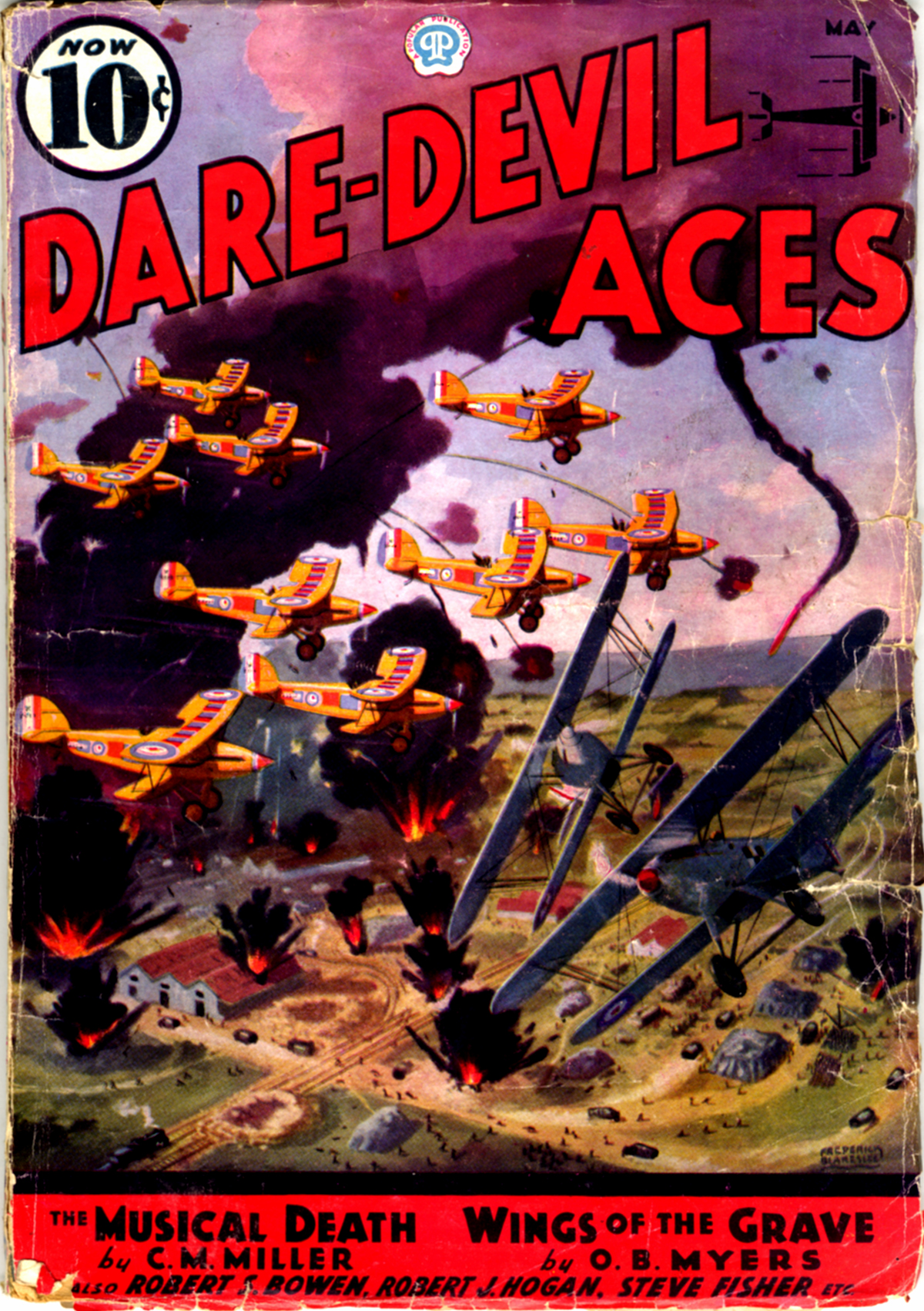
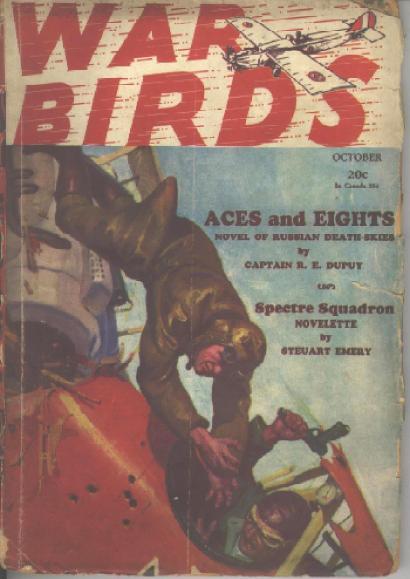 a story by another of our favorite authors—O.B. Myers! Honestly he haven’t featured Mr. Myers enough on our website, so when I saw this story in the October 1930 issue of War Birds, I knew I just had to post it. The title says it all—” Gorillas in the Air!”
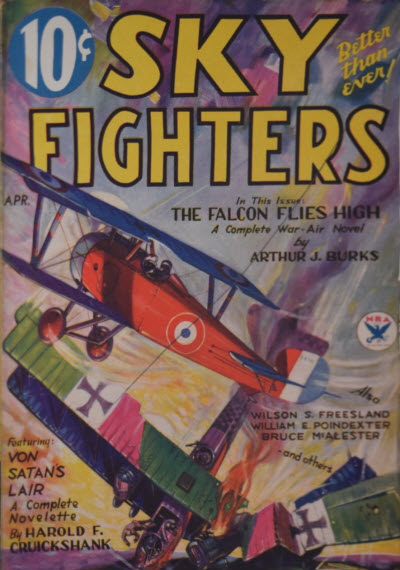 a story by another of our favorite authors—
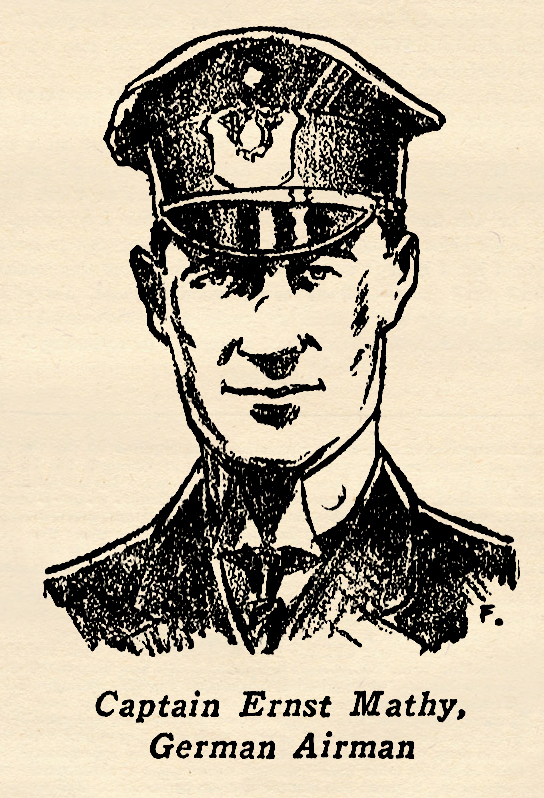 the Zeppelin raiders as told by the raiders themselves have come out of the Great War. Captain Ernst Mathy was one of the most famous of all wartime Zeppelin commanders, having made before he was killed in his final raid over London, six successful night raids over that well protected city, more than any other Zeppelin commander. It was Captain Mathy who developed and perfected most of the strategy of attack for the giant Zeppelins operated by the Imperial
 Flying Corps.
the Zeppelin raiders as told by the raiders themselves have come out of the Great War. Captain Ernst Mathy was one of the most famous of all wartime Zeppelin commanders, having made before he was killed in his final raid over London, six successful night raids over that well protected city, more than any other Zeppelin commander. It was Captain Mathy who developed and perfected most of the strategy of attack for the giant Zeppelins operated by the Imperial
 Flying Corps.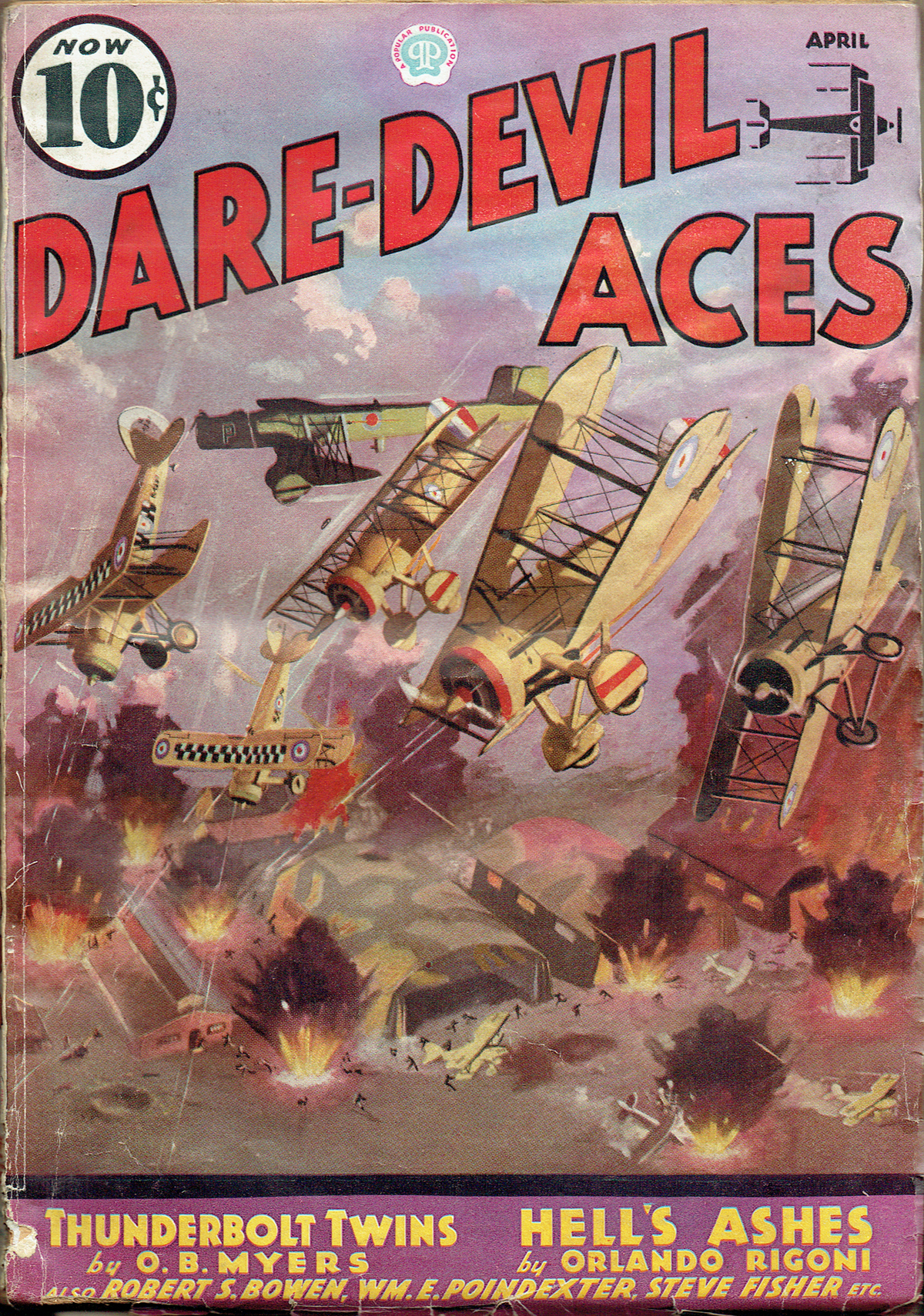
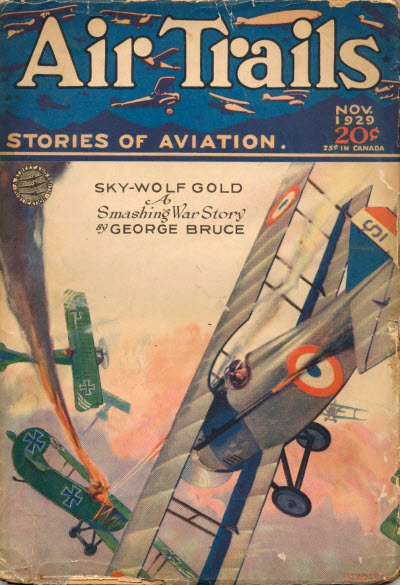
 You heard right! That sound can only mean one thing—that Bachelor of Artifice, Knight of Calamity and an alumnus of Doctor Merlin’s Camelot College for Conjurors is back. Yes it’s the marvel from Boonetown, Iowa himself—Lieutenant Phineas Pinkham—and he scores with bounders and grounders!
 another of
 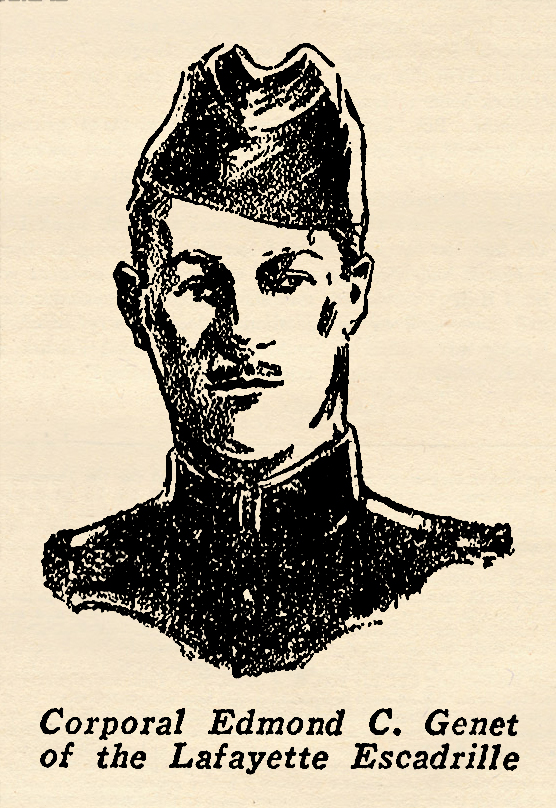 Citizen Genet, who served as the revolutionary ambassador from France during George Washington’s term as president, Edmond C. Genet had a distinguished heritage. Mild-mannered and handsome he was a typical soldier of fortune at heart, possessing an astonishing courage. At 10 he missed an appointment to Annapolis and immediately enlisted in the navy where he participated in the taking of Vera Cruz. A year later he was in battle in Haiti. Later on after the war in Europe broke out, he sailed for France to enlist in the Foreign Legion. He served for some years in the trenches as a simple poilu, then was transferred to aviation and assigned to Escadrille N-124, better known as the Lafayette, where he was the youngest American in a company of famous men. Genet’s flying time on the front was short. He was one of the few airplane pilots to be killed in the air by enemy shrapnel. He was the first American to die in action under the stars and stripes, his death occurring just ten days after America entered the war. The account below is from one of his letters home.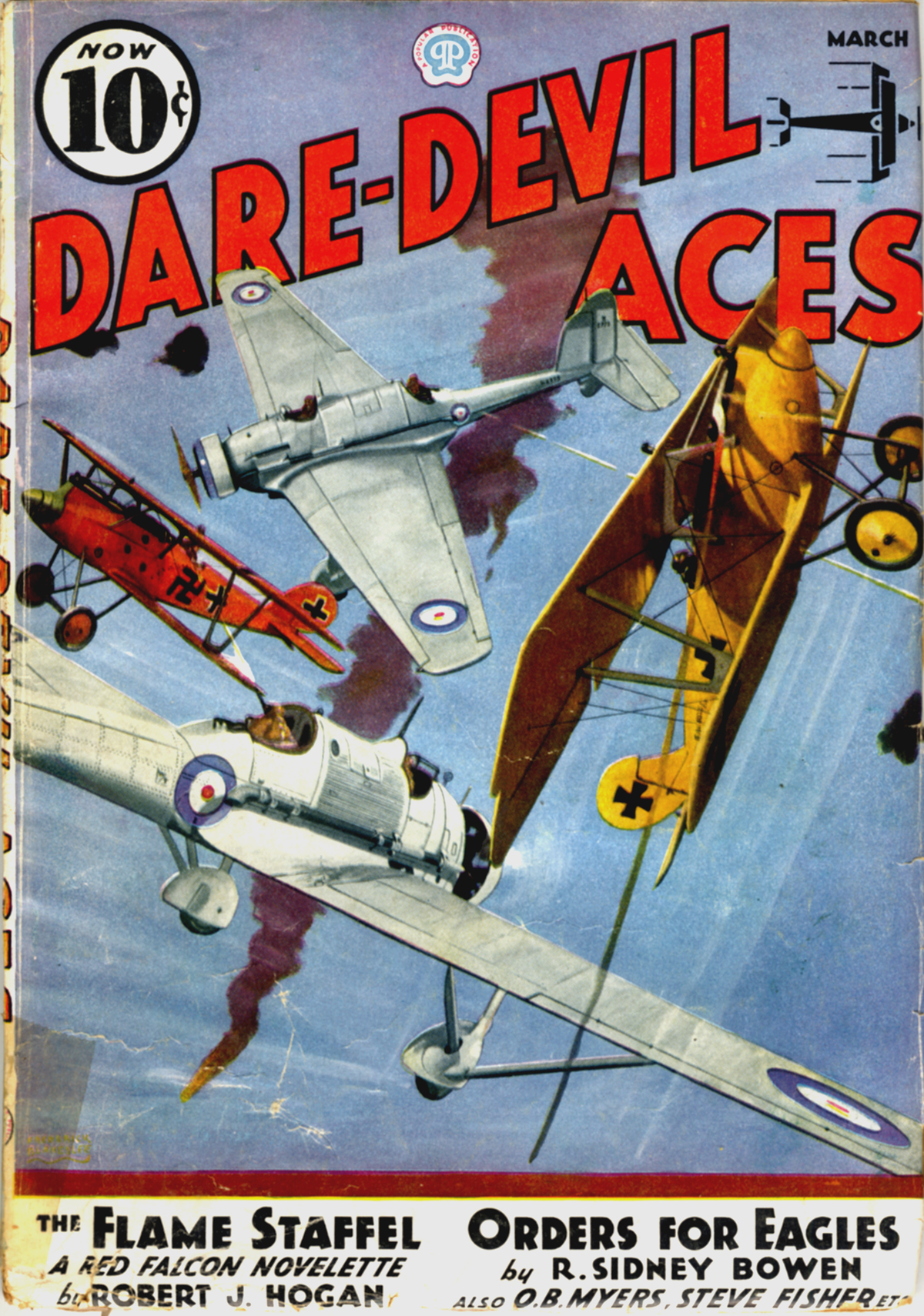
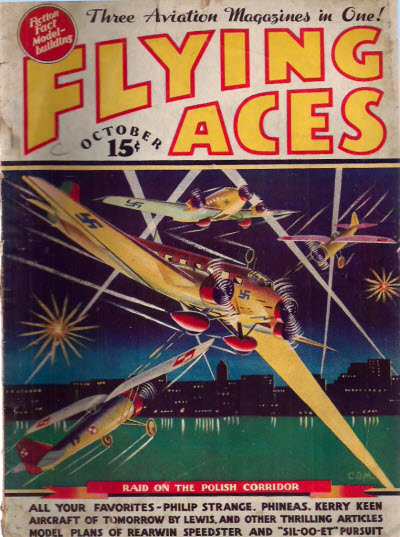
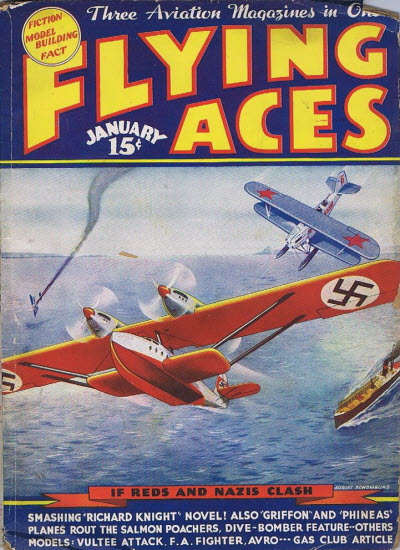 had a story in a majority of the issue of Flying Aces from his first in January 1930 until he returned to the Navy in 1942. Starting in August 1931, they were stories featuring the weird World War I stories of Philip Strange. But in November 1936, he began alternating these with sometime equally weird present day tales of espionage Ace Richard Knight—code name Agent Q. After an accident in the Great War, Knight developed the uncanny ability to see in the dark. Aided by his skirt-chasing partner Larry Doyle, Knights adventures ranged from your basic between the wars espionage to lost valley civilizations and dinosaurs. This, his second tale from January 1937, is more espionage than lost civilizations (like his first).
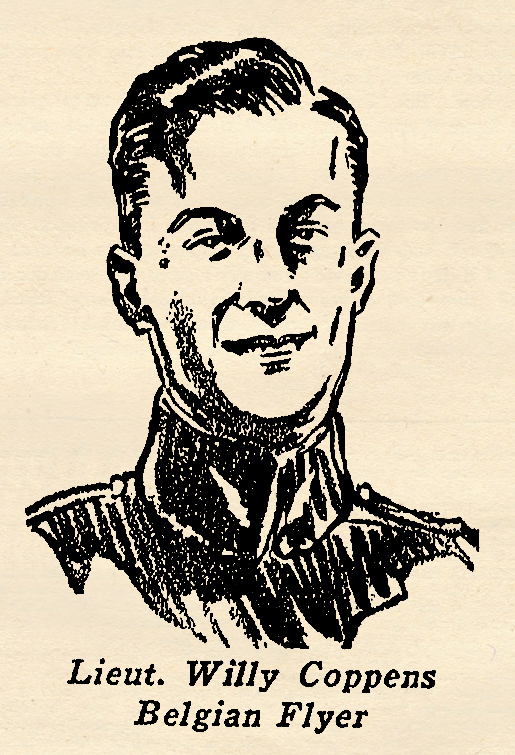 Belgian Ace of Aces. He got his initial training as a soldier and officer in the cavalry division of the army. He transferred later on to the Flying Corps and began immediately to compile the record of victories that gained him top ranking among sky fighters.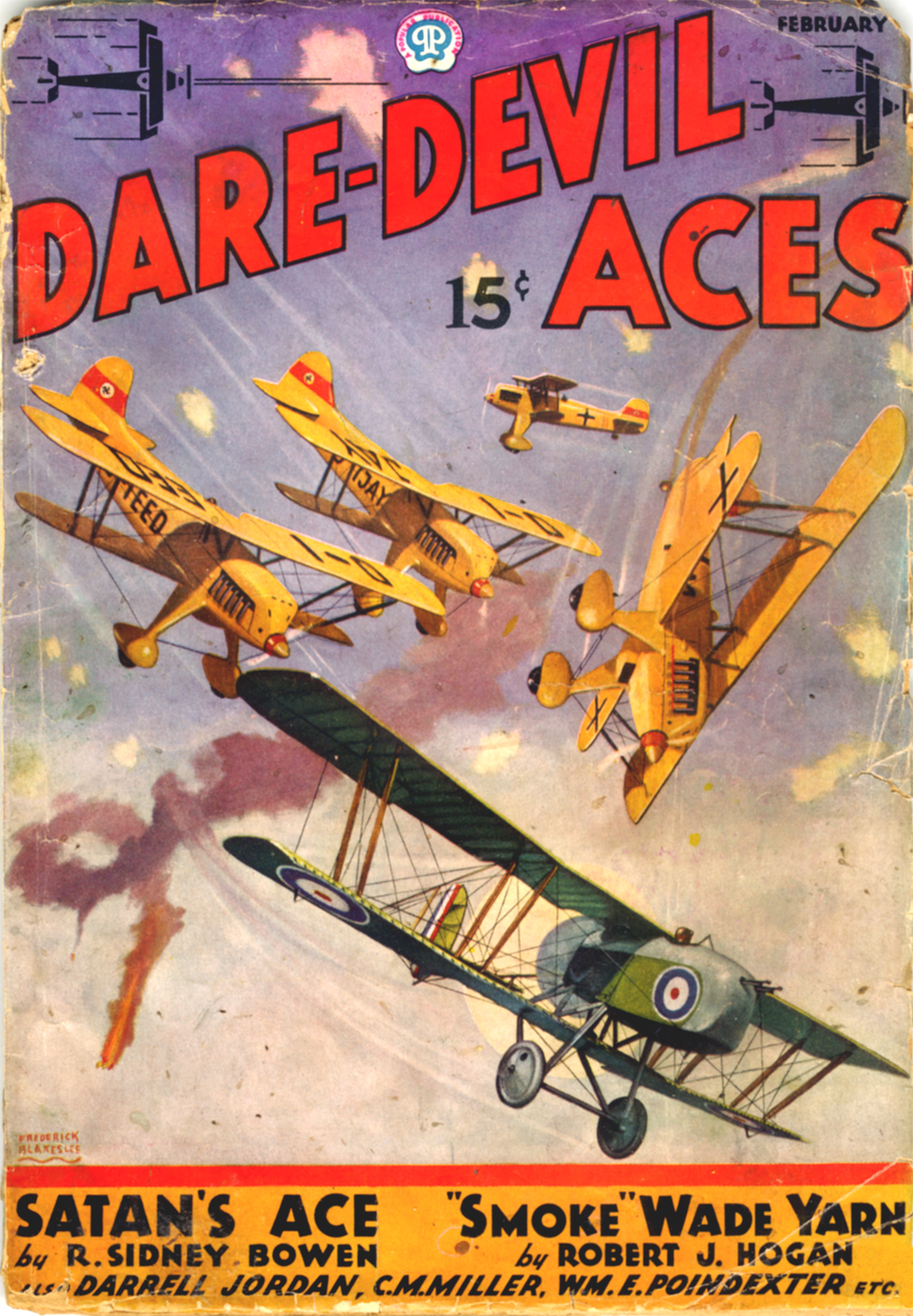
 That sound can only mean one thing—that Bachelor of Artifice, Knight of Calamity and an alumnus of Doctor Merlin’s Camelot College for Conjurors is back—Yes it’s the marvel from Boonetown, Iowa himself—Lieutenant Phineas Pinkham! Red Riding Hun has been terrorizing the trenches and the Boonetown marvel concocts an ingenious plan to bring an end to their reign of terror!