



My Most Thrilling Sky Fight: Lieut. Jules Vedrines
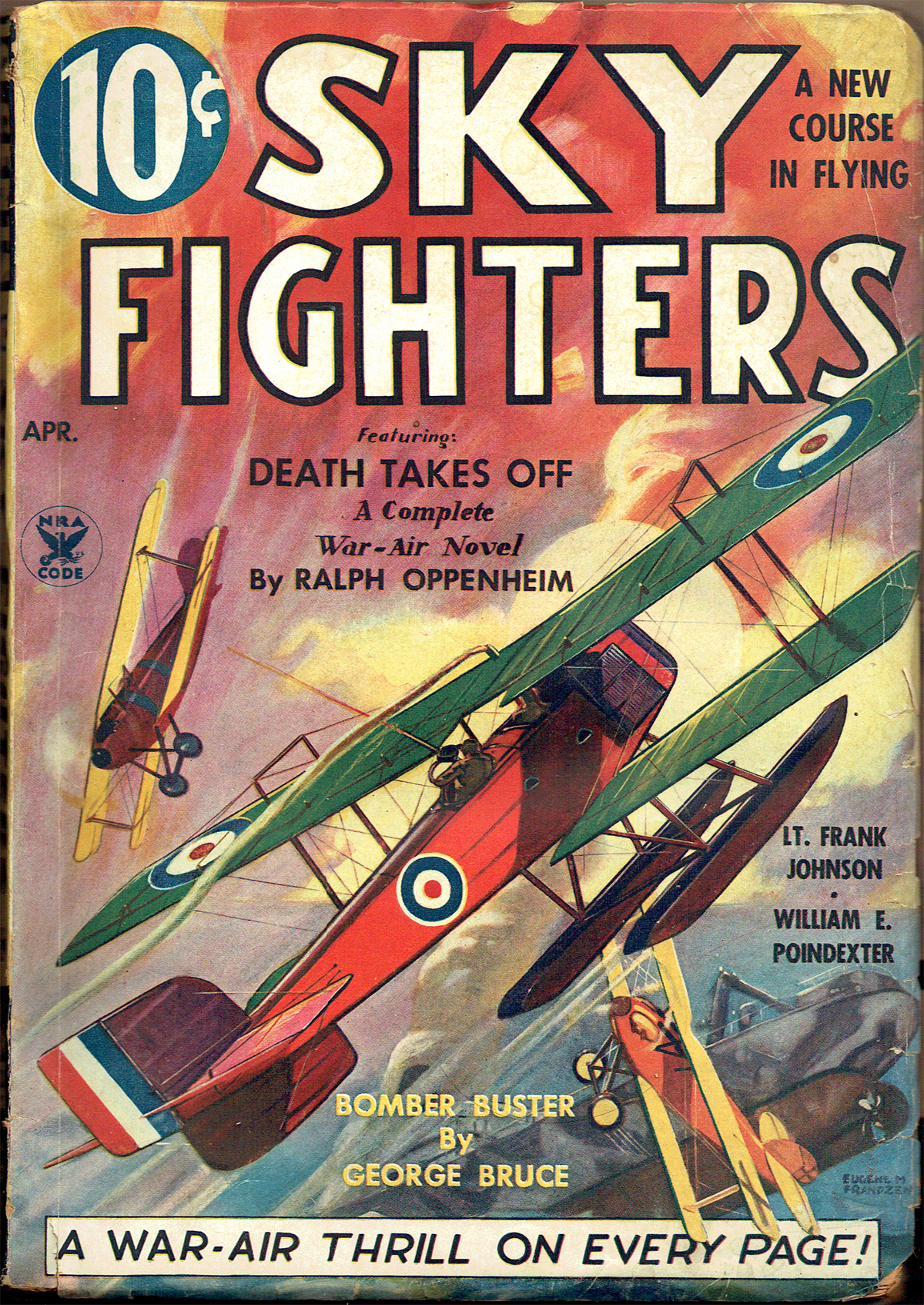
AMIDST all the great pulp thrills and features in Sky Fighters, they ran a true story feature collected by Ace Williams wherein famous War Aces would tell actual true accounts of thrilling moments in their fighting lives! This time we have French Flyer Lieutenant Jules Vedrines’ most thrilling sky fight!
In the year before the 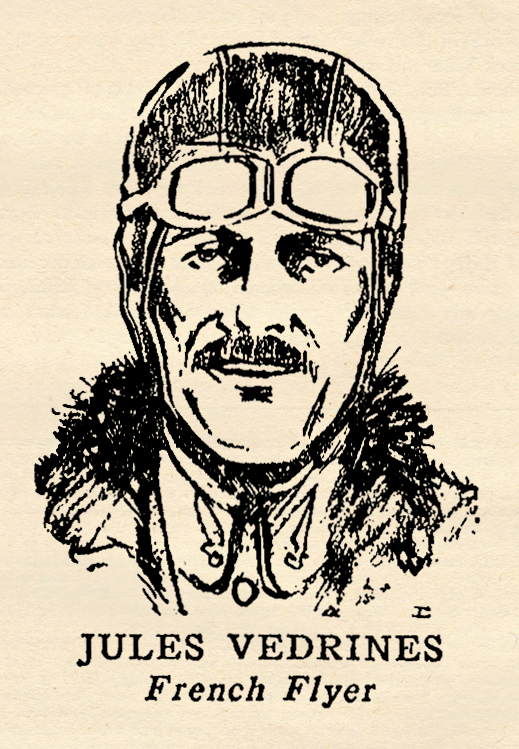 great war broke out Jules Vcdrines was the most famous flyer of France. He had twice won the Gordon Bennett speed trophy, and held both distance and altitude records. It was through his efforts that France wrested supremacy of the air from the United States and Great Britain. Along with Garros, Pegoud, Marechal, Le Blanc, Audemars, and other famous French flyers of his day, he enlisted in the French Flying Corps the day after war was declared.
The war was in its last stages before the nature of Vedrine’s work was revealed to his admirers. He had been engaged in doing special missions, and had established his reputation as being the Ace of Aces in that specialty, which consisted in leaving and picking up French spies behind the enemy lines. He received every decoration possible . . . but had to wait until the war’s end before he could bask in the glory of his achievements, for only then were his many honors divulged. The account below is from an interview with Jacques Mortane, great French war correspondent and flyer extraordinary himself.
SPECIAL AIR MISSIONS
by Lieut. Jules Vedrines • Sky Fighters, December 1935
THESE special missions are sometimes exciting. There was that time when I flew behind the enemy lines to pick up Sous-Lieutenant Huard. Three times before I had landed in this same meadow and picked up agents of the intelligence in full daylight. I thought our secret field was safe from German eyes. But I was to be surprised! I crossed the lines at a great altitude, over 6,000 meters. Then high over the meadow I cut the motor and sneaked down silently. I circled the meadow once at low altitude. Everything looked all right, so I volplaned in.
It was only when I got down to ten feet above the grass that I saw what the Germans had done. They intended to trap me. They had stretched wires across the meadow just high enough above the ground to make my avion nose over when the wheels touched earth. But I saw the wires just in time. I fed all essence to the motor and jerked the stick, zooming upwards.
At the same instant machine-guns hidden in the woods surrounding the meadow opened up at me at point blank range. Bullets splattered into my avion like hail from two sides, and German soldiers came from the woods firing rifles!
In another meadow several hundred yards away, I saw a man garbed in peasant attire running and waving his arms over his head. I looked close, saw that it was Huard waving me in to land on the next meadow. It appeared like certain suicide for both of us, but what was I to do? I cut off and nosed down. Bullets still hailed all around me, and I could see them kicking up patches of turf at Huard’s feet.
My wheels touched the meadow. Huard stumbled and fell on his face. When he struggled up, his leg folded beneath him and he fell again. He had been wounded. I shouted to Huard to grab the outer wing strut as I passed over him. He struggled up on his knees, reached out his hands. I could see his face. It was white and contorted with pain.
But he succeeded in grabbing the wing edge with one hand, and the forward strut with the other. I shot on the motor then and coursed along the ground to get away from the German bullets. Huard was dragging by the heels. A barb wire fence loomed ahead. I had to cut the motor. Before the avion stopped rolling, I leaped out and grabbed the strut Huard was holding. Together we swung the avion around in the opposite direction.
We would run into the fire again, I knew. But Huard only smiled when I mentioned that to him as I helped him in the rear seat. “C’est la guerre!†he replied lightly.
We escaped through that gauntlet of German fire. Neither of us even got scratched. An exciting mission, yes, but I wouldn’t say my job was one half as hazardous as Huard’s.
A brave man, Huard. And isn’t it preposterous? For that flight I was awarded the Medal Militaire. And Sous-Lieutenant Huard, he was not even mentioned in the day’s orders.
 a story from the pen of C.M. Miller! Miller is known to Age of Aces readers as the author behind
 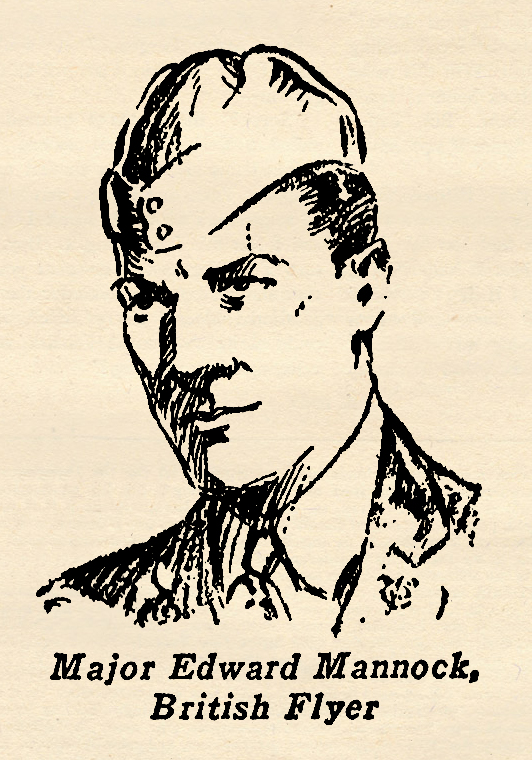 the British postal department, Turkey, when the war broke out. He was immediately made a prisoner by the Turks, and spent almost a year in an enemy camp before he was repatriated to England in 1915. He first served in the Royal Engineers, was commissioned as a lieutenant and transferred to the flying Corps in August, 1916. Major McCudden, the great British Ace, was his first instructor.
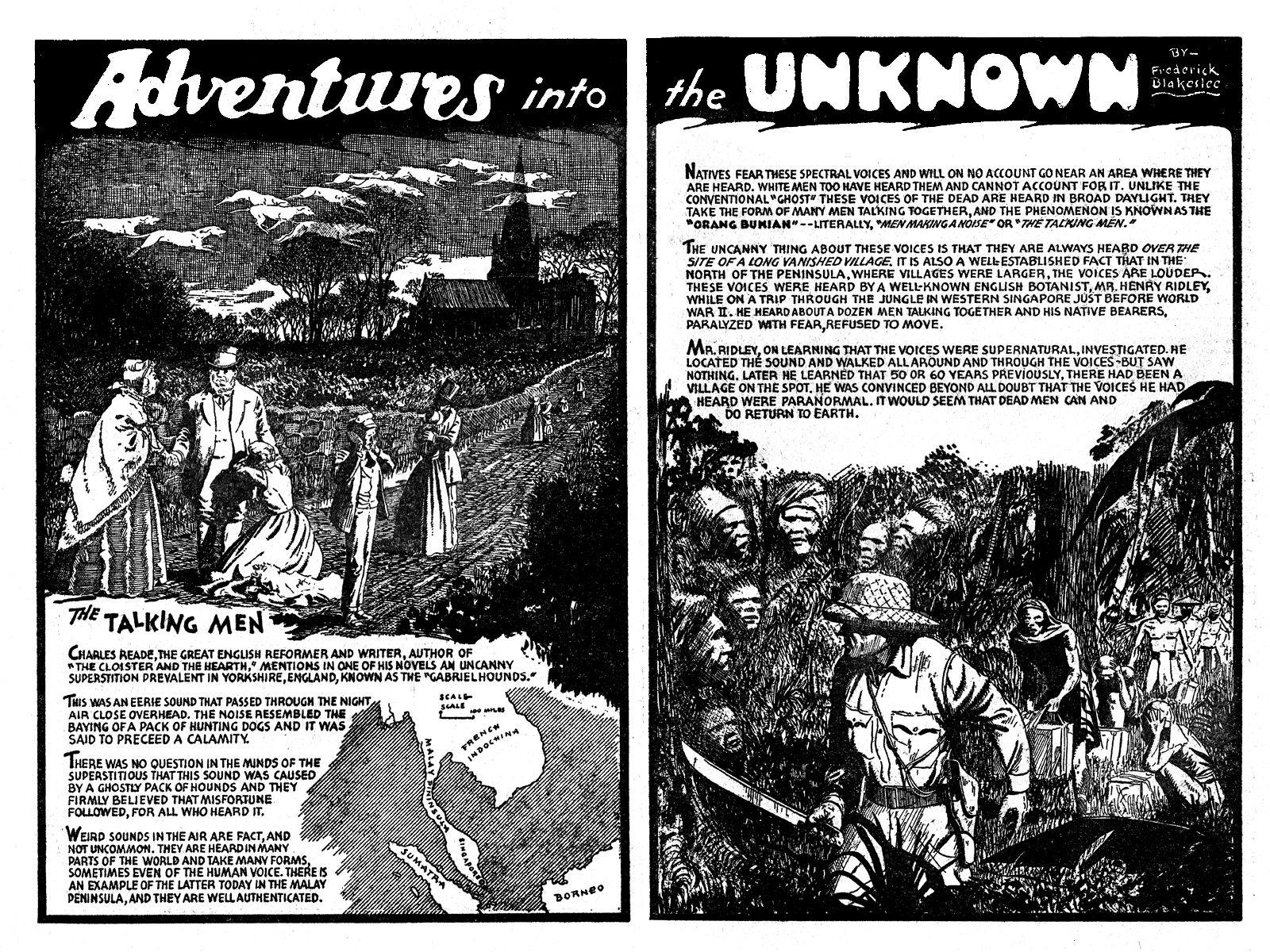
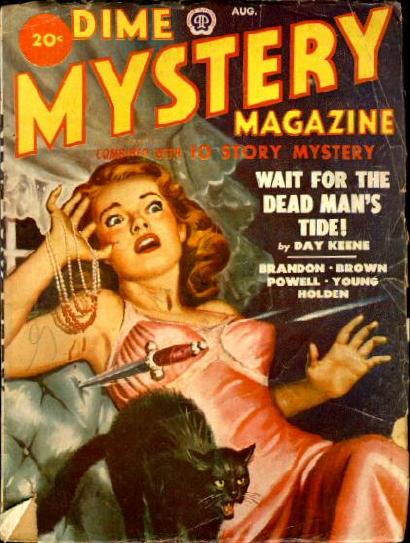 “Adventures Into The Unknown!” Blakeslee published fourteen installments of his two-page illustrated looks into the Unknown between March 1948 and October 1950. This time around Mr. Blakeslee examines the phenomenon known as ‘Orang Bunian’—or ‘the Talking Men.’ It is the hearing of the voices of the dead in broad daylight—usually over the site where there had once been a village! From the August 1949 issue of Dime Mystery Magazine it’s “Adventures Into The Unknown: The Talking Men!”
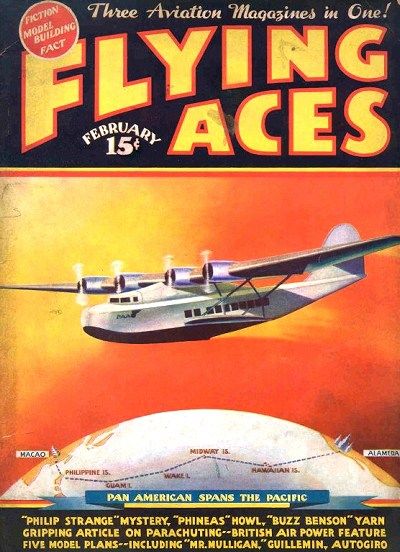 That sound can only mean one thing—that Bachelor of Artifice, Knight of Calamity and an alumnus of Doctor Merlin’s Camelot College for Conjurors is back and this time the marvel from Boonetown is caught between two woman and finds himself the guest of honor at a T.N.T. party! From the February 1936 issue of Flying Aces it’s “T.N.T. Party” (with Phineas serving the lemon!).
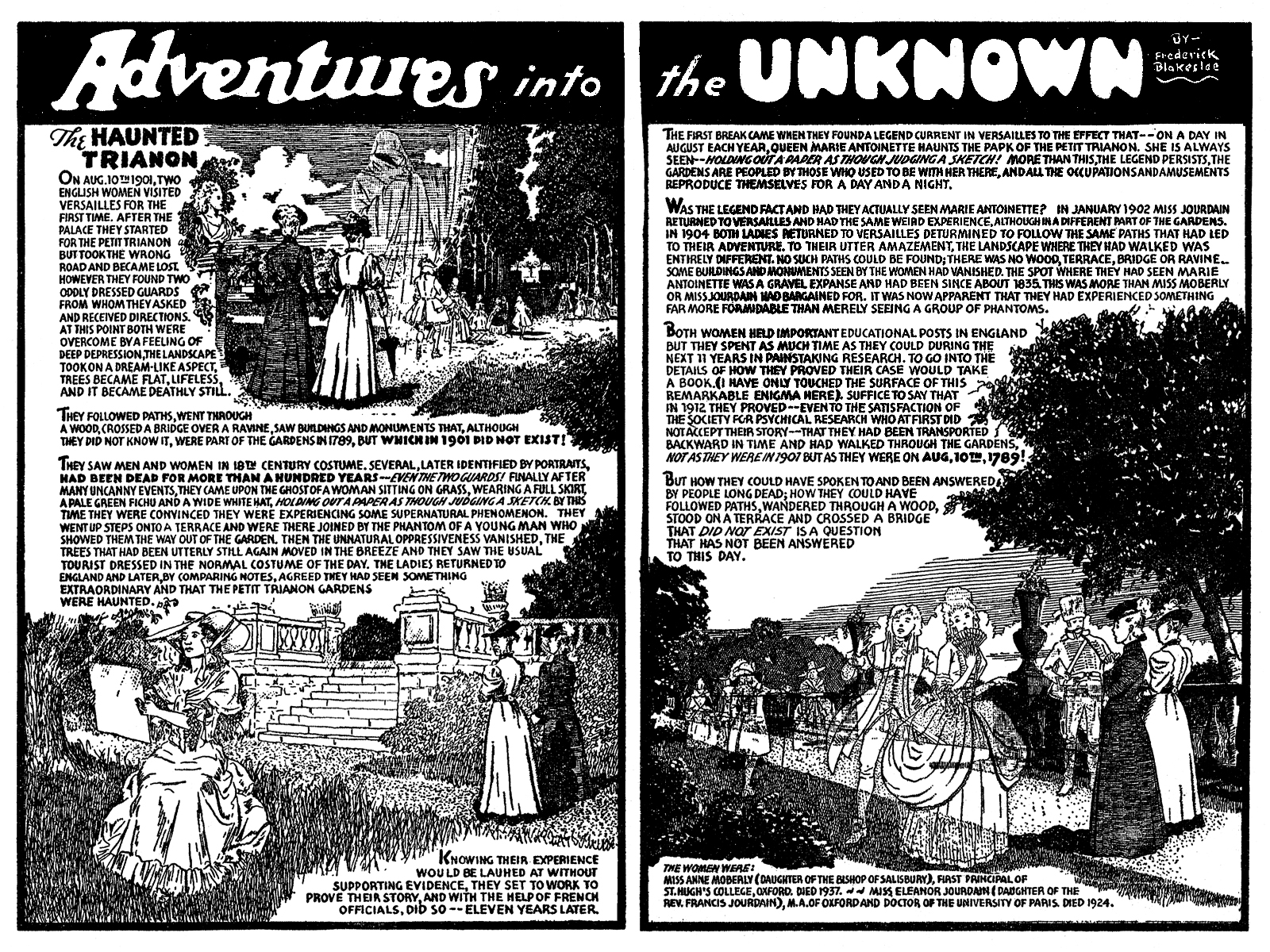
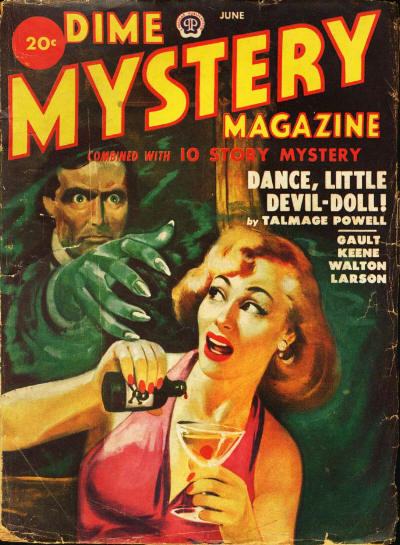 “Adventures Into The Unknown!” Blakeslee published fourteen installments of his two-page illustrated looks into the Unknown between March 1948 and October 1950. This time around Mr. Blakeslee delves into one of the most famous and most controversial incidents in the history of the occult. It’s the story of two English school teachers and what happened to them on a trip to Versailles in August 1901. Is what they experienced a paranormal encounter or possibly some sort of time slip? You be the judge—from the June 1949 issue of Dime Mystery Magazine it’s “Adventures Into The Unknown: The Haunted Trianon!”
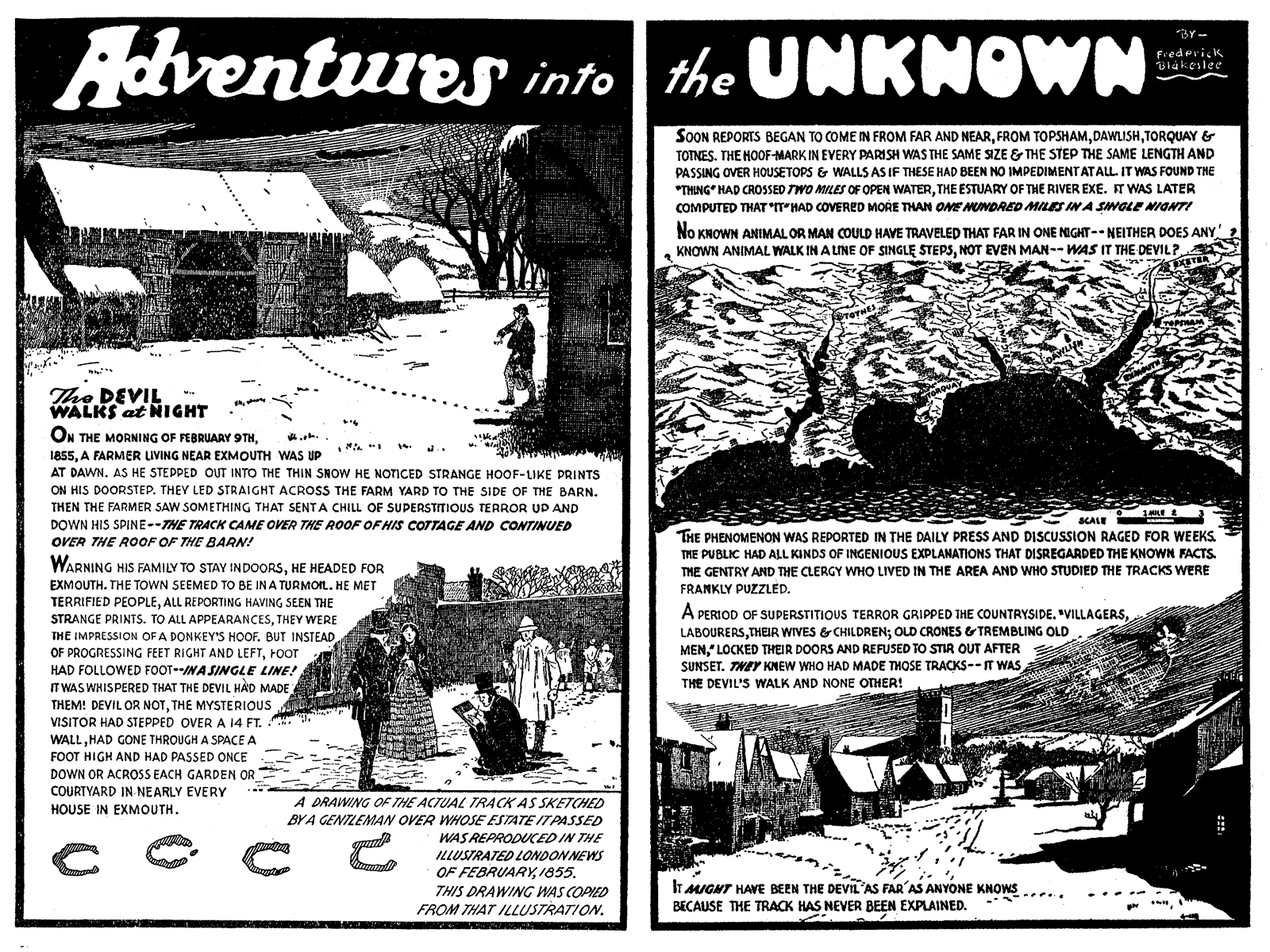
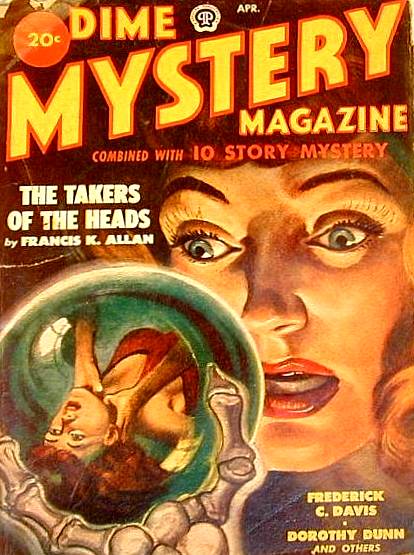 “Adventures Into The Unknown!” Blakeslee published fourteen installments of his two-page illustrated looks into the Unknown between March 1948 and October 1950. This time around Mr. Blakeslee delves into possible evidence of the Devil appearing on a cold snowy night in 1855 in Exmouth—from the April 1949 issue of Dime Mystery Magazine it’s “Adventures Into The Unknown: The Devil Walks at Night!”
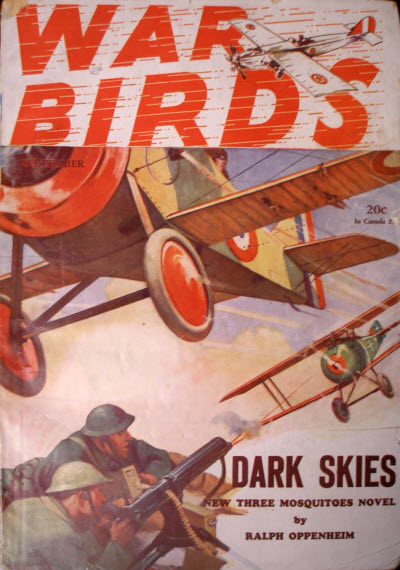 a story from the pen of a prolific pulp author O.B. Myers! Myers was a pilot himself, flying with the 147th Aero Squadron and carrying two credited victories and awarded the
 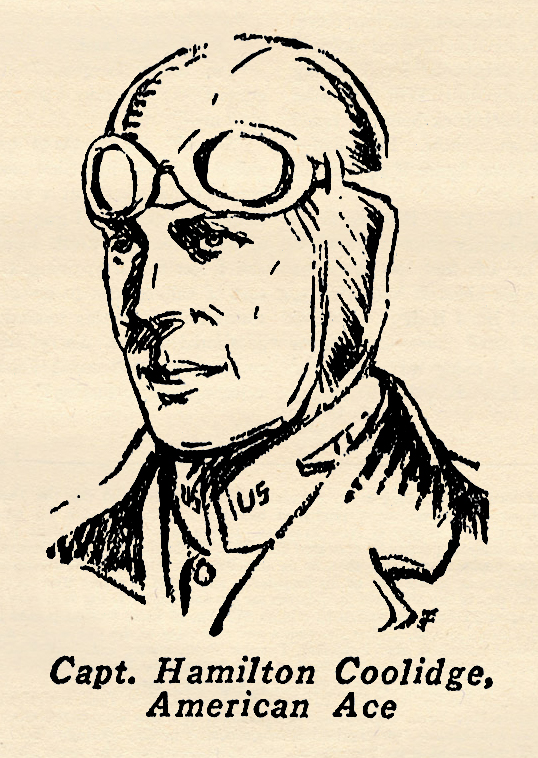 Hamilton Coolidge was well known throughout the land even before the war began. He enlisted in the aviation section of the Signal Corps and got his primary flight training at Mineola along with Quentln Roosevelt, his hoy-hood friend.
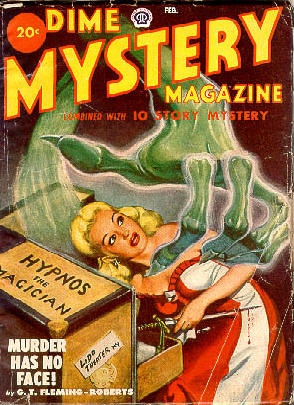 “Adventures Into The Unknown!” Blakeslee published fourteen installments of his two-page illustrated looks into the Unknown between March 1948 and October 1950. This time around Mr. Blakeslee delves into the stories of the evil ghosts of the Borley Rectory—often referred to as the most haunted house in all of England. From the pages of the February 1949 issue of Dime Mystery Magazine, it’s “Adventures Into The Unknown: The Evil Ghosts of Borley!”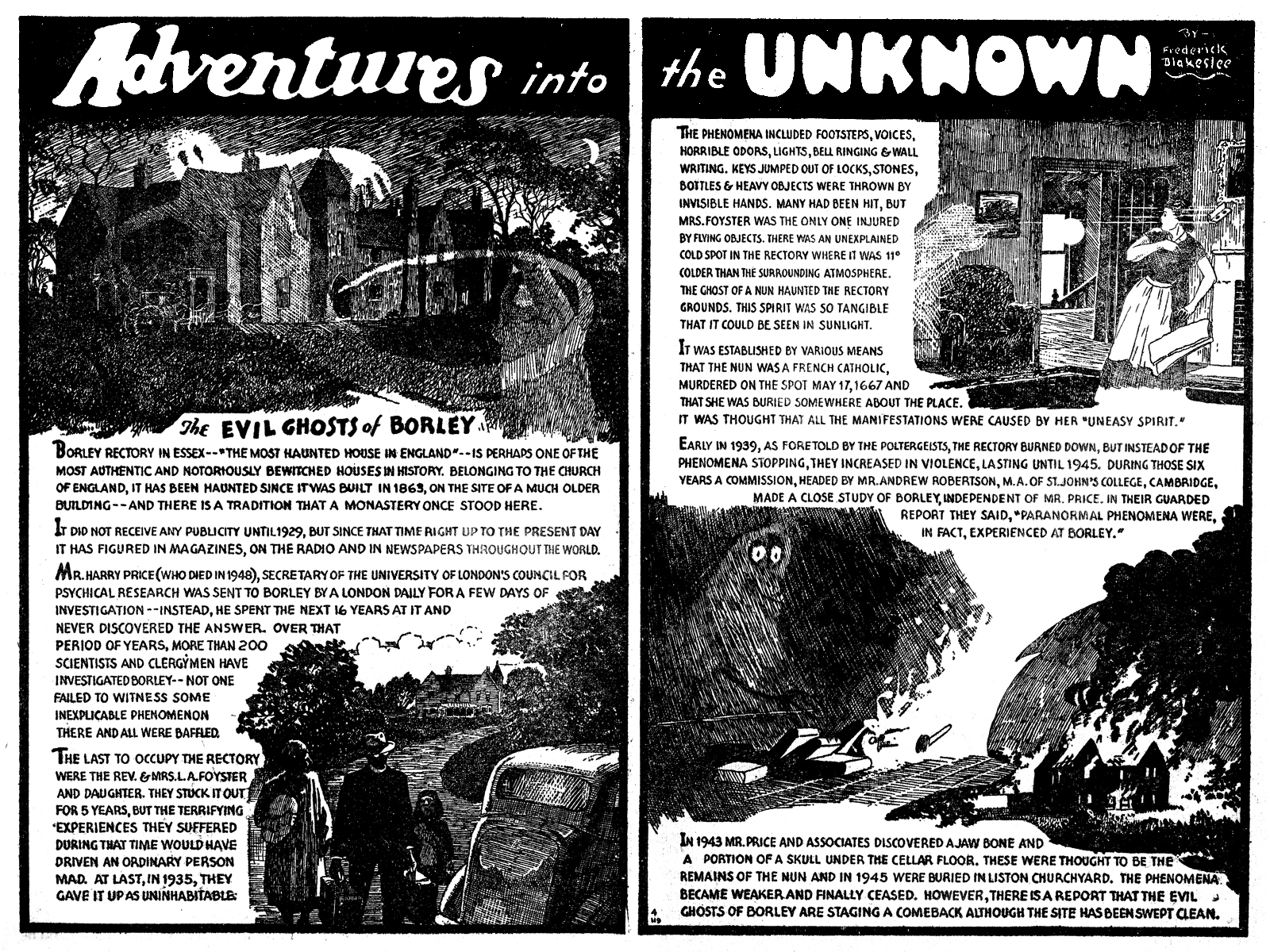
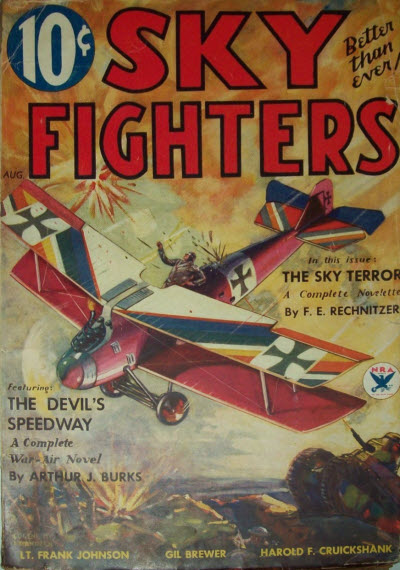 Silent Orth—ironically named for his penchant to boast, but blessed with the skills to carry out his promises—takes on a perilous mission to bomb a German ammunition dump. Using all the tricks and flying skills up his sleeve, Orth races to drop his bombs before the entire German Air force comes down on his neck. From the pages of the August 1934 issue of Sky Fighters, it’s “Orth’s Flight Against Time!”
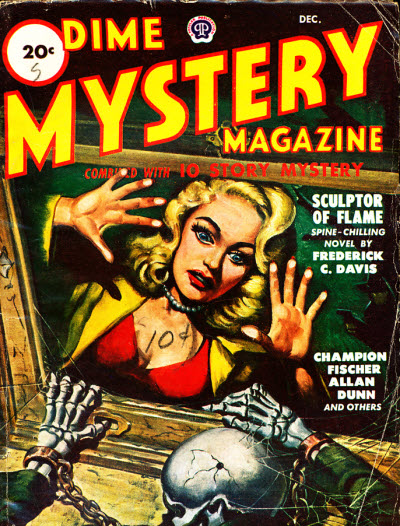 “Adventures Into The Unknown!” Blakeslee published fourteen installments of his two-page illustrated looks into the Unknown between March 1948 and October 1950. With the demise of SHOCK after just three issues, “Adventures Into The Unknown” moves to the long-running Dime Mystery Magazine! In the December 1948 installment, Blakeslee focuses on the Isle of Man and the reported spectral goings on in “Adventures Into The Unknown: The Spectre Hound in Man”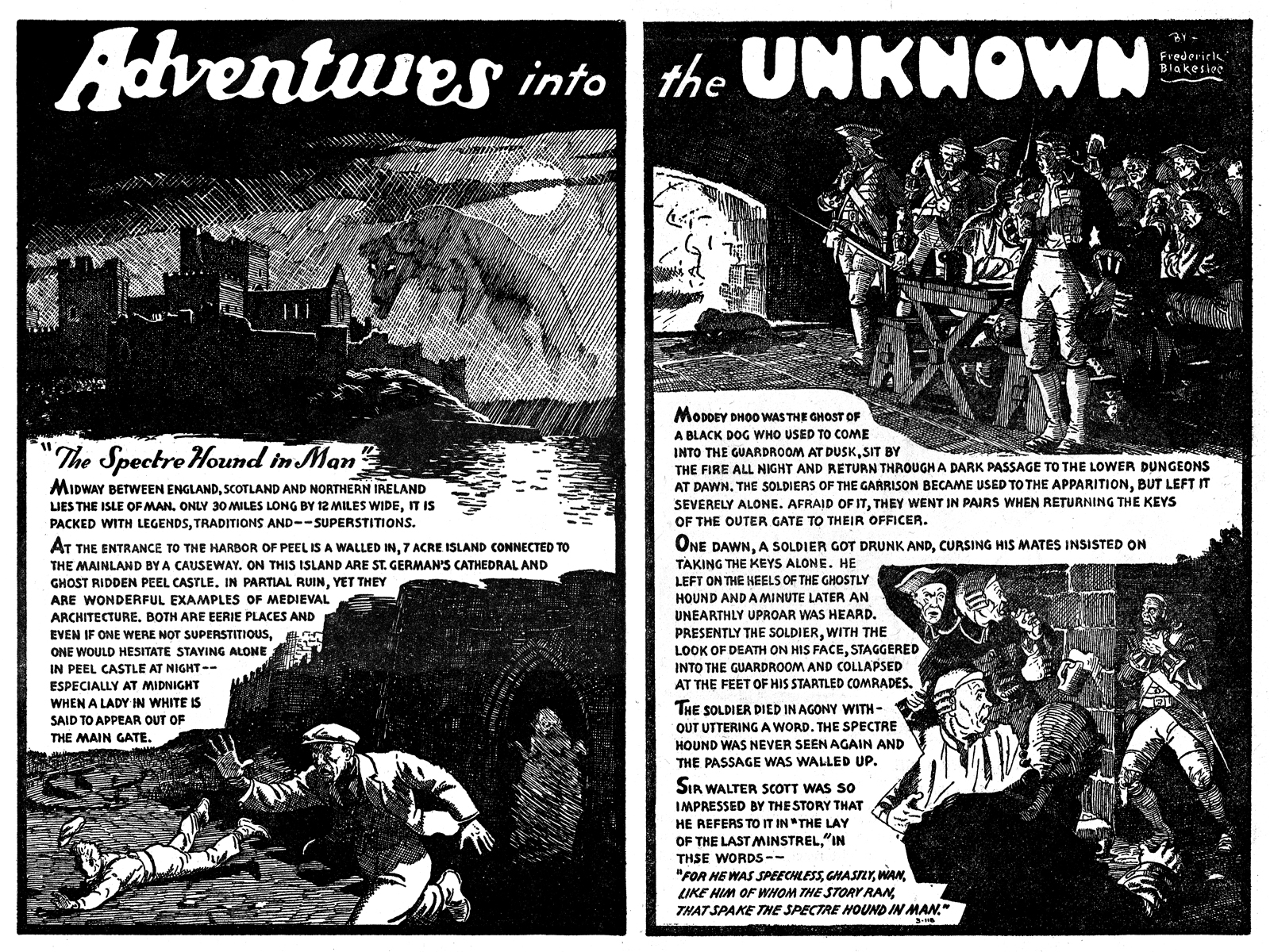
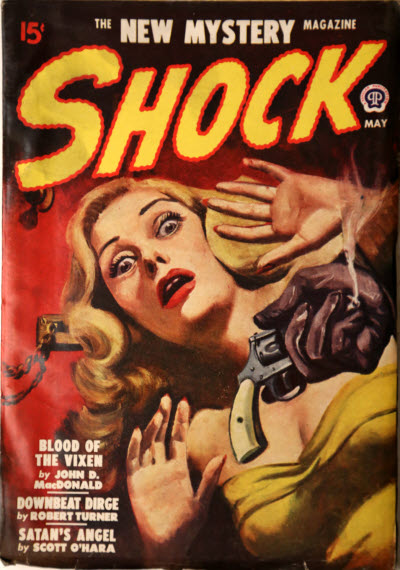 “Adventures Into The Unknown!” Blakeslee published fourteen installments of his two-page illustrated looks into the Unknown between March 1948 and October 1950. From the pages of the second issue of SHOCK, Frederick Blakeslee looks into the ghosts of Mont St. Michel—an island off the coast of Normandy connected to the mainland by a causeway that is submerged at high tide and the site of one of the gorier battles of the Hundred Years’ War. From May 1948 it’s “Adventures Into The Unknown: The Ghosts of Mont St. Michel!”