



“Sky Fighters, July 1935″ by Eugene M. Frandzen
Eugene M. Frandzen painted the covers of Sky Fighters from its first issue in 1932 until he moved on from the pulps in 1939. At this point in the run, the covers were about the planes featured on the cover more than the story depicted. For the June 1935 cover, Mr. Frandzen features the Spad 22 and Spad 13 C1!
The Ships on the Cover
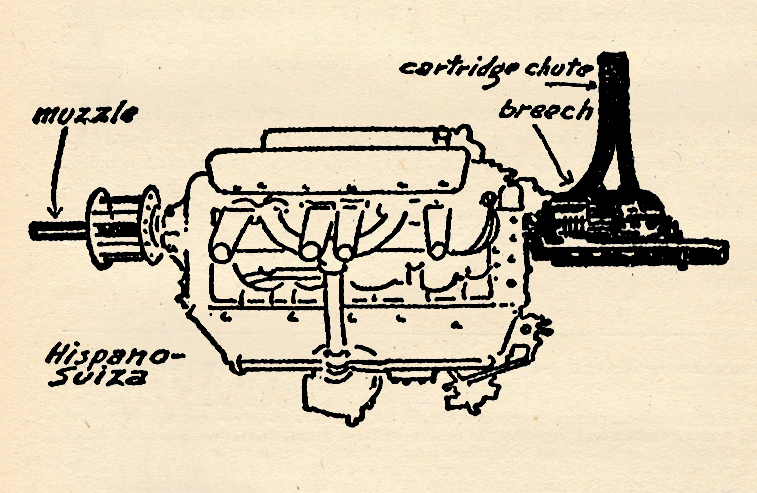
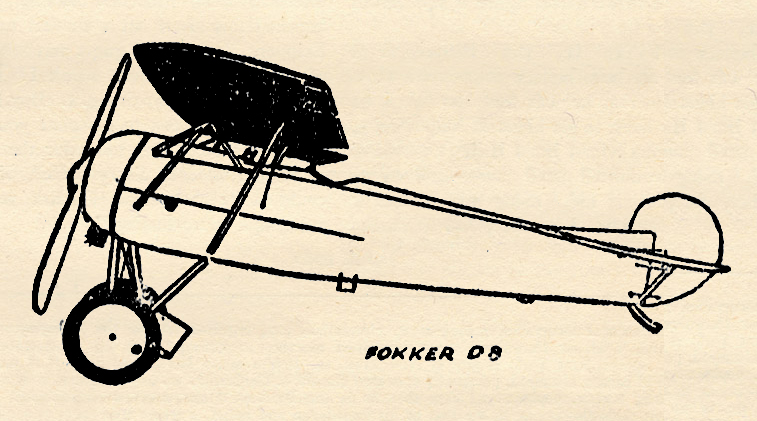
THE cannon ship used during 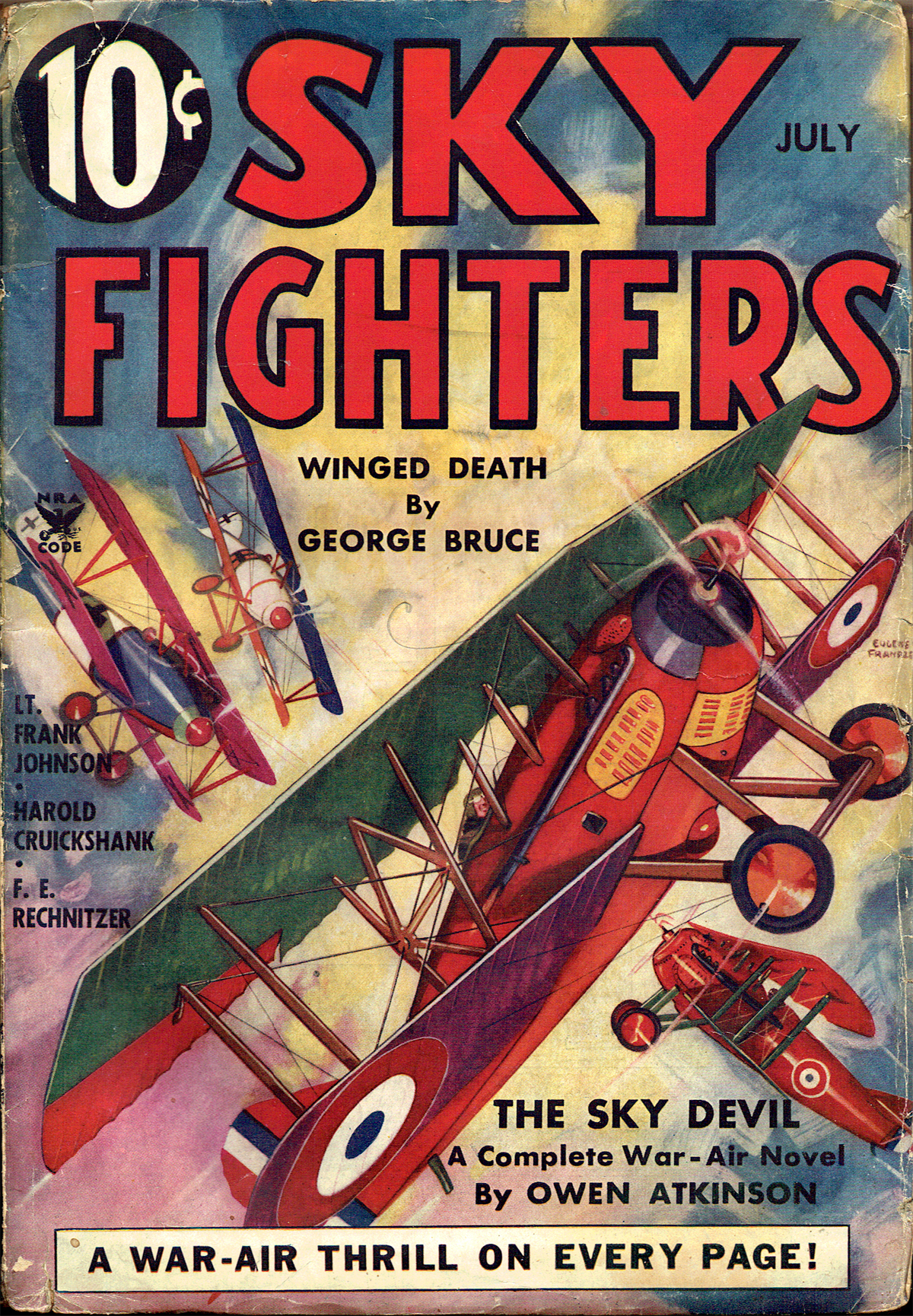 the World War did not necessarily have to be one type of plane. Any ship having a “V” type engine with a geared propeller could do the trick. The geared prop was above the crank shaft at the front of the engine, therefore above the center of the round radiator in the Spad. The hub of the propeller was made hollow just large enough to clear the sides of the muzzle of the 37 millimeter cannon which protruded about two inches. In the accompanying drawing this is clearly shown.
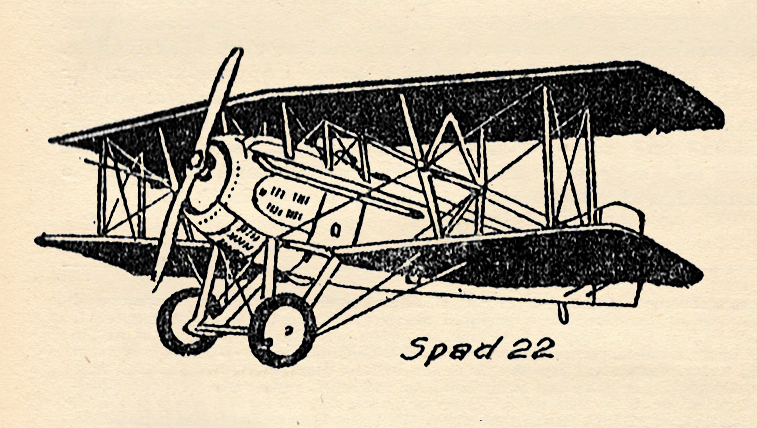
The ship with the complicated bracing in the foreground of the cover is the Spad 22, one of the little known crates of the war. It rated a 220 h.p. Hispano-Suiza motor with a geared prop which could accommodate the cannon. The Spad zooming up in the lower background is the Spad 13 C1 with geared prop. There were plenty of these “cannon ships” tried out from time to time and words flew hot and heavy from pilots who used this new gun arrangement for and against the stunt.
The Original Cannon
The original 37 millimeter cannon, the type the great French ace Guynemer used to down his forty-ninth to fifty-second victims, had to be fed by hand. Each seven-inch shell weighing about one pound had to be dropped into the breach of the gun. This took about three seconds in which time a pair of Vickers guns could churn out around fifty slugs, one of which might find a vulnerable spot in the enemy or his ship. But said enemy ship in three seconds could vary its position about 600 feet which is about equal to a shooting gallery target being reduced from the size of a wash tub to an aspirin tablet, a comparison which you fans with air guns or .22 caliber rifles Will appreciate.
On the other hand a Vickers slug might smack into a strut longeron, engine or even the gas tank, if it was rubber housed and not cause any serious damage; but let one of the one-pounder shells which explodes on impact connect with about any part of the enemy plane and the fight is over. The non-explosive one-pounder shell will knock a plane down in from one to three hits. Then there was a “fireworks” shell which was designed to set the target on fire, also a shell similar to a shotgun shell, which when loaded with buckshot would tear a wing to pieces.
A versatile gun, that cannon, and one which certainly did plenty of damage to the Germans.
Later Models Weighed More
The later cannon was semi-automatic, using the recoil, which was eight inches or more, depending on the muzzle velocity, to eject the used shell and slide a new one into the gun chamber. Guynemer’s cannon weighed about 100 pounds. The later models, 150 pounds or more. So put this added weight into a plane with a given speed and load, is to cut down its speed and put it at a disadvantage in a fight. To overcome this, the ammunition supply was limited or the fuel supply cut down which naturally decreased the cruising range. There were plenty of arguments for this weapon but also a few plain and fancy arguments against it.
Those two Albatross D5s zipping down on the foremost Spad are churning out four streams of slugs at a range which only amateurs would fire. The Spad 13 C1 coming up under them has a better range at a good angle. Not only are the bets on the Spads to come out with flying colors but when those explosive shells from the one pounder connect with the German ships, only one shell is necessary for blasting each one, where dozens of Spandau bullets may whistle through the Spads without harming them.
Sky Fighters, July 1935 by Eugene M. Frandzen
(The Ships on The Cover Page)
Next time, Mr. Frandzen features the Nieuport 27 and Junkers C.L.1!
 a story by another of our favorite authors—
 this month, the United States declared war on the Austro-Hungarian Empire. To mark the occasion, we’re posting Robert J. Hogan’s series of Abe Ginsberg stories that ran in the pages or War Birds magazine from 1932-1933.
  we have an additional tale of Abe Ginsberg from the pen of Robert J. Hogan. We had posted this back in 2010, but for those who missed it or would like to read it again or just have all five tales in a similar format, here is Abe Ginsberg’s final adventure from November 1933—”The Spy in the Ointment!”
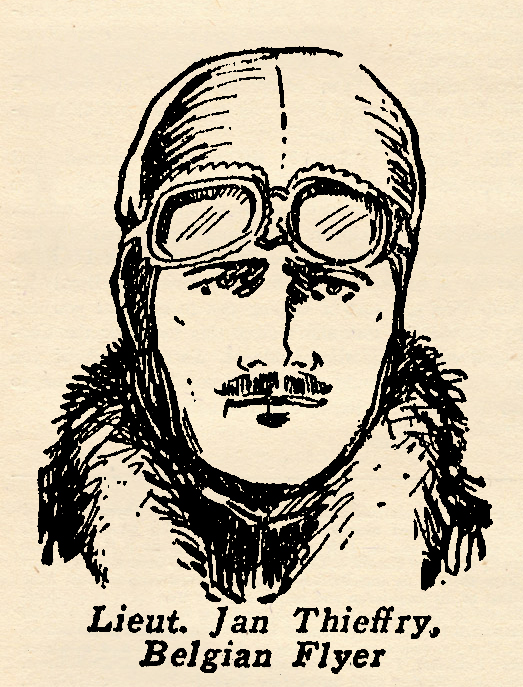 a part in the war of the air as she did in the war on the ground, when her brave soldiers held up the advance of the German hordes at the gates of Liege until the British and French armies could mobilize and get to the front to begin their counter-offensive. Corporal Jan Thieffry was a motorcycle despatch rider at that time. He was taken prisoner by a flying squadron of German Uhlans, but after some months made his escape.
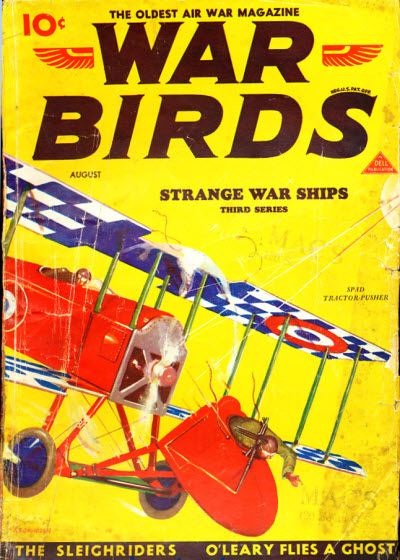 this month, the United States declared war on the Austro-Hungarian Empire. To mark the occasion, we’re posting Robert J. Hogan’s series of Abe Ginsberg stories that ran in the pages or War Birds magazine from 1932-1933. Although Ginsberg’s always first to stand up and volunteer, he’s often overlooked due to his short stature. This time he’s excluded from the mission as the French want to pin a medal on his chest. A muddy ride, a drunken celebration, and a dark hanger all lead to Ginsberg finding himself behind enemy lines attacking the Boche defenses from the inside!
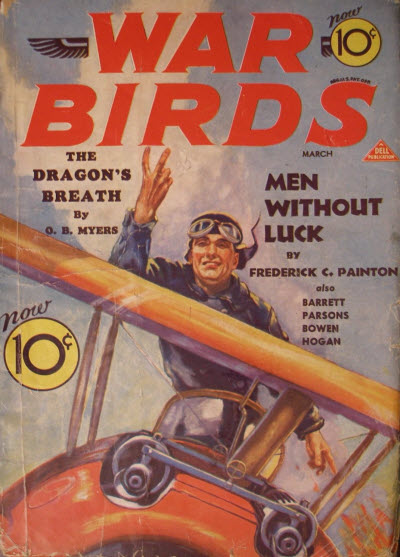 the United States declared war on the Austro-Hungarian Empire. To mark the occasion, we’re posting Robert J. Hogan’s series of Abe Ginsberg stories that ran in the pages or War Birds magazine from 1932-1933.
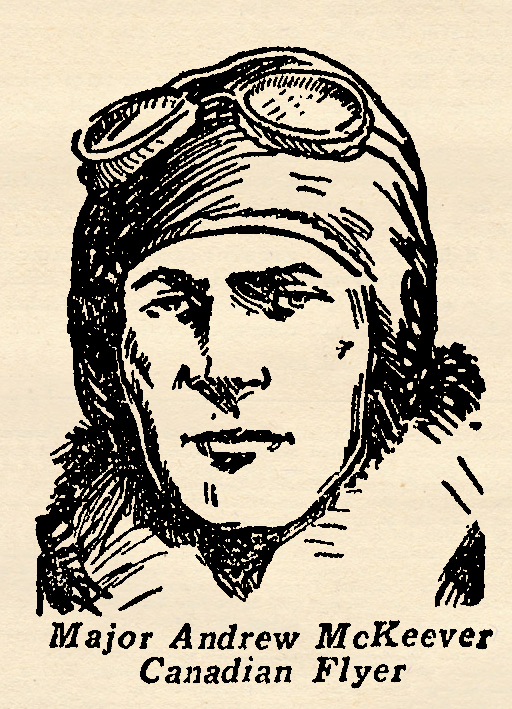 was one of the many daring young sky fighters that came from Canada to add fame and lustre to the deeds and exploits of the Royal Air Force, He put in almost a full year in the infantry before he was transferred for flying training. He joined the R.F.C. in December, 1916, was commissioned a lieutenant and sent over to the 11th Observation Squadron in France on May 16th, 1917.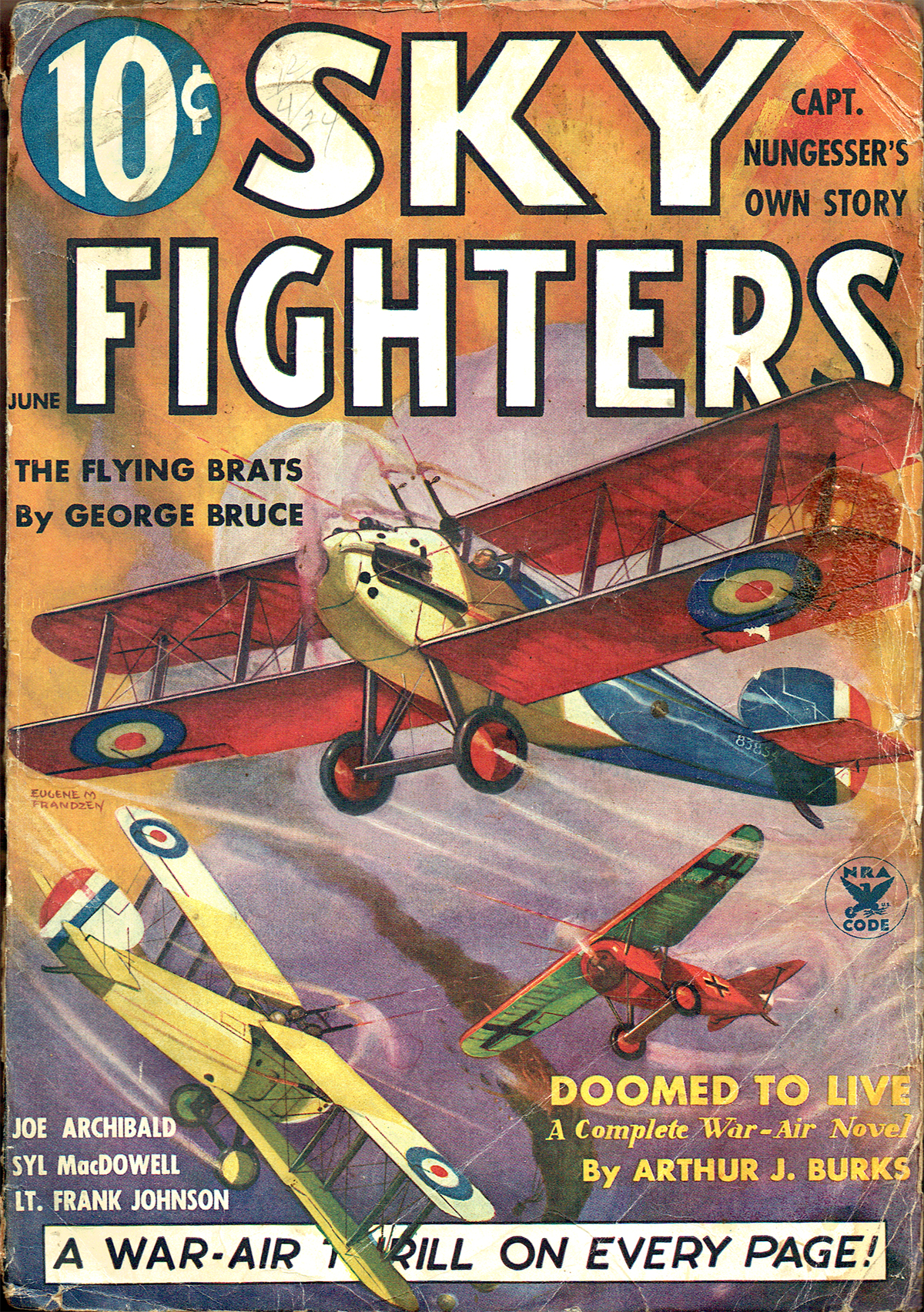
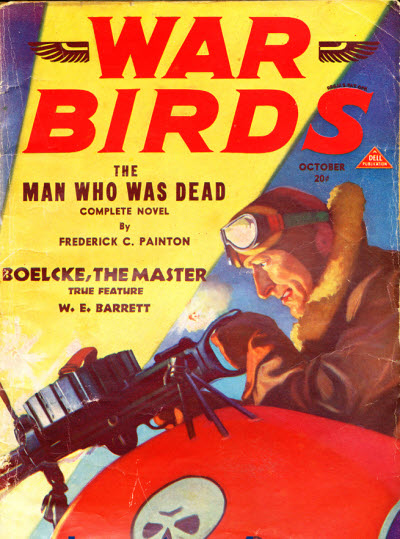 the United States declared war on the Austro-Hungarian Empire. To mark the occasion, we will be posting Robert J. Hogan’s Abe Ginsberg stories that ran in the pages or War Birds magazine from 1932-1933.
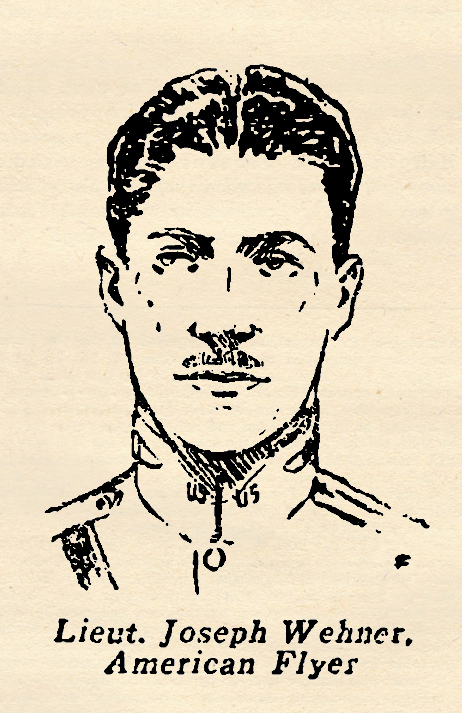 was the most daring sky fighter in the American Air Service. But it is hard to say whether he would have established the record he did without the aid of Joe Wehner, his constant and steadfast companion and buddy in the 27th Squadron. He was Luke’s alter ego.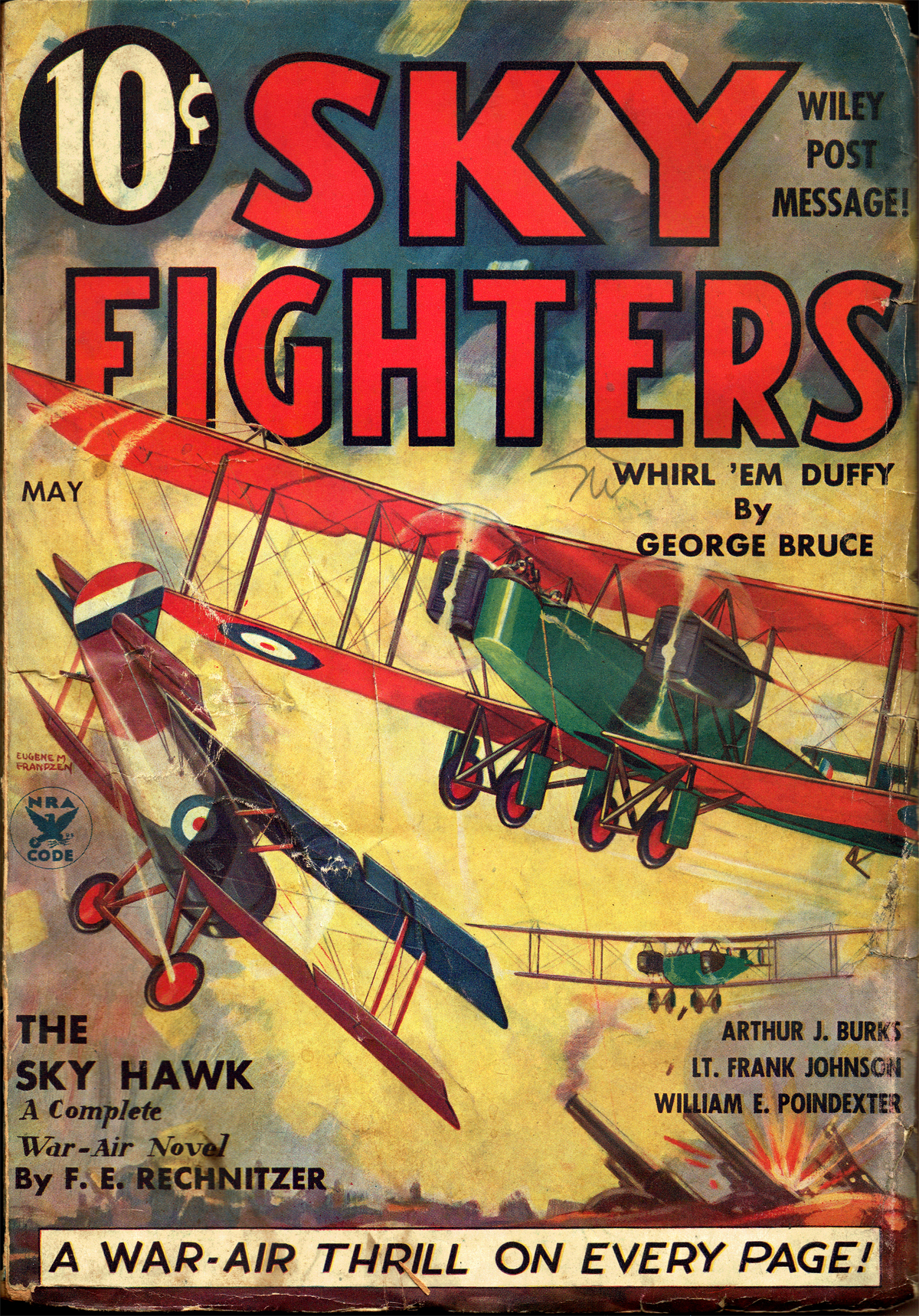
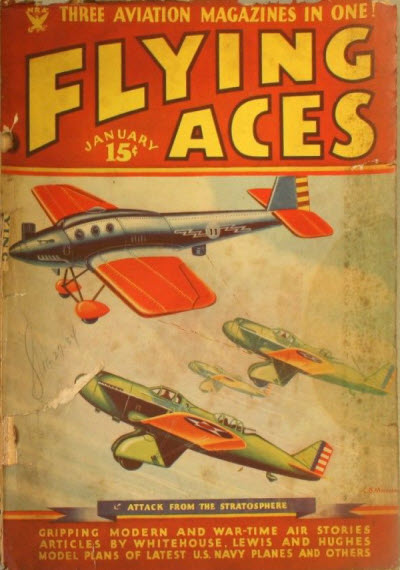 You heard right! That marvel from Boonetown, Iowa is back causing more trouble than he’s worth! That Knight of Calamity manages to find not only the Boche’s ammo train, but a former victim of the ol’ Pinkham charm from his hometown now glad to seek revenge! How can he stop the Boche ammo train, escape the butcher of Boonetown, and capture the Rittmeister von Schnoutz? He does it all with mirrors—Find out in “An Itch In Time” from the pages of the January 1935 Flying Aces.
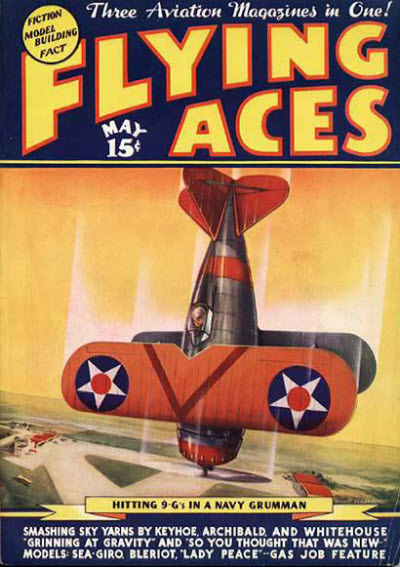 had a story in a majority of the issue of Flying Aces from his first in January 1930 until he returned to the Navy in 1942. Starting in August 1931, they were stories featuring the weird World War I stories of Philip Strange. But in November 1936, he began alternating these with sometime equally weird present day tales of espionage Ace Richard Knight—code name Agent Q. After an accident in the Great War, Knight developed the uncanny ability to see in the dark. Aided by his skirt-chasing partner Larry Doyle, Knights adventures ranged from your basic between the wars espionage to lost valley civilizations and dinosaurs. The mysterious Four Faces—a criminal cabal that seek to control all crime on the earth—has found a way to turn people to stone, which comes in handy while they continue to build their air fleet of stolen ships!