



“Sky Fighters, September 1935″ by Eugene M. Frandzen
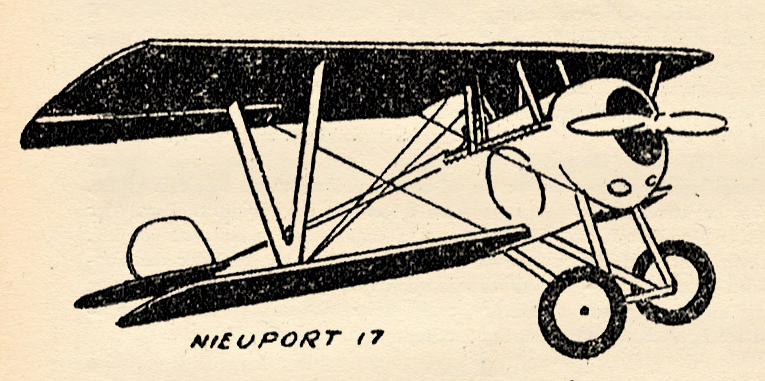
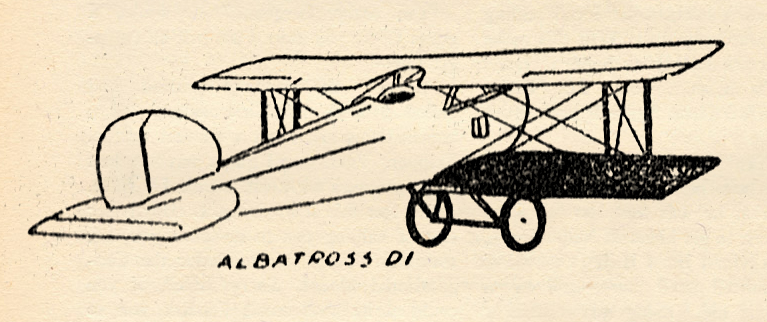
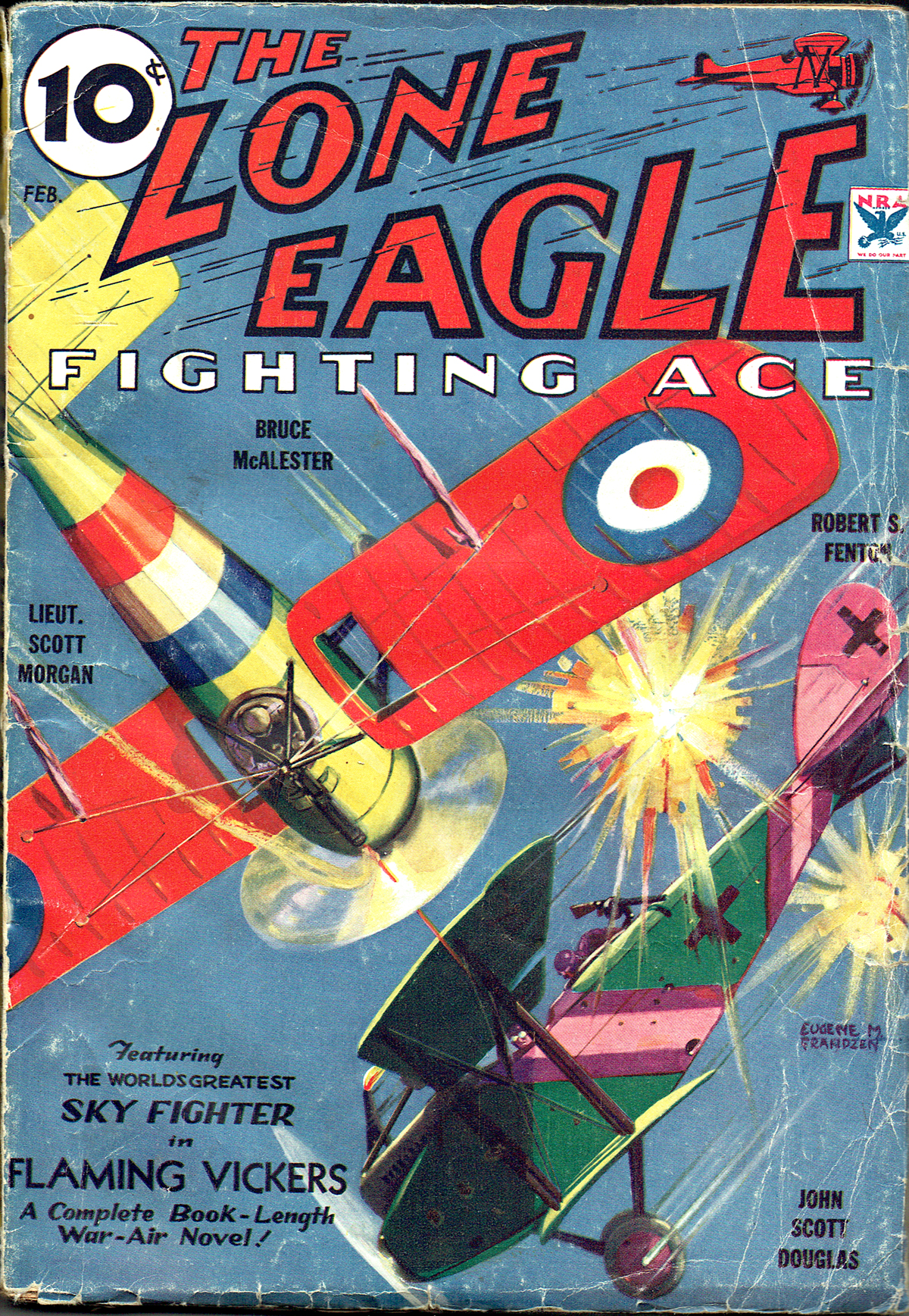
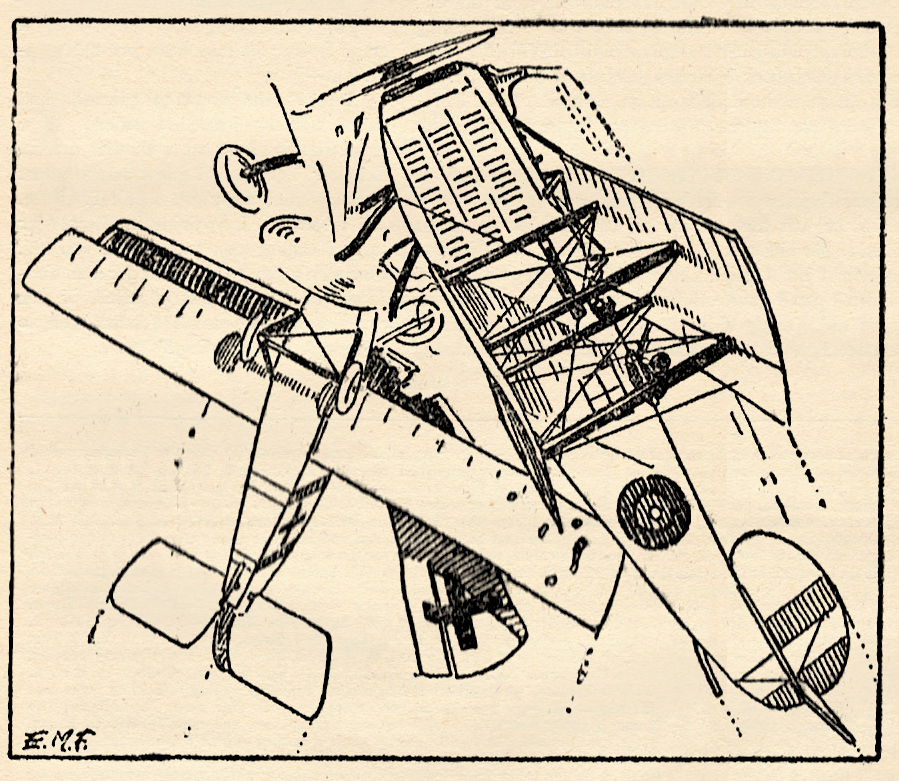
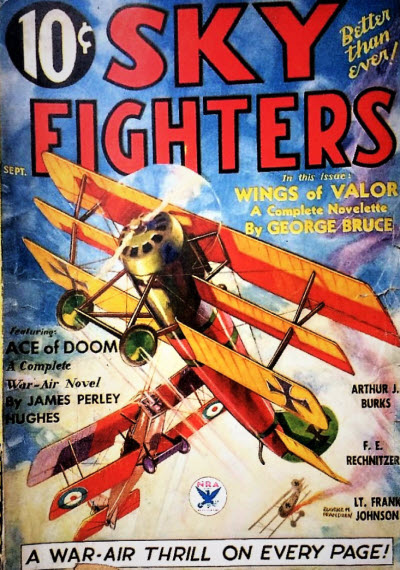
Eugene M. Frandzen painted the covers of Sky Fighters from its first issue in 1932 until he moved on from the pulps in 1939. At this point in the run, the covers were about the planes featured on the cover more than the story depicted. For the September 1935 cover, Mr. Frandzen features the Nieuport 17 taking on a Albatross D1!
The Ships on the Cover
PLANES kicked through the air at 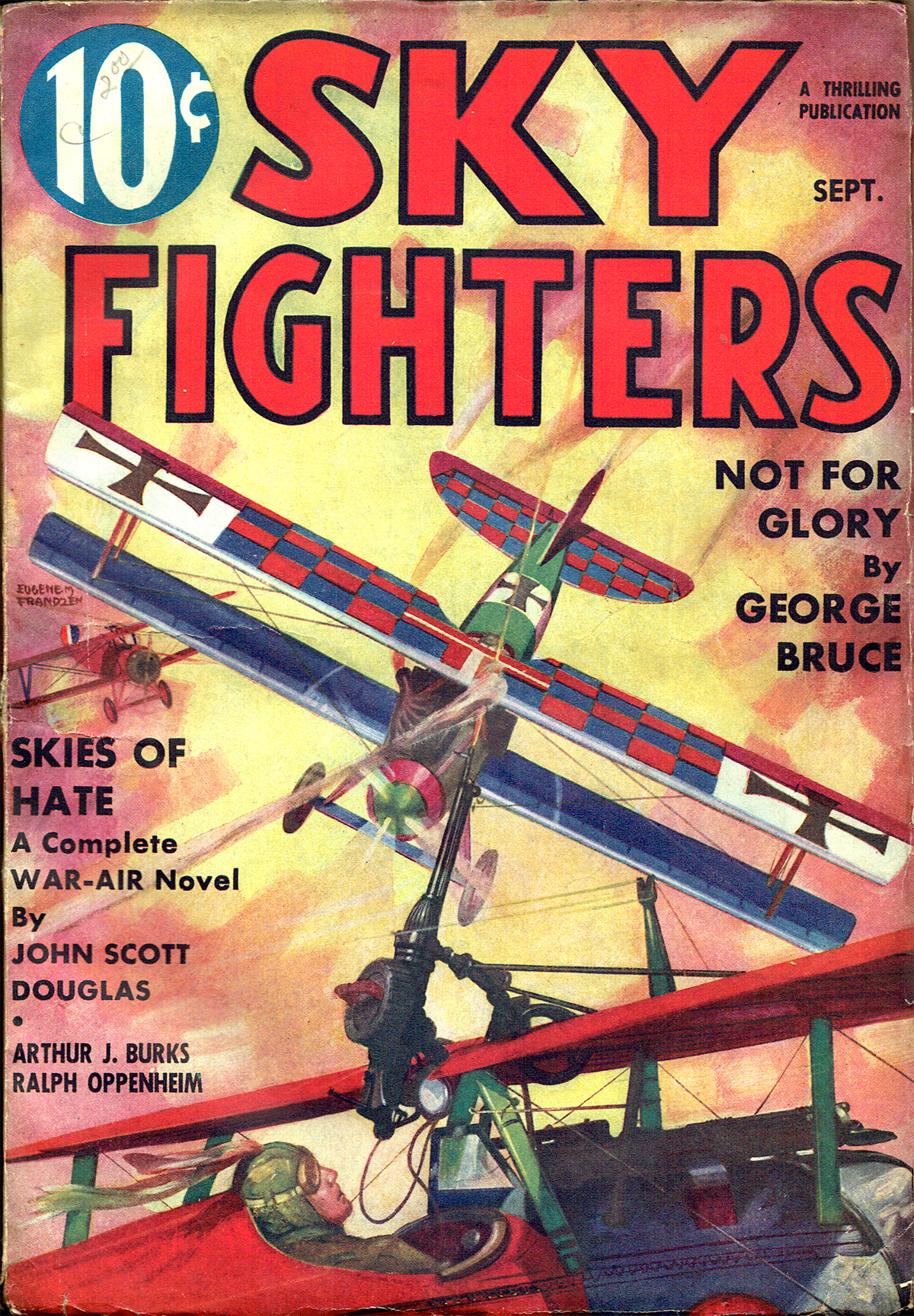 the first of the war and were laughed at by the ground troops and their commanders. Toys, things to wonder at and possibly admire; but to be taken seriously as an offensive weapon. Never!
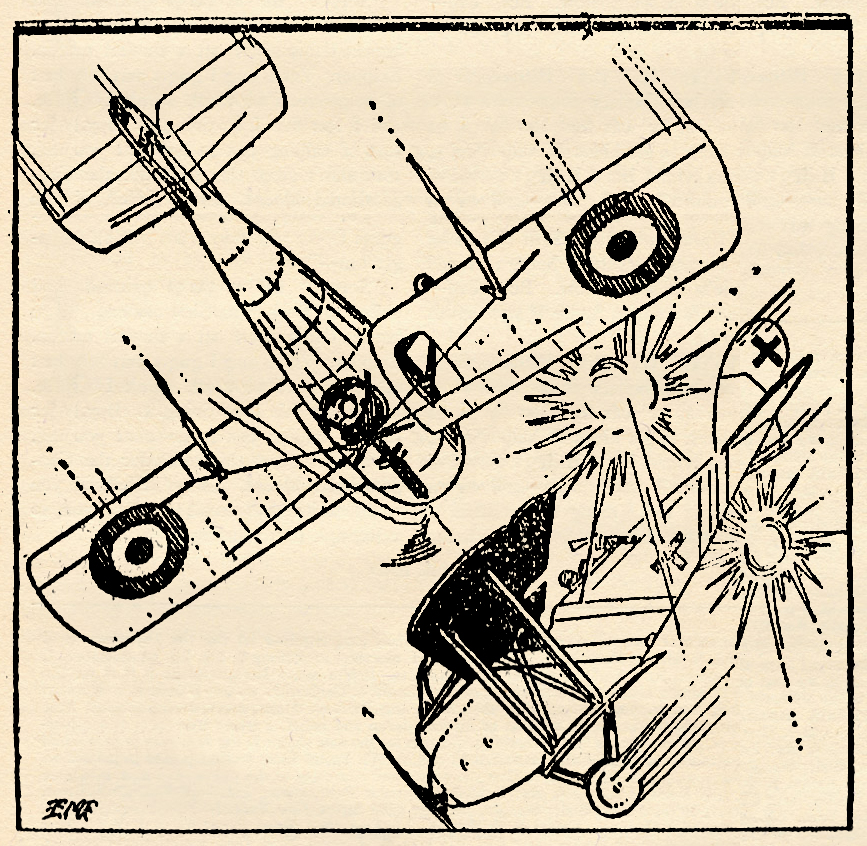
Weapon? That’s exactly the right word that keys the whole advance of the airplane from a trick war sideline to a major cog in the wheels of war. On the Nieuport in the foreground the weapon blazing from the top wing is the Lewis gun with a revolving metal drum which fed shells into the gun breech. But let’s slide back to the first part of the war when machine-guns were not thought possible. In August, 1914, cavalry carbines were occasionally tucked into a cockpit and the observer or even a pilot of a single seater optimistically pushed the snout out over the side of the fuselage and took a pot shot at a Boche flying parallel to his plane. With the vibration from the engine, the bumpy air and the back pressure from the slipstream it was all the would-be assassin could do to hold the rifle from jerking out of his hands and barging back into the empennage, let alone draw a bead on the enemy who had ideas of his own about remaining in focus.
Bags of Bricks
Finding this method useless the sharpshooters of the air dragged out, believe it or not, good old bags of bricks. The trick was to get above your opponent, mentally calculate the trajectory of a brick from your shaking hand to the whirling prop of the enemy plane. Of course there was always the chance of ringing the bell by a super-lucky throw if the falling brick made direct contact with the enemy’s head. About the only casualty from this duck on the rock technique was a direct hit on a high official’s private cow. Orders went out immediately: No more bricks.
Small steel darts, diminutive bombs and hand grenades were hurled down at ground troops and supply trains but the damage was small. Then came the machine-gun firing from the back pit or from the front nacelle of the pusher type.
In January, 1915, the Lewis gun was first mounted on the top wing of a Nieuport firing over the top of the propeller in the line of flight. A few months later the Roland Garros gun appeared, shooting through the propeller arc, but not synchronized. Triangular steel plates deflected bullets that would otherwise have shattered the wooden propeller.
Finally the Fokker synchronized guns blazed a devastating hail of bullets through the prop arc. The Allied airmen were battered and smashed from the skies. Fast pusher type planes were thrown against the German’s super gun. And then a German plane crashed behind the Allied lines. The interrupter gear secret was out. Synchronized Vickers guns were mounted on Allied cowlings. The Germans’ advantage had been lost. The war in the skies blazed forth with accelerated tempo. Toy ships of a few months past had blossomed into major weapons of war.
An Old Stunt
However, the top gun firing forward was not discarded by many Allied aviators. Nieuports and S.E.5s used it, up until the Armistice. The Nieuport on the cover has its top gun and a synchronized Vickers which has jammed hopelessly. Only a few shells remain in the pancake drum above. The French pilot is wounded and attacked by two German Albatross D1s. He knows he cannot get them with front gun fire, but he remembers an old trick. Painfully he reaches up, yanks back the Lewis butt, jams the Bowden wire on the trigger as he zips under the belly of one German plane. A direct engine hit. Down goes the enemy. The remaining German sees the tricky gun work of the wounded Frenchman and feels the wind from the bullets of a second Nieuport coming to the rescue. He veers off and streaks for home allowing the Frenchman to get away, land and become a confirmed booster for the old top gun Lewis.
Sky Fighters, September 1935 by Eugene M. Frandzen
(The Ships on The Cover Page)
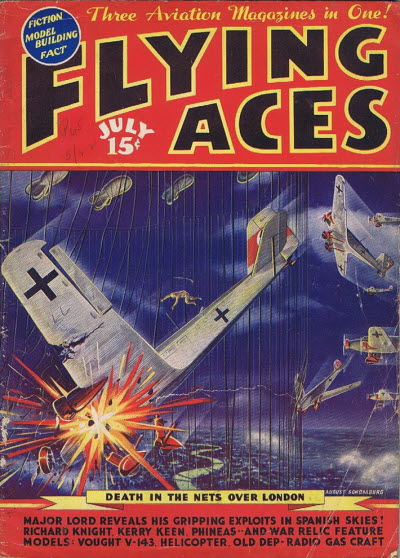 had a story in a majority of the issue of Flying Aces from his first in January 1930 until he returned to the Navy in 1942. Starting in August 1931, they were stories featuring the weird World War I stories of Philip Strange. But in November 1936, he began alternating these with sometime equally weird present day tales of espionage Ace Richard Knight—code name Agent Q. After an accident in the Great War, Knight developed the uncanny ability to see in the dark. Aided by his skirt-chasing partner Larry Doyle, Knights adventures ranged from your basic between the wars espionage to lost valley civilizations and dinosaurs. Knight is sent to Spain to get the American military men out of the Spanish Cival War, only to find the mysterious Four Faces—a criminal cabal that seek to control all crime on the earth—trying to turn La Guerra Civil into another World War with America taking all the blame!
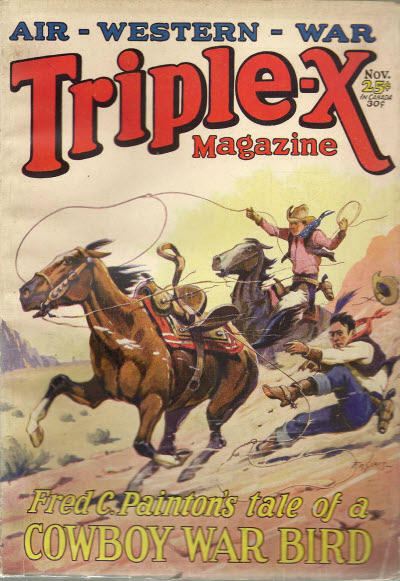 a story from the pen of a prolific pulp author and venerated newspaper man—Frederick C. Painton.
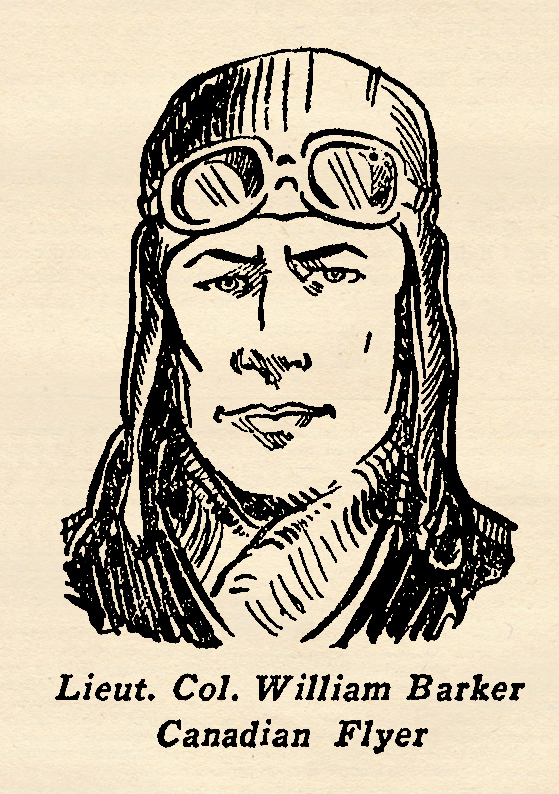 of William Barker’s career on two flying fronts reads more like fiction than fact. Born in the prairie province of Manitoba in 1894, he enlisted as a Private in the Canadian Army at the age of 19. He served in the cavalry before transferring to the flying corps. Barker began as a simple private. But he skyrocketed swiftly through all the grades to that of Lieut. Colonel. His training for a pilot was limited to two flights with an instructor. After that he was turned loose to begin piling up an amazing record. On October 27, 1918, he crowned this amazing record with the most astounding aerial feat of the whole war . . . fighting and escaping from a surrounding net of 6O enemy planes at the dizzy altitude of 20,000 feet.
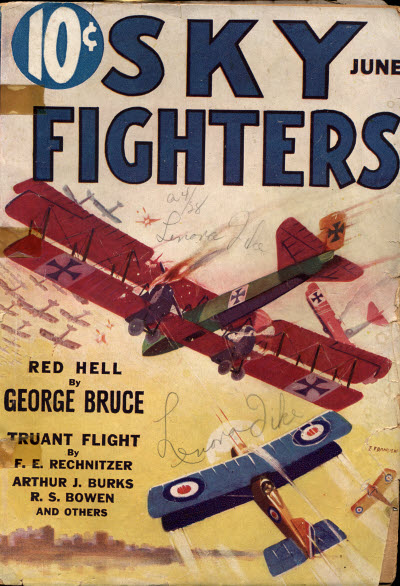 a story by prolific pulpster—Arthur J. Burks! Burks was a Marine during WWI and went on to become a prolific writer for the pulps in the 20’s and 30’s. He was a frequent contributor to Sky Fighters. Here we have a story of Frank Tracy, a strict flight leader who rules his troops with threats of court-martial or other disciplinary action. Tracy uses his methods as a way of keeping his flight safe, but they see him as just hiding behind his flight to save his own hide. As is the case in these situations tempers reach a boiling point! From the June 1933 issue of Sky Fighters, it’s Arthur J. Burks’ “Martinet.”
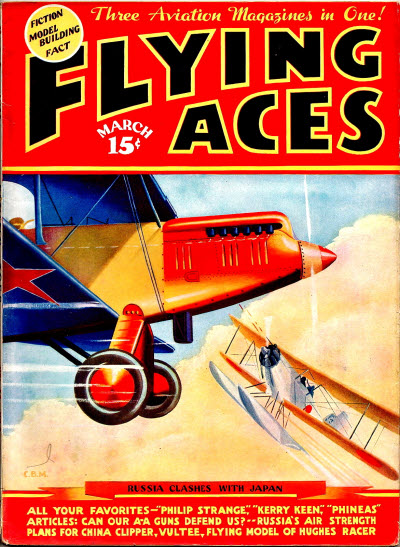 You heard right! That marvel from Boonetown, Iowa is back! And this time we find that Knight of Calamity finds himself shrieking amongst the sheiks in “Doin’s in the Dunes” from the pages of the March 1936 Flying Aces.
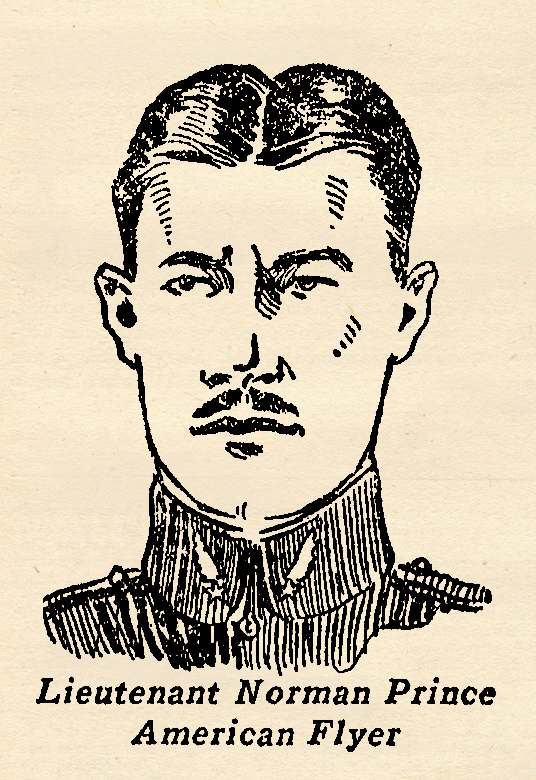 August 31, 1887, scion of one of the blue-blooded families In old Boston, was Norman Pslnce, the founder of the famous LaFayette Escadrille. Educated at Groton and Harvard for a career in business with his wealthy family, he hazarded his promising future and used his wealth and family prestige in overcoming obstacle’s to form a squadron of American aviators for battle at the front. With him in the beginning were Thaw, Chapman, Rockwell, McConnell, Hall and Cowdin. These Americans with Prince made up the roster of the original squadron sent up to the front at Luxeuil in May, 1910.
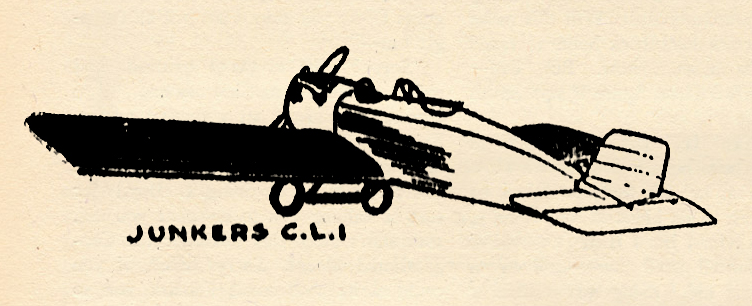
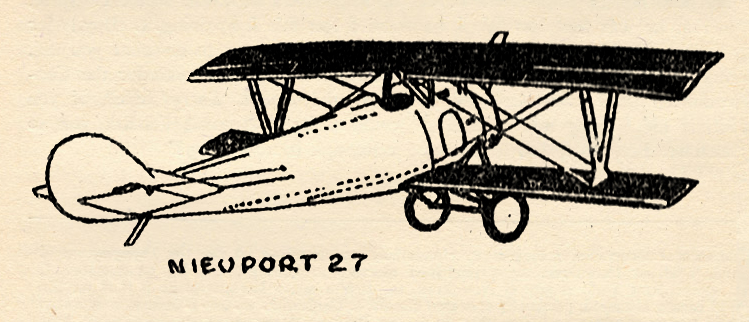
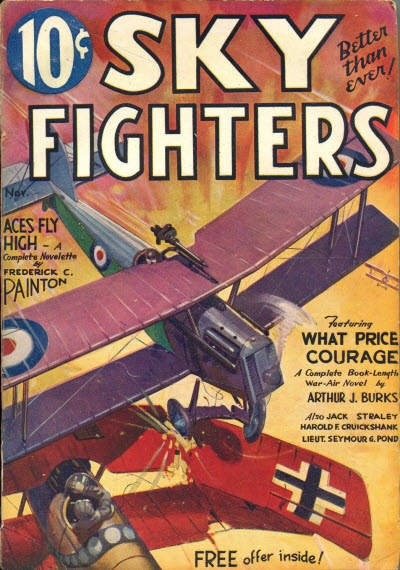 a story from the pen of a prolific pulp author and venerated newspaper man—Frederick C. Painton. In “Aces Fly High” Painton relates a tale of brothers in the same flight. The older, Blake Grenfell tasked with the duty of looking after his younger half brother, Pup. And that’s a task in itself as Pup is determined to become an Ace at the expense of all others. Good men are lost in Pup’s pursuit of becoming an Ace and things just go from bad to worse until drastic actions and sacrafice must be made to save the Grenfell’s name and social standing back home. From the November 1933 issue of Sky Fighters—it’s Frederick C. Painton’s “Aces Fly High!”

 Silent Orth—ironically named for his penchant to boast, but blessed with the skills to carry out his promises—takes on four of Germany’s greatest Aces! Hauptmann Kruger, Weisskopf, Buchstabe and Braunstein. Their insignia are, in the order named, a crimson splash on the sides of the fuselage, representing blood; a hooded figure carrying an enemy’s head in his hands; the opened Book of Life with blank lines, presumably to hold the names of condemned enemies; and a comet with a tail of fire! From the pages of the September 1934 issue of Sky Fighters, it’s Silent Orth in “Shooting Star!”
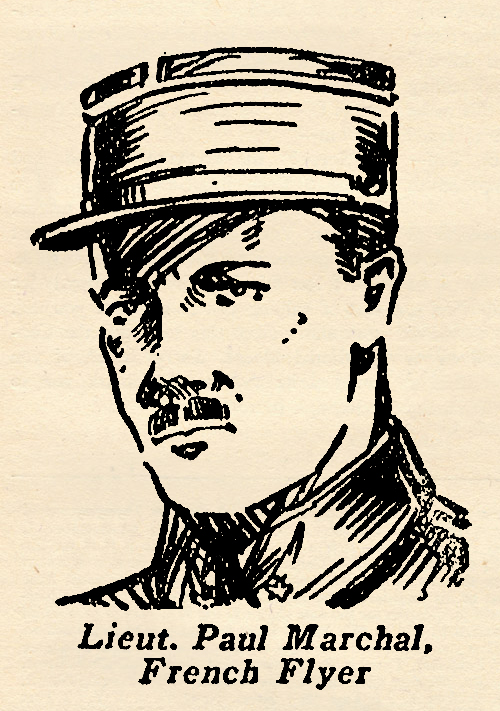 colors on the first day war was declared, and it was he that answered the challenge of that bold German, lieutenant Max Immelmann, when the latter bombed Paris with leaflets calling for surrender. Immelmann had to fly a matter of but a hundred kilometers, or less, to get over the city of Paris. But when Marchal answered his challenge with an identical flight to Berlin, he had to fly 8QO kilometers.