Looking to buy? See our books on amazon.com Get Reading Now! Age of Aces Presents - free pulp PDFs

“No More Victories” by Donald E. Keyhoe

Link - Posted by David on August 8, 2025 @ 6:00 am in

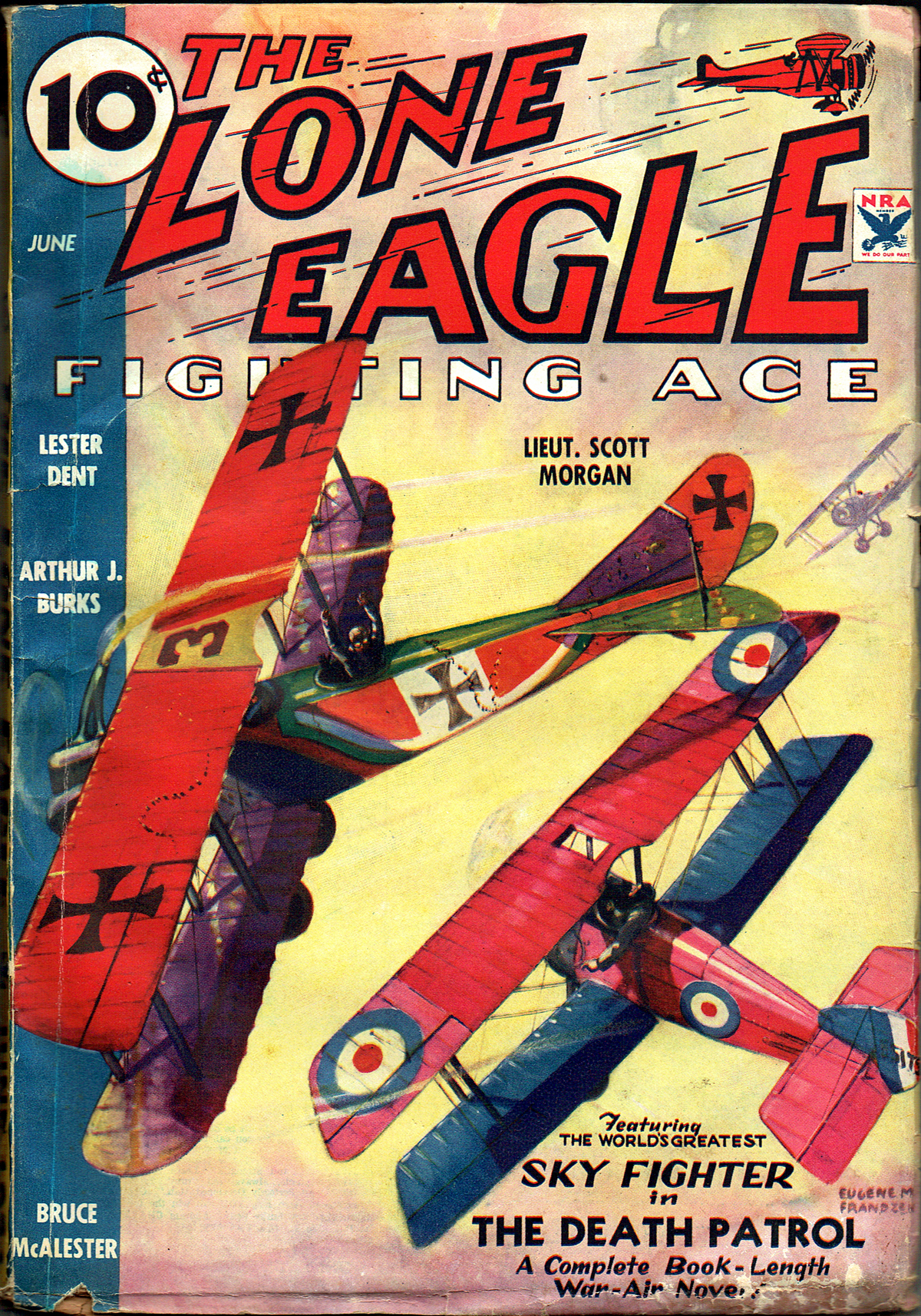
THIS week we have an early story from the pen of Donald E. Keyhoe from the pages of the September 1930 Sky Birds magazine. Keyhoe started appearing regularly in the aviation pulps—Wings, Air Stories, Sky Birds, Flying Aces—starting in December 1929. His series characters started in August 1931.

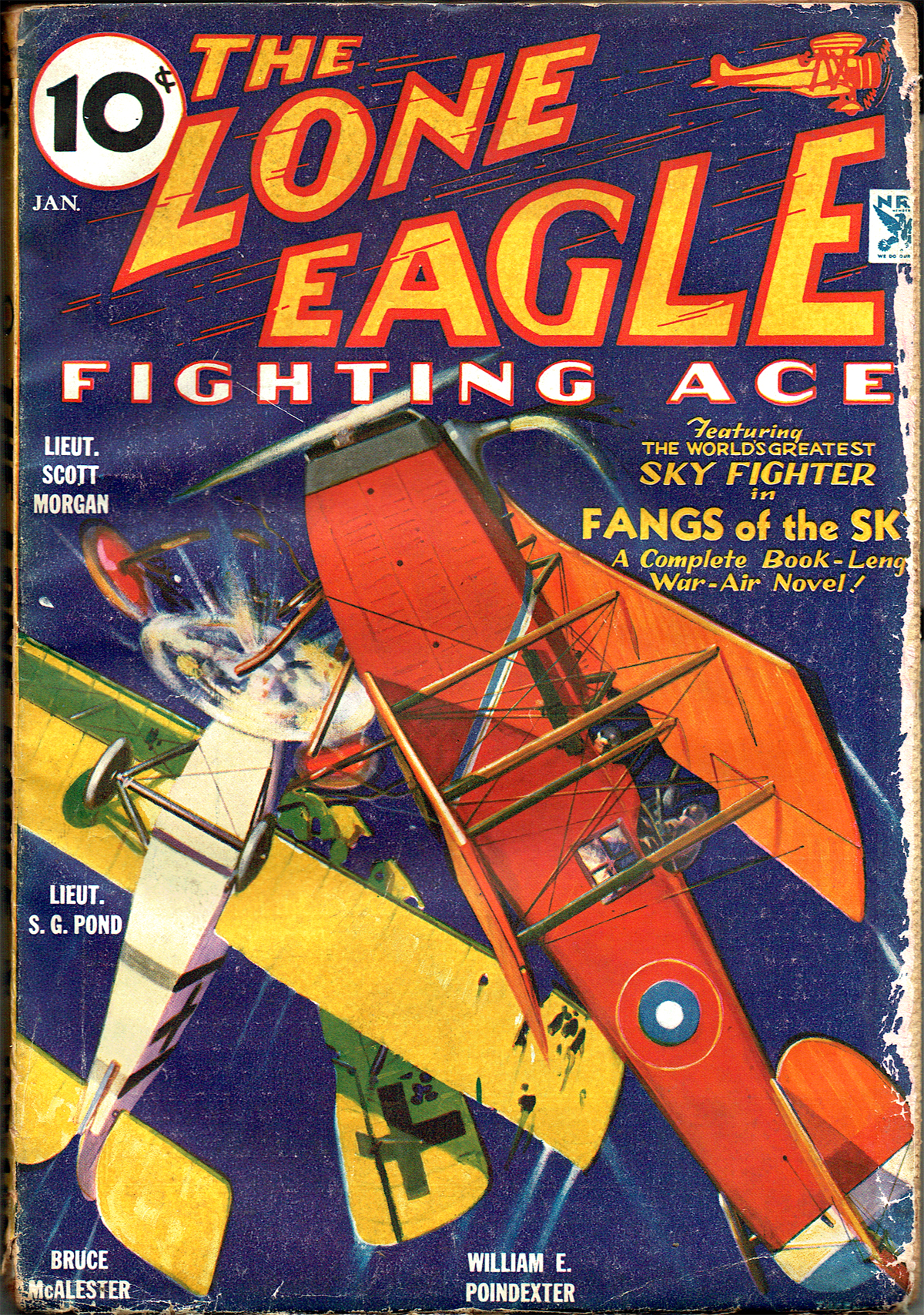
Gene Burke tried to keep a low profile, lest he be discovered and imprissoned for a murder he did not commit. He must be careful not to arouse suspicion—but there must be no confirmed victories. Rather incur the stigma of lost nerve than risk disaster. Unfortunately, ever since he had come up from Issoudun, intent on remaining but an obscure pilot of the Royal Flying Corps, that Fate had shaped a strange destiny for him. Three swift victories had been his, longed-for but feared because of the inevitable increase of local fame. Then he had gotten a straggler from Richthofen’s Circus, which he dared not hold back from attacking, and finally came the fifth scrap that had made him an ace. It was Fate, a grinning, mocking Fate that gave him these victories, only to lead him closer to a dishonored end . . .

A haunting fear crept into Burke’s eyes as he saw his thirteenth Boche go twisting down in flames. For it was a mocking Fate that gave him these victories—victories that he dared not claim!

And be sure to check out Keyhoe’s Mad Marines—The Devildog Squadron—in five new Weird World War Adventures in The Devildog Squadron: The Mystery Meteor!

“Patrol of the Dead” by Franklin H. Martin

Link - Posted by David on August 1, 2025 @ 6:00 am in

TODAY we have a story by Franklin H. Martin. Not much is known about Martin aside from the fact he worked as a reporter on Newark newspapers. He had almost a hundred stories published in the pulps with roughly three quarters being detective or weird menace stories and the remaining quarter being air stories in the pages of Sky Birds, War Birds and Wings.

Ronald Sexton and his brother, Kenneth, came to the squadron together while we were up near Bar-le-Duc, during the St. Mihiel drive. They had gone to school together, enlisted together, trained side by side and gotten their little gold shoulder bars and wings together. Ronny was a year older, darker, huskier and livelier. Ken was quiet and inclined to be studious. It’s a mystery where Ken got time to do all his reading, because Ronny liked parties, and whenever Ronny went on a binge, Ken went along. They flew together, too. And even when Ronny was shot down and killed, he continued to look after his brother. Kenneth seemed to develop a kind of prescience that the squadron leader found hard to believe and led H.Q. to believe he was a German spy.

Many strange and weird stories have been told about the war. At some of them men have shrugged their shoulders, and lifted a doubting eyebrow. Others, men have believed—because they must. Here is one of the strangest of them all—the story of a squadron, and the blood-chilling Thing that almost drove them mad. It all began one afternoon bach in 1918, when Ronny Sexton crashed at Hill 420, near Exermont, France, and his smoking-hot motor dug him a six-foot grave. A powerful and unusual novel of war skies.

If you enjoyed this taste of Franklin H. Martin’s writing, you’ll be happy to hear that we’ve collected the five stories Martin had in Aces in the Fall of 1932. We’re calling it Franklin H. Martin’s Aces—the volume includes the Black Hawk of Prussia duology and three other stories!

Humpy & Tex in “Liberty—or Death” by Allan R. Bosworth

Link - Posted by David on July 25, 2025 @ 6:00 am in

THIS week we have a story from the pen of the Navy’s own Allan R. Bosworth. Bosworth wrote a couple dozen stories with Humpy & Tex over the course of ten years from 1930 through 1939, mostly in the pages of War Aces and War Birds. The stories are centered around the naval air base at Ile Tudy, France. “Humpy” Campbell, a short thickset boatswain’s mate, first class who was prone to be spitting great sopping globs of tabacco juice, was a veteran seaplane pilot who would soon rate two hashmarks—his observer, Tex Malone, boatswain’s mate, second class, was a D.O.W. man fresh from the Texas Panhandle. Everybody marveled at the fact that the latter had made one of the navy’s most difficult ratings almost overnight—but the answer lay in his ability with the omnipresent rope he constantly carried.

Humpy and Tex were out on liberty, When they couldn’t get that they preferred death, but the reaper has a funny way of choosing its victims.

“The Bobtail Ace” by Franklin H. Martin

Link - Posted by David on July 18, 2025 @ 6:00 am in

TODAY we have a story by Franklin H. Martin. Not much is known about Martin aside from the fact he worked as a reporter on Newark newspapers. He had almost a hundred stories published in the pulps with roughly three quarters being detective or weird menace stories and the remaining quarter being air stories in the pages of Sky Birds, War Birds and Wings. In fact, his very first published pulp story was a brief aviation tale in Wings. It was the “Hanger Yarn” for the month. The Hanger Yarn was a round-table of airmen, where airmen would gather after hours to smoke and tell yarns and make you feel like you’re right at home in the hanger with them!

For the August 1931 issue, Martin spins a yarn about Lieutenant Howdy Dean, a pursuit pilot for the hundred and first who was looking to get himself half a boche—poor Howdy had four and a half victories to his credit and needed that extra half to make him an Ace.

If you enjoyed this brief taste of Franklin H. Martin’s writing, you’ll be happy to hear that we’ll be coming out with Franklin H. Martin’s Aces—a volume that collects Martin’s five stories that appeared in the pages of Aces in the fall of 1932, including the Black Hawk of Prussia duology. More information coming to this site soon!

“Cloud-Killer ” by O.B. Myers

Link - Posted by David on July 11, 2025 @ 6:00 am in

THIS week we have another early story by the prolific O.B. Myers! Myers was a pilot himself, flying with the 147th Aero Squadron and carrying two credited victories and awarded the Distinguished Service Cross.

Bert had been in France for almost two years, including two months over the front with the Lafayette, but had no Huns to his credit. He didn’t want to be known as a cloud-killer, but what can you do when the situation doesn’t present itself….. From the pages of the October 1929 issue of Wings it’s O.B. Myer’s “Cloud-Killer!”

They called him a joy-rider, a cloud-killer—and a war going on! Tremaine waited to answer the slight—and a day came when his guns didn’t jam and his motor carried him through to a winged target.

As a bonus, Obie was featured in Sergeant L.E. Jaeckel’s “American Aviators in the World War” column in The Charlotte Observer (The foremost newspaper of the two Carolinas) Friday July 22nd, 1932 (Page 17). It’s retelling of the events that led to Obie being awarded the Distinguished Service Cross.

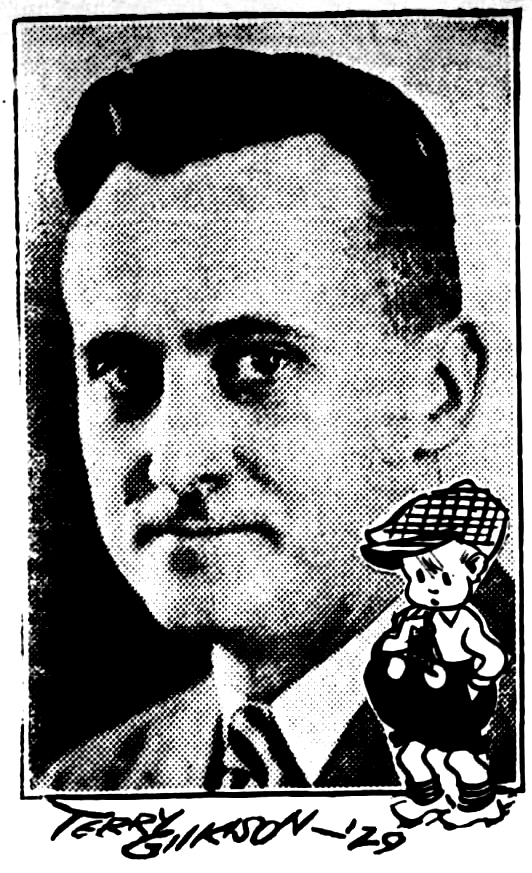
FIRST LIEUTENANT OSCAR B. MYERS.

THERE comes the time in the career of every aviator when he wants to do something that is just a little beyond the assigned mission. Patrolling in itself should provide enough excitement for any one person. The flyer never knows when he will be called upon to give account of himself, whether on an equal footing with his enemy, or whether to engage in combat with formations many times his equal. Considering all the hazards of war time flying, irrespective of the mission, it would seem that the aviator would be satisfied with the common dangers of his profession without seeking the new.

Ground straffing is an art. Successfully performed, it has been shown what a demoralizing effect it can have upon an enemy, yet it is in all likelihood one of the most dangerous of the aerial missions. Men were trained for it specially. Now and then we find one of our flyers making what might be called a noble experiment of this business on his own. Lieutenant Oscar B. Myers of the 147th Aero Squadron was a fellow who obviously preferred to secure his taste of it by the experimental method.

Near Clerges on September 28th the routine of patrol duty evidently became monotonous for him. Several hundred meters below him there were German troops that could provide him with the action and excitement he craved. Accordingly he swooped down upon them and opened fire with his machine guns. If there has ever been any doubt about the combat qualities of ground straffing, here was irrefutable evidence of its merits. The troops, on their way to the front lines, turned and ran in all directions, throwing panic into the reserves behind them who also sought, such cover as was available.

With the retreat of the troops and the incessant fire from antiaircraft artillery showering him with fusilades becoming uncomfortably close, Lieutenant Myers gained altitude to hunt more action. The little fray in which he had just participated merely whetted his appetite for more. It was not long in coming. Some distance to the northward there appeared a formation of 10 planes, one of which he immediately recognized as an observation plane. Now if there was anything Lieutenant Myers especially wanted to bag it was an observation plane, but how to get to it. It was surrounded by nine Fokkers, all determined to protect their charge at, any cost. As if in answer to his dilemma, two American planes appeared at the moment, and Lieutenant Myers drafted them to assist him. The three machines then launched a vigorous attack upon the enemy formation, Myers not forgetting his chief object.

Throughout the hot combat he did little but fight in an effort to drive away the protection planes. He maneuvered so skillfully that it was not long until he had separated three of the machines from the formation and driven them off. His companions, meanwhile, were having it tooth and nail with the other half dozen contenders. Lieutenant Myers jumped in again noticing that the other planes always closed in on their charge as their ranks were thinned. Finally, with a last great effort, the American trio opened up the enemy flight and Lieutenant Myers grasped his opportunity. He banked above the sextette and dived straight at the observation machine. For a few brief minutes it careened madly, then hurst into flames and fell.

And if that wasn’t enough…

For all his many published stories, O.B. Myer’s didn’t really have any series characters. The few recurring characters he did have in the pages of Dare-Devil Aces, we’ve collected into a book we like to call “The Black Sheep of Belogue: The Best of O.B. Myers” which collects the two Dynamite Pike and his band of outlaw Aces stories and the handful of Clipper Stark vs the Mongol Ace tales. If you enjoyed this story, you’ll love these stories!

“Spy a’la Mode” by Joe Archibald

Link - Posted by David on June 27, 2025 @ 6:00 am in

“HAW-W-W-W-W!” That sound can only mean one thing—that Bachelor of Artifice, Knight of Calamity and an alumnus of Doctor Merlin’s Camelot College for Conjurors is back to vex not only the Germans, but the Americans—the Ninth Pursuit Squadron in particular—as well. Yes it’s the marvel from Boonetown, Iowa himself—Lieutenant Phineas Pinkham!

Phineas Pinkham is already grounded and in the doghouse when he almost kills a colonel. Old Man Garrity’s had his fill, so when von Bessinger sends a challenge to the Ninth Pursuit’s thorn in their side, Garrity lets Phineas goto challenge the Von under on condition—he doesn’t come back! It’s Joe Archibald’s “Spy a’la Mode” from the August 1932Flying Aces.

For the first time in his life Phineas “Carbuncle” Pinkham wondered if a sense of humor wasn’t a handicap to a man who aspired to grow a long white beard and play with his grandchildren. It had taken a lot to make him feel that way—just a little matter of assaulting a Colonel!

“Crossed Controls” by William E. Barrett

Link - Posted by David on June 13, 2025 @ 6:00 am in

TODAY we have a story by the inimitable William E. Barrett! Before he became renown for such classics as The Left Hand of God and Lilies of The Field, Barrett honed his craft across the pages of the pulp magazines—especially in the air war titles like War Birds, War Aces, Air Stories, Air Trails, Wings, Sky Riders, War Novels, Sky Fighters, Flying Aces and, of course, Sky Birds—in whose pages this story appeared

He would fight as never before, and death to the Allied plane that crossed his guns! Yet the sight of those British cockades made a bell ring in his clouded mind, and his hands fumbled on the trips. He could not shoot!

From the October 1930 Sky Birds, it’s William E. Barrett’s “Crossed Controls!”

If you enjoyed this story, check out William E. Barrett’s other features and stories on this site or pick up a copy of his Iron Ace stories which collects all nine of his tales of Hugh McQuillen, The Iron Ace, also from the pages of Sky Birds.

Nick Royce is “Half-Way to Heaven” by Frederick C. Davis

Link - Posted by David on June 6, 2025 @ 6:00 am in

THIS week we have a short story by renowned pulp author Frederick C. Davis. Davis is probably best remembered for his work on Operator 5 where he penned the first 20 stories, as well as the Moon Man series for Ten Detective Aces and several other continuing series for various Popular Publications. He also wrote a number of aviation stories that appeared in Aces, Wings and Air Stories.

This week’s story features that crack pilot for World News Reel, the greatest gelatine newspaper that ever flashed on a silver screen—Nick Royce! Davis wrote twenty stories with Nick for Wings magazine from 1928-1931.

World News Reels and Compass are once again racing against time and each other to get footage of a dam bursting. World News Reels’ Nick Royce has a fire under him—if they get the pictures back first, there’s a raise in it for everyone—one that would allow Nick to marry his sweetheart, but Compass is up to their usual underhanded tricks! From the May 1928 Wings, it’s Frederick C. Davis’ “Half-Way to Heaven!”

“The shots are there. Get ‘em!”—That was all he said—but it sent Nick Royce, kid flyer of the news-reel, lumbering into the mile-high clouds to face the rage of the elements and the treachery of a rival.

“Herr Tonic” by Joe Archibald

Link - Posted by David on May 30, 2025 @ 6:00 am in

“HAW-W-W-W-W!” That sound can only mean one thing—that Bachelor of Artifice, Knight of Calamity and an alumnus of Doctor Merlin’s Camelot College for Conjurors is back to vex not only the Germans, but the Americans—the Ninth Pursuit Squadron in particular—as well. Yes it’s the marvel from Boonetown, Iowa himself—Lieutenant Phineas Pinkham!

Phineas Pinkham thinks he has a sure fire way of keeping von Bessinger and his circus from downing the squadron of D.H.4s The 9th is escorting, but what he doesn’t realize his that he is actually playing with fire, and the hair he parts may be on his own head!

Phineas Pinkham had promised von Bissinger a new kind of haircut—one that could part his head in the middle as well as his hair. Dangerous stuff—the hair tonic that Phineas used!

Major T.A.B. Ditton

Link - Posted by David on May 16, 2025 @ 6:00 am in

INTRODUCING war ace and flying author Thomas Alfred Belcher Ditton or Major T.A.B. Ditton as he credited himself on the stories he had published. His pulp career was brief. Ditton only had 17 stories published from 1929 through 1936 in magazines like Sky Birds, Flying Aces, War Aces, Bill Barnes Air Adventures, Thrilling Adventures and Top Notch. Sky Birds did cover Ditton in one of their half a dozen “Flying Into View” features which profiled a different famous birdman or well known character in the world of flying each month. We’ll start with that; then list his pulp bibliography; and follow it up with three of his stories.

Flying Into View
introducing MAJOR T.A.B. DITTON, R.A.F.

“. . . HE WENT DOWN end over end and crashed behind the German lines, leaving the three other Albatrosses to finish me off, now that I’d used up my last few bullets on him,” continued “Tabs” Ditton, as he ordered more coffee.

“There was nothing that I could do,” he went on, “but do my best to out-stunt ’em and get back to my drome with a whole crate. I sure did stunt that Dolphin, but just a bit too much. With the snarling hun ships swarming all over me I kicked the rudder over and threw her into a vertical bank with the power full on. There was a sudden lurch, a snapping, splintering cra-a-a-a-a-ack, and the two left wings just folded up and over the center section! The bus went into a sickening spin at once, and after a few turns the broken wings came off and went turning and twisting down off to one side. I shed ’em at four thousand feet and I sure covered that in short order.

“All the way down I cut the engine in and out and wrestled with the controls, hoping to get what there was left of the bus out of the spin. I’d unhooked my safety belt so that I would have a chance at least of getting clear when she hit, if I was still interested in getting clear.

“Well, we spun down to about two hundred feet and then the bus came out of the spin for a few seconds. Then when we got down to about a hundred she came out again and slid down on one wing. The men on the ground that saw me said I was thrown clear when she hit, and landed about fifty feet off to one side. I went out for a while and came to in a hospital all snarled up in bandages. I was out in about two weeks and back in the air even if my left eye wasn’t so good,” concluded “Tabs.”

Major T.A.B. Ditton, as he is officially known, was with the R.F.C., which later became the R.A.F., from 1916 until the end of the war. He is officially credited with thirteen German planes, about the same number unofficially, and that besides balloons. He also has several decorations for his skill and bravery in the air.

“Tabs,” as he was known to the men of his outfit, learned to fly on Maurice-Farmans, or “short horns.” He says that they had so many guy wires that the only way they could be tested to see if they were rigged right was to put a canary in the pilot’s seat. If the canary could fly out through the snarl of wires and struts the ship wasn’t rigged right. From those he went on Avros, S.E.5s, Sop. Camels and D.H.5s. He also had flights in bombing crates to make his training complete. Camels were his special hobby, even if they were tricky boats to push around upstairs.

One time one of the “higher ups” decided that the pilots at his drome had not had enough stunting to keep them in trim, so he was ordered up for a few wingovers. Before he went up he had another officer move the planes out of one of the permanent hangars and open the doors on both sides.

After a few rolls and loops he dove his little Sop. Pup down in a screaming dive straight through the hangar and out the other side. He said he landed with his chest all puffed out and was at once put under arrest for reckless flying. The officer who had requested the stunting practice, however, managed to get him off. But needless to say that sort of stunts was barred in the future.

AFTER LUNCH was over “Tabs” and I caught a train for his home in Greenwich Village, where he turns out the stories you men are clamoring for. Here, with his feet parked on a footstool made from the prop of that same Dolphin whose wings he shed, he showed me snapshots of overseas days and told me some of his narrow escapes. This one he says was a joke on himself.

He was setting a Camel down when her wheels caught on a stump. The tail rose up in a high arc and came down with a terrific crun-n-n-n-nch where the plane’s nose should be. “Tabs,” hanging head down from his safety belt, took account of all his bones and found that at least he was all there and not hurt. He was trying to unhook his belt, which was held tightly because of his weight pulling on it, when an “Ack-emma” came running up to see if he was killed, or only banged up. After being assured that “Tabs” was O.K., the Ack-emma reached up under the fuselage and unhooked the safety belt for the suspended pilot. Now for the tragic part of the story! Ditton had forgotten by this time to hold onto the sides of the fuselage, so that when the safety belt snap was released he dropped about two feet and landed on his head. Just his tough luck, after cracking up a ship without getting a mark.

Another almost fatal flight was in a Camel that had been rigged up for instruction work. The main gas tank had been removed and another pilot cockpit and set of controls had been put in where the gas tank had been located. So many young pilots were killed soloing in Camels that it had been thought best to rig up dual controls in a few ships to enable the instructors to ride along with students and help ’em.

Well, this particular bus had just been converted, and Ditton was to give her a buzz or two over the field for a tryout. He told the “Ack-emma” to take the safety belt out of the front seat so that it would not get in the way of the stick.

“Tabs” took the bus up a good ways and proceeded to do his stuff with her. A few minutes later he decided to loop her. The loop went O.K. till he tried to level off at the end of the loop. Try as he might he couldn’t get the stick back to neutral to save his neck, so up went the nose into another loop. He cut the motor and of course she stalled. He did his best but the stick refused to go forward an inch. Right and left O.K. But front? Not an inch!

He finally decided to stall and spin and side slip all the way down to the field. When he landed there was quite an audience waiting for an explanation, including several C.O.s. The first thing Ditton did was to look into the front pit, and there, sure enough, was the safety belt looped over the stick. When the plane had gone into the first loop the belt had hung, down, of course, and swung over the end of the stick. When the stick was shoved forward at the end of the loop of course it tightened the belt about the stick in the front pit, and there it was locked for good. That Ack-emma is still running!

Major Ditton is a yery popular author here at the Sky Birds drome. You can read more of his split second air thrills at any time—because he draws all of his yarns from actual personal experience.

Bibliography

title magazine date vol no
1929
The Desert Hawk Sky Birds Sep/Oct 3 1
Aerobatics Aviation Stories Oct 1 3
1930
Death Deviation Flying Aces Jan 4 4
The Flying Idol Sky Birds Jan 3 4
Eagle of the North Flying Aces Feb 5 1
Three Points Ahead Flying Aces Mar 5 2
Air Wolves Flying Aces Apr 5 3
Death Rides High Flying Aces May 5 4
Desert Vultures Sky Birds May 4 4
Boom Buzzards Flying Aces Aug 6 3
1932
Stars in the Sky War Aces Apr 9 25
Artillery Guys Battle Stories Jul 10 57
1935
Annihilation or a Firing Squad Dime Adventure Jun 1 1
Diamonds in the Sky Bill Barnes Sep 4 2
Sable Rider Thrilling Adventures Nov 15 3
Black Saber Thrilling Adventures Dec 16 1
1936
Wings of the Dragon Top-Notch Jan 98 1

 
Here are a trio of his stories that ran in the 1930 in the pages of Flying Aces and Sky Birds.

Death Derivation

Murder in the skies. The slain pilot lay slumped in his cockpit—the blue mark of a pistol shot on his forehead. A mysterious killing in the air that will keep you guessing.

The Flying Idol

Yank flying courage clashes with the treacherous cunning of a swarm of godless yellow devils. A tale of thrills and daring adventure in heathen skies!

Death Rides High

Powell was fighting mad. It wasn’t the crashed altimeter that got him—it was the startling discovery he made after that.

“Pilots Wanted—for Flying Coffins” by Anthony Field

Link - Posted by David on May 2, 2025 @ 6:00 am in

THIS week we have a story from the short-lived Sky Devils magazine by Anthony Field. Anthony Field was a pseudonym used by Anatole Feldman who specialized in gangland fiction—appearing primarily in Harold Hersey’s gang pulps, Gangster Stories, Racketeer Stories, and Gangland Stories. His best-known creation is Chicago gangster Big Nose Serrano. But he also wrote a number of aviation stories including four stories for Sky Devils featuring Quinn’s Black Sheep Squadron—this is the third of those four stories!

Quinn’s Black Sheep is another of those squadrons populated with other squadron’s troublemakers like Rossoff’s Hell-Cats or Keyhoe’s Jailbird Flight or any number of other examples. It seemed every author had a series with a black sheep squadron.

Captain Jack Quinn, brought in for disciplinary action, manages to convince the General that he could solve a lot of his headaches by hand-picking the problem aces out of other squadrons and forming an essentially independent squadron to take on the Boche. Thus, Quinn’s flight was a crew of hard bitten aces who had been tempered—to a man—in the cauldron of war, having unflinchingly facing Death many times before.

Spies are back at work on the Black Sheep ‘Drome and everyone’s at risk! The Black Sheep pilots seem to have lost their way—wings fly off their planes, pilots take their own lives—one by one, veteran pilots are going West leaving Quinn to try to get to the bottom of things and bust the spy ring wide open before the entire squadron is brought down!

Hate, treachery and those murderous pills were blasting disaster from within the hell-winging Black Sheep, while the Boche blasted from without—and Captain Quinn didn’t like his role as fly . . . to be strangled in this black web of poisonous intrigue!

“No Money, No Flyee!” by Joe Archibald

Link - Posted by David on April 25, 2025 @ 6:00 am in

“HAW-W-W-W-W!” That sound can only mean one thing—that Bachelor of Artifice, Knight of Calamity and an alumnus of Doctor Merlin’s Camelot College for Conjurors is back to vex not only the Germans, but the Americans—the Ninth Pursuit Squadron in particular—as well. Yes it’s the marvel from Boonetown, Iowa himself—Lieutenant Phineas Pinkham!

Phineas Pinkham and his hut mate Bump Gillis are sent over to take out a German supply dump in Joe Archibald’s “No Money, No Flyee!” from the June 1932 Flying Aces.

Experience had taught Major Rufus Garity’s boys not to believe a word Phineas “Carbuncle” Pinkham said. And that was why, when he came back with the news that a squadron of Pfalz ships had moved into their sector, they thought it was a Pfalz alarm!

“Above the Fog” by Erle Stanley Gardner

Link - Posted by David on April 11, 2025 @ 6:00 am in

THIS week we have a story by the one and only Erle Stanley Gardner! Yes, the Erle Stanley Gardner. Gardner, of course, best known for his Perry Mason stories, wrote numerous other novels and shorter pieces both under his own name and a slew of pseudonyms for both books and magazines. He was also wrote numerous nonfiction books that were mostly narrations of his travels through Baja California and other regions in Mexico. According to wikipedia, Gardner was “the best-selling American author of the 20th century at the time of his death.”

When a beautiful woman drops out of the swirling mists of fog looking for directions at the Oakland airport, she accidentally leaves behind a purse whose contents may or may not be linked to at least one murder and who knows what else—and it sends Dave Flint on a mission to find the girl and return the bag—even if it means his life! From the pages of the February 1930 issue of Flyers, it’s Erle Stanley Gardner’s “Above the Fog!”

There may be no adventure left on the ground these days, but above the fog. . . .


AS A bonus, here’s a brief article about Erle Stanley Gardner that appeared in the pages of the newspaper magazine This Week, the week prior to the supplement serializing his latest novel Fugitive Gold!

An Adventure Every Day
That’s the life of Erle Stanley Garner, whose new serial,
“Fugitive Gold,” begins next week

A STRANGE apparition of squat, chain-like things slowly crawls across a cacti-dotted section of our Southwestern desert and finally takes shape—a string of automobiles and trailers.

A depression riddled clan seeking new life and some small fortune in a change of scene? A new health-movement idea? Or perhaps a gold-seeking expedition hunting a lost mine? No, none of these—though the last is warm. It is merely the home and office of one of America’s most popular authors, whose latest serial, “Fugitive Gold.” begins next week in these pages.


The fiction train on location.

At a glance, it is evident that Erle Stanley Gardner is not the drawing-room, cocktail-drinking type, but a virile, nature-loving man who lives the same sort of vigorous and adventurous life as the heroes of his stories. He is medium height and stocky and wears a wide sombrero and the look of one who has spent much time in the outdoors.

Mr. Gardner’s early life was spent on the Pacific coast. He was admitted to the California Bar when he was twenty-one and found his first clients among those who made their livings from underworld activities. With prohibition, organised crime increased and so did his work and its accompanying dangers.

Once Mr. Gardner, lest he should talk too much, was kidnapped by gangsters and held prisoner in a hideout house, the gangsters expecting a pitched battle with the police. The events of those hours remained indelibly seared upon his memory.

The skill which Mr. Gardner exhibited in the trial of jury cases, however, gradually led to his dropping of criminal cases, and he became widely known as a trial attorney specializing in cases tried before juries. Some ten years ago he wrote his first magazine stories and in 1933 his first book, “The Case of the Velvet Claws.” He has given up the law, of course, and today devotes all his time to writing.


Lunch time on the road.

Erle Gardner has traveled all over the world, but he loves and belongs to the Southwest of which be writes so colorfully and fascinatingly—and so convincingly. Convincingly, because he relies only partly upon imagination for plots, preferring to supplement his stories from first-hand contact. It is not surprising, therefore, that he has found himself in more positions of personal danger than the average man would in two lifetimes.

Upon one occasion, seeking a lost gold mine (much the same as the lost mine that plays so important a part in “Fugitive Gold”) he was challenged by two horsemen, one of whom “cut down” on him with a six-shooter. Gardner finally outdistanced them in his car, felt chagrined when safe, and returned, rifle in hand, “to see what it was all about.” The horsemen stared at him, both fingering their guns; he stared at them. At last a wordless truce was declared and they went their own ways. Such a type of man is Erle Stanley Gardner, the author.

An author? But how does he live in this house on wheels? How does he get any work done? The interviewer stands a little abashed as Mr. Gardner gently explains: “There are three trailers, all self-contained living units. There are double beds; closets; water tanks; stoves; windows; awnings; screens; ice-boxes and radios.

“As to getting work done, I use dictating machines for first drafts of stories and I can dictate fast enough to keep all three of my secretaries busy transcribing. These secretaries, incidentally, have been with me since I began writing eleven years ago and travel everywhere with Mrs. Gardner and me. Two years ago we went to China and left the secretaries behind, but I won’t do that again. There were lots of times I was punching the portable when there were priceless experiences to be had.”


Mr. Gardner is at home in the Southwest.

This, then, is how the man lives whose latest and best novel begins next week in these pages. A novel of the modern bad men of the Southwest. The story of a lost gold mine. A story of adventure, of crime and love. A story packed with thrills and fast-moving action, with breathless suspense and a romance as tender and as strong as the rugged land in which it takes place. Watch for “Fugitive Gold” by Erie Stanley Gardner—in our next issue.

Oppenheim’s Detectives: Daniel Craig, The Bystander

Link - Posted by David on March 31, 2025 @ 6:00 am in

AN OVERWHELMING majority of Oppenheim’s pulp output were aviation stories, many featuring our intrepid trio, The Three Mosquitoes. In 1933, when the Mosquitoes were winding down their adventures in Popular Publications aviation magazines, Oppenheim tried his hand at a new genre that was very popular at the time—detective fiction. Over the next fourteen years oppenheim would produce eighteen detective stories for the some of the leading magazines in the field—Dime Detective and Dime Mystery Magazines, Popular Detective, Thrilling Detective, Thrilling Mystery, Black Book Detective, Detective Fiction Weekly, Strange Detective Mysteries and Phantom Detective—as well as even ghost writing a Phantom Detective story (”Murder Calls the Phantom” March 1941).

Finally we have Daniel Craig, known as the Bystander. . .

    He could see himself, young Daniel Craig, then a humble clerk, walking proudly to the marriage-license bureau with the lovely girl who had consented to be his bride. They had been strolling past a bank when the hold-up gang had barged out with their loot, guns blazing a thoughtless swathe. Craig and his fiancee had been what the newspapers called “innocent bystanders.” Craig had only been wounded, but the slug that hit the girl had ripped the life from her; she had died in Craig’s arms.

    Daniel Craig had left all vestige of humble, happy youth in the hospital; he’d come out like tempered steel. In a month he’d hunted down that bank-gang, and killed the man whose thoughtless slugs had slain his fiancee. After that, giving up clerking, Craig had opened this office—into which he now strode—as a private detective. But rarely did a case come whose storm-signals he had not seen beforehand; for as the Bystander, no longer an innocent one, he roamed the streets looking for crime.

Oppenheim’s Bystander appeared in three issues of Dime Mystery Magazine often confronted with weird menaces.

Beauty Treatments for Corpses
July 1940

In his first appearance, the Bystander’s eye is caught by a girl reminiscent of one from his past that leads him to a rotting corpse that had been very much alive moments before. The girl’s own sister tries to hire Craig to investigate why her own body seems to be rotting away until her husband phones and tells her not to. That’s like waving a bone in front of a dog and Craig can’t help but investigate this bizarre series of deaths! From the July 1940 issue of Dime Mystery Magazine it’s Ralph Oppenheim’s Bystander in “Beauty Treatments for Corpses!”

(P.S.—This story contains what must be one of the longest scene of a villain boasting about the details of his fiendish plan ever. I get the feeling Oppenheim had more story than he had room to tell it in and had to resort to the exposition to flesh out the story so to speak. No pun intended.)

On four slabs in the morgue lay the girls who had fallen victim to the mad master of rotting flesh. But to Daniel Craig they marked only the beginning of a murder plague which was to bring him within the very jaws of hell!

The Bystander—self-sworn enemy of crime since the day his bride became the innocent victim of gunmen’s lead—appeared in two more bizarre tales of weird crime resulting in hideous corpses in the pages of Dime Mystery Magazine:

Thieves Without Faces
September 1940

When the Bystander started out to clear lovely Anne Ferris of a shop-lifting charge, he could not guess what was waiting for him. In all his long years of fighting crime, the Bystander had never seen anything like those vastly, distorted corpses—or that he was putting himself into the power of a monstrous murder syndicate whose victims died with the flesh decaying on their bodies! The Bystander found himself trapped and helpless—while they prepared for their last, most fiendish act of all!

Death Stalks in Purple
February 1941

At first the Bystander refused to help the police find the maker of those hideous, purple corpses. But then people began taking pot shots at him from dark corners, and he realized that Ahmed Bey and company had no real interest in his further health. And the Bystander was never the man to turn down a dare—especially from Death! For the death-loaded touch of an invisible finger was turning lovely young girls into rigid corpses—hideously purple!

Oppenheim’s Detectives: Jonathan Drake, Ace Manhunter!

Link - Posted by David on March 24, 2025 @ 6:00 am in

AN OVERWHELMING majority of Oppenheim’s pulp output were aviation stories, many featuring our intrepid trio, The Three Mosquitoes. In 1933, when the Mosquitoes were winding down their adventures in Popular Publications aviation magazines, Oppenheim tried his hand at a new genre that was very popular at the time—detective fiction. Over the next fourteen years oppenheim would produce eighteen detective stories for the some of the leading magazines in the field—Dime Detective and Dime Mystery Magazines, Popular Detective, Thrilling Detective, Thrilling Mystery, Black Book Detective, Detective Fiction Weekly, Strange Detective Mysteries and Phantom Detective—as well as even ghost writing a Phantom Detective story (”Murder Calls the Phantom” March 1941).

We’ve covered Dime Detective Magazine’s “Honest” Glen Kelsey and Thrilling Detective’s Dave Rogers, State Trooper…

This brings us to Jonathan Drake, Ace Manhunter, from the pages of Black Book Detective! Drake appeared in three consecutive issues of the Black Book, but the three stories were written by three different authors. Oppenheim wrote the first of the three stories which introduced the character. Drake was a world-renown criminologist frequently called in to work with the police on their toughest, most baffling cases! The details of these cases were recorded in huge black loose-leaf volumes—his Black Book of Crime!

Drake had been educated in both this country and abroad and possessed a working knowledge of many branches of science, medicine and the arts. He had been thoroughly trained in all types of physical combat and possessed an extensive knowledge of firearms—and an expert marksman with every type of lethal weapon,

Drake lived in what had once been a millionaire’s mansion on upper Fifth Avenue—and transformed into a complete miniature investigation bureau! There was an immense library whose walls were lined with bookshelves that extended from floor to ceiling with practically every bit of literature that had been devoted to the study of criminology. A teletype machine connected directly with police headquarters sat on one desk constantly ticking out all of the vital and routing information that was sent out by the teletype operators at Centre Street.

In another room on the lower floor of the house was a complete file of descriptions, fingerprints and photographs of most known criminals. While in a third room was a morgue of newspaper clippings dealing with all of the important crimes that had been committed during the past twenty years. The entire fourth floor of the house had been transformed into a complete laboratory where Jonathan Drake used all of the most modern methods in tracking down various clues!

Drake was the type of man who liked to surrounded himself with a staff of capable assistants. Men both old and young who had been trained to work under his direction, and who were always on call when he felt their services were needed, but it was upon young Tommy Lowell that Drake depended the most. Though just twenty-one, Tommy had been with the detective ever since Drake had started his career. At that time he had been an orphan newsboy of eleven who had become a friend of Drake.

The criminologist had legally adopted the boy, given him a good education, and Tommy Lowell had developed into an excellent assistant. Red-headed, freckled-faced, he was bright and quick-witted and learned swiftly. Now the two of them lived in the big house on upper Fifth Avenue with two servants who took care of the place. Here they devoted their time to a never ceasing war against crime!

The Death Chair Murders

OPPENHEIM jumps right in and gets the plot going with a grisley electrocution before introducing our hero (a page long descriptive that is repeated word for word in the second story by Donald Stuart (aka Gerald Verner)). When a second victim is found by a manhole still hooked to the city’s electrical grid and burning, Drake tries to find a connection between the two. This leads to four other men—all six had worked a number of years ago for the Triconi mob and now a shadowy Executioner seem to be exacting revenge for the mob—at least that’s how things appear. Will Drake be able to discern the motive behind the murders, unmask The Executioner, and save the lives of the other four men? Find out in Ralph Oppenheim’s “The Death Chair Murders” from the pages of the November 1938 Black Book Detective!

Cold Hands of Horror Reach Out for the Innocent Victims of a Specialist in Slaughter—and Jonathan Drake, New York’s Ace Manhunter, Speeds into Action! A Gripping Complete Book-length Novel of a Grim Executioner’s Vengeance Voltage!


More from The Black Book of Crime

THE Black Book of Crime records the sensational, successful cases of Jonathan Drake—New York’s ace manhunter—who brings the latest scientific discoveries, plus his physical strength and consummate skill, to bear upon the lurking crimes that fester beneath the surface of the vast metropolis.

When Jonathan Drake arrived at Backwaters he was not looking forward to his visit with any degree of anticipation. He had no prevision of the tragic events that would take place—but he disliked the average week end house party. This, however, did not turn out to be an average week end house party. From the moment he entered the estate of Montague Hammond, theatrical producer, he was gripped with a strange sense of foreboding. There was death in the warm summer air, bitter hate in the glance of the week end guests when they looked at each other. Then—murder!

Venita Shayne, most beautiful of actresses, one of Hammond’s guests, was the first victim. She was found in the study—in a swivel chair by a writing table, one arm hanging limply at her side, the other, bare to the elbow, flung out across a blotting-pad. On the edge of the desk rested the platinum head, twisted half-sideways. When Drake examined the corpse, he was horrified. The eyes were wide and staring and suffused with blood; the fair skin blotched and mottled and of a horrible liver color. One glance was sufficient to tell him the truth—Venita Shayne—beautiful no longer—was dead!

Venita may have been the first to die—but she was by no means the last during that week end of horror! And it took all the wit and daring of Jonathan Drake to combat the diabolical killer that hovered over Hammond’s estate on invisible wings of menace!

Every page of THE WEEK END MURDERS is crowded with suspense, action and thrills. It’s one of the most baffling of all the cases chronicled in the Black Book of Crime!

WHEN Jonathan Drake arrived aboard the Griffholm in New York Harbor, he was expecting nothing more than a routine job of investigation into the business of a Winter Olympic Star Sports Group. He had no idea that before he reached the upper deck he would be faced with the fiendish murder of the piquant and attractive Scandinavian skating star, Svana Hanson.

She was found just inside the deck window of her cabin, with a knife buried deep in her heart. Evidence showed that the knife had been thrown from a sports deck on which scores of people were congregated. Some of them still engaged in a last game before docking, others lining the rails for a first glimpse of New York. The trail of bloody death moved along through the streets of New York, stalked the covered runways of Madison Square Garden, and then made a final rendezvous at Lake Placid’s winter sports center!

Every page of THE WINTER KING KILLINGS is crowded with glamorous action and spine-chilling thrills. It’s one of the most baffling of all cases chronicled in Jonathan Drake’s Black Book of Crime. You’ll grip the sides of your chair as you follow a sensational series of events to their breath-taking conclusion in THE WINTER KING KILLINGS!

Hero Wanted—Apply Within

BLACK BOOK MAGAZINE first hit the newsstands with the June 1933 issue. For the next six years, it tried different approaches to success. Issue one began with a featured novel and several backup short stories. The following year it started promoting “three new complete novels” in each magazine, but abandoned that approach after four issues. It then tried shorter novelets, combined with short stories. By April 1935, the magazine went on an extended hiatus to return in January 1936 with a “weird menace” approach with scantily-clad women in peril or skulls and severed heads on the covers before going on a break again.

The magazine returned in March 1938 and returned to form with hard crime. It now had one main novel length story and several support stories. In an effort to get readers to return month after every other month, Black Book decided to feature a continuing character in the main novel. First up—A.J. Raffels, the gentleman thief, a character created by E.W. Hornung. the brother-in-law of Arthur Conan Doyle. The Raffels stories, written by Philip Atkey under the pseudonym Berry Perowne, had been running in Thrilling Detective for the past two years in America and in the pages of The Thriller in England the previous few years before that. Sadly, Raffels only lasted two issues in the pages of Black Book Magazine. (Fear not, he would go on to run occasionally in Ellery Queen’s Mystery Magazine until 1983!)

It’s go big or go home, so next Black Book went with a super sleuth character—Jonathan Drake, Ace Manhunter! Ned Pines had three writers—Ralph Oppenheim, Donald Stuart (aka Gerald Verner), and Charles S. Strong—each write a novel using the character. They’d run them three consecutive issues and judge the results as they always did by reader reaction.

When you have read it, please drop us a line and tell us what you think of it. The readers of this magazine are, you know, its real editors—for your comments, suggestions and opinions, as expressed in your letters, fix our policies. So remember—the more letters, the better the magazine—and let’s have your views on Jonathan Drake and THE DEATH CHAIR MURDERS. Thanks!

I guess readers hadn’t quite embraced the Ace Manhunter as the editors had hoped and in the “Off The Record” column in the March 1939 issue, the editors were already promoting Rick LeRoy, famous globe-trotting detective by Barry Perowne for the next issue. Perowne’s LeRoy had previously appeared in the pages of The Thriller.

He lasted one issue, and it was in the issue after that, July 1939, that fate met destiny and Norman A. Daniels, writing as G. Wayman Jones, introduced readers to The Black Bat who captured the reader’s imaginations and would go on to appear in every subsequent issue until the end in 1953!

Next week: It’s Dime Mystery Magazines’ Daniel Craig, the bystander!

« Previous PageNext Page »