



Heroes of the Air: Major E. Mannock
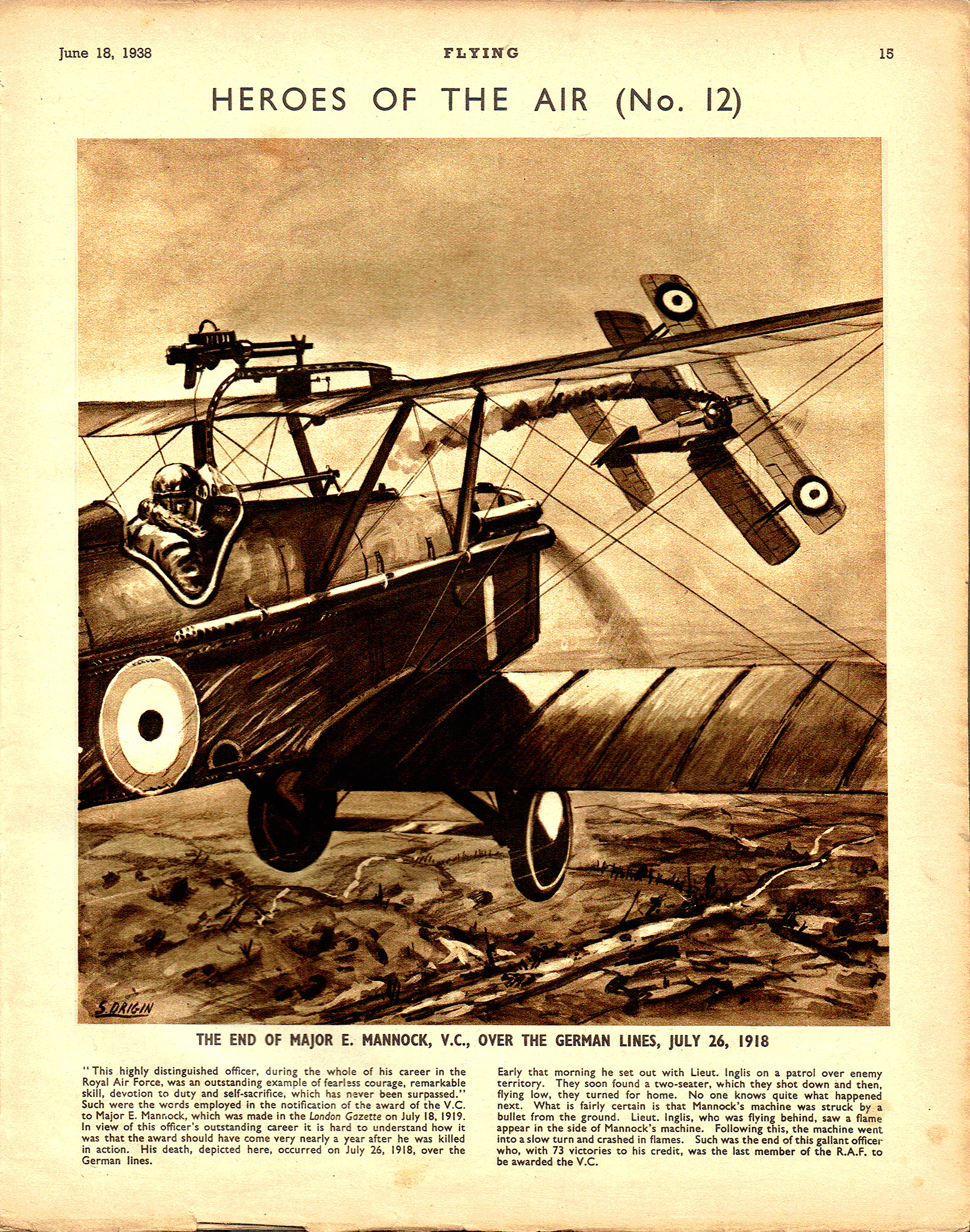
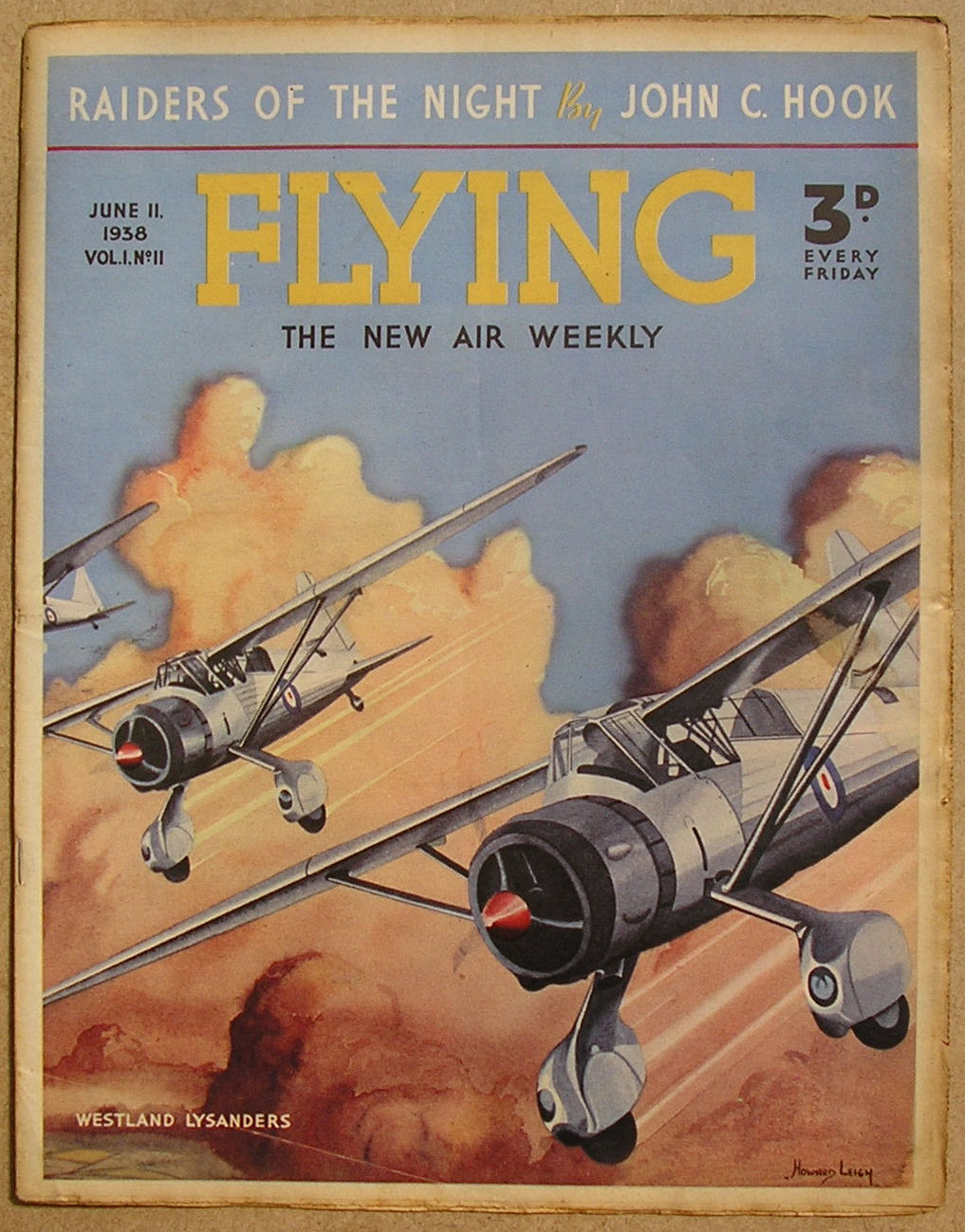
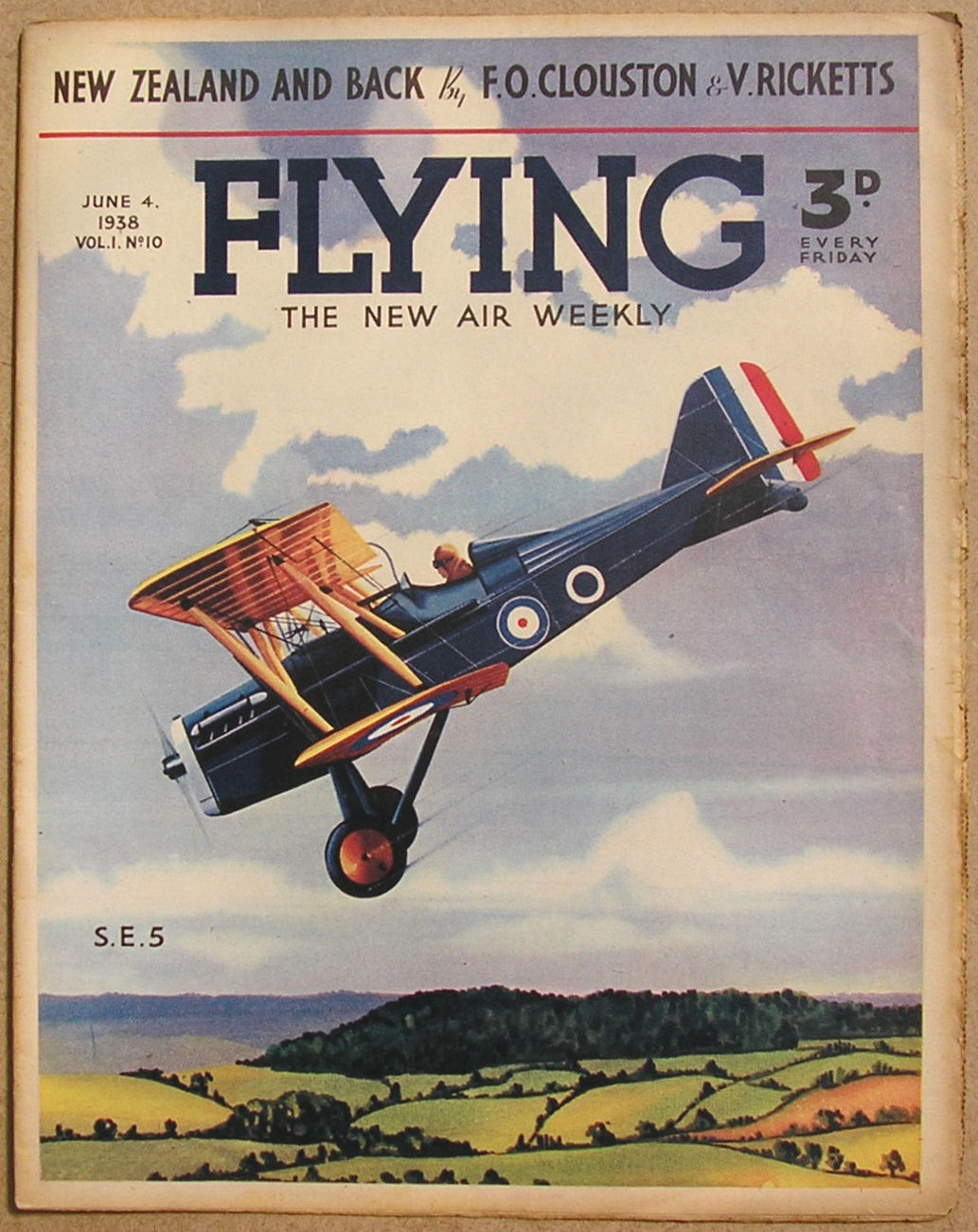
WHEN Flying, the new 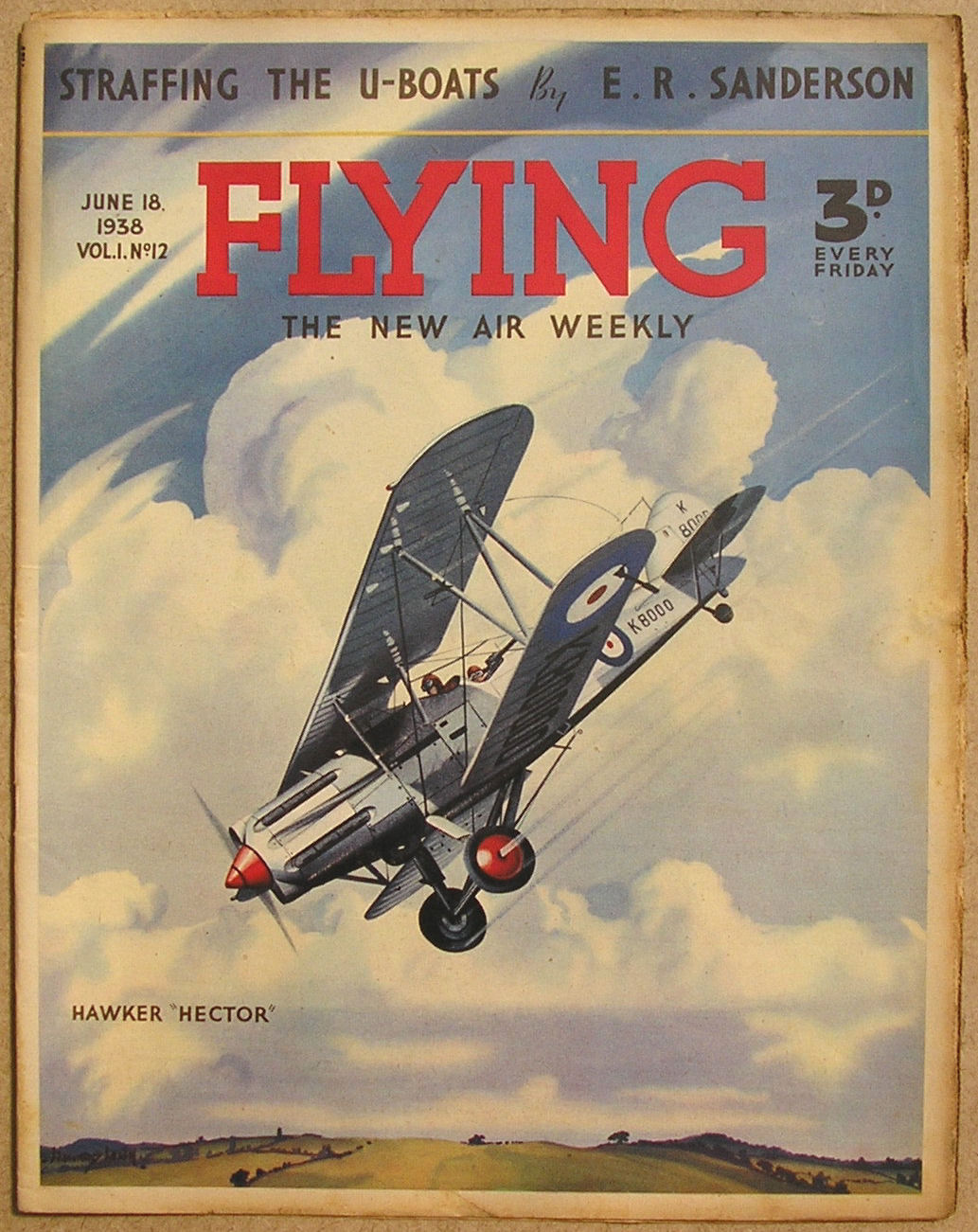 weekly paper of all things aviation, started up in England in 1938, amongst the articles and stories and photo features was an illustrative feature called “Heroes of the Air.” It was a full page illustration by S. Drigin of the events surrounding how the pictured Ace got their Victoria Cross along with a brief explanatory note.
Russian born Serge Drigin became a successful illustrator in the UK in the 1920s with his work regularly appearing in such British magazines as The Detective Magazine, Modern Boy and Chums. He is probably best known for his startling covers for Scoops, Air Stories, War Stories, Fantasy and others in the 30s.
From the 18 June 1938 issue of Flying:
THE END OF MAJOR E. MANNOCK, V.C.,OVER THE GERMAN LINES, JULY 26, 1918
“THIS highly distinguished officer, during the whole of his career in the Royal Air Force, was an outstanding example of fearless courage, remarkable skill, devotion to duty and self-sacrifice, which has never been surpassed.” Such were the words employed in the notification of the award of the V.C. to Major E. Mannock, which was made in the London Gazette on July 18, 1919. In view of this officer’s outstanding career it is hard to understand how it was that the award should have come very nearly a year after he was killed in action. His death, depicted here, occurred on July 26, 1918, over the German lines.
Early that morning he set out with Lieut. Inglis on a patrol over enemy territory. They soon found a two-seater, which they shot down and then, flying low, they turned for home. No one knows quite what happened next. What is fairly certain is that Mannock’s machine was struck by a bullet from the ground. Lieut. Inglis, who was flying behind, saw a flame appear in the side of Mannock’s machine. Following this, the machine went into a slow turn and crashed in flames. Such was the end of this gallant officer who, with 73 victories to his credit, was the last member of the R.A.F. to be awarded the V.C.
 a story from
 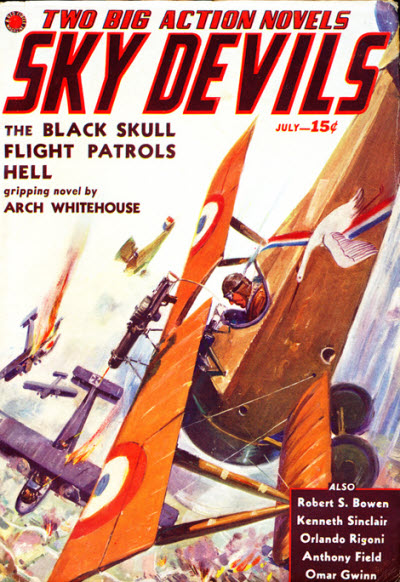 from the prolific pen of Robert Sidney Bowen. Bowen was a war pilot of the Royal Air Force, as well as the editor of one of the foremost technical journals of aviation in addition to penning hundreds of action-packed stories for the pulps.
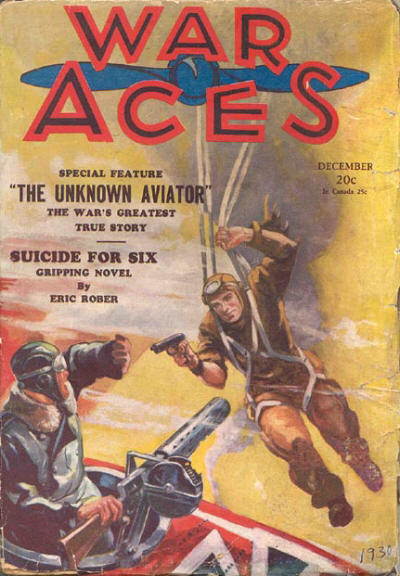 pen of the Navy’s own Allan R. Bosworth. Bosworth wrote a couple dozen stories with Humpy & Tex over the course of ten years from 1930 through 1939, mostly in the pages of War Aces and War Birds. The stories are centered around the naval air base at Ile Tudy, France. “Humpy” Campbell, a short thickset boatswain’s mate, first class who was prone to be spitting great sopping globs of tabacco juice, was a veteran seaplane pilot who would soon rate two hashmarks—his observer, Tex Malone, boatswain’s mate, second class, was a D.O.W. man fresh from the Texas Panhandle. Everybody marveled at the fact that the latter had made one of the navy’s most difficult ratings almost overnight—but the answer lay in his ability with the omnipresent rope he constantly carried.
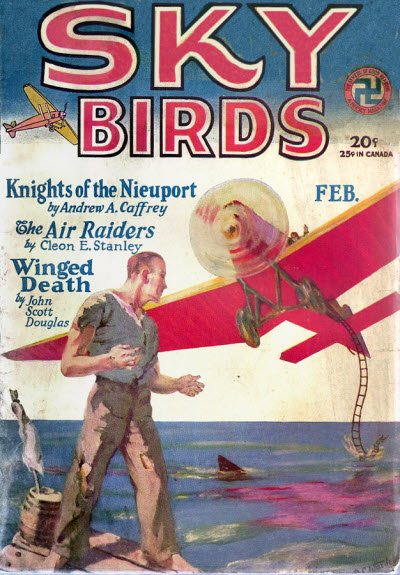 another story from one of the new flight of authors on the site this year—Andrew A. Caffrey. Caffrey, who was in the American Air Service in France during The Great War and worked for the air mail service upon his return, was a prolific author of aviation and adventure stories for both the pulps and slicks from the 1920’s through 1950. For the second issue of Sky Birds, Caffrey tells the story of Lieutenant Mike Harris—a.k.a. “Coupe Mike” due to his proclivity to overuse the coupe button during his training—fresh up from Issoudon after extensive training.
 MY LONG-LOAFING experience was started back in Lawrence, Massachusetts, on the coldest March the eleventh that 1891 knew. That makes me twenty-one by actual count.
 weekly paper of all things aviation, started up in England in 1938, amongst the articles and stories and photo features was an illustrative feature called “Heroes of the Air.” It was a full page illustration by S. Drigin of the events surrounding how the pictured Ace got their Victoria Cross along with a brief explanatory note.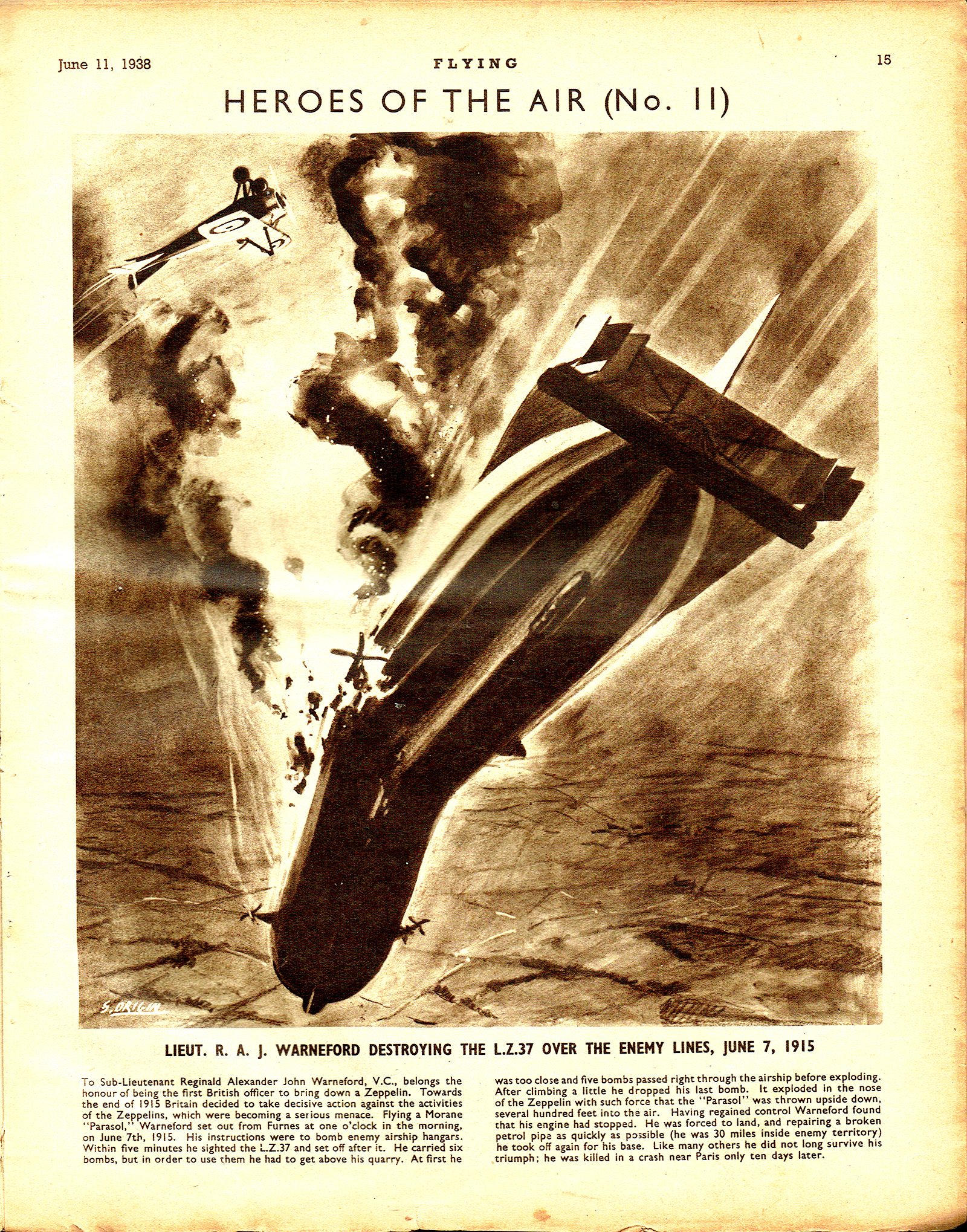
 a story from the pen of a prolific pulp author O.B. Myers! Myers was a pilot himself, flying with the 147th Aero Squadron and carrying two credited victories and awarded the
  That sound can only mean one thing—that Bachelor of Artifice, Knight of Calamity and an alumnus of Doctor Merlin’s Camelot College for Conjurors is back to vex not only the Germans, but the Americans—the Ninth Pursuit Squadron in particular—as well. Yes it’s the marvel from Boonetown, Iowa himself—Lieutenant Phineas Pinkham!
  weekly paper of all things aviation, started up in England in 1938, amongst the articles and stories and photo features was an illustrative feature called “Heroes of the Air.” It was a full page illustration by S. Drigin of the events surrounding how the pictured Ace got their Victoria Cross along with a brief explanatory note.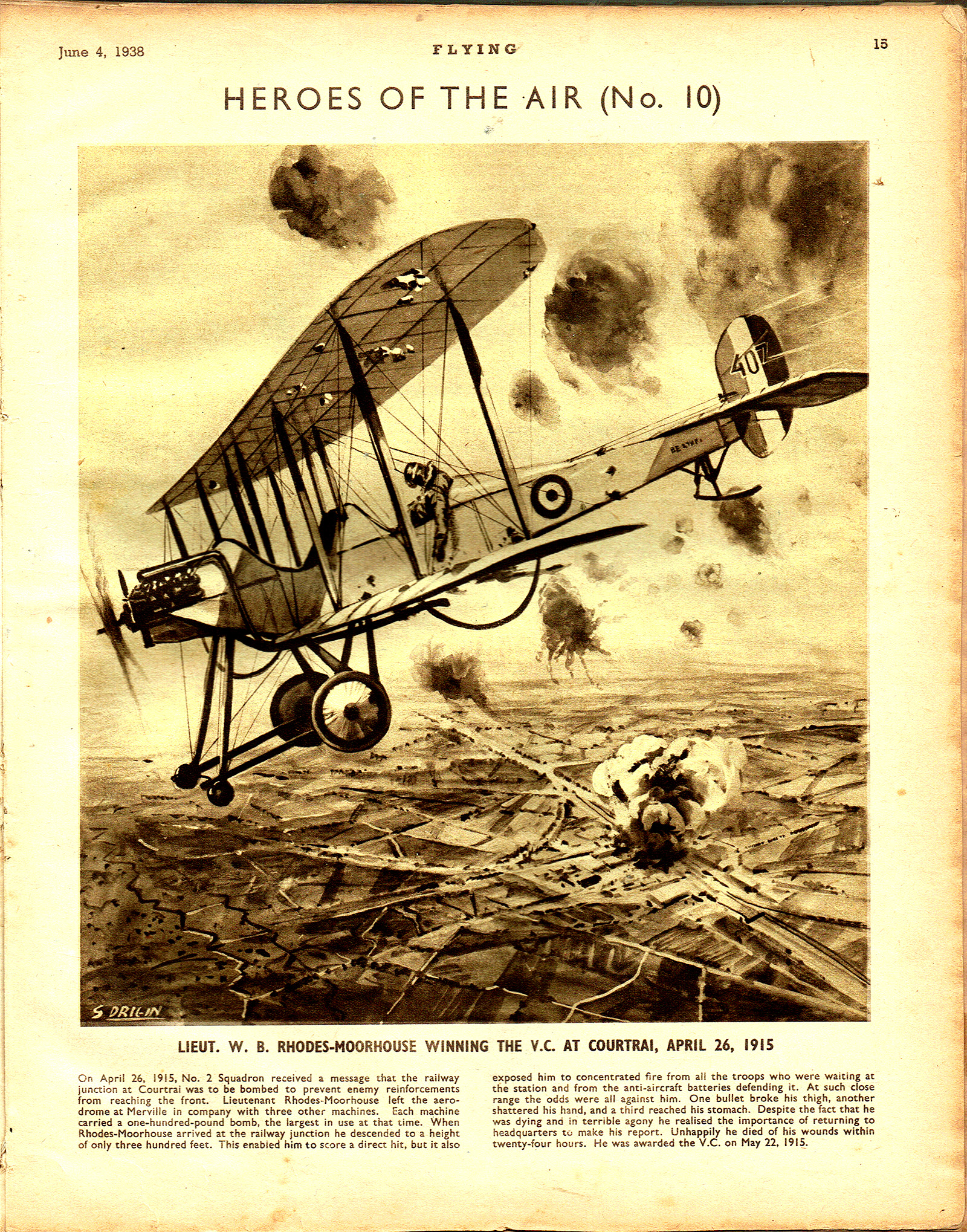
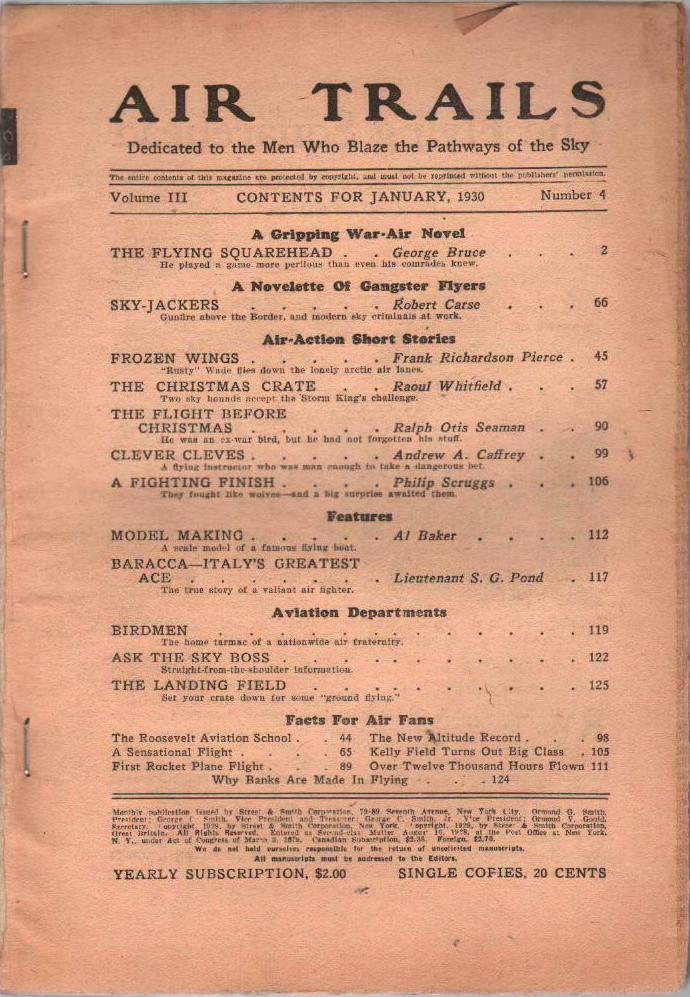 exciting air adventure with Rusty Wade from the pen of Frank Richardson Pierce. Pierce is probably best remembered for his prolific career in the Western Pulps. Writing under his own name as well as two pen names—Erle Stanly Pierce and Seth Ranger. Pierce’s career spanned fifty years and produced over 1,500 short stories, with over a thousand of these appearing in the pages of Argosy and the Saturday Evening Post.
 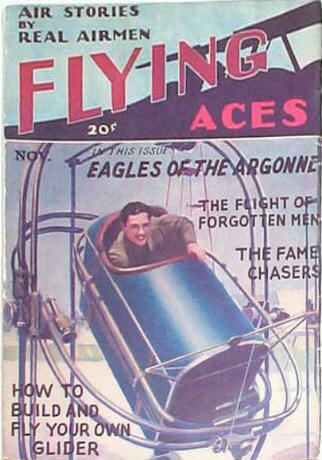 one of the few stories from Fred Denton Moon. Moon was born in Athens, Georgia in 1905 and was a freelance writer. A former staff member of The Atlanta Journal Sunday Magazine, he was the first editor of the Journal’s wire photo service as well as former city editor of the Journal. He was member of Sigma Delta Chi and a retired member of the Georgia Department of Labor.
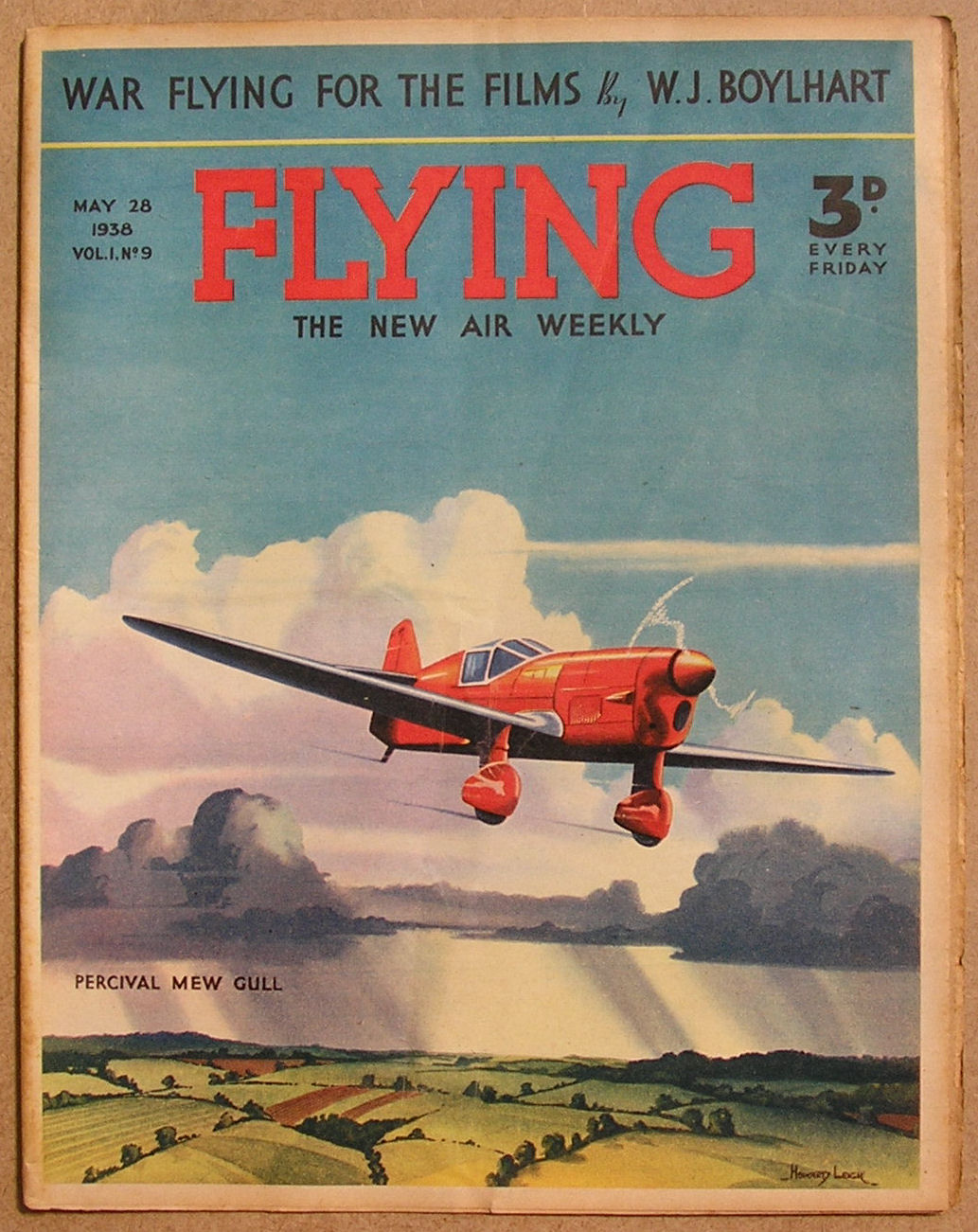 weekly paper of all things aviation, started up in England in 1938, amongst the articles and stories and photo features was an illustrative feature called “Heroes of the Air.” It was a full page illustration by S. Drigin of the events surrounding how the pictured Ace got their Victoria Cross along with a brief explanatory note.
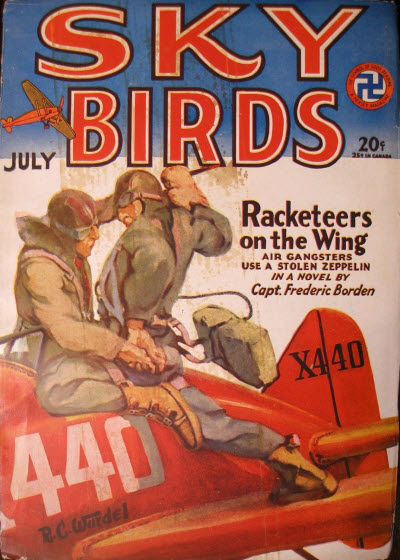 a story by Franklin M. Ritchie. Ritchie only wrote aviation yarns and his entire output—roughly three dozen stories—was between 1927 and 1930, but Ritchie was not your typical pulp author.

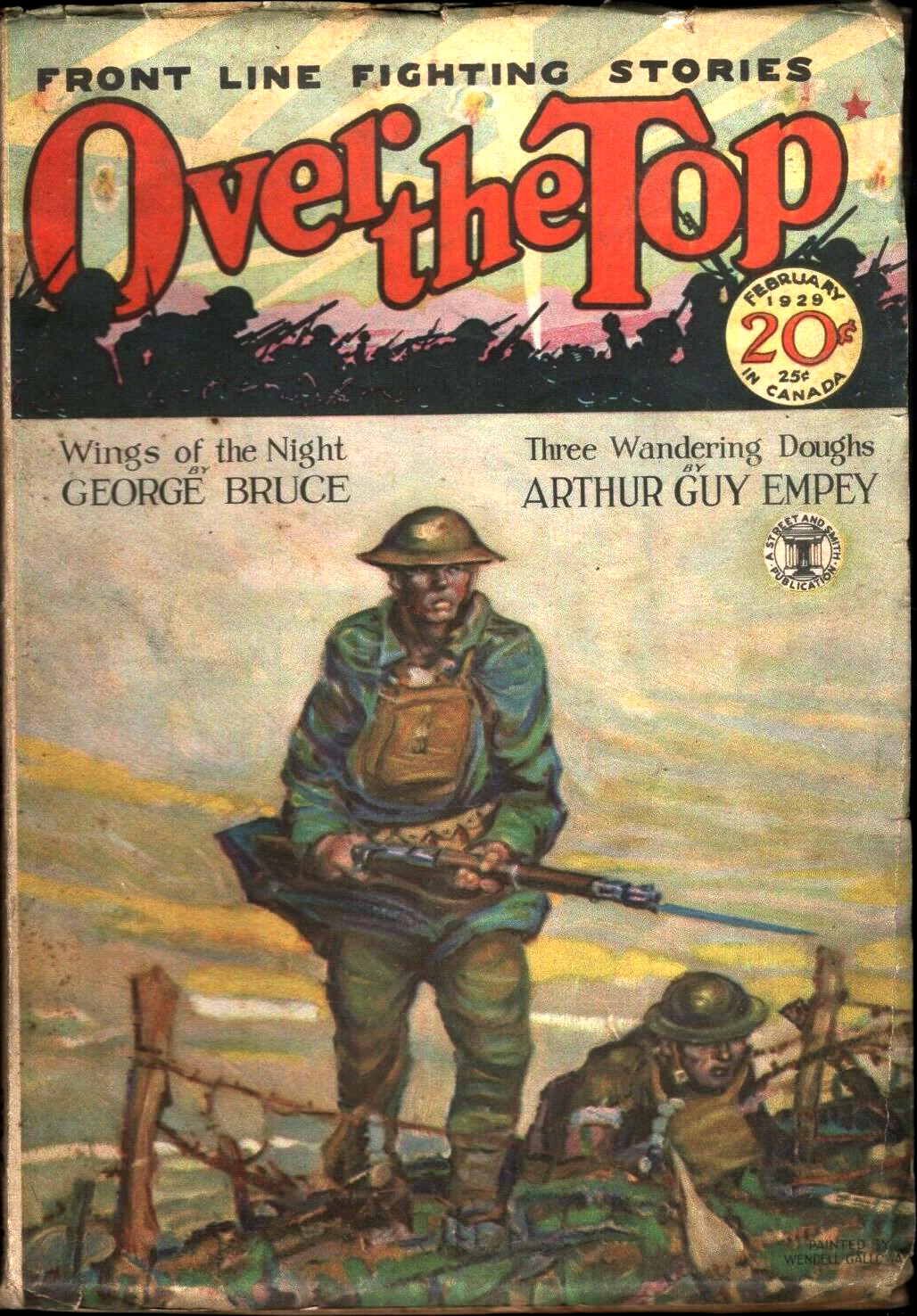 a story from
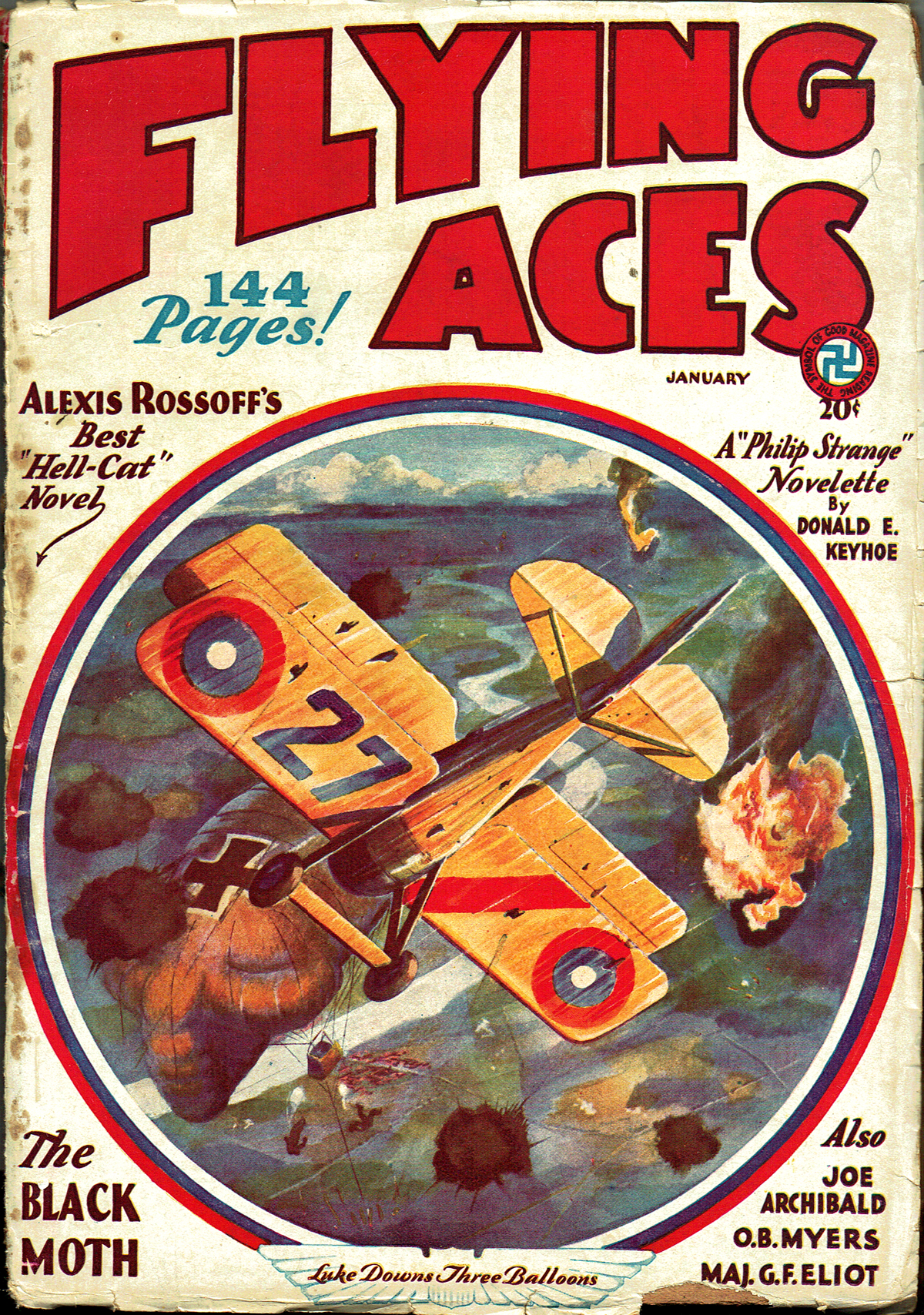
 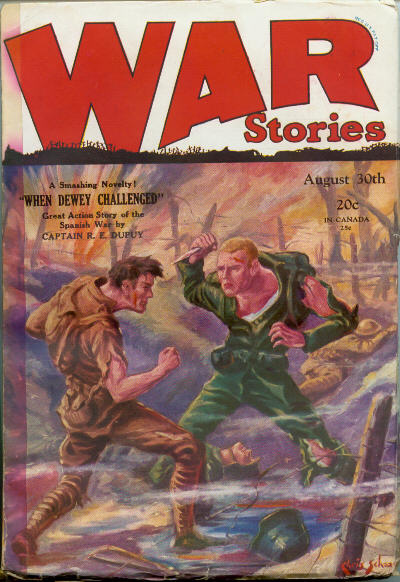 exciting adventure in those Hell-skies with Alexis Rossoff’s Hell-Cat Squadron! The adventures of the Hell-Cat Brood ran in War Birds, War Stories and Flying Aces. The Seventy-Seventh Squadron had a reputation of being short on technique and long on defying every regulation in the book. The squadron was the cause of many gray hairs on the pates of the star-spangled ones back in G.H.Q. They flew their merry way like nobody’s business, and played hell with any Jerry who tried to dispute their intention of going places. This bunch of cloud-hopping war birds were known from one end of the Western front to the other as the “Hell-cats”—and sometimes the “Unholy Dozen!”