THIS week we have 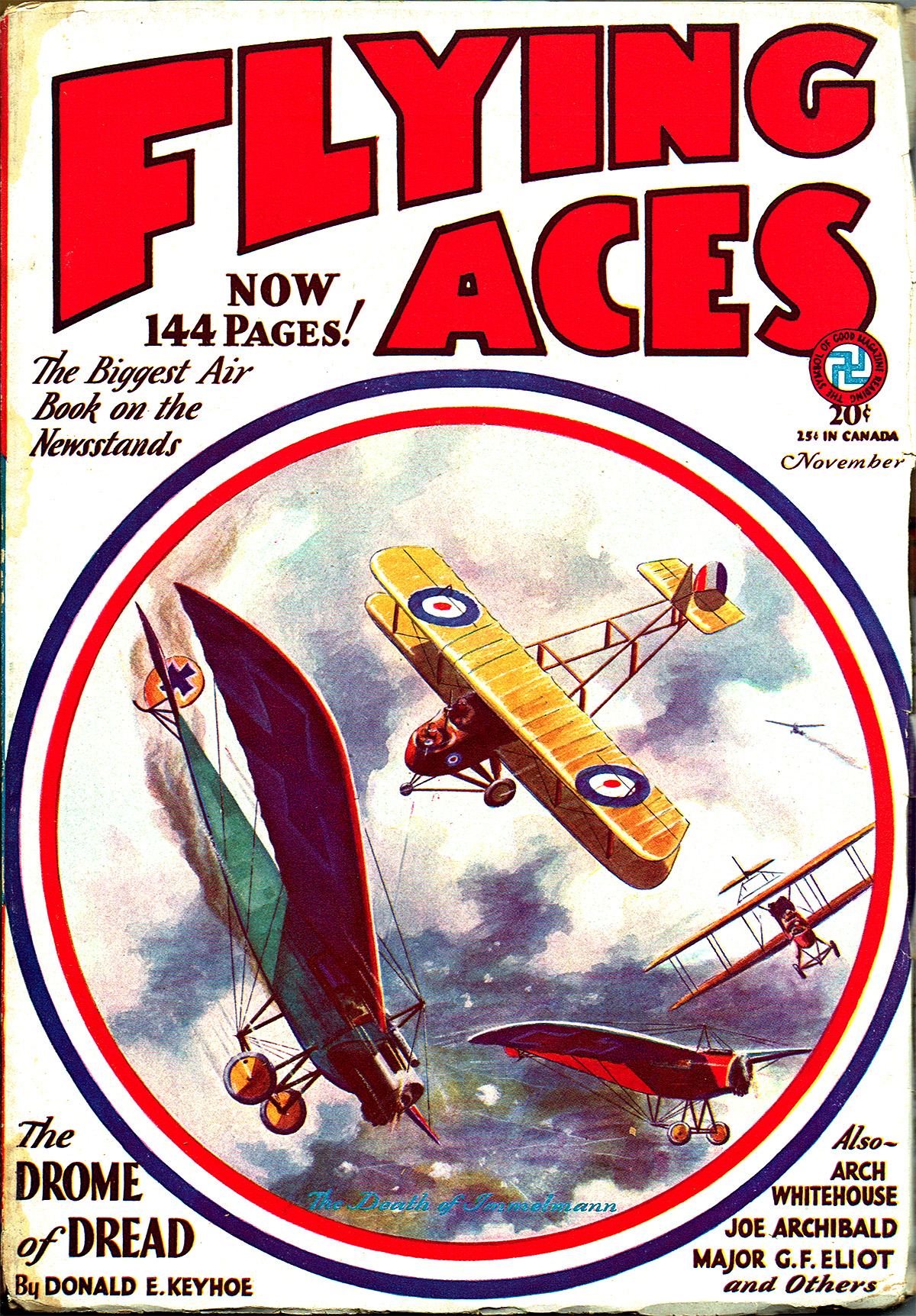 a story from Curtis Mitchell. Mitchell was born in Mexico, MO in 1902. He started his career as a newspaper man working for both the hometown papers—The Daily Ledger and The Intelligencer—even becoming the city editor for the former before heading east to New York in 1922 to become the publicity director for the Charity Organization Society of New York City. From there he worked his way back in to publishing becoming the youngest editor and vice president of a publishing house, Dell. He edited a variety of magazines, most dealing with entertainment like Film Fun and Film Humor and latter Modern Screen Magazine and Radio Stars. From 1928 to 1934, Mitchell was a frequent contributor to the aviation pulps like Wings, Sky Riders, Flying Aces, Air Trails, Air Stories, Sky Birds and War Birds.
Mitchell went on a world tour in 1924 and a tour through Europe and South Africa in 1929 for Story ideas!
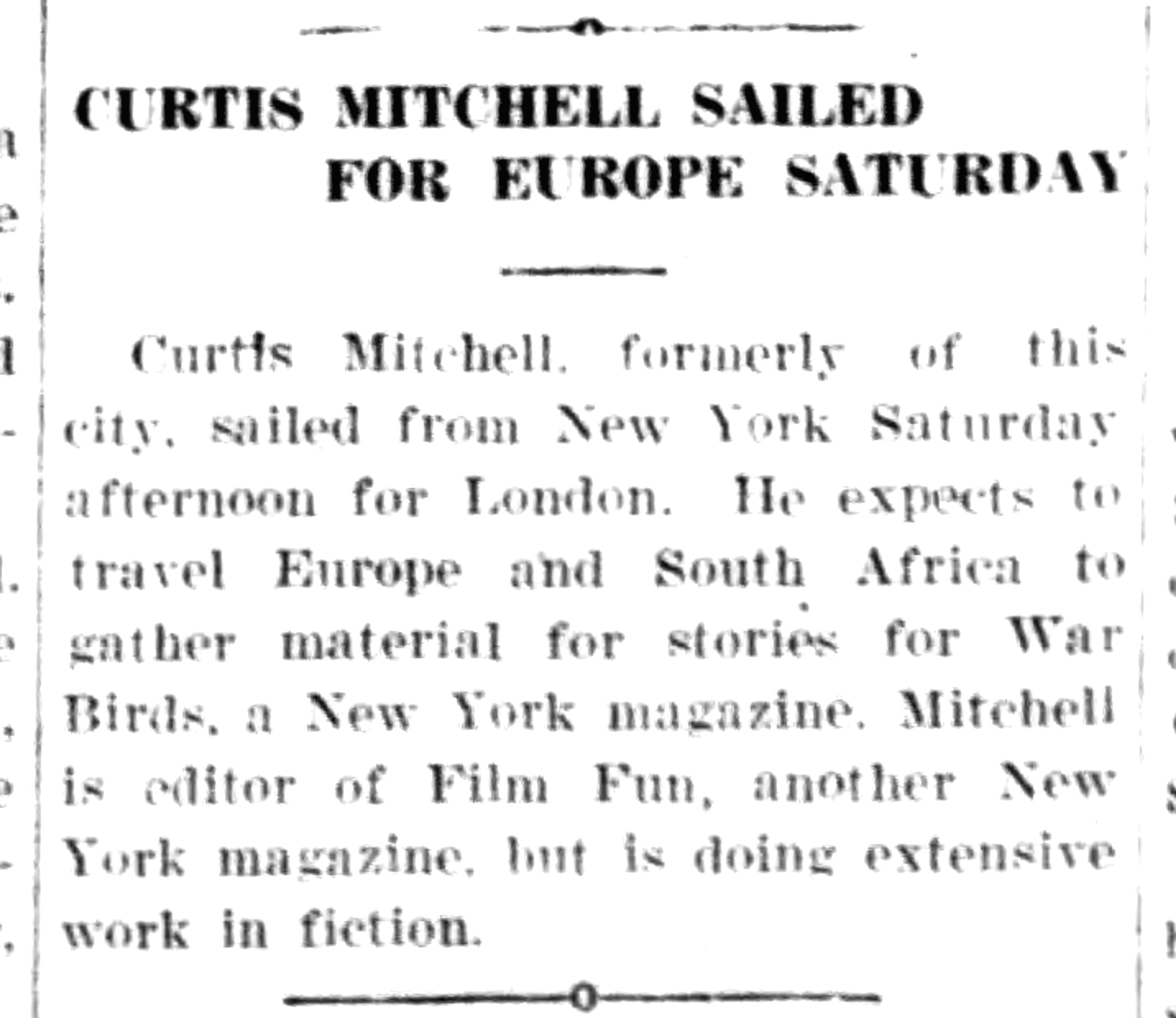
from The Intelligencer, Mexico, Missouri, June 4, 1929
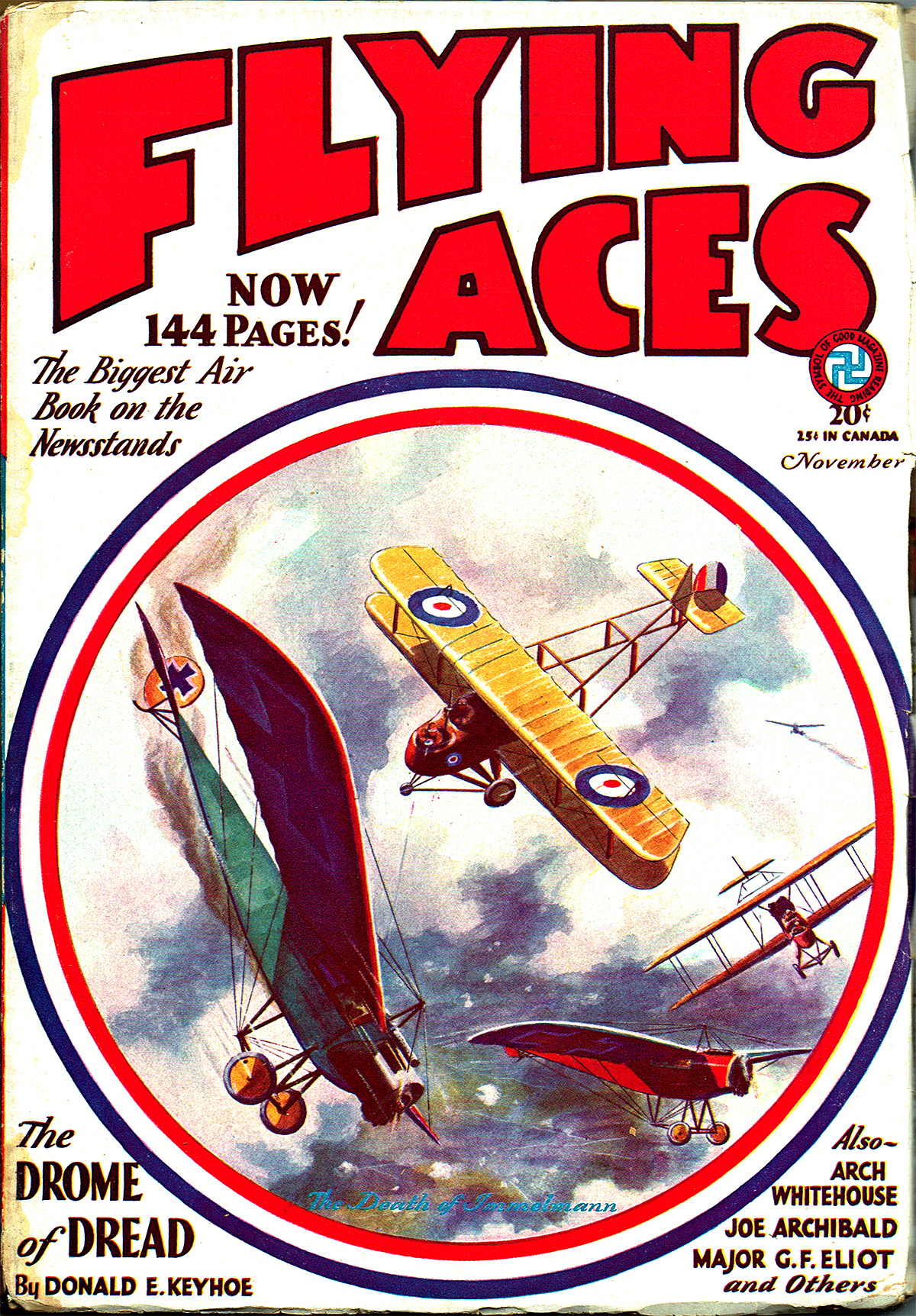
It’s hard to say whether this particular story was inspired by anything Mitchell gleaned from that trip. For the November 1931 number of Flying Aces, Mitchell tells the story of Sergeant -Rigger Eddie Weed. He’s developed a new kind of observation camera, unfortunately the squadron is on lockdown with no planes allowed to take off. So Eddie must steal his own plane and risk a court-martial in order to test out his new camera “Over Skull Hill!”
The C.O. had just posted a notice forbidding enlisted men to fly—and that was just the moment for Sergeant-Rigger Eddie Weed to steal one of the squadron’s crates and crack it up! But read on—and learn about a new kind of court-martial!
As a bonus, here are some further biographical notes on Curtis’ career that ran in the November 3, 1945 Showmen’s Trade Review, announcing his new job with Paramount Pictures:
Curtis Mitchell New Paramount Adv Chief
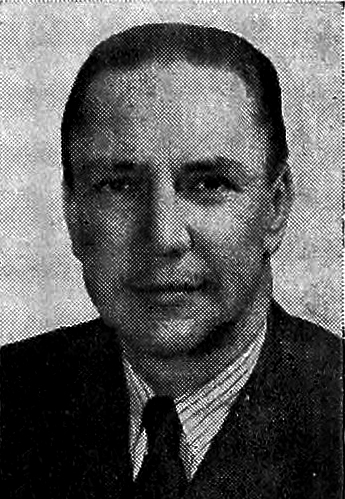 Colonel Curtis Mitchell, recently pictorial chief for the War Department Bureau of Public Relations and now on terminal leave after four and one-half years of active service, assumed the duties of director of advertising and publicity for Paramount Pictures on November 1, it was announced Wednesday by Charles M. Reagan, Paramount vice-president in charge of distribution. He succeeds to the post vacated by R.H. Gillham, who resigned.
Prior to entering the Army, Mitchell was vice-president and editorial supervisor for Triangle Publications, the magazine subsidiary of the Anenberg publishing interests. His experience and background in newspaper, magazine and public relations activities covers a wide range of associations which began when Mitchell became a reporter for the Mexico (Mo.) Daily Ledger, with which he later served as city editor.
After serving in various capacities in the public relations branch of the Army and having risen from the rank of Major to Colonel, Mitchell became head of the pictorial division of the department. In that office he was in charge of the pictorial coverage of Army activities throughout the war on all fronts including the furnishing of material for feature motion pictures, shorts and newsreels and of still photographs of newspapers and magazines everywhere. The system that resulted in the first official radiophotos and the transmission of colored stills by air was inaugurated by Mitchell. The original Hollywood Caravan of Stars’ tour for the benefit of Army Emergency Relief was his idea and he worked with Irving Berlin on the stage play “This Is the Army” and on the War Department’s own military circus “Here’s Your Army.”
Mitchell returned to publishing in 1950. He lived a long life, passing away in 1998 at the age of 97.




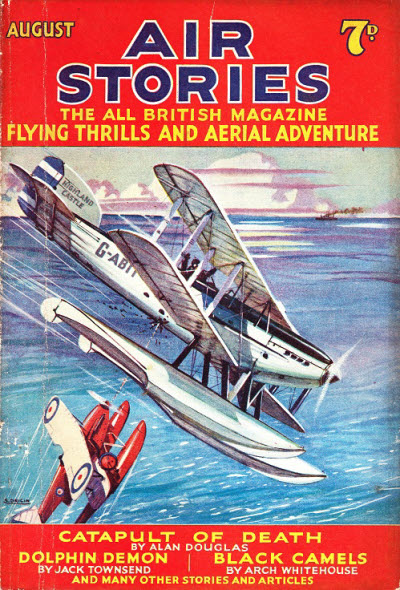 the Christmas Season with The Coffin Crew! Yes, Arch Whitehouse’s hell-raising Handley Page bomber crew! Piloting the bus is the mad Englishman, Lieutenant Graham Townsend, with the equally mad Canadian Lieutenant Phil Armitage serving as reserve pilot and bombing officer with Private Andy McGregor, still wearing his Black Watch kilts, rounding out the front end crew in the forward gun turret. And don’t forget the silent fighting Irishman Sergeant Michael Ryan, usually dragging on his short clay pipe while working over the toggle board dropping the bombs with Alfred Tate and crazy Australian Andy Marks or Horsey Horlick manning the rear gun turret.
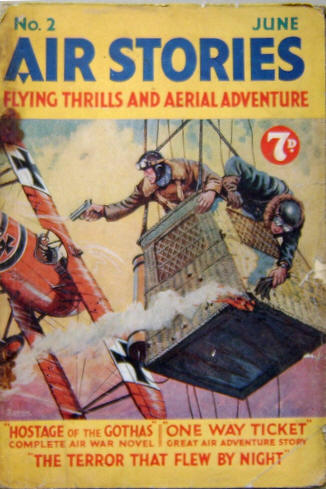 the Christmas Season with The Coffin Crew! Yes, Arch Whitehouse’s hell-raising Handley Page bomber crew! Piloting the bus is the mad Englishman, Lieutenant Graham Townsend, with the equally mad Canadian Lieutenant Phil Armitage serving as reserve pilot and bombing officer with Private Andy McGregor, still wearing his Black Watch kilts, rounding out the front end crew in the forward gun turret. And don’t forget the silent fighting Irishman Sergeant Michael Ryan, usually dragging on his short clay pipe while working over the toggle board dropping the bombs with Alfred Tate and crazy Australian Andy Marks or Horsey Horlick manning the rear gun turret.

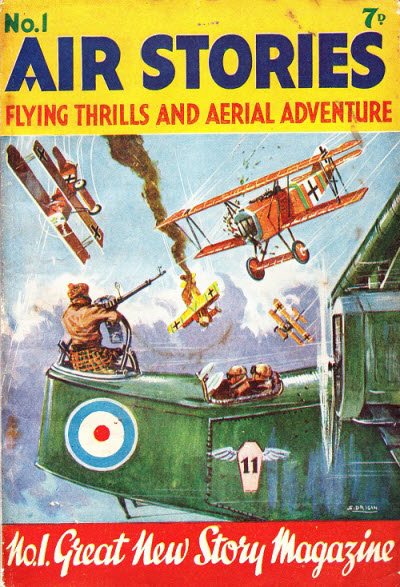
 That sound can only mean one thing—that Bachelor of Artifice, Knight of Calamity and an alumnus of Doctor Merlin’s Camelot College for Conjurors is back to vex not only the Germans, but the Americans—the Ninth Pursuit Squadron in particular—as well. Yes it’s the marvel from Boonetown, Iowa himself—Lieutenant Phineas Pinkham!
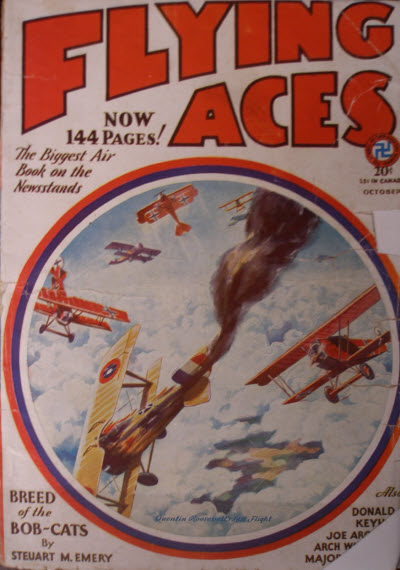
 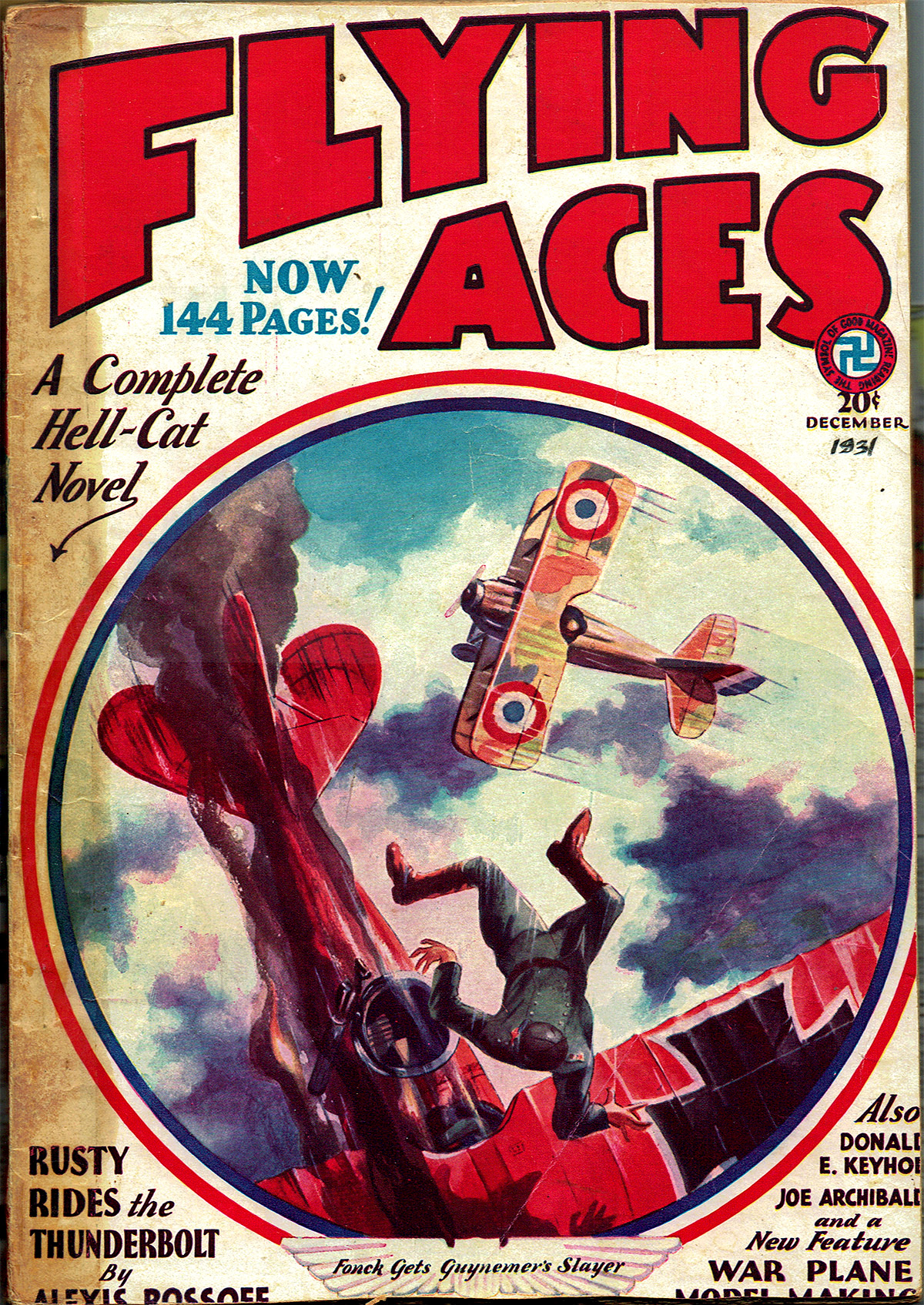 a story from the pen of Donald E. Keyhoe—his first in the pages of Flying Aces magazine, which ran a story by Keyhoe in most of their issue from January 1930 through September 1942, featuring characters like Richard Knight, Eric Trent or Captain Philip Strange! Before Keyhoe started up the series characters, he wrote other stories of then present day aviation situations—especially situations in the Far East.
 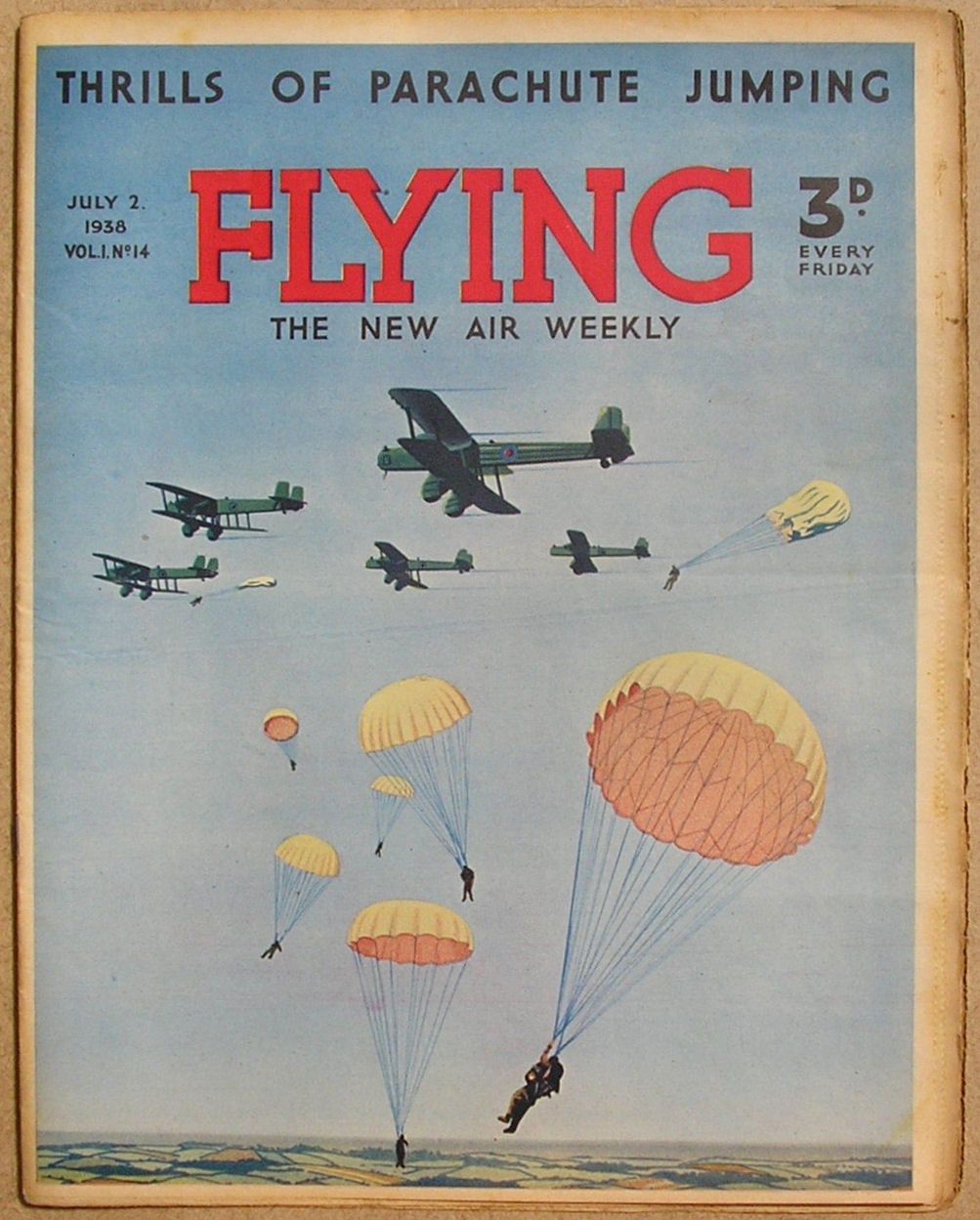 weekly paper of all things aviation, started up in England in 1938, amongst the articles and stories and photo features was an illustrative feature called “Heroes of the Air.” It was a full page illustration by S. Drigin of the events surrounding how the pictured Ace got their Victoria Cross along with a brief explanatory note.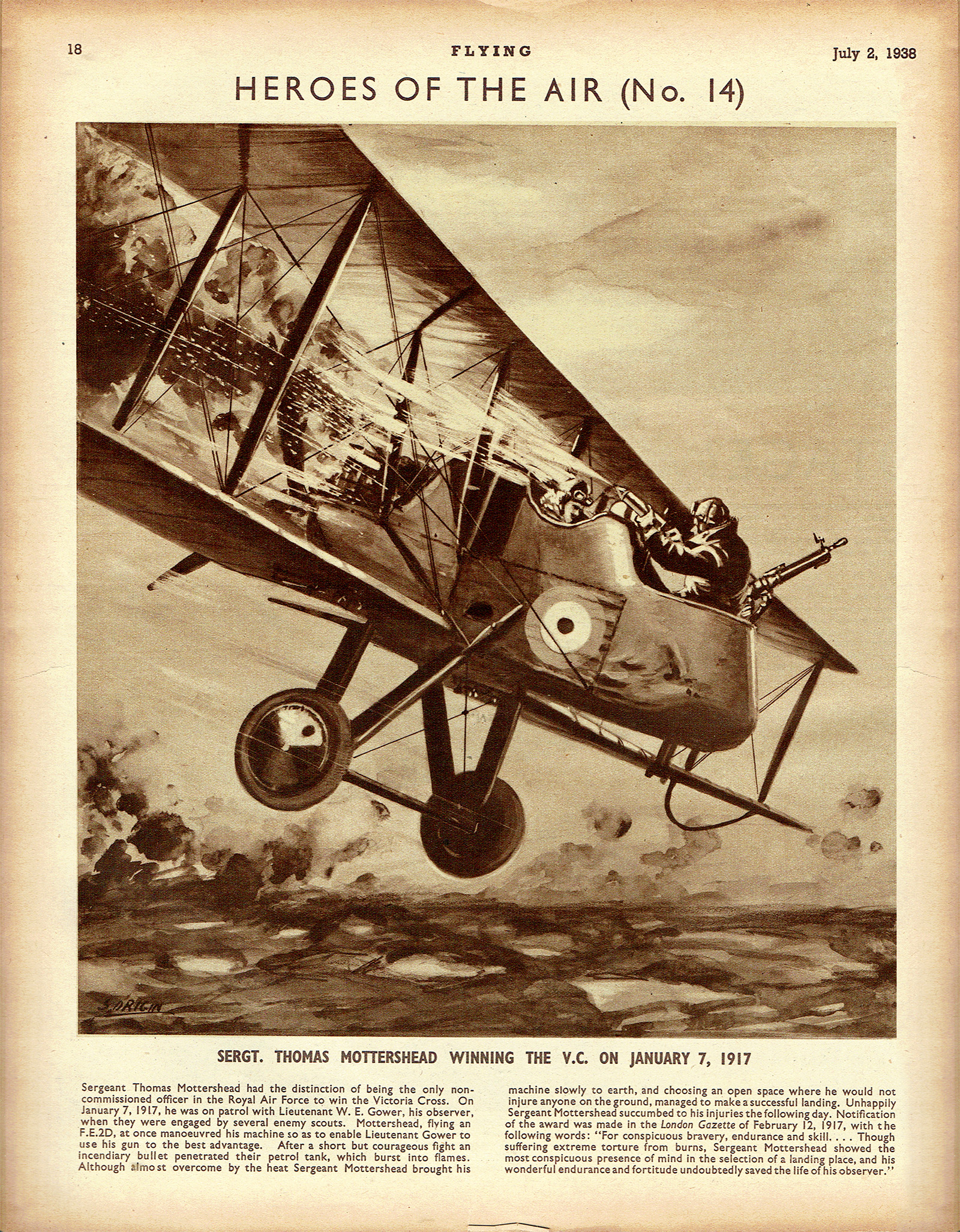
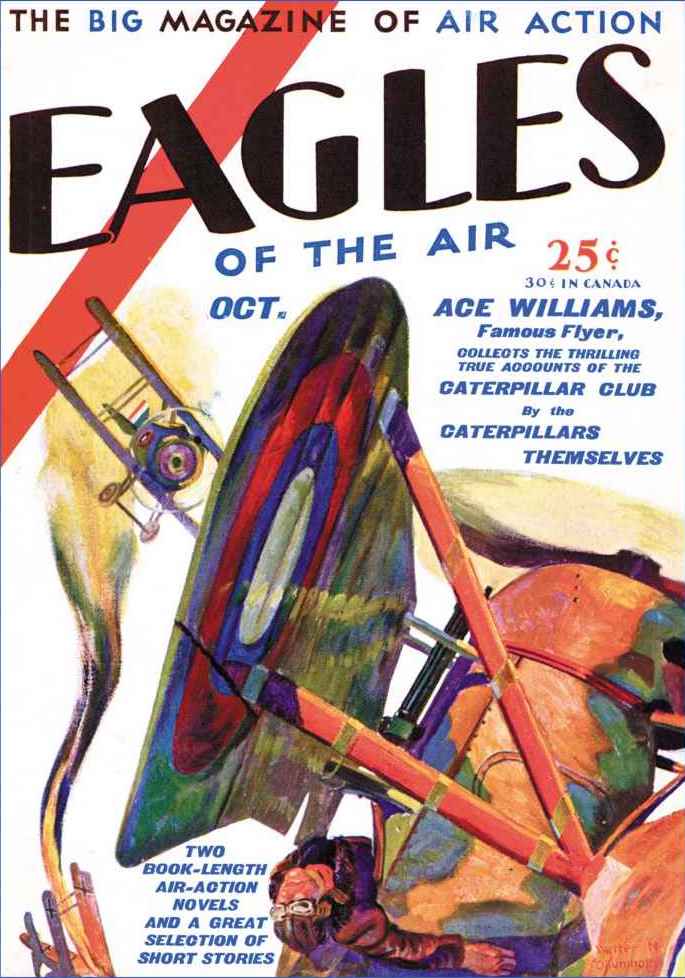 another story by Franklin M. Ritchie. Ritchie only wrote aviation yarns and his entire output—roughly three dozen stories—was between 1927 and 1930. Today we have another one from the lawyer who wrote pulp stories on the side to satisfy his yen for flying. From the premier issue of the short lived Eagle of the Air, Ritchie tells the story of rookie pilot Eric Folsom and his rise to responsible squadron veteran.
  That sound can only mean one thing—that Bachelor of Artifice, Knight of Calamity and an alumnus of Doctor Merlin’s Camelot College for Conjurors is back to vex not only the Germans, but the Americans—the Ninth Pursuit Squadron in particular—as well. Yes it’s the marvel from Boonetown, Iowa himself—Lieutenant Phineas Pinkham!
 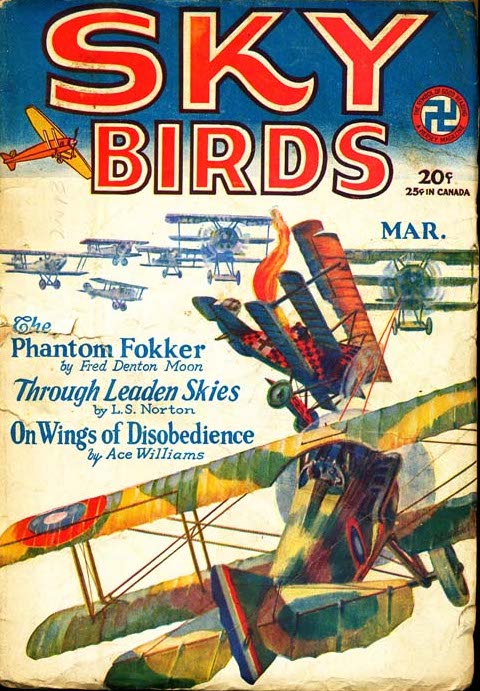 another one of the few stories from Fred Denton Moon. Moon was born in Athens, Georgia in 1905 and was a freelance writer. A former staff member of The Atlanta Journal Sunday Magazinesince 1930, he was the first editor of the Journal’s wire photo service as well as former city editor of the Journal. He was member of the Society of Professional Journalists/Sigma Delta Chi and retired from the Georgia Department of Labor in 1971. Moon died in 1982 at the age of 76.
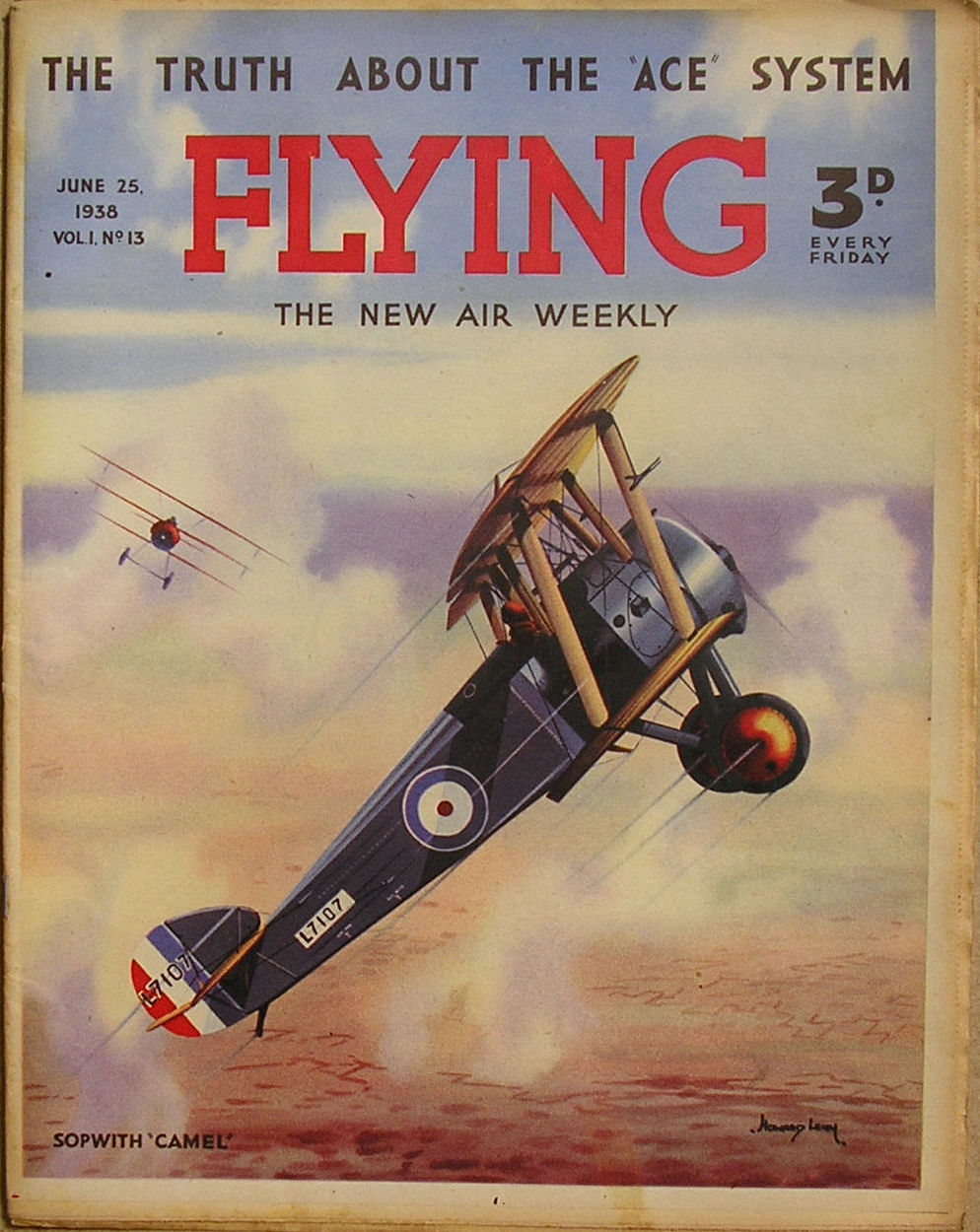 weekly paper of all things aviation, started up in England in 1938, amongst the articles and stories and photo features was an illustrative feature called “Heroes of the Air.” It was a full page illustration by S. Drigin of the events surrounding how the pictured Ace got their Victoria Cross along with a brief explanatory note.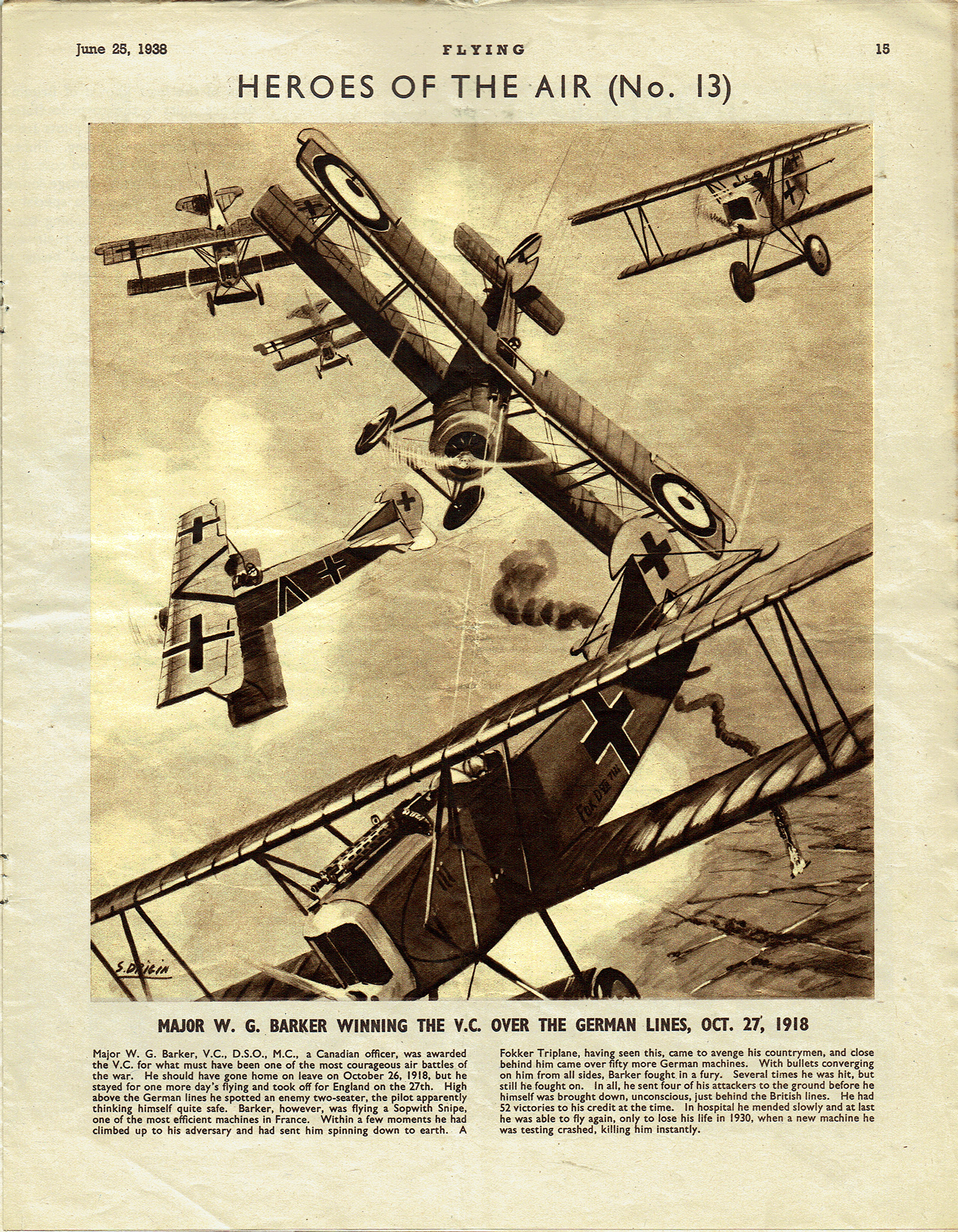
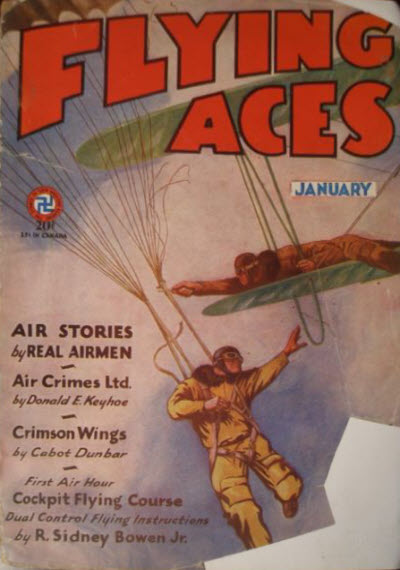 a story from the pen of Donald E. Keyhoe—his first in the pages of Flying Aces magazine, which ran a story by Keyhoe in most of their issue from January 1930 through September 1942, featuring characters like Richard Knight, Eric Trent or Captain Philip Strange! Before Keyhoe started up the series characters, he wrote other stories of then present day aviation situations. “Air Crimes, Limited” outlines how a massive criminal ring is using airplanes on a big scale for various crooked schemes. Captain Jack Collins of the Air Corp is tasked with infiltrating this organization and getting information that can be used to bring the organization down.
 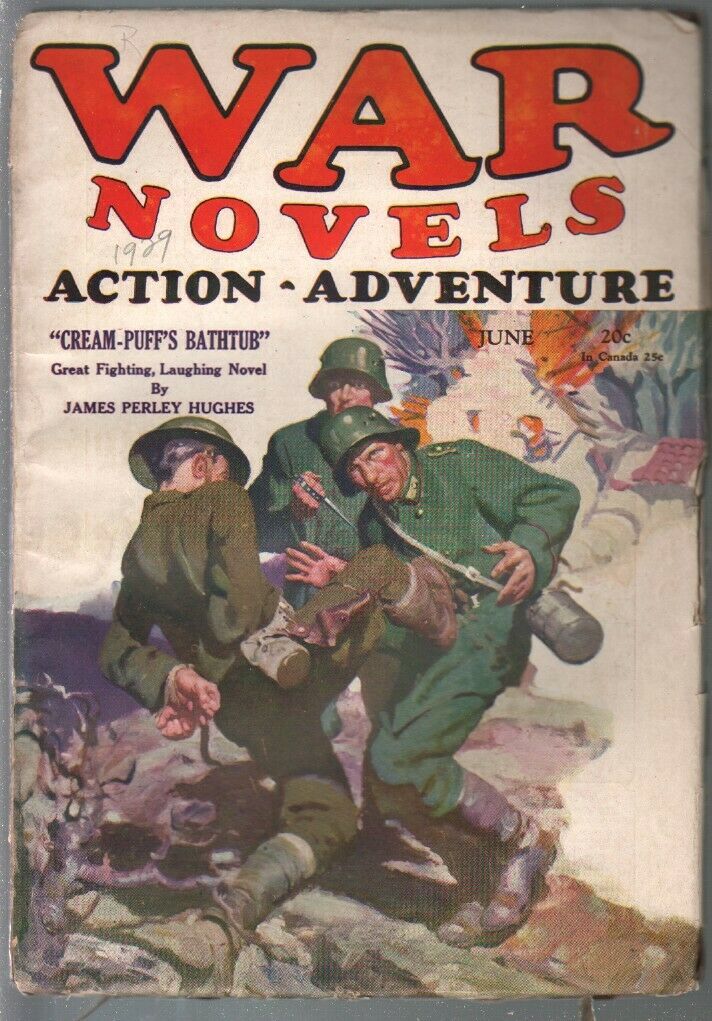 a story from the pen of a prolific pulp author O.B. Myers! Myers was a pilot himself, flying with the 147th Aero Squadron and carrying two credited victories and awarded the
 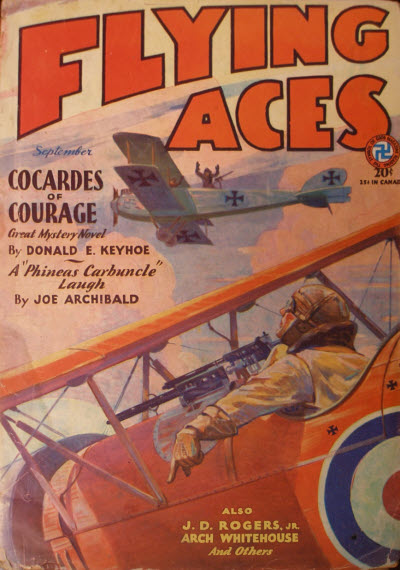 That sound can only mean one thing—that Bachelor of Artifice, Knight of Calamity and an alumnus of Doctor Merlin’s Camelot College for Conjurors is back to vex not only the Germans, but the Americans—the Ninth Pursuit Squadron in particular—as well. Yes it’s the marvel from Boonetown, Iowa himself—Lieutenant Phineas Pinkham!
 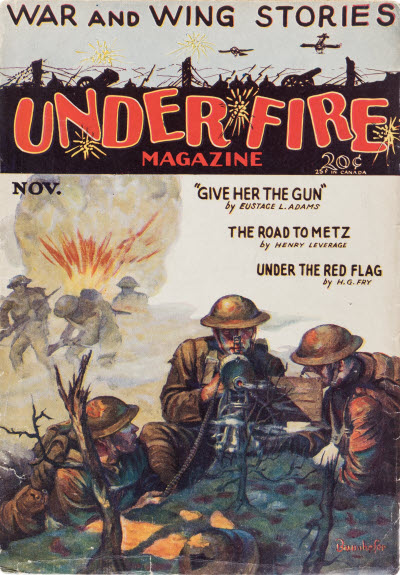 a story from the prolific pen of Eustace L. Adams. Born in 1891, Adams was an editor and author who served in the American Ambulance Service and the US Naval Service during The Great War. His aviation themed stories started appearing in 1928 in the various war and aviation pulps—Air Trails, Flying Aces, War Stories, Wings, War Birds, Sky Birds, Under Fire, Air Stories and Argosy. He is probably best remembered for the dozen or so airplane boys adventure books he wrote for the Andy Lane series.