FROM the pages of the April 1933 number of Sky Fighters:
Editor’s Note: We feel that this 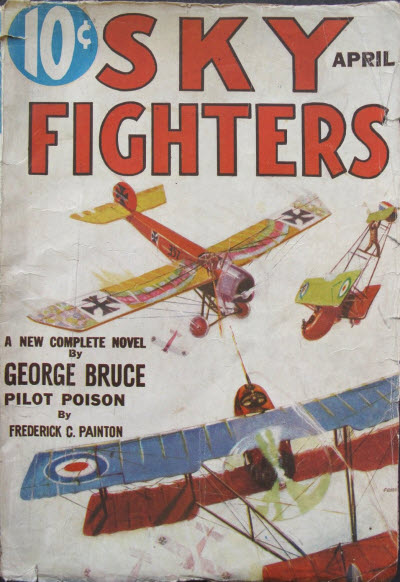 magazine has been exceedingly fortunate in securing R. Sidney Bowen to conduct a technical department each month. It is Mr. Bowen’s idea to tell us the underlying principles and facts concerning expressions and ideas of air-war terminology. Each month he will enlarge upon some particular statement in the stories of this magazine. Mr. Bowen is qualified for this work, not only because he was a war pilot of the Royal Air Force, but also because he has been the editor of one of the foremost technical journals of aviation.
Dizzy Doings
by Robert Sidney Bowen (Sky Fighters, April 1933)
WELL, being as how you buzzards are still kind of young, far be it from me to try and shove too much knowledge into your heads. So I guess I’ll devote this chin-fest to dizzy doings of war days. Naturally, we heroes, who restored France for American tourists, were only human after all. Which is but another way of admitting that now and then we cut loose from the conventional type of war flying, and had a little fun for ourselves.
Of course, nowadays, it wouldn’t exactly be called fun. As a matter of fact, it would be called rank violation of Department of Commerce (Aeronautics Branch) rules and regulation. But in the old days when you tried dizzy stunts, just for the heck of it, the only risk you ran, outside of handing in your chips to the grave digger, was maybe a burning up by the C.O. in case you missed calculations and wrapped your ship around a tree, or an estaminet, or something. But it was good fun, anyway, and as I look backward over the years I can visualize again some of the darndest, dizziest plane stunts imaginable.
And so, put your note-books and pencils away, and lean back—and don’t snore too loud. As a matter of fact, you’d better stay awake, because I’ll probably slip in a technical explanation here and there as I go along. And if you miss it—well, it’ll just be too bad for you, and how!
One of the most miraculous, and dizziest, and funniest stunts I ever saw pulled, happened at an airdrome in England. As a matter of fact it was at London Colney Airdrome, about seventeen miles north of London. There were several large-sized hangars on that field. One of them was set at right angle to the others. By that I mean that both ends opened onto God’s free air. There were no obstructions at the front or the rear. Well, one day one of the boys thought up the swell idea of “shooting†the hangar, as he called it. He had all the ships taken out and both the front and rear doors rolled wide open. And then he took a ship up and came down and flew through the empty hangar.
Naturally, the rest of us had to take a crack at it ourselves. There was a reasonable amount of clearance all around as you went through the hangar, so it wasn’t particularly tough. And besides, none of us had just gone solo the day before. We had a few solo hours under our belts, you know.
WELL, from that day on, “shooting†the empty hangar became a regular part of a follow-the-leader game. But, one day one of the boys (I won’t mention his name as he is alive and still eating three squares a day) decided to shoot the hangar all by himself. When he took off it was empty, and both front and rear doors rolled back. But, it so happened that a grease ball, not knowing the pilot’s intention, rolled the rear doors to within about ten feet of being shut. Just why he ever did it, we never found out. But I’m positive that it wasn’t on purpose. That particular grease-ball was too dumb to ever do anything on purpose.
Of course you can guess the rest. Down comes our boy friend toward the front end, which was open. Well, imagine his embarrassment when he gets inside! Naturally there is nothing to do but keep going. Which he does, heading for the ten-foot opening. And he goes through, hell bent for election. The result is, that he leaves his wings inside the hangar, and comes out into the open like a launching torpedo. However, the good Lord must have been riding the cockpit with him, because he streaks across the field and finally rams into a stone wall on the far side. We pick him up out of the wreck, out cold. But in an hour or so he’s all set again to carry on with the war. Needless to say, he never tried the stunt again! Those of us that were there, and saw him go in with wings on and come out with them off, haven’t stopped laughing yet!

Perhaps the dizziest, and yes, the dumbest stunt ever tried, was pulled off shortly after the signing of the Armistice. As the squadrons were moved up toward the Rhine and the Army of Occupation, some of us were made ferry pilots, and given the job of flying all obsolete planes to Lille for dismantling and ultimate destruction. New types had been sent out to replace them, so rather than fly them all the way back to England it was decided to concentrate the bunch at Lille, salvage the instruments, and maybe a few parts of the engines, and burn up what was left. Well, we ferry pilots went all over France collecting these ships, and some of them were in pretty good shape. As a result we held what was called a “Fly the Fabric Off†contest. Five or ten of us would each select a pretty good ship that was doomed for the bonfire. Then we’d take a knife and slit the leading edge of the wing fabric on the lower wings in several places. Then we’d take the ship up and stunt it with the idea of trying to-make the prop-wash catch under the slits and rip the fabric off in strips. The winner was the one who landed with the most ripped fabric trailing back off his wings. And believe me, buzzards, there was plenty and don’t think there wasn’t. The strangest part of it all, perhaps, was the fact that during the two weeks that we conducted the contests (before the C.O. at the field clamped the lid down on our dizzy actions) not a single one of us crashed, or even ruffled the part in his hair.

OH, all right, all right, I know! Luck is always with fools and drunks, and we weren’t drunk at the time.
But speaking of drinking. Here is a story that I can vouch for as being true, although I was not an eye witness. And, incidentally, it is not a yarn of which war birds can be particularly proud. But it actually did happen, and I never did pose as a war pilot who wore a halo around his head; so I’ll tell it to you.
It seems that a certain squadron had had a terrible binge, and one peelot took about five times as much as was good for him. Well, that pilot was down for an early morning show, and his orderly had the devil’s own job trying to wake him up out of his cognac slumber. Finally, with the pilot mumbling incoherent protests, they carried him out to his ship, dumped him in the cockpit and told him to get going. Perhaps he was partly revived, or perhaps it was flying instinct, but at any rate he took off with the flight, went over the lines, got into a scrap, nailed a Hun and came back. When he landed he stumbled out of the ship, and reeled into his hutment and went back to sleep. About two hours later he came tearing out, goggles and helmet in one hand, and sidcot suit half on. He tore for the hangar line, didn’t see any ships on the tarmac, and whirled on the Flight Sergeant—and bawled hell out of him for not waking him up in time for the dawn patrol! To this day (he’s still alive) that pilot has no recollection whatsoever of making that flight and shooting down a Hun!
And there you are. Take it or leave it! I won’t be sore, either way!
Many times dizzy and funny things happen when the pilot in question is trying to do the best he knows how. Your own dear Uncle Wash-out was the innocent victim of such an event on one occasion.
Now, never mind that wise-crack, you! Perhaps it was on more than one occasion. But I’m just chinning about this one, see?
It happened when I was with the squadron in Egypt, the year after the war. We’d been sent down there from Germany to—! Heck, this isn’t a personal history, so let that part go. Anyway, we were stationed at a field called Abukir, just north of Alexandria. And one of our jobs was to keep watch over an evacuated drome at a place called Amiria, way the heck out on the desert. There was stuff there that the Bedouins (desert gypsies) might steal, so we took turns staying at the place and guarding it. It would be two pilots, with a two-seater, nine men and one non-com for two weeks at a time. The relief would be made by ground transport for the men, and by air for the pilots.
WELL, one time my buzzard buddy decided to ride back with the men. So I took the air route telling him to be sure and get my battered suitcase into the lorry. And, of course, when he finally arrived at our home field, some ten hours after I did, he confessed that he’d forgotten all about my suitcase. Well, that wasn’t a serious enough crime to cut his throat for, so I left him alone and next morning took one of our spare “play-jobsâ€â€”a single seater Sopwith Pup that we used to play around with—and flew out to Amiria to collect my suitcase. There is still plenty of room in the cockpit of a Sopwith Pup even when I’m in it, so instead of going to the trouble of lashing the suit case to the center section struts, I simply tossed it in the seat and used it as a back rest.
A Sop-Pup is rigged to climb all the time, so I got off the ground without really realizing just what was going to happen. But when I got back to my home drome I sure realized—and how! And it was just this—because of the suitcase at my back I could not get the stick back far enough for leveling off and landing, tail down. I could glide down all right, but the only way I could get it leveled off was to shove the throttle forward, and let the inherent climbing qualities of the ship bring the nose up. But even then I couldn’t do that close enough to the ground for even a “pancake†landing.
AND there I was, in the air and unable to land. I tried ten thousand, million times to reach my hand around behind me and pry the suitcase overboard. But the Devil, himself, must have been sitting on it. It was with me, and was darn well going to stay with me. I circled the field for over an hour, and no soap. By that time the entire squadron was grouped on the tarmac wondering why your Uncle Wash-out loved the air so much that he stayed up, when eggs and bacon and coffee-cognac were waiting for him in the mess.
Well, to make a long story much sooner, I finally convinced myself that me and a crash had to get together eventually, so why not now? Of course, after some three years of war flying, I’d been able to get this thing called crashing right down to a science. So I figured the best way, and decided that a lone date palm on the edge of the drome was the one and only answer to my prayer. So I glided for it as slow as I could. I practically loafed through the air. And by the time I reached it I was just about ready to stall. I’d maneuvered so that my left wing-tips would catch the trunk, about ten feet up; they did, and the result was exactly as I had figured. The wings wrapped themselves about the trunk, and the rest of the plane, with me still in it, revolved about the trunk until the whole business “mushed†onto the ground. There was no Murad handy to light up, so I simply climbed out of the wreckage and pulled out that damned suitcase after me. Not a scratch on me. I was hardly even shaken up. But the plane was a mess; just matchwood. Real clever, eh. Oh, yeah? Well, you should have been there to hear what my C.O. told me! It took him ten minutes, and he didn’t use the same word twice! After that I carried my toothbrush in my sidcot suit instead of in a suitcase.

LIKE all the other branches of armed service the flying end was no exception when it came to pulling dumb things. One of the dumbest that impressed me the most, was the way the “powers-that-were†selected pilots for different types of work. If you weighed nine hundred pounds and stood eight feet, six inches tall, you were usually assigned to scout work in ships that you could practically carry under your arm. But if you were of midget proportions they put you on a twin engined bomber that would take you from Sunday to Thursday to get into.
Of course, when I say “usually†I’m really stretching it a bit. However, there were several cases of the right pilot being assigned to the wrong ship. So the idea is worth the yarn, anyway.
IT’S a yarn about an old buzzard buddy of mine who was so small that he had to reach up to touch the top of a straw hat on the ground. Honest, he was knee high to a grasshopper. But don’t worry, the lad was plenty dynamite when Huns came around. Anyway, the big boys must have looked at him through a magnifying glass because they selected him for day bombing, and sent him out to the field where I was busting up ships. Well, it became my job to teach him to fly. Even in the good old training ship, the “Avro,†he had to use two cushions in order to be able to see over the forward cockpit rim. And even then he had the Devil’s own job trying to reach the rudder bar. But he was one game guy, and he learned fast, I’m telling you. His first solo was perfect, and he continued to do damn fine work in the air.

And then one day, Fate must have given him a kick in the slats. He was up-stairs just practising when, zingo! . . . both his cushions slid off the seat! He couldn’t get them back on, and he couldn’t see over the cockpit rim except by standing up. And when he stood up, he naturally couldn’t get his feet on the rudder bar. Well, the lad sure was in one hell of a fix. But he did the best he could. He throttled the gun, went out of sight in the cockpit to tap the rudder, and got the ship headed down toward the field. Talk about your one-arm paper hangers! That lad was a dozen of them rolled into one. But unfortunately, it wasn’t the day for medals for him. He made a valiant attempt at a pancake landing, but by the time he could get the ship set, the airdrome had slid past him . . . and down he came, level as a billiard table, and right smack onto the roof of the squadron office. And, my dear little buzzards, the C.O. in the flesh was inside. The result was one squadron office gone to hell, one Avro gone also, one midget pilot unhurt but frothing at the mouth, and one C.O. with ten years off his life, and not knowing whether to commit murder, or laugh it off.
P. S. He laughed it off. He was that kind of a reglar guy.
And, then there was the case of a. . . .
OH, oh! Here’s our C.O. and the glint in his eye doesn’t indicate that he’s going to do any laughing. If he asks questions, just tell him that I was explaining the wing co-efficient of an S.E.5 as a means of determining the lift-drift ratio of the U.S.S. Akron. Maybe he’ll believe you at that! S’long!




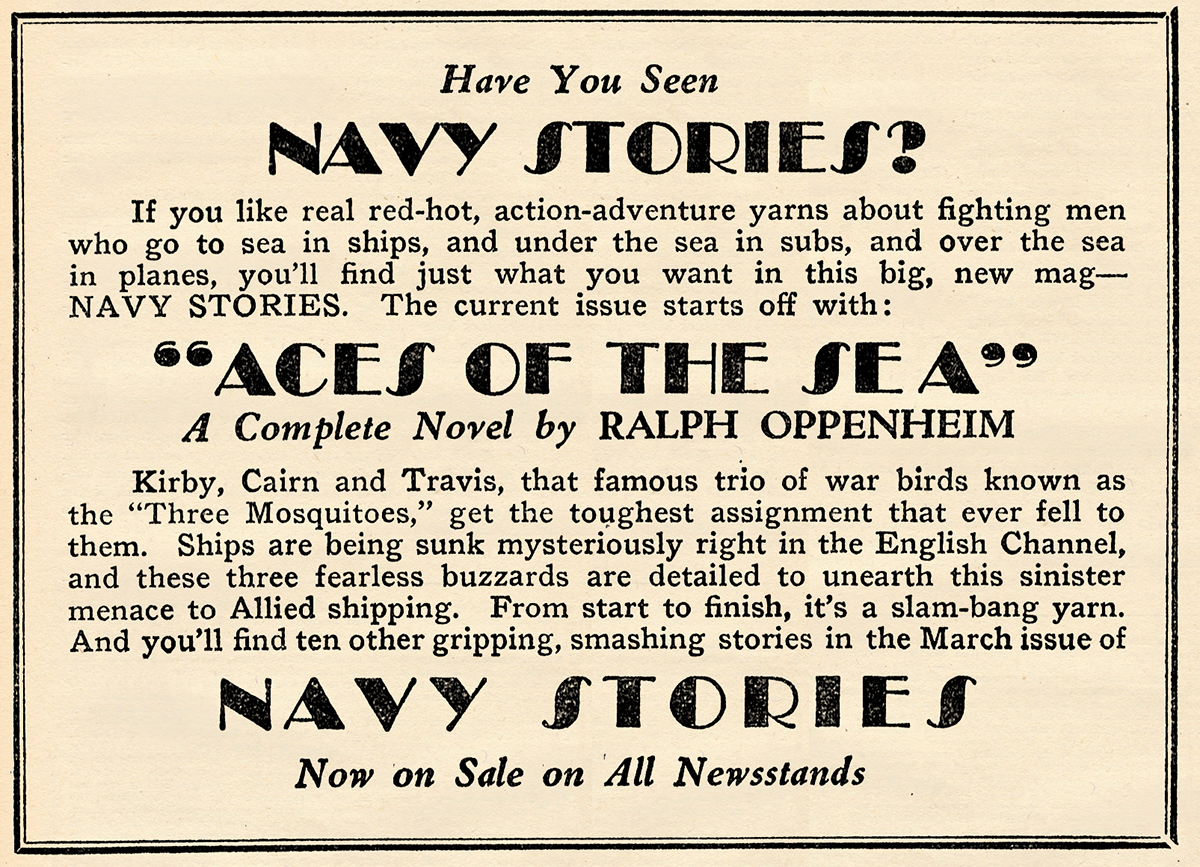
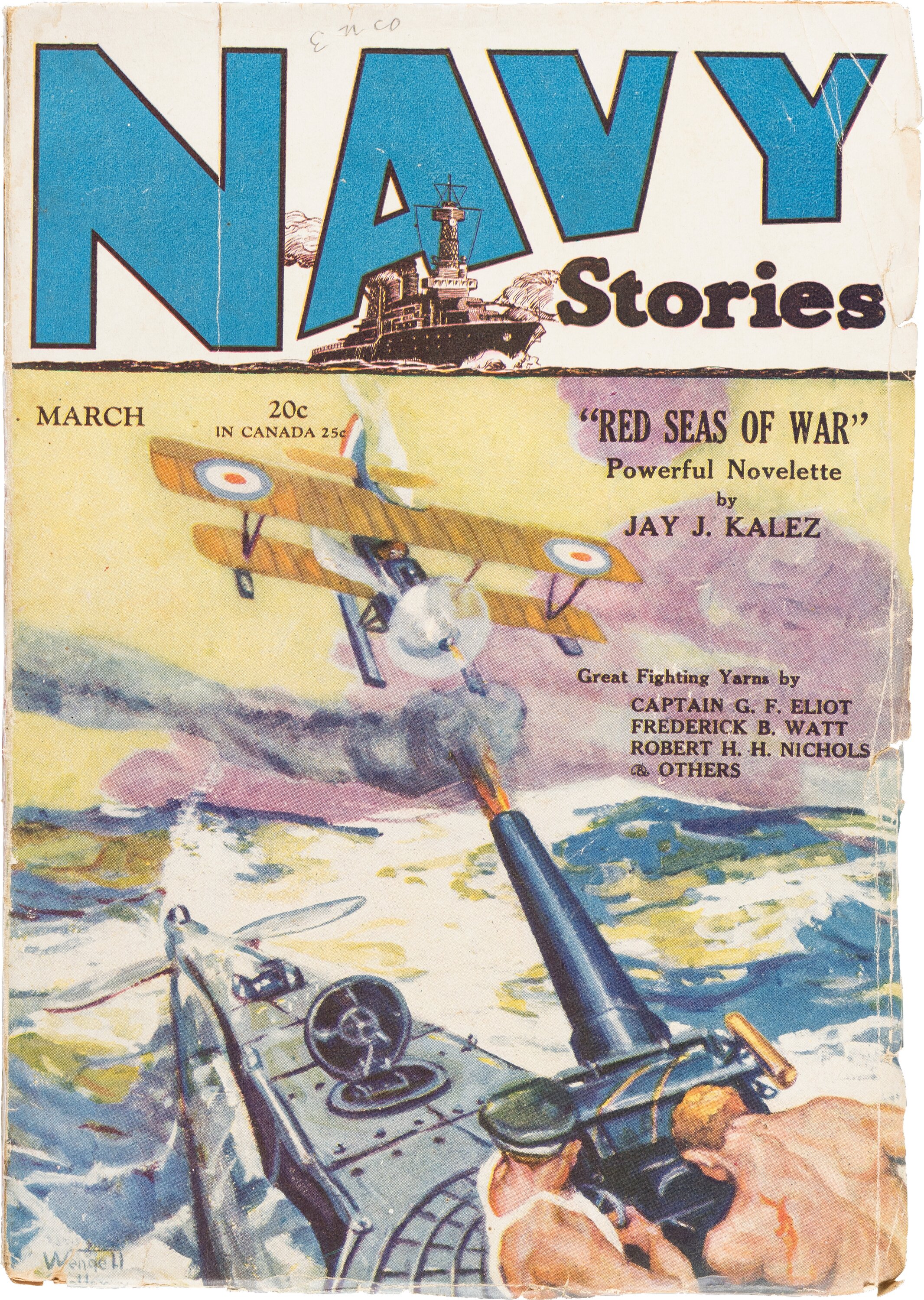 the third of three Three Mosquitoes stories we’re presenting this month. This week it’s a bit of a departure for the inseparable trio when they are loaned out to the Navy. Somehow, under our very noses in the heavily mined and patrolled waters of the English Channel, six ships have disappeared without a trace and no survivors. The Navy has designed a trap that they hope will catch or reveal what has happened to their missing ships and The Three Mosquitoes are to fly over the area to observe whatever happens. And that’s just the tip of this iceberg—events lead Kirby to be an unwilling passenger/prisoner aboard a U-boat bent on a hellish suicide mission to destroy Englands new super dreadnaught about to set sail! From the March 1929 issue of Navy Stories, it’s “Aces of the Sea!”
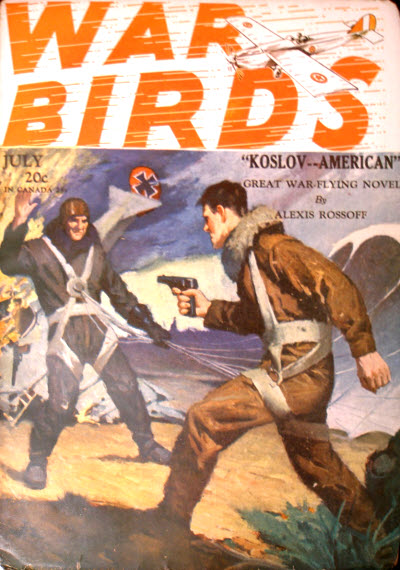 the second of three Three Mosquitoes stories we’re presenting this month. Nach Felt 21. Field 21. Important, time-sensitive information needs for an Allied offensive against the Boche has been hidden in the crotch of a forked tree down a dirt path in the woods on Field. 21. Intelligence operatives have been unable to retrieve this informations a last ditch effort, they figure a lone flyer may be able to land on the field, retrieve the information, and get out before the Germans in the area could stop them. Kirby is this flyer. Landing in the midst of German troops and retrieving the info is the easy part, keeping his two pals—Travis and Carn from tagging along is the hard part. From the July 1928 issue of War Birds, it’s “Stacked Cards!”
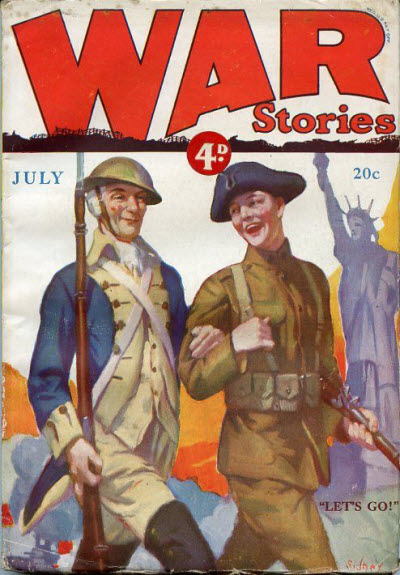 get things off the ground with Oppenheim’s very first Three Mosquitoes tale from the pages of War Stories from July 1927! This premier tale finds the inseparable trio separated following a stunting attack on the front line trenches that resulted in Carn and Travis going down behind enemy lines and captured and an humiliated Kirby being sent down to ferrying new ships to their assigned fields. Mindless, boring work for the beaten Ace—his instructions are to avoid all altercations and steer far clear of any action what so ever. Especially since the plane he’s flying and those of the other ferried ships have no guns! But that doesn’t stop Kirby when he sees the Block brothers sniffing around the very secluded forrest the Allies are amassing troops and supplies—he tries to find a way to stop them from getting that information back across the lines without the benefit of guns!
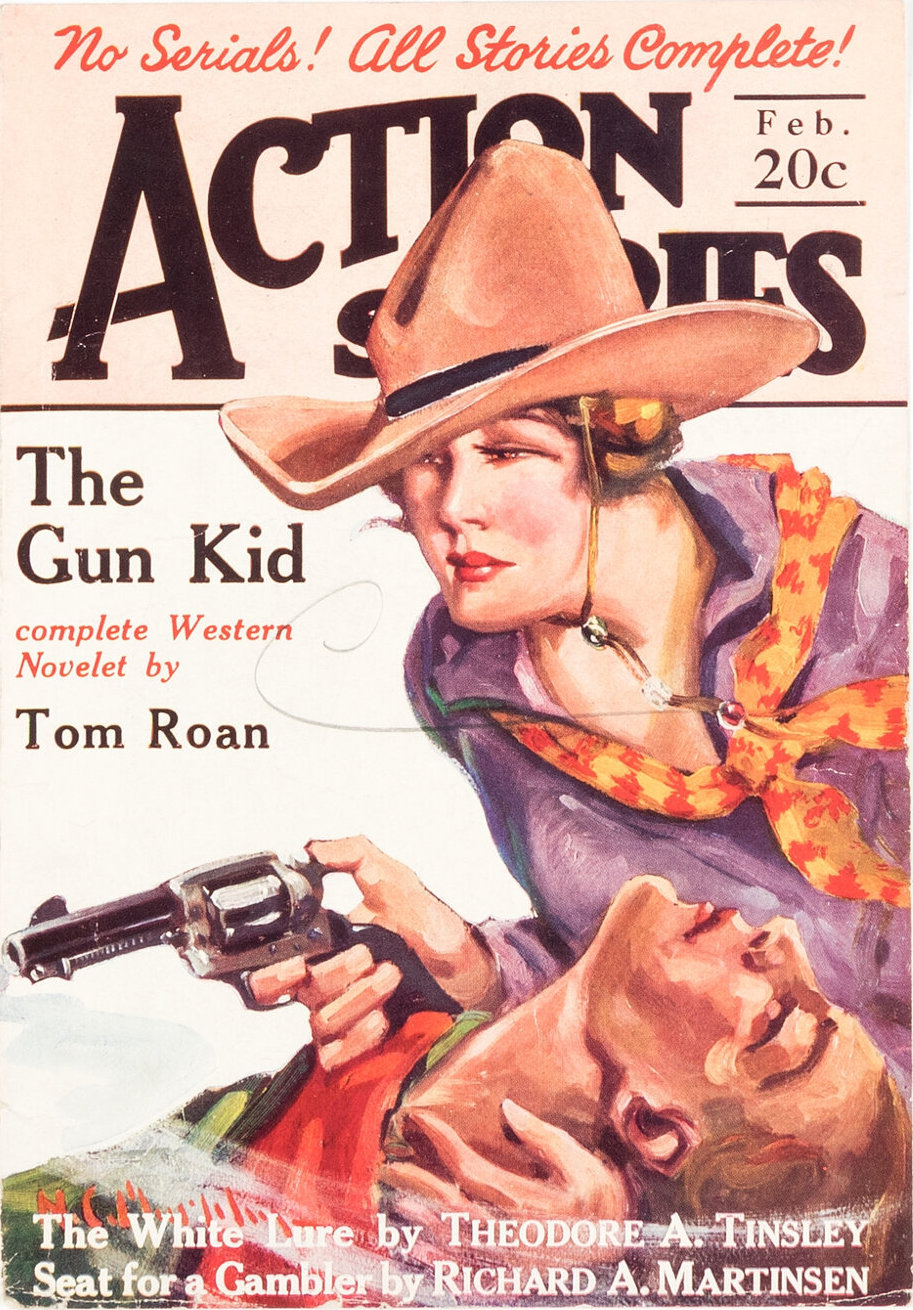 the pulps takes place at an Army Arsenal, whose innocent-looking buildings housed enough T.N.T. to blow up a fair-sized city. Although every safety precaution had been put in place, it seemed disaster was unavoidable when a letter arrived from an anarchist:
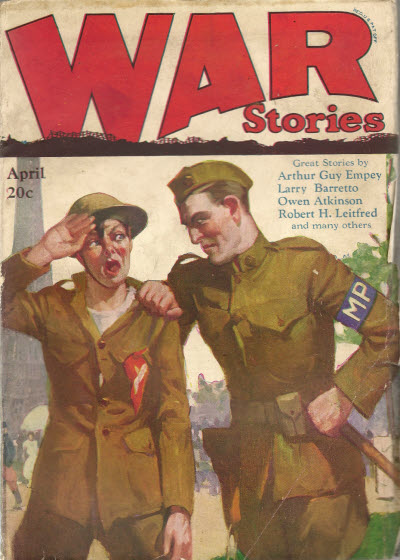 published pulp story was another aviation tale, this time for the pages of Dell’s War Stories for April 1927. In this second tale, John Slade is posted at an American base in France. Slade is to take a photographer over the lines in a two-seater observation crate without an escort in hopes of getting vital pictures of a ruined town the German’s are presently holding that the Allies want to take. Slade is an exceptional, daredevil pilot perfect for the job—his only fear is using a parachute! And this job may require that if he can’t get through the German’s A.A. guns and any planes they may send out to shoot them down. Will he be able to face his fears when the time comes?

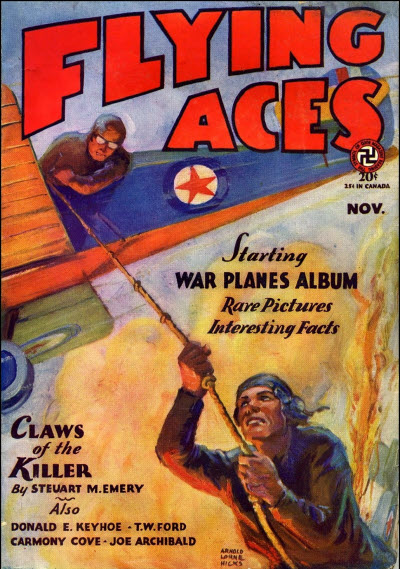 That sound can only mean one thing—that Bachelor of Artifice, Knight of Calamity and an alumnus of Doctor Merlin’s Camelot College for Conjurors is back to vex not only the Germans, but the Americans—the Ninth Pursuit Squadron in particular—as well. Yes it’s the marvel from Boonetown, Iowa himself—Lieutenant Phineas Pinkham!
 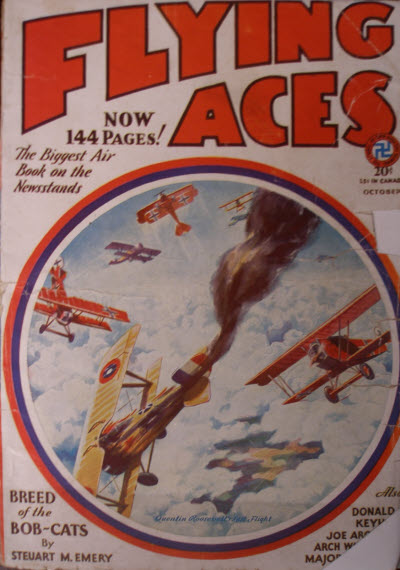 a story from the pen of a prolific pulp author O.B. Myers! Myers was a pilot himself, flying with the 147th Aero Squadron and carrying two credited victories and awarded the
 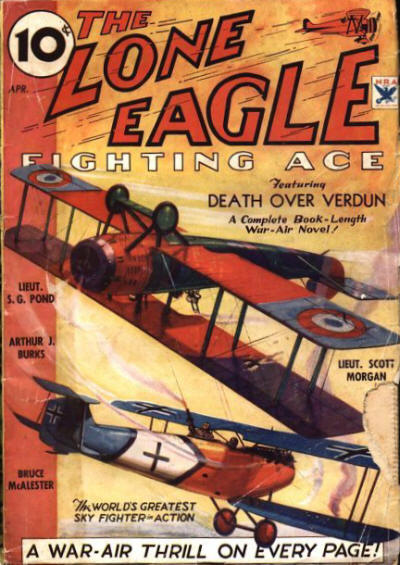 story by “Ace Williams.” I put his name in quotes because
 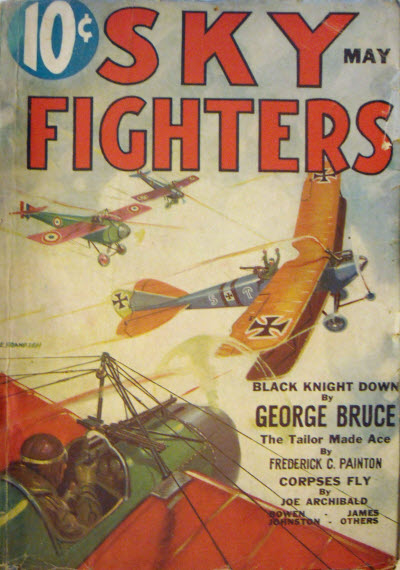 magazine has been exceedingly fortunate in securing R. Sidney Bowen to conduct a technical department each month. It is Mr. Bowen’s idea to tell us the underlying principles and facts concerning expressions and ideas of air-war terminology. Each month he will enlarge upon some particular statement in the stories of this magazine. Mr. Bowen is qualified for this work, not only because he was a war pilot of the Royal Air Force, but also because he has been the editor of one of the foremost technical journals of aviation.


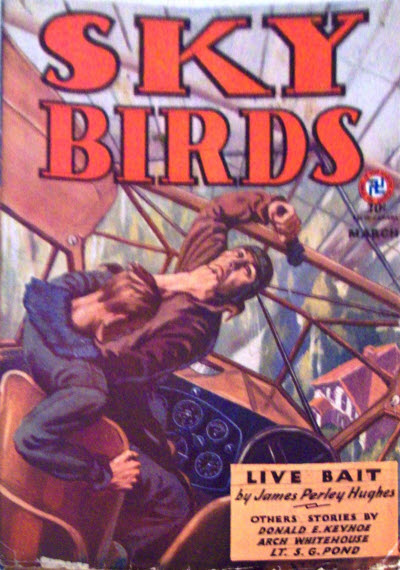 an early story from the pen of Donald E. Keyhoe—his first in the pages of Sky Birds magazine. Keyhoe started appearing regularly in the aviation pulps—Wings, Air Stories, Sky Birds, Flying Aces—starting in December 1929. His series characters started in August 1931.
 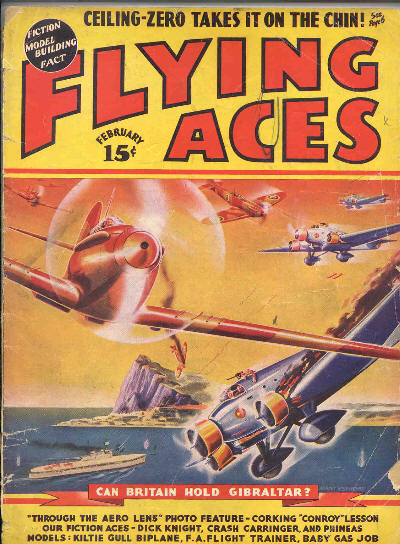 That sound can only mean one thing—that Bachelor of Artifice, Knight of Calamity and an alumnus of Doctor Merlin’s Camelot College for Conjurors is back to vex not only the Germans, but the Americans—the Ninth Pursuit Squadron in particular—as well. Yes it’s the marvel from Boonetown, Iowa himself—Lieutenant Phineas Pinkham!
 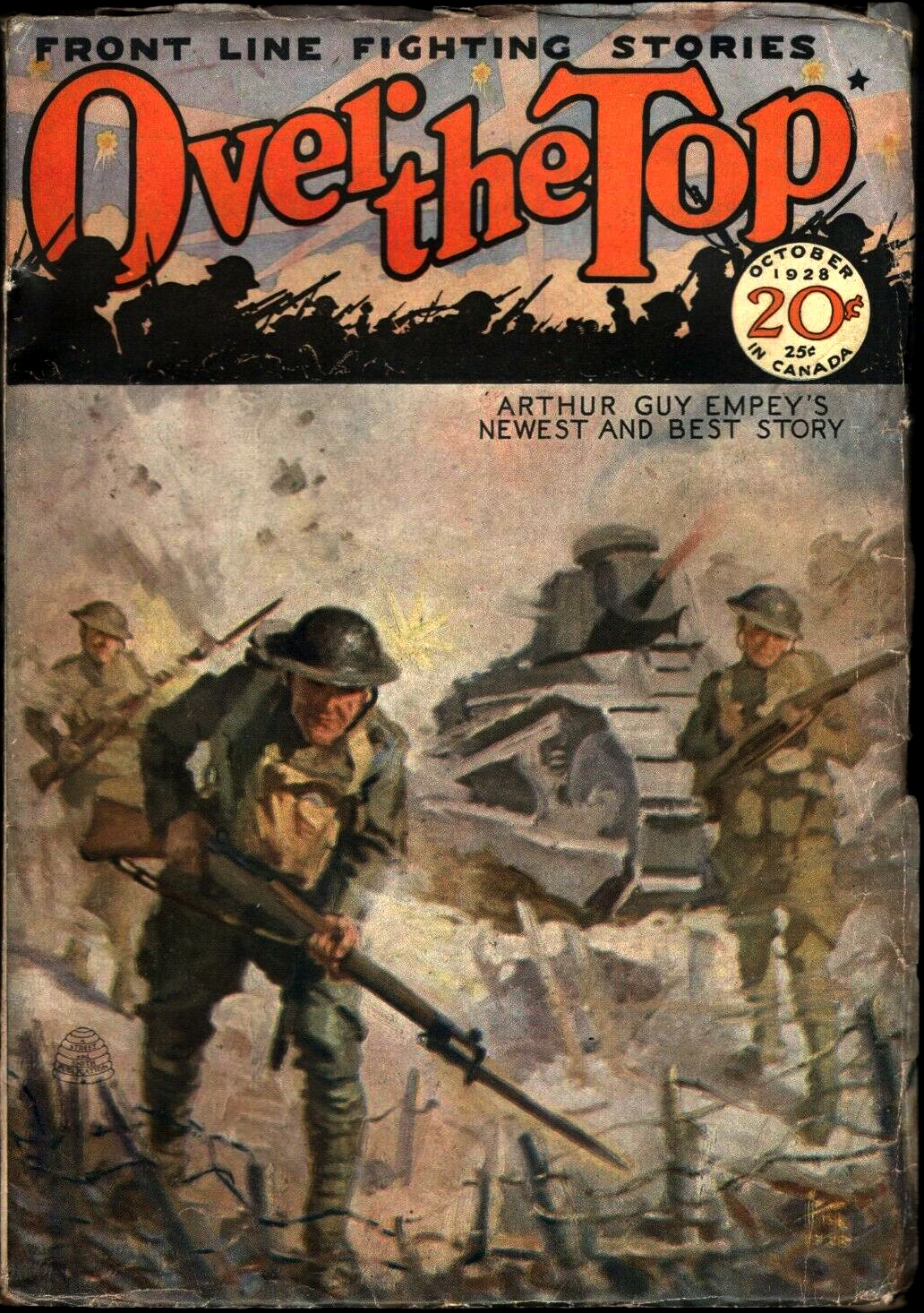 a story by Lloyd Leonard Howard from the pages of Street & Smith’s short lived Over The Top magazine. Over The Top was a magazine featuring war stories by the likes of Arthur Guy Empey, George Bruce, Raoul Whitfield among others. One of those others being Lloyd Leonard Howard who had stories in about a dozen of the 21 issues. Several of them featured a pilot by the name of Lieutenant Buck Manley and his pal Lieutenant “Stubby†Davis. Stubby doesn’t appear in this first story where Buck, separated from his flight in enemy hell skies, tries to get back to his home base—or at least friendlier skies—before his plane and his luck can go no further!
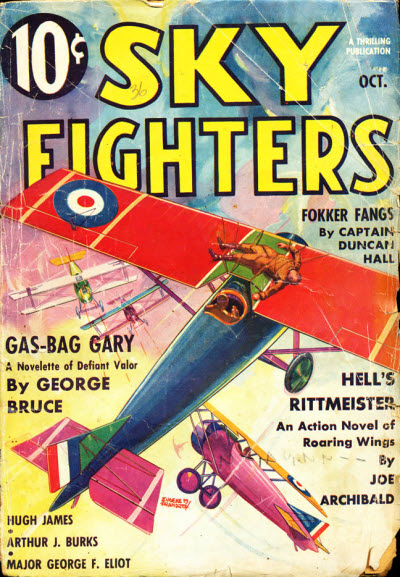 a story by another of our favorite authors—


