


My Most Thrilling Sky Fight: Lieutenant Navarre
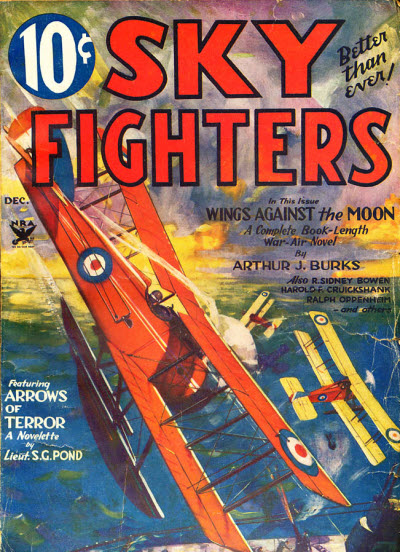
Amidst all the great pulp thrills and features in Sky Fighters, they ran a true story feature collected by Ace Williams wherein famous War Aces would tell actual true accounts of thrilling moments in their fighting lives! This time it’s French Lieutenant Navarre’s Most Thrilling Sky Fight!
The year before 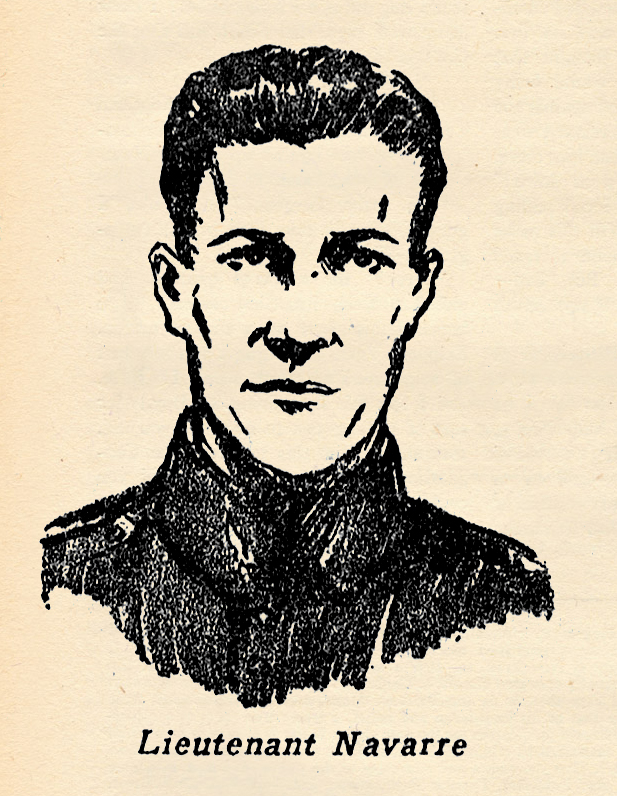 America entered the War, there was one name that was consistently emblazoned in the papers along with Marshal Joffre, Earl Kitchner, and the other high ranking generals. It was the name of Navarre, the “Sentinel of Verdun.” Navarre was the first Ace, the first man to destroy live enemy aircraft in plane to plane combat. At the first battle of Verdun he did yeoman duty. It was his reports brought in after solo patrols far in the rear of the German lines that enabled Marshal Joffre to so dispose his defense troops at Verdun that the attacking armies under the command of the German Crown Prince were never able to take the city.
Alone, of all the French fortifications, it stood impregnable through the entire War. To Navarre, as much as to anybody else, belongs the credit for this victory. It was only during Navarre’s last days on the front that his plane was equipped with a machine-gun.
Despite that fact, he rolled up a record of 12 enemy planes brought down and destroyed before he was wounded and permanently disabled. His account below is from the records of a French journalist.
AN UNUSUAL VICTORY
by Lieutenant Navarre • Sky Fighters, December 1933
THE AIR FIGHT which I believe the most remarkable is one which took place far beyond Verdun. A German photo plane had come down out of the clouds unexpectedly right over the fortress, had circled around undisturbed and taken pictures. I got the call at my airdrome just as I had landed from a flight.
Without taking time to fill with gasoline or load up with more ammunition, I hopped in my ship and took off again. When the enemy ship saw me coming, it banked off and headed for home. I poured on all juice and raced after it.
The distance between us narrowed very slowly. My heart was in my mouth. I was sad. I knew I must get that ship before it landed with its pictures. I goosed my throttle and spark, stuck the nose of my ship down until I was just skimming the ground. Boche rifles shot at me.
Stitches of little round holes appeared like magic in my wings. But I raced on with greater speed because I was close to the ground. The Boche photo ship was still high up, but beginning to circle. I prayed for time to wait! Pushed on my controls, did everything! Just managed to get beneath the Boche as he was coming down for a landing on his own drome. The Boches on the ground saw me. They hustled out other ships. I nosed up to meet the down coming Boche with my hand tense on the trigger of my Lewis gun. At fifty yards I gave a burst. It missed.
The Boche answered with two bursts. I banked and slipped away. The Boche nosed after me, sending out bullets all the while. Two other planes were taxiing across the ground. They would be up soon!
I had to do something swiftly, or not at all. I banked around, headed towards the photo plane, got it sighted and pressed my trigger again. But nothing happened! I had run through the last of my ammunition with the previous burst. I stuck my nose down. The Boche photo plane came after me, right on my tail. I stood up. in my seat, looked at my gun hopelessly. Looked back over my shoulder. The Boche plane was almost on me. The pilot was grinning. His propeller was almost gnawing at my tail surfaces. But there were no shots.
A sudden idea hit me. I reached up, wrenched the empty ammunition drum from my Lewis. Without waiting I hurled it back over my head. The propeller blast carried it straight back. I heard a chattering thud, then a hissing plop. I looked back over my shoulder. The drum had shattered the Boche’s prop. One blade had broken. The engine was wobbling in its frame. I swung out of my dive, banked up. The Boche hurtled past out of control, plunged into the earth, burst into flames.
The other Boche got up, raced me all the way to Verdun. But I beat them back. They didn’t come across after me. They turned back at the lines. That without question is my most remarkable flight.


 another exciting air adventure from the pages of the pulp magazines of the 1930’s. This week we have a tale from the pen of that Canadian stalwart—
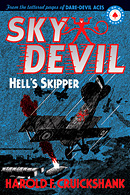 by Harold F. Cruickshank, check out
 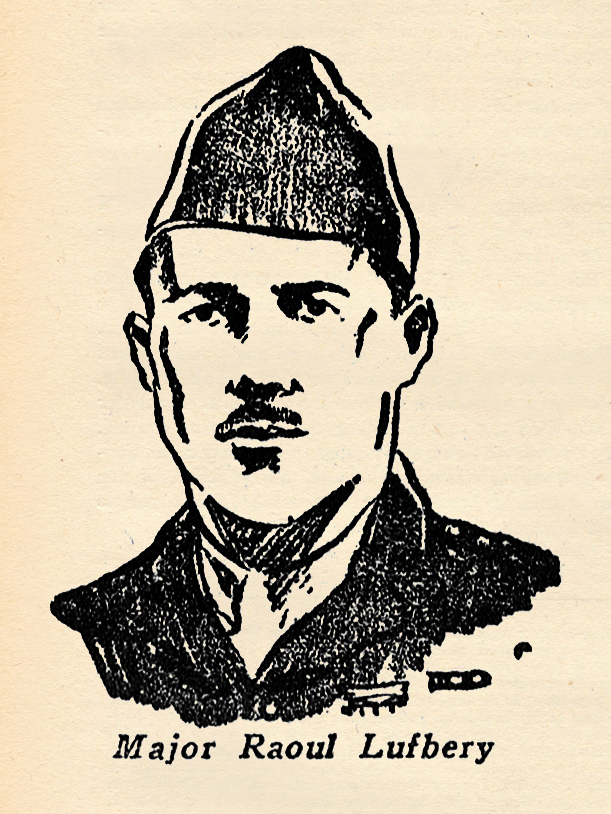 already famous when America entered the War. For some time he was the mechanic of Marc Pourpe, famous French flyer. Pourpe was killed in aerial combat. Lufbery who was with the Foreign Legion, asked to take his place in order to avenge his death. The French army, defying usual procedure sent him to join Escadrille de Bombardmente V. 102, where he made a distinguished record.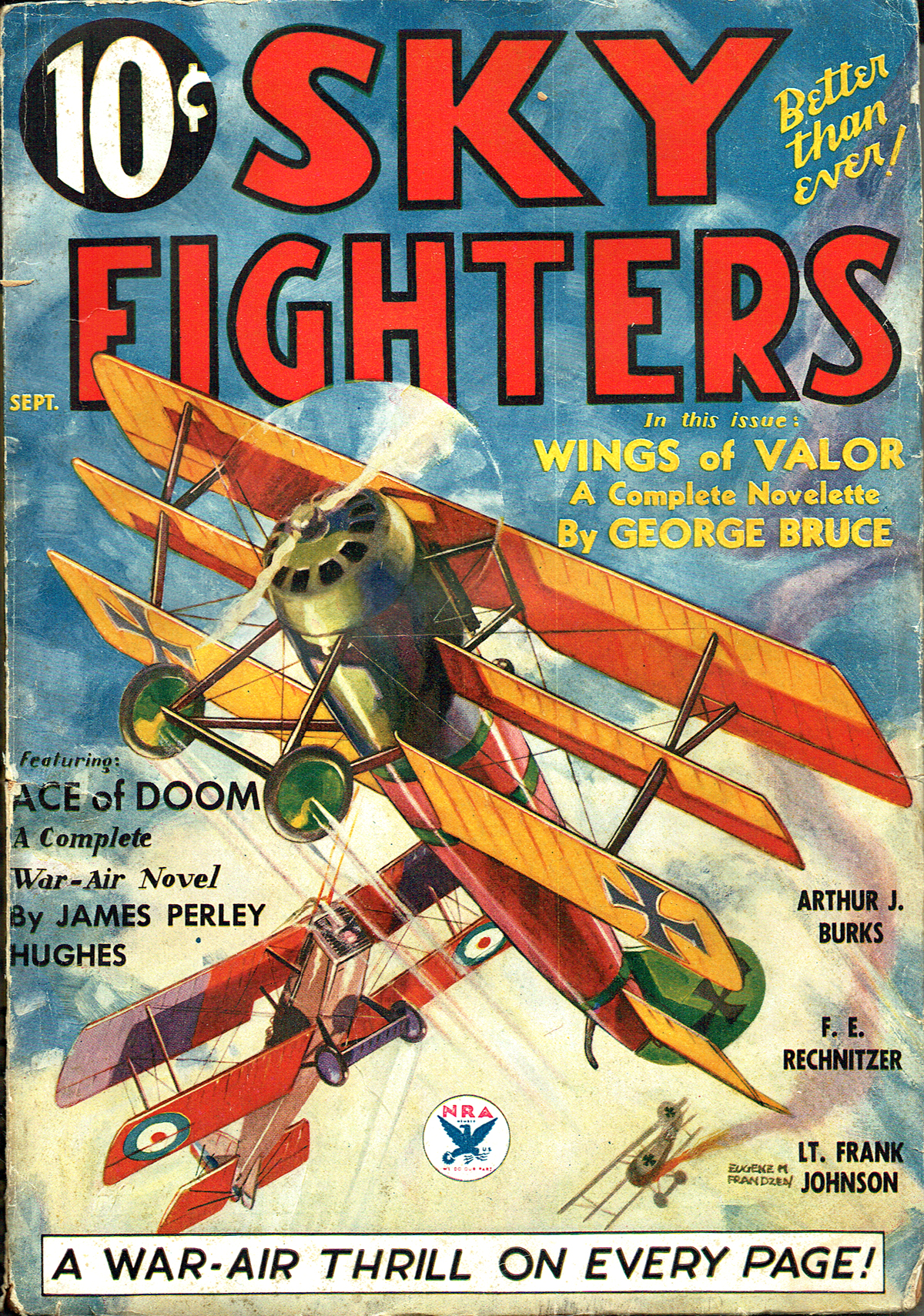
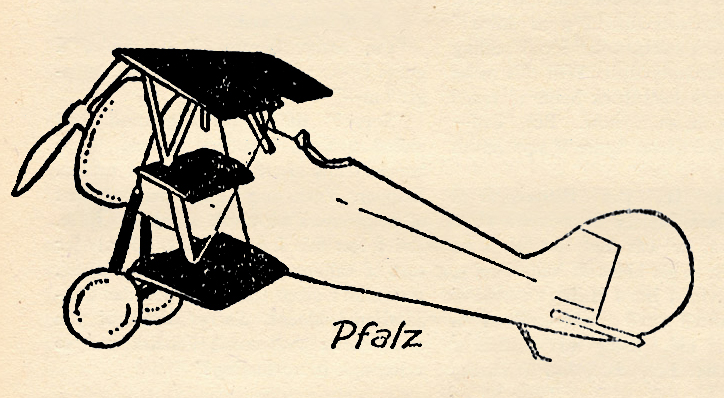
 Royal Flying Corps and quickly developed a reputation as an aggressive pilot. In April 1915, armed with just a few bombs and some hand gernades, he successfully attacked a Zeppelin plant at Gontrobe while flying a
 remembered as the man behind
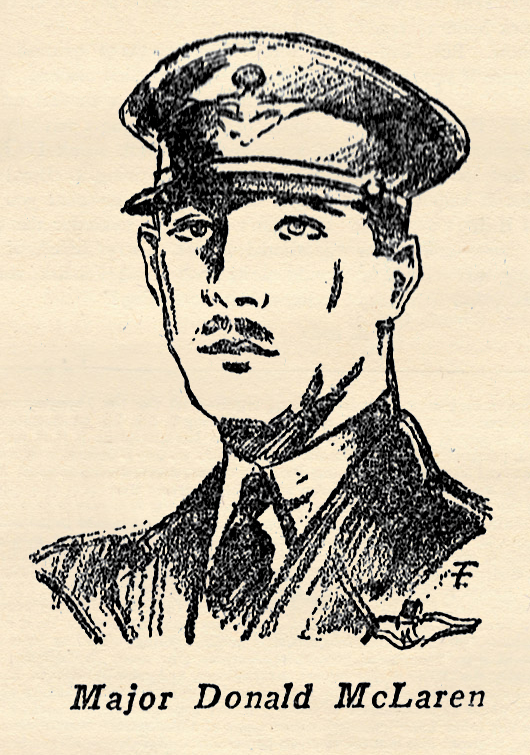 Donald McLaren was born in Ottawa, Canada, in 1893, but at an early age his parents moved to the Canadian Northwest, where he grew up with a gun in his hands. He got his first rifle at the age of six, and was an expert marksman by the time he was twelve. When the war broke out he was engaged in the fur business with his father, far up in the Peace River country. He came down from the north in the early spring of 1917 and enlisted in the Canadian army, in the aviation section. He went into training at Camp Borden, won his wings easily and quickly, and was immediately sent overseas. In February, 1918, he downed his first enemy aircraft. In the next 9 months he shot down 48 enemy planes and 6 balloons, ranking fourth among the Canadian Aces and sixth among the British. No ranking ace in any army shot down as many enemy aircraft as he did in the same length of time. For his feats he was decorated with the D.S.O., M.C., D.F.C. medals of the British forces, and the French conferred upon him both the Legion d’Honneur and Croix de Guerre. Oddly, just before the war ended, he was injured in a wrestling match with one of his comrades and spent armistice day in a hospital nursing a broken leg. He had gone through over a hundred air engagements without receiving a scratch. The air battle he describes below is unusual because almost 100 planes took part in it.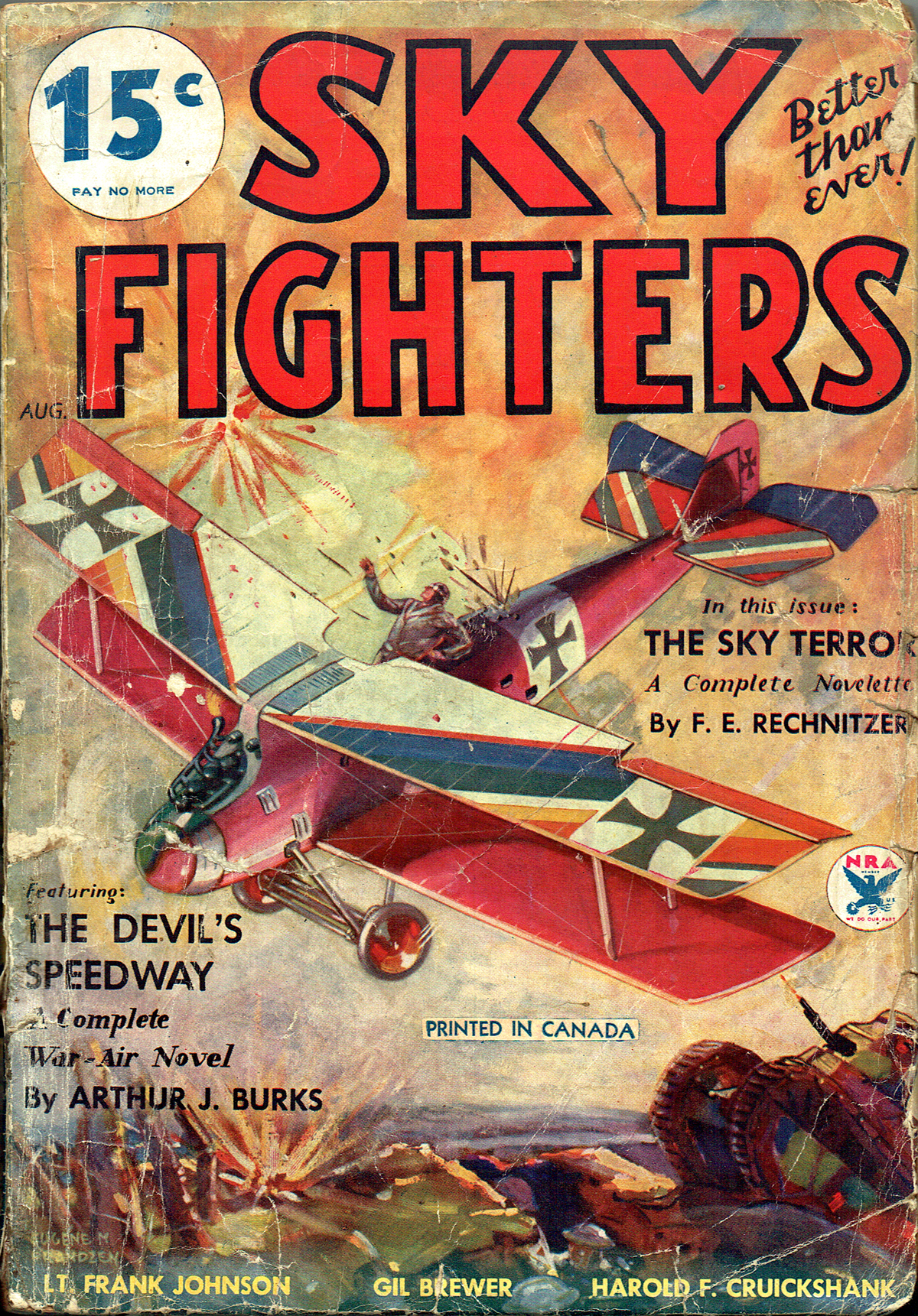
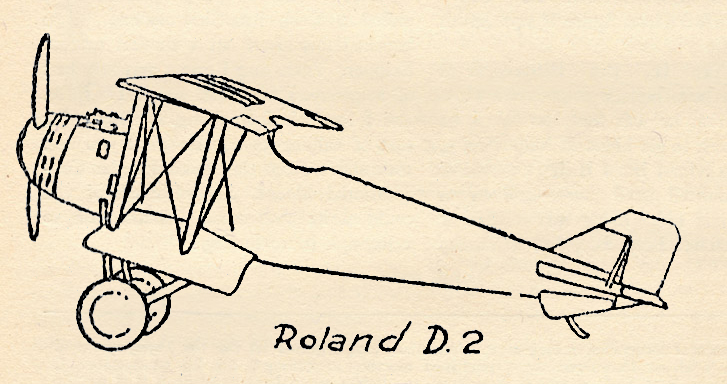
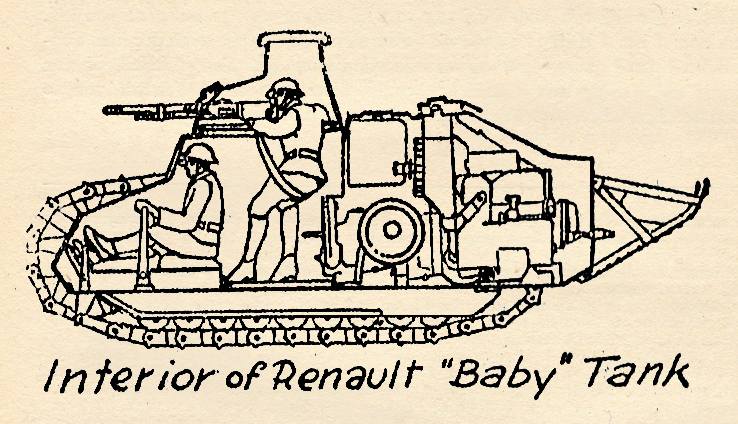
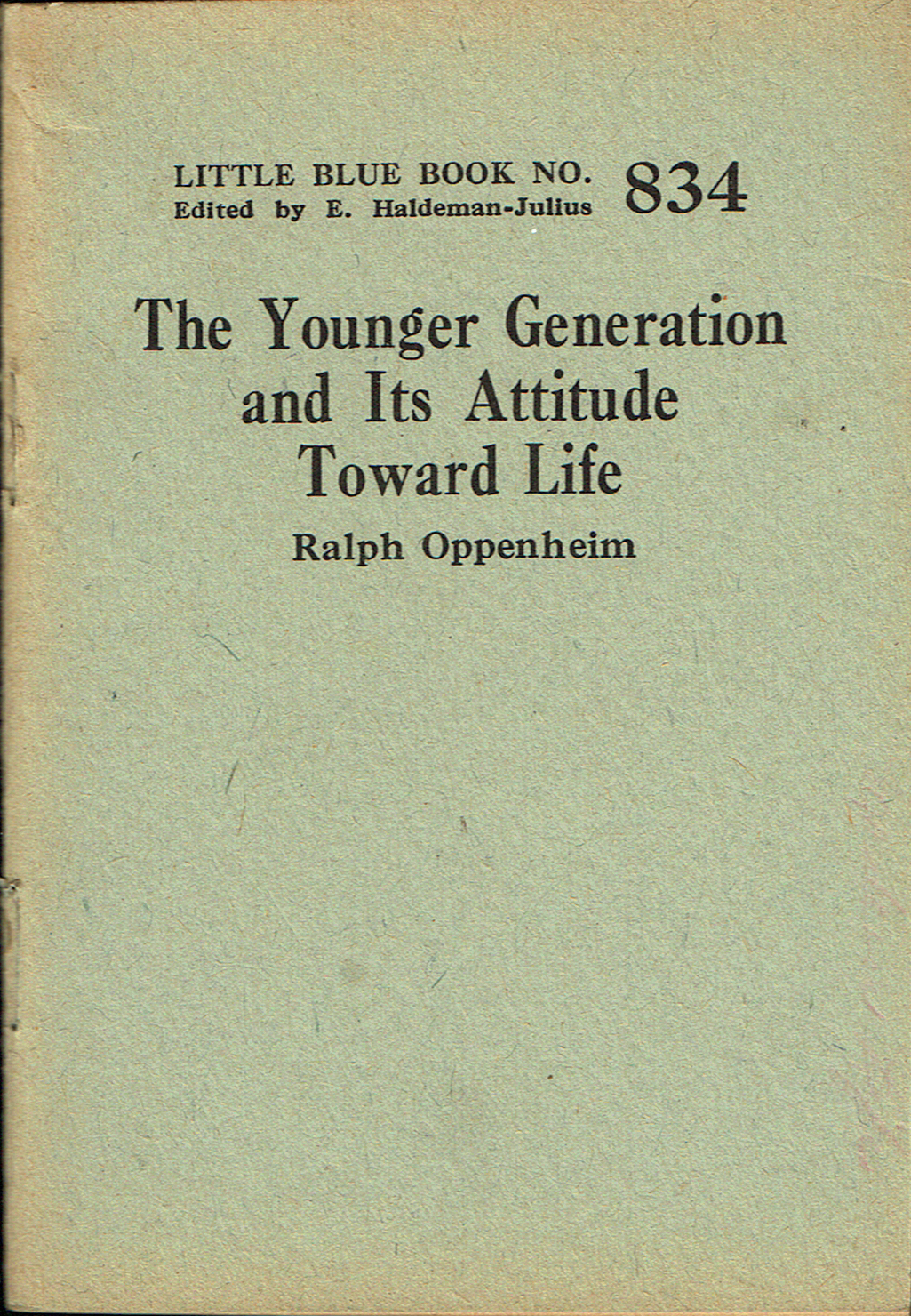
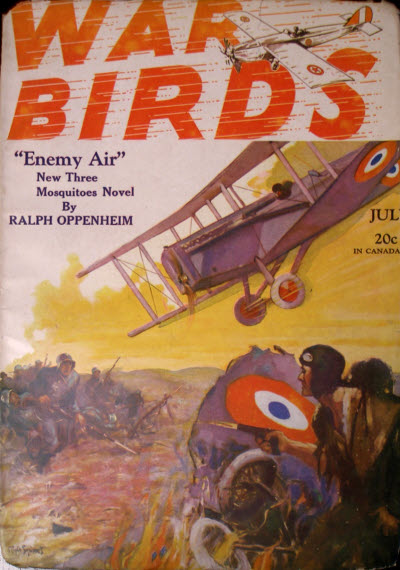 the third and final of three Ralph Oppenheim’s Three Mosquitoes stories we’re featuring this march for Mosquito Month! And this one’s a doozy! Kirby and the boys stumble upon a German spy ring and find themselves in one of their most dangerous missions yet that takes them all the way to a face to face meeting with Kaiser Wilhelm himself! You don’t want to miss it—it’s a true group effort as Travis gets to shine in this tale from the pages of the July 1929 issue of War Birds—when the boys find themselves in”Enemy Air!”
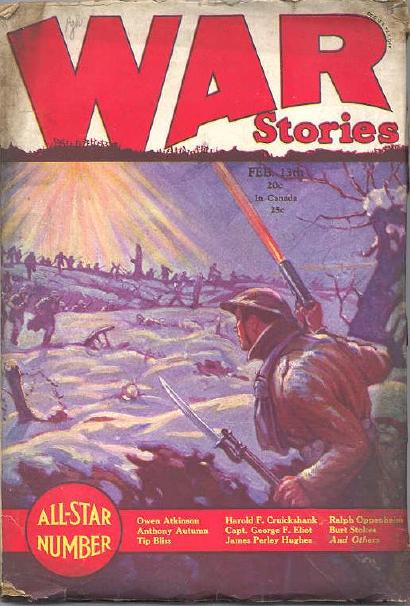 the second of three tales of Ralph Oppenheim’s Three Mosquitoes we’re featuring this march for Mosquito Month! This week, the germans are advancing troops to the front on road 12, but all reconnaissance flights report no activity on road 12! So it’s up to the inseparable trio to unravel the mystery of road 12—all they need is a little “Mosquito Luck!” From the February 13th, 1930 issue of War Stories—


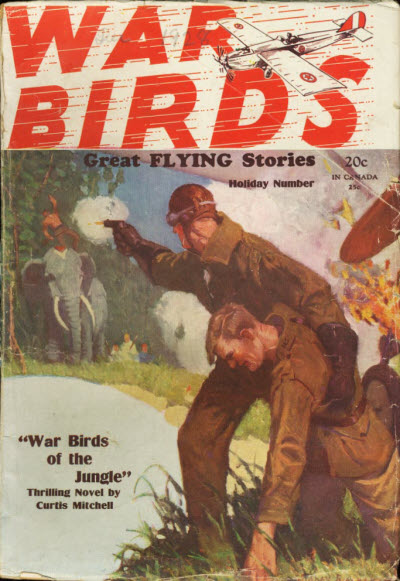 rolling with a tale from the pages of the December 24th, 1928 issue of War Birds.