EYES RIGHT! Pass in review before one of the livest of live-wire outfits, Galveston’s “Lucky Seven Flight” 37 Squadron, Texas.
Roll Call. Captain Robert L. Meade, Flight Commander. Second Lieutenants William A. Meade, Billy Ague, Arthur Lucas, Jr., Carol Oppermann, Malcolm Kirschner, John Hardin, Jr., Francis Dwyer, Jules Lauve, Jr., Cornelius Lauve, and civilian J.T. Russell.

From The Galveston Daily News, April 19th, 1934.
Their Flight Insignia is Winged Dice with Seven showing (pictured above). Meetings are held every Monday night at the Lucky Seven Hutment located behind Robert Meade’s house at 1406 Avenue K. The building is a large, one-room structure decorated with almost every conceivable part of an airplane. The floor is painted green, white and red. The walls are white with a bottom and ceiling border of orange. Hanging on the four walls are pictures of airplanes, blue prints, pictures of aces. Aerial bombs stand in each corner and model planes hang from the ceiling. The hutment contains an aviation library, a bulletin board and on the walls are printed the names of the leading aces of each nation during the war. A large picture of President Roosevelt decorates the C.O.’s corner.
|

THE MEMBERS, standing left to right: Billy Ague, Jules Lauve, Neal Lauve. Sitting left to right: Russell Mullins, Robert L. Meade, William A. Meade. (This picture does not show the Flight’s full war strength.)
|
The members of the Lucky Seven Flight met in the Boy Scouts where they were in Troop 20 together. In fact they were still quite active in the scouts attending meetings on Fridays, while attending meetings of the Lucky Seven Flight on Mondays. (Password for admittance: 7 come 11.) Flight Commander Meade described what went on at their meetings in a letter to the WAR BIRDS CLUB C.O.:
Galveston, Texas.
August 18th, 1934.
TO: Wing Commander
SUBJECT: Lucky Seven Flight Meeting Routine.
The Lucky Seven Flight meetings are held every Monday night from 7:30 o’clock to 9:00 o’clock.
The meeting is called to order by the Flight Leader. He is then seated. This is followed by roll call by the Adjutant as he has a record of each individual officer. Members that are absent are fined unless they are able to furnish a very good excuse, and tardy members are fined one cent for each minute they are late. Dues are then collected. These are twenty-five cents a month.
Reports are then heard from certain officers who have been detailed to bring information about certain events that occurred during the World War. (As our object is to study World War Aviation reports always bear upon it). Open discussion of these reports follow.
Members are given the floor by raising their hand and are addressed as “Lieut. Blank.” The C.O. having prepared a list of questions and answers concerning the World War, reads them to his Flight, who in turn write them down on paper and take them home to be studied. Officers are given a written examination on these questions once a month. The man making the highest grade three times in succession is awarded a prize by the Flight Leader. Following this, suggestions for the betterment of the Flight are taken by the C.O. We discuss these suggestions and choose the best submitted. The Flight Leader then asks for donations from each member for the decoration of the Hutment. Each officer Hands in his decoration and certain members are ordered to remain after meeting and arrange them in their proper places. Men seeking entrance into the Flight are then introduced, if any.
General discussion follows; athletic activities, individual activities, such as model making, social activities of the Flight, etc.
Following this all members stand and sing our Flight song, “The Song of the British Airmen.” Meeting is adjourned with the salute to the colors led by Flight Leader.
ROBERT L. MEADE, Jr.
CAPTAIN AND FLIGHT LEADER, SQUADRON 37.
Meade was an outspoken leader who kept his Flight busy. And he kept the WAR BIRDS CLUB C.O. updated with frequent letters of suggestions and activities which were mentioned in the both the FLIGHT NEWS and CITATIONS AND PROMOTIONS sections of THE COCKPIT.
a LUCKY SEVEN FLIGHT timeline

FEBRUARY 1934
- ROBERT MEADE, JR., of Galveston, Texas on the subject of admitting German members: “The spirit of patriotism flows in the veins of these German applicants just as it does in the rest of us. As the object of the WAR BIRDS is to revive and retain the ‘Spirit of ’18,’ a man’s patriotism should be the test. It shouldn’t make any difference if he’s patriotic to a different country than ours.”
MARCH 1934
- PROMOTIONS: ROBERT L. MEADE, Jr., 2nd Lieut. Squadron 37, Galveston, Texas. 1st Lieut. Effective immediately. Valuable suggestions.
MAY 1934
- WORDS A-WING: ROBERT L. MEADE, JR.—1406 Ave K, Galveston, Texas, sends along a fine post of eleven men and all the data is drawn up in a military manner. He has evidently formed a live organization. His letters to those who write him should be interesting and valuable.
- CITATION: ROBERT L. MEADE, JR., 2nd Lieut., 37 Sq.—For his suggestion that we publish booklets on Airplane engines, Airplane instruments, Airplane Dictionary. He believes that we should put out four booklets each month.
JUNE 1934
- WORDS A-WING: ROBERT L. MEADE, JR., 1406 Ave. K., Galveston, Tex., has one of the liveliest squadrons in the U.S. He would like to hear from WAR BIRDS attending commercial flying schools. His outfit, “Lucky Seven Squadron,” has a well decorated clubhouse, a library and hold regular meetings.
AUGUST 1934
- ROBERT L. MEADE, JR., has been promoted to the rank of Captain for his general military manner of attending to duty, his faithfulness in forwarding reports and news of his Flight and the value of suggestions submitted. Congratulations, Bob, and “Lucky Seven.”
- Full Page write-up with half page photo of group, a description of their Flight Hutment, and mention of a large house party and dance with an aviation theme the club threw that had been written up in the Galveston Daily News.
- FLiGHT PARADE: LUCKY SEVEN FLIGHT—1406 Avenue K, Galveston, Texas. Captain Robert L. Meade, Flight Commander. Second Lieuts. and civ. William A. Meade, Billy Ague, Arthur Lucas, Jr., Carol Opperman, Malcolm Kirschner, John Hardin, Jr., Francis Dwyer, Jules Lauve, Jr., Cornelius Lauve, J.T. Russell. Flight Insignia is Winged Dice with Seven showing. Meetings every Monday night. Password 7 come 11.
NOVEMBER 1934
- CiTATION: CAPT. ROBERT L. MEADE, JR., Squadron 37, for his thoughtfulness in submitting a report on his visit to the Seventh Pursuit Squadron at San Antonio.
DECEMBER 1934
- A page of war bird flight insignias includes Lucky Seven Flight, Squadron 37, Galveston, Tex.
- A letter on Flight Meeting Routine (printed above).
JANUARY 1935
- FLIGHT NEWS: LUCKY SEVEN FLIGHT, 1406 Avenue K, Galveston, Texas, reports through Captain Robert L. Meade, Jr., that the flight made a group visit to Galveston Municipal Airport in September and presented the membership cards to the Airport Manager, Mr. Robert Scholes. Besides permitting inspection of facilities. Mr. Scholes consented to give the group FREE ground course instruction.
FEBRUARY 1935
- FLIGHT NEWS: LUCKY SEVEN FLIGHT, 1406 Avenue K, Galveston, Texas, continues to be the most active of all War Bird flights. Through the Commander, Captain Robert L. Meade, Jr., various activities are reported: the regular attendance of the flight at ground school classes of the Galveston Municipal Airport, attendance in a body at Galveston Air Show and at the Aerial Circus of Galveston Flying Service Inc., and the addition of several new books to the Flight library. On the personal side, Captain Meade reports a visit paid to the VICTORY FLIGHT at Victoria, Texas, and an attempt at contact with the DEATH ACE FLIGHT of Fort Worth. Captain Meade was unable to locate any of the officers or members of the DEATH ACE FLIGHT. We would like a report on this from the flight in question or any more data in the possession of Capt. Meade. We are in favor of inter-flight visits and if any flight has changed its address, we should be notified immediately.
- CITATION: CAPT. ROBERT L. MEADE, JR., 37 Squadron, for his well written, interesting reports; his intelligent direction of the Lucky Seven Flight and his active interest in other flights. This officer has visited various War Bird flights, been generous with his time in behalf of the organization and has, in every way, conducted himself splendidly.
APRIL 1935
- FLIGHT NEWS: LUCKY SEVEN FLIGHT—1406 Avenue K, Galveston, Texas. Captain R. L. Meade, Commanding—continues to be our most active flight, and its reports are models for detail. This flight keeps actively in touch with all happenings at the Municipal Airport and at Fort Crockett, headquarters tor the Third Attack Group. Captain Meade has sent detailed reports with pictures which we may he able to publish later. The flight is also attending ground school and special flight programs are arranged for significant holidays; Armistice Day, Wright Day, etc. A recent guest of the flight was Captain Frederick Kreuzberg, German World War ace credited with 17 victories. During a recent visit to the Coast on the part of the Commander, the flight was led by Second Lieutenant William A. Meade.
- CITATION: CAPTAIN (hereafter, Major) ROBERT L. MEADE, JR., Squadron 37, Commanding Officer of the Lucky Seven Flight, Galveston, Texas.
- MAJOR MEADE, by his unflagging energy, has made the Lucky Seven Flight outstanding even in an organization which boasts justly of its active and enterprising flights. His achievements as a flight leader and the accomplishments of the flight that he leads have been recorded in these columns before. We congratulate Major Meade and the Lucky Seven Flight equally; we believe that they are interdependent and that what the flights owe to good leadership is balanced by its leader’s debt to devotion and discipline.
JUNE 1935
- PROMOTIONS: For exceptional service and outstanding ability, the following officers are raised to the ranks indicated (effective May 1, 1935): 2ND LIEUTENANT BILLY AGUE—37 Squadron—to 1st Lieutenant.
WITH the the final COCKPIT column in the June 1935 issue, so went any news of the Lucky Seven Flight. What became of the Club? The Hutment? The members? Scouring the newspapers of the day I could find no more mentions of the club or its activities.
All the boys registered for the draft with their local boards on R-Day—October 16th, 1940—the date on which all men between ages 21 and 35 were required to register for the draft. By 1940, John Hardin had moved to Nueces and Francis Dwyer to Houston, but the rest of the boys were still in Galveston.
1940 census lists the boys as holding down the following jobs: Robert Meade, 27, was listed as being a traveling salesman for advertising while his younger bother, now 23, was working as a clerk for a steamship line—both boys were still living at home with their Father and 12 year old sister at 1406 Avenue K; Billy Ague, 21, was living with his mother and sister while working as a helper at Beach Amusements; Robert Lucas, 20, was still living at home and working as an attendant at a filling station; “Bubba” Oppermann was 24, still residing at home and working for the Texas State Employment Service; Malcolm Kirschner, 25, living at home with his parents while driving a delivery truck for the Galveston Oil Company – Abe Seibel; John Hardin, also 25, had moved to Nueces where he was working for Brown & Root on the Corpus Christi Naval Air Base; Francis Dwyer, 26, was living in Houston with his mother and step-father and working as a carpenter’s helper for A. Copeland, General Contractor; Jules Lauve, 23, was still at home with his bother Neal, 21—Jules had already started his sign painting shop while his brother toiled as an assistant bookkeeper at the bank; and Russel Mullins, now 22, was a Texas A&M College student.
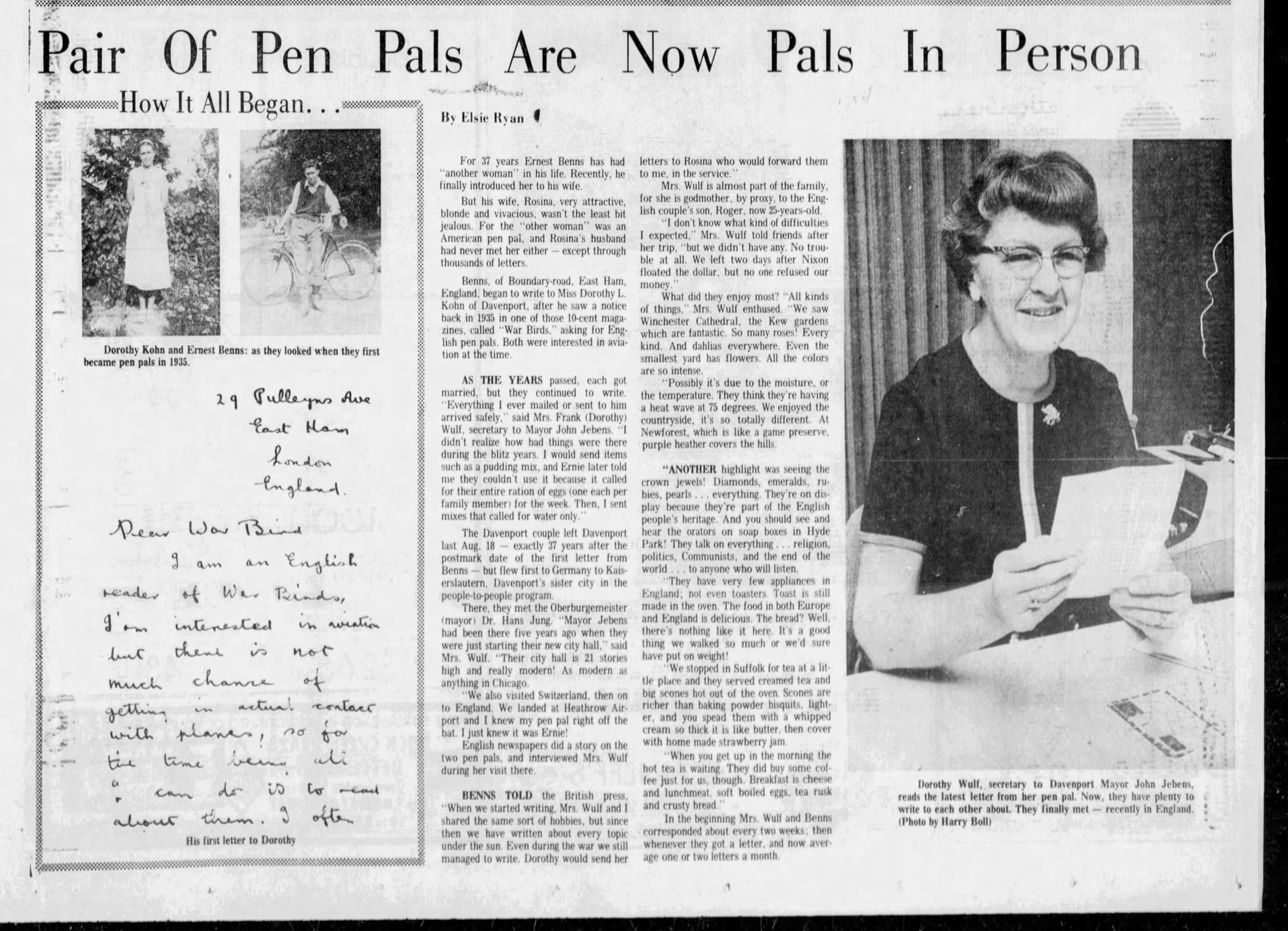
Okay. But what became of the members after that? Well…
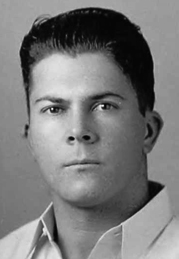 ROBERT LEO MEADE, Jr. (Jul 20, 1913 – Aug 6, 2000) Flight Commander and driving force behind the club, he had been a Junior Assistant Scout Master back in his Boy Scout Days and was the oldest member of the Lucky Seven at 20 when they formed. Born in Galveston, he served in the Navy aboard the USS PLUNKET during World War II and worked for the Civil Air Patrol afterwards being described as a Second Lieutenant in 1953. He married in 1954. At some point he moved to Robertsdale, Alabama near Mobile. He passed away there on August 6th, 2000.
WILLIAM “BILLY” GASTON AGUE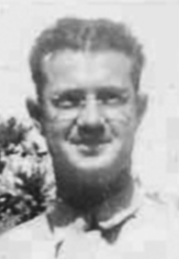 (Sep 25, 1918 – Jul 25, 1963) William Ague was born in Sewickley, Pa, just outside Pittsburgh in on September 25, 1918, moving to Galveston in 1920. He was employed by the City of Galveston Water Department as a pipe fitter until the time of his illness. He was a veteran WWII where he was a Private First Class with the 385th Bombardment Squadron Army Air Forces. He is survived by his mother and younger sister. (obit)
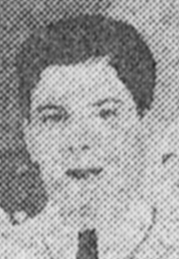 WILLIAM ASHTON MEADE (Feb 2, 1917 – Jun 21, 1990) From his obituary in the GALVESTON DAILY NEWS (Jun 24, 1990): “William A. Meade was born March 2, 1917, in Galveston. He was an employee of the Old Southern Select and Falstaff Brewery, retiring in 1984 after many years of service. He was a lifelong resident of Galveston, and a member of St. Patrick’s Church. He was active in the YMCA, and a veteran of World War II, having served in the U.S. Army. Survivors include his two daughters and son.”
ARTHUR ROBERT LUCAS, Jr. 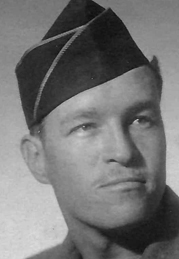 (May 1, 1919 – Sep 7, 1996) From his obituary in the GALVESTON DAILY NEWS (Sep 19, 1996): “Mr. Lucas was born May 1, 1919, to Arthur and Vera Lucas Sr. in Galveston, Texas. He was retired as owner/manager of Luke’s Supermart & Deli’s of Galveston and was servicing a vending machine business at the time of his death. Known as “Junior” to most of his childhood friends, he was a resident of Galveston for many years, serving his country in the U.S. Army during WWII. Mr. Lucas attended Ball High School and apprenticed under the guidance of his father, who owned Lucas’ Meat Market on 39th. Mr. Lucas was a 32nd Degree Mason, AF & AM Harmony Lodge No.6, worked for many years in Galveston and touched many lives throughout the county. He dedicated his life to his family, the Abundant Life Church of Galveston and his community.”
CAROL WERNER OPPERMANN (Apr 27, 1916 – Dec 9, 1994) From his obituary in the GALVESTON DAILY NEWS (Dec 9, 1994): “Mr. Opperman was born April 27, 1916 in Galveston. He was retired as Assistant Manager of Texas Employment Commission in 1972 with more than 37 years of service, receiving many honors. He had been a lifelong resident of Galveston; a member of the First Presbyterian Church. He was a member of the Tucker Lodge #297 A.F. & A.M. serving 10 years on the Auditing Committee. He was a member of the Scottish Rite Bodies since 1950; a member of El Mina Shrine since 1965; a member of the Entertainment Committee and served as Chairman in 1974; he was a member of the Director’s Staff and served as President in 1987; he was a member of the Mainland Shrine Club; a member of the Transportation Corps since 1980, and has driven in excess of 65,000 miles; he was a member of Mizpah Chapter #2 Order of the Eastern Star since 1979 and has served 4 years as Warden and also 4 years as Sentinel. HE is survived by his wife, three daughters, and eight grandchildren.”
MALCOLM CLYDE KISCHNER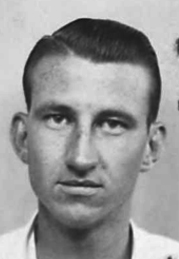 (Aug 2, 1914 – Nov 10, 1994) From his obituary in the GALVESTON DAILY NEWS (Nov 19, 1994): “Mr. Kirschner was born August 2, 1914 in Galveston, Texas. He was retired in 1974 from Western Weighing and Inspection Bureau, he was a member of the Catholic faith and a veteran of the U.S. Army serving during World War II, a lifelong resident of Galveston, a member of the Sons of Hermann and the Galveston Melody Orchestra.”
JOHN HARDIN, Jr. (Jan 27 1915 – Jun 22, 1960) From his obituary in the GALVESTON DAILY NEWS (Jun 23, 1960): “John Hardin Jr., 45, a native of Galveston, died at 5a.m. Wednesday, June 22nd in Washington, D.C. He left Galveston in 1940 for service in the U.S. Army during World War II. He was born Jan. 27, 1915. Mr. Hardin was connected with the transportation department of the army in Washington at the time of his death. While in Galveston he was active in the Red Cross lifeguard service; and was prominent in Boy Scout work while in Washington.”
FRANCIS BARNETT DWYER 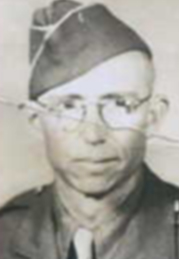 (Nov 2, 1913 – Jul 21, 1954) Francis Barnett Dwyer was born November 2, 1913, in Galveston and lived there in his boyhood. He had moved to Houston with his step-father and mother in 1937, finding work with general contractor as a carpenter’s helper. He married his first wife just after Christmas in 1942, with a bouncing bay girl girl June born the following year. He served with the U.S. Armed forces in Italy in 1944 . Upon his return, his family grew with the birth of two more sons, Thomas and Joseph. And Francis found work as a pipe fitter for the Houston National Gas Company. He was still employed with them when he passed away from testicular cancer at 40 in 1954 leaving behind a second wife, daughter and two sons. (obit)
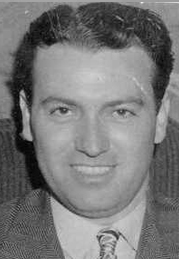 JULES JOSEPH LAUVE, Jr. (Dec 6, 1916 – Feb 7, 1998) From his obituary in the GALVESTON DAILY NEWS (Feb 10, 1998): Jules Lauve Jr. was born December 6, 1916, in Galveston. He is survived by his wife, Mary Evelyn Gutierrez Lauve, his five children, and 16 greatly loved grandchildren. Jules was a member of St. Patrick Catholic Church, a five generation tradition, and a graduate of Ball High School. Over the years he belonged to numerous local civic groups, service organizations, and served on many municipal and state boards and commissions including the Galveston Electrical Examiners’ Board. He was a board member and lifetime member of The Fifty Club of Galveston Comity Inc., and served a lengthy appointment as honorary commodore in the Tidelands Guard for Mud Island, as commissioned by the Texas Attorney General in 1953.
Jules Lauve Jr. is best known as founder and owner/operator of Jules Lauve Jr. Inc. Outdoor Advertising, a billboard company and commercial sign shop, founded in 1936 in Galveston and recently recognized as the oldest independent outdoor advertising company in the state of Texas. He was renowned for his generous capacity and involvement in a multitude of worthwhile community programs, especially those involving Galveston’s youth. Above all, Jules Lauve Jr. was a devout family man who trusted fully in his God at all times.”
CORNELIUS (NEAL) AUGUST LAUVE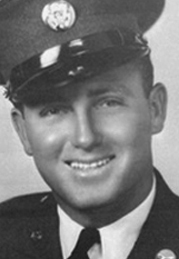 (Dec 5, 1918 – Dec 18, 1993) Cornelius Lauve was born Dec. 5, 1918, in Galveston. Before he enlisted Lauve was employed as teller at the W.M. Moody bank in Galveston. He served in the 15th U.S. Army Air Force, 449th Bomb Group in the European Theater operation in Italy and Africa for nine months during World War II. When he returned stateside, he was stationed at Harlingen Army Air Field, as an instructor at the gunnery school. He was the shop foreman at his bother’s outdoor advertising sing shop from 1946 to 1983 when he retired. He was a Master Electrician, member of the St. Patrick’s Men’s Club, member of Msgr. Kirwin Council #787 and Duck’s Unlimited. He was married and had three children. (obit.)
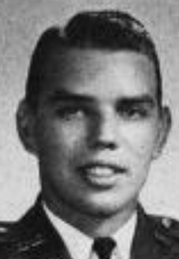 JOHN RUSSEL MULLINS (Apr 26, 1916 – Dec 26, 1994) From his obituary in the GALVESTON DAILY NEWS (Dec 29, 1994): “J.R. “Rusty” Mullins Sr., 76, departed this life on Monday, December 26, 1994 at St. Mary’s Hospital, Galveston. Rusty was a longtime resident of Galveston. His studies at Texas A&M University were momentarily interrupted by WW II. At this time he very proudly served in the 94th Bomb Group 8th Air Force in the European Theater where he was a decorated B-17 Pilot. After his tour in the European Theater, he also served in the Pacific Theater. After the war he then resumed his studies at A&M University and graduated in the Class of ‘43. He was proud to be an Aggie and always ready for a good Aggie joke. After graduation, he returned to Galveston where he worked as an accountant for various local firms. With his love for aviation, he served as airport manager at Scholes Field, Galveston for 28 years, retiring in 1983. Rusty was a true outdoors-man which has been passed on through his children and grandchildren.”
The Lucky Seven Flight is just one of the many such clubs formed through their love of War Birds magazine and the fellowship and shared interests of the War Birds Club in the thirties. Many other flights were mentioned in the pages of THE COCKPIT column—their member’s names recorded, their activities listed. Long may they all be remembered as War Birds!






 That sound can only mean one thing—that Bachelor of Artifice, Knight of Calamity and an alumnus of Doctor Merlin’s Camelot College for Conjurors is back to vex not only the Germans, but the Americans—the Ninth Pursuit Squadron in particular—as well. Yes it’s the marvel from Boonetown, Iowa himself—Lieutenant Phineas Pinkham!
  by the prolific O.B. Myers! Myers was a pilot himself, flying with the 147th Aero Squadron and carrying two credited victories and awarded the
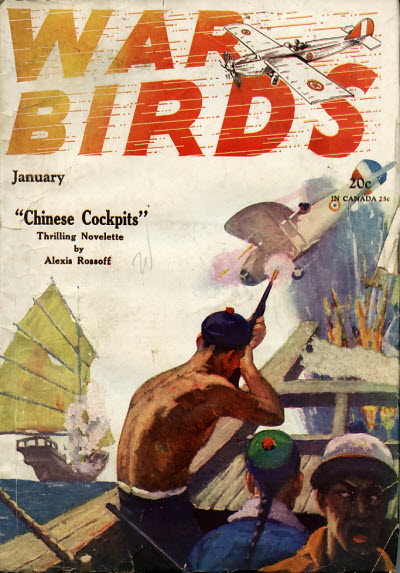 by the prolific O.B. Myer’s! Myers was a pilot himself, flying with the 147th Aero Squadron and carrying two credited victories and awarded the
  O.B. Myer’s didn’t really have any series characters. The few recurring characters he did have in the pages of Dare-Devil Aces, we’ve collected into a book we like to call “The Black Sheep of Belogue: The Best of O.B. Myers” which collects the two Dynamite Pike and his band of outlaw Aces stories and the handful of Clipper Stark vs the Mongol Ace tales. If you enjoyed this story, you’ll love these stories!
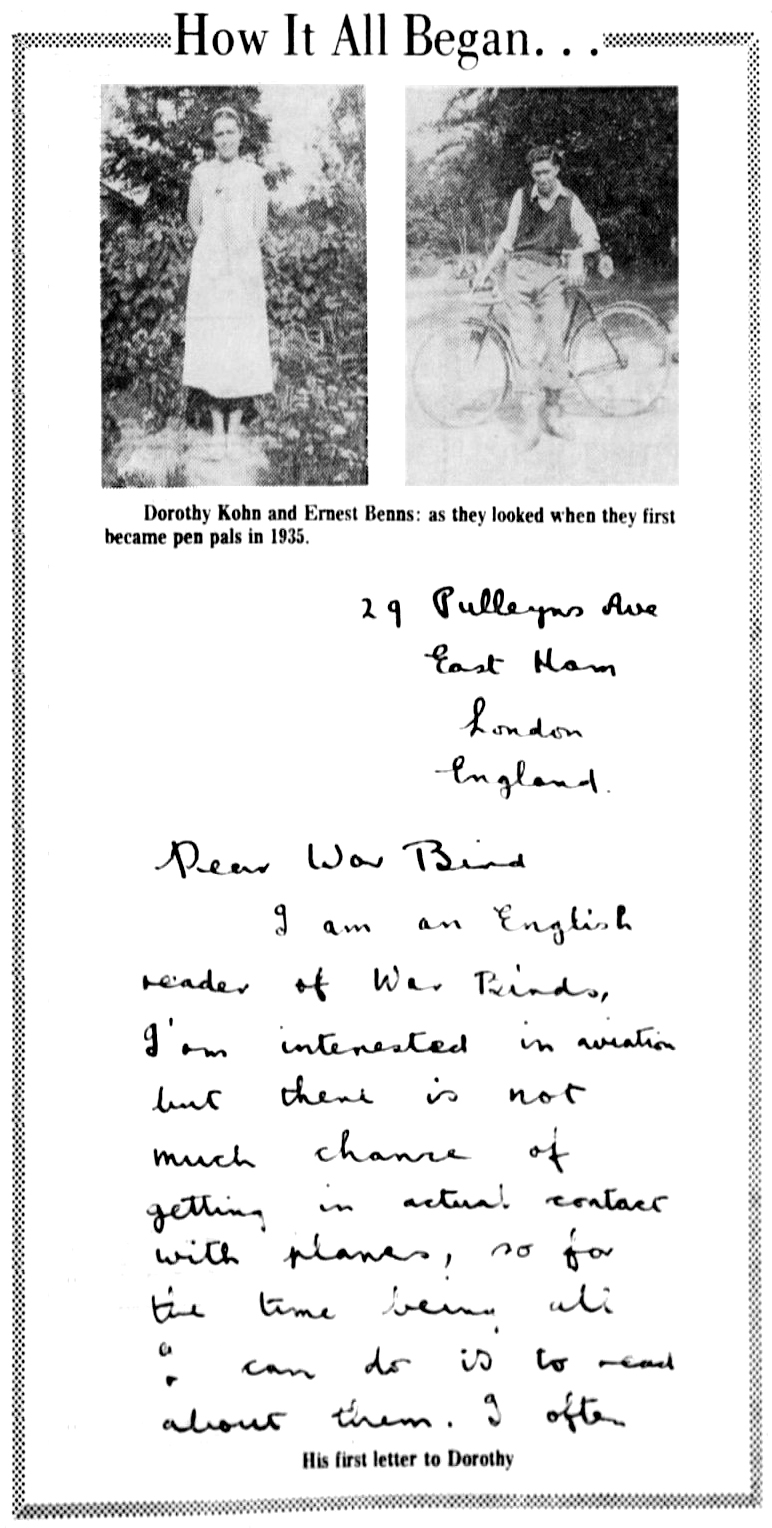
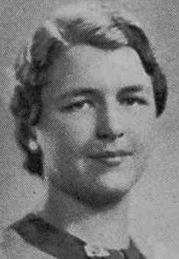 Dorothy would go on to be quite active in the club pages. In December 34 she was awarded both a citation for her letter in perfect military form containing six suggestions and a proposed new membership card; and a promotion to 1st Lieutenant (effective October 1st 1934). She garnered additional citation the following year. In January for a very interesting report on the first Mississippi commercial seaplane; February for submitting suggestions and reports in military fashion and, particularly, for an excellent report on her local airport; and in the final month, June, for exceptional service. Dorothy was listed as being a member of Iowa’s 39 Squadron in all her citations rather than the Lady Bird’s 80 Squadron.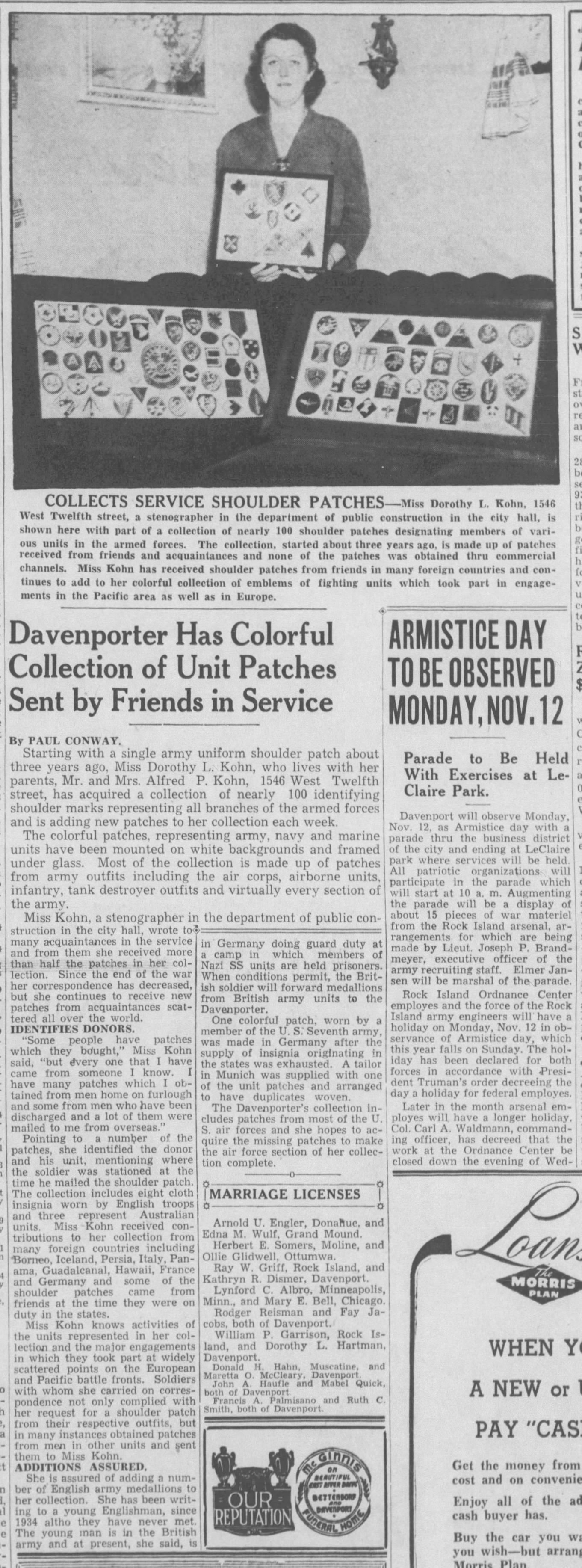
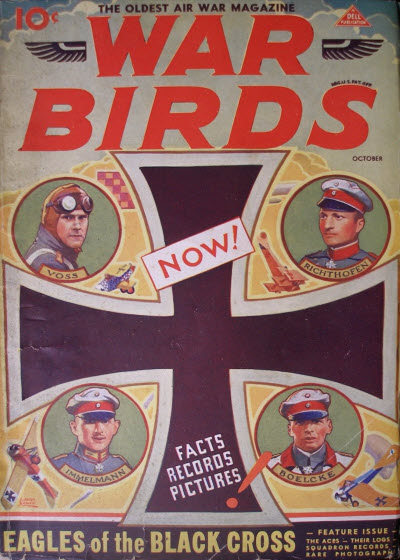 WAR BIRDS hit the stands with Belarski’s Eagles of the Black Cross cover and a wealth of stories within lead off by William E. Barrett’s factual article that goes with the cover. There were also stories by
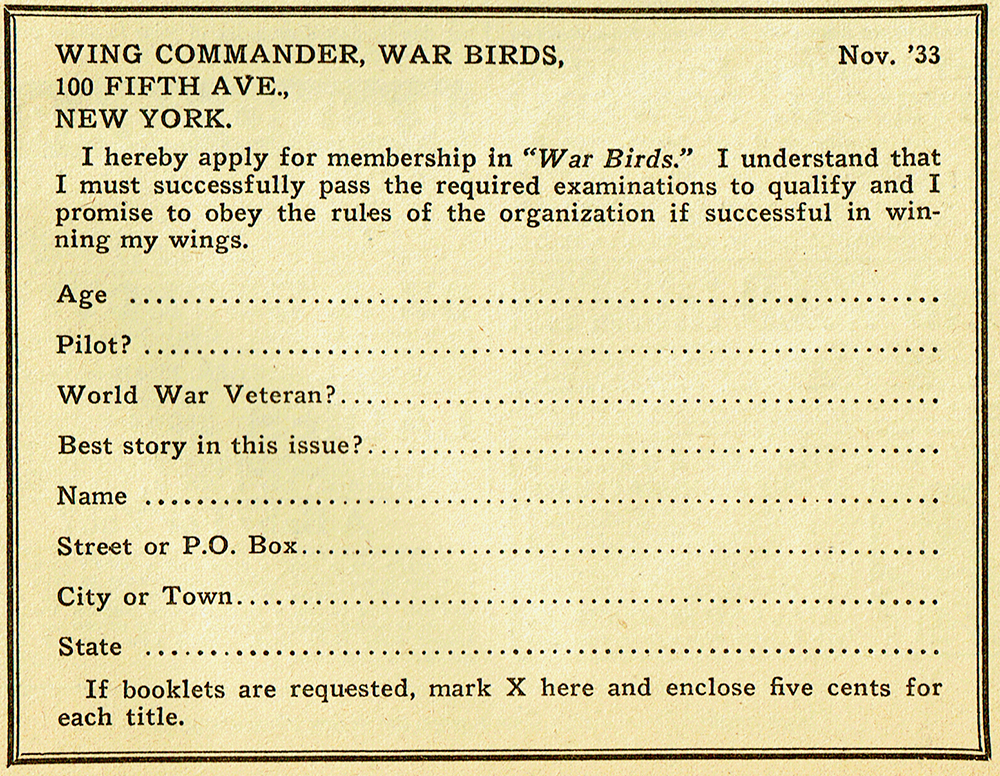
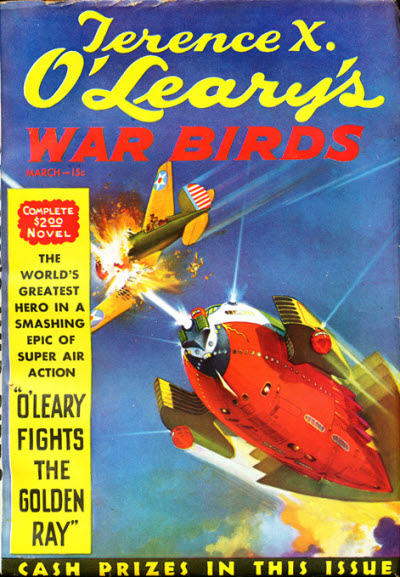 WITH the March Issue, WAR BIRDS changes it’s name to TERENCE X. O’LEARY’S WAR BIRDS and it’s focus. The lead story will now feature the exploits of Arthur Guy Empey’s Terence X. O’Leary, but the stories are more science-fictiony that O’Leary’s previous exploits in the magazine which were set in WWI. THE COCKPIT column continues with all it’s previous sections. And the coupon to join is still included. The Booklets can still be obtained for 5¢ and the wings are a bargain at 15¢.
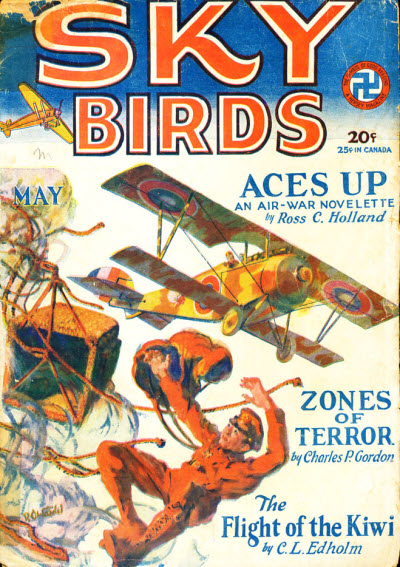 another story by Franklin M. Ritchie. Ritchie only wrote aviation yarns and his entire output—roughly three dozen stories—was between 1927 and 1930. Today we have another one from the lawyer who wrote pulp stories on the side to satisfy his yen for flying. From the May 1929 issue of Sky Birds, Ritchie gives us a tale of Lieutenant Hank Durant.
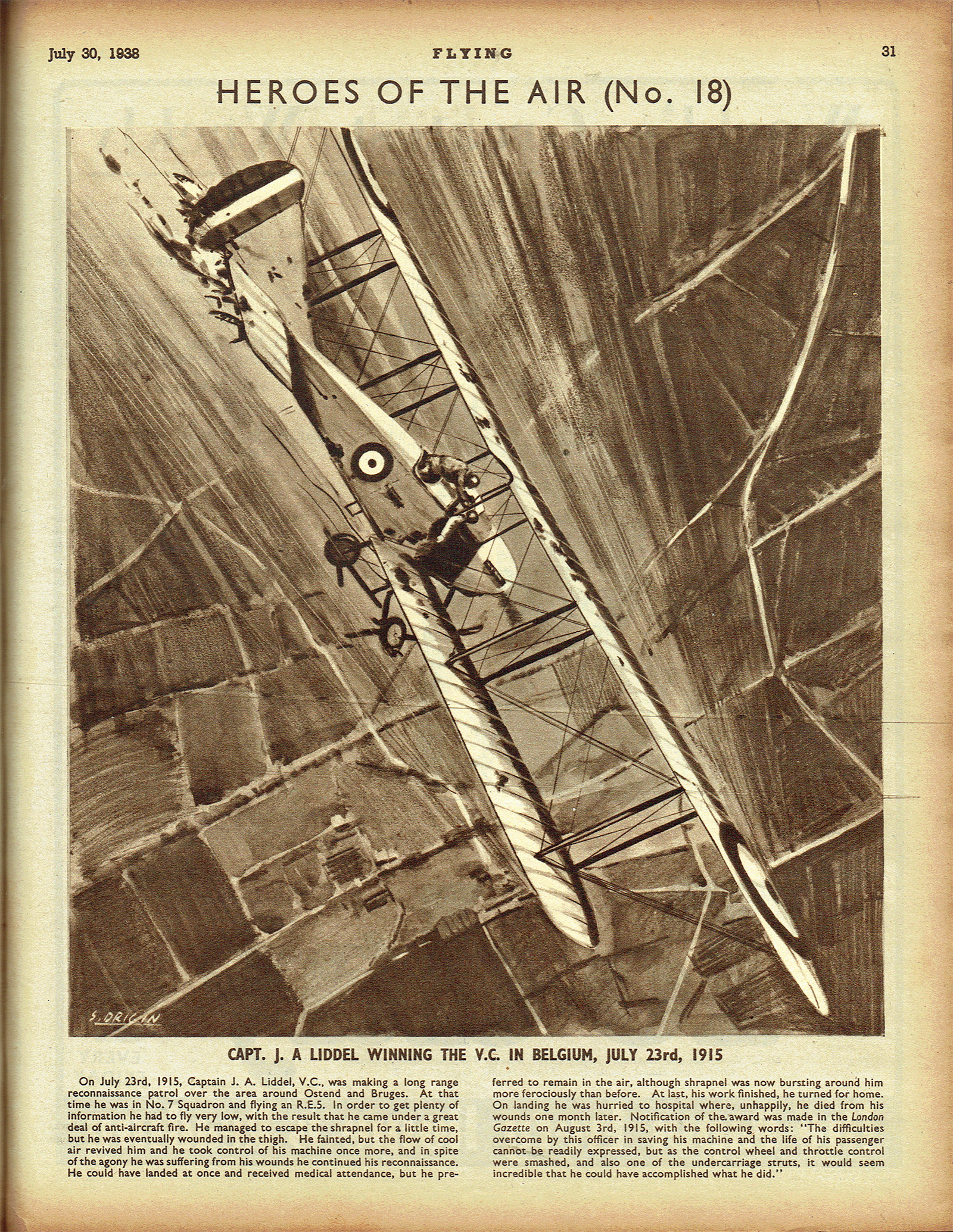
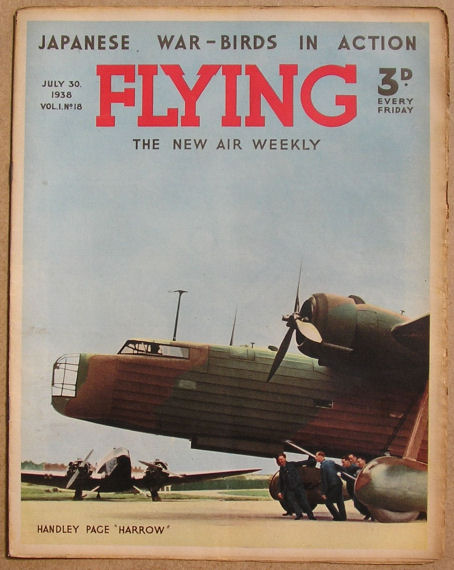 weekly paper of all things aviation, started up in England in 1938, amongst the articles and stories and photo features was an illustrative feature called “Heroes of the Air.” It was a full page illustration by S. Drigin of the events surrounding how the pictured Ace got their Victoria Cross along with a brief explanatory note. Today’s full page illustration is not an installment in that series, but rather tells the story of how Flight-Lieutenant G.E. Jackson won the Distinguished Flying Cross.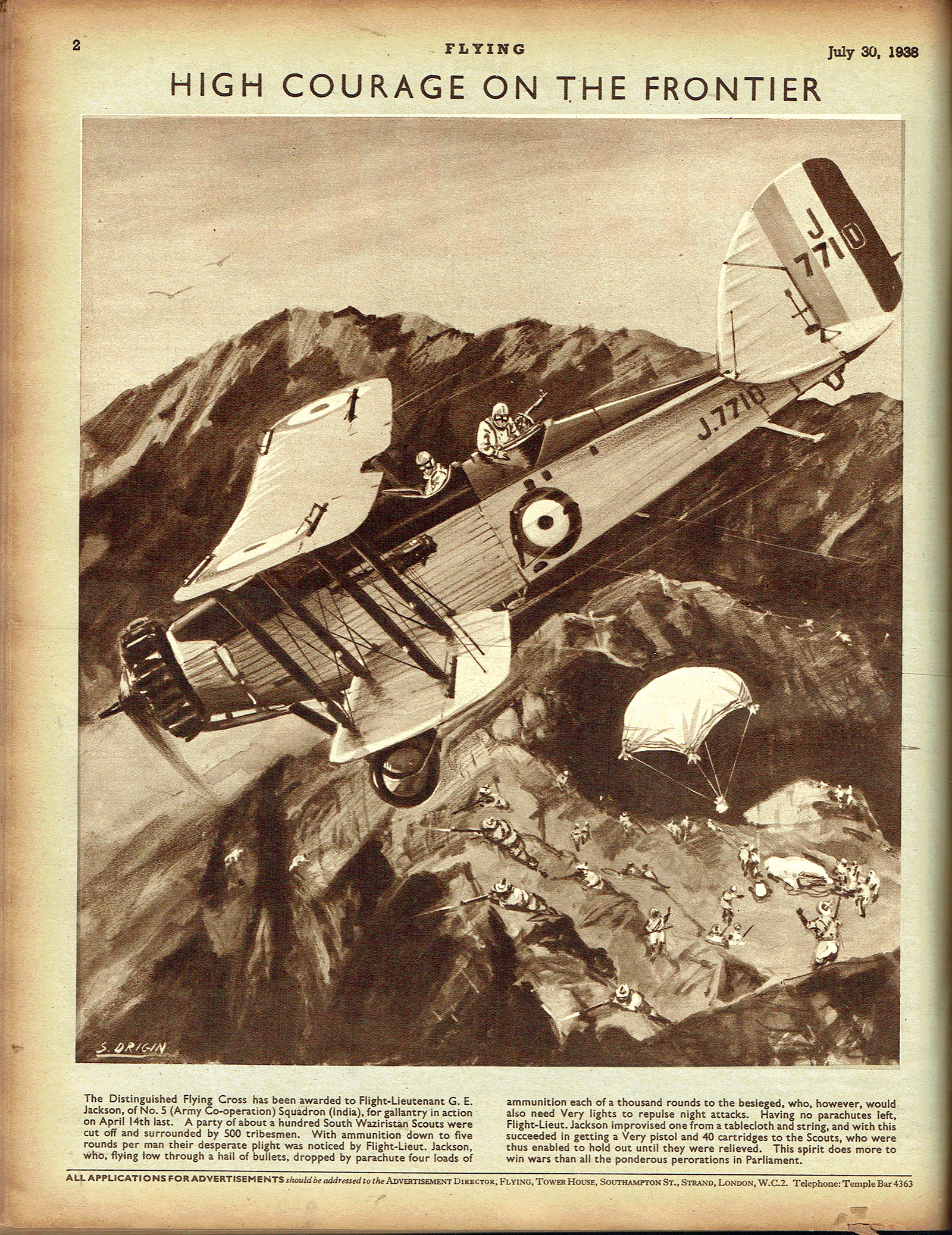
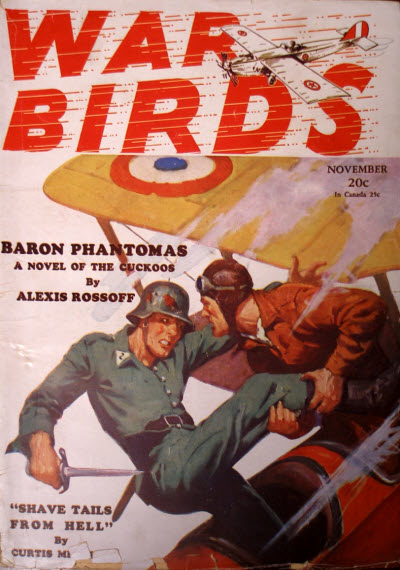 fourth and final tale of the Cuckoo’s Nest from the prolific pen of Alexis Rossoff. The Cuckoo’s Nest stories ran in War Birds in 1930. The Cuckoo’s are an outfit a lot like Keyhoe’s
 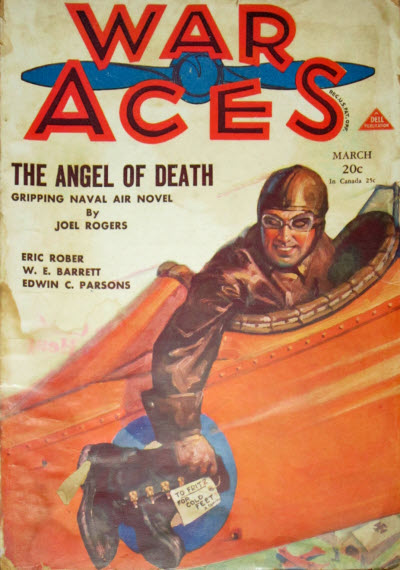 pen of the Navy’s own Allan R. Bosworth. Bosworth wrote a couple dozen stories with Humpy & Tex over the course of ten years from 1930 through 1939, mostly in the pages of War Aces and War Birds. The stories are centered around the naval air base at Ile Tudy, France. “Humpy” Campbell, a short thickset boatswain’s mate, first class who was prone to be spitting great sopping globs of tabacco juice, was a veteran seaplane pilot who would soon rate two hashmarks—his observer, Tex Malone, boatswain’s mate, second class, was a D.O.W. man fresh from the Texas Panhandle. Everybody marveled at the fact that the latter had made one of the navy’s most difficult ratings almost overnight—but the answer lay in his ability with the omnipresent rope he constantly carried.


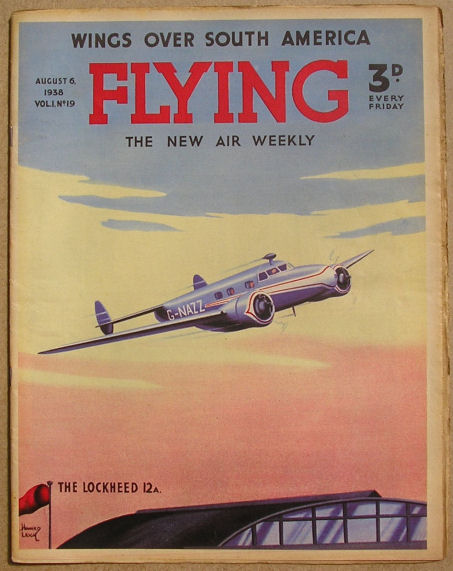 weekly paper of all things aviation, started up in England in 1938, amongst the articles and stories and photo features was an illustrative feature called “Heroes of the Air.” It was a full page illustration by S. Drigin of the events surrounding how the pictured Ace got their Victoria Cross along with a brief explanatory note.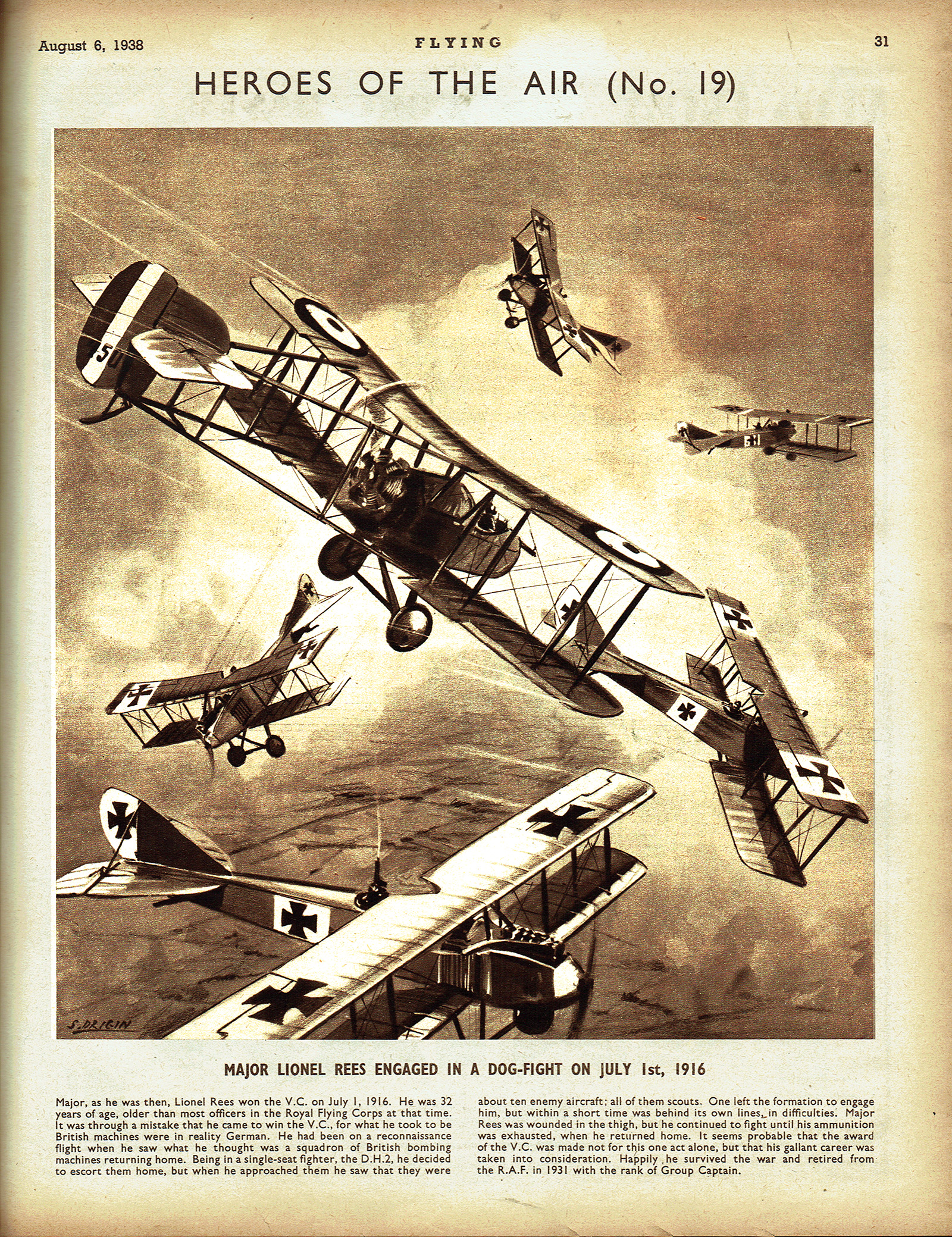

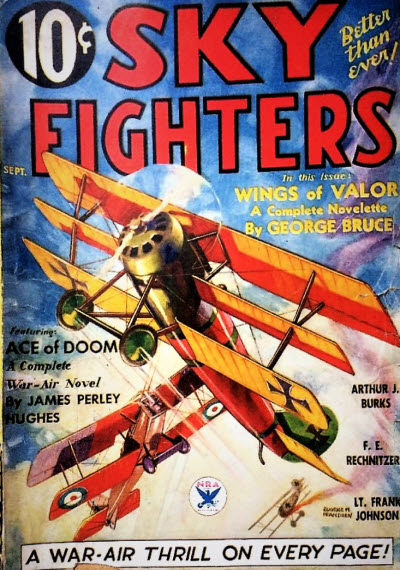 magazine has been exceedingly fortunate in securing Lt. Edward McCrae to conduct a technical department each month. It is Lt. Mcrae’s idea to tell us the underlying principles and facts concerning expressions and ideas of air-war terminology. Each month he will enlarge upon some particular statement in the stories of this magazine. Lt. MaCrae is qualified for this work, not only because he was a war pilot, but also because he is the editor of this fine magazine.