THIS week we present another of Paul Bissell’s covers for Flying Aces! Bissell is mainly known for doing the covers of Flying Aces from 1931 through 1934 when C.B. Mayshark took over duties. For the September 1932 cover Bissell put us right in the action that lead to Major George Vaughn winning a D.S.C.!
Vaughn Wins the D.S.C.
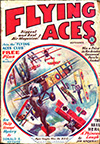 “FOR extraordinary heroism in action near Cambrai, France. On September 22, 1918, Lieutenant Vaughn, while leading an offensive patrol, sighted 18 enemy Fokkers about to attack a group of five Allied planes which were flying at a low level. Although outnumbered nearly five to one, he attacked the enemy group and personally shot down two of the enemy planes, the remaining three pilots of his flight shooting down two more. His daring and courage enabled the group of Allied planes to escape ….â€
So reads the American army citation on which the D.S.C. was awarded to Lieutenant George A. Vaughn. But between the lines is even more of a story—the story of a youth who left school to serve his country, first with the British and then under his own colors, with the 17th Aero Squadron—the story of a lad who came victorious through many air battles and who, that morning in September, 1918, seeing some of his comrades trapped by the enemy, went unhesitatingly to their aid. He knew he was outnumbered five to one by the Boche, yet he deliberately accepted the desperate odds. He calmly watched the chill hand of death reach for him; coolly he evaded its annihilating clutch and saw its grim fingers close on two of his enemies.
He fought many times after this, wresting victory after victory from the Boche until the war’s end found him one of America’s leading aces, with the rank of major.
It was 8:45 a.m. on a clear sunny morning. Big cumulus clouds about seven thousand feet up floated slowly across No-Man’s-Land, casting great blue shadows on the shell-pocked surface, and themselves affording excellent hiding places for enemy airplanes.
Vaughn, with three companions, was flying just under the clouds, protecting another flight of five Camels about three thousand feet below and slightly in advance of him. From the east fifteen Fokkers came in at about Vaughn’s level. They turned and flew parallel with him, all the time watching the lower flight. Then suddenly they tipped over on their noses and went down in a body on the planes below.
Suspecting a trap, Vaughn immediately searched the skies overhead. Sure enough, there they were—another batch of Germans ready to swoop down like hawks on him and his companions. Instantly he saw the one chance—to lead his flight down into the fight below, and do what damage they could diving in—at the same time giving the five Allied planes a chance to break away-and then try to get out of it before the enemy from above could surround them.
DOWN the four Camels tore, into the twisting dogfight below them—tracer bullets reaching out ahead, searching their red targets. In an instant it was every man for himself. Vaughn saw one of the Camels go down in flames and cursed the damned Boche as his sights picked up a black cross squarely. His fingers squeezed the trips. A wild answering throb as his guns spit flame, and he saw the red machine fall off out of control.
He swung in a tight turn to the left. The whole world now seemed nothing to him but white streaks of smoke cutting the sky in every direction, while red, yellow, green ships— ships with huge black crosses or ships with the tricolored circles of the Allies—seemed to come suddenly from nowhere.
The upper flight was now on him. He could see their tracers swish by him as they came down.
The red belly of a Fokker stood squarely in front of him. A quick burst, and he saw the red tail kick up as the Boche started on his last dive. Number Two—but a burst of bullets came through the cockpit just over his knees. Too close! They had him hemmed in, so he took his only chance, and threw himself into a spin.
Down he went, his tail whipping around and around. In this way he afforded no easy target. But the Germans followed him down, firing burst after burst into him, diving past, zooming back and diving again, their guns blazing. That spin seemed endless.
Luckily, most of the Germans had given him up as finished, and turned back. One last persistent Boche fired a long burst, and then he, too. turned, leaving Vaughn, as he supposed, to crash. Just in time the little Camel answered the controls.
THEN came the greatest blow of the battle. He was out of gas. There was no answering roar from the motor, and with a sinking heart and a vision of German prison camps, he sought a place to set her down. Lower he came. Now scarcely fifty feet was between him and the torn earth, the idling prop was slowing perceptibly, when suddenly it came to him—-the emergency tank! Quickly he switched it on. There was a sputter; then with a full-throated roar the engine took hold and the little machine climbed rapidly up again.
But the battle was over, and now not a plane was to be seen. So, turning toward his airdrome, some twenty minutes away, Vaughn for the first time had an opportunity to think about himself. It was then he was conscious of a burning sensation across his back. His flying suit was soaking wet just below his right shoulder. Wounded, he thought, and to use his own words, “Fine! Now I’ll get a month in the hospital. Or perhaps they’ll send me to Blighty.â€
He could feel no pain, so decided it was slight, and landed with a broad smile, feeling he had rather put it over on the boys. Then came the second blow of the day, as the mechanics pointed to where the corner of his gas tank had been shot away. His clothes were soaked, not with blood, but with gasoline. No wound! No Blighty! Well, what the hell! It had been a good scrap, anyway. Six Fokkers had been accounted for, and only two Camels lost.
All Vaughn got then was a new ship. But later, with bands playing and flags flying and a lot of soldiers standing round to see how it was done, they pinned a bit of ribbon on him. Not much for a man who had played with death daily, but just the Army’s way of saying, “This guy’s damn good!â€
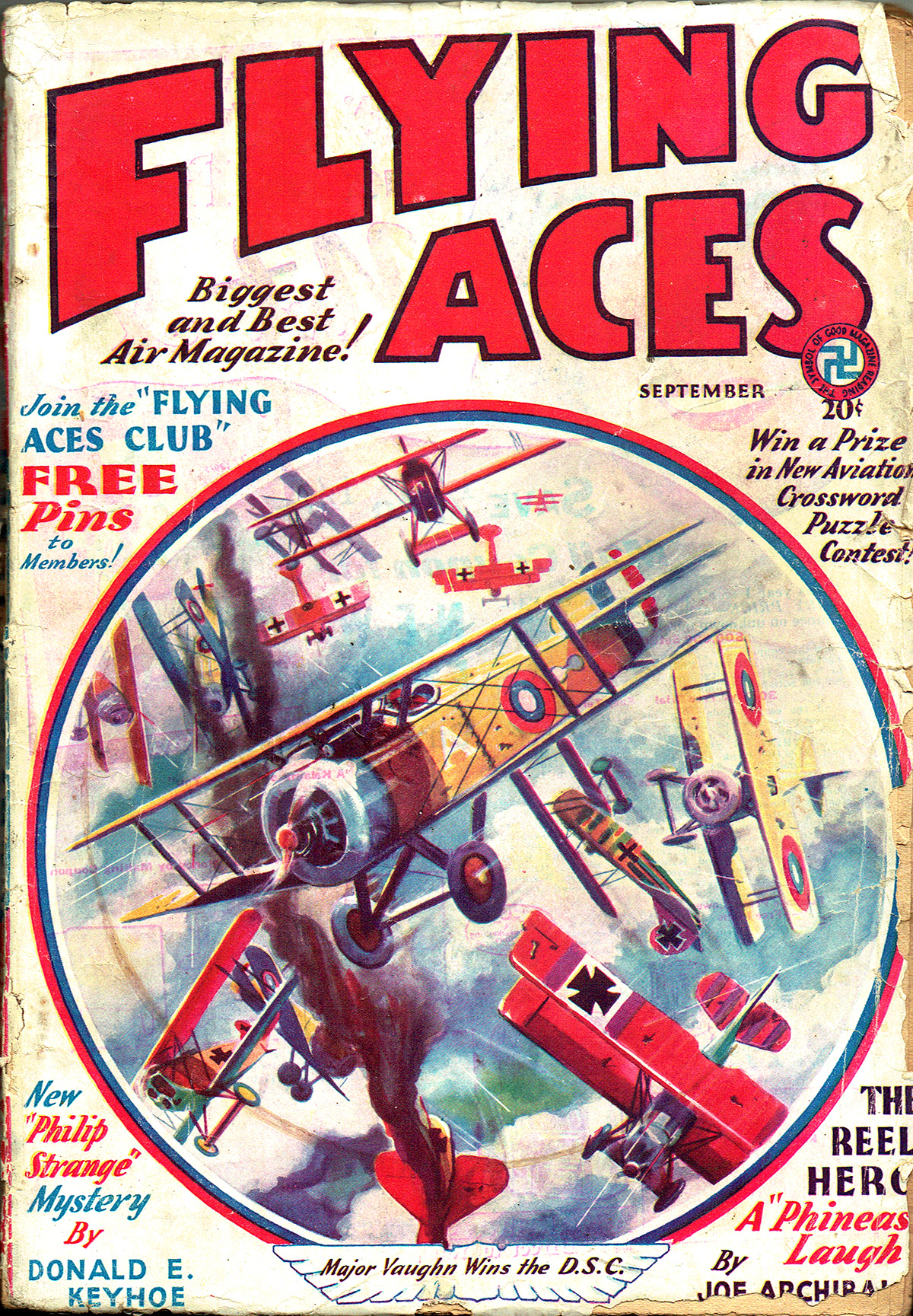
“Major Vaughn Wins the D.S.Câ€
Flying Aces, September 1932 by Paul J. Bissell




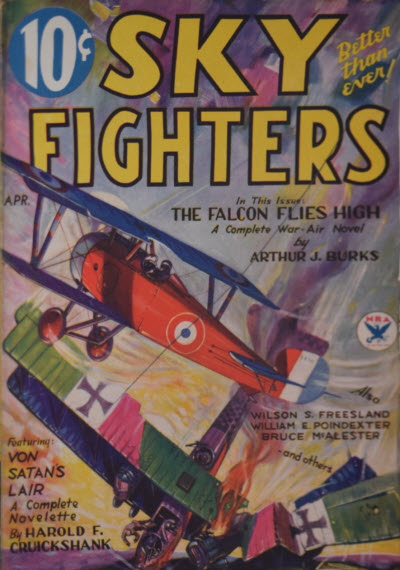
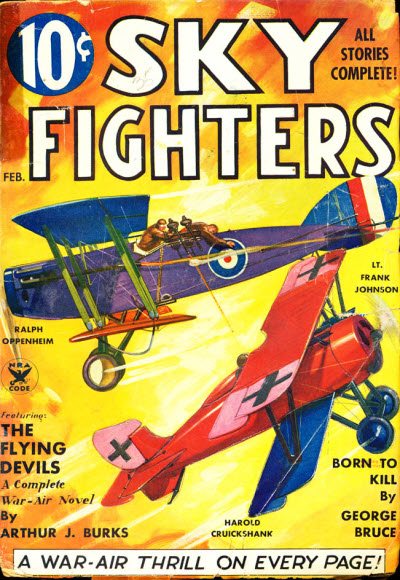 a story by another of our favorite authors—Harold F. Cruickshank! Cruickshank is popular in these parts for the thrilling exploits of The Sky Devil from the pages of Dare-Devil Aces, as well as those of The Sky Wolf in Battle Aces and The Red Eagle in Battle Birds. He wrote innumerable stories of war both on the ground and in the air. Here Mr. Cruickshank gives us a fast-moving tale of Jerry Cougan, known by his squadron as “The Cougar”, as he tries to save Major Power from the huns and rid the skies of the dreaded von Scheer. From the February 1935 issue of Sky Fighters, it’s “Sky Cougar!”

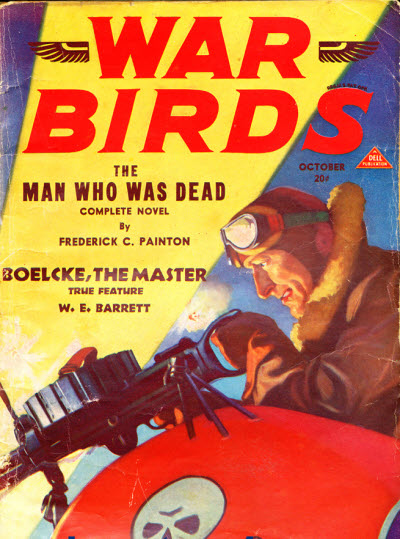 a story from the pen of a prolific pulp author O.B. Myers! Myers was a pilot himself, flying with the 147th Aero Squadron and carrying two credited victories and awarded the
  stories last month instead of just four or five, it’s Friday, so let’s make it a baker’s dozen. And who better to feature that our old pal Harold F. Cruickshank. We have three good reasons for this: First, Harold F. Cruickshank was not represented last month among our twelve tales of Christmas 1931; Second, this is kind of a teaser for next month when we’ll be featuring Canada’s favorite son and looking at his trio of Aces—The Sky Devil, The Red Eagle and The Sky Wolf, as well as his Pioneer Folk tales; and last, but by no means least, It’s just a darn good story to get the year going!
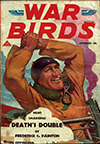
 of our twelve tales from the Christmas 1931 issues, and what better way to go out, than with a story from the ever-reliable Arch Whitehouse! Always a crowd-pleaser, Whitehouse wrote hundreds of tales for the air pulps with many featuring series characters. Possibly his longest running series was Buzz Benson! Buzz was featured in every issue of Sky Birds starting with the February 1930 issue. When Sky Birds closed up shop, Buzz moved over to Flying Aces where he continued for two more years.
 the mantle with care, in hopes that St. Nicholas soon will be there. But we still have time for one more story before the big day—and this time it’s an actual Christmas themed story by Edgar L. Cooper.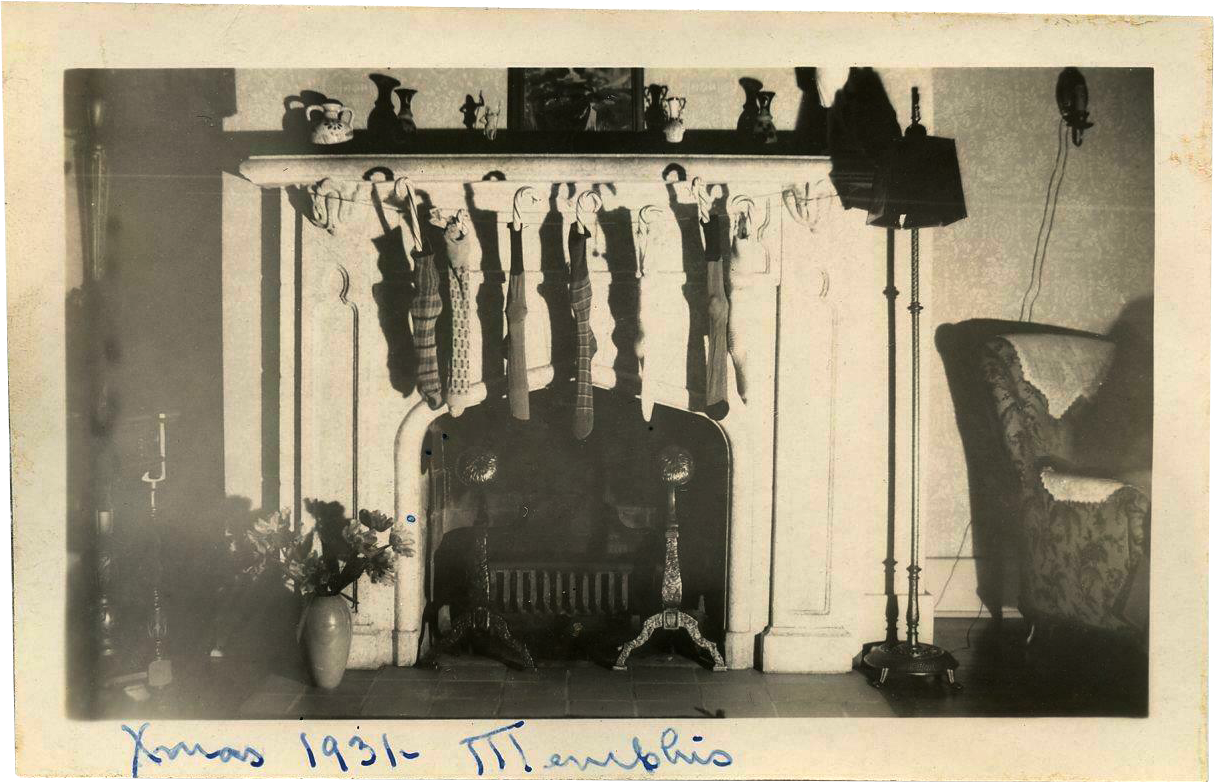
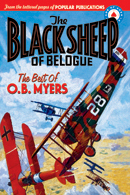 O.B. Myer’s didn’t really have any series characters. The few recurring characters he did have in the pages of Dare-Devil Aces, we’ve collected into a book we like to call “The Black Sheep of Belogue: The Best of O.B. Myers” which collects the two Dynamite Pike and his band of outlaw Aces stories and the handful of Clipper Stark vs the Mongol Ace tales. If you enjoyed this story, you’ll love these stories!
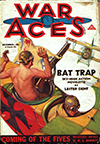 poignant story from the prolific pen of Robert Sidney Bowen. Bowen was a war pilot of the Royal Air Force, as well as the editor of one of the foremost technical journals of aviation in addition to penning hundreds of action-packed stories for the pulps.
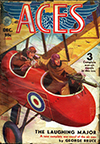 a story from the highly prolific George Bruce. Bruce, a former pilot, began writing in the 1920’s and became noted for his aerial war stories—several publications even bore his name. In the 1930’s and ’40’s he transitioned into screenwriting for Hollywood action films and then into tv in the 1950’s and ’60’s.