Looking to buy? See our books on amazon.com Get Reading Now! Age of Aces Presents - free pulp PDFs

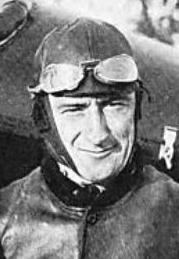
Heroes of the Air: Major L.G. Hawker

Link - Posted by David on June 19, 2023 @ 6:00 am in

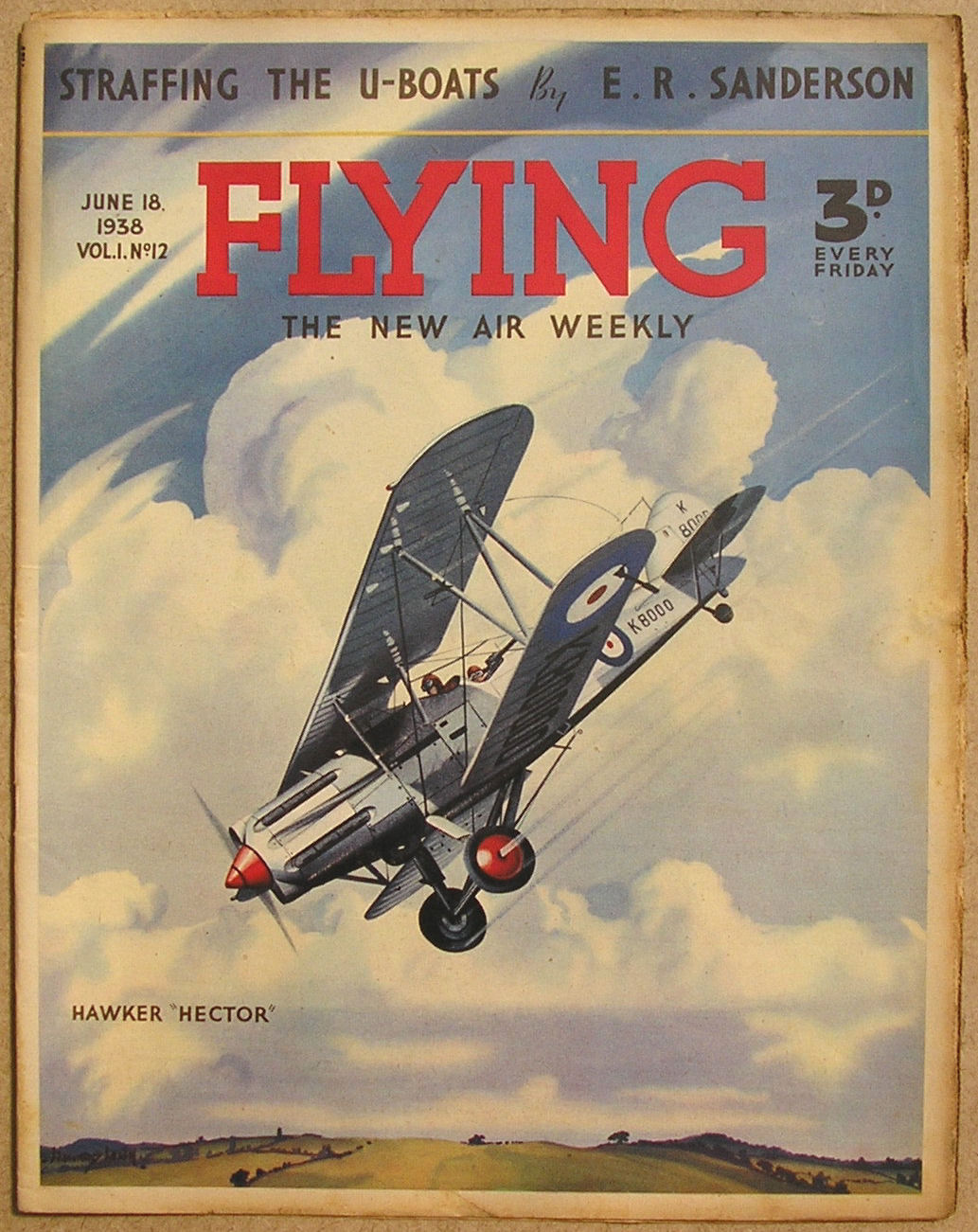
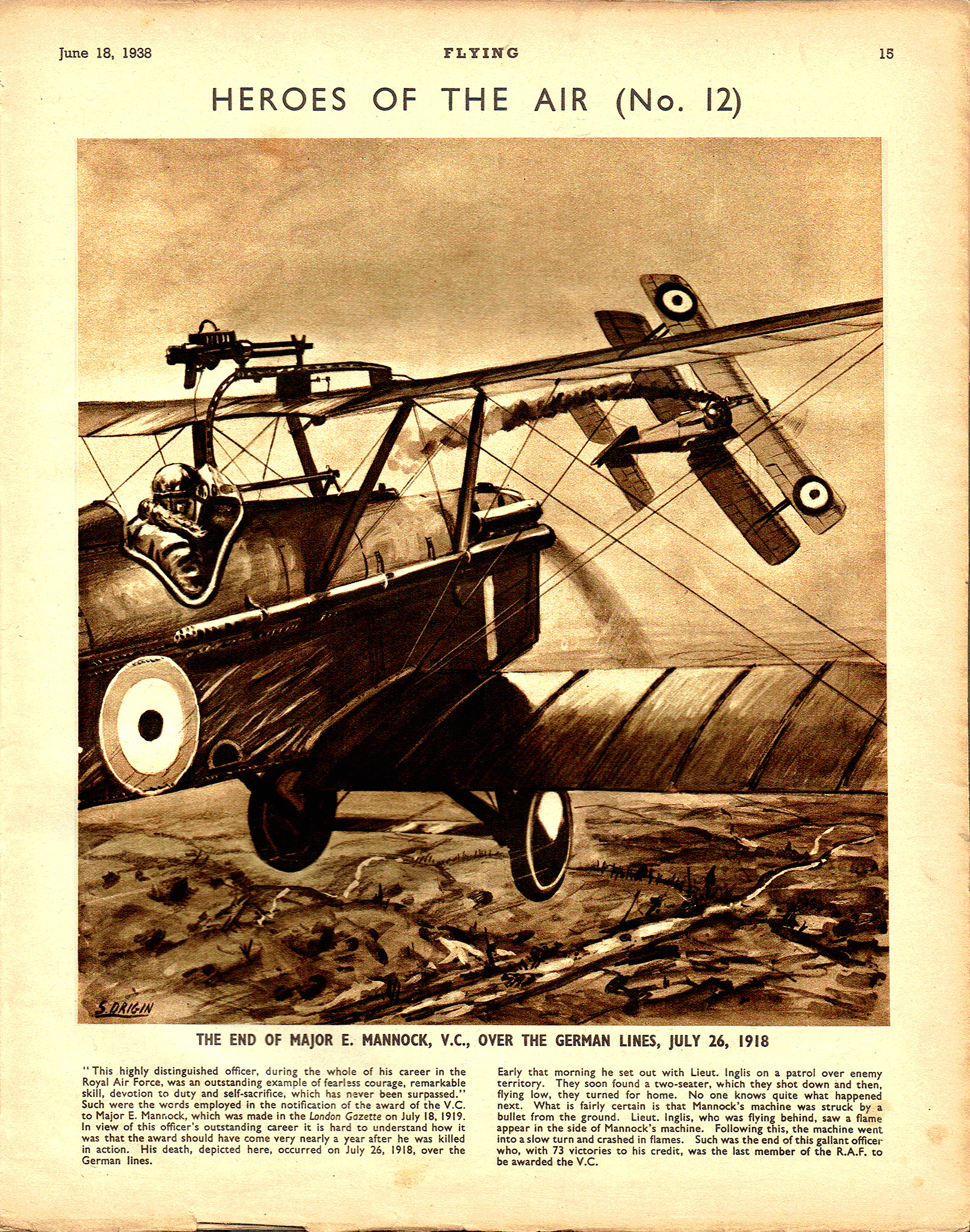
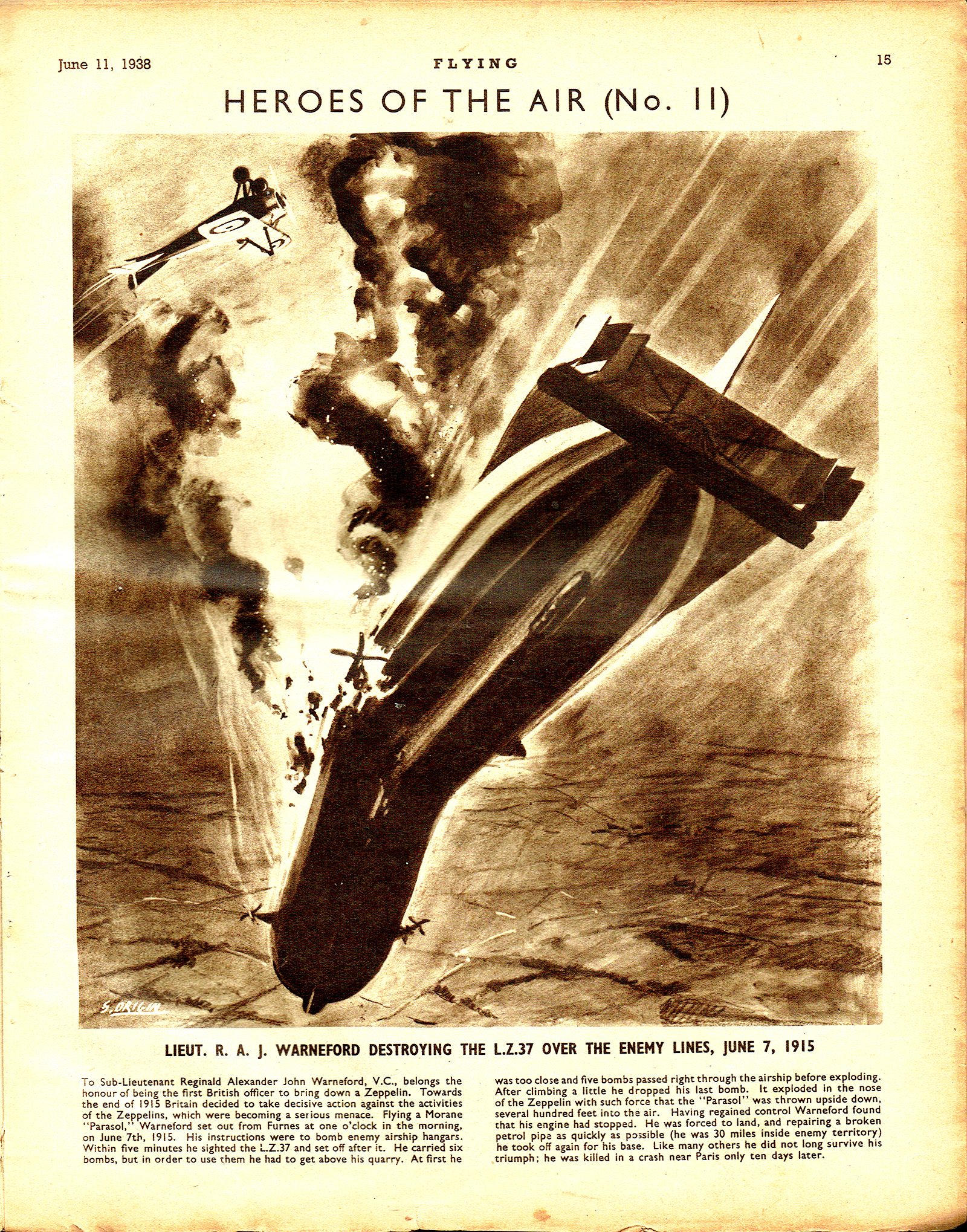
WHEN Flying, the new weekly paper of all things aviation, started up in England in 1938, amongst the articles and stories and photo features was an illustrative feature called “Heroes of the Air.” It was a full page illustration by S. Drigin of the events surrounding how the pictured Ace got their Victoria Cross along with a brief explanatory note.

Russian born Serge Drigin became a successful illustrator in the UK in the 1920s with his work regularly appearing in such British magazines as The Detective Magazine, Modern Boy and Chums. He is probably best known for his startling covers for Scoops, Air Stories, War Stories, Fantasy and others in the 30s.

From the 28 May 1938 issue of Flying:

MAJOR L. G. HAWKER WINNING THE VICTORIA CROSS OVER THE GERMAN LINES, JULY 25, 1915

IT WAS on July 25, 1915, that Major Lanoe George Hawker was on reconnaissance over enemy territory. He was flying a Bristol Scout when he saw a German two-seater. He at once engaged it with such fury that it turned tail and fled. Continuing on his way, he encountered another two-seater. This time he was more lucky, for he sent his opponent down out of control. His third victory that day over yet another two-seater, was gained on the way home. It was almost dark at the time and the German machine must have presented a grim picture as it spun down in flames. These three successes were all the more surprising because Major Hawker, at that time a Captain, was armed only with a French cavalry carbine, while his opponents were armed with machine-guns. For his gallantry on that day he was awarded the Victoria Cross. Notification was made on the 24th of August in the London Gazette, for “ most conspicuous bravery and very great ability on the 25th July, 1915.” This fearless airman finally fell to the guns of Richthofen, but only after a long and bitter engagement which in the end was decided by the German’s superior equipment—as Richthofen himself admitted.

“Crumpled Buzzard” by Franklin M. Ritchie

Link - Posted by David on June 16, 2023 @ 6:00 am in

THIS week we have a story by Franklin M. Ritchie. Ritchie only wrote aviation yarns and his entire output—roughly three dozen stories—was between 1927 and 1930, but Ritchie was not your typical pulp author.

After reading “Crumpled Buzzards” I tried to find out a little about Ritchie to include in this post. I thought he had been covered in a biographical piece in Air Trails or Sky Birds, but couldn’t find anything. So I turned to the internet.

In putting in the name some great stuff comes up—letters from when he was a cadet to teachers back at Rutgers; a long letter to the folks back at Central New Jersey Home News where he was reporter before the war; he married fellow Erasmus High grad Elizabeth Farrish before enlisting; and this brief biographical piece from the Perth Amboy Evening News (September 23, 1922)—

All this good stuff was tied to this Lawyer fellow from New Brunswick. He seems to have an incredibly full life, when would he have time write pulp stories? But then I found a letter from Ritchie buried in the April 1929 issue of Sky Birds that explains it all:

Ritchie retired from all that in ‘58, moved out west and become a pastor at a Presbyterian church in Lakewood, California. He passed away at 84 in 1978.

With all that in mind, from the July 1929 number of Sky Birds, it’s Franklin M. Ritchie’s “Crumpled Buzzards!”

Lanky Jeff Dayton, a war bird, saw nothin’ to get het up about in this man’s war, but when he did, he saw red—red streaks of flame jetting from angry guns.

How the War Crates Flew: Flying Comfort

Link - Posted by David on June 13, 2023 @ 6:00 am in

FROM the pages of the December 1933 number of Sky Fighters:

Editor’s Note: We feel that this magazine has been exceedingly fortunate in securing R. Sidney Bowen to conduct a technical department each month. It is Mr. Bowen’s idea to tell us the underlying principles and facts concerning expressions and ideas of air-war terminology. Each month he will enlarge upon some particular statement in the stories of this magazine. Mr. Bowen is qualified for this work, not only because he was a war pilot of the Royal Air Force, but also because he has been the editor of one of the foremost technical journals of aviation.
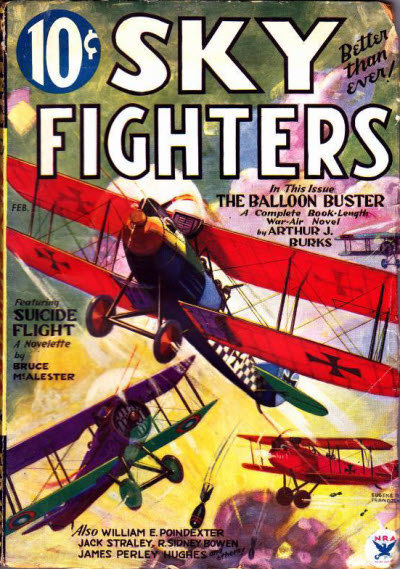
Flying Comfort

by Robert Sidney Bowen (Sky Fighters, December 1933)

SO! SOUND asleep, the lot of you, eh? Well, my pin-feathered buzzards, that suits me just fine. In fact, it’s perfect. It gives me an idea of what to chin about this time. For a week I’ve been lying awake nights, tearing out my hair, wondering what I could talk about that would be close to your dear little hearts, and which you’d all understand.

Well, you yourselves gave me the idea. What subject could you better understand than one dealing with comfort?

And so, I will proceed to raise my usually calm and soothing voice above the stentorian chorus of snores, and bellow at you about the art of flying comfort.

We Were Comfortable

Though it breaks my heart to reveal the truth, my conscience forces me to draw aside the veil and show just how comfortable we baldheaded eagles were in the days when the word German was something that made you jump and jump fast.

As your big sisters have probably told you, wartime airdromes were never located in the middle of No-Man’s-Land. In fact, they were usually fifteen to twenty miles behind the lines. Such being the case, we had no fears of waking up and finding German infantrymen plowing through the room. And so, we could add the old home sweet home touch to our abodes and know that it would all still be there when we got back from a gallant patrol.

Sure! We had hutments to live in, blankets and clean sheets. A mess lounge to get plastered in, too. True, the furniture was not all mahogany or birdseye maple. However, it didn’t fall apart, much. And most important of all, my dears, the grub was good. It wasn’t dropped in the mud, and it was cooked (by a cook) in a real stove. There was usually some sort of a piano that worked. And, of course, the ever-present phonograph.

Now, before I mislead you too much, let me explain that the pilots more or less enjoyed solid comfort only as compared to the men holding the line.

I COULD name lots of places that are heaven compared to a wartime airdrome, and not even exaggerate. So, just keep it in your think-box that I’m speaking of flying comfort as compared to infantry or artillery comfort.

Visiting the Neighbors

And so, we were able to install all the little things that helped to make life enjoyable when not in the air. Usually there was a village near-by, with at least one worthwhile estaminet where we could go between patrols or any time when we were off duty. Also, if the field was big enough, more than one squadron used it, with the result that you had neighbors to visit, etc.

IN OTHER words, while an airman was on the ground, it really was a pretty good war.

In the air, though, it was different. And naturally so, because for us, that’s where the war was—in the air.

But here’s the point—we didn’t confine all our efforts for comfort to the time when we were on the ground. We took it along with us when we went up, providing, of course, it didn’t interfere with air scrapping.

That, of course, was the one essential thing to think about. And as a result, the comfort that we tried to get in the air was in reality a type of comfort that actually helped air performance.

Just a Few Examples

For a few examples of what I mean, unbutton your ears to these.

Straight flying—ordinary patroling between two points—is about the most monotonous thing east or west of the Seven Seas. There’s nothing to do but sit and fly, and then sit and fly some more. On a smooth day your legs and arms and neck get so doggone cramped, that you suddenly’ find yourself praying aloud for a flight of enemy ships to drop down on you.

True, you’ve got to keep your eyes open, to spot said enemy ships ahead of time.

And also you’ve got to keep on the alert so that you won’t slide out of formation position. But after awhile at the Front that sort of thing becomes almost mechanical. Like a sixth sense, you might say.

To permit themselves the opportunity to relax, some of the boys had headrests fitted to the top of the fuselage just back of the cockpit. The headrest was just a leather pad streamlined into the top of the fuselage. On some ships, the S.E.5, for example, the headrest was already there. And to show you how queer war pilots can be, some of the guys had the headrest of their S.E.5
taken off, because they said it cramped their necks! (See Fig. A.)

Every Little Thing Counts

ANOTHER little thing that we added for comfort’s sake, was a little box fitted to a fuselage crossbrace inside the cockpit. In ships that had a Lewis gun mounted on the top center section, the box was already there. That is, there were two boxes in which you carried a couple of spare Lewis drums of ammo. So you simply carried one extra drum—and the other was your box.

What for? Why, to keep things in, dummy. What things? Well—that depended upon the pilot’s likes and dislikes. Me, I used to slip a couple of bars of chocolate in, a cloth with which to wipe oil spatterings off my goggles, a couple of nips of this and that in a flask (in case of a cold, you understand), a picture of the current girl friend to gaze at if I felt lonely, a box of matches, and at least one deck of cigarettes.

Cigarettes?

Ah, I knew darn well that buzzard over there in the corner wasn’t asleep! Sure, we carried cigarettes. Why not? No, not to smoke while we were in the air. Nix! Can do, as a stunt. But didn’t as a regular practice.

No, the idea was, in case we got forced down and taken prisoner. Yes, sir, we were that way. Made sure of our comfort—in case. And if you think that’s a funny idea, go get yourself taken prisoner some day, and find out how many smokes the enemy gives you! Yeah, you’!I learn!

If We Were Captured

AND speaking of being taken prisoner. Some of the lads used to sew a small compass and a map or two in the lining of their flying suits. I once heard of a case where that little stunt was the means of a bird escaping an enemy prison camp. Well, all I can say is, that guy sure was lucky, and then some!

In the first place, the enemy wasn’t as dumb as the newspapers try to make them out to be. They knew a few things about fighting a war just as we did.

And searching a captured prisoner for anything that might help or hinder him was something that the Germans did nothing else but. However, for argument’s sake, let’s say that the searching officer was blind in one eye, couldn’t see out of the other, and both hands were cut off. Well, the hero goes to a prison camp, tells the guard to look the other way, and sets off for home. He uses the compass and starts south. Soon it gets darn cold and he meets an Eskimo. Heavens, he’s been walking all these weeks in the opposite direction.

And why? Because that little compass sewed in his flying suit was long ago sent haywire by the metal and ignition system of his engine.

But to get back to that box—comfort box, you could call it—I’ve told you a few of the things I used to lug along. Other guys used to carry other things. One chap, for instance, used to take along pen, paper and envelopes. Sure! Do his letter writing while waiting for action.

No Identification!

However, that was just an unusual stunt. Don’t get the idea that it was general practice. And also don’t get the idea that the box was big enough to hold a couple of spare props and
a tire maybe. And also, take it from me, you did not carry anything that would be valuable to the enemy if captured. I carried the girl friend’s picture, but I didn’t carry any of her letters to me.

No, smart guy, not because I was afraid the ship would catch fire! Simply because they were identification, and might contain information of something seemingly unimportant, but perhaps most important when pieced together with what the enemy might already know.

In other words, we carried in the box, or on our person, nothing that would divulge information to the enemy.

I Call It Laziness

MAYBE you’d call this next item comfort, but I call it just plumb laziness. It was a flight leader’s trick. As you know, a flight leader has to keep his eye on the ships back of him, just as much as the other lads have to keep their eyes on him.

So this bird, in order to save wear and tear on his neck, got hold of a piece of looking glass and fastened it near the top of his right rear center section strut. Yup, a rear view mirror for airplanes. And believe it or not, the thing worked swell—so he claimed! (See Fig. B.)

Another idea for comfort, and a thing that was mighty useful in a dog scrap, was a pair of shoulder straps fastened to the sides of the cockpit seat. (See Fig. C.) As you know, every ship had the regular safety belt that fastened about your waist. That was okay for level flight, but should you get hung in a loop, gravity would start to slide you out and pull your feet off the rudder bar.

So we installed two straps; one that came up the back and over the right shoulder and down the left side of the seat, and the other came up over the left shoulder, crossed the other at your chest, and down to the right side of the seat. Thus you were held back by the safety belt, and held down on your seat by the double straps. Naturally, snap fastenings were used, in case you had to get clear fast—like in thr event of a forced landing.

It’s All How You Look At It

Yup, our motto was, comfort east or west of No-Man’s-Land. Of course, it wasn’t like home. We did get our feet wet now and then. However, in case the Grim Reaper ever reached out for us, we kind of planned it so we’d at least die on a full stomach. For the lads on the ground shoving about the trenches, such was not the case. They had to take it on the chin day and night.

Yet, after all, it’s the way you look at it. The doughboy in the trench looks up at the aviator and says, “Cripes, that damn fool up there with nothing to hang onto!” And the pilot looks down and says, “Cripes, that damn fool down there with nothing but mud to sit on!” And, so what? As far as I’m concerned, it’s, so long!

“The Sky Joker” by Raoul Whitfield

Link - Posted by David on June 9, 2023 @ 6:00 am in

THIS week we have a story from Raoul Whitfield. Whitfield was a prolific pulp writer primarily known for his hardboiled crime fiction published in the pages of Black Mask, but he was equally adept at lighter fair that might run in the pages of Breezy Stories. We’ve featured a number of his Buck Kent stories that ran in Air Trails, but this time we have a WWI tale!

The Thirty-ninth was located pretty far up front, for a squadron field. The enemy had bombed them out of two fields, and the third one that Staff had assigned them was just a little worse than the other two had been. Worse for landings and take-offs, and considerably worse in the matter of camouflaging from the enemy. The Boche had already come over several times to say hi—they didn’t do very much damage, just raised hell in general. But the morale of the outfit took a sharp drop. It was into this humorless squadron that Lieutenant Bill Roberts and his very large sense of humor was transferred and the Thirty-ninth wanted none of it!

From the February 1929 number of Over The Top, it’s Raoul Whitfield’s “The Sky Joker!”

He brought a sense of humor to a hard-boiled squadron, this laughing lieutenant, but it took the squadron a long time to appreciate his wisecracking.

Strange War Ships: Deperdussin Monoplane

Link - Posted by David on June 5, 2023 @ 6:00 am in

FOR FOUR successive months in 1933, War Birds ran a series of covers featuring “Strange War Planes.”—those freak planes that were used during the First World War. The covers were by Eugene M. Frandzen—known here for the covers he did for Sky Fighters from its first issue in 1932 until he moved on from the pulps in 1939. The Final freaky ship in the series was the Deperdussin Monoplane!

Strange War Ships:
Deperdussin Monoplane

th_WB_3309BEFORE synchronization of machine gun fire was perfected, many strange ways were devised to fire in the direction of flight. The Deperdussin Monoplane, with machine gunner mounted atop the wing was one of these. A rudder attachment kept the gun from whipping from side to side. The ship was armoured and a superstructure of steel pipes formed the gunner’s cockpit. A gunner on this ship had to have a sense of balance equal to an acrobat to be accurate with the gun.

The Deperdussin was the forerunner of the 5pad. This ship and the single place were used extensively on the Russian front. Germany, at that time, considered these ships the most dangerous used by the allies. The single seater had the phenomenal speed of 131 m.p.h. when stripped.

LENGTH . . . . . . . . . . . . . . . . . . . . . . . . . . . . . . . . . . . . .24′
SPAN . . . . . . . . . . . . . . . . . . . . . . . . . . . . . . . . . . . . . 36′3”
AREA . . . . . . . . . . . . . . . . . . . . . . . . . . . . . . . . . . 226 sq.ft.
WEIGHT . . . . . . . . . . . . . . . . . . . . . . . . . . . . . . . . .1050 lbs.
MOTOR . . . . . . . . . . . . . . . . . . . . . . . . . . . . .80 h.p. Gnome
SPEED . . . . . . . . . . . . . . . . . . . . . . . . . . . . . . . . .105 m.p.h.
CLIMB . . . . . . . . . . . . . . . . . . . . . . . . . . . . . .247 ft.per min.

Strange War Ships: Deperdussin Monoplane
Strange War Ships: Deperdussin Monoplane • War Birds, August 1933
by Eugene M. Frandzen

“Silent Peters—Hell-cat” by Alexis Rossoff

Link - Posted by David on June 2, 2023 @ 6:00 am in

THIS week we have another exciting adventure in those Hell-skies with Alexis Rossoff’s Hell-Cat Squadron! The adventures of the Hell-Cat Brood ran in War Birds, War Stories and Flying Aces. The Seventy-Seventh Squadron had a reputation of being short on technique and long on defying every regulation in the book. The squadron was the cause of many gray hairs on the pates of the star-spangled ones back in G.H.Q. They flew their merry way like nobody’s business, and played hell with any Jerry who tried to dispute their intention of going places. This bunch of cloud-hopping war birds were known from one end of the Western front to the other as the “Hell-cats”—and sometimes the “Unholy Dozen!”

There was one man responsible for “Silent” Peters’ warped outlook on life. One man who turned a brilliant engineer into a man who hates the world, God and life itself. An Ace who was tall, gaunt and taciturn with the eyes of a saint—and the face of a devil with nothing but hate in his heart! And Silent Peters believed he would find this man in the death-torn Hell skies over Germany and settle the score once and for all! From the pages of the August 30th, 1928 issue of War Stories, it’s Alexis Rossoff’s “Silent Peters—Hell-cat!”

He was lean and tall and firm-jawad, this Yank of the Seventy-Seventh Squadron. That was the bunch of cloud-hopping war birds they called the “Hell-cats,” and sometimes the “Unholy Dozen.” But “Silent” Peters was a lone eagle without a buddie in the squadron. He had a reason for his war—a reason that meant more than life.

“Flying Aces, February 1936″ by C.B. Mayshark

Link - Posted by David on May 29, 2023 @ 6:00 am in

THIS May we are once again celebrating the genius that is C.B. Mayshark! Mayshark took over the covers duties on Flying Aces from Paul Bissell with the December 1934 issue and would continue to provide covers for the next year and a half until the June 1936 issue. While Bissell’s covers were frequently depictions of great moments in combat aviation from the Great War, Mayshark’s covers were often depictions of future aviation battles and planes, like January 1936’s thrilling story behind its cover is a tribute to Pan American as it spans the Pacific!

Pan American Spans the Pacific

th_FA_3602MAN has fulfilled one of the most ambitious dreams of modern transportation! He has conquered the Pacific. Giant, four-engined Pan-American flying boats now ply in regular passenger and mail flights from California to China, with intermediate stops at Hawaii, Midway, Wake, Guam, and the Philippines. People are flying across the world’s vastest body of water in some 60 hours of flying time, whereas hardly yesterday such a journey consumed the greater part of a month.

To be sure, people now make this momentous flight for the novelty of it. But tomorrow the whole matter will be routine. It will be accepted in the same manner as the rising generation takes airplanes and radio for granted.

It’s possible that the passengers who make the inaugural flights in the clipper ships will be under the delusion that they are pioneers of some sort who possess in abundance that fortitude required to undertake hazardous adventures. Unfortunately, however, they’ll be wrong if they think so, for the real pioneering will have been long since completed when they board the speedy aircraft that will link the Occident with the Orient. In fact, there will be no hazardous elements whatsoever attached to their venture—the real pioneers have seen to it that the line offers the maximum of security.

“Still, we might satisfy the ego of the initial passenger by making a concession. We might, with a stretch of the imagination, term him an armchair adventurer. And when we say “armchair adventurer,” we mean just that. For as the huge China Clipper streaks across the Pacific skies, our friend will be slouched comfortably in an upholstered chair, tilted so that the maximum restfulness is assured. From this point of vantage, he can gaze out of the windows at toy objects thousands of feet below—ships. Or he can read his favorite magazine or book, play a hand of bridge, write a letter, doze off for a nap, or . . . . oh, well, he can do any one of a dozen pleasant things. Be assured that Pan-American has it all figured out.

And our hero doesn’t have to worry about navigation, radio communication, gas consumption, engine control, wind velocity, or any other of the hundred and one things which are checked constantly. There is a first-rate pilot, co-pilot, and radio operator in the control cabin attending to all of these things for him. And those men are the finest of their profession in the world. They have seen years of experience on the extensive routes of Pan-American in the Caribbean and in Latin and South America. They have intensive schooling in flight and theory behind them.

But there are other and more important elements which enter into the picture. The officials of Pan-American didn’t decide overnight to establish a transpacific air route. It is much more involved than that. As far back as early 1931, the project was outlined and experimentation launched. Juan Trippe, president of Pan-American Airways; Andre Priester, the line’s chief engineer, and Colonel Charles A. Lindbergh together conceived the idea of the Pacific run and directed the actual work. There were many angles to be considered—route, type of ship, fueling bases, servicing stations, ad infinitum. By the merest chance, the islands which were the most logical stepping stones for such a flight are in the possession of the United States.

And so the work of fitting out the island stations was started. On March 27, 1934, the steamer North Haven steamed out from the Golden Gate with enough equipment on board to establish five air bases—and the bases were built and in running order in four months’ time. One of the islands—Wake—heretofore has been devoid of human life. Radio and power equipment as well as food and knock-down houses had to be transported and set up. But the work progressed step by step, with the result that in a few months’ time a complete island air depot existed on a speck of rock and coral which had never before supported human beings.

At the same time that the route was being studied and laid out, the problem of the type of ship to fly over it was being considered. A large part of the Pan-American equipment consists of Sikorskys and it was logical that a new Sikorsky be built for the Pacific route. About a year ago the S-42 was completed and given her trial runs over the already established Caribbean routes. When it was decided that the new ship possessed the requirements for a trans-Pacifie run, it was brought to the West Coast and on April 15 a crew headed by Captain Edwin C. Musick took her off the water at San Francisco and headed her for Honolulu, 2,400 miles away. Several test flights over the Pacific were made in the new Sikorsky, and so thorough had been the planning and laboratory work that even these first trips were accomplished exactly according to schedule.

But when regular mail and passenger flights commence, a ship other than the Sikorsky will be put into service. Early in October, Pan-American accepted delivery from the Glen L. Martin Co. of the largest flying boat ever to be built in this country. The ship has been christened the China Clipper and it is this new huge, four-motored flying boat that’will see service on the new route.

AND so it can be seen that if our friend lounging in a comfortable armchair tilted back at the angle which most serves his convenience and gazing out of the windows of the streaking China Clipper has any fears, they are only imaginary. But very likely he will still insist that what he is doing parallels the feats of the pioneers in the early 1800’s. And that’s okay with us and probably with the officials of Pan-American, too.

The real story of the trans-Pacific conquest, to our way of thinking, centers upon the formidable work accomplished in laying the foundations of the line. The real heroes are the squads of men who struggled in the face of many hardships to construct the island stations in order that those who now fly the long route may enjoy the securities and conveniences which are one with modern transportation.

The Story of The Cover
Flying Aces, February 1936 by C.B. Mayshark
Pan American Spans the Pacific: Thrilling Story Behind This Month’s Cover

“Rock-A-Bye Jerry” by Joe Archibald

Link - Posted by David on May 26, 2023 @ 6:00 am in

“HAW-W-W-W-W!” That sound can only mean one thing—that Bachelor of Artifice, Knight of Calamity and an alumnus of Doctor Merlin’s Camelot College for Conjurors is back to vex not only the Germans, but the Americans—the Ninth Pursuit Squadron in particular—as well. Yes it’s the marvel from Boonetown, Iowa himself—Lieutenant Phineas Pinkham!

The Jerries thought themselves lucky, when Lieutenant Phineas “Carbuncle” Pinkham crashed within their lines. But that was before they were acquainted with this ace of practical jokers. Poor Fritz!

“Flying Aces, January 1936″ by C.B. Mayshark

Link - Posted by David on May 22, 2023 @ 6:00 am in

THIS May we are once again celebrating the genius that is C.B. Mayshark! Mayshark took over the covers duties on Flying Aces from Paul Bissell with the December 1934 issue and would continue to provide covers for the next year and a half until the June 1936 issue. While Bissell’s covers were frequently depictions of great moments in combat aviation from the Great War, Mayshark’s covers were often depictions of future aviation battles and planes, like January 1936’s thrilling story behind its cover portrays one of the means by which military action might be applied against Italy, whom the League regards as the aggressor in the Italo-Ethiopian conflict by the other League of Nation members!

Legions of the League

th_FA_3601FOR the first time since the inception of the League of Nations, members of that international body have combined in an effort to restrain a member State from pursuing a “war of aggression.” The invocation of the Covenant’s dreaded Article XVI sets a decided precedent, and those peace-loving inhabitants of the earth who place their faith in the League are proud of the fact that at last a united exertion of power has been mobilized in opposition to conquest by the force of arms. The League Covenant states that a member may not go to war, either officially or unofficially, against another member for the purpose of annexing territory. If an act of war is committed in defiance of the Covenant, the other members have the right to punish the offending nation with a view to ending hostilities. If economic and financial sanctions fail to provoke an attitude of cooperation on the part of the aggressor, then the only course open for the League is the application of force. In other words, the League may declare a war to end a war.

This month we have portrayed on our cover one of the means by which military action might be applied against Italy, whom the League regards as the aggressor in the Italo-Ethiopian conflict. The ominous shadow of the powerful air forces of the three leading members of the League—England, France, and Russia—might prove in itself to be a threat of sufficient force to curb Italy. On the other hand, it might not.

Italy is rightly a proud nation. More than once in the course of her colorful history she has been the most powerful nation on the face of the earth, and the Twentieth Century finds her among the world’s first rank powers. However, the consensus is that Italy cannot afford to resist such military sanctions as Britain, France, and Russia could array against her.

Thus far, Italy has turned a deaf ear to the dangers of economic and financial sanctions. As this is written, the League has just applied boycotts on Italian exports and has barred the import of key products. This drastic move is designed to cut Rome’s vital sales by 70 per cent, thereby putting millions of Italians out of work. Common sense tells us that if this move is effective, Italian resources will be strained to the limit if Rome intends to continue the African war. However, the likelihood of her immediately withdrawing her troops seems remote, however effective the League boycott may prove to be. It is with alarm, therefore, that we view the future if present sanctions fail to force peace. As has been said, the only recourse is the application of armed force—unless the League backs out.

If an actual conflict between Italy and the League members comes to pass, it is difficult to say whether it would take place on the Continent, in Africa, in the Mediterranean, or all three. The present concentration of Italian troops in Libya forces us to imagine a bloody slaughter on the rolling sands of north Africa. On the other hand, Italy’s fortification of her own borders is stronger than ever.

But wherever the struggle takes place, the fearful hum of League planes over the boot of Italy would be inevitable—providing such a fracas actually begins. And that is the picture that the League will attempt to force on the minds of those it blames for the continuance of current hostilities in Africa. For it is only with the realization of such opposition that Italy will retreat.

Of course it is ridiculous to suppose that a gigantic League air force would advance on Italy and bomb a helpless civil population. Only points of military importance would be marked for annihilation, but, as in all conflicts, the invading force would not be held responsible for damage done to civil property. And in the end, of course, the civil population always suffers the most.

Air raid drills for the protection of the populace are already being held in Italy. By posters, apparatus, and demonstration, the people will be taught how to face gas attacks from the air. Undoubtedly, this is throwing a scare into the entire Italian population, but the people are being assured that there is no chance of anyone finding a new gas against which they cannot be protected. That, however, must be taken with a grain of salt.

But all of this may not come to pass. The desperate peace overtures now being pushed by the League may be successful, with the result that the general mobilization moves now in progress all over Europe will come to a halt. Yet the tension that exists as this is written is greater than at any time since 1914. Each government involved in present negotiations hardly desires to retreat or give quarter for fear of losing international prestige. And prestige is something that is coveted by every country. But a way out may be found. If a treaty contains provisions for Italian expansion, very likely peace will ensue.

A parting word concerning the attitude of our own country, the United States: An arms embargo is now in effect and provisions are being made to halt the export of key implements and products to the belligerents. It is obvious that our nation does not want war. The likelihood of our remaining free of the conflict is possible only if we show a disposition to steer clear of the brief and dangerous profits that invariably ensue from an armed contest. It appears that we are taking adequate measures to prevent menacing foreign entanglements.

THE three planes on our cover are symbolic of the air forces the League might call into action. The British ship is a Handley-Page “Heyford” night bomber equipped with two Rolls Royce “Kestrel” engines. It is a single-bay biplane with dihedral on both wings. Automatic slots are fitted to the upper wing, giving lateral control and added stability. Three gun positions are provided, being so placed that the gunners are afforded excellent arcs of fire.

The French ship is a new style Breguet bomber and is touted as “the fastest bomber in the world.” It has only recently been adopted by the French Army, hence no details on the ship are available.

The Russian ship is an Ossaviachim Air 7. It is a low-wing monoplane and is classed as an attack ship. Figures on the performance of this plane are likewise unavailable.

The Story of The Cover
Flying Aces, January 1936 by C.B. Mayshark
Legions of the League: Thrilling Story Behind This Month’s Cover

“Luck in the Blue” by James Perley Hughes

Link - Posted by David on May 19, 2023 @ 6:00 am in

TODAY we have a story from the pen of a prolific pulp author James Perley Hughes! Hughes was managing editor of the San Francisco Chronicle before turning his hand towards fiction and becoming a frequent contributor to various adventure pulps—but he seemed to gravitate toward the air-war spy type stories.

A spy was loose on the base, but Zoom Hale had bigger problems—his childhood buddy and wing-man Charlie Spellman was in a bad way with a sudden attack of nerves. He had been through and seen enough and Zoom thought his pal was ready to end it all. So when Charlie takes his plane out early the next morning, Zoom dashes off to keep him from doing just that and try to bring him down without killing his best friend in the process!

The whirring air yarn of a man who felt he had to chase his own buddy—who had to sit on his soul to shoot down his pal. Then—a zooming finish but unexpected and thrilling!

“Flying Aces, December 1935″ by C.B. Mayshark

Link - Posted by David on May 15, 2023 @ 6:00 am in

THIS May we are once again celebrating the genius that is C.B. Mayshark! Mayshark took over the covers duties on Flying Aces from Paul Bissell with the December 1934 issue and would continue to provide covers for the next year and a half until the June 1936 issue. While Bissell’s covers were frequently depictions of great moments in combat aviation from the Great War, Mayshark’s covers were often depictions of future aviation battles and planes, like December 1935’s thrilling story behind its cover gives us a possible glimpse into the future (of 1935) of what could happen should England go to war with Italy over access to the Suez Canal!

Sky Skirmish Over the Suez Canal

th_FA_3512A BLOODY war that will draw in all the nations of the world—a conflict that will drain civilization of its youth—a conflagration that will make the World War seem like a series of practice maneuvers! All that, and more, is what many experts insist is now in store for us.

There is no doubt but what the Italo-Ethiopian situation is the gravest impasse that has confronted Europe’s statesmen since 1914. Proposals and counter-proposals have devolved into quibbling and bickering. As this is written, peace moves have been of no avail, and instead of the positions of the various nations becoming clearer and more easy to define, they have now been tightened in a web of confusion. It is extremely difficult for even those “on the inside” to make an open-minded analysis of the situation. Indeed, most reports are colored so that they overly favor either one faction or another. It is clear that it would be ridiculous for us to attempt to predict success for either side. Moreover, it is not our purpose to pass judgment as to right or wrong in this imminent war or even to vouchsafe an opinion as to the outcome. We seek to offer only a purely fictional viewpoint dealing with possibilities.

Newspapers are replete with news of the British Fleet maneuvers in the Mediterranean Sea. There is not one iota of a doubt in anyone’s mind as to the purpose of the operations. As a matter of fact, the British Government finally acknowledged the fact that the operations were other than routine. During the summer, the Italian Government has transported hundreds of thousands of troops and millions of dollars worth of war materials through the Suez Canal to the territory adjacent to Ethiopia.

The Suez Canal is controlled by the British, and one might think they would be happy at the thought of the increased traffic and the correspondingly increased revenue. That, however, is a much too simple conclusion. The problem that the Suez Canal offers is much more involved than that, for this thin strip of water is the key to the widespread British Empire.

As a matter of fact, the British are so adverse to an African conflict that there has even been talk of closing the Suez Canal. Should things come to a head, it is very likely that the Canal will be closed. Certainly the repercussions of such an act would be far reaching, and it was this thought that gave birth to the idea for our cover this month.

Assuming that the British have denied the Italians access to the Suez Canal, we can likewise assume that the Italians will retaliate. Let us suppose that a flight of flying boats has been dispatched from a base in Italy to proceed to the Canal region to force access, or gain it by intimidation. But a British aircraft carrier is found lying in the mouth of the canal, and with the first appearance of the Italian planes, orders are issued for flight preparations of several British two-seaters. As they take the air, the Italians veer off. Perhaps they did not expect any stiff opposition. However, the British are determined. The orders read that the aircraft carrier must remain in the mouth of the Canal and deny the entrance of any ship flying the Italian flag. Nor is the British Naval commander taking any chances on being bombed by the persistent Italians.

Sensing the fact that they must beat down the British two-seaters before they can accomplish their purpose, the Italians swing into action with a vengeance. Attacking in an echelon formation, they sweep in upon the British with all guns roaring. The leading Italian ship is the first one to become entangled, and the two-seaters pounce upon it with the vigor of tigers.

Banking and climbing with everything they’ve got, the British ships finally manage to attain a position of advantage. But the Italian flying boats are fast and easy to maneuver, and the two gunners in the bows of the twin hulls spray their opponents with lead. The bomber officer inside the Italian ship is also on the job and several bombs are released. As shown on our cover, these projectiles have caused a conflagration among buildings on the shore, but thus far the aircraft carrier has not been touched.

But how long can the British planes protect their mother ship—or, on the other hand, how long can II Duce’s machines be effective? Will some of those bombs blow the carrier to smithereens? All that is only a matter of conjecture. In an air battle, anything can happen. Nor does victory always go the strongest.

THE armaments of Italy and Great Britain present a truly interesting picture. England is admittedly the strongest on the sea, but the question of strength in the air is something that requires careful analysis. Italy possesses approximately 1,600 service planes and the home flying fields of most of the Italian squadrons are within easier striking distance of most of the areas where hostility is likely to occur than are the air forces of Great Britain, which is naturally forced to keep a good part of her air strength at home. Most likely the only British planes which would see any real action are those carried by King George’s aircraft carriers and by his other naval vessels.

At the present writing, it would seem that a war between England and Italy would be a war involving ships and airplanes. There is nothing which would be indicative of the outcome of such a conflict. Certainly. Italy’s submarines would supplement the fight of the Italian airplanes and surface craft, but on the other hand England’s ability to blockade Italy and thus inflict severe damage on Italian commerce must be taken into consideration.

Such a set-to, however, may never come to pass at all. The League of Nations is making a concerted effort to preserve the peace of Europe—and of the whole world. There is always a chance that the various overtures which are being made will finally be successful, and it is our devout hope that this will be the case. Yet, if worst comes to worst, it is likely that the conflict will be of short duration.

The Italian ship shown on this month’s cover is a Savoia-Marchetti S-55. It is a long range bomber and one of the most airworthy—and seaworthy—of the Italian flying boats. The British planes are Hawker Ospreys. They are two-seater, fleet reconnaissance ships and possess the fine features of performance that are to be found in all Hawker aircraft.

The Story of The Cover
Flying Aces, December 1935 by C.B. Mayshark
Sky Skirmish Over the Suez Canal: Thrilling Story Behind This Month’s Cover

“Buck Manley, Balloon Buster” by Lloyd Leonard Howard

Link - Posted by David on May 12, 2023 @ 6:00 am in

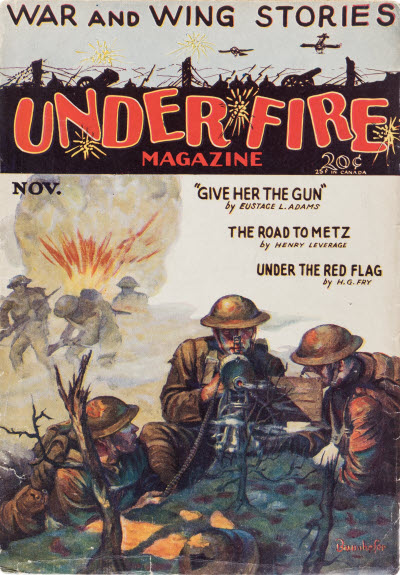
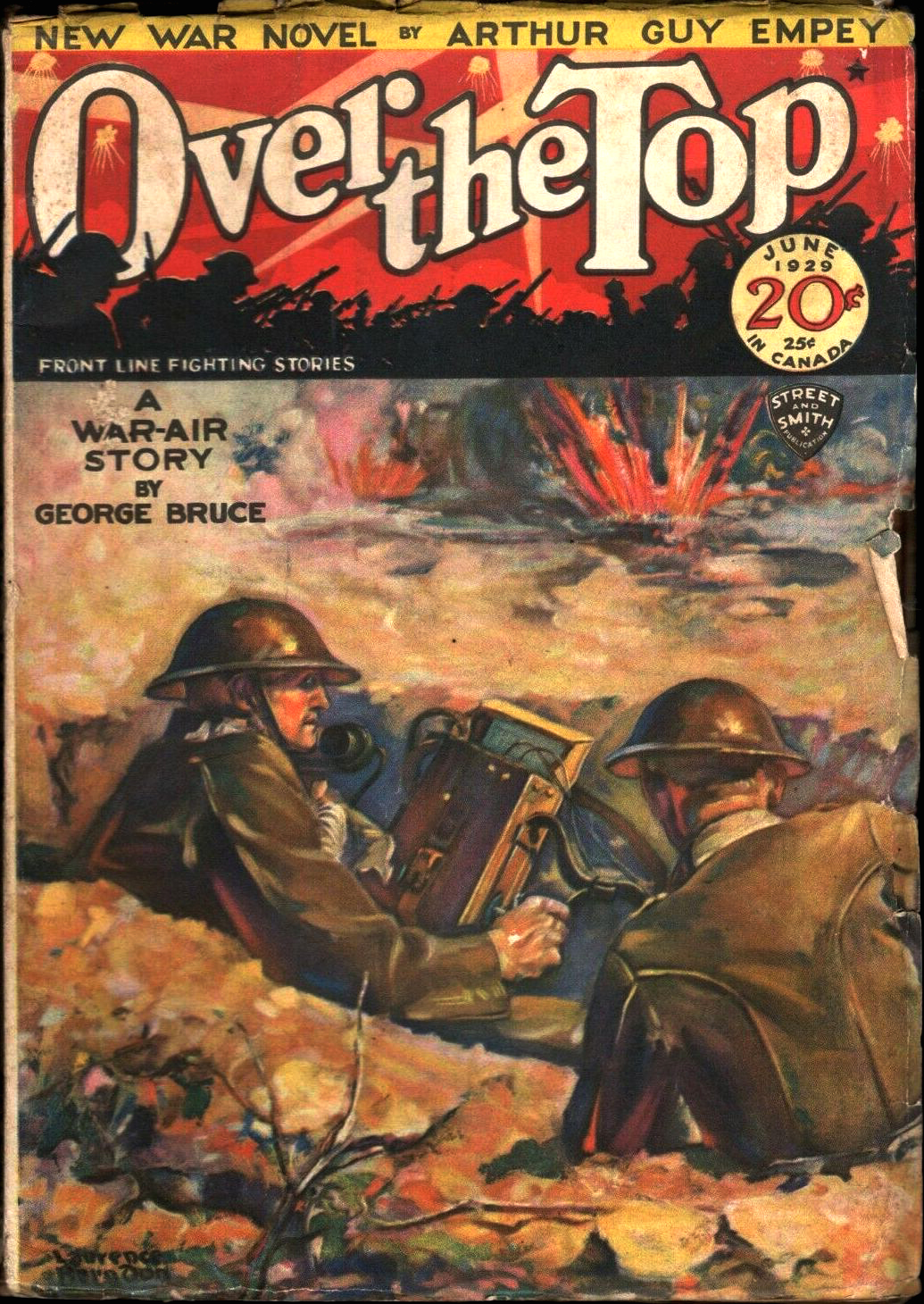
THIS week we have another Buck Manley story by Lloyd Leonard Howard from the pages of Street & Smith’s short lived Over The Top magazine. Over The Top was a magazine featuring war stories by the likes of Arthur Guy Empey, George Bruce, Raoul Whitfield among others. One of those others being Lloyd Leonard Howard who had stories in about a dozen of the 21 issues. Several of them featured a pilot by the name of Lieutenant Buck Manley and his pal Lieutenant “Stubby” Davis. For some reason or other, enemy craft were scarce since the St. Mihiel drive and although Boche crates were few and far between there were still Boche observation Balloons to down! From the December 1928 issue of Over The Top, it’s Lloyd Leonard Howard’s “Buck Manley, Balloon Buster!”

There are certain things you can’t explain to G.H.Q.—sometimes you just have to show ’em!

“Flying Aces, November 1935″ by C.B. Mayshark

Link - Posted by David on May 8, 2023 @ 6:00 am in

THIS May we are once again celebrating the genius that is C.B. Mayshark! Mayshark took over the covers duties on Flying Aces from Paul Bissell with the December 1934 issue and would continue to provide covers for the next year and a half until the June 1936 issue. While Bissell’s covers were frequently depictions of great moments in combat aviation from the Great War, Mayshark’s covers were often depictions of future aviation battles and planes, like November 1935’s thrilling story behind its cover in which Mr. Mayshark shows us what it might look like when they test the new Boeing Bomber!

Action Test of the Boeing Bomber

th_FA_3511OVER the distant horizon, a speck suddenly becomes visible from the housetops of a teeming industrial city. As if by magic, the speck grows in size, finally taking on gigantic proportions. Crowds in the streets are attracted, all eyes are turned heavenward. And now the aerial monster—the new Boeing Bomber—hurtles over the city at more than 250 miles per hour! This giant, powered by four Pratt & Whitney engines, is the newest thing in the air—the latest marvel of an age which already boasts innumerable mechanical wonders.

Suddenly, the local airport is alive with activity. Three brand new Navy Northrops are speedily rolled from a hangar. Commands are curtly barked, starters whine, and the deafening roar of three powerful engines pervades the air. The single-seaters are off the ground with a leap; and once in the air, they head in Vee formation toward the circling bomber. Their job is a test attack on the immense ship before them. They must attempt, theoretically, to send it to destruction.
Will they be returned the victors? Will the Boeing Bomber, in supposition, go “down in flames?” Will the years of research and toil be written off as short of the goal?

In short, were the designers fully warranted in making this new swing in military aviation? At this writing, the answer seems to be an emphatic “Yes!” To begin with, the argument is advanced that the days of the single-seater hero pilot are gone forever. Already there are indications that present day single-seater squadrons may become somewhat outmoded before the advance of fast and powerful two- and three-seater attack jobs. This fact gives credence to the growing acceptance, in military circles, of the large capacity, long-range bomber, of which the new Boeing is the acme.

Of course, we all know of the romance and spirit of adventure which characterized the fighting of the daring war-time pilots. In those days it was generally a case of man against man. But today things are different.

There are those who declare that single-seaters have little chance against a four-engined giant with five gun platforms—a ship which cruises at better than 250 m.p.h. The present day fighters of less speed would, of course, have difficulty in getting within range. As for the faster fighters, it may be pointed out that it takes plenty of skill to hit a fast moving ship; and when you are forced to zig-zag and literally throw yourself all over the sky in order to escape burst after burst of withering fire from such a formidable flying fortress—it requires more than skill!

However, in spite of what the experts think, and in spite of what the consensus is among those who think they are experts, the new Boeing Bomber must be put to test. A violent encounter must be simulated.

And so, the Northrops appear on the scene. One of the finest single-seater types in the world, they are fast, powerful, highly maneuverable. If anything can get near the Boeing Bomber, the Northrop can.

Coming upon the bomber from behind, they spread out fan-wise as soon as the first warning burst of tracer sprays the air about them. One Northrop climbs, another maintains its position, and the other dives. Attack the ship from more than one angle! Close in on it! Throw tracer from all directions! Those are the accepted tactics.

But the Northrop pilots soon find their task difficult. The Boeing Bomber cannot safely be approached from any angle. It is protected from above by a turret along the top of the fuselage. A “bird cage” gun emplacement protects the nose of the ship. Moreover, guns bristle from “blister” turrets on both sides and belly of the bomber’s fuselage. There are no blind spots!
The gunners aboard the Boeing are wide awake to every movement of the Northrops. But even so, their task, too, is not the simplest one in the world. The shifty little Northrops are giving them the fight of their lives. But finally, the hugh bomber prevails.

AND so, the Boeing theoretically is successful in bombing the industrial center it has attacked. True, the city is also protected by anti-aircraft defences. But the speed at which the Boeing flies makes one sceptical as to the success of such fire. And this brings up an interesting question: Have anti-aircraft developments kept pace with plane developments? A city is a huge target for a bomber speeding at high altitudes—but to gunners on the ground the bomber is, of course, a very small and highly-elusive object. While we’ve heard rumors of super-effective anti-aircraft pieces, the powers that be have thus far kept such inventions well veiled.

As for our Northrops, they now land, and the pilots climb wearily from their cockpits, haggard, exhausted. They have been through an ordeal. The tight turns and steep power dives have told upon them; for the tricky maneuvering in the hurtling fighters of the present day exerts a terrific strain upon the body.

Of course, the air battle pictured on our cover is entirely fictitious. Our purpose has simply been to help you visualize the new Boeing Bomber in a real air scrap. If such a test takes place, there will be a board of judges to render a verdict as to the outcome. Blank cartridges or camera guns will be substituted for bullets.

Performance figures of the new Boeing have not been released. At this writing, its top speed is a matter of conjecture. Your guess is as good as ours.

The Story of The Cover
Flying Aces, November 1935 by C.B. Mayshark
Action Test of the Boeing Bomber: Thrilling Story Behind This Month’s Cover

“The Ace Ship” by O.B. Myers

Link - Posted by David on May 5, 2023 @ 6:00 am in

THIS week we have a story by the prolific O.B. Myer’s! Myers was a pilot himself, flying with the 147th Aero Squadron and carrying two credited victories and awarded the Distinguished Service Cross.

The 77th had seven Aces in their squadron. There had never been an outfit with more than nine Aces in it. If the 77th were to have ten Aces—the whole gang would get a three-day leave in Paris, to celebrate. Billy Preston only had one victory under his belt when he was determined to be that tenth Ace by any means possible. From the August 1930 Sky Birds, it’s O.B. Myer’s “The Ace Ship!”

Billy Preston needed only one more plane to make him an ace, and the 77th needed just one more ace. But Spandau bullets carried his number—in that grim battle with the green-diamond Fokker.

For all his many published stories, O.B. Myer’s didn’t really have any series characters. The few recurring characters he did have in the pages of Dare-Devil Aces, we’ve collected into a book we like to call “The Black Sheep of Belogue: The Best of O.B. Myers” which collects the two Dynamite Pike and his band of outlaw Aces stories and the handful of Clipper Stark vs the Mongol Ace tales. If you enjoyed this story, you’ll love these stories!

“Flying Aces, May 1935″ by C.B. Mayshark

Link - Posted by David on May 1, 2023 @ 6:00 am in

THIS May we are once again celebrating the genius that is C.B. Mayshark! Mayshark took over the covers duties on Flying Aces from Paul Bissell with the December 1934 issue and would continue to provide covers for the next year and a half until the June 1936 issue. While Bissell’s covers were frequently depictions of great moments in combat aviation from the Great War, Mayshark’s covers were often depictions of future aviation battles and planes, like May 1935’s thrilling story behind its cover which imagines what an aerial fight between France and Italy might look like!

If France and Italy Fought

th_FA_3505DEATH in the Alps! Smashing tracer that severs control wires and snuffs out human lives with equal ease! Pursuit ships tearing across frigid skies with reckless abandon, primed for the kill! A powerful reconnaissance flying-boat winging its way belligerently towards a French objective! All this and more could happen on the mountainous Franco-Italian border.

Let us suppose that an Italian flying-boat is ordered to fly over French territory on a secret reconnaissance job. The resultant information is to be used by a fleet of bombers which are to wipe out certain industrial centers in the south of France. Munition manufacturing plants are to be the prime objective, most of which are within easy range of Italian flying fields. But everything depends upon the success of the reconnaissance expedition.

The Cant flying-boat has almost reached the border when two French single-seaters tear into view. Something has leaked out! The French are aware of the impending danger, and they are determined to avert disaster. But the three Italian airmen must carry out their orders, and they prepare for the imminent encounter.

Flying a ship in the Alps Mountains is at best no simple task. There are towering snow-capped peaks which mask themselves in the surrounding hazy atmosphere, and they are a constant menace. Treacherous air currents are also particularly dangerous, so that a pilot never knows when his ship is going to be sucked down and smashed. Then, too, the wind reaches such a high velocity at times that it is almost impossible to turn the controls against it.

Having learned of all these dangers through painful experience, the French and Italian airmen proceed warily. Circling at a safe altitude above the Italian ship, the French fighters wait for a chance to strike. But the Italians do not deviate from their course. They, too, are waiting.

Suddenly, without warning, one of the Frenchmen drops. Like a plummet he falls, seemingly out of control. But quickly, as if he had hit something solid, he pulls out of the dive. Now the Italians are directly in the Frenchman’s line of flight, and as the pilot of the fighter turns on the heat, two murderous streams of machine-gun tracer splatter upon the wings of the flying-boat.

Now the Frenchman is forced to pull up and retreat to safety. The rear gunner in the Italian ship has entered into the picture and is returning the fire with a zest. In the meantime, the second Frenchman has projected himself into the fray. The Hisso motor screams as the single-seater lunges down, but again the Italians are successful in beating off the speedy enemy.

And so back and forth across the sky weave the three planes, the French ships possessing the greater speed, and the Italians the greater fighting power.

It is difficult to predict the outcome of such an air battle. Although the flying-boat does not possess great speed or maneuverability, its two gunnery should be able to protect it against any reasonable attack. On the other hand, the speed and the fighting fury displayed by the French single-seaters give rise to the belief that nothing could withstand the power of their vicious onslaught.

The Italian ship taking part in this air battle is a Cant 21 bis two-seater reconnaissance flying-boat. It is powered with a 500-horsepower Isotto Fraschini “Asso” engine. Gunners’ cockpits are situated in the rear and in the nose of the fuselage, the one in the nose being directly connected with the pilot’s cockpit. The ship’s speed is 134 miles per hour, and its range is ten hours.

The two French ships are Bleriot-Spad 510’s. This ship is designated as a single-seater high-altitude fighter. Its speed is 231 miles per hour, which places it among the fastest military planes in the world. Its power plant consists of one 500-horsepower Hispano-Suiza twelve-cylinder supercharged engine.

In view of the present fictitious description, it would be interesting to note the difference in the make-up of the French and Italian air forces. The Italians have a particularly difficult problem to face because of their geographical surroundings. Bounded on the south, east, and west by water as they are, the need for flying-boats and seaplanes can be readily seen.

On the other hand, an entirely different kind of aircraft is needed for work in the mountainous regions which bound the peninsula on the north. Italy leans more towards large, long-range ships than it does toward fast intercepter fighters. Very strenuous training must be undergone by all Italian military pilots, and once they have accomplished their training, their duties are varied and often hazardous. As a result, Italian military airmen rank among the best in the world. Proof of this fact was exhibited when General Balbo led the Italian Air Armada to America and back again to Italy in 1933.

When we look at the air arm of France, we see an entirely different picture. France has always been regarded as the nation which possesses greater strength than any other nation, in so far as fast pursuit jobs are concerned. Ever since the war, France has concentrated upon efficiency and speed in single-seater fighters. A great many different makes of pursuit and intercepter fighters are now in the French service, and their performance is indeed enviable. An example of this fact is to be found in the performance figures for the Bleriot-Spad. However, France is not lacking in reconnaissance and bomber types. Farman has been world-famous since the days of the war for the production of high-efficiency bombers.

The idea of anyone’s entertaining seriously the thought that the air battle pictured on our cover could actually take place is, in the light of present-day diplomatic developments, quite inconceivable. Our only aim has been to show our readers how representative ships of France and Italy would appear and what would be the advantages of each, if they were to engage in combat.

The Story of The Cover
Flying Aces, May 1935 by C.B. Mayshark
If France and Italy Fought: Thrilling Story Behind This Month’s Cover

« Previous PageNext Page »