


Looking to buy? See our books on amazon.com Get Reading Now! Age of Aces Presents - free pulp PDFs

A Phineas Pinkham Bibliography

Link - Posted by David on December 4, 2015 @ 6:00 am in

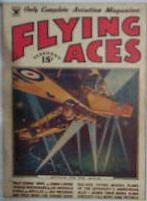
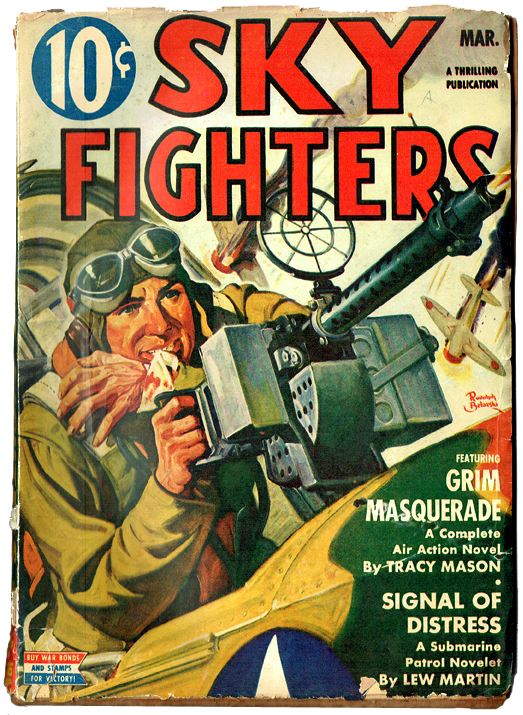
This month we’re celebrating the talents of that pulp stalwart—Joe Archibald. Archibald wrote hundreds of stories for the pulps, both dramatic and humorous. His bread and butter it would seem was the humorous tale. He had long running series in several pulp titles. In the detective titles there was Alvin Hinkey, the harness bull Hawkshaw, in 10 Story Detective; Scoops & Snooty, the Evening Star’s dizzy duo, in Ten Detective Aces; and the President of the Hawkeye Detective Agency himself—Willie Klump in Popular Detective. While in the aviation titles he had Elmer Hubbard and Pokey Cook in Sky Birds; the one-two punch of Ambrose Hooley & Muley Spinks in The Lone Eagle, The American Eagle, Sky Fighters and War Birds; and last, but by no means least, the pride of Booneville—Phineas Pinkham in Flying Aces!
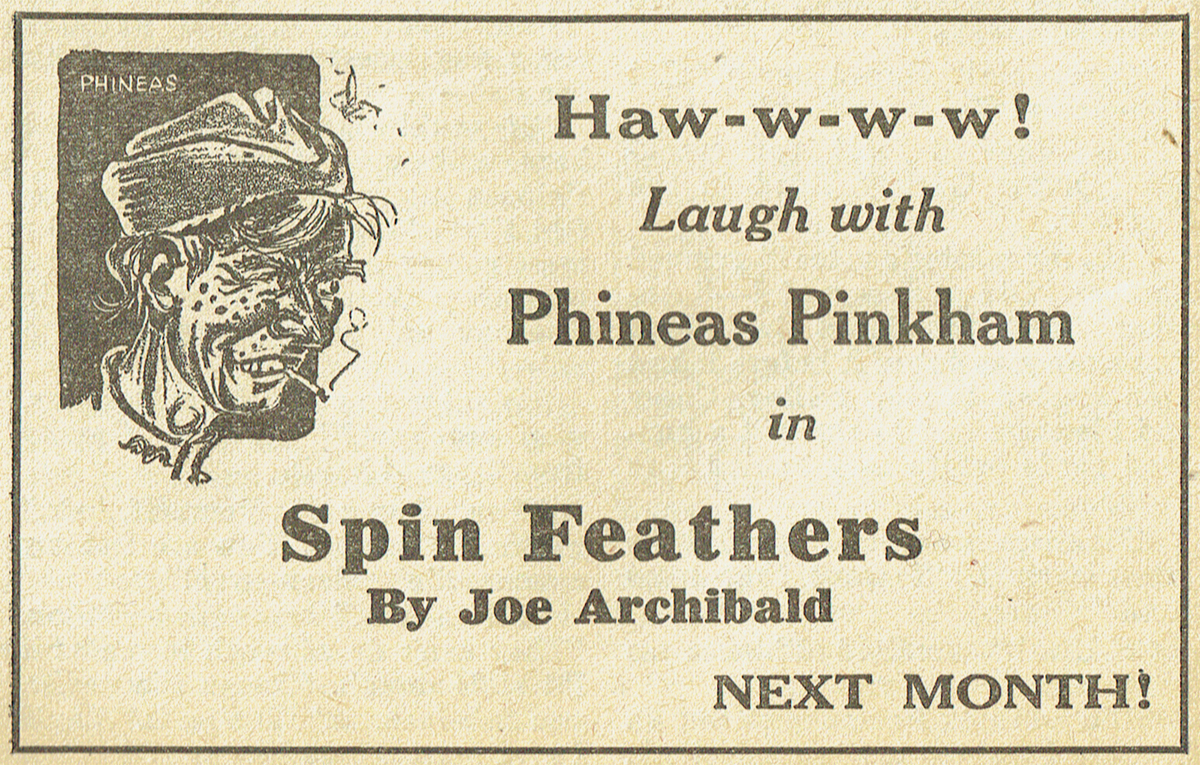
Joe Archibald’s Phineas Pinkham was the longest continuously running aviation character in the pulps. Running in the pages of Flying Aces from November 1930 until the magazine dropped it’s Fiction section in November 1943. In 151 stories, Pinkham bedevils the men of the 9th Pursuit Squadron, all the Hauptmanns and vons the Boche send his way and his hapless C.O. Major Rufus Garrity with his pranks, jokes and insane inventions that seem only to amuse Phineas.

Here is a checklist of his adventures:

title magazine date vol no
1930
Sneeze That Off Flying Aces Nov 6 6
1931
The Hardware Ace Flying Aces Feb 6 9
Rock-A-Bye Jerry Flying Aces Jun 9 1
Bargains For Blois Flying Aces Jul 9 2
Tell It To The King Flying Aces Aug 9 3
For Dear Old G.H.Q. Flying Aces Sep 9 4
Crazy Like a Fox Flying Aces Oct 9 5
Junkers—C.O.D. Flying Aces Nov 9 6
Please Omit Flowers Flying Aces Dec 9 7
1932
Half-Shot at Chaumont Flying Aces Jan 9 8
A Flyer In Tin Flying Aces Feb 11 1
Too Good for Hanging Flying Aces Mar 11 2
From Spad to Worse Flying Aces Apr 11 3
Pride of the Pinkhams Flying Aces May 11 4
No Money, No Flyee Flying Aces Jun 12 1
Herr Tonic Flying Aces Jul 12 2
Sky A LA Mode Flying Aces Aug 12 3
The Reel Hero Flying Aces Sep 12 4
The Bat’s Whiskers Flying Aces Oct 13 1
Good To The First Drop Flying Aces Nov 13 2
Shower Kraut Flying Aces Dec 13 3
1933
The Bull Flight Flying Aces Jan 13 4
Sleuthing Syrup Flying Aces Feb 14 1
Nothing But The Tooth Flying Aces Mar 14 2
The Fryin’ Dutchman Flying Aces Apr 14 3
The Grim Reaper Flying Aces May 14 4
Spin Feathers Flying Aces Jul 15 1
Take The Heir Flying Aces Aug 15 2
Stage Flight Flying Aces Sep 15 3
Herr Net Flying Aces Oct 15 4
Bomb Voyage Flying Aces Nov 16 1
The Frying Suit Flying Aces Dec 16 2
1934
Smell-Shocked Flying Aces Jan 16 3
String ‘Em Back Alive Flying Aces Feb 16 4
Hans Up Flying Aces Mar 17 1
Hose De Combat Flying Aces May 17 2
No Fuelin’ Flying Aces Jun 17 3
Hunbugs Flying Aces Jul 17 4
Intelligence Pest Flying Aces Aug 18 1
Scrappy birthday Flying Aces Sep 18 2
Tattle Tailwinds Flying Aces Oct 18 3
Parlez Voodoo Flying Aces Nov 18 4
Good Haunting Flying Aces Dec 19 1
1935
An Itch In Time Flying Aces Jan 19 2
Crepe Hangers Flying Aces Feb 19 3
Horse Flyers Flying Aces Mar 19 4
Geese Monkeys Flying Aces Apr 20 1
Cinema bums Flying Aces May 20 2
Prop Eyes Flying Aces Jun 20 3
Rice and Shine Flying Aces Jul 20 4
Dog Flight Flying Aces Aug 21 1
Pfalz Teeth Flying Aces Sep 21 2
One Hun, One Hit, Three Errors Flying Aces Oct 21 3
Sea Gullible Flying Aces Nov 21 4
Fallen Archies Flying Aces Dec 22 1
1936
Spy Larking Flying Aces Jan 22 2
T.N.T. Party Flying Aces Feb 22 3
Doin’s In The Dunes Flying Aces Mar 22 4
The Batty Patrol Flying Aces Apr 23 1
Smells, Spells, And Shells Flying Aces May 23 2
Sky Finance Flying Aces Jun 23 3
Scratch-as-Scratch Can Flying Aces Jul 23 4
Blois, Blois, Blacksheep Flying Aces Aug 24 1
Fish and Gyps Flying Aces Sep 24 2
Watch Your Steppes Flying Aces Oct 24 3
C’est La Ear Flying Aces Nov 24 4
Scrappy Birthday Flying Aces Dec 25 1
1937
Flight Opera Flying Aces Jan 25 2
P.D.Q.—Boat Flying Aces Feb 25 3
Smoke Scream Flying Aces Mar 25 4
Poosh ‘Em Up, Pinkham Flying Aces Apr 26 1
Wrong About Face Flying Aces May 26 2
Bagger In Bagdad Flying Aces Jun 26 3
Spree With Lemon Flying Aces Jul 26 4
Swiss Wheeze Flying Aces Aug 27 1
Peck’s Spad Boys Flying Aces Sep 27 2
Scott Free-For-All Flying Aces Oct 27 3
Crash or Delivery Flying Aces Nov 27 4
Yankee Doodling Flying Aces Dec 28 1
1938
Flight Team Flight Flying Aces Jan 28 2
Cat’s Spad-Jamas Flying Aces Feb 28 3
Eclipse of The Hun Flying Aces Mar 28 4
Hoots and Headlights Flying Aces Apr 29 1
Kraut Fishing Flying Aces May 29 2
The Spider and The Flyer Flying Aces Jun 29 3
Zuyder Zee Zooming Flying Aces Jul 29 4
Tripe of Peace Flying Aces Aug 30 1
Cocarde Sharpers Flying Aces Sep 30 2
Heir-O-Bats Flying Aces Oct 30 3
Skyway Robbery Flying Aces Nov 30 4
Happy Hunning Ground Flying Aces Dec 31 1
1939
A Haunting We Will Go Flying Aces Jan 31 2
Don Patrol Flying Aces Feb 31 3
Kaiser Bilious Flying Aces Mar 31 4
Slaked Limeys Flying Aces Apr 32 1
Spin Money Flying Aces May 32 2
Flight Headed Flying Aces Jun 32 3
The Airy Ape Flying Aces Jul 32 4
Herr Dresser Flying Aces Aug 33 1
Duc Soup Flying Aces Sep 33 2
C’est La Goat Flying Aces Oct 33 3
Nippon Tuck Flying Aces Nov 33 4
Ye Ould Emerald Oil Flying Aces Dec 34 1
1940
Impropa Ganda Flying Aces Jan 34 2
Fright Leader Flying Aces Feb 34 3
Take It or Leafet Flying Aces Mar 34 4
Briny Deep Stuff Flying Aces Apr 35 1
Flight to the Finish Flying Aces May 35 2
Pharaoh and Warmer Flying Aces Jun 35 3
Dawn Parole Flying Aces Jul 35 4
Horse of Another Cocarde Flying Aces Aug 36 1
Air or Nautical Flying Aces Sep 36 2
The Foil Guy Flying Aces Oct 36 3
Bull Flight Flying Aces Nov 36 4
Leave La Frawnce Flying Aces Dec 37 1
1941
Crow de Guerre Flying Aces Jan 37 2
I Knew De Gaulle Flying Aces Feb 37 3
Daze In Dunkirk Flying Aces Mar 37 4
Zooming Zombies Flying Aces Apr 38 1
Dawn Petrol Flying Aces May 38 2
Jerry Prison Scamp Flying Aces Jun 38 3
The Eyes Have It Flying Aces Jul 38 4
Nieuport News Flying Aces Aug 39 1
Chuting Star Flying Aces Sep 39 2
Zoom Like It Hot Flying Aces Oct 39 3
Gleech of Promise Flying Aces Nov 39 4
Gas Me No Questions Flying Aces Dec 40 1
1942
Tanks For The Memory Flying Aces Jan 40 2
The Moor The Merrier Flying Aces Feb 40 3
Hot Francs Flying Aces Mar 40 4
Contact Bridge Flying Aces Apr 41 1
The Crate Impersonation Flying Aces May 41 2
Grim Ferry Tale Flying Aces Jun 41 3
Maltese Doublecross Flying Aces Jul 41 4
Spy and Ice Cream Flying Aces Aug 42 1
Air Screwball Flying Aces Sep 42 2
Glider Than Air Flying Aces Oct 42 3
Flight Headed Flying Aces Nov 42 4
Pot Luck Flying Aces Dec 43 1
1943
Heir Minded Flying Aces Jan 43 2
Chateau Theory Flying Aces Feb 43 3
Pinkham’s Pixies Flying Aces Mar 43 4
Laughing Gas Model Flying Aces Apr 44 1
Hide and Go Sheik Flying Aces May 44 2
Jappy Landing Flying Aces Jun 44 3
Three Aces Feast Flying Aces Jul 44 4
Italian Vamoose Flying Aces Aug 45 1
Czech Mates Flying Aces Sep 45 2
Gamboling With Goebbels Flying Aces Oct 45 3
Sounds Vichy Flying Aces Nov 45 4


“Haw-w-w-w-w!” As a bonus, here’s Phineas Pinkham mirthquake from 1934. From the February number of Flying Aces Phineas goes to some inventive extremes to get a captured flyer back in “String ‘Em Back Alive!”

Major Garrity had an idea. It involved sending Phineas Pinkham back to training school in his stolen Fokker to teach rookies to fight. Phineas had an idea, too. It involved taking that stolen Fokker across the lines to teach the Mad Butcher not to fight. Lay your bets, gentlemen!

Editor’s Note: This story was posted a number of years ago, but this is an update PDF with Archibald’s illustrations included to add to the merriment!
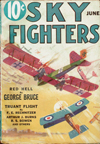
“How The War Crates Flew” by Robert Sidney Bowen

Link - Posted by David on May 13, 2015 @ 6:00 am in

FROM the pages of the June 1933 number of Sky Fighters:

Editor’s Note: We feel that this magazine has been exceedingly fortunate in securing R. Sidney Bowen to conduct a technical department each month. It is Mr. Bowen’s idea to tell us the underlying principles and facts concerning expressions and ideas of air-war terminology. Each month he will enlarge upon some particular statement in the stories of this magazine. Mr. Bowen is qualified for this work, not only because he was a war pilot of the Royal Air Force, but also because he has been the editor of one of the foremost technical journals of aviation.
FORMATION FLYING

by Robert Sidney Bowen (Sky Fighters, June 1933)

WELL, maybe I’m getting good, or maybe you buzzards have ganged up together and decided to kid your old Uncle Wash-out. But anyway, I’m certainly getting a flock of letters asking me all sorts of questions. And would you believe it?—most of them are real sensible. They almost make me believe that you apes keep your ears buttoned back when I start to talk. As I said, maybe I’m getting good, and then again maybe I’m—! Oh, well, we’ll let that one go this time.

However, it all leads up to the fact that I’ve just received a note from Tony Battagalia out in Chicago. Now there is a buzzard who does his sleeping in the night time only. He keeps his eyes open while the sun is shining—and even on rainy days, too. In his note he tells me what a wonderful war eagle I must have been (which of course is quite correct), and then he asks me to get in a few words about formation flying.

Well, I was going to speak about knitting woolen helmets for high altitude flying, but in view of the fact that Tony wants to hear about formation flying then that’s what he’s going to hear about. Of course some of you other buzzards may think that you know all about that sort of thing. If you do just stick your chins in your vests and don’t snore too loud. Tony and the other lads crave information, so take a tip and shut up.

FORMATION flying is, of course, just what the two words signify—flying together in a group in a definitely arranged group. And why? Of course you can guess. When soldiers march they don’t go along the street in mob fashion, half of them in the gutter and the other half shuffling across peoples’ front lawns. No, they march in closed order. And the main idea is so that the whole group will execute an order as though they were one man. The same idea holds true for cavalry, gun batteries, tanks, etc. Formation is maintained so that the group will act as a solid unit.

Now, that is great stuff for the fighting forces on the ground. They can march into battle in formation positions, and in some cases they can fight a battle and still keep their formation. In the case of infantry going over the top, they go over in what are known as waves. The first wave is a line of soldiers spaced so many feet apart. In some cases it may be two lines. Then comes the second wave, and if necessary a third wave. But what I’m trying to bring out is that the soldiers advance upon the enemy in formation. When they meet the enemy and it becomes a case of hand to hand conflict, their original formation is of course broken up. But up to that point, the soldiers that were not killed while advancing across no man’s land kept an advancing formation that made it possible for their officers to maneuver them as a solid group.

THAT is exactly what happens in the air—planes fly in formation not because it looks pretty, but so that all of them will maneuver as a fixed body when the signal comes from the pilot in command. Troops on the ground march behind their commanding officer. The reasons for that are, first; an officer leads his men. That’s why he’s an officer. Second, so that they will be able to see or hear his commands and execute them as a unit.

So naturally, it follows that the commanding air officer leads his pilots through the air. And the best way to lead them is when they are flying behind him in formation position. When in formation they can see his signals, and by looking back he can see them.

Now, that brings us up to the matter of the various types of aerial formations, their names, and their uses.

The first is, of course, the most common one of all. It is called the V formation. (Fig. 1) A V formation can be made up of any number of planes, from three to six billion, if you want that many. The officer in command flies at the peak of the V. On his left and on his right, just behind him, are usually two experienced pilots. And then behind each of them is a new or inexperienced pilot. And behind each of them is a veteran. Now, because of prop wash (which is simply air churned up and disturbed by the revolving propeller) it is impossible for one plane to fly directly behind another and at the same altitude. Believe it or not, the air just back of the first plane is like a greased pole. You just can’t stay on it. Your plane will slide off to the right or the left. Therefore, in order that the plane behind will maintain its position, it flies a few feet above the level of the plane ahead, and a bit to the right or left such as the case may be. And the plane behind that flies a bit high. And so forth, right back to the last plane. In other words the planes on both sides form a flight of steps that slant outward and upward from the leading plane.

WHEN you speak of the left and right side of a formation you speak of them in reference to the right or left side of the leading plane. And the left or right side of a plane is its pilot’s left or right when facing forward. Therefore No 1 plane on the right is the first plane on the leader’s right. No. 2 plane is the next one back, and so forth. And the same numbering holds true for the left side. So by checking back on what I said about the two inexperienced pilots, you will note that in that seven plane flight one inexperienced pilot, was No. 2 plane on the right. And the other was No. 2 on the left.

Now, don’t rush me. I’m going to tell you why.

It’s simply for this reason. The greenhorns are protected in front and in the rear. In other words in case the flight is attacked from either the front or the rear, the attackers will smack into veterans first. They won’t be able to slip down and take a crack at the greenhorns when veterans aren’t looking.

AND as an added precaution against that, there is sometimes a veteran who flies what is called Top-cover position. You will note that that position is shown in Fig. 1. He flies in the center of the V, but at an altitude higher than any of the others. And so, in that particular formation you have the leader and two veterans keeping a weather eye on the air above and in front. You have two more veterans doing the same thing behind and above. And you have a lone veteran riding herd above the center of them all.

Now, before I go on with other formations just let me mouth a few last words about the V. That is the way a flight would go over the lines. However, maneuvering in formation is a rather ticklish job because each plane is so sensitive on the controls, and because of varying air currents. Naturally, planes used in the war were not as stabilized as the ships of the present time, and therefore any idea of fancy flying in formation was OUT. The formation could climb and dive together. It could bank to the left or the right. But looping together or rolling together wasn’t tried—and for two reasons. First, it was too risky. And second, it wasn’t of any value. However, banking to the right or the left was of value, for the simple reason that the formation had to turn some time. They didn’t go across the lines flying straight and then go right on around the world until they hit their own field. And so, of course, a way was doped out how to turn around to the left or the right and still maintain the V formation.

It was done in two ways—not both at the same time!

Once the leader signaled a bank to the right, the pilots flying ships on the inside of the turn (ships on the leader’s right in this case) would throttle their engines and more or less stall around. And the pilots flying planes on the outside of the turn (the leader’s left in this case) would speed up their engines and go fast. Naturally the reason for that was that to make the turn, they had to fly a greater distance than the ships on the inside of the turn. And then, of course, when the formation was headed straight again the pilots on the right would speed up their engines again, and the pilots on the left would slow up their engines—’and thus everybody would keep formation position.

The second way was really the most effective, because it did not necessitate the trouble of throttling or goosing the engine. And also it made it possible for the V formation to turn quicker and in a much smaller area.

It was executed this way. Again we’ll have the leader signal a turn to the right. (He’d signal by wabbling his wings and pointing his right arm to the right. Or he might just dip his right wings, and then start to turn.) But anyway, let us say that he has signaled a right turn.

As he started to turn, the planes on the inside (his right) would dip down to the left then up and over to form position on his left. At the same time the planes on the outside of the turn (his left) would climb up to the right and then down to form position on his right. In other words the right and left planes would simply change places. The ones on the inside of the turn going down to the left and up. And the planes on the outside of the turn going up to the right and then down. Of course a turn to the left was made in the opposite manner.

So much for that. Nope. One more word. The flight would cross the lines in formation but once they were attacked, or did the attacking themselves, the formation would soon break up. Because no matter how much you may slice it, a dogfight in the air is an individual against individual affair. Once a fight starts its just the same idea as when the advancing wave of soldiers reaches the enemy line. A general free-for-all with the best man winning. You can advance, attack, and retreat in formation—but during the scrap the formation goes by-by.

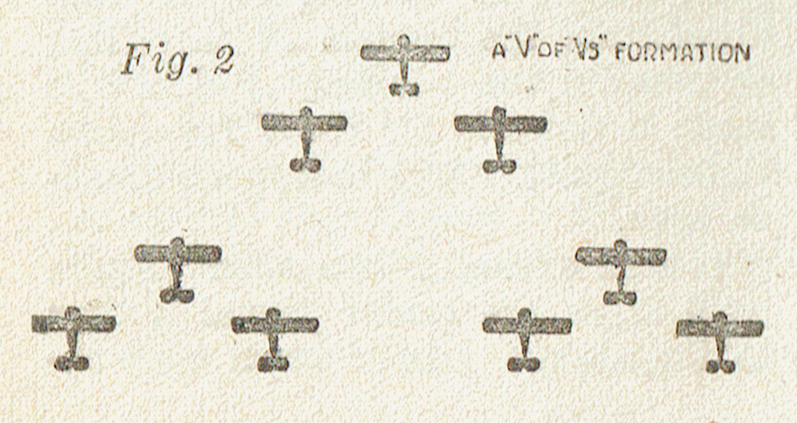
NOW, by squinting at Fig. 2, you will see what a V of Vs formation looks like. As in an ordinary V formation there can be as many planes as you want in each V. But in a squadron there are usually three flights; A, B, and C. Therefore, on a squadron patrol the formation flown is by individual flights, with the flight leader heading each group. And we call it a V of Vs because each group is in the form of a V, and all three groups form a large V. Maneuvering is, of course, just the same as with one V only on a larger scale.

And Fig. 3 is what is called line formation. It can start across the lines that way, or it can be formed by both sides of a V formation moving up into line with the leader in the middle. That type of formation was used for ground strafe work over a wide area. The line of ships would simply sweep forward dropping their small twenty pound Cooper bombs (usually four to each scout plane) and firing their guns at the troops below. To reverse and come back each plane simply half rolled and pulled up out of its resulting dive. (Naturally the ships flew far enough, apart to make reversing possible without tangling wings.)

Fig. 4 is a formation that was seldom used during the late mix-up on the other side of the big pond. It’s called, “line formation in echelon.” As you will note it’s simply a V formation with one-half of the V missing. The planes are like a flight of steps. And that type of formation was for ground strafing a small area. The ships came down, one after the other, and let drive with guns and bombs just before zooming up for altitude.

From echelon formation it was but a simple matter to form what was known as the Lufbery Circle, Fig. 5. (So called because it was used extensively by the great Lafayette Escadrillo ace, Raoul Lufbery.) As you can figure out for yourselves, regardless of its name, it is simply a follow-the-leader formation, or a ring-around-the-rosey affair. But its uses and its advantages were most helpful. It was used not only for trench straffing, but also for air attack defense. A pilot in a pursuit ship doesn’t have to worry much about what is in front of him, for the simple reason that he can see forward and shoot his guns forward. But, behind him it is another question. He can look behind, but he can’t shoot behind unless he turns around.

SO that makes the line formation in echelon and the Lufbery Circle, or follow the leader formation, a great help to each man’s tail. In other words you dive down on a trench, spray it with your guns, and zoom up without worrying much whether a load of nickel jacketed steel is going to crease the seat of your pants. And you don’t worry much because the pilot behind you is taking his turn at spraying the troops in the trench, with the result that they are too occupied with getting out of his way to turn around and blaze away at you as you zoom up.

And in the case of the Lufbery Circle, it wouldn’t be healthy for a Hun to try and drop down on the tail of the ship in front of you because you would simply pull up your nose a bit and chew off the soles of his field boots with your bursts. Incidentally, line formation in echelon, or follow the leader formation, was good for bombing work or photographic work. It enabled the pilots to bomb or snap, one at a time, the same spot on the ground, and while doing it be more or less protected from the rear. That is, each plane covered the ship ahead, with the exception, of course, of the last ship. But the pilot flying that ship was the only one who had to pray to Lady Luck to keep Spandaus lead away from him. And even he was protected if the planes formed the Lufbery Circle.

And so there you are, a few words of wisdom (?) on formation flying. In general, formation flying- was okay before and after the scrap. In fact, as you can figure out yourselves, if you’ve kept your ears open, formation flying or flying in formation was absolutely essential to effective patroling. BUT, in a scrap?—nuts to formations! Pick your man, and go get him. That was the idea. And when it was all over but the shouting, if you were still in the air, gather around your leader and reform your formation.

“Return of the Sky Devil” by Harold F. Cruickshank

Link - Posted by David on September 23, 2014 @ 12:00 pm in

The Sky Devil is back! Harold F. Cruickshank’s hero of the hell skies over the Western front returns to action once again in another WWII adventure. Bill Dawe had to change his name and lie about his age to join the RAF’s fight against Hitler’s Luftwaffe. Restricted from fighting, The Sky Devil trains a new generation of eager aces, including his own son until the 77th is suddenly and brutally attacked! This is the second of four WWII Sky Devil stories from Harold F. Cruickshank.
Years drop from a natural born fighter pilot, and “no combat” rules are forgottenf as he sheds his role of instructor to zoom through war-torn skies on a self-appointed mission of revenge!

“Soft Thunder” by Frederick C Painton

Link - Posted by David on August 31, 2012 @ 8:00 am in

The Strange Enemy of our new book Captain Philip Strange: Strange Enemies, Fraulein Doktor, pops up in the oddest places. Here she is causing trouble in Frederick C Painton’s “Soft Thunder” a year and a half before her first appearance in Donald Keyhoe’s Philip Strange stories.

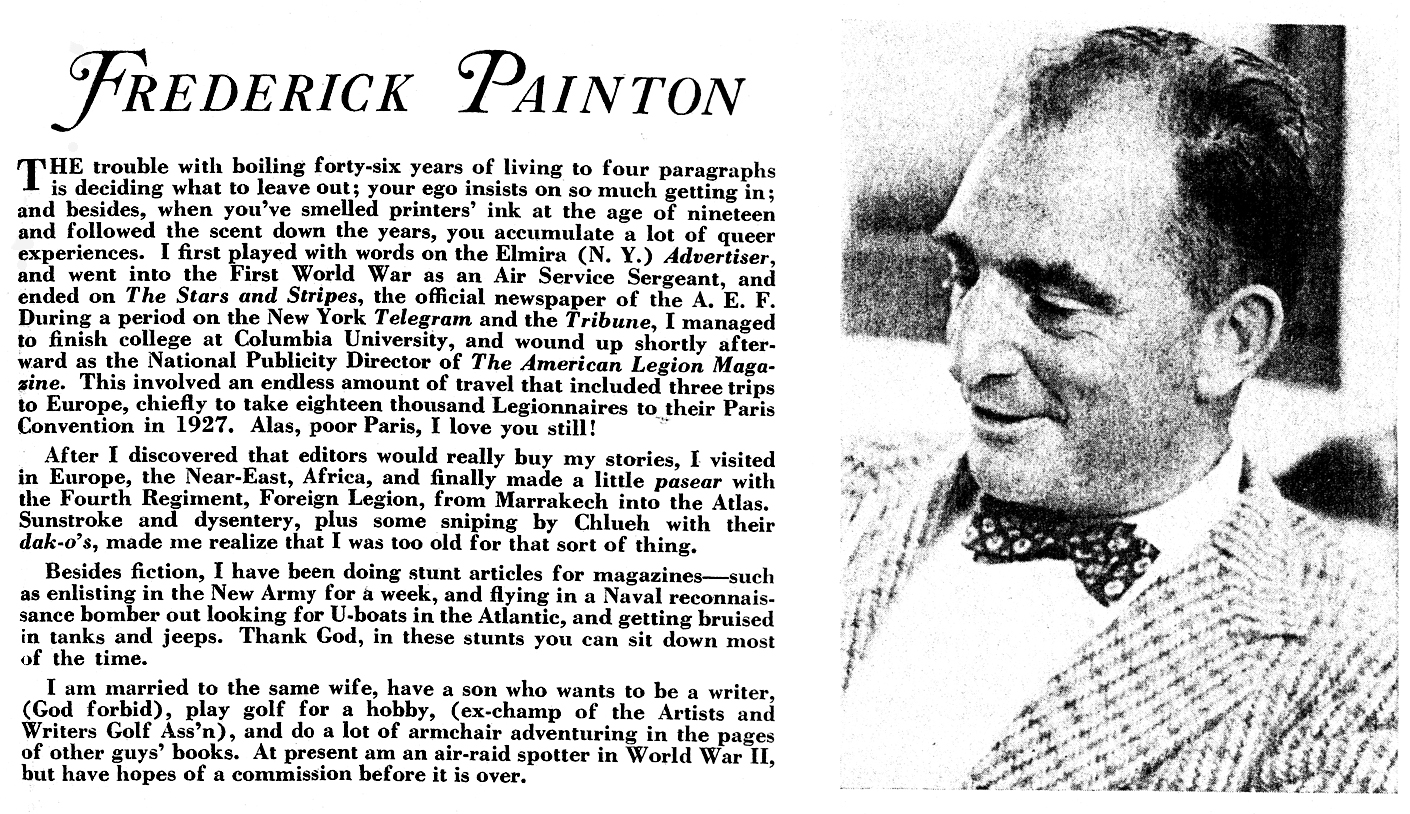
We’ve posted a number of Frederick C. Painton’s stories in this space already including a few of his Dirty Dozen-esque Squadron of the Dead stories. He’s a great writer with a background in newspapers as this short autobiography from the April 1942 issue of Blue Book Magazine attests:


Click to enlarge in a new window.

Unfortunately he died of a heart attack on a Guam airfield while covering the Pacific war.

He was just a kid who played Tennis to those two hard-boiled soldiers—but there was stuff in his make-up that kept him battling in the flaming skies. It was a grim game they played—they stuck to the rules and played like sports, but they knew that the loser would find flying death. And then into their game kited a kid who seemed soft—but there is lightning with even soft thunder.

“Double Death” by William E. Barrett

Link - Posted by David on July 4, 2011 @ 12:58 pm in

Here is a smashing complete novelette of strange wings over the Italian front!
Ships were being blown to shambles in pairs—two or four at time, never three or five or just one—and none knew why. Until Jack Lannigan came. Find out why in William E. Barrett’s intriguing novelette “Double Death.”

William E. Barrett wrote a number of aviation themed stories for the air pulps in the 1930s. His nine Iron Ace stories which ran in Sky Birds in the mid ’30s have been collected in one volume and available from our books page. Barrett would later become famous as the author of “Lilies of the Field” and “The Left Hand of God” amung other books.

“Mark of the Killer” by Arthur J. Burks

Link - Posted by Bill on October 17, 2008 @ 3:46 pm in

Arthur J. Burks was a Marine during WWI and went on to become a prolific writer for the pulps in the 20’s and 30’s. In this story, which mixes air war and sports, he tells the tale of middleweight boxing champion Larry Drago, who carries a grudge match with a German boxer into the skies over France.

“Sky Route To Hell” by Harold F. Cruickshank

Link - Posted by Bill on August 15, 2008 @ 2:39 pm in

The hero of our Age of Aces book “Sky Devil: Hell’s Skipper” returns to action once again in another WWII adventure. Bill Dawe had to change his name and lie about his age to join the RAF’s fight against Hitler’s Luftwaffe. Now, with his son a member, The Sky Devil’s Brood must take on a deadly mission to escort a supply convoy from England to Italy, This is the last of four WWII Sky Devil stories from Harold F. Cruickshank.

“Sky Devil and Son” by Harold F. Cruickshank

Link - Posted by Bill on July 11, 2008 @ 9:56 am in

The hero of our Age of Aces book Sky Devil: Hell’s Skipper returns to action in WWII. Bill Dawe had to change his name and lie about his age to join the RAF’s fight against Hitler’s Luftwaffe. But little did he know that the most important mission of his life was soon to come. He must rescue his own son from the clutches of the S.S. This is the first of four WWII Sky Devil stories from Harold F. Cruickshank.

“Blood on the Sun” by Ralph Oppenheim

Link - Posted by Bill on April 25, 2008 @ 11:18 pm in

Here is the second of The Three Mosquitoes stories that were set in pre-WWII China. There isn’t much actual Air War in this one but there is still plenty of action as the Mosquitoes try to rescue a Chinese warlord’s son from the invading Japanese.

“Stars for China” by Ralph Oppenheim

Link - Posted by Bill on April 4, 2008 @ 11:44 pm in

The Three Mosquitoes spent most of their time in Europe fighting the Kaiser’s worst in WWI. But this and one other of their exploits took place in pre-WWII China where they helped fight the invading Japanese. Author Ralph Oppenheim managed to update the trio for these stories and still keep the spirit of the Mosquitoes intact. An odd fact, Oppenheim wrote all these air tales having never flown.

“Savoias Out of Sapporo” by Arch Whitehouse

Link - Posted by Bill on March 24, 2008 @ 11:23 am in

A Bancroft and Leadbeater Adventure.
It wasn’t that anything untoward had happened that made Todd Bancroft and Larry Leadbeater cringe. Practically nothing had happened, and you can‟t take a punch at nothing…

« Previous Page