LESTER DENT is best 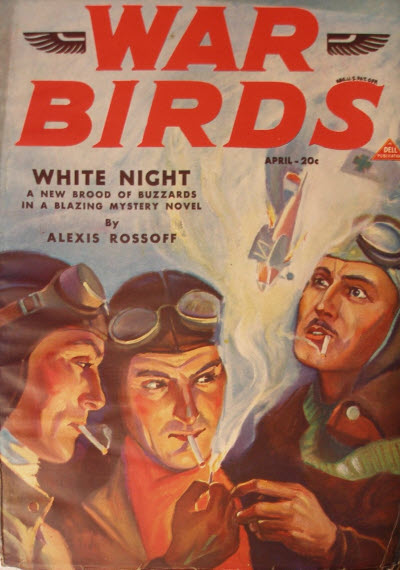 remembered as the man behind Doc Savage. But he wrote all number of other stories before he started chronicling the adventures of everyone’s favorite bronze giant. Here we have an action-packed tale of war time intrigue from the pages of the April 1932 issue of War Birds—”Sea Bats!”
A flying ship without a pilot; a murder without a murderer; a base without a hangar—Squeak knew something was haywire. It took double-crossed wings to throw the shadow of black crosses where they belonged.
And as a bonus, here’s another newspaper article about Lester Dent! This time it’s an article of Lester planning on touring the west retracing the route he had taken as a kid in a covered wagon. From The La Plata Home Press, it’s “Magazine Writer To Tour West!”
Magazine Writer To Tour West
La Plata Home Press, La Plata, MO • 13 AUGUST 1931
Doing Farm Work Here Occupied Part of Vacation
THIRTY years ago, Bern Dent of LaPlata, then a rancher in the West, trailed cattle herds over a route thru the Northwest. The country was then sparsely settled. Today, his son, Lester Dent, New York fiction writer and author of western stories, starts from his LaPlata farm home to cover this same territory and on to the coast, not in a slow-moving van, but in a high-powered motor car.
Crossing the Big Horn mountains, Mr. Dent will also retrace the course of a trip he, as a small boy, made in company with his parents in a covered wagon, before the era of motor cars and good roads. On this trip, there were no bridges and they camped three weeks on the banks of Big Powder river, waiting for that fast-flowing stream to subside until it could be forded.
After helping put up hay, and wielding a hoe on his father’s farm here, Lester Dent went to Carrollton, Mo., Thursday, where he plans to join his wife for a motor trip through the Black Hills, the Yellowstone and Jackson Hole country, Oregon, Utah and Colorado. A sister-in-law, Miss Corrine Gerling, of Carrollton, will accompany them.
Mr. Dent will obtain material to be used in a series of western stories he is writing. He will return to LaPlata in three weeks or a month, and in October will return to New York for the winter.
The story of Lester Dent and his development as a fiction writer is as interesting as any story he has written. On the cover page of such magazines as All-Fiction, Popular, Western Trail, War Brides, War Aces, you will find the name of Lester Dent, and now, after writing all kinds of adventure stories, his name is found in Scotland Yard and other such magazines, as a writer of detective stories.





 twelve stories of Christmas 1931, we have an excellent tale by Edgar A. Manley from the pages of the December 1931 Sky Birds magazine!
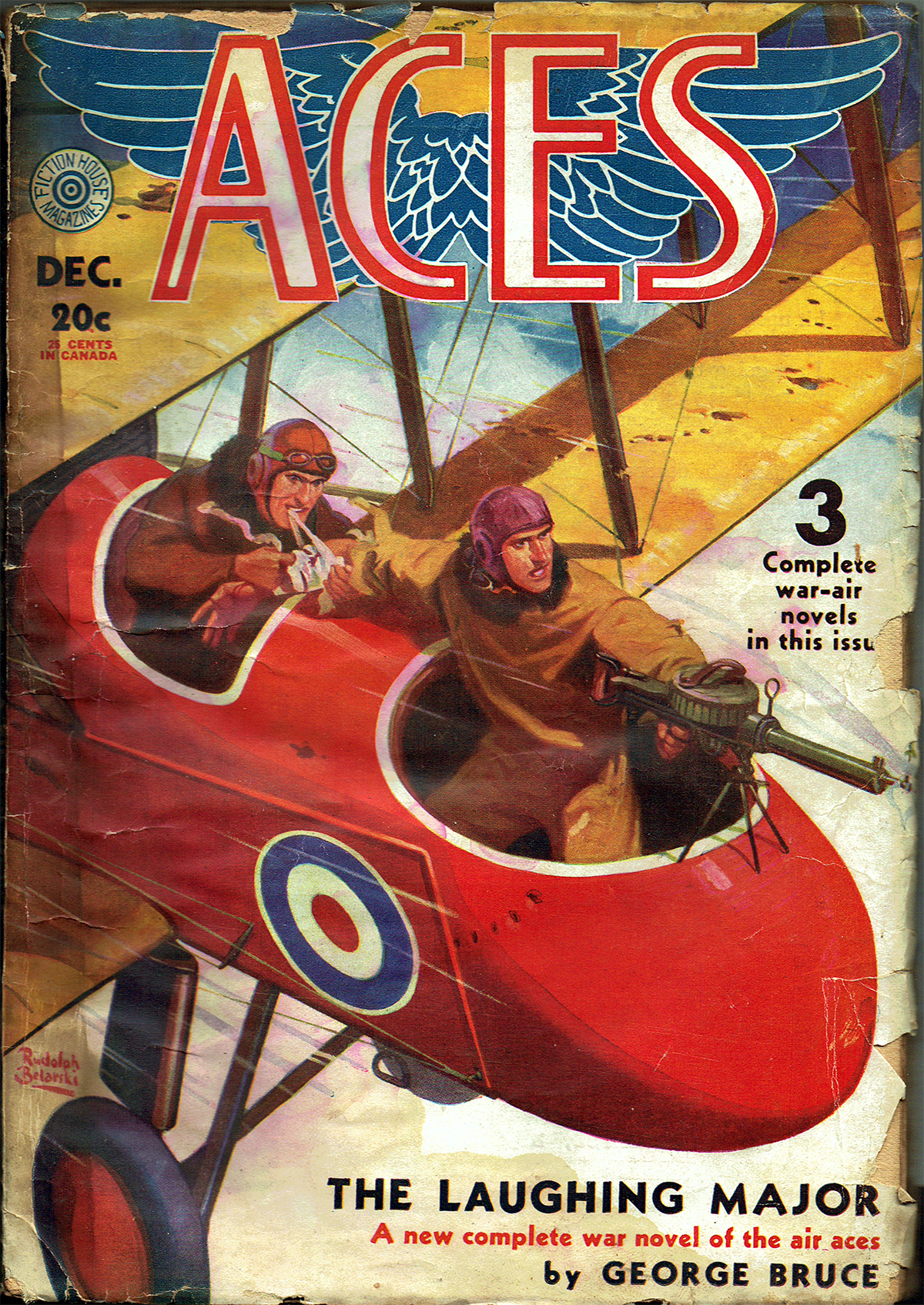 twelve stories of Christmas 1931, we have an excellent tale by E.W. Chess from the pages of the December 1931 Aces magazine!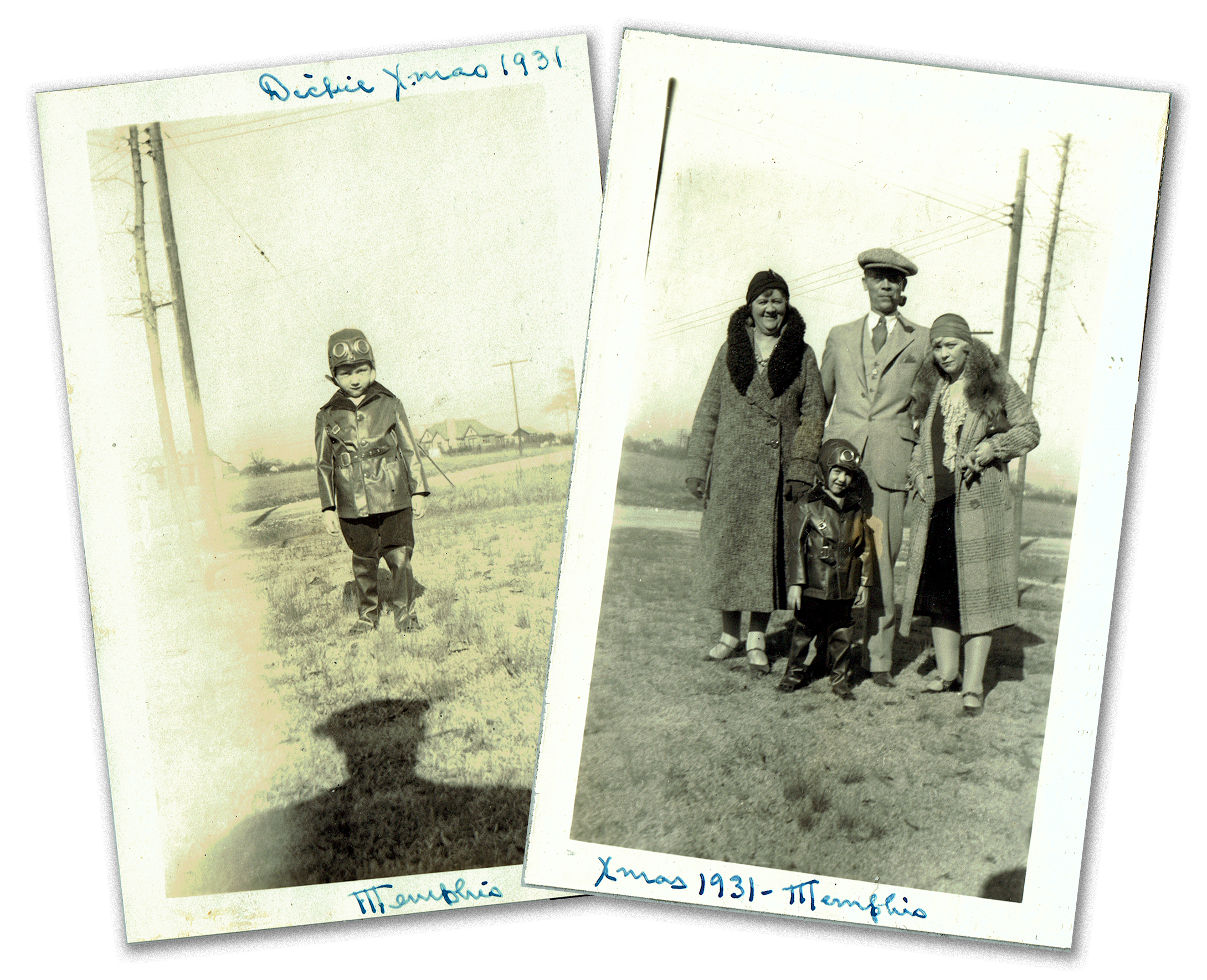
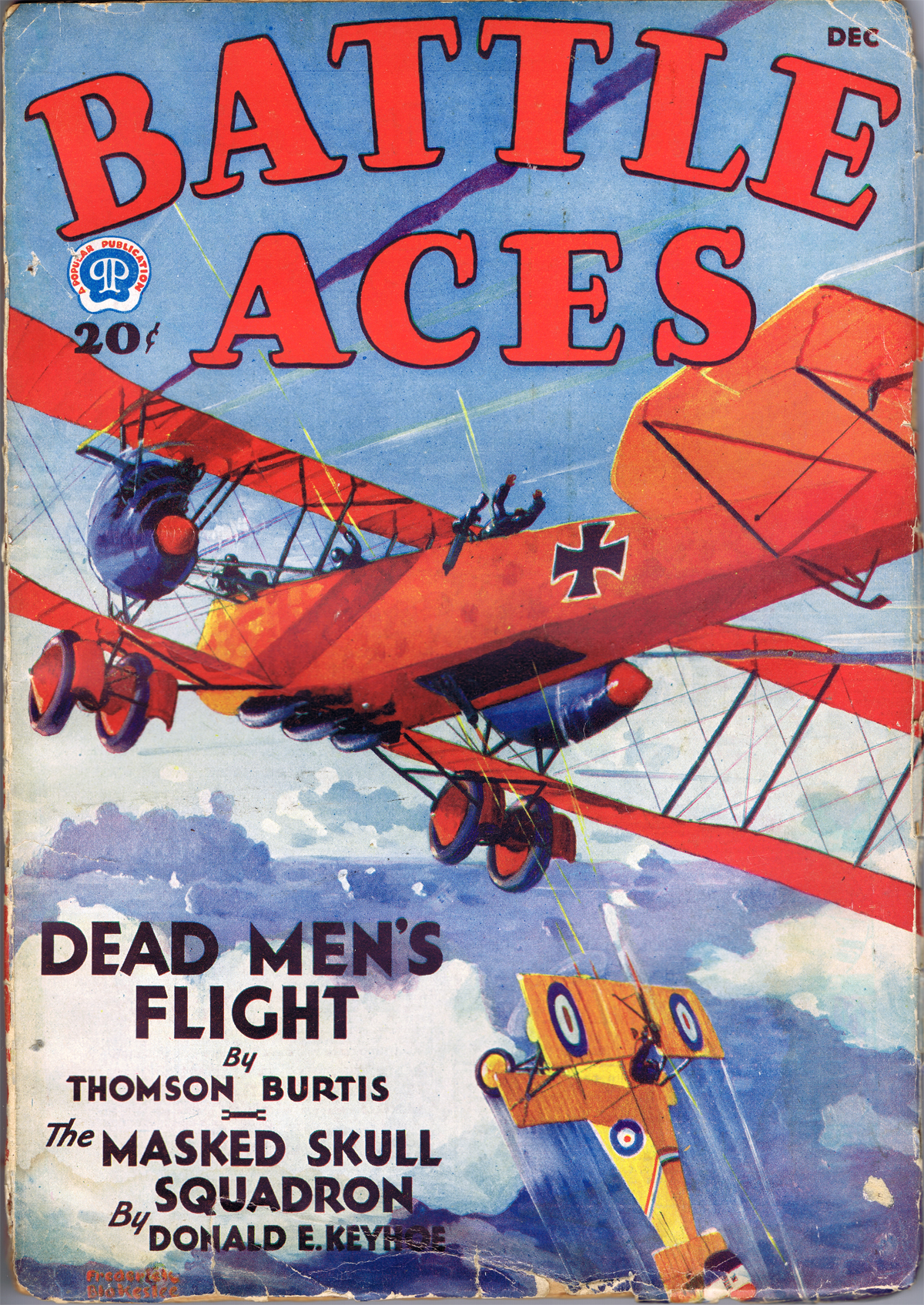
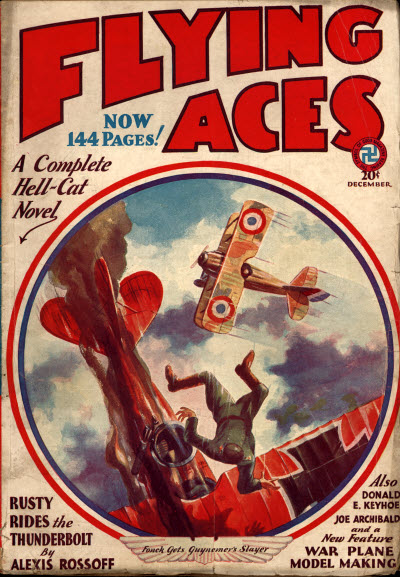
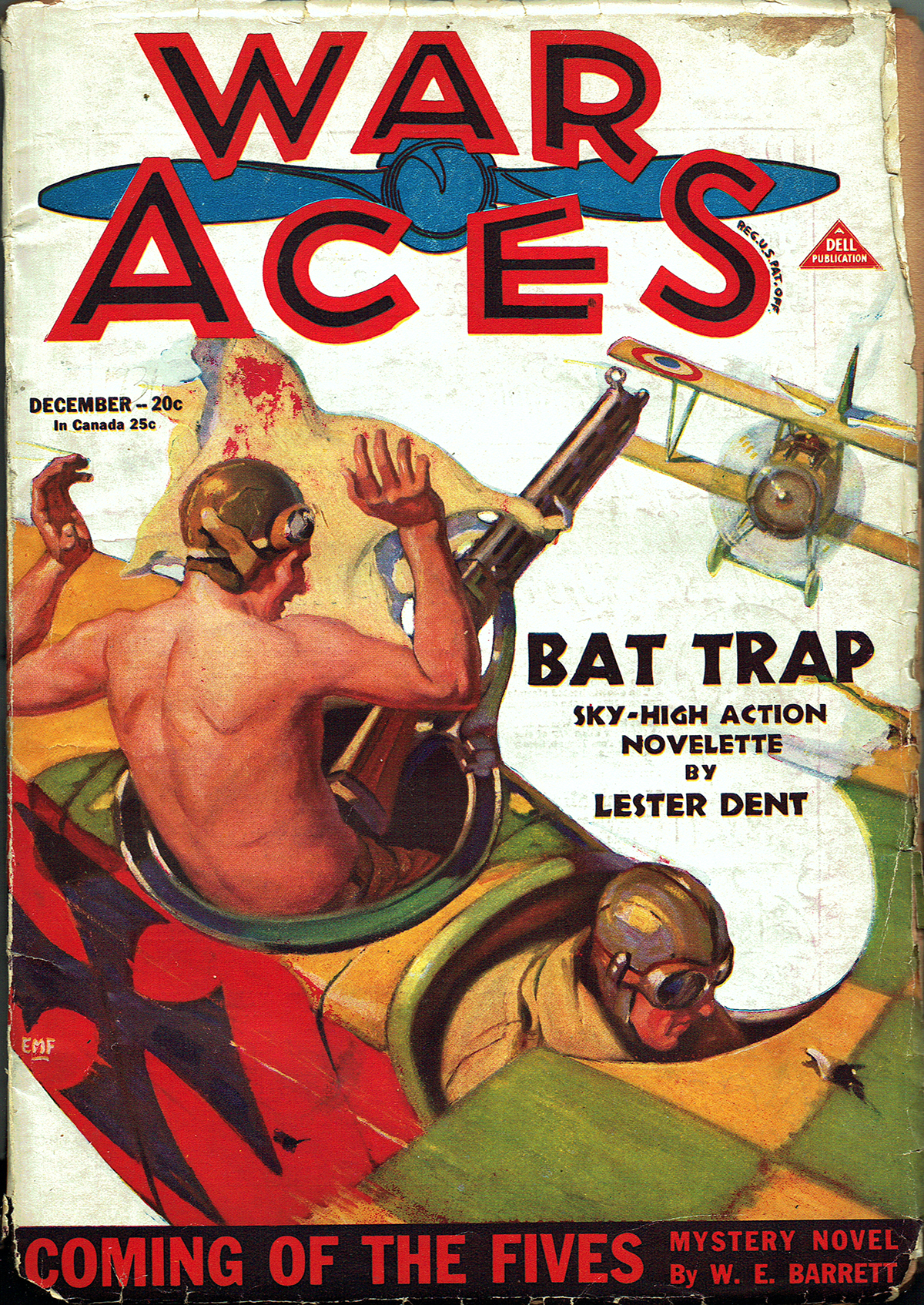
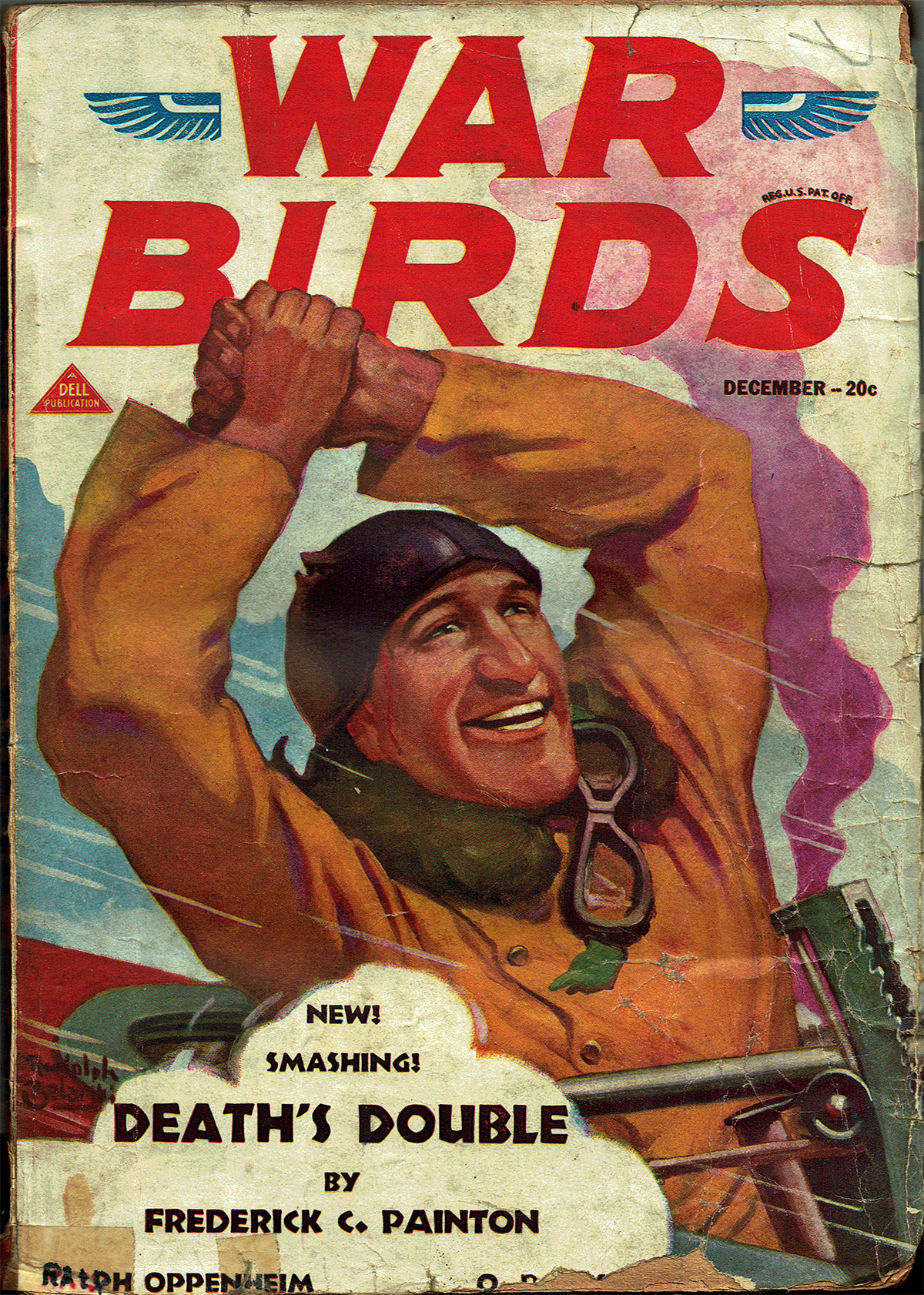
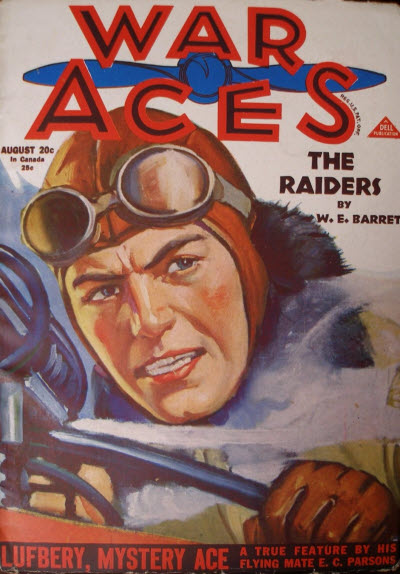 the greatest British offensive of the war got under way. A blazing line of steel whipped across France and into Belgium; from Croiselles to Loos, from Ypres to the Nieuport Canal and to the sea. Under the greatest artillery barrage in the history of the world a grim horde of muddy infantry hit the Hindenburg Line.
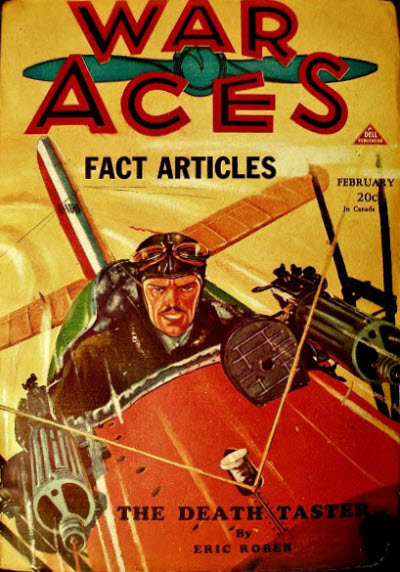 probably the only one of his kind in existence. Accidental aces there were aplenty in that big he war, but there was nothing accidental about Memphis Mason’s accomplishment. It was planned with an attention to detail that would do credit to a brigadier and it was attested by five of the finest fighters in the R.A.F. Those signatures are at the root of Mason’s secret sorrow to-day. At the foot of a square sheet of note-paper they bear flourishing witness to the fact that the signers witnessed the bringing down of five German planes by one Memphis Mason. Not one of those signers would have lied for anyone. They were officers and gentlemen and they saw what they said they saw. Yet, strangely enough, Memphis Mason never reached France. Therein lies a tale; one of the oddest tales to come out of the war and one that has never been told until this telling.
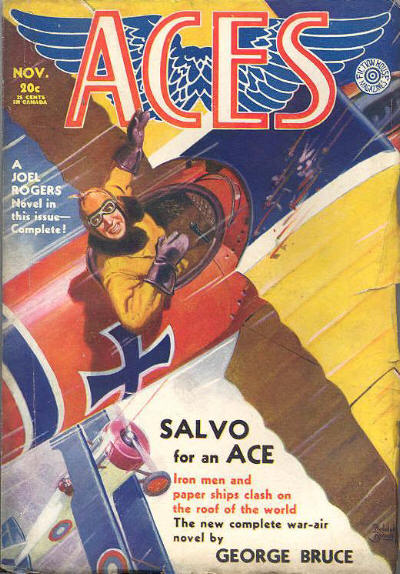 a story by Syl MacDowell! MacDowell is probably best known for his westerns. This time, MacDowell gives us brief tale of the mysterious Black Bat—is he man or beast? From the November 1931 issue of Aces, it’s “The Black Bat.”


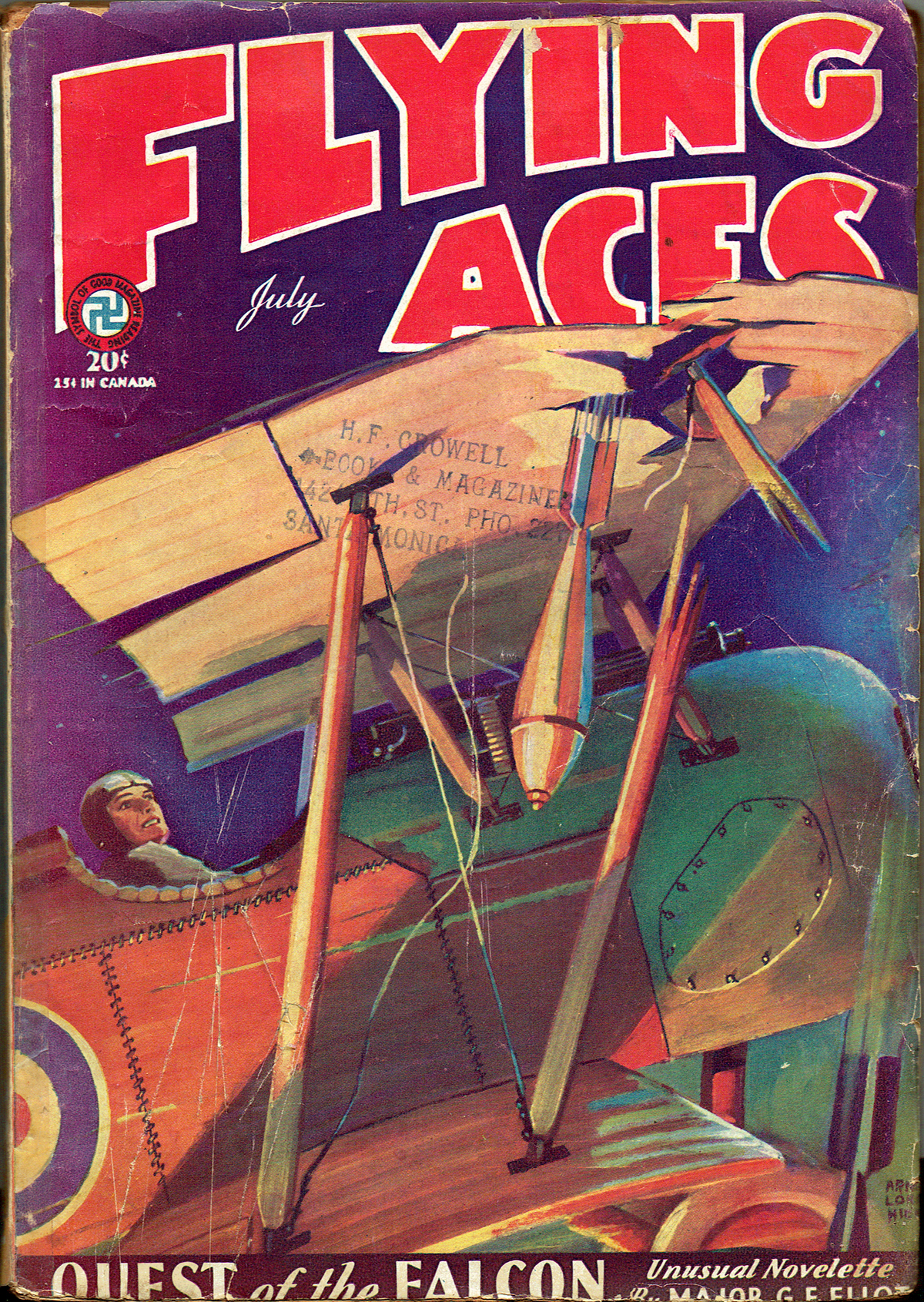
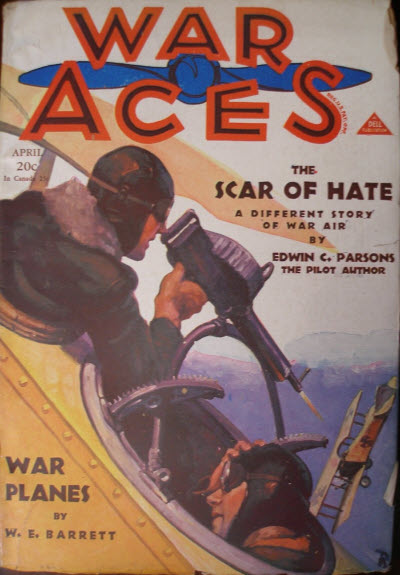 pen of the Navy’s own
 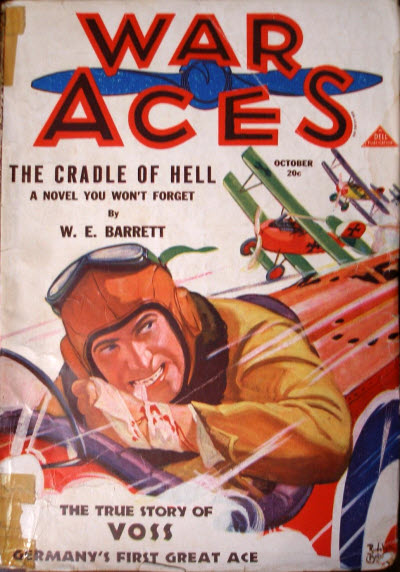 the month we have the story of Captain Jim Fogarty, a Montana Irishman in the service of Britain. He was Youth triumphant, a, veteran of six weeks on the fighting Front, commander of a squadron, and officially credited with victories over sixteen enemy airmen. The twin Ds of Death and Defeat had not touched him—but when it did, they brought him straight down into the cradle of hell and nearly cost him his life!