Something Strange is Almost Here!

Age of Aces will be at Pulpfest in Columbus next week where we will be unveiling our latest exciting book—Captain Philip Strange: Strange War by Donald E. Keyhoe.
In Donald E. Keyhoe’s imaginings, the stormy skies of World War I are filled with giant pterodactyls, mystic fireballs and demon aces. But America has it’s own unnatural secret weapon: Captain Philip Strange. A mental marvel from birth, he was so terrifyingly effective that the Allies referred to him as “The Phantom Ace of G-2.†But to the Germans he was “The Brain-Devil,†whose penetrating green eyes were both a legend and a nightmare.
Keyhoe’s Philip Strange stories ran for nine years—from 1931 through 1939—in the pages of Flying Aces magazine. This first volume in our new series contains six exciting tales of terror skies! It also features an introduction by Sid Bradd and is beautifully wrapped up in an exciting new design by Chris Kalb!
So stop by our table and meet the crew and check it out or pick up any of our other titles at special Pulpfest discounts. If you can’t make it—keep your eyes on ageofaces.net to find out more about our new book.
“They Had What It Takes – Part 31: Charles E. Rosendahl†by Alden McWilliams
In the late thirties Flying Aces ran Alden McWilliams’ monthly illustrated tribute to the pioneer fliers of the early days of aviation which was called They Had What it Takes. In the August 1939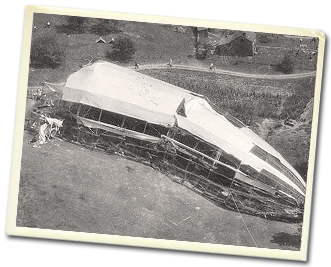 issue they featured American Air Ship Ace Charles E. Rosendahl!
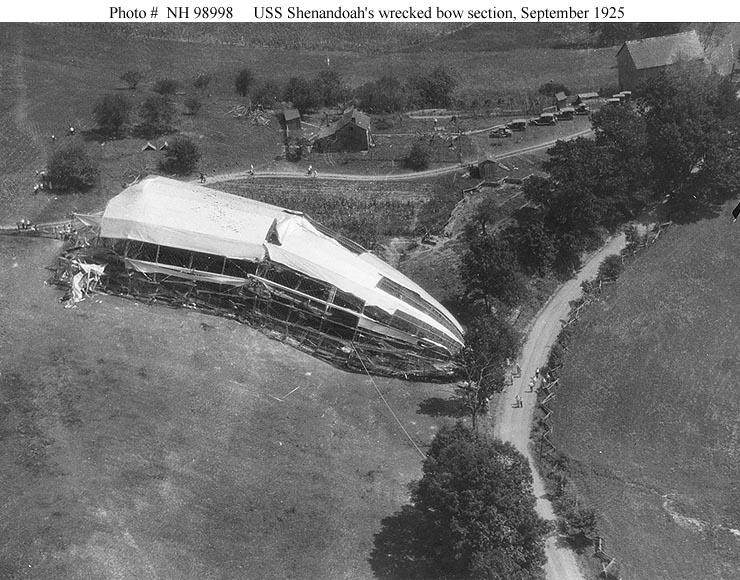
Rosendahl started his Naval career aboard battleships and moved into rigid airship duty after the Navy’s Bureau of Navigation circulated a letter asking for volunteers. He distinguished himself by successfully bringing the bow section of the the dirigible Shenandoah after she broke apart in the air! He rose through the ranks serving aboard a number of lighter-than-air craft. Eventually achieving the rank of Vice Admiral in the US Navy, Rosendahl never stopped advocating the virtues of lighter-than-air flight writing several books about them (his papers are archived in the McDermott Library at The University of Texas at Dallas) and was aboard the N class blimp ZPG-3W on its final flight in August 1962 when the US Navy ended airship operations. Rosendahl passed away in May 1977.
On the horizon . . .
“The Spad was at two thousand feet when he became aware of a queer sensation. It was a feeling that he was not alone in those dark heavens. He jerked about in his cockpit. Something moved in the shadows above him, moved with an odd rushing sound like the beating of giant wings—a blurred something from the shadows hurtled steeply down toward the French drome. A hideous screech burst upon the air, a screech which all but chilled the marrow in his bones.
Then he saw it—and his heart stood still!”

Age of Aces will be at Pulpfest in Columbus in two weeks where we will be unvailing our latest exciting book! So stop by our table and meet the crew and check it out or pick up any of our other titles. If you can’t make it—keep your eyes on this space and check back to find out more about our new book.
“They Had What It Takes – Part 30: Lee Gehlbach†by Alden McWilliams
This week we bring you Part 30 of Alden McWilliams’ illustrated tribute to the pioneer fliers of the early days of aviation. He called it “They Had What it Takes†and this installment appeared in the July 1939 Flying Aces. It features that top-flight test pilot Lee Gehlbach.
In 1935, Time Magazine described him as “a leader in his highly hazardous profession at 32, Lee Gehlbach became an aeronautical engineer because he was “a farmer’s son who couldn’t get used to getting up at 4 in the morning.” Graduated from the University of Illinois in 1924, he enlisted in the Army Air Corps, resigned five years later to become a free-lance pilot and consultant. Best known as a racing pilot, he won first place and $15,000 in the 5,541-mi. All-America Flying Derby of 1930, beating such famed speed merchants as the late Lowell Bayles and Jimmy Wedell.”
Here Gehlbach tests out the Grumman F3F-2 “Flying Barrel.”
“Double Death” by William E. Barrett
Here is a smashing complete novelette of strange wings over the Italian front!
Ships were being blown to shambles in pairs—two or four at time, never three or five or just one—and none knew why. Until Jack Lannigan came. Find out why in William E. Barrett’s intriguing novelette “Double Death.”
William E. Barrett wrote a number of aviation themed stories for the air pulps in the 1930s. His nine Iron Ace stories which ran in Sky Birds in the mid ’30s have been collected in one volume and available from our books page. Barrett would later become famous as the author of “Lilies of the Field†and “The Left Hand of God†amung other books.
“They Had What It Takes – Part 29: Ernst Udet” by Alden McWilliams
This week we bring you Part 29 of Alden McWilliams’ illustrated tribute to the pioneer fliers of the early days of aviation. He called it “They Had What it Takes†and this installment appeared in the June 1939 Flying Aces. It features that Ace of The Black Cross, Ernst Udet. Udet was the highest scoring Ace to survive the Great War. With 62 victories he was second only to his commander in the Flying Circus, Manfred von Richthofen.
The Vanished Legion is here!
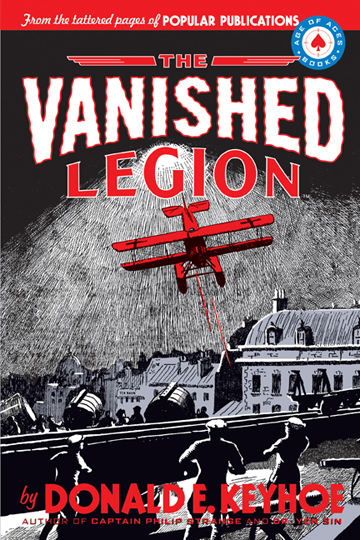 |
“Nine Yank aces had gone forth to hunt that hidden base. And nine had returned—dying—their faces slashed and clawed—their lips muttering a single name, “Silver Face.†Who was this strange enemy? Why did he brand his victims in such a manner? The Allies wondered in terror as Dick Traine took up that grim hell trail—the trail of vanished men.” |
Yes, Donald E. Keyhoe’s seven stories of The Vanished Legion from the pages of Dare-Devil Aces have been collected into one volume and is now available to order from Amazon. Surely you remember from History class reading about when the Germans found a way to turn Allied pilots into Dwarfs, in doing so, driving them mad and sending them back to attack their former squadrons or the grizzly green death—a gas that would render its victims dead in seconds, an unsettling learing grin upon their twisted faces or maybe you recall Germany’s plan to render the Allies defenceless with a ray that would block out all sight and sound. This is the history they don’t teach you about in school! So join Dick Train, Monte Prince, Bill Hammond and the rest of the Squadron of Forgotten Men as Colonel Meredith sends them out against some of the most bizarre schemes the Boche ever threw against the Allies in WWI!
“They Had What It Takes – Part 28: Roscoe Turner” by Alden McWilliams
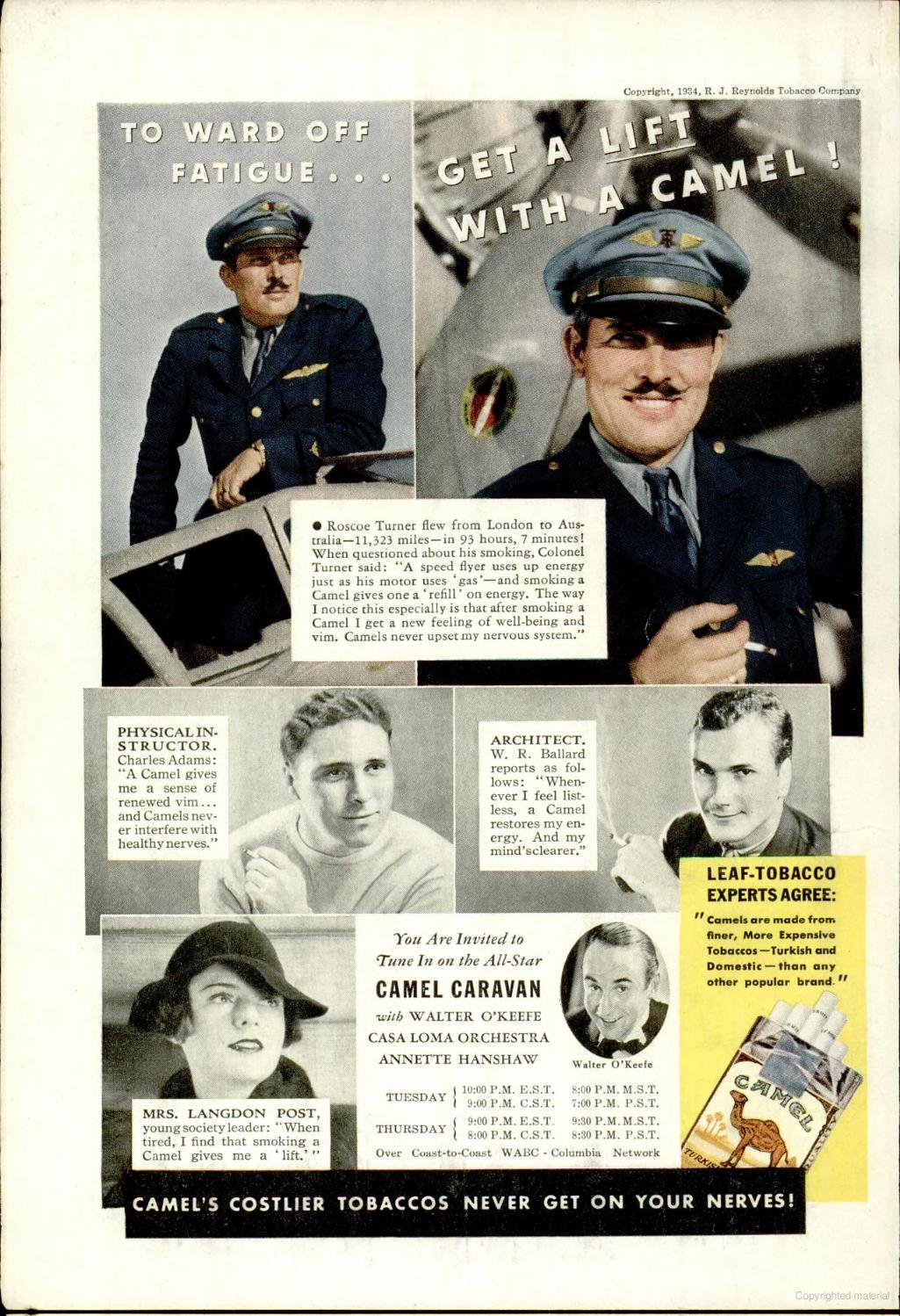
In the late thirties Flying Aces ran 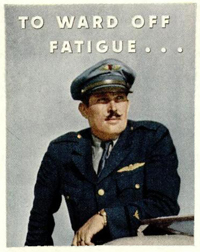 Alden McWilliams’ monthly illustrated tribute to the pioneer fliers of the early days of aviation which was called “They Had What it Takesâ€. In the May 1939 issue they featured the “dashing racing Ace” Roscoe Turner! Roscoe learned to fly during WWI and started barnstorming in the 20’s which led into air racing. A triple winner of the Thompson Trophy, Turner was sponsored by the Gilmore Oil Company who provided him with a lion cub named “Gilmore” (complete with his own cub-sized parachute) for publicity reasons. Turner frequently took Gilmore on tour with him.
Coming Soon . . .

Our latest book, Donald E. Keyhoe’s The Vanished Legion, will be coming out soon! The book collects all seven of Keyhoe’s tales of The Squadron of Forgotten Men from the pages of Dare-Devil Aces magazine.
“They Had What It Takes – Part 27: C. P. T. Ulm” by Alden McWilliams
Starting with the February 1937 issue of Flying Aces, 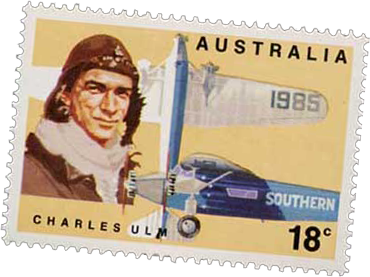 Alden McWilliams began his illustrated tribute to the pioneer aviators of that era. He called it “They Had What it Takesâ€. It appeared in each issue of Flying Aces until June 1940. Part 27 apeared in the April 1939 issue and featured Another great Austrailian Air Pioneer—Charles Thomas Philippe Ulm!
Ulm is probably best known for his association with Sir Charles Kingsford-Smith who was covered by McWilliams two years earlier. He was Kingsford-Smith’s copilot on many of his famous flights including the 1928 first crossing of the Pacific in the Southern Cross. And together they founded Austrailian National Airways.
“They Had What It Takes – Part 26: Geoffrey De Havilland” by Alden McWilliams

“They Had What It Takes” was Flying Aces‘ illustrated tributes to the pioneer fliers of the early days of aviation by Alden McWilliams that ran from 1937 through 1940. Part twenty-six is all about that British aviation pioneer and ace aircraft designer, Geoffrey De Havilland.
De Havilland built his first plane with money borrowed from a Grandparent and worked his way into being the cheif designer at Airco where he designed planes, all designated by his initials DH, flown by the Royal Flying Corps and later the Royal Air Force during WWI. In 1920 he formed his own aircraft company and started producing the Moth series of aircraft. Their Mosquito plane played an important part in WWII and their Comet planes were some of the first jet airliners used by major airlines.
“They Had What It Takes – Part 25: Assen Jordanoff” by Alden McWilliams
This week we bring you the twentyfifth installment of Alden McWilliams’ illustrated tribute to the pioneer fliers of the early days of aviation. He called it “They Had What it Takes†and this one appeared in the February 1939 Flying Aces and featured Assen Jordanoff, competant and versitile flyer, noted inventor, aviation author and the pride of Bulgaria.
“They Had What It Takes – Part 24: “Jackie” Cochran†by Alden McWilliams
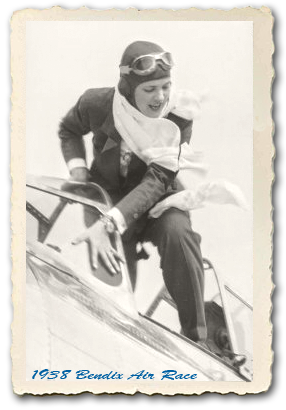 In the late thirties Flying Aces ran Alden McWilliams’ monthly illustrated tribute to the pioneer fliers of the early days of aviation which was called “They Had What it Takesâ€. In the January 1939 issue they featured Jacqueline “Jackie” Cochran, a pioneering American aviator who was considered to be one of the most gifted racing pilots of her time. Originally working in the cosmetics industry, her husband encouraged her to take up flying as a means to travel more efficiently, Jackie took to it like a duck takes to water and soon realized that flying was her passion, not cosmetics.
A few career highlights beyond McWilliam’s piece: in 1942 Jackie was asked to organize the Women’s Flying Training Detatchment (WFTD) to train women to handle basic military flight support; the following year she was appointed to lead the Women’s Airforce Service Pilots (WASP); in 1953 she became the first woman to break the sound barrier, and set eight more speed records in 1967 when she was over 60 years old!
Jackie kept going until a serious cardiac condition finally grounded her. By the time of her death in 1980, Jackie had recieved more than 200 awards and trophies and set more speed and altitude records than any other pilot.
“They Had What It Takes – Part 23: Bert Hinkler†by Alden McWilliams
Alden McWilliams’ “They Had What it Takes” 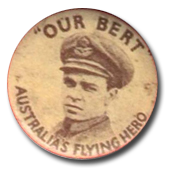 was a series of illustrated tributes to the pioneer fliers of the early days of aviation that ran in Flying Aces from 1937 through 1940. Part XXIII features the aviation life of the “Australian Lone Eagle”—pioneer aviator and inventor, Herbert John Louis Hinkler. Bert Hinkler, as he was better known, designed and built early aircraft and was the first person to fly solo from England to Australia in 1928 and solo across the southern Atlantic Ocean in 1931. Hinkler started out in Canada and flew to New York then non-stop to Jamaica; on to Venezuela, Guyana and Brazil then across the Southern Atalntic Ocean to Africa!
“They Had What It Takes – Part 22: John Alcock†by Alden McWilliams
They Had What it Takes was Alden McWilliams’ series of illustrated tributes to the pioneer fliers of the early days of aviation that ran in Flying Aces from 1937 through 1940. Sir John William Alcock is the focus this time.

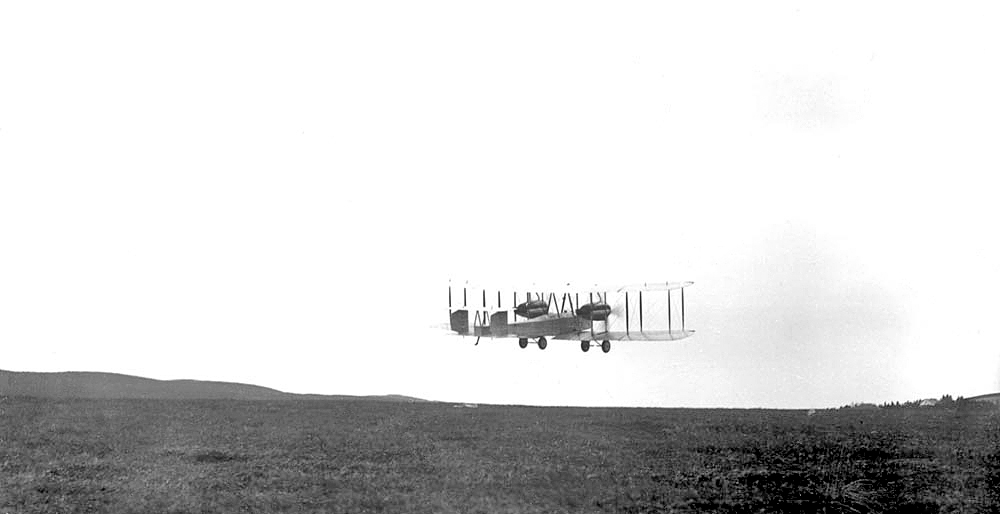
Alcock was a Captain in the Royal Air Force who, together with navigator Lieutenant Arthur Whitten Brown, piloted the first non-stop transataltic flight in 1919 in a converted Vickers Vimy Bomber.
A fighter pilot in WWI, Alcock designed and built a fighter plane out of the remains of other crashed ships a’la The Red Falcon while stationed in Greece. Alcock constructed his “Sopwith Mouse” as he called it out of the forward fuselage and lower wing of a Sopwith Triplane, the upper wings of a Sopwith Pup and the tailplane and elevators of a Sopwith Camel, and married them to a rear fuselage and vertical tail surface of original design with a 110 hp Clerget 9Z engine and armed with a .303 Vickers gun. Alcock never flew his eponymous Alcock Scout, but squadron-mate FSL Norman Starbuck flew it a couple times until it crashed after several months—returning to field of crashed planes from whence in came.