AMIDST all the great pulp thrills and features in Sky Fighters, they ran a true story feature collected by Ace Williams wherein famous War Aces would tell actual true accounts of thrilling moments in their fighting lives! This time we have Belgian Air Ace Lieutenant Jan Thieffry!
Little Belgium played as heroic 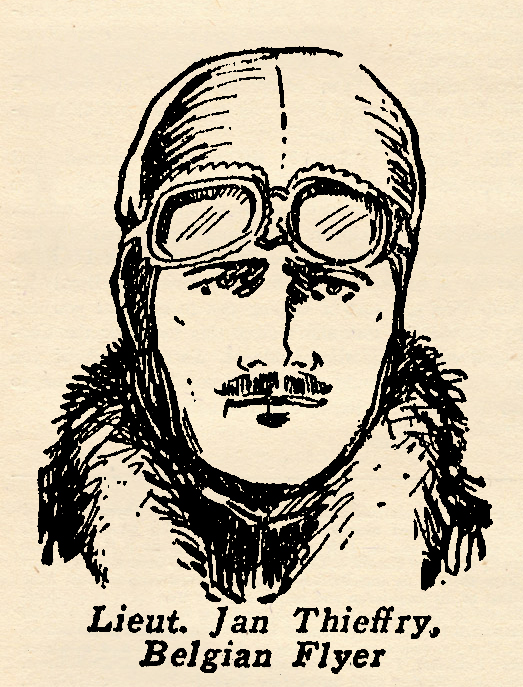 a part in the war of the air as she did in the war on the ground, when her brave soldiers held up the advance of the German hordes at the gates of Liege until the British and French armies could mobilize and get to the front to begin their counter-offensive. Corporal Jan Thieffry was a motorcycle despatch rider at that time. He was taken prisoner by a flying squadron of German Uhlans, but after some months made his escape.
He was later assigned for aviation training, and after graduation served as a bomber pilot for a brief period, In December, 1916, he was transferred to a chasse squadron, and on March the next year got his first official victory while flying a Nieuport Scout.
Before long his score of victories had grown to five. Thus he became the first Belgian Ace, and held that position as Belgian Ace of Aces until he was killed behind the German lines on February 23rd, 1918. His final total of victories mounted to 10. The story below is taken from his diary.
AN UNUSUAL VICTORY
by Lieutenant Jan Thieffry • Sky Fighters, March 1936
THERE are many ways to down les Boches when on the wing. I have used many ways, but today I discovered something new—and quite by accident. A machine-gun, I find, is not always necessary. Always, when going out on patrols, it has been my habit to carry along a half dozen or so hand grenades. If I am forced down behind the enemy lines, I figure they will serve me in destroying my machine before it falls into their hands.
It was over Passchendale that I encountered a patrol of three Boche avions. For several minutes we flew along together, waiting for the other to make the first move, I guess. As for me, I forced a show of bravery to show them I was not scared. The Boches were probably waiting for me to turn my tail, so they would have a better target. I cocked my gun and waited, wary. I was going to make them fire first.
Defiant Battle
The shot was not long coming. The leader wheeled suddenly and came at me from the side, shooting as he came. I dropped my nose and piqued, then swiftly pulled up again and trained my gun on the other’s belly. The two other Boches circled around me from different directions.
I had the first Boche in my sights so I pressed the trigger. But the pilot must have anticipated my fire. He banked off just ahead of my bullets, and the burst went wide past his lower wing. I fell off on a wing and slid into a spiral that brought me in range of the second Boche who opened fire at me from in front. I pressed my trigger again. Two-three, bullets stuttered out, then my gun went silent.
I reached up and tried to clear, but the bullet was stuck tight in the breech. “C’est fini pour moi!†I gasped with a sudden feeling of panic. For one without guns to battle three with guns, I knew was impossible. And les Boches had my range-now. Their bullets sieved through my wings and fuselage. Then a sudden light struck my befuddled brain!
The Fateful Grenade
I reached for a grenade, looked back over my shoulder, saw the Boche kiting behind me, right on my tail. I turned around again, pulled the firing pin on the grenade, then tossed it back over my shoulder. Then I counted silently and prayed that my aim would be true. But nothing happened!
I glanced back again. The Boche was nearer and it seemed that I could see the bullets streaming from the muzzle of his rapid firer. I pulled the pins and tossed two more grenades back at him.
And le Bon Dieu flew on my side. I heard a sharp explosion—a shearing, crashing noise that sounded even above the roar of my motor. I glanced back. The Boche plane was wobbling. The propeller had shattered, and the engine was tearing loose from its base, because of the uneven torque and terrific vibration. My grenade had scored a clean hit!
I banked sharply, and the stricken Boche plane wobbled past me and into a spinning nose dive, then it up-ended suddenly and fluttered down like a falling leaf. Before the two other Boches could pick up where their leader had left off, I was on my way home—and they were not quick enough to catch me.
Next Time: LIEUTENANT PAUL MARCHAL




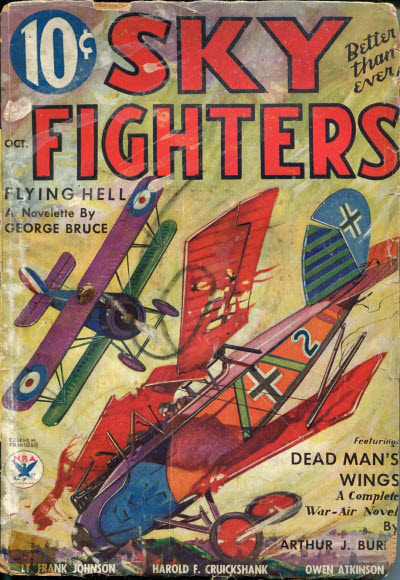 a story by another of our favorite authors—Harold F. Cruickshank! Cruickshank is popular in these parts for the thrilling exploits of The Sky Devil from the pages of Dare-Devil Aces, as well as those of The Sky Wolf in Battle Aces and The Red Eagle in Battle Birds. He wrote innumerable stories of war both on the ground and in the air. Here we have a tale of Lt. Harcourt Bryson Dovely, recently sent up to “C” flight at 78th Pursuit Squadron where he has become Captain Dave Dillon’s problem For Lt. Dovely seems more interested in the plants on the ground than the Huns chasing him in the sky. But maybe he’ll surprise them all and sho him that this dove is really an eagle! From the October 1934 issue of Sky Fighters it’s “Talons of the “Dove”"—
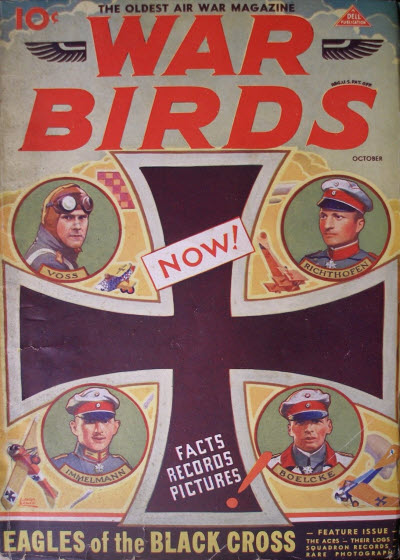 this month, the United States declared war on the Austro-Hungarian Empire. To mark the occasion, we’re posting Robert J. Hogan’s series of Abe Ginsberg stories that ran in the pages or War Birds magazine from 1932-1933.
 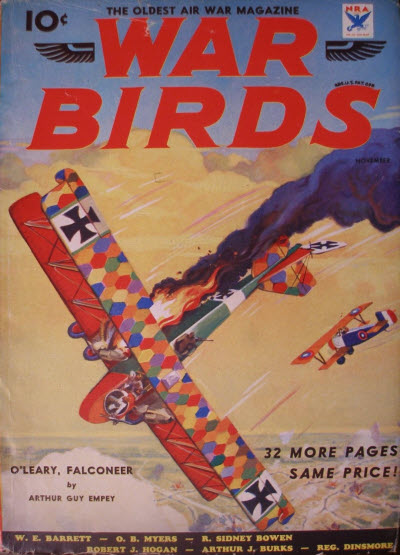 we have an additional tale of Abe Ginsberg from the pen of Robert J. Hogan. We had posted this back in 2010, but for those who missed it or would like to read it again or just have all five tales in a similar format, here is Abe Ginsberg’s final adventure from November 1933—”The Spy in the Ointment!”
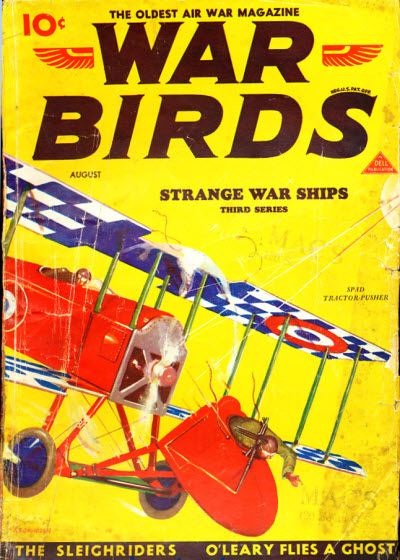 this month, the United States declared war on the Austro-Hungarian Empire. To mark the occasion, we’re posting Robert J. Hogan’s series of Abe Ginsberg stories that ran in the pages or War Birds magazine from 1932-1933. Although Ginsberg’s always first to stand up and volunteer, he’s often overlooked due to his short stature. This time he’s excluded from the mission as the French want to pin a medal on his chest. A muddy ride, a drunken celebration, and a dark hanger all lead to Ginsberg finding himself behind enemy lines attacking the Boche defenses from the inside!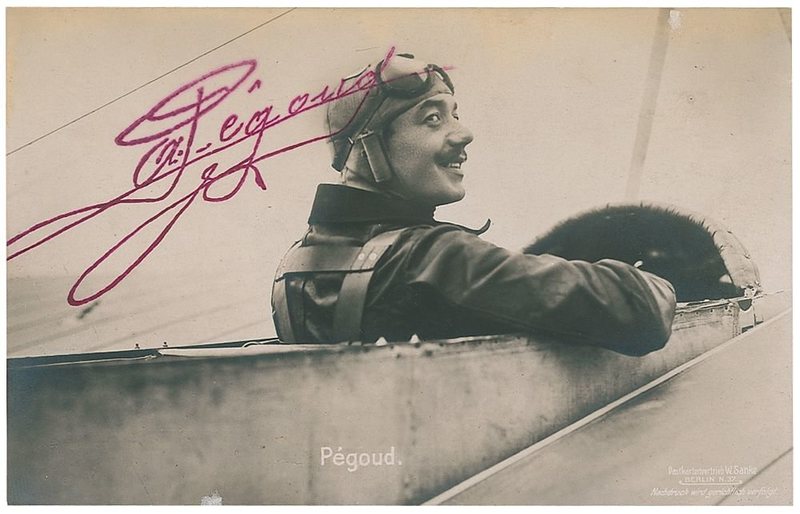
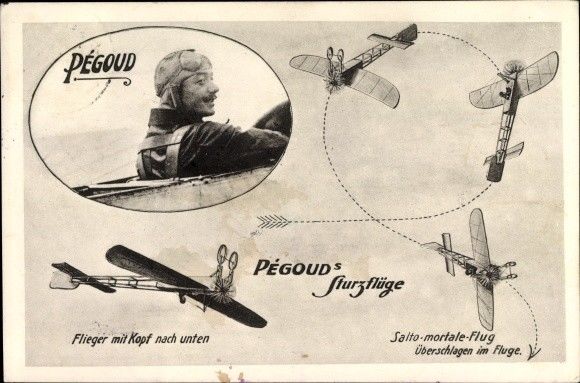
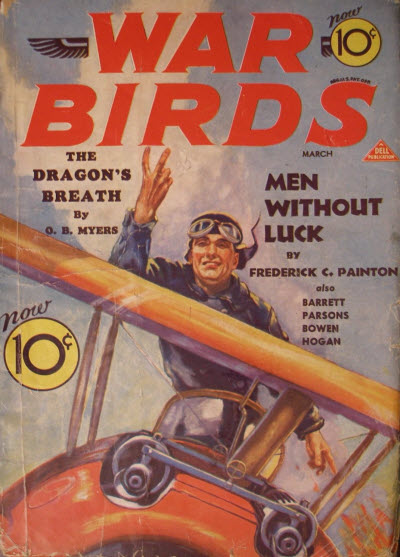 the United States declared war on the Austro-Hungarian Empire. To mark the occasion, we’re posting Robert J. Hogan’s series of Abe Ginsberg stories that ran in the pages or War Birds magazine from 1932-1933.
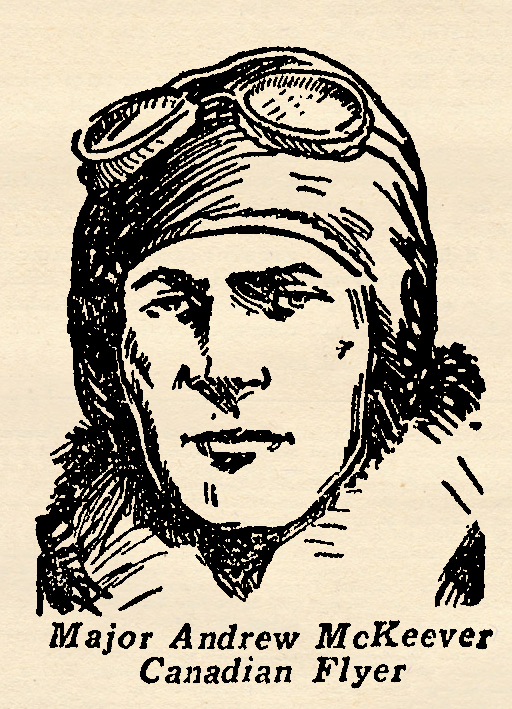 was one of the many daring young sky fighters that came from Canada to add fame and lustre to the deeds and exploits of the Royal Air Force, He put in almost a full year in the infantry before he was transferred for flying training. He joined the R.F.C. in December, 1916, was commissioned a lieutenant and sent over to the 11th Observation Squadron in France on May 16th, 1917.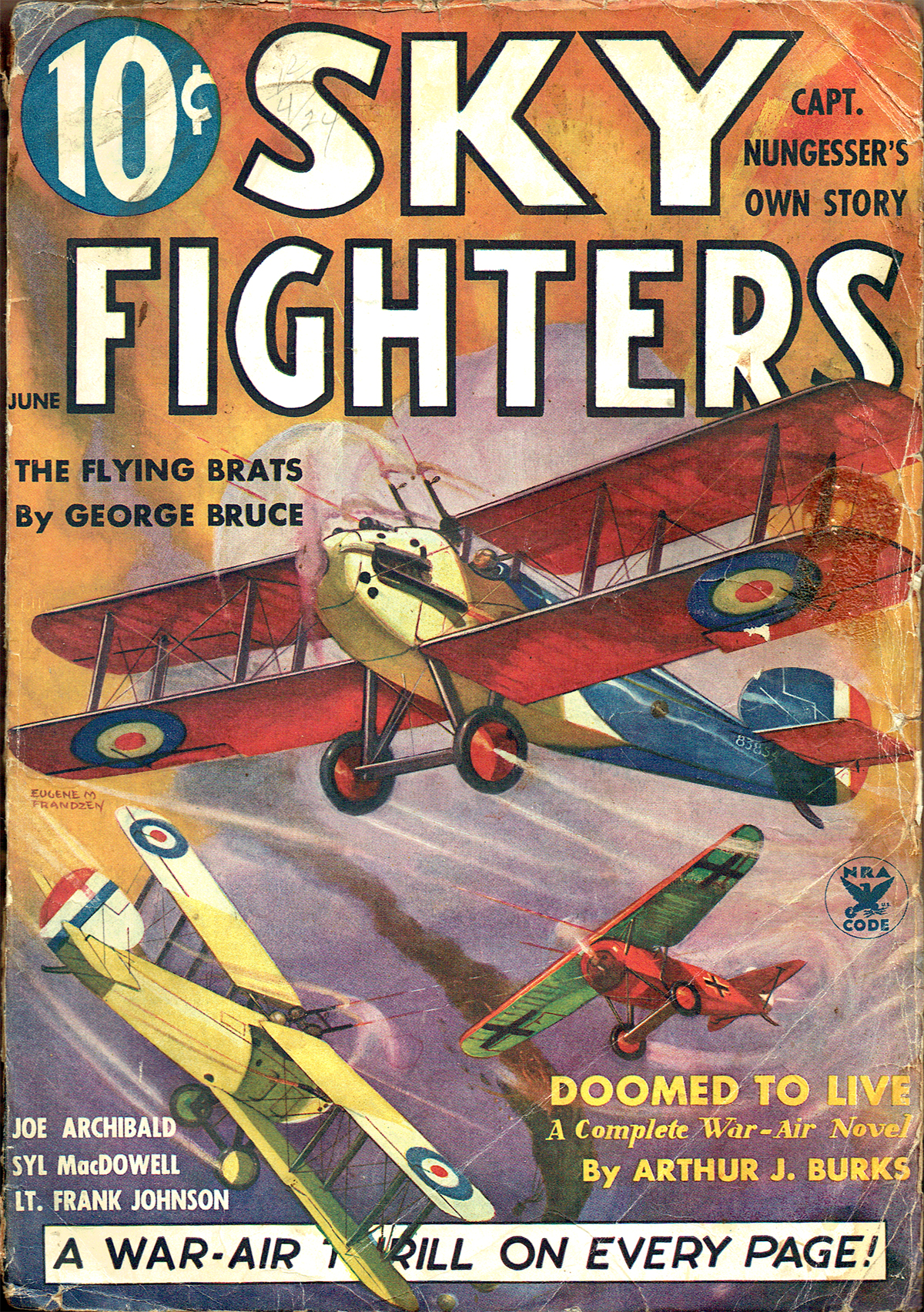
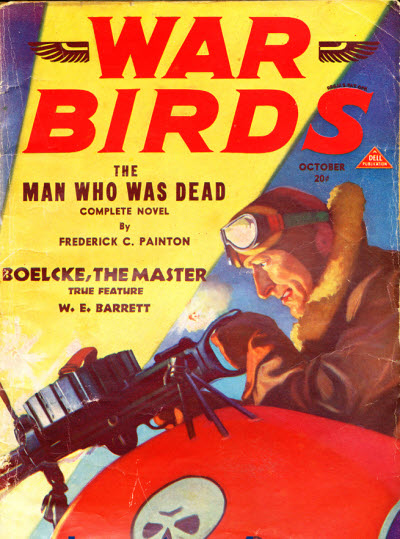 the United States declared war on the Austro-Hungarian Empire. To mark the occasion, we will be posting Robert J. Hogan’s Abe Ginsberg stories that ran in the pages or War Birds magazine from 1932-1933.
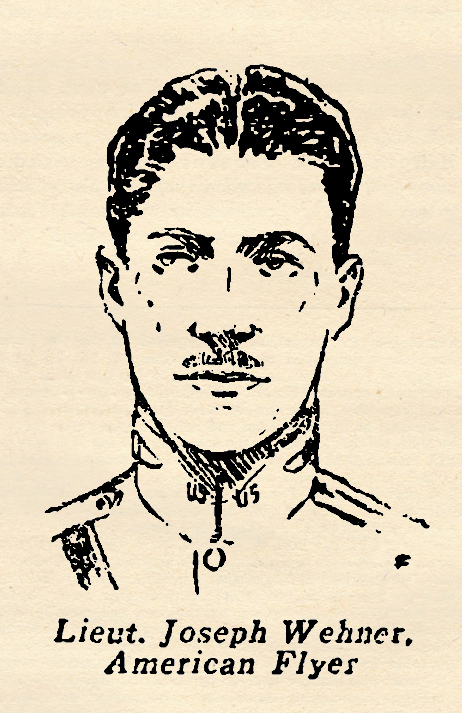 was the most daring sky fighter in the American Air Service. But it is hard to say whether he would have established the record he did without the aid of Joe Wehner, his constant and steadfast companion and buddy in the 27th Squadron. He was Luke’s alter ego.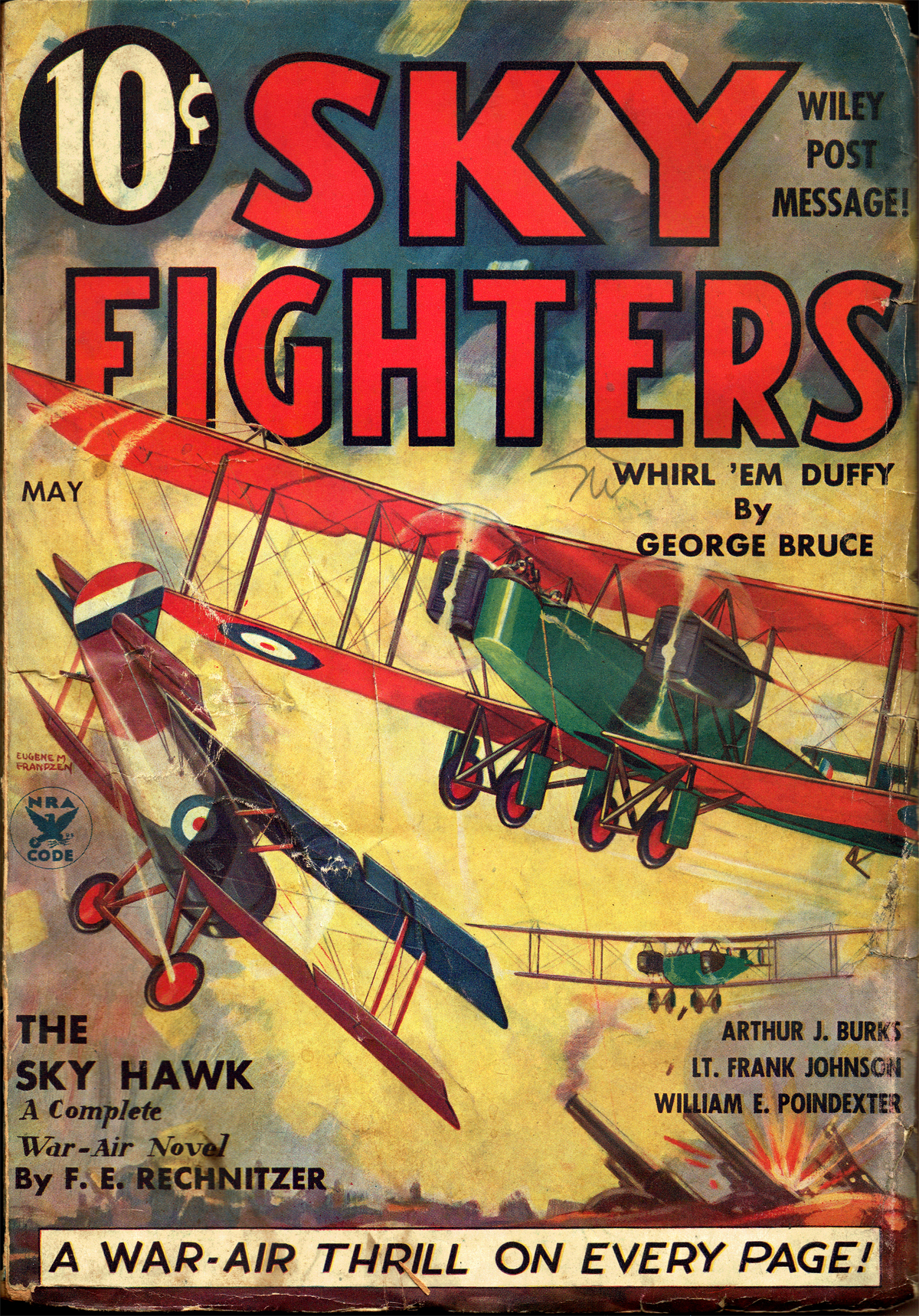
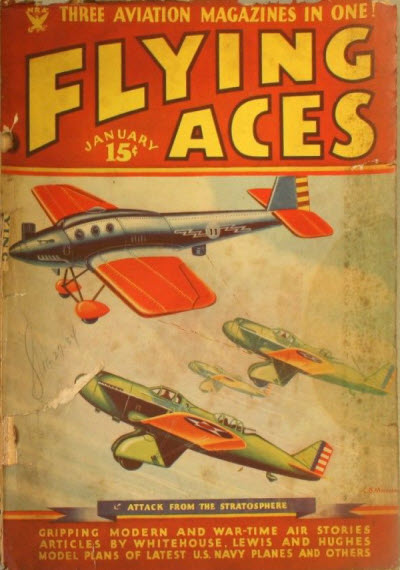 You heard right! That marvel from Boonetown, Iowa is back causing more trouble than he’s worth! That Knight of Calamity manages to find not only the Boche’s ammo train, but a former victim of the ol’ Pinkham charm from his hometown now glad to seek revenge! How can he stop the Boche ammo train, escape the butcher of Boonetown, and capture the Rittmeister von Schnoutz? He does it all with mirrors—Find out in “An Itch In Time” from the pages of the January 1935 Flying Aces.
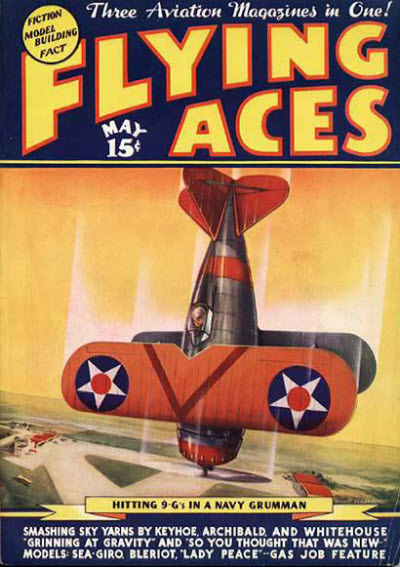 had a story in a majority of the issue of Flying Aces from his first in January 1930 until he returned to the Navy in 1942. Starting in August 1931, they were stories featuring the weird World War I stories of Philip Strange. But in November 1936, he began alternating these with sometime equally weird present day tales of espionage Ace Richard Knight—code name Agent Q. After an accident in the Great War, Knight developed the uncanny ability to see in the dark. Aided by his skirt-chasing partner Larry Doyle, Knights adventures ranged from your basic between the wars espionage to lost valley civilizations and dinosaurs. The mysterious Four Faces—a criminal cabal that seek to control all crime on the earth—has found a way to turn people to stone, which comes in handy while they continue to build their air fleet of stolen ships!
 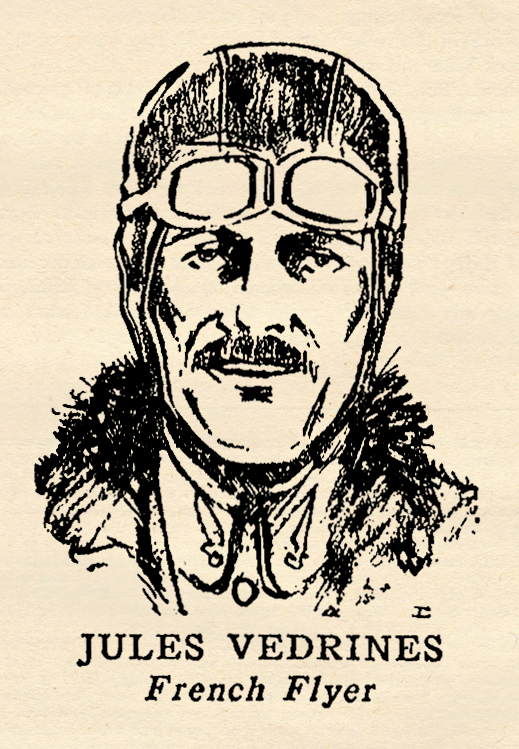 great war broke out Jules Vcdrines was the most famous flyer of France. He had twice won the Gordon Bennett speed trophy, and held both distance and altitude records. It was through his efforts that France wrested supremacy of the air from the United States and Great Britain. Along with Garros, Pegoud, Marechal, Le Blanc, Audemars, and other famous French flyers of his day, he enlisted in the French Flying Corps the day after war was declared.