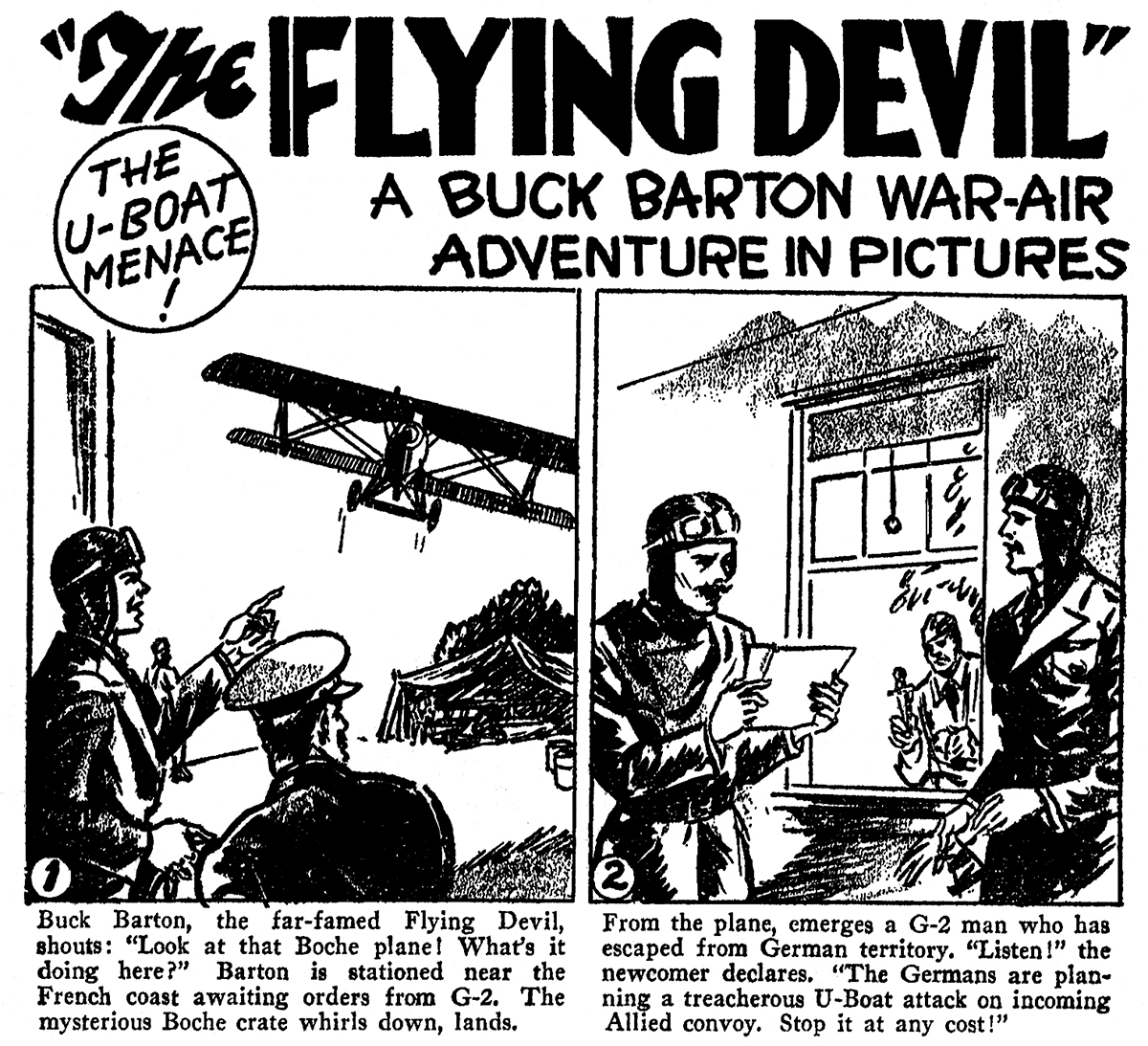
“The U-Boat Menace” by Terry Gilkison
THIS holiday season we’re going all 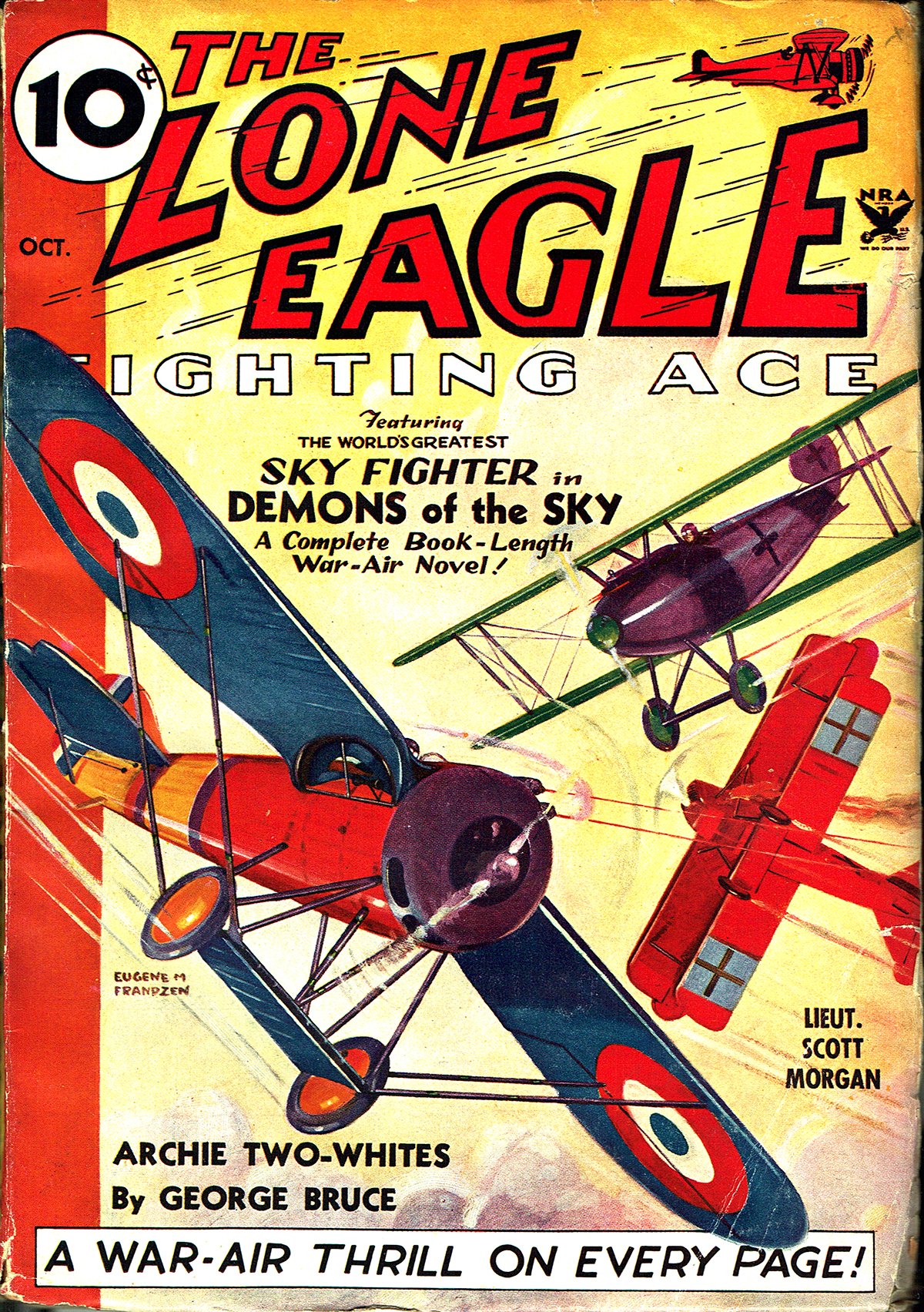 in on The Flying Devil! The Flying Devil was a regular feature of the first fifteen issues of The Lone Eagle and, more importantly, as they announced beneath each month’s story—“the Only War-Air Cartoon Story to Appear in Any Magazine!” The strip was drawn by Terry Gilkison and features the exploits of Buck Barton, a.k.a. The Flying Devil, as he wages a one man war against the Germans in his Spad with the devil on the fuselage.
From the October 1934 issue of The Lone Eagle, it’s Terry Gilkison’s The Flying Devil in “The U-Boat Menace!”
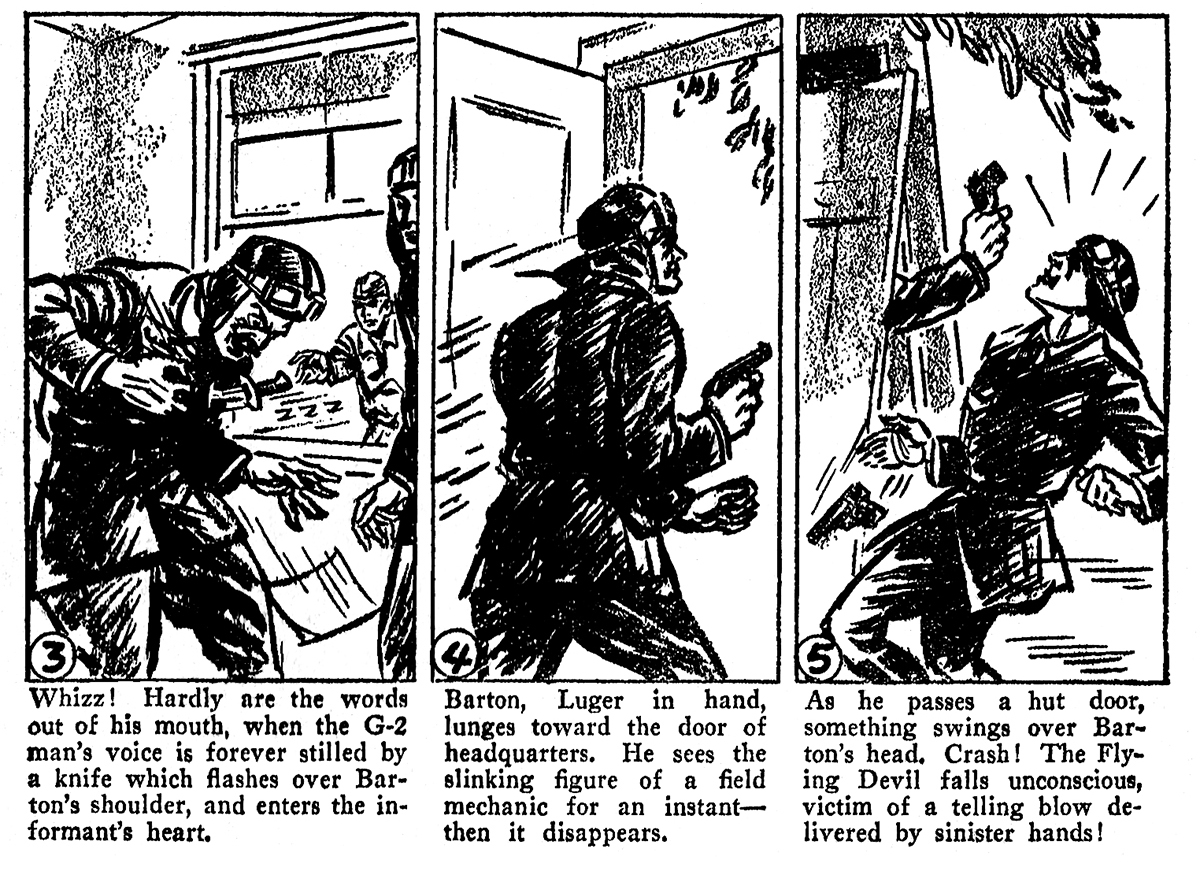
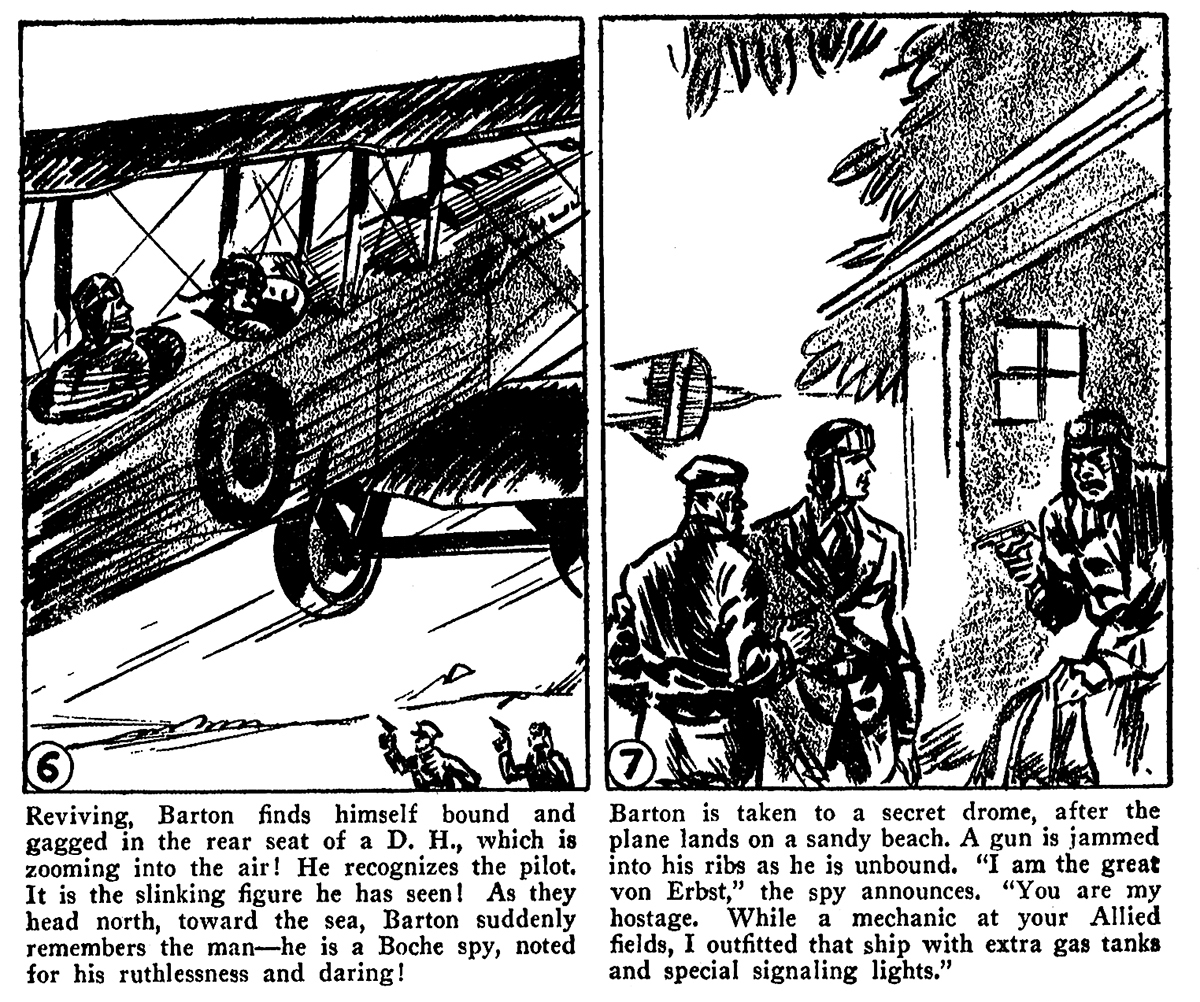
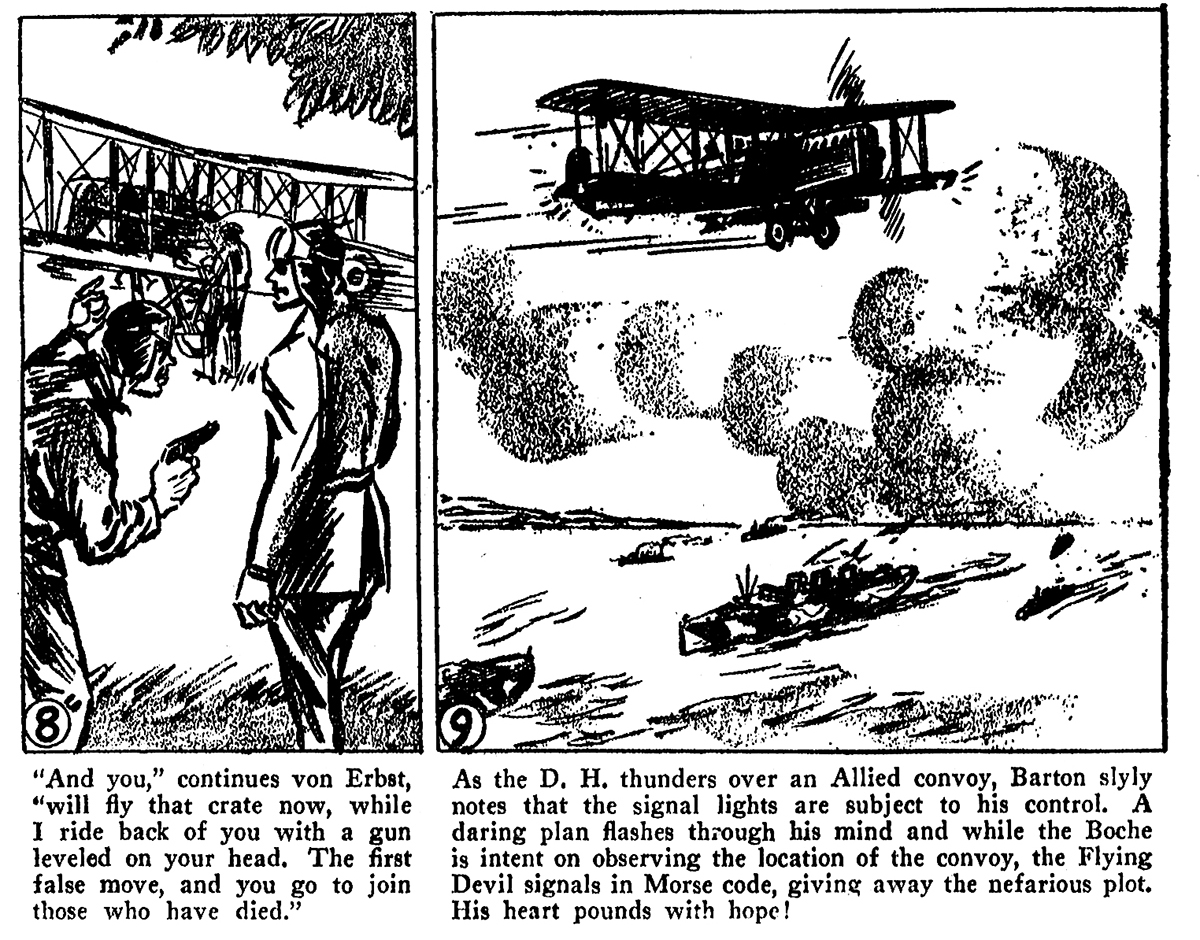
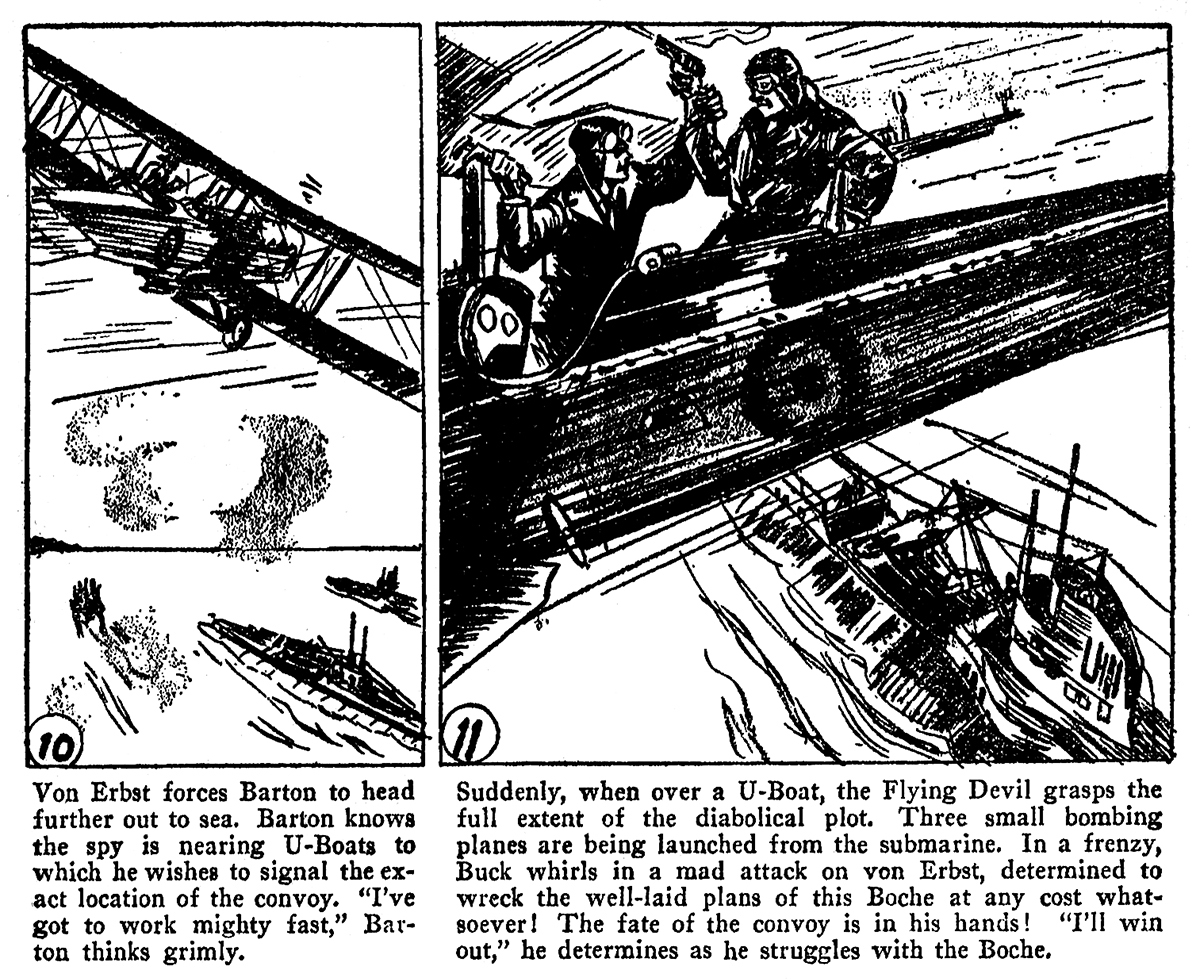
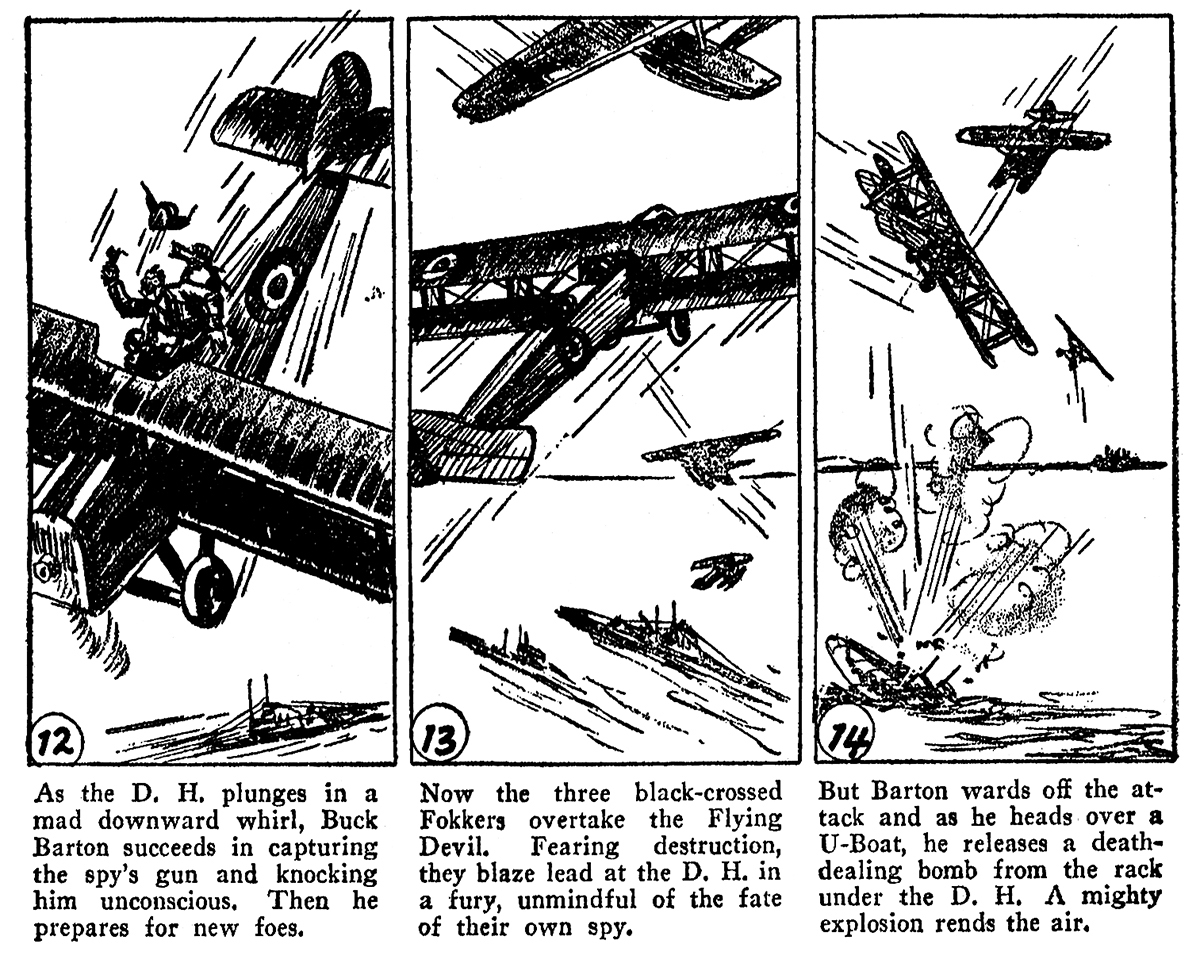
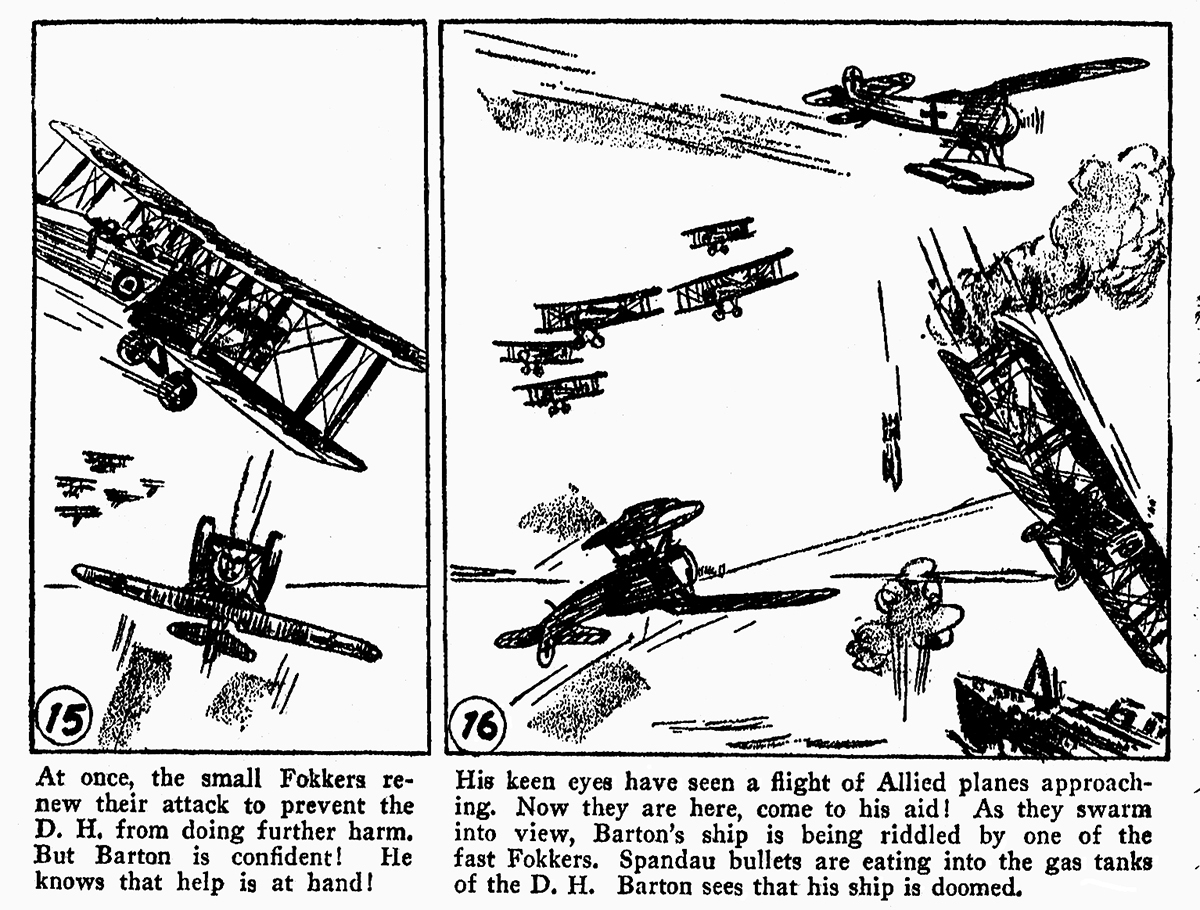
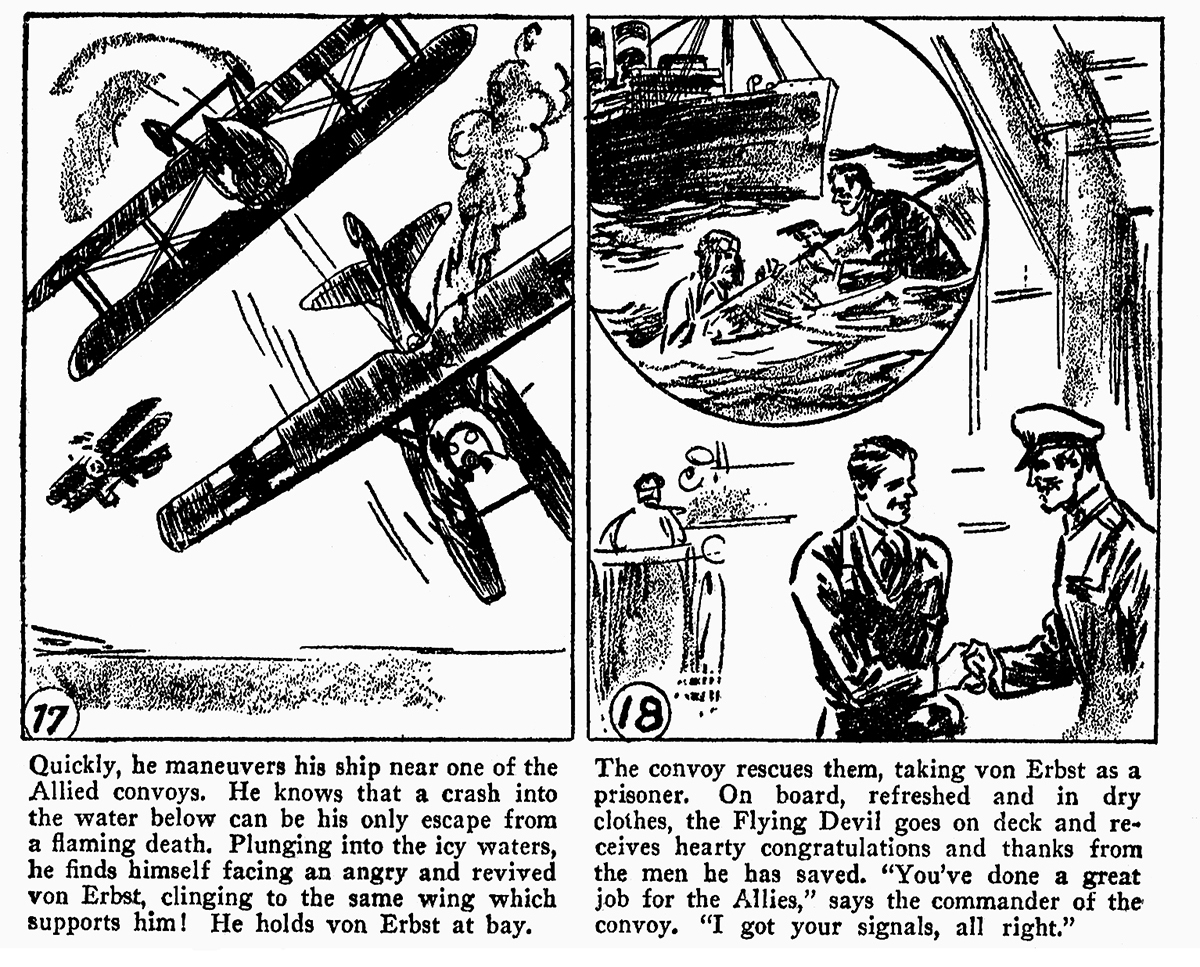
Next Time: The Sinister Zeppelin!
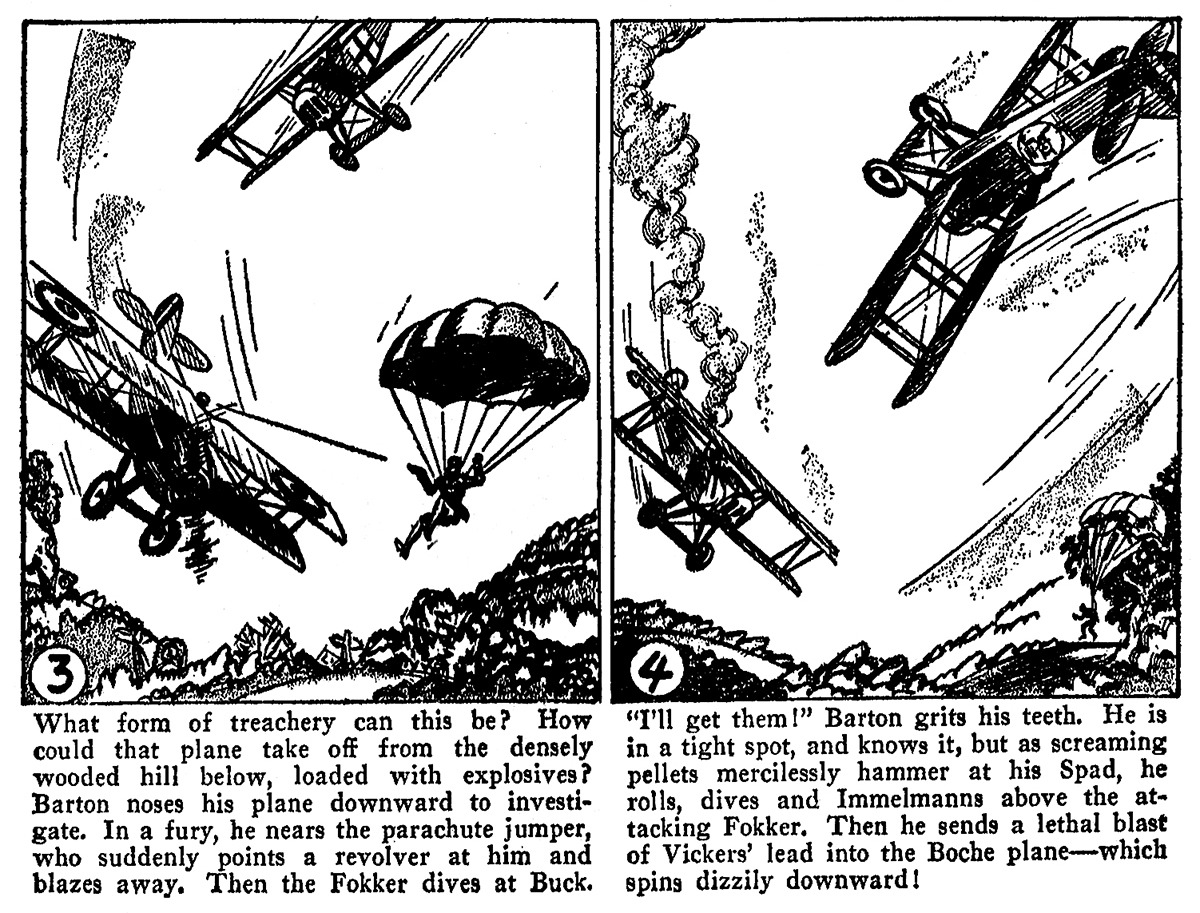
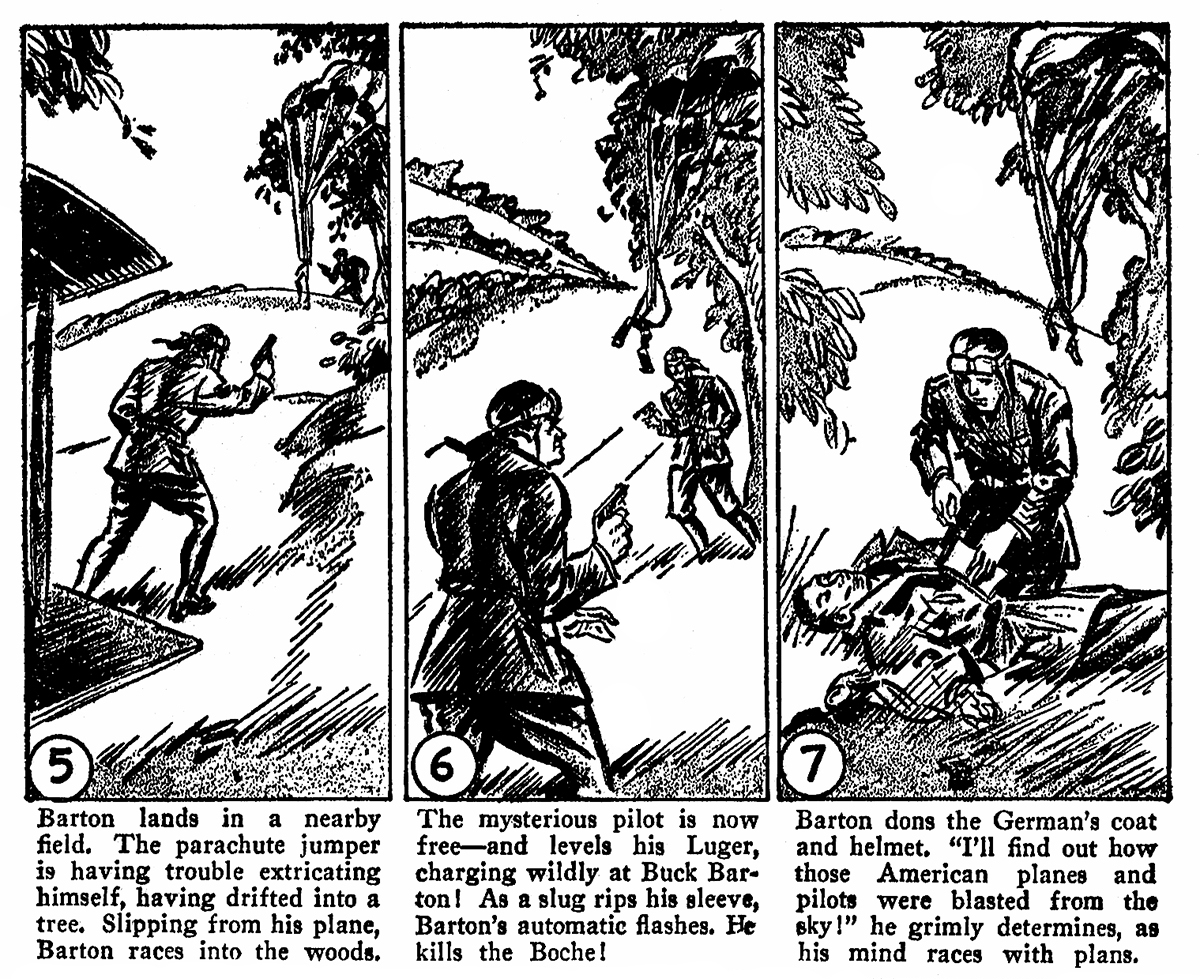
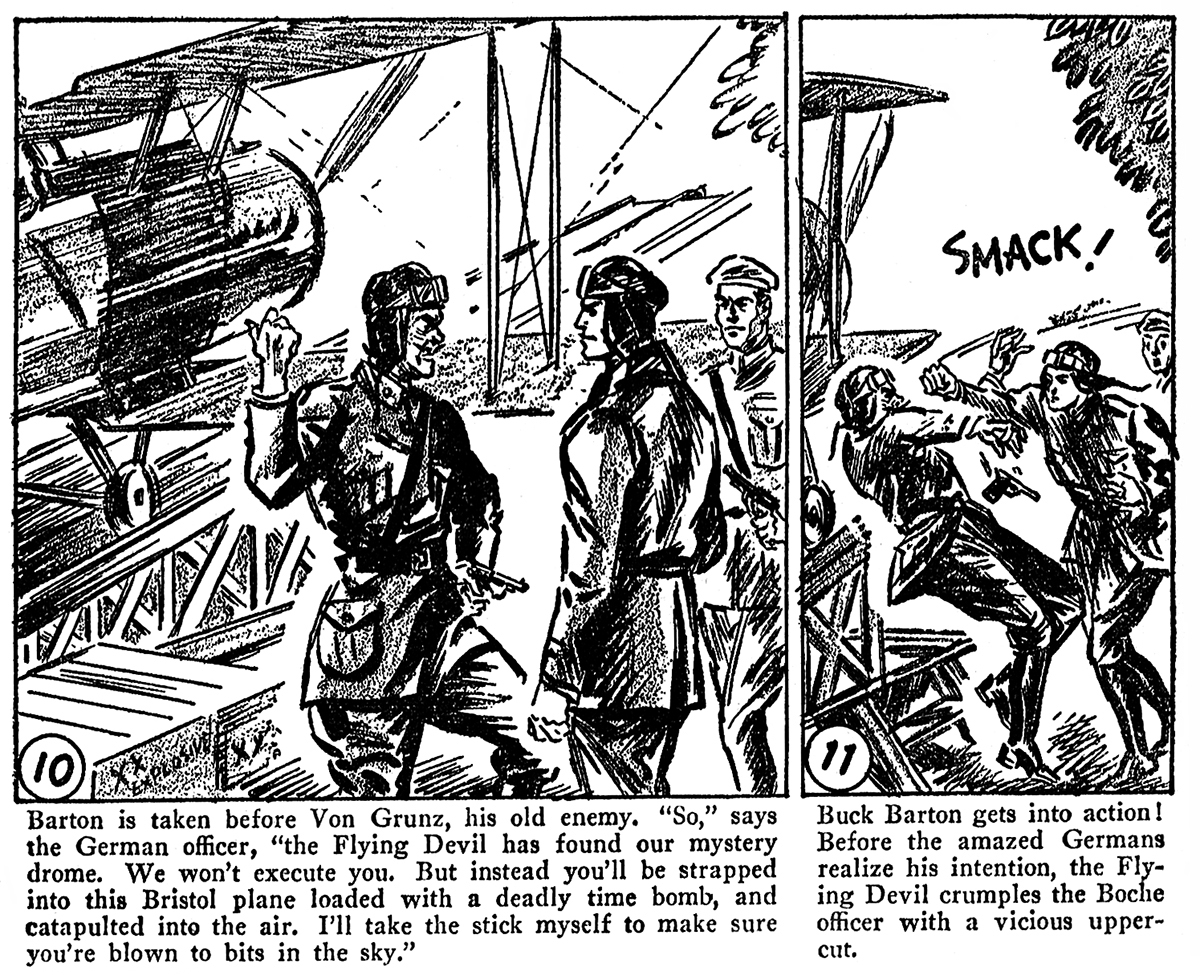
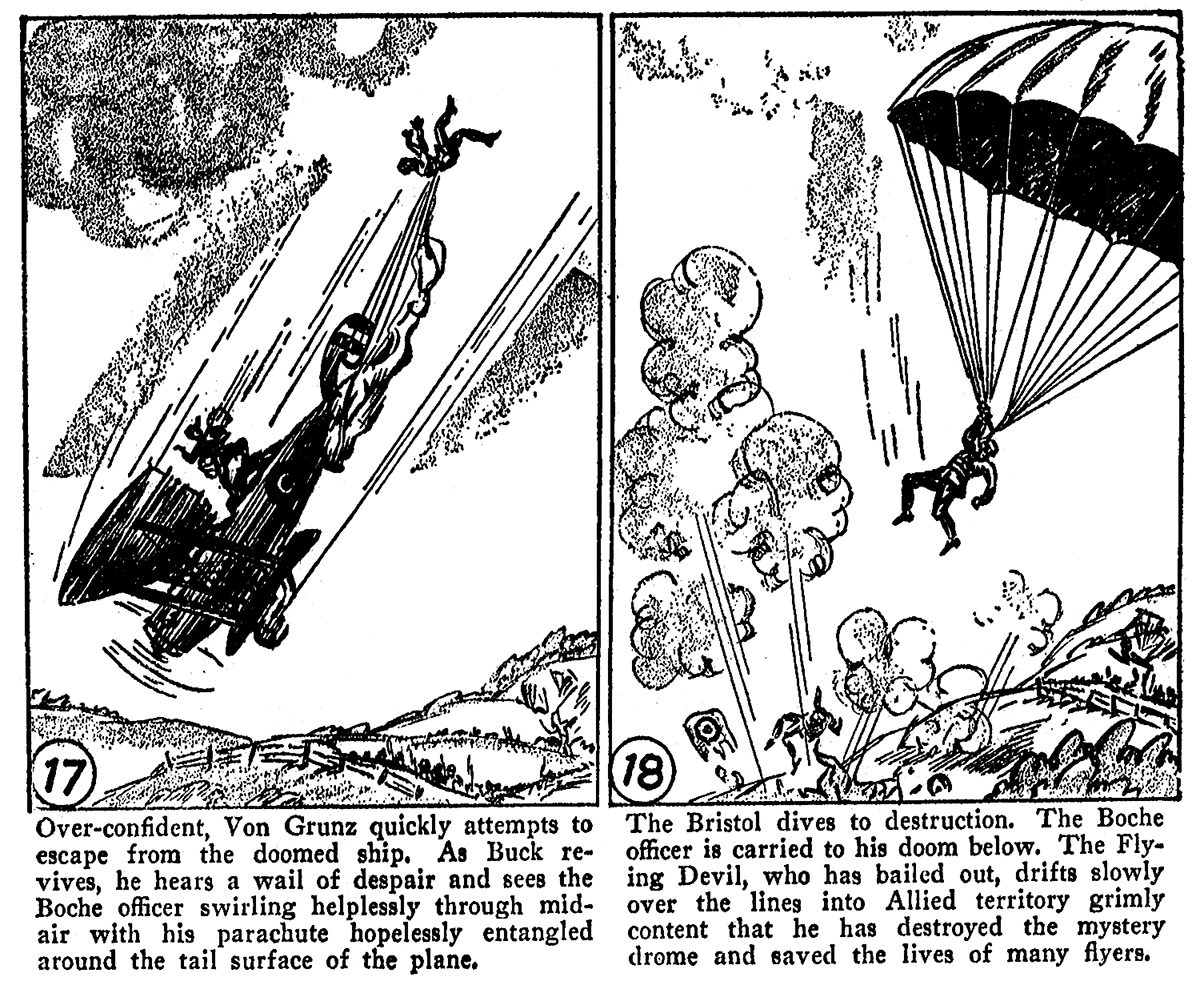
“The Mystery Drome” by Terry Gilkison
THIS holiday season we’re going all  in on The Flying Devil! The Flying Devil was a regular feature of the first fifteen issues of The Lone Eagle and, more importantly, as they announced beneath each month’s story—“the Only War-Air Cartoon Story to Appear in Any Magazine!” The strip was drawn by Terry Gilkison and features the exploits of Buck Barton, a.k.a. The Flying Devil, as he wages a one man war against the Germans in his Spad with the devil on the fuselage.
From the September 1934 issue of The Lone Eagle, it’s Terry Gilkison’s The Flying Devil in “The Mystery Drome!”




Next Time: The U-Boat Menace!
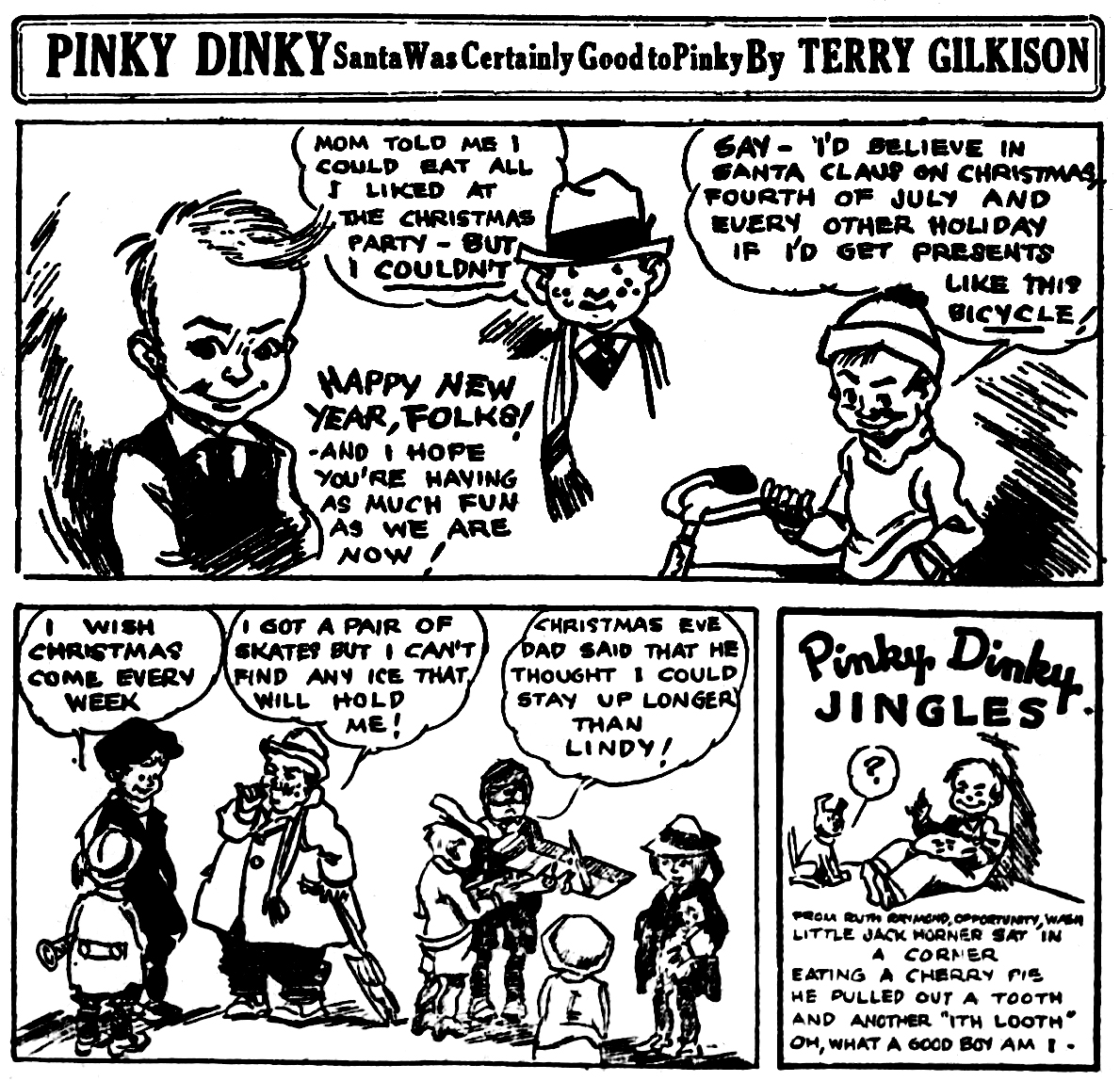
And as a special Christmas Bonus, we give you a holiday themed Pinky Dinky strip from 1929!
“The Lost Squadron” by Terry Gilkison
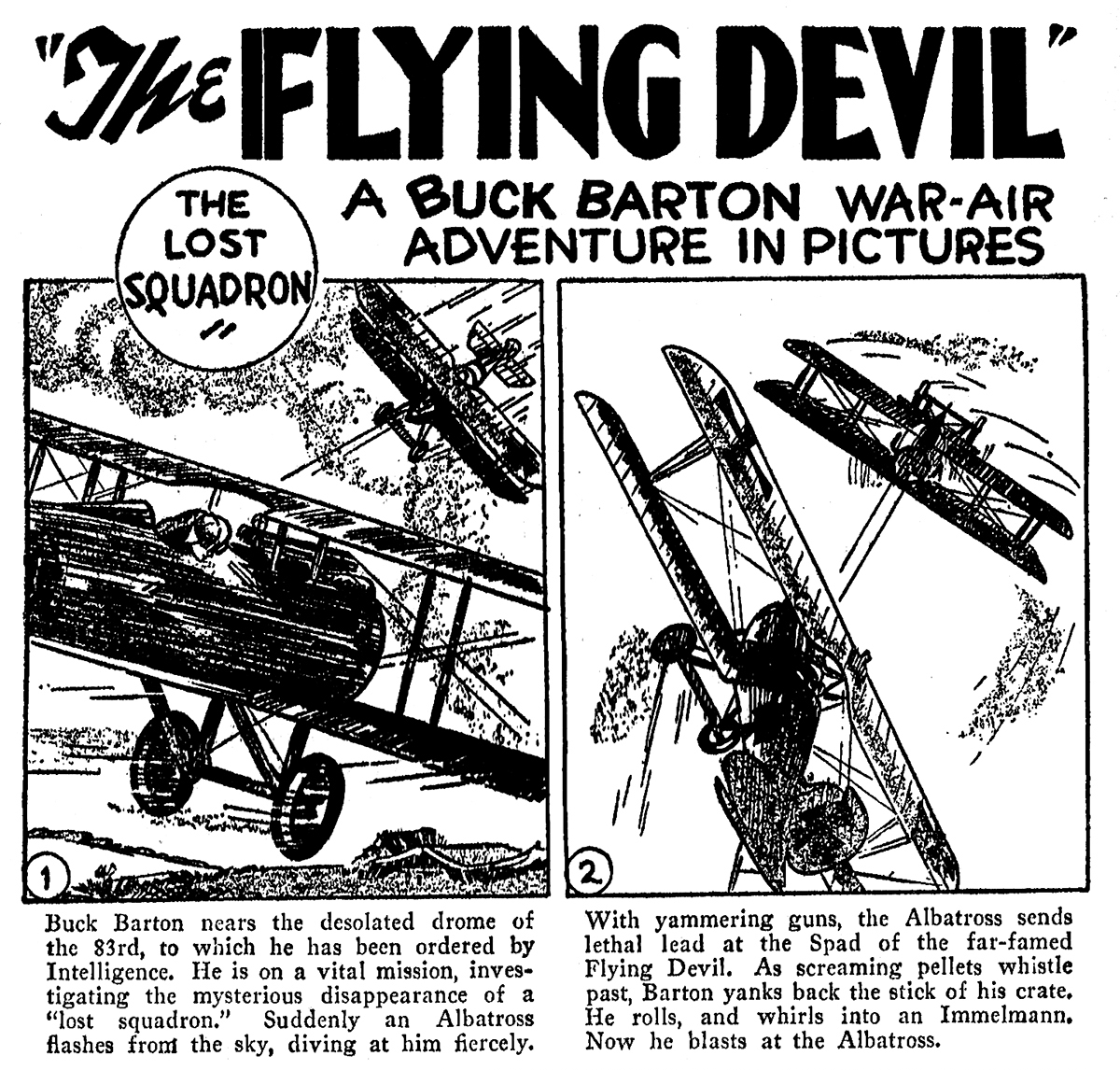
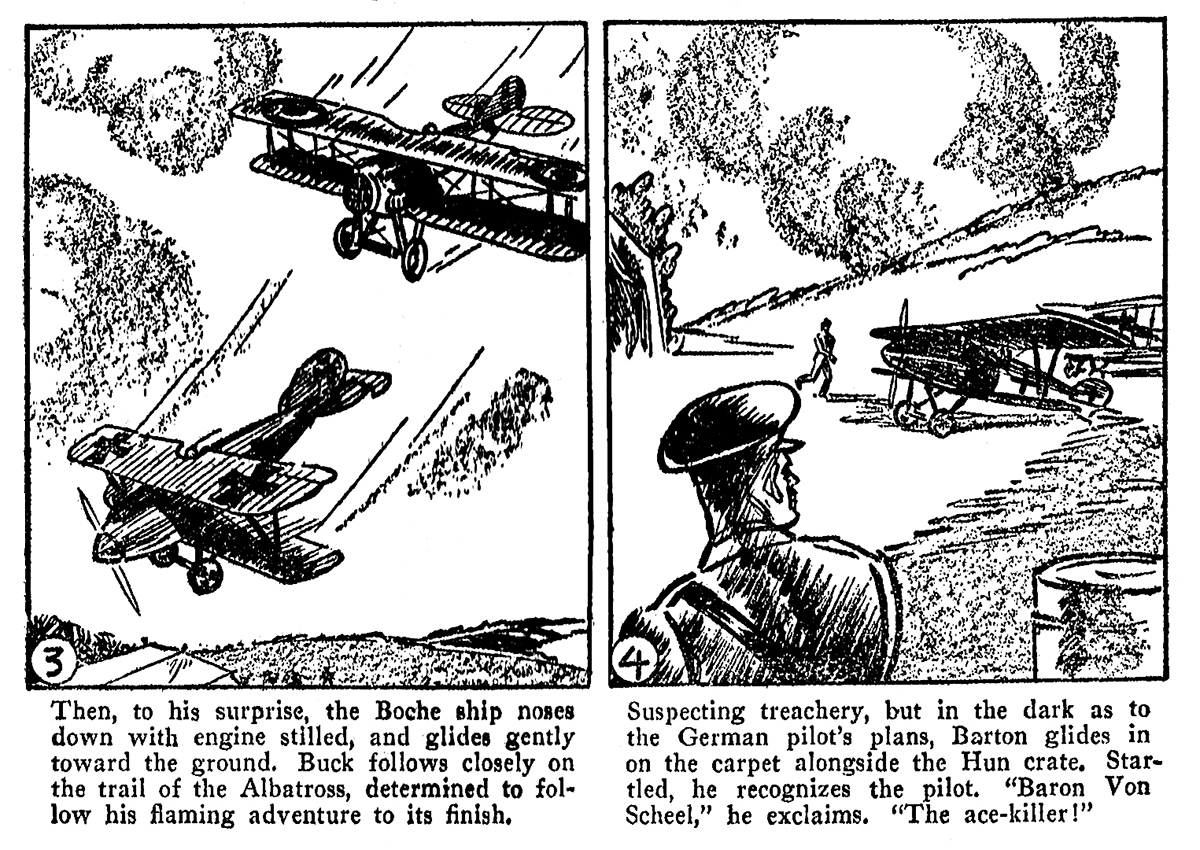
THIS holiday season we’re going all 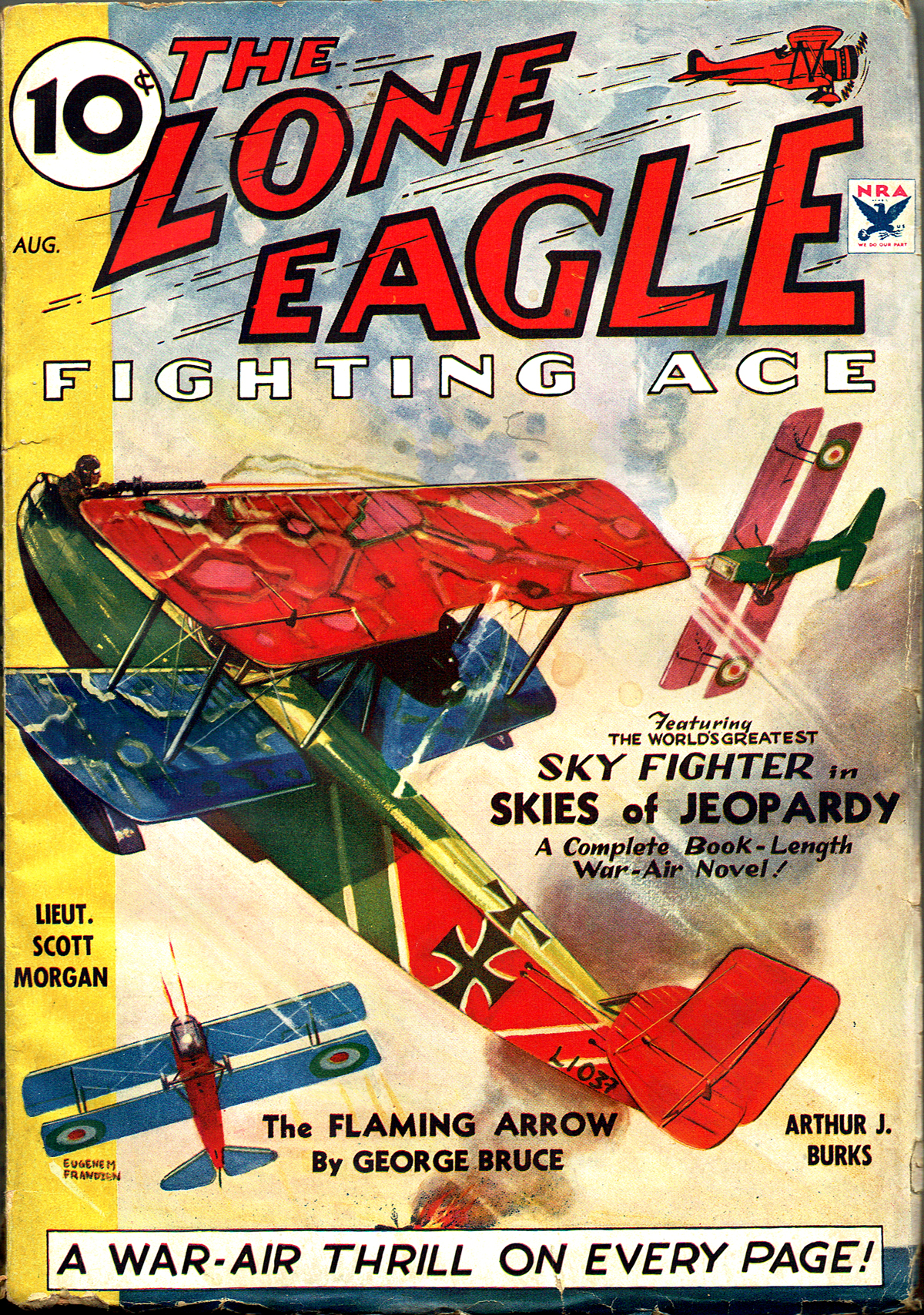 in on The Flying Devil! The Flying Devil was a regular feature of the first fifteen issues of The Lone Eagle and, more importantly, as they announced beneath each month’s story—“the Only War-Air Cartoon Story to Appear in Any Magazine!” The strip was drawn by Terry Gilkison and features the exploits of Buck Barton, a.k.a. The Flying Devil, as he wages a one man war against the Germans in his Spad with the devil on the fuselage.
From the August 1934 issue of The Lone Eagle, it’s Terry Gilkison’s The Flying Devil in “The Lost Squadron!”
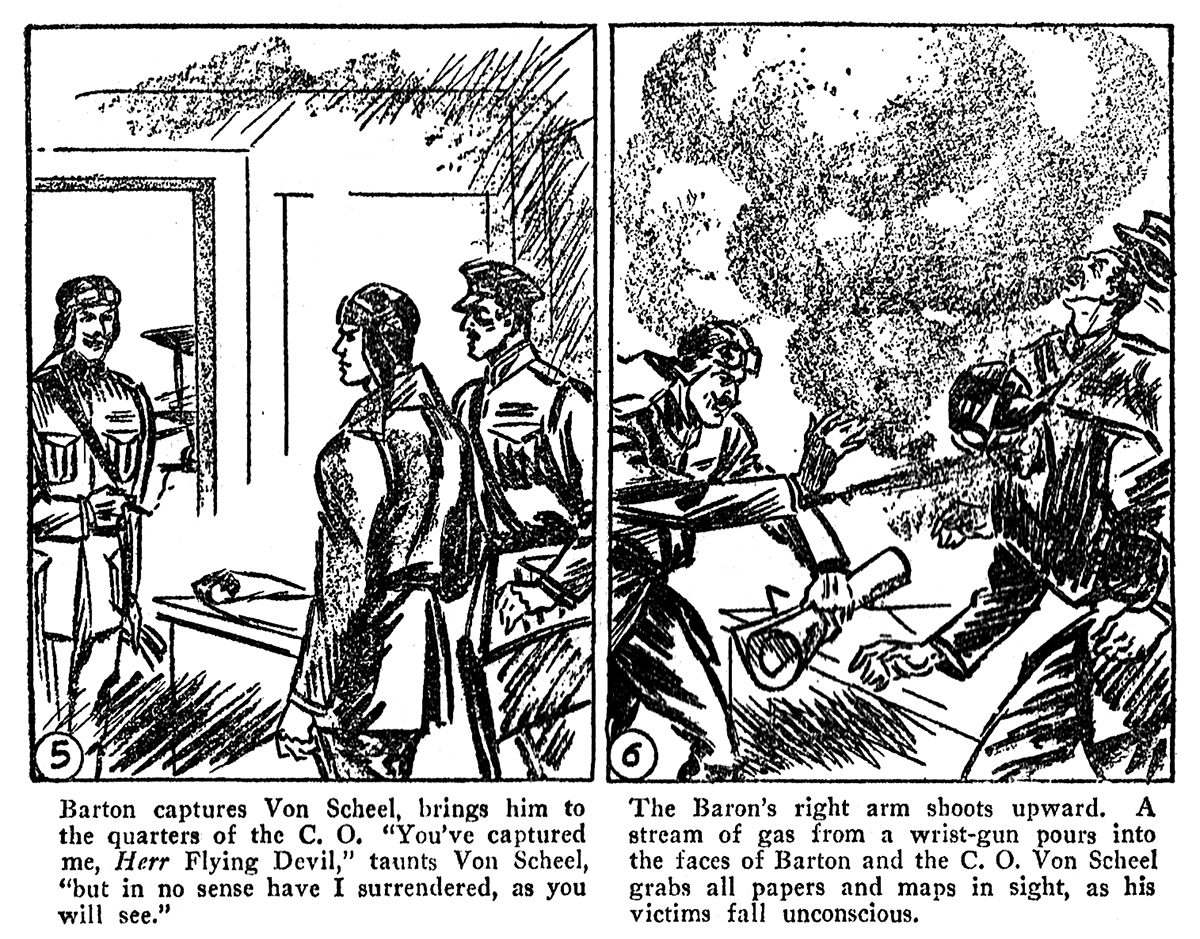

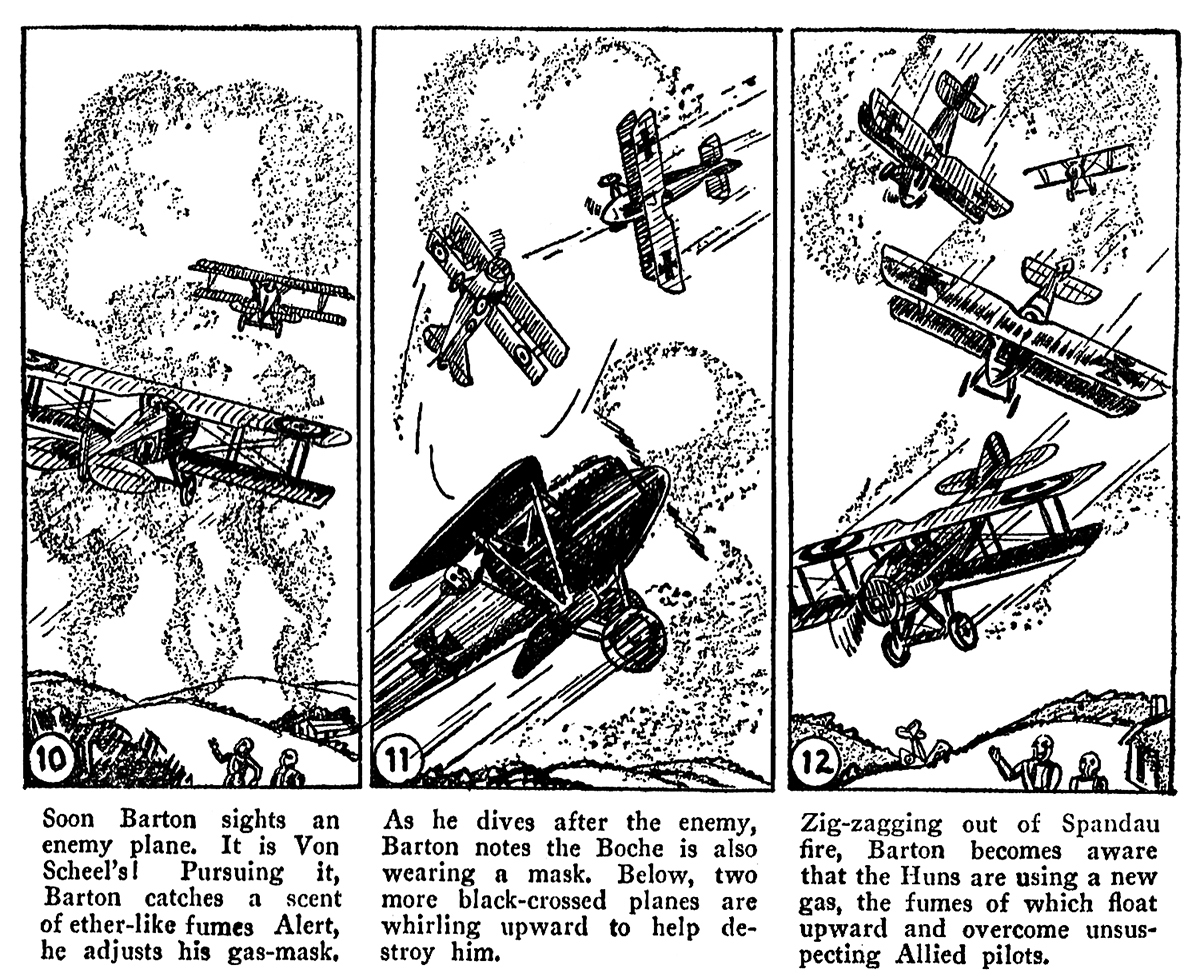

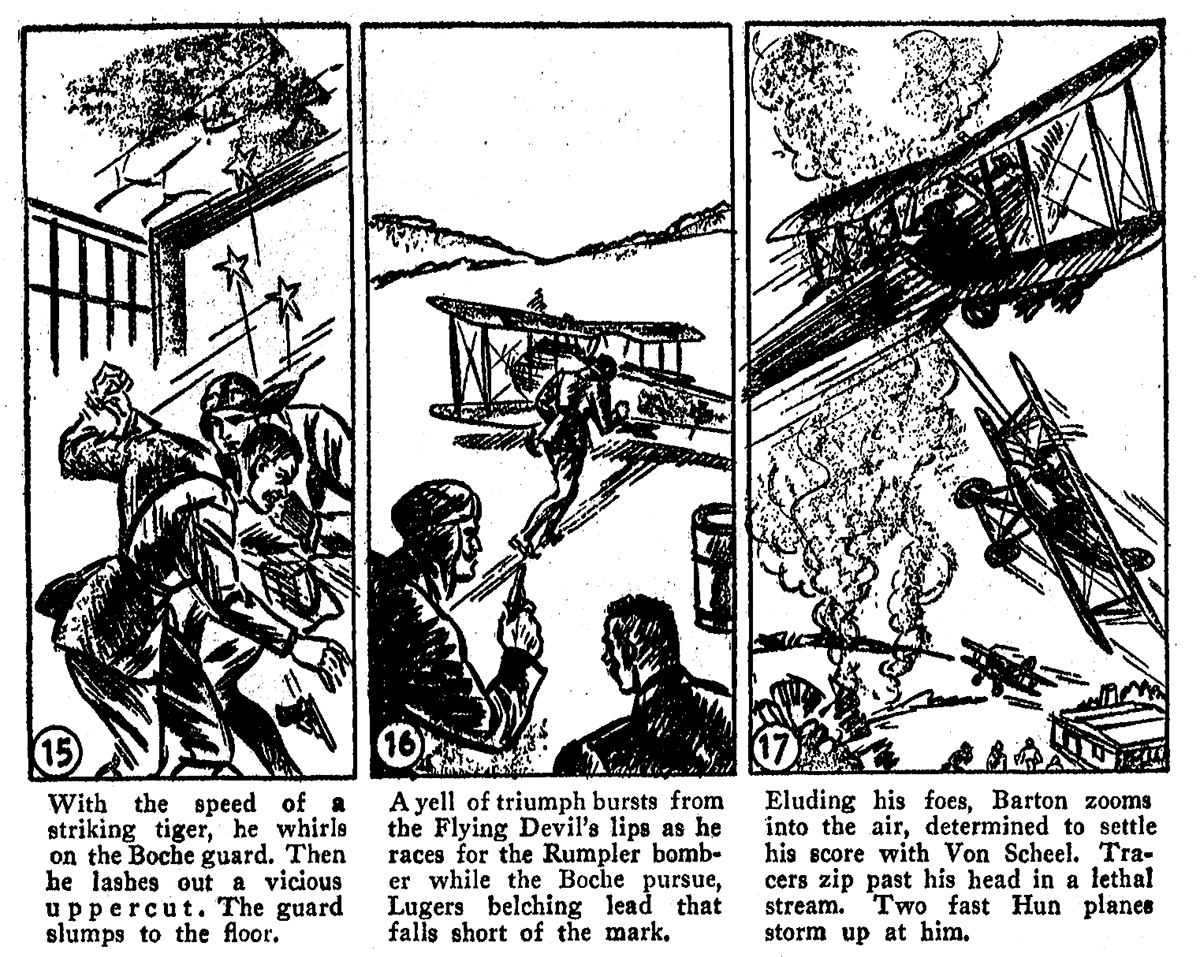
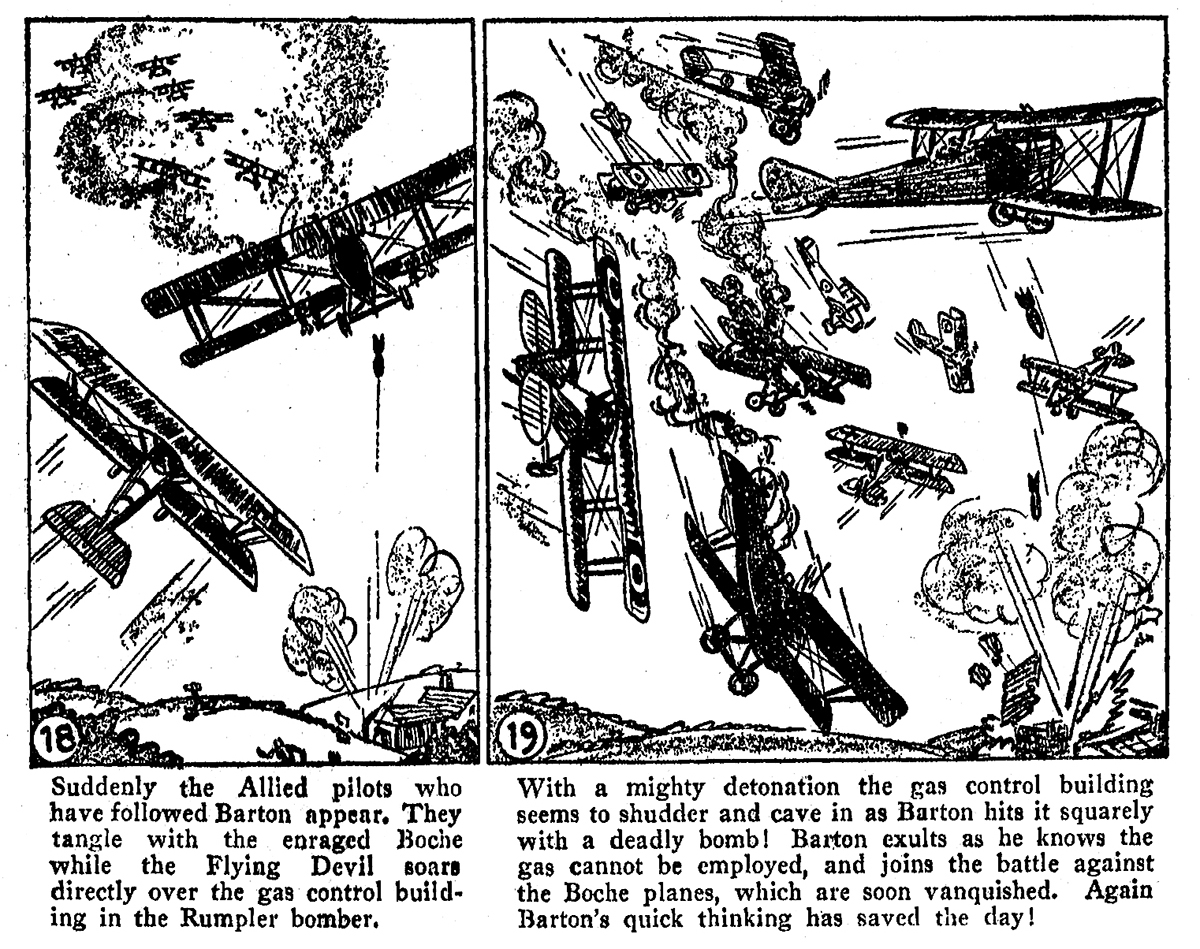
Next Time: The Mystery Drome!
“The Dog-Fight Treachery” by Terry Gilkison
THIS holiday season we’re going all 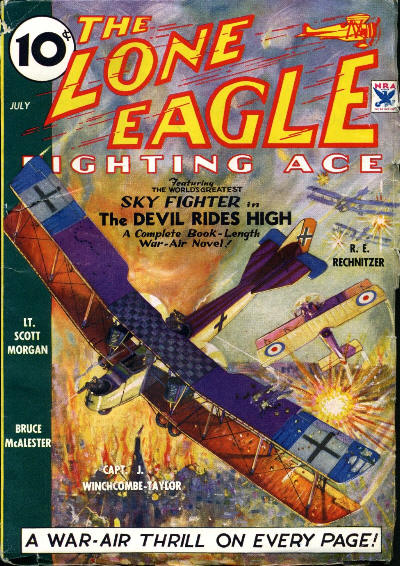 in on The Flying Devil! The Flying Devil was a regular feature of the first fifteen issues of The Lone Eagle and, more importantly, as they announced beneath each month’s story—“the Only War-Air Cartoon Story to Appear in Any Magazine!” The strip was drawn by Terry Gilkison and features the exploits of Buck Barton, a.k.a. The Flying Devil, as he wages a one man war against the Germans in his Spad with the devil on the fuselage.
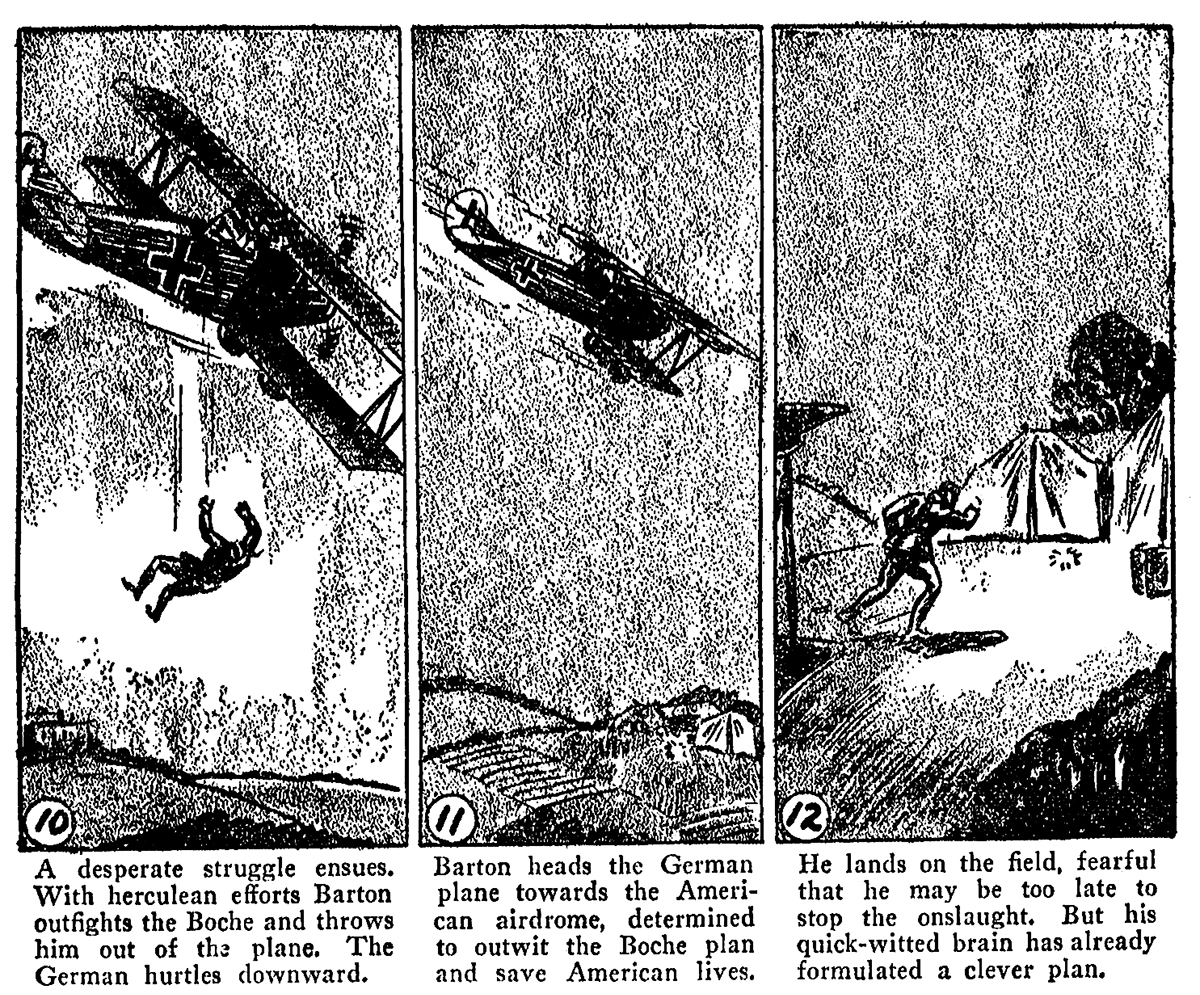
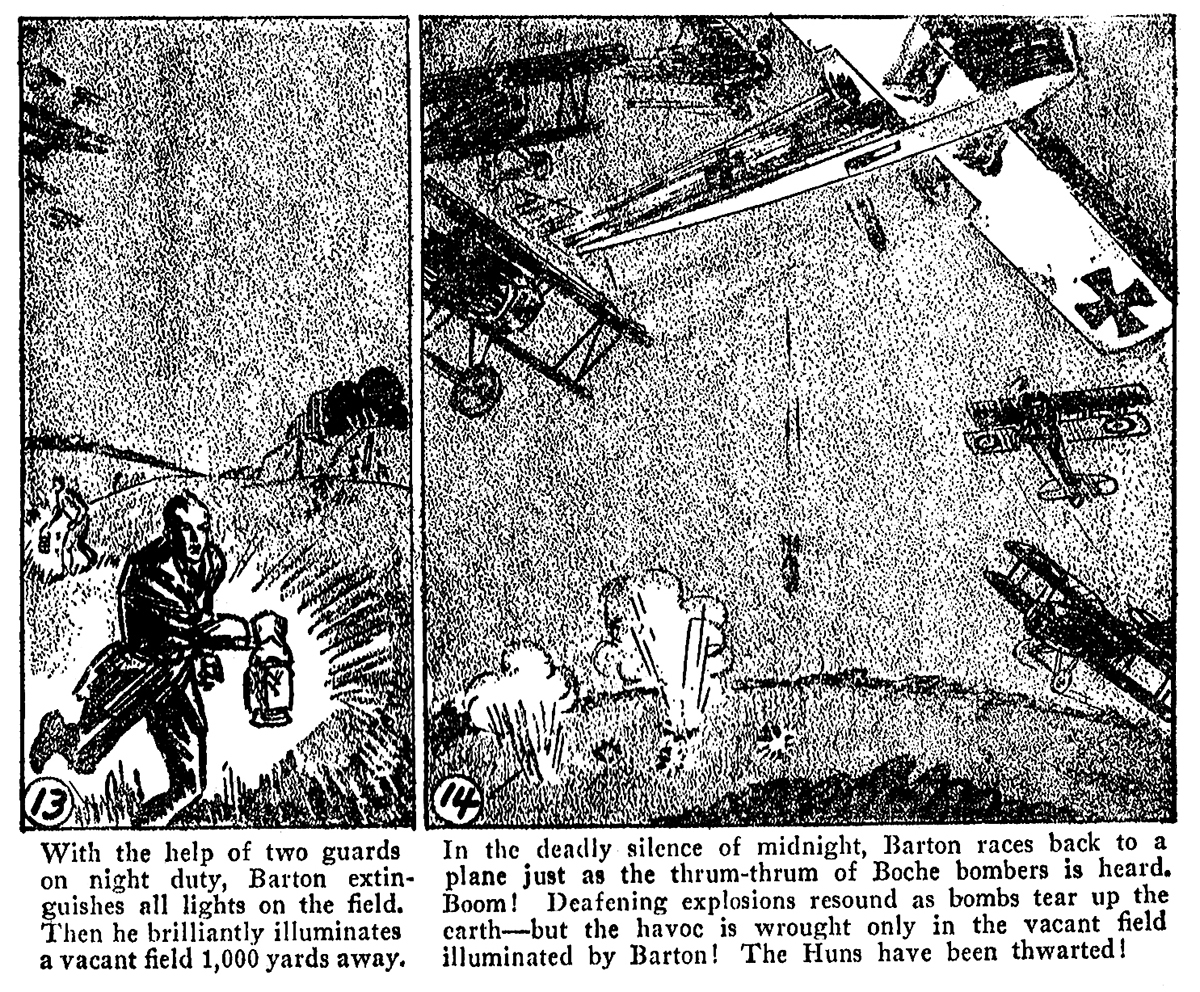
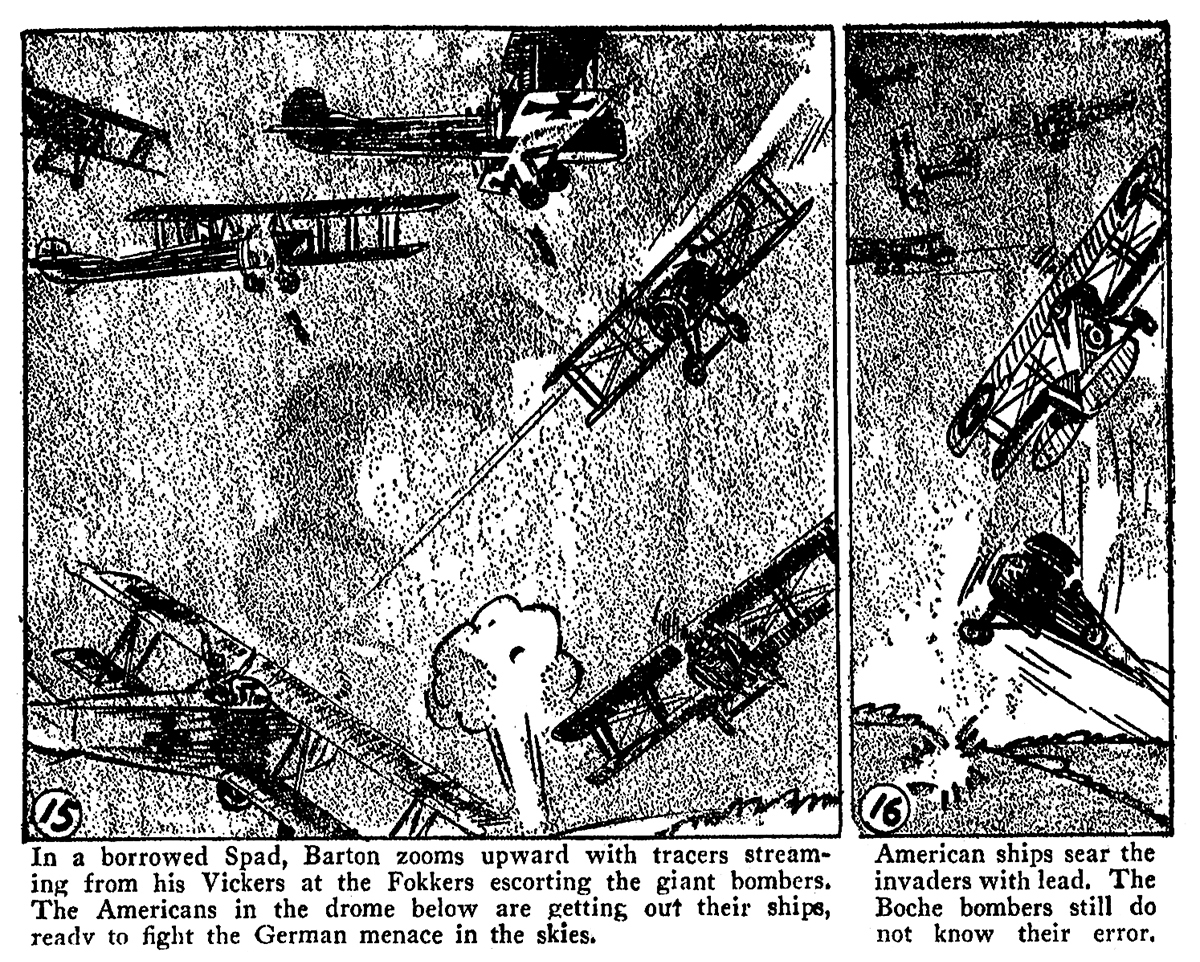
From the July 1934 issue of The Lone Eagle, it’s Terry Gilkison’s The Flying Devil in “The Dog-Fight Treachery!”
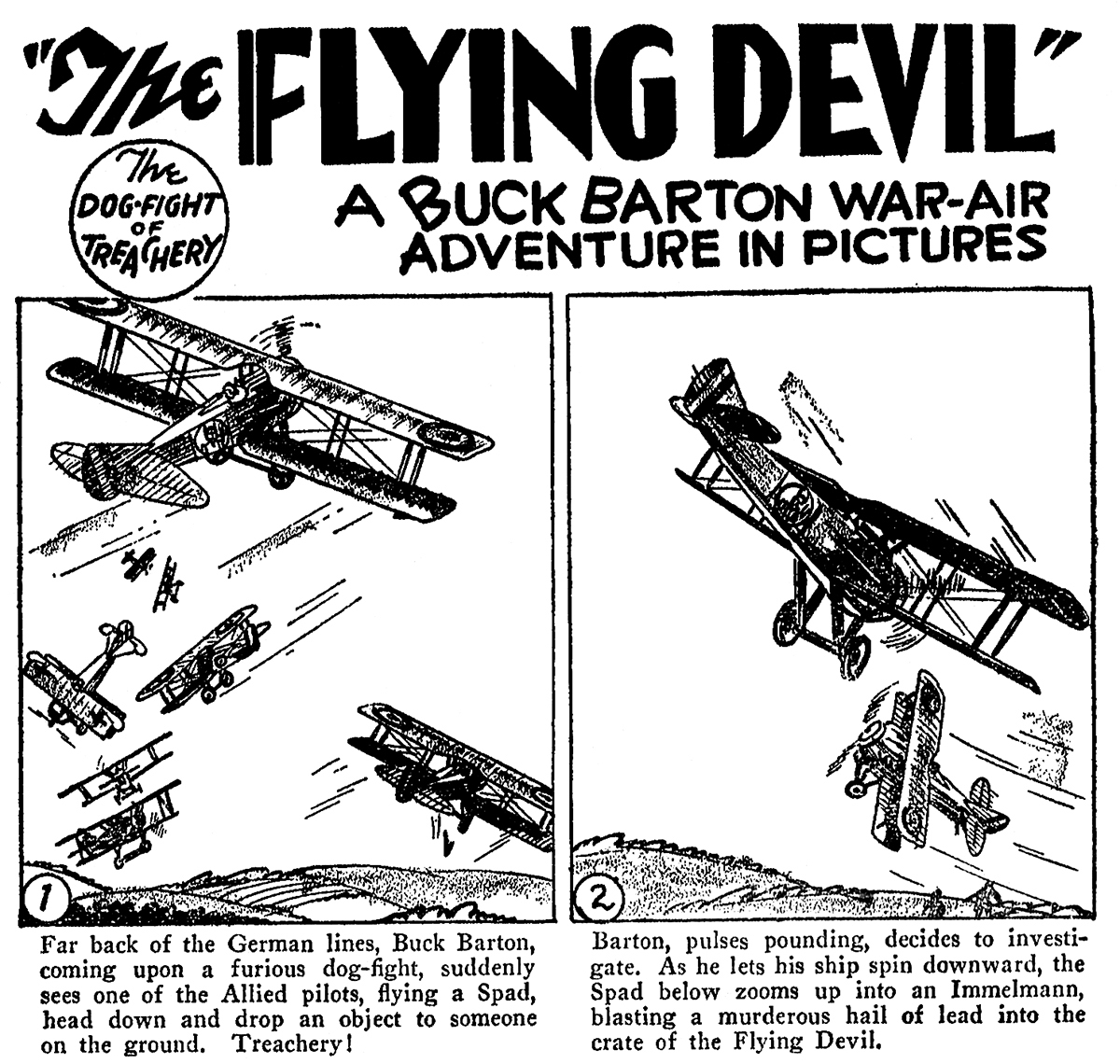
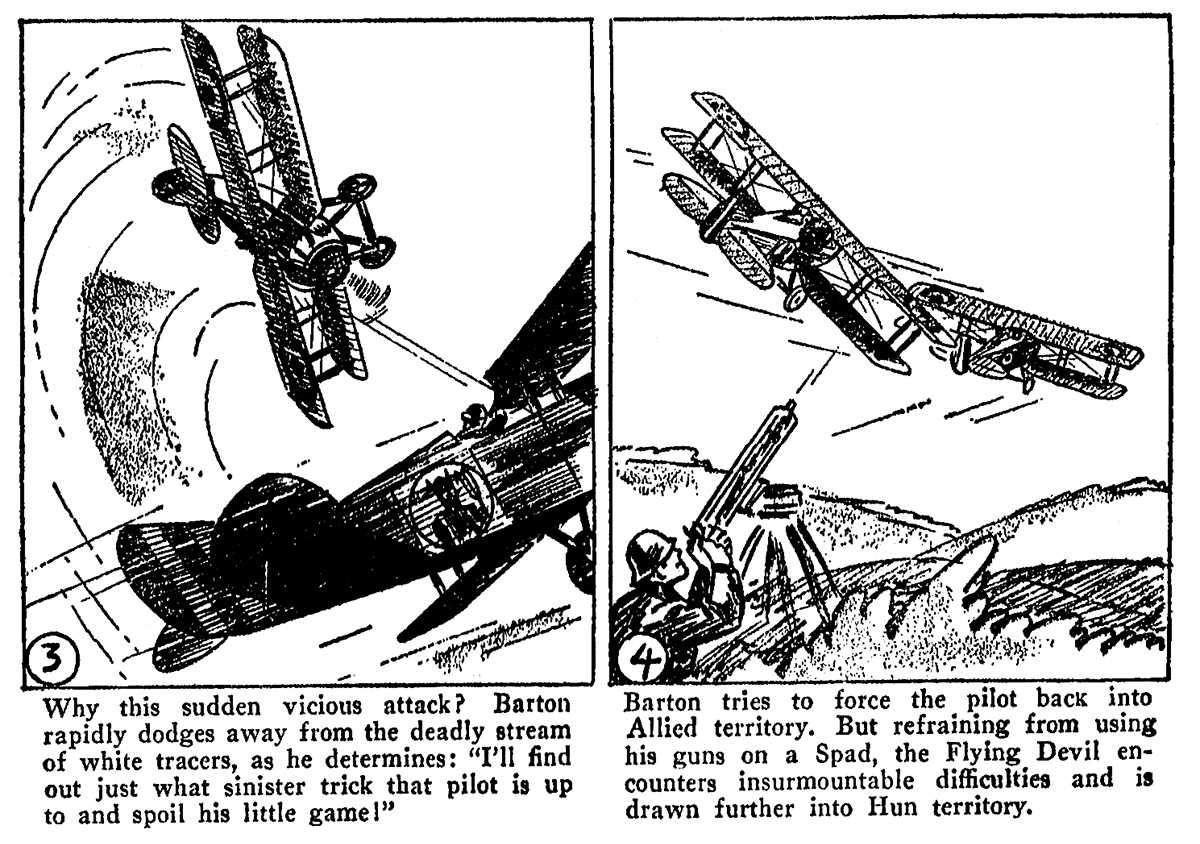

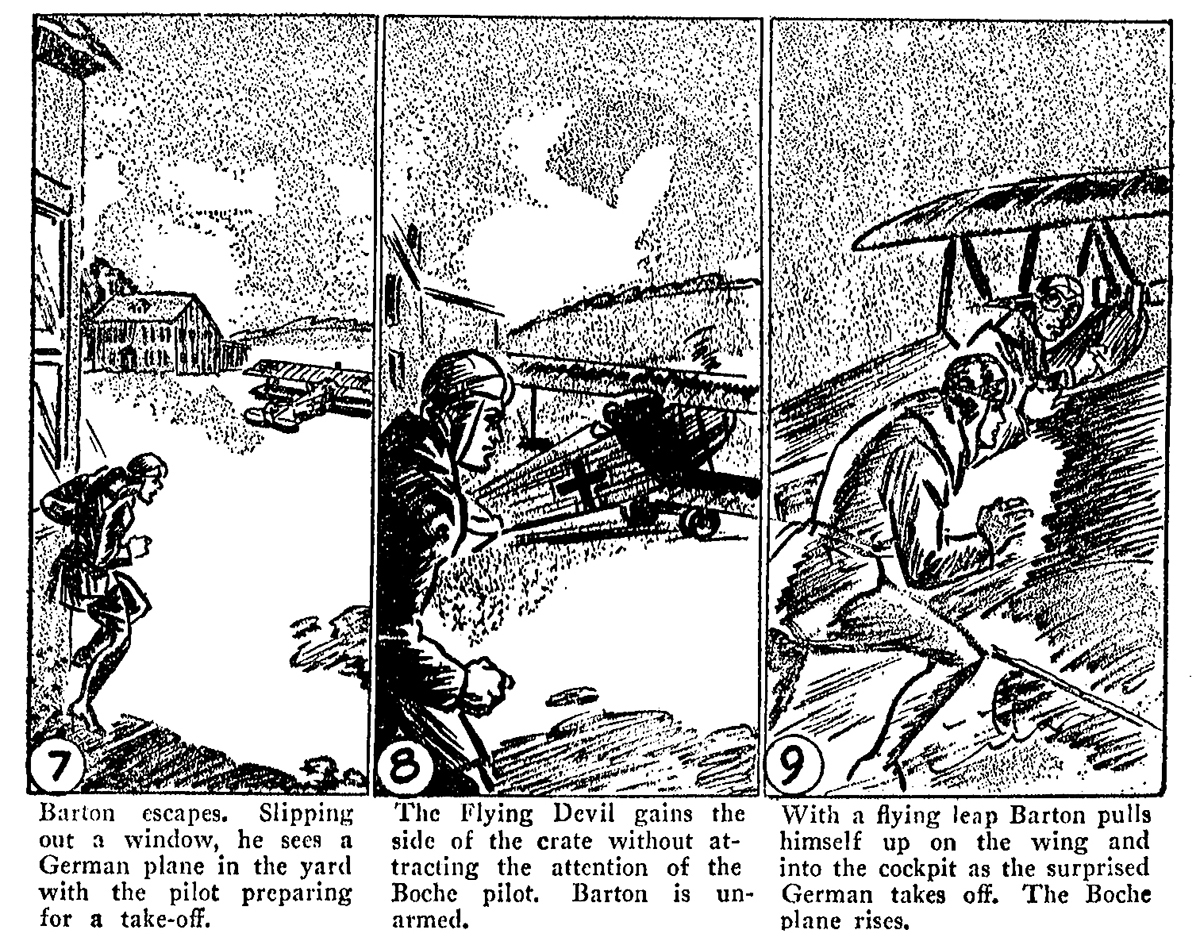

Next Time: The Lost Squadron!
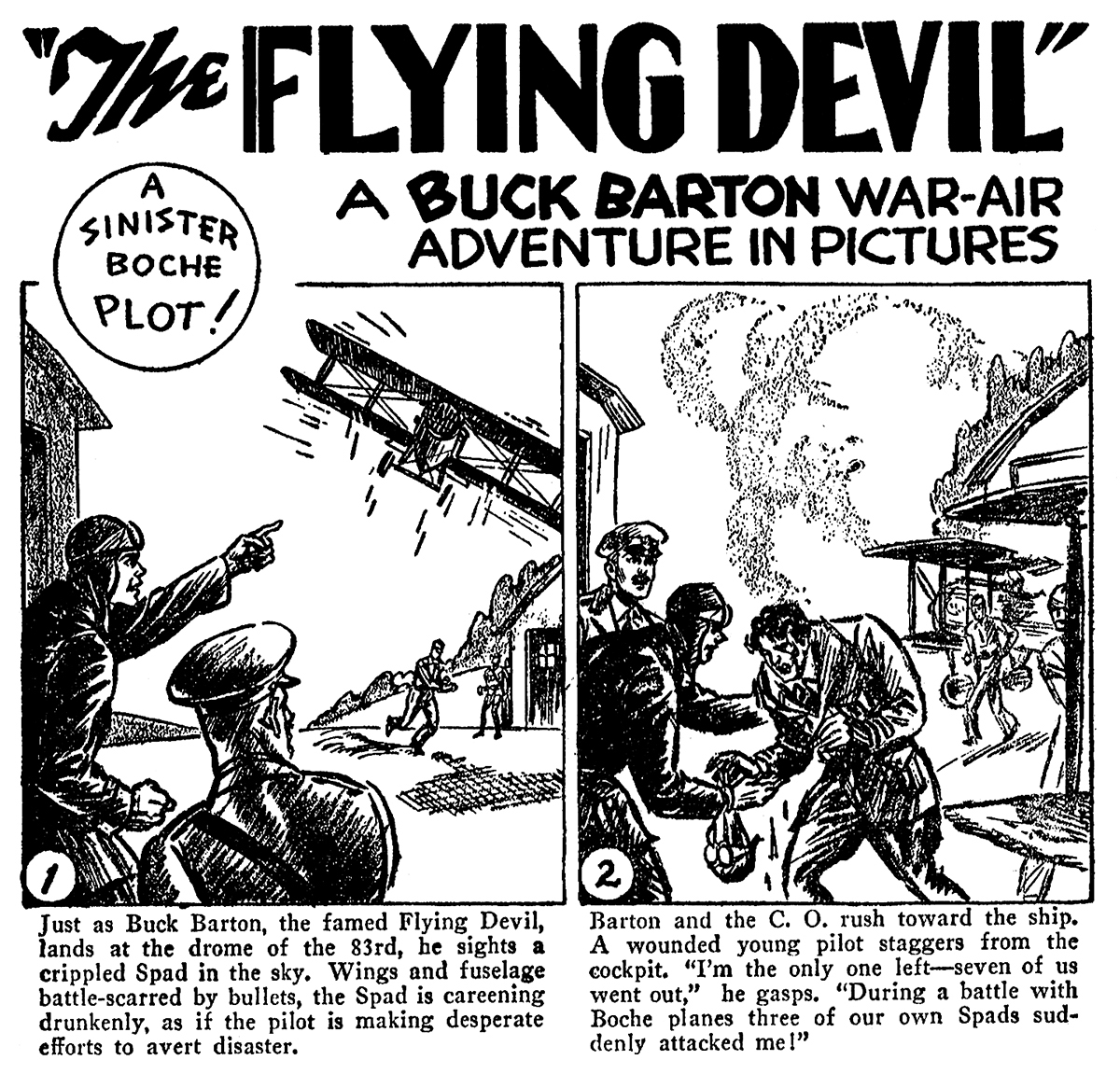
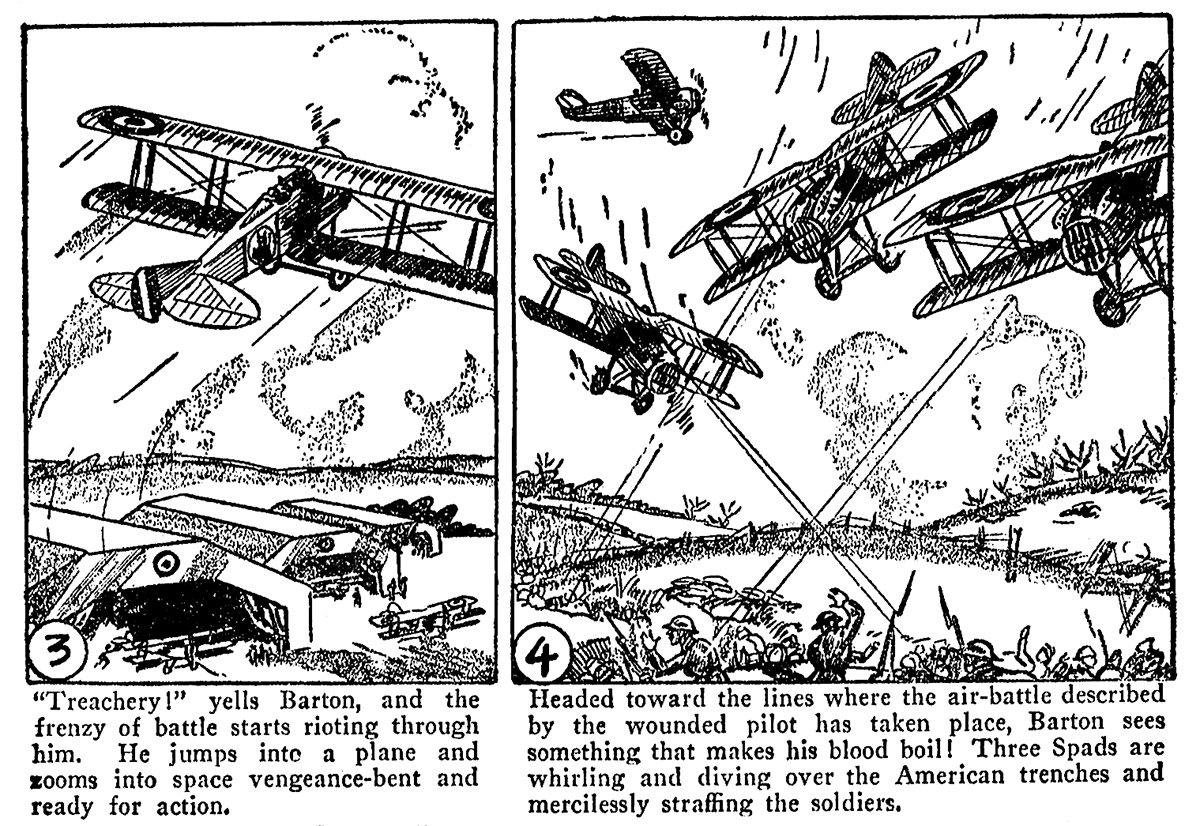
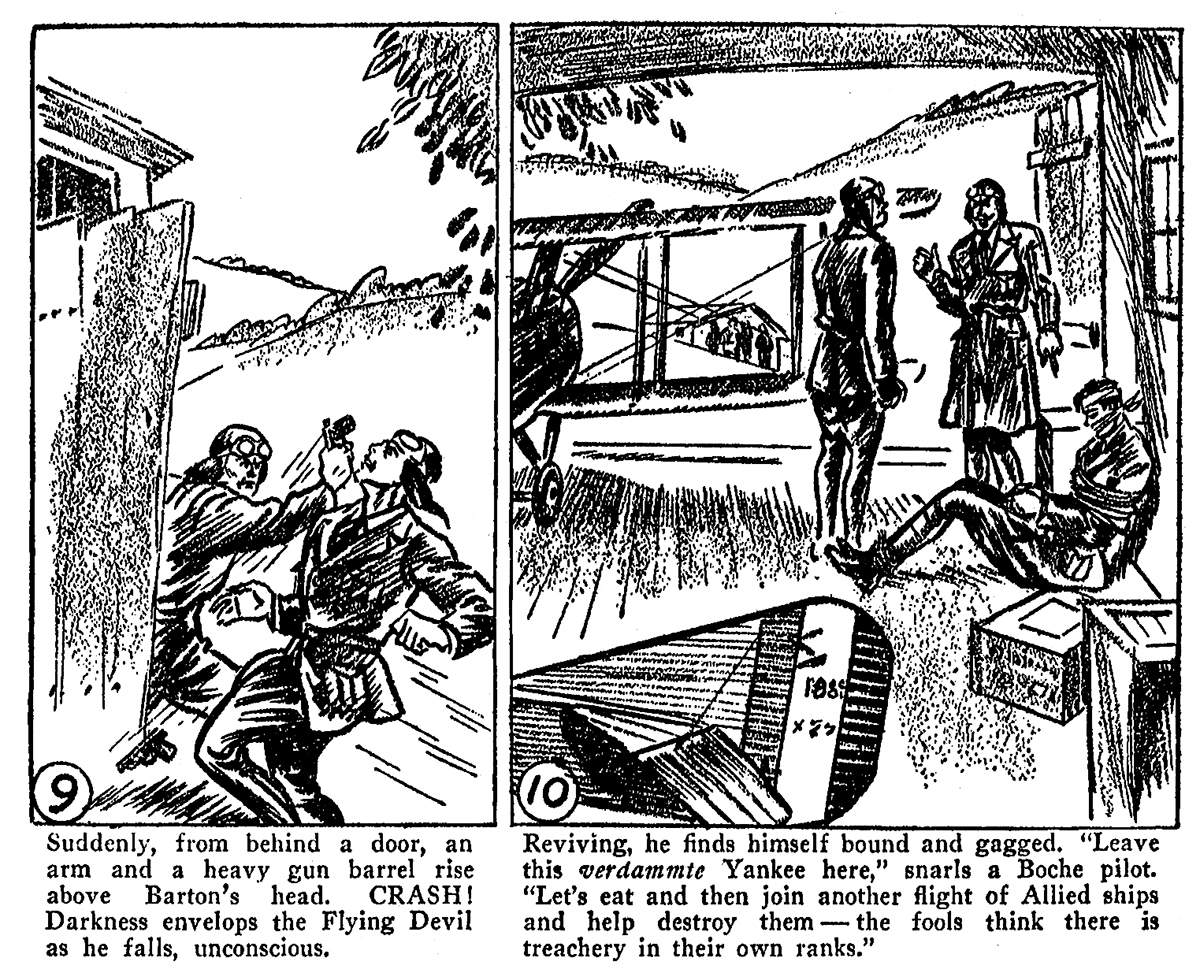
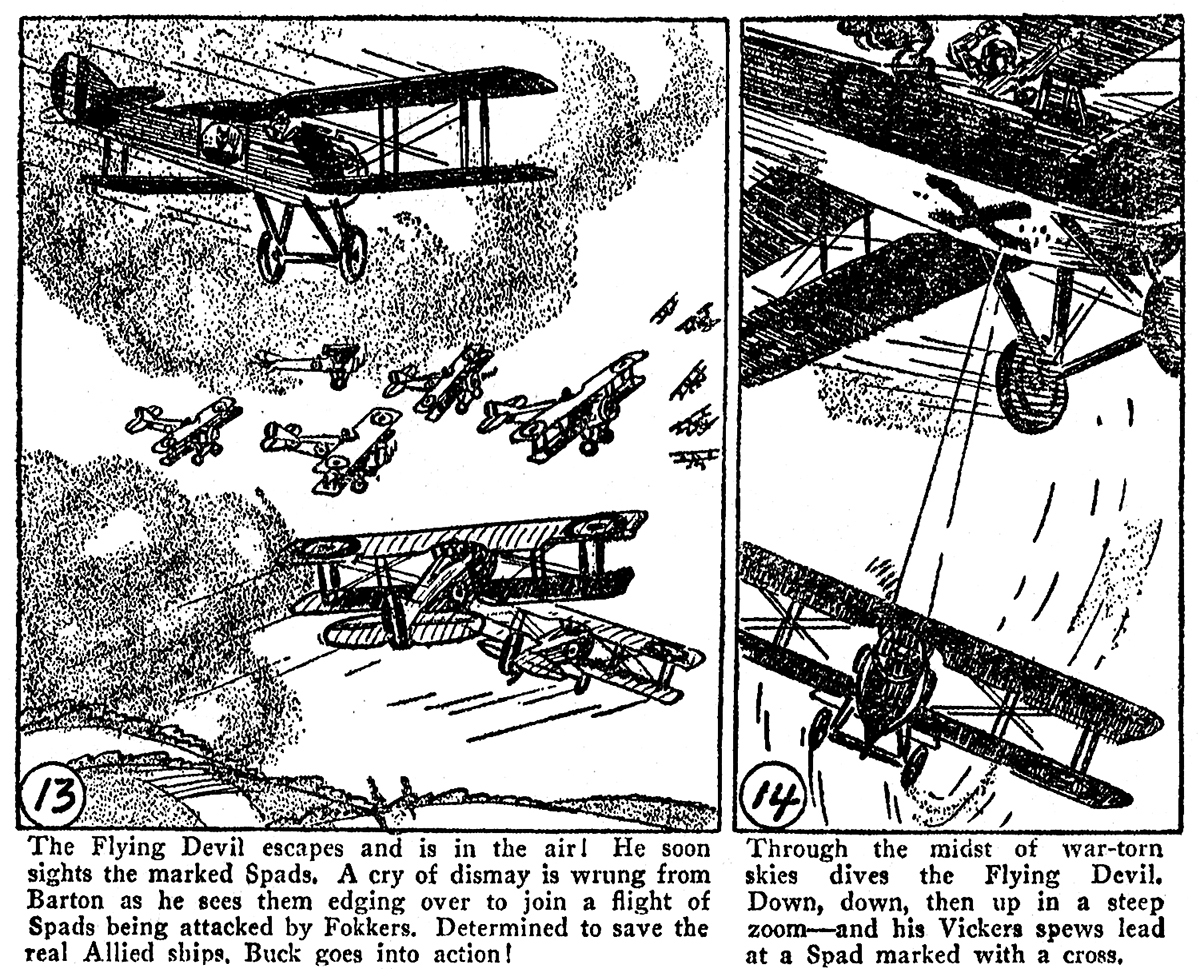
“A Sinister Boche Plot” by Terry Gilkison
THIS holiday season we’re going all  in on The Flying Devil! The Flying Devil was a regular feature of the first fifteen issues of The Lone Eagle and, more importantly, as they announced beneath each month’s story—“the Only War-Air Cartoon Story to Appear in Any Magazine!” The strip was drawn by Terry Gilkison and features the exploits of Buck Barton, a.k.a. The Flying Devil, as he wages a one man war against the Germans in his Spad with the devil on the fuselage.
From the June 1934 issue of The Lone Eagle, it’s Terry Gilkison’s The Flying Devil in “A Sinister Boche Plot!”




Next Time: The Dog-Fight Treachery!
“Sky Doom” by Terry Gilkison
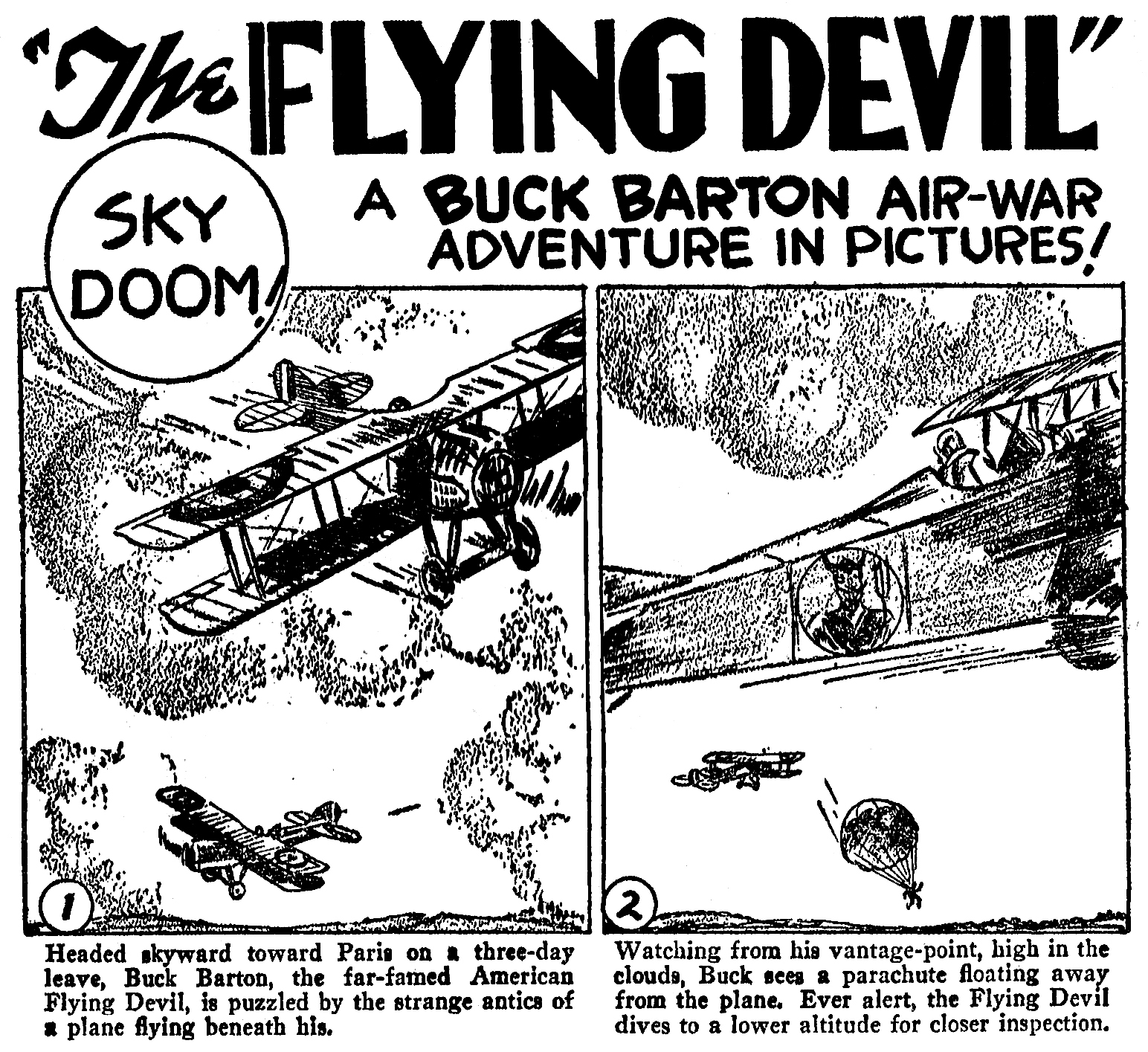
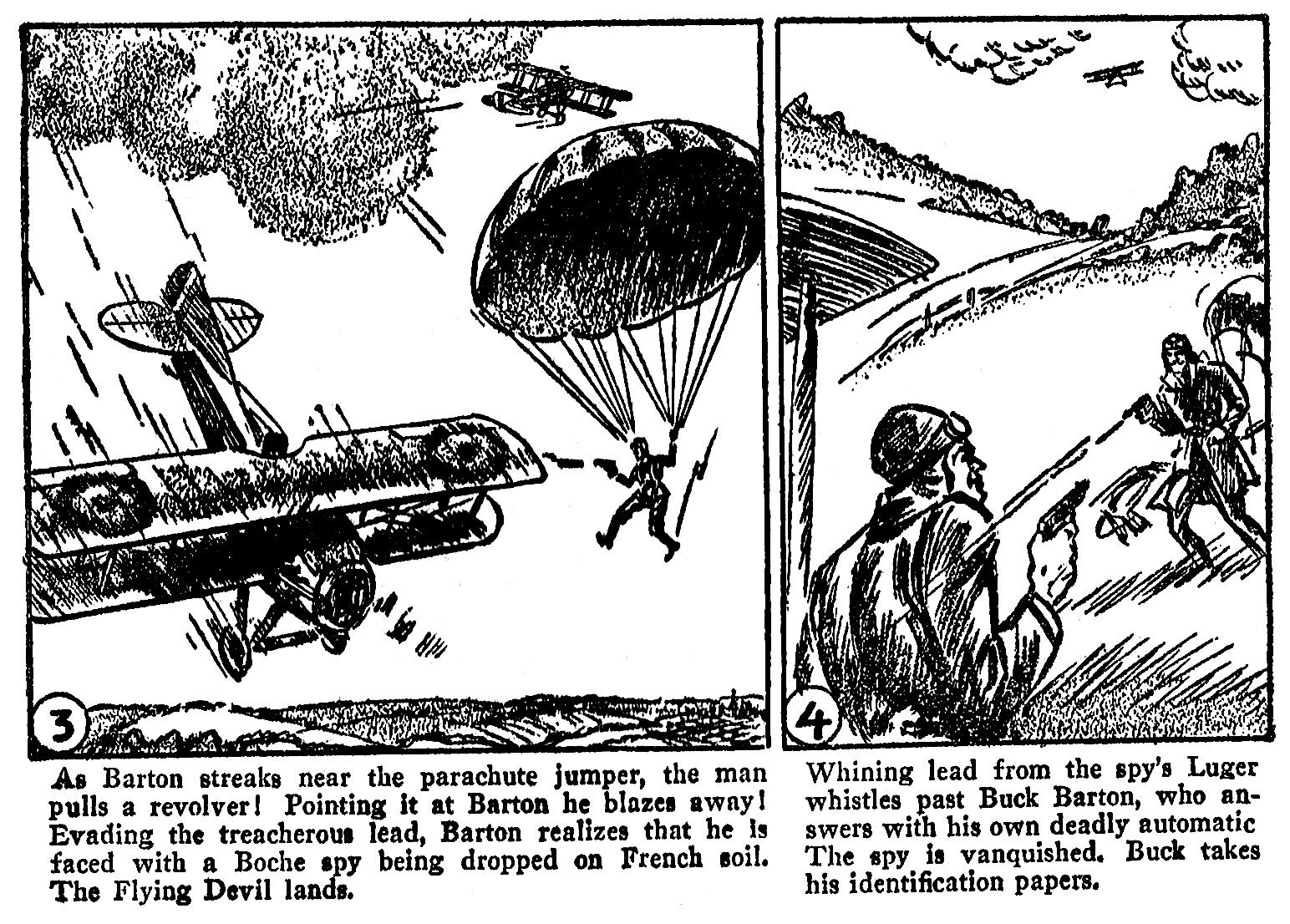
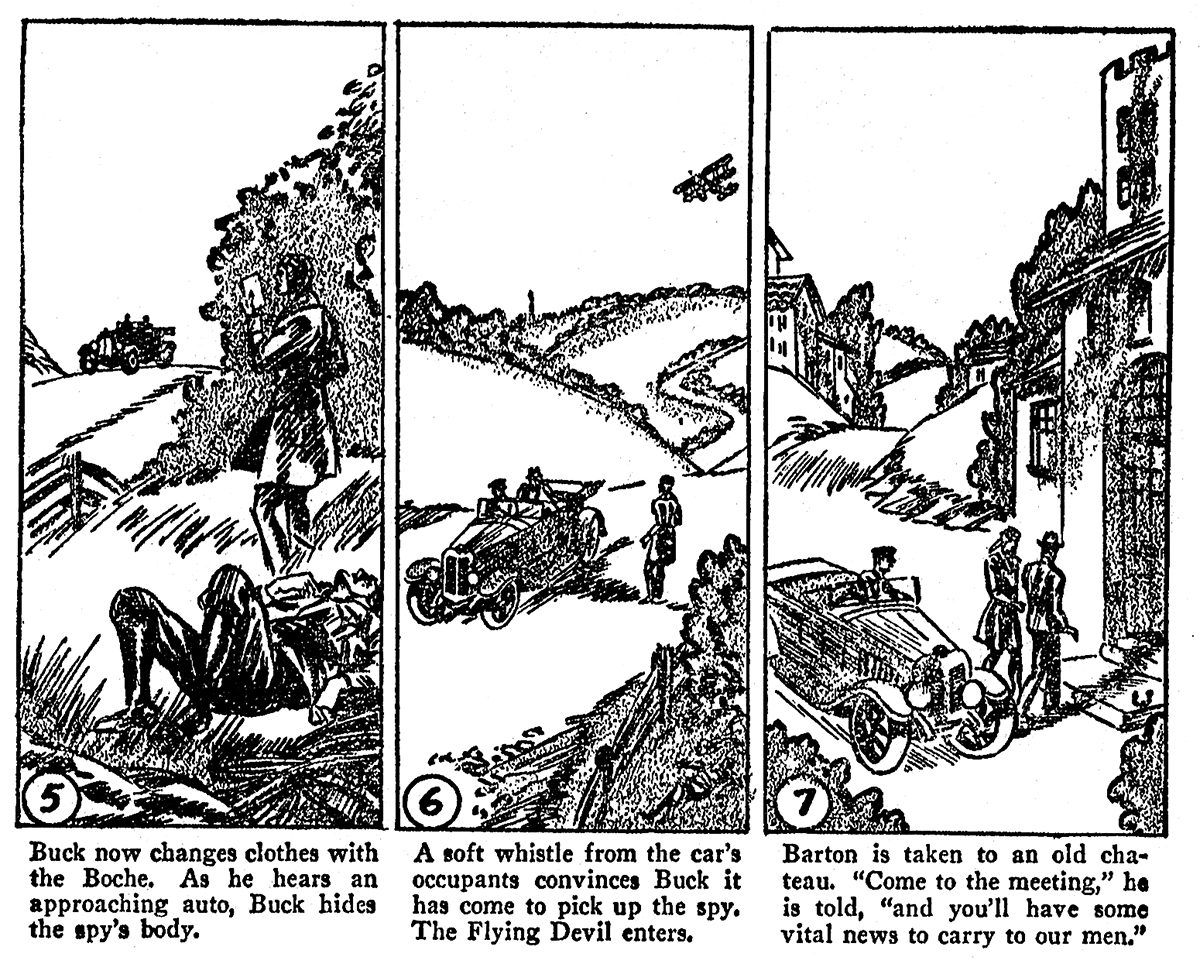
THIS holiday season we’re going all 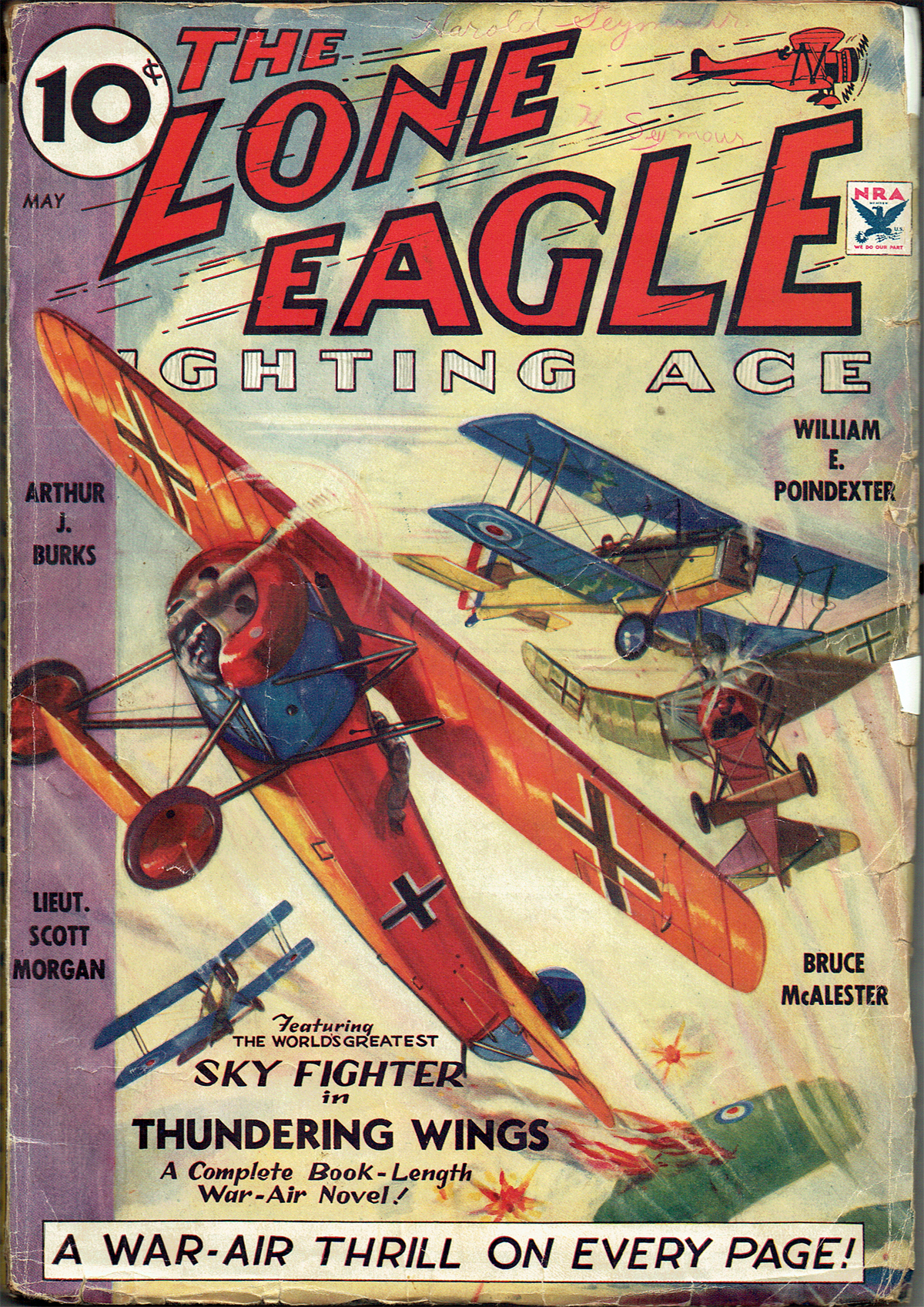 in on The Flying Devil! The Flying Devil was a regular feature of the first fifteen issues of The Lone Eagle and, more importantly, as they announced beneath each month’s story—“the Only War-Air Cartoon Story to Appear in Any Magazine!” The strip was drawn by Terry Gilkison and features the exploits of Buck Barton, a.k.a. The Flying Devil, as he wages a one man war against the Germans in his Spad with the devil on the fuselage.
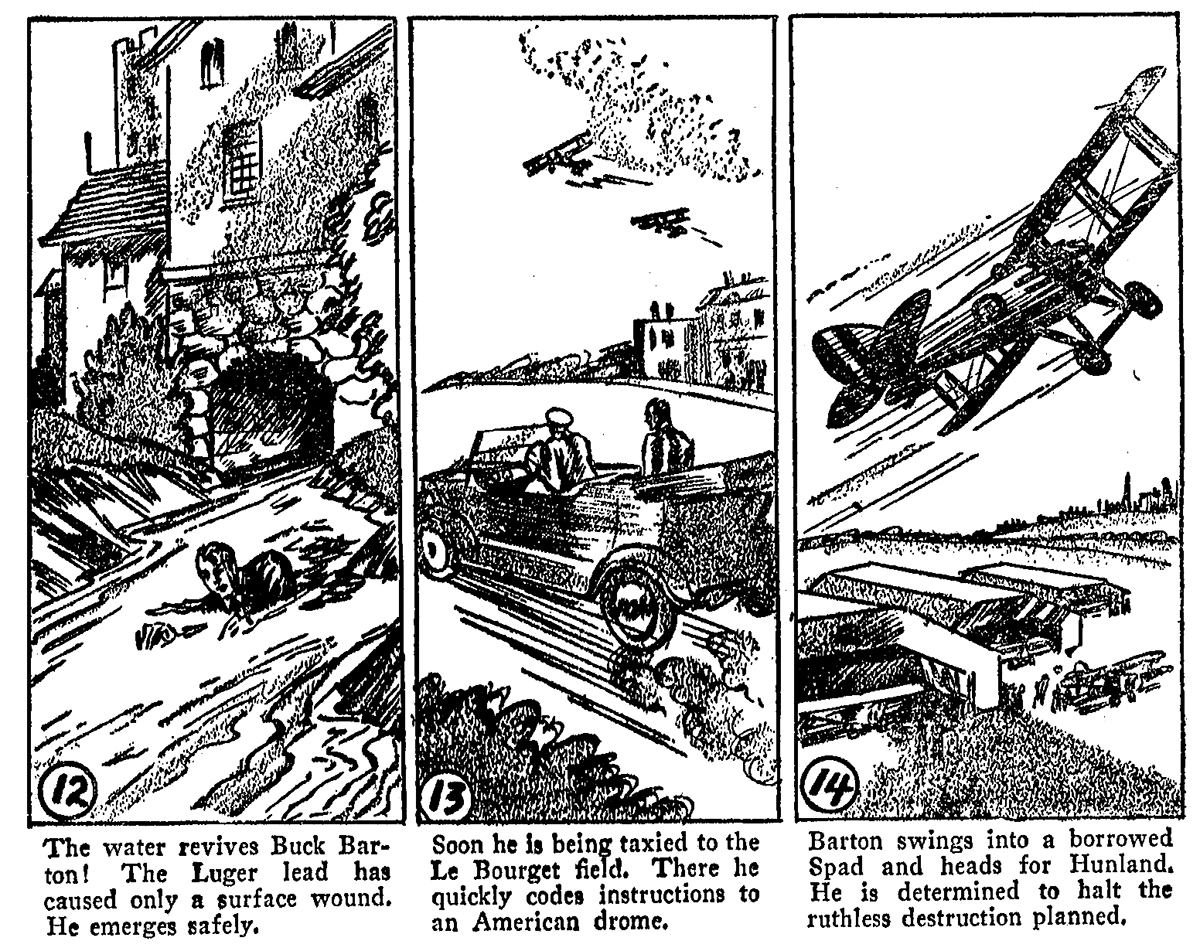
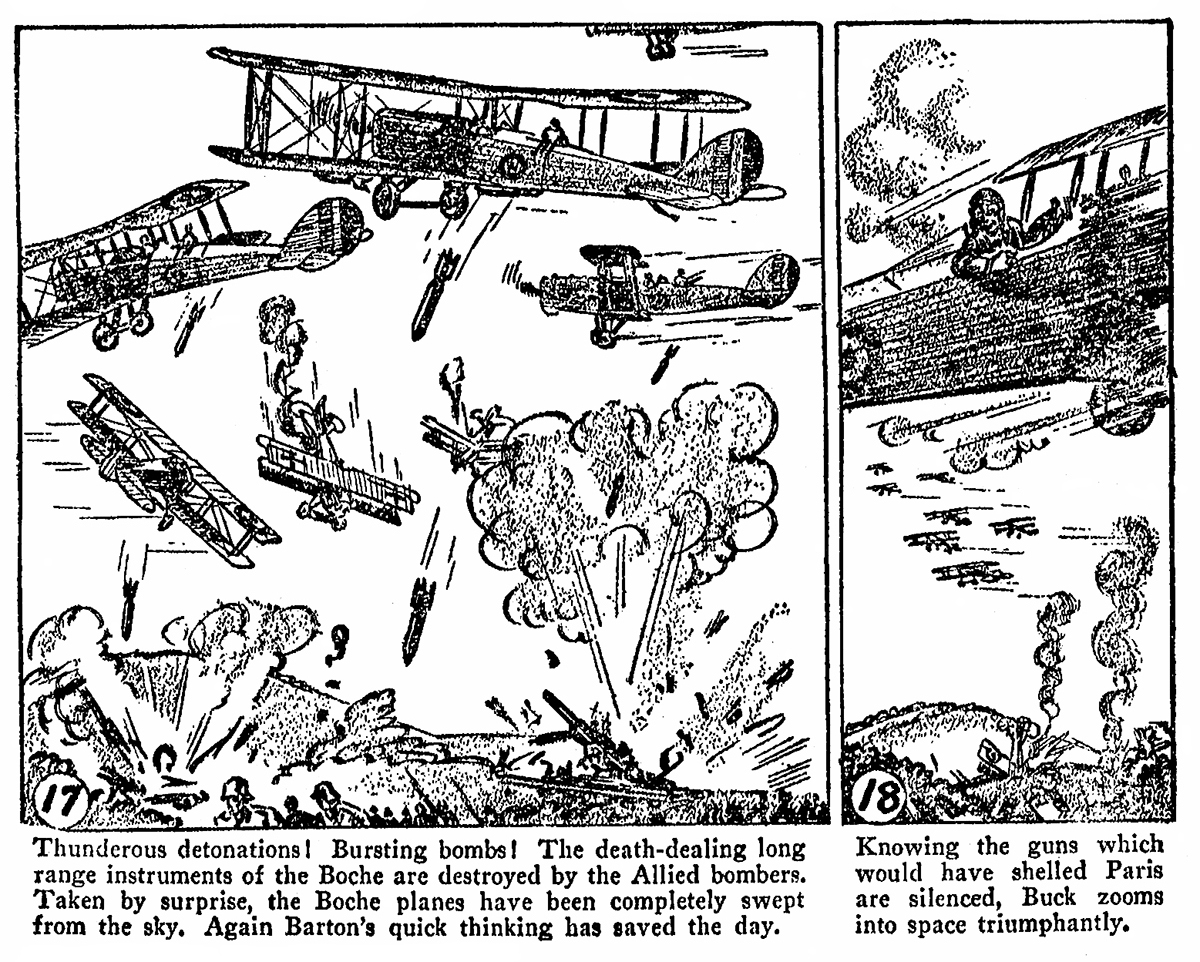
From the May 1934 issue of The Lone Eagle, it’s Terry Gilkison’s The Flying Devil in “Sky Doom!”



Next Time: A Sinister Boche Plot!
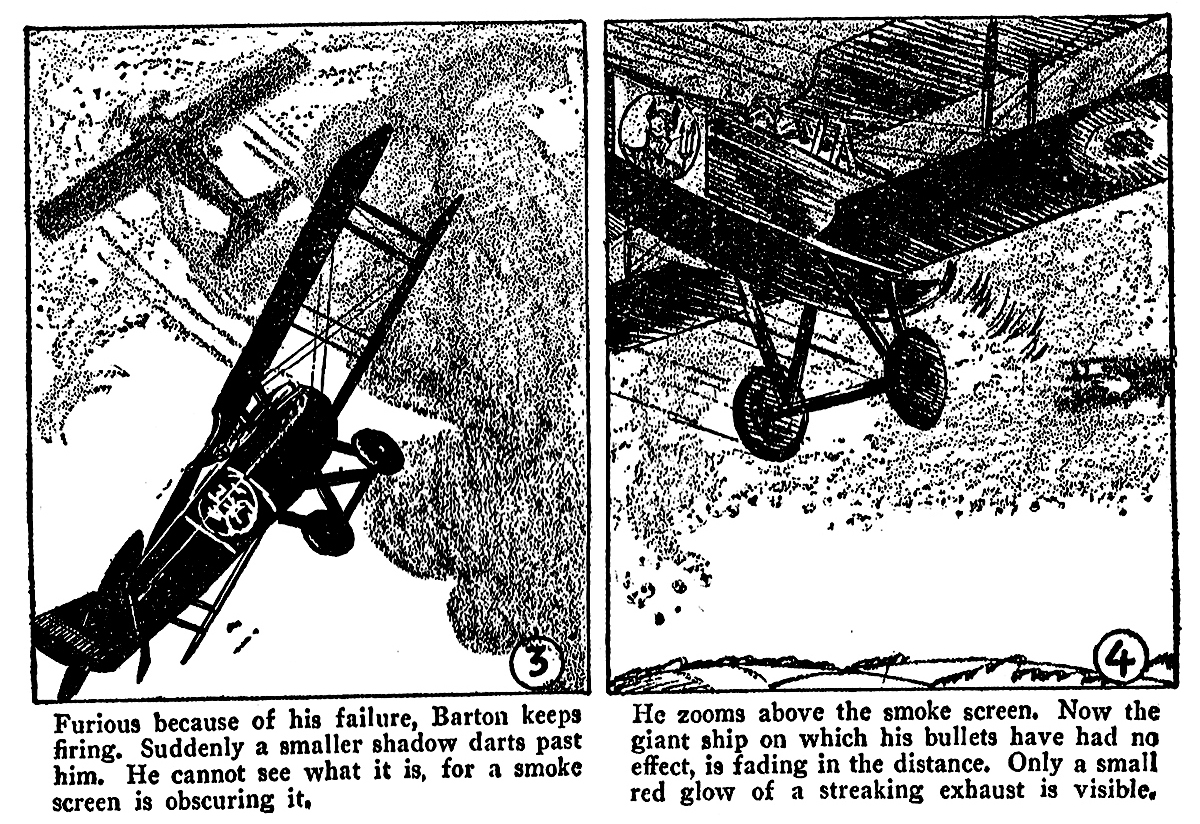
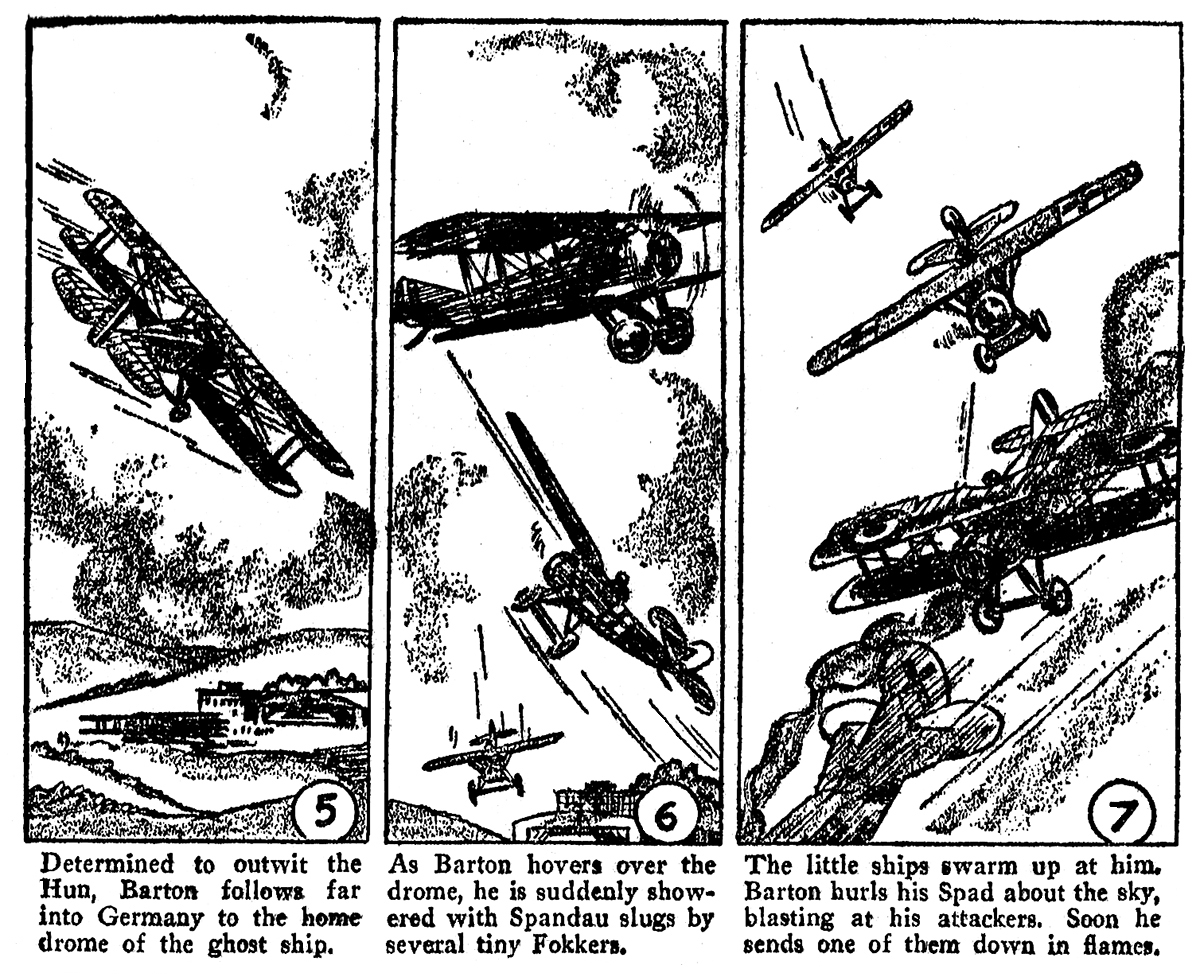
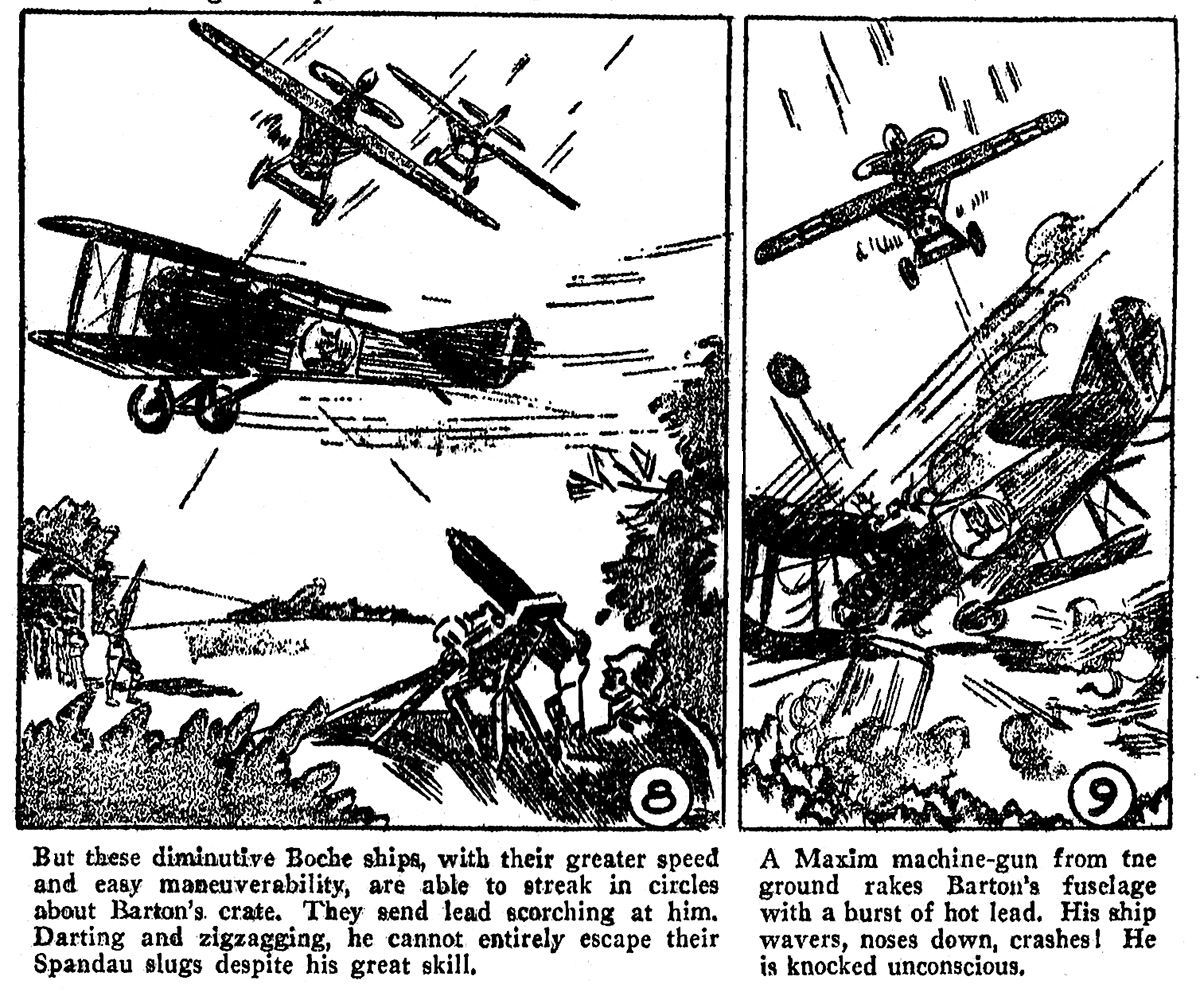
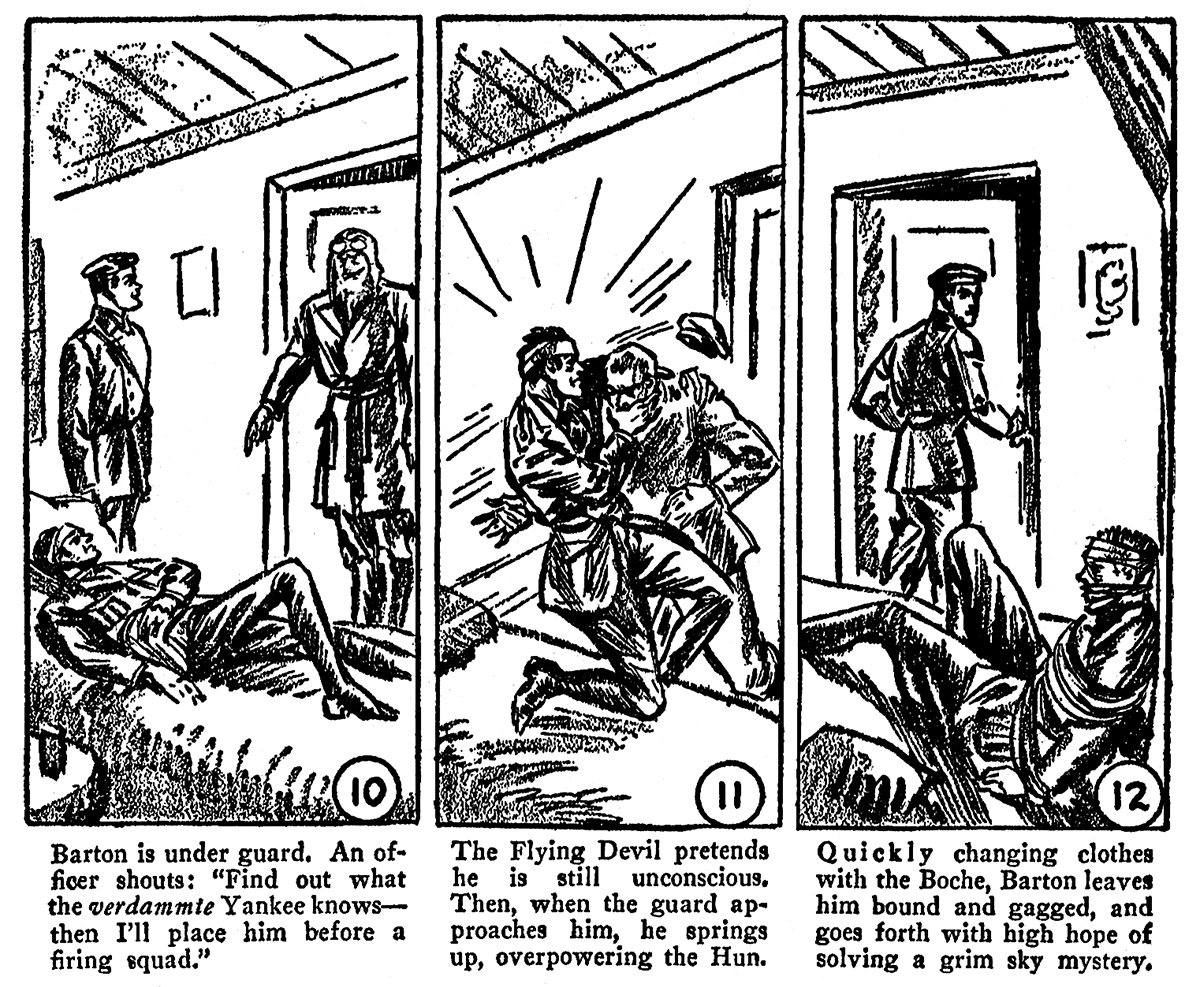
“The Ghost Gotha” by Terry Gilkison
THIS holiday season we’re going all 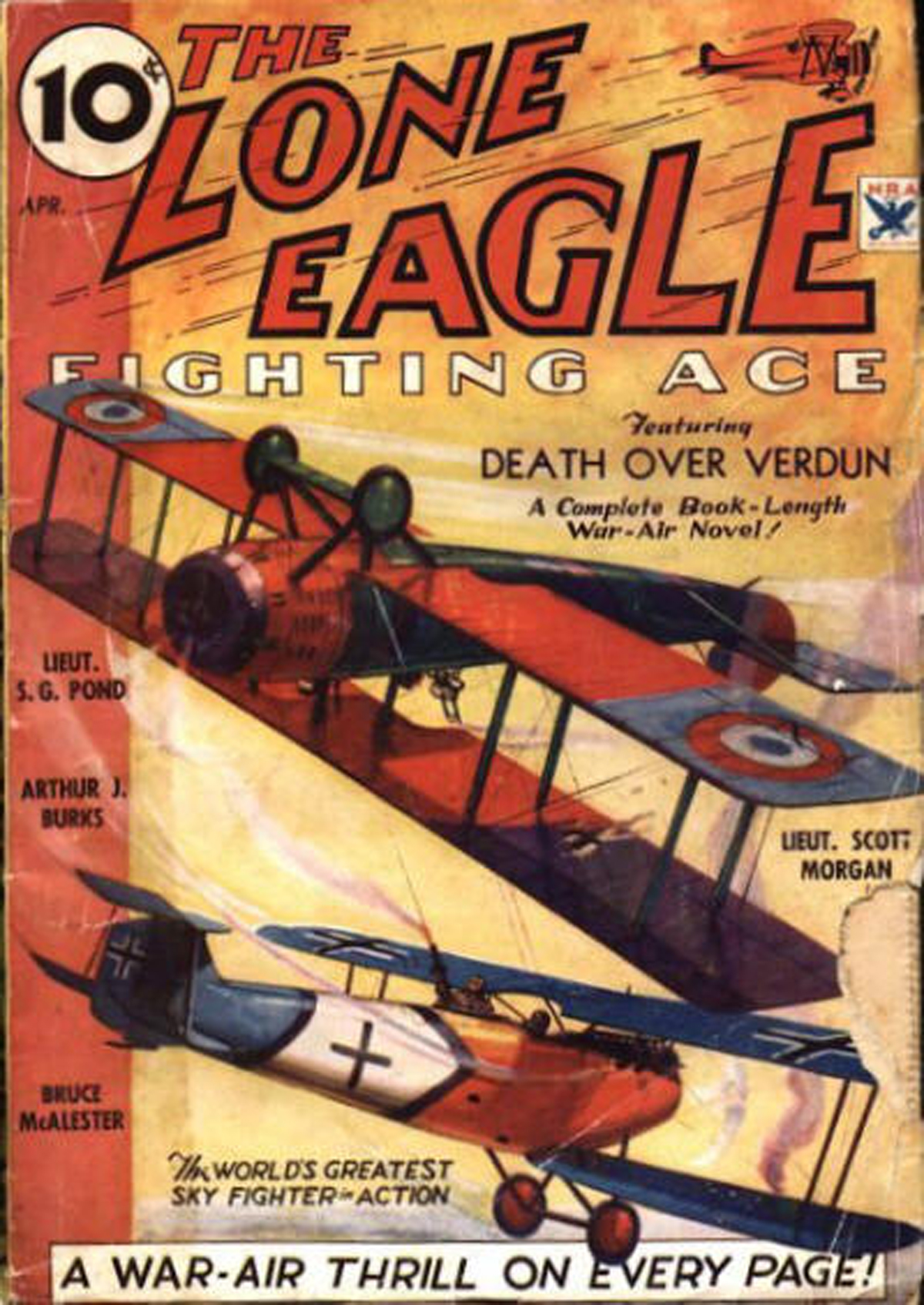 in on The Flying Devil! The Flying Devil was a regular feature of the first fifteen issues of The Lone Eagle and, more importantly, as they announced beneath each month’s story—“the Only War-Air Cartoon Story to Appear in Any Magazine!” The strip was drawn by Terry Gilkison and features the exploits of Buck Barton, a.k.a. The Flying Devil, as he wages a one man war against the Germans in his Spad with the devil on the fuselage.
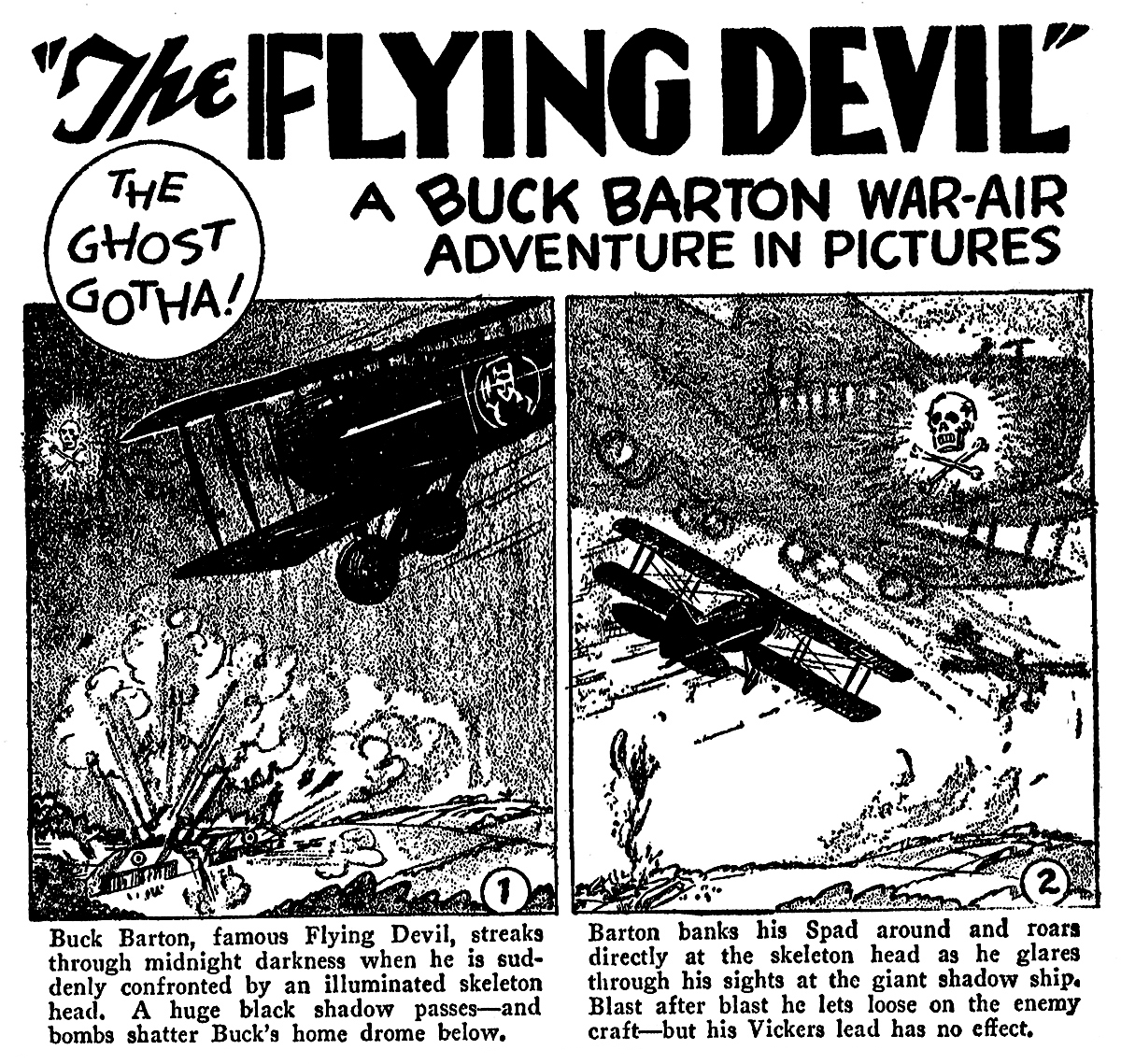
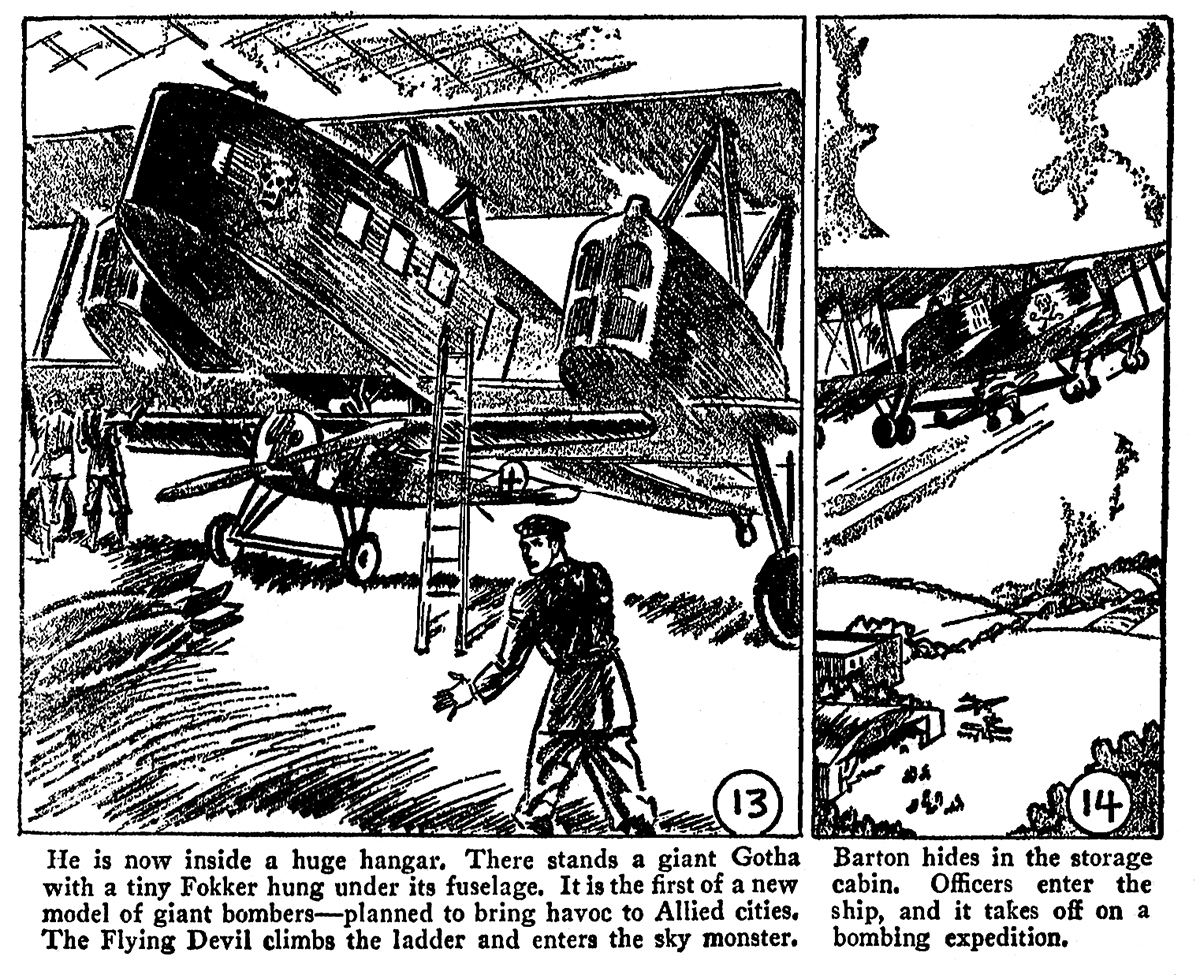
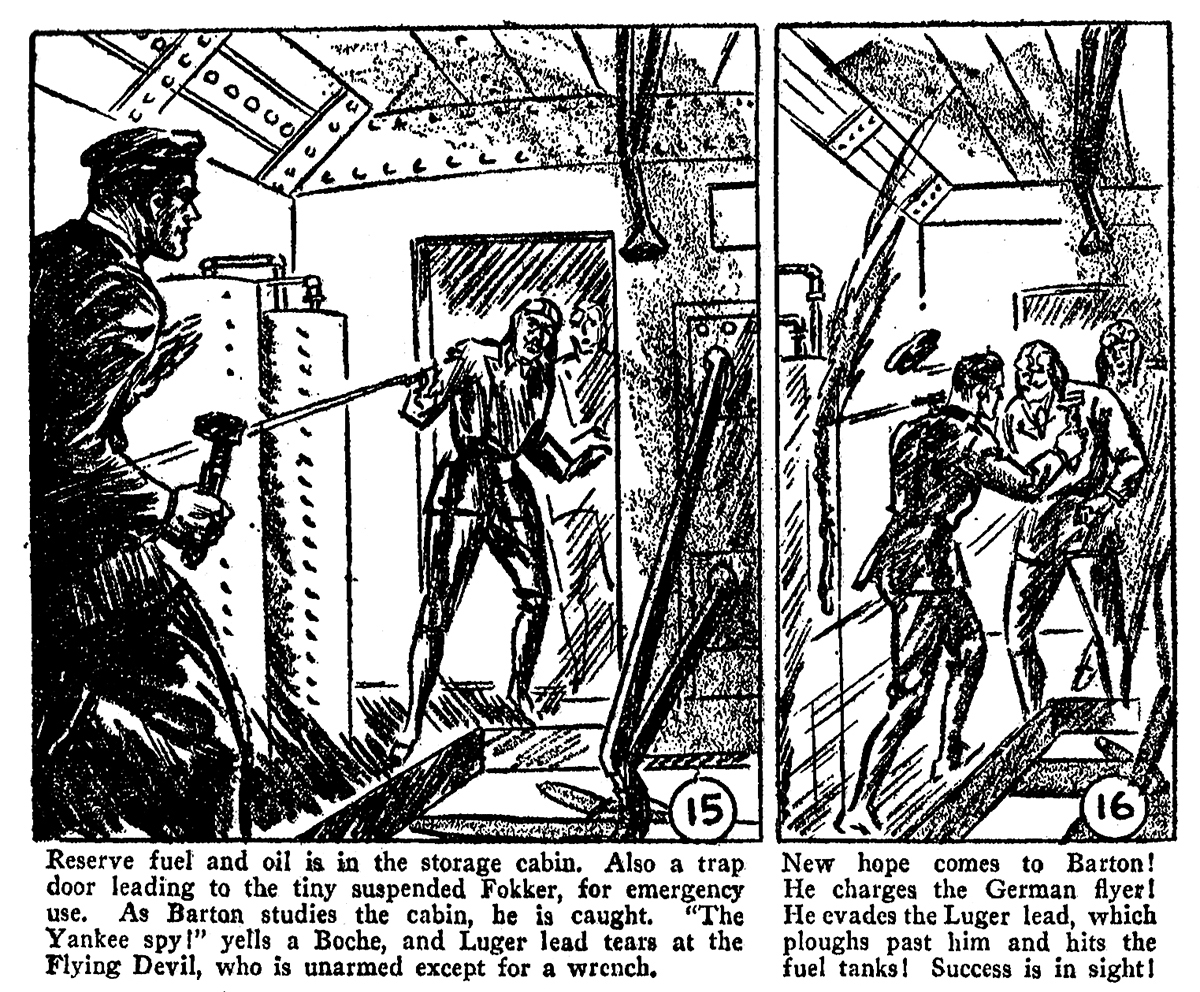
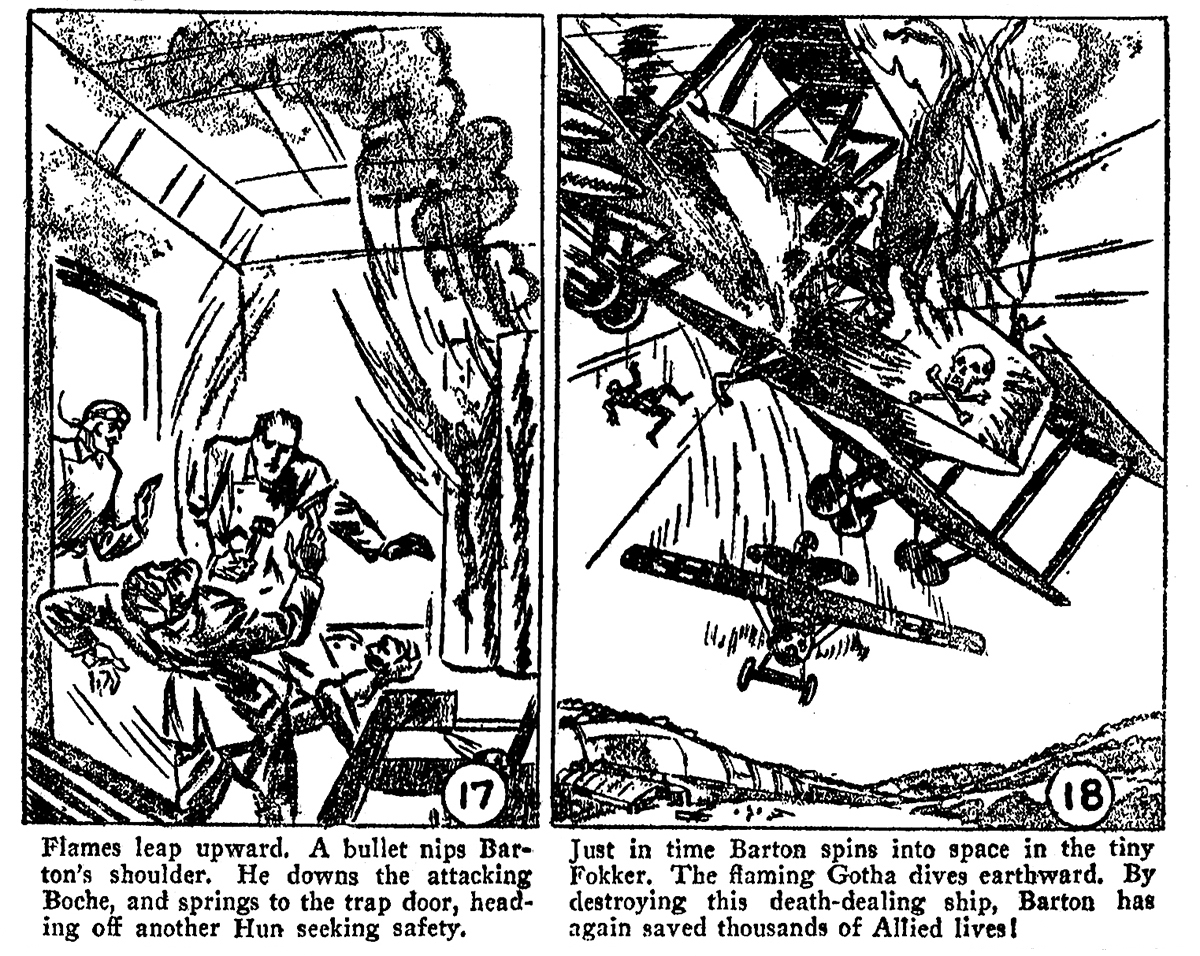
From the April 1934 issue of The Lone Eagle, it’s Terry Gilkison’s The Flying Devil in “The Ghost Gotha!”
Next Time: Sky Doom!
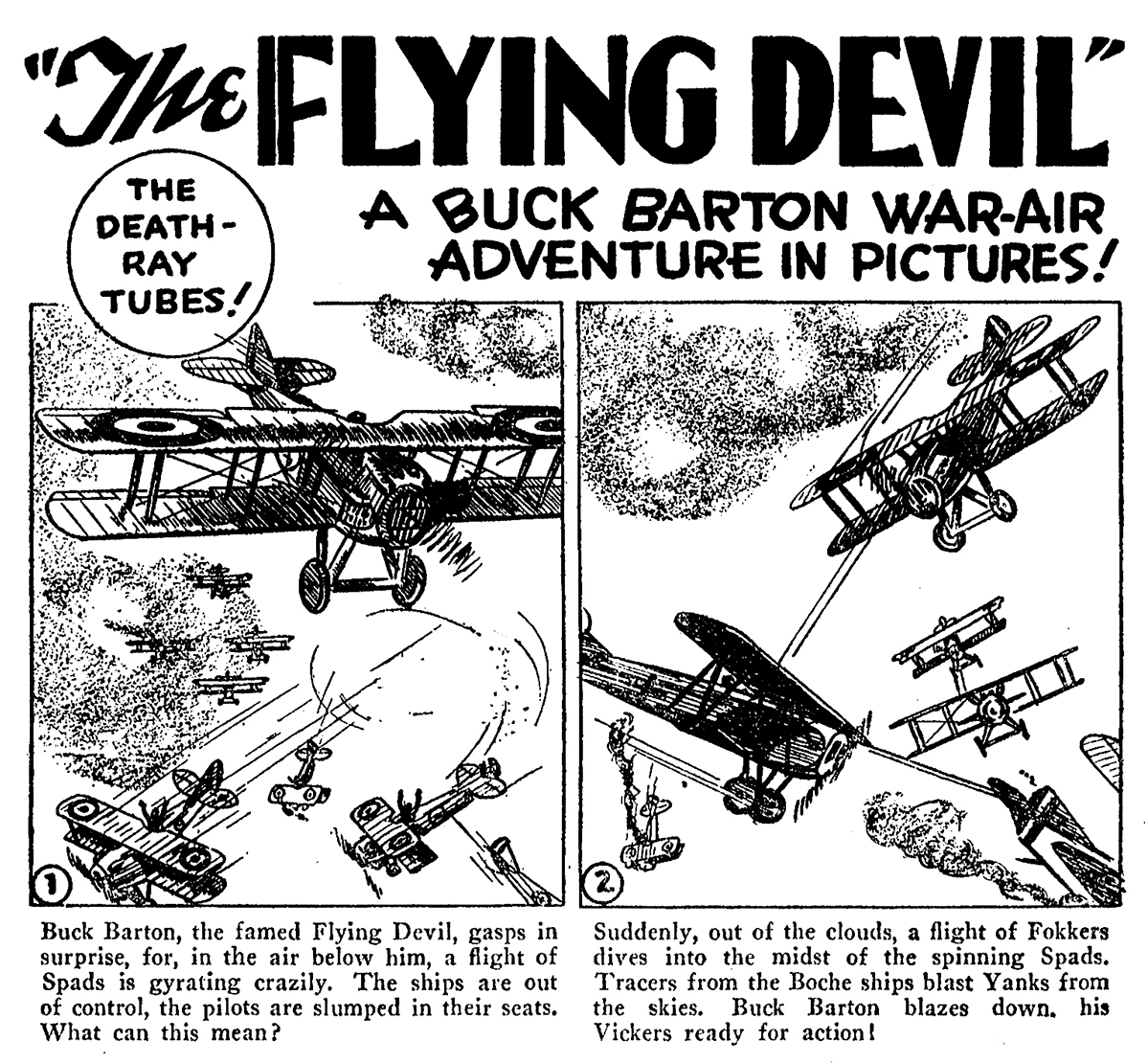
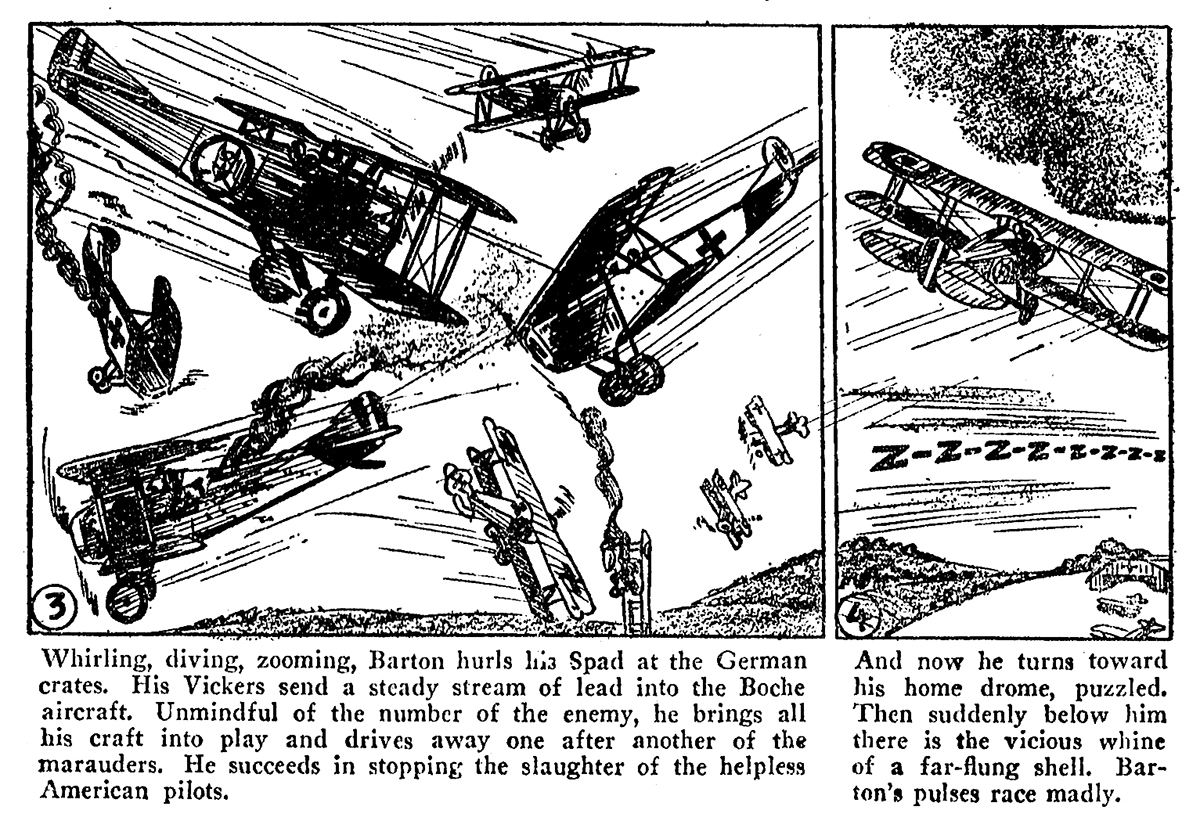
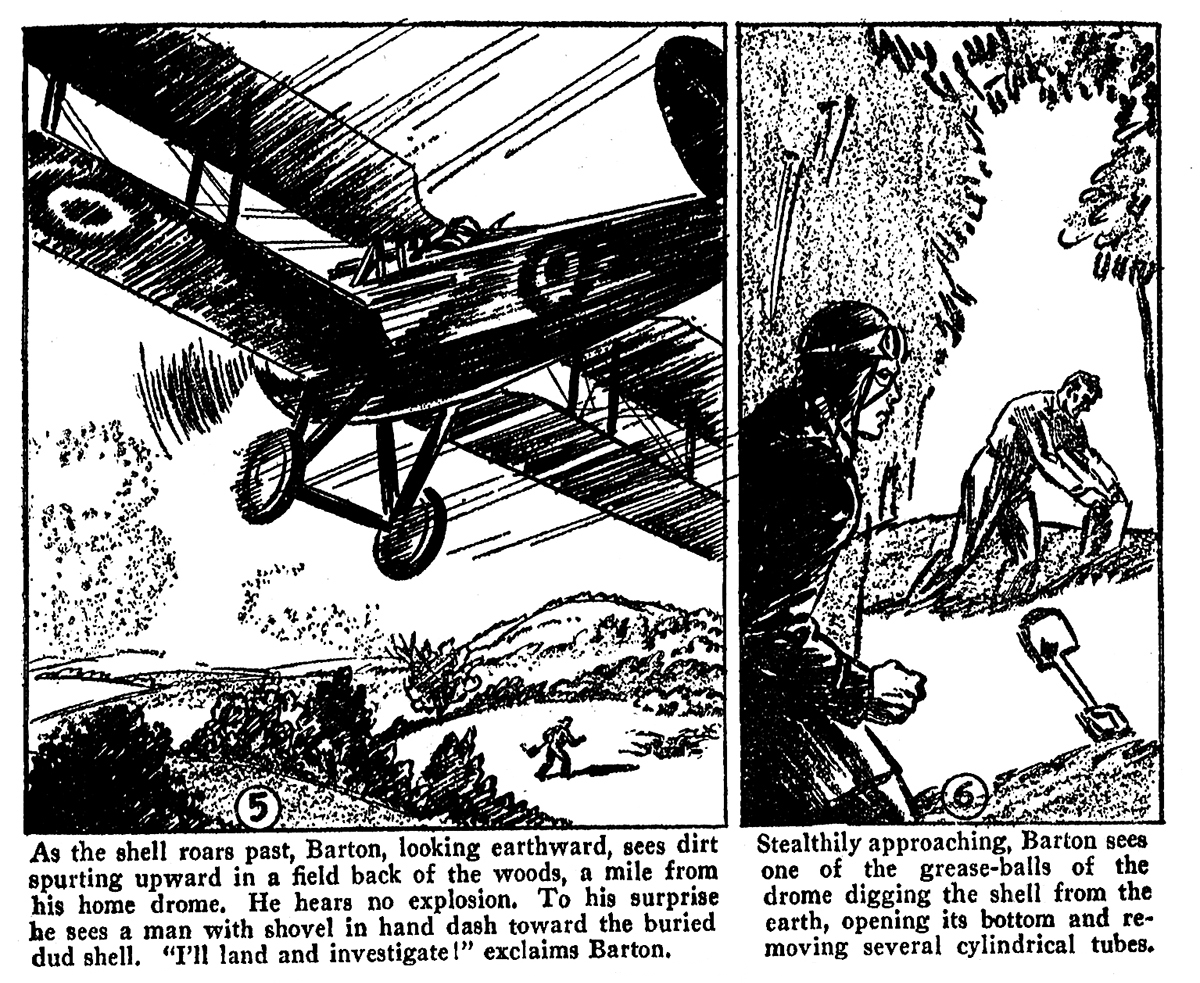
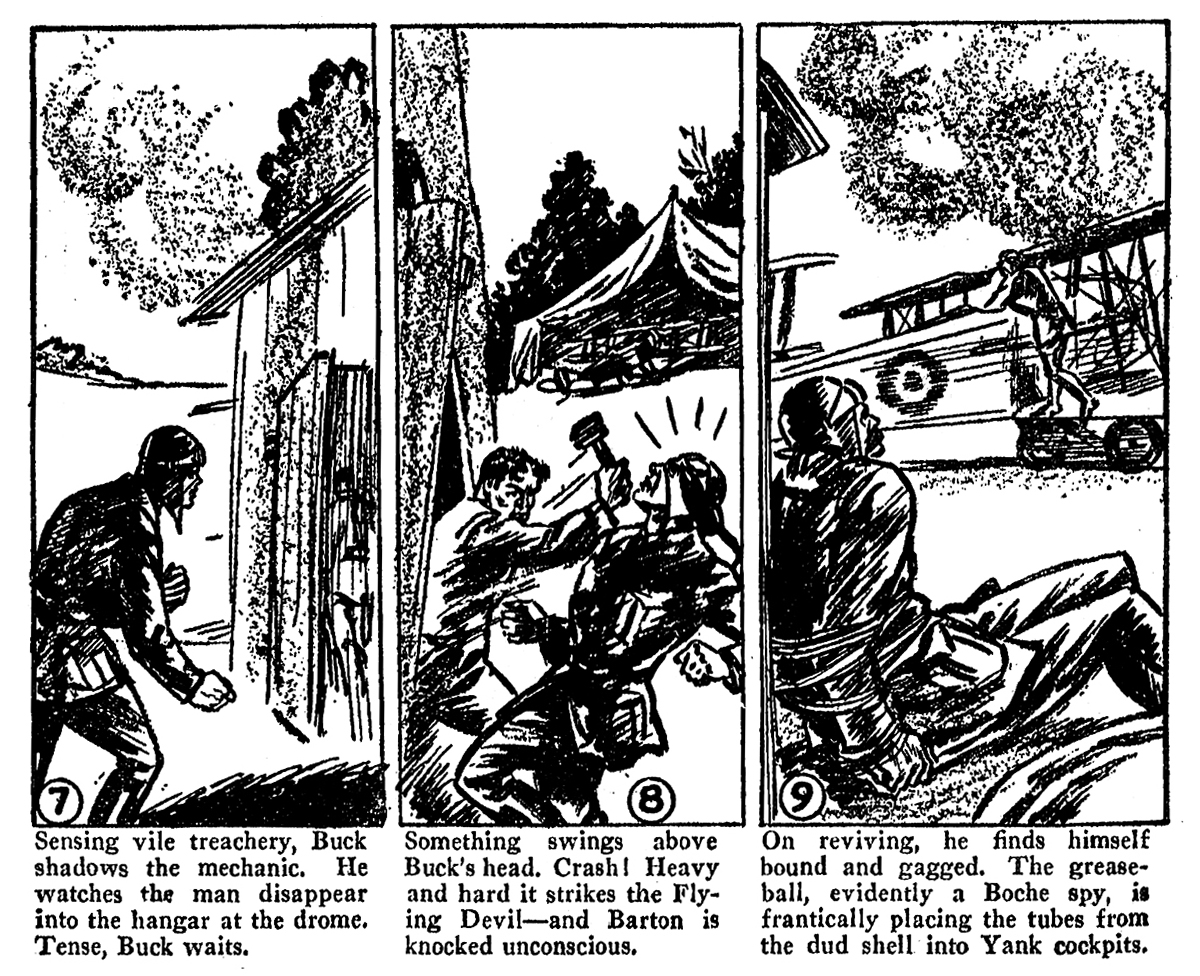
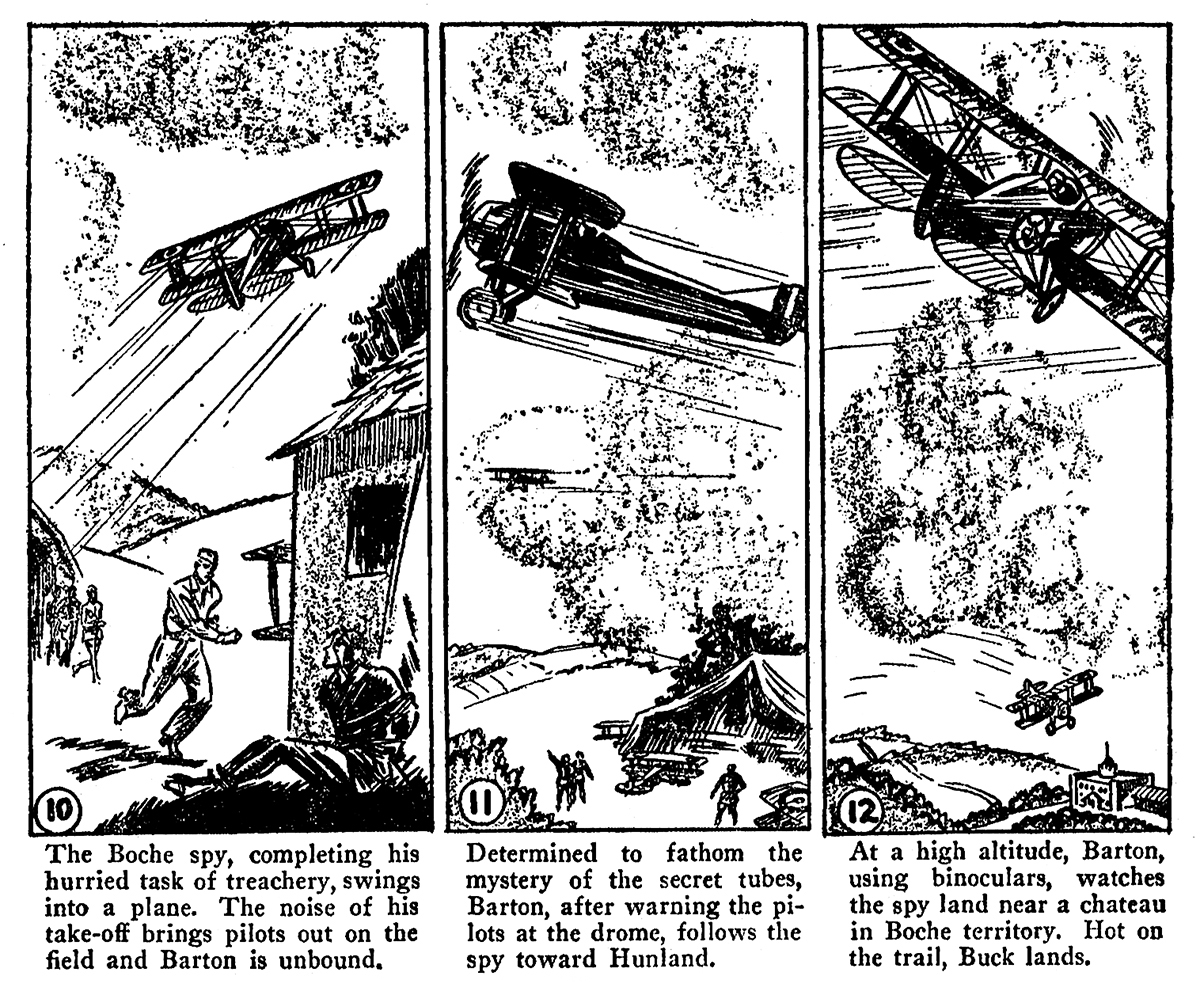
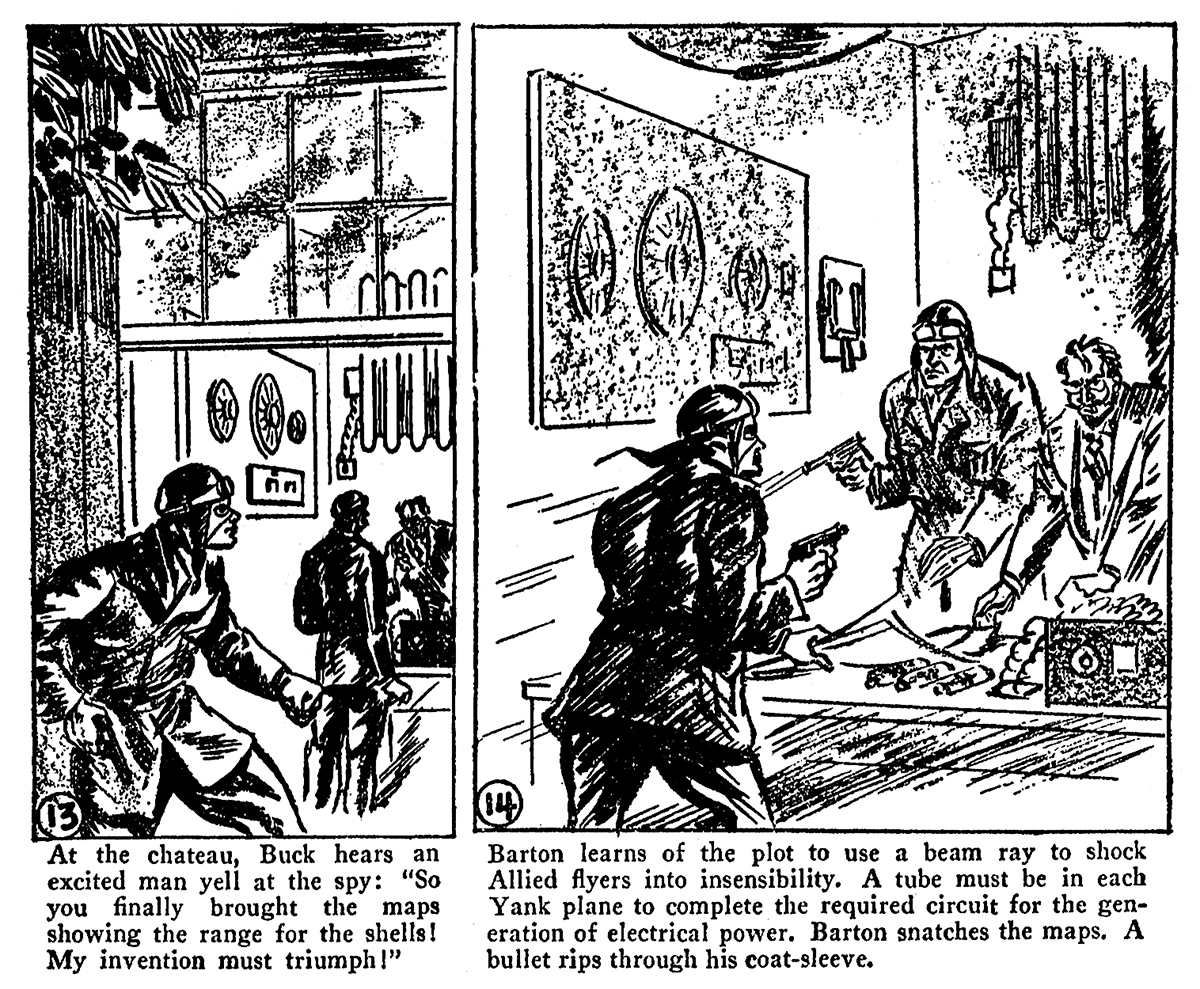
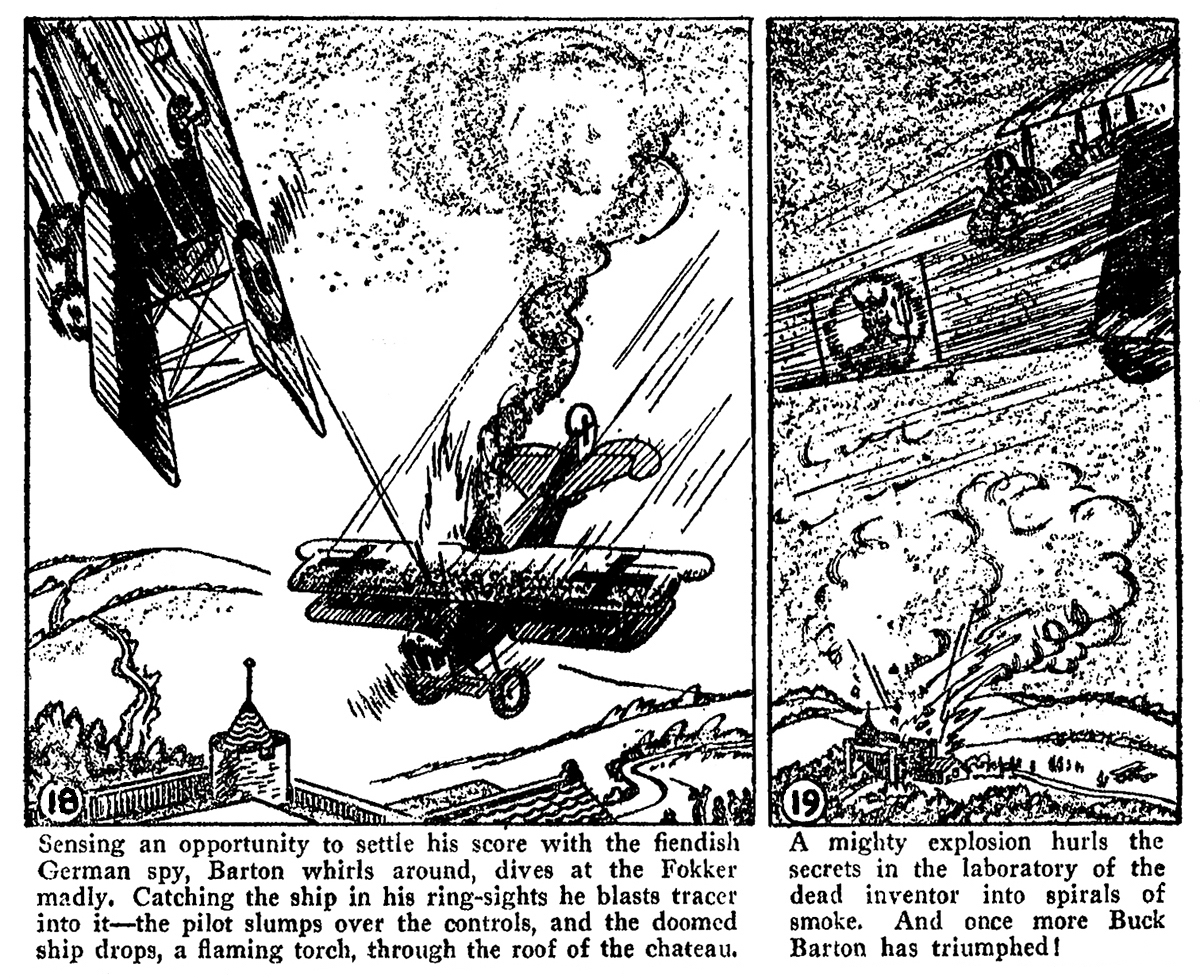
“The Death-Ray Tubes” by Terry Gilkison
THIS holiday season we’re going all 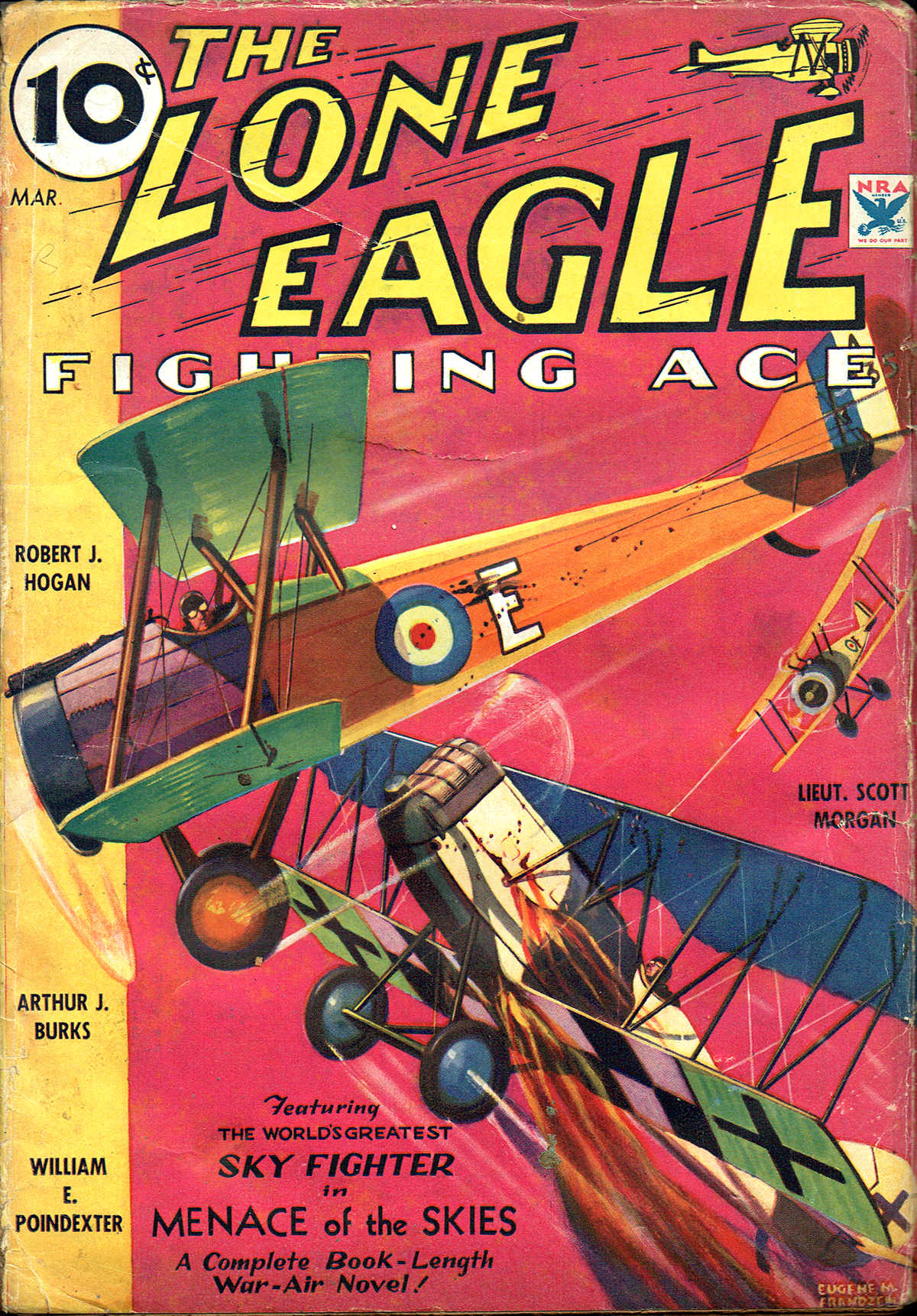 in on The Flying Devil! The Flying Devil was a regular feature of the first fifteen issues of The Lone Eagle and, more importantly, as they announced beneath each month’s story—“the Only War-Air Cartoon Story to Appear in Any Magazine!” The strip was drawn by Terry Gilkison and features the exploits of Buck Barton, a.k.a. The Flying Devil, as he wages a one man war against the Germans in his Spad with the devil on the fuselage.
From the March 1934 issue of The Lone Eagle, it’s Terry Gilkison’s The Flying Devil in “The Death-Ray Tubes!”

Next Time: The Ghost Gotha!
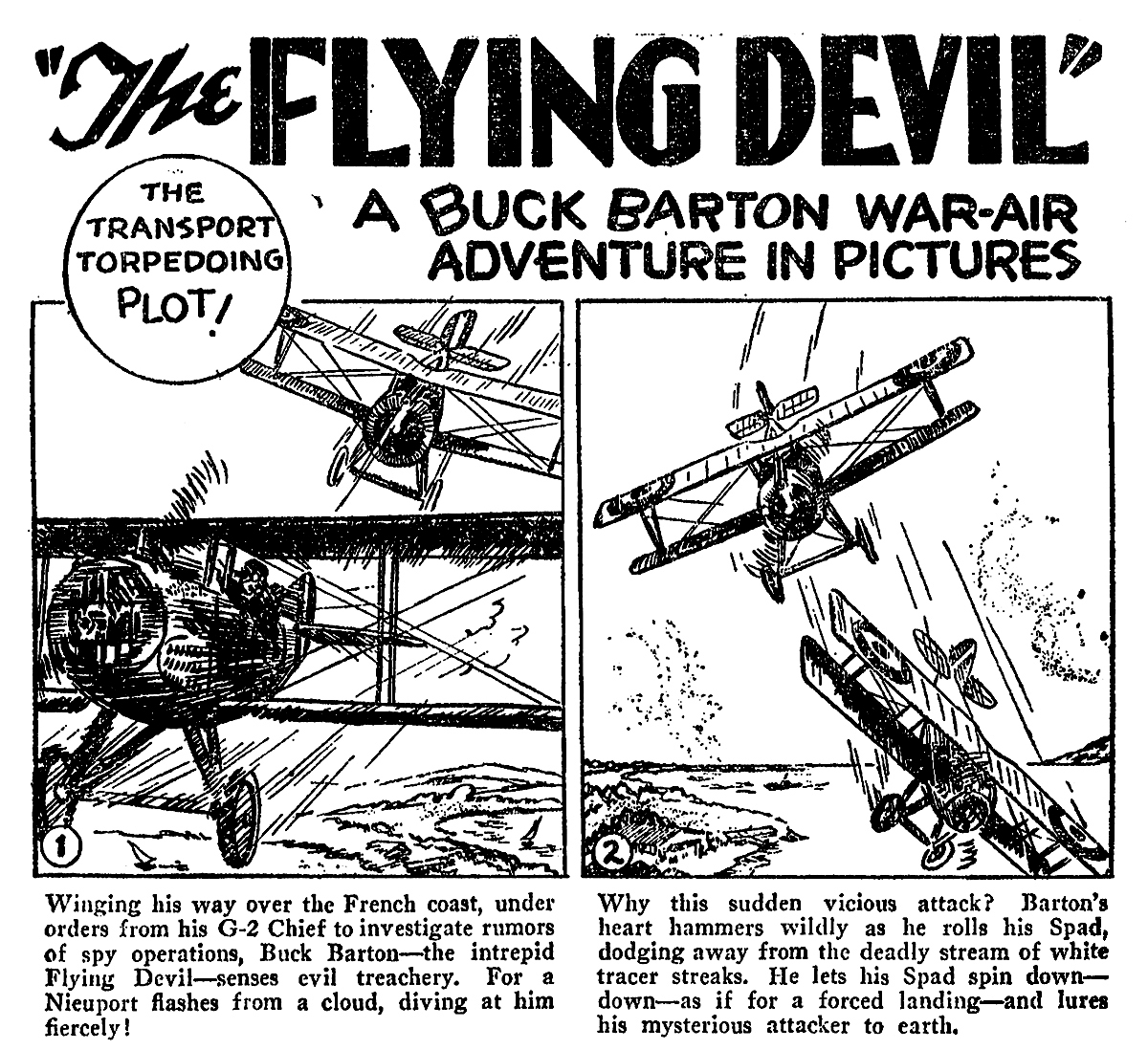
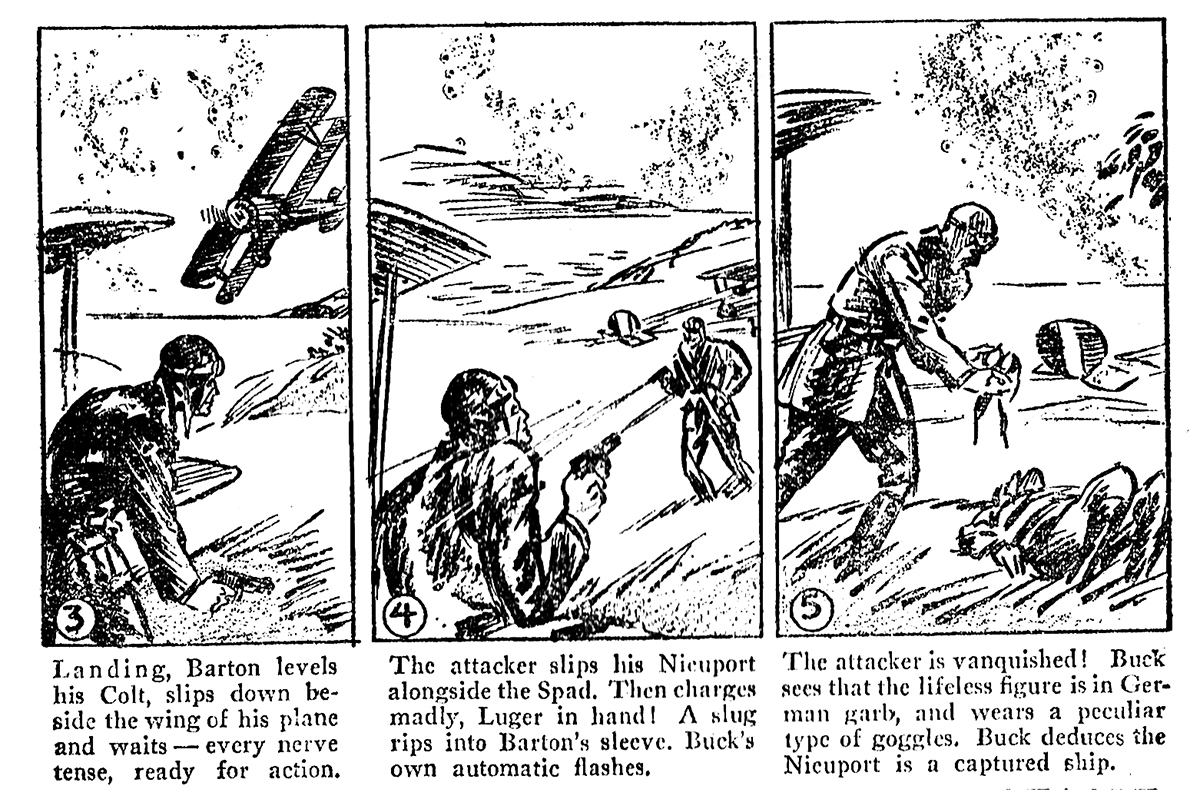
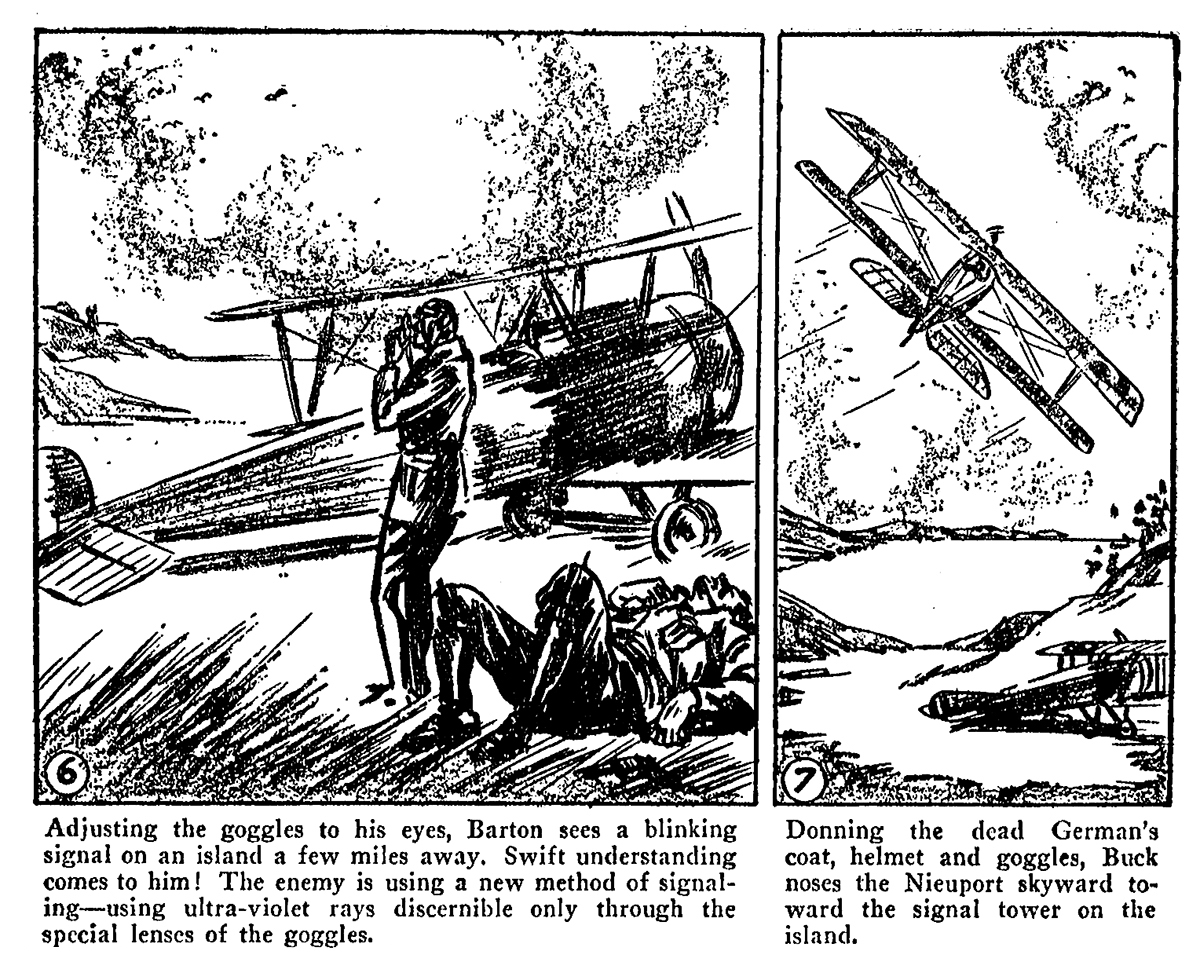
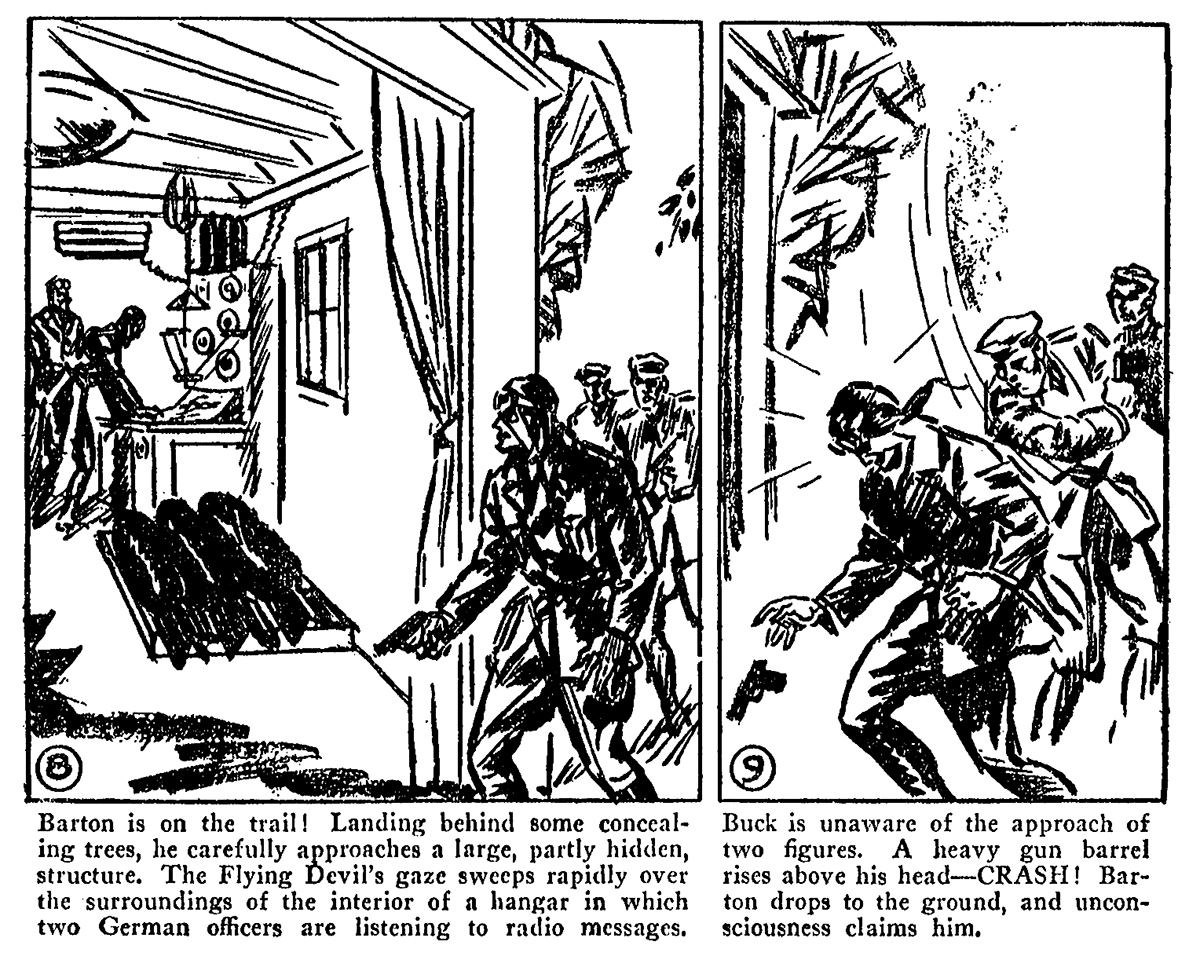
“The Transport Torpedoing Plot” by Terry Gilkison
THIS holiday season we’re going all 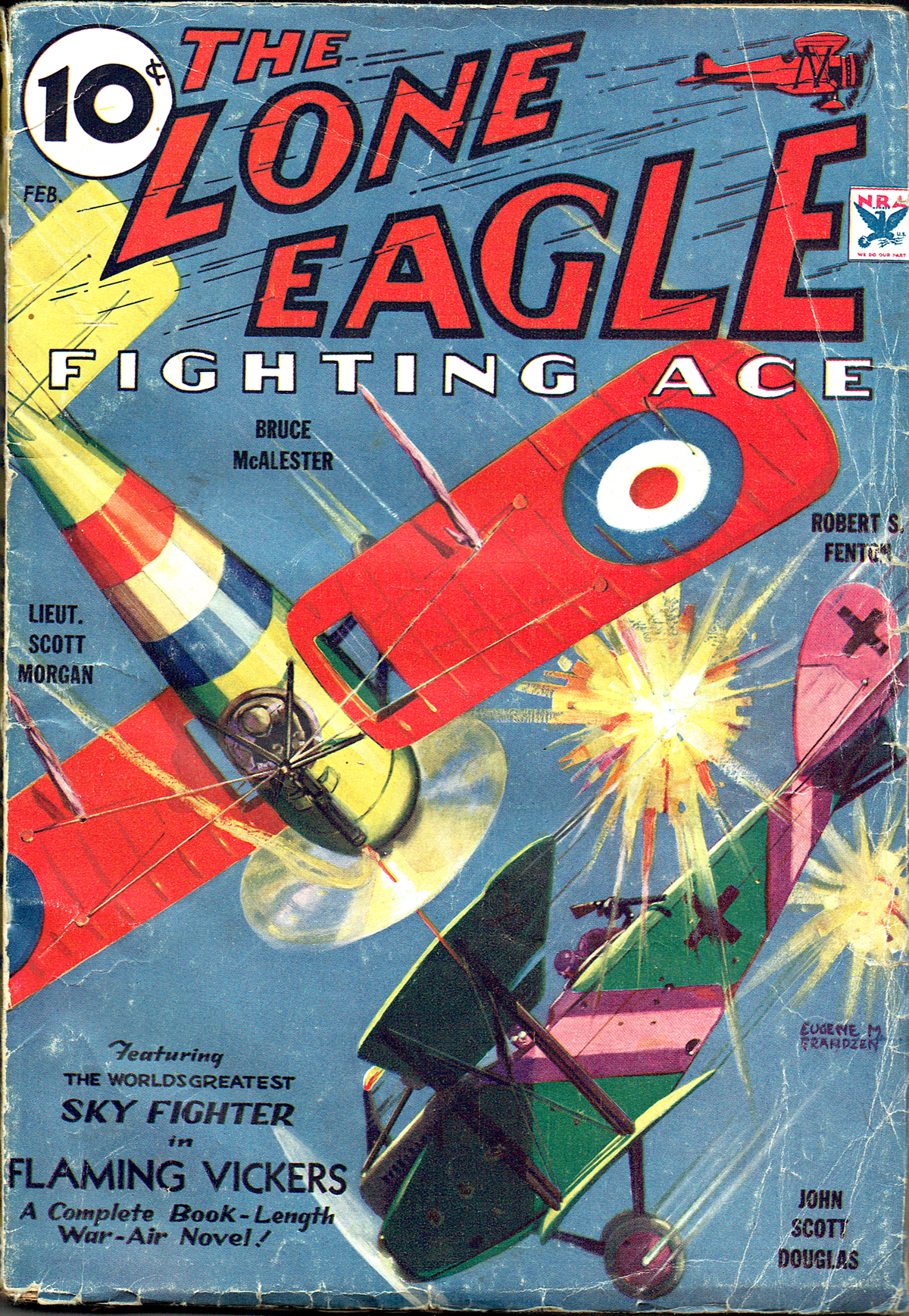 in on The Flying Devil! The Flying Devil was a regular feature of the first fifteen issues of The Lone Eagle and, more importantly, as they announced beneath each month’s story—“the Only War-Air Cartoon Story to Appear in Any Magazine!” The strip was drawn by Terry Gilkison and features the exploits of Buck Barton, a.k.a. The Flying Devil, as he wages a one man war against the Germans in his Spad with the devil on the fuselage.
From the February 1934 issue of The Lone Eagle, it’s Terry Gilkison’s The Flying Devil in “The Transport Torpedoing Plot!”


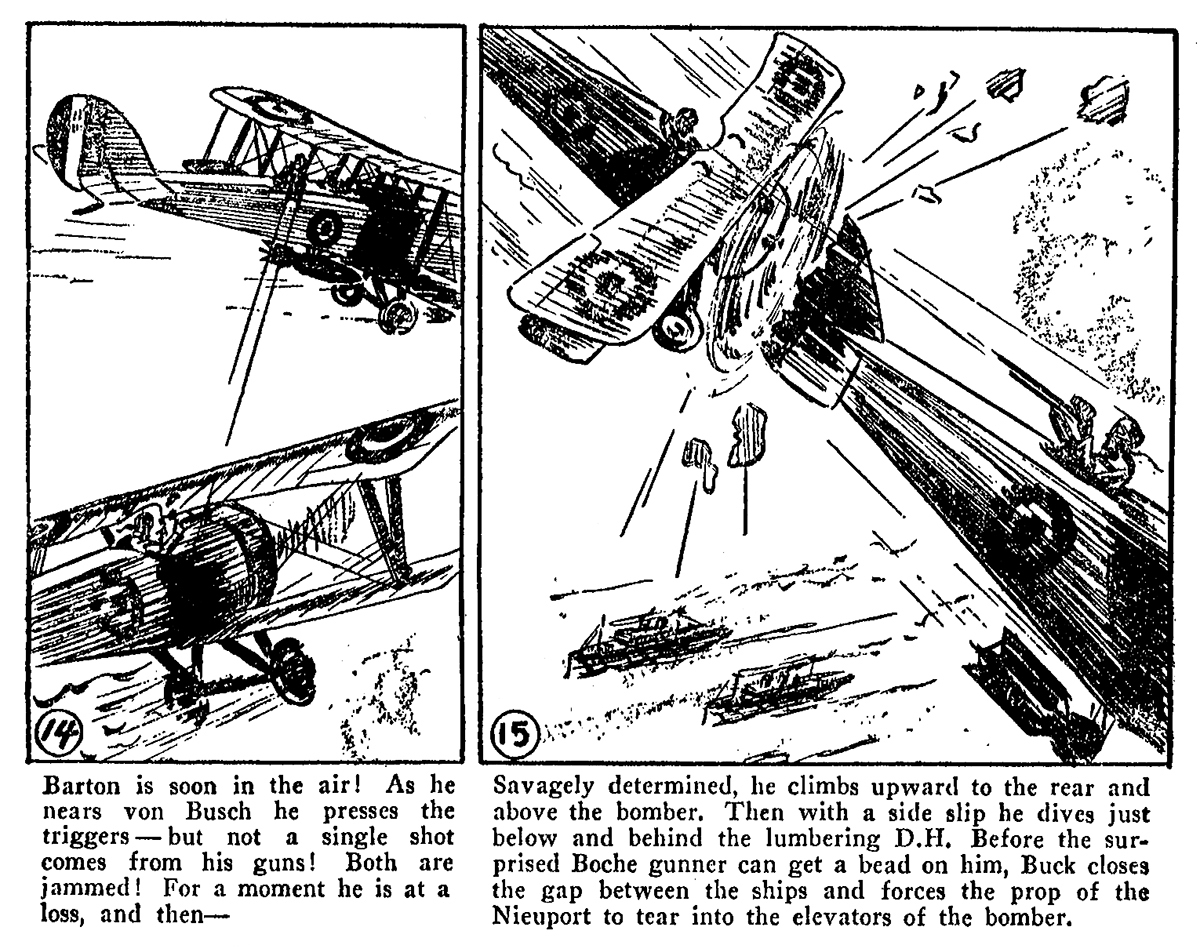
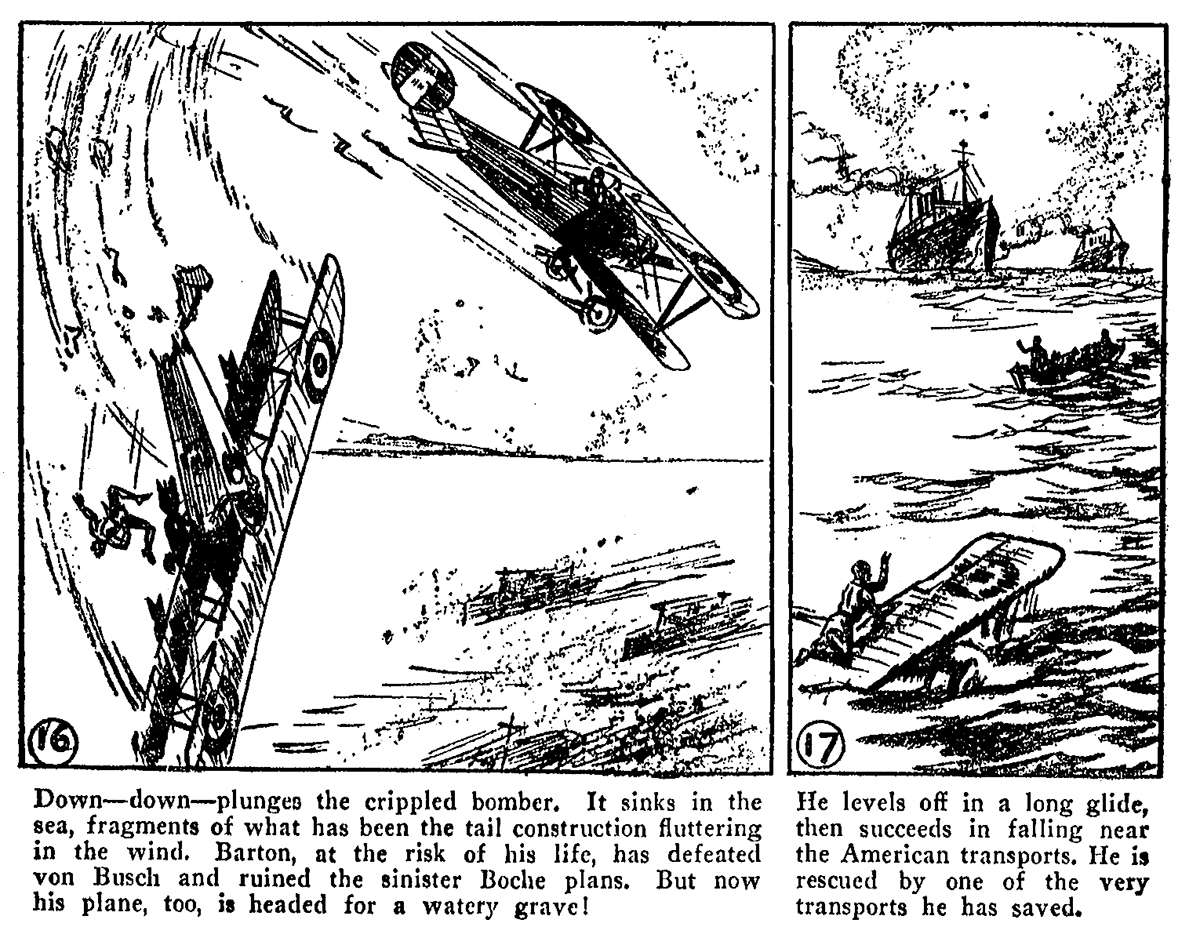
Next Time: The Death-Ray Tubes!
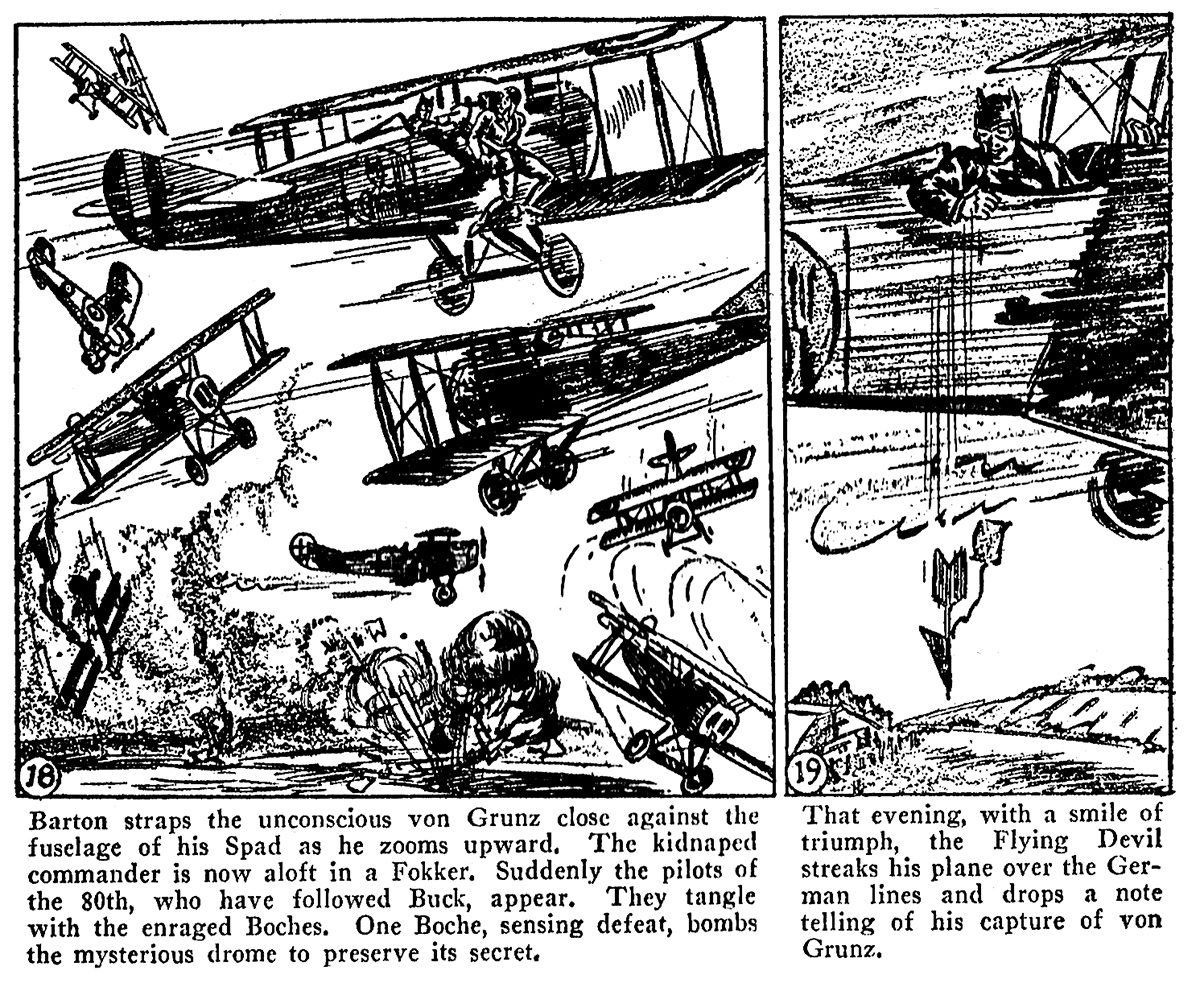
“The Kidnapped Commander” by Terry Gilkison
THIS holiday season we’re going all 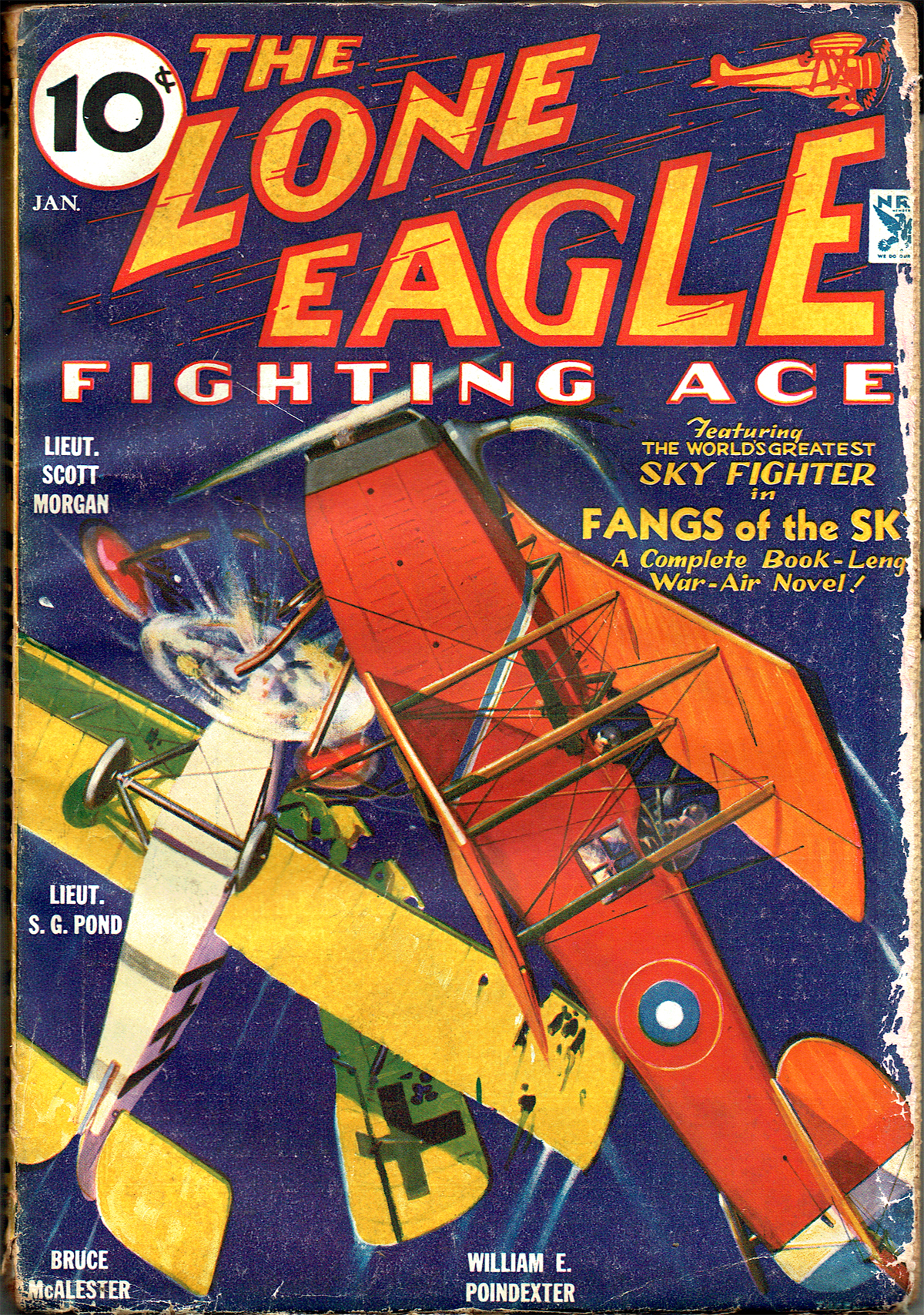 in on The Flying Devil! The Flying Devil was a regular feature of the first fifteen issues of The Lone Eagle and, more importantly, as they announced beneath each month’s story—“the Only War-Air Cartoon Story to Appear in Any Magazine!” The strip was drawn by Terry Gilkison and features the exploits of Buck Barton, a.k.a. The Flying Devil, as he wages a one man war against the Germans in his Spad with the devil on the fuselage.
From the January 1934 issue of The Lone Eagle, it’s Terry Gilkison’s The Flying Devil in “The Kidnapped Commander!”
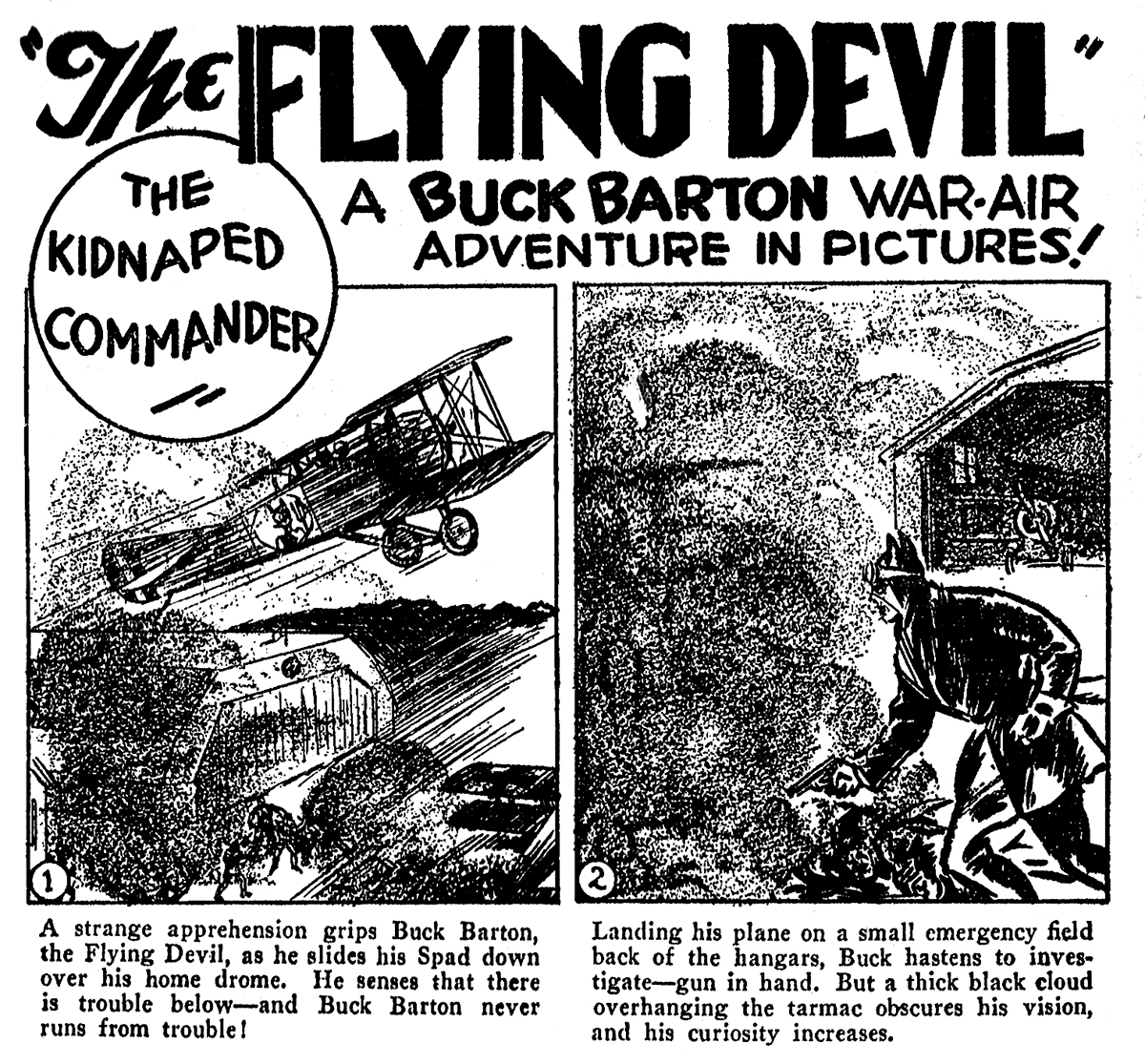
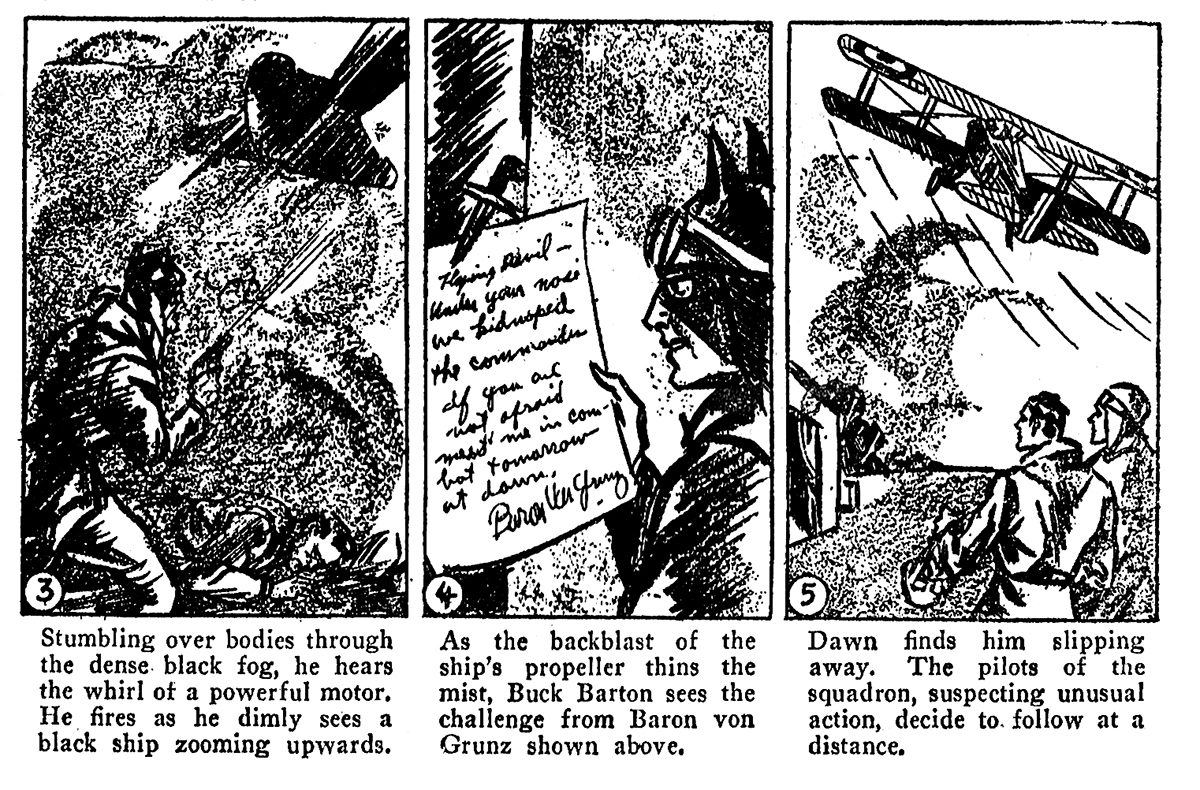

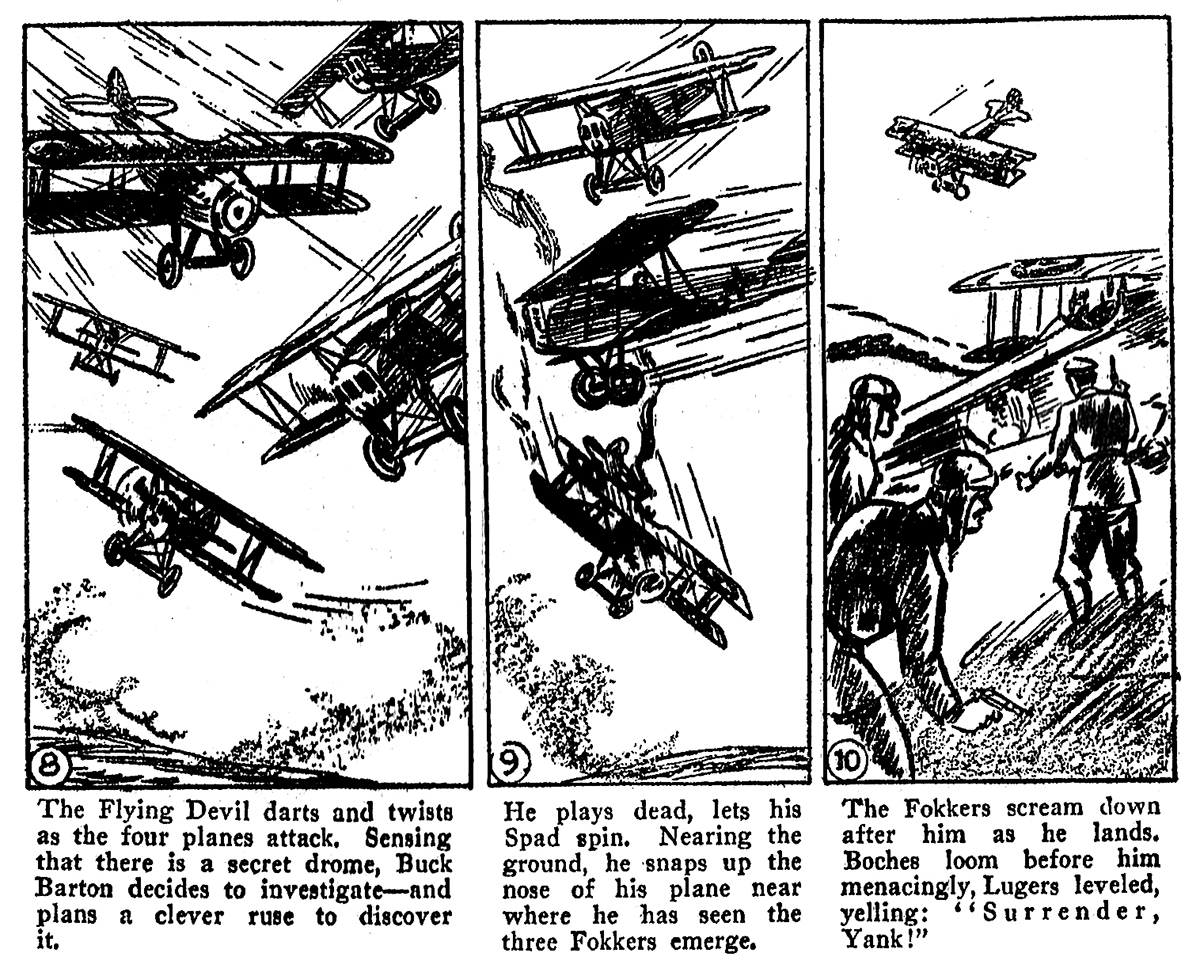

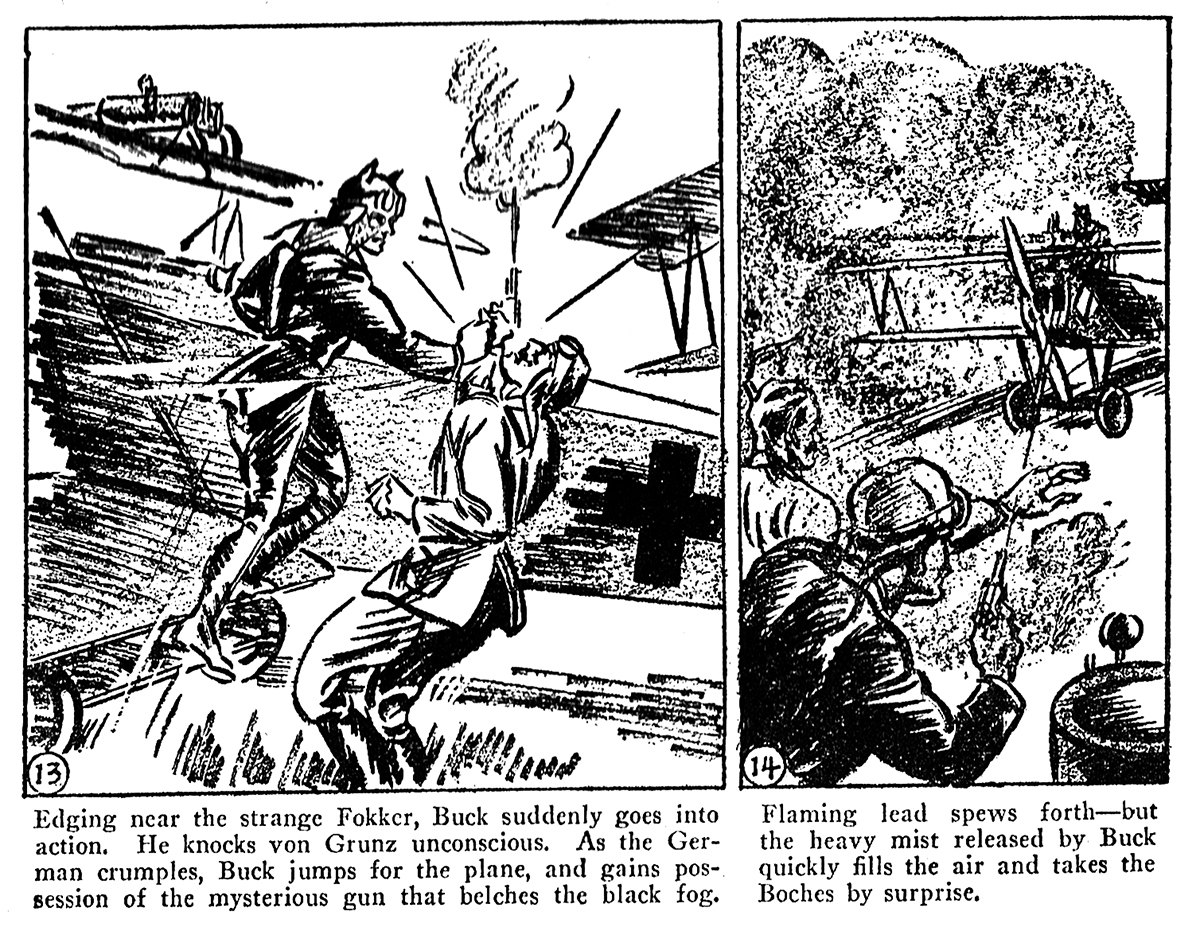
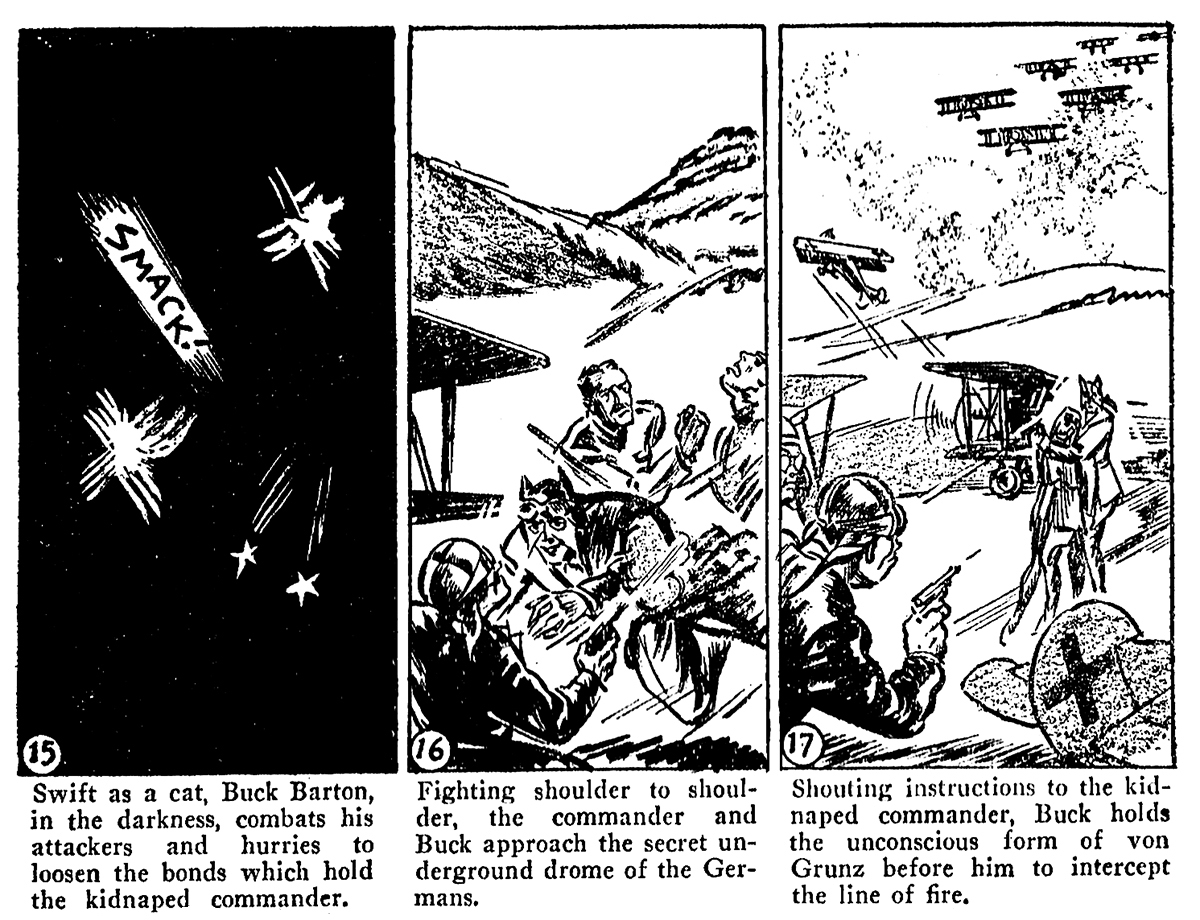
Next Time: The Transport Torpedoing Plot!
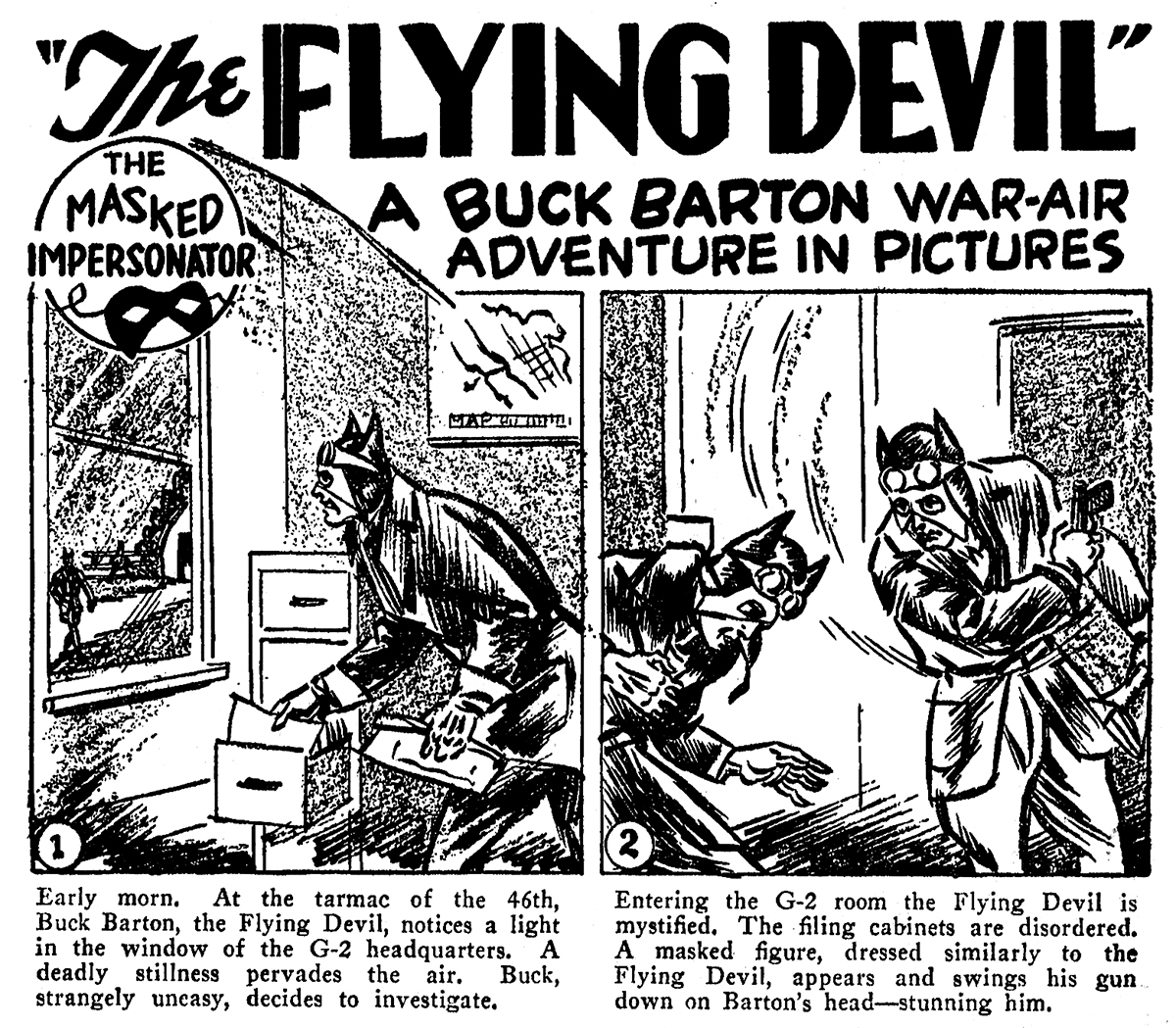
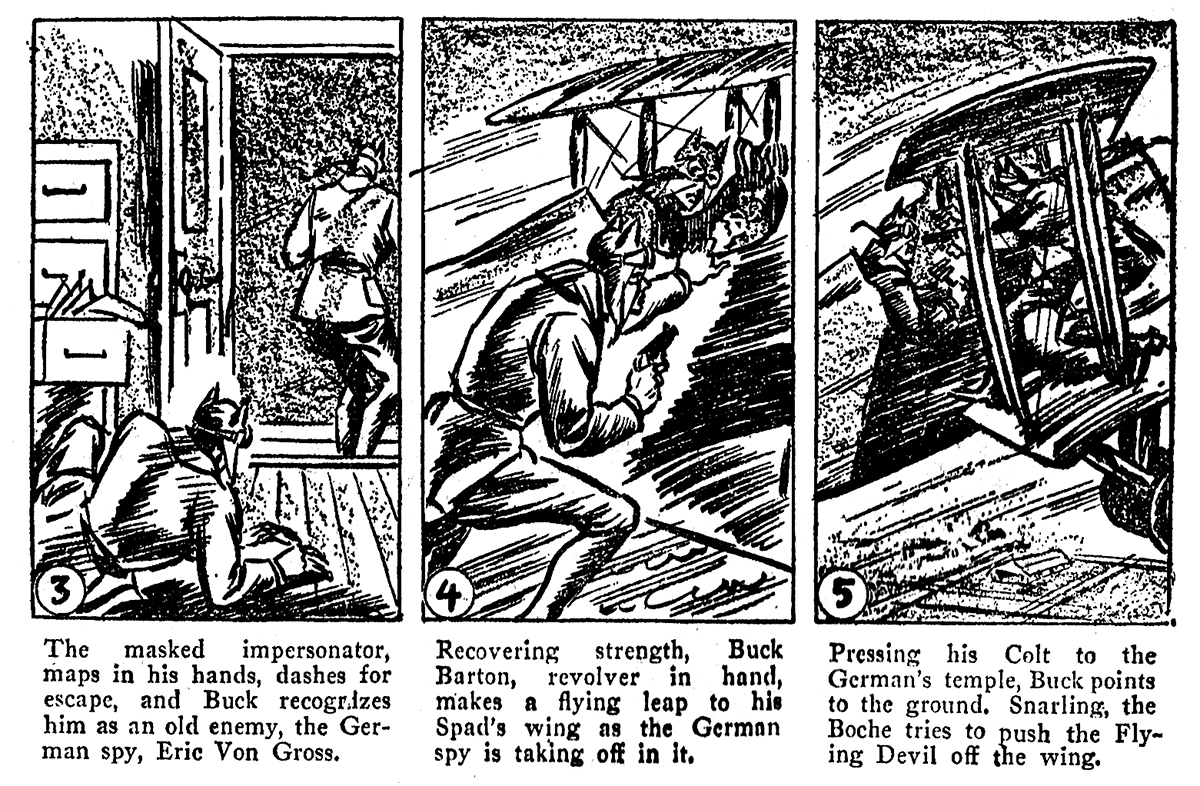
“The Masked Impersonator” by Terry Gilkison
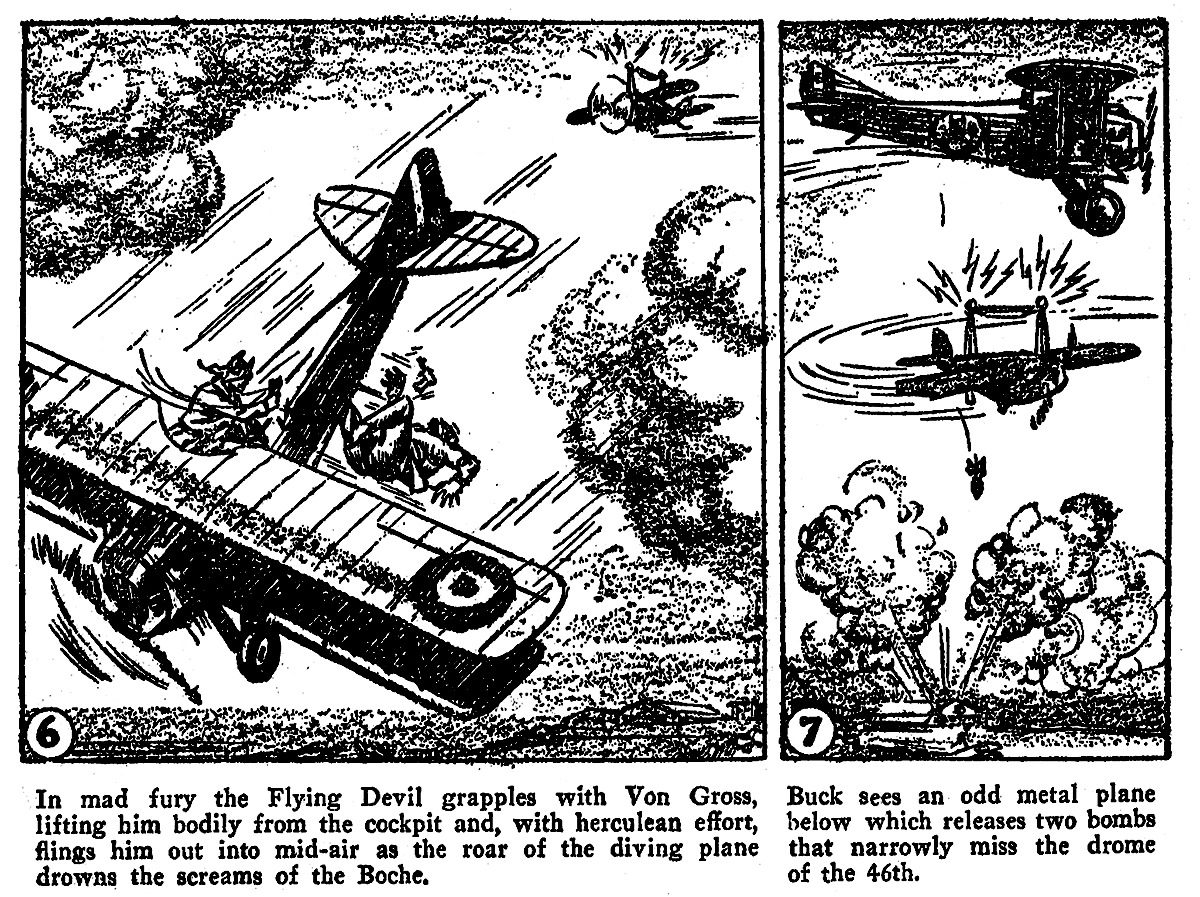
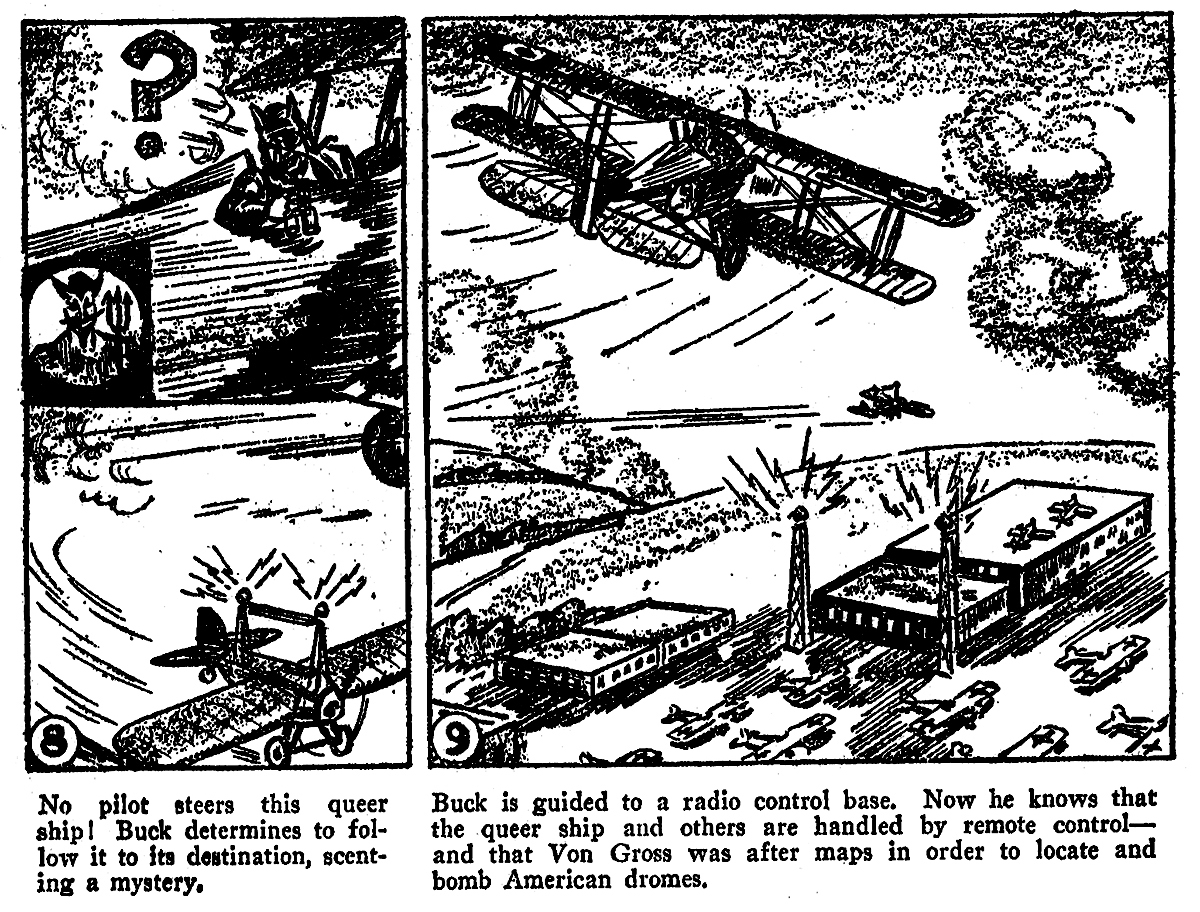
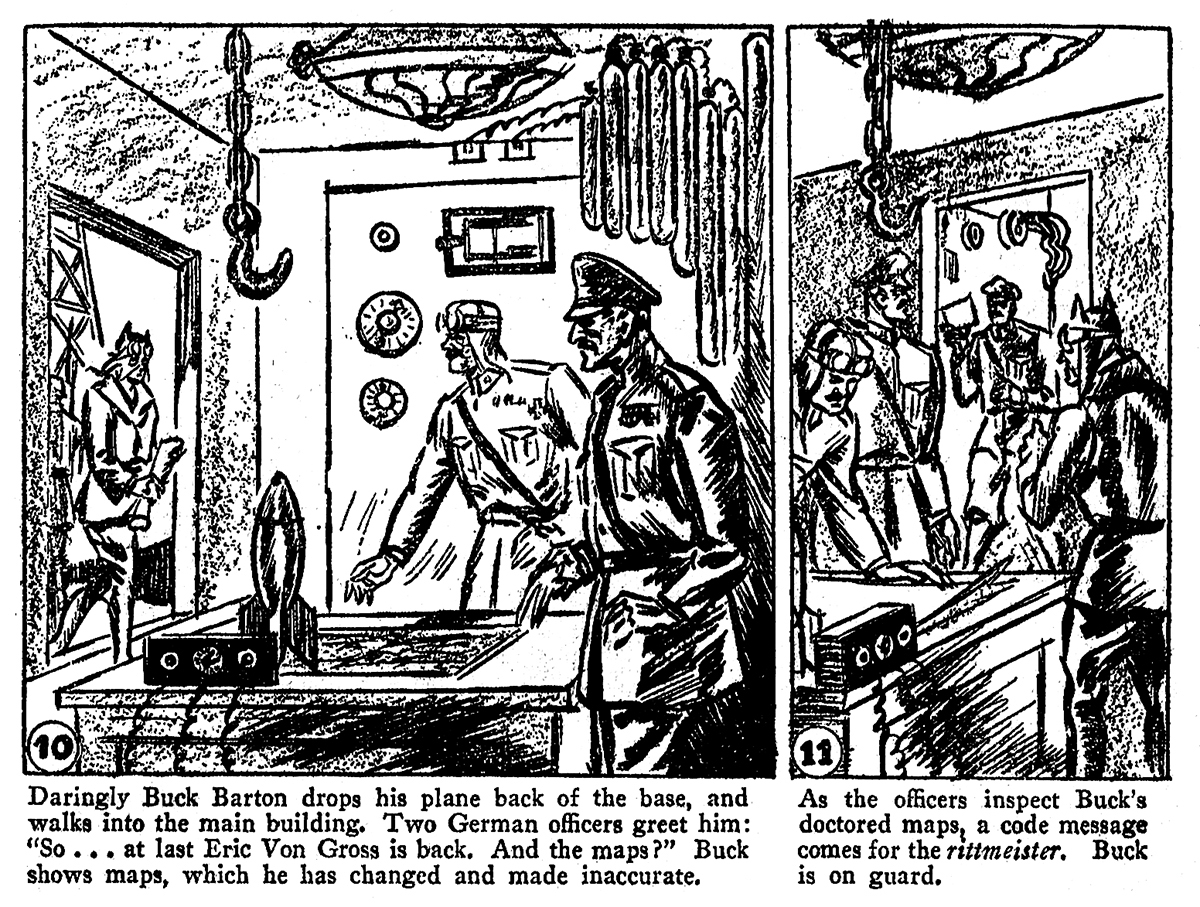
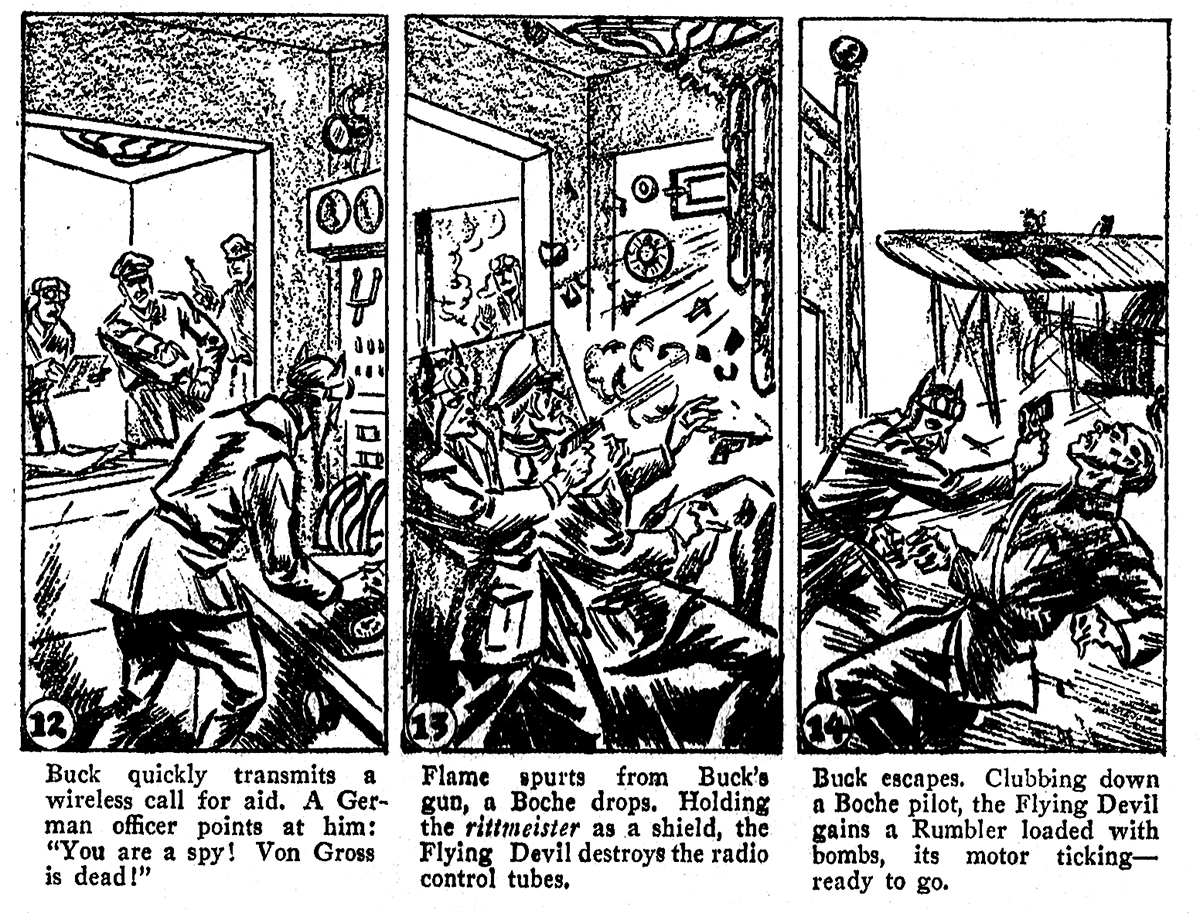
THIS holiday season we’re going all 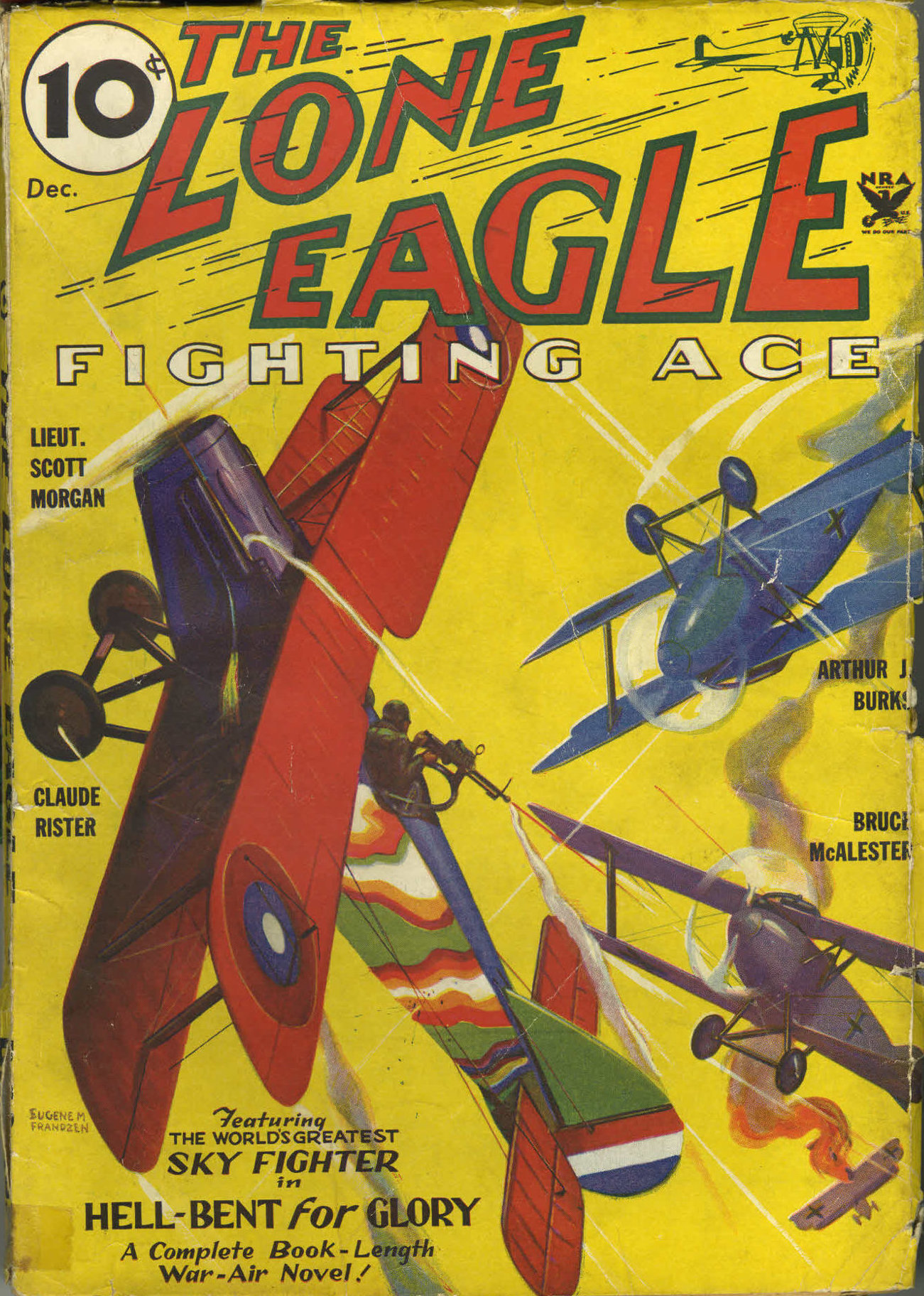 in on The Flying Devil! The Flying Devil was a regular feature of the first fifteen issues of The Lone Eagle and, more importantly, as they announced beneath each month’s story—“the Only War-Air Cartoon Story to Appear in Any Magazine!” The strip was drawn by Terry Gilkison and features the exploits of Buck Barton, a.k.a. The Flying Devil, as he wages a one man war against the Germans in his Spad with the devil on the fuselage.
From the December 1933 issue of The Lone Eagle, it’s Terry Gilkison’s The Flying Devil in “The Masked Impersonator!”
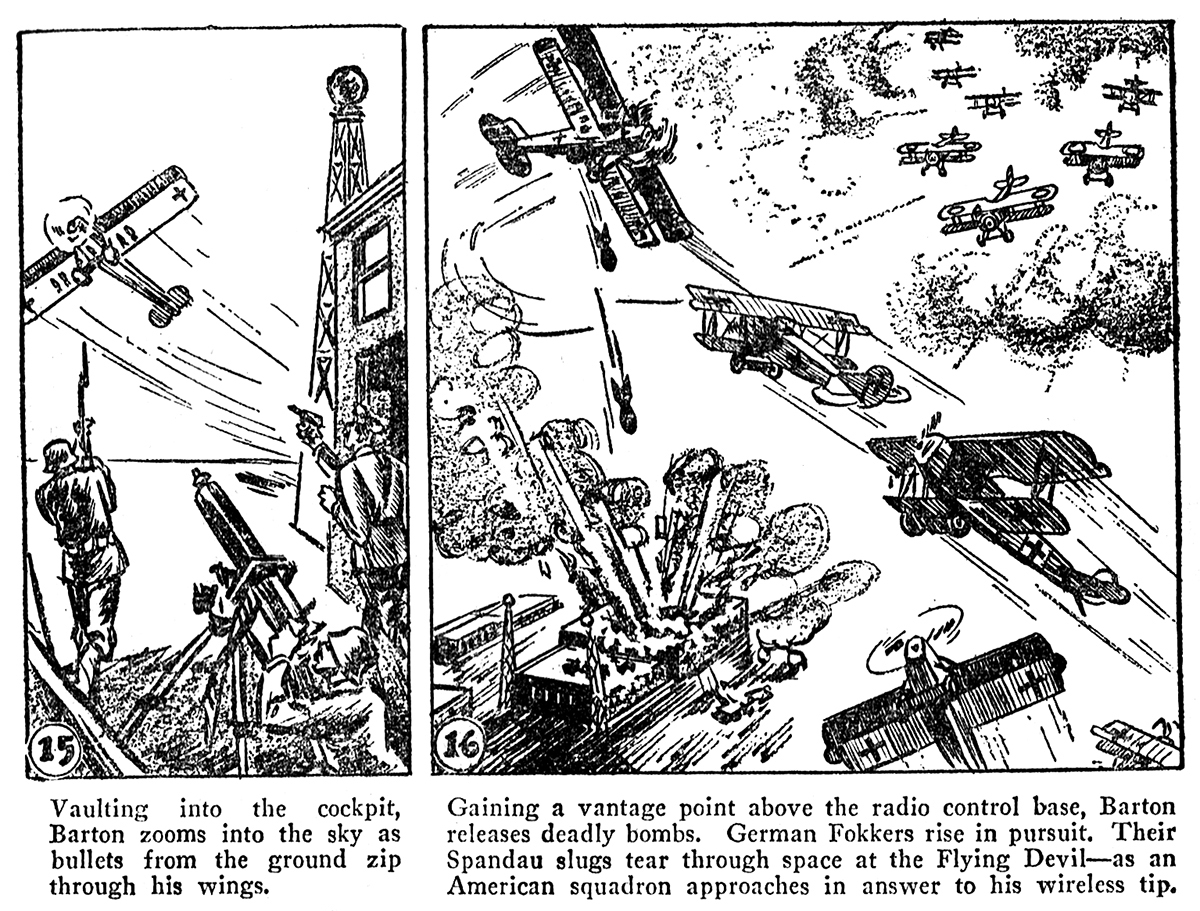
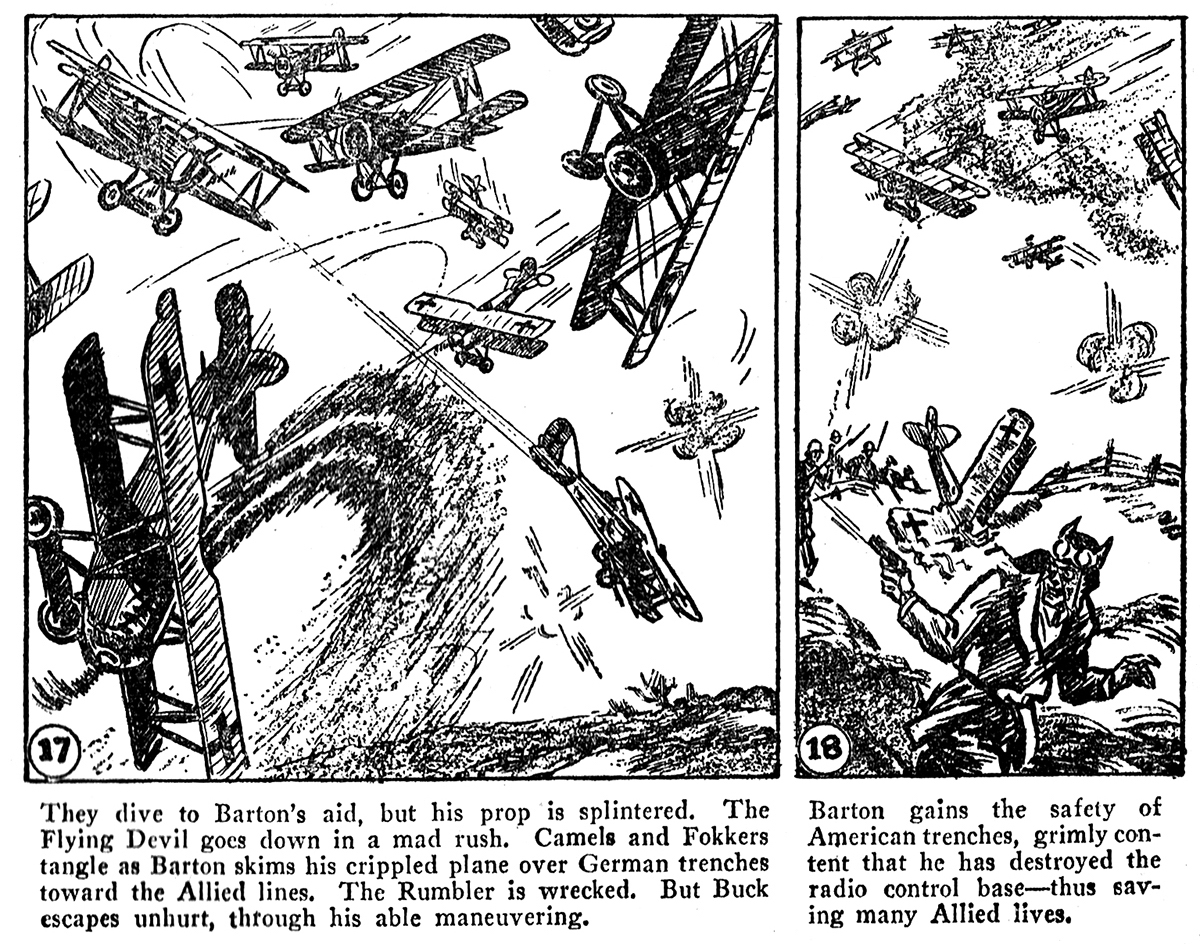
Next Time: The Kidnapped Commander!
“Buck Barton, The Flying Devil” by Terry Gilkison
THIS holiday season we’re going all 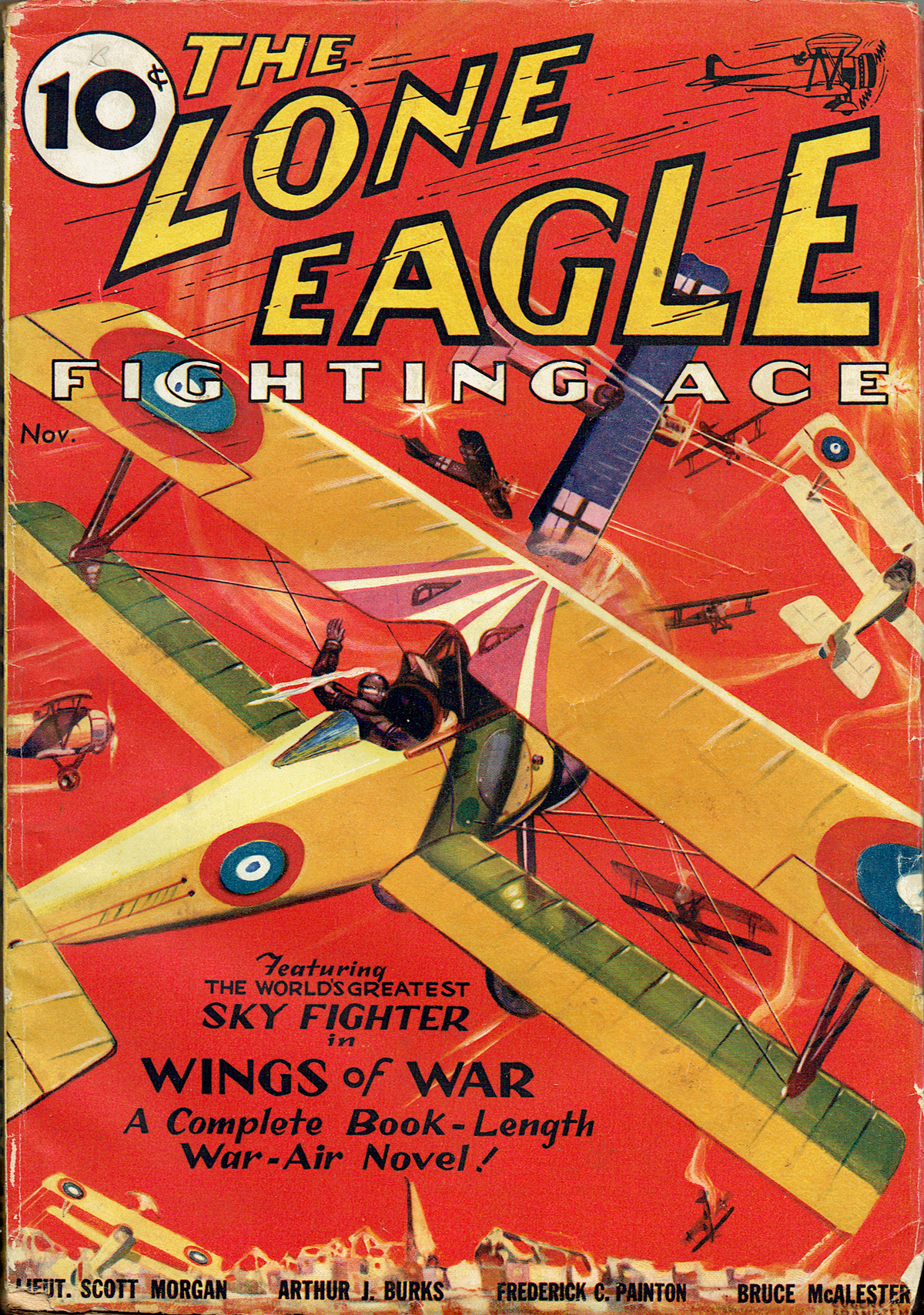 in on The Flying Devil! The Flying Devil was a regular feature of the first fifteen issues of The Lone Eagle and, more importantly, as they announced beneath each month’s story—“the Only War-Air Cartoon Story to Appear in Any Magazine!” The strip was drawn by Terry Gilkison and features the exploits of Buck Barton, a.k.a. The Flying Devil, as he wages a one man war against the Germans in his Spad with the devil on the fuselage.
From the November 1933 issue of The Lone Eagle, it’s Terry Gilkison’s “The Flying Devil!”
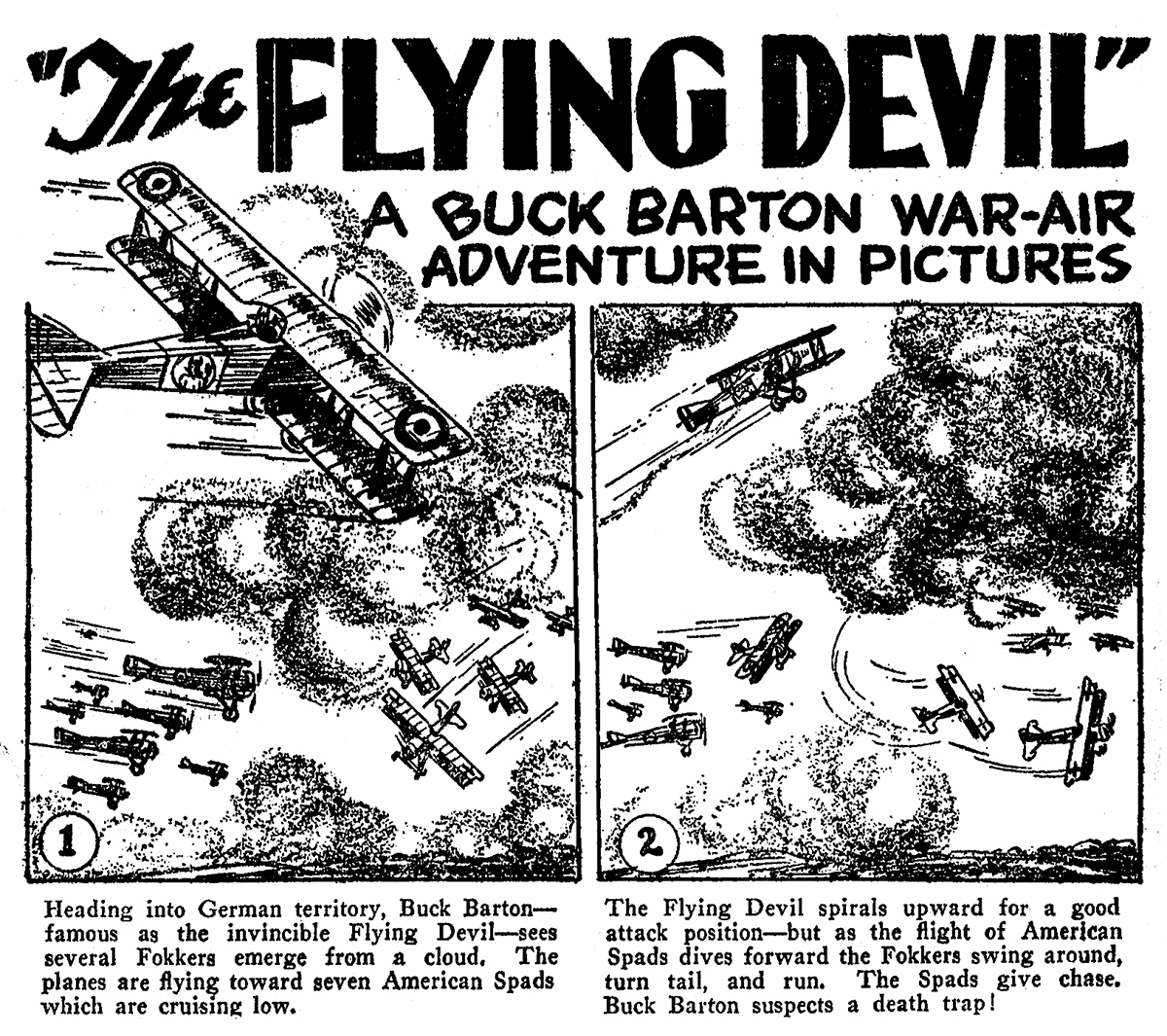
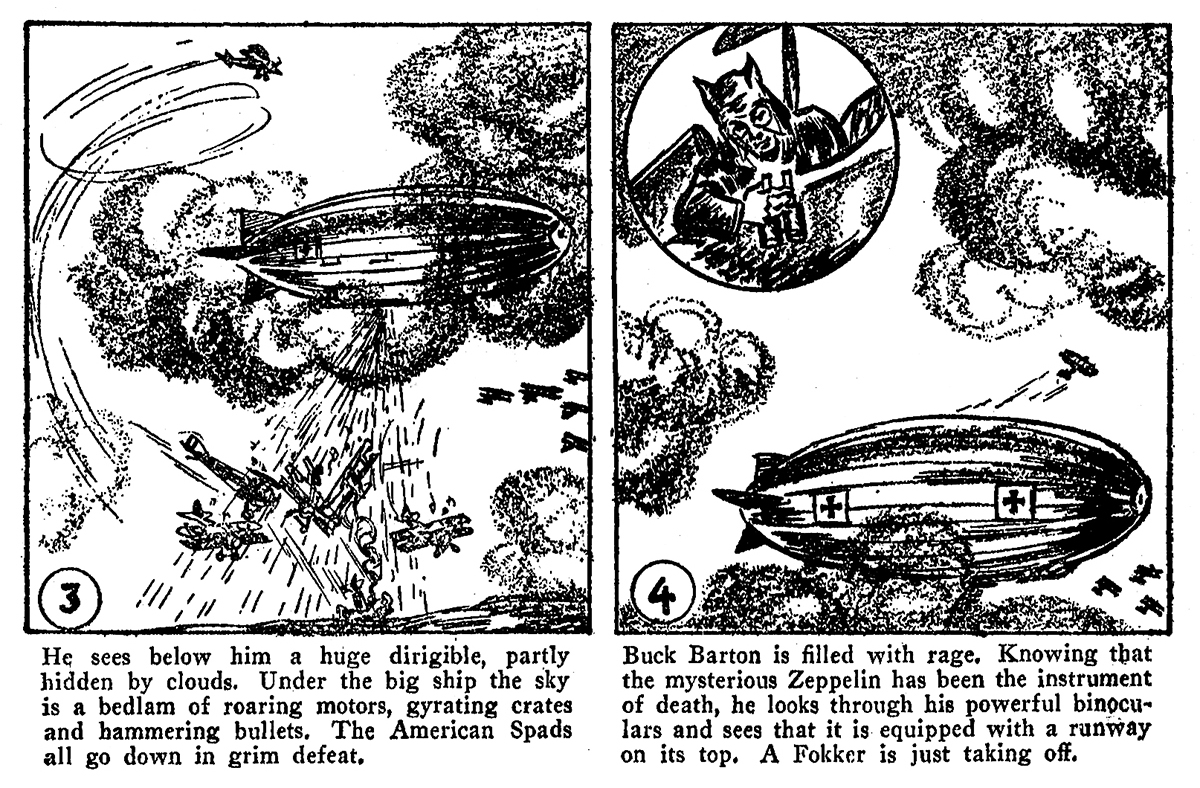
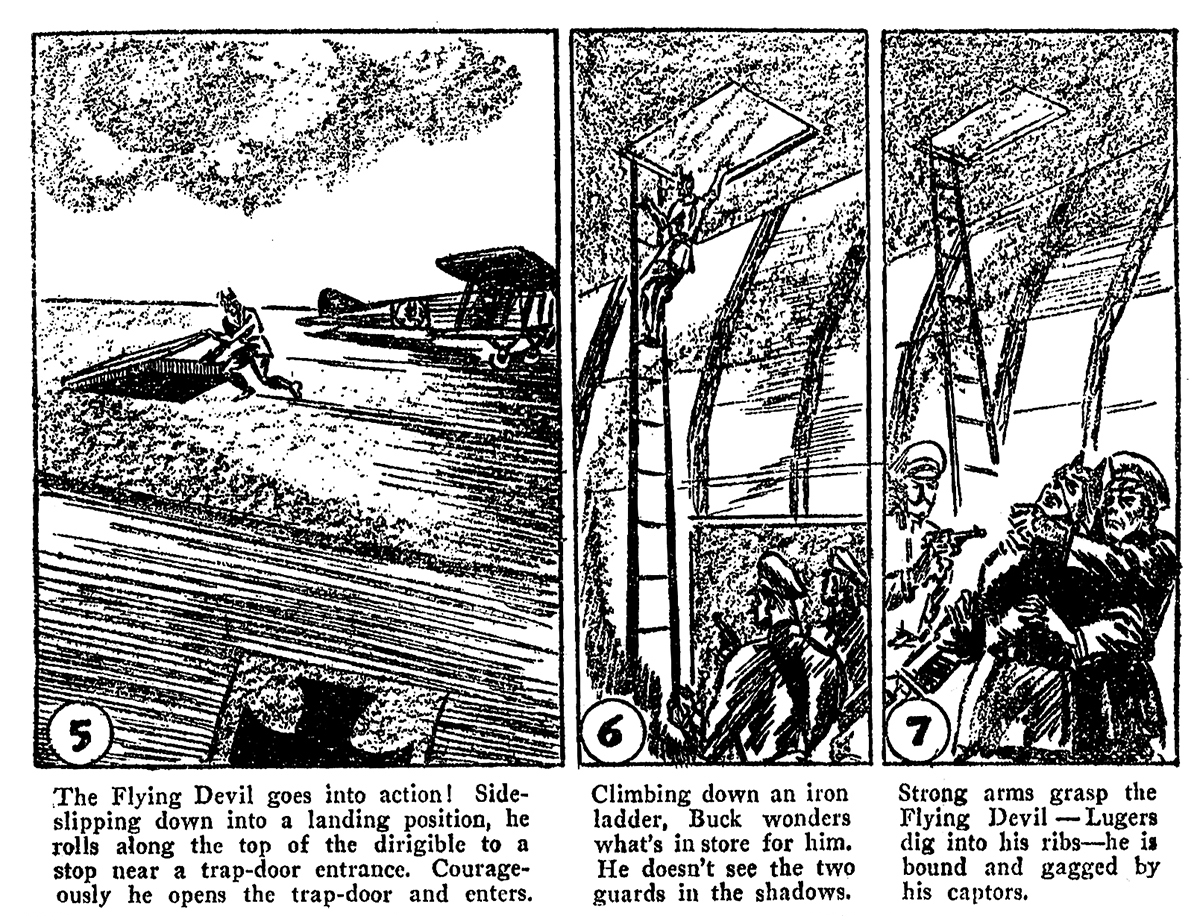
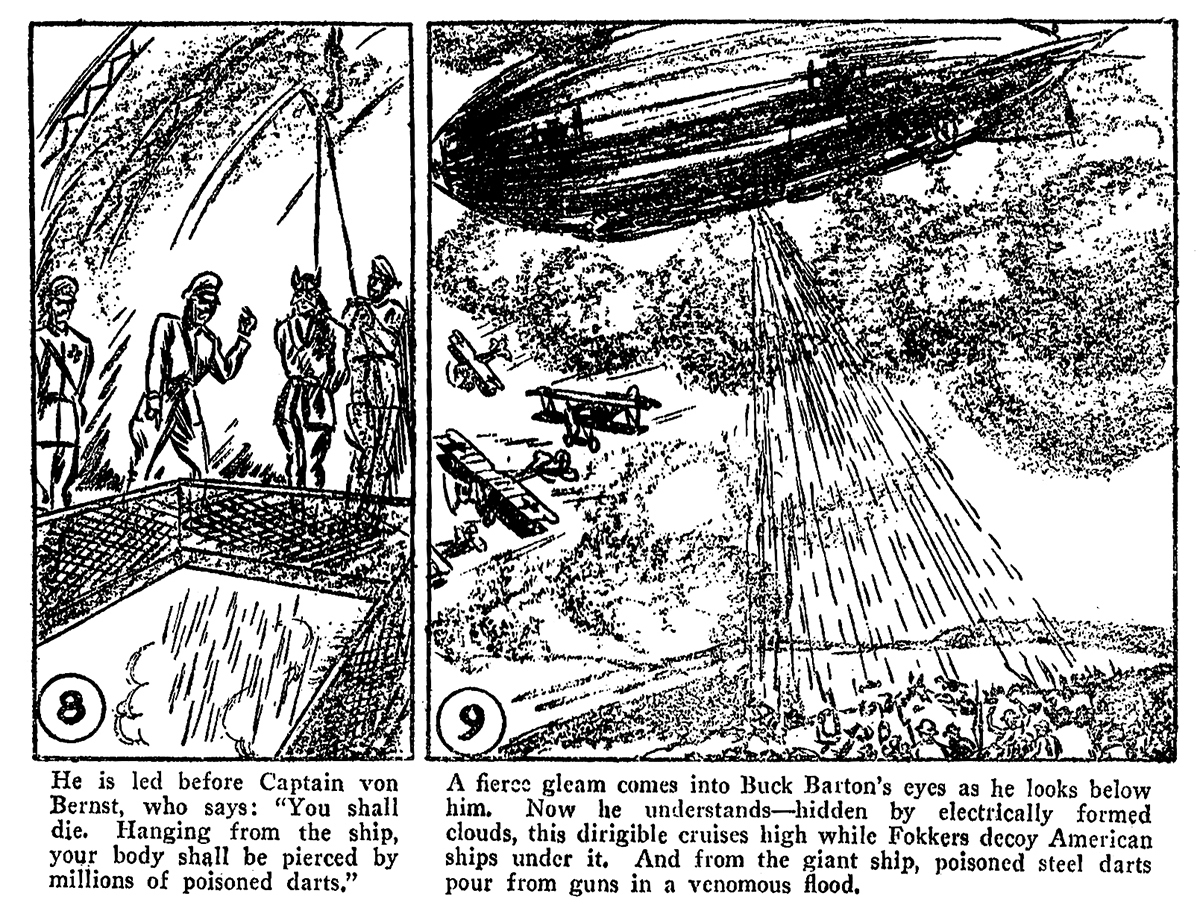
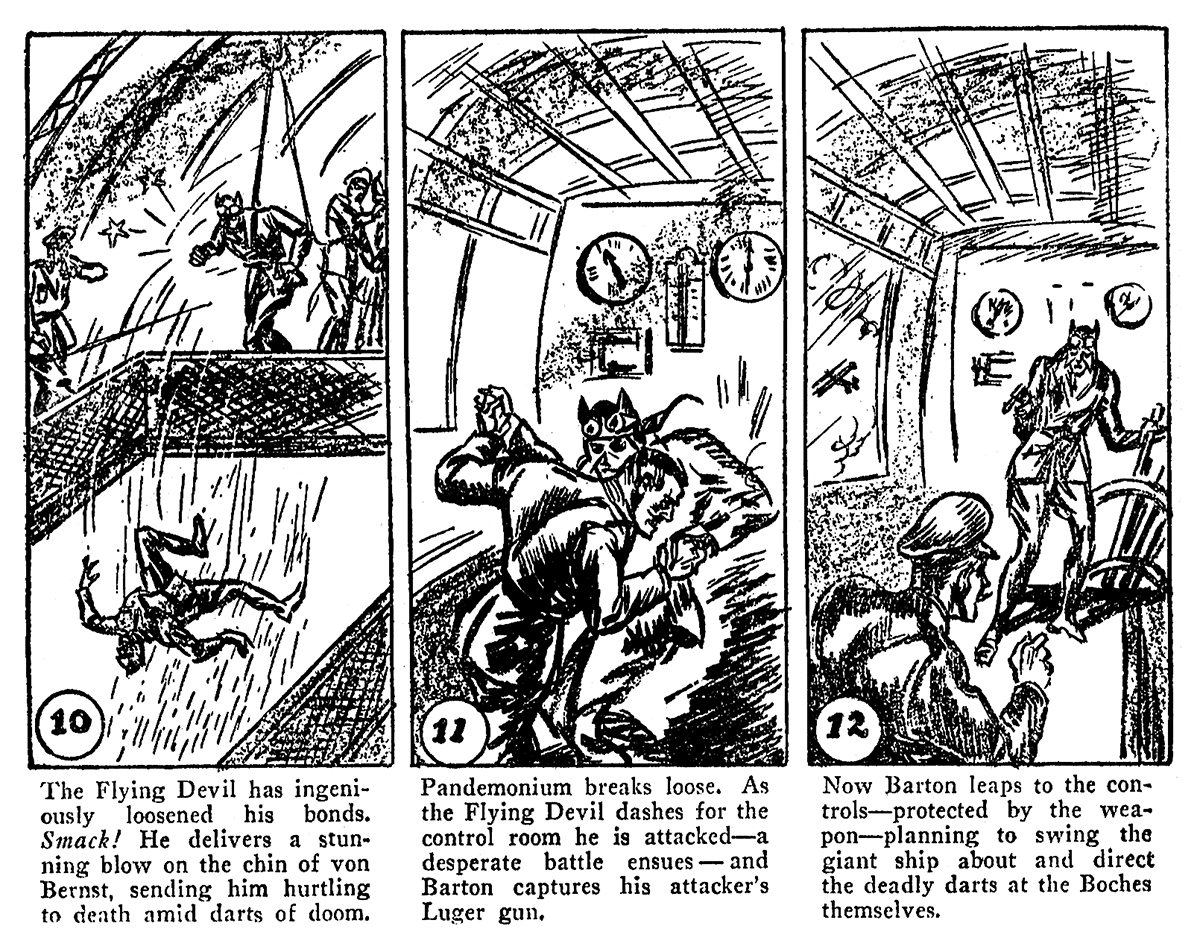
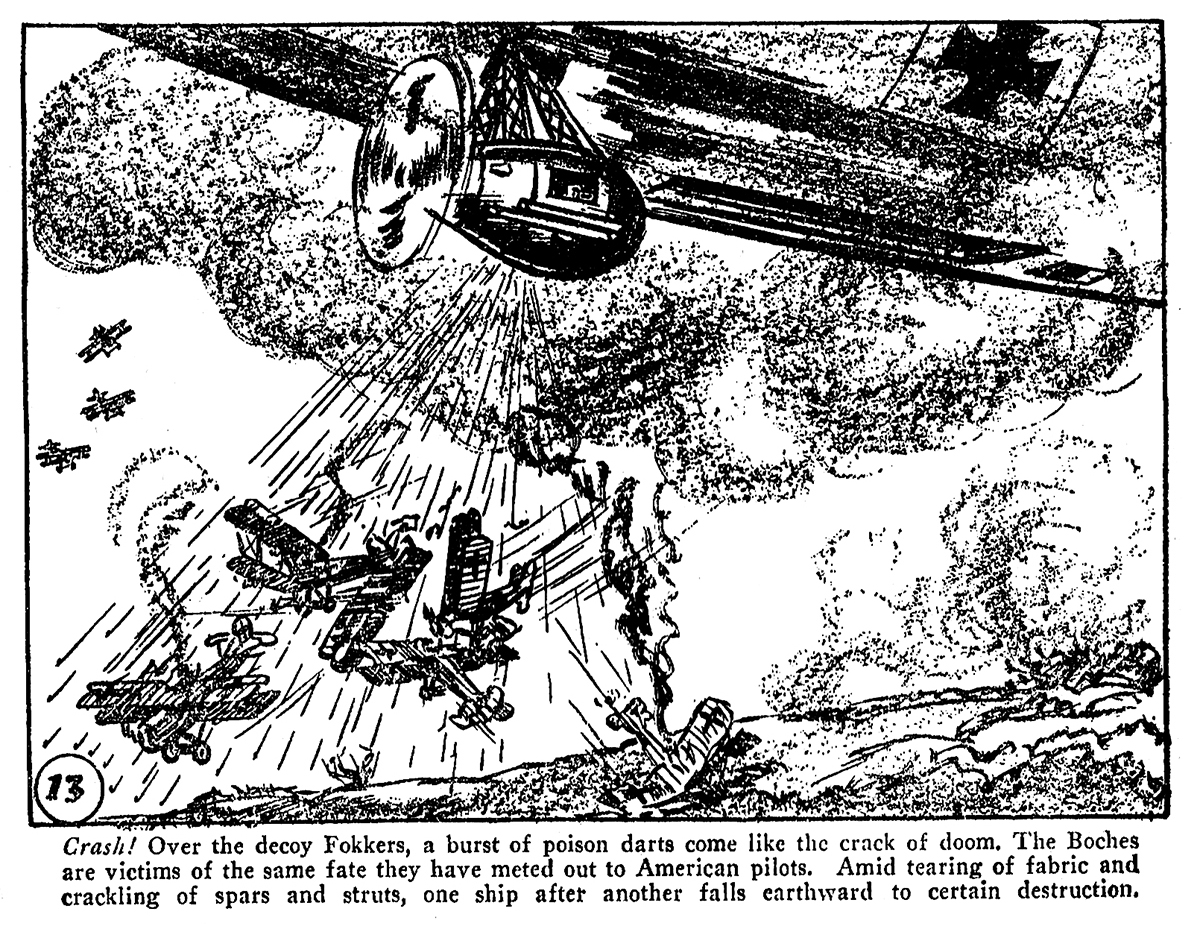
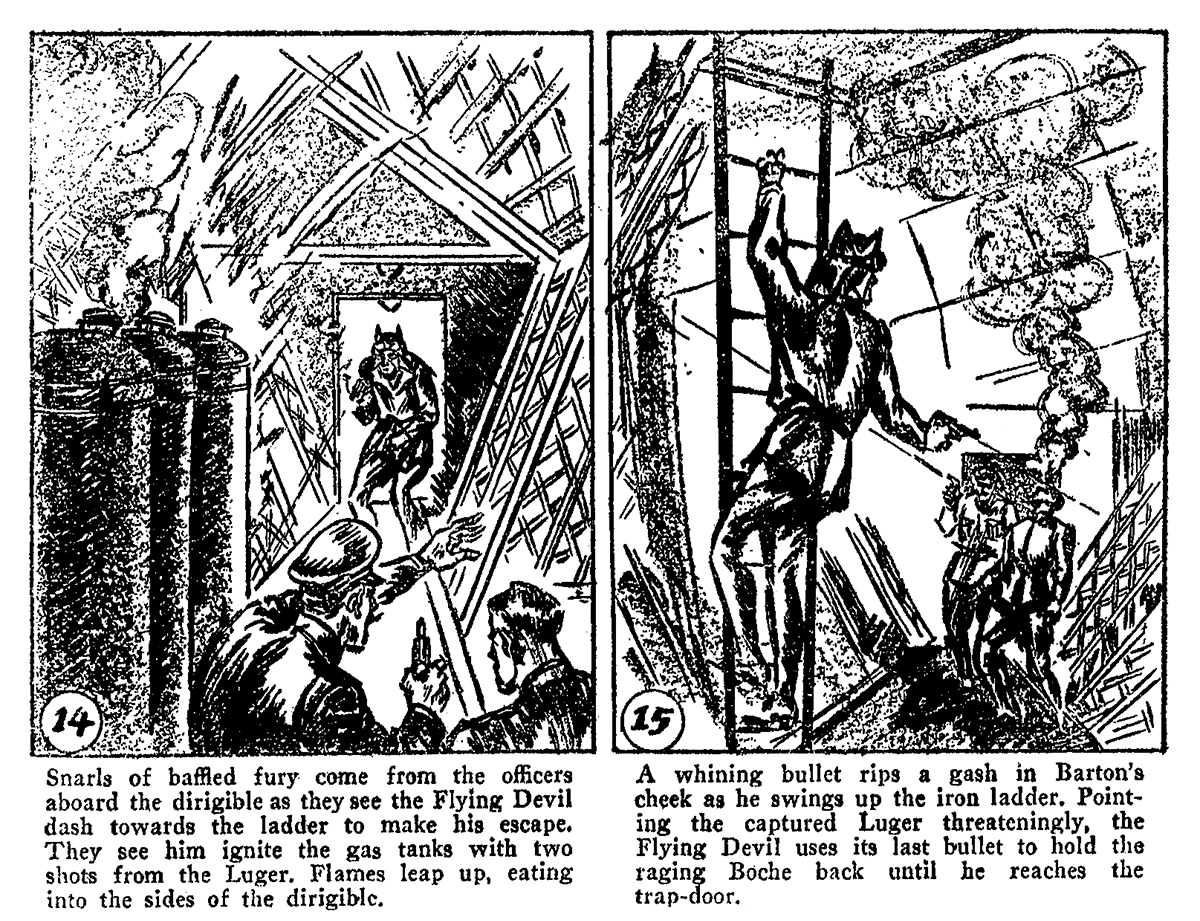
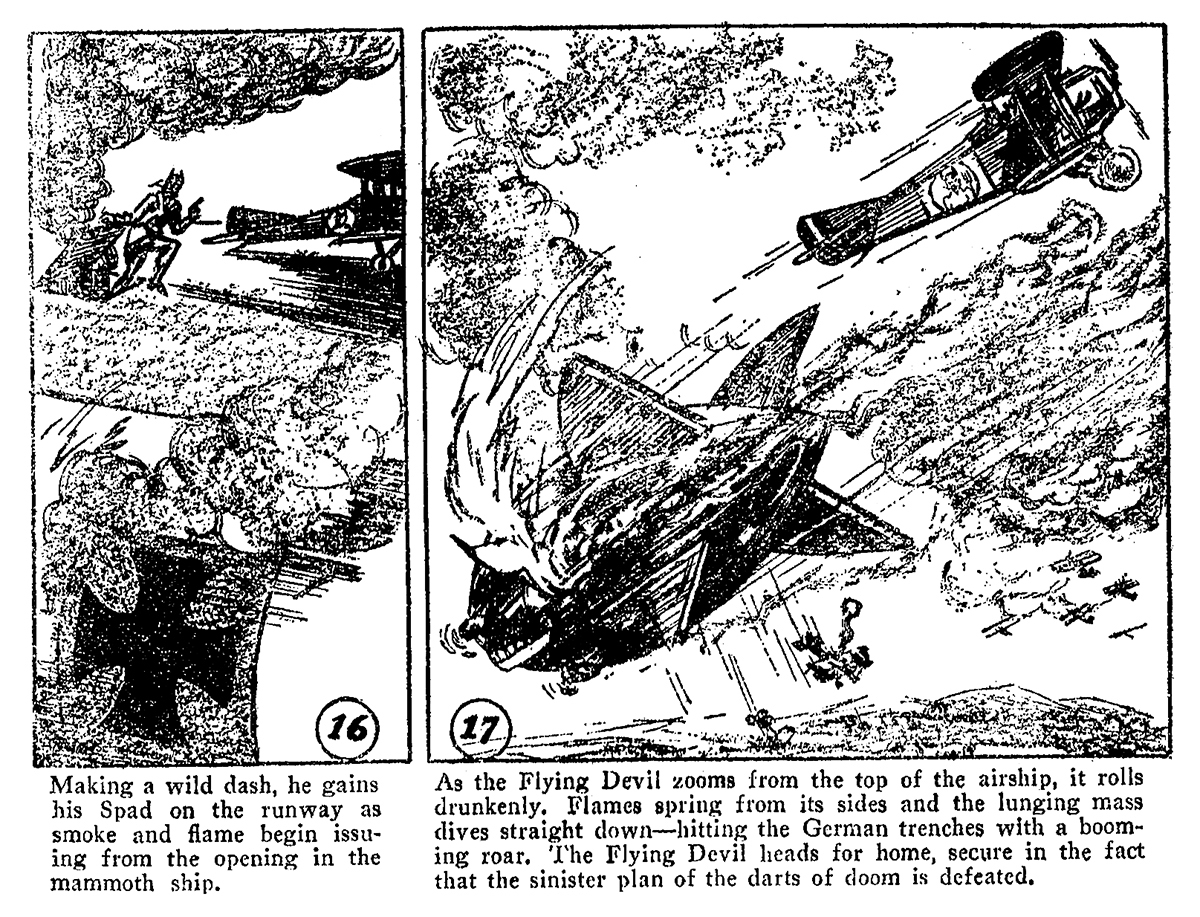
Next Time: The Masked Impersonator!
Introducing The Flying Devil
THIS holiday season we’re going all in on The Flying Devil! The Flying Devil was a regular feature of the first fifteen issues of The Lone Eagle and, more importantly, as they announced beneath each month’s story—“the Only War-Air Cartoon Story to Appear in Any Magazine!”
The strip was drawn by Terry Gilkison. 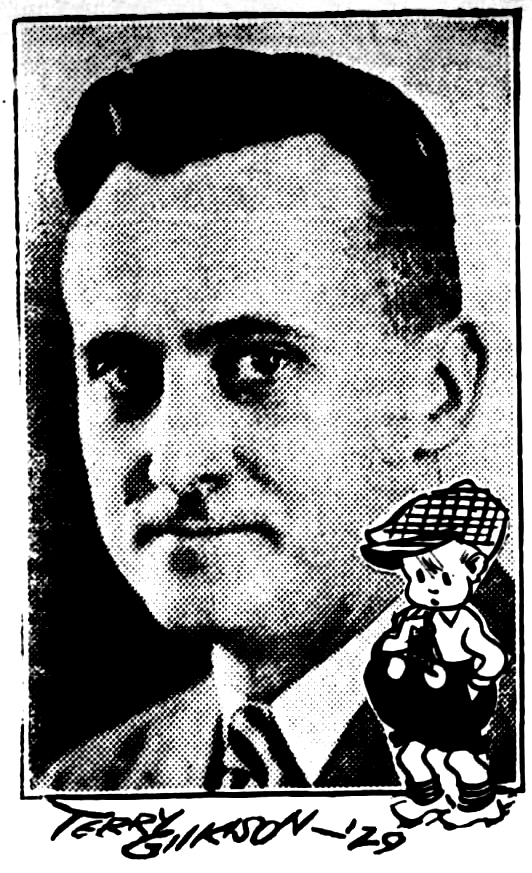 Gilkison had achieved some fame by the time the first episode appeared in the September 1933 issue. There were a couple short lived syndicated comic strips—”Home Sweet Home” and “Pinky Dinky”—as well as editorial cartoons syndicated by Autocaster and having his work published in the likes of Life, Judge, and Collier’s Magazine.
Around that same time, Gilkison also started drafting his “Famous Sky Fighters” feature in Sky Fighters; a two page spread illustrating different Aces that rose to fame during the Great War. His work appeared in Clues, Thrilling Adventures, Texas Rangers, Thrilling Mystery, Thrilling Western, and Popular Western. Gilkison provided similar features in a few other Thrilling Publication—there was “Famous Soldiers of Fortune” and later “Adventure Thrills” in Thrilling Adventures and “Famous Crimes” in Thrilling Detective. He signed most of this work with only his initials “T.G.” to maintain a low profile and preserve his reputation as a syndicated newspaper cartoon artist.
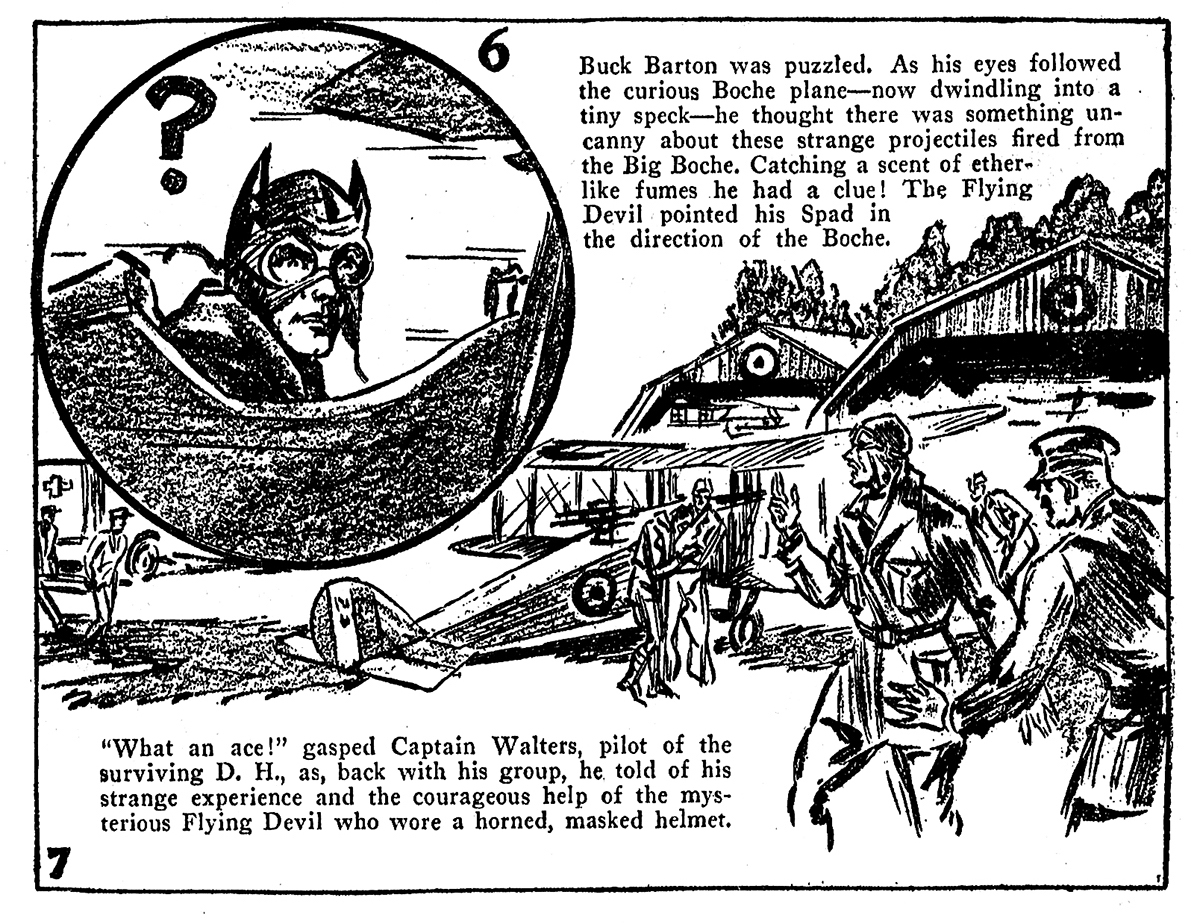
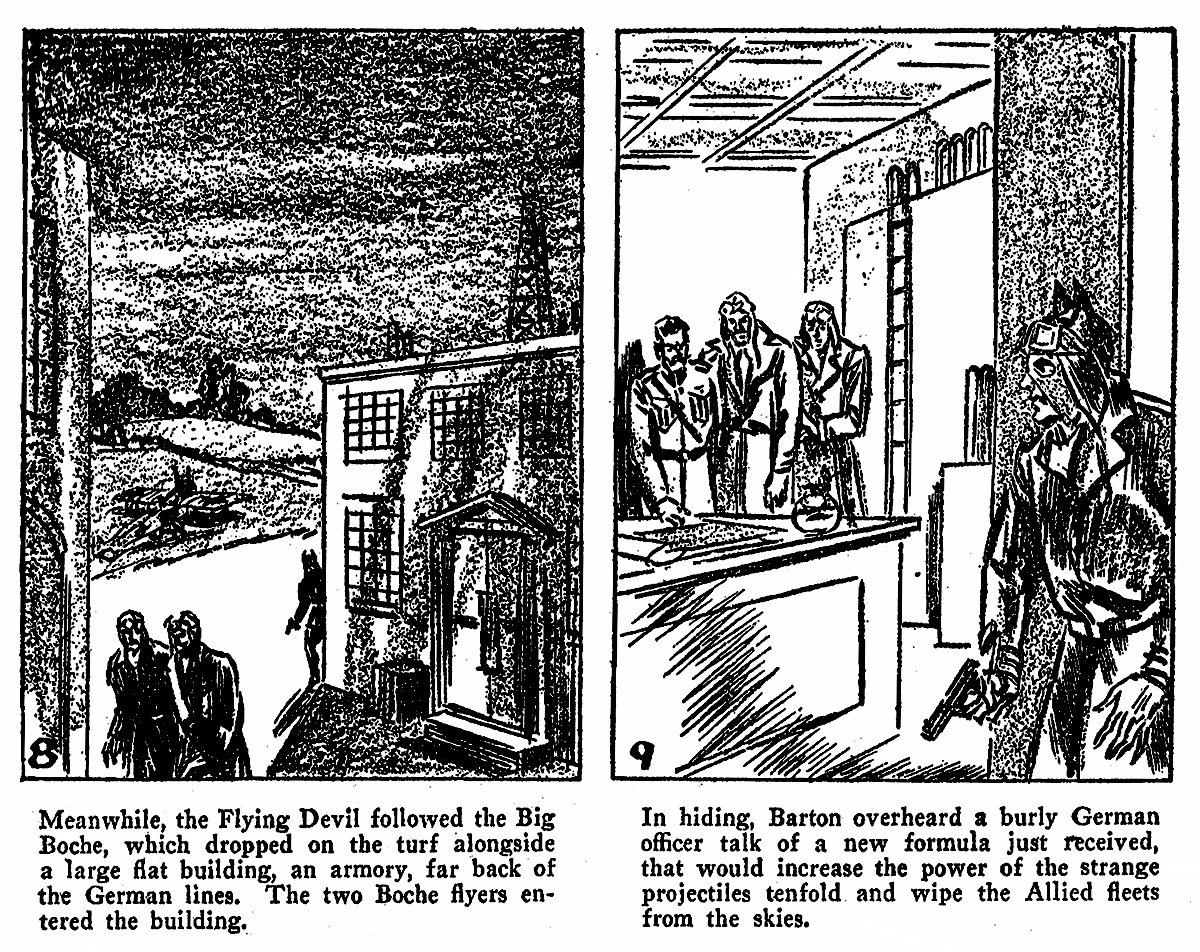
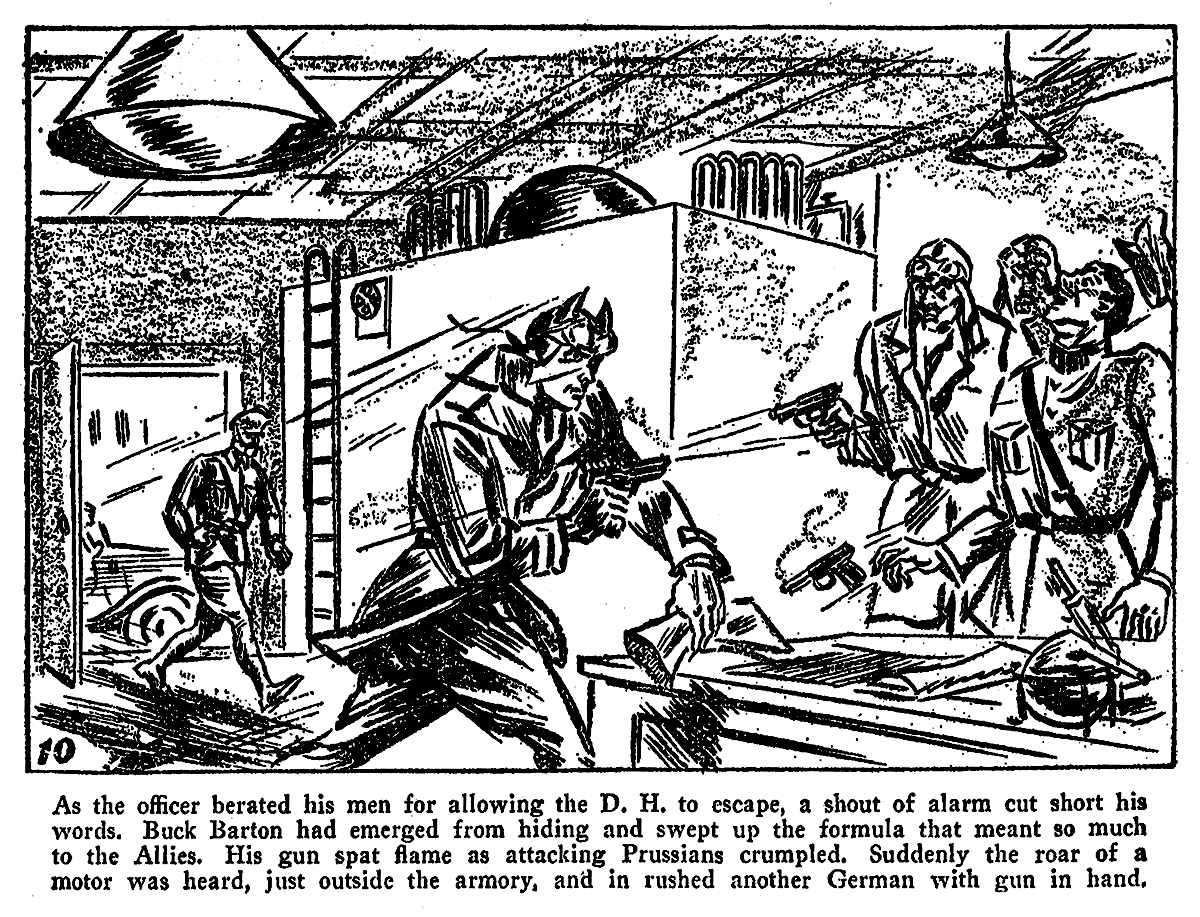
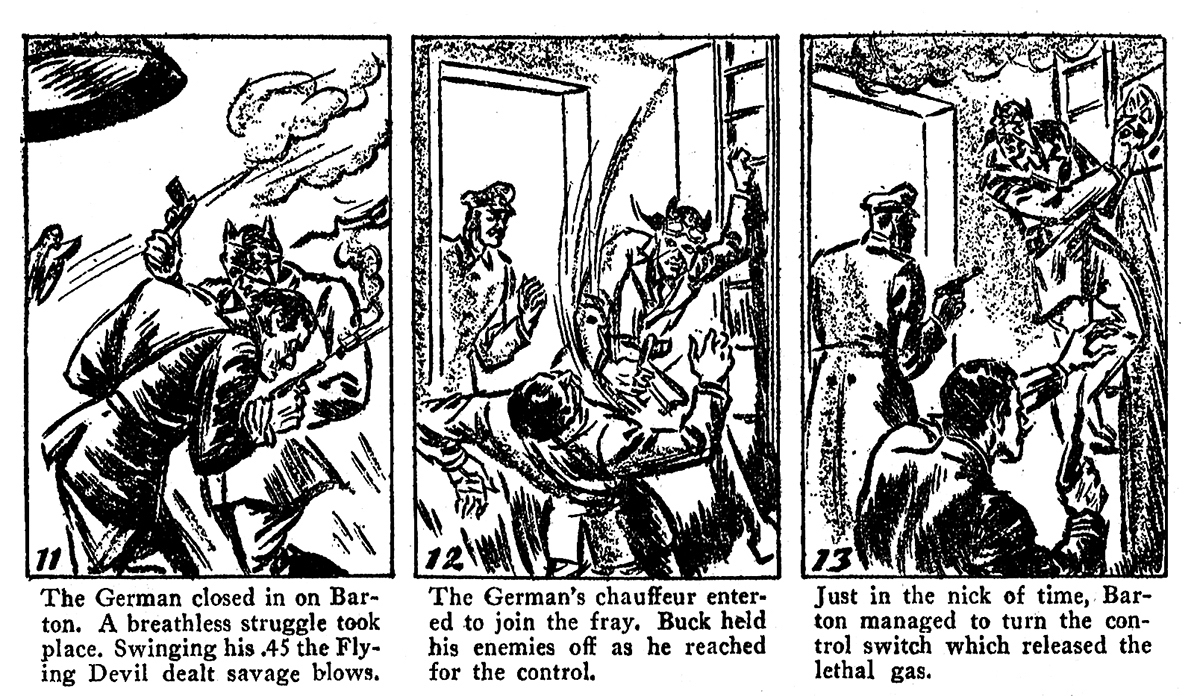
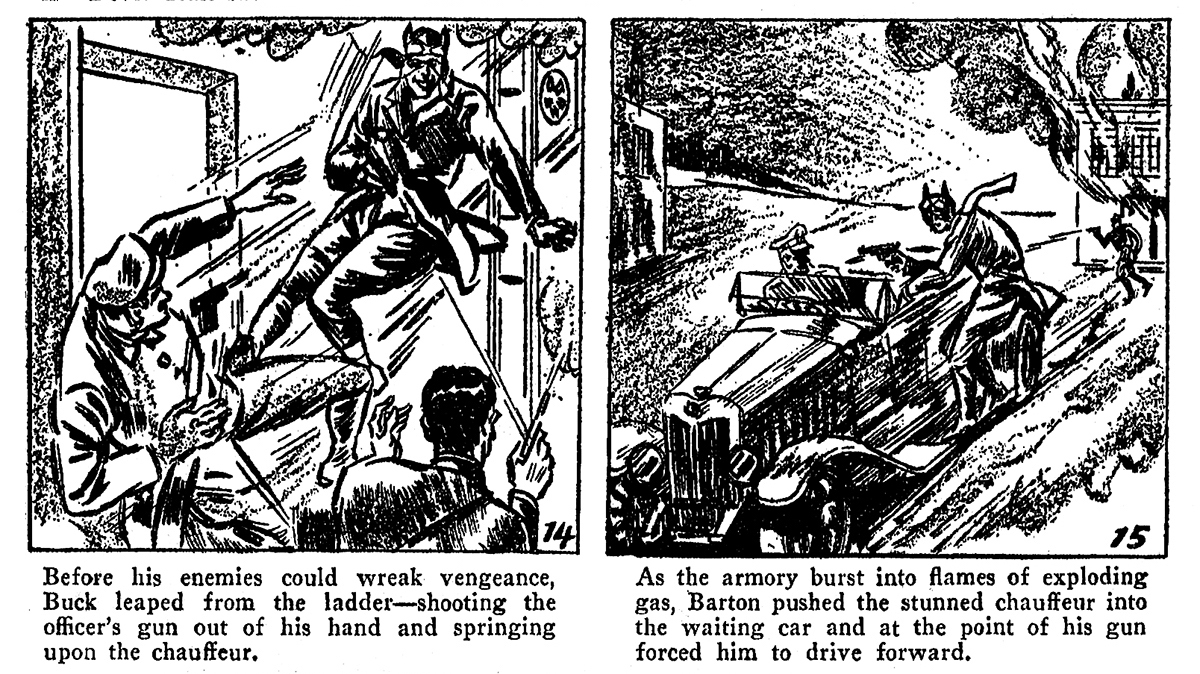
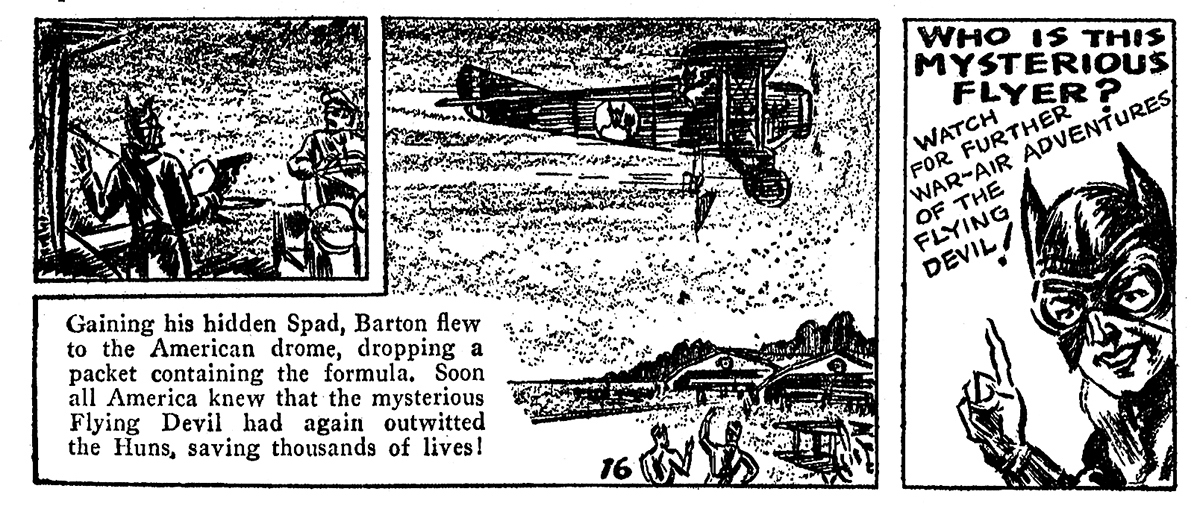
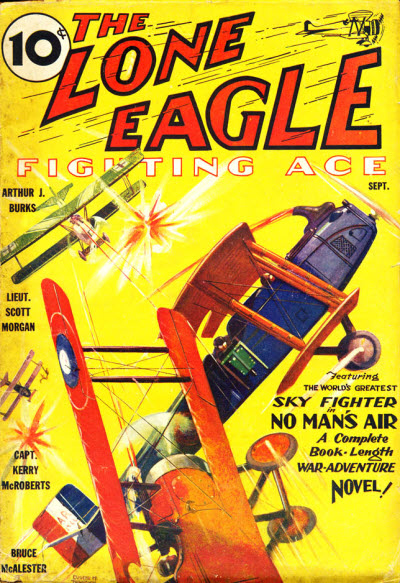 Terry Gilkison’s The Flying Devil premiered in the first issue of The Lone Eagle and would run installments in each of the first fifteen issues at which point it abruptly disappeared from the publication. This first adventure introduces us to Buck Barton, a.k.a. The Flying Devil. Barton flys a Spad with a devil on it’s fuselage and wears a flying helmet has been altered with the addition of horns to complete the impression of a flying devil (although the horns would dissapear from his headgear by the fifth adventure). He is presented in this first story as an independent agent working for the allies against the Germans.
From the September 1933 issue of The Lone Eagle, it’s Terry Gilkison’s “The Flying Devil!”
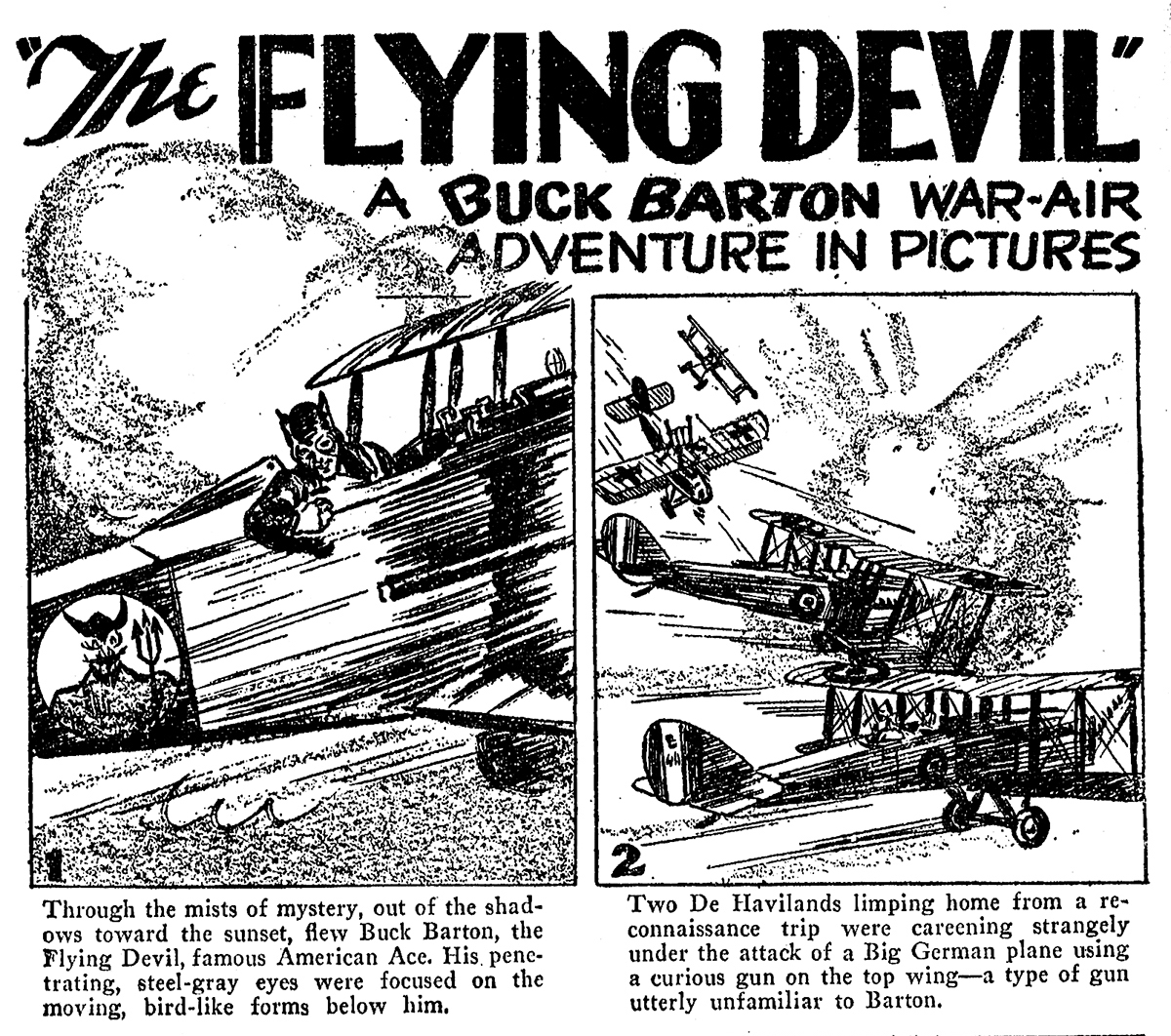
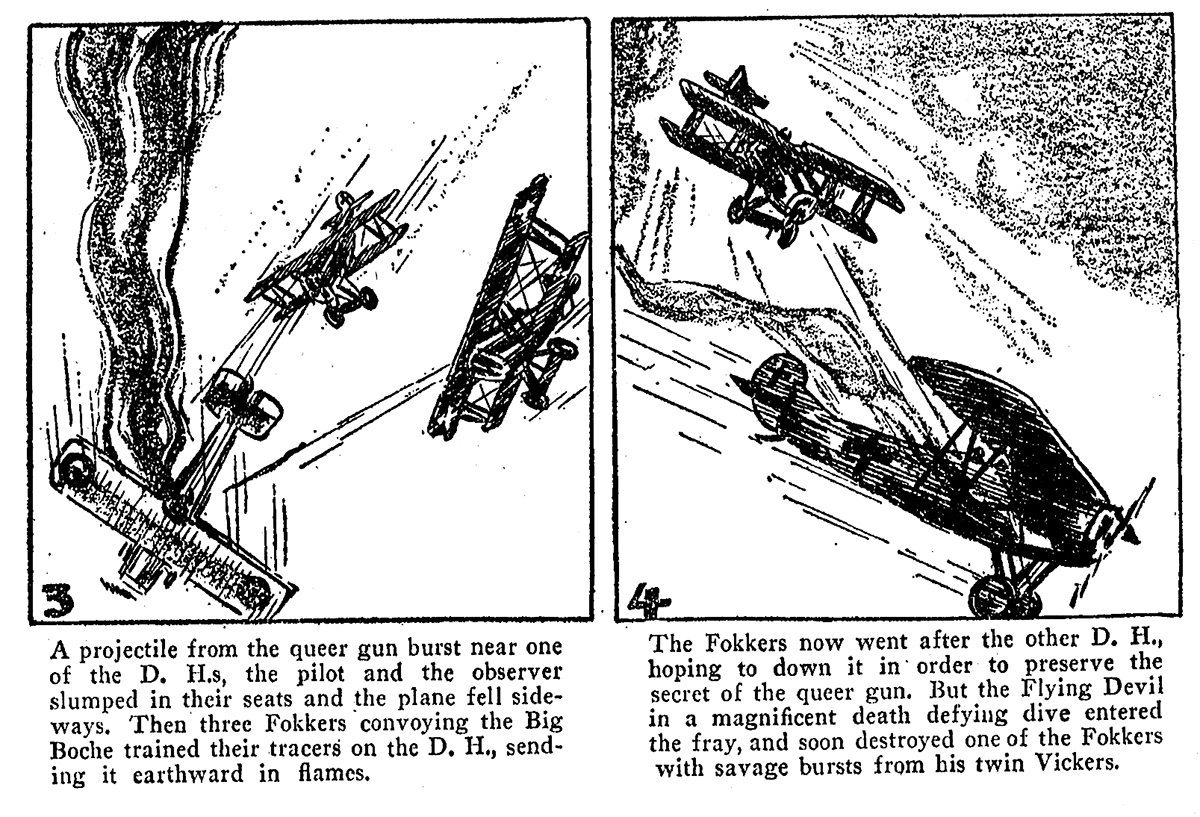
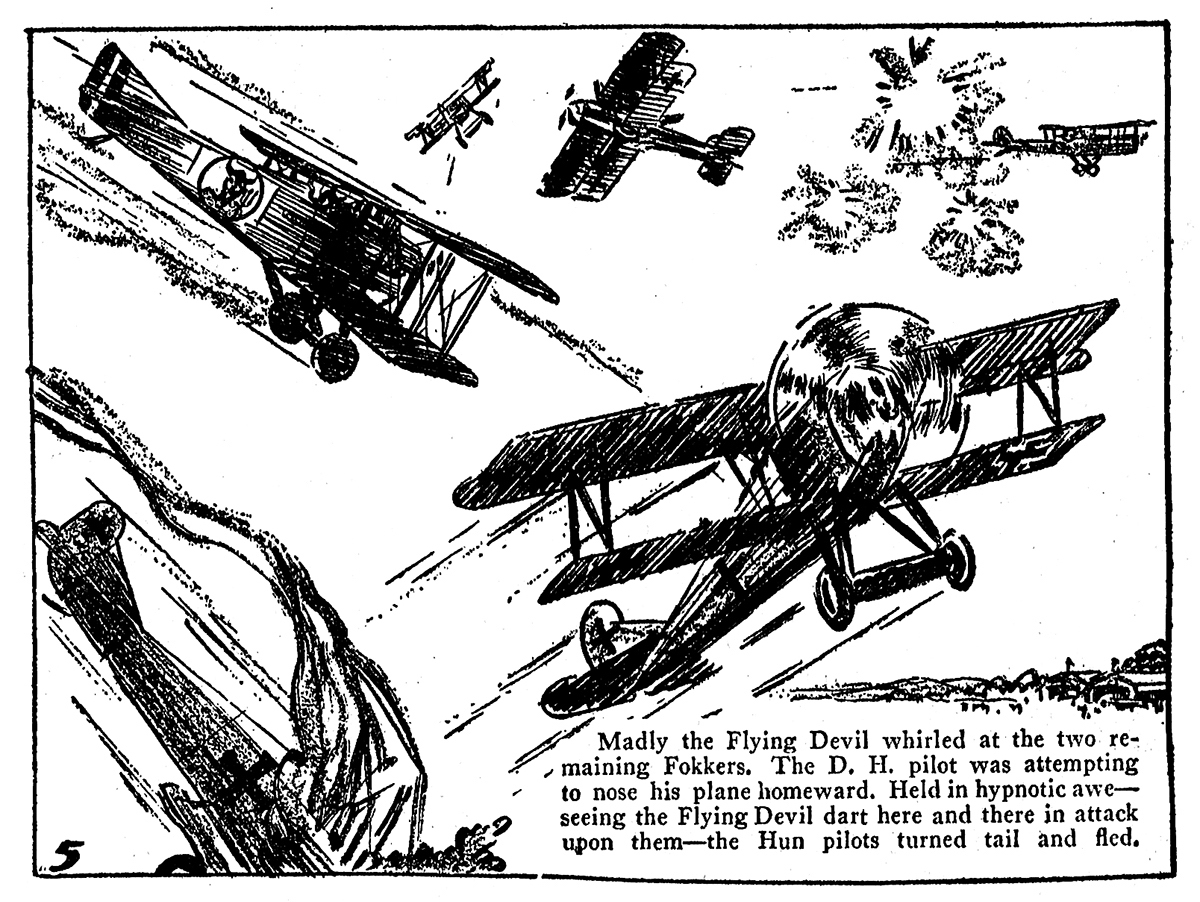
Next Time: Another Buck Barton, Flying Devil Story!
“The C.O.’s Stripes” by William E. Barrett
THIS November we’re celebrating William E. Barrett’s Birthday on the 16th with four of his pulp stories—one each Friday.
Before he became renown for such classics as The Left Hand of God and Lilies of The Field, Barrett honed his craft across the pages of the pulp magazines—and nowhere more so than in War Birds and it’s companion magazine War Aces where he contributed smashing novels and novelettes, True tales of the Aces of the Great War, encyclopedic articles on the great war planes as well as other factual features. Here at Age of Aces Books he’s best known for his nine Iron Ace stories which ran in Sky Birds in the mid ’30s!
This week we have 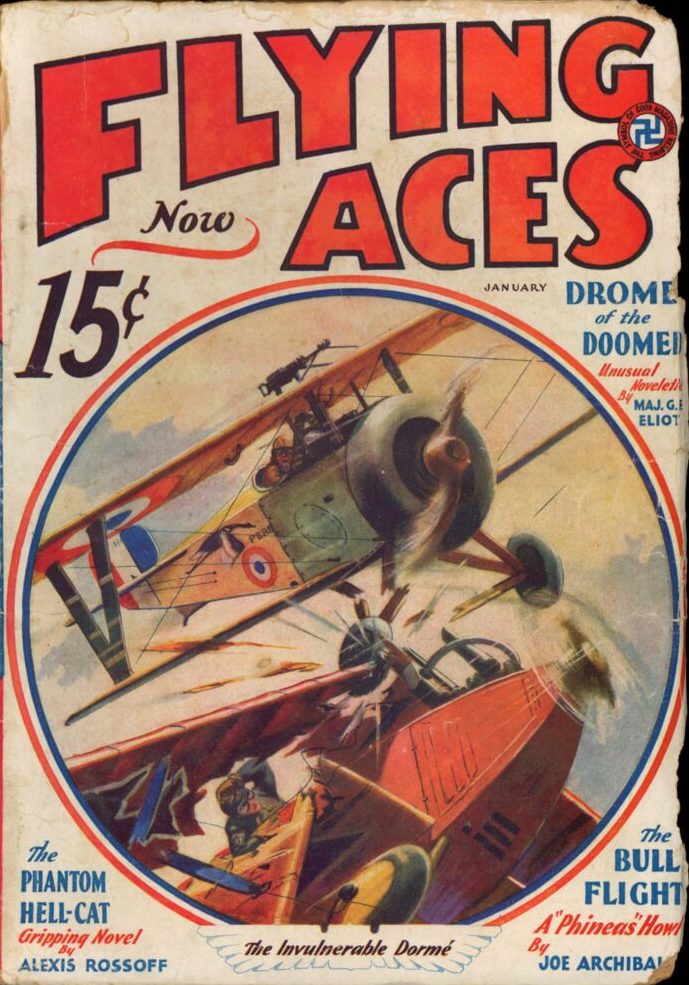 the fourth and final of our four stories celebrating William E. Barrett’s birthday this month.
His tunic was Bond Street and there was a flair to it that only a tailor with three years of war experience could impart. His breeches were cut wide and were a coral pink. The gloss on his boots could only be attained on a boot costing five pounds—and he carried a swagger stick that was made of cartridge casings, surmounted by a knob that was nothing else but the spark plug out of a crashed German plane.
All in all, the new C.O. was an elegant figure; one to inspire hatred—and a fierce envy in the breast of any pilot. He made the mistake of looking for the hatred and expecting it. He might, if he’d known it, as easily found friendship and liking—
It’s William E. Barrett’s “The C.O.’s Stripes” from the pages of the January 1933 Flying Aces.
There were ribbons on the tunic of that new C.O. that showed he had not felt fear when German lead was singing and death was combing the air—ribbons no coward could have won. Yet now, with nothing in sight below but the pilots of the 19th Pursuit Squadron, their new commander was afraid to land!
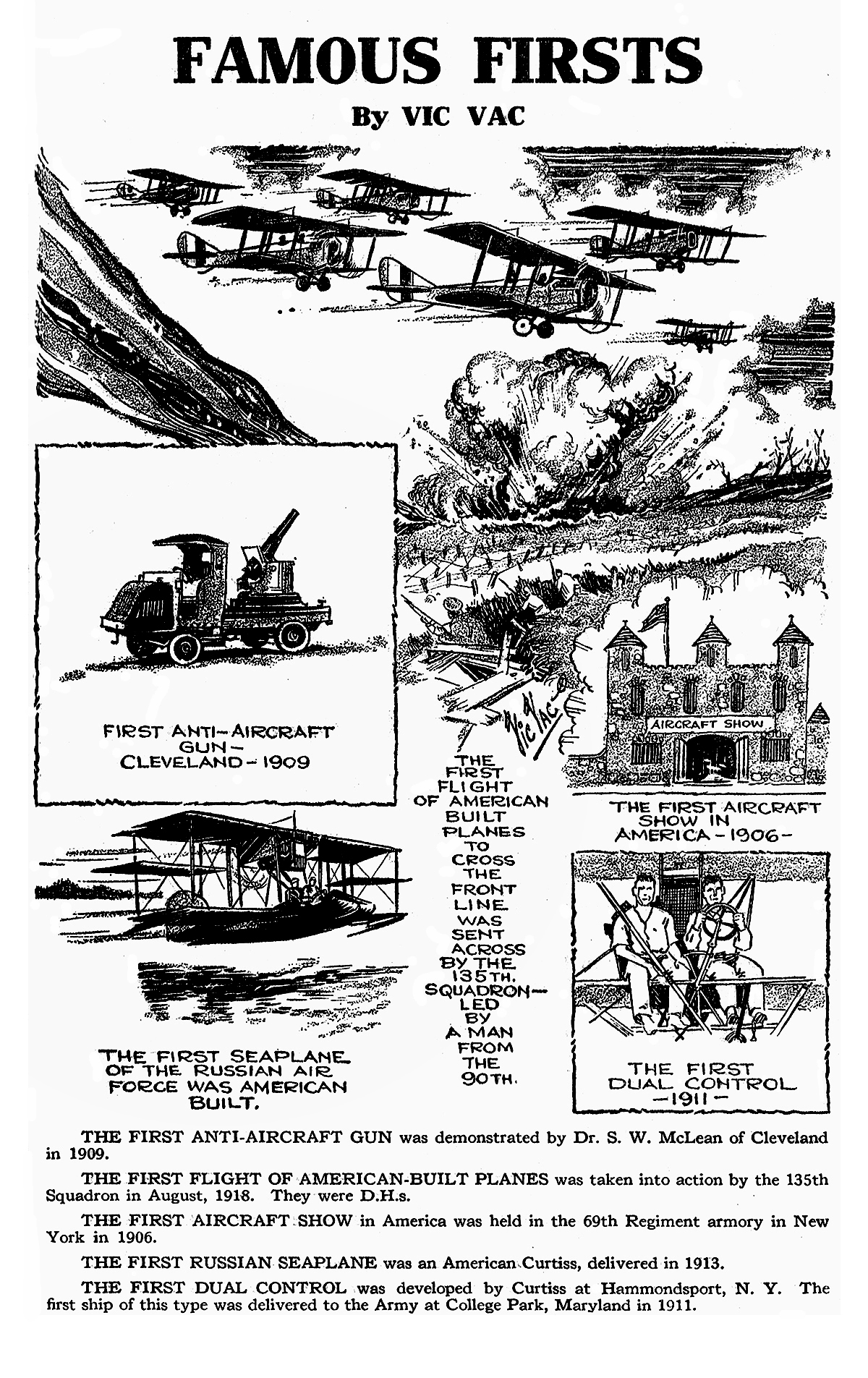
“Famous Firsts” July 1932 by William E. Barrett
THIS November we’re celebrating William E. Barrett’s Birthday. Before he became renown for such classics as The Left Hand of God and Lilies of The Field, Barrett honed his craft across the pages of the pulp magazines—and nowhere more so than in War Birds and it’s companion magazine War Aces where he contributed smashing novels and novelettes, True tales of the Aces of the Great War, encyclopedic articles on the great war planes as well as other factual features. Here at Age of Aces Books he’s best known for his nine Iron Ace stories which ran in Sky Birds in the mid ’30s!
Among those factual features was “Famous Firsts” which ran frequently in the pages of War Aces. “Famous Firsts” was an illustrated feature much along the lines of Barrett’s “Is That a Fact?” that was running in War Birds, only here the facts were all statements of firsts. And like “Is That a Fact?” in War Birds, this feature was also taken over by noted cartoonist Victor “Vic Vac” Vaccarezza in 1932.
The July 1932 installment, from the pages of War Aces, features facts about the first ani-aircraft gun; the first seaplane; the first dual control in a plane; and the first aircraft show in America!