




Ralph Oppenheim and The House of Genius
Continuing today with another chapter from Garrett’s book, The Golden Handicap: A Spiritual Quest.
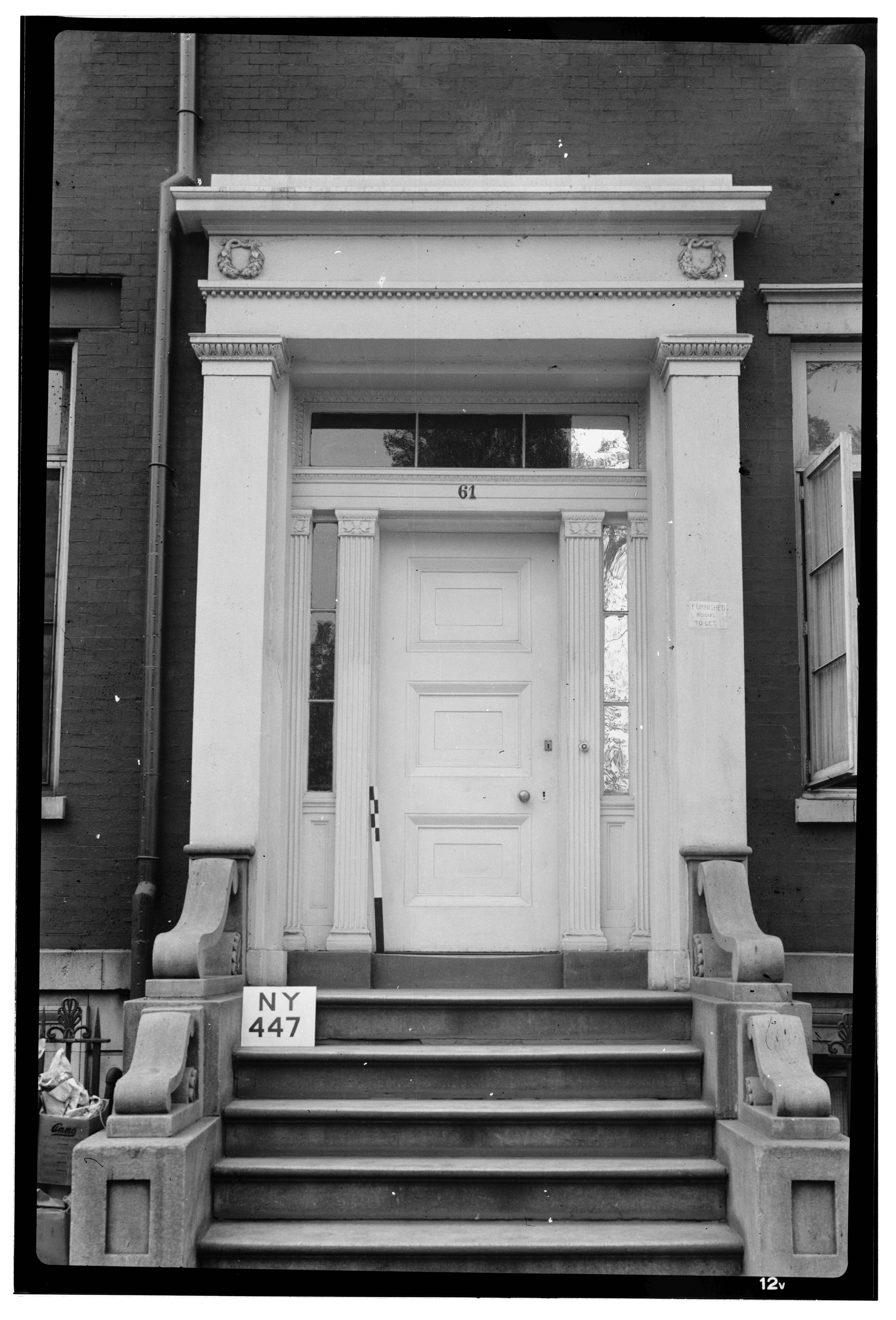
The strain Garrett’s condition had put on their marriage and the increasing demands upon his time due to his writing led James to move out of their West 138th Street apartment in January of 1914 and into digs at 61 Washington Square South. In April 1914 he would publish Idle Wives—a novel about well to do women who have nothing to do and ignore their children while they themselves are ignored by their husbands. Lucy saw herself as one of these neglected women and filed for divorce which was granted in July of that year.
Lucy remarried the following year to a Dr. Meyer M. Stark who had been treating Garrett for some time while James eventually remarried one Gertrude (Smith) Drick—he called her The Golden Bird, she called herself “Woe”. When asked why she would reply, ” ‘Cause Woe is me.” She is only remembered now for the time she tried to declare Washington Square it’s own republic (Garrett mentions this in the chapter).
In 1921 James Oppenhiem moved to Glendale, California with Woe and Ralph. They were there for about two years returning in 1923 and resuming residence at 61 Washington Square South, a rooming house known as The House of Genius! The block had been dubbed genius row due to the creative geniuses that had lived there at one time or another, but number 61 was the house of genius.
|
|

The house had been leased by a swiss woman named Madame Blanchard in 1886 and she in turn converted the single family dwelling into a rooming house and would only rent rooms to bohemian writers, musicians and artists. It is said that notable residents of the building included Willa Cather, John Dos Passos, Alan Seeger, Stephen Crane—and to this list Ralph Oppenheim!
According to Garrett, James and Gertrude had a room on the third floor which overlooked the park—from the window, you could see over the famous Washington Arch straight up Fifth Avenue. The walls of the third and forth floors of the building were said to be emblazoned with artistic murals and poetry etched by the former guests. Ralph occupied a smaller room where he wrote his blood and thunder stories!
The Golden Handicap: A Spiritual Quest
A Polio Victim Asks, “Why?” and Turns His Life Around
|
|

This time Garrett writes about visiting and then moving in with his father, step-mother and Ralph down in the village in a house commonly referred to as the house of genius, of the wonderful visitors—artists, novelists, poets, composers, even a well-known cartoonist—that would come; and of his step-mother who was more of a wonderful companion than a parent. In short: The Magical World of Daddy O!
- Download “The Magical Wold of Daddy O” (The Golden Handicap: A Spiritual Quest. ARE Press, 1993)
Editor’s Note: If you are interested in reading Garrett’s whole book it can be found on used book sites and for as low as 90¢ used from other sellers on Amazon!
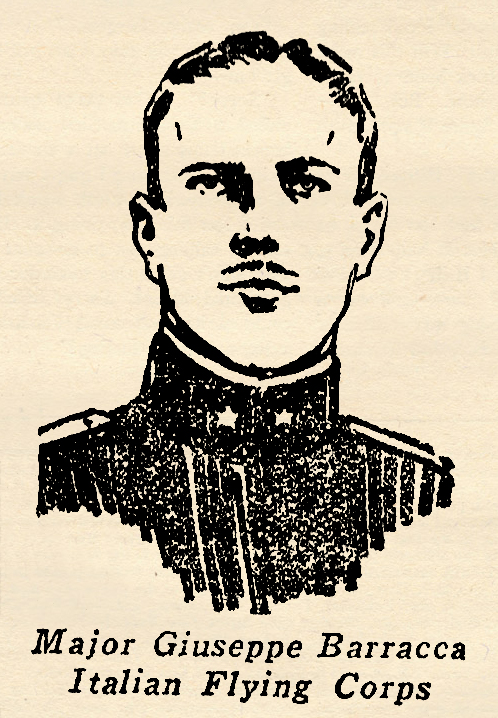 with Alan McLeod of the Royal Flying Corps, who was one of the youngest of the famous flying aces. Major Giuseppe Barracca, Ace of Aces of the Italian Flying Corps, was one of the oldest, being 34 years of age when he was killed in the desperate air fighting above the Piave. Like Captain Ritter von Schleich, he entered the war a cavalry officer, but soon was transferred to the more romantic, yet more hazardous branch of the army, the flying corps.
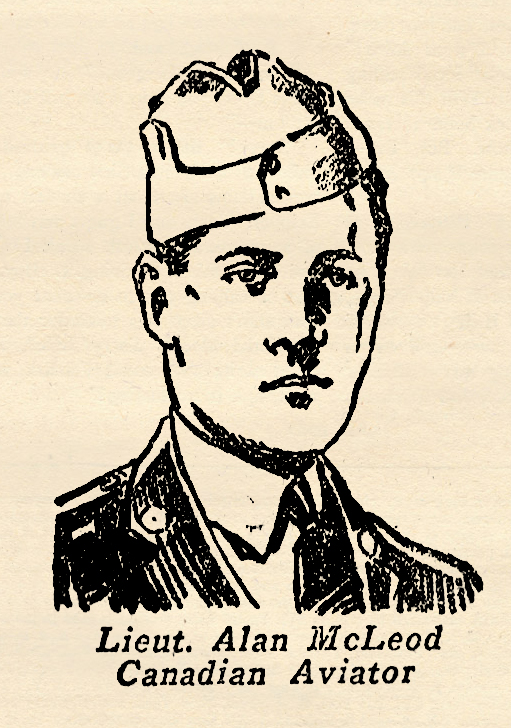 the three Canadian airmen winning the coveted award of the Victoria Cross, the highest honor bestowed on its fighting heroes by the British Empire, He was the youngest flyer ever to receive the honor, having it pinned on his chest in appropriate ceremonies at Buckingham Palace a few months before his nineteenth birthday.
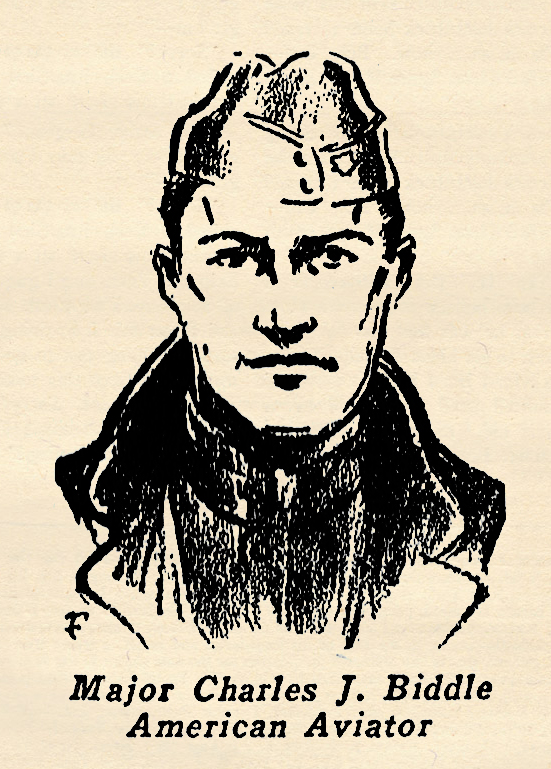 of that small number of American aviators who had actually had front line battle experience when his own country entered the war. Even before there were any indication* of his own country taking part, he sailed for France and enlisted in the French Army, where he was eventually transferred for aviation tralning. When the La Fayette Escadrille was formed, he wan invited to become a member. In that organization he won his commission as a Lieutenant in recognition of his ability and courage.
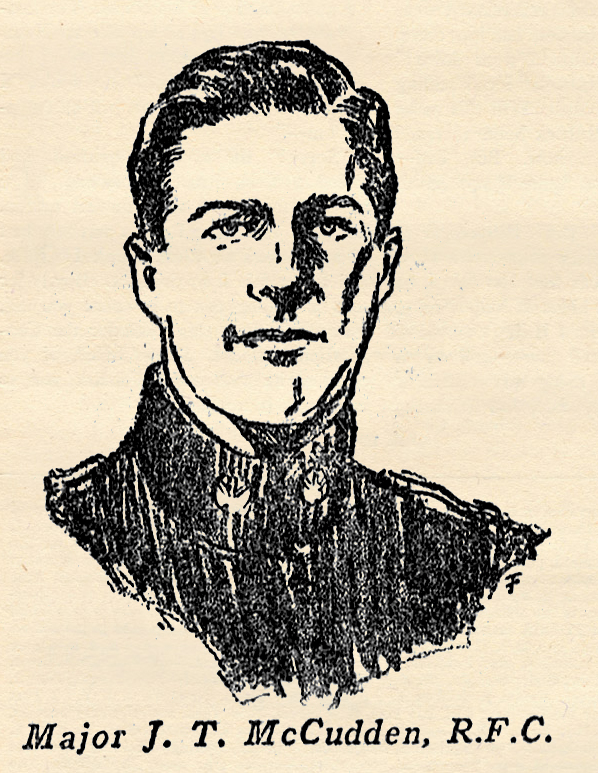 one of the most modest and unassuming of the great flying aces. When the war began he was an engine mechanic with the then recently formed Royal Flying Corps. After flying training he became a Sergeant pilot, and began, piling up the string of victories which eventually placed him at the top of all the British aces. He was progressively promoted to Lieutenant, Captain and Major, and won every medal possible, including the Victoria Cross.
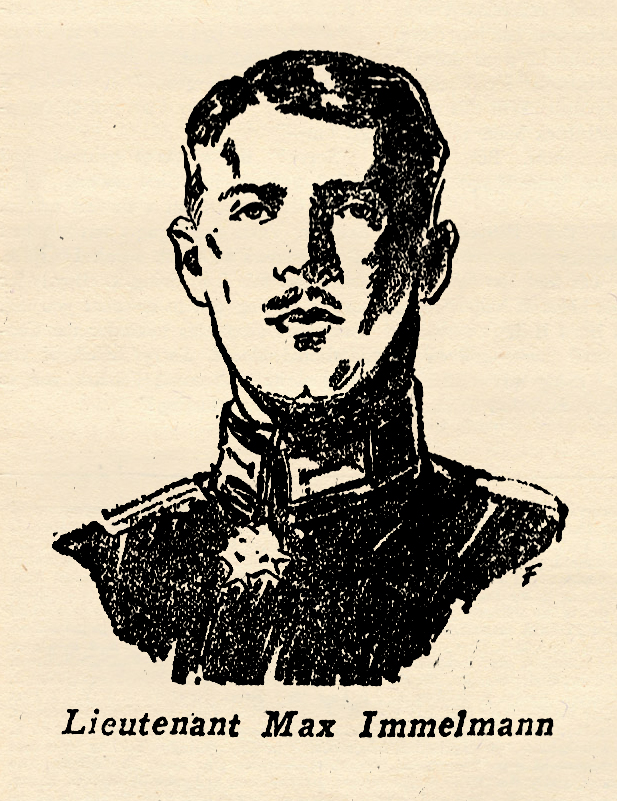 Immelmann was the first of the great German Aces. Immelmann scored victory after victory over the Allied flyers until his total score mounted higher than that of any of the Allied Aces.
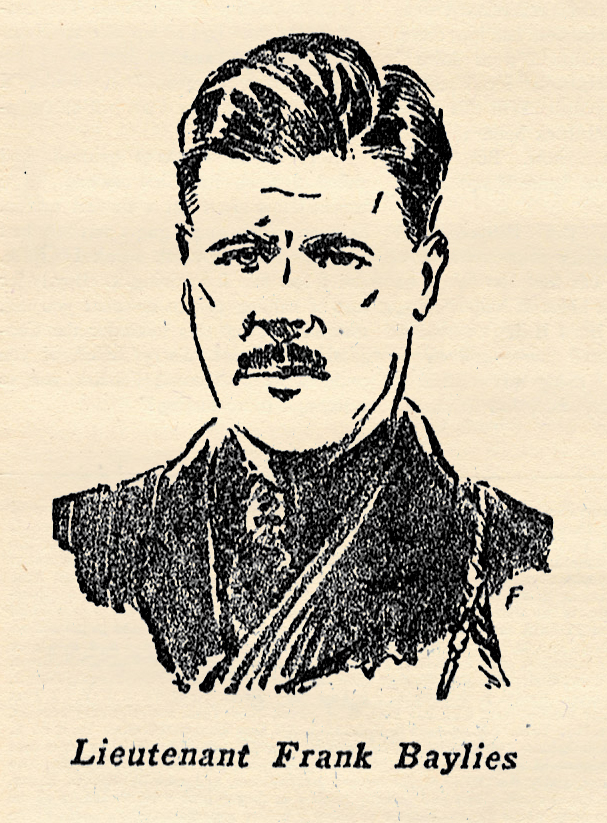 American Ambulance section, serving in that unit attached to the French armies from February 26th, 1916, to May 11th, 1918. In the early spring of ‘18 he transferred to the aviation. He became a member of the famous Stork squadron of the French Flying Corps.
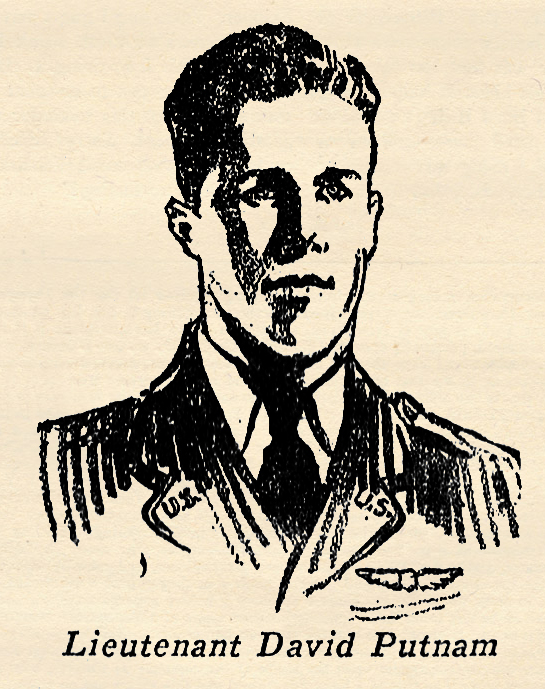 was one of the American flying aces who saw service under two flags. He began his career with the French before America entered the war. At first he served with the Ambulance Corps, but was later transferred to aviation, where he established a reputation as one of the most daring flyers on the front.
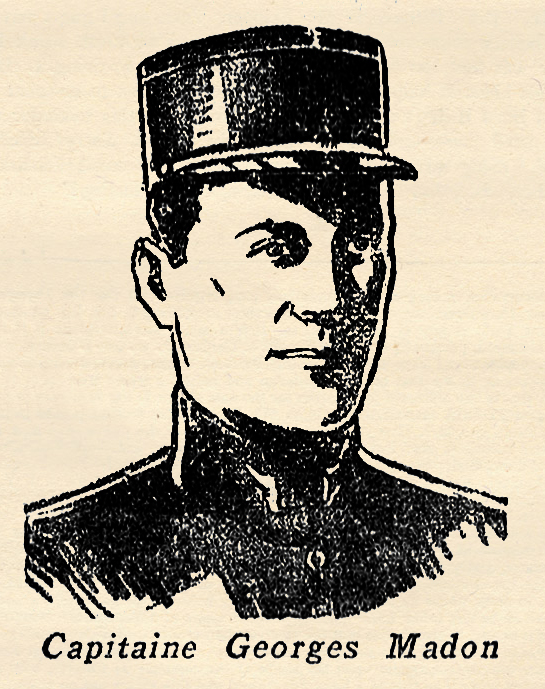 was one of the most famous of the French flying aces. Along with Guynemer, Navarro and Nungesser, he furnished the spectacular flying news that filled the newspapers in the early days of the World War. He was credited with over forty victories and only the great Guynemer topped him in the list of French aces during his time on the battle front.
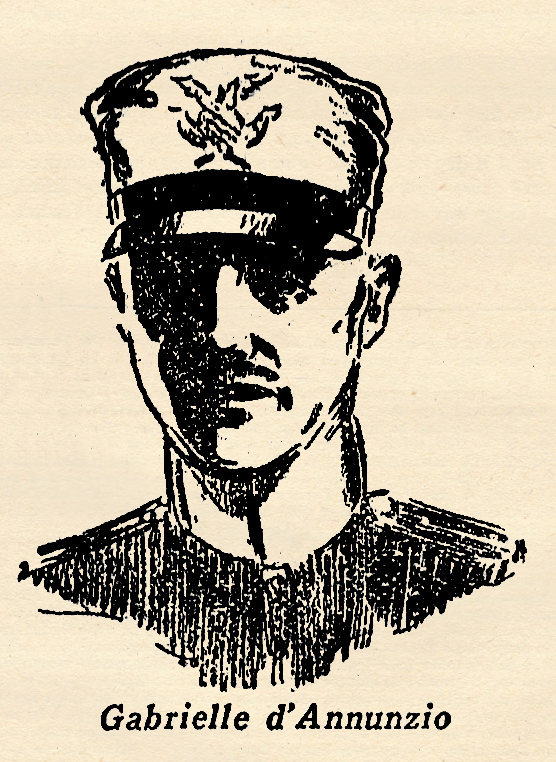 famous Italian poet and dramatist and enthusiastic patriot, was one of the most colorful and forceful of Italian flyers in the early days of the World War. He enlisted early in the most spectacular branch of the army, the Italian Air Corps. Soon after completing his training he was assigned to a bombardment squadron which was charged with harassing the then fast-advancing Austro-German armies, which threatened to overwhelm the brave Italian defenders and take the capitol at Home. By exerting superhuman efforts the Italians prevented that.
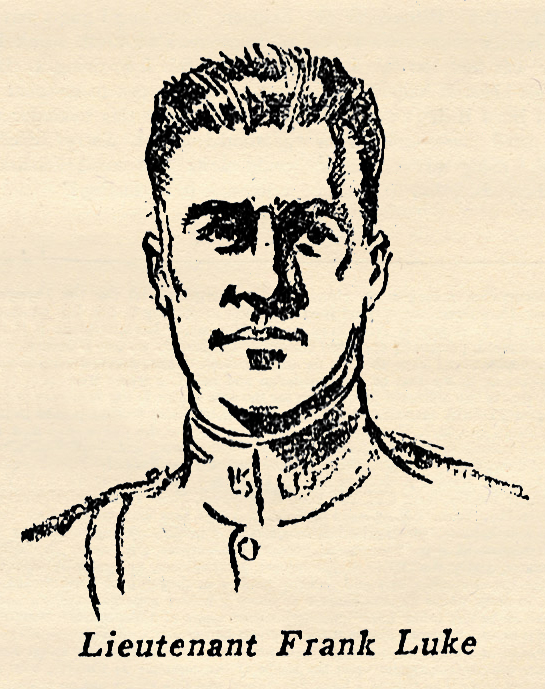 much the name means to those few who knew how he fought and died. His front line career was short, hectic and dynamic. He blazed across the war-torn skies of France like a flaming meteor. Very few people ever heard of Luke during his short but Sensational career on the Western Front. His fame and name came after he died. He is recognized now as the most courageous, the most audacious war bird that ever handled a control stick and pressed the Bowden triggers mounted on it. Only Eddie Rickenbacker topped him in the final list of American Aces after the War was ended. Rickenbacker was officially credited with 26 victories. Frank Luke had 21. But the comparison is hardly fair to Luke, for Rickenbacker was on the front for almost six months, while Luke’s front line career lasted only a little over two weeks. Even in that short space of time he had worked up to the top and was the American Ace of Aces when he died. There is no telling what, score he would have run up, if fortune had been more in his favor. The story below he told to Sergeant John Monroe, who was a favorite of his.
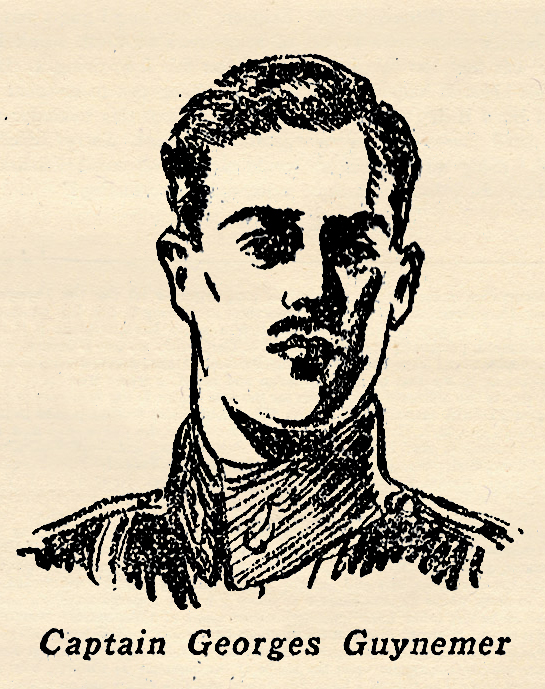 French flier, was the moat spectacular and colorful of all the flying Aces. Young, tall, slender, but in very poor physical health, he was a veritable demon in the air, He had absolutely no regard for his own personal safety. Time after time be attacked single-handed whole squadrons of enemy planes. On the ground he was shy, reserved, and spoke very few words to anyone. Whenever he came to Paris on his very infrequent leaves from the front to secure medical aid, the whole city was decorated in festive attire in his honor. He was the toast of the boulevards, the darling of the French populace. And the whole world mourned his passing when he died, shot down by a comparatively obscure German pilot, who got in a chance shot from exceedingly long range. The German pilot, Wisseman, never knew until afterward that it was the great Guynemer that he had shot down. When Guynemer passed mysteriously into the blue, he was officially credited with 57 enemy aircraft and universally recognized as the Ace of Aces of all the armies.
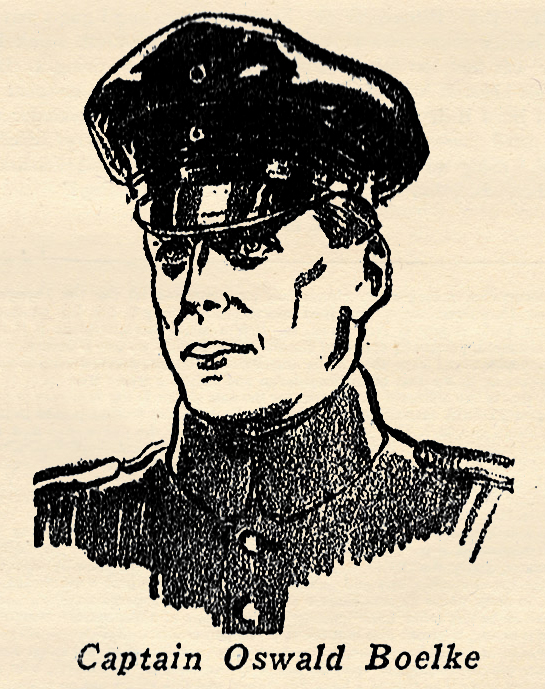 of the flying forces were not on the Allied side. The enemy also had its heroic figures.
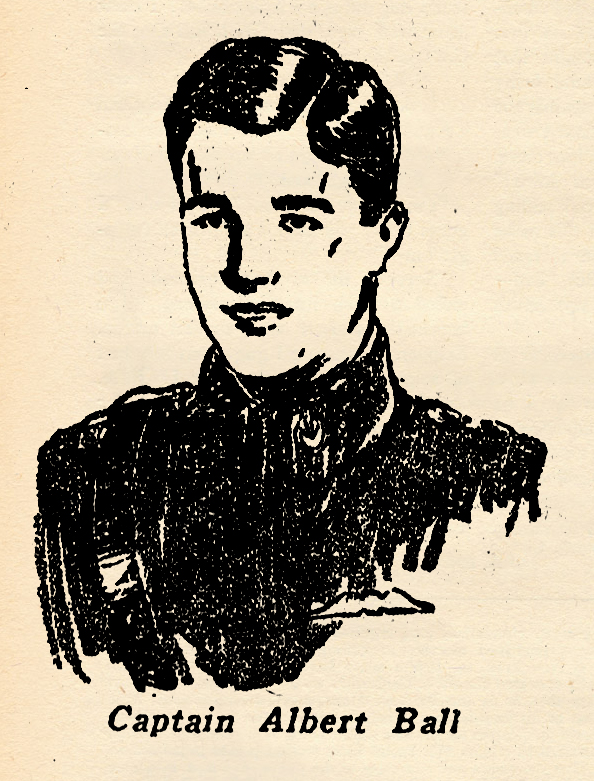 was the first of the Royal Flying Corps pilots to make a distinguished record. Unlike the French, the British made no mention of their air pilot’s victories. One day Ball wrote home that he had just counted his 22nd victory. His mother proudly showed this letter to her friends. Ball was disbelieved.