



“Sky Fighters, October 1935″ by Eugene M. Frandzen
Eugene M. Frandzen painted the covers of Sky Fighters from its first issue in 1932 until he moved on from the pulps in 1939. At this point in the run, the covers were about the planes featured on the cover more than the story depicted. For the October 1935 cover, Mr. Frandzen features the classic age old battle of Spad 13 C1 vs Fokker D7!
The Ships on the Cover
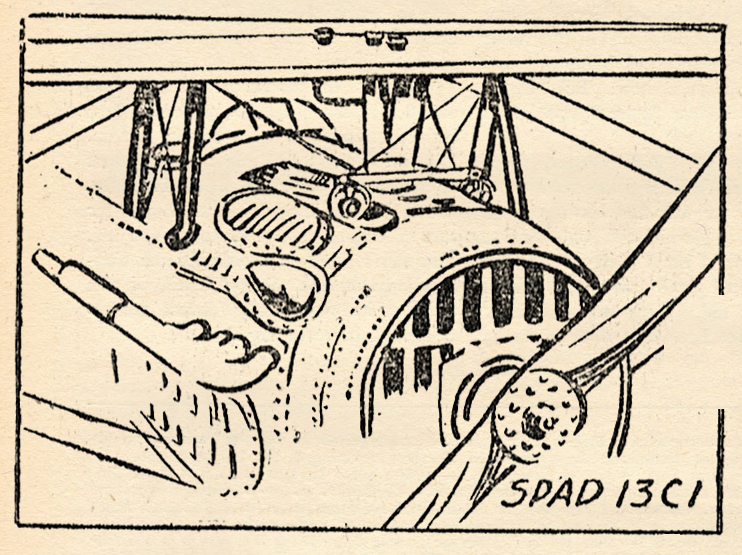
THE first Spad made its debut in 1916. 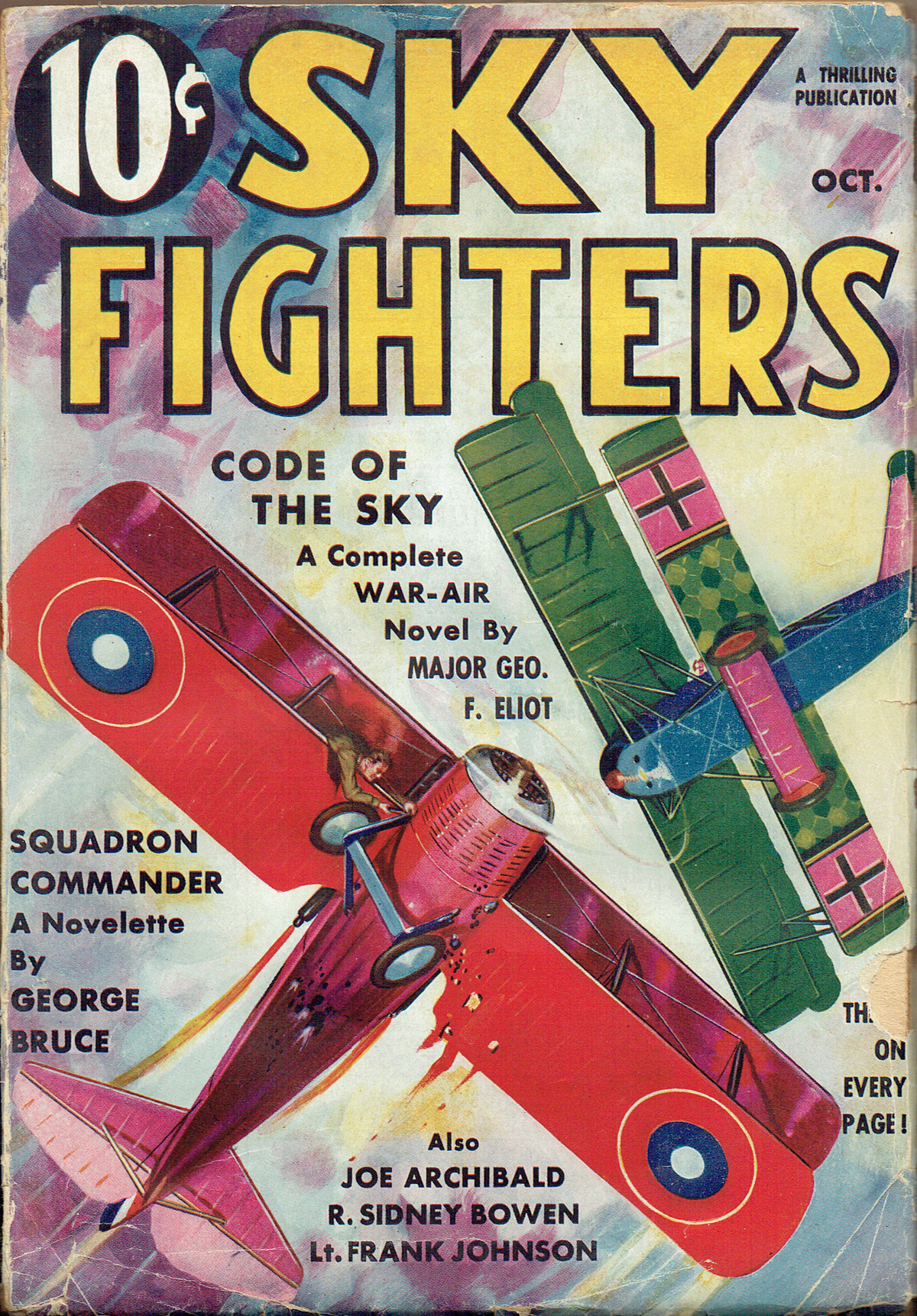 It was a heavier ship than the French manufacturers usually turned out. They were prone to seek speed by making engine, wings and fuselage all as light as possible.
Then up popped the first Spad with its heavy Hispano-Suiza motor and its rigidly braced body and all around husky construction. It knocked the spots out of the lighter type of machines. Each succeeding model got heavier and each engine had more power.
Aviators put these husky Spads into prolonged power dives that other machines could not possibly make.
The Finest Fighting Plane
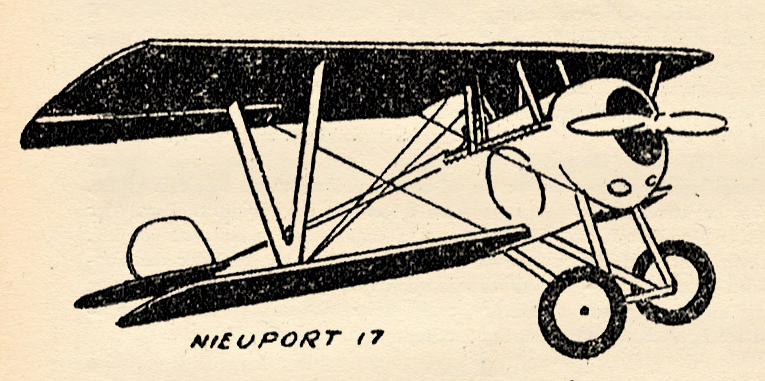
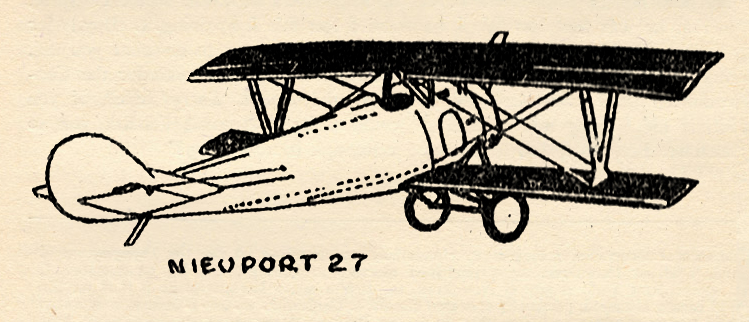
The Lafayette Escadrille swung over from Nieuports to Spads and any French squadron that could beg, borrow or steal them parked themselves in Spads and went up into the skies confident that they had the finest fighting plane in existence.
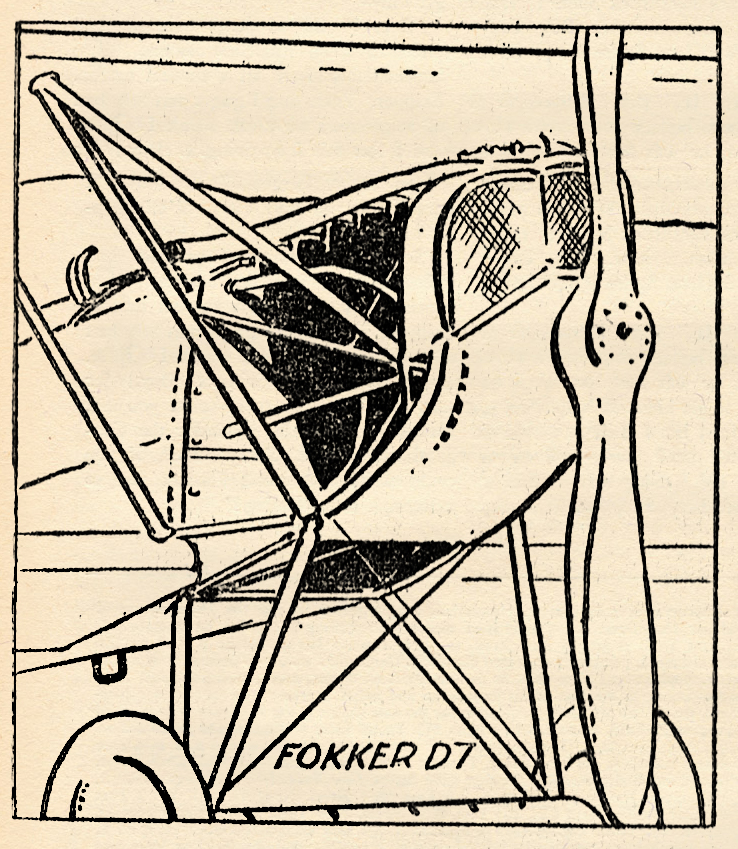
Of course there was a difference of opinion over on the German side of the line. The Fokker D7 made its appearance and the Heinie flyers just knew that they had the finest machine that ever sprouted wings. Therefore when the confident opposing war flyers, one in a Spad 13 C1 and the other in a Fokker D7 decided to smack each other with a few well placed slugs, it was an interesting show. And doubly interesting if two men happened to be aboard a one-place Spad.
Story of the Cover
Fifteen minutes before the action depicted on the cover, the Spad pilot set his ship down on German territory at a prearranged spot. A figure crawled from a clump of brush, raced to the Spad and shinned onto the right wing. Up zoomed the Spad with its precious wing passenger, an A1Iied intelligence operator who had documents that were important enough to cause three generals to be waiting at that moment at the Spad’s drome.
At a thousand feet the German archies started bursting in profusion. One lucky she11 sheared the undercarriage nearly off the Spad. It lurched and staggered with the swaying encumbrance. The wing passenger inched his way to the cockpit the pilot handed out a small hunk of iron.
Bullet Hemstitching
The passenger went to work just as a Fokker went into action. Three minutes of scientific prying on the shattered undercarriage released it and the Spad leaped forward with ten miles extra speed. It turned on the Fokker and hemstitched it from stem to stem.
The German with two minor wounds admitted the Spad, if it didn’t carry wheels, was the better ship.
He dove out of the fight cursing the anti-aircraft gunners who had ruined a sure kill for him. His only consolation was that his foe’s landing would be about as soft as a racing locomotive hitting the rear end of a cement train.
Sky Fighters, October 1935 by Eugene M. Frandzen
(The Ships on The Cover Page)
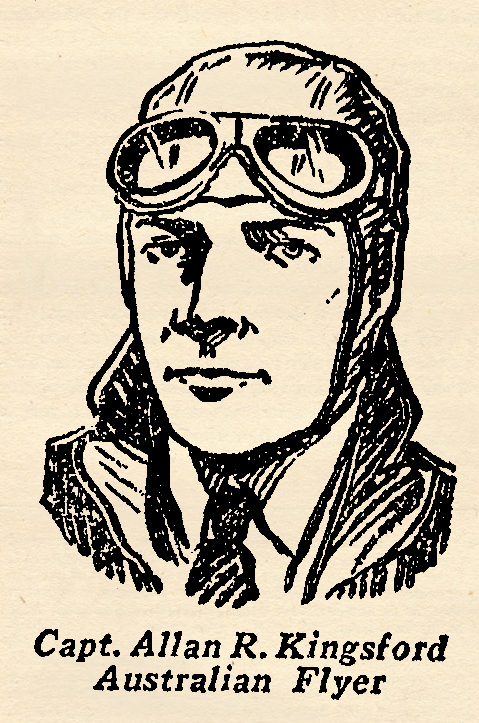 simple private in the Australian Army. The troop ship carrying his contingent was torpedoed by a German submarine and he was cast adrift in a heaving sea at midnight with only a frail spar to buoy him up. He served for over a year as a Lance Corporal of Infantry in Mesopotamia, he determined upon obtaining a transfer to the Hying corps, and after many setbacks he finally was ordered for flight training and sent to England, He became pilot of the Zeppelin night patrol guarding London, later joining that strange organization, the British Independent Air Force, as a bombing pilot attached to 100 Squadron. As a member of that group which served under no army, but roved about from point to point, he took part in 270 night bombing raids and became known as the Ace of night bombers. This account of his most thrilling flight is taken from his private memoirs.
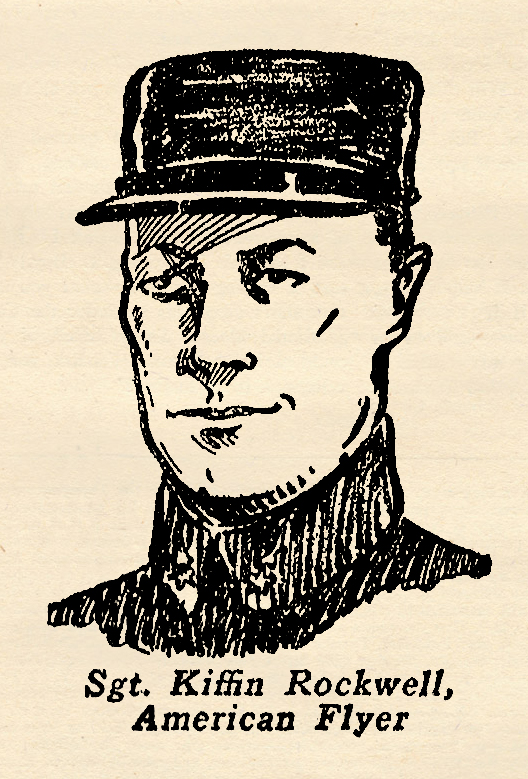 of fortune. Born and raised In Aaheville, N. Carolina, young Rockwell got the wanderlust soon after graduating from the University of Virginia. When the Germans made their surprise move on the forts of Liege, Rockwell was serving in the ranks of the Foreign Legion. For a heroic exploit in hand to hand bayonet fighting, he was awarded the Medaille Militaire. For a whole year he served with the Foreign Legion in the trenches, then transferred to the aviation and went into training at Avord. When Norman Prince formed the first American Flying Squadron in Paris, Rockwell was one of those invited to join. He proved out to be one of the best and most daring pilots of that original band. His career was cut short by his untimely death on September 23rd, 1916.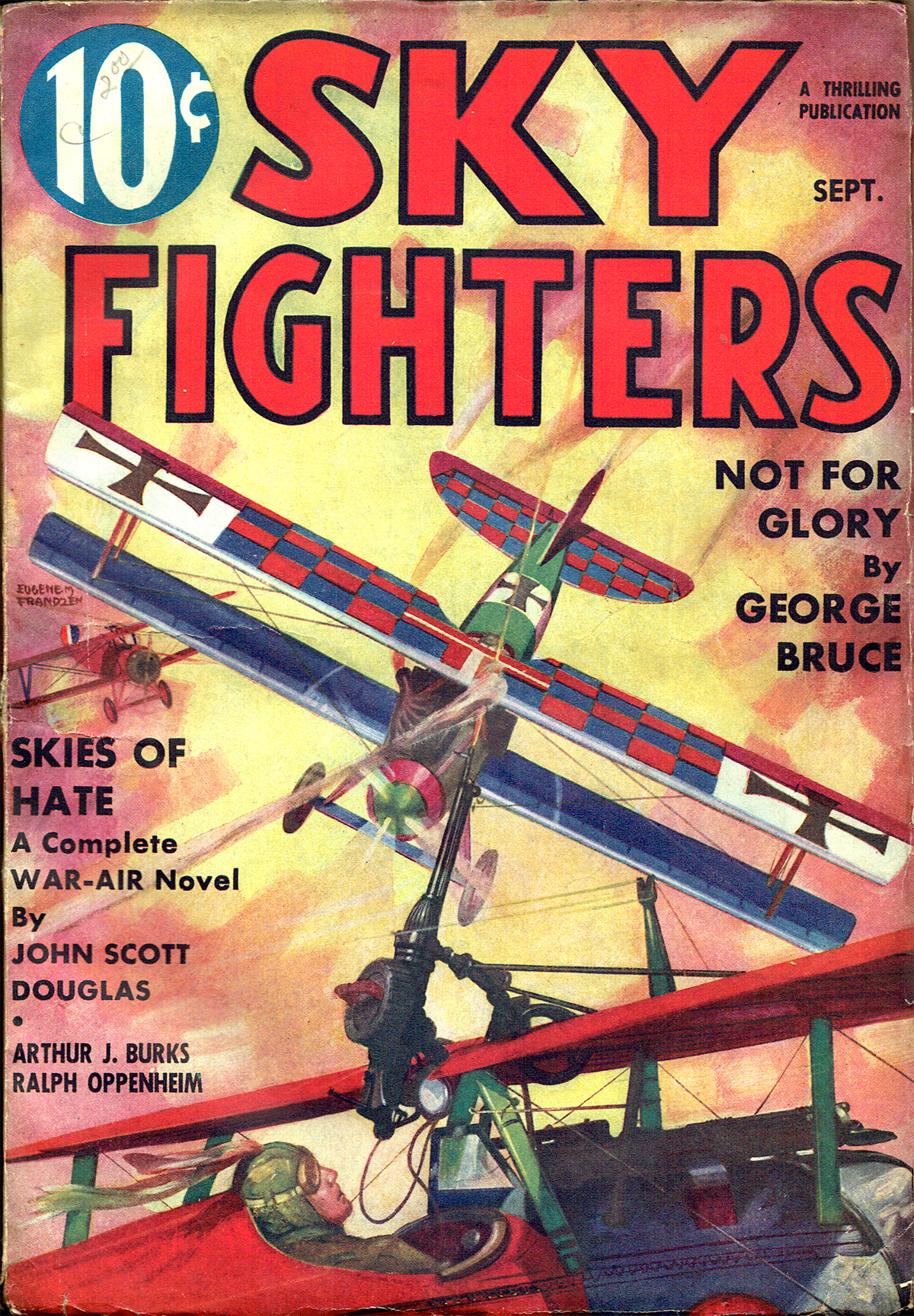
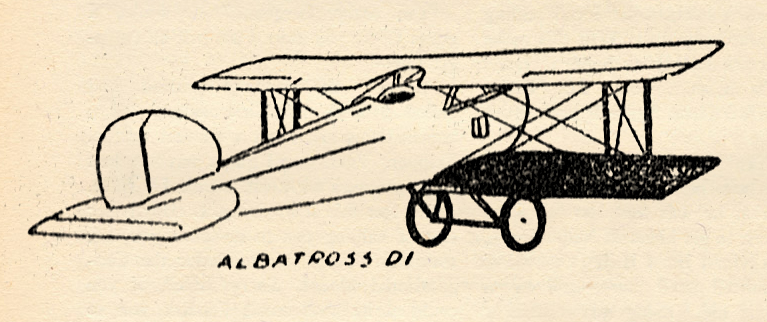
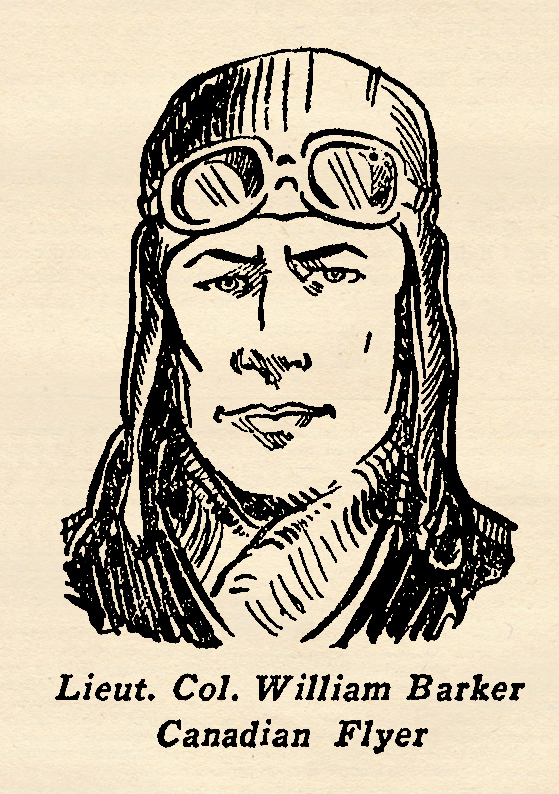 of William Barker’s career on two flying fronts reads more like fiction than fact. Born in the prairie province of Manitoba in 1894, he enlisted as a Private in the Canadian Army at the age of 19. He served in the cavalry before transferring to the flying corps. Barker began as a simple private. But he skyrocketed swiftly through all the grades to that of Lieut. Colonel. His training for a pilot was limited to two flights with an instructor. After that he was turned loose to begin piling up an amazing record. On October 27, 1918, he crowned this amazing record with the most astounding aerial feat of the whole war . . . fighting and escaping from a surrounding net of 6O enemy planes at the dizzy altitude of 20,000 feet.
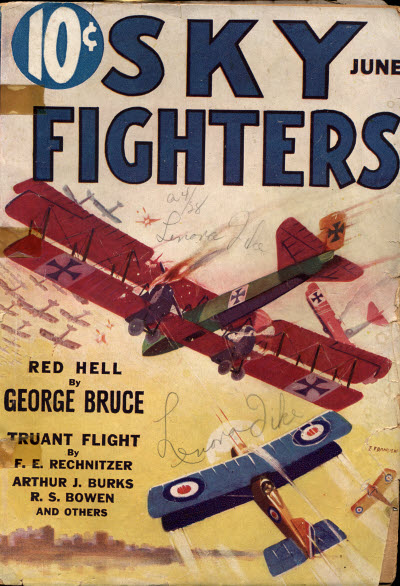 a story by prolific pulpster—Arthur J. Burks! Burks was a Marine during WWI and went on to become a prolific writer for the pulps in the 20’s and 30’s. He was a frequent contributor to Sky Fighters. Here we have a story of Frank Tracy, a strict flight leader who rules his troops with threats of court-martial or other disciplinary action. Tracy uses his methods as a way of keeping his flight safe, but they see him as just hiding behind his flight to save his own hide. As is the case in these situations tempers reach a boiling point! From the June 1933 issue of Sky Fighters, it’s Arthur J. Burks’ “Martinet.”
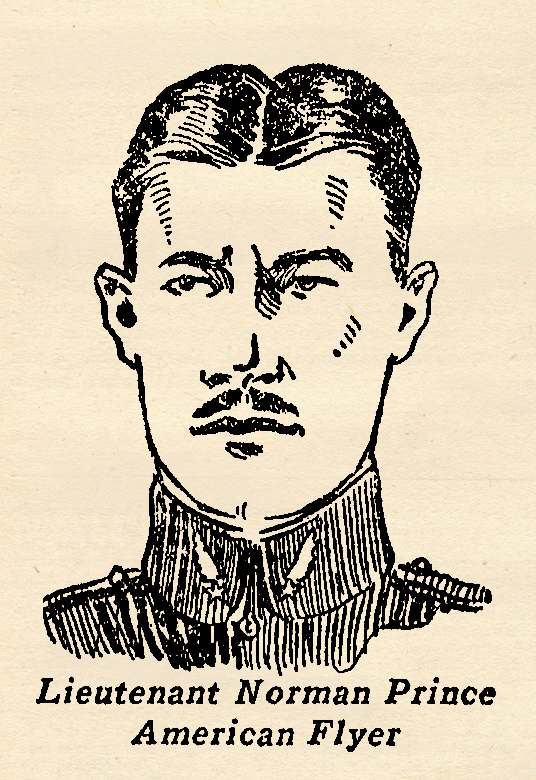 August 31, 1887, scion of one of the blue-blooded families In old Boston, was Norman Pslnce, the founder of the famous LaFayette Escadrille. Educated at Groton and Harvard for a career in business with his wealthy family, he hazarded his promising future and used his wealth and family prestige in overcoming obstacle’s to form a squadron of American aviators for battle at the front. With him in the beginning were Thaw, Chapman, Rockwell, McConnell, Hall and Cowdin. These Americans with Prince made up the roster of the original squadron sent up to the front at Luxeuil in May, 1910.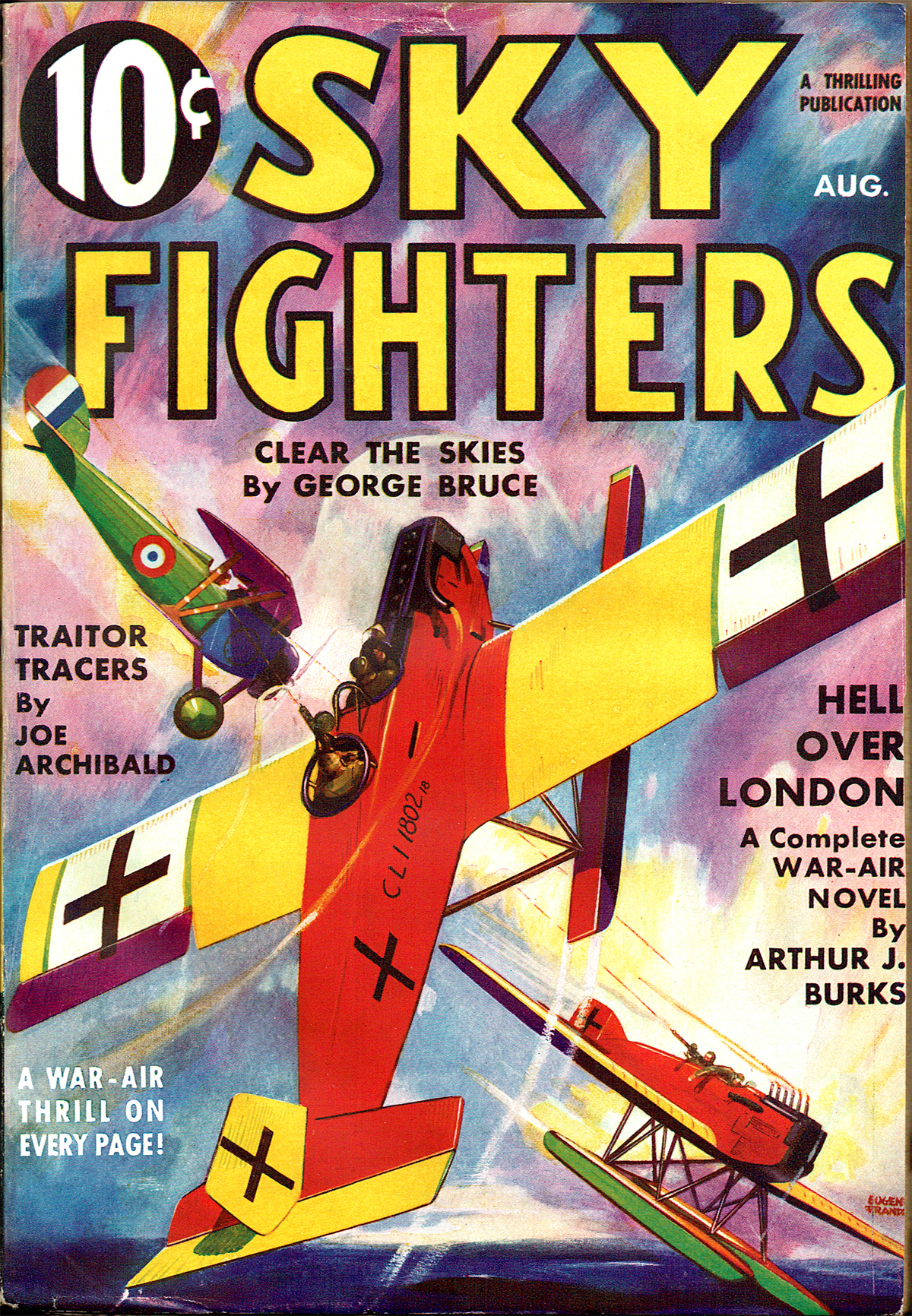
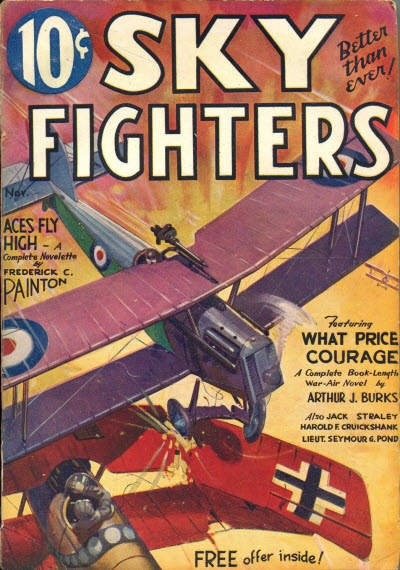 a story from the pen of a prolific pulp author and venerated newspaper man—Frederick C. Painton. In “Aces Fly High” Painton relates a tale of brothers in the same flight. The older, Blake Grenfell tasked with the duty of looking after his younger half brother, Pup. And that’s a task in itself as Pup is determined to become an Ace at the expense of all others. Good men are lost in Pup’s pursuit of becoming an Ace and things just go from bad to worse until drastic actions and sacrafice must be made to save the Grenfell’s name and social standing back home. From the November 1933 issue of Sky Fighters—it’s Frederick C. Painton’s “Aces Fly High!”

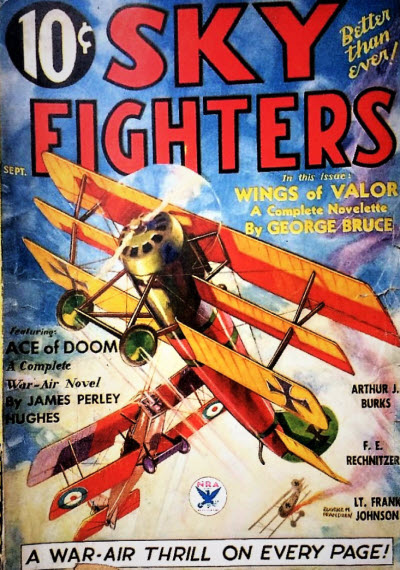 Silent Orth—ironically named for his penchant to boast, but blessed with the skills to carry out his promises—takes on four of Germany’s greatest Aces! Hauptmann Kruger, Weisskopf, Buchstabe and Braunstein. Their insignia are, in the order named, a crimson splash on the sides of the fuselage, representing blood; a hooded figure carrying an enemy’s head in his hands; the opened Book of Life with blank lines, presumably to hold the names of condemned enemies; and a comet with a tail of fire! From the pages of the September 1934 issue of Sky Fighters, it’s Silent Orth in “Shooting Star!”
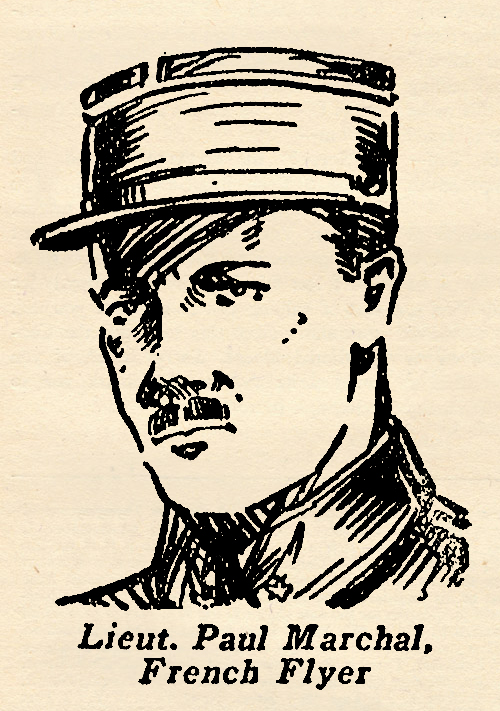 colors on the first day war was declared, and it was he that answered the challenge of that bold German, lieutenant Max Immelmann, when the latter bombed Paris with leaflets calling for surrender. Immelmann had to fly a matter of but a hundred kilometers, or less, to get over the city of Paris. But when Marchal answered his challenge with an identical flight to Berlin, he had to fly 8QO kilometers.