



“Sky Fighters, July 1935″ by Eugene M. Frandzen
Eugene M. Frandzen painted the covers of Sky Fighters from its first issue in 1932 until he moved on from the pulps in 1939. At this point in the run, the covers were about the planes featured on the cover more than the story depicted. For the June 1935 cover, Mr. Frandzen features the Spad 22 and Spad 13 C1!
The Ships on the Cover
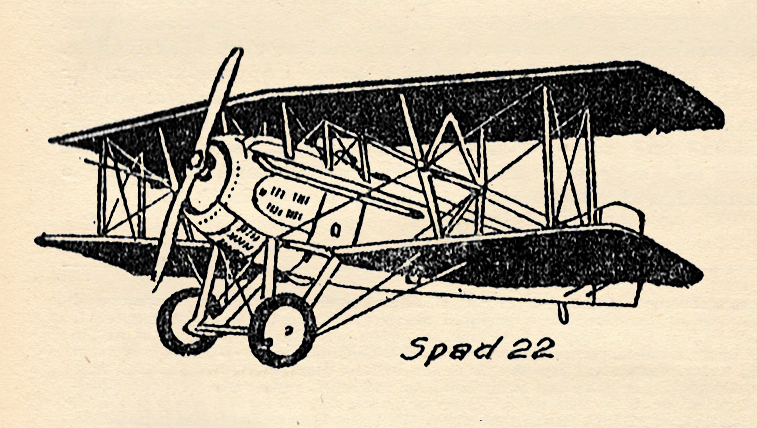
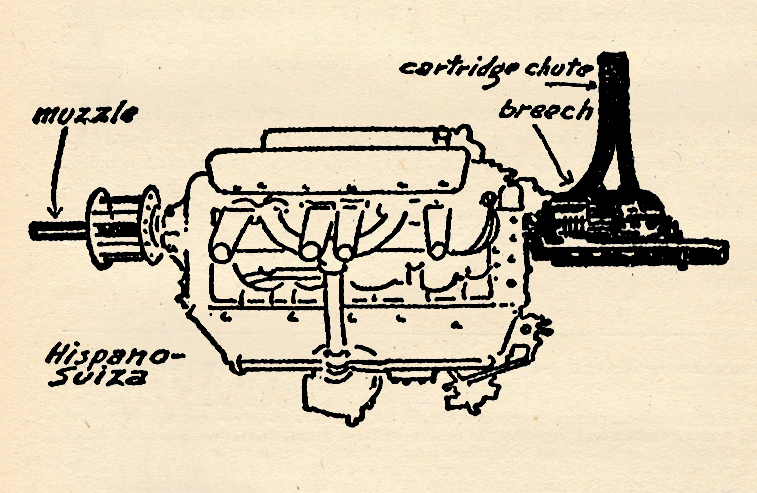
THE cannon ship used during 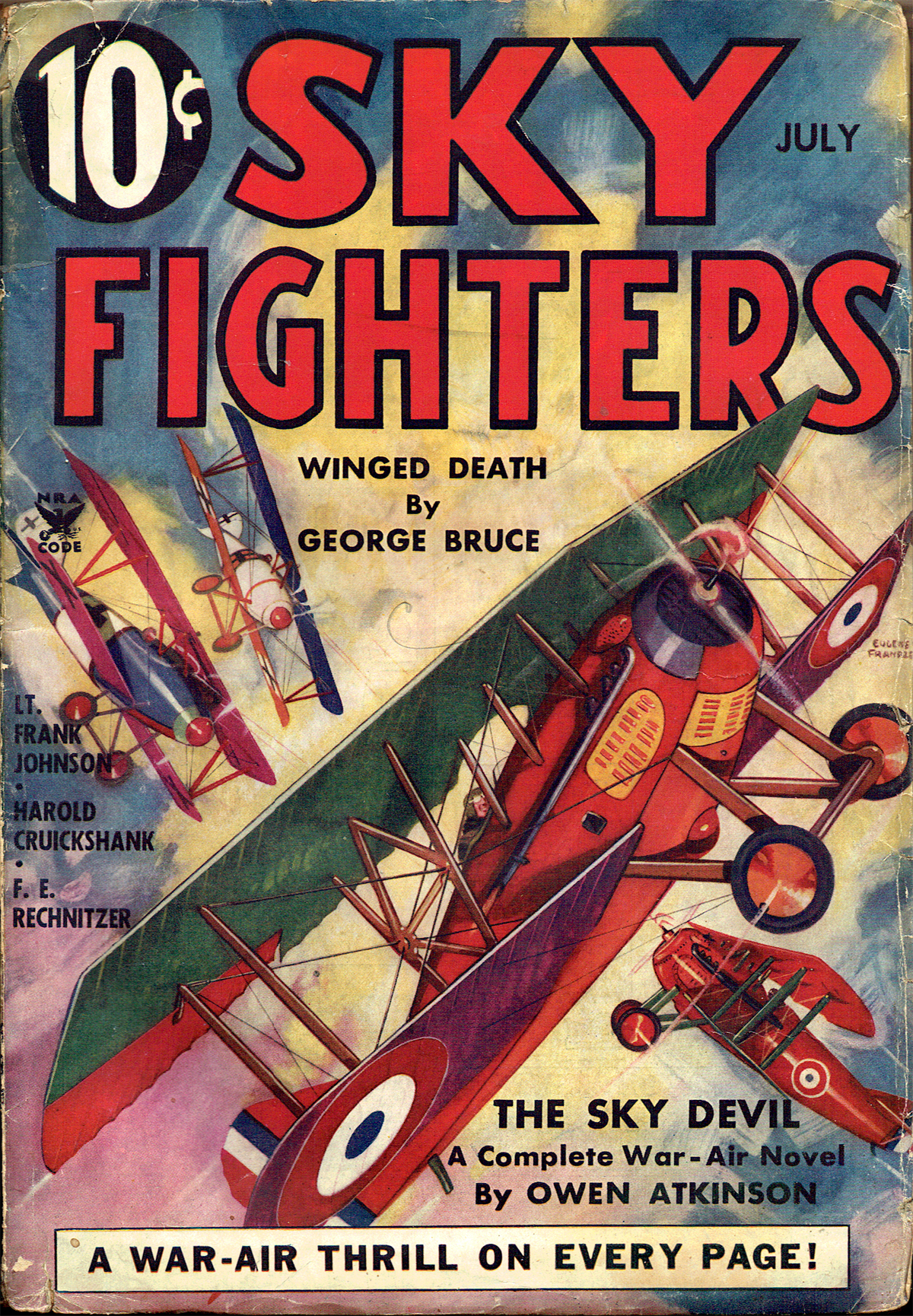 the World War did not necessarily have to be one type of plane. Any ship having a “V” type engine with a geared propeller could do the trick. The geared prop was above the crank shaft at the front of the engine, therefore above the center of the round radiator in the Spad. The hub of the propeller was made hollow just large enough to clear the sides of the muzzle of the 37 millimeter cannon which protruded about two inches. In the accompanying drawing this is clearly shown.
The ship with the complicated bracing in the foreground of the cover is the Spad 22, one of the little known crates of the war. It rated a 220 h.p. Hispano-Suiza motor with a geared prop which could accommodate the cannon. The Spad zooming up in the lower background is the Spad 13 C1 with geared prop. There were plenty of these “cannon ships” tried out from time to time and words flew hot and heavy from pilots who used this new gun arrangement for and against the stunt.
The Original Cannon
The original 37 millimeter cannon, the type the great French ace Guynemer used to down his forty-ninth to fifty-second victims, had to be fed by hand. Each seven-inch shell weighing about one pound had to be dropped into the breach of the gun. This took about three seconds in which time a pair of Vickers guns could churn out around fifty slugs, one of which might find a vulnerable spot in the enemy or his ship. But said enemy ship in three seconds could vary its position about 600 feet which is about equal to a shooting gallery target being reduced from the size of a wash tub to an aspirin tablet, a comparison which you fans with air guns or .22 caliber rifles Will appreciate.
On the other hand a Vickers slug might smack into a strut longeron, engine or even the gas tank, if it was rubber housed and not cause any serious damage; but let one of the one-pounder shells which explodes on impact connect with about any part of the enemy plane and the fight is over. The non-explosive one-pounder shell will knock a plane down in from one to three hits. Then there was a “fireworks” shell which was designed to set the target on fire, also a shell similar to a shotgun shell, which when loaded with buckshot would tear a wing to pieces.
A versatile gun, that cannon, and one which certainly did plenty of damage to the Germans.
Later Models Weighed More
The later cannon was semi-automatic, using the recoil, which was eight inches or more, depending on the muzzle velocity, to eject the used shell and slide a new one into the gun chamber. Guynemer’s cannon weighed about 100 pounds. The later models, 150 pounds or more. So put this added weight into a plane with a given speed and load, is to cut down its speed and put it at a disadvantage in a fight. To overcome this, the ammunition supply was limited or the fuel supply cut down which naturally decreased the cruising range. There were plenty of arguments for this weapon but also a few plain and fancy arguments against it.
Those two Albatross D5s zipping down on the foremost Spad are churning out four streams of slugs at a range which only amateurs would fire. The Spad 13 C1 coming up under them has a better range at a good angle. Not only are the bets on the Spads to come out with flying colors but when those explosive shells from the one pounder connect with the German ships, only one shell is necessary for blasting each one, where dozens of Spandau bullets may whistle through the Spads without harming them.
Sky Fighters, July 1935 by Eugene M. Frandzen
(The Ships on The Cover Page)
Next time, Mr. Frandzen features the Nieuport 27 and Junkers C.L.1!
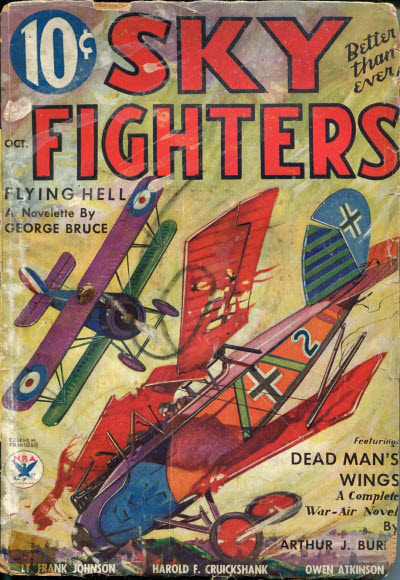 a story by another of our favorite authors—
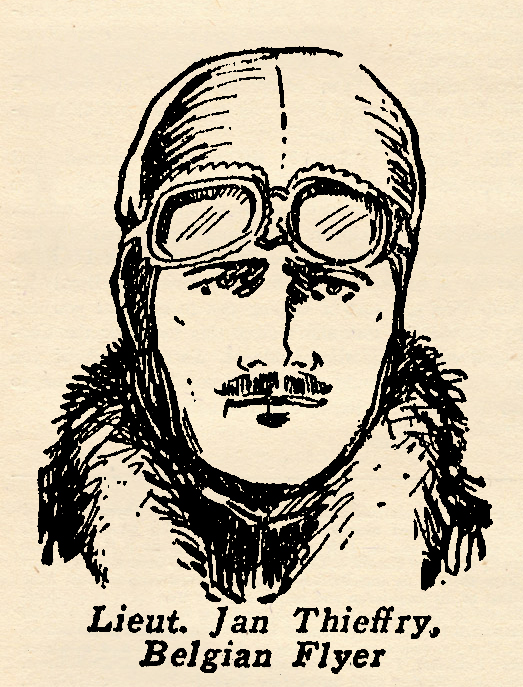 a part in the war of the air as she did in the war on the ground, when her brave soldiers held up the advance of the German hordes at the gates of Liege until the British and French armies could mobilize and get to the front to begin their counter-offensive. Corporal Jan Thieffry was a motorcycle despatch rider at that time. He was taken prisoner by a flying squadron of German Uhlans, but after some months made his escape.
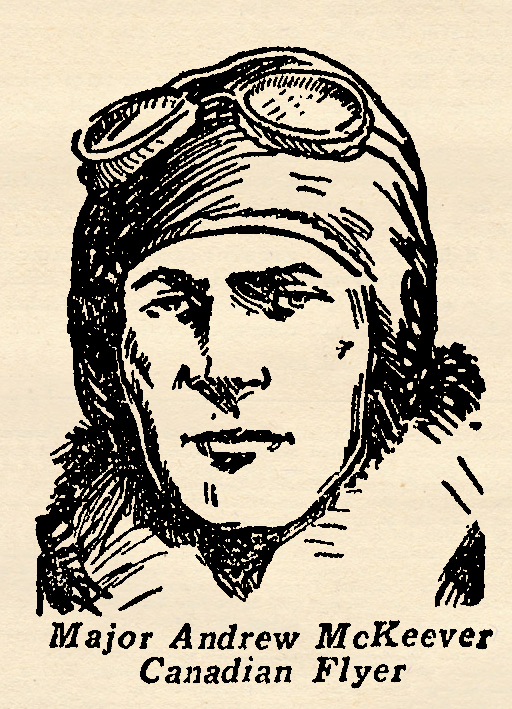 was one of the many daring young sky fighters that came from Canada to add fame and lustre to the deeds and exploits of the Royal Air Force, He put in almost a full year in the infantry before he was transferred for flying training. He joined the R.F.C. in December, 1916, was commissioned a lieutenant and sent over to the 11th Observation Squadron in France on May 16th, 1917.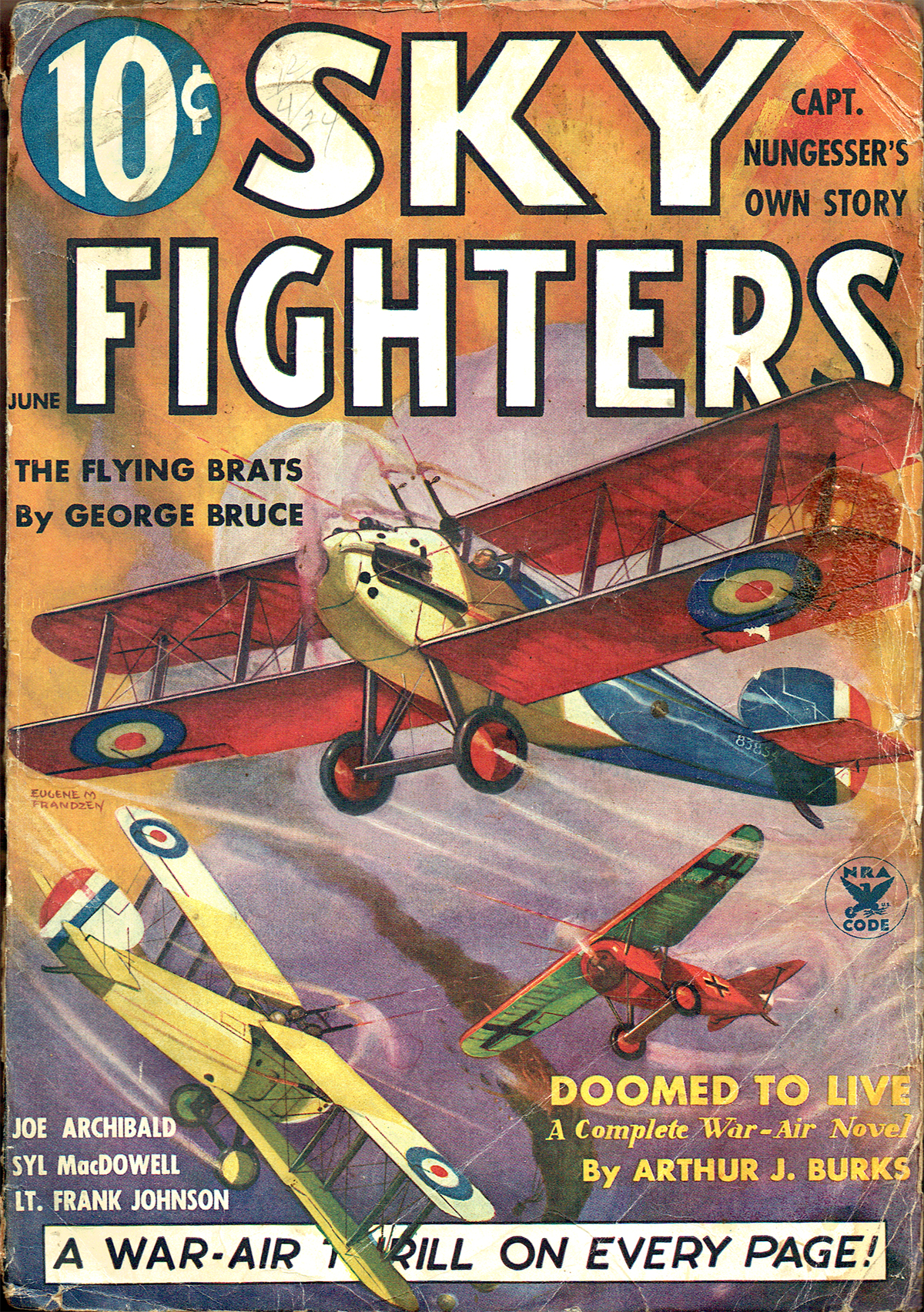
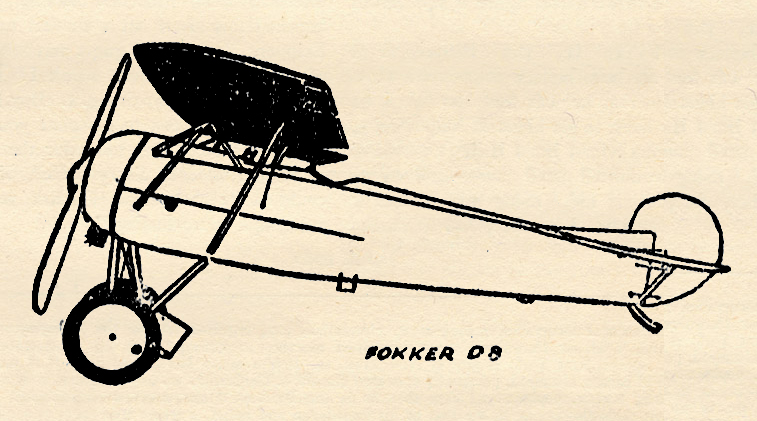
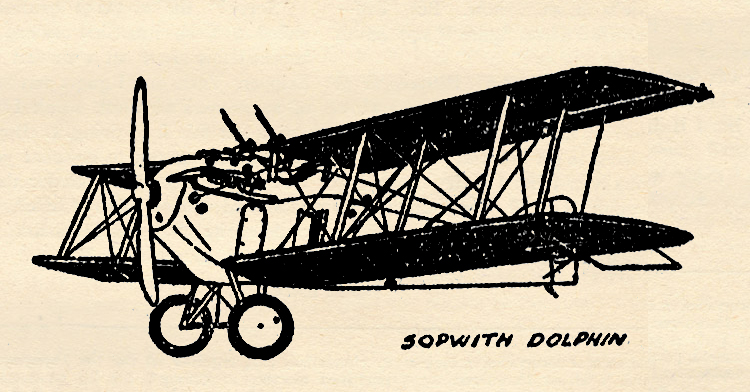
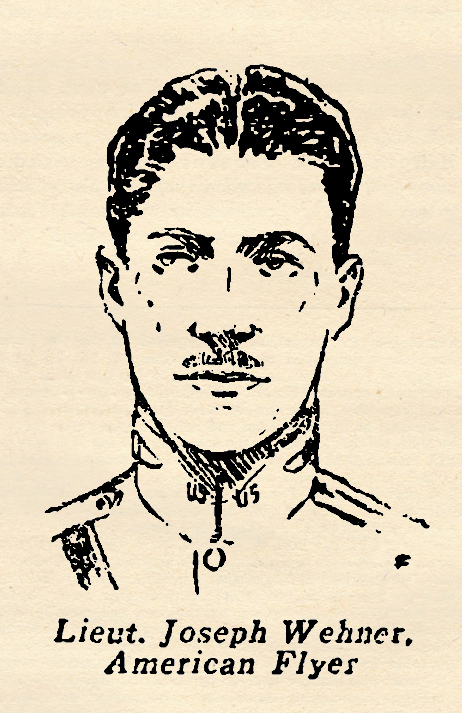 was the most daring sky fighter in the American Air Service. But it is hard to say whether he would have established the record he did without the aid of Joe Wehner, his constant and steadfast companion and buddy in the 27th Squadron. He was Luke’s alter ego.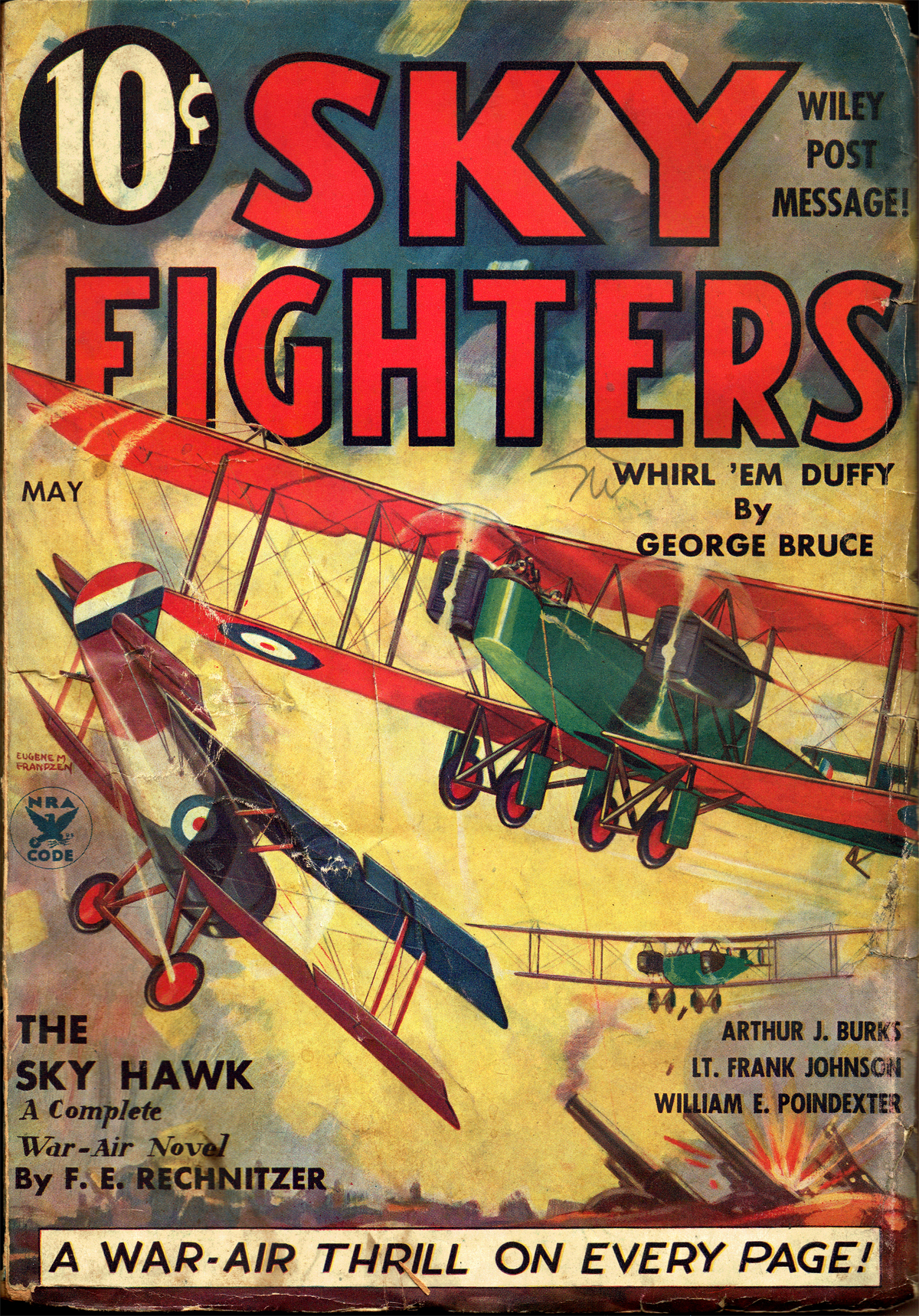
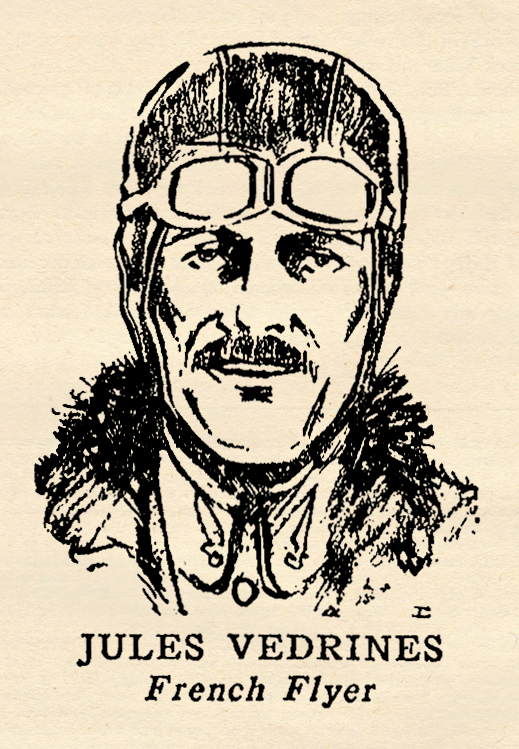 great war broke out Jules Vcdrines was the most famous flyer of France. He had twice won the Gordon Bennett speed trophy, and held both distance and altitude records. It was through his efforts that France wrested supremacy of the air from the United States and Great Britain. Along with Garros, Pegoud, Marechal, Le Blanc, Audemars, and other famous French flyers of his day, he enlisted in the French Flying Corps the day after war was declared.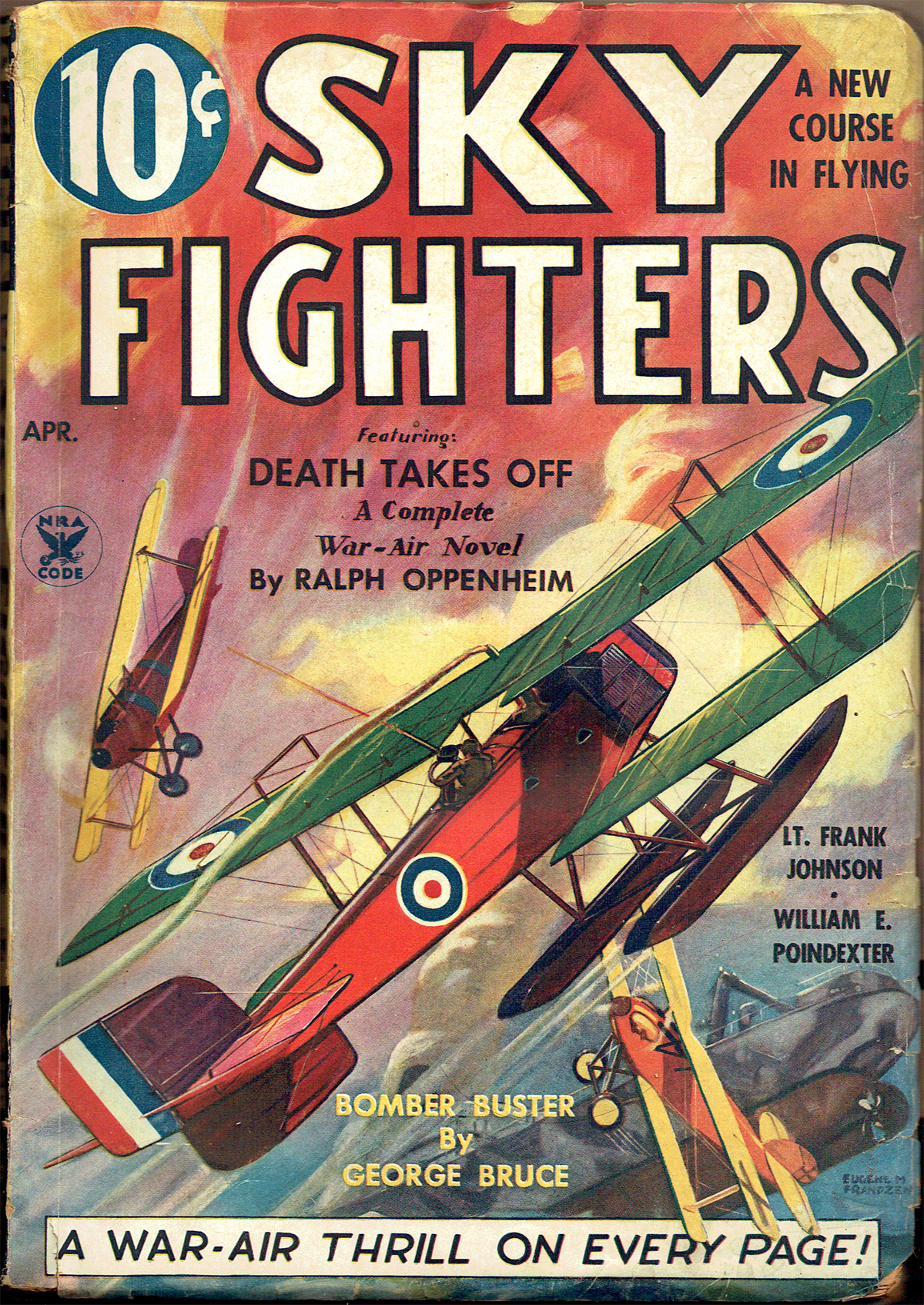
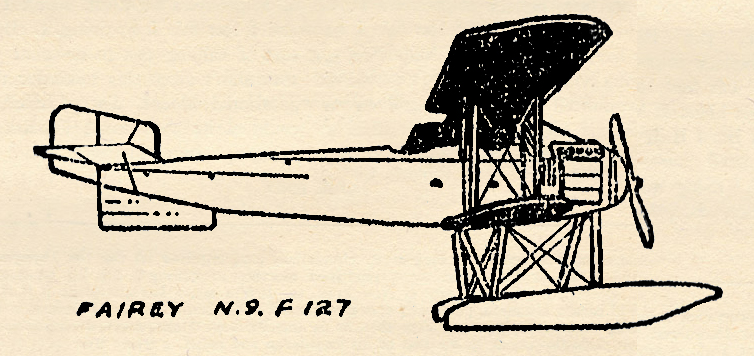
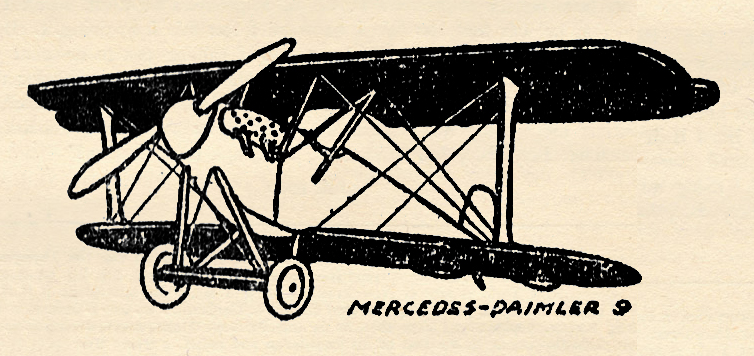
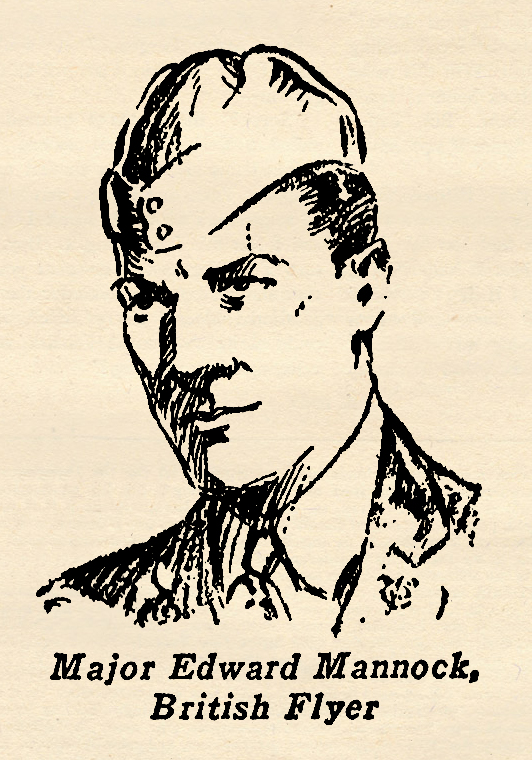 the British postal department, Turkey, when the war broke out. He was immediately made a prisoner by the Turks, and spent almost a year in an enemy camp before he was repatriated to England in 1915. He first served in the Royal Engineers, was commissioned as a lieutenant and transferred to the flying Corps in August, 1916. Major McCudden, the great British Ace, was his first instructor.
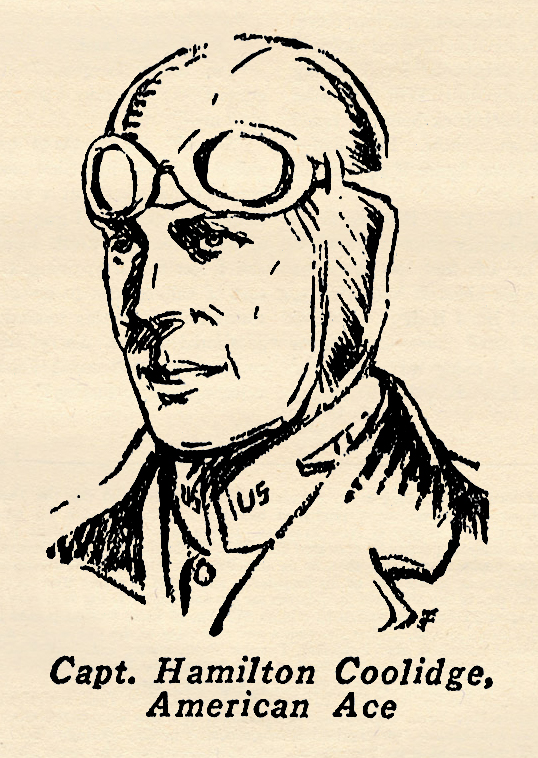 Hamilton Coolidge was well known throughout the land even before the war began. He enlisted in the aviation section of the Signal Corps and got his primary flight training at Mineola along with Quentln Roosevelt, his hoy-hood friend.
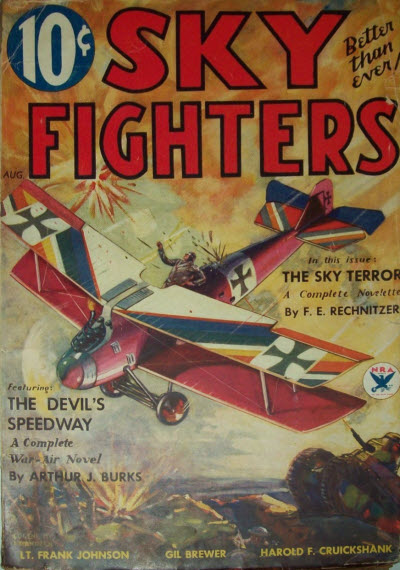 Silent Orth—ironically named for his penchant to boast, but blessed with the skills to carry out his promises—takes on a perilous mission to bomb a German ammunition dump. Using all the tricks and flying skills up his sleeve, Orth races to drop his bombs before the entire German Air force comes down on his neck. From the pages of the August 1934 issue of Sky Fighters, it’s “Orth’s Flight Against Time!”
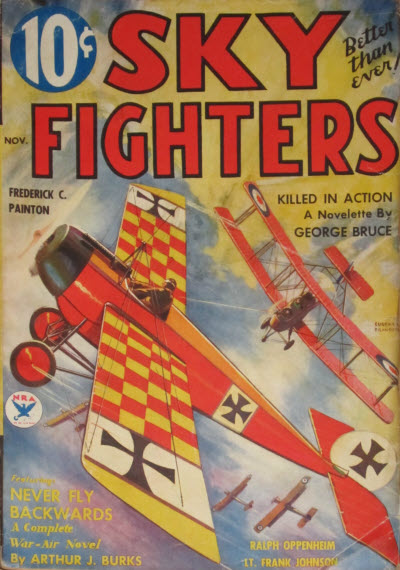 a story from the pen of a prolific pulp author and venerated newspaper man—Frederick C. Painton. In “Flaming Death” Painton gives us a pulse-stirring war-air novelette—”B” Flight’s mascot, Babe Norwood, the squadron’s youngest flyer, is shot down with incendiary bullets! All of the fighting nations had agreed to ban their use—so rigidly were they banned that any flyer caught using them was instantly stood against the wall with barely the mockery of a drum-head court-martial. The squadron uses all avenues of the services to hunt down the culprit and bring him to justice! From the November 1934 Sky Fighters it’s Frederick C. Painton’s “Flaming Death!”
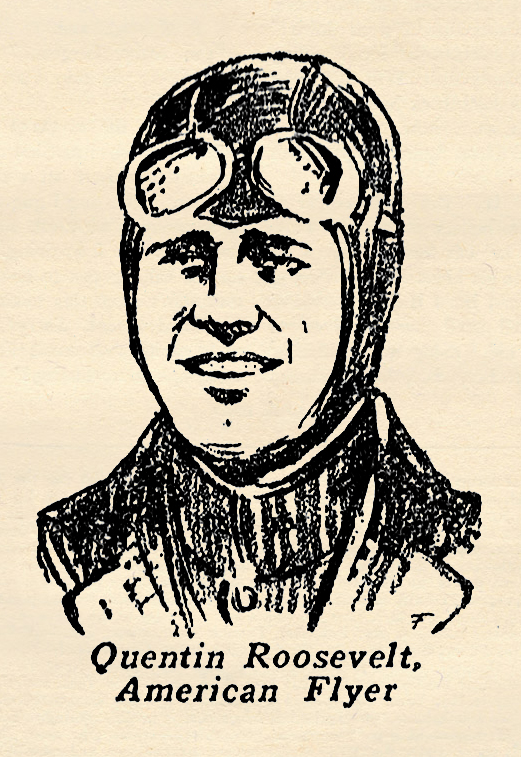 at Oyster Bay, N.Y., the fourth and last son of a famous fighting family, November 19th, 1897, six weeks after his illustrious father, Theodore Roosevelt, had left to fight for the freedom of Cuba. Although handicapped by a permanently injured back, he succeeded by dint of cunning and painful effort in fooling the medical examiners and being accepted for training as an aviator.
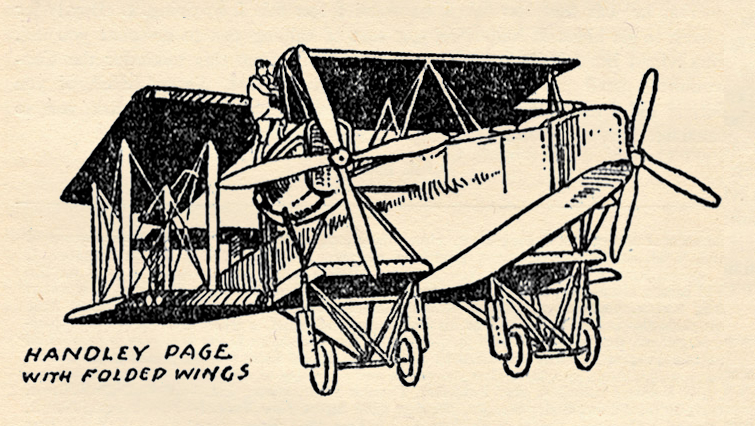
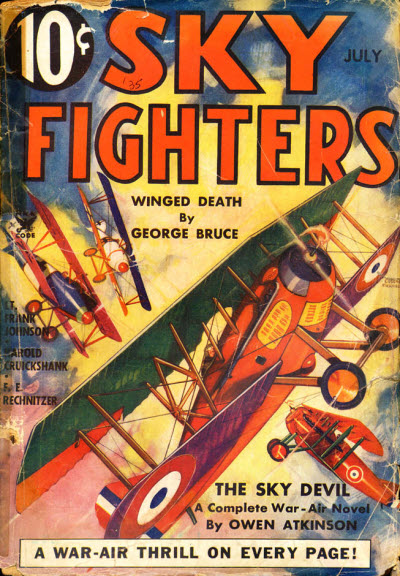 a story from the pen of a prolific pulp author—F.E. Rechnitzer. In “Errant Flight” from July 1935 Sky Fighters, Rechnitzer presents a tale of a pilot who feels he’s washed up and going to be sent stateside any day until fate intervenes and a mistaken order sends him to a British bombing squadron—only problem is Lt. P.T. Garner who can barely land a Spad without cracking up, must now pilot a large Handley-Page Bomber!