



My Most Thrilling Sky Fight: Sergeant Norman Prince
Amidst all the great pulp thrills and features in Sky Fighters, they ran a true story feature collected by Ace Williams wherein famous War Aces would tell actual true accounts of thrilling moments in their fighting lives! This time we have American Norman Prince’s most thrilling sky fight!
Norman Prince lived in 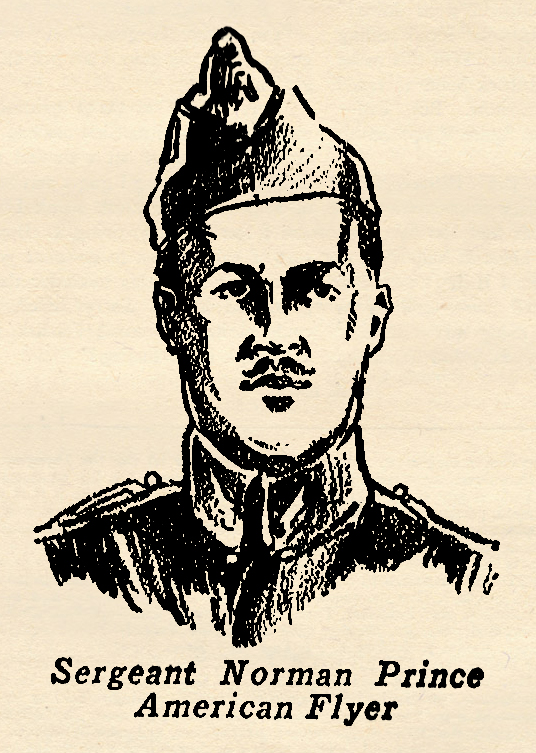 France when the World War began. Being immensely wealthy in his own right, he offered to furnish and equip an entire squadron of planes and pilots. The French Army would not accept this generous offer, but Prince, acting in co-operation with William Thaw of Pittsburgh, convinced the officials that they could muster enough Americans to man an entire squadron. Their offer was accepted, and the LaFayette Escadrille was born. A French officer was put in command. All the rest of the pilots were American. Prince’s death was tragic. Though wounded in an air battle, he managed to fly his crippled plane homeward, and was about to land on his own airdrome in the gathering darkness when his plane ran into a telephone pole and crashed. In his weakened condition he did not have strength enough to guide his plane over or around the obstacle. So perished one of the bravest and most courageous of the early American pilots who gave their lives for France. The story below was told to a French reporter.
ONE SHOT, ONE HUN!
by Sergeant Norman Prince • Sky Fighters, September 1934
I HAVE had many thrilling brushes with the enemy, so many that I scarcely know which is the most thrilling. All air fights are more or less of the same nature, and the actual thrills are usually delayed until the bottle is passed in mess several hours after the fight took place. No one has time to feel thrilled when the actual fighting takes place. One’s mind is then concentrated on how to defeat the enemy pilot and escape death.
My hardest fight happened over St. Menehold. With two squadron mates I chased five Boche fighters far back behind their own lines. Ten kilometers in, the Boche divided, flying in three different directions. One swung to the left, two to the right, and two continued straight ahead. I kited after those ahead. They waited just long enough to separate me from my companions, then banked suddenly, swinging around at me from opposite directions. One zoomed above me. The other dived under my belly; perfect team work on their part. Almost before I realized it the bullets from their guns came clicking through my plane.
I dived, went into a swift loop, saw when I was coming out of it that they had anticipated this maneuver; so I shifted controls quickly, half rolled and came out flying in the opposite direction. An instant vertical bank got me on the tail of the first Boche. I pressed my stick trigger. Nothing happened! The Vickers had jammed without spewing a single shot. Panic seized me momentarily.
But another burst of bullets clicking through my fuselage brought me out of that daze. I crossed controls, fell off on one wing; then stood up in the cockpit and leaned over the gun breech. I saw what the trouble was. The webbed bandolier had been raked with machine-gun bullets. It was useless. The Boche bullets still rained about me. I had to do something quickly.
I ripped the bandolier from the breech feeder, shoved a single shell in the chamber and pulled the cocking handle. I had then what was equivalent to a single shot rifle. One bullet against two Boches with perfectly functioning Spandaus! It was ridiculous, but war plays strange pranks. Sometimes you are favored, sometimes not.
I managed to shed the Boche bursts in their next attack. Then as one swept past me, I swung in line with him, dived, came up under his belly. As my plane poised in air almost vertical, my sights centered the pilot’s pit. I uttered a silent prayer, pressed the stick trigger, expended my single shot.
It was effective. The Boche plane wobbled, one wing-tip upended, then it began to spin, uncontrollably. I reached up again, cleared the shell and jammed in another, then went sailing after the second Boche. But he had seen enough, I guess. He went scuttling homeward with his tail between his legs.
I did not have gas or—nerve enough—to chase him any further inside his own lines. Believe me I was glad to set down on my own drome safely fifteen minutes later. It was my narrowest escape, the tightest moment I ever want to experience.
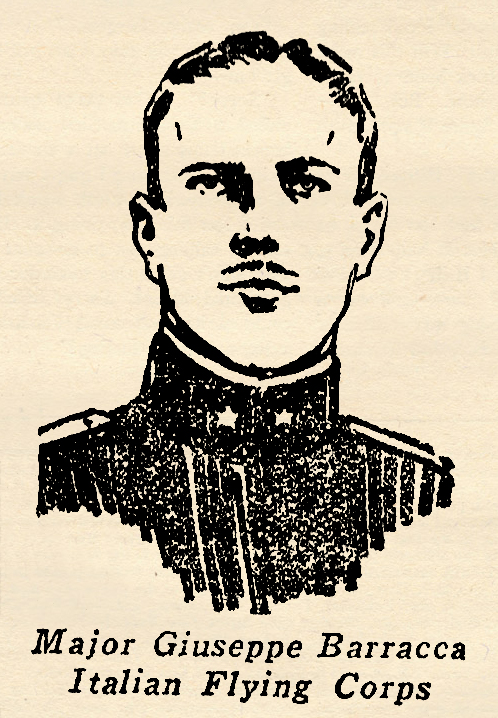 with Alan McLeod of the Royal Flying Corps, who was one of the youngest of the famous flying aces. Major Giuseppe Barracca, Ace of Aces of the Italian Flying Corps, was one of the oldest, being 34 years of age when he was killed in the desperate air fighting above the Piave. Like Captain Ritter von Schleich, he entered the war a cavalry officer, but soon was transferred to the more romantic, yet more hazardous branch of the army, the flying corps.
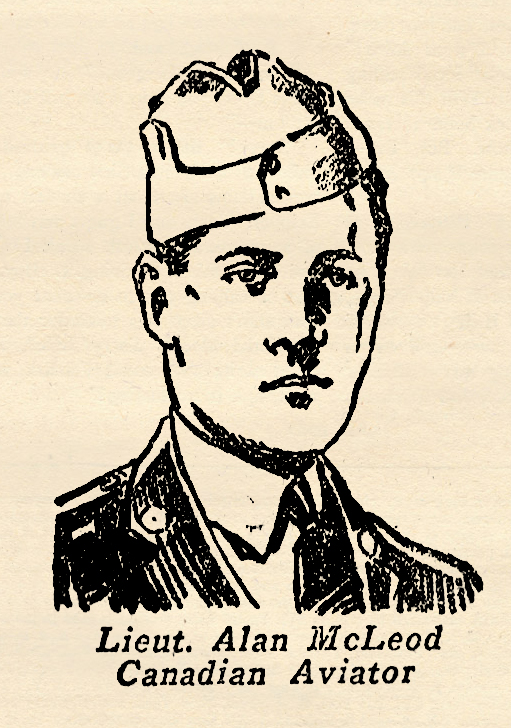 the three Canadian airmen winning the coveted award of the Victoria Cross, the highest honor bestowed on its fighting heroes by the British Empire, He was the youngest flyer ever to receive the honor, having it pinned on his chest in appropriate ceremonies at Buckingham Palace a few months before his nineteenth birthday.
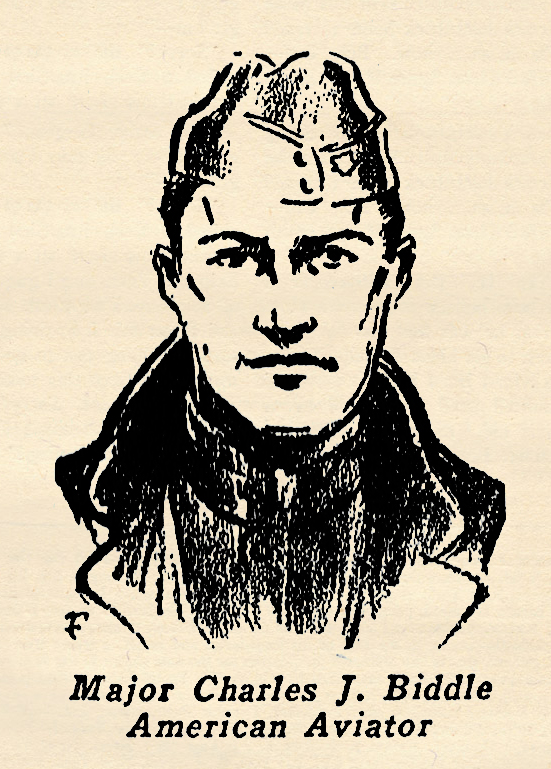 of that small number of American aviators who had actually had front line battle experience when his own country entered the war. Even before there were any indication* of his own country taking part, he sailed for France and enlisted in the French Army, where he was eventually transferred for aviation tralning. When the La Fayette Escadrille was formed, he wan invited to become a member. In that organization he won his commission as a Lieutenant in recognition of his ability and courage.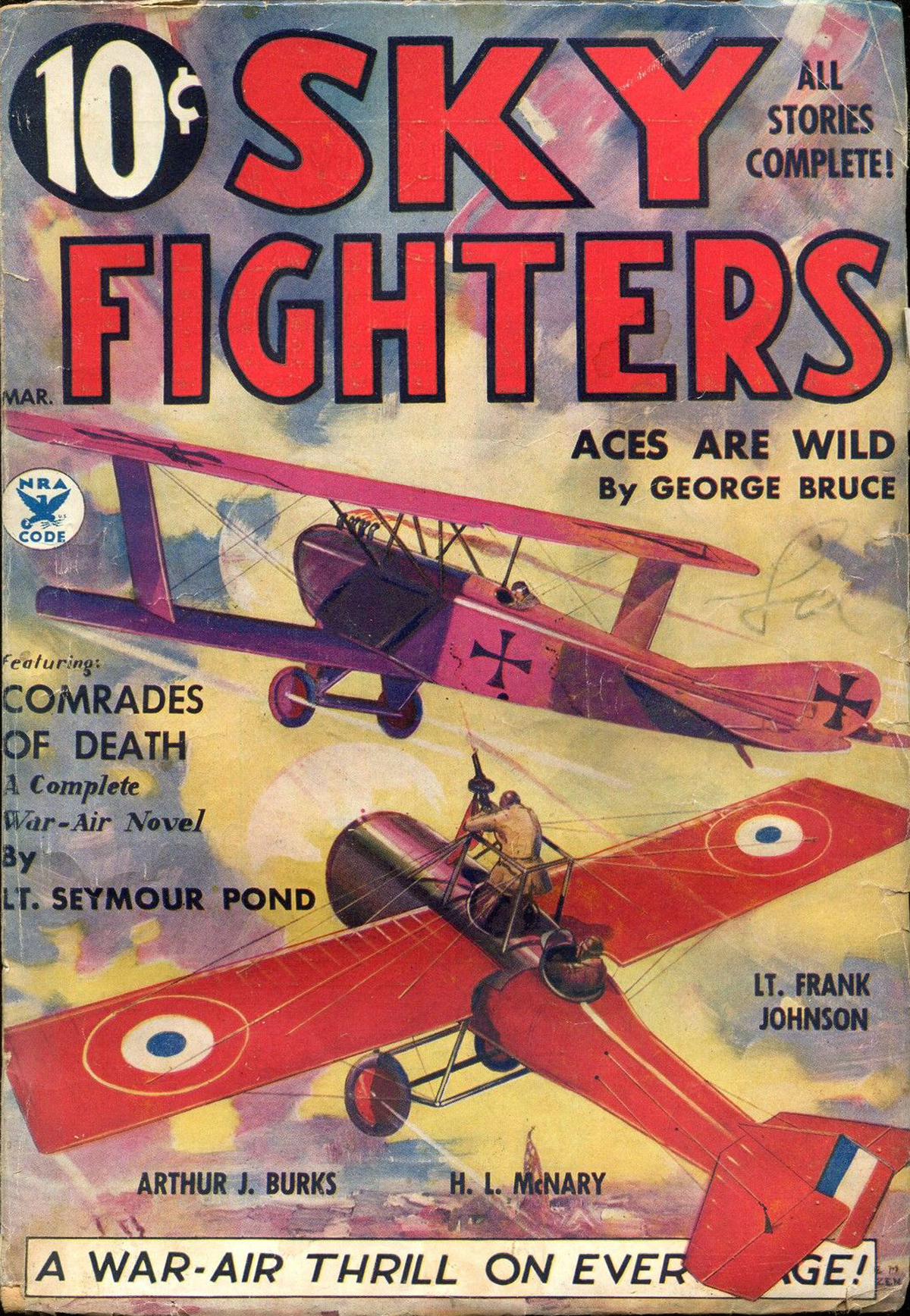
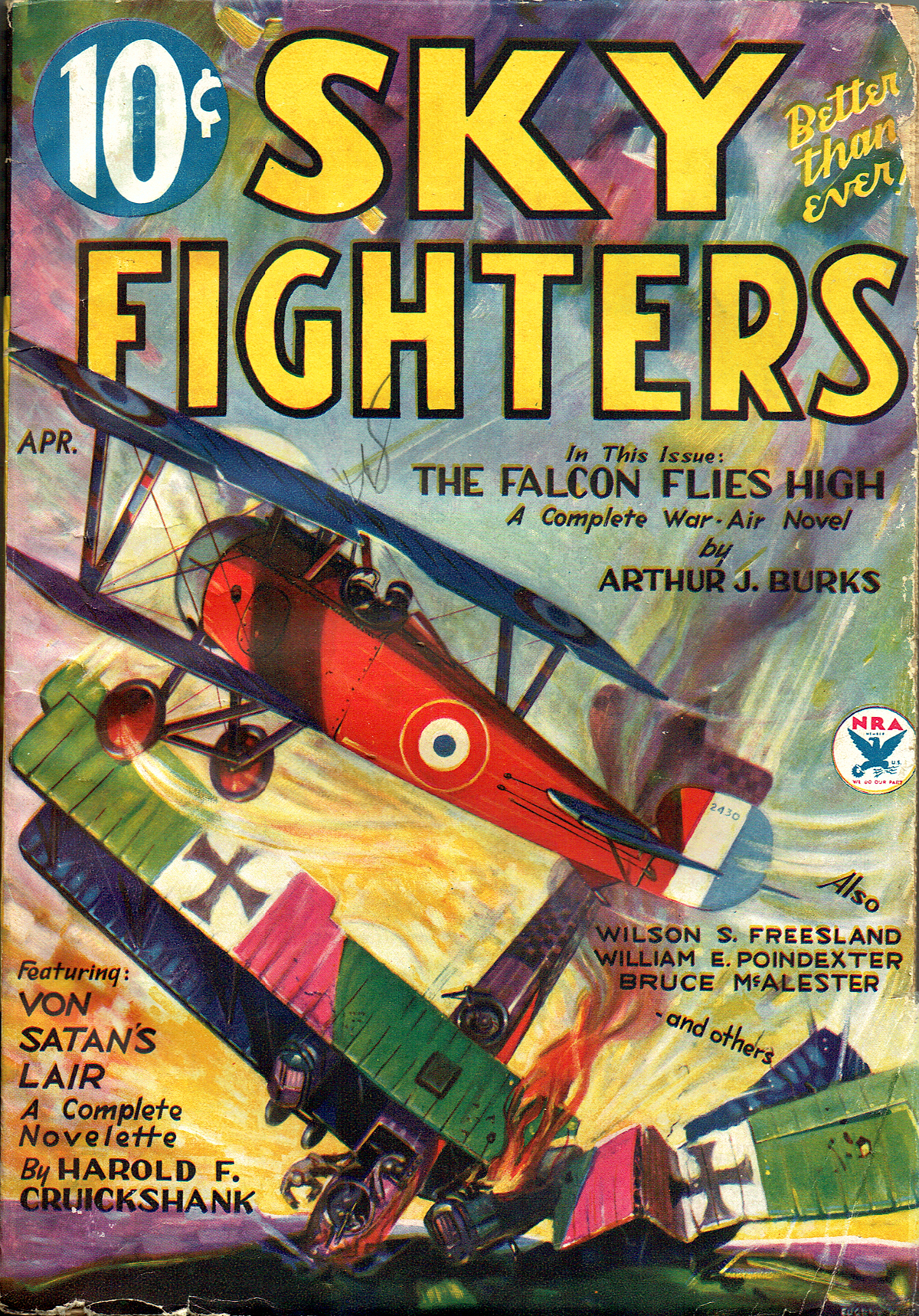 we have a tale from the anonymous pen of Lt. Frank Johnson—a house pseudonym. Sky Fighters ran a series of stories by Johnson featuring a pilot who who was God’s gift to the Ninth Pursuit Fighter Squadron and although he says he’s a doer and not a talker, he wasn’t to shy to tell them all about it. Which earned him the nickname “Silent” Orth. This time Silent Orth goes after Baron Rapunzel—a Boche Ace who’s already claimed 51 victories—and Orth doesn’t plan to be the 52nd!
 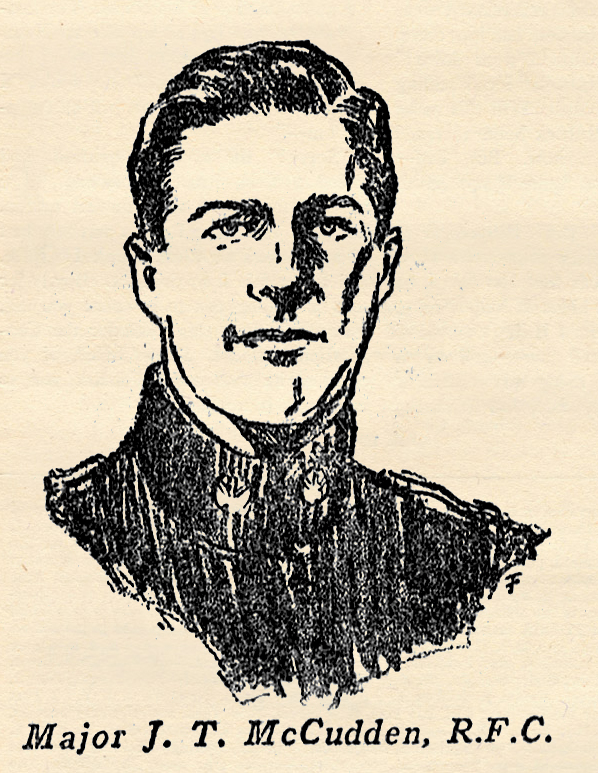 one of the most modest and unassuming of the great flying aces. When the war began he was an engine mechanic with the then recently formed Royal Flying Corps. After flying training he became a Sergeant pilot, and began, piling up the string of victories which eventually placed him at the top of all the British aces. He was progressively promoted to Lieutenant, Captain and Major, and won every medal possible, including the Victoria Cross.


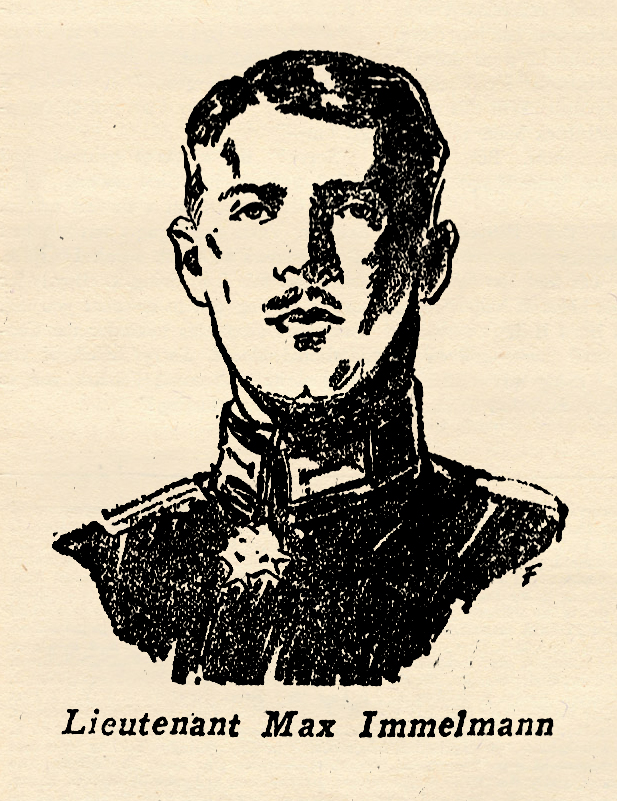 Immelmann was the first of the great German Aces. Immelmann scored victory after victory over the Allied flyers until his total score mounted higher than that of any of the Allied Aces.


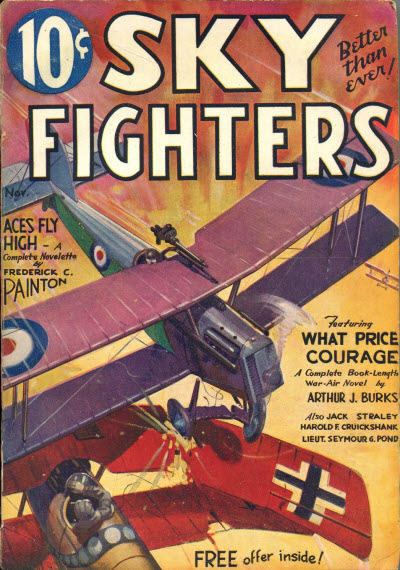 another exciting air adventure from the pages of the pulp magazines of the 1930’s. This week we have a tale from the pen of that Canadian stalwart—
 we have a tale from the anonymous pen of Lt. Frank Johnson—a house pseudonym. Sky Fighters ran a series of stories by Johnson featuring a pilot who who was God’s gift to the Ninth Pursuit Fighter Squadron and although he says he’s a doer and not a talker, he wasn’t to shy to tell them all about it. Which earned him the nickname “Silent” Orth.
 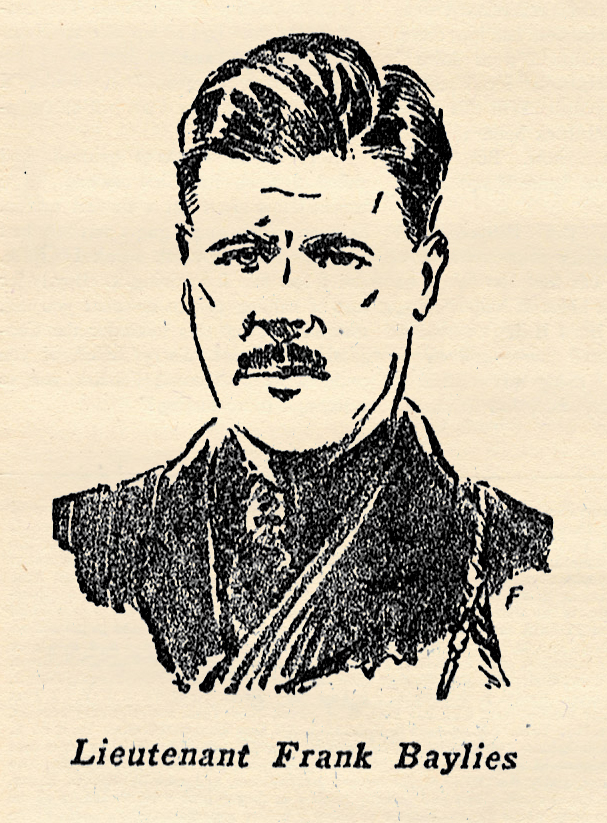 American Ambulance section, serving in that unit attached to the French armies from February 26th, 1916, to May 11th, 1918. In the early spring of ‘18 he transferred to the aviation. He became a member of the famous Stork squadron of the French Flying Corps.
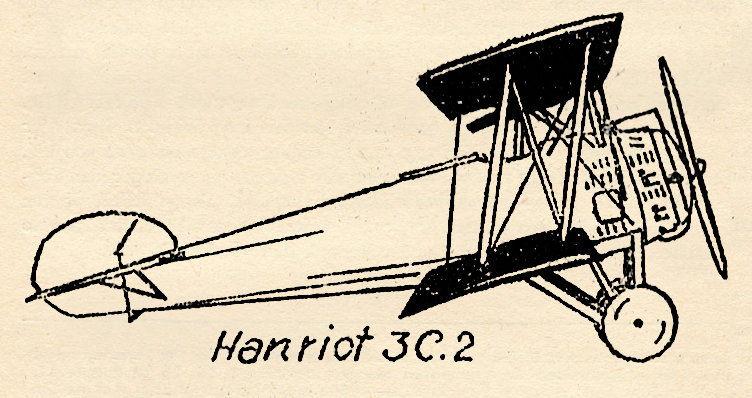
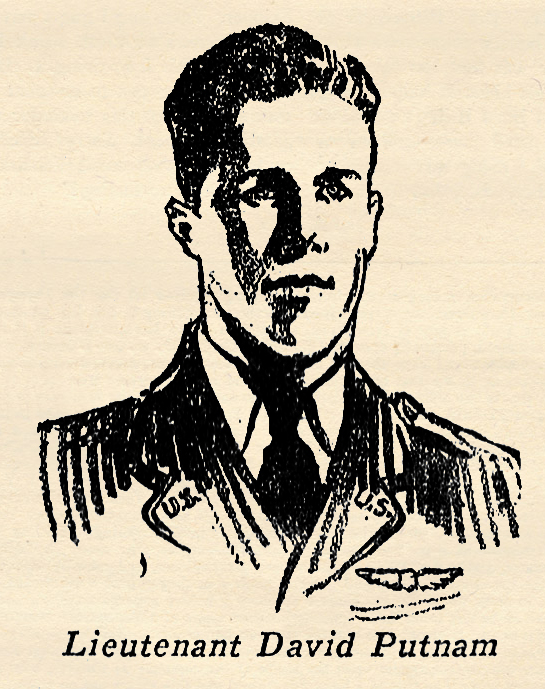 was one of the American flying aces who saw service under two flags. He began his career with the French before America entered the war. At first he served with the Ambulance Corps, but was later transferred to aviation, where he established a reputation as one of the most daring flyers on the front.