Looking to buy? See our books on amazon.com Get Reading Now! Age of Aces Presents - free pulp PDFs

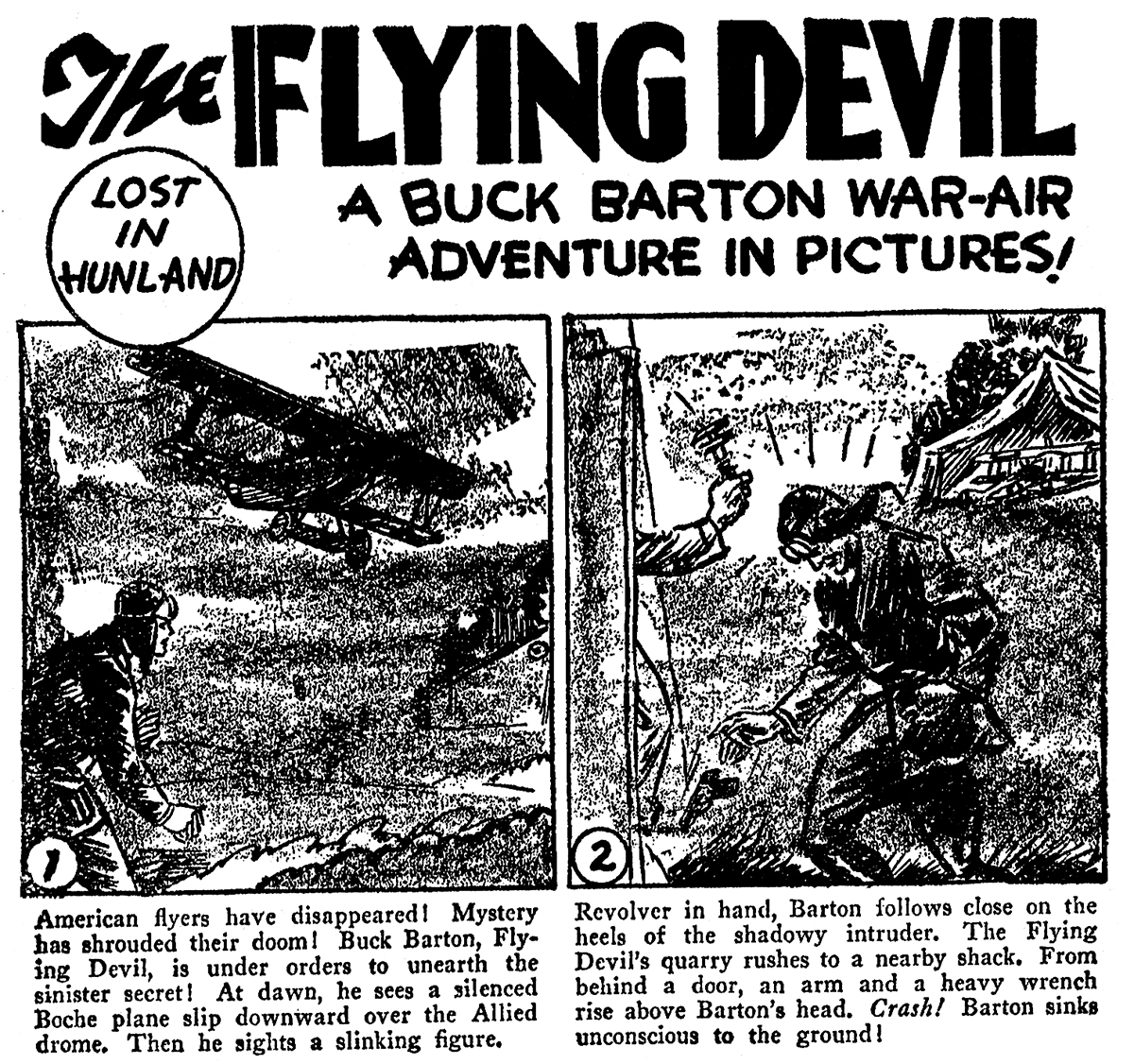
“Lost In Hunland” by Terry Gilkison

Link - Posted by David on December 31, 2025 @ 6:00 am in

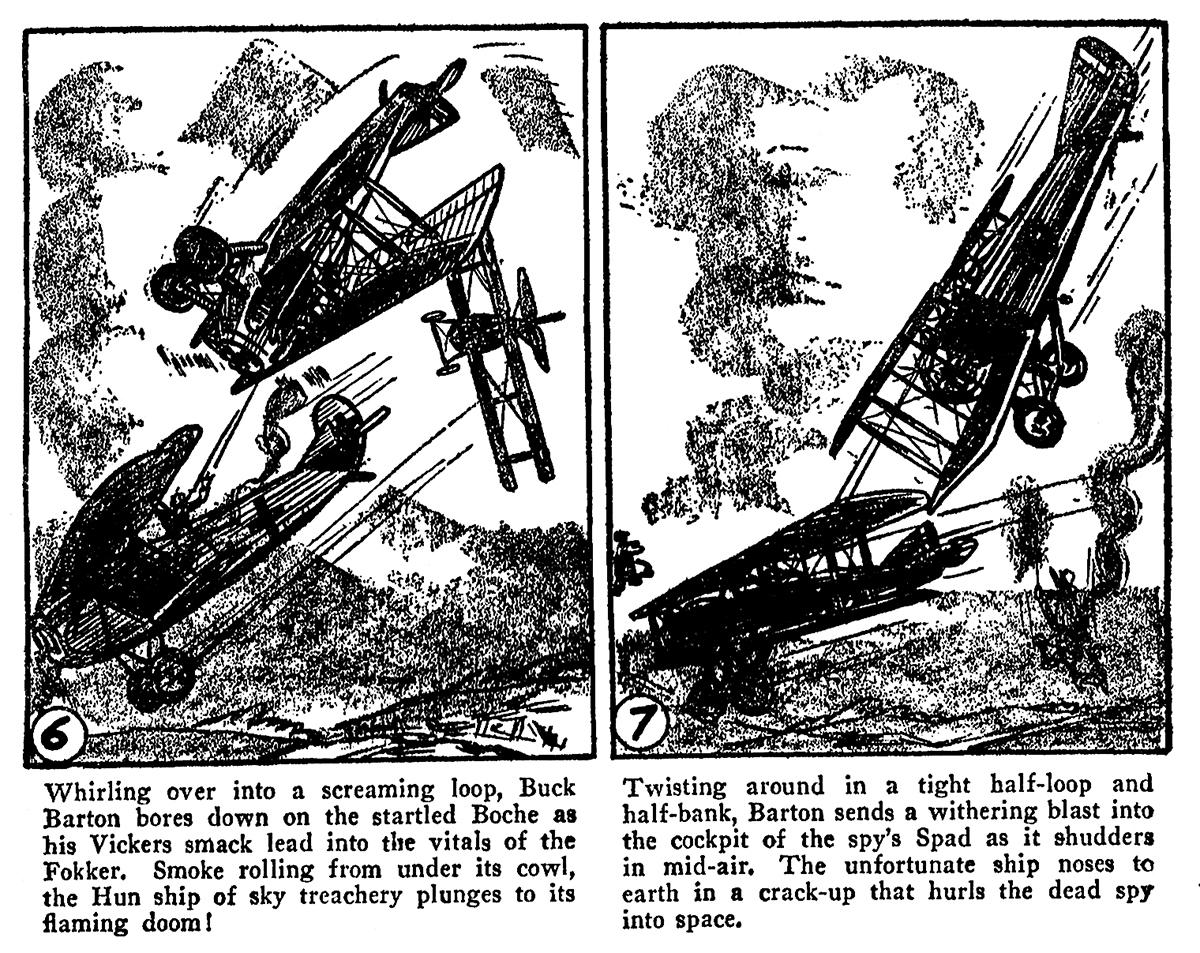
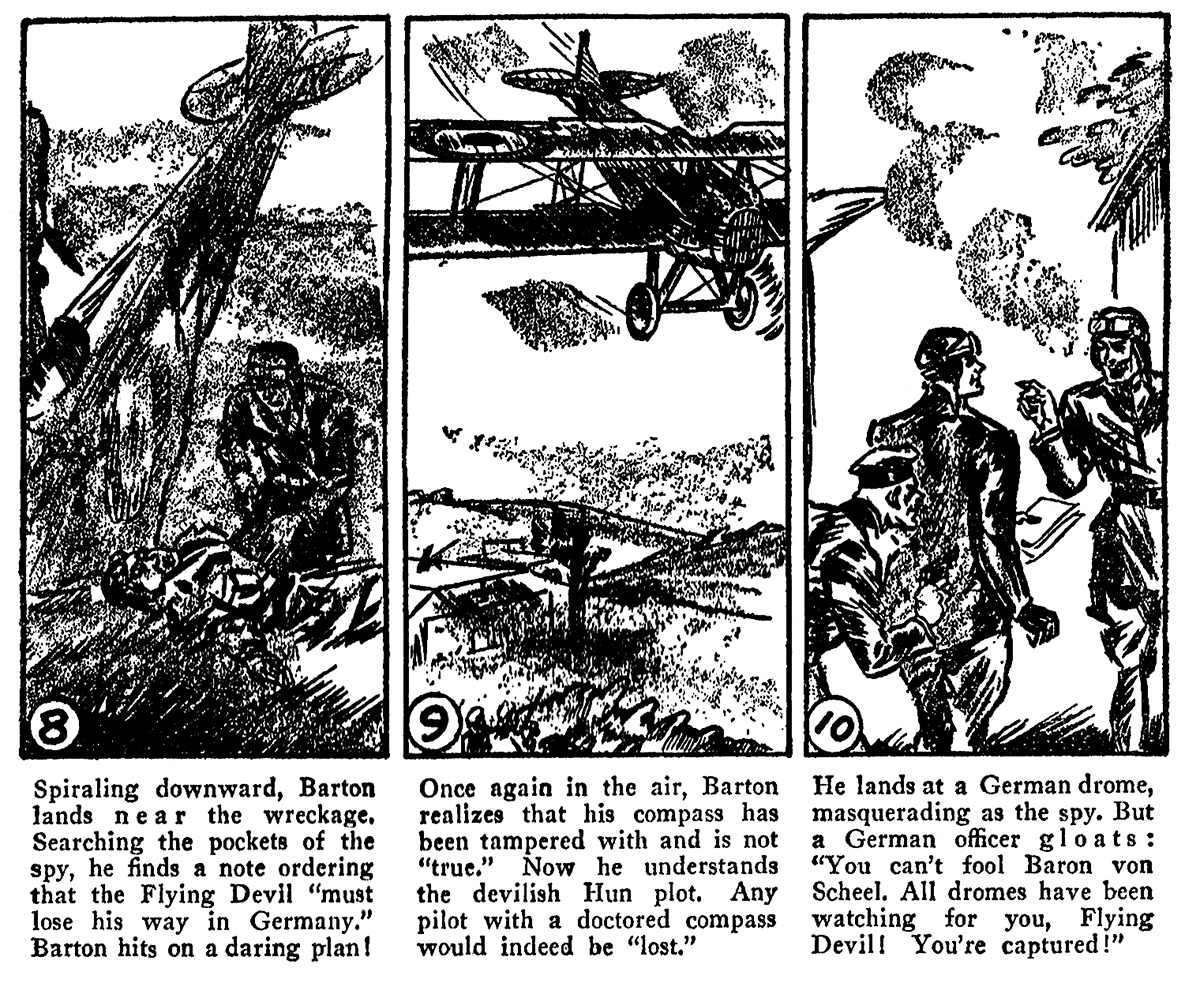
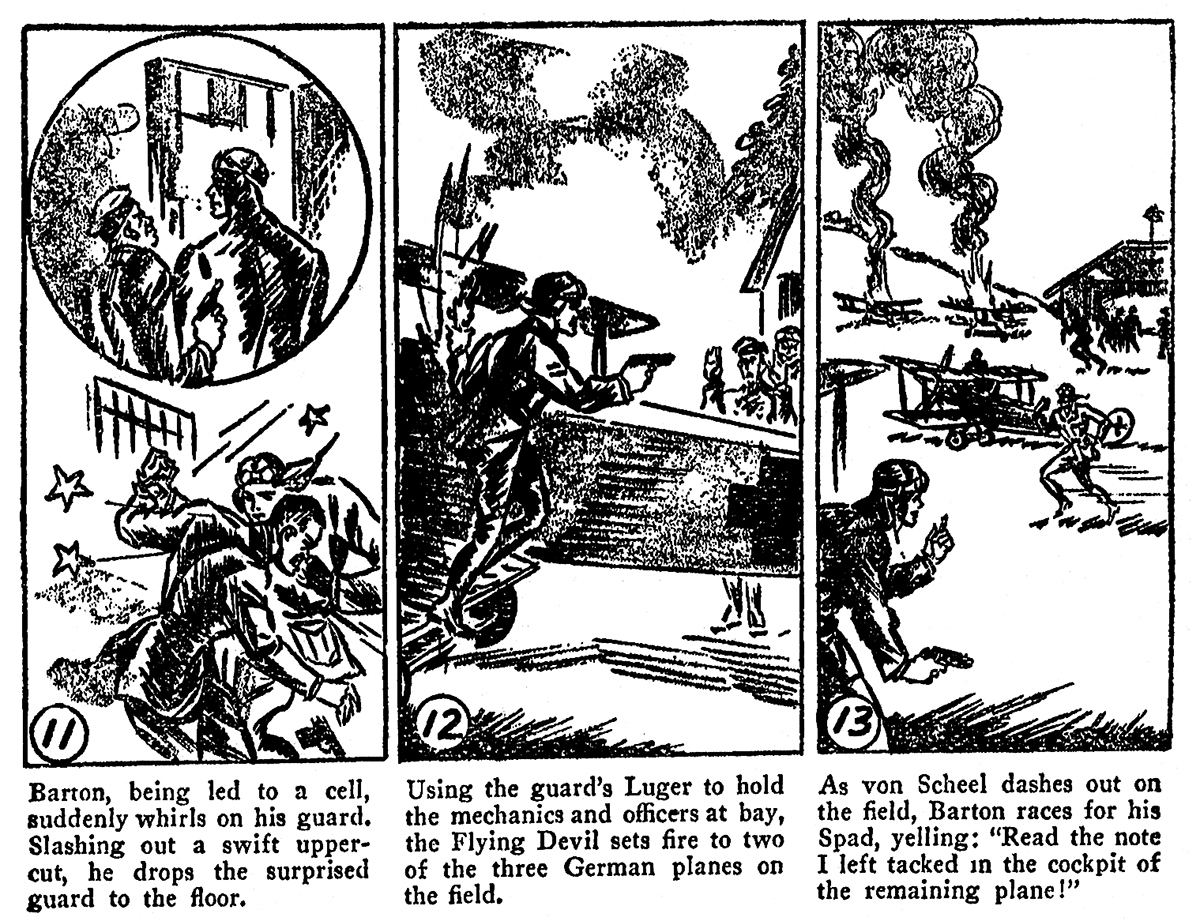
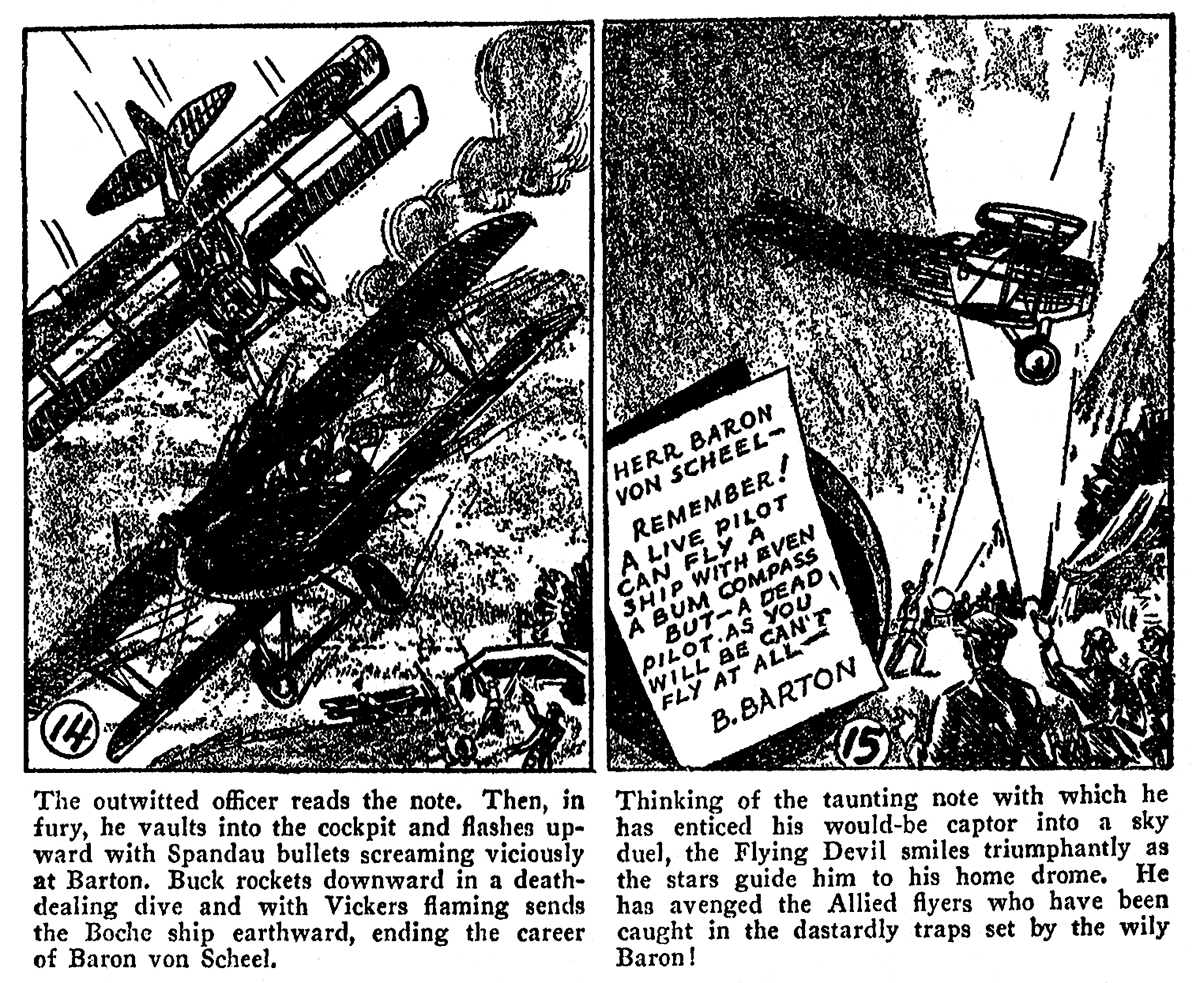
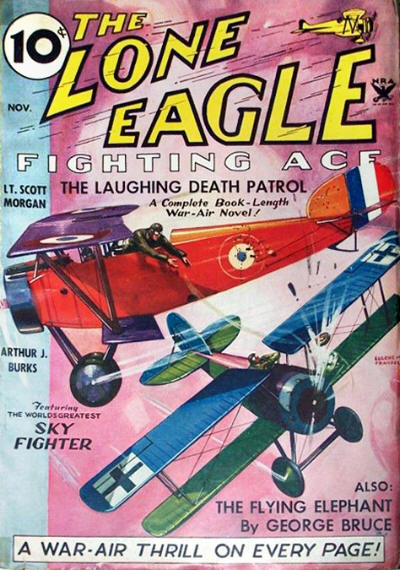
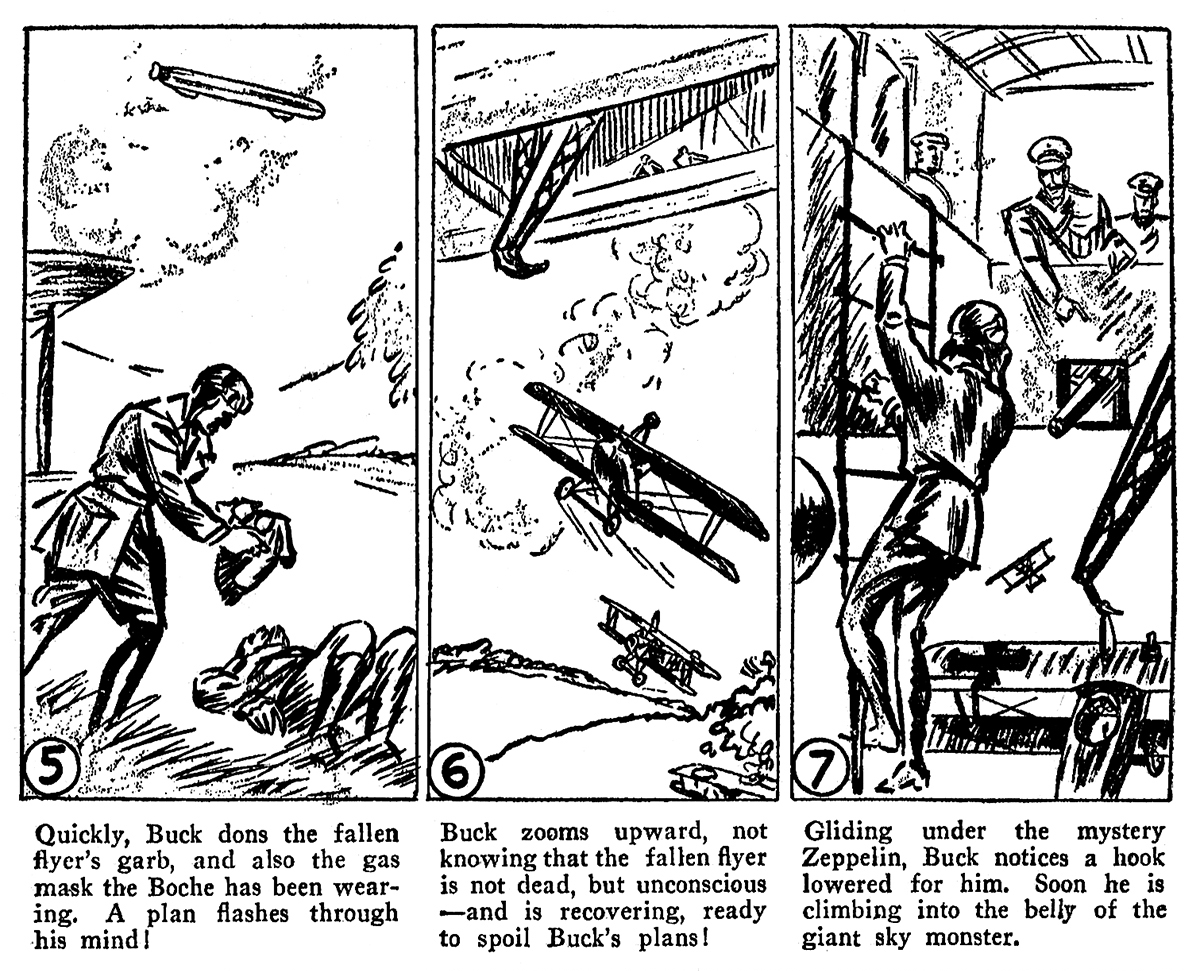
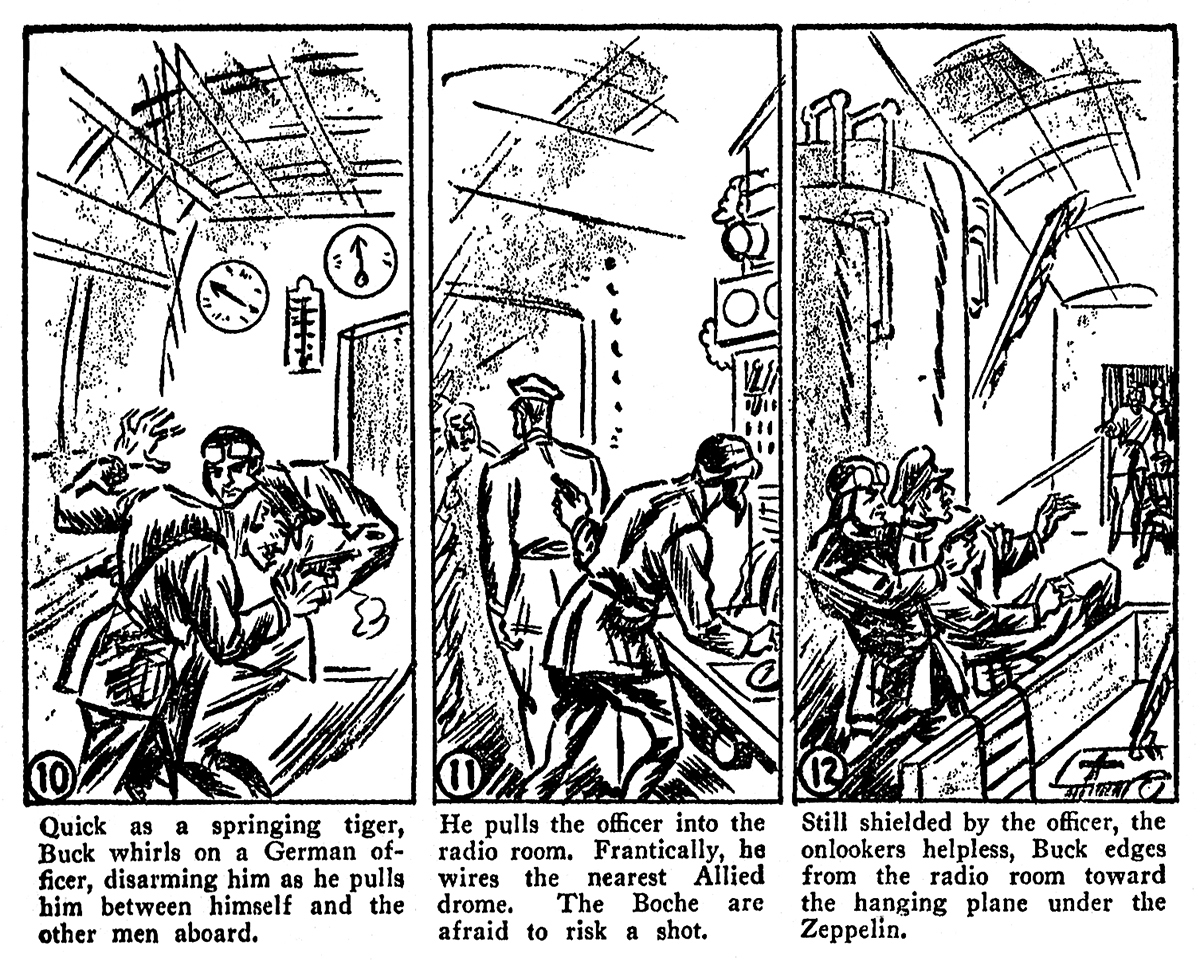
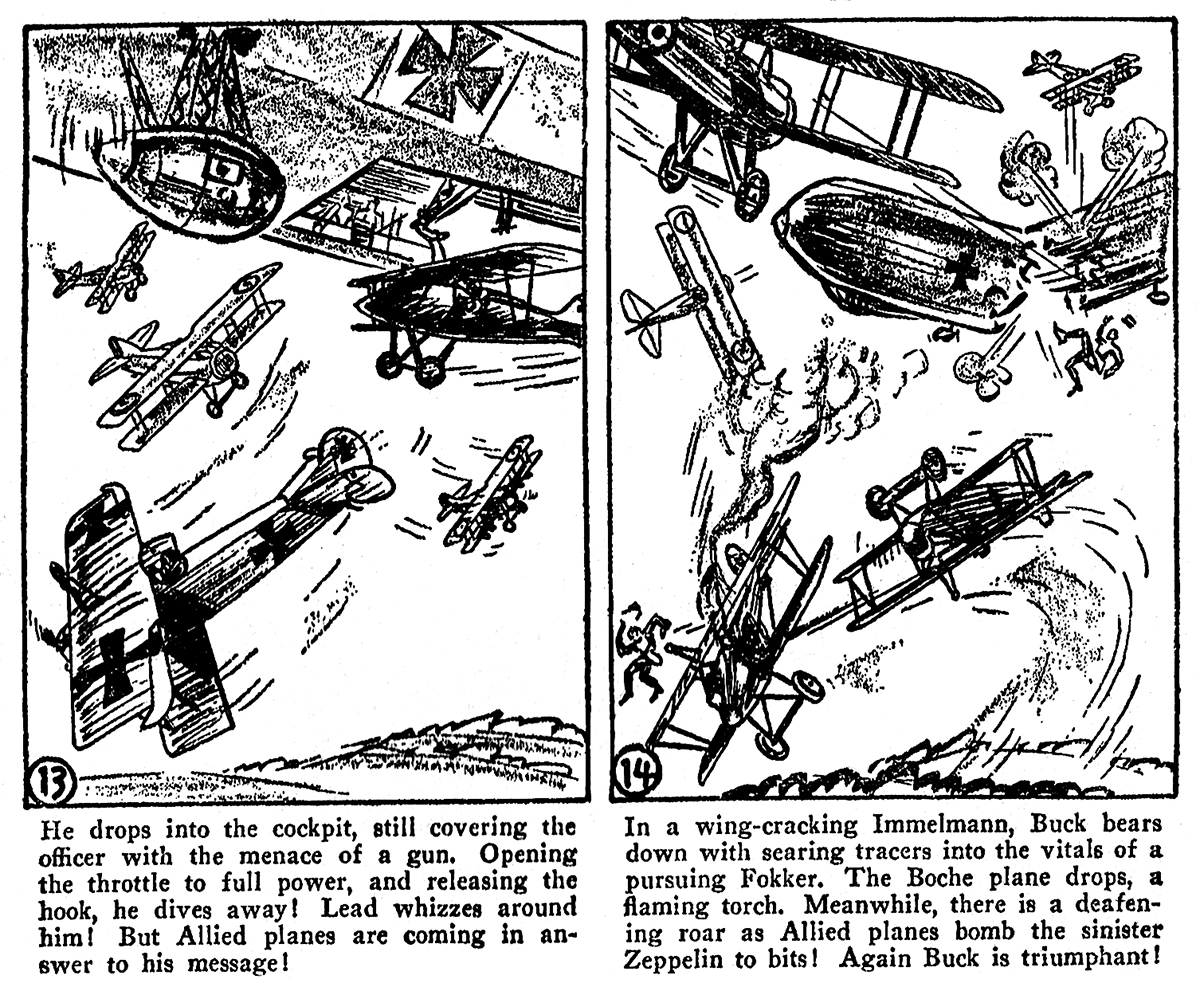
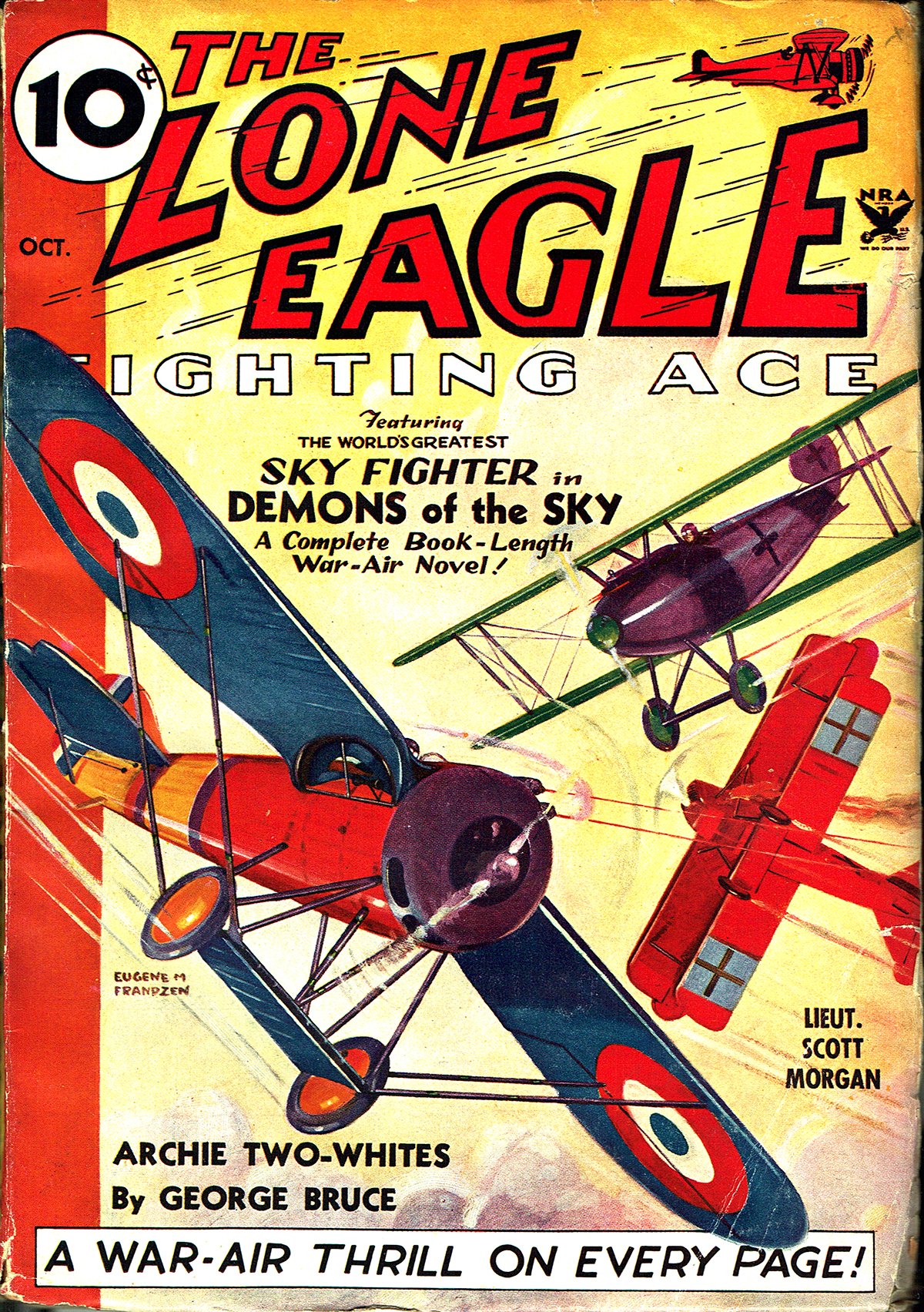
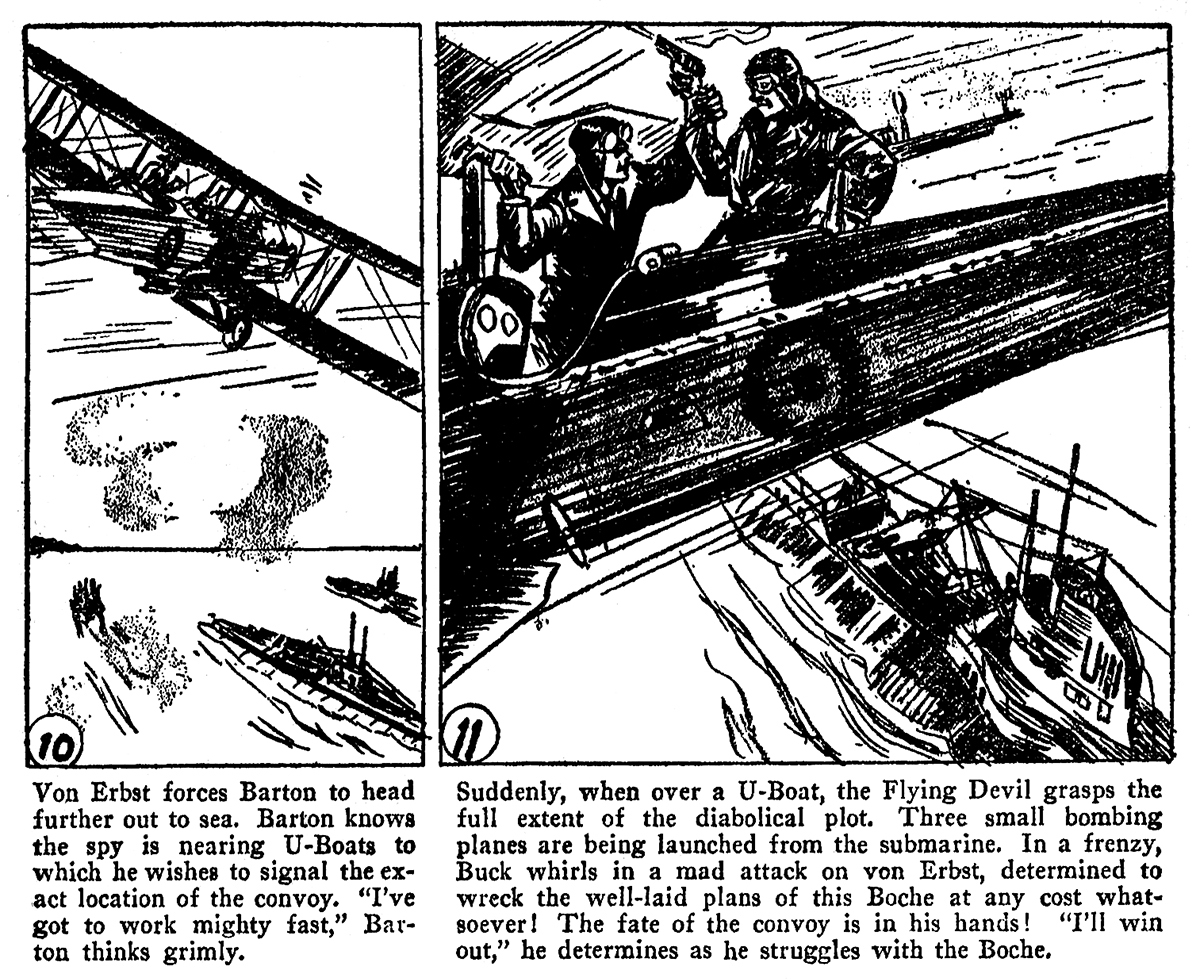
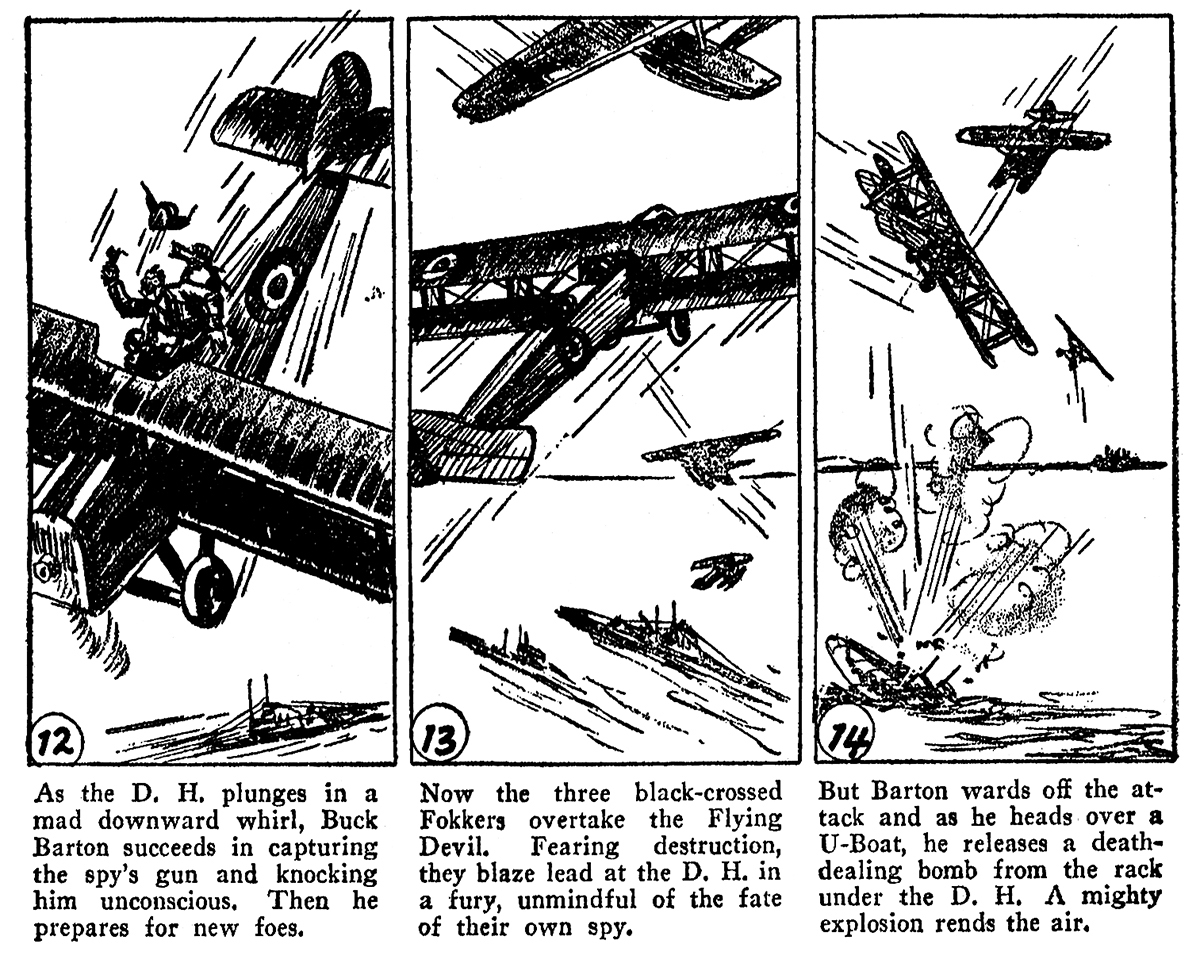
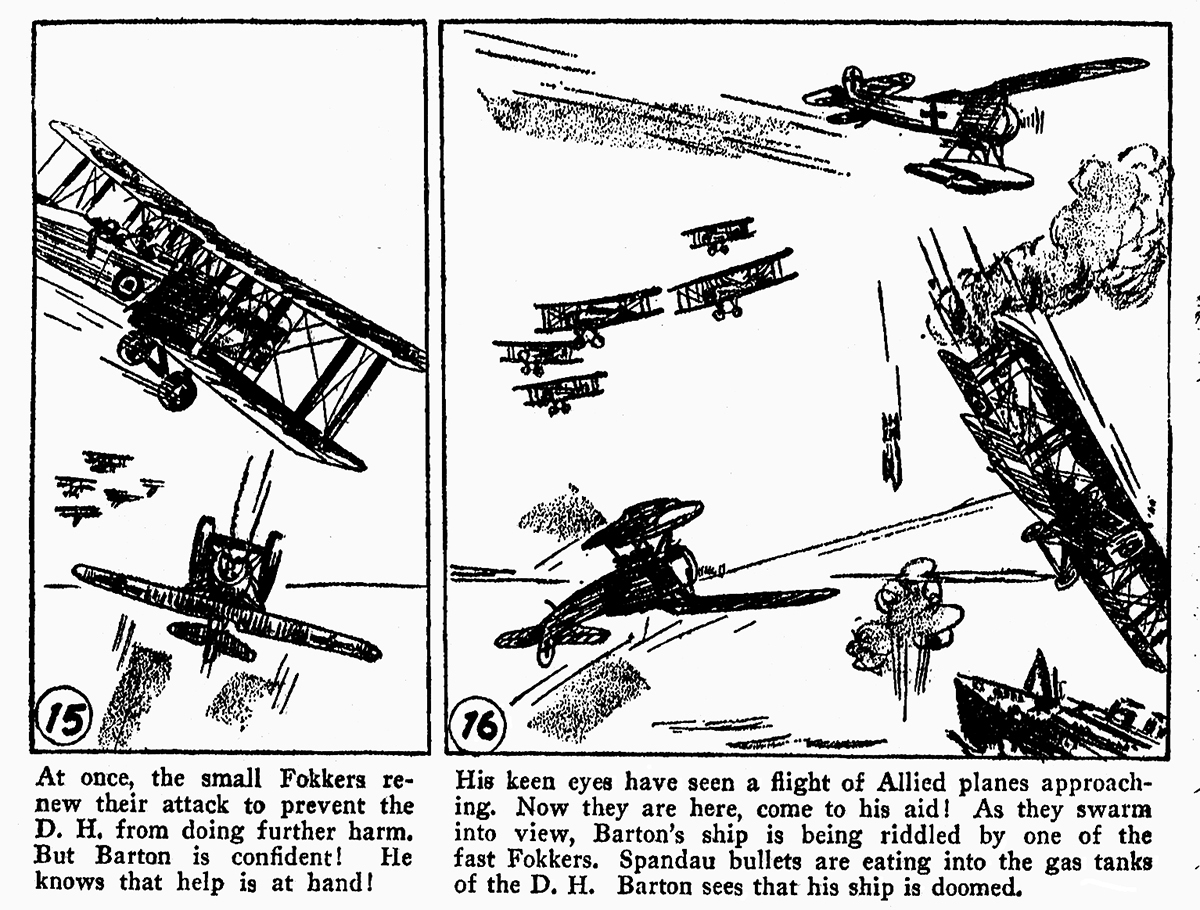
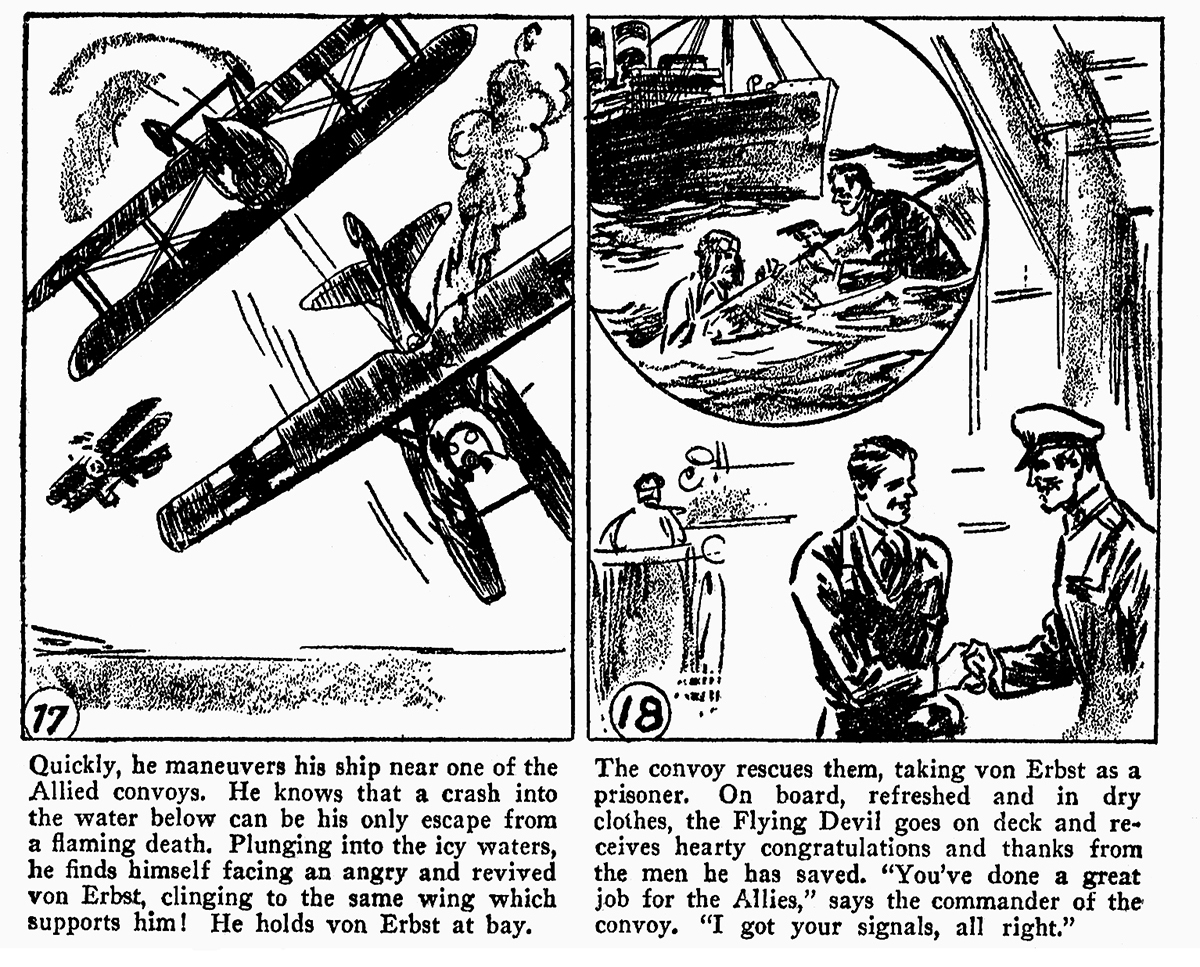
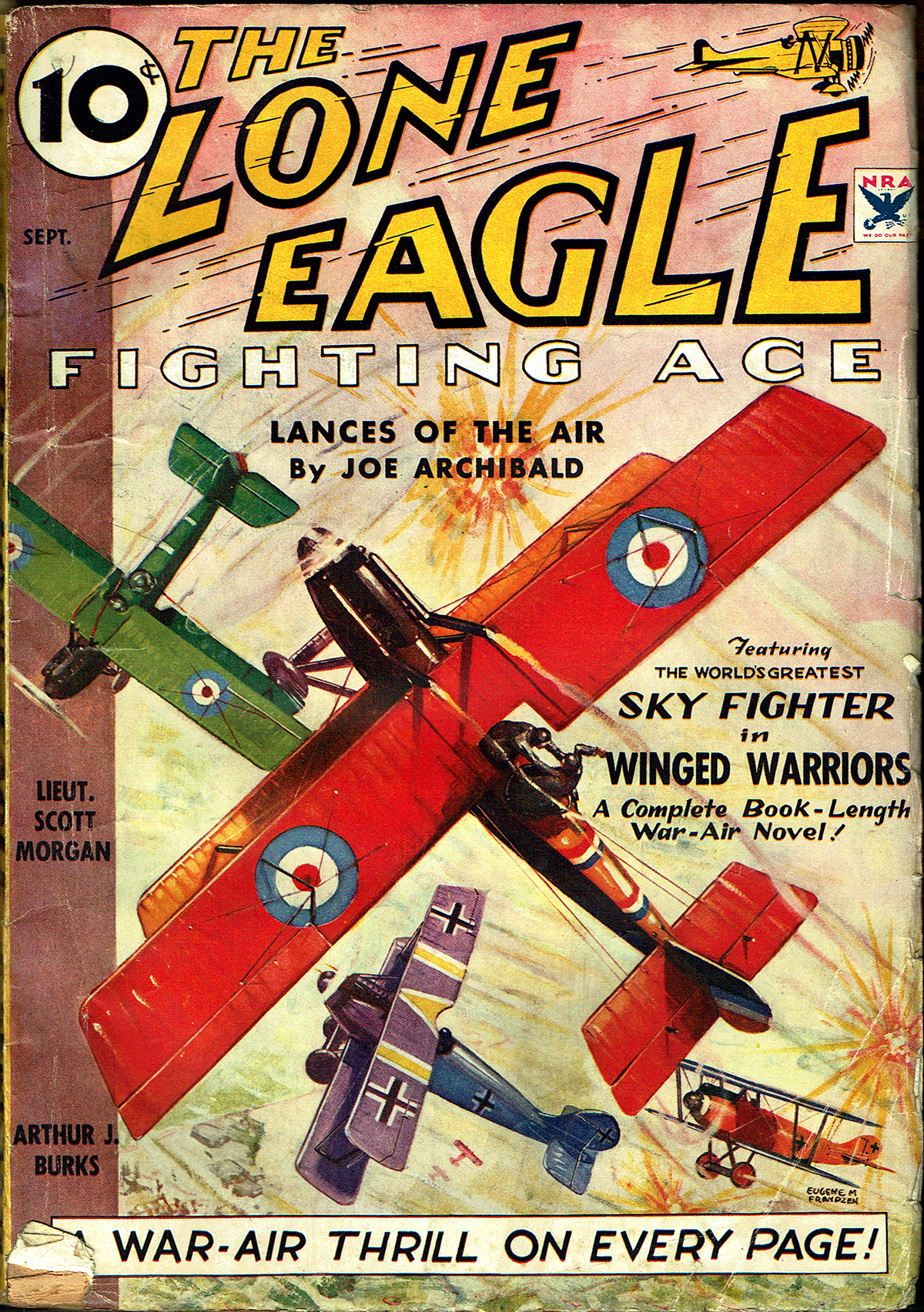
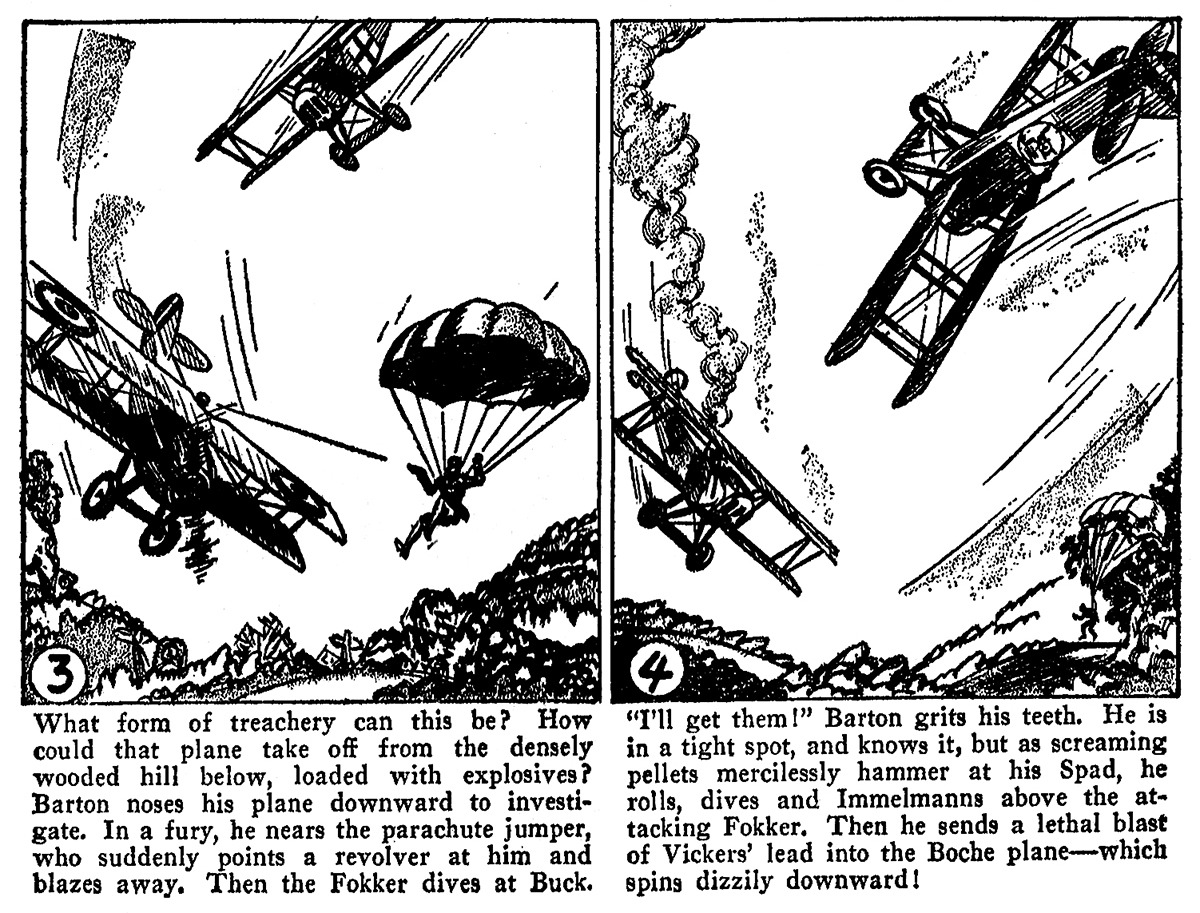
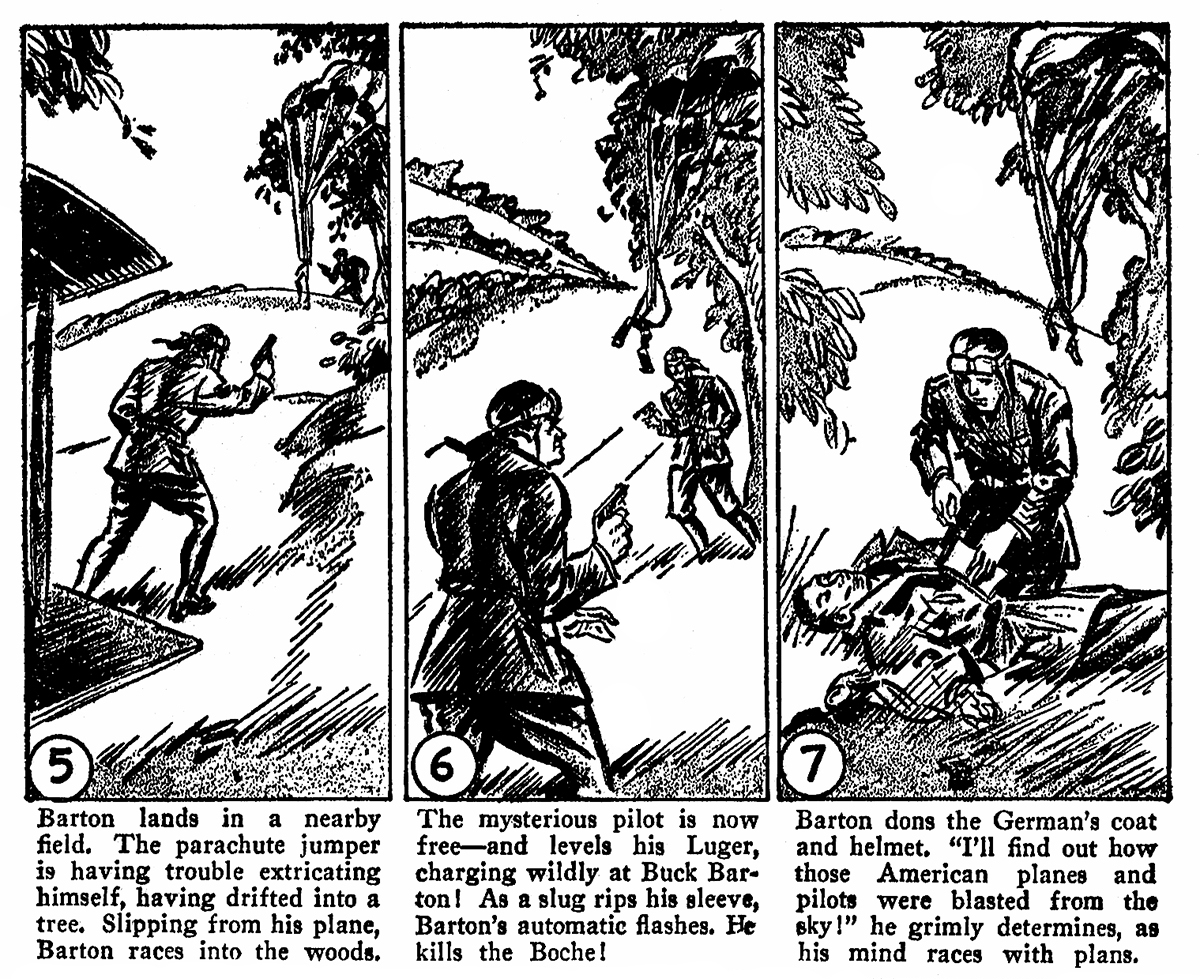
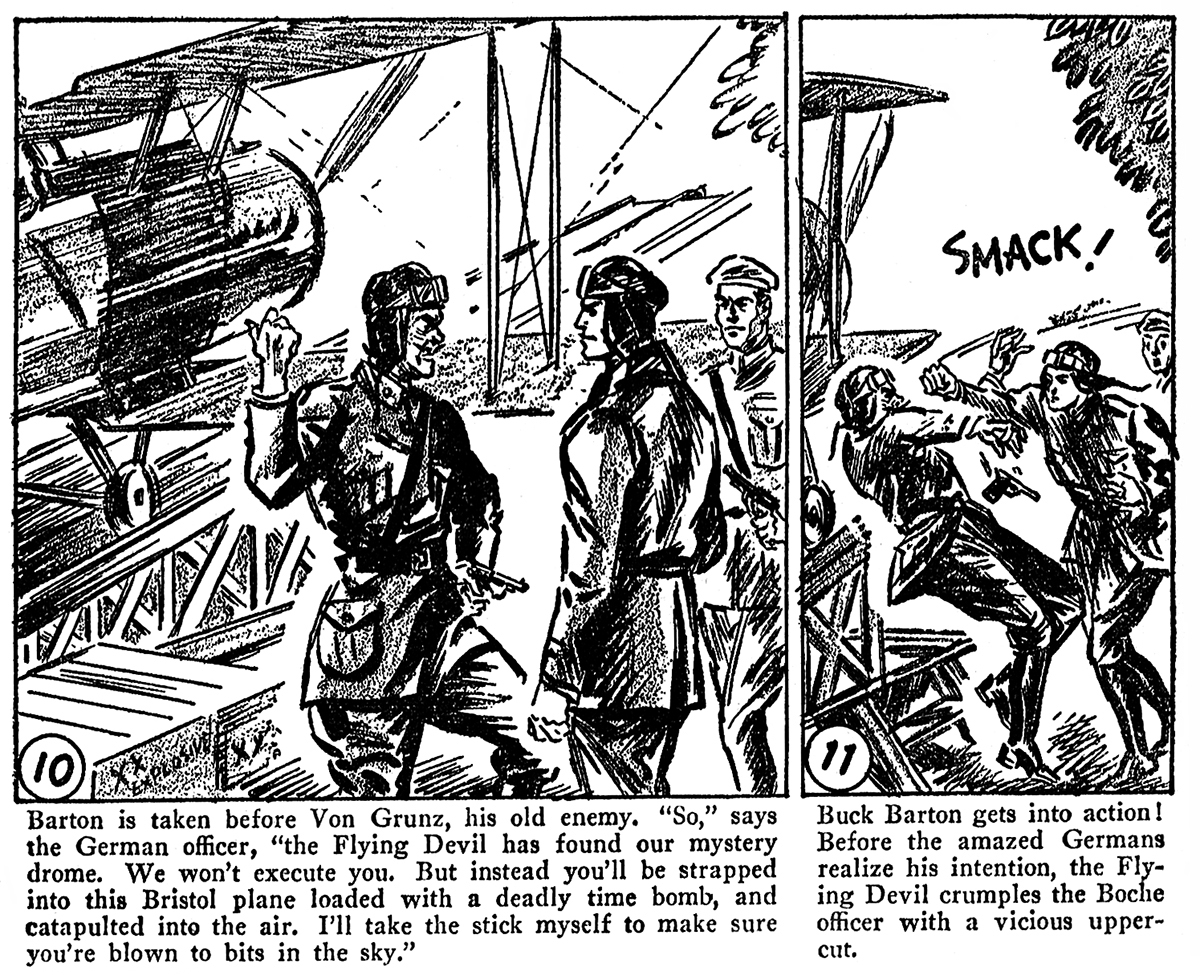
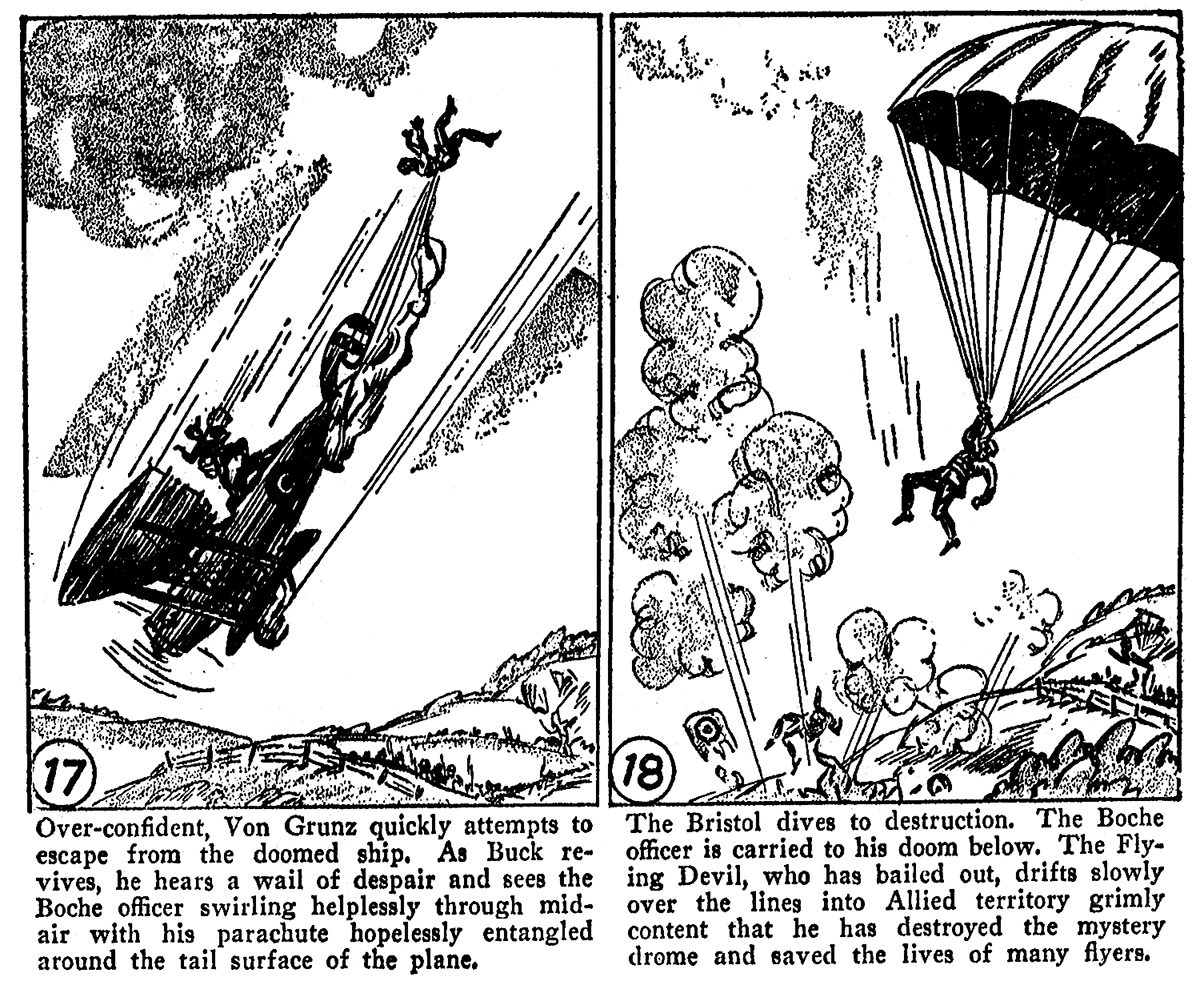
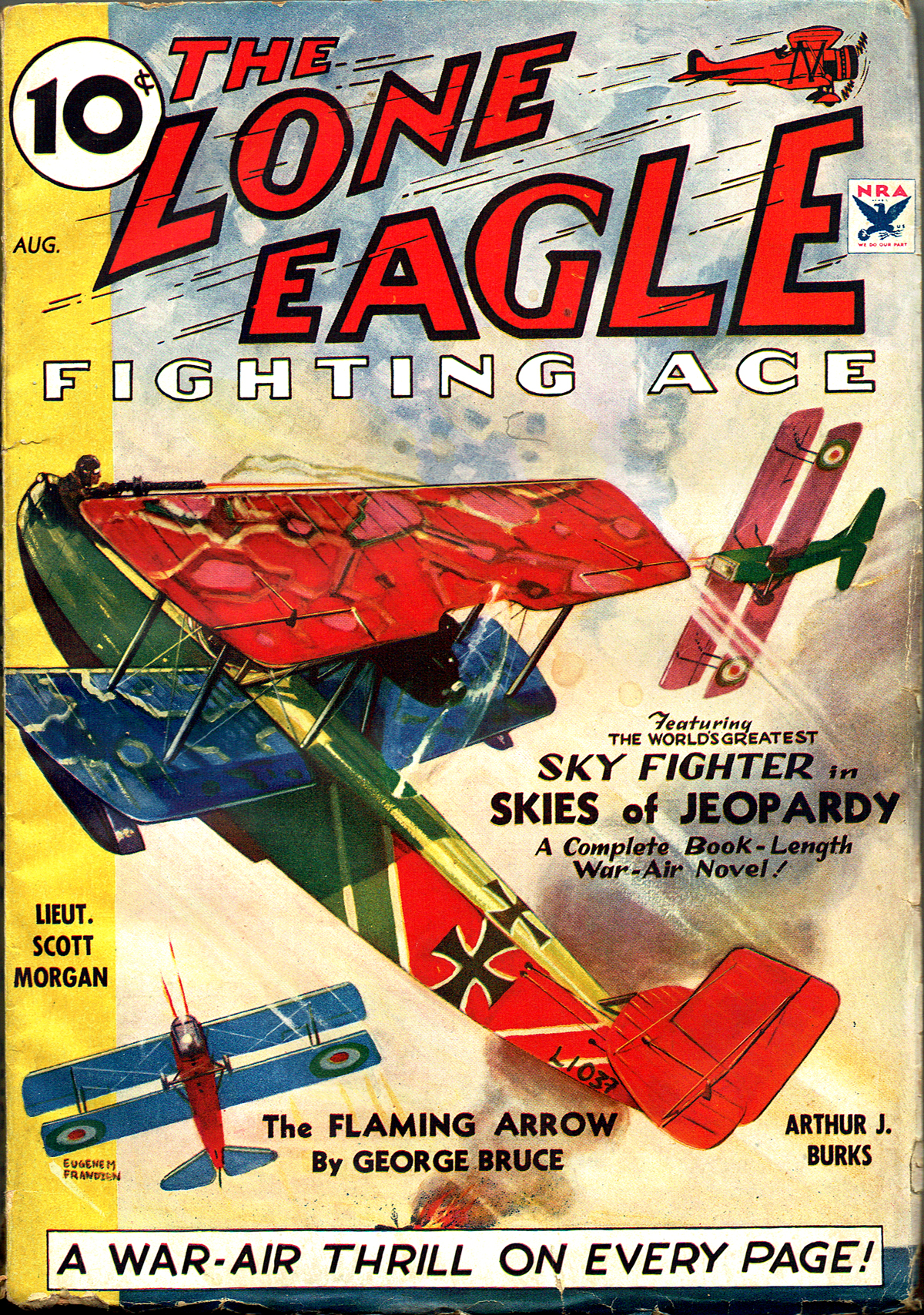
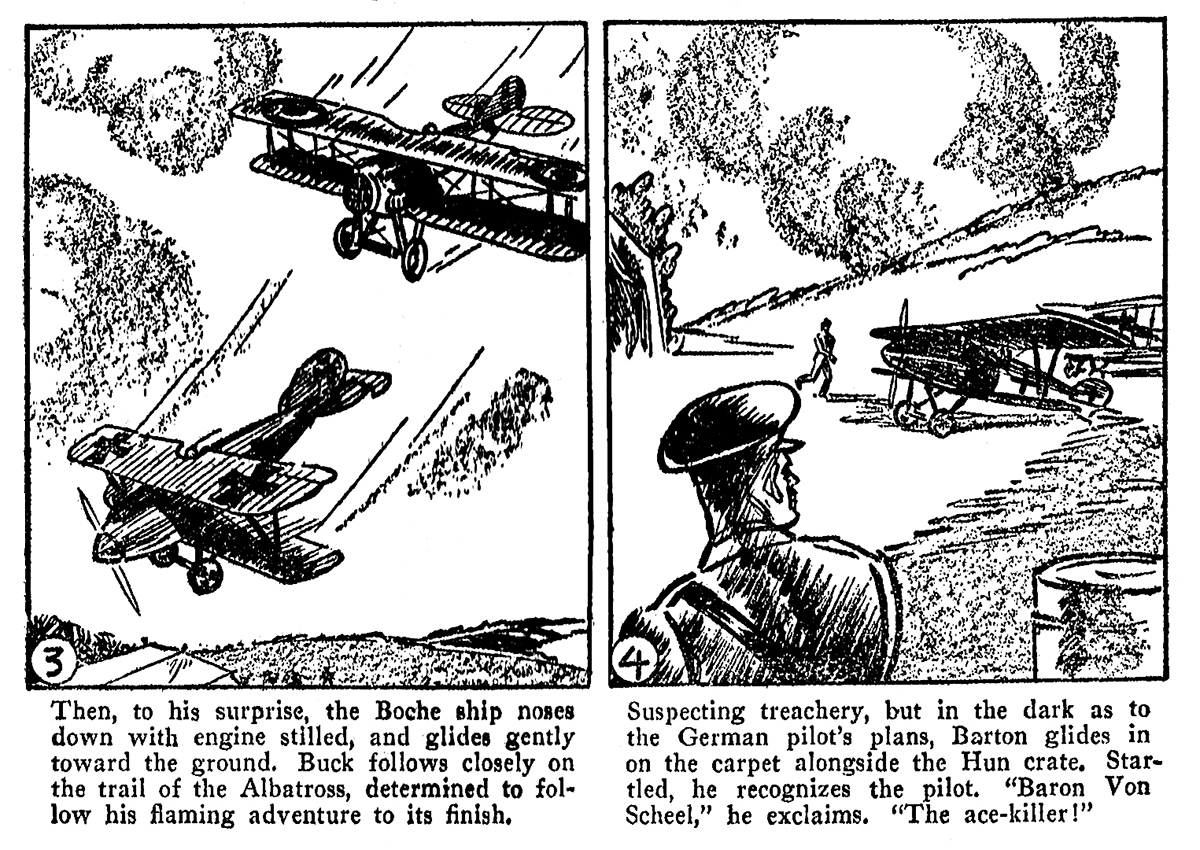
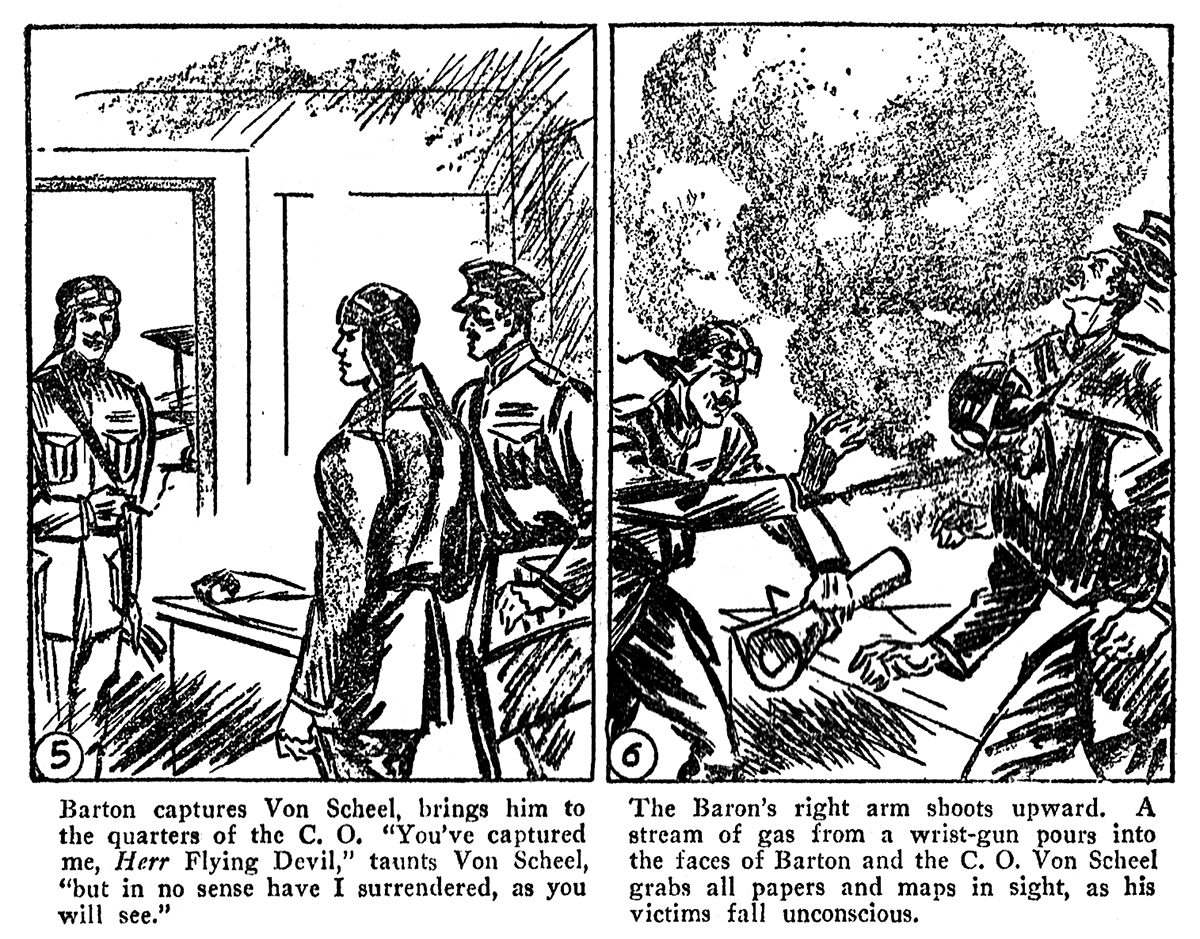
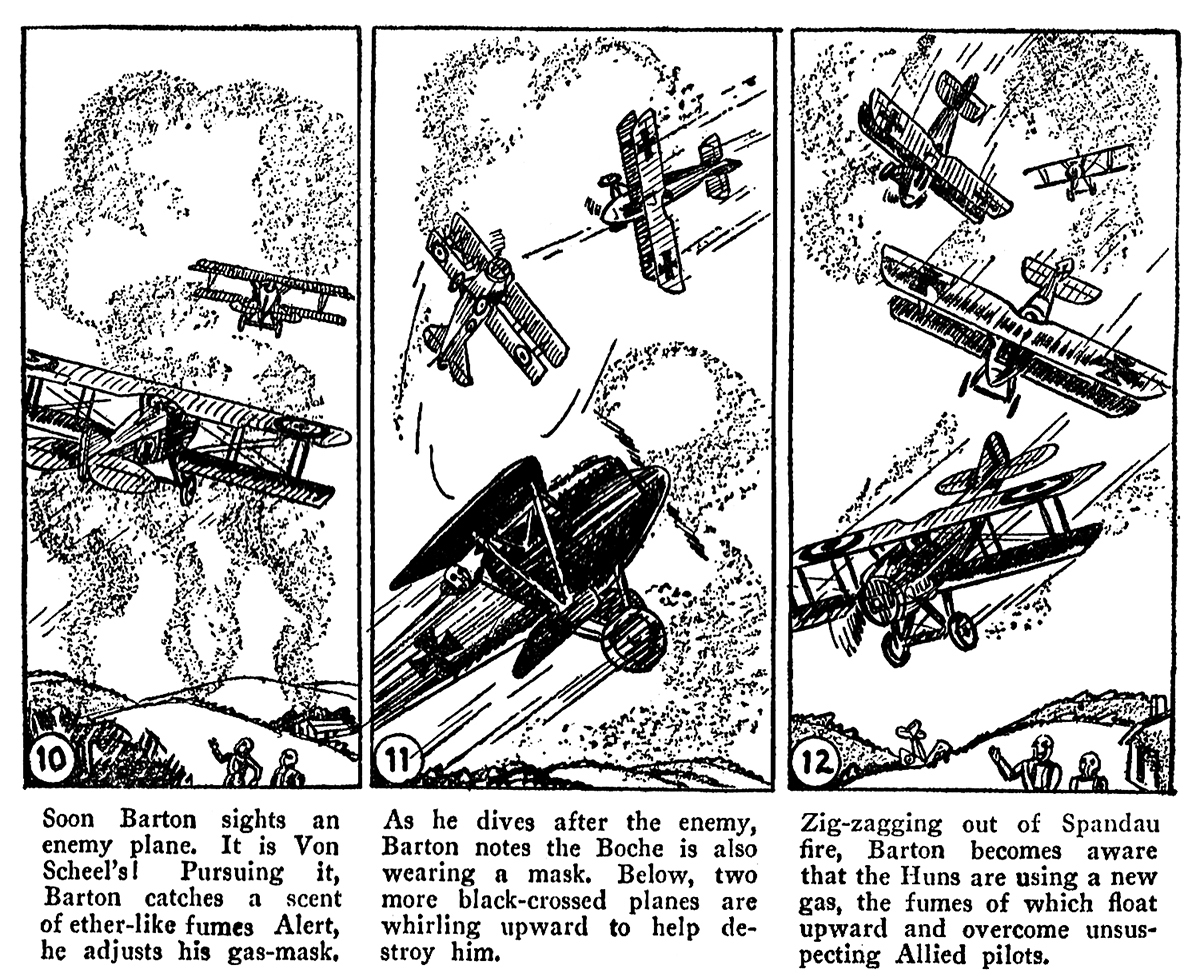
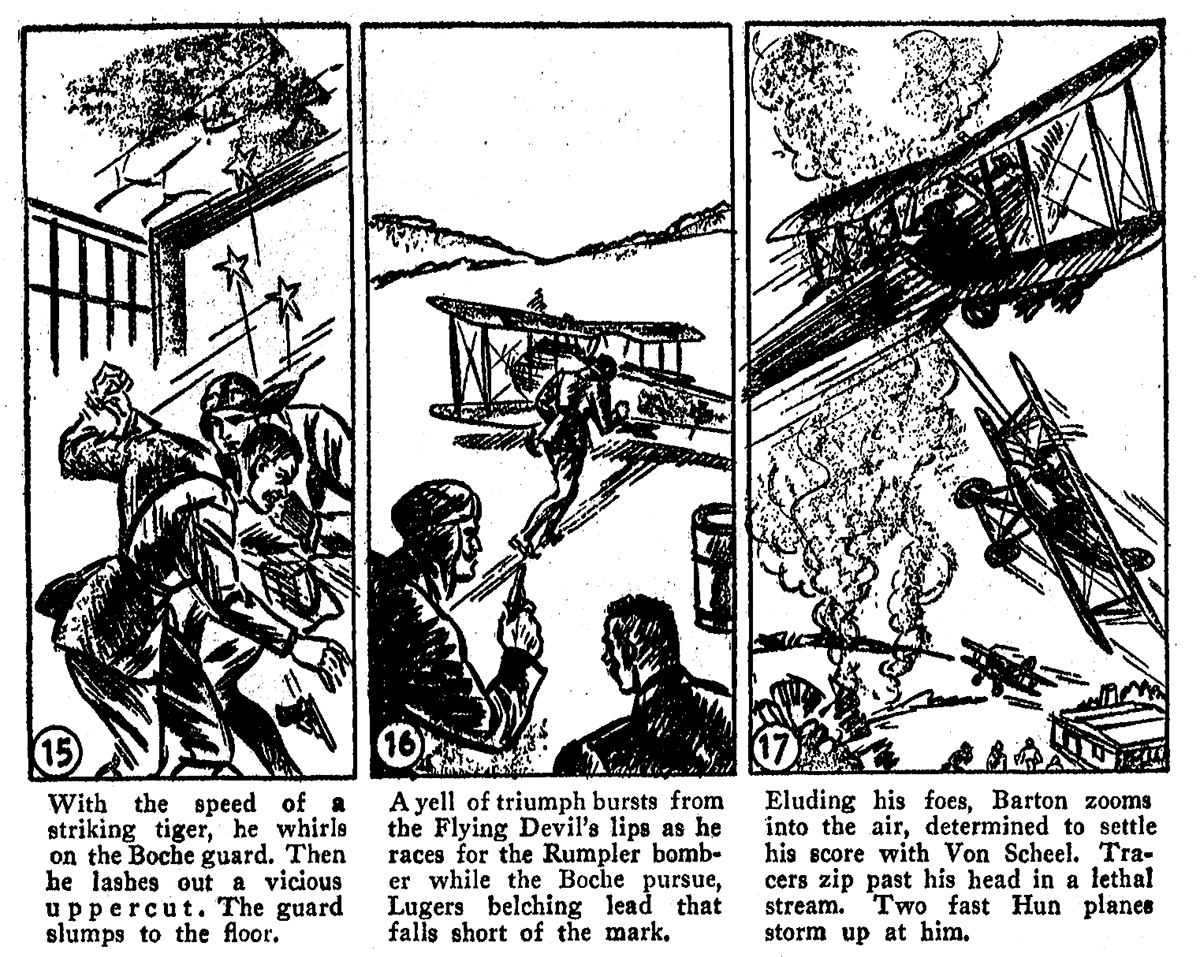
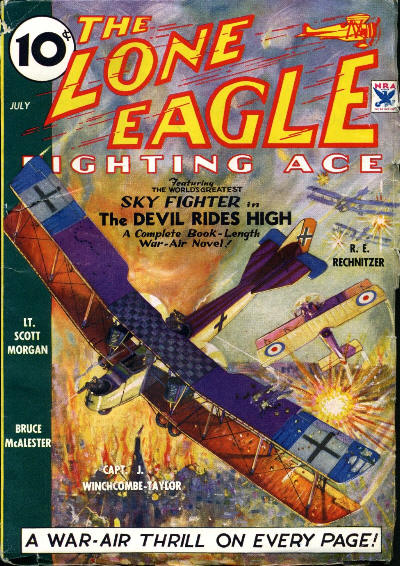
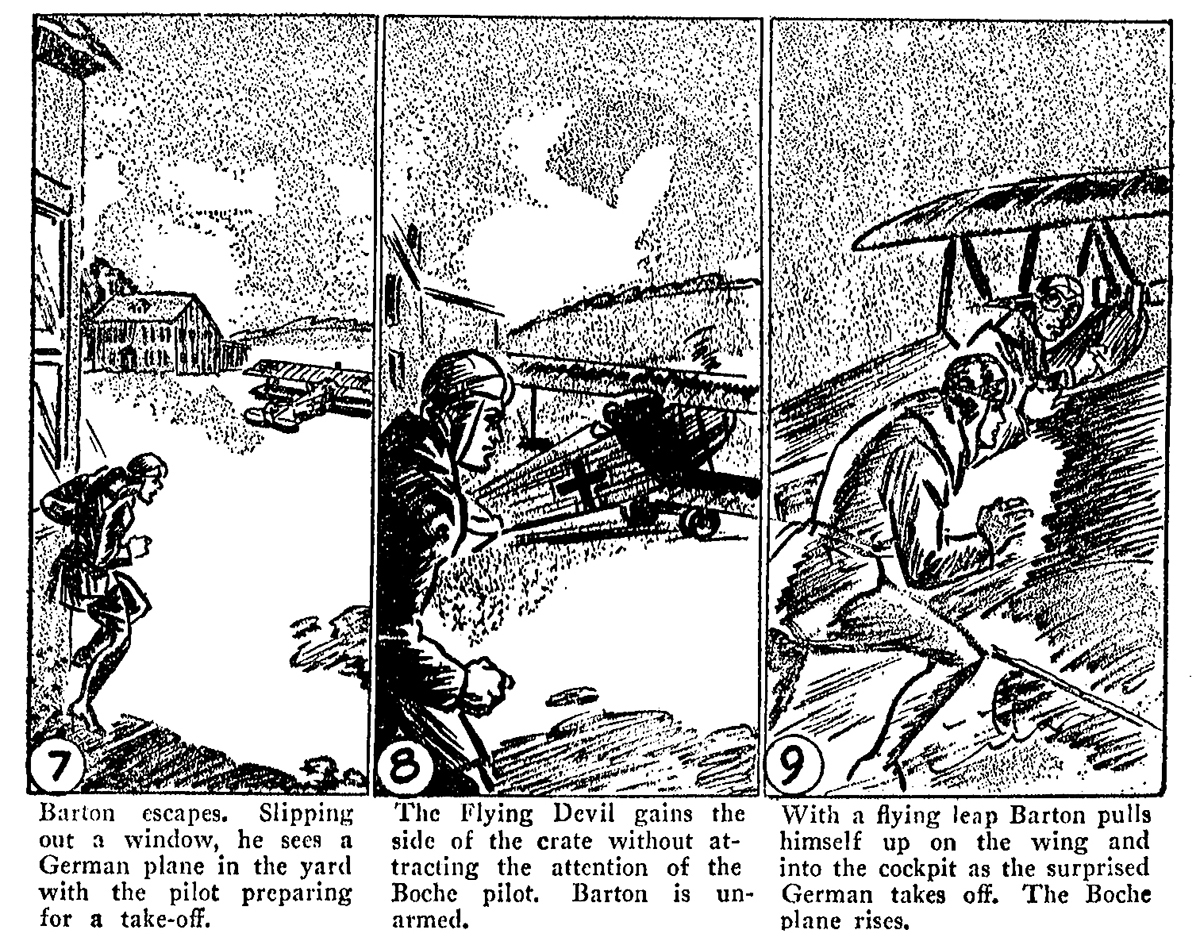
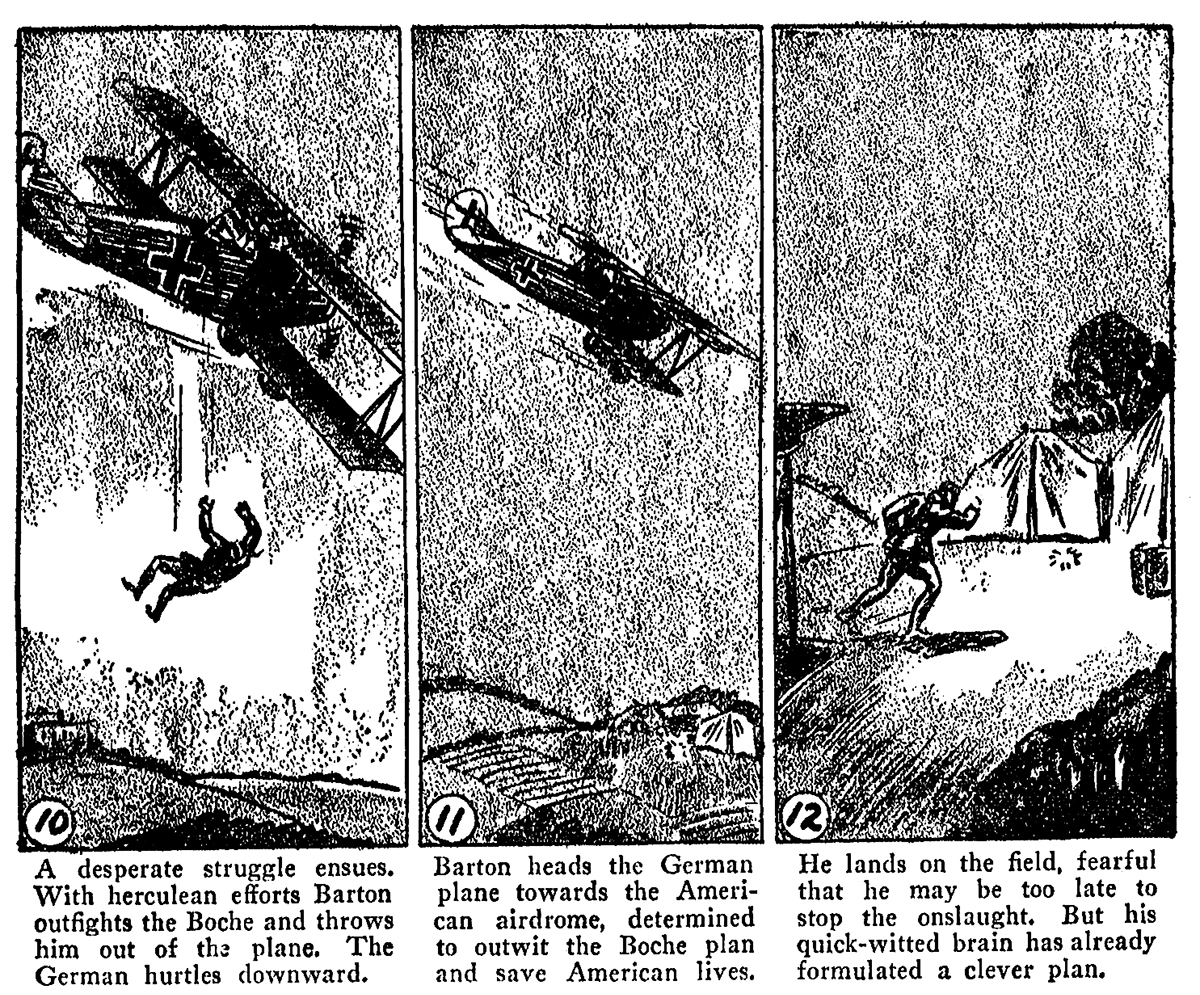
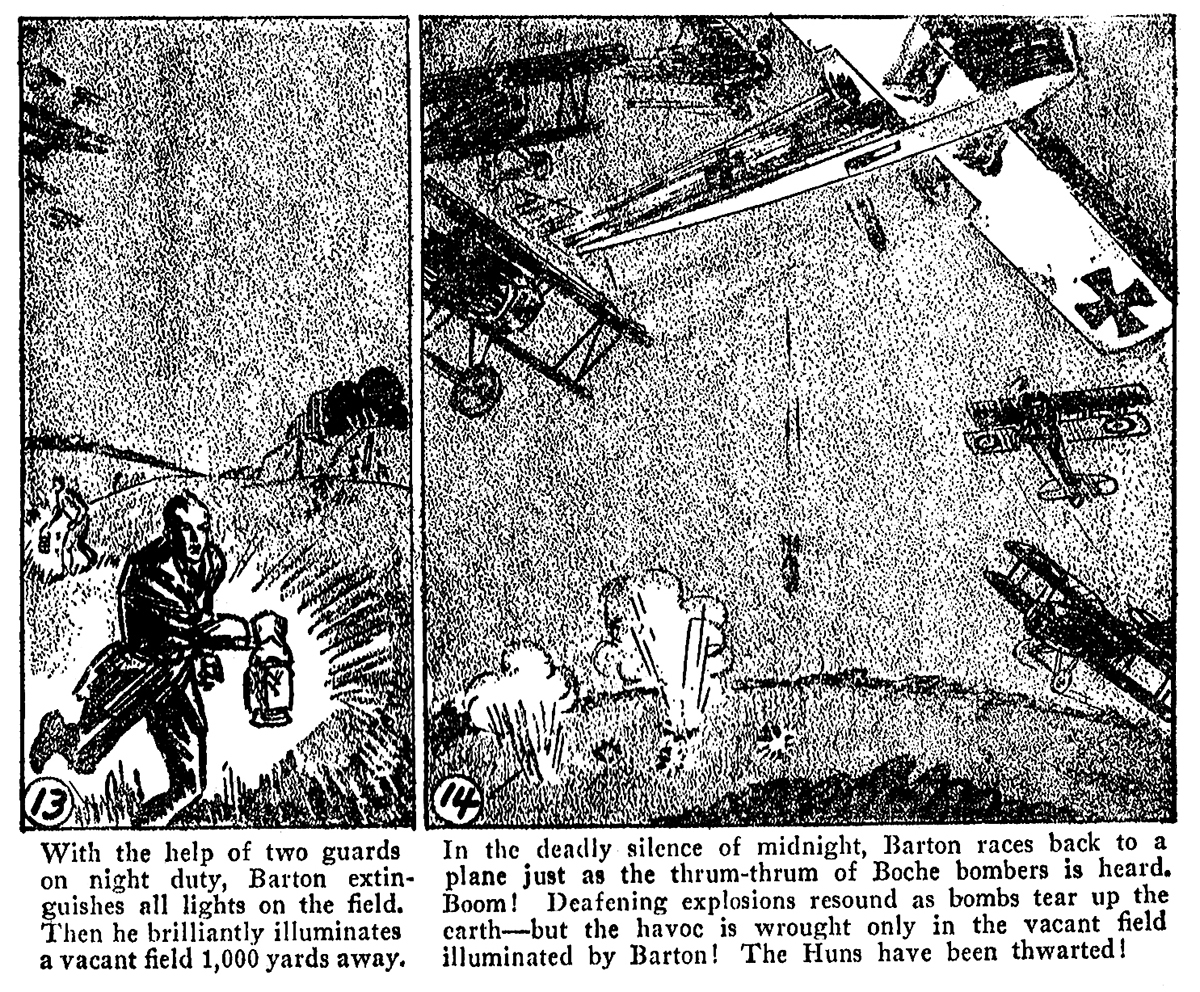
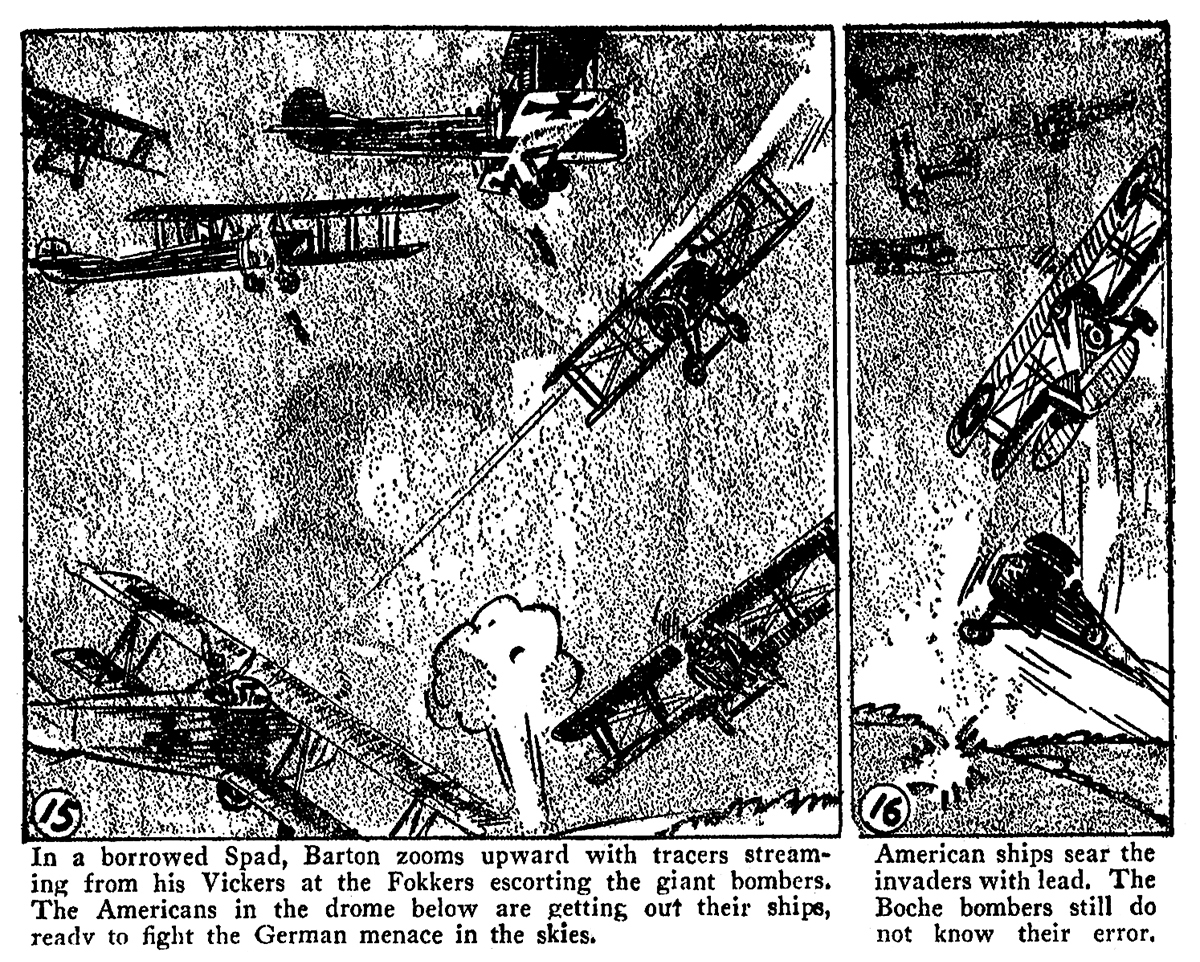
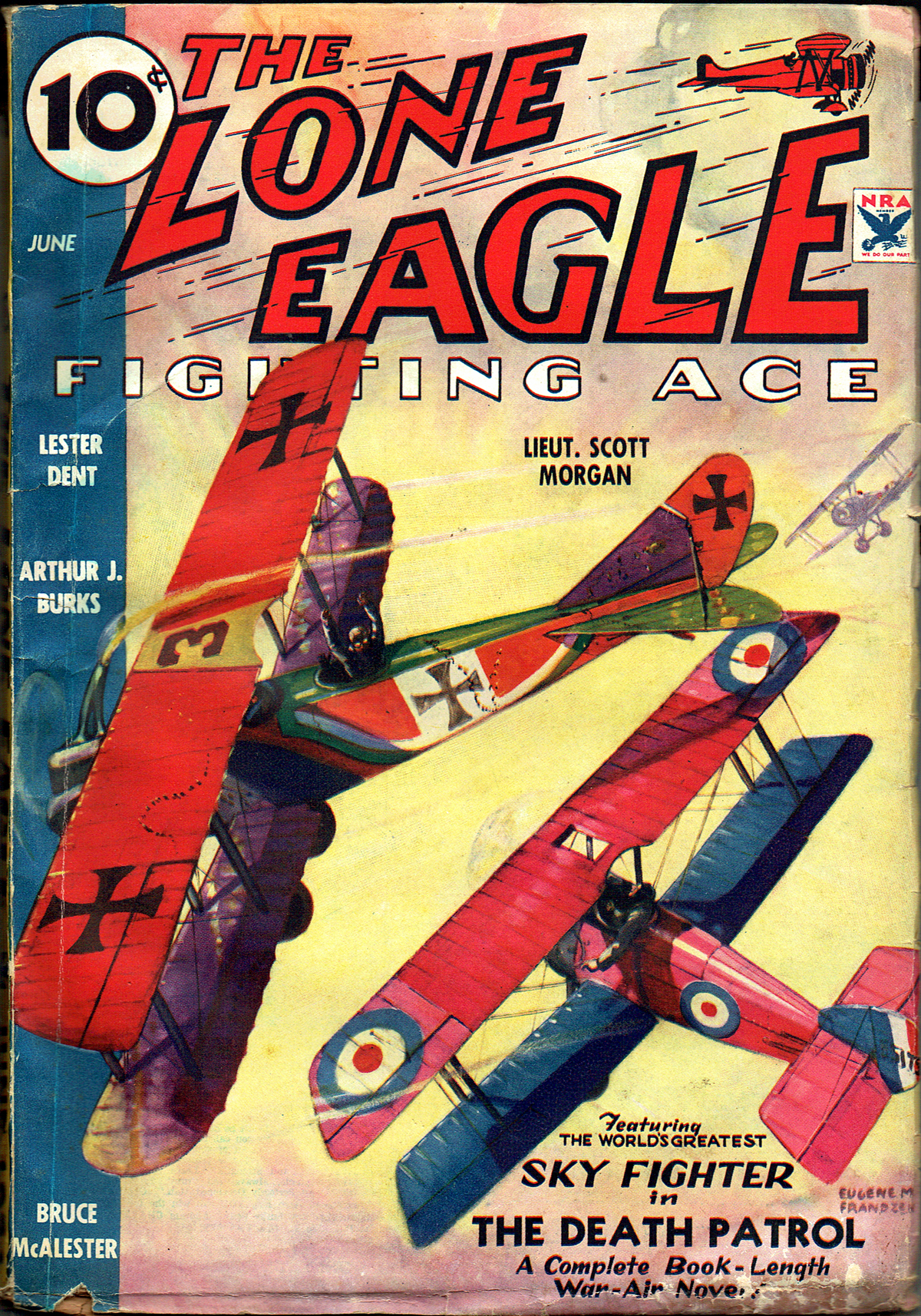
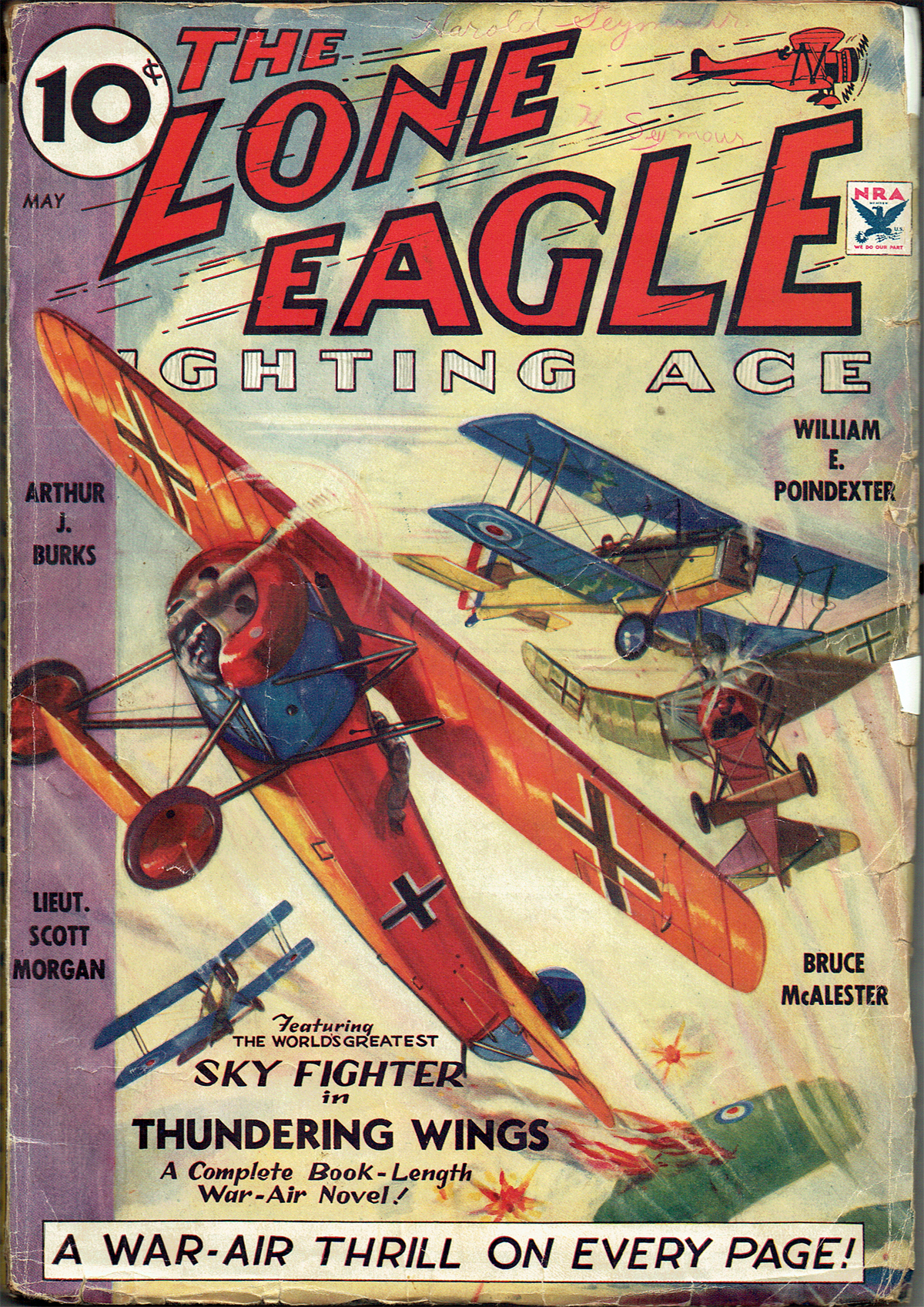
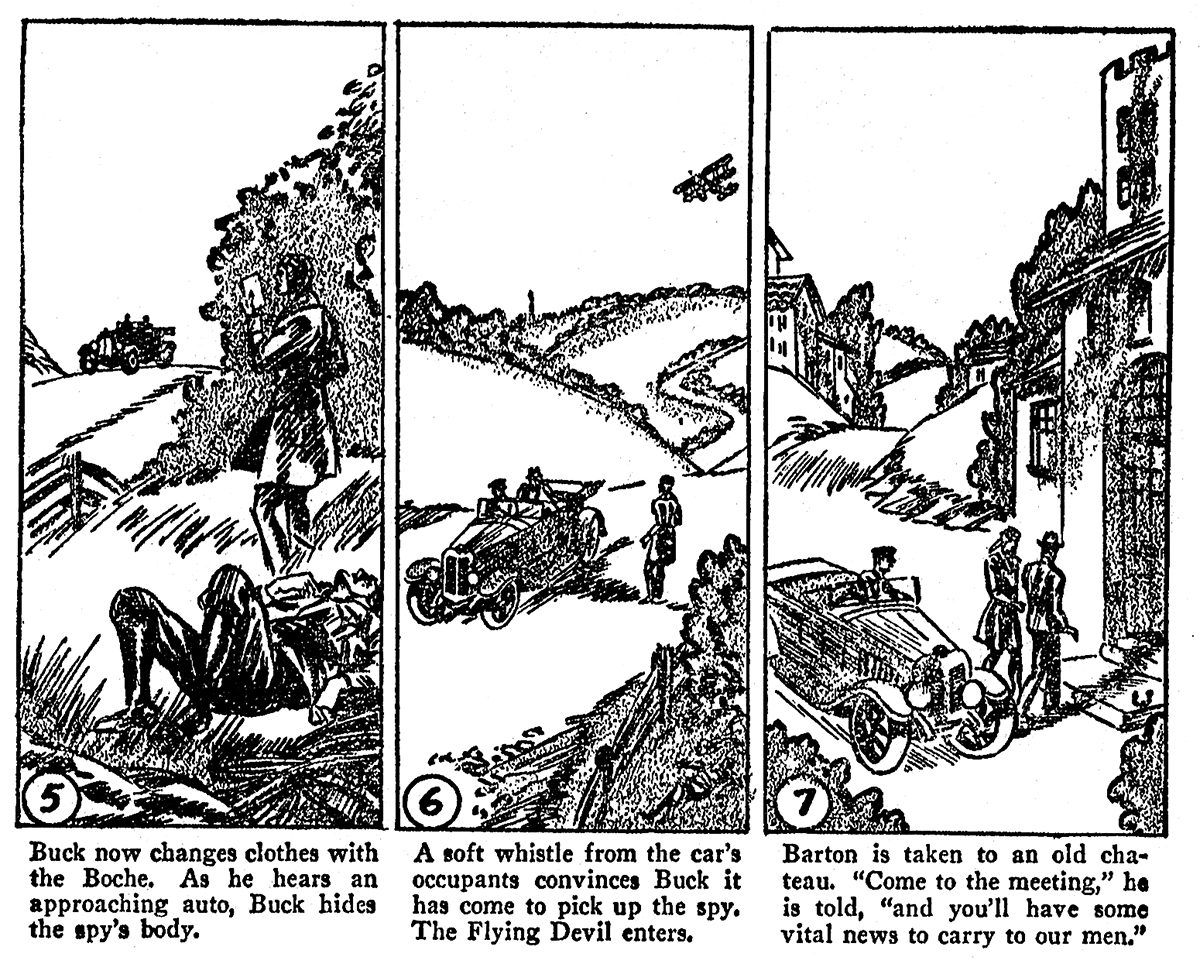
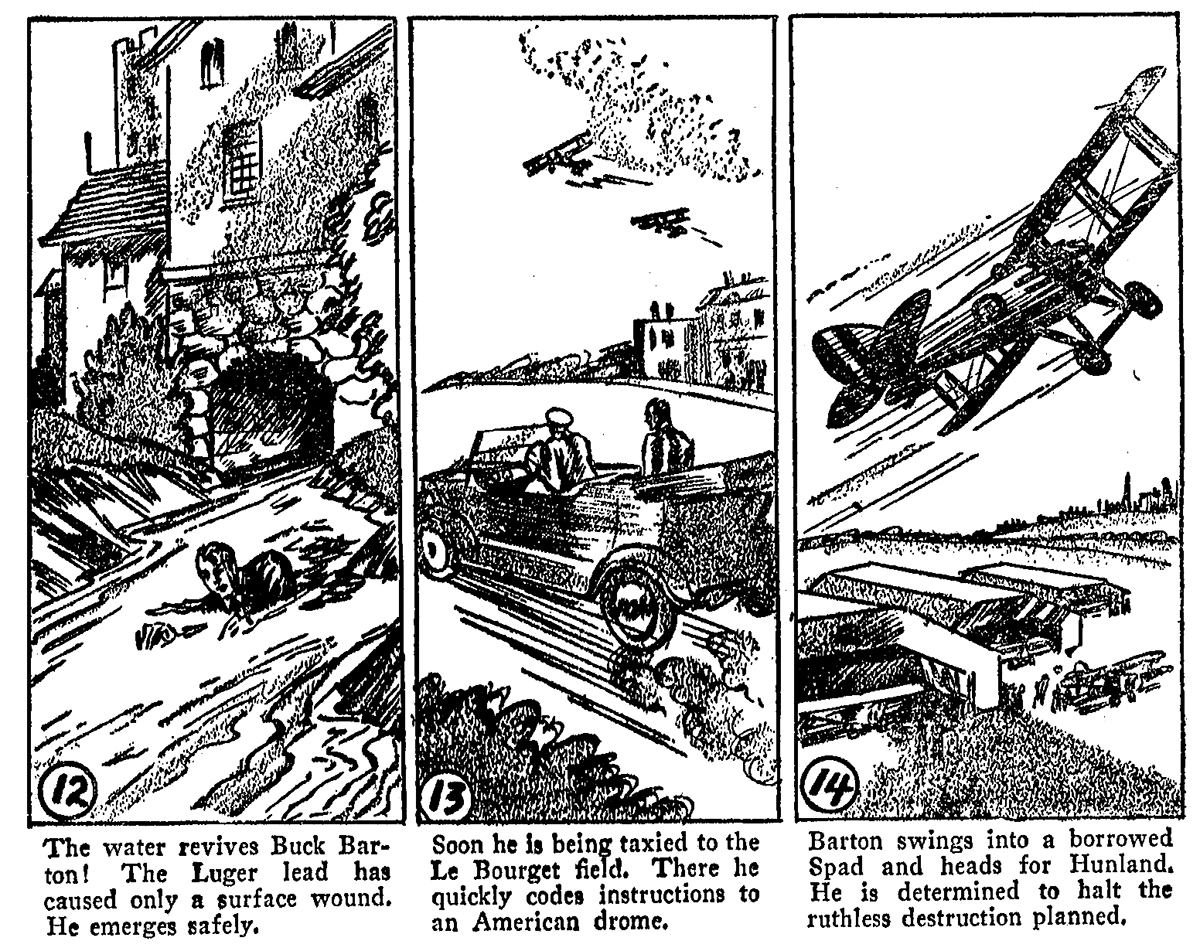
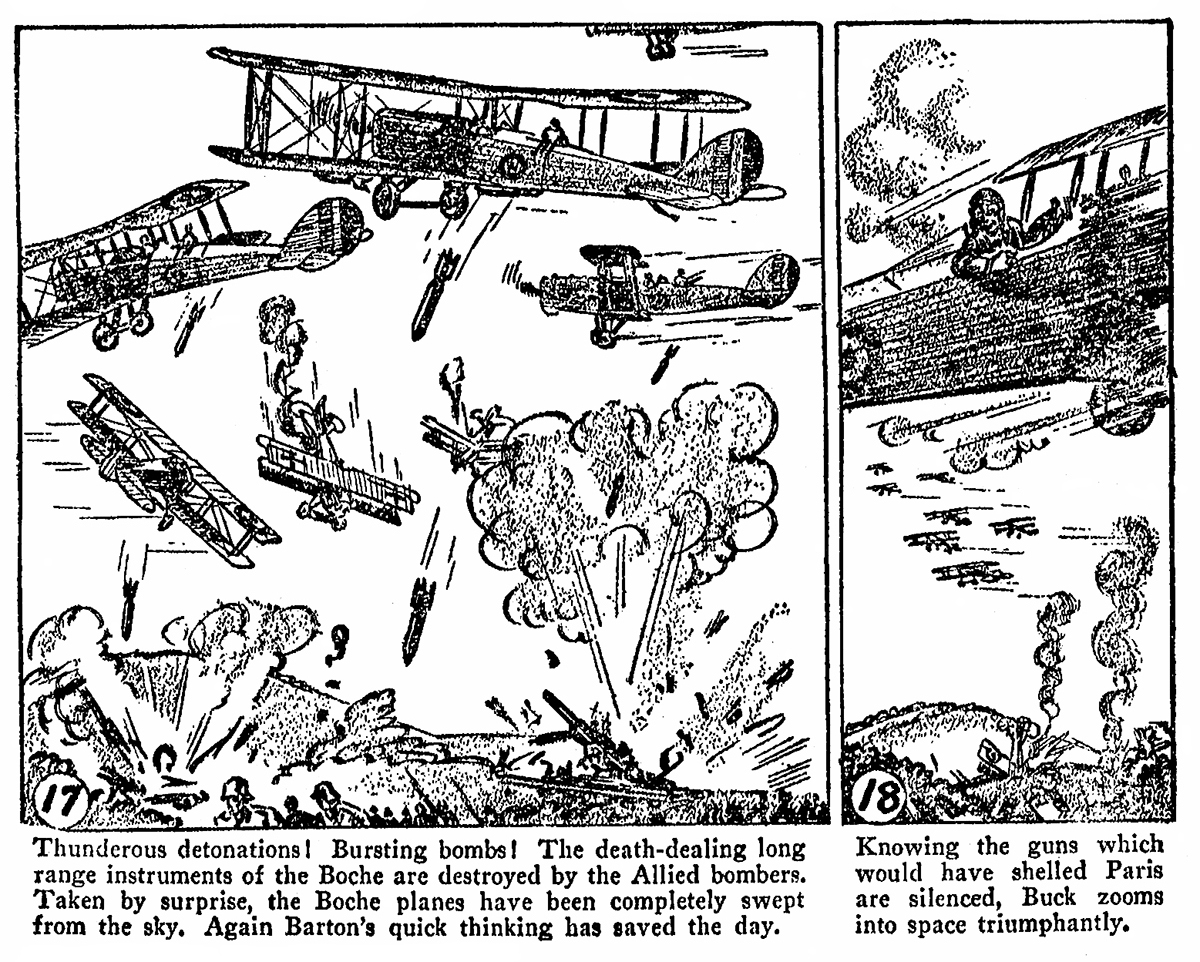
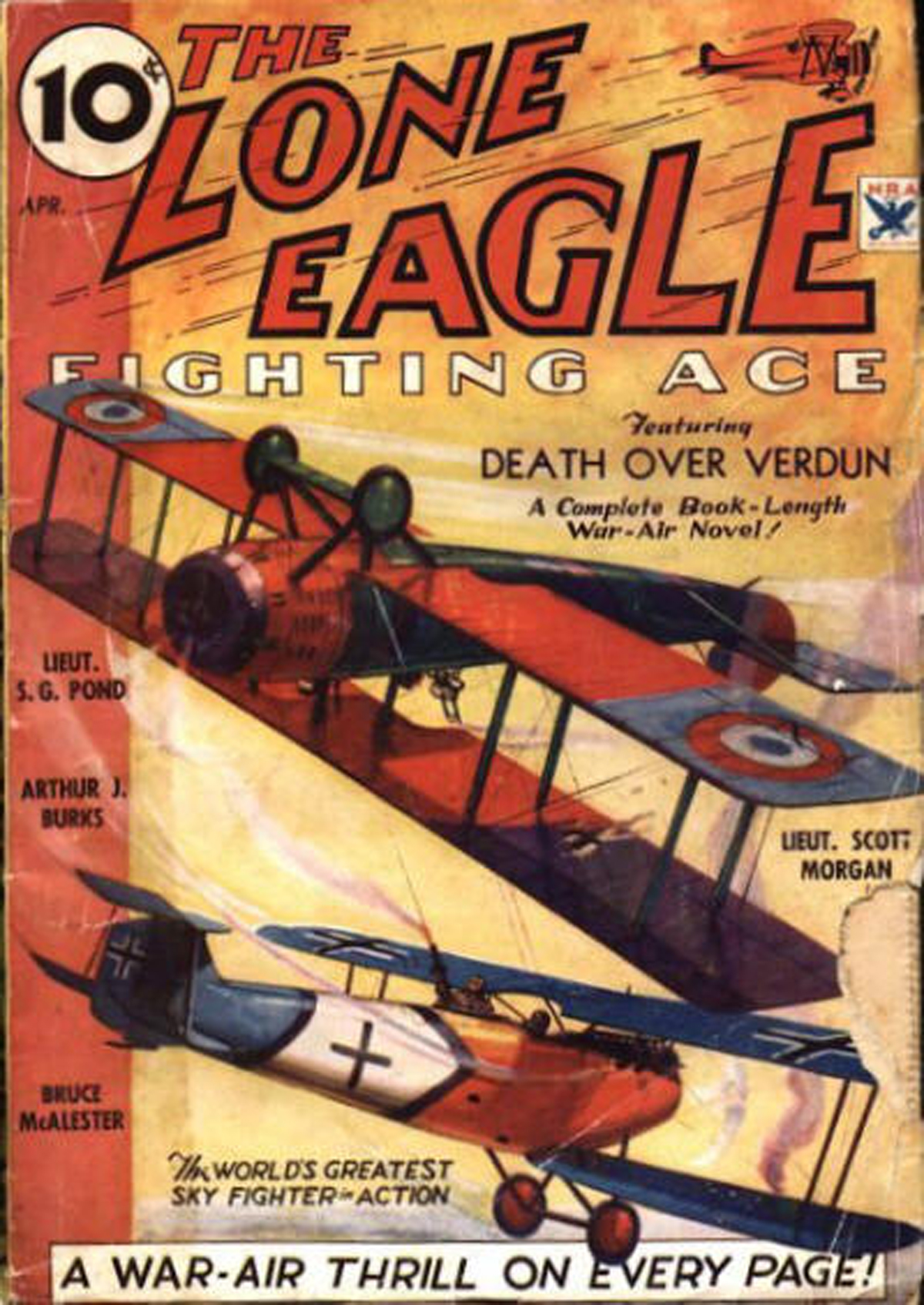
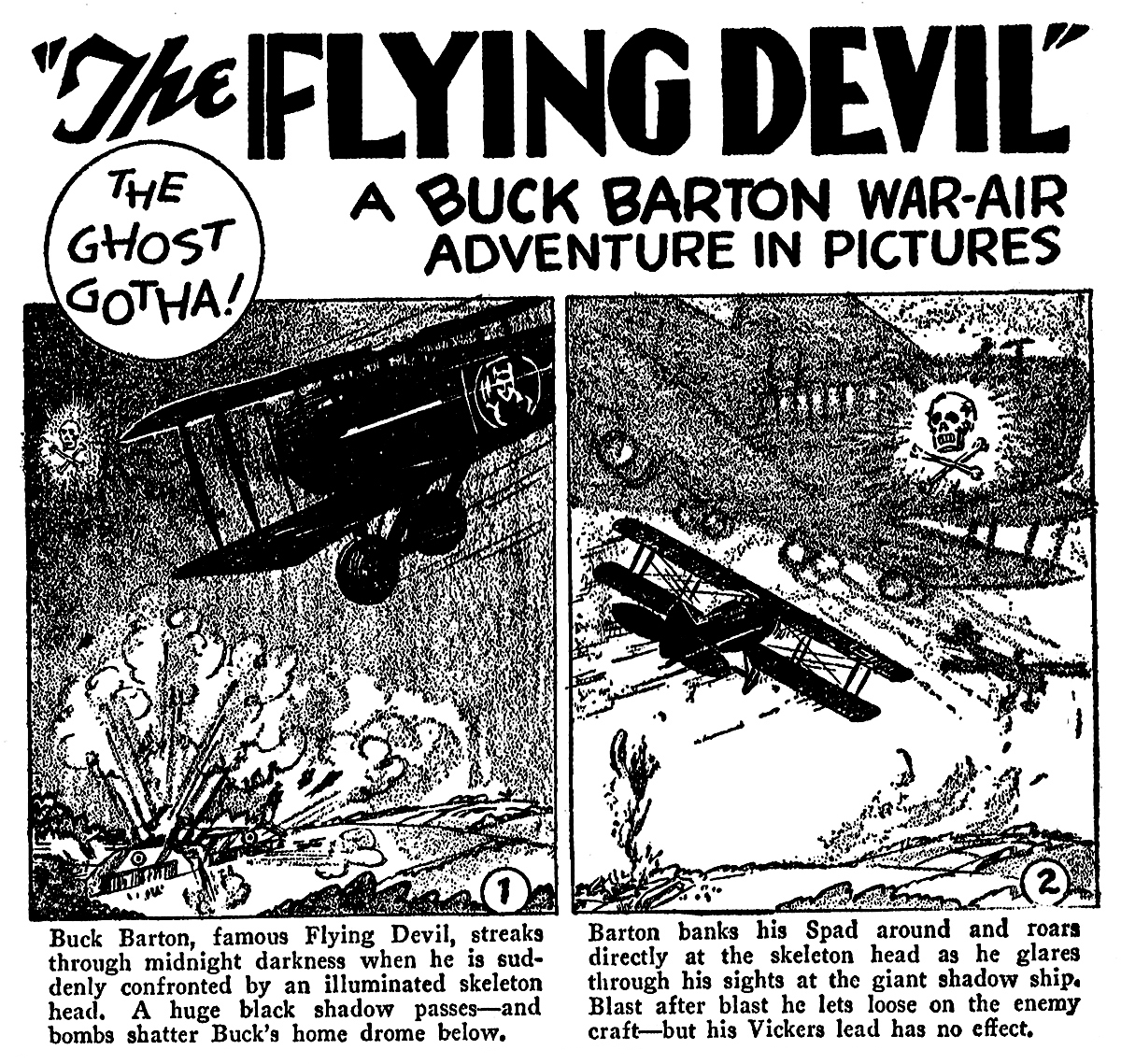
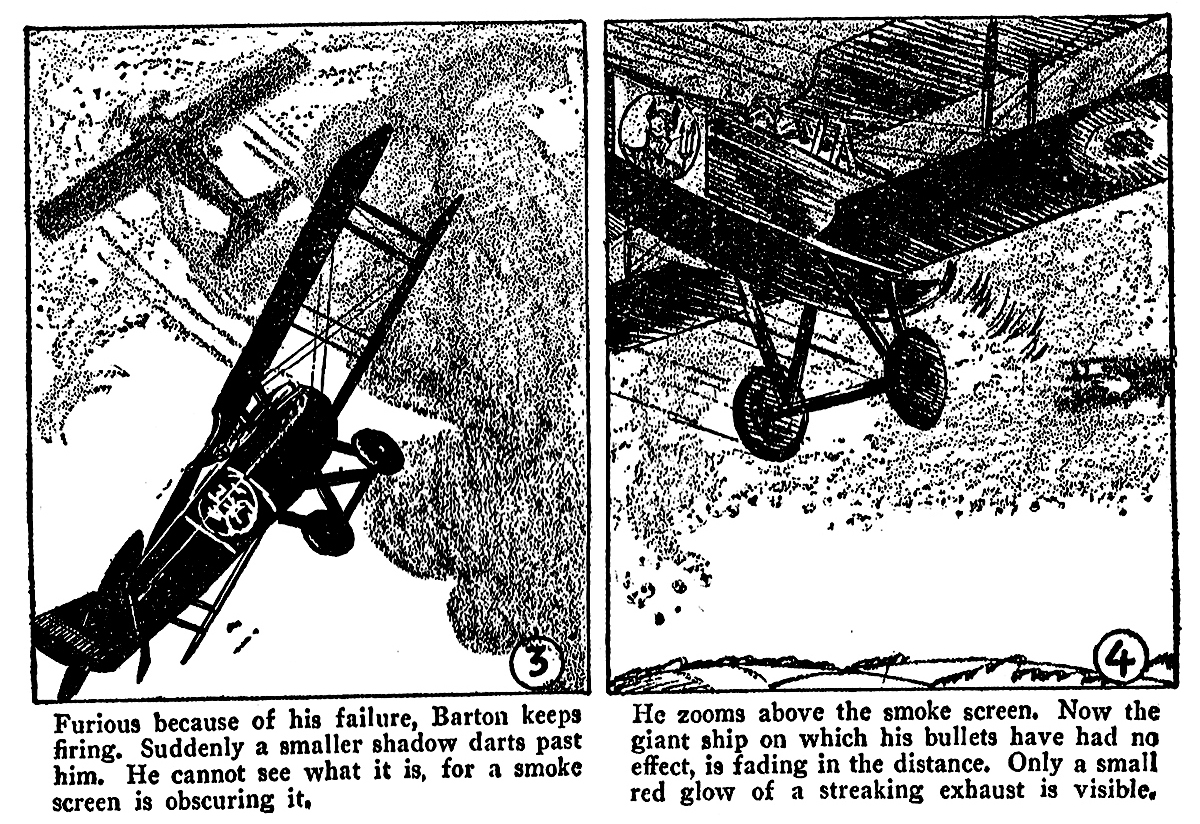
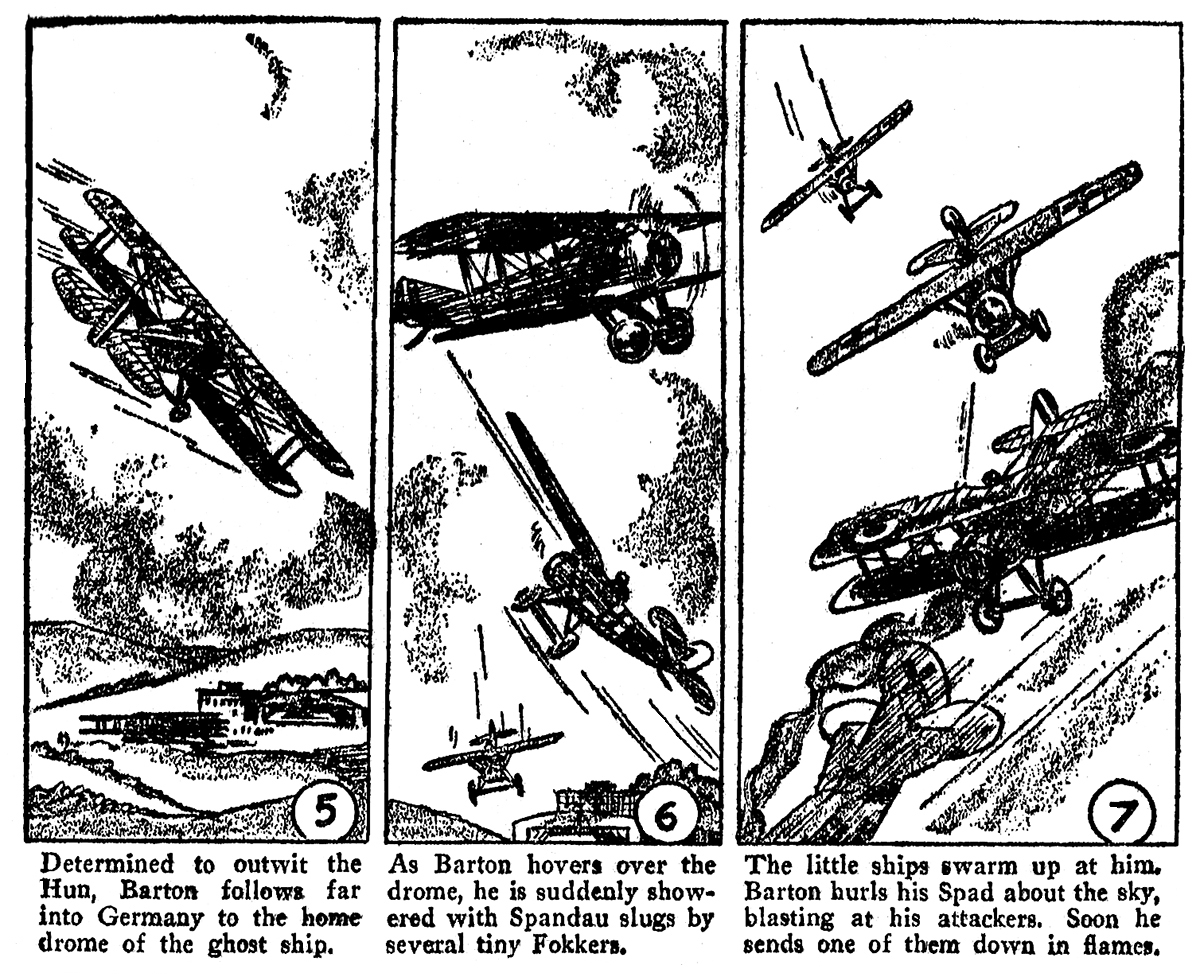
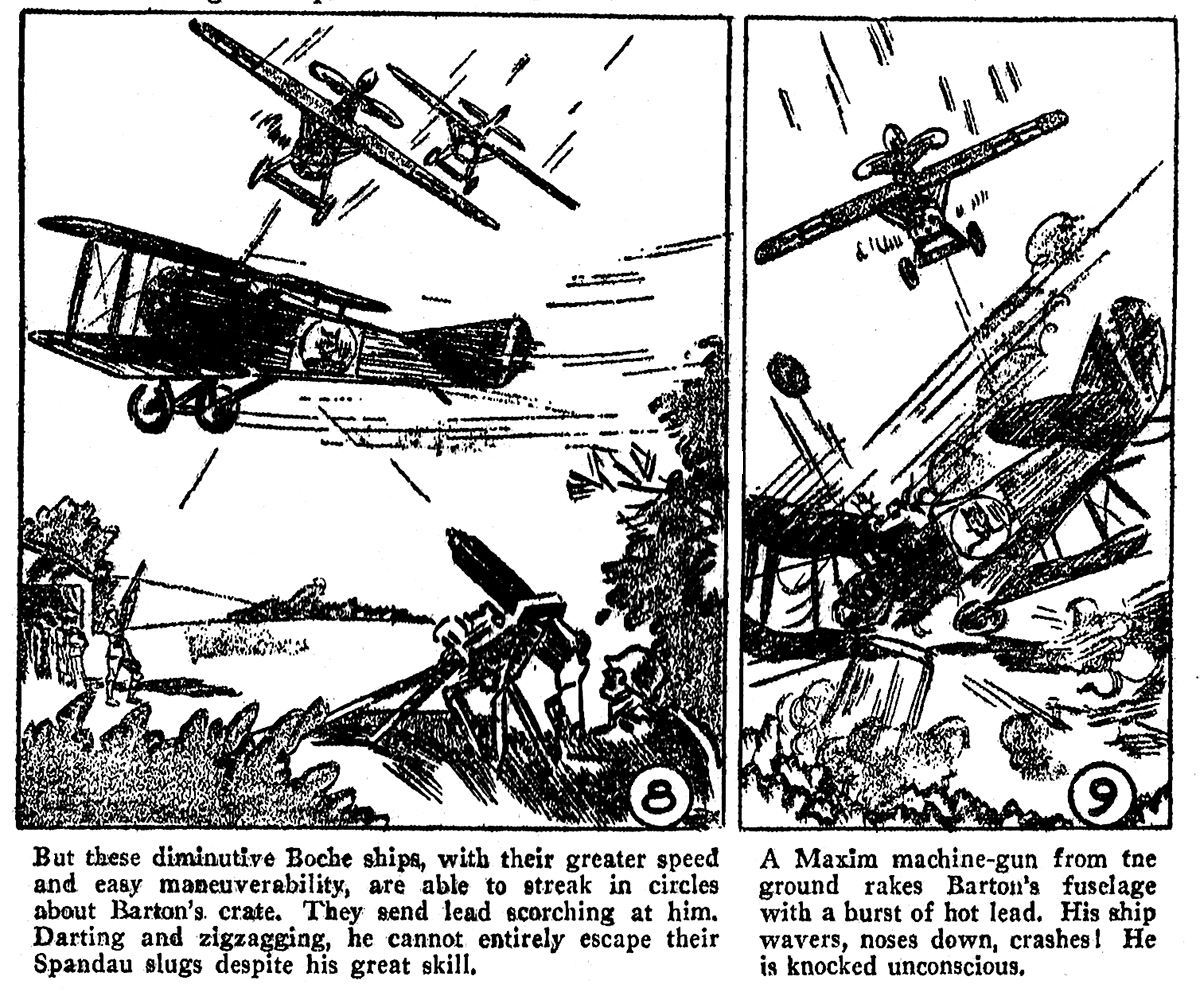
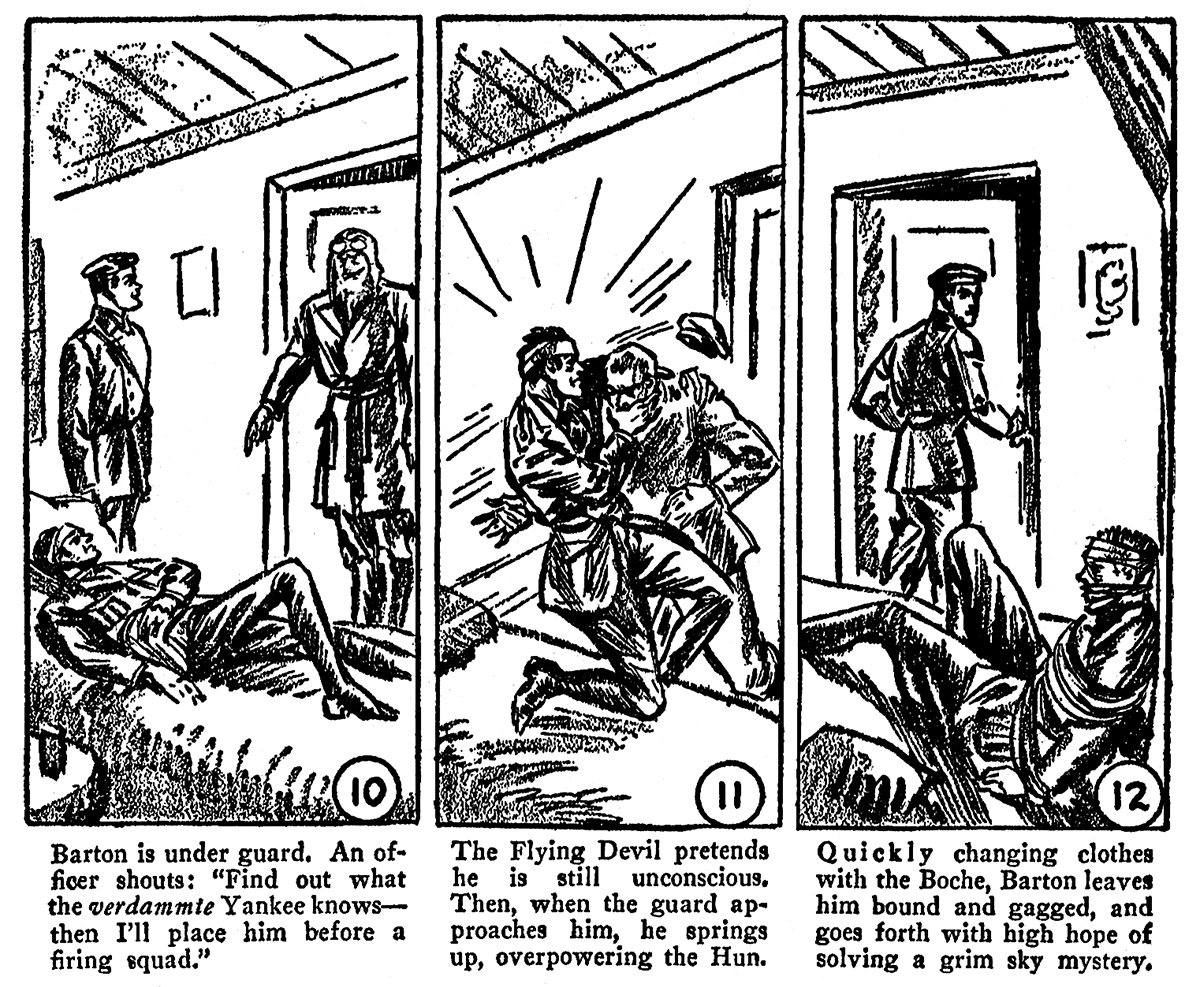
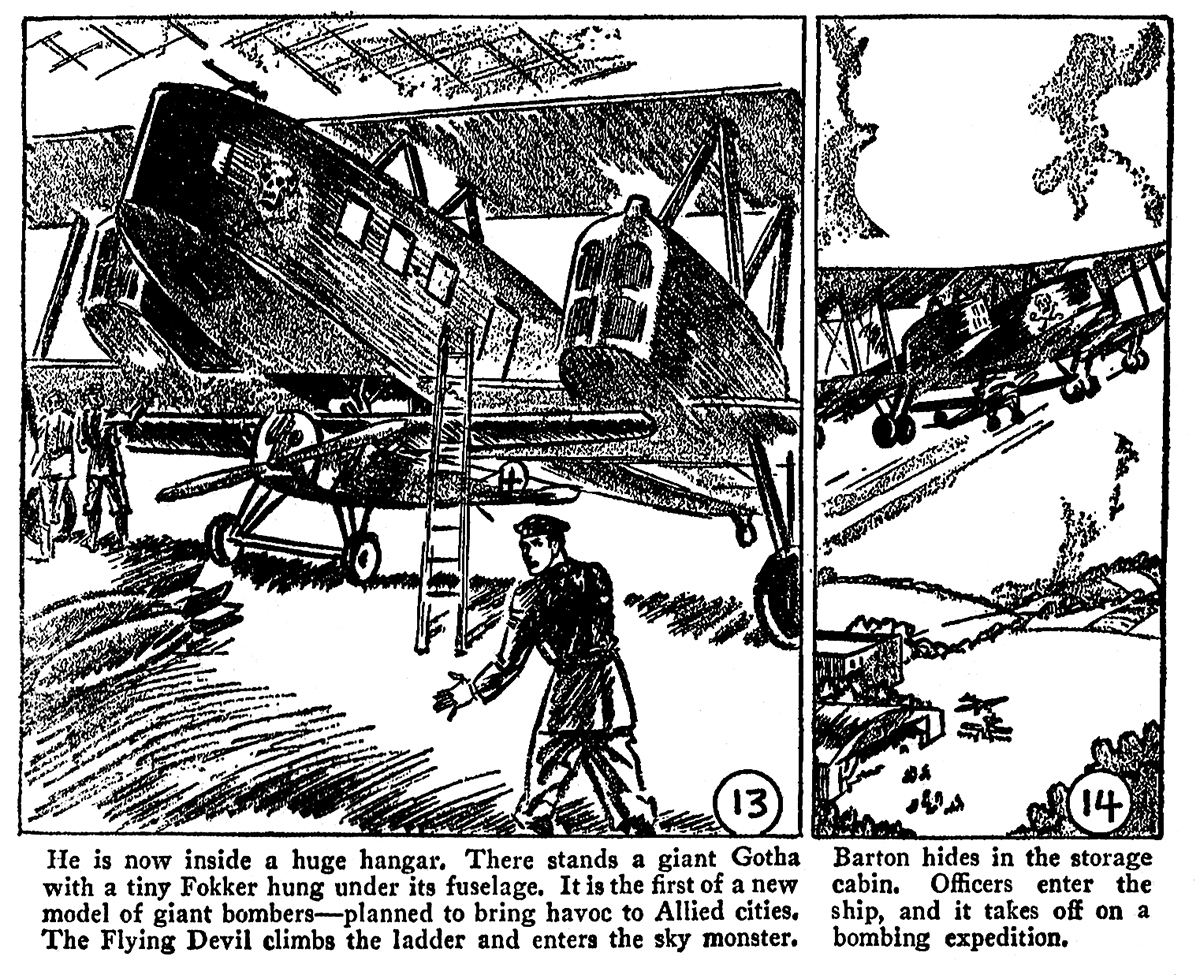
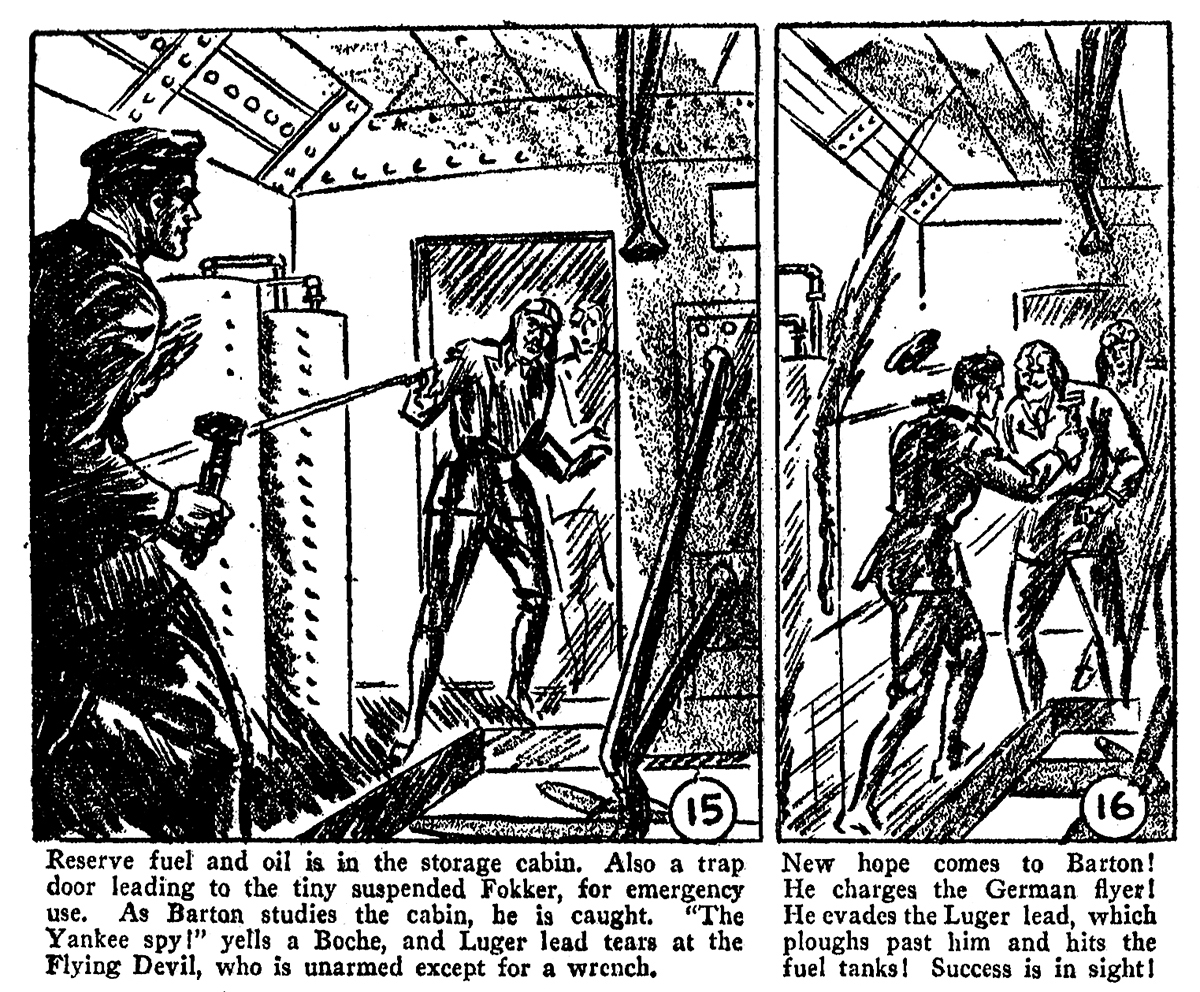
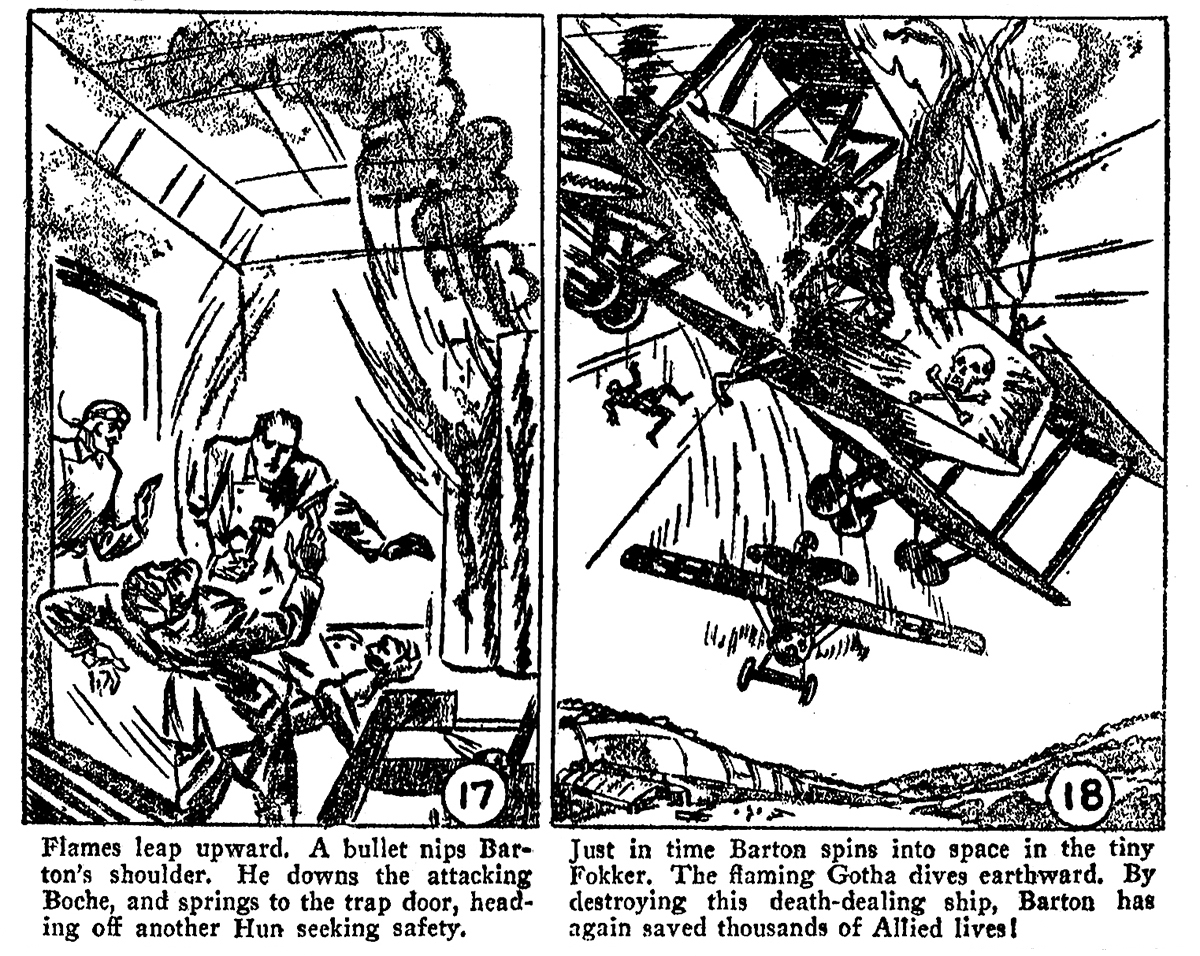
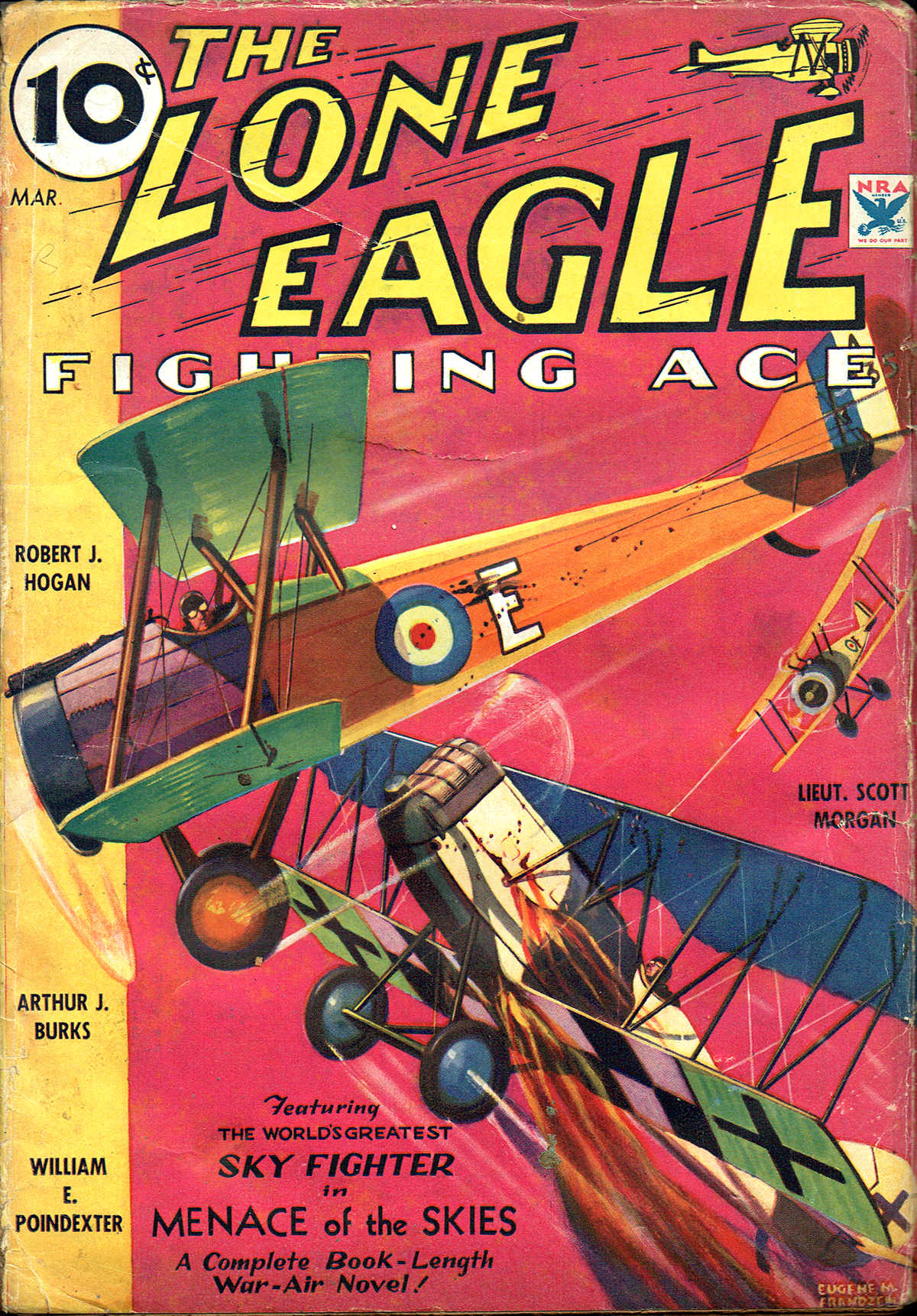
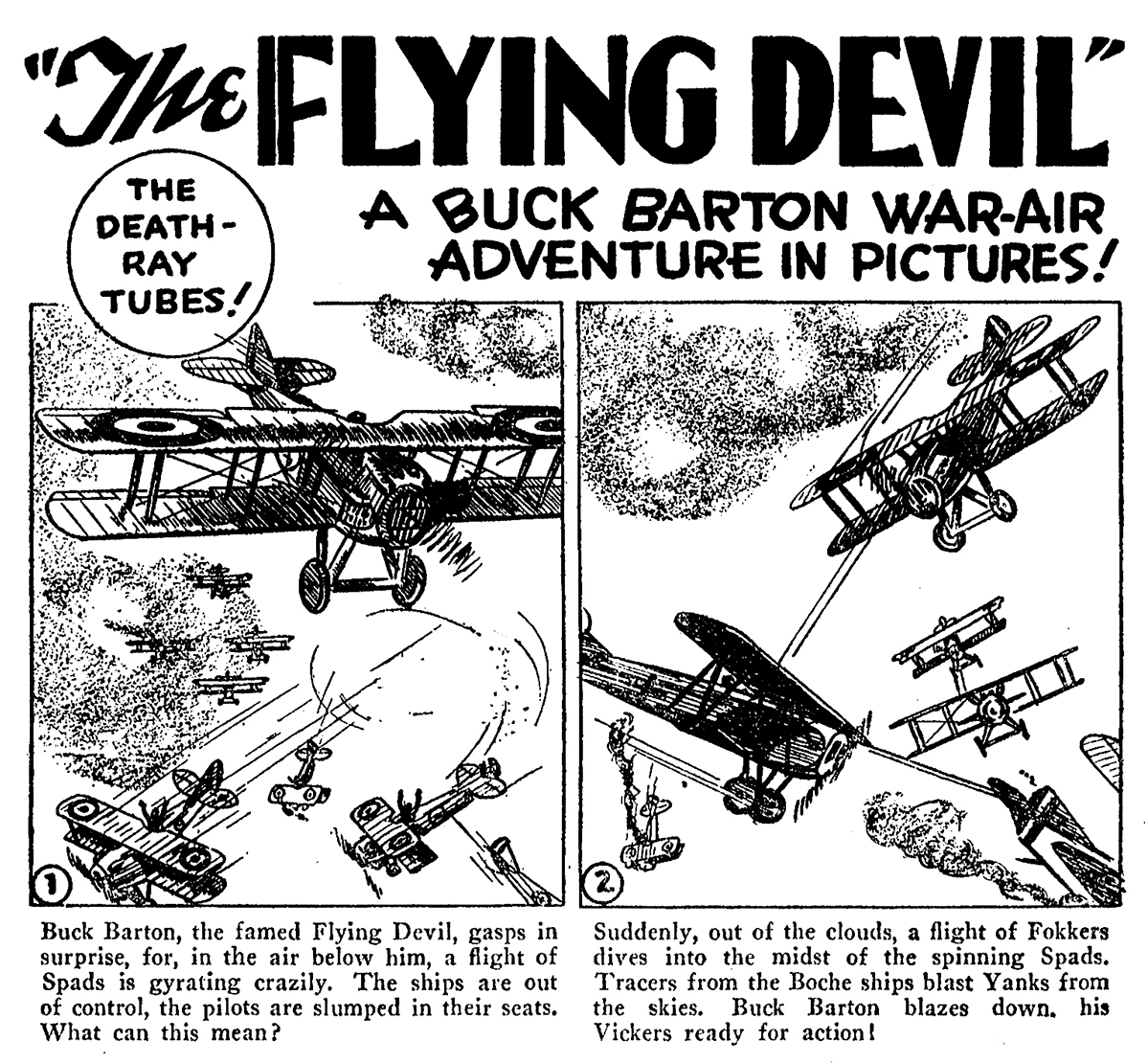
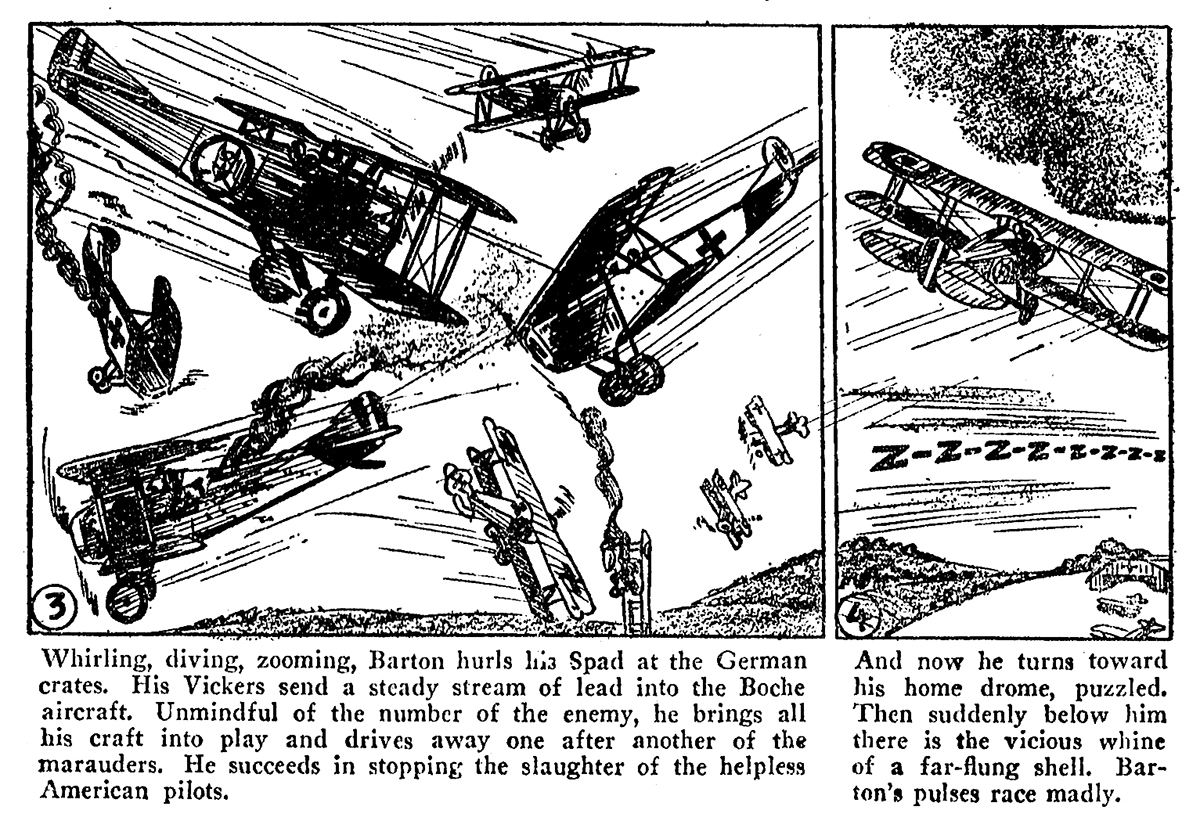
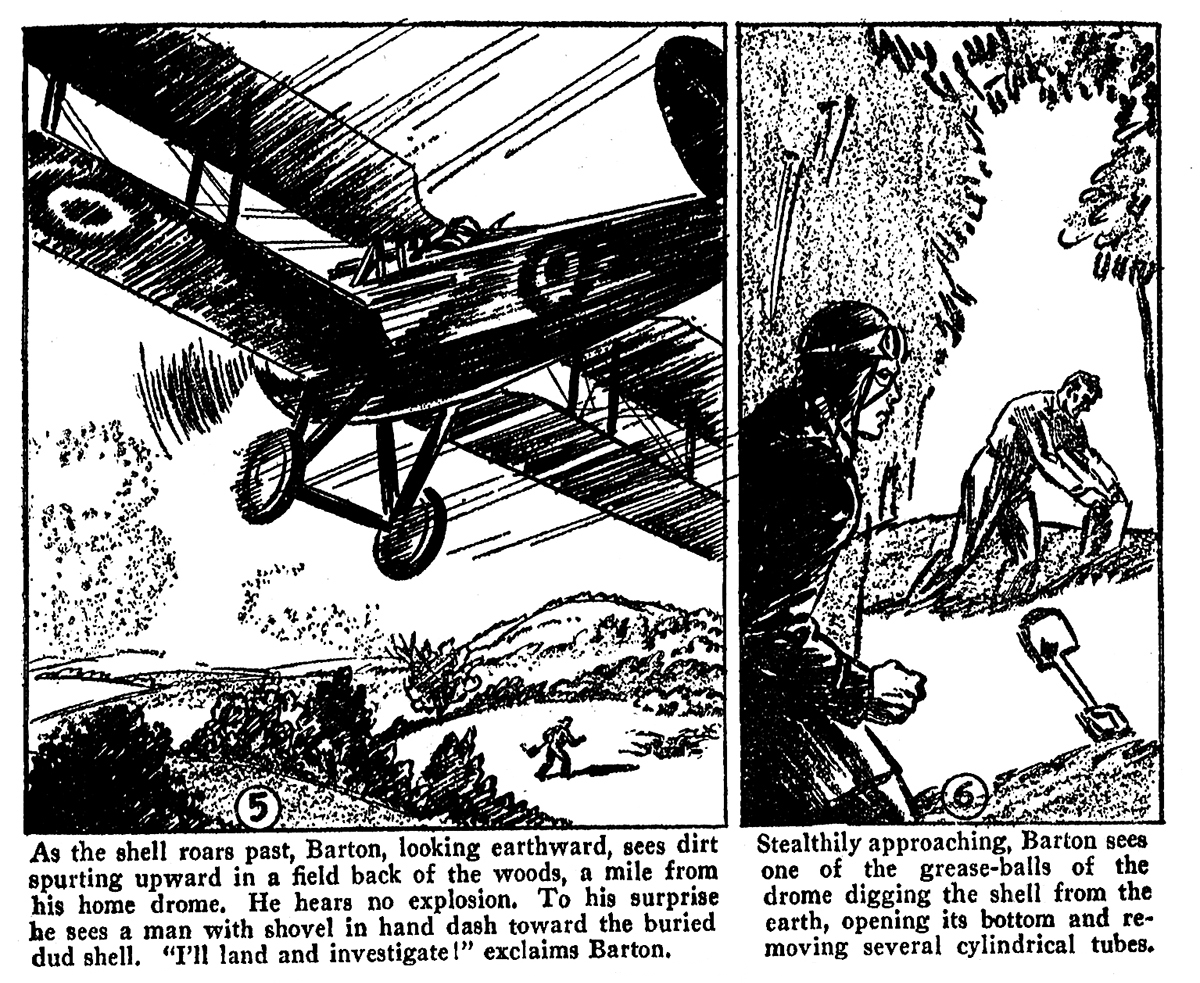
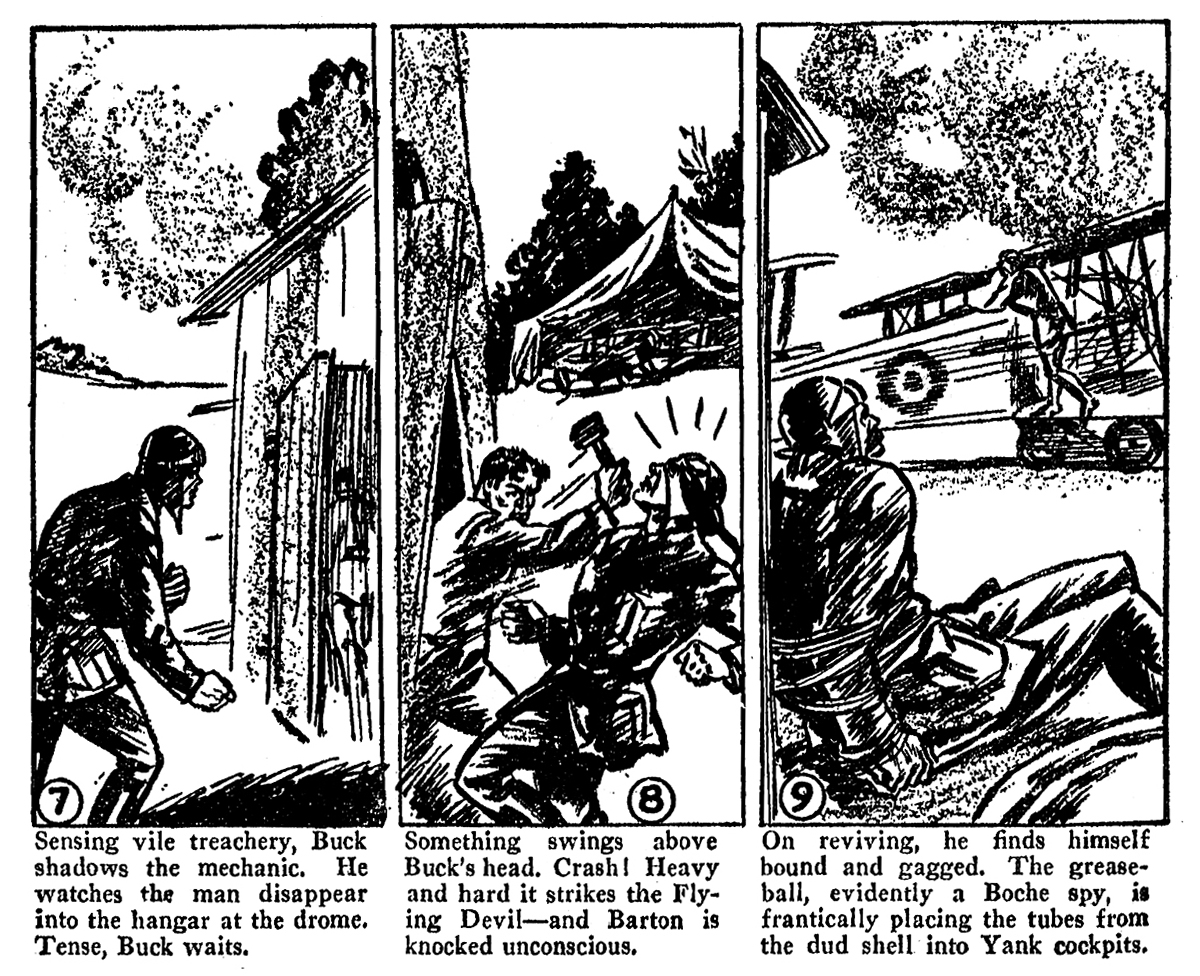
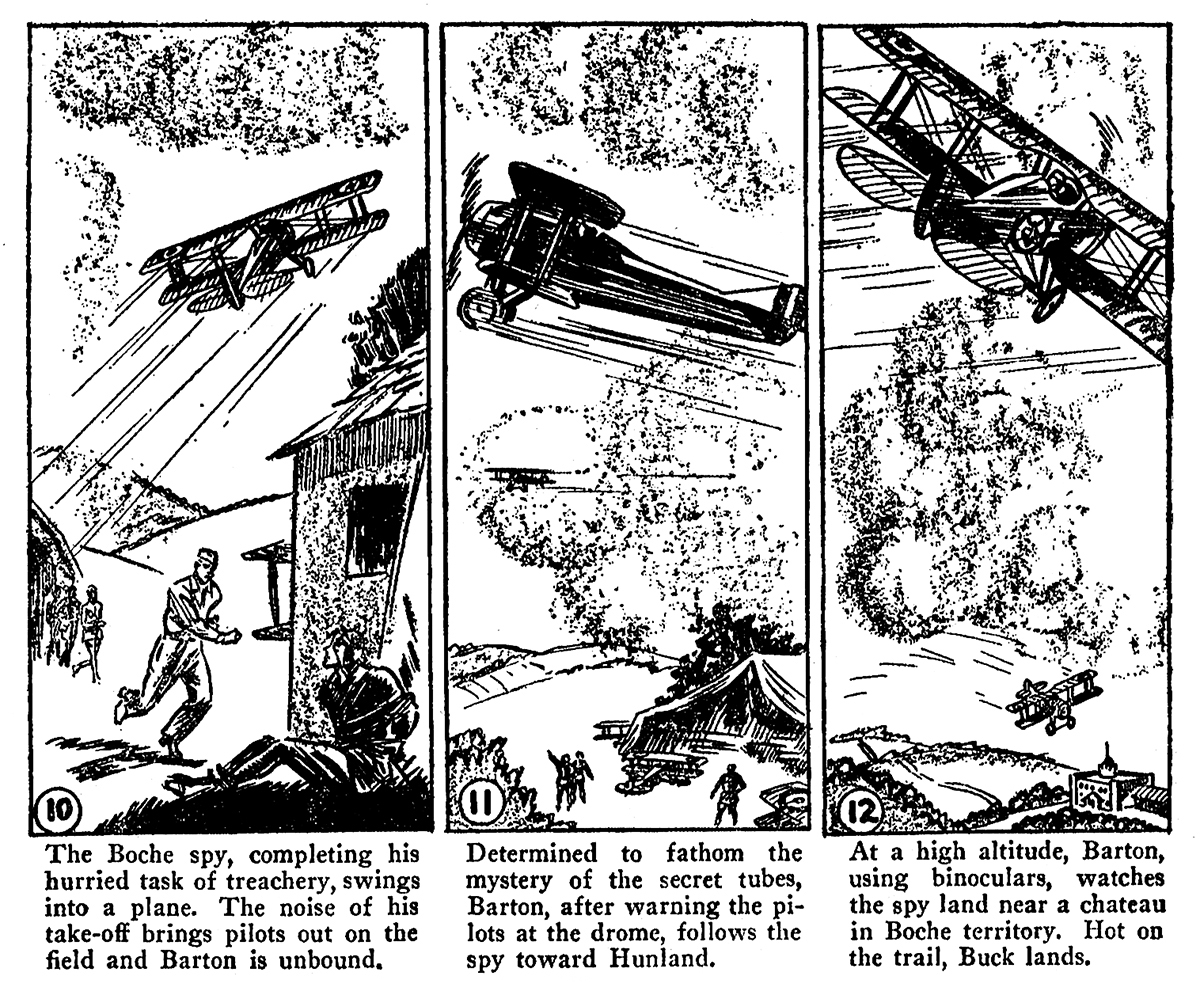
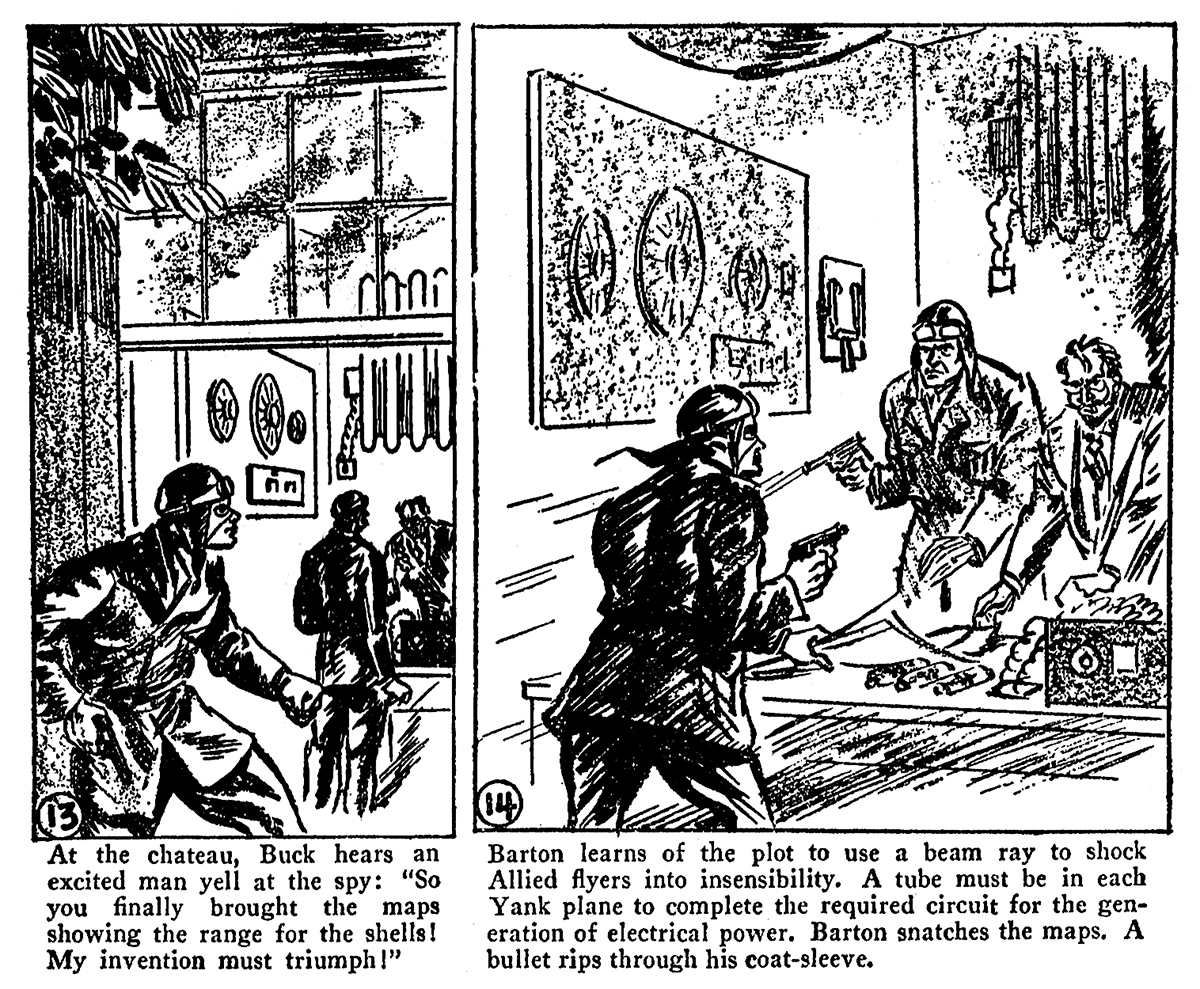
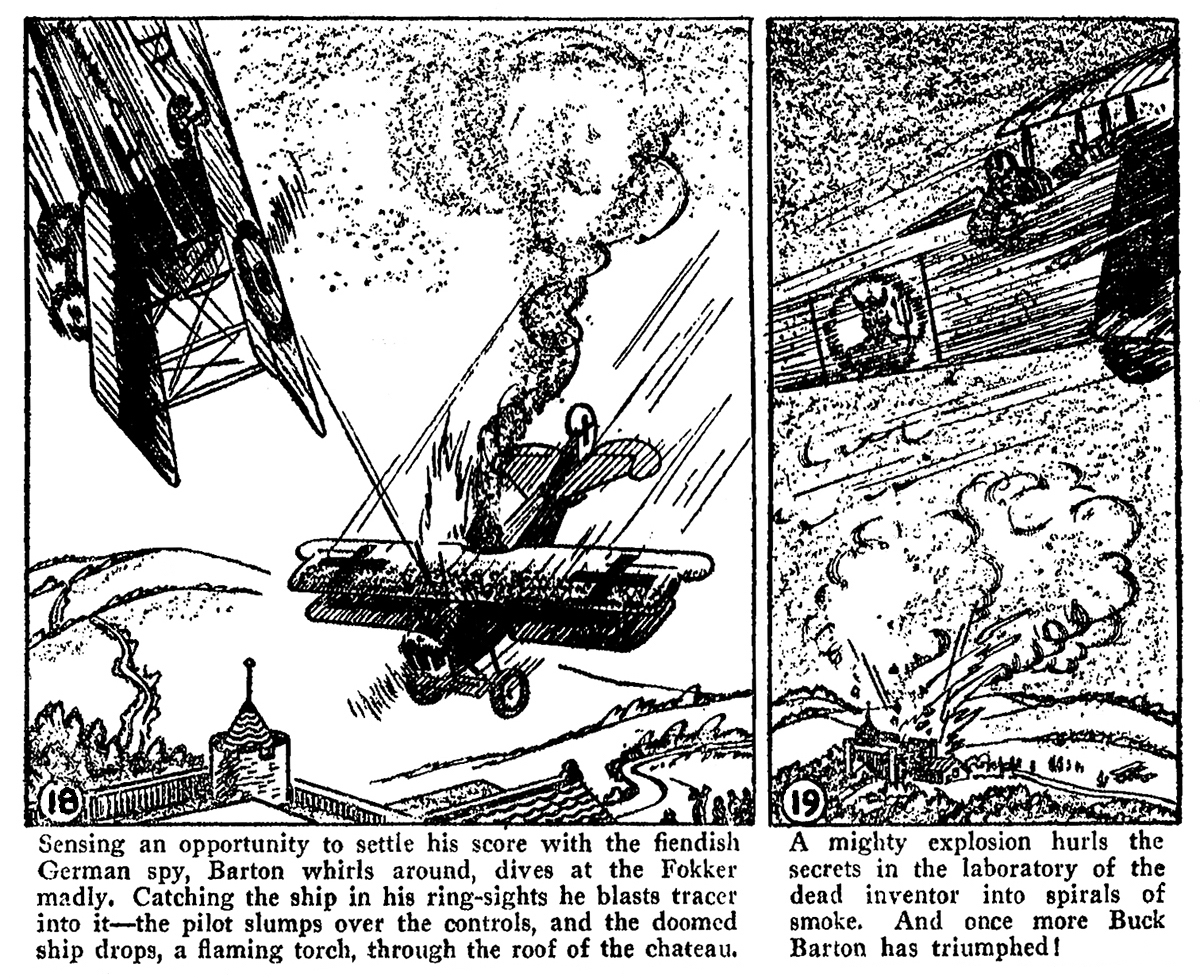
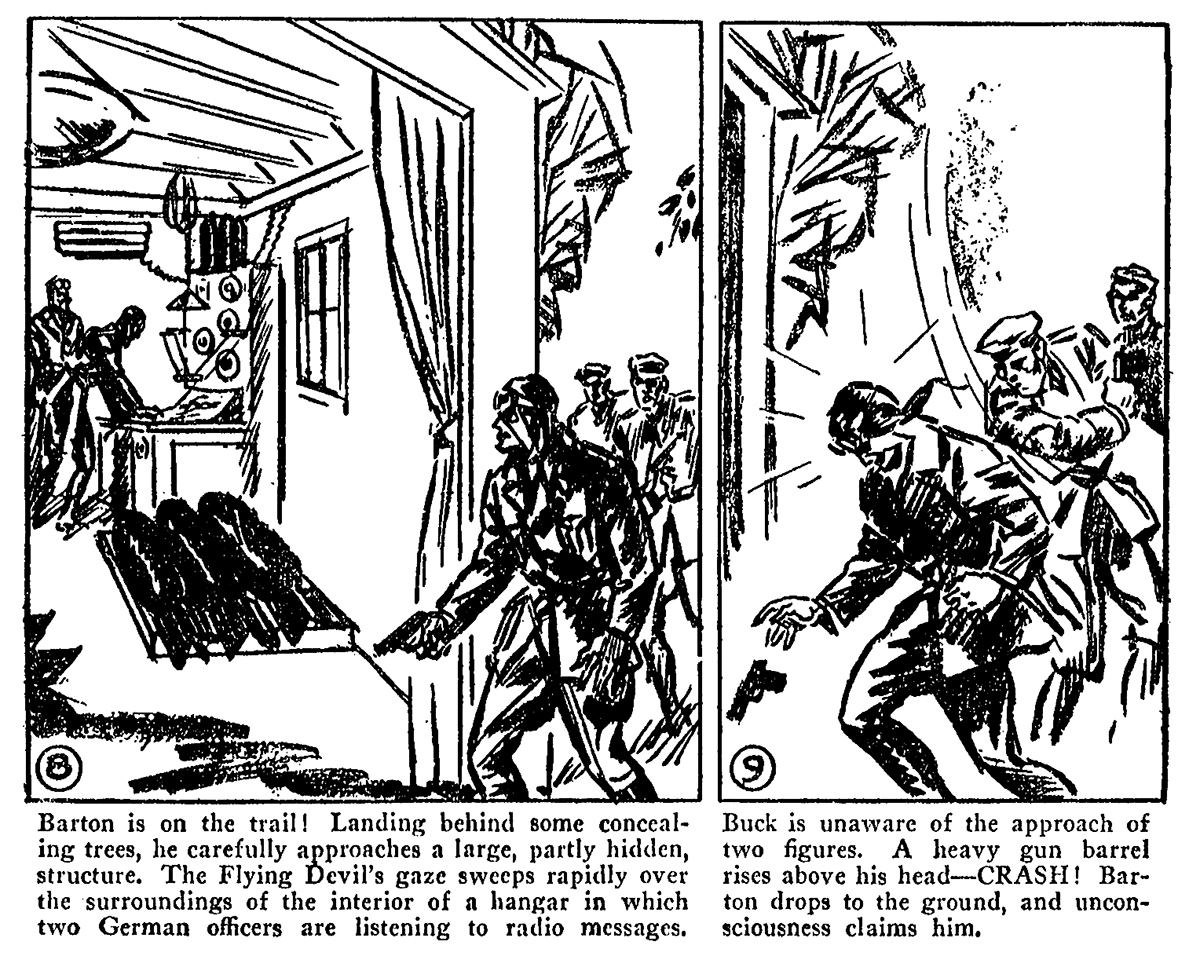
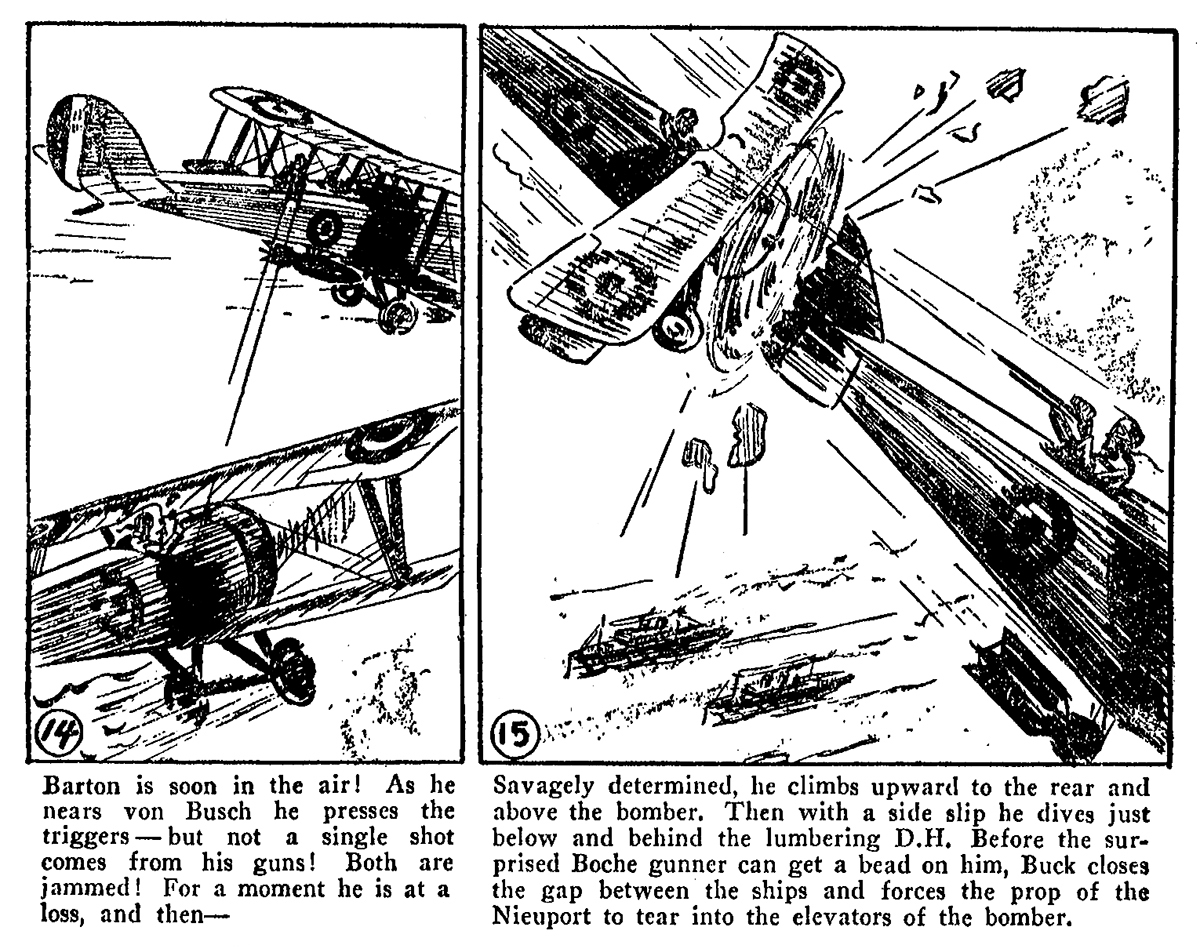
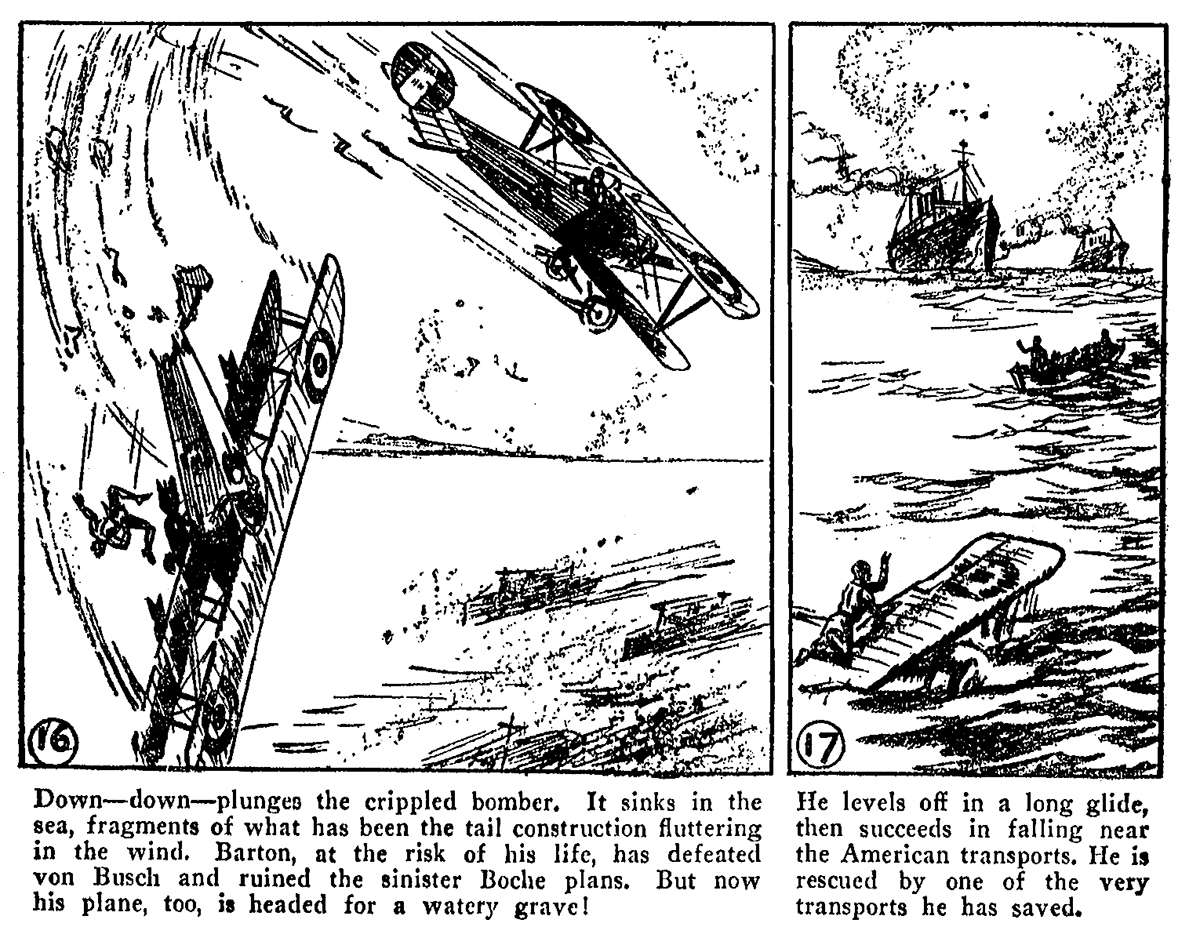
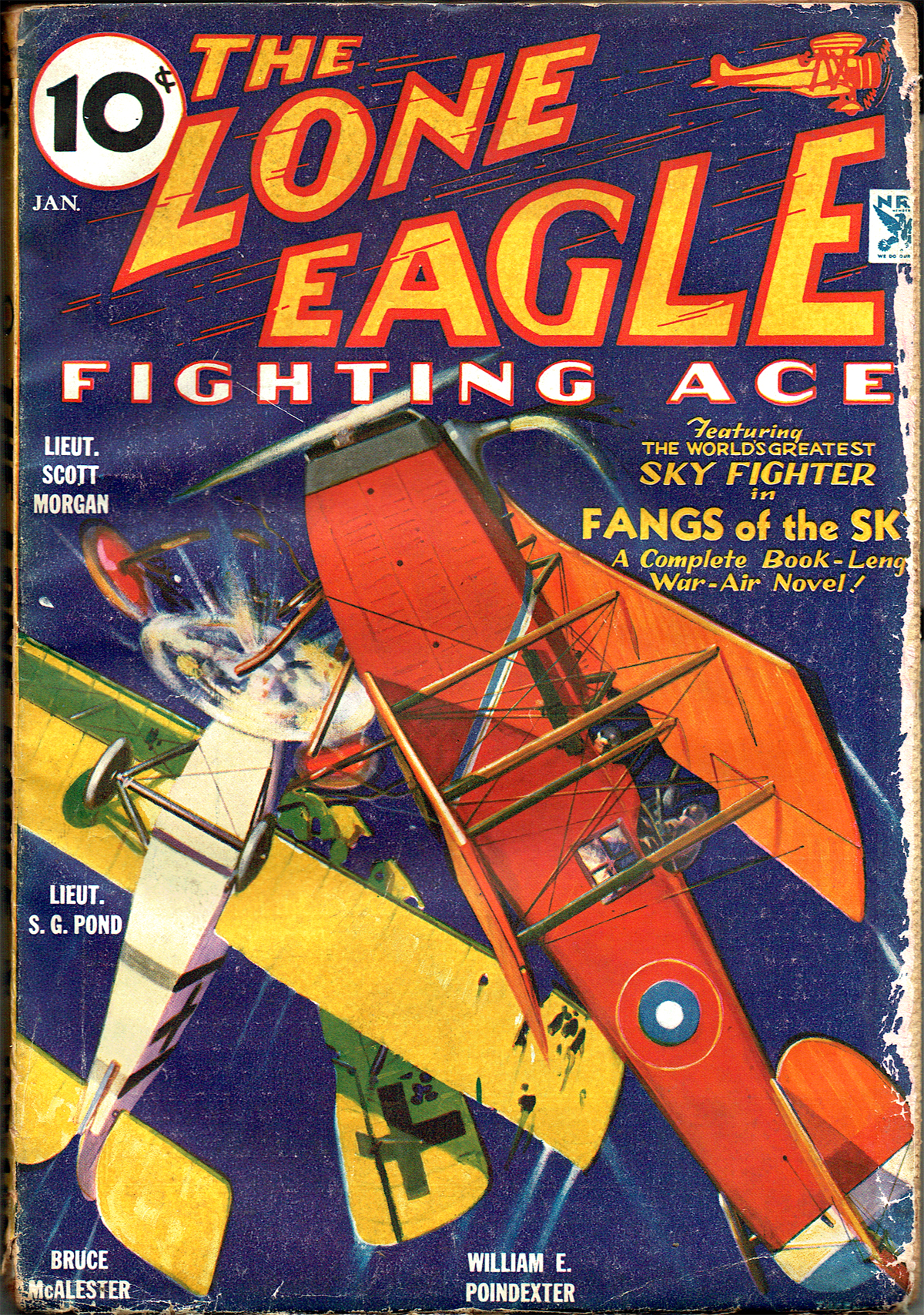
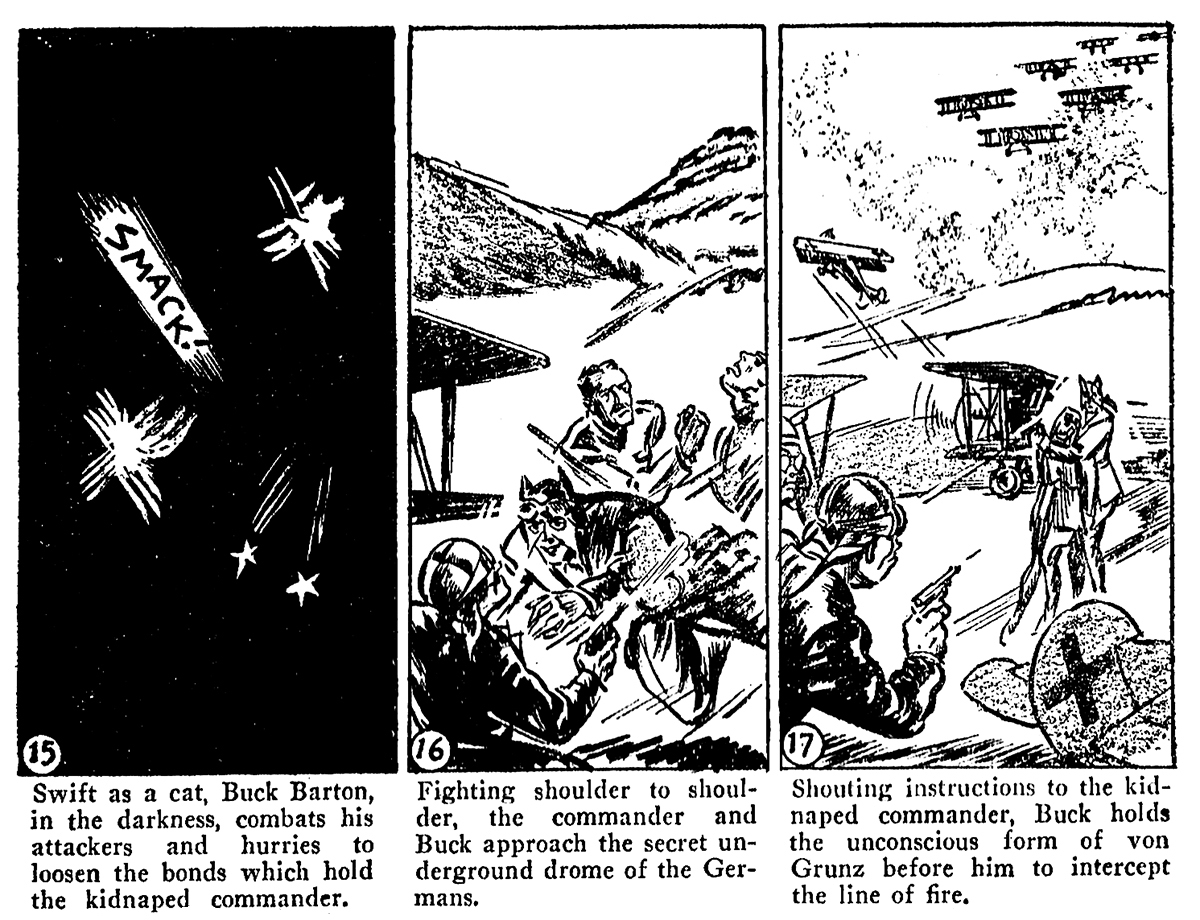
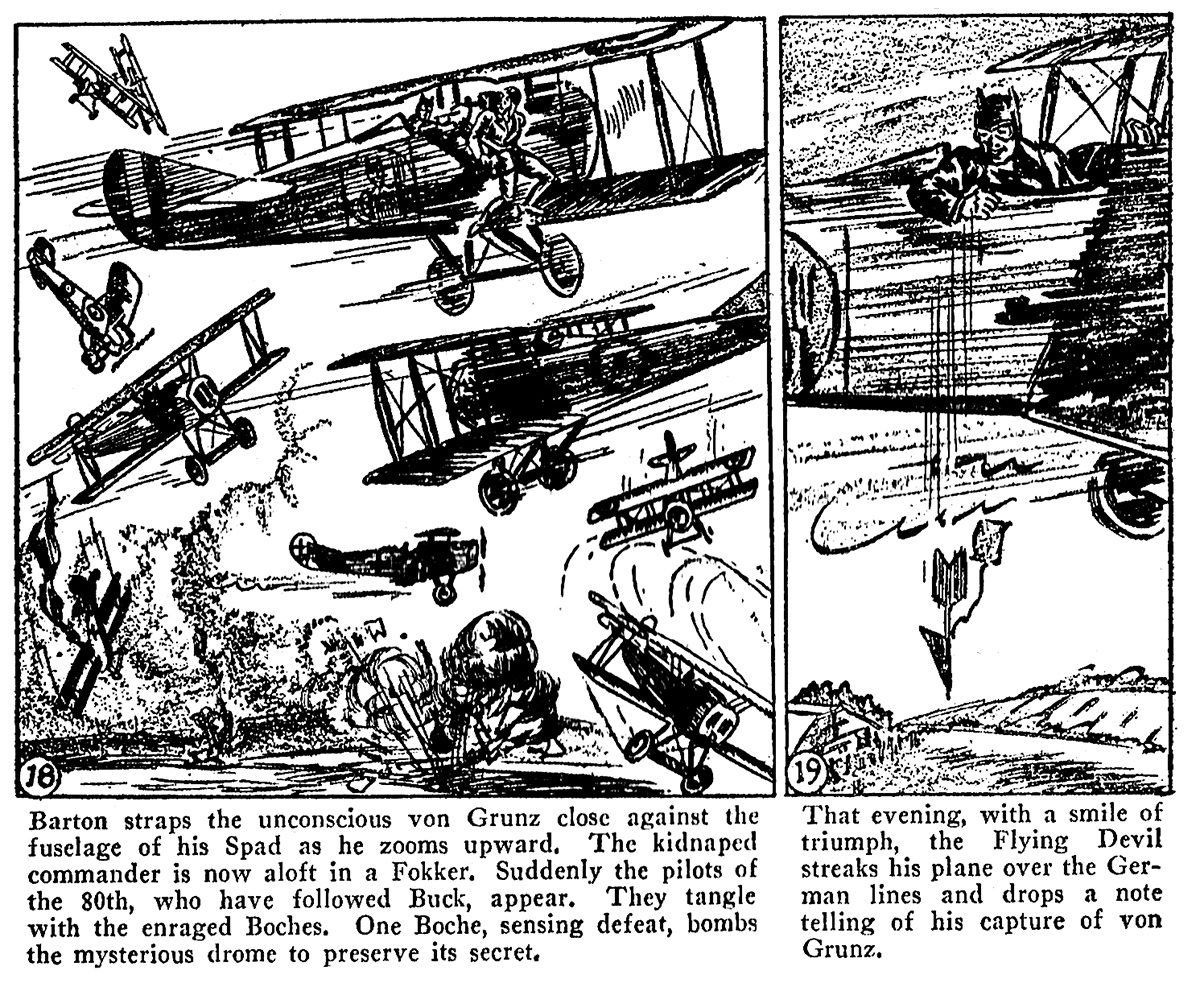
THIS holiday season we’re going all in on The Flying Devil! The Flying Devil was a regular feature of the first fifteen issues of The Lone Eagle and, more importantly, as they announced beneath each month’s story—“the Only War-Air Cartoon Story to Appear in Any Magazine!” The strip was drawn by Terry Gilkison and features the exploits of Buck Barton, a.k.a. The Flying Devil, as he wages a one man war against the Germans in his Spad with the devil on the fuselage.

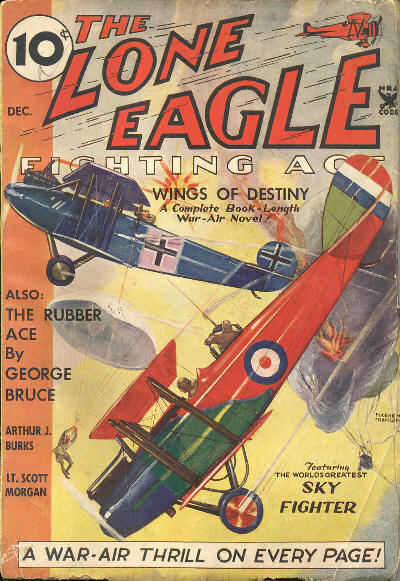
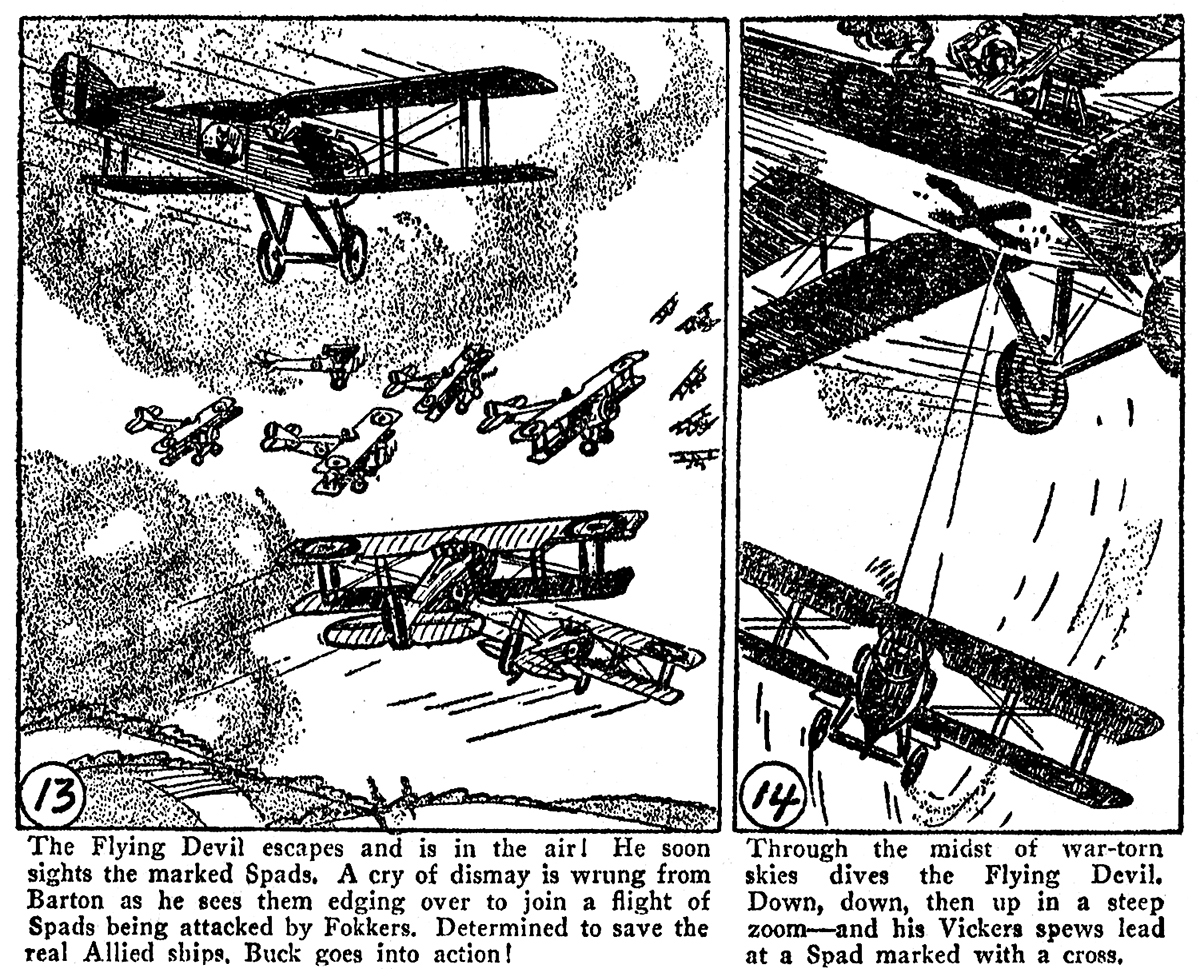
We’ve reached Buck Barton’s final adventure. From the December 1934 issue of The Lone Eagle, it’s Terry Gilkison’s The Flying Devil is “Lost In Hunland!”


When this adventure ran in The Lone Eagle, it carried a tag that there would be another Buck Barton War-Air Adventure in Pictures in the next issue titled “Spandau Treachery”—

But that adventure never saw the light of day if it was ever even written.

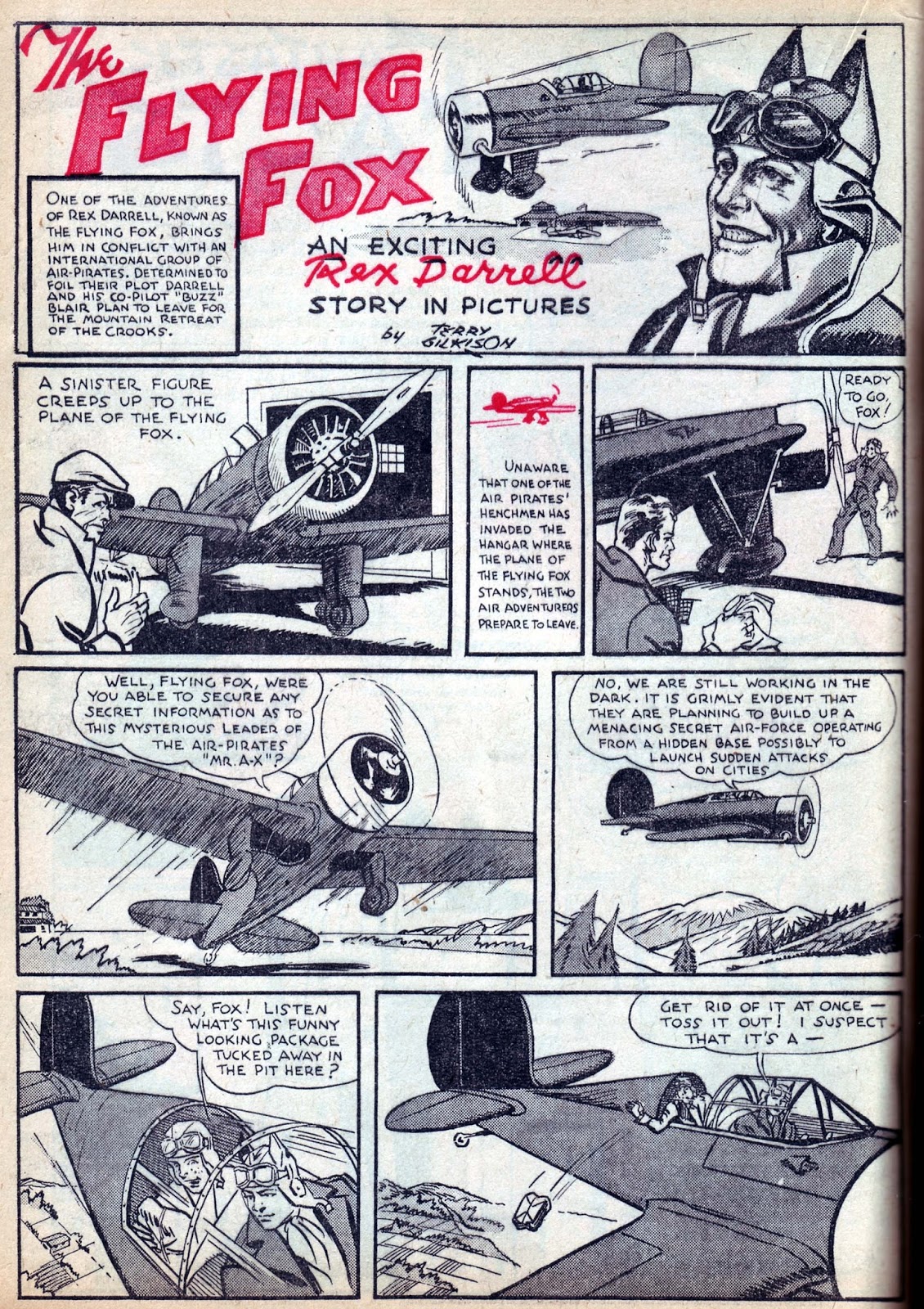
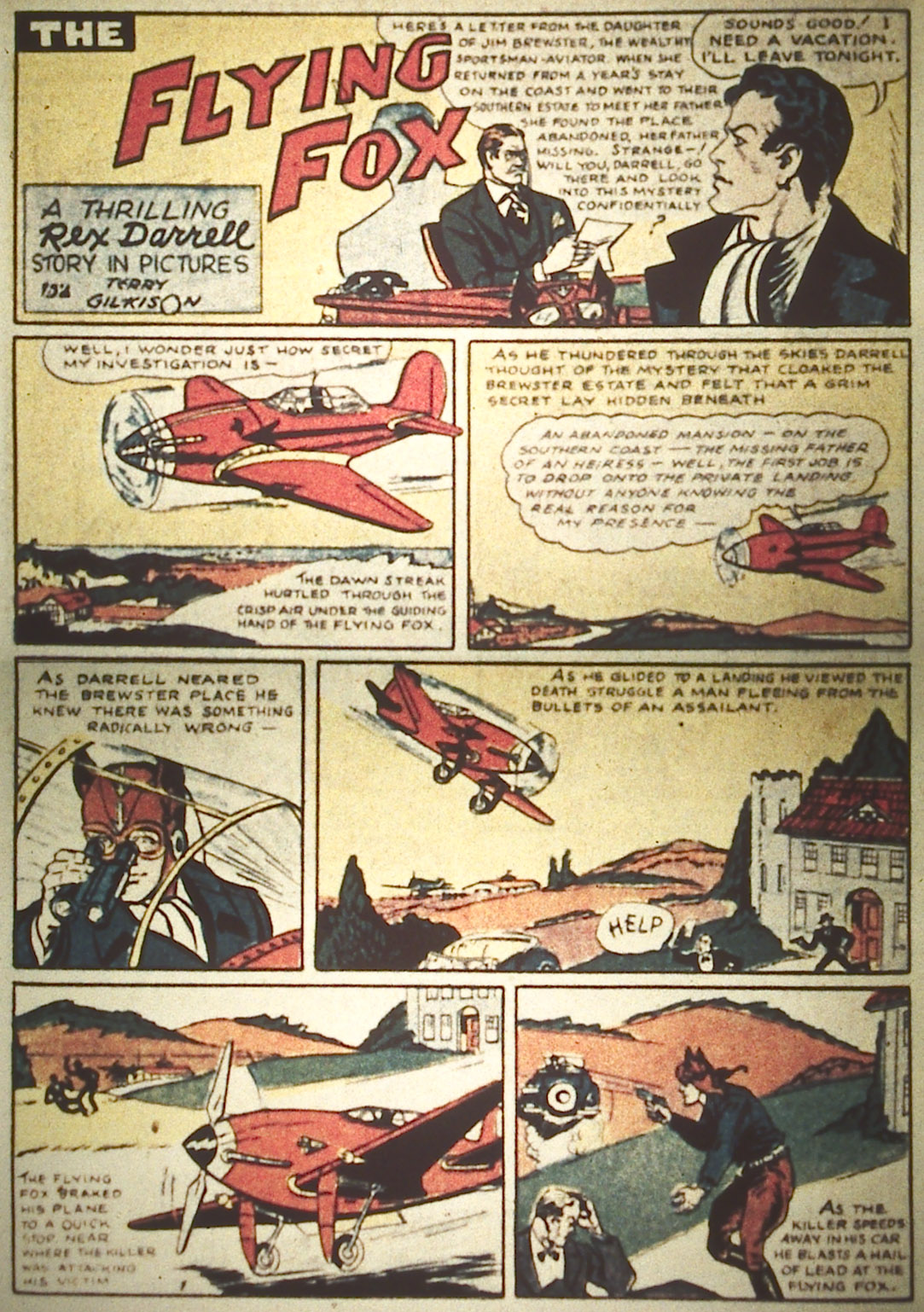
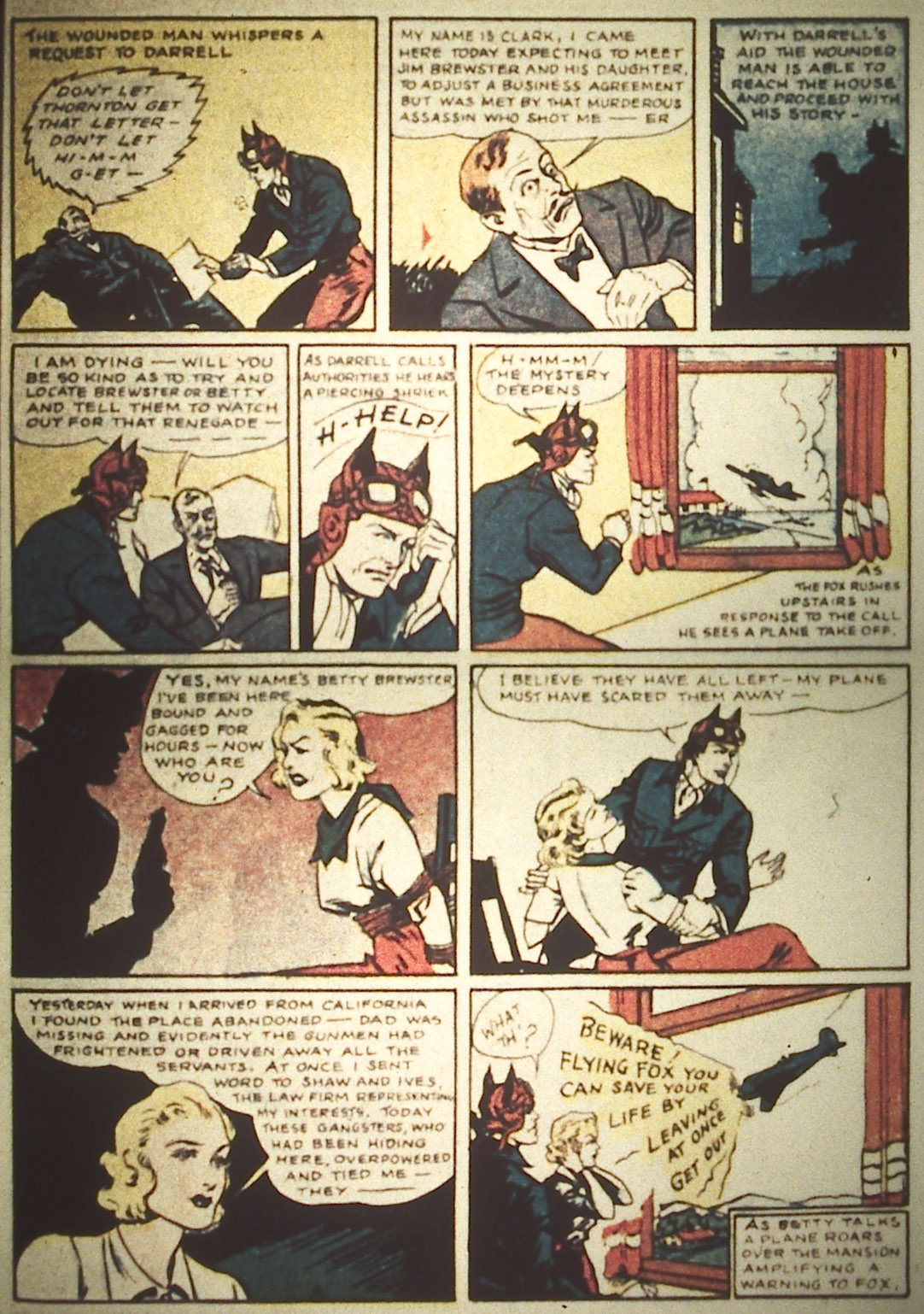
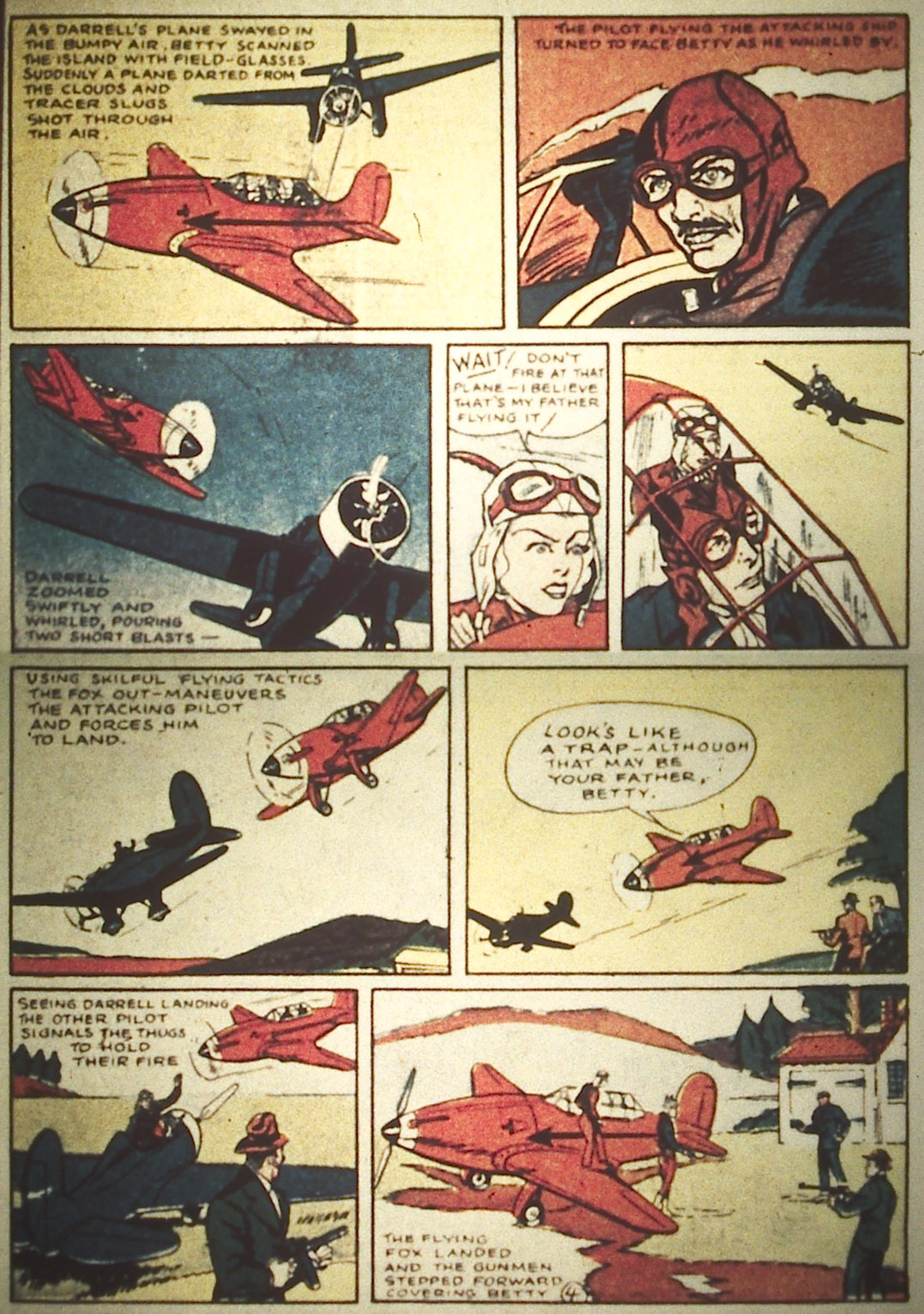
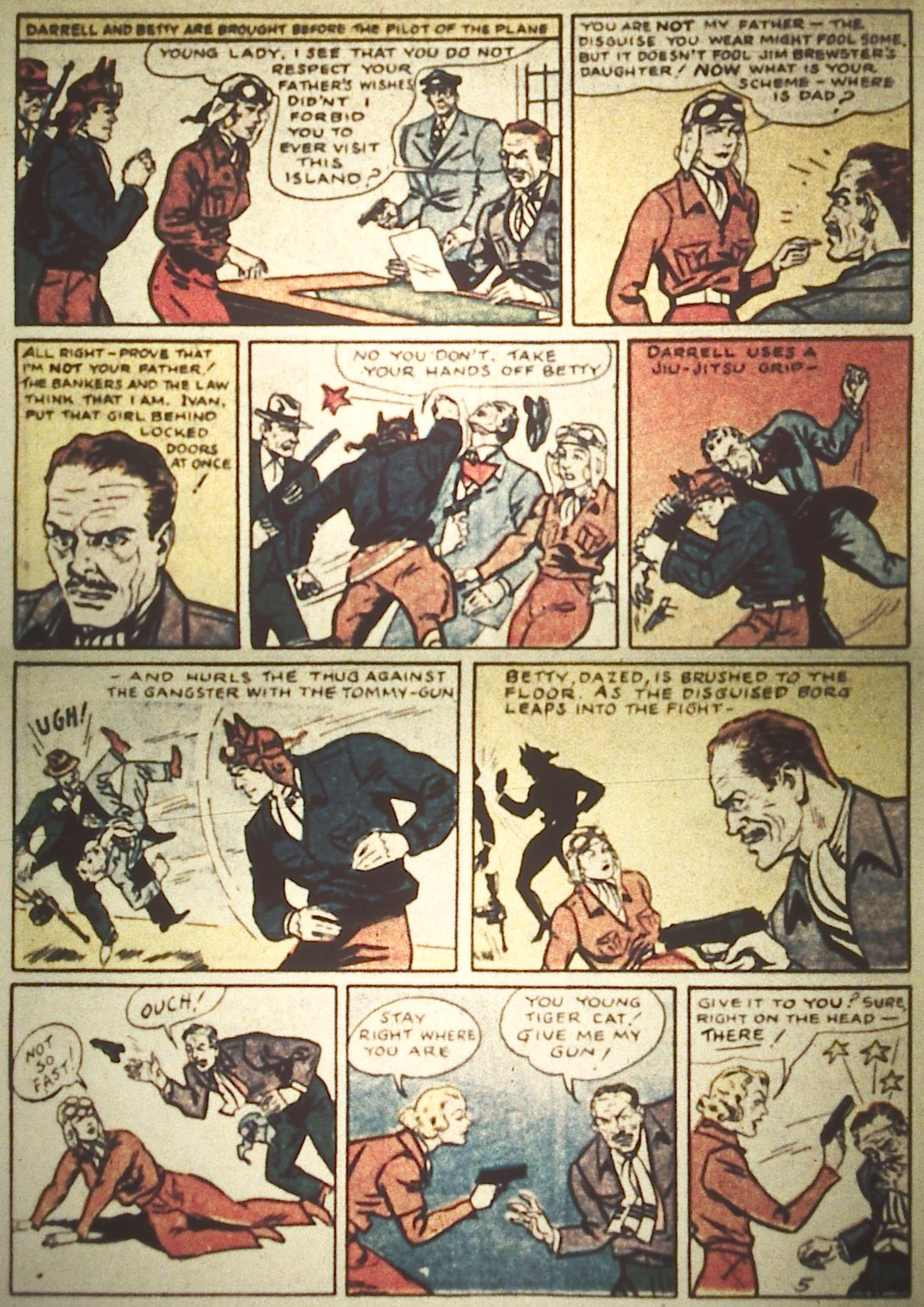
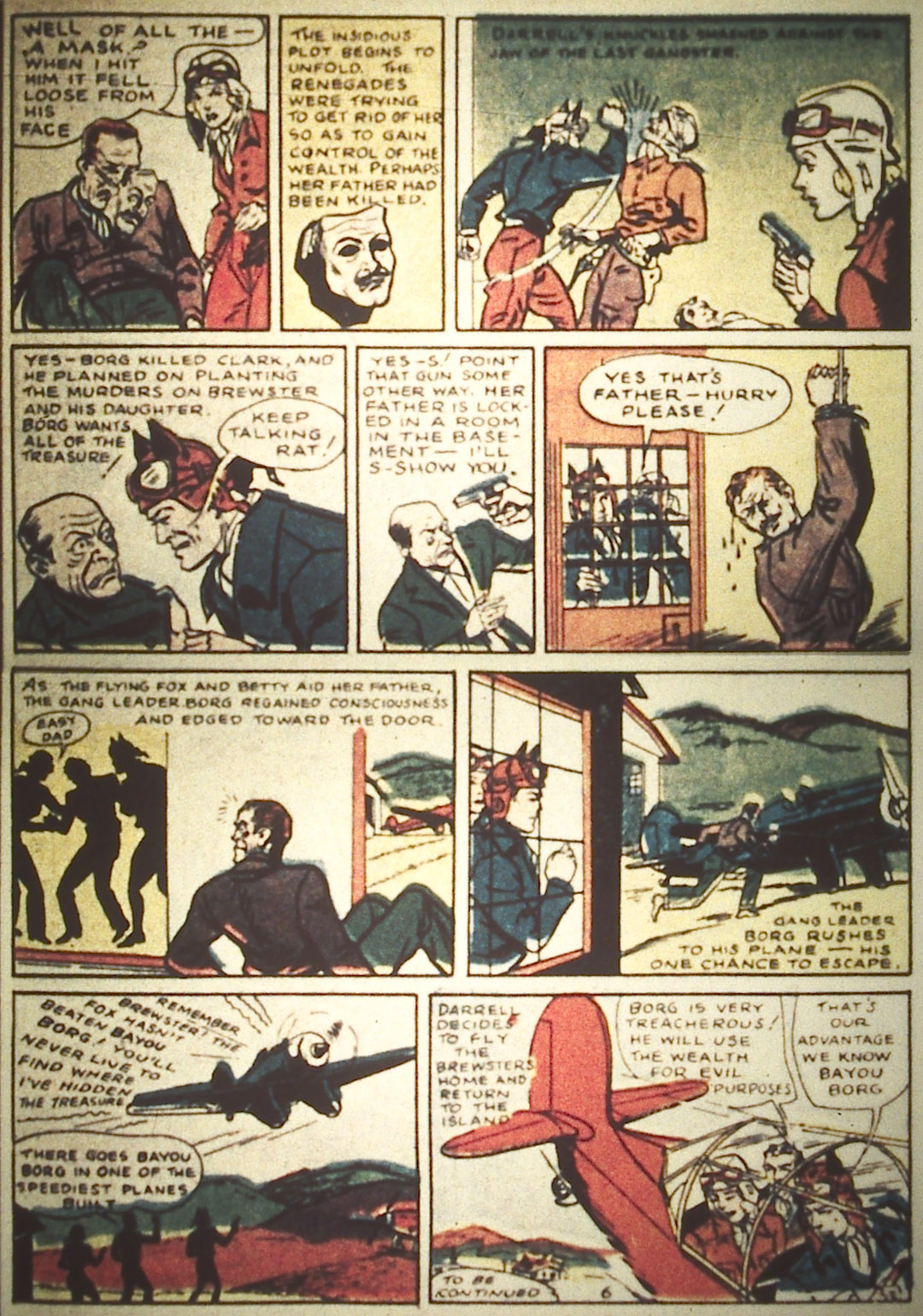
Gilkison would revisit Buck Barton in a way when he created the character of Rex Darrell, The Flying Fox, for More Fun Comics in 1938. Darrell’s Flying Fox was a modern day version of Barton’s Flying Devil. The stories were present day rather than set during the Great War; Darrell was fighting international air pirates rather than Barton’s battles against the Germans; and Darrell worked with a copilot, “Buzz” Blair, while Barton was solo. The one thing that links the two most is their choice of headgear. Darrell wore an aviator’s cap with rather pronounced fox ears much like Barton’s devil horned helmet he sported in the first few episodes.

Gilkison’s The Flying Fox debuted in More Fun Comics 37 (Nov 38). He flew his plane, the Dawn Streak, one of the fastest ever built, through 13 adventures. His final appearance in the magazine was in issue 51 (Jan 40) in the story whose last panel indicates the action was to be continued, but it sadly never was.

“The Sinister Zeppelin” by Terry Gilkison

Link - Posted by David on December 29, 2025 @ 6:00 am in

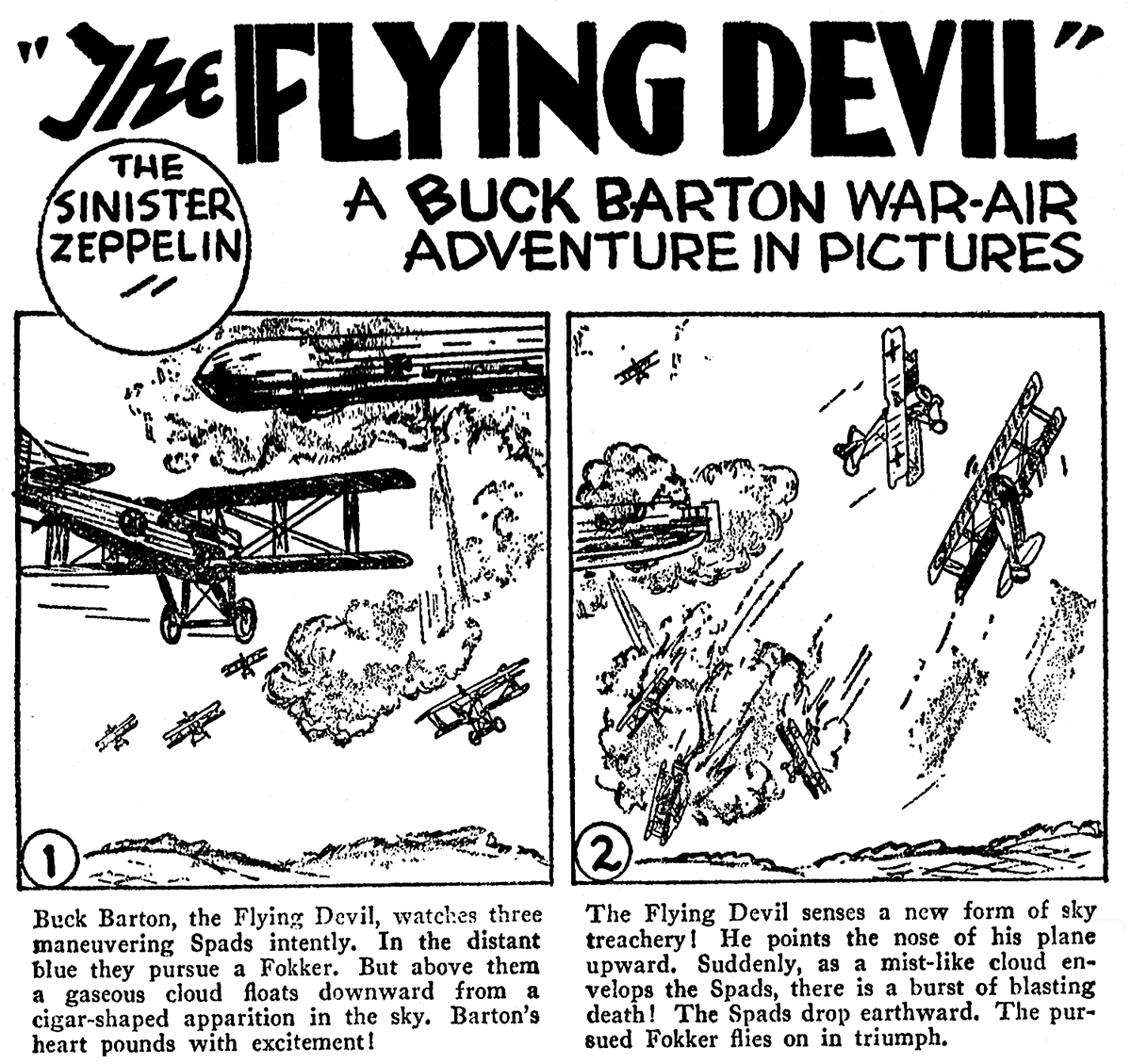
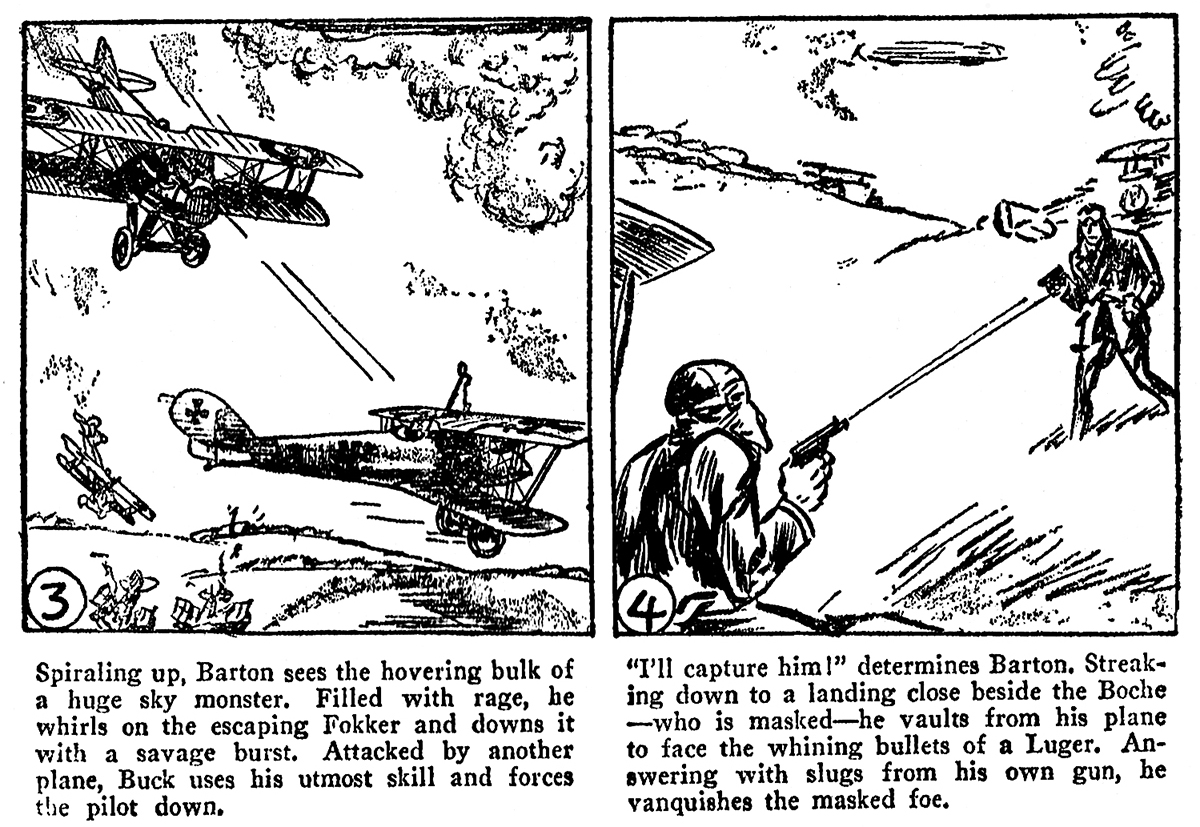
THIS holiday season we’re going all in on The Flying Devil! The Flying Devil was a regular feature of the first fifteen issues of The Lone Eagle and, more importantly, as they announced beneath each month’s story—“the Only War-Air Cartoon Story to Appear in Any Magazine!” The strip was drawn by Terry Gilkison and features the exploits of Buck Barton, a.k.a. The Flying Devil, as he wages a one man war against the Germans in his Spad with the devil on the fuselage.

From the November 1934 issue of The Lone Eagle, it’s Terry Gilkison’s The Flying Devil in “The Sinister Zeppelin!”


Next Time: Lost in Hunland!

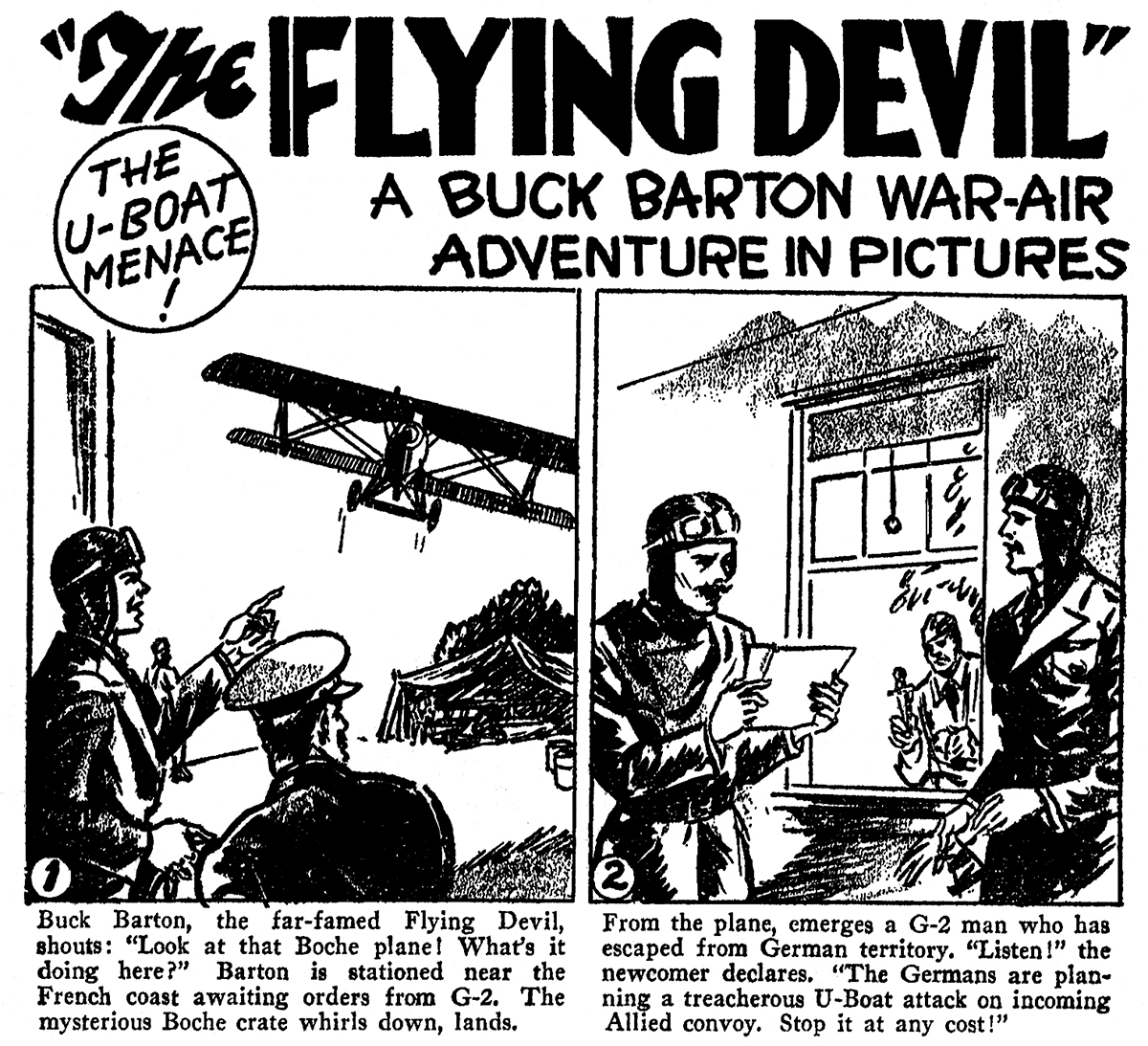
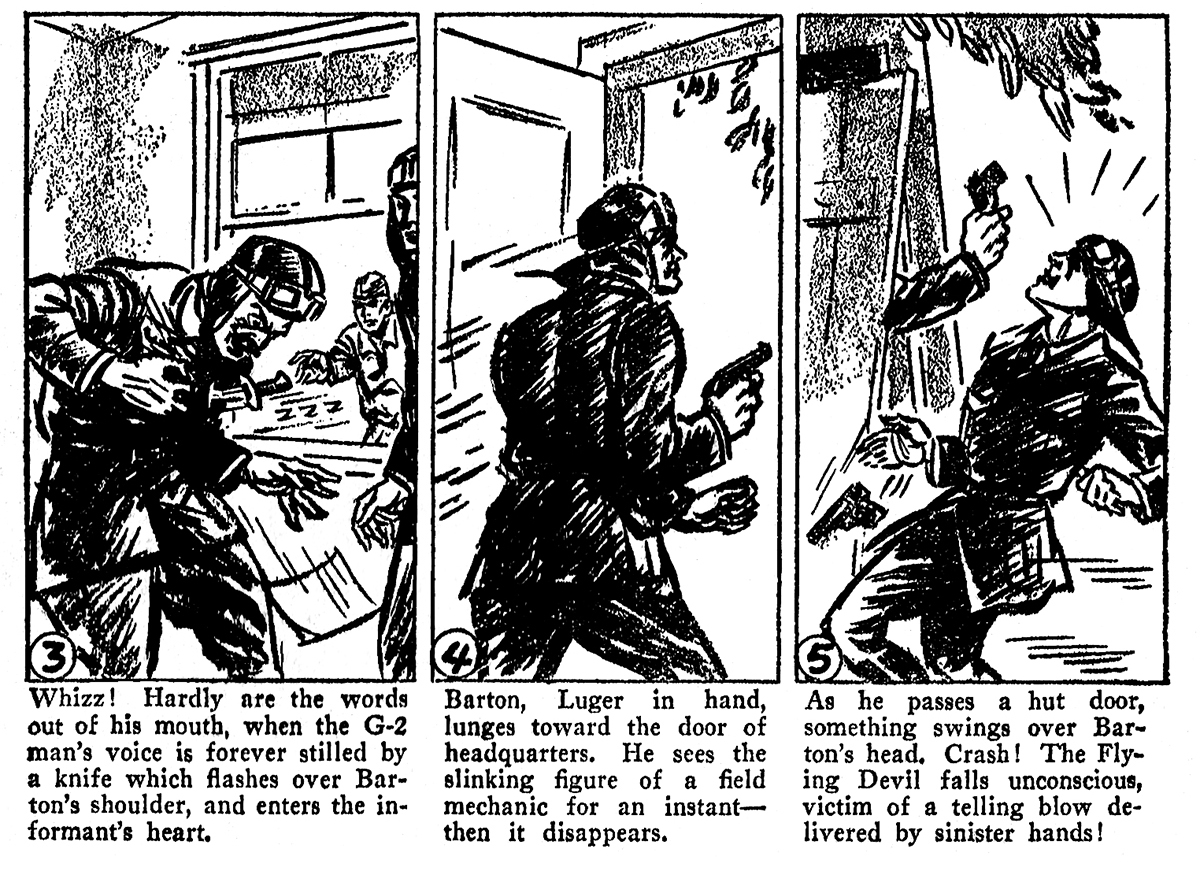
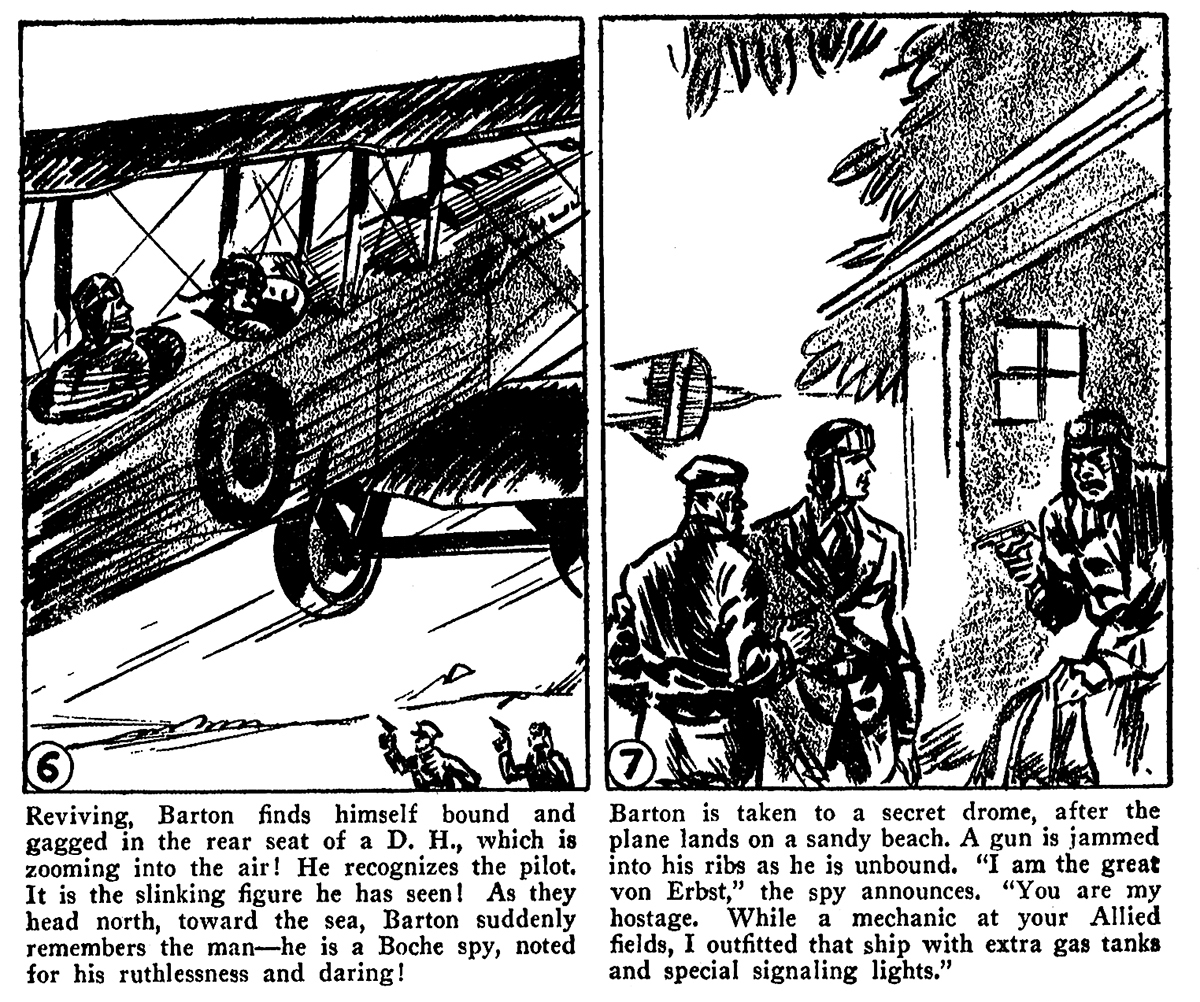
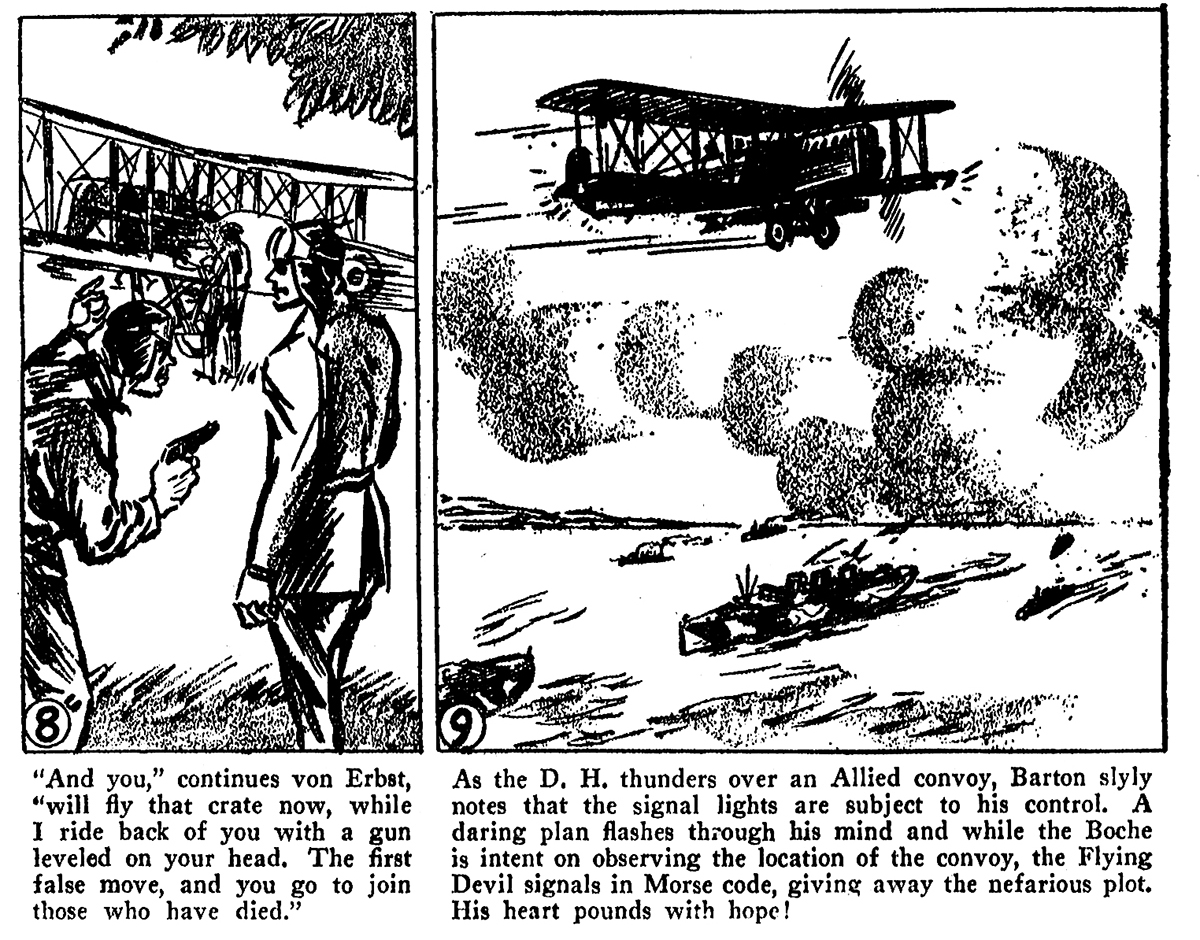
“The U-Boat Menace” by Terry Gilkison

Link - Posted by David on December 26, 2025 @ 6:00 am in

THIS holiday season we’re going all in on The Flying Devil! The Flying Devil was a regular feature of the first fifteen issues of The Lone Eagle and, more importantly, as they announced beneath each month’s story—“the Only War-Air Cartoon Story to Appear in Any Magazine!” The strip was drawn by Terry Gilkison and features the exploits of Buck Barton, a.k.a. The Flying Devil, as he wages a one man war against the Germans in his Spad with the devil on the fuselage.

From the October 1934 issue of The Lone Eagle, it’s Terry Gilkison’s The Flying Devil in “The U-Boat Menace!”


Next Time: The Sinister Zeppelin!

“The Mystery Drome” by Terry Gilkison

Link - Posted by David on December 25, 2025 @ 6:00 am in

THIS holiday season we’re going all in on The Flying Devil! The Flying Devil was a regular feature of the first fifteen issues of The Lone Eagle and, more importantly, as they announced beneath each month’s story—“the Only War-Air Cartoon Story to Appear in Any Magazine!” The strip was drawn by Terry Gilkison and features the exploits of Buck Barton, a.k.a. The Flying Devil, as he wages a one man war against the Germans in his Spad with the devil on the fuselage.

From the September 1934 issue of The Lone Eagle, it’s Terry Gilkison’s The Flying Devil in “The Mystery Drome!”


Next Time: The U-Boat Menace!

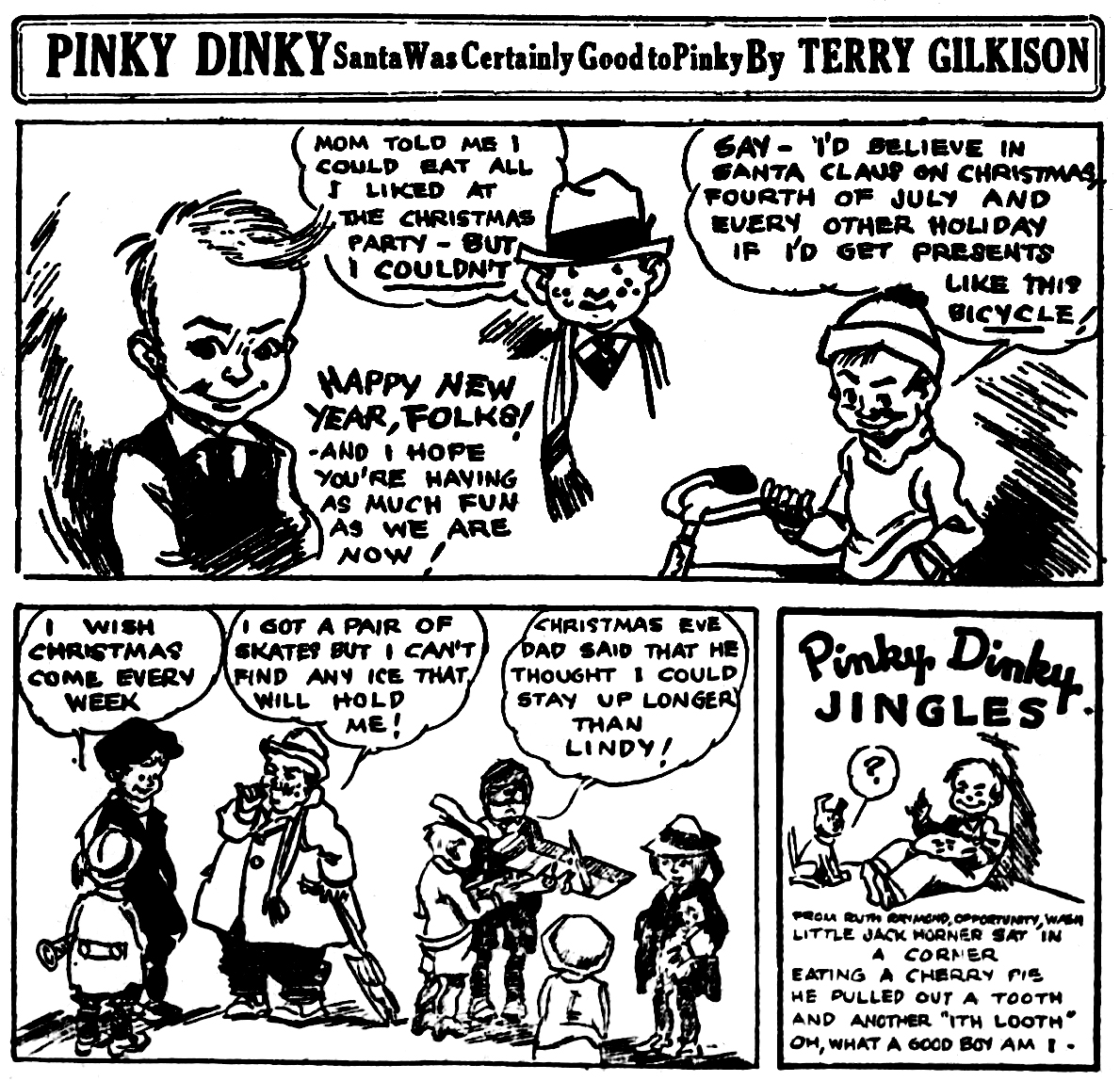
And as a special Christmas Bonus, we give you a holiday themed Pinky Dinky strip from 1929!

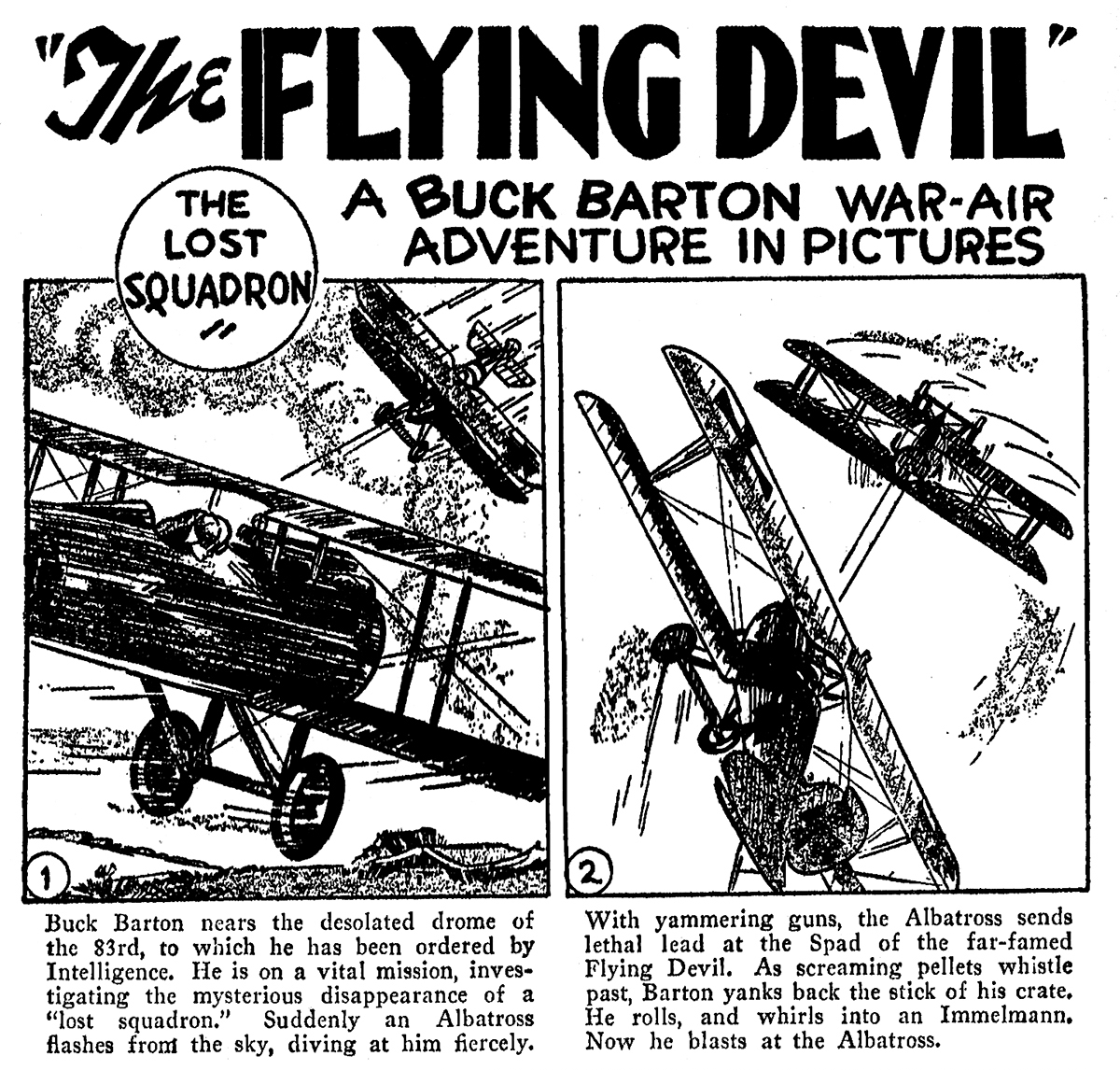
“The Lost Squadron” by Terry Gilkison

Link - Posted by David on December 24, 2025 @ 6:00 am in

THIS holiday season we’re going all in on The Flying Devil! The Flying Devil was a regular feature of the first fifteen issues of The Lone Eagle and, more importantly, as they announced beneath each month’s story—“the Only War-Air Cartoon Story to Appear in Any Magazine!” The strip was drawn by Terry Gilkison and features the exploits of Buck Barton, a.k.a. The Flying Devil, as he wages a one man war against the Germans in his Spad with the devil on the fuselage.

From the August 1934 issue of The Lone Eagle, it’s Terry Gilkison’s The Flying Devil in “The Lost Squadron!”


Next Time: The Mystery Drome!

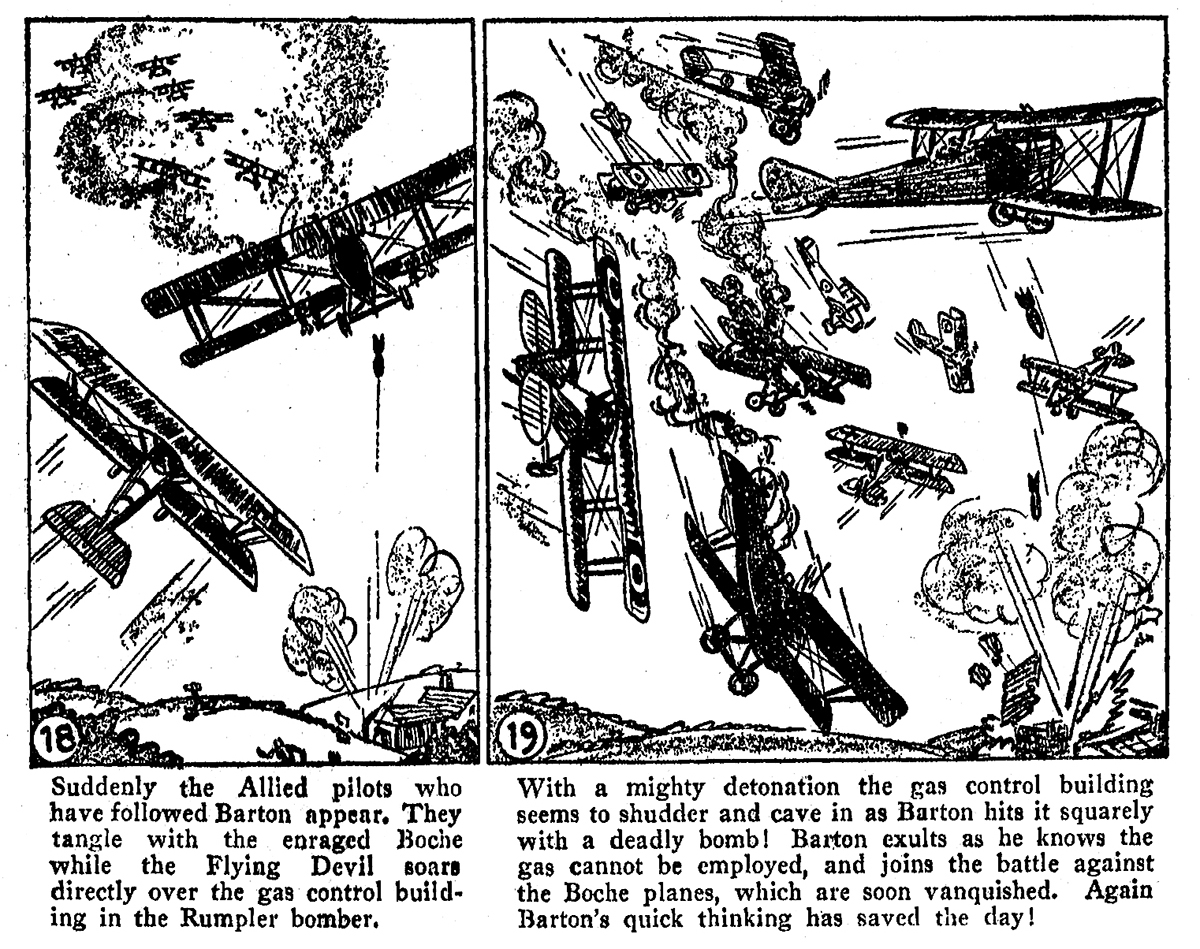
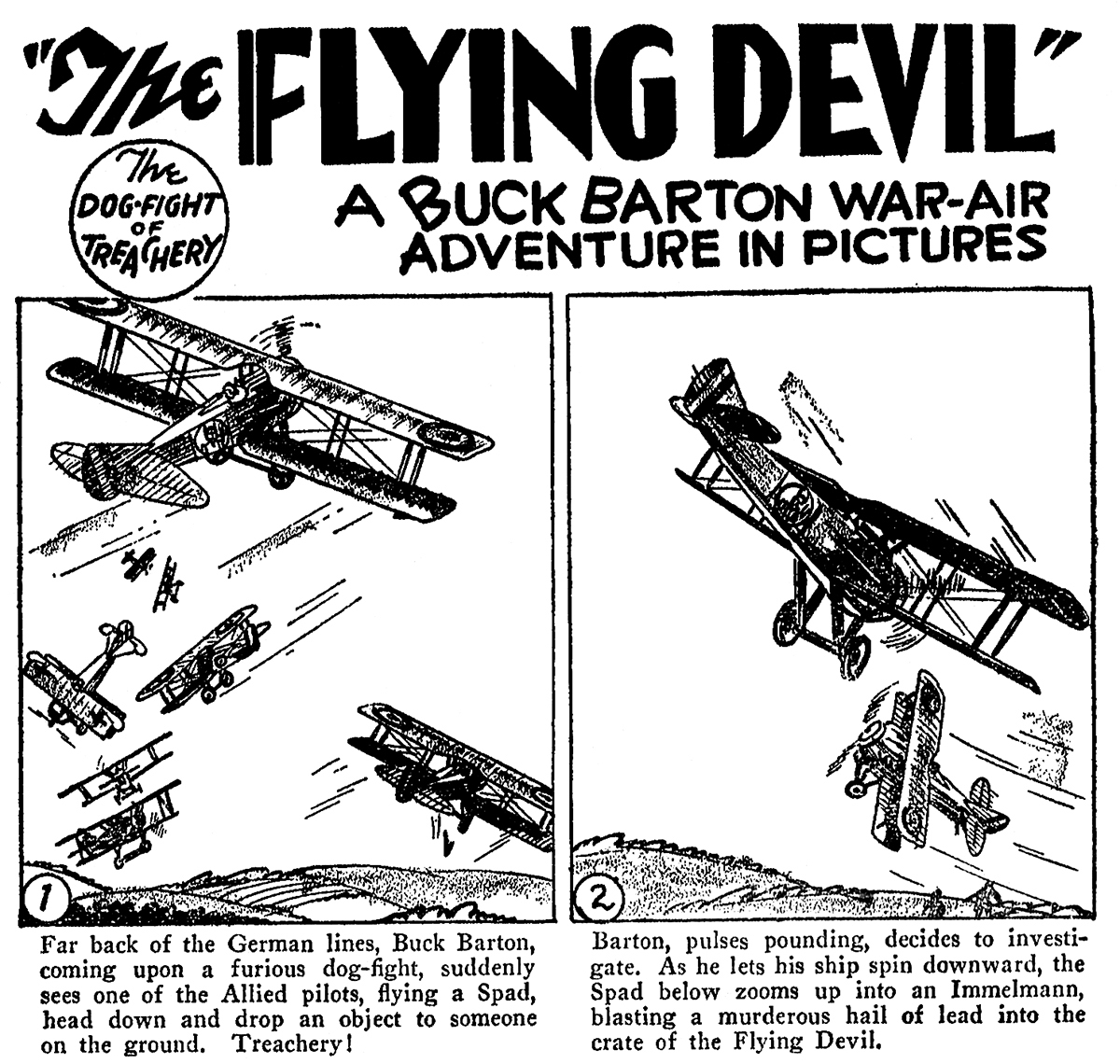
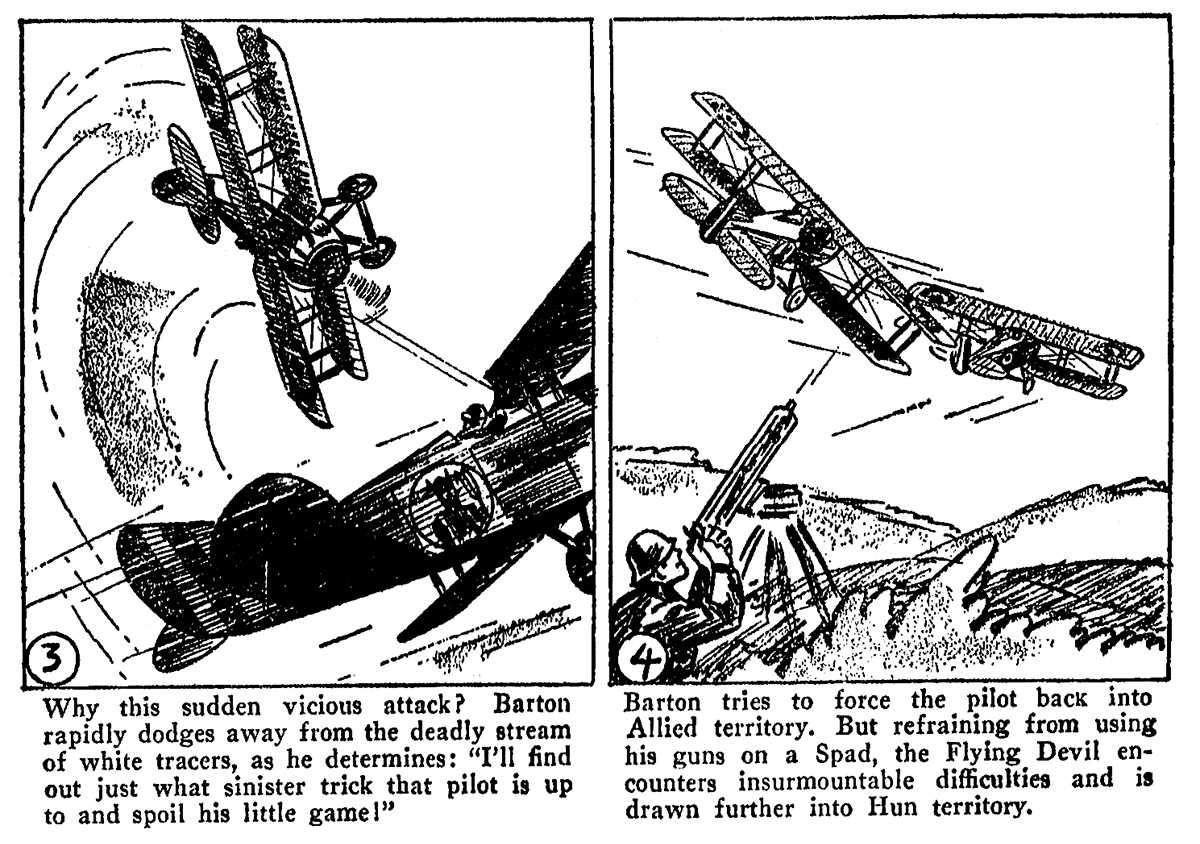
“The Dog-Fight Treachery” by Terry Gilkison

Link - Posted by David on December 22, 2025 @ 6:00 am in

THIS holiday season we’re going all in on The Flying Devil! The Flying Devil was a regular feature of the first fifteen issues of The Lone Eagle and, more importantly, as they announced beneath each month’s story—“the Only War-Air Cartoon Story to Appear in Any Magazine!” The strip was drawn by Terry Gilkison and features the exploits of Buck Barton, a.k.a. The Flying Devil, as he wages a one man war against the Germans in his Spad with the devil on the fuselage.

From the July 1934 issue of The Lone Eagle, it’s Terry Gilkison’s The Flying Devil in “The Dog-Fight Treachery!”


Next Time: The Lost Squadron!

“A Sinister Boche Plot” by Terry Gilkison

Link - Posted by David on December 19, 2025 @ 6:00 am in

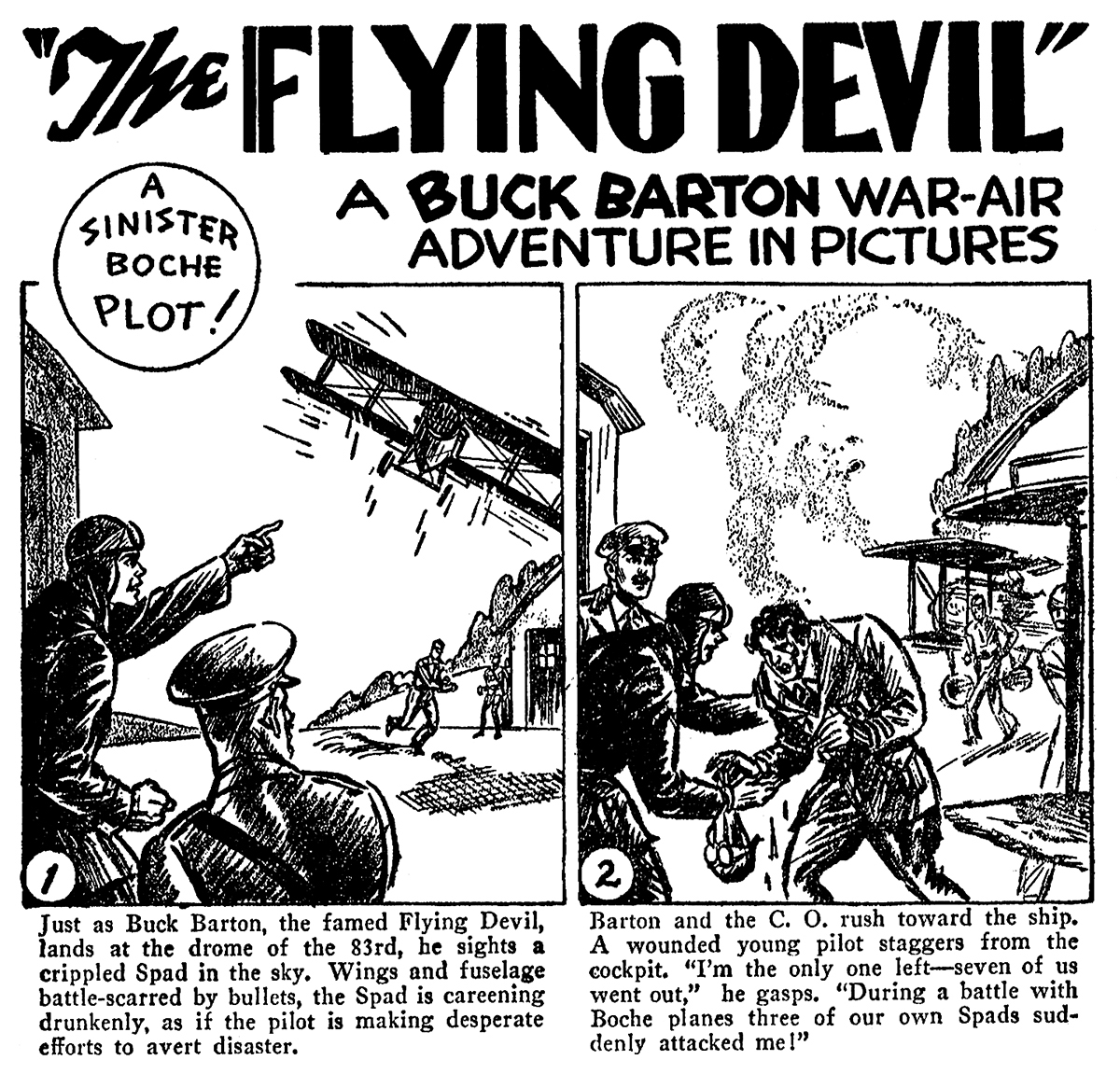
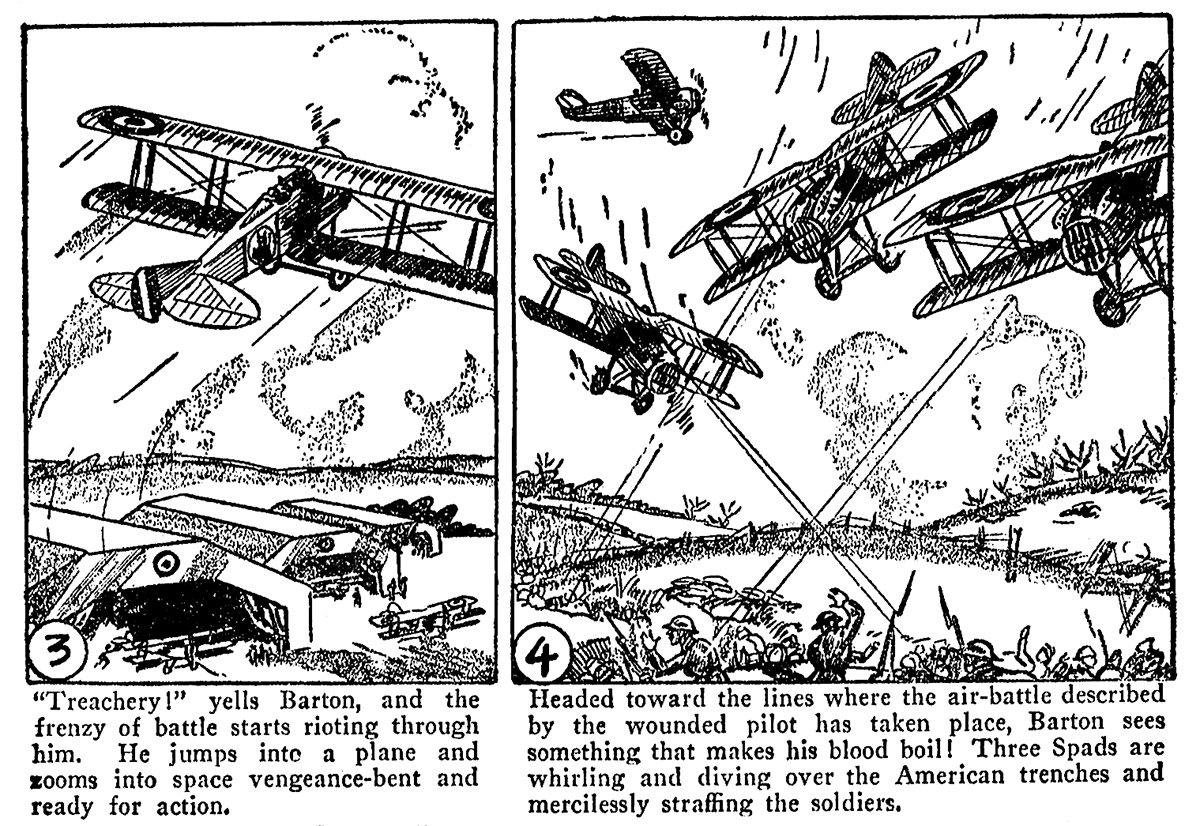
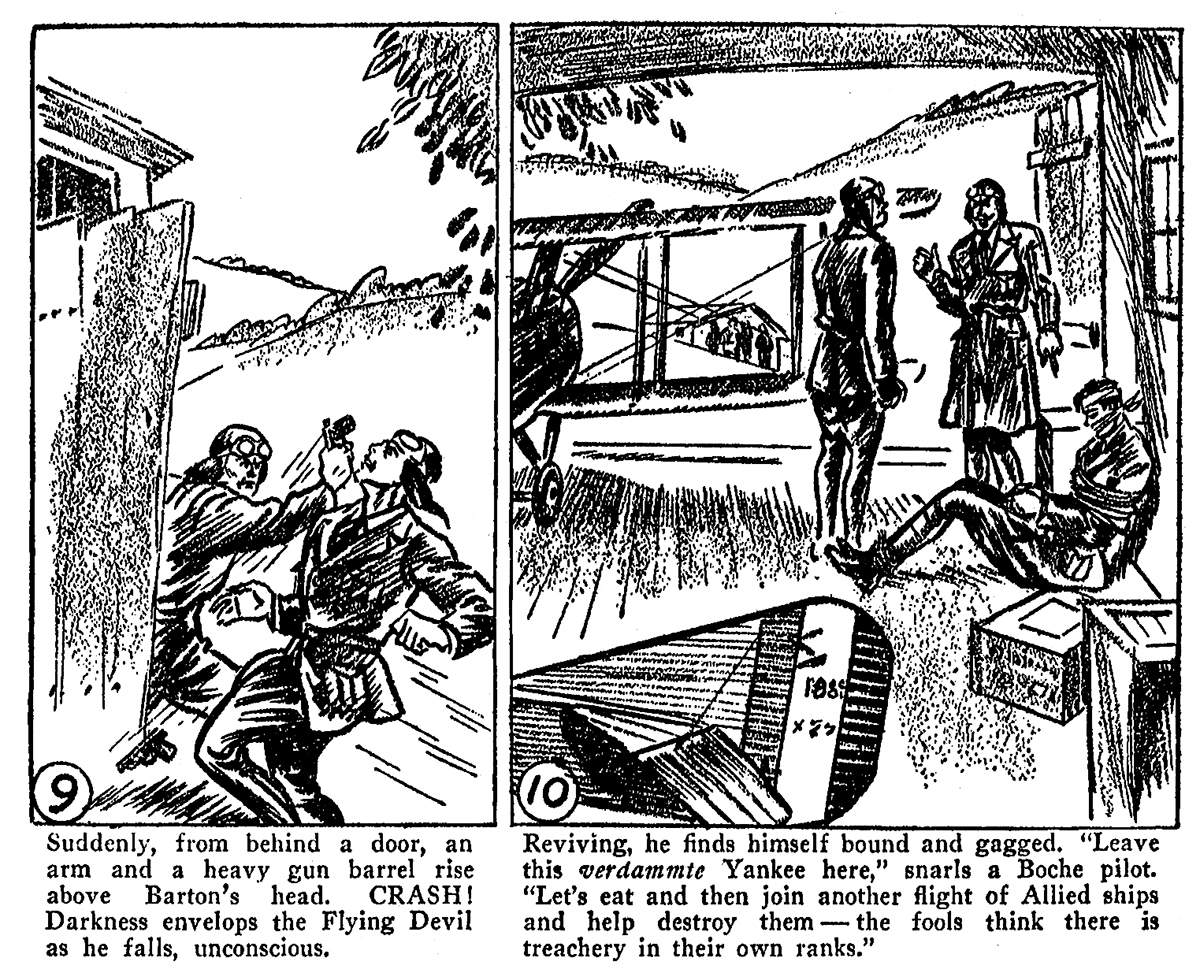
THIS holiday season we’re going all in on The Flying Devil! The Flying Devil was a regular feature of the first fifteen issues of The Lone Eagle and, more importantly, as they announced beneath each month’s story—“the Only War-Air Cartoon Story to Appear in Any Magazine!” The strip was drawn by Terry Gilkison and features the exploits of Buck Barton, a.k.a. The Flying Devil, as he wages a one man war against the Germans in his Spad with the devil on the fuselage.

From the June 1934 issue of The Lone Eagle, it’s Terry Gilkison’s The Flying Devil in “A Sinister Boche Plot!”


Next Time: The Dog-Fight Treachery!

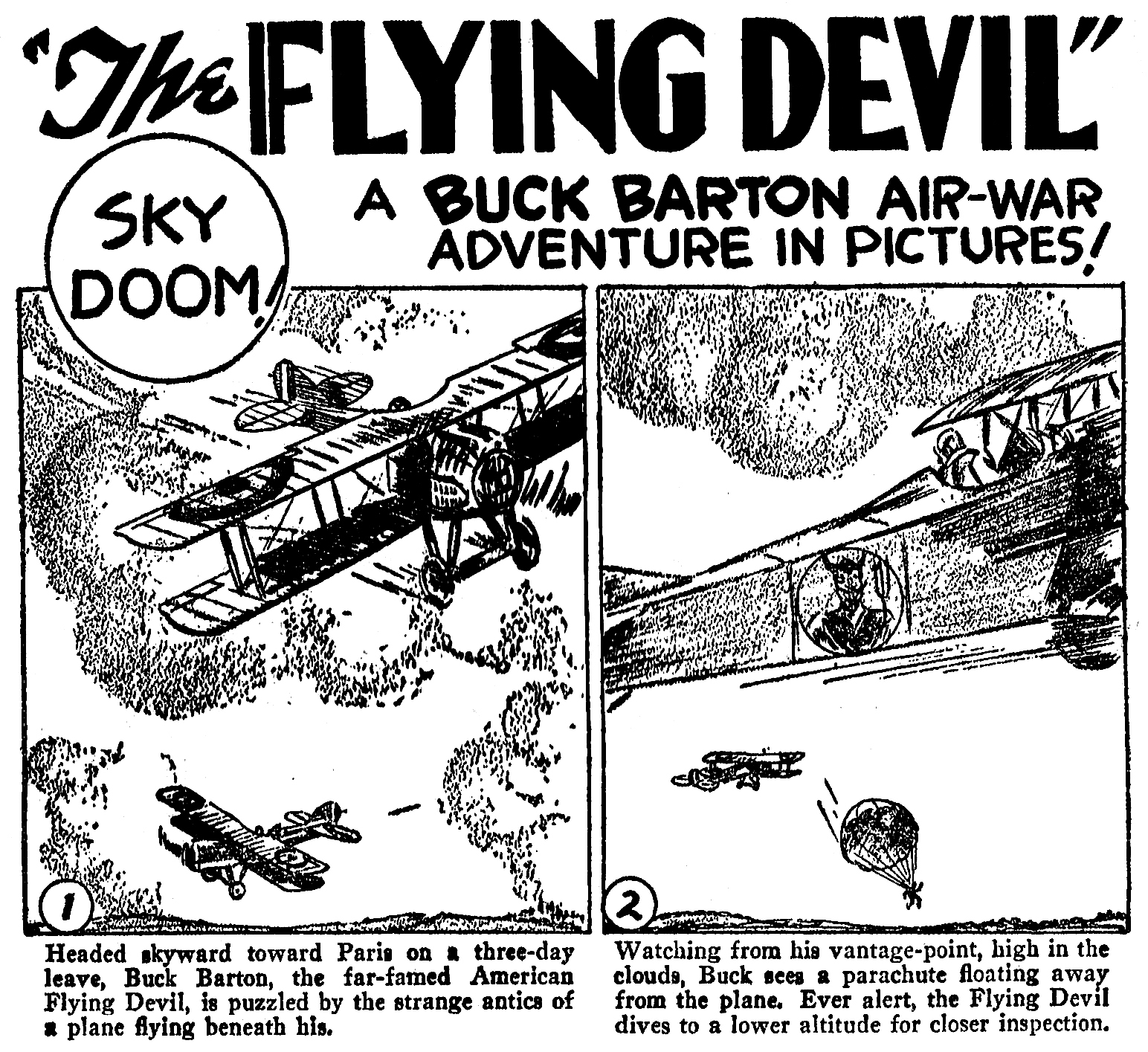
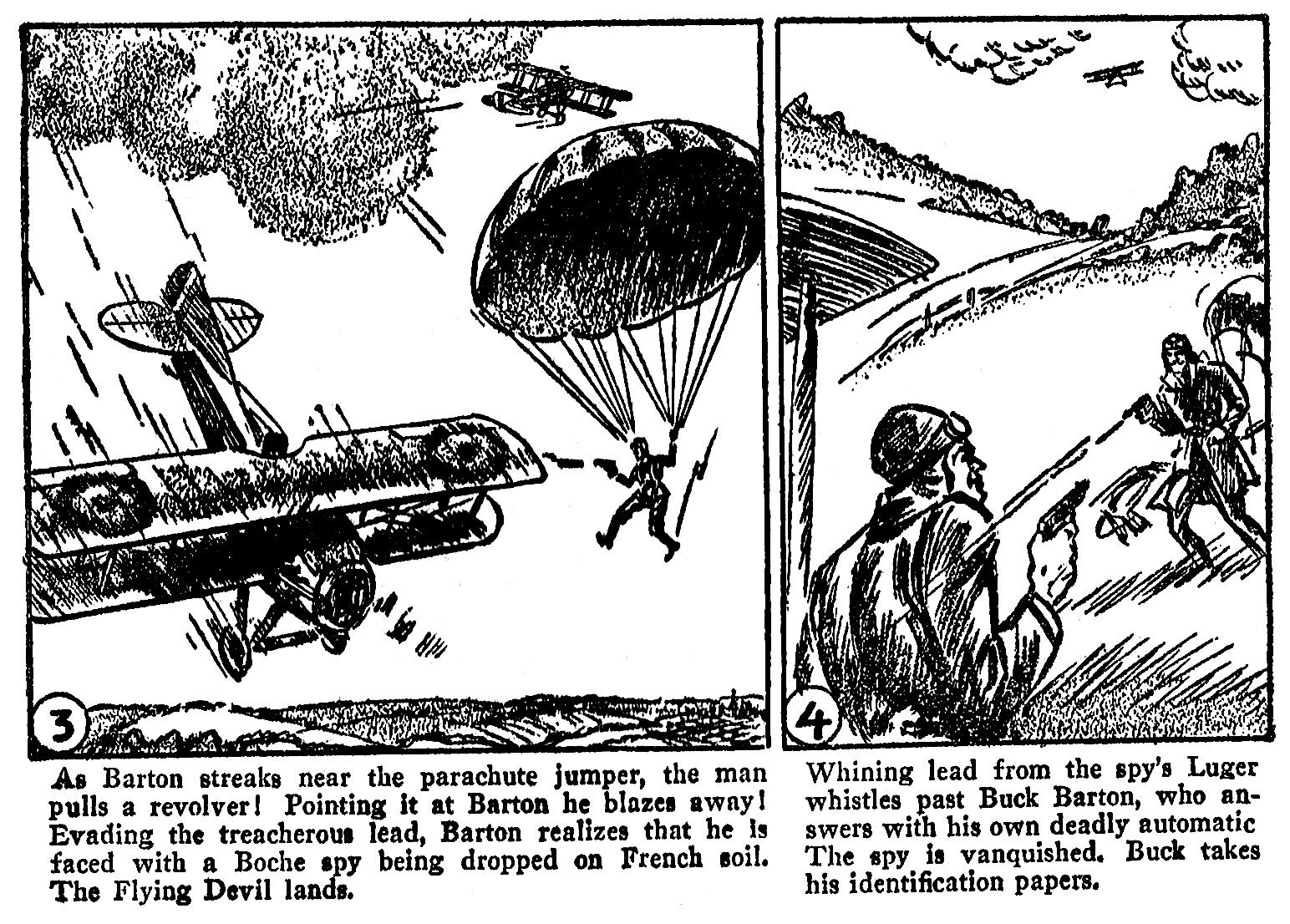
“Sky Doom” by Terry Gilkison

Link - Posted by David on December 17, 2025 @ 6:00 am in

THIS holiday season we’re going all in on The Flying Devil! The Flying Devil was a regular feature of the first fifteen issues of The Lone Eagle and, more importantly, as they announced beneath each month’s story—“the Only War-Air Cartoon Story to Appear in Any Magazine!” The strip was drawn by Terry Gilkison and features the exploits of Buck Barton, a.k.a. The Flying Devil, as he wages a one man war against the Germans in his Spad with the devil on the fuselage.

From the May 1934 issue of The Lone Eagle, it’s Terry Gilkison’s The Flying Devil in “Sky Doom!”


Next Time: A Sinister Boche Plot!

“The Ghost Gotha” by Terry Gilkison

Link - Posted by David on December 15, 2025 @ 6:00 am in

THIS holiday season we’re going all in on The Flying Devil! The Flying Devil was a regular feature of the first fifteen issues of The Lone Eagle and, more importantly, as they announced beneath each month’s story—“the Only War-Air Cartoon Story to Appear in Any Magazine!” The strip was drawn by Terry Gilkison and features the exploits of Buck Barton, a.k.a. The Flying Devil, as he wages a one man war against the Germans in his Spad with the devil on the fuselage.

From the April 1934 issue of The Lone Eagle, it’s Terry Gilkison’s The Flying Devil in “The Ghost Gotha!”


Next Time: Sky Doom!

“The Death-Ray Tubes” by Terry Gilkison

Link - Posted by David on December 12, 2025 @ 6:00 am in

THIS holiday season we’re going all in on The Flying Devil! The Flying Devil was a regular feature of the first fifteen issues of The Lone Eagle and, more importantly, as they announced beneath each month’s story—“the Only War-Air Cartoon Story to Appear in Any Magazine!” The strip was drawn by Terry Gilkison and features the exploits of Buck Barton, a.k.a. The Flying Devil, as he wages a one man war against the Germans in his Spad with the devil on the fuselage.

From the March 1934 issue of The Lone Eagle, it’s Terry Gilkison’s The Flying Devil in “The Death-Ray Tubes!”


Next Time: The Ghost Gotha!

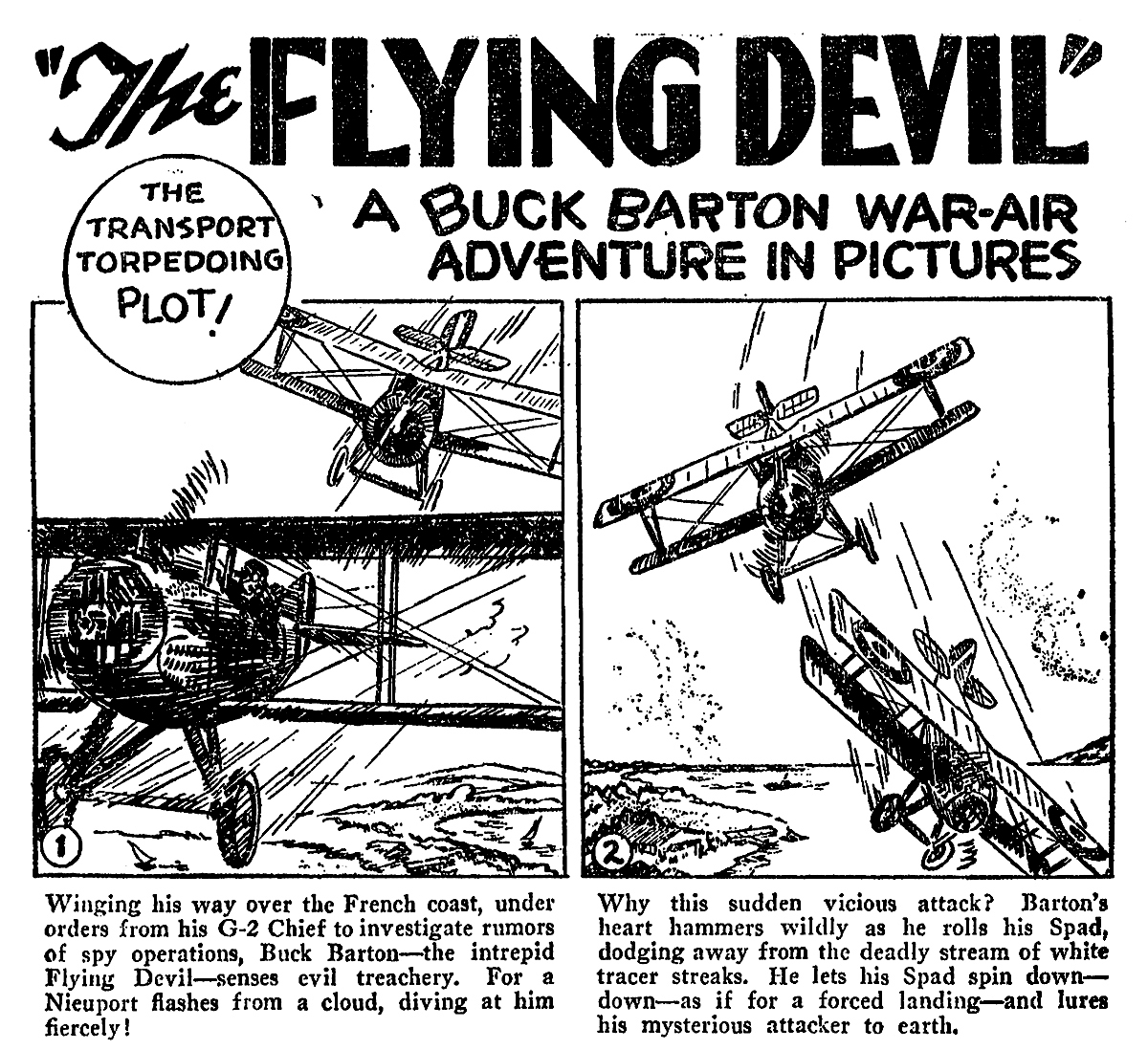
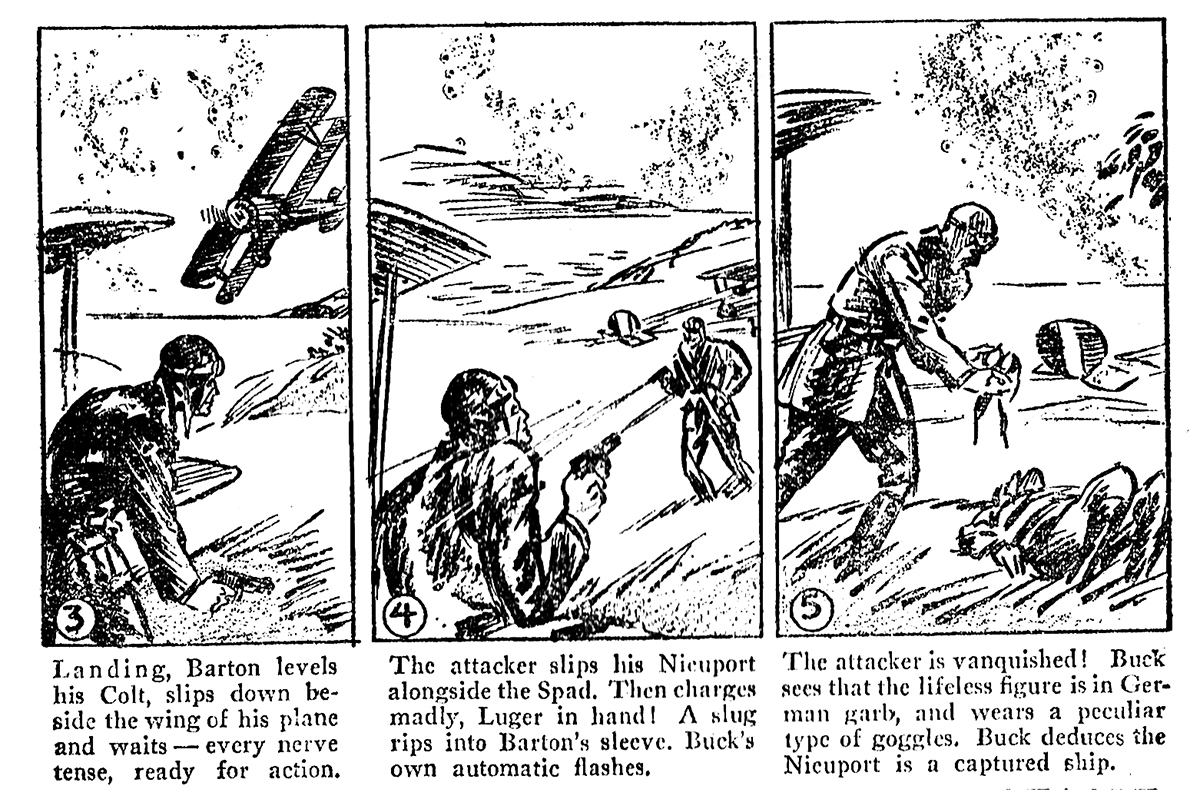
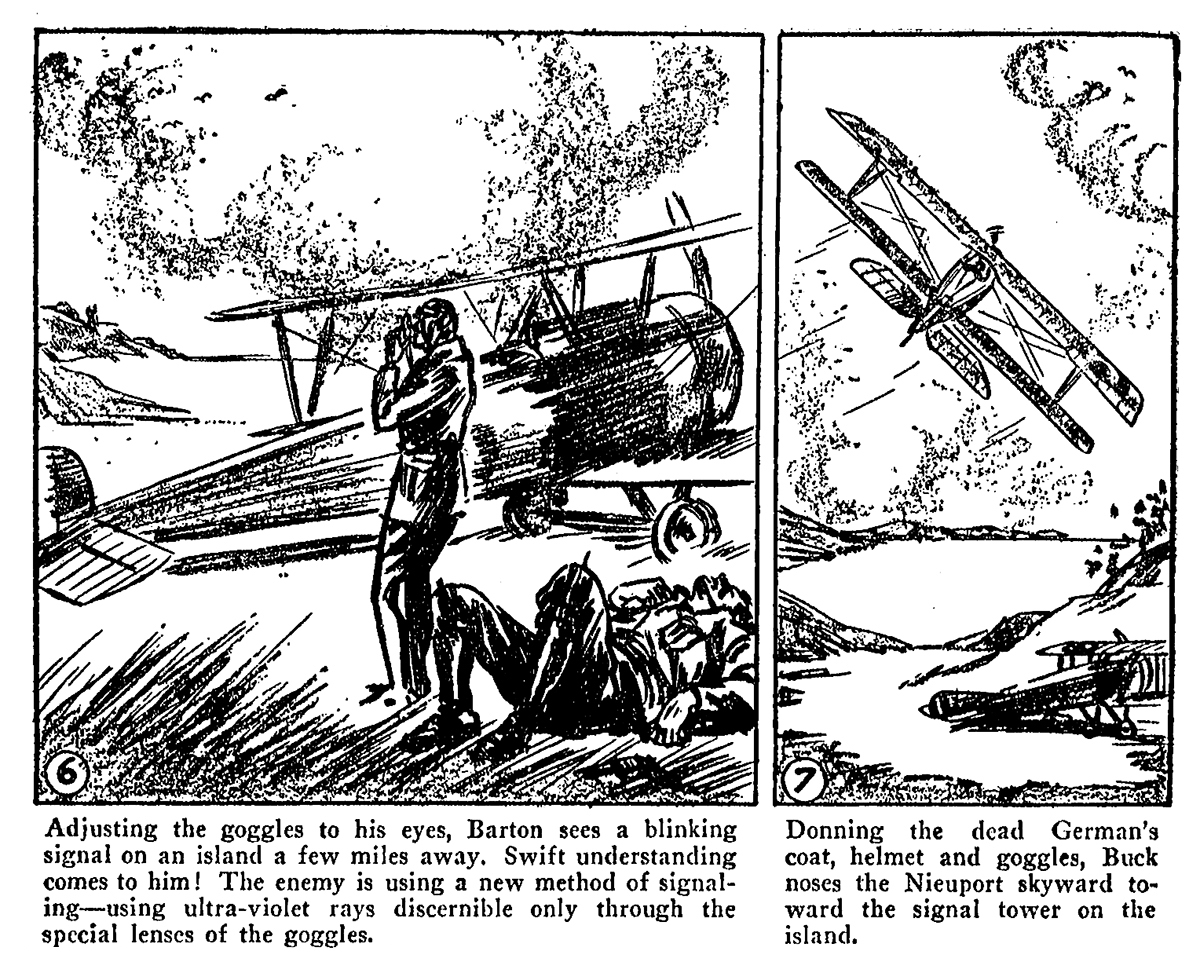
“The Transport Torpedoing Plot” by Terry Gilkison

Link - Posted by David on December 10, 2025 @ 6:00 am in

THIS holiday season we’re going all in on The Flying Devil! The Flying Devil was a regular feature of the first fifteen issues of The Lone Eagle and, more importantly, as they announced beneath each month’s story—“the Only War-Air Cartoon Story to Appear in Any Magazine!” The strip was drawn by Terry Gilkison and features the exploits of Buck Barton, a.k.a. The Flying Devil, as he wages a one man war against the Germans in his Spad with the devil on the fuselage.

From the February 1934 issue of The Lone Eagle, it’s Terry Gilkison’s The Flying Devil in “The Transport Torpedoing Plot!”


Next Time: The Death-Ray Tubes!

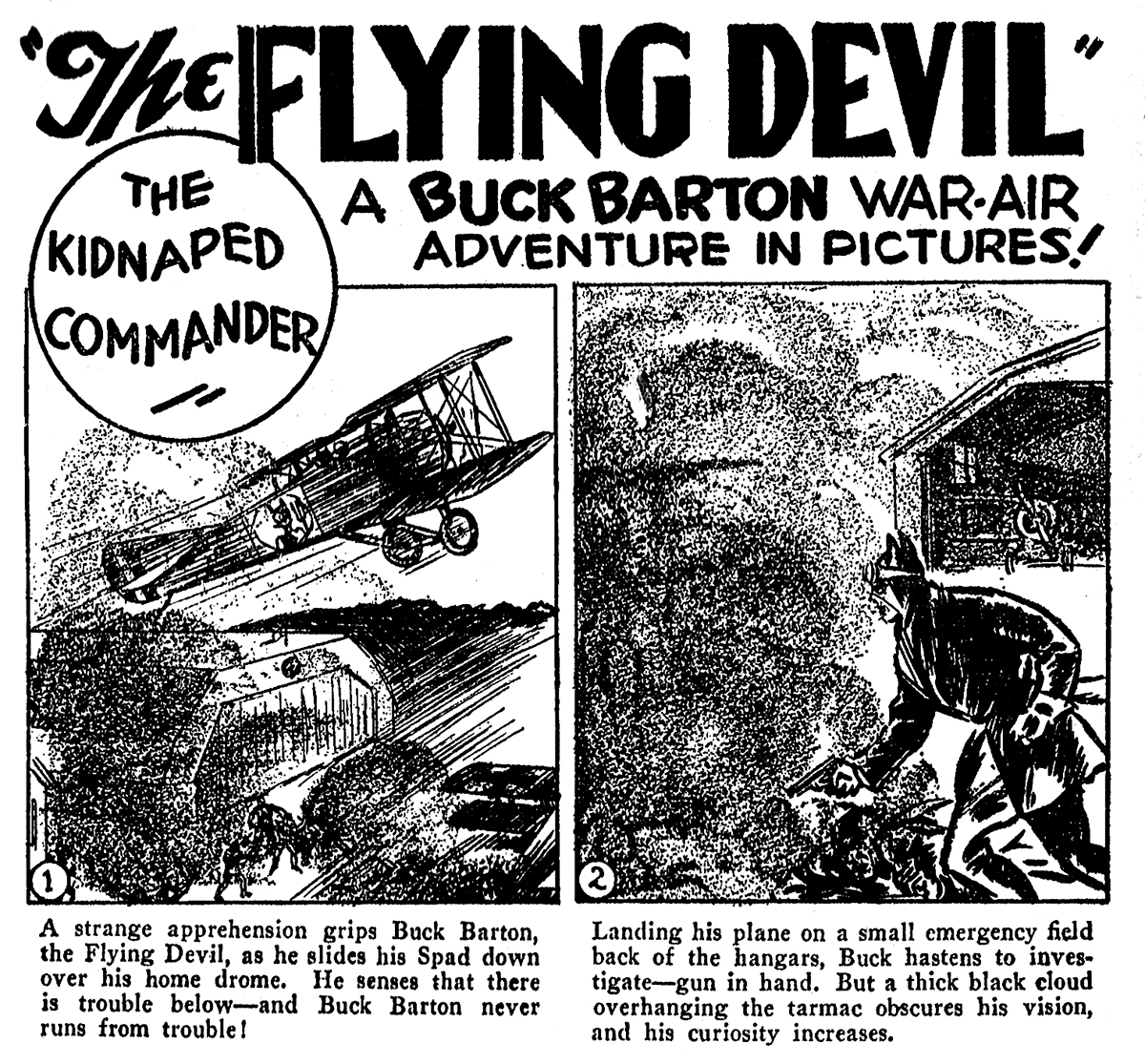
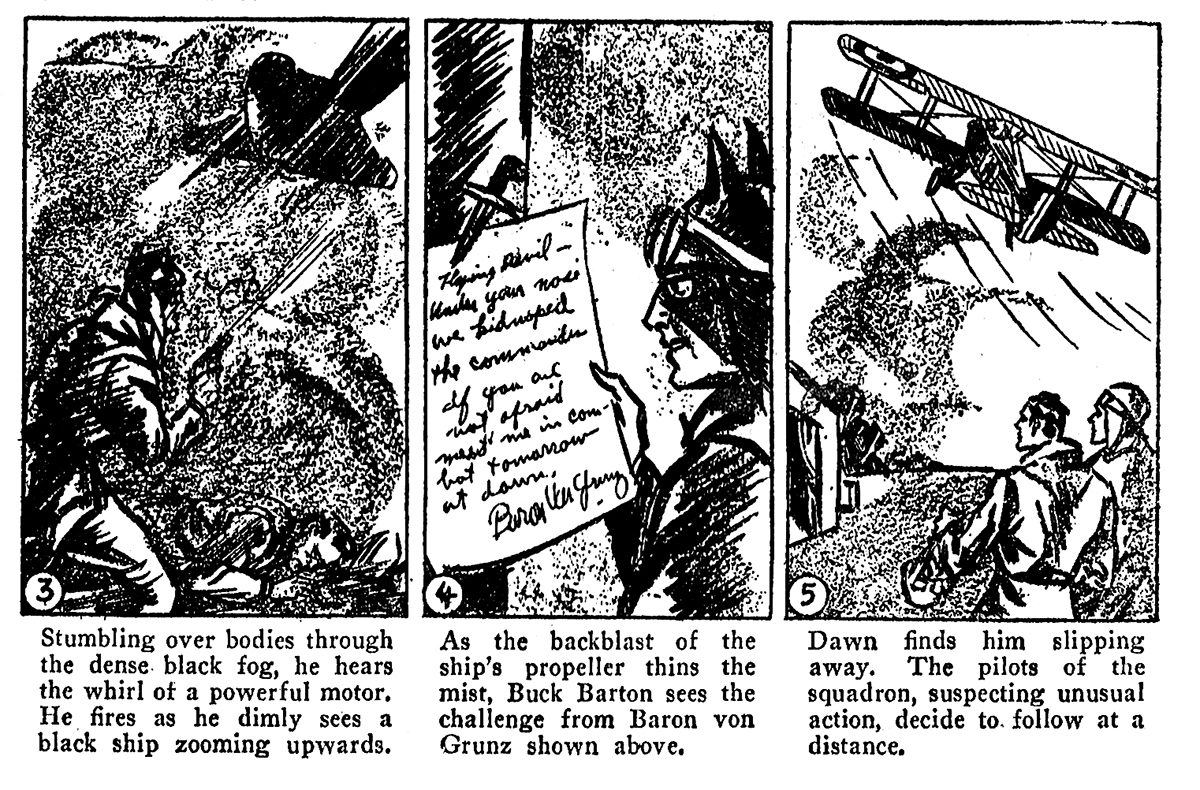
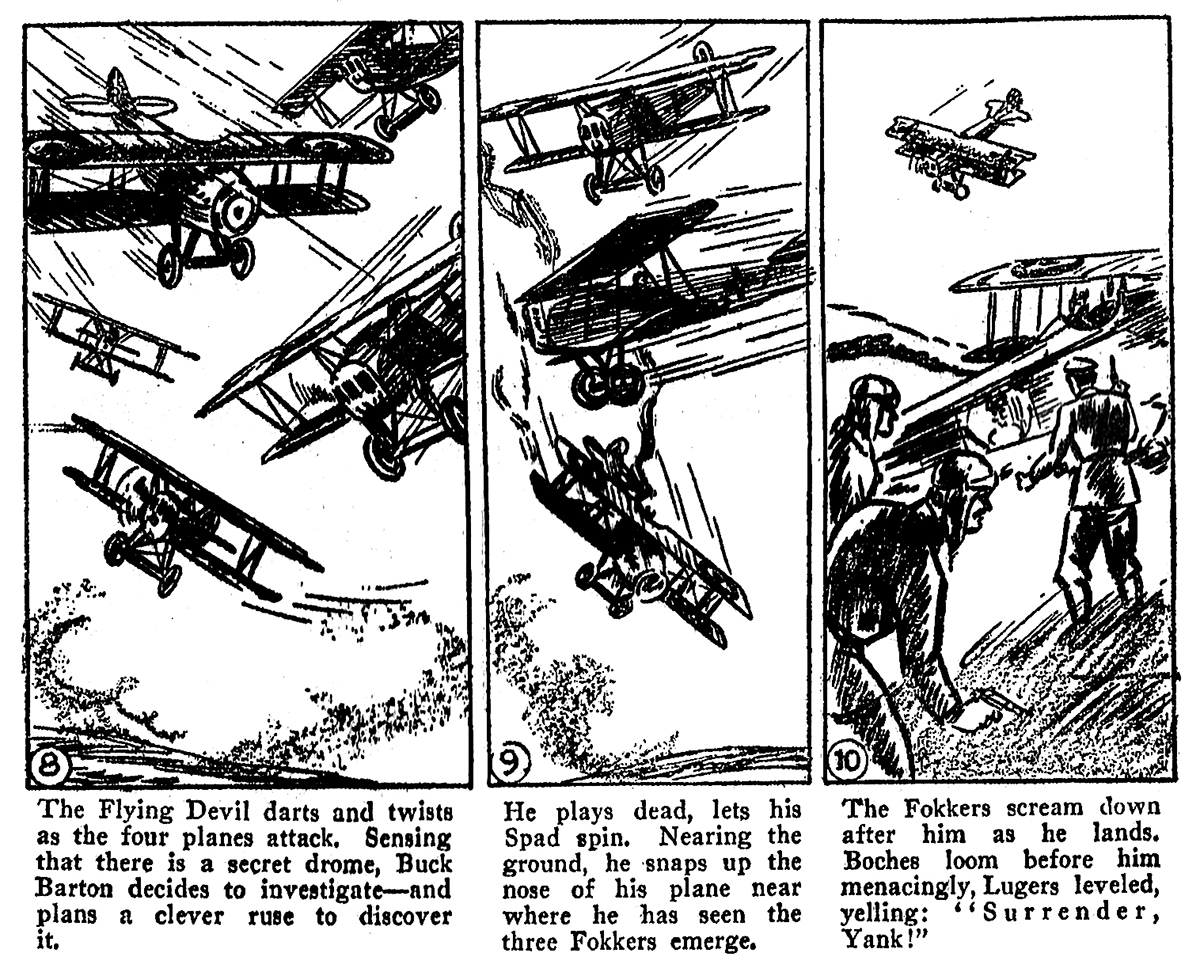
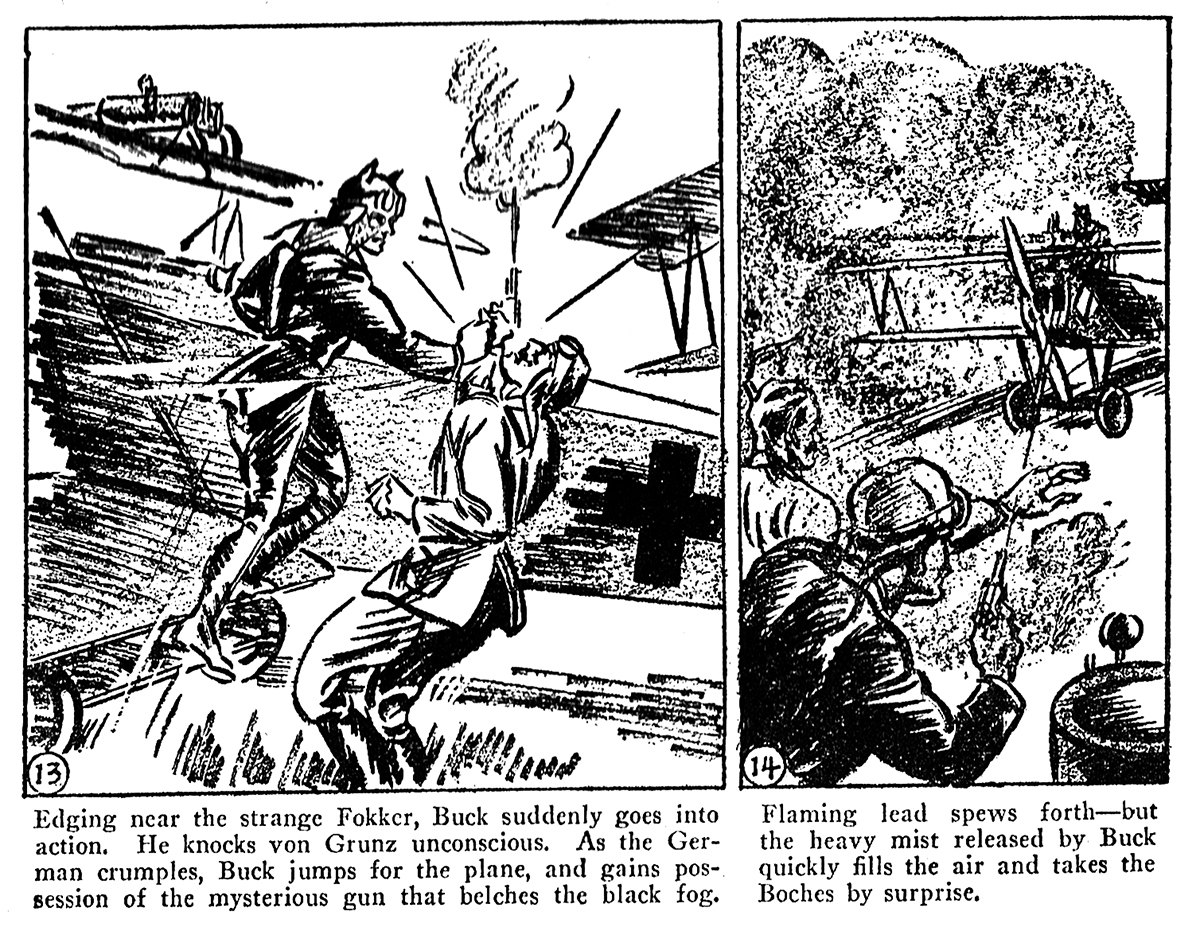
“The Kidnapped Commander” by Terry Gilkison

Link - Posted by David on December 8, 2025 @ 6:00 am in

THIS holiday season we’re going all in on The Flying Devil! The Flying Devil was a regular feature of the first fifteen issues of The Lone Eagle and, more importantly, as they announced beneath each month’s story—“the Only War-Air Cartoon Story to Appear in Any Magazine!” The strip was drawn by Terry Gilkison and features the exploits of Buck Barton, a.k.a. The Flying Devil, as he wages a one man war against the Germans in his Spad with the devil on the fuselage.

From the January 1934 issue of The Lone Eagle, it’s Terry Gilkison’s The Flying Devil in “The Kidnapped Commander!”


Next Time: The Transport Torpedoing Plot!

How the War Crates Flew: The Instrument Board

Link - Posted by David on February 4, 2025 @ 6:00 am in

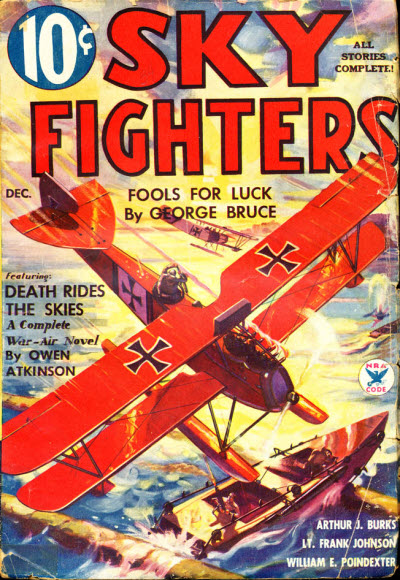
FROM the pages of the December 1934 number of Sky Fighters:

Editor’s Note: We feel that this magazine has been exceedingly fortunate in securing Lt. Edward McCrae to conduct a technical department each month. It is Lt. Mcrae’s idea to tell us the underlying principles and facts concerning expressions and ideas of air-war terminology. Each month he will enlarge upon some particular statement in the stories of this magazine. Lt. MaCrae is qualified for this work, not only because he was a war pilot, but also because he is the editor of this fine magazine.

The Instrument Board

by Lt. Edward McCrae (Sky Fighters, December 1934)

ALL RIGHT, you ring-tailed gazookuses, the class will now come to attention, which is what I don’t want anything but. Mary, take that gum out of your mouth and stick it back of your ear until school is over. And Johnny, you quit dropping those fishing worms down Irene’s back. Put ’em, in your pocket until you find a fish that wants them.

So, clean out your ears and get ready to do some concentrated listening, because this time I am going to tell you some stuff that would sound awfully technical if anybody except myself were to try to explain it to you. But when I start to talk, even you dumbkopfs ought to be able to understand it.

“Where Am I At?”

The subject of the sermon, today is taken from the first book of Aviatus, second chapter and third verse. It says here, “And the aviator came unto me saying, ‘Where am I at?’ And I answered unto him thusly, saying, ‘Learn to read your instruments and thou wilst know where thou art at’.”

And so we plungeth inneth.

Now whether you knot-heads know it or not, there is a difference between an airplane and an automobile. The point is that a car buzzes along on a highway and if something goes wrong you can pull over to the side of the road and find out what it is and maybe get towed in. And if you get lost on the road you can ask where the right road is and get on it.

When Things Go Wrong

Well, sir, believe it or not, you can’t do that in an airplane. If you are in the air over the German lines and something goes wrong with the ship you don’t want to pull over to some German camp and get them to fix you up so you can go on your way. And if you happen to get lost, you don’t want to stop some Heinie and ask him where you can find the Hamfstengle Air Circus which you were sent out to bomb.

All of which means that since we couldn’t stop to make repairs and ask questions we had to carry our information along with us when we went out sniping Heinies. We carried that information on the instrument board, in the form of dials with needles and other kinds of indicators.

Times Have Changed

It wasn’t like it is now. In these days you can look at the instrument board of a good ship and see a record of what your Aunt Mehitabell had for breakfast and how it is affecting her indigestion. Today they have turn and bank indicators that register the angle of the bank before your eyes. During the war that was registered on the seat of our pants. If we were slipping down to the left we felt it by sliding in the seat and so on.

But we had instruments. And they fall into two groups, according to their purpose. One group is for the purpose of knowing how the motor is doing at all times so we wouldn’t have to stop and get a Boche to do a repair job for us. And the other group was for the purpose of telling us where we were or ought to be so we wouldn’t have to ask a German to direct us on our way.

A Handful of Gadgets

For the engine we had a switch to turn it on and off, a tachometer to record the number of revolutions of the motor, fuel and oil gauges, etc.

And for getting around places and knowing where we were, we had an air speed indicator, an altimeter, a compass and a clock.

By the side of a list of present day instruments you would get the impression that this little handful of gadgets wouldn’t be enough to successfully navigate a kiddie-kar. But we got there, folks. Ask ’em if we didn’t!

Pretty Bare, Eh?

Take a look at Figure 1 and you will get some kind of an idea what the board of one of the old crates looked like. Looks pretty bare, doesn’t it? Well, it wasn’t the face of the instruments that did the work, it was the insides of them that performed the job. And if you want to know something about the problems of the birds that had the task of devising ways for us to know what was going on in the ship, just take a look inside one or two of those instruments. It was those tiny little hairsprings and needles that won the war.

That’s a big statement, but I can prove it. There’s no use in going into detail as to that, so I’ll get on with the lesson and show you how they did it.

How They Worked

There are some of the instruments that could be adapted from automobile and other uses. Things like thermometers and the compass and the tachometer. But in case you didn’t happen to look into the matter the last time you were playing around an instrument factory I’ll tell you how they worked.

A tachometer, or “tack” or a “/*!!&* tack” as it was called when it wasn’t working properly was a simple device adopted from the speedometer of an automobile or any other machine that had to record the number of revolutions a wheel or anything made. You merely had a flexible shaft with one end attached to or in contact with the crankshaft of the engine. The other end had a governor on it. The faster the engine turned the more the governor spread out. Then the amount of spread was recorded on the dial which is marked off in thousands of revolutions a minute. The tach didn’t tell you how fast you were going, but only how fast the engine was turning. You knew in advance how many revs it should turn for this and that, for climbing, for gliding, straight flight, and so forth. (Figure 2, if you’re interested.)

And while we’re on the simple things, we might clean up the thermometer. That little gadget ordinarily operates by having a tube with some kind of liquid like mercury or sulphur dioxide or methyl chloride in it. All these liquids expand under heat. As they expand they naturally rise up in the tube and the readings are marked on the tube.

The Distant Type

But an engine thermometer had to be read back in the cockpit, so they made a variation of this principle which comes under the head of “distant type thermometers.” If you will take your eyes off that circus parade that’s passing and look at Figure 3 you’ll see what one looks like.

What happened when it was supposed to register the temperature of the oil and the water and those things that were not supposed to get too hot if you wanted to stay in the air was this:

The part called the bulb contained methyl chloride which makes a vapor when it gets hot. The juice creates the vapor which then fills the tube running to the dial (the capillary tube) and that then exerts pressure on the Bourdon Tube which is that curled part with the needle attached. The needle then registers the temperature as indicated by the amount of pressure in the Bourdon Tube.

I’ve got to hurry through this lesson because I’ve got a date with a blonde who is “just crazy about flyers” so I’ll first tell you that the air speed indicator also works by pressure, and then explain how the pressure gauge system works so you will never forget it.

Air Speed Indicator

Now, to get the recording of the amount of speed with which you are passing through the air you have an air speed indicator. It is a combination of a Bourdon Tube and what is called a Pitot tube.

The Pitot tube is hollow and usually runs out a wing, up a strut, and ends by sticking out forward from the strut. You’d think it was a piece of gas line that was broken off. But here’s what you’ve got. When the ship is flying forward there is naturally head resistance. That open-ended tube sticking straight forward into the wind has the increased wind pressure entering the hole in it. Naturally the pressure is greater than if the ship was standing still. The ship registers no miles per hour when it is still, but as it increases speed, the air pressure increases and that in turn increases the pressure inside the Bourdon Tube and makes the dial tell you how fast you are going through the air, not from point to point on the ground.

Stay Awake

Now there are other gauges that work by pressure. They all usually use the Bourdon Tube system, or a diaphram system. So, wake up long enough to look at Figure 4, and try to stay awake long enough for me to explain it to you, and then you will know how they work.

You see that thing like a question mark? That’s the Bourdon Tube. It is hollow and made out of bronze or brass. The pressure from the thermometer or Pitot Tube, or hot oil or hot water or what have you comes in through the tube connection and enters the Bourdon Tube.

The pressure tries to straighten out the question mark and make an exclamation point out of it, like what goes after the word damn.

Speaking of Throttles

But was that air pressure or vapor pressure’s face red? The end of the tube was tied to a little gear apparatus and that was geared to a dial. So as the pressure huffs and puffs and tries to blow the house down it really succeeds only in straightening out the question mark a little bit, and in doing that, it makes the needle turn around in front of the dial and the needle says to the flyer, ‘‘watch out, your water’s getting too hot. Better throttle down.”

And in speaking of throttles, you buzzards beat it before my date shows up or I’ll throttle the whole bunch of you.

Scram!

How the War Crates Flew: Personalities of the Planes

Link - Posted by David on January 7, 2025 @ 6:00 am in

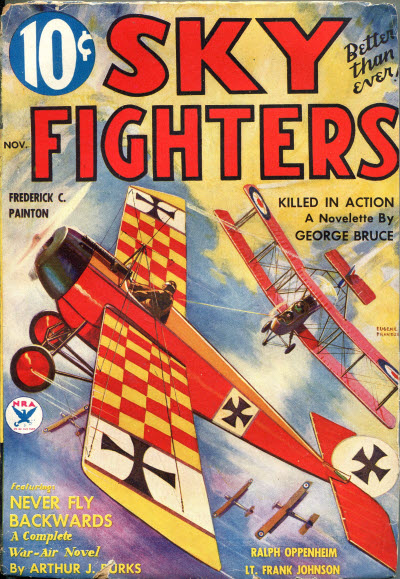
FROM the pages of the November 1934 number of Sky Fighters:

Editor’s Note: We feel that this magazine has been exceedingly fortunate in securing Lt. Edward McCrae to conduct a technical department each month. It is Lt. Mcrae’s idea to tell us the underlying principles and facts concerning expressions and ideas of air-war terminology. Each month he will enlarge upon some particular statement in the stories of this magazine. Lt. MaCrae is qualified for this work, not only because he was a war pilot, but also because he is the editor of this fine magazine.

Personalities of the Planes

by Lt. Edward McCrae (Sky Fighters, November 1934)

NOW if you youngsters will get the gun cotton out of your ears I’ll tell you something that you might not have thought of before. I’m going to tell you why they sometimes call an airplane “she” just like they call a steamship or sailing ship “she.”

It’s because they all have personalities of their own, and because their personalities are so cranky usually that you can’t expect to know what they’re going to do next until you get well-acquainted with them, and by that time you don’t care much what they do. So, having personalities so much like women, we naturally call them “she” and a lot of other names that you cannot write about in a magazine.

So, if you’ll sit up I’ll try to introduce you to a bunch of the ladies and tell you some of the little things about them that you don’t ordinarily hear when they just tell you their names and addresses.

Most of ’Em British

Now most of the ladies we Americans got acquainted with were British, with just a few French gals thrown in to make it exciting.

For instance, the first lady your Uncle Eddie met when he got over in nineteen-fifteen was a gal who had just been built and had officially been named the E.F.B.5.

But that name naturally wouldn’t do for us, so we quickly got to calling her the Vickers Gun Bus, Fig. 1, You see, at this time, the war was just getting under way like it meant real business, and it had become apparent to the big shots that the airplane was going to play an important part in it.

Some Advance!

Before that they had been sending ships up with the pilots armed only with pistols or carbines or brickbats. But that didn’t work so well, so the result was an airplane with a machine-gun attachment. And boy, in those days that was some advance.

But you should have seen that old Gun Bus. Today you’d laugh your head off just looking at it, but we took it pretty seriously. She was the most famous of the early crates.

To look at her you would think the designer got his idea from a flying coffin. The nacelle sat up in front and stuck out forward of the wings. Behind the nacelle or fuselage if you could dignify it by that name—which you couldn’t—was a lot of outrigger gear with a tail stuck on it. It looked kind of like a small windmill stand sticking outward to the rear.

And then the wheels were back to the rear of the center of gravity and they had one of those landing skid arrangements in front of it so you wouldn’t nose over and bash in your face.

The Latest Thing

But boy, in those days here was what we called the latest thing in ladies of the air. The thing had a gun mounted on it, and if you don’t think that was a welcomed innovation you should have been there. The gunner sat out in front in that little cockpit of his with nothing but a lot of ozone under him, and shouted for the Heinies to come up and see me some time. He thought he was sitting on top of the world, which he was, because that gun stuck out so far in front that he had all kinds of angles through which he could aim it.

And the gal was the talk of the town because she was fast—or at least what we thought was fast in those days.

She could hit off at least sixty and seventy miles an hour! And was that getting there?

She Had B.O.

But she fitted in with those present-day soap ads. People whispered behind her back. She had B.O. That was because her 80 h.p. Gnome rotary motor burned castor oil—and no lady motor can burn that stuff and have her friends around without their holding their noses.

Anyway, she was a good old ship until a Miss Sopwith, Fig. 2, came along. That was in nineteen-sixteen, and this new gal was right up to the minute. She was beginning to look like an airplane. And just like the women in those days who tried to see how much wingspread they could carry by making their hats bigger and bigger, this Sopwith went in for wingspread in a big way by taking on an extra wing, becoming a triplane.

We kind of liked the miss because she could get upstairs in a hurry, faster in her time than any other gal on the front. But she was like a lot of the other high flyers and was unreliable in the pinches.

When You Wanted to Dive

There were times when you wanted to dive and dive in a hurry. And in times like this you felt a little worried about the gal because she could go up fast enough but she couldn’t take a dive either fast enough or safe enough to suit your hurry. It was there she showed her weakness.

Once in a while when you wanted to get back to the ground worse than you wanted to do anything else in the world she’d take you down all right—by shedding her wings. That let you down fast enough—but never easy enough. They often had to pick you up with a shovel and broom.

But she was a smart-looking gal, and so the Germans came out with their famous Fokker Triplane, Fig 2. There is plenty of argument as to whether they swiped the Sop design lock, stock and barrel. Most of us believe they did. And there’s plenty of proof. You know, if you steal a lead nickel you’ve got a piece of money that isn’t any good. The Germans’ idea wasn’t any better. They swiped the Sop, and the result was that the Fokker had just the same trouble we did. They built the ships faster, and the result was they lost more wings. There ought to be a moral hidden in that if you can find it.

The Flyers’ Sweetheart

And just about that time was born the sweetheart of all flyers—the Bristol Fighter, Fig 1. Just to prove what a good gal she was it is only necessary to say that she was the only ship that the British held on to long after the war. In fact, she wasn’t declared obsolescent until nineteen-thirty-two. That’s a mighty long life for any type of airplane, what with the steady advance of design.

She was a two-seater that had more uses than the proverbial “gadget.” They were originally intended for reconnaissance-fighters, but it wasn’t long before they used her for almost everything. She toted bombs, did photographic duty, spotted for artillery and even strafed trenches, besides being used for escorts and training. She was one gal you could stunt with and have hopes of setting her down intact when you got through.

Equipped with Stingers

And she was welbequipped with stingers. She had a Vickers gun synchronized through the prop and a Lewis gun on the scarff ring in the rear cockpit. They started her out in nineteen-seventeen with a 200 h.p. Hisso or Sunbeam Arab and got 120 m.p.h. out of her. Then they gave her a 250 Rolls-Royce Falcon and kicked her speed up to 130 m.p.h. She could take it. With that new powerhouse you could boot her up to 15,000 feet in twenty minutes, which was climbing in them days! And she had a slow landing speed of 45 m.p.h.

And she was just a nice size for proper handling, having a 39-foot, span and a 25-foot length, with a height of ten feet and a five-foot-six chord. It’ll be a long time before another ship gets as far ahead of her time as that Bristol baby. I knew her well.

A Great Family

But it seems like we couldn’t stay away from the Sopwith girls. That was a great family. So here before we knew it was another one of the sisters all rigged out and ready to step. She was the Sopwith Pup, Fig. 3. She made her debut in nineteen-fifteen and sixteen. And she was a knockout for beauty. She wore an 80 h.p. LeRhone Rotary in her hair and could get over the country, considering her small power plant.

She could get off the ground in a hurry and put five thousand feet under her in seven minutes. And when she got upstairs she was ready to talk business at the point of a Vickers fitted on the cowling to fire through the prop while she herself danced around at the rate of 99 miles per hour. She carried nearly twenty gallons of gas and five gallons of oil, and could stay in the air long enough for her to do some real damage to the Germans. And she did just that, for there was many ah Ace that piled up his score behind her guns.

Smaller, But—

She was a lot smaller than Miss Bristol, being only 26 feet across the hips. But don’t think she didn’t get there.

And she had a larger sister that you ought to get acquainted with, just to see how different sisters can be. The sister was Sopwith Camel, Fig. 3, and she was just as tricky as Pup was reliable.

Would she burn you up? And I mean that literally. This is the way it would happen. She was a kind of big Pup who was built to be still faster and more maneuverable. In order to do this she had to sacrifice some of Pup’s good qualities, and she was therefore tricky to fly, and dangerous to land. Her engine, a nine-cylinder Gnome-Monosouppe delighted in setting you on fire.

No Carburetor! No Throttle!

This was because that crazy power plant had no carburetor nor any throttle. The only way you could slow her down once she got started was to cut the ignition from certain of her cylinders.

The result was that the gas vapor would go through those cylinders without burning until it got into the exhaust. And right there the sparks from the other cylinders would ignite it. The result was a nice long sheet of flame pouring out of the exhaust into the slipstream. That made it nice and hot for you if it didn’t ignite the whole ship and leave you well-browned on both sides. Yes, sir, the old gal was hot stuff.

But she was a good old work horse when you got to know her and didn’t mind her spitting fire in your face. And she was armed to the teeth. She had two Vickers guns on the cowling and often a Lewis on the top wing just to balance things off.

Could Do Real Damage

She got a lot better when they took that crazy engine out and put a Clerget in. That sped her up to around 140 miles per hour and made her climb a thousand feet a minute. She could stay in the air two and a half hours a trip, and do real damage.

I suppose I ought to mention a lot of the other gals that helped make that war an exciting one, but there were so many that it is only possible to take a hop, skip and jump down the line and say howdy to a representative few of them.

I ought to tell you about still another Sopwith sister, that we called the one-and-one-half strutter. And I ought to tell you about some of the French ships, and a lot of others. But you’ll have to wait breathlessly for that. Just now, I’ve got a date with a modern little miss that could fly right around a lot of those good old babies, and she’s not armed with Vickers guns either.

Be seeing you.

How the War Crates Flew: What Made ‘Em Fly

Link - Posted by David on November 5, 2024 @ 6:00 am in

FROM the pages of the October 1934 number of Sky Fighters:

Editor’s Note: We feel that this magazine has been exceedingly fortunate in securing Lt. Edward McCrae to conduct a technical department each month. It is Lt. Mcrae’s idea to tell us the underlying principles and facts concerning expressions and ideas of air-war terminology. Each month he will enlarge upon some particular statement in the stories of this magazine. Lt. MaCrae is qualified for this work, not only because he was a war pilot, but also because he is the editor of this fine magazine.
What Made ‘Em Fly

by Lt. Edward McCrae (Sky Fighters, October 1934)

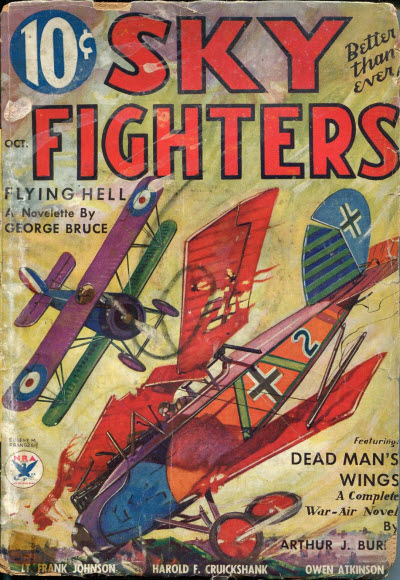
NOW you wise young sons and daughters of a double eagle, or maybe it was a buzzard, maybe you hadn’t noticed it before but if you had looked a little carefully at all the nice pictures of the war crates on the covers of SKY FIGHTERS you might have noticed that nearly every one of them without exception had something peculiar about it. Whether you noticed it or not, they all had engines in ’em.

Yes, sir, they carried whole gasoline engines up in the air. Some of them had one and some had two and some had more than that—even back in the early days of the war.

Now if I know anything about you clucks you’re just as likely as not to come asking me why those aviators wanted to load themselves down with a lot of machinery. It would be just about like you.

So I’m going to head you off and tell you something about those powerhouses we used to take upstairs along with us. And don’t be asking me why they carried more than one of ’em. I’m going to get to that if you’ll let me. Mary, don’t you throw that spit-ball!

You Gotta Have an Engine

Maybe your papas have let you look under the hood of the old family car, in which case you might have learned the secret that a vehicle just can’t get along without an engine if it’s going to do any good running at all. Honey, it’s the same way with an airplane.

So I’m going to tell you a few simple things that won’t be too difficult for your shallow pans to remember so you will have a little inkling of why they have all different kinds of engines when it would look for the world like if they got a good one they would keep using it instead of trying to think up other designs and shapes to use.

You might have noticed that some of the engines when they were looked at from the front looked like stars with a lot of cylinders all sticking out every which way from the center. And others looked more like a common every-day automobile engine. How come it and why?

Air and Water Cooling

The answer is, my precious little dunderheads, that some of them were air-cooled and some water-cooled.

They learned that an engine that didn’t have to tote its own drink along with it weighed about three-quarters as much as another of the same horsepower that was water-cooled. And they learned also that for every pound you could reduce the weight of it you could add two pounds of useful load, or what amounts to the same thing, you could have a bigger engine and more power for the given weight.

Now the reason you could get those two extra pounds where one grew before was that when you took a pound’s weight away from the engine you could reduce the weight of the ship by another pound that was necessary to strengthen it to support the pound you took away, and you could further reduce the weight of your ship by another pound that went to strengthen the wing so it would support that extra pound of engine weight. That’s as clear as mud, isn’t it?

But unfortunately that added strength didn’t always show as engines got bigger. After they got so big, an air-cooled engine wouldn’t weigh any less than a water-cooled one for the same horse power.

So they used one or the other depending on the performance they wanted.

The Air-Foil

Now when you start trying to recognize the different kinds of engines you want to look at the front of them. That way you can see what kind of a surface, or air-foil they present to the wind. That’s the important thing for you to consider.

When you look at them that from that aspect you will see that there are only about three different general groups of designs. Of course, these differ among themselves in slight ways, but after all, even human beings in one family have slight differences.

Take a look at the figure which I have very cleverly called Figure 1. In that you will see the front view of a few of the stationary cylinder engines that are water-cooled and whose fathers got the idea of their design from our old friend the automobile engine. Now this group shows some outline forms of the engines themselves, but there is a fly in the amber. They don’t show the radiators, and a water-cooled engine has to have a radiator and that presents a big flat surface to the air to reduce your speed.

Rotary Engines

So then you have next in what for want of a better name I have called Figure 2, the rotary engines that were used during the war. Some of the names of these are Gnome Rotary, the Le Rhone Rotary, and the Clerget Rotary.

These were funny power plants. You might not believe it when I tell you, but it is a fact that the crank shaft stood still and the whole engine itself revolved around it! That sounds kind of Chinese, doesn’t it? But it isn’t. What with those cylinders whirling around at a thousand revolutions or more, they kept cool pretty well, but once in a while one of them would fly off the handle and scatter cylinders all over No-Man’s-Land.

And then they had another feature that the brass hats didn’t seem to bother about, but which we didn’t like at all. They were lubricated with castor oil!

Hot Castor Oil

Our objections to it came, not because we had to share their fuel oil, but because the engineers didn’t think castor oil was bad enough cold, they let it get hot in the motor.

And brothers and sisters, you have not smelled nothing yet until you have got a nose full of red hot castor oil. And you can smell it for miles—and that is not an exaggeration! We were afraid the Heinies could always tell we were coming by just sticking their noses up in the air and taking a deep breath. Boy, it was awful!

And then you might take a glimpse at a figure that I have designated as Figure 3, even though you can’t count up that high.

Those figures in that picture are some outlines that look almost like those rotary babies. But they aren’t. Their cylinders stick out from a common center just like the rotaries, but there is some sense in the way they act. The cylinders stay still and the crank shaft revolves just like any respectable crankshaft ought to do.

We Had ’Em Long Ago

We had them in the old days, and they had all the way from three to twenty cylinders stuck around the shaft.

Those were the babies that have turned out best since the war. But we had a lot of satisfaction out of them. A couple of these babies we liked in those days were the Salmson and the Cosmos Jupiter.

And just to prove how practical these air-cooled babies were, if you will take a glance around an air field today you will see more air-cooled radial motors than any other kind. Babies of that pattern since the war were the first to cross the North Pole, first to fly the English Channel, first to span the Atlantic, and about the first for everything of any importance.

And now that you know all about the different kinds of engines, I’ll give you that promised dope about why they had different numbers in different kinds of ships.

Why the Extra Engines?

There are two reasons they put more than one engine in a ship. One is to increase and distribute the lift and the other is to increase the factor of safety. These two reasons don’t always both appear in the one ship.

But even you pupils of mine ought to be able to see that if you have two engines and one conks you’ve still got a chance to get back safely over your home trenches, and if you’ve got three engines to do the same work there’s almost no chance at all of your having a forced landing in a mess of Krauts. I know about a Handley-Page bomber that went out and got a direct hit that reduced its whole lower wing to a mass of shreds and tatters and knocked one of its engines clear out of it, but the pilot steered it sixty miles back to his home tarmac! Which is something different from landing on your nose in the middle of a few rosettes of shrapnel.

Helps in the Lift

And then in the matter of lift, you will find the heavy bombers had more than one engine so they could lift a lot of weight. You would first think they would just build one big engine to carry it, but that wouldn’t be so good. Let me try to show you why.

Suppose it took a thousand horsepower to lift the desired bomber and its load. They could build one engine of a thousand horsepower all right, but they wouldn’t get a propeller that could use up and deliver all that power. But if they, say, built two five-hundred horsepower engines, they had two props which could use up all that power and besides they had the additional safety factor of the two motors I just spoke about. You might not remember it well, Tillie, but we had plenty of ships with more than one engine during the war.

The Germans were the first to come out with them, although the French were at work on them even before the war broke out. The first German flew with two engines in 1915.

But the French quickly matched them with the old twin-motored Caudron, and the British followed right off the bat with the twin-motored Dyott, which didn’t last a very long time, however. The Government never did put its official okay on the old Dyott, but it was not a bad heavy crate, and it had a lot of features the German Gotha later incorporated.

Then the Italians in the person of the well-known Mr. Caproni burst out across the field with a three-motored ship. It had two eighty-horsepower tractor motors and one ninety-horsepower pusher. Some ship, eh, Tony!

And toward the end of the fracas the British got real ambitious and brought out a ship with four—count them—motors. It just had engines stuck all over it.

They Went in for Numbers

But once they started going in for numbers, do you think the Germans were going to let anybody get ahead of them? No, my masters, not those boys.

We knocked down one of their big bombers in France, and we thought somebody had attached wings to the machine shop itself.

That crate had five motors sprouting out of it.

That might not be a lot of motors these days, but my children, I’ve been talking all this time about the war that was fought a long, long time ago.

And now, take my blessing, and go out and jump in your ten-motored kiddie cars and zoom out of my sight. Or else I’ll be counting motors instead of sheep in my sleep.


Next Page »