“Shower Kraut” by Joe Archibald
“HAW-W-W-W-W!” 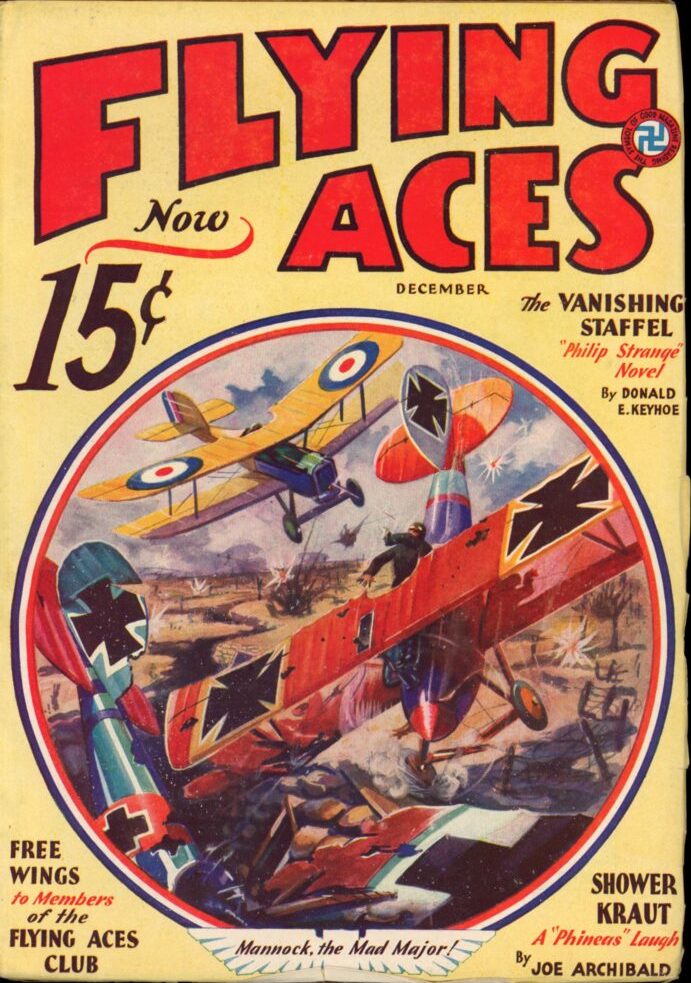 That sound can only mean one thing—that Bachelor of Artifice, Knight of Calamity and an alumnus of Doctor Merlin’s Camelot College for Conjurors is back to vex not only the Germans, but the Americans—the Ninth Pursuit Squadron in particular—as well. Yes it’s the marvel from Boonetown, Iowa himself—Lieutenant Phineas Pinkham!
They’d threatened Phineas Pinkham with Blois before—and he’d lived to laugh at them. But this time the future of the ace of Boonetown, Iowa, was in the hands of a Brigadier who didn’t exactly like being pushed in the face!
“The Death Turn” by E.W. Chess
THIS week we have story of 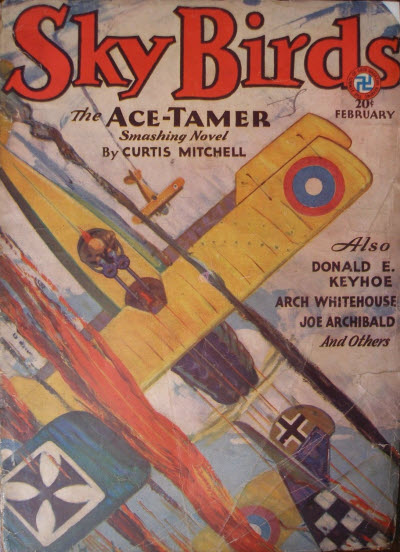 air intrigue by E.W. Chess. Elliot W. Chess was a prominent author in the pulps—his name frequently appearing on the covers to entice readers. His pulp career spanned from 1929 to 1940, but a majority of his output was in the early thirties. Equally adept at both westerns having grown up in El Paso, Texas and air war stories having served in the Royal Flying Corp in the First World War and the 7th Squadron of the Polish Air Force afterward when Russians tried to invade the country.
Fourteen years before, when men fought each other and skies were red with their blood. Allied pilots over a hundred-mile sector of the Front had known von Kruger’s Death Turn—and feared it. Now no one remembered that dread maneuver—until one day a stranger with a deep scar across his face walked up to a little Texas flying field—and gave it a new meaning.
From the pages of he February 1932 number of Sky Birds, it’s “The Death Turn” by E.W. Chess!
“Good to the First Drop” by Joe Archibald
“HAW-W-W-W-W!” 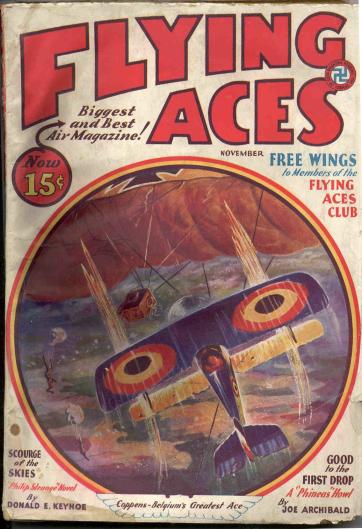 That sound can only mean one thing—that Bachelor of Artifice, Knight of Calamity and an alumnus of Doctor Merlin’s Camelot College for Conjurors is back to vex not only the Germans, but the Americans—the Ninth Pursuit Squadron in particular—as well. Yes it’s the marvel from Boonetown, Iowa himself—Lieutenant Phineas Pinkham!
It was just too bad they hadn’t started the Caterpillar Club away back in 1918. But you can’t blame them—they didn’t know they were cheating Phineas “Carbuncle” Pinkham out of his one and only chance to join!
From the November 1932 number of Flying Aces!
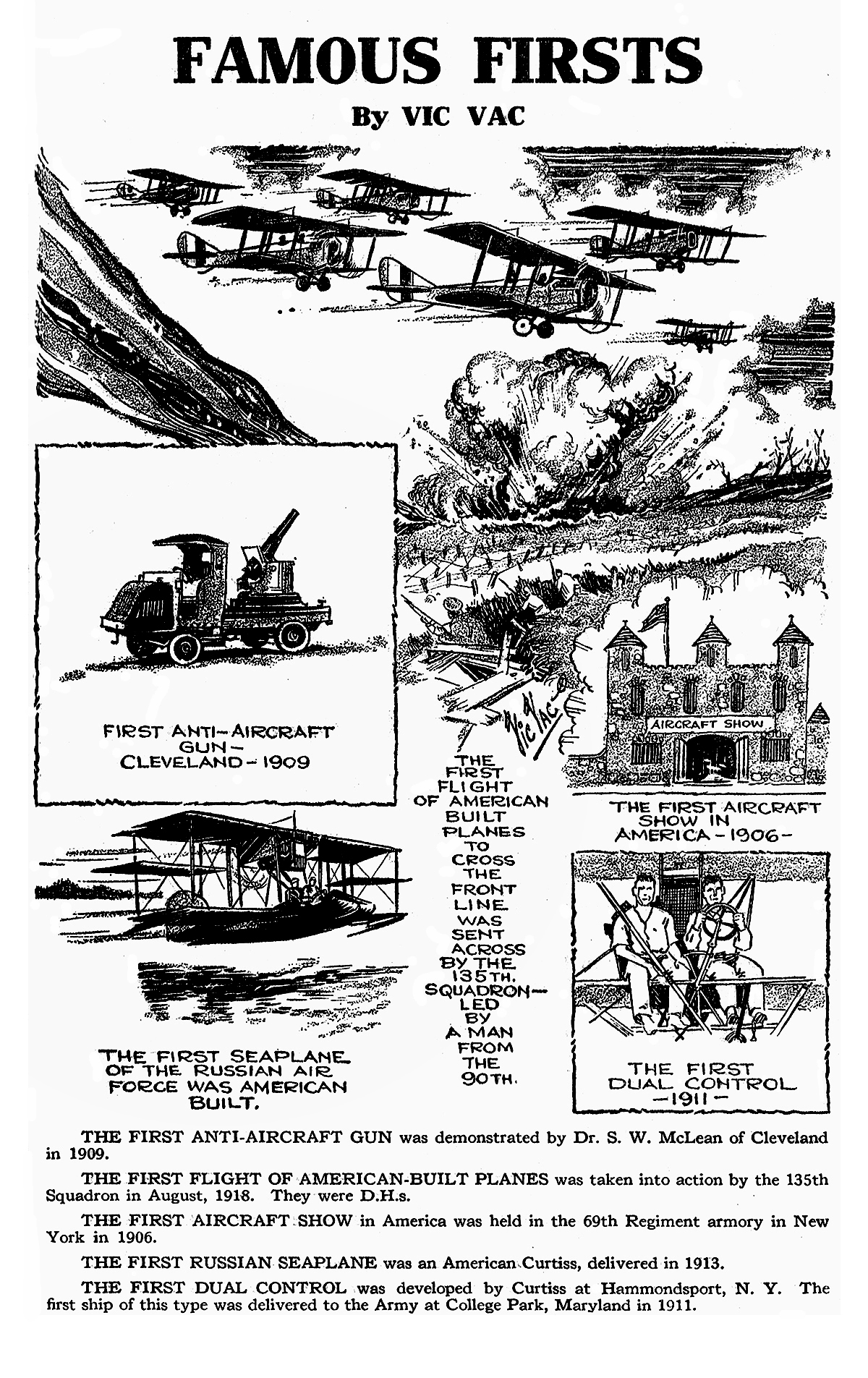
“Famous Firsts” July 1932 by William E. Barrett
THIS November we’re celebrating William E. Barrett’s Birthday. Before he became renown for such classics as The Left Hand of God and Lilies of The Field, Barrett honed his craft across the pages of the pulp magazines—and nowhere more so than in War Birds and it’s companion magazine War Aces where he contributed smashing novels and novelettes, True tales of the Aces of the Great War, encyclopedic articles on the great war planes as well as other factual features. Here at Age of Aces Books he’s best known for his nine Iron Ace stories which ran in Sky Birds in the mid ’30s!
Among those factual features was “Famous Firsts” which ran frequently in the pages of War Aces. “Famous Firsts” was an illustrated feature much along the lines of Barrett’s “Is That a Fact?” that was running in War Birds, only here the facts were all statements of firsts. And like “Is That a Fact?” in War Birds, this feature was also taken over by noted cartoonist Victor “Vic Vac” Vaccarezza in 1932.
The July 1932 installment, from the pages of War Aces, features facts about the first ani-aircraft gun; the first seaplane; the first dual control in a plane; and the first aircraft show in America!
“Handicap Flight” by William E. Barrett
THIS November we’re celebrating William E. Barrett’s Birthday on the 16th with four of his pulp stories—one each Friday.
Before he became renown for such classics as The Left Hand of God and Lilies of The Field, Barrett honed his craft across the pages of the pulp magazines—and nowhere more so than in War Birds and it’s companion magazine War Aces where he contributed smashing novels and novelettes, True tales of the Aces of the Great War, encyclopedic articles on the great war planes as well as other factual features. Here at Age of Aces Books he’s best known for his nine Iron Ace stories which ran in Sky Birds in the mid ’30s!
This week we have 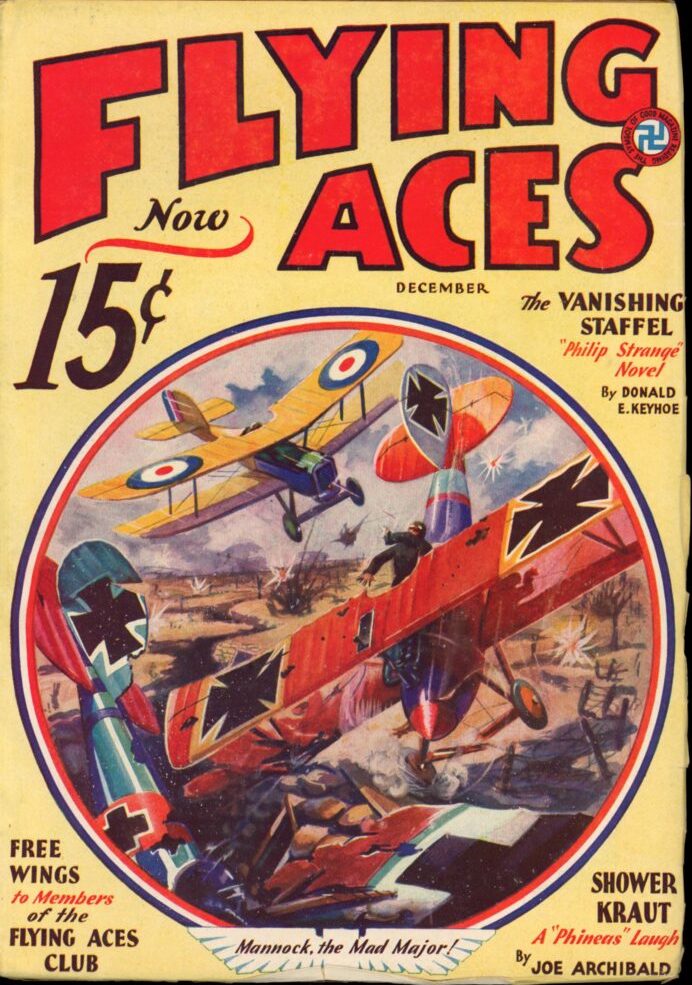 the third of our four stories celebrating William E. Barrett’s birthday this month. It’s “Handicap Flight” from the pages of the December 1932 Flying Aces.
Word had come through that the yards and factories of Mouzon must be bombed. The De Havillands had been beaten back twice when within sight of the city as had a flight of fourteen ships. Wing had come to the decision that one lone plane may have a better chance than a large group and it all came down to a cut of the cards to decide who would go on the suicide mission!
Death was writing on the black wings of that Yank bomber as it hurtled on toward Mouzon. It was a mad gamble—to send one lone pilot on a mission where eight ships and sixteen men had failed!
“Famous Firsts” March 1932 by William E. Barrett
THIS November we’re celebrating William E. Barrett’s Birthday. Before he became renown for such classics as The Left Hand of God and Lilies of The Field, Barrett honed his craft across the pages of the pulp magazines—and nowhere more so than in War Birds and it’s companion magazine War Aces where he contributed smashing novels and novelettes, True tales of the Aces of the Great War, encyclopedic articles on the great war planes as well as other factual features. Here at Age of Aces Books he’s best known for his nine Iron Ace stories which ran in Sky Birds in the mid ’30s!
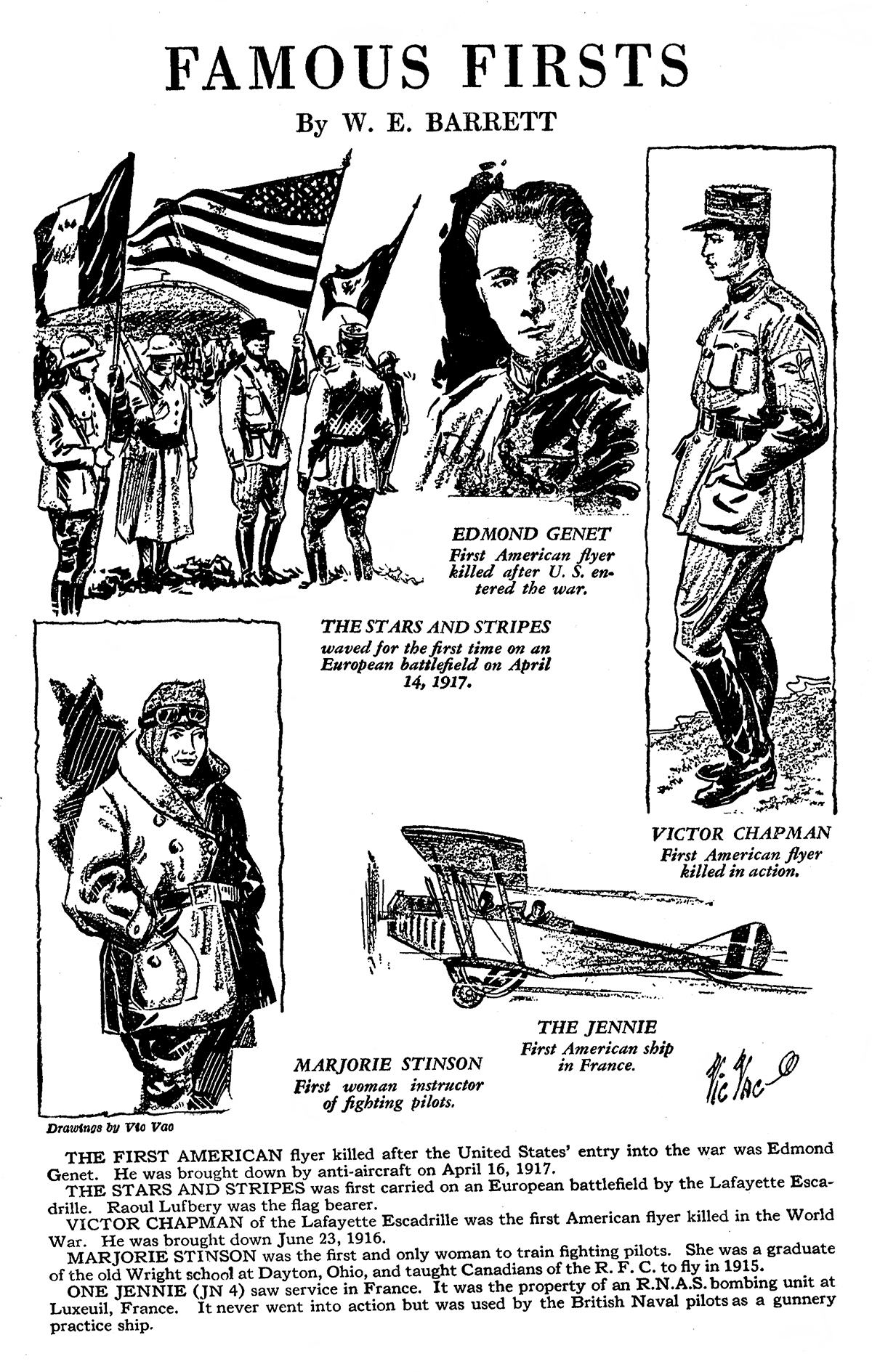
Among those factual features was “Famous Firsts” which ran frequently in the pages of War Aces. “Famous Firsts” was an illustrated feature much along the lines of Barrett’s “Is That a Fact?” that was running in War Birds, only here the facts were all statements of firsts. And like “Is That a Fact?” in War Birds, this feature was also taken over by noted cartoonist Victor “Vic Vac” Vaccarezza in 1932.
The March 1932 installment, from the pages of War Aces, features facts about Edmond Genet, Victor Chapman, Marjorie Stinson, the ever reliable Jennie and the Stars and Stripes!
Tags:
1932,
Corporal Edmond C. Genet,
Famous Firsts,
Lafayette Escadrille,
March 1932,
Marjorie Stinson,
Raoul Lufbery,
Vic Vac,
Victor E. Chapman,
War Aces,
William E. Barrett |
Comments (0)
“The Bat’s Whiskers” by Joe Archibald
“HAW-W-W-W-W!” 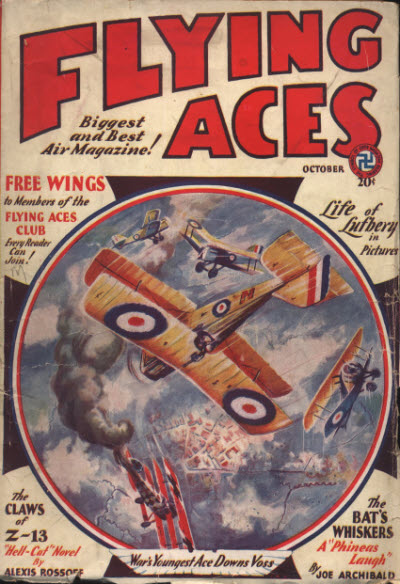 That sound can only mean one thing—that Bachelor of Artifice, Knight of Calamity and an alumnus of Doctor Merlin’s Camelot College for Conjurors is back to vex not only the Germans, but the Americans—the Ninth Pursuit Squadron in particular—as well. Yes it’s the marvel from Boonetown, Iowa himself—Lieutenant Phineas Pinkham!
Major Garrity was fuming in his lair. Outside, Bump Gillis and the boys were waiting like a lot of palpitating schoolgirls for the axe to fall on Phineas Pinkham. But you know Phineas—the kind of guy who could be thrown into an incinerator and come out covered with ice cream!
“The Reel Hero” by Joe Archibald
“HAW-W-W-W-W!” 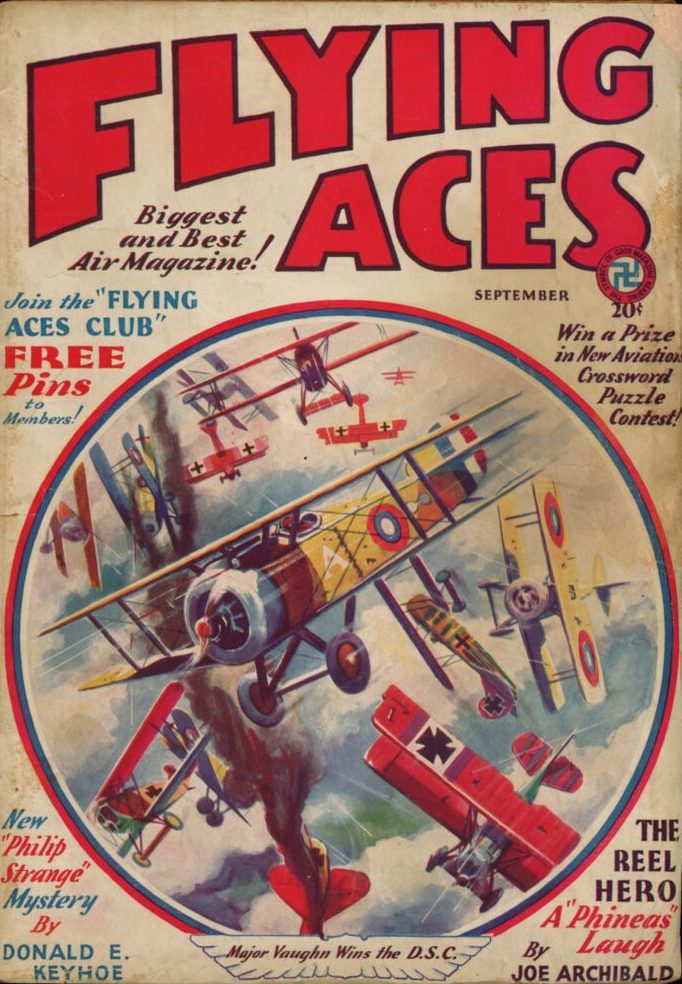 That sound can only mean one thing—that Bachelor of Artifice, Knight of Calamity and an alumnus of Doctor Merlin’s Camelot College for Conjurors is back to vex not only the Germans, but the Americans—the Ninth Pursuit Squadron in particular—as well. Yes it’s the marvel from Boonetown, Iowa himself—Lieutenant Phineas Pinkham!
Lights! Camera! Action! Phineas “Carbuncle” Pinkham goes into the movies in a big way! But a lot can happen to a roll of film when Phineas gets up in the air posing as . . . .”The Reel Hero!”
From the September 1932 number of Flying Aces!
“Spy a’la Mode” by Joe Archibald
“HAW-W-W-W-W!” 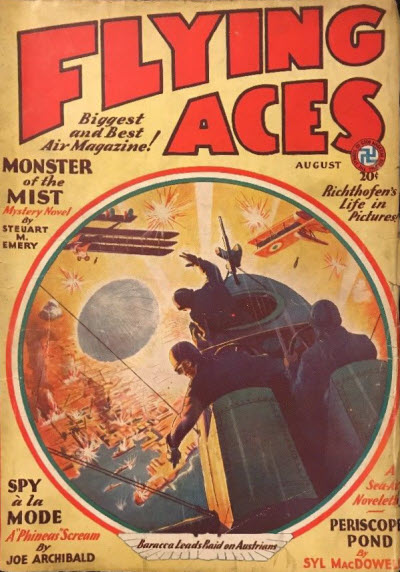 That sound can only mean one thing—that Bachelor of Artifice, Knight of Calamity and an alumnus of Doctor Merlin’s Camelot College for Conjurors is back to vex not only the Germans, but the Americans—the Ninth Pursuit Squadron in particular—as well. Yes it’s the marvel from Boonetown, Iowa himself—Lieutenant Phineas Pinkham!
Phineas Pinkham is already grounded and in the doghouse when he almost kills a colonel. Old Man Garrity’s had his fill, so when von Bessinger sends a challenge to the Ninth Pursuit’s thorn in their side, Garrity lets Phineas goto challenge the Von under on condition—he doesn’t come back! It’s Joe Archibald’s “Spy a’la Mode” from the August 1932Flying Aces.
For the first time in his life Phineas “Carbuncle” Pinkham wondered if a sense of humor wasn’t a handicap to a man who aspired to grow a long white beard and play with his grandchildren. It had taken a lot to make him feel that way—just a little matter of assaulting a Colonel!
“Herr Tonic” by Joe Archibald
“HAW-W-W-W-W!” 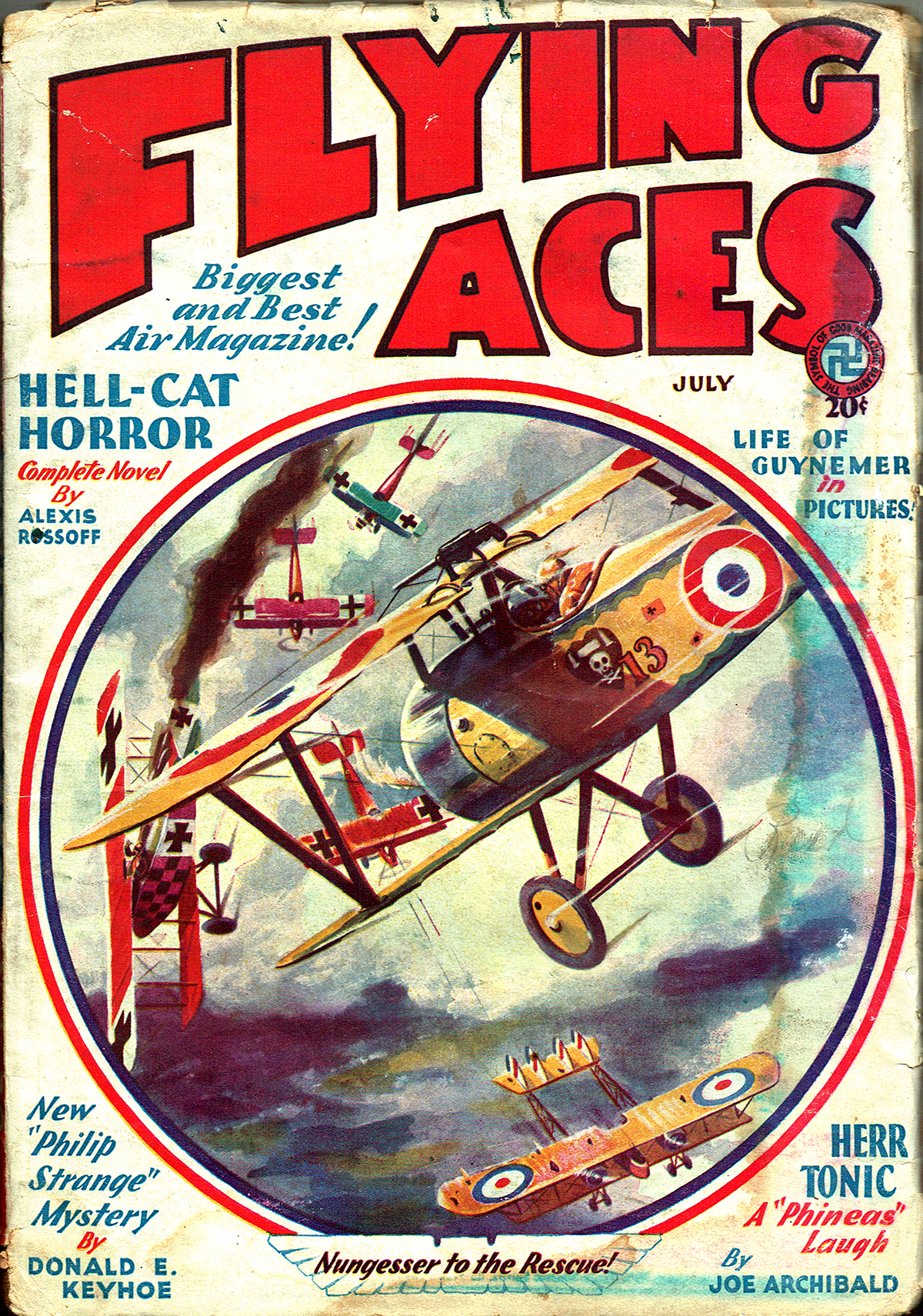 That sound can only mean one thing—that Bachelor of Artifice, Knight of Calamity and an alumnus of Doctor Merlin’s Camelot College for Conjurors is back to vex not only the Germans, but the Americans—the Ninth Pursuit Squadron in particular—as well. Yes it’s the marvel from Boonetown, Iowa himself—Lieutenant Phineas Pinkham!
Phineas Pinkham thinks he has a sure fire way of keeping von Bessinger and his circus from downing the squadron of D.H.4s The 9th is escorting, but what he doesn’t realize his that he is actually playing with fire, and the hair he parts may be on his own head!
Phineas Pinkham had promised von Bissinger a new kind of haircut—one that could part his head in the middle as well as his hair. Dangerous stuff—the hair tonic that Phineas used!
“No Money, No Flyee!” by Joe Archibald
“HAW-W-W-W-W!” 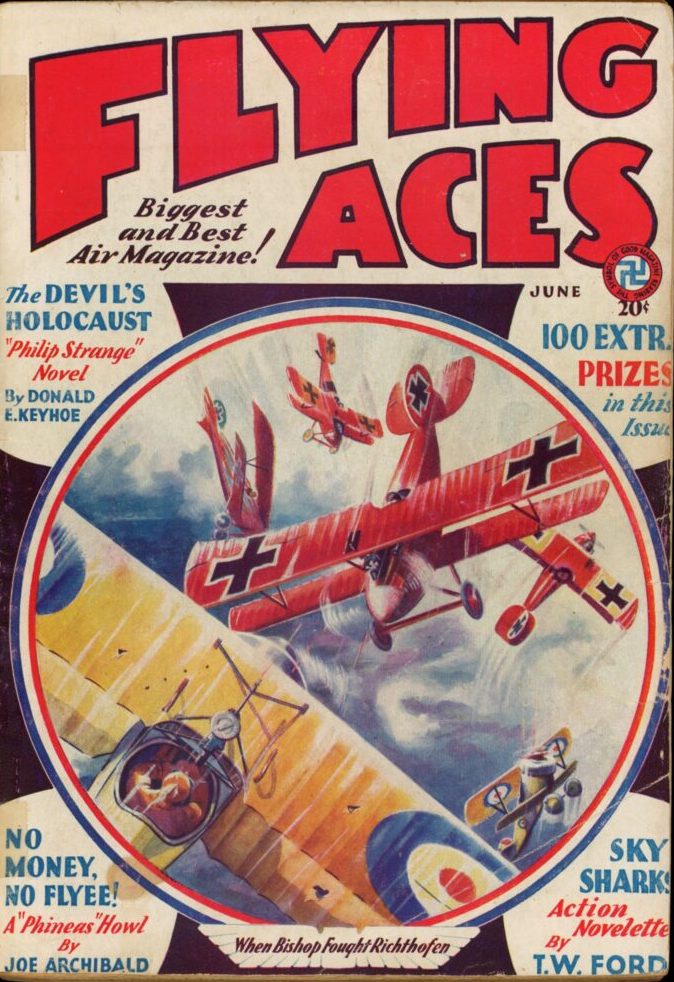 That sound can only mean one thing—that Bachelor of Artifice, Knight of Calamity and an alumnus of Doctor Merlin’s Camelot College for Conjurors is back to vex not only the Germans, but the Americans—the Ninth Pursuit Squadron in particular—as well. Yes it’s the marvel from Boonetown, Iowa himself—Lieutenant Phineas Pinkham!
Phineas Pinkham and his hut mate Bump Gillis are sent over to take out a German supply dump in Joe Archibald’s “No Money, No Flyee!” from the June 1932 Flying Aces.
Experience had taught Major Rufus Garity’s boys not to believe a word Phineas “Carbuncle” Pinkham said. And that was why, when he came back with the news that a squadron of Pfalz ships had moved into their sector, they thought it was a Pfalz alarm!

“Pride of the Pinkham’s” by Joe Archibald
“HAW-W-W-W-W!” 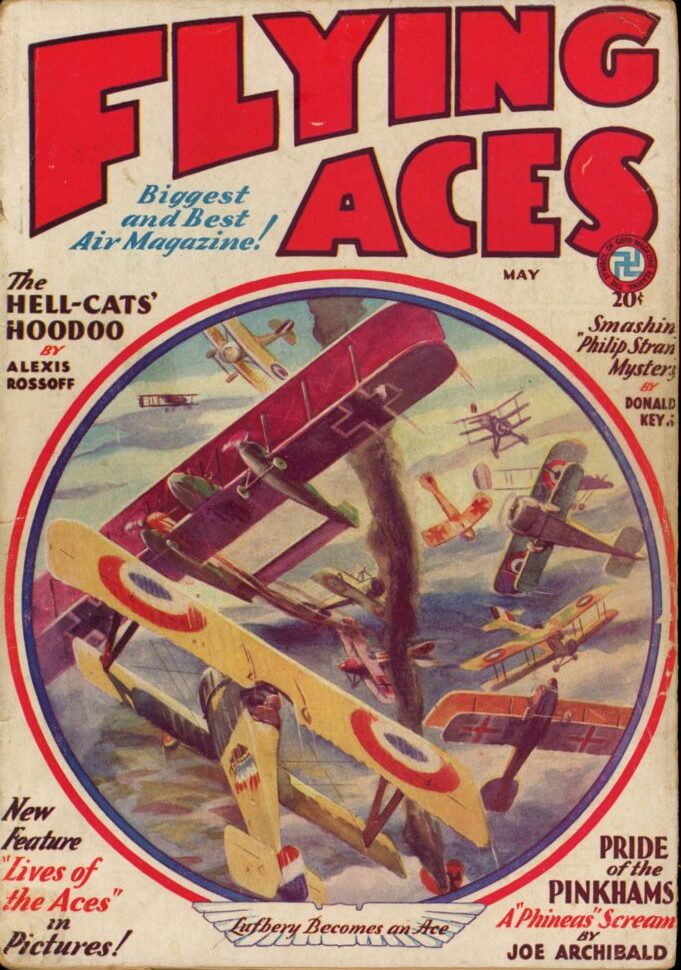 That sound can only mean one thing—that Bachelor of Artifice, Knight of Calamity and an alumnus of Doctor Merlin’s Camelot College for Conjurors is back to vex not only the Germans, but the Americans—the Ninth Pursuit Squadron in particular—as well. Yes it’s the marvel from Boonetown, Iowa himself—Lieutenant Phineas Pinkham!
Phineas Pinkham meets his match when the 9th Pursuit’s latest replacement in the form of one Lieutenant Monk Flanagan, once known as Perfesser Merlin the Great of the Hipperdrome Vodyville Circuit, arrives. Poor Phineas gets a taste of his own medicine—he can certainly dish it up, but can he take it? Find out in Joe Archibald’s latest Phineas mirthquake, “Pride of the Pinkhams” from the May 1932 Flying Aces.
One Phineas “Carbuncle” Pinkham to a squadron would be enough in any man’s war—according to Major Rufus Garrity. But somebody back at Wing thought differently when he assigned Lieutenant Monk Flanagan, late of the Hippodrome Vaudeville Circuit, to the Ninth Pursuit!

“From Spad to Worse” by Joe Archibald
“HAW-W-W-W-W!” 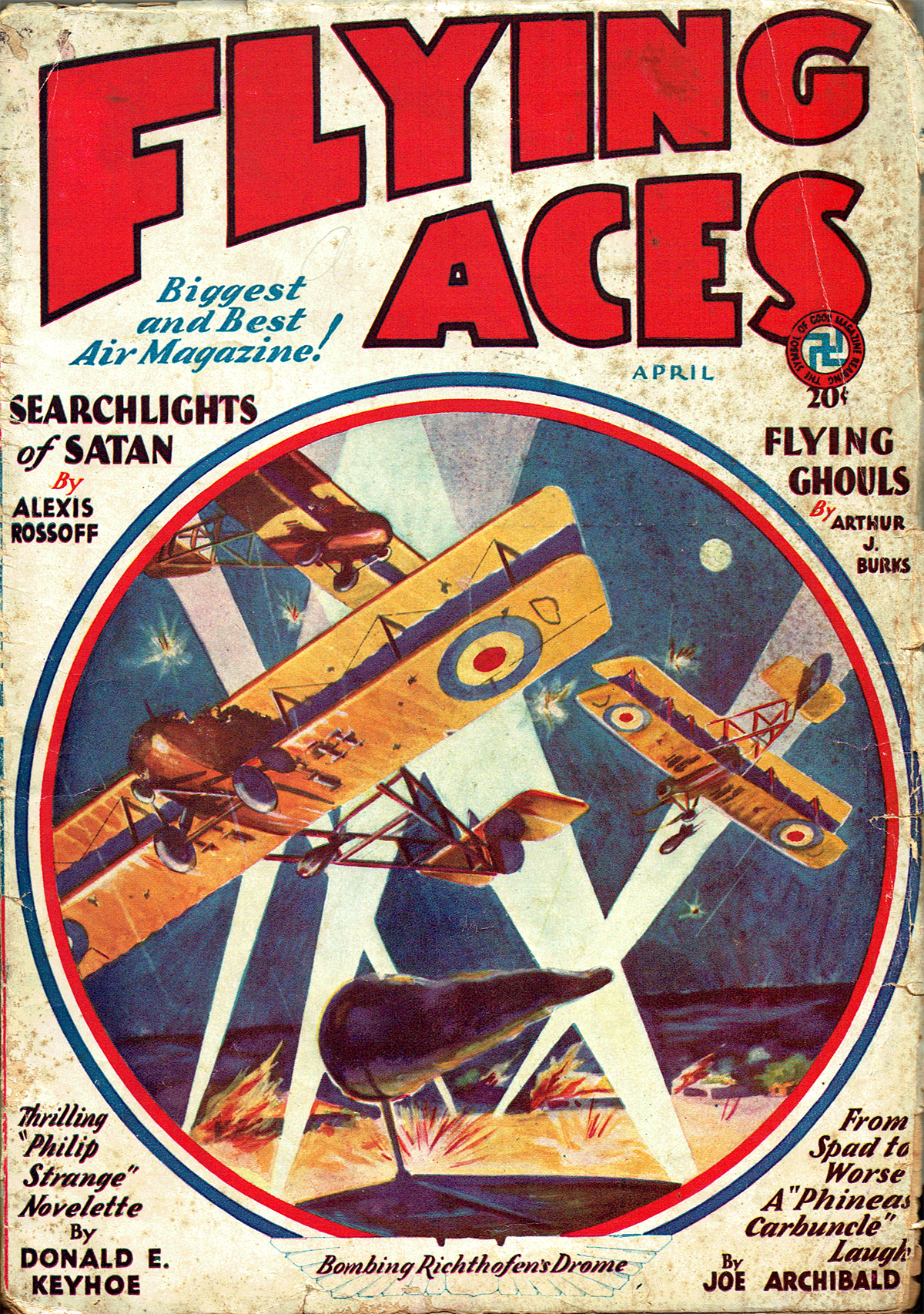 That sound can only mean one thing—that Bachelor of Artifice, Knight of Calamity and an alumnus of Doctor Merlin’s Camelot College for Conjurors is back to vex not only the Germans, but the Americans—the Ninth Pursuit Squadron in particular—as well. Yes it’s the marvel from Boonetown, Iowa himself—Lieutenant Phineas Pinkham!
Phineas Pinkham was ordered to take two weeks leave or else face not only the wraith of The Old Man, but a Court Martial to boot. The Boonetown jokester couldn’t and the inactivity and found a way to get back in the war and put an end to the Allies Drachen problem as well.
Two weeks’ leave and no Spad to fly anywhere in—what do you do in a case like that? Easy—just take a leaf from Phineas “Carbuncle” Pinkham’s book and go—
“Too Good for Hanging” by Joe Archibald
“HAW-W-W-W-W!” 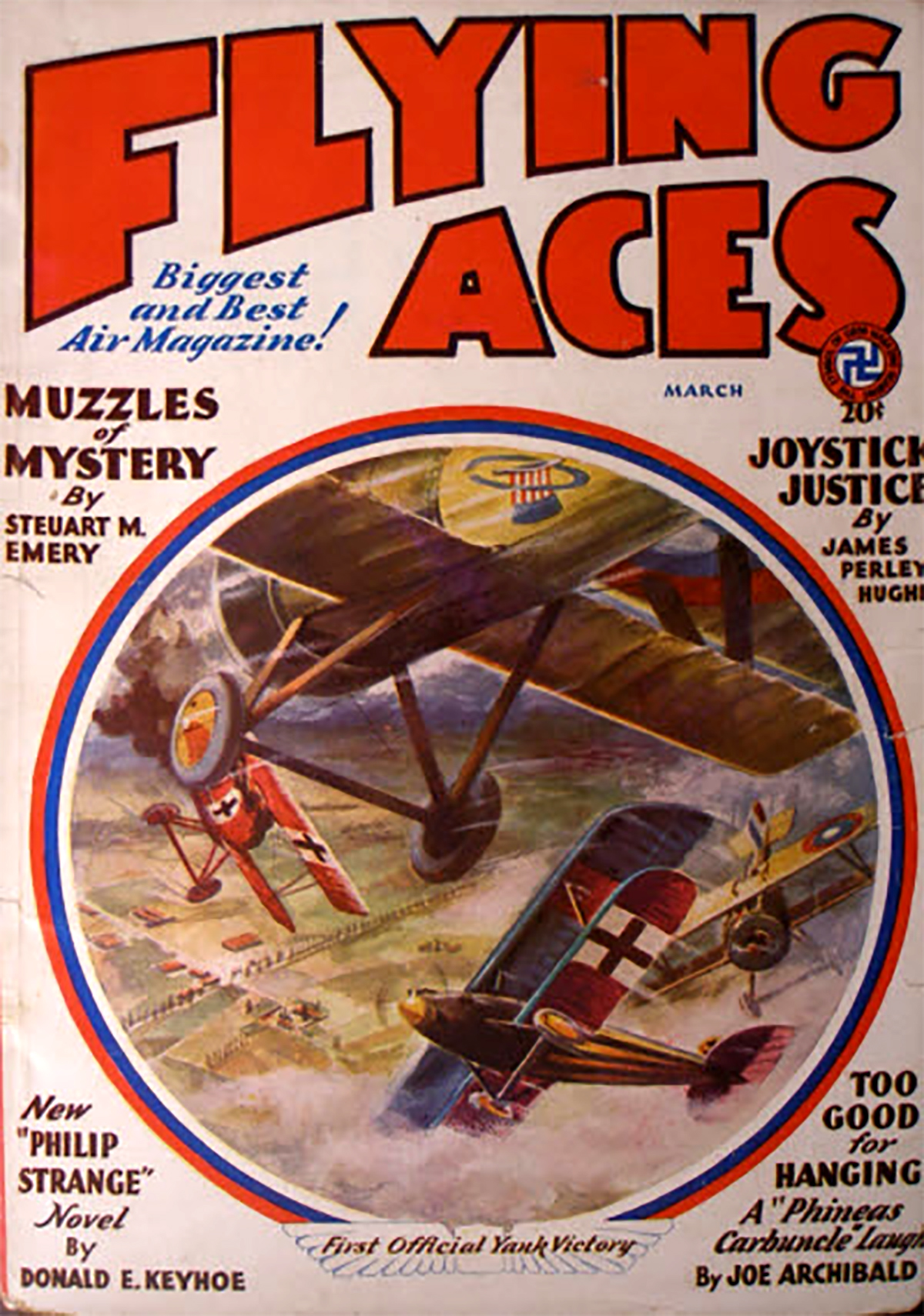 That sound can only mean one thing—that Bachelor of Artifice, Knight of Calamity and an alumnus of Doctor Merlin’s Camelot College for Conjurors is back to vex not only the Germans, but the Americans—the Ninth Pursuit Squadron in particular—as well. Yes it’s the marvel from Boonetown, Iowa himself—Lieutenant Phineas Pinkham!
When Phineas “Carbuncle” Pinkham cracked up a Spad, it stayed cracked! Yes, Major Garrity was right. If Phineas had been twins, the Allies would have, been in the hands of receivers!
“A Flyer in Tin” by Joe Archibald
“HAW-W-W-W-W!” 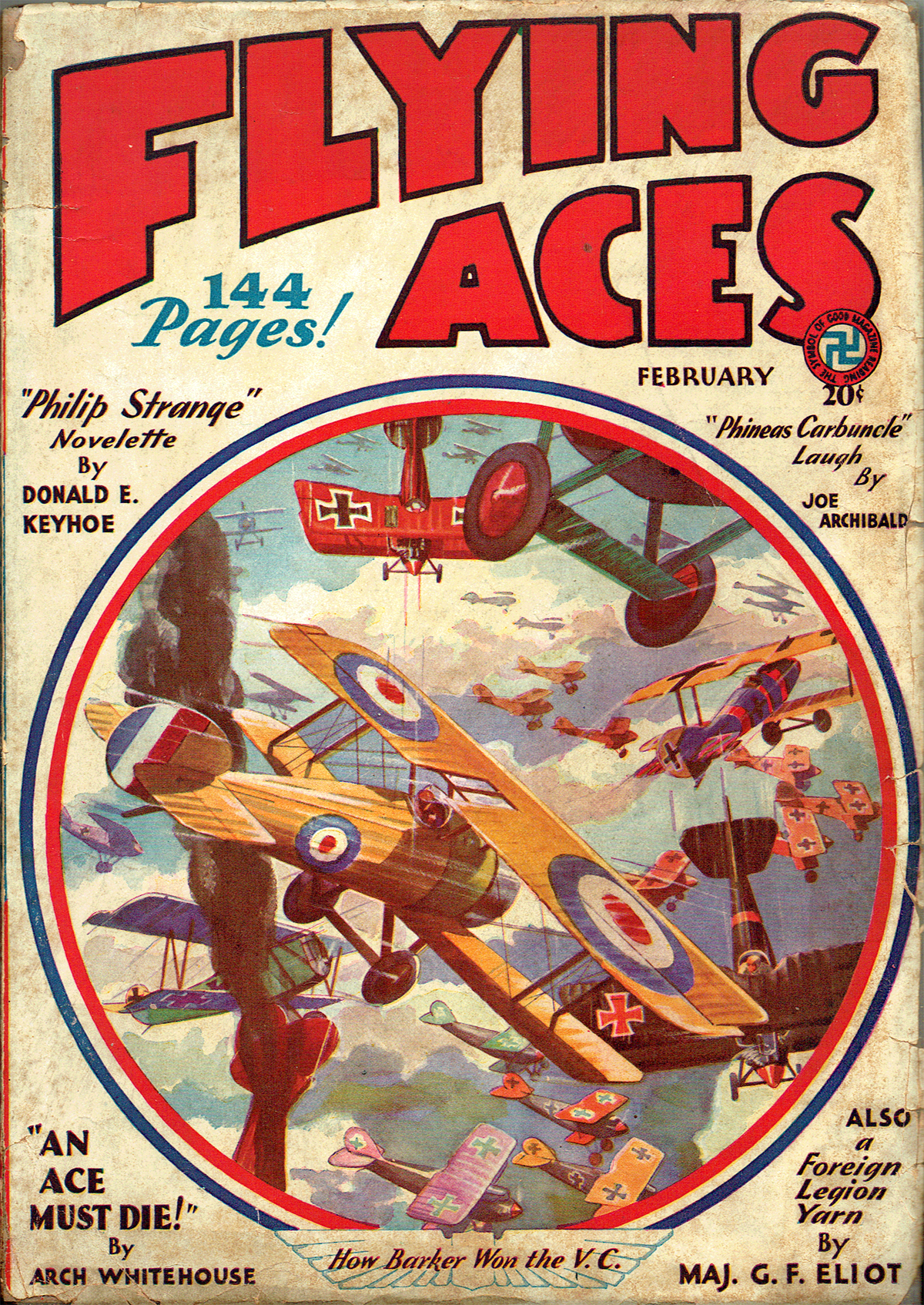 That sound can only mean one thing—that Bachelor of Artifice, Knight of Calamity and an alumnus of Doctor Merlin’s Camelot College for Conjurors is back to vex not only the Germans, but the Americans—the Ninth Pursuit Squadron in particular—as well. Yes it’s the marvel from Boonetown, Iowa himself—Lieutenant Phineas Pinkham!
The Ninth was in the midst of a miserable mess. Everything tasted as if it had been sprayed with insect exterminator. Jerry had been making things very unpleasant all day. On the table in the operations room was a vitriolic message from G.H.Q. Major Garrity had not opened it. He knew what it contained. If he had read it, he probably would have killed Phineas Pinkham, and he needed every man, brainless or otherwise, in the party to come. They had been unable to spot the location of a gun battery that was wreaking havoc with every plane from every squadron in the area. They had dropped Bombs all over hell, but the battery was still doing its business.
The Limeys weren’t sending Phineas “Carbuncle” Pinkham any birthday cards, but he didn’t think they were mean enough to shoot at him—even in fun. And that wasn’t the only mistake Phineas made! Just consult Major Garrity!