



“Lives of the Aces in Pictures – Part 44: Major Charles J. Biddle” by Eugene Frandzen
Starting in the May 1932 issue of Flying Aces and running almost 4 years, Eugene Frandzen’s “Lives of the Aces in Pictures” was a staple of the magazine. Each month Frandzen would feature a different Ace that rose to fame during the Great War. This time around we have one of the great American Aces—Major Charles J. Biddle!
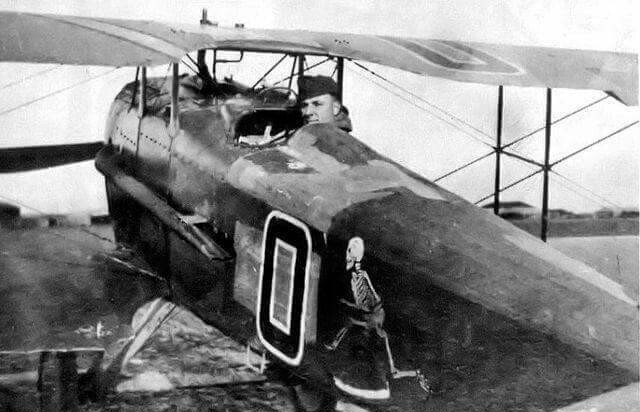
Major Biddle was one of that small number of American aviators who had actually had front line battle experience when his own country entered the war. Even before there were any indication of his own country taking part, he sailed for France and enlisted in the French Army, where he was eventually transferred for aviation tralning. When the La Fayette Escadrille was formed, he wan invited to become a member. In that organization he won his commission as a Lieutenant in recognition of his ability and courage.
When General Pershing formed the American Air Service and put Colonel William Mitchell in command of the air squadrons on the front, the able Colonel promoted Biddle to major and save him command of the 13th Pursuit Squadron, which he formed, organized and took to the front to make a distinguished record.
Though not supposed to lead his men in battle, he always did so. Just before the armistice, he left the 13th Squadron to become commander of the 4th Pursuit Group. By wars end he had amassed 7 victories and been awarded the Legion of Honor, Croix de Guerre, Distinguished Service Cross and Order of Leopold II.
After the war, Biddle wrote a book entitled The Way of the Eagle (1919) and joined the family law firm in 1924—becoming a partner by 1925 and a major force within the firm through the fifties.
He died in 1972 at “Andalusia”—the family estate on the Delaware River in lower Bensalem Township, Pennsylvania.
- Download “Lives of the Aces in Pictures – Part 44: Major Charles J. Biddle” (February 1936, Flying Aces)
As a bonus—
- Download “The Way of the Eagle” (June 1919)
 a story from the pen of C.M. Miller! Miller is known to Age of Aces readers as the author behind
 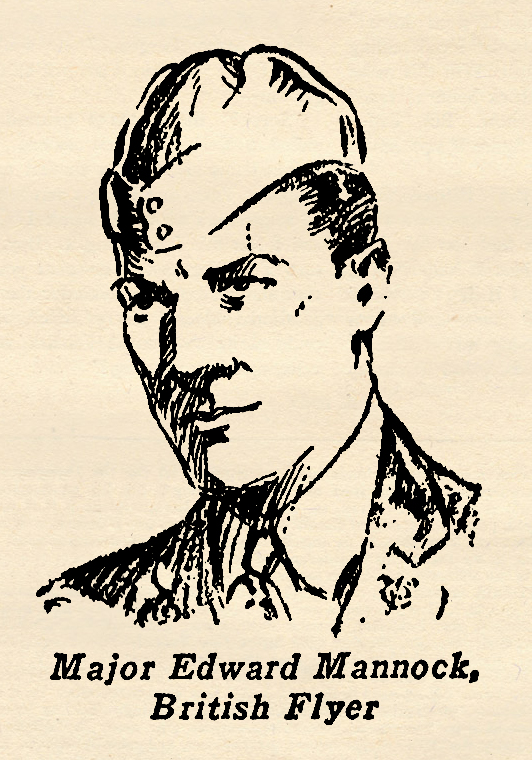 the British postal department, Turkey, when the war broke out. He was immediately made a prisoner by the Turks, and spent almost a year in an enemy camp before he was repatriated to England in 1915. He first served in the Royal Engineers, was commissioned as a lieutenant and transferred to the flying Corps in August, 1916. Major McCudden, the great British Ace, was his first instructor.
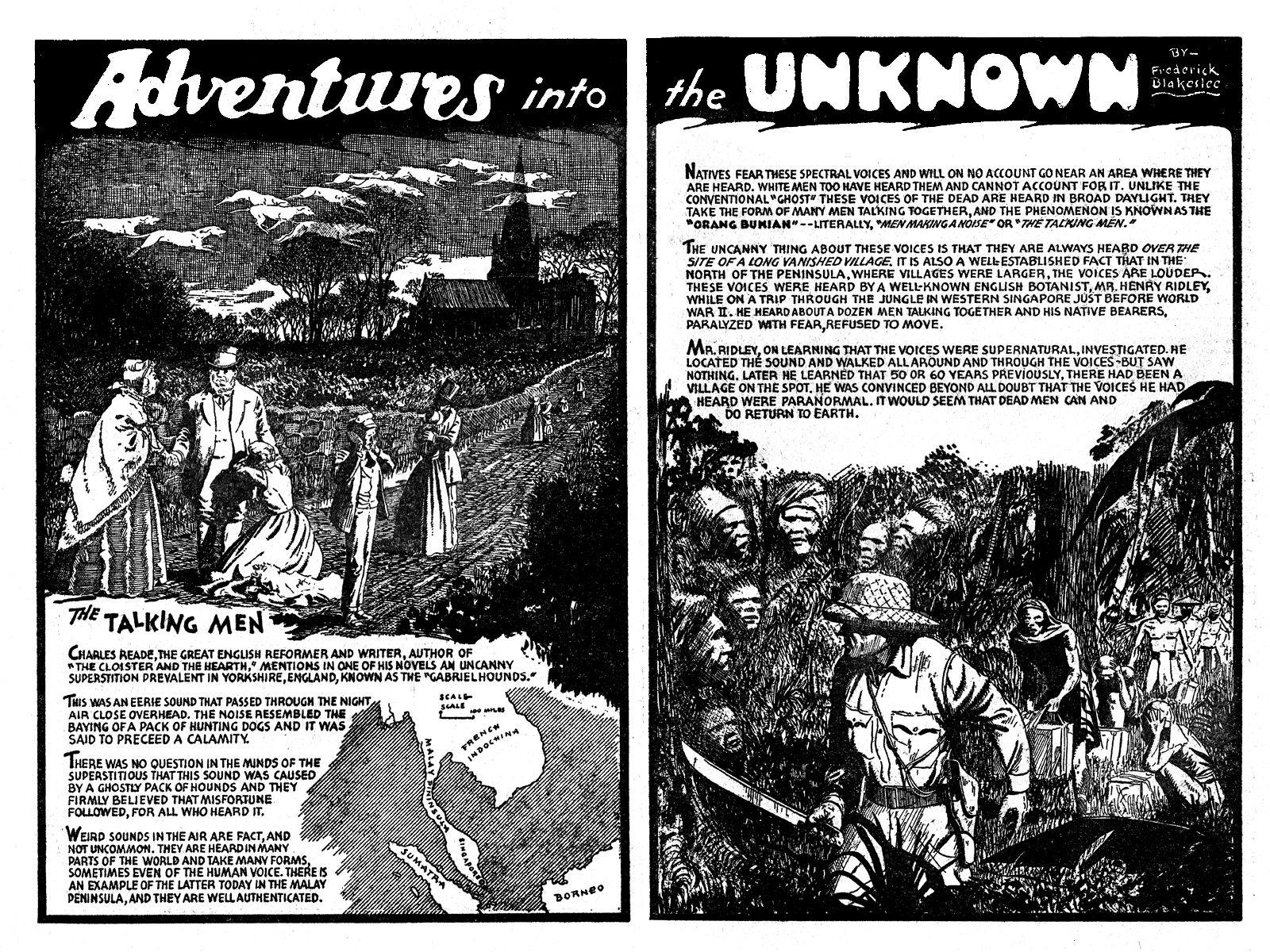
 “Adventures Into The Unknown!” Blakeslee published fourteen installments of his two-page illustrated looks into the Unknown between March 1948 and October 1950. This time around Mr. Blakeslee examines the phenomenon known as ‘Orang Bunian’—or ‘the Talking Men.’ It is the hearing of the voices of the dead in broad daylight—usually over the site where there had once been a village! From the August 1949 issue of Dime Mystery Magazine it’s “Adventures Into The Unknown: The Talking Men!”
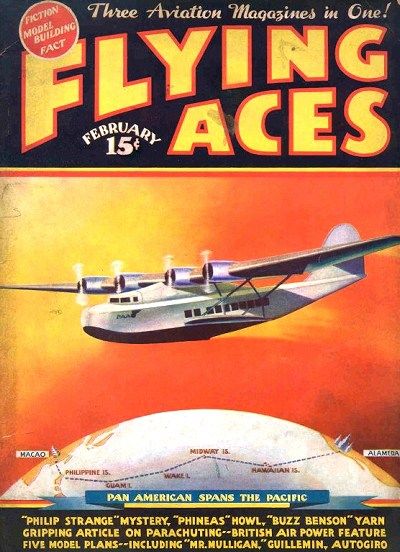 That sound can only mean one thing—that Bachelor of Artifice, Knight of Calamity and an alumnus of Doctor Merlin’s Camelot College for Conjurors is back and this time the marvel from Boonetown is caught between two woman and finds himself the guest of honor at a T.N.T. party! From the February 1936 issue of Flying Aces it’s “T.N.T. Party” (with Phineas serving the lemon!).
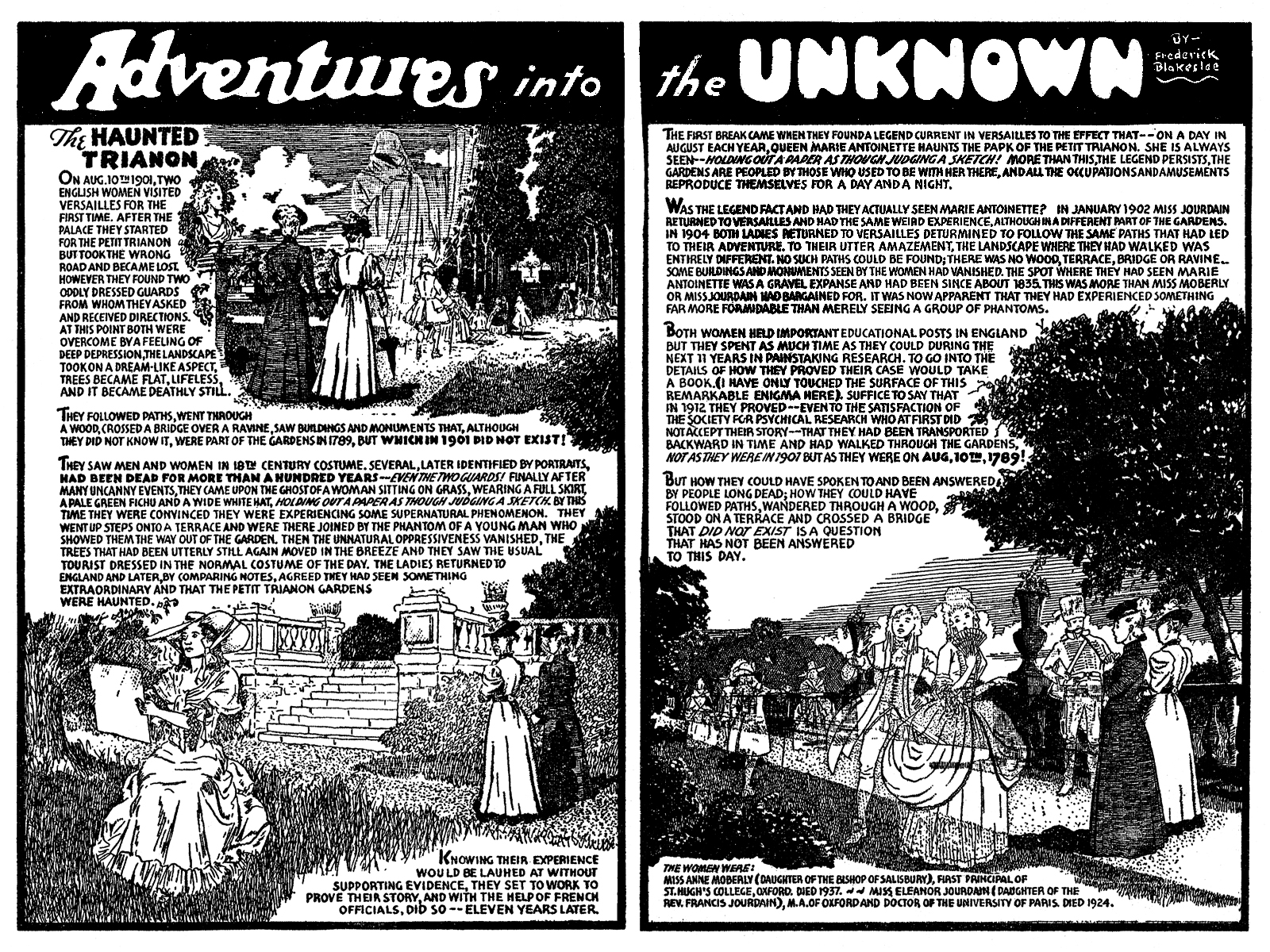
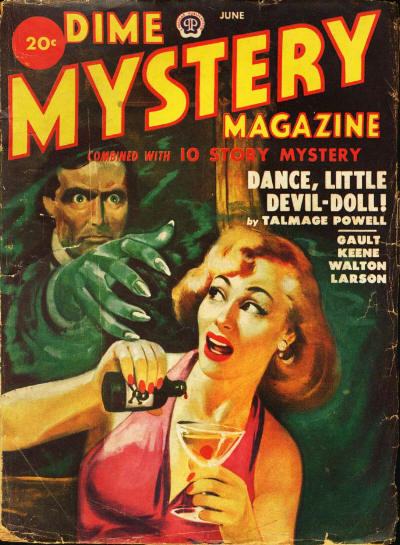 “Adventures Into The Unknown!” Blakeslee published fourteen installments of his two-page illustrated looks into the Unknown between March 1948 and October 1950. This time around Mr. Blakeslee delves into one of the most famous and most controversial incidents in the history of the occult. It’s the story of two English school teachers and what happened to them on a trip to Versailles in August 1901. Is what they experienced a paranormal encounter or possibly some sort of time slip? You be the judge—from the June 1949 issue of Dime Mystery Magazine it’s “Adventures Into The Unknown: The Haunted Trianon!”
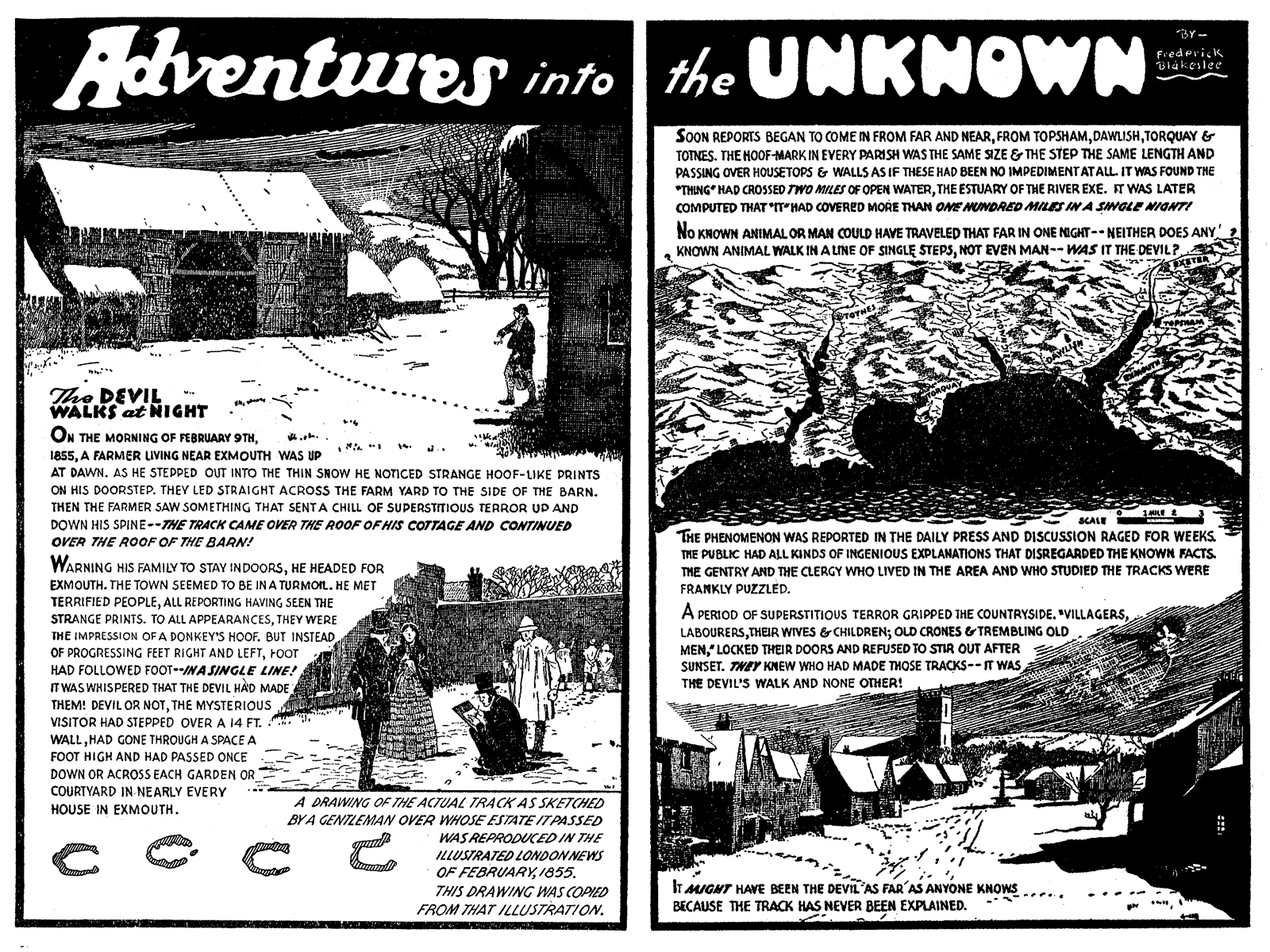
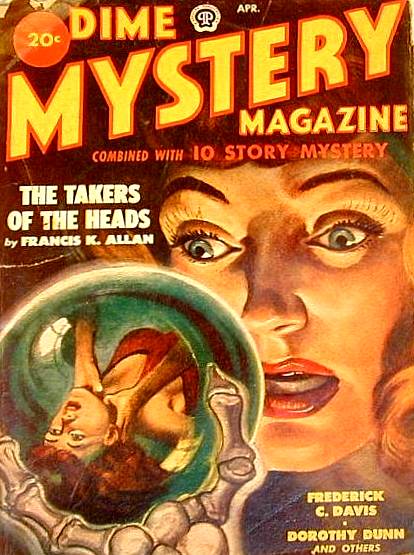 “Adventures Into The Unknown!” Blakeslee published fourteen installments of his two-page illustrated looks into the Unknown between March 1948 and October 1950. This time around Mr. Blakeslee delves into possible evidence of the Devil appearing on a cold snowy night in 1855 in Exmouth—from the April 1949 issue of Dime Mystery Magazine it’s “Adventures Into The Unknown: The Devil Walks at Night!”
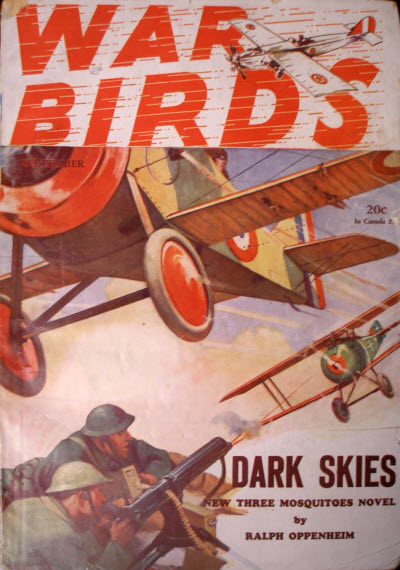 a story from the pen of a prolific pulp author O.B. Myers! Myers was a pilot himself, flying with the 147th Aero Squadron and carrying two credited victories and awarded the
 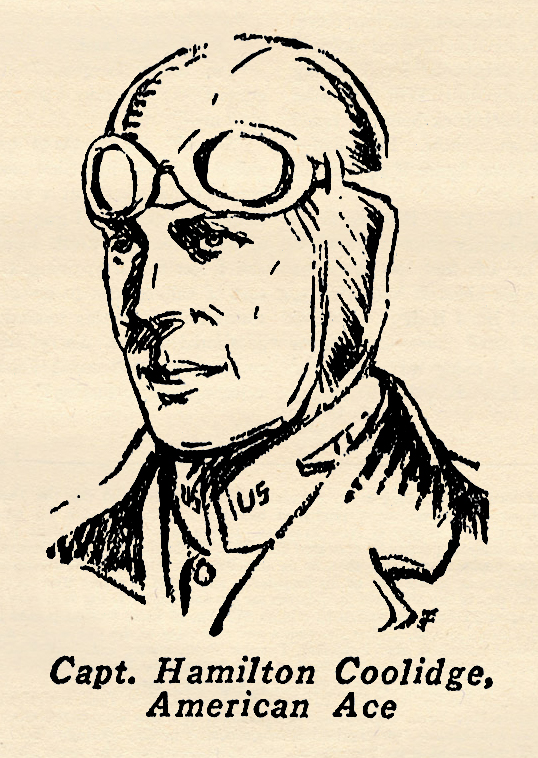 Hamilton Coolidge was well known throughout the land even before the war began. He enlisted in the aviation section of the Signal Corps and got his primary flight training at Mineola along with Quentln Roosevelt, his hoy-hood friend.
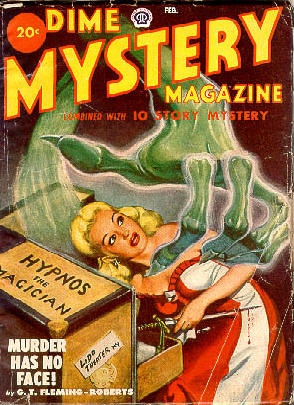 “Adventures Into The Unknown!” Blakeslee published fourteen installments of his two-page illustrated looks into the Unknown between March 1948 and October 1950. This time around Mr. Blakeslee delves into the stories of the evil ghosts of the Borley Rectory—often referred to as the most haunted house in all of England. From the pages of the February 1949 issue of Dime Mystery Magazine, it’s “Adventures Into The Unknown: The Evil Ghosts of Borley!”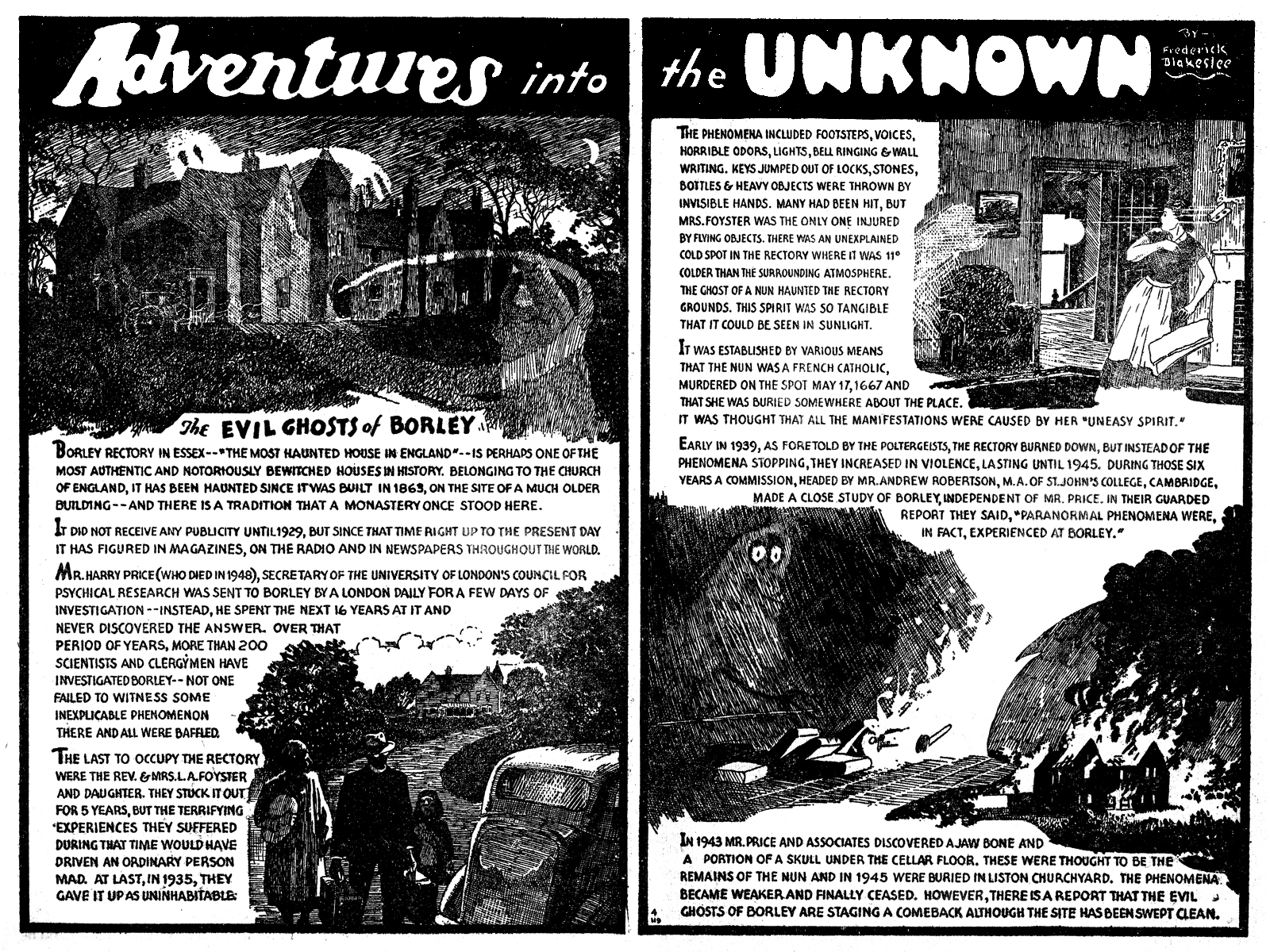
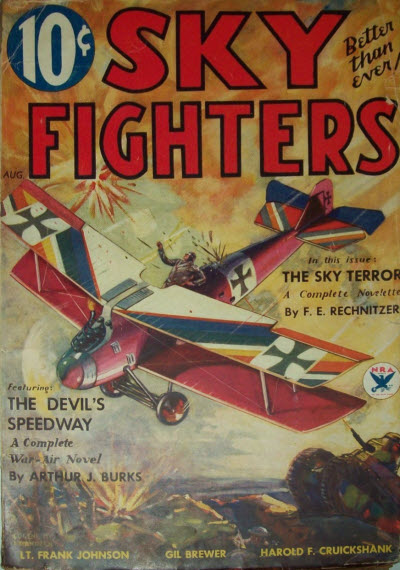 Silent Orth—ironically named for his penchant to boast, but blessed with the skills to carry out his promises—takes on a perilous mission to bomb a German ammunition dump. Using all the tricks and flying skills up his sleeve, Orth races to drop his bombs before the entire German Air force comes down on his neck. From the pages of the August 1934 issue of Sky Fighters, it’s “Orth’s Flight Against Time!”
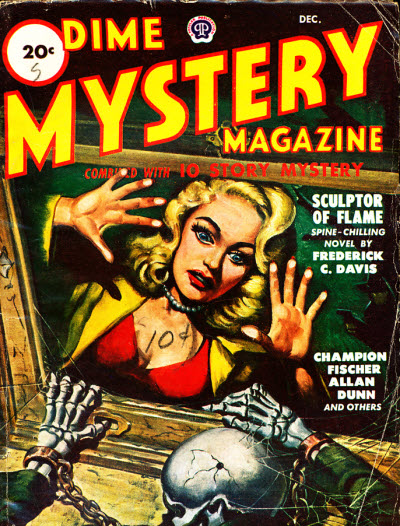 “Adventures Into The Unknown!” Blakeslee published fourteen installments of his two-page illustrated looks into the Unknown between March 1948 and October 1950. With the demise of SHOCK after just three issues, “Adventures Into The Unknown” moves to the long-running Dime Mystery Magazine! In the December 1948 installment, Blakeslee focuses on the Isle of Man and the reported spectral goings on in “Adventures Into The Unknown: The Spectre Hound in Man”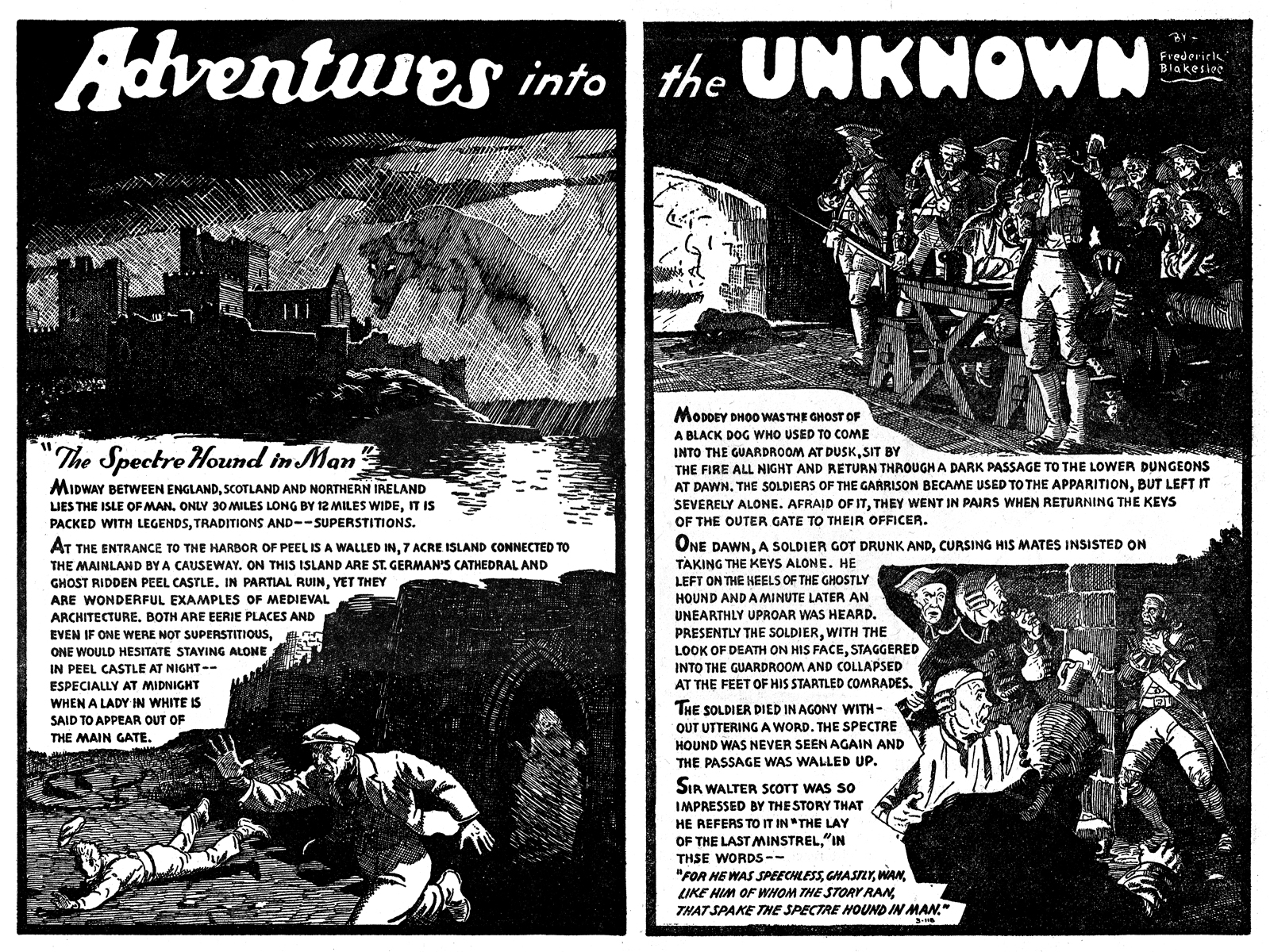
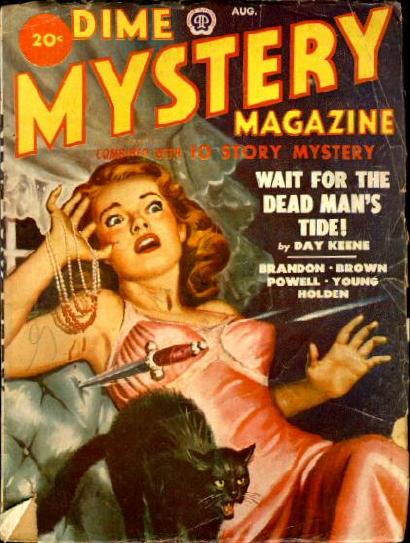
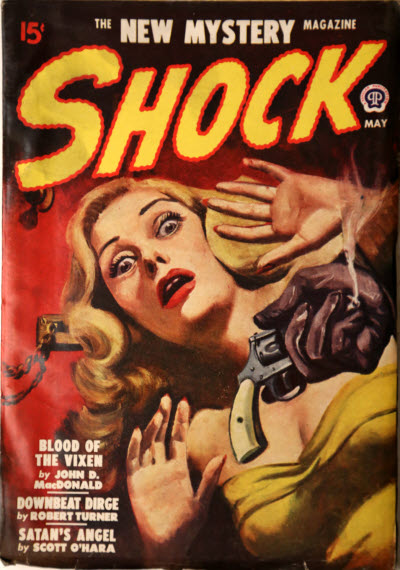 “Adventures Into The Unknown!” Blakeslee published fourteen installments of his two-page illustrated looks into the Unknown between March 1948 and October 1950. From the pages of the second issue of SHOCK, Frederick Blakeslee looks into the ghosts of Mont St. Michel—an island off the coast of Normandy connected to the mainland by a causeway that is submerged at high tide and the site of one of the gorier battles of the Hundred Years’ War. From May 1948 it’s “Adventures Into The Unknown: The Ghosts of Mont St. Michel!”
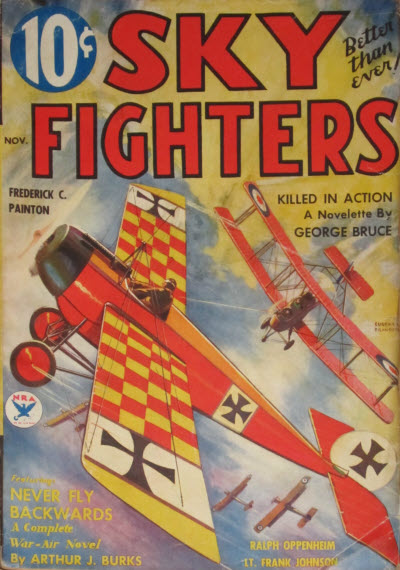 a story from the pen of a prolific pulp author and venerated newspaper man—Frederick C. Painton. In “Flaming Death” Painton gives us a pulse-stirring war-air novelette—”B” Flight’s mascot, Babe Norwood, the squadron’s youngest flyer, is shot down with incendiary bullets! All of the fighting nations had agreed to ban their use—so rigidly were they banned that any flyer caught using them was instantly stood against the wall with barely the mockery of a drum-head court-martial. The squadron uses all avenues of the services to hunt down the culprit and bring him to justice! From the November 1934 Sky Fighters it’s Frederick C. Painton’s “Flaming Death!”
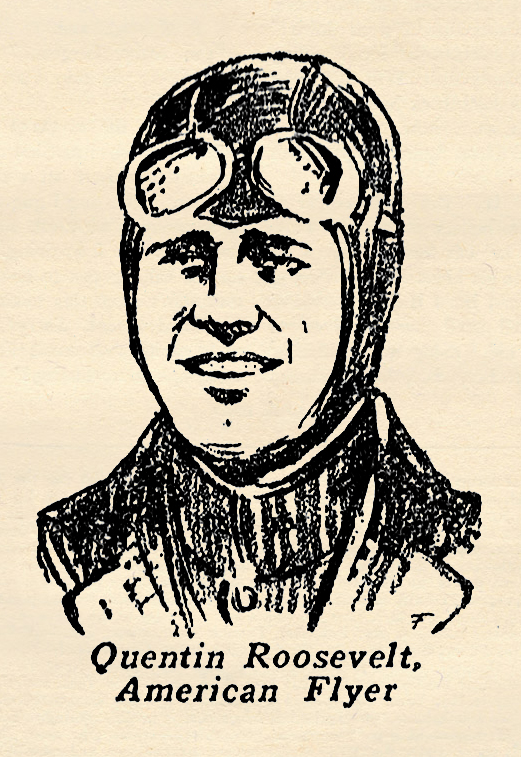 at Oyster Bay, N.Y., the fourth and last son of a famous fighting family, November 19th, 1897, six weeks after his illustrious father, Theodore Roosevelt, had left to fight for the freedom of Cuba. Although handicapped by a permanently injured back, he succeeded by dint of cunning and painful effort in fooling the medical examiners and being accepted for training as an aviator.