I’VE been researching Ralph Oppenheim, creator and author of The Three Mosquitoes, for six years or so now and I’m always thrilled when a new lead shows up. Recently I did my usual Oppenheim search on newspapers.com to see if anything would show up in any new papers they had added since the last time I had searched. Lo and behold, there were a number of new search results with the top ones being from newspapers dating from 1926 and showing “Ralph Oppenheim—Boy Biog” in the preview window!

These new entries were all from the Haldeman-Julius Weekly. I clicked the link. The Haldeman-Julius Weekly was a 4 page weekly newspaper that was, in fact, an ad for Haldeman-Julius’ library of Little Blue Books with articles and ads for current and upcoming publications. Foremost among the upcoming publications was their new literary quarterly journal (they were also starting up a monthly to help cover all their bases). It was in the ad for the new Haldeman-Julius Quarterly that they referenced Ralph Oppenheim as a “Boy Biographer.”
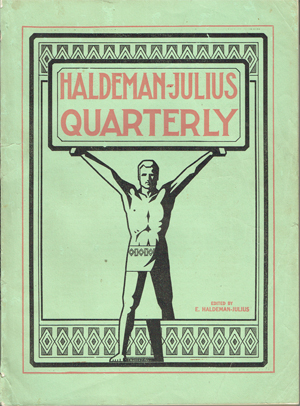 The premiere issue of the Quarterly (October 1926) featured many articles from current and upcoming publications, including Ralph’s “The Love-Life of George Sand.” In some of the early press for the article, they refer to Ralph as being sixteen years old—and, although he could have written it when he was sixteen—he most likely wrote it when he was eighteen, since the hype for it started before he turned nineteen. Ralph’s “The Love-Life of George Sand” article is actually just a reprinting of the 64 page little blue book of the same name. Both the Little Blue Book and the Quarterly were published in 1926.
|

From the March 20th, 1926 issue of Haldeman-Julius Weekly
|
One big difference between the Quarterly and Little Blue Book versions is in the illustrations. The Little Blue Book is not illustrated, while the Quarterly version is profusely illustrated. Foremost among them is A full page portrait of George Sand drawn by Gertrude Oppenheim, Ralph’s Step-Mother. Fred C. Rodewald provided the spot illustrations that pepper the remaining pages of the article.
|

George Sand by Gertrude Oppenheim in a more straightforward style then her portrait of her husband, Ralph’s father, James Oppenheim from the frontispiece of The Sea (1924).
|
But, better yet, from the research angle, the article starts with a full page introduction for it’s author—complete with a photo of the nineteen year old Ralph Oppenheim! So let’s meet Ralph Oppenheim, boy biographer. . . .
Ralph Oppenheim
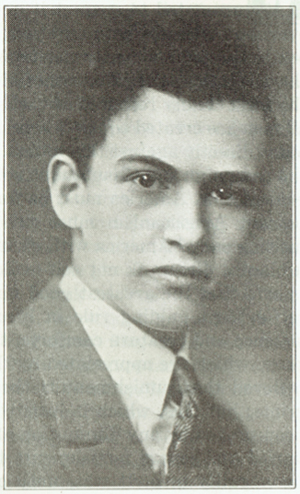 THE author of “The Love-Life of George Sand” is nineteen years old. Here is one of America’s future authors already at work, beginning to express himself with freshness and vigor, with finish and style; an artist to the tips of his fingers. It is one of the purposes of the Quarterly to bring out the best work of young America, and in accepting Ralph Oppenheim’s study we believe we are giving space to material of first-rate significance. This essay compares favorably with the best work we have ever accepted from mature, experienced writers. We did not take Ralph Oppenheim’s manuscript because he happens to be only a boy in years; rather were we influenced by the sureness of his touch. His age came up for comment only after we were satisfied that his work was well done. . . The Quarterly boasts that all in America is not jazz, noise and fury; a minority speaks vigorously and clearly, with intelligence, understanding, humor and craftsmanship. Ralph’s essay helps prove this assertion. Read young Oppenheim’s study and you will realize how important it is for the United States to have a magazine the purpose of which will be to go out and seek for the best from the talented and intelligent minority, bringing out new gifts, fresh viewpoints and sound work. First credit must, of necessity, go to Ralph himself; second credit must go to his artist-mother, Gertrude Oppenheim, and his poet father, James Oppenheim; third credit, in all fairness, must go to the Quarterly for opening its columns to a new voice. America will hear much from Ralph Oppenheim. He has something to say; he knows how to say it; he is a civilized human being, a complete answer to the charge that all of America has been reduced to stifling mediocrity, to unimaginative standardization. There is enough to complain about, in all truth, without crying that all is lost. Let us protest against the viciousness and stupidity of the superstitious majority, the hypocrisy and cowardice of its leaders, the mawkishness of our bunk-ridden millions—yes, let us aim our spitballs at our shams and fakirs, but let us, by all means, recognize worthy talent when we see it and lend an ear to the emerging youngsters who are breaking away from the herd and learning to stand as free individuals. Turn now to Ralph’s essay. At first you will marvel that it was written by a boy, but after a few paragraphs you will forget its author and fly along with his tonic and captivating work. . . . The portrait of George Sand was drawn especially for the Quarterly by Mrs. James Oppenheim, Ralph’s mother.
According to the ads in the Weekly for the the Quarterly, Oppenheim’s George Sand article proved very popular with the readers and was highly promoted each week in ads for the first issue of the Quarterly. This popularity led to another of Oppenheim’s books being included as an article in the second issue.
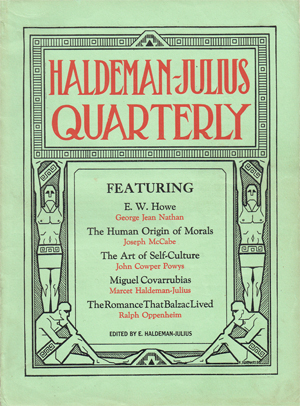 The second issue of the Haldeman-Julius Quarterly (January 1927) featured Oppenheim’s “The Romance That Balzac Lived: How The Great Interpreter of the Human Comedy Lived and Loved” (a reprinting of The Romance That Balzac Lived: Honore de Balzac and the Women He Loved (lbb-1213, 1927)). The article was nicely illustrated with a daguerreotype of Balzac and spot illustrations by Fred C. Rodewald, but no introductory page about Oppenheim.
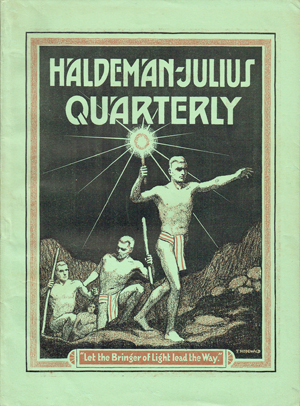 Oppenheim seemed to be a role with the Haldeman-Julius Quarterly readers (or at least their editors), for the third issue (April 1927) once again featured an article by Oppenheim. This time it was his treatise on his generation: “The Younger Generation Speaks: An American Youth Tells About Its Attitude Toward Life” (a reprinting of The Younger Generation and Its Attitude Toward Life (lbb-834, 1927)). In addition to numerous spot illustrations and photos, the article also featured an introduction to the author, once again using the same photo of Oppenheim as before.
The Spokesman of Youth
RALPH OPPENHEIM, the young writer who lives in New York—in storied Washington Square, with his father, James Oppenheim—is, in this issue of the Quarterly, a spokesman for American youth. Ralph Oppenheim is someone to be reckoned with, for he is a part of the younger generation in America and one of its thinkers who is now standing up to speak for it with a voice that surely must be heard. Ralph does not idealize and he is not enough of a cynic to color his assertions too much on the bitter side. He looks at youth and their present attitude toward modern life with clear eyes, and makes a fair estimate of what youth is doing and what may be expected from the young people who will soon be leaders among us. Some of the things that this young man has to say about himself and his fellows are harsh, and some of them are quite complimentary, but through all of his work you can depend upon it that Ralph Oppenheim is deeply sincere. Although not yet twenty, Ralph’s viewpoint has the compelling tone of maturity: he is not to be idly brushed aside as of no consequence. You will find that what he has to say is well worth reading, and considering; you will find yourself agreeing and disagreeing with him, and giving a great deal of thought to the ideas and facts which he offers you—and the degree of attention which you will give his work will after all be the best test of Ralph Oppenheim’s success as a spokesman for his generation.
By the time this third issue hit the stands, Oppenheim had already published five titles in Haldeman-Julius’ line of Little Blue Books and had switched gears—writing tales of daring pilots in the hell-skies of The Great War from his attic room in the House of Genius!
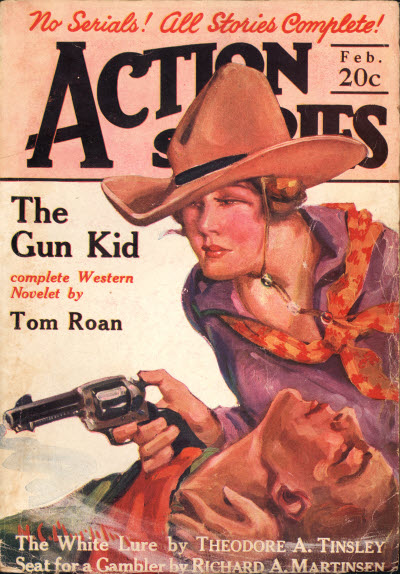 His first published story was a taunt tale of aviation and death he titled “Doom’s Pilot” in the pages of the February 1927 Action Stories! His second printed story—”A Parachutin’ Fool”—was another aviation tale, printed in the April 1927 issue of War Stories! He followed this up with—”Aces Down!”—in the July 1927 issue of War Stories—this was the story that introduced the world to that inseparable trio—The Three Mosquitoes!
The rest—as they say—is history.
Here is a facsimile copy of Ralph Oppenheim’s article on “The Love-Life of George Sand” from the premier issue of the Haldeman-Julius Quarterly:




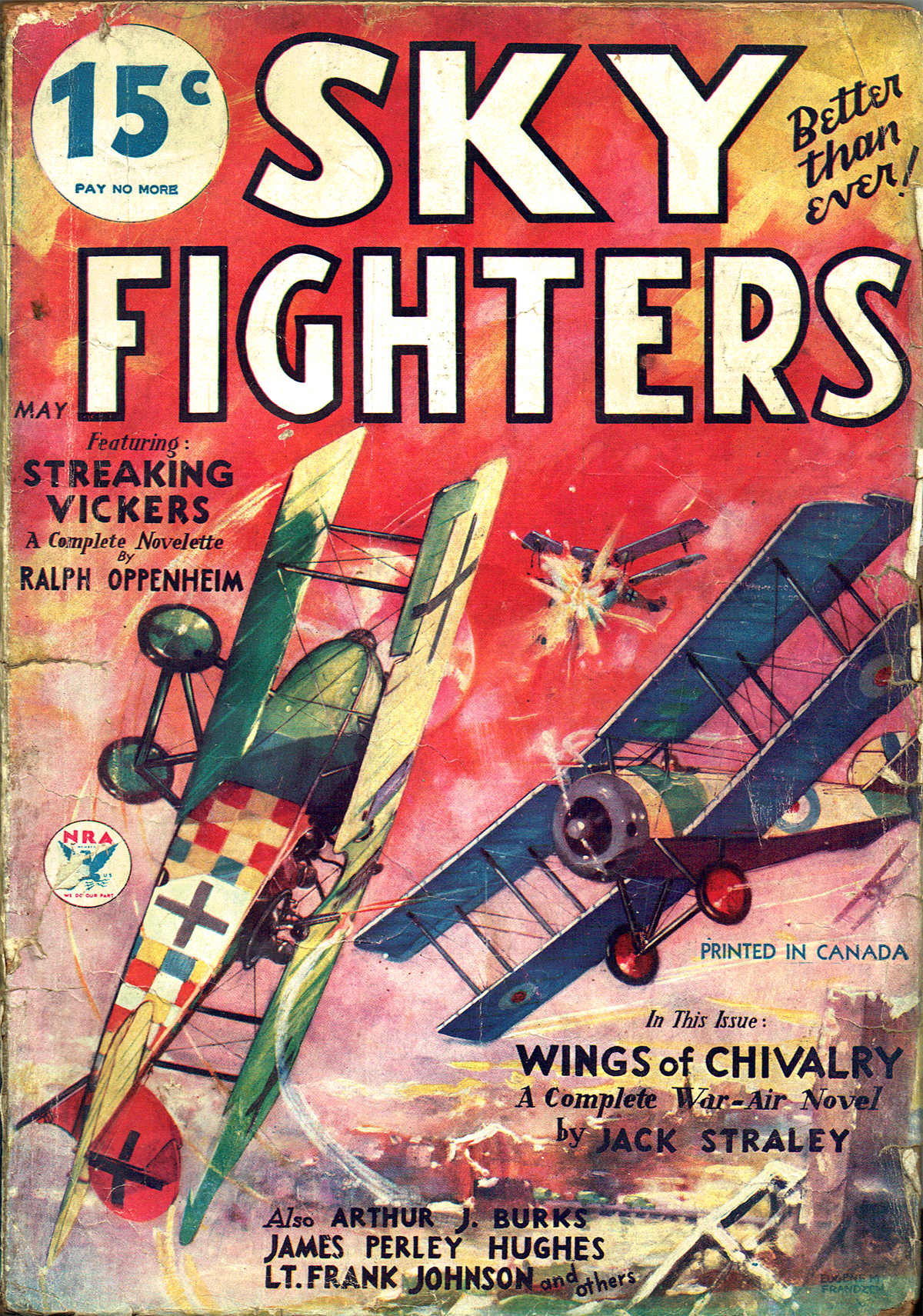 Mosquito Month we have a non-Mosquitoes story from the pen of Ralph Oppenheim. In the mid thirties, Oppenheim wrote a half dozen stories for Sky Fighters featuring Lt. “Streak” Davis. Davis was a fighter, and the speed with which he hurled his plane to the attack, straight and true as an arrow, had won him his soubriquet. Operating out of the 34th Pursuit Squadron, his C.O. sends him out to range the big guns to take out the enemy’s supply dump before the Hindenburg Push. From the May 1934 issue of Sky Fighters it’s “Streaking Vickers!”
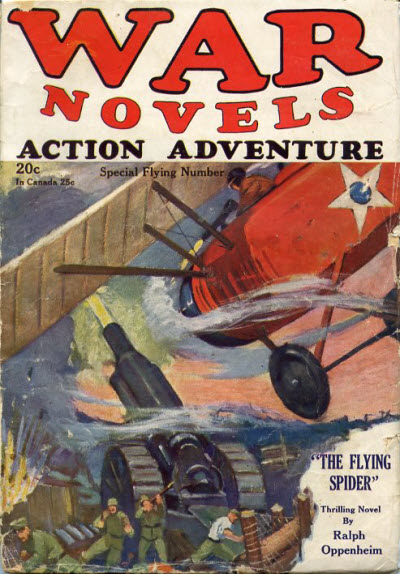 the third and final of three Ralph Oppenheim’s Three Mosquitoes stories we’re featuring this March for Mosquito Month! And this one’s a doozy! Who had not heard of that grim nickname—”The Spider”? It was the nickname of Germany’s most notorious spy—the plague and dread of the Allied powers. The whole Allied intelligence system was after this man, but they had never been able to catch him; he seemed to bear a charmed life. Kirby and his comrades had heard many rumors of his wild, hairbreadth escapades, but they had not known how truly deadly he was! And now the Three Mosquitoes found themselves caught in The Spider’s web! From the pages of the June 15th, 1929 issue of War Novels it’s Ralph Oppenheim’s “The Flying Spider!”
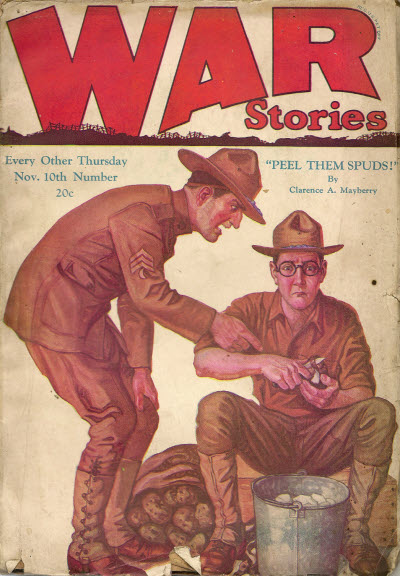 the second of three exciting tales of Ralph Oppenheim’s Three Mosquitoes we’re featuring this March for Mosquito Month! This week, The Three Mosquitoes past comes back to haunt them when the brother of the Black Devil, whom they dispatched in last week’s story, sends a challenge to Kirby in hopes of avenging his death!
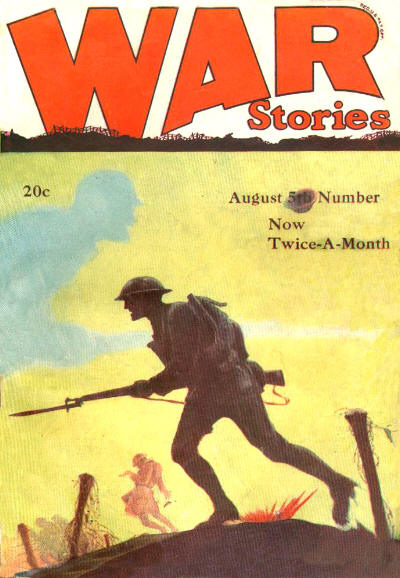 off the ground with what was believed to have been the first flight of the Three Mosquitoes. I say believed because according to both Robbin’s Index and the online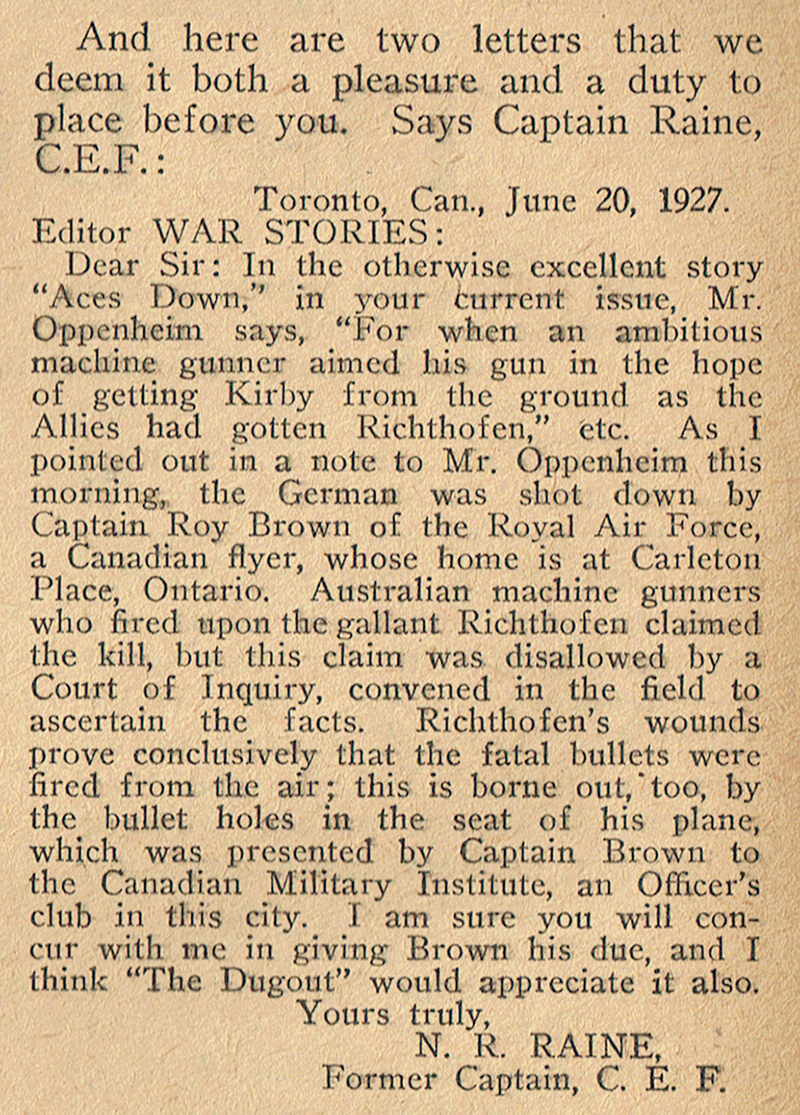
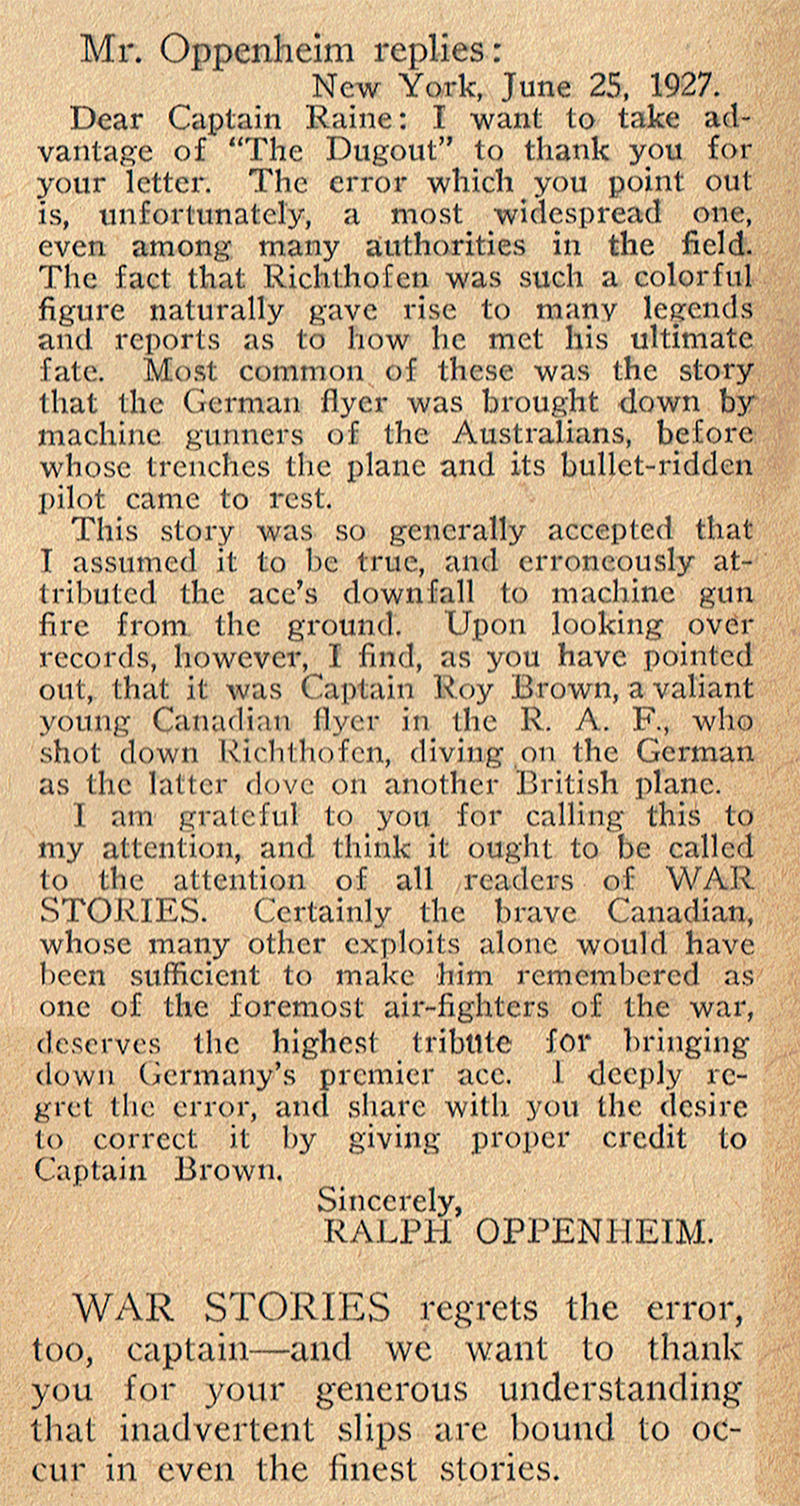
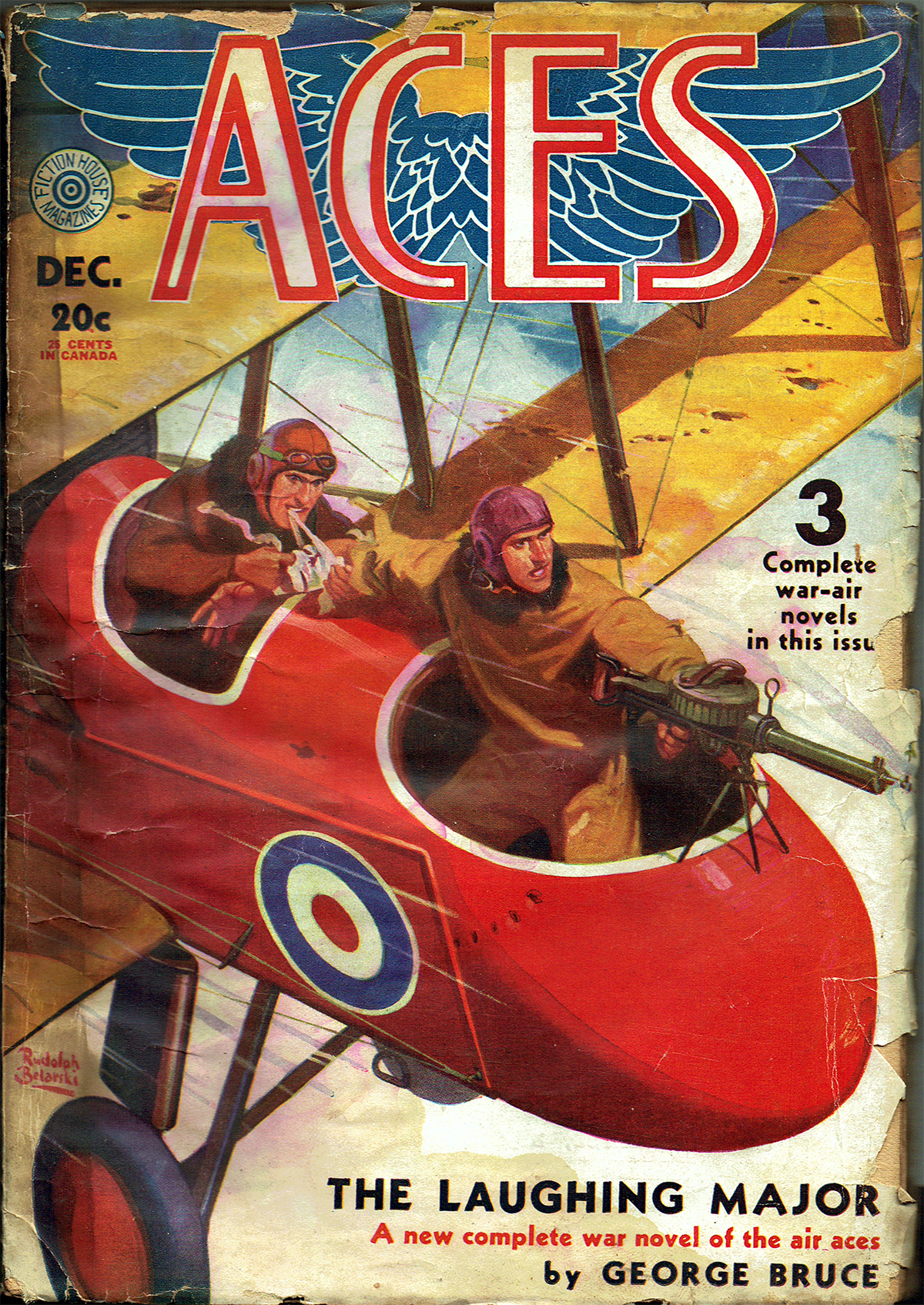
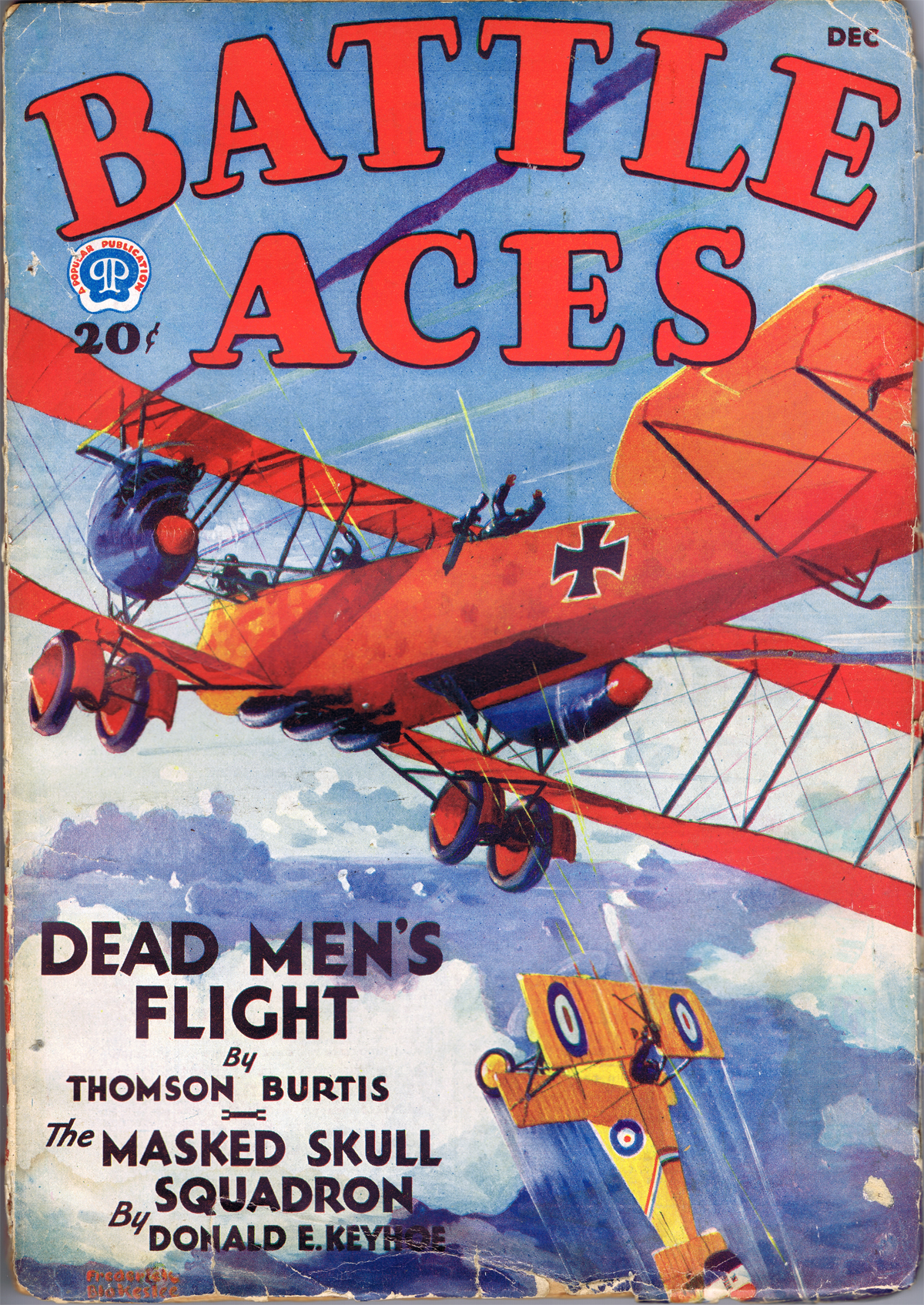

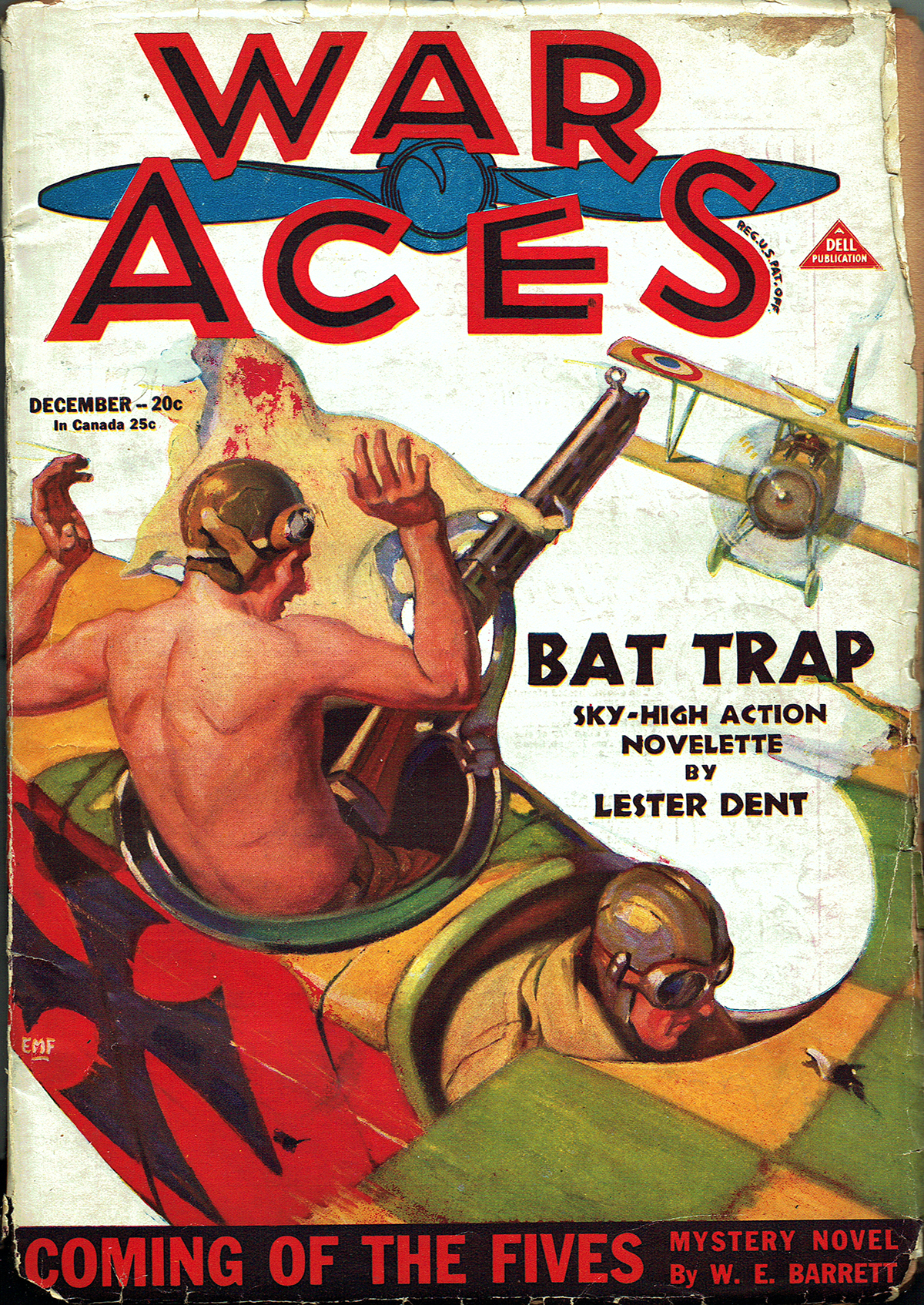
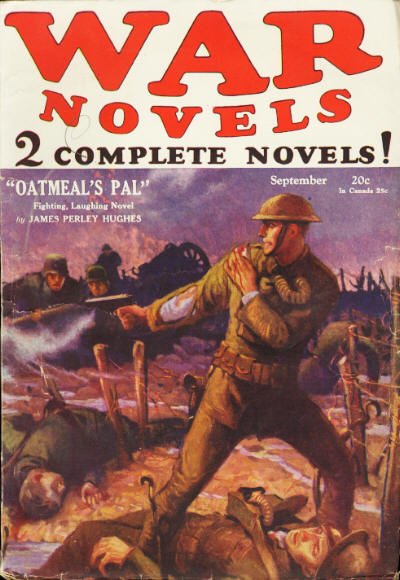 Mosquito Month we have a non-Mosquitoes story from the pen of Ralph Oppenheim. Lt. Jim Edwards knew he was the worst flyer in the squadron. When the C.O. called him to his office he was sure he was going to be sent to Blois in disgrace—instead the C.O. offers him a mission that could mean spending the rest of the war in a German prisoner of war camp, but when push came to shove, it turns out Edwards could shove with the best of them! From the September 1928 issue of War Novels it’s “Dreadnoughts of the Air!”
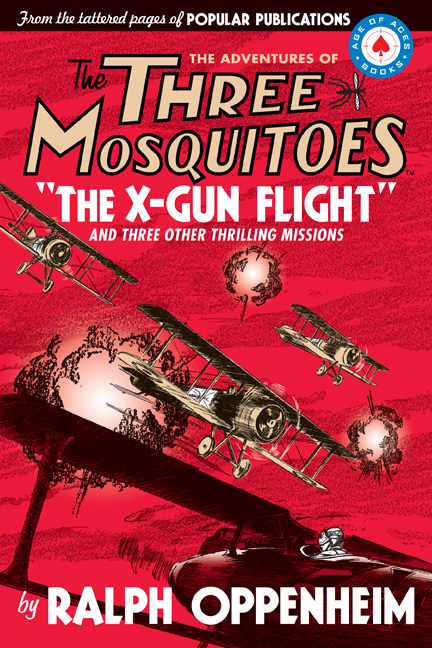
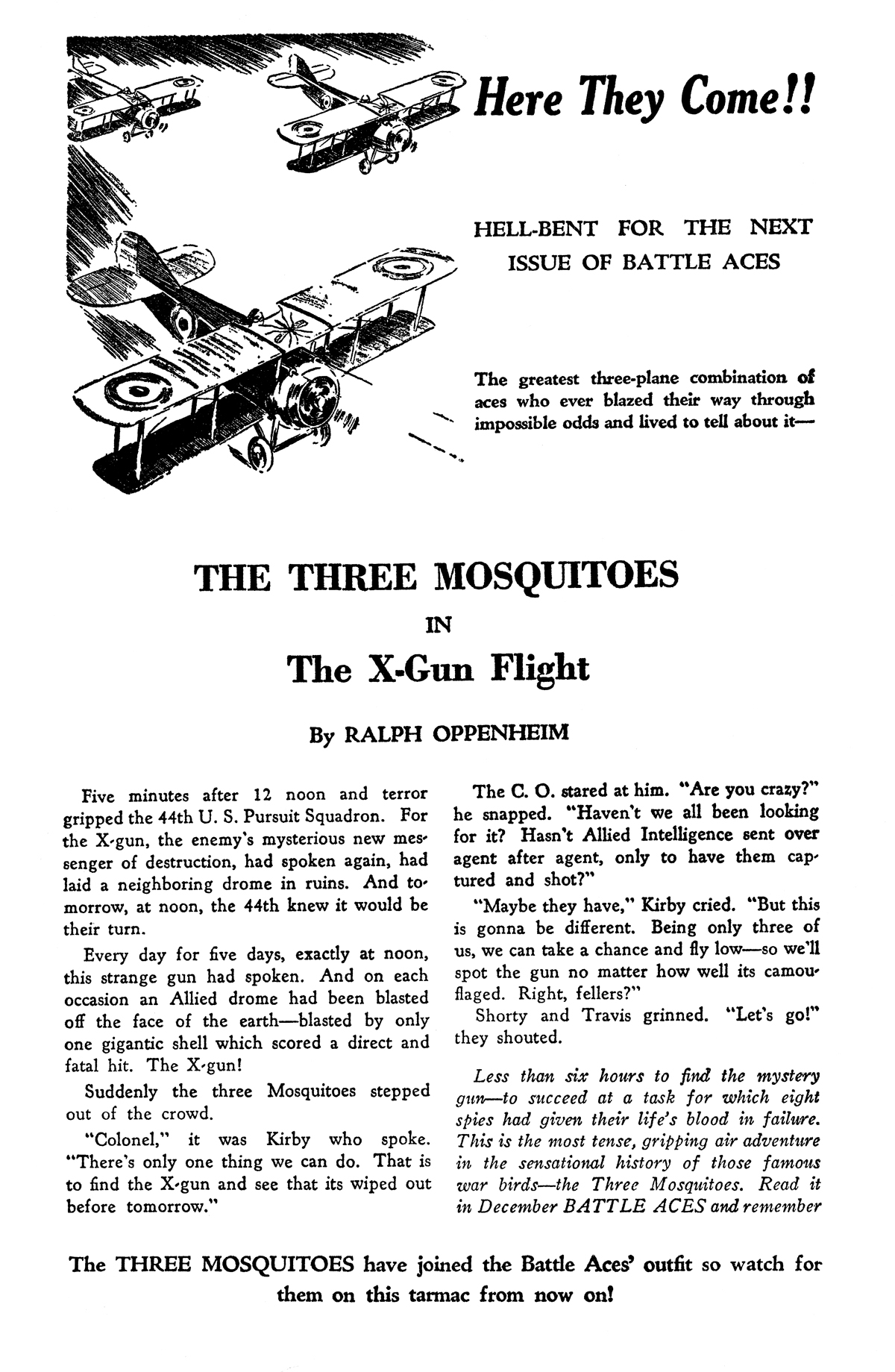
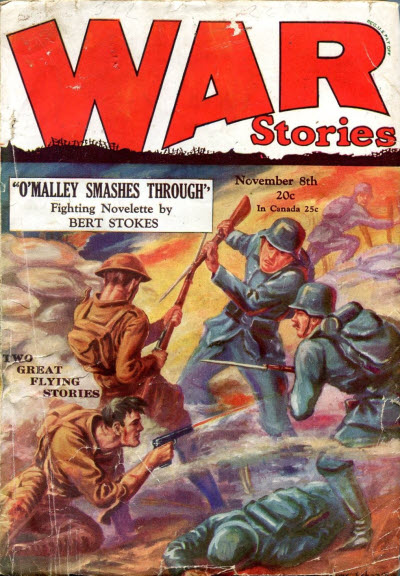 the third and final of three Ralph Oppenheim’s Three Mosquitoes stories we’re featuring this March for Mosquito Month! And this one’s a doozy! The Boche have some new super-gun that has been ranging the Allied munitions factory, getting closer every time. Kirby, Carn and Travis are tasked with finding the unfindable gun and putting it out of commission before it does indeed hit the munitions factory! It’s another rip-roaring nail-biter from the pages of the November 8th, 1928 issue of War Stories—The Three Mosquitoes must “Get That Gun!”
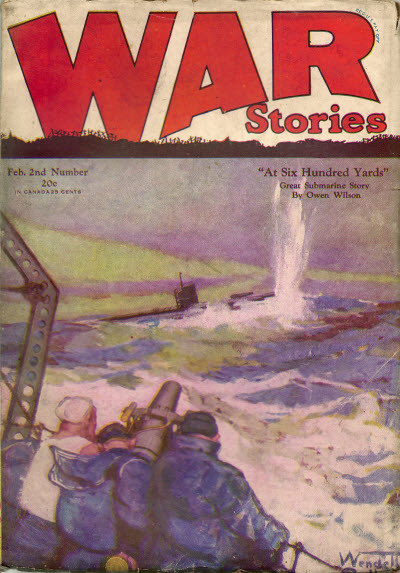 the second of three tales of Ralph Oppenheim’s Three Mosquitoes we’re featuring this March for Mosquito Month! This week, Kirby experiences the pitfalls of pride when the Boche form an All-Ace squadron called the Avenging Yellow Jackets to take down the pesky Mosquitoes—while Shorty Carn and the lanky Travis urge caution, Kirby’s all guns ahead ready to rush in and take on all the Aces Germany can dish out. Problem is, believing his own press, he rushes into things foolishly and finds himself in “Hot Air!” From the February 2nd, 1928 issue of War Stories—
 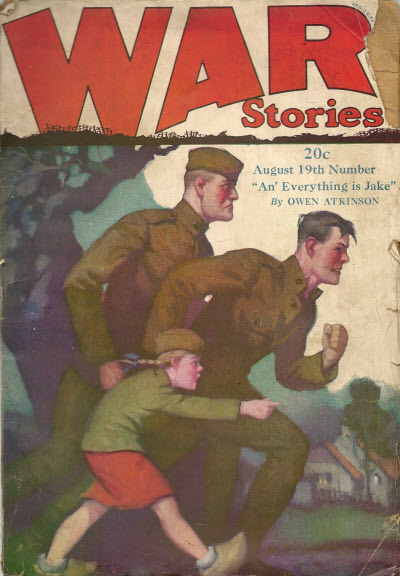 off the ground with an early Mosquitoes tale from the pages of the August 19th, 1927 issue of War Stories. A new C.O. has been assigned to the squadron and he can’t stand pilots who “grand-stand” which is the Mosquitoes stock-in-trade and boy do they catch hell when they get on the C.O.’s wrong side—that is until the C.O. gets in a jam and it’s trick flying that’ll save him when the Boche come “Down from the Clouds!”
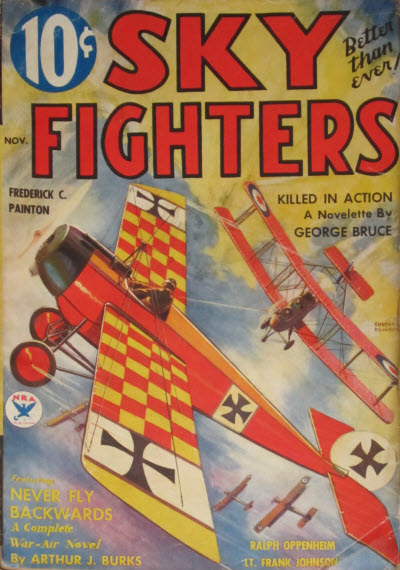 great story from the pen of Ralph Oppenheim. Best known in these parts for
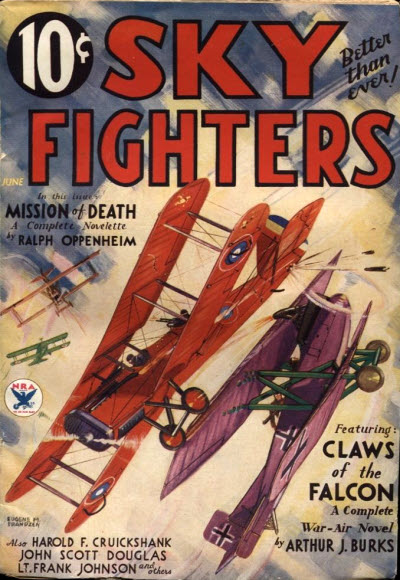 Mosquito Month we have a non-Mosquitoes story from the pen of Ralph Oppenheim. It was always his observer, Jim Evans, who judged the dive, who directed Haskell as the latter worked controls, who told Haskell the precise moment to jerk back his stick and pull up—the same moment when Evans would release the bombs. And due to this uncanny judgment of Evans, and also to Haskell’s flying skill and strength, the two had never failed. Oh, they had been a team—Bomber Dan Haskell, big, husky, two-fisted—and Jim Evans, smaller, but lithe and agile and just as ready for action. An inseparable team, Which co-ordinated like a machine—which could do bombing work as no other unit. With Haskell as reckless pilot, and Evans in the rear as gunner and observer—though he wore a pilot’s full two wings—they had fought their way through all odds, dived upon their target hellbent, and blasted it right off the face of the earth. But Jim had been lost the day before on a run leaving Dan to set off on a daring mission alone—He must bomb bridge K-100 to keep the Germans from advancing on the Allied lines! From the June 1934 issue of Sky Fighters it’s “Mission of Death!”
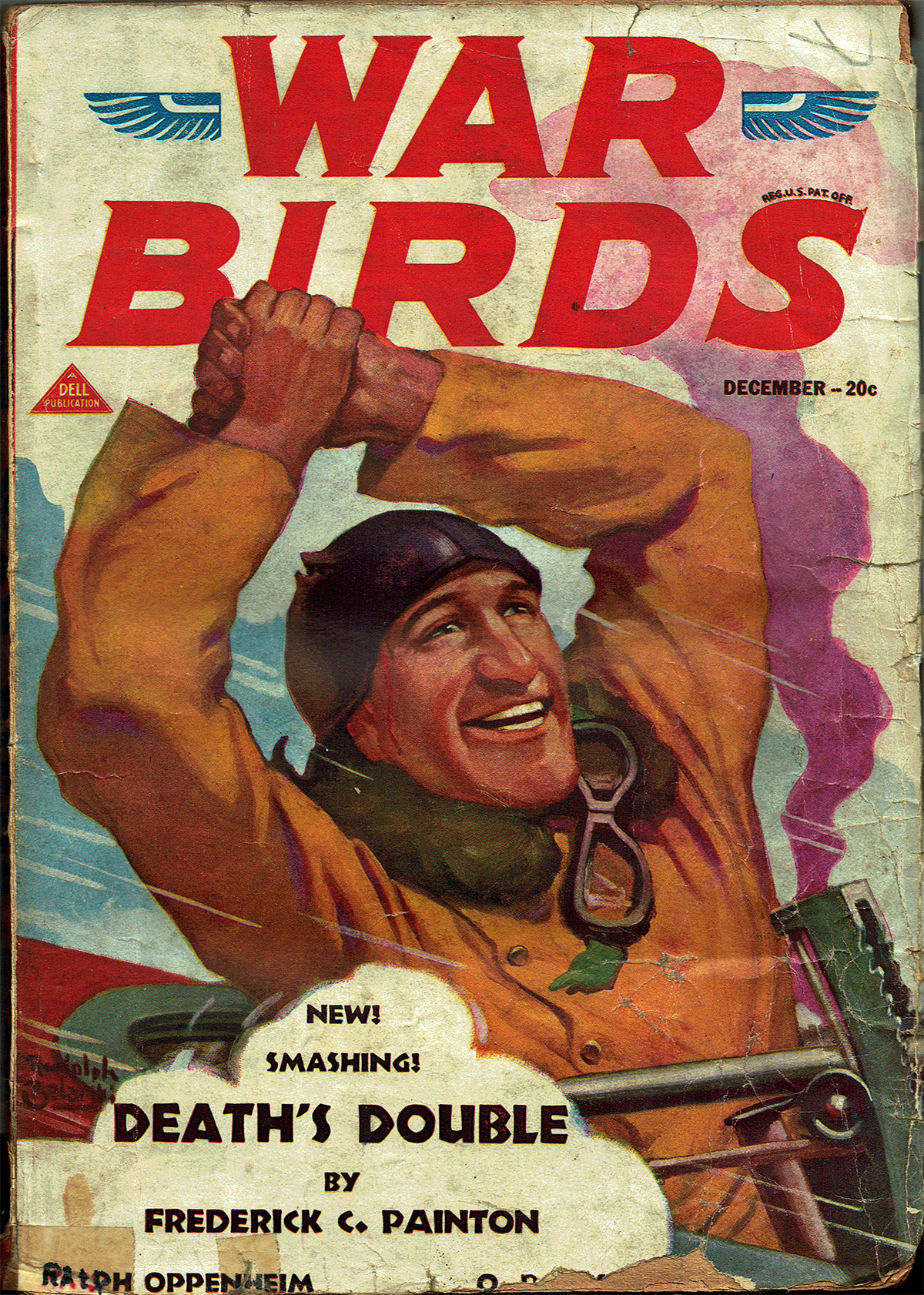
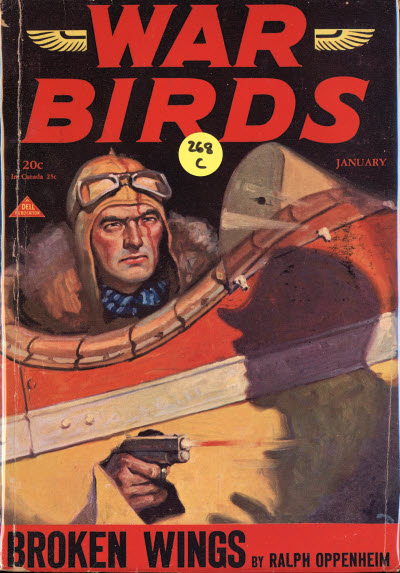 the third of three Three Mosquitoes stories we’re presenting this month. The Three Mosquitoes disband! The darker side of notoriety rears it’s ugly head—is Kirby a “Glory Grabber” taking all the glory and sharing none of the credit—easily picking off the other’s adversaries out from under them? Does he take Shorty Carn and Lanky Travis for granted? Yes, that inseparable threesome have it out and go their own ways! Each sinking the lowest a man can go without the others—and just as the big German offensive is about to kick off! Can the Kirby, Carn and Travis fix their “Broken Wings” or is this it for the intrepid trio? In what is probably their darkest tale, from the pages of the January 1931 issue of War Birds!