


My Most Thrilling Sky Fight: Captain William Erwin
Amidst all the great pulp thrills and features in Sky Fighters, they ran a true story feature collected by Ace Williams wherein famous War Aces would tell actual true accounts of thrilling moments in their fighting lives! This time we have American Flyer Captain William Erwin’s most thrilling sky fight!
Captain William Erwin holds 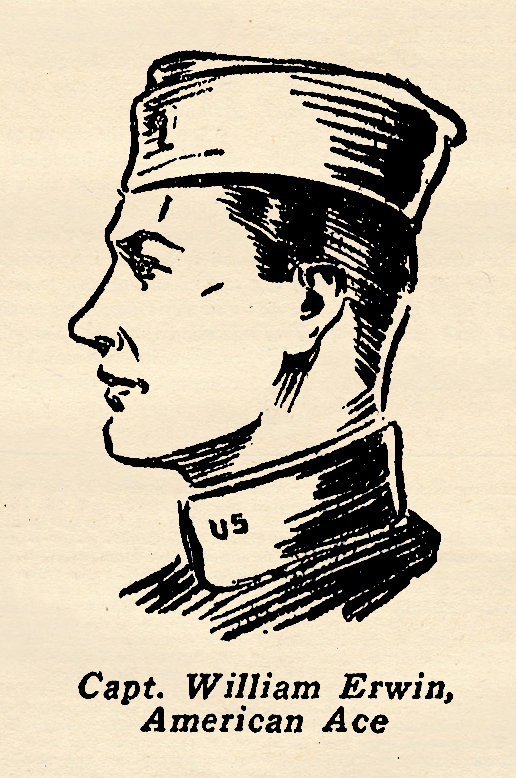 a unique record. He was the only accredited American observation ace, and piled up a string of 9 official victories while flying slow ungainly two-seaters. A Texan, William Erwin enlisted for training the day after war was declared. He received his commission as a Lieutenant after a bare forty hours of flight and was immediately sent overseas and assigned to the First Aero Squadron which he joined on its first day at the front. Before his first week he had downed an enemy plane and the French awarded him the Croix de Guerre. He was awarded additional recognition by the French and also received the American Distinguished Service Cross with Oak Leaves. Through the war safely, without ever having been wounded despite his rare courage and daring, he came to an untimely end while flying the Pacific in a futile search for the missing Dole flyers in 1923. Erwin, himself, recounted the following experience to the compiler of these records on a grey day in the Argonne many years ago.
ONE AGAINST THREE
by Captain William Erwin • Sky Fighters, July 1935
I HAVE had plenty of tough moments, but the toughest time I ever had was that day we (Erwin and his observer) were sent out to regulate fire on a Hun ‘77 emplacement that was holding up the advance of the whole 26th Division. Orders came through from G.H.Q. that that emplacement must be destroyed. Our squadron got the order, and the C.O. passed the job on to us. “Three Spads from the 95th will be waiting over Somme-Sous to pick you up and furnish protection.”
Well, we got over Somme-Sous all right. But instead of finding three Spads, we found a soupy sky chock full of wildly flying crates. The three Spads were all mixed up with about a dozen Fokkers, and I saw right away if we were going to regulate fire on that Hun target we would have to do it alone—without any protection.
I managed to duck the Huns in the soupy dripping sky and find the ‘77 emplacement. My observer reeled out his wireless antenna and got in contact with the battery. The first salvo came over—wide. Along with it came three Fokkers. I kept circling. The leader dived and sieved the turtleback behind me with a hot Spandau burst, then swept underneath and poked at my belly with snaky tracer. His mates up above were bent on making a mince-meat sandwich out of us. Bursts came from above and below.
Finally my observer got his corrections wirelessed to the battery and went to work with his Lewis on the top Huns. I split-haired and dived for the Fokker beneath. The second salvo came over—still wide! I could hear a sharp oath from the observer, even above the clatter of his guns. With one hand holding the Lewis, he pounded out corrections with the other. The Spandau pellets rattled like hail through my wings and fuselage.
A quick turn and abrupt stall gave me a chance for a burst at the leader of the Huns, who had zoomed up above when one of the others dived below. I pressed the trigger-trip, saw my tracer eat up the fuselage and bore into the pilot’s back. He maneuvered, cartwheeled into a cloud.
The battery meanwhile had got the range and the next salvo did plenty of damage, but a Hun coming head-on at me with both Spandaus flaming, took my mind off that matter. I replied in kind, without budging the stick, then closed my eyes waiting for the bullet with my name on it.
To my surprise, the other plane exploded in flames and went sliding down, leaving a black smoke trail behind. At the same moment a black shadow loomed above me. I glanced up, stick-handled my crate just in time to get out from underneath. The Fokker of the Hun leader was spinning erratically down. The pilot hung out of the cockpit, dead, held in the pit only by his safety belt. Whether he had died after taking that first burst of mine, or whether my observer had got him, I don’t know. That left only one Fokker. He dallied for a little while, until the battery had completely destroyed the ‘77 emplacement, then turned tail and beat it for safety.
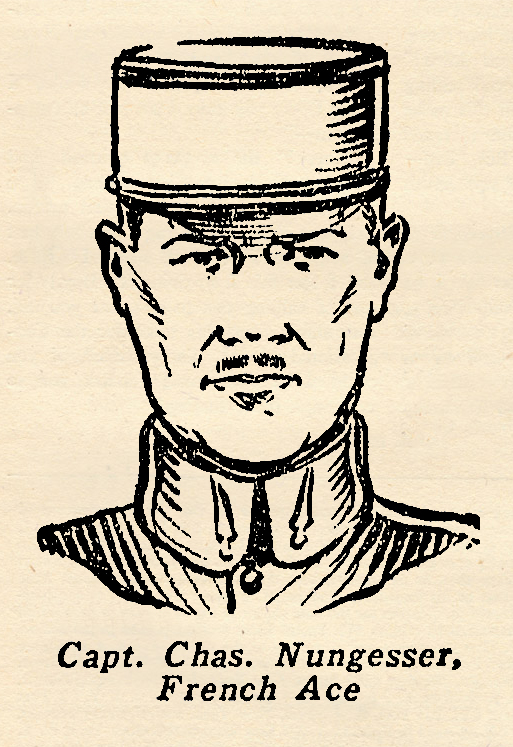 none is more poignantly remembered than Charles Nungesser, who began his flaming war career as a Lieutenant of Hussars and was one of that famous lighting band of cavalrymen that stopped the German Uhlans at the gates of Paris. For his exploits in this heroic stand he was awarded the Medal Militaire, the highest combat award.
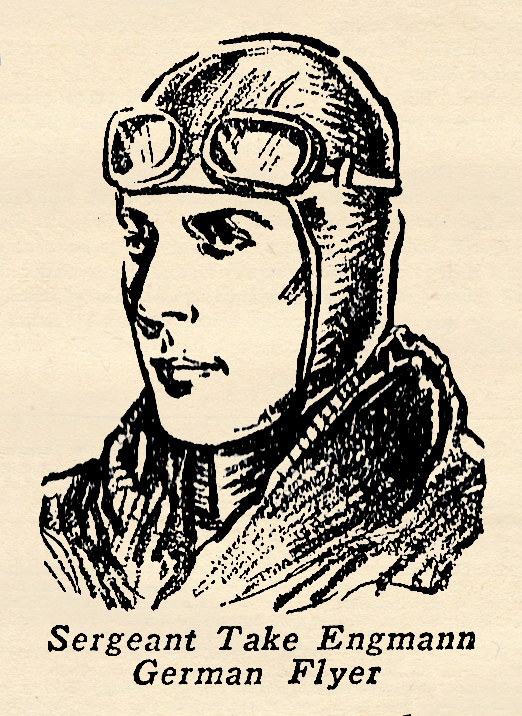 air did not fly single-seater fighting planes, and all of the heroes did not accomplish their missions single handed. Some of the great feats were accomplised by the pilots of the bigger, bulkier, clumsier, two and three-seater observation and bombing planes. Sergeant Engmann was one of the heroes of this latter class. Obscure, reticent, retiring by nature, his own part in the many successful missions accomplished by the greatest of all German observation aces, Captain Heydemarck, whose pilot he was, marks him as one of the outstanding flyers of the war.
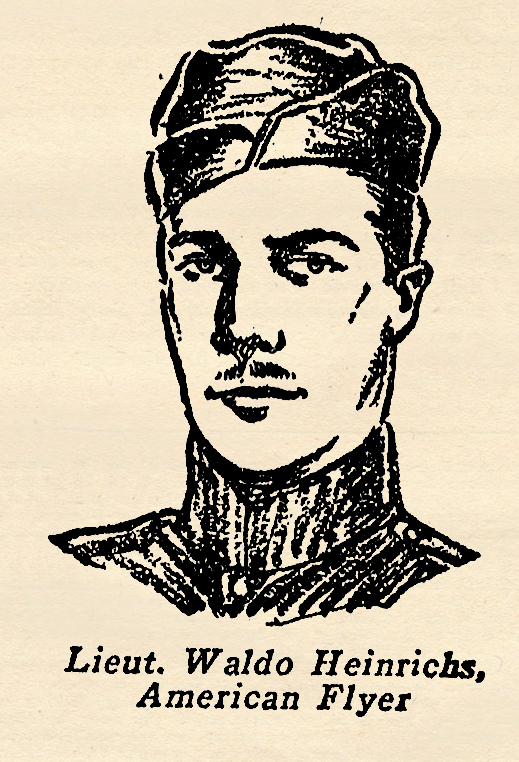 the first contingent of flying cadets to be graduated from the air combat school at Issoudun, France, the great flying field established by the American Air Service on foreign soil after the United States entered the war. He was one of tho original members of the famous 95th Pursuit Squadron, the first American squadron to do actual front line duty with the American Army. Among his squadron mates in the 95th were Lieutenant Quentin Roosevelt and Lieutenant Sumner Sewell.
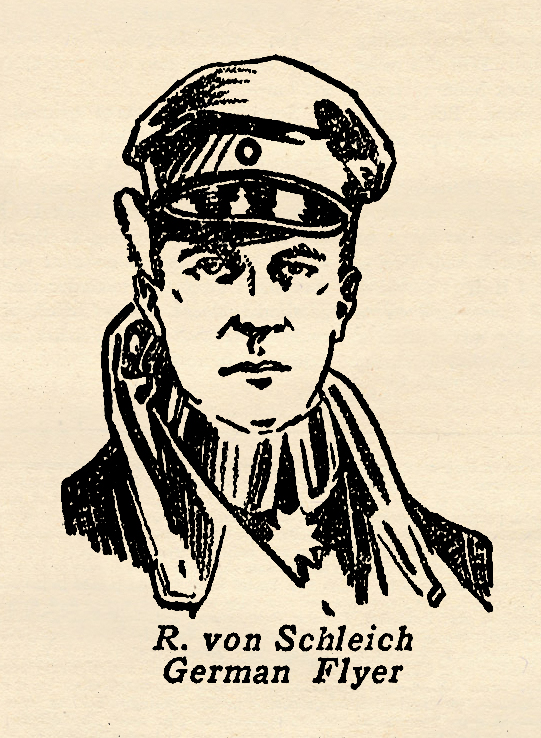 of the least known, but nevertheless, one of the greatest and most successful of the German war birds. A nobleman by birth, he was educated for service in the army beginning with his early childhood. When the war broke out he was an officer in the Uhlans, the most aristocratic branch of the German Army. After transferring to the flying corps, he served some time as an observer, before learning to become a pilot himself; paralleling in that respect the career of Baron Manfred von Richthofen, who preceeded him as an officer of Uhlans.
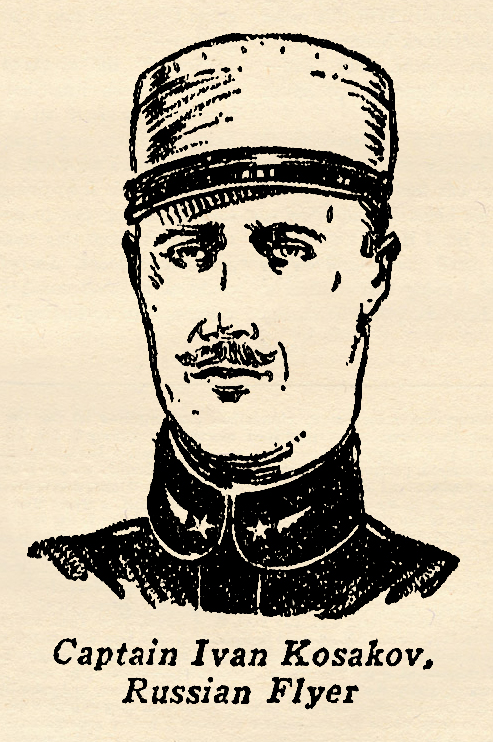 a great war hero when lie transferred from the cavalry to the flying corps. After a short course of just two weeks in flying school, he was sent up to the front again as a bombardment pilot. But flying heavy, unwieldy bombers was too slow and tedious work for him. He was transferred to a single-seater fighting squadron after two months with the bombers. It was then that his remarkable record began to grow.
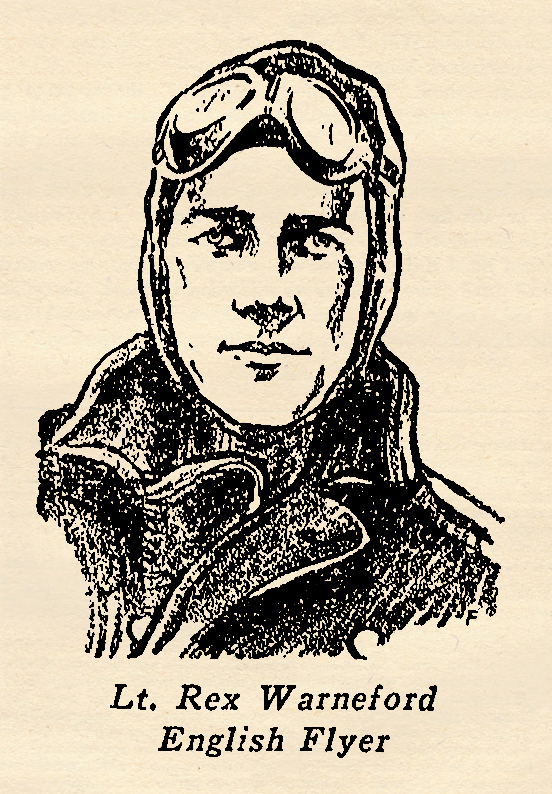 of the British Royal Flying Corps was the first airman to shoot down an enemy Zeppelin, likewise he was the first war pilot to win the coveted Victoria Cross. Previous to his epic fight with the raiding Zeppelin young Warneford was a comparatively obscure pilot. After this amazing and brilliant victory he leaped to the highest pinnacle of fame, he escaped from the German lines with his plane after being forced down fully five miles from his own territory. A troop of German cavalrymen rode up to take him prisoner, but using his machine-gun to the greatest advantage he managed to hold them off until he had completed temporary repairs on his plane. Then, amidst a continual hail of fire, he took off in flight, running the gauntlet of fire successfully, eventually to land within his own lines. Unhappily, two days after the V.C. had been conferred on him, he was killed in an air accident near Paris. In the account below he tells the story of this fight in his own words:
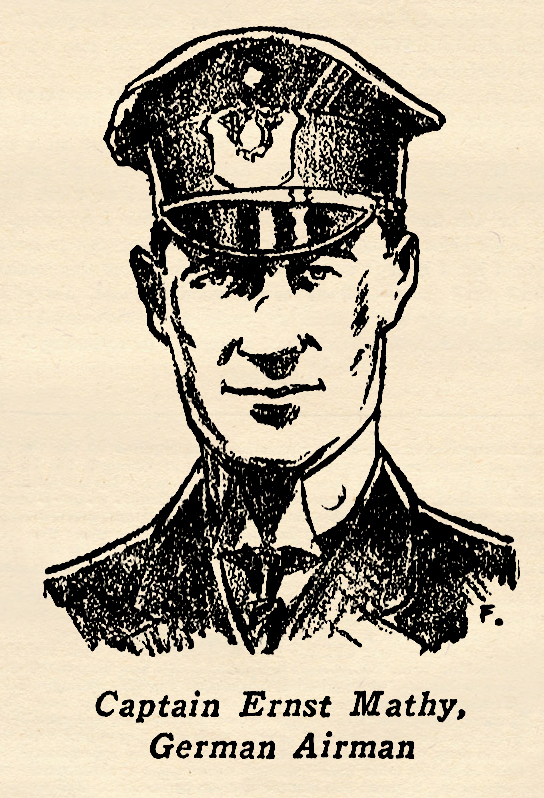 the Zeppelin raiders as told by the raiders themselves have come out of the Great War. Captain Ernst Mathy was one of the most famous of all wartime Zeppelin commanders, having made before he was killed in his final raid over London, six successful night raids over that well protected city, more than any other Zeppelin commander. It was Captain Mathy who developed and perfected most of the strategy of attack for the giant Zeppelins operated by the Imperial
 Flying Corps.
the Zeppelin raiders as told by the raiders themselves have come out of the Great War. Captain Ernst Mathy was one of the most famous of all wartime Zeppelin commanders, having made before he was killed in his final raid over London, six successful night raids over that well protected city, more than any other Zeppelin commander. It was Captain Mathy who developed and perfected most of the strategy of attack for the giant Zeppelins operated by the Imperial
 Flying Corps.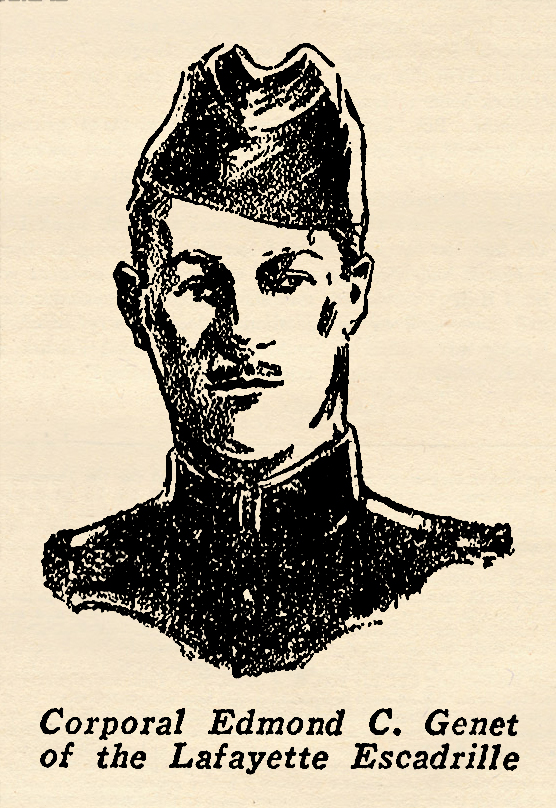 Citizen Genet, who served as the revolutionary ambassador from France during George Washington’s term as president, Edmond C. Genet had a distinguished heritage. Mild-mannered and handsome he was a typical soldier of fortune at heart, possessing an astonishing courage. At 10 he missed an appointment to Annapolis and immediately enlisted in the navy where he participated in the taking of Vera Cruz. A year later he was in battle in Haiti. Later on after the war in Europe broke out, he sailed for France to enlist in the Foreign Legion. He served for some years in the trenches as a simple poilu, then was transferred to aviation and assigned to Escadrille N-124, better known as the Lafayette, where he was the youngest American in a company of famous men. Genet’s flying time on the front was short. He was one of the few airplane pilots to be killed in the air by enemy shrapnel. He was the first American to die in action under the stars and stripes, his death occurring just ten days after America entered the war. The account below is from one of his letters home.
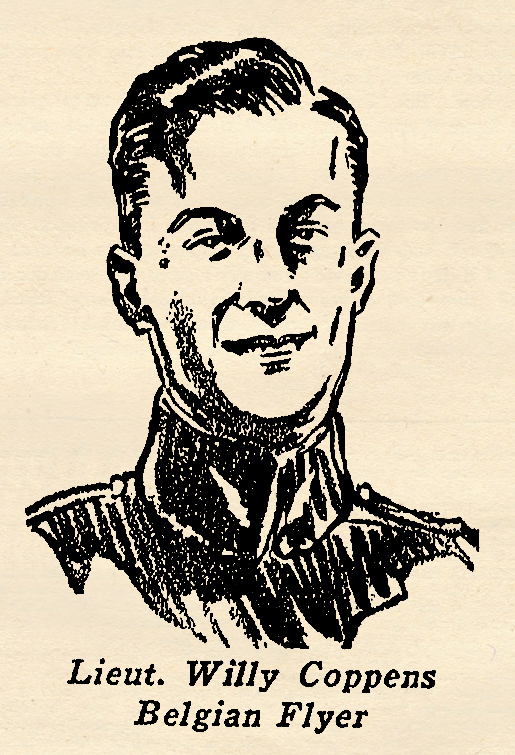 Belgian Ace of Aces. He got his initial training as a soldier and officer in the cavalry division of the army. He transferred later on to the Flying Corps and began immediately to compile the record of victories that gained him top ranking among sky fighters.
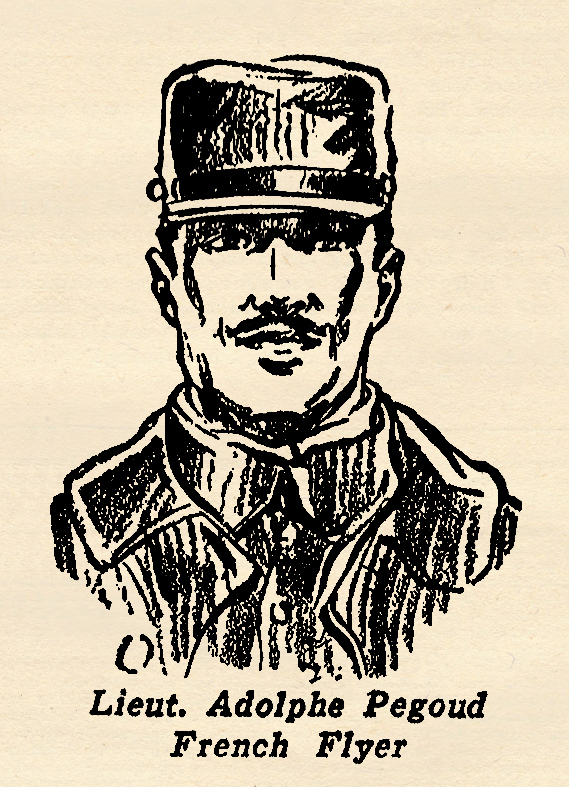 famous flyer before the war began. In 1913, flying a tiny Bleriot monoplane, he astonished the world by doing a series of intricate air maneuvers. Later, he made an upside down landing, the first and to this day the only aviator deliberately to perform such a stunt.
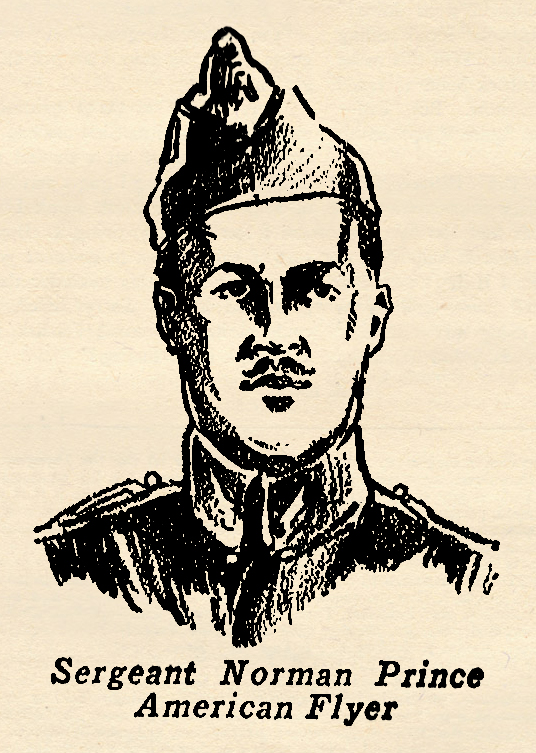 France when the World War began. Being immensely wealthy in his own right, he offered to furnish and equip an entire squadron of planes and pilots. The French Army would not accept this generous offer, but Prince, acting in co-operation with William Thaw of Pittsburgh, convinced the officials that they could muster enough Americans to man an entire squadron. Their offer was accepted, and the LaFayette Escadrille was born. A French officer was put in command. All the rest of the pilots were American. Prince’s death was tragic. Though wounded in an air battle, he managed to fly his crippled plane homeward, and was about to land on his own airdrome in the gathering darkness when his plane ran into a telephone pole and crashed. In his weakened condition he did not have strength enough to guide his plane over or around the obstacle. So perished one of the bravest and most courageous of the early American pilots who gave their lives for France. The story below was told to a French reporter.
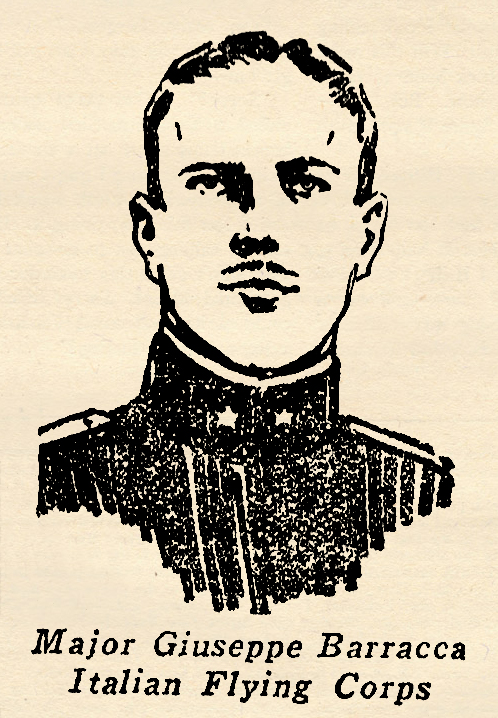 with Alan McLeod of the Royal Flying Corps, who was one of the youngest of the famous flying aces. Major Giuseppe Barracca, Ace of Aces of the Italian Flying Corps, was one of the oldest, being 34 years of age when he was killed in the desperate air fighting above the Piave. Like Captain Ritter von Schleich, he entered the war a cavalry officer, but soon was transferred to the more romantic, yet more hazardous branch of the army, the flying corps.
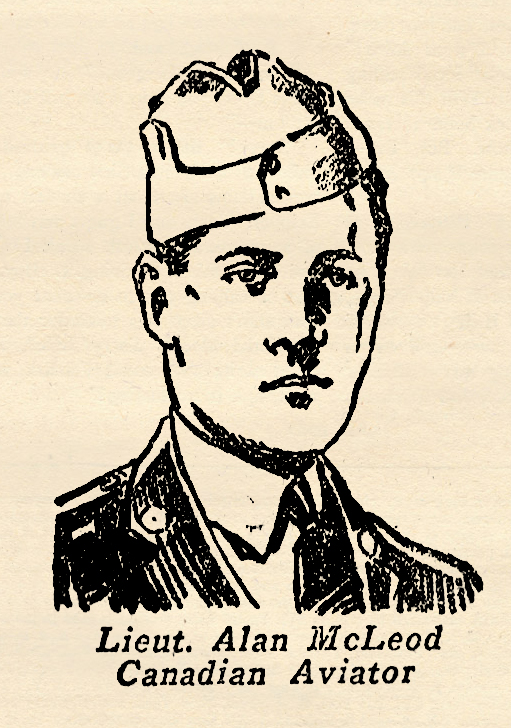 the three Canadian airmen winning the coveted award of the Victoria Cross, the highest honor bestowed on its fighting heroes by the British Empire, He was the youngest flyer ever to receive the honor, having it pinned on his chest in appropriate ceremonies at Buckingham Palace a few months before his nineteenth birthday.
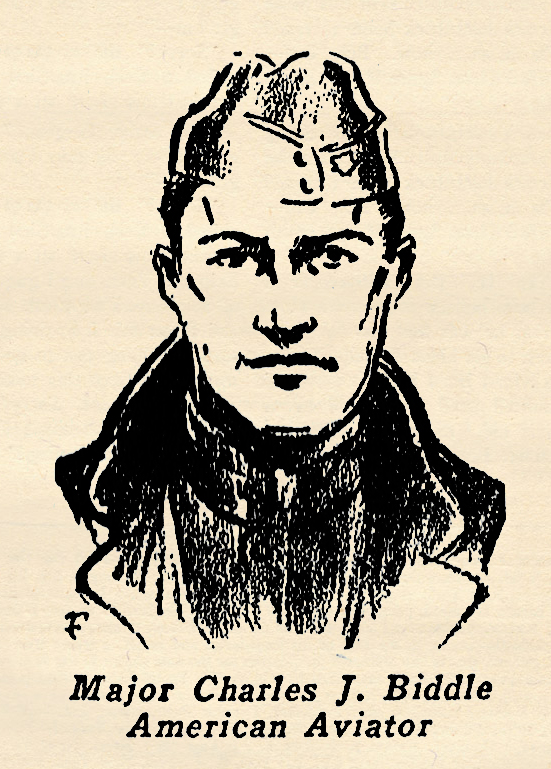 of that small number of American aviators who had actually had front line battle experience when his own country entered the war. Even before there were any indication* of his own country taking part, he sailed for France and enlisted in the French Army, where he was eventually transferred for aviation tralning. When the La Fayette Escadrille was formed, he wan invited to become a member. In that organization he won his commission as a Lieutenant in recognition of his ability and courage.