Looking to buy? See our books on amazon.com Get Reading Now! Age of Aces Presents - free pulp PDFs

Strange Staffels Now Available!

Link - Posted by David on August 24, 2015 @ 6:00 am in

Yes! The fourth in our series of themed stories of Donald E. Keyhoe’s Captain Philip Strange is now available! The book premiered at PulpFest this month, and although we had copies there, our printer informed us there was a problem with the files and one of the spreads needed to be tweeked and resubmitted.

This time around Captain Philp Strange faces off against seven of Germany’s Strangest Staffels! America’s enemies have assembled squadrons of flying furies, exploding skeletons, and invisible airplanes to turn the tide of the First World War. From the backalleys of Paris to the skies over Germany, Strange finds high-flying fortresses above the clouds, cursed aerodromes, strafing skulls, and other wild weapons of mass destruction!

Strange Staffels, like all Age of Aces Books, can be order from Adventure House, Mike Chomko Books, and, of course, Amazon!

“Lives of the Aces in Pictures – Part 41: Lt. Frank L. Baylies” by Eugene Frandzen

Link - Posted by David on August 5, 2015 @ 6:00 am in

Back with another of Eugene Frandzen’s “Lives of the Aces in Pictures” from the pages of Flying Aces Magazine. The series ran for almost four years with a different Ace featured each month. This time around we have the November 1935 installment featuring the illustrated biography of a American Ace credited with 12 victories—Lt. Frank L. Baylies!

Frank Leamon Baylies enlisted with the United States Ambulance Service in 1916 after hearing a returning minister speak of the work the ambulance service was doing on the Western Front. He was posted to France with the US Ambulance Section, seeing action at Verdun, the Somme, Argonne and a few months in Serbia.

In May 1917, Baylies waspresented with an opportunity to leave the rat-infested trenches and join the French Air Service. Needless to say he jumped at the chance. Initially assigned to Spa73 in Sptember 1917, he was transfered in October to Spa3—Les Cigognes—Guynemer’s famous Storks Group! (Guynemer had been killed in action in September of 1917).

Baylies achieved all his victories flying his lucky number 13 Stork emblazed yellow Spad. According to newpaper reports of the day, Baylies had adopted a Belgian police dog named Dick to counteract any possible hoodoo that may come his way due to the numbering on his plane. Dick sleeps under his bed every night and even goes onn occasional flights with his master! (Like Click in Steve Fisher’s Captain Babyface stories)

When America officially entered the war, Baylies was offered a commision, but declined, choosing to remain with the French Air Service. He eventually did transfer as a 2nd Lieutenant in May, but remained with The Storks.

Baylies is credited with 12 confirmed victories and is said to be responsible for six others. He was awarded Croix de Guerre, Medaille Militaire and the Legion d’Honneur.

He was killed in action when his patrol encountered the Fokker Triplanes of Jasta 19. He was shot and his Spad wet down in flames five miles behind the German lines. The Germans buried Baylies with full military honours befiting a war hero at Rollet. In 1927 his body was exhumed and reburied in Paris.

“The Sky Terrier” by Joe Archibald

Link - Posted by David on July 31, 2015 @ 6:00 am in

Since we’re deep into the dog days of summer, we thought we’d give you a shaggy dog story from the pen of Joe Archibald. Instead of our usual Phineas Pinkham mirthquake we have the story of Muggins, a scottish Irish terrier, that finds himself taken in by a squadron fighting a loosing battle with the Germans and turns their luck around!

What a buddy for a fighting, daredevil pilot! Yet this dog was air-wise, every inch of him—and he proved it through the snarling menace of a thousand flaming Jerry tracers.

“Lives of the Aces in Pictures – Part 40: Major Francesco Baracca” by Eugene Frandzen

Link - Posted by David on July 15, 2015 @ 6:00 am in

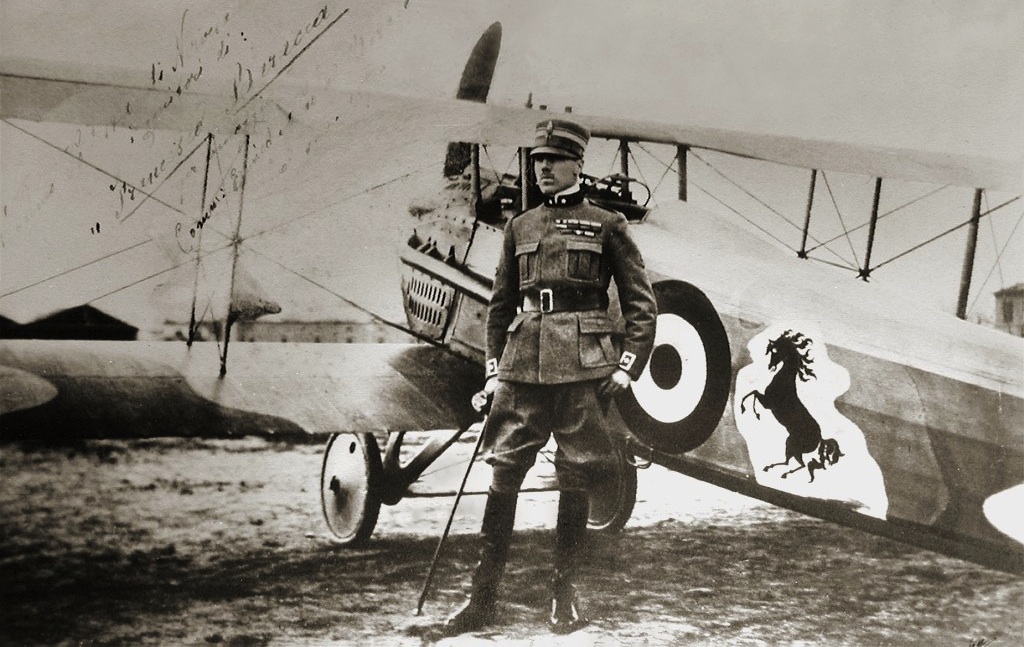
Back with another of Eugene Frandzen’s “Lives of the Aces in Pictures” from the pages of Flying Aces Magazine. The series ran for almost four years with a different Ace featured each month. This time around we have the October 1935 installment featuring the illustrated biography of Italy’s Ace of Aces—Major Francesco Baracca!

Major Francesco Baracca is Italy’s greatest Ace of WWI but started his millitary carrer in the cavalry before the war with the prestigious Piemonte Reale Cavalleria Regiment upon his commisioning in 1910. Baracca’s interests turned to Aviation a few years later when he was transfered from Rome to a small town in central Italy and learned to fly at Reims, France.

Son of a nobleman, Barraca is credited with 34 victories and emblazzened the fuselage of his plane with his personal emblem, a black prancing horse—the Cavallino Rampante—in tribute to his calvalry days. It is this emblem that his mother gave to Enzo Ferrari in later years to be the official symbol of the Scuderia Ferrari Racing team since 1929 and later Ferrari Automobiles.

He was killed while out on a straffing run in June 1918.

“Lives of the Aces in Pictures – Part 39: Gabriel Guerin” by Eugene Frandzen

Link - Posted by David on July 1, 2015 @ 6:00 am in

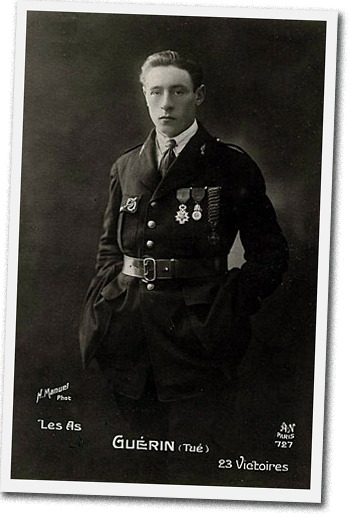
Back with another of Eugene Frandzen’s “Lives of the Aces in Pictures” from the pages of Flying Aces Magazine. The series ran for almost four years with a different Ace featured each month. This time around we have the September 1935 installment featuring the illustrated biography of the ninth ranking French Ace—Gabriel Guerin!

Sous Lieutenant Gabriel Fernand Charles Guerin was credited with 23 confirmed victories—including five of which he shared—and a reported 10 more unconfirmed. Most of these victories were while a pilot in SPA 15. As we said he was France’s ninth ranking Ace in the First World War and was awarded the Legion d’honneur, Médaille Millitaire and the Croix de Guerre with 15 palms and two bronze stars!

Sadly, Guerin died when the aircraft he was piloting, a SPAD VII, spun out of control and plunged to the ground soon after take-off near Mont l’Eveque on the 1st of August 1918. He was 26.

“Crêpe Hangars” by Joe Archibald

Link - Posted by David on June 26, 2015 @ 6:00 am in

“Haw-w-w-w-w!” That sound can only mean one thing—that Bachelor of Artifice, Knight of Calamity and an alumnus of Doctor Merlin’s Camelot College for Conjurors is back and this time the marvel from Boonetown faces a dilema—face a court martial or transfer to the Pallbearer Squadron—the most morose lot on the Western Front—to boost their morale as only a Pinkham can.

They thought Phineas could make anybody laugh—until they sent him to the Pallbearers’ drome, where even the birds sang death marches. Yes, it looked for once as if Phineas had met his match in that bunch of Crêpe Hangars!

“Lives of the Aces in Pictures – Part 38: Carl Bolle” by Eugene Frandzen

Link - Posted by David on June 17, 2015 @ 6:00 am in

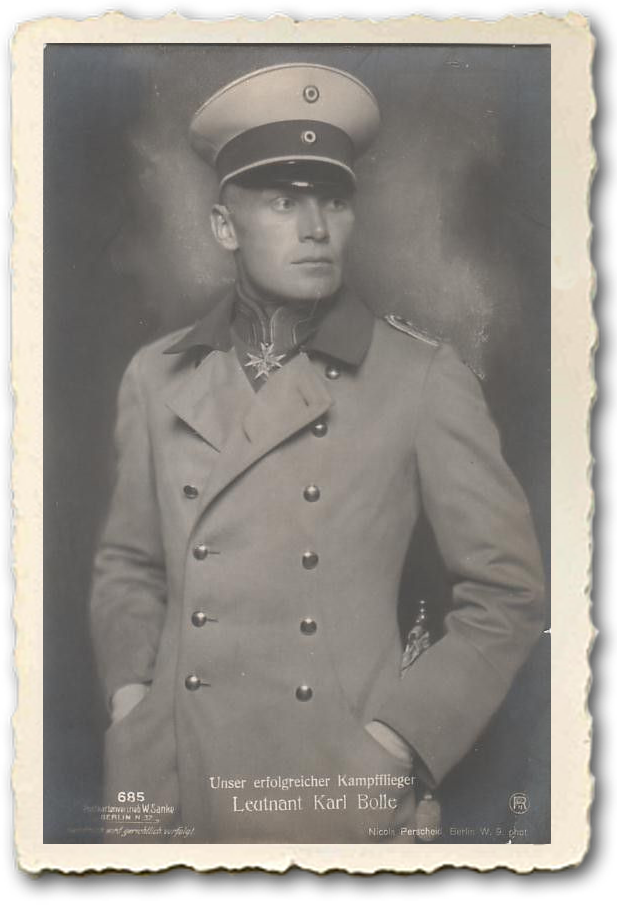
Back with another of Eugene Frandzen’s “Lives of the Aces in Pictures” from the pages of Flying Aces Magazine. The series ran for almost four years with a different Ace featured each month. This time around we have the August 1935 installment featuring the illustrated biography of the last leader of the Jagdstaffel Boelcke—Carl Bolle!

Carl Bolle started his military career in the cavalry, later transfering to the air service. During his time in the air service he is credited with 36 victories rising to the rank of Oberleutnant and transfered to command Jasta 2—the very squadron Oswald Boelcke had commanded.

After the war, Bolle became a flying instructor and in the 1920’s director of German Air Transport School—the Deutsche Verkehrsfliegerschule. Subssequently helping in the covert training of pilots for the Luftwaffe with which he served as an advisor during the second World War, reporting to Hermann Goring himself!

Carl Bolle passed away on the 9th of October 1955 in his native city of Berlin.

“Raid of the Unseen” by Kenneth Brown Collings

Link - Posted by David on June 12, 2015 @ 6:00 am in

This week we have a tale from the pen of a dare-devil adventurer, aviator, soldier and war correspondent—Kenneth Brown Collings, whose interest in aviation began in childhood when he saw the Wrights brothers and their flying machine perform at Fort Myer, Va., in 1908. From the pages of the February 1935 number of Flying Aces, it’s a smashing yarn of night bombers—”Raid of the Unseen!”

The C.O. of the 7th Marines Squadron was not new at the fighting game. He’d taken lessons from blood-crazed Moros in the Philippines, from slant-eyed Boxers in China. And he’d learned one thing—you’ve got to hit what you shoot at, whether you’re on the ground or in the air. And because he’d learned that lesson so well—he was faced with a court-martial!

“Lives of the Aces in Pictures – Part 37: Lt. Col. Barker” by Eugene Frandzen

Link - Posted by David on June 3, 2015 @ 6:00 am in

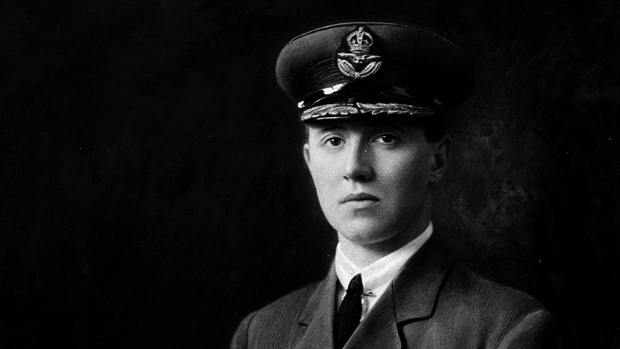
Back with another of Eugene Frandzen’s “Lives of the Aces in Pictures” from the pages of Flying Aces Magazine. The series ran for almost four years with a different Ace featured each month. This time around we have the July 1935 installment featuring the illustrated biography of the most decorated Canadian Ace—Lt. Col. William Barker, V.C., D.S.O. M.C.!

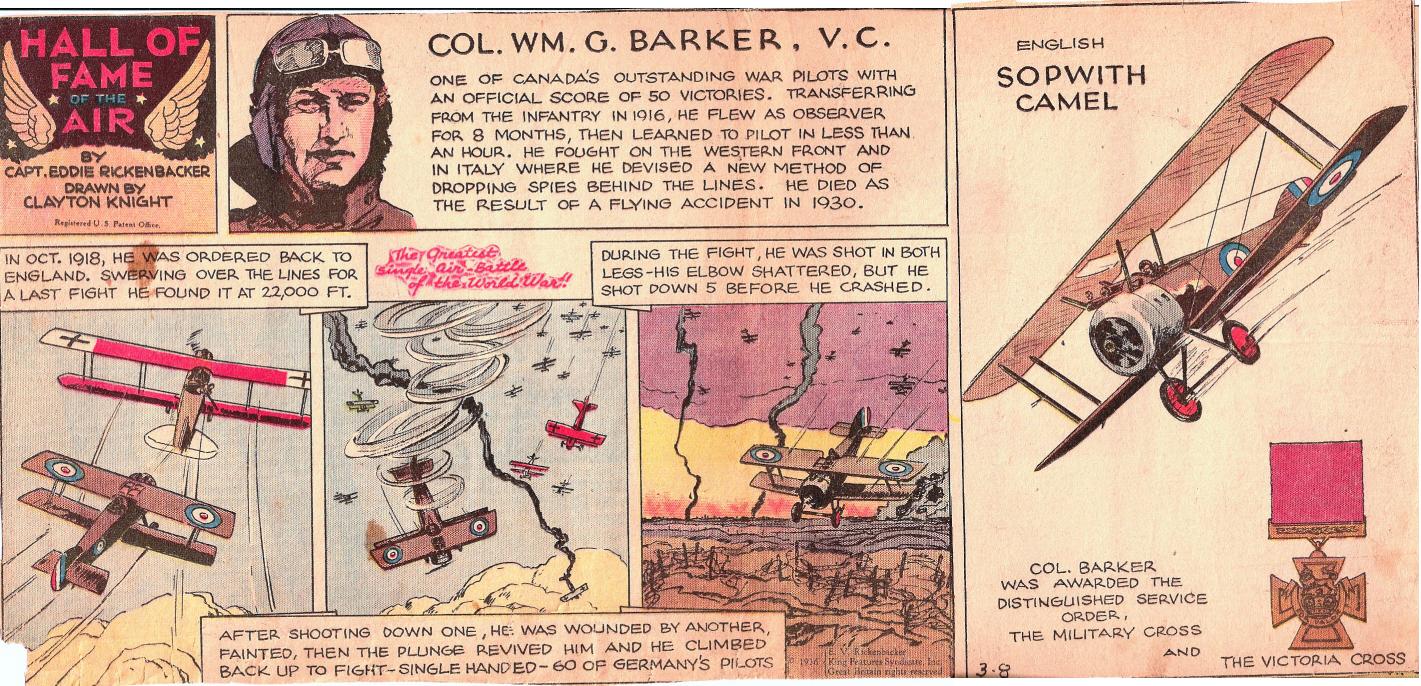
William George “Billy” Barker was a fighter pilot credited with 53 aerial victories during WWI, but is mostly remembered for the epic, single-handed combat on October 27th 1918 against some 60 German aircraft that won him the Victoria Cross.

After the war he joined Canada’s other Ace named Billy—William Bishop in an ill-conceived commercial aviation venture in Toronto, but in June 1922 he accepted a commission in the Canadian Air Force and was briefly the acting director of the RCAF.

Barker was fatally injured when his new two-seater Fairchild aircraft he was demonstrating crashed at Rockcliffe air station, Ottawa. He was 35.

As a bonus—here is the feature on Lt. Col. William Barker from Clayton Knight’s newspaper feature Hall of Fame of the Air which ran Sundays from 1935 to 1940. This strip is courtesy of Stephen Sherman’s acepilots.com which has a large collection of HFA strips that his father had clipped and saved at the time.

Great stuff!

“Spy Larking” by Joe Archibald

Link - Posted by David on May 29, 2015 @ 6:00 am in

“Haw-w-w-w-w!” You heard right! That marvel from Boonetown, Iowa is back and there is a spy in their midst—surely it’s not the latest recruit to the 9th Pursuit Squadron—Lt. Harold Bartholomew Cheeves, the one man on the base that truely gets Pinkham!

Haul out the solid ivory and strike off the International Crack-Brain Medal for Lieut. Harold Bartholomew Cheeves, newcomer with the Fighting 9th. For here’s a man who APPRECIATES Phineas! In fact, the more cockleburs he finds in his hash, the more he admires the Boonetown Barbarian.

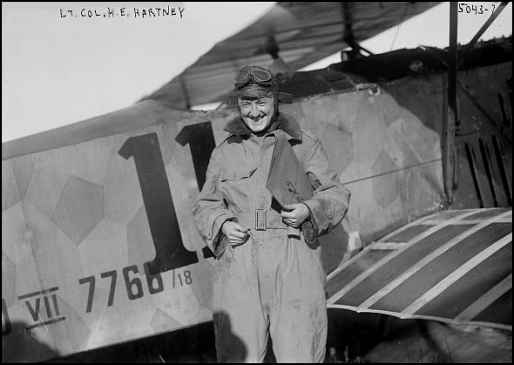
“Lives of the Aces in Pictures – Part 36: Lt. Col. Harold E Hartney” by Eugene Frandzen

Link - Posted by David on May 6, 2015 @ 6:00 am in

Back with another of Eugene Frandzen’s “Lives of the Aces in Pictures” from the pages of Flying Aces Magazine. The series ran for almost four years with a different Ace featured each month. This time around we have the June 1935 installment featuring the illustrated biography of Rickenbacker’s Commander—Lt. Col. Harold E. Hartney!

Harold Evans Hartney was born in Ontario, Canada and enlisted in the Canadian Militia serving with the Saskatoon 105th Fusiliers before requesting a transfer to the Royal Flying Corp after a chance meeting with William Bishop. He flew with No. 20 Squadron RFC and scored six confirmed victories before being shot down in February of 1917—he claims by Manfred von Richtofen. After he recovered he ws promoted to the rank of Major and assumed the command of the American 27th Aero Squadron.

Hartney became an American citizen in 1923 and penned a number of books, foremost of which was the autobiographical Up and At ‘Em.

He passed away from heart disease October 5th, 1947 in Washington, DC. at the age of 57. Lt. Col. Harold E. Hartney is buried in Arlington National Cemetary.

“Good Haunting!” by Joe Archibald

Link - Posted by David on April 24, 2015 @ 6:00 am in

“Haw-w-w-w-w!” That sound can only mean one thing—that Bachelor of Artifice, Knight of Calamity and an alumnus of Doctor Merlin’s Camelot College for Conjurors is back to vex not only the Germans, but the Americans—the Ninth Pursuit Squadron in particular—as well. Yes it’s the marvel from Boonetown, Iowa himself—Lieutenant Phineas Pinkham!

Do you believe in ghosts? They asked that question of Major Garrity, and he said no, but he didn’t like ‘em. They asked Phineas Pinkham, and he said yes, and he liked ‘em. Here’s a ghost story guaranteed to make you laugh—not shudder.

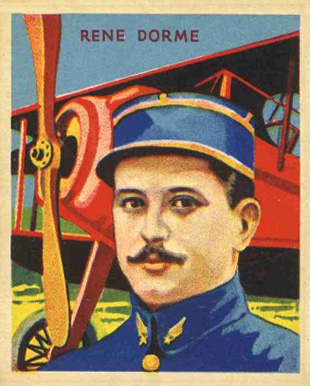
“Lives of the Aces in Pictures – Part 35: René Dorme” by Eugene Frandzen

Link - Posted by David on April 15, 2015 @ 6:00 am in

Back with another of Eugene Frandzen’s “Lives of the Aces in Pictures” from the pages of Flying Aces Magazine. The series ran for almost four years with a different Ace featured each month. This time around we have the May 1935 installment featuring the illustrated biography of France’s unpuncturable Ace—René Dorme!

Sous Lieutenant René Pierre Marie Dorme has been credited with 23 victories although officially noted with a probable 43. He had started his service as an artilary man in North Africa before becoming a pilot and managing to get injured in a crash before even seeing action. But that didn’t stop him—He got into combat in March of 1916 and achieved his first credited victory in July shooting down an L.V.G.

The French called him “the beloved” and even the great Guynemer called him France’s greatest air fighter. His plane was only hit twice in all his fights earning him the name “unpuncturable.” Dorme was awarded the Chevalier de la Légion d’Honneur, the Médaille Militaire and the Croix de Guerre (with 11 palms!).

While flying on May 25th 1917, Dorme dissapeared over German territory after downing a plane. Two weeks later the enemy reported he was killed in combat, but nothing more than that was ever heard of him—no trace ever found!

“The Blue Ghost Patrol” by Lester Dent

Link - Posted by David on April 10, 2015 @ 6:00 am in

Lester Dent is best known as the man behind Doc Savage. But he wrote all number of other stories before he started chronicling the adventures of everyone’s favorite bronze giant. Here we have an intriging tale which seems to be the start of a character he never got back to—The Black Bat. From the October 1932 issue of Flying Aces we present “The Blue Ghost Patrol!”

Hot on the trail of those two traitor ships from his own base flew the Black Bat, famous Allied secret agent whose face no man had ever seen. Suddenly five Albatrosses swooped down and sent him crashing into the sea. But in the next second they had gone on—and their Spandaus were hammering at the two traitor ships!


If you enjoyed this story, Black Dog Books has put out an excellent volume collecting 11 of Lester Dent’s early air stories set against the backdrop of World War !. The book includes this story as well as others from the pages of War Birds, War Aces, Flying Aces, Sky Birds and The Lone Eagle. It’s The Skull Squadron! Check it out.

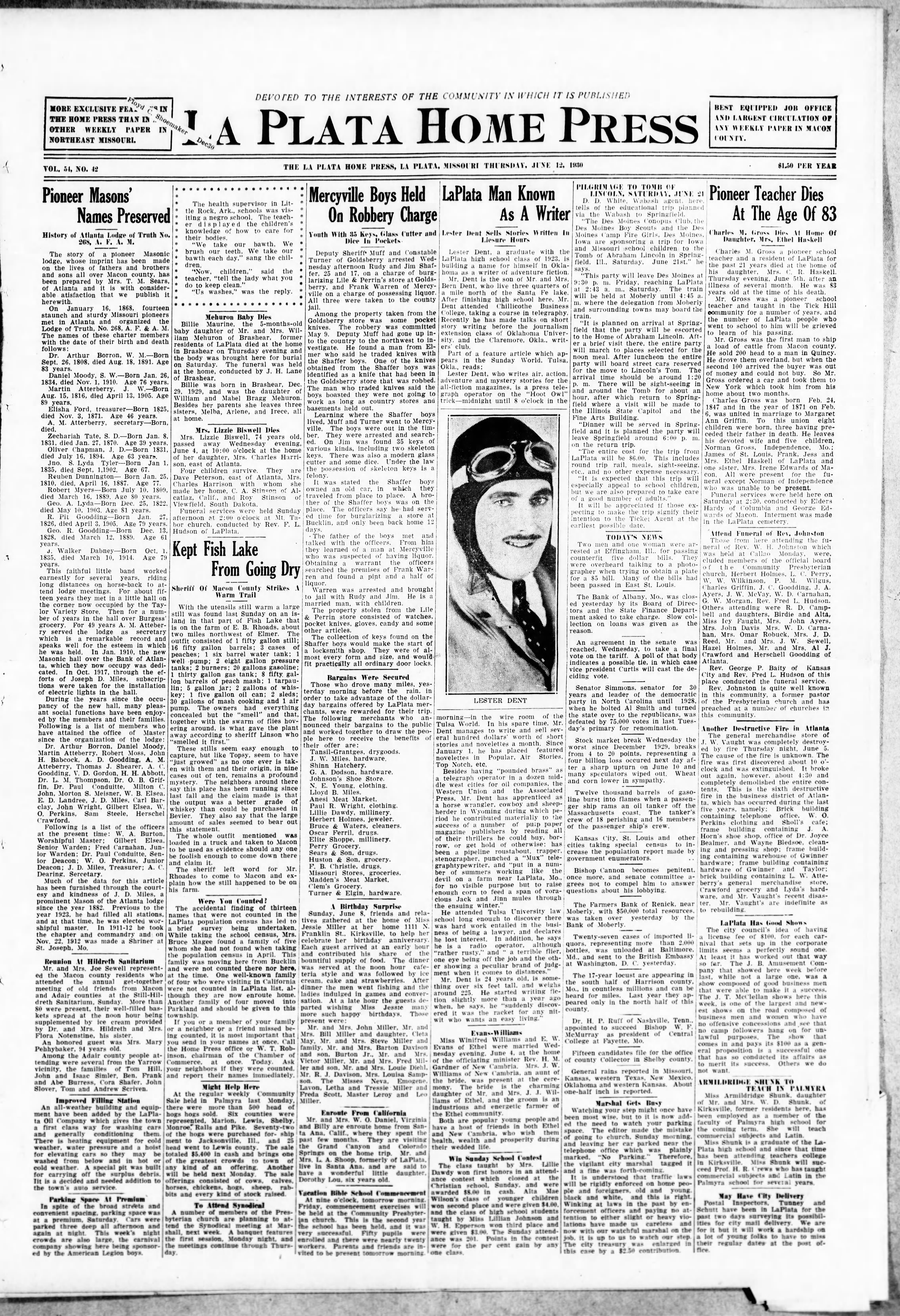
And as a bonus, here’s a plucky article from Lester’s home town paper, The LaPlata Home Press, about his early success selling stories to the pulps while working as a telegraph opperator in Tulsa, Oklahoma!


LaPlata Man Known As A Writer

Lester Dent Sells Stories Written In Liesure Hours
The LaPlata Home Press, LaPlata, MO • 12 June 1930

Lester Dent, a graduate with the Plata high school class of 1923, is building a name for himself in Oklahoma as a writer of adventure fiction.

Mr. Dent is the son of Mr. and Mrs. Bern Dent, who live three quarters of a mile north of the Santa Fe lake. After finishing high school here, Mr. Dent attended Chillicothe Business College, taking a course in telegraphy. Recently he has made talks on short story writing before the journalism extension class of Oklahoma University, and the Claremore, Okla., writers club.

Lester Dent

Part of a feature article which appears in the Sunday World, Tulsa, Okla., reads:

Lester Dent, who writes air, action, adventure and mystery stories for the all-fiction magazines, is a press telegraph operator on the “Hoot Owl” trick—midnight until 8 o’clock in the morning—in the wire room of the Tulsa World. In his spare time, Mr. Dent manages to write and sell several hundred dollars’ worth of short stories and novelettes a month. Since January 1, he has placed featured novelettes in Popular, Air Stories, Top Notch, etc.

Besides having “pounded brass” as a telegraph operator in a dozen middle west cities for oil companies, the Western Union and the Associated Press, Mr. Dent has apprenticed as a horse wrangler, cowboy and sheep-herder in Wyoming during which period he contributed materially to the success of a number of pulp paper magazine publishers by reading all of their thrillers he could buy, borrow, or get hold of otherwise: has been a pipeline roustabout, trapper, stenographer, punched a “Mux” tele-graph typewriter, and “put in a number of summers working like the devil on a farm near LaPlata, Mo., for no visible purpose but to raise enough corn to feed a span of voracious Jack and Jinn mules through the ensuing winter.”

He attended Tulsa University law school long enough to discover there was hard work entailed in the business of being a lawyer, and declares he lost interest. In addition, he says he is a radio operator, although “rather rusty,” and “a terrible flier, one eye being off the job and the other showing a peculiar brand of judgment when it comes to distances.”

Mr. Dent is 24 years old, is something over six feet tall, and weighs around 225. He started writing fiction slightly more than a year ago when, he says, he “suddenly discovered it was the racket for any nitwit who wants an easy living.”


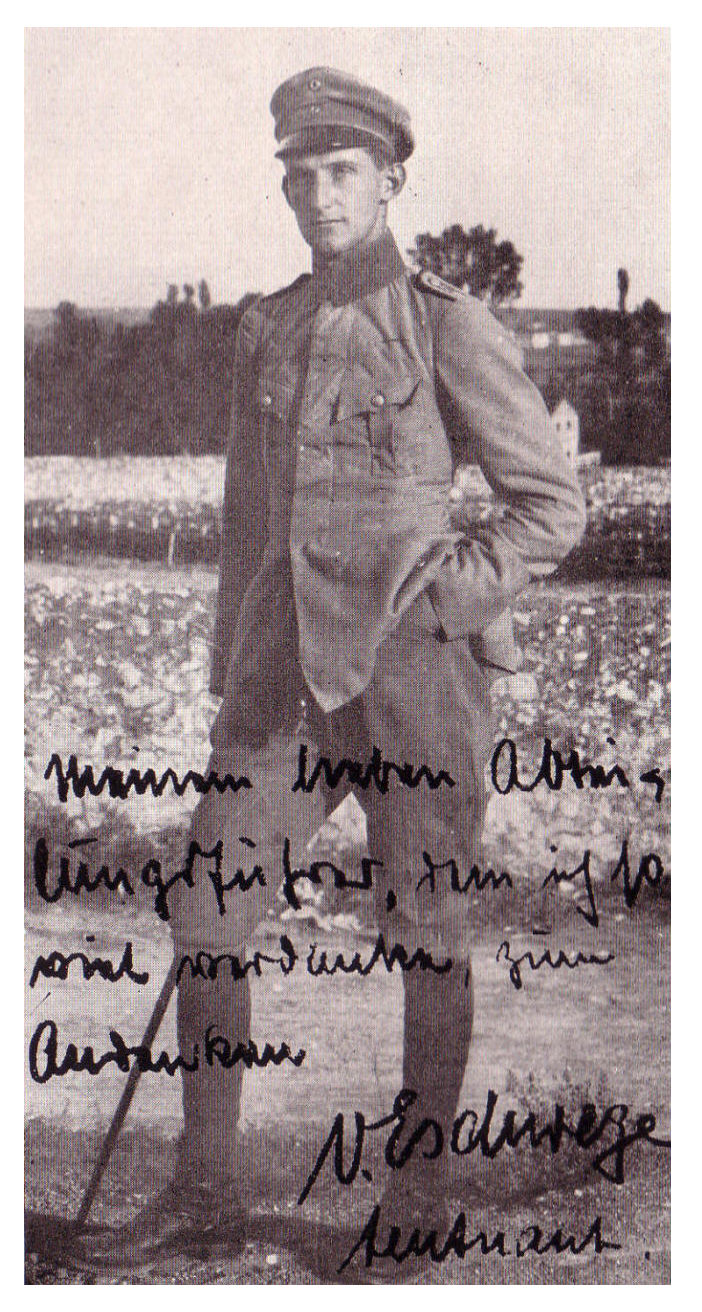
“Lives of the Aces in Pictures – Part 34: Lt. Rudolph von Eschwege” by Eugene Frandzen

Link - Posted by David on April 1, 2015 @ 6:00 am in

Back with another of Eugene Frandzen’s “Lives of the Aces in Pictures” from the pages of Flying Aces Magazine. The series ran for almost four years with a different Ace featured each month. This time around we have the April 1935 installment featuring the illustrated biography of the “German Eagle” himself—Lieutenant Rudolph von Eschwege!

Rudolph von Eschwege, known as the Eagle of the Aegean, was a German Ace who fought on the lesser known Balkan front and based at Drama, Greece. However, von Eschwege had been enlisted in the army before the war, and first saw combat with the 3rd Mounted Jaeger Regiment on the Western Front. It was several months later that he would take pilot training and transfer to aviation. First with a reconnaissance unit until he was commissioned in the Autumn of 1916 and tranfered to the Macedonian Front.

Unlike on the Western Front, German aircraft in Macedonia were greatly outnumbered. And young von Eschwege was given a tall order. He was responsible for protecting all German aircraft as well as intercepting any identified Allied aircraft along 37 miles of the Struma River and 62 miles of the Aegean coast—and he was also supposed to protect the Bulgarian 10th Division from aerial attacks. All this essentially on his own. With the odds against him—where Allied craft outnumbered Central Powers 10 to 1—Eschwege managed to carve out a fierce reputaion in the air. He is credited with 20 confirmed and 6 unconfirmed victories.

He was killed in action on the 21st of November 1917 when he attacked a British observation balloon that had been fitted with a dummy observer and 500 pounds of high explosives.

« Previous PageNext Page »