


My Most Thrilling Sky Fight: Capt. Allan R. Kingsford
AMIDST all the great pulp thrills and features in Sky Fighters, they ran a true story feature collected by Ace Williams wherein famous War Aces would tell actual true accounts of thrilling moments in their fighting lives! This time we Australian flyer—Capt. Allan R. Kingsford!
Captain Kingsford enlisted as a 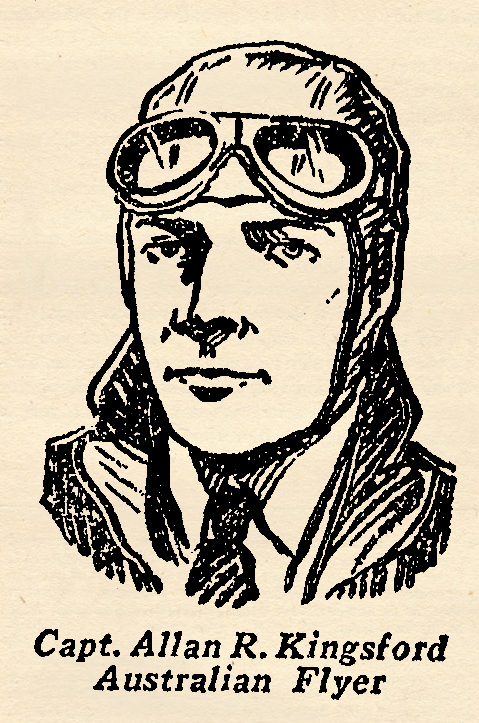 simple private in the Australian Army. The troop ship carrying his contingent was torpedoed by a German submarine and he was cast adrift in a heaving sea at midnight with only a frail spar to buoy him up. He served for over a year as a Lance Corporal of Infantry in Mesopotamia, he determined upon obtaining a transfer to the Hying corps, and after many setbacks he finally was ordered for flight training and sent to England, He became pilot of the Zeppelin night patrol guarding London, later joining that strange organization, the British Independent Air Force, as a bombing pilot attached to 100 Squadron. As a member of that group which served under no army, but roved about from point to point, he took part in 270 night bombing raids and became known as the Ace of night bombers. This account of his most thrilling flight is taken from his private memoirs.
DESTROYING THE BOULAY AIRDROME
by Captain Allan R. Kingsford • Sky Fighters, November 1936
BOULAY! That is a name to conjure up grim thoughts. Boulay Airdrome … the home nest of the Hun Gothas that rained so much terror on Paris and London! When our C.O. told us Intelligence had discovered that the Hun Gothas were planning to put on a massive parade over Paris that bright August night and that 100 Bombing Squadron had been ordered to forestall their show, Bourdegay (my observer) and I danced with glee.
We had tried to destroy Boulay before but something had always been against us . . . bad weather, tricky engines, faulty bombs or too many enemy planes and archies for protection, that we had failed in our efforts. Still Bourdegay and I thought it could be done.
Loaded with sixteen bombs I took off with my flight at midnight and flew over the valley of the Moselle River toward Boulay 90 kilometers behind the front lines. Because of the great distance there and back (180 kilometers) I knew it would have to be a short show on a hot spot. We would have no time to waste when we got there, and we would have to go down through hell fire and brimstone to lay our iron eggs.
Lights Flash on!
Flying at a great height, masked by a convenient layer of clouds that hid our approach from the enemy, I managed to guide the formation intact right over Boulay. Our “Fees” (slang for F.F. 2B’s, the type of bomber they flew) were running perfectly that night.
Just as we appeared over the airdrome the take-off lights on the field flashed on. There were the flights of Gothas running across the field in take-off just below us! And all lit up conveniently like churches for us to pepper at!
Bourdegay hooped and yelled at me to dive down on the nearest one. I threw the Fee into a steep dive. A searchlight flashed on, another and another. The landing field went suddenly dark! The wind whined through the brace wires and struts of my diving plane like shrieking demons, A searchlight beam caught us full. Archie puffs blazed clear as Christmas lights around us. I slipped the Fee, tried to get out of that dazzling light, but the searchlight crew held us in their beam. “I’m going for them!” Bourdegay yelled, swinging his Lewis around and spewing out a long burst.
There was a dazzling flash. The searchlight seemed to explode, spread apart like a pinwheel in a million dazzling fragments. The Gotha ahead of us showed its red exhausts. I was down to three hundred feet now and almost over it. Other “Fees” were following behind me. I could hear the snort of the motors above the roar of my own. Machine-guns on the ground opened up in murderous volley, their tracer streams shooting up like light rays from a setting sun. “Pull her up!” Bourdegay yelled, bending over his bomb sights while his fingers tensed on the trips. I pulled back and he let go. A direct hit! The Gotha exploded in red flames.
I zoomed for the ceiling with all the sauce I had, managed to get up to a thousand feet before another probing finger of light caught up. Bourdegay had dropped two more pills on the way up. One set a hangar on fire. Another exploded on the field and hurled up a geyser of earth which a running Gotha tore into and up-ended on its nose.
Crashing Bullets
I slid the Fee again, but couldn’t escape the beam. Bullets crashed through my wings. Archie blasts rocked us mercilessly. I banked and zig-zagged, stood on my wingtips and dropped three hundred feet, but I couldn’t shake that light; so I determined on a ruse. I dropped a landing flare through the tube, cutting my engines at the same time. It exploded in flame beneath the plane. The Hun gunners thought they had made a direct hit on my ship. They ceased firing and the searchlight beam swung away seeking my mates.
All was bedlam now below on the earth and in the skies above. Boulay Airdrome was in flames. Fed by a fitful wind the flames leaped this way and that, igniting one hangar after another. Several of the Gothas, however, had succeeded in getting into the air.
Bourdegay spied one of these and yelled at me to go for it. He still had two bombs left.
A Fountain of Flame
I sent the Fee around in a split air turn, straightened out and streaked for the running Gotha. Just as I got over it a fountain of flame blossomed under my wings—flaming onions! Up they came like luminous dumbbells in their crazy, erratic trajectory. I lifted the nose and leaped over them, then piqued for the Gotha. Bourdegay tripped his first bomb. It missed.
But the second made a direct hit. The Gotha fell apart in the flame-ridden sky. And just in time—for a formation of night flying enemy fighters thundered in from the east, swarming around my flight like bees and attempting to cut off our return.
Boulay was destroyed, however! We had accomplished our mission. Not a Gotha reached Paris that night, nor any night thereafter. We had scotched that last parade before it began.
How Bourdegay and me got back, I don’t know. I guess we were just lucky, for most of the boys with us did not return.
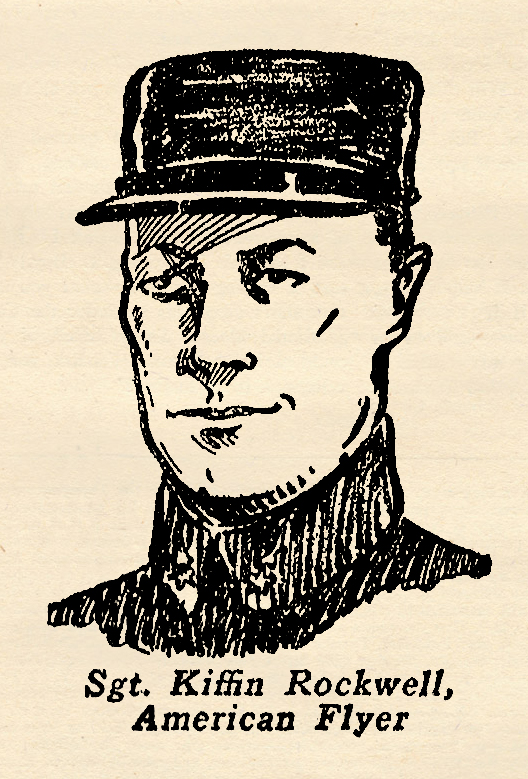 of fortune. Born and raised In Aaheville, N. Carolina, young Rockwell got the wanderlust soon after graduating from the University of Virginia. When the Germans made their surprise move on the forts of Liege, Rockwell was serving in the ranks of the Foreign Legion. For a heroic exploit in hand to hand bayonet fighting, he was awarded the Medaille Militaire. For a whole year he served with the Foreign Legion in the trenches, then transferred to the aviation and went into training at Avord. When Norman Prince formed the first American Flying Squadron in Paris, Rockwell was one of those invited to join. He proved out to be one of the best and most daring pilots of that original band. His career was cut short by his untimely death on September 23rd, 1916.
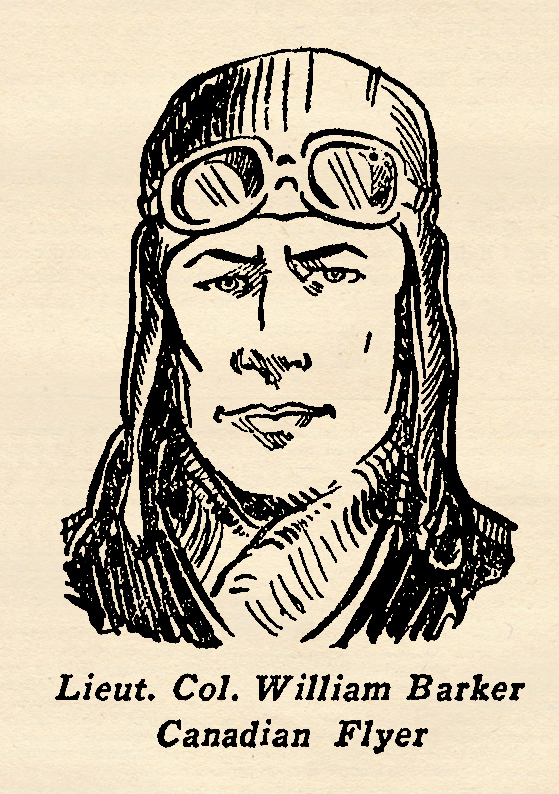 of William Barker’s career on two flying fronts reads more like fiction than fact. Born in the prairie province of Manitoba in 1894, he enlisted as a Private in the Canadian Army at the age of 19. He served in the cavalry before transferring to the flying corps. Barker began as a simple private. But he skyrocketed swiftly through all the grades to that of Lieut. Colonel. His training for a pilot was limited to two flights with an instructor. After that he was turned loose to begin piling up an amazing record. On October 27, 1918, he crowned this amazing record with the most astounding aerial feat of the whole war . . . fighting and escaping from a surrounding net of 6O enemy planes at the dizzy altitude of 20,000 feet.
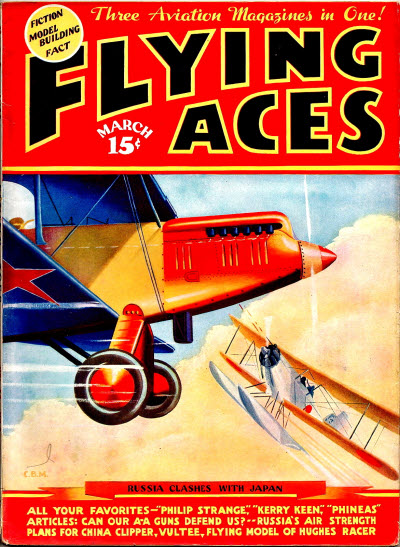 You heard right! That marvel from Boonetown, Iowa is back! And this time we find that Knight of Calamity finds himself shrieking amongst the sheiks in “Doin’s in the Dunes” from the pages of the March 1936 Flying Aces.
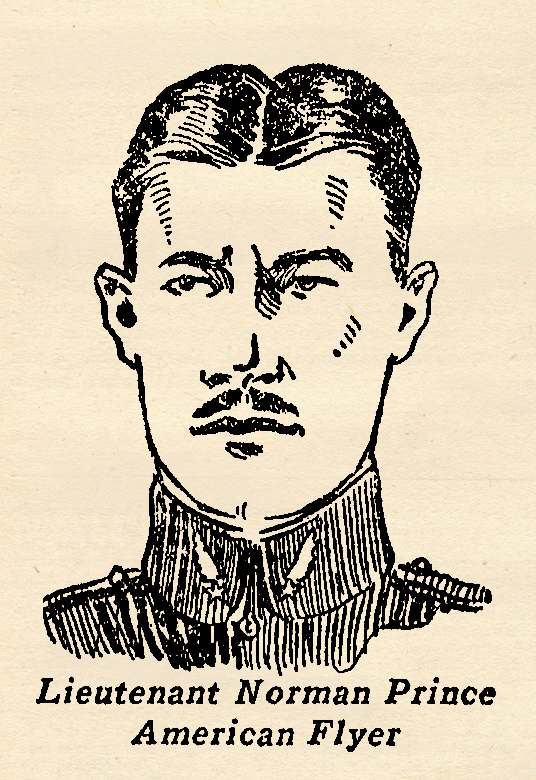 August 31, 1887, scion of one of the blue-blooded families In old Boston, was Norman Pslnce, the founder of the famous LaFayette Escadrille. Educated at Groton and Harvard for a career in business with his wealthy family, he hazarded his promising future and used his wealth and family prestige in overcoming obstacle’s to form a squadron of American aviators for battle at the front. With him in the beginning were Thaw, Chapman, Rockwell, McConnell, Hall and Cowdin. These Americans with Prince made up the roster of the original squadron sent up to the front at Luxeuil in May, 1910.
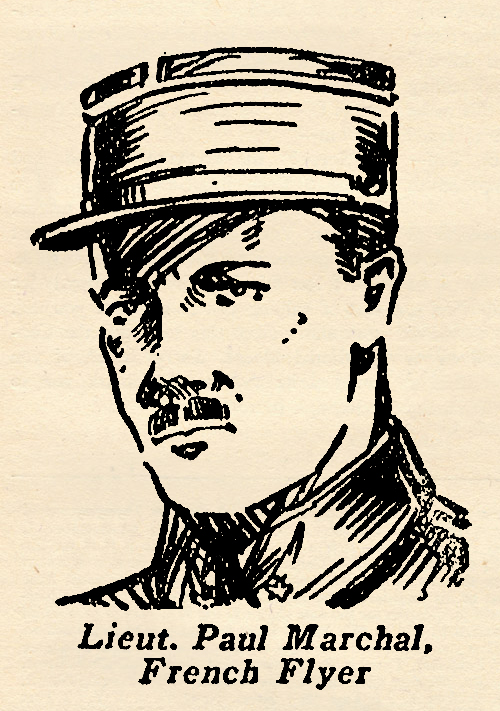 colors on the first day war was declared, and it was he that answered the challenge of that bold German, lieutenant Max Immelmann, when the latter bombed Paris with leaflets calling for surrender. Immelmann had to fly a matter of but a hundred kilometers, or less, to get over the city of Paris. But when Marchal answered his challenge with an identical flight to Berlin, he had to fly 8QO kilometers.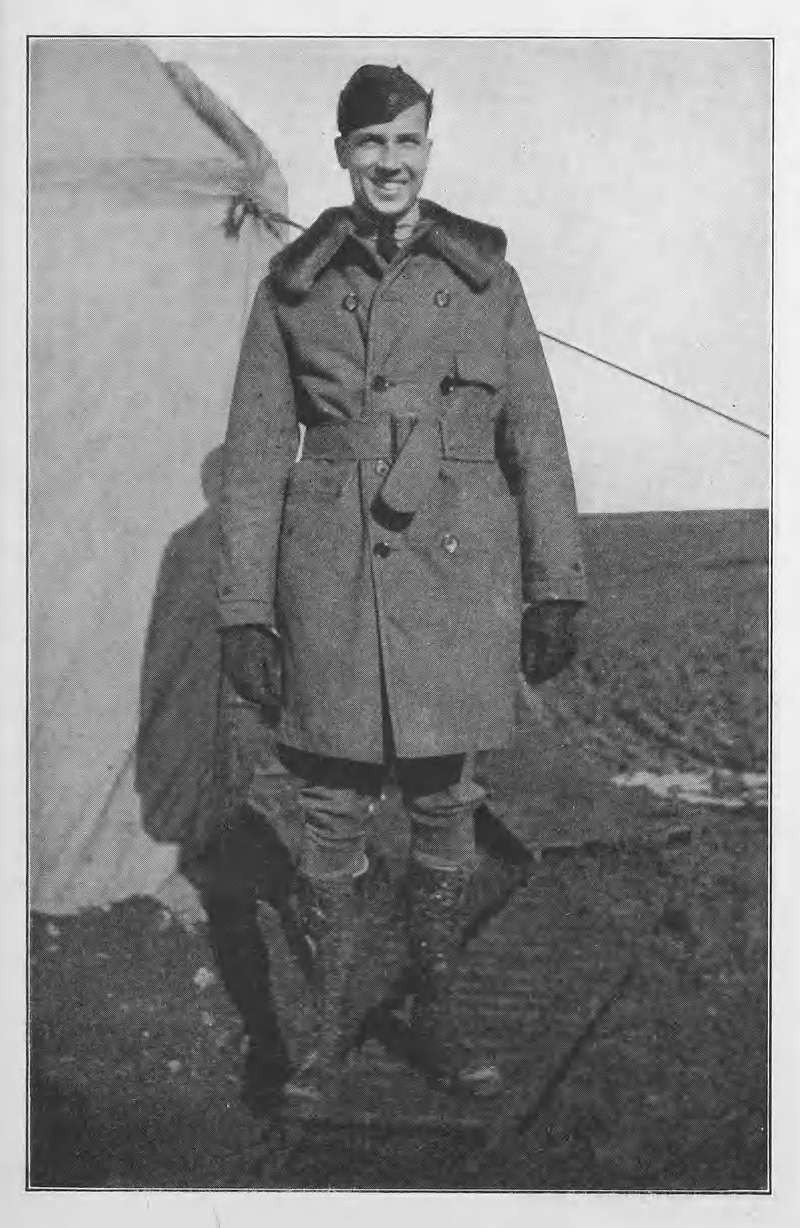
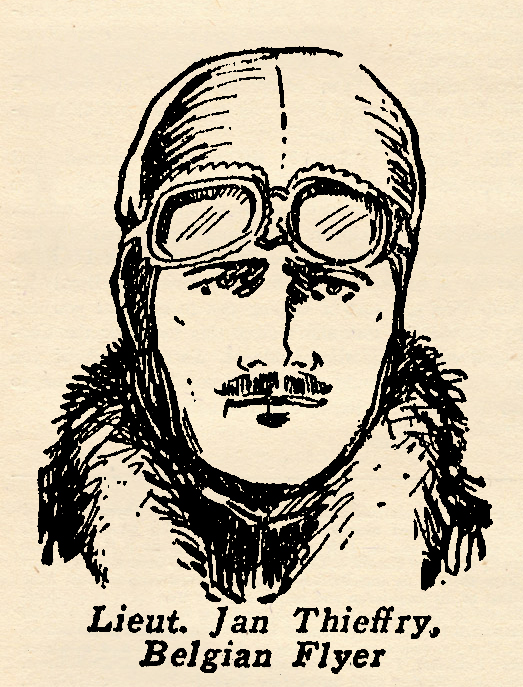 a part in the war of the air as she did in the war on the ground, when her brave soldiers held up the advance of the German hordes at the gates of Liege until the British and French armies could mobilize and get to the front to begin their counter-offensive. Corporal Jan Thieffry was a motorcycle despatch rider at that time. He was taken prisoner by a flying squadron of German Uhlans, but after some months made his escape.
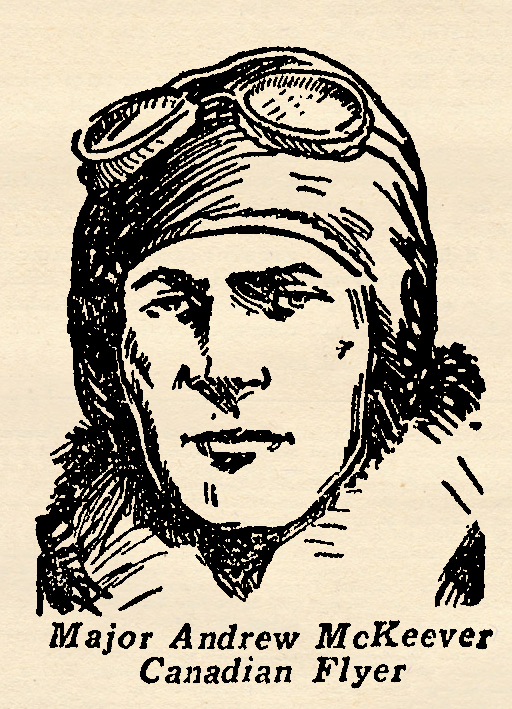 was one of the many daring young sky fighters that came from Canada to add fame and lustre to the deeds and exploits of the Royal Air Force, He put in almost a full year in the infantry before he was transferred for flying training. He joined the R.F.C. in December, 1916, was commissioned a lieutenant and sent over to the 11th Observation Squadron in France on May 16th, 1917.
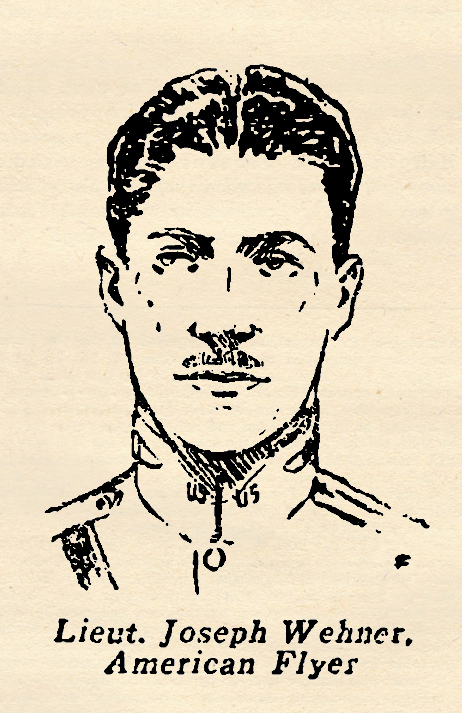 was the most daring sky fighter in the American Air Service. But it is hard to say whether he would have established the record he did without the aid of Joe Wehner, his constant and steadfast companion and buddy in the 27th Squadron. He was Luke’s alter ego.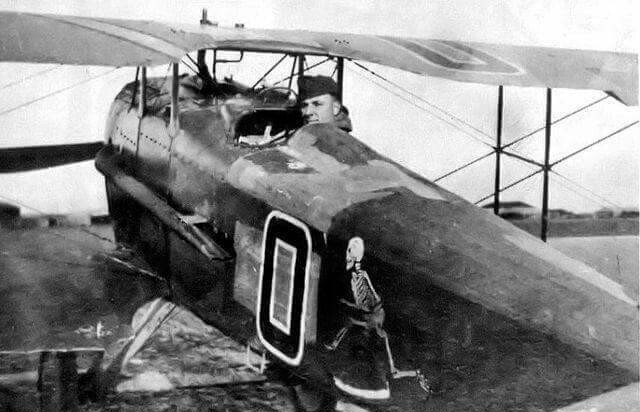
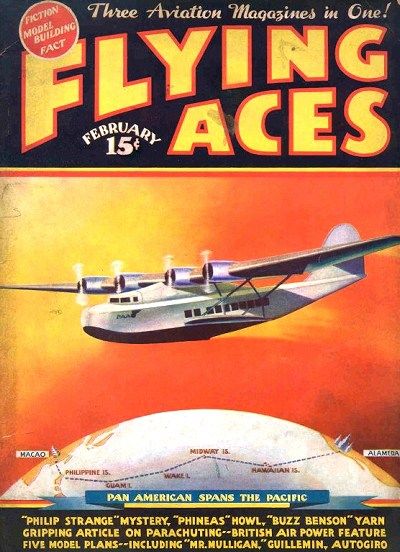 That sound can only mean one thing—that Bachelor of Artifice, Knight of Calamity and an alumnus of Doctor Merlin’s Camelot College for Conjurors is back and this time the marvel from Boonetown is caught between two woman and finds himself the guest of honor at a T.N.T. party! From the February 1936 issue of Flying Aces it’s “T.N.T. Party” (with Phineas serving the lemon!).