


From the Scrapbooks: The Sky Riders Club
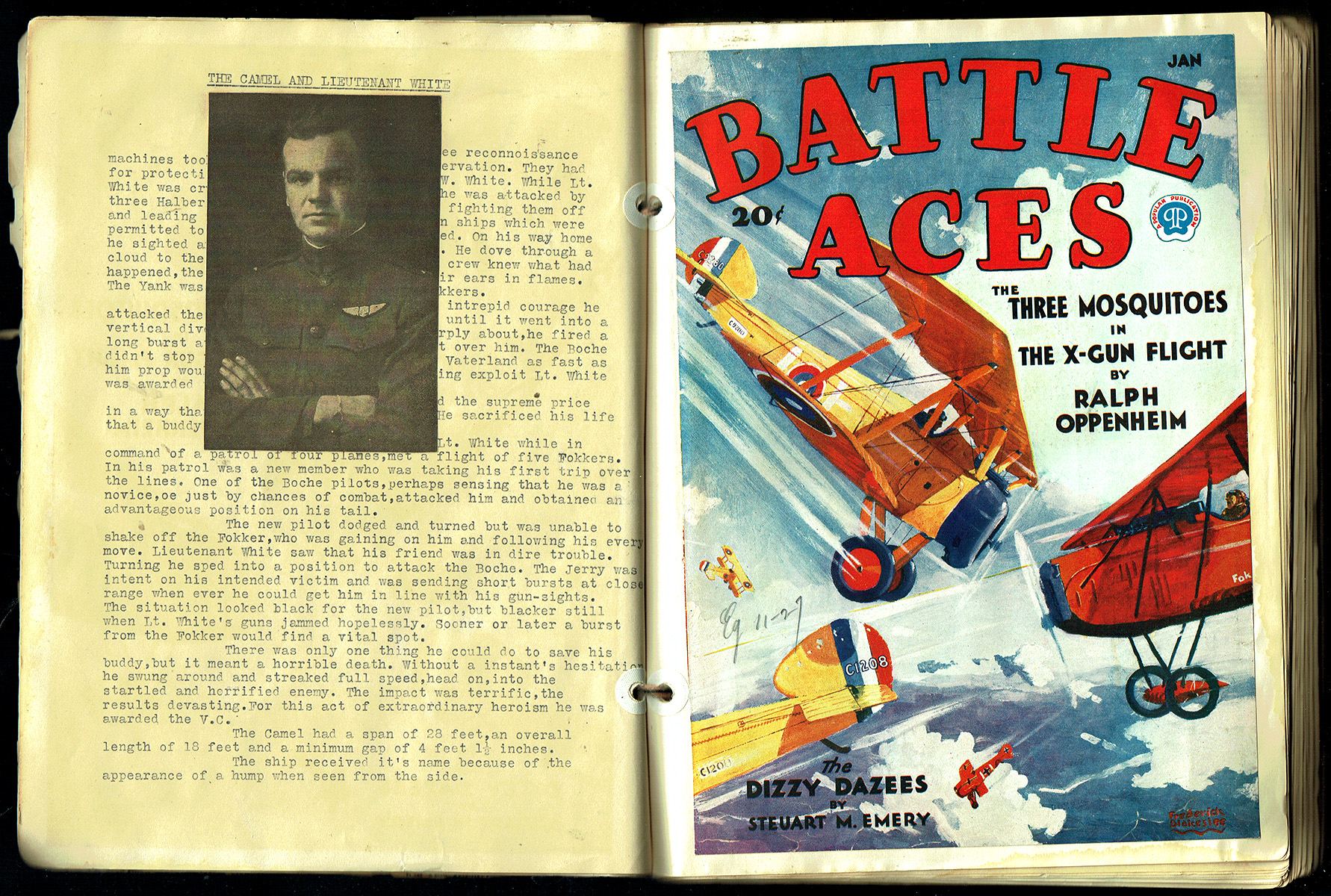
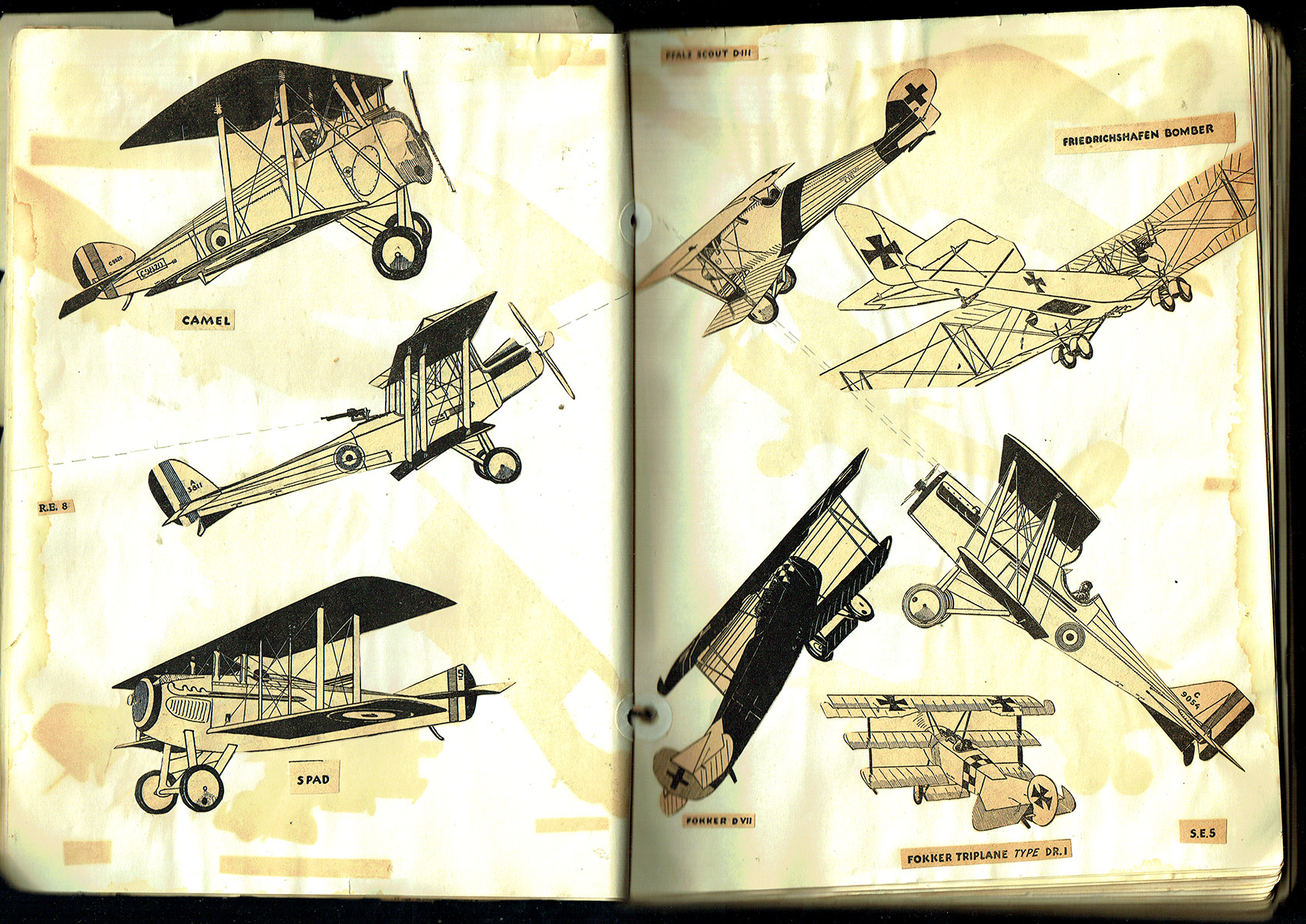
THIS Holiday Season we’re delving into a pair of scrapbooks that were created in the late 20’s and early 30’s by an industrious youth, Robert A. O’Neil, with a keen interest in all things aviation. The books contain clippings, photos and articles from various aviation pulps as well as other magazines. What has been assembled is a treasure trove of information on planes and aces of WWI.
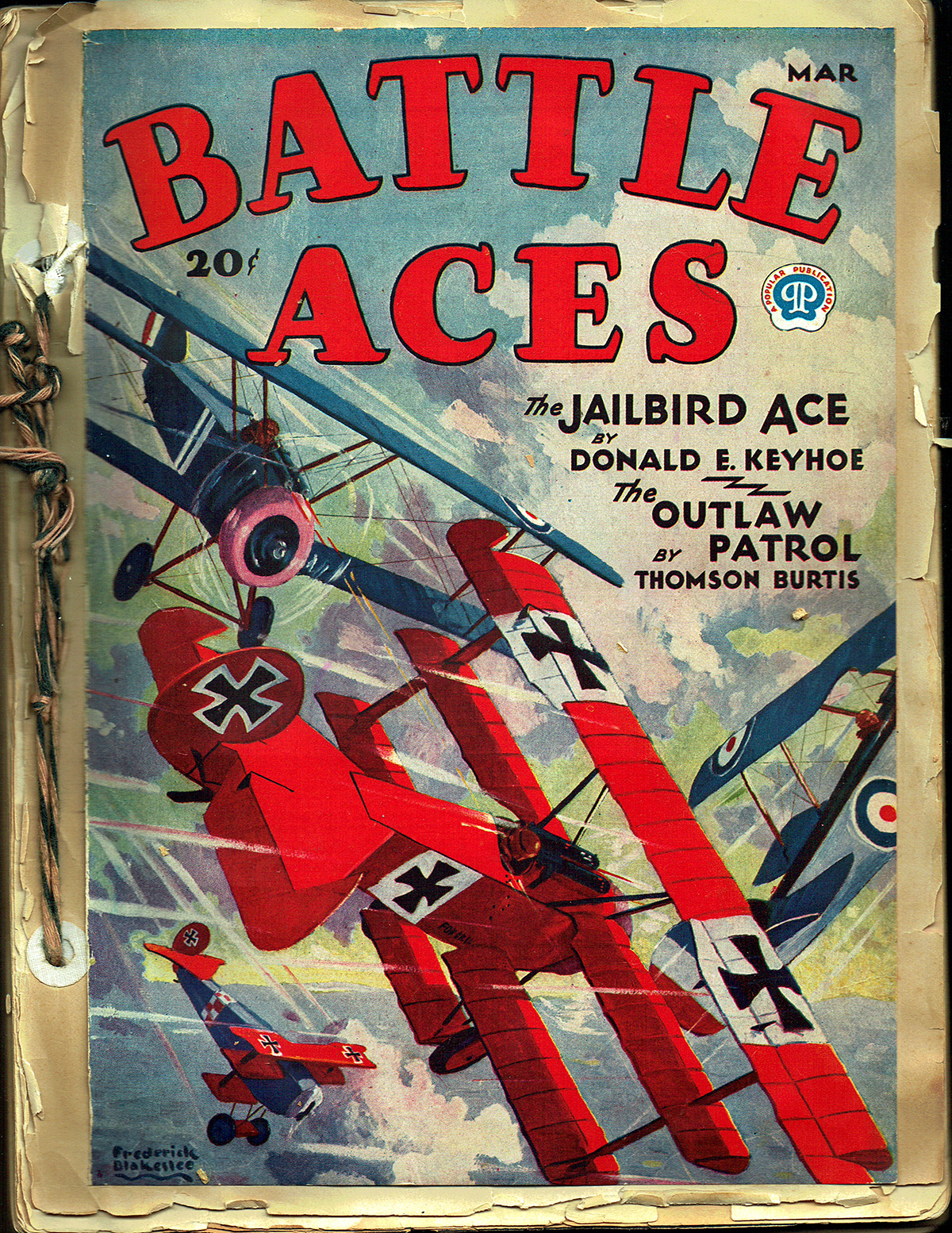 Like many in the late 20’s and early 30’s, Robert O’Neil was fascinated with aviation and as such, a large part of both volumes of his scrapbooks is taken up with a cataloging of the many different types of planes. But amongst all the planes and air race flyers and info on Aces are some surprising items.
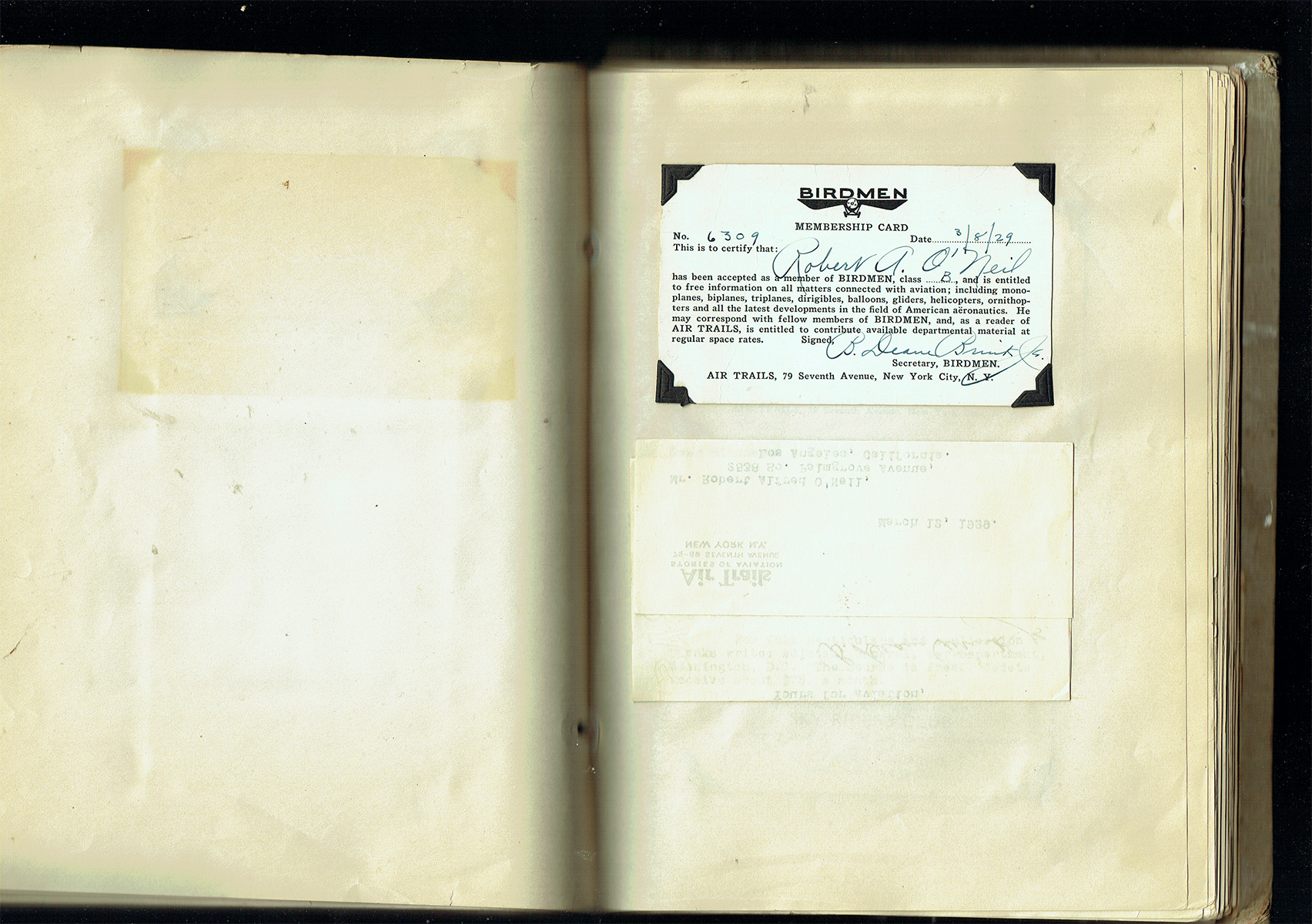
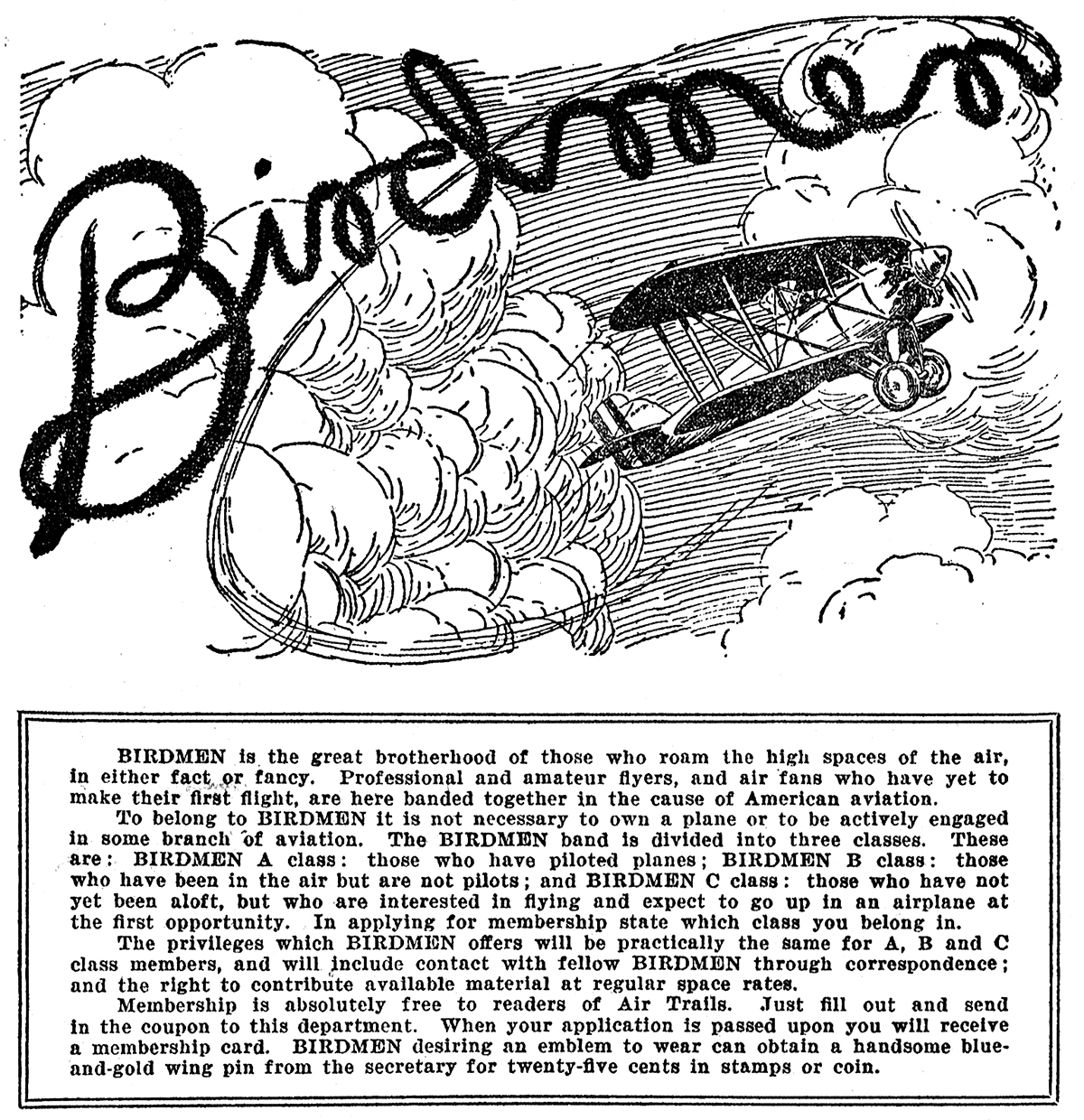
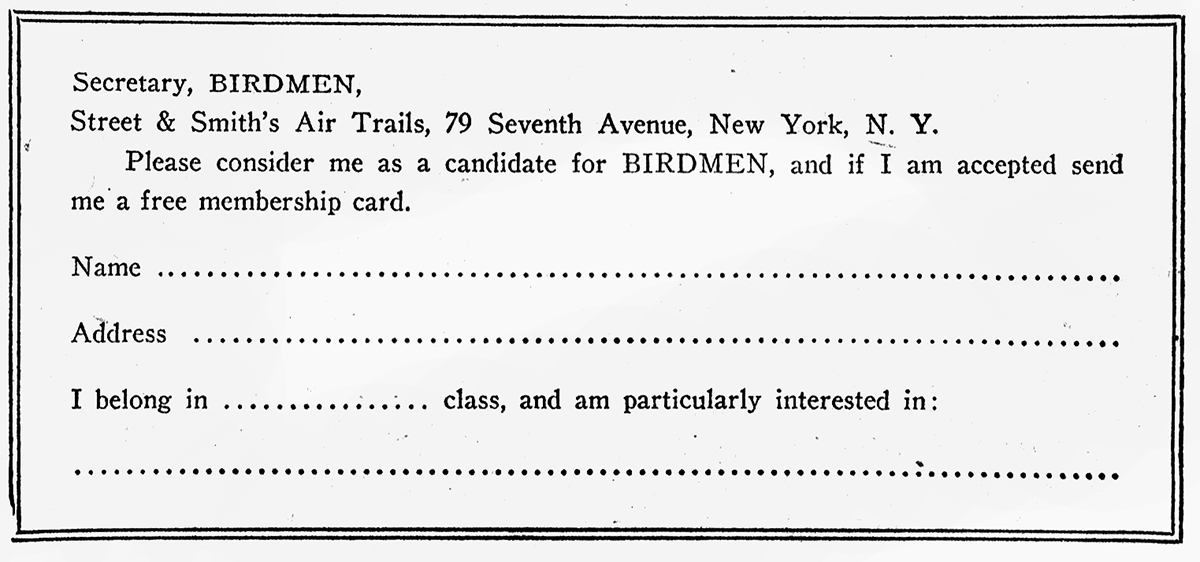
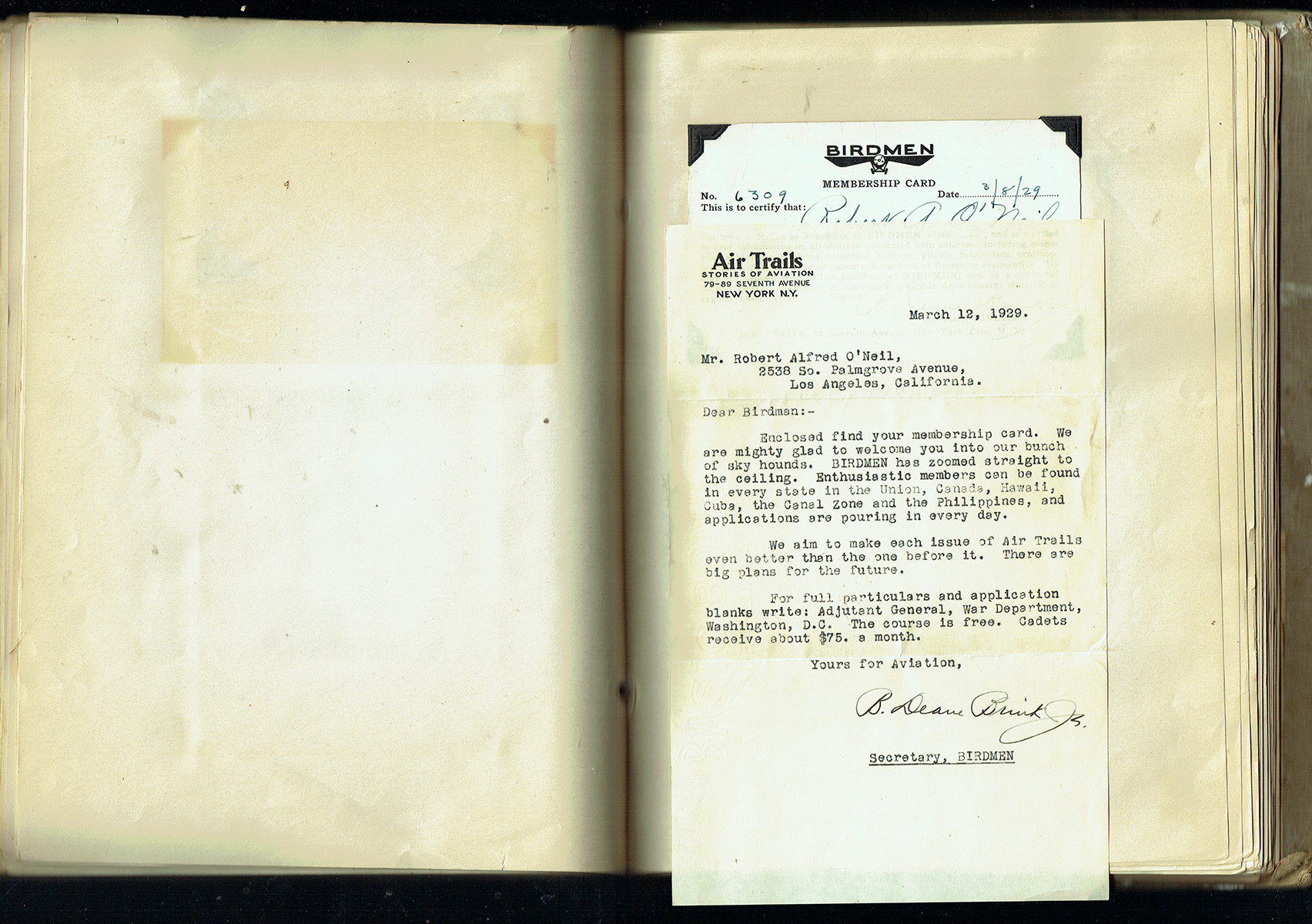
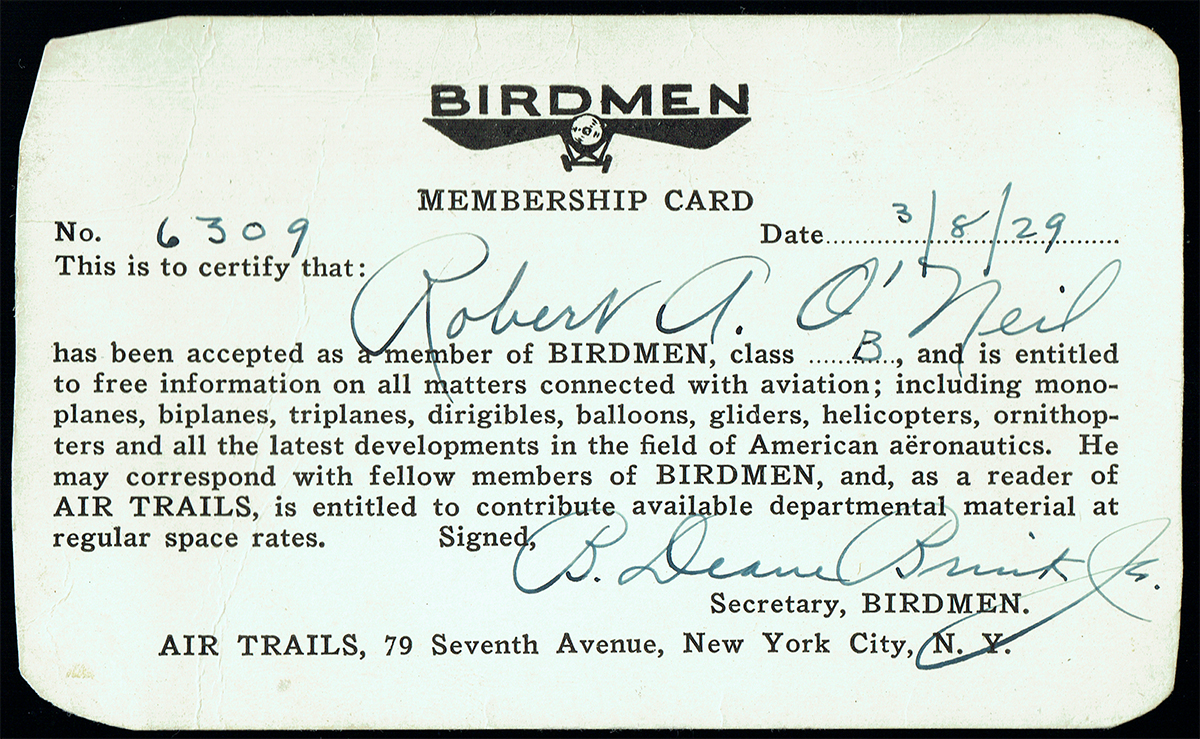
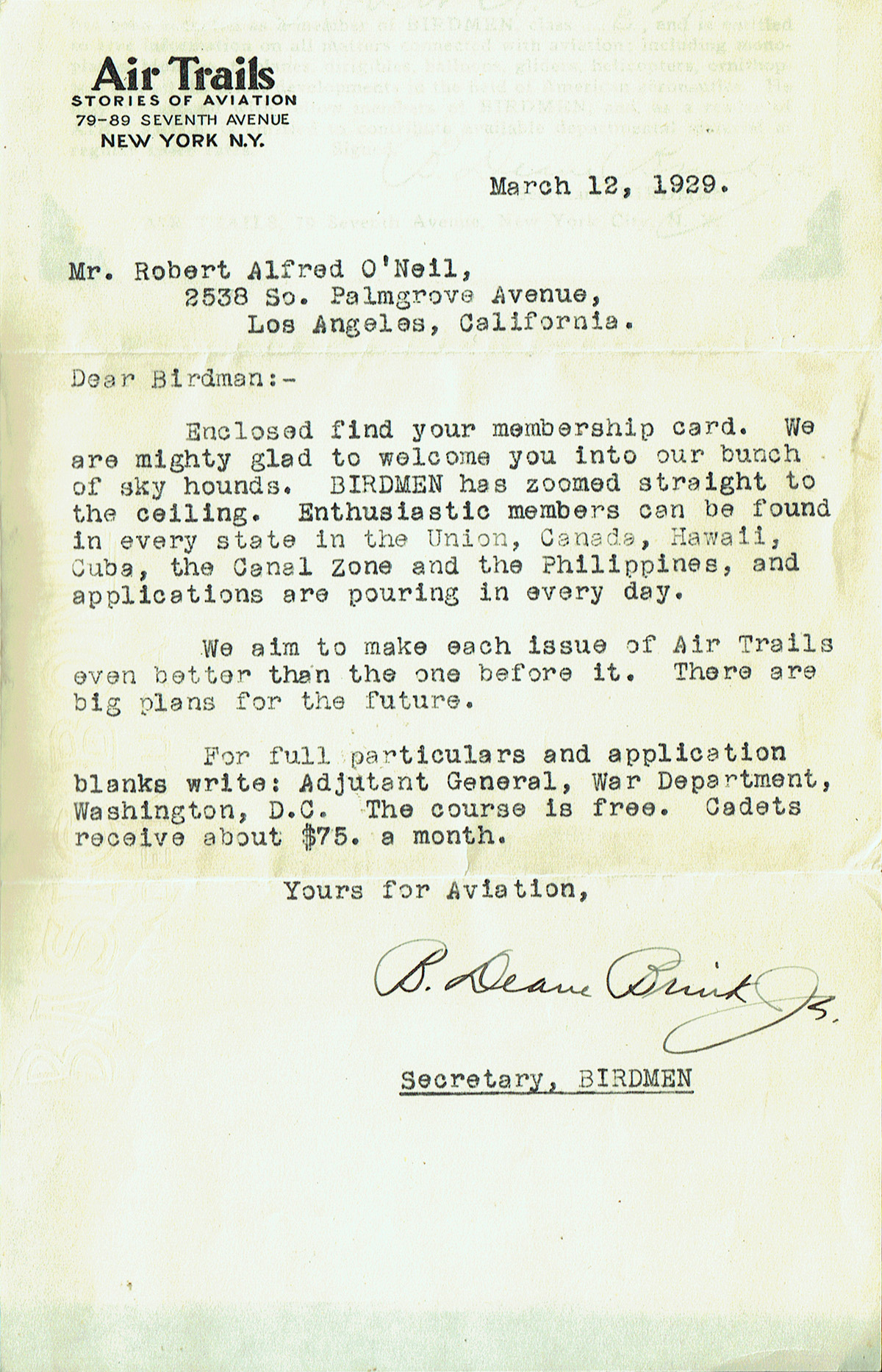
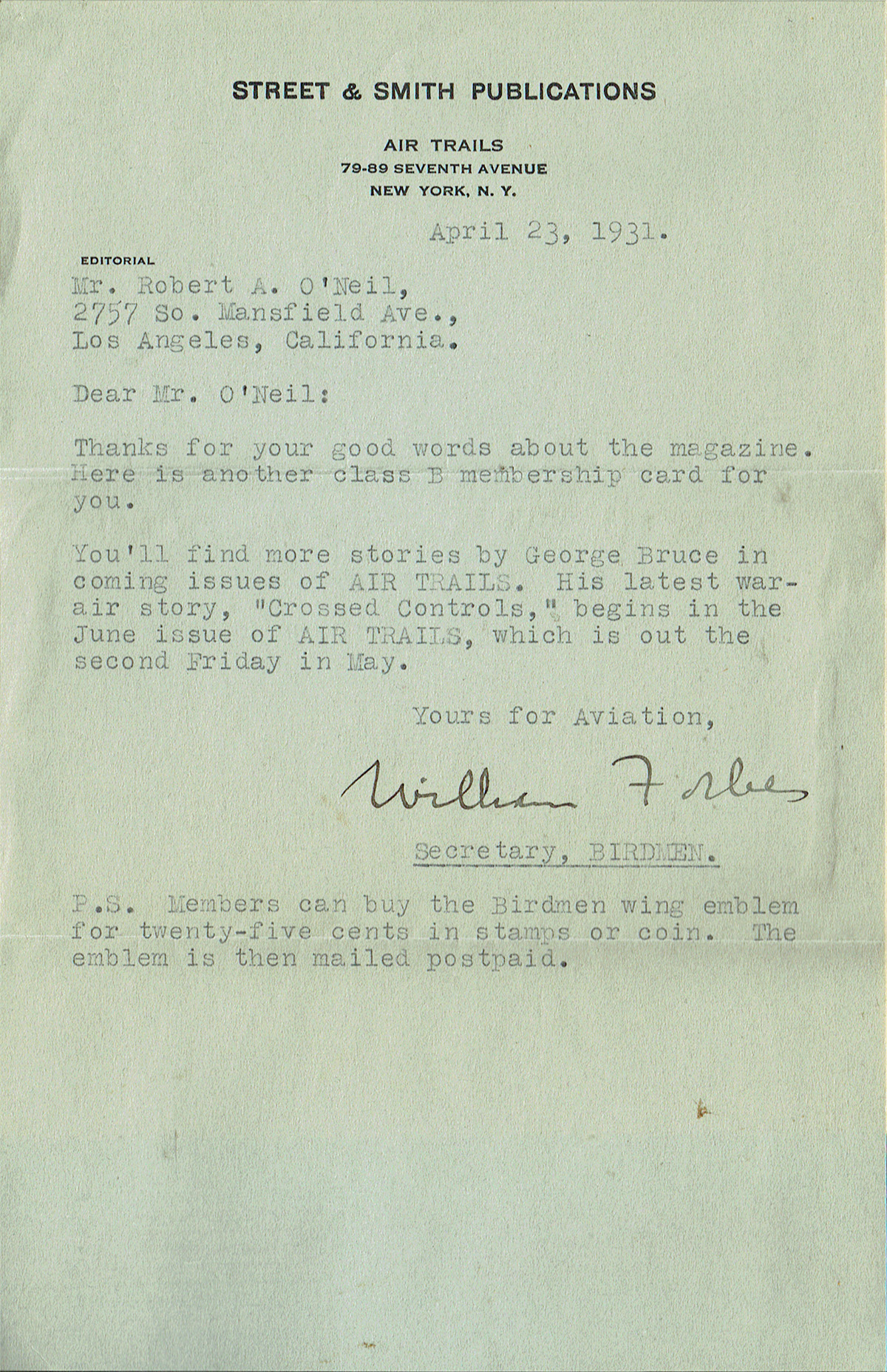
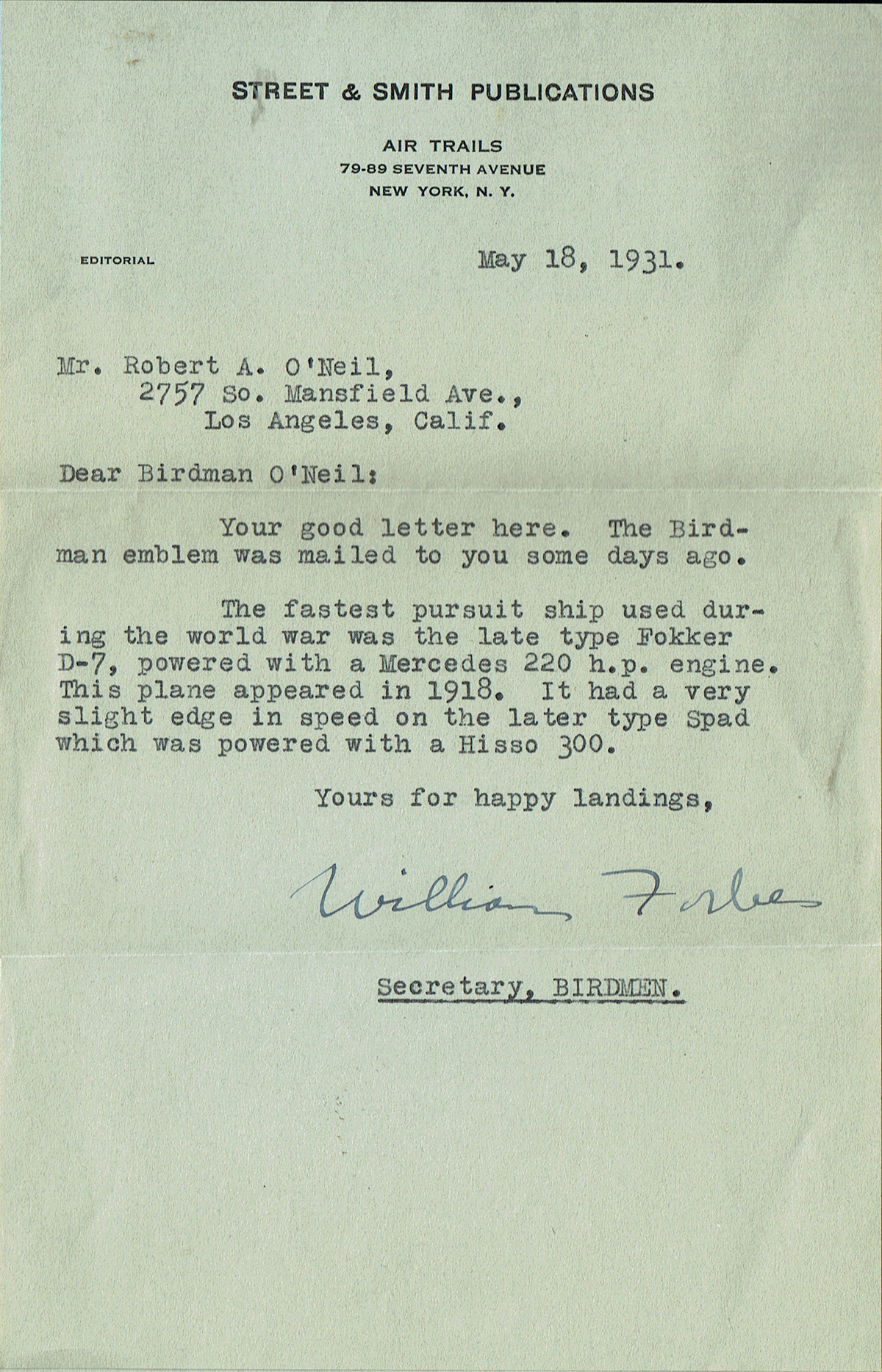
Turning the page, we find one of the Birdmen Club cards paired with the Sky Riders Club Card!

The Sky Riders magazine started in November 1928. A year later, in the November 1929 issue there was a brief mention in the magazine’s letters column, The Bung Bung, that they would be announcing details of a club in the subsequent issue. And sure enough, avid Sky Riders readers who had been pestering the editors for a club were granted their wish.
As the chief laid out the Sky Riders Club guidelines in the December 1929 issue:
First off, the name will be THE SKY RIDERS CLUB, and it will be open to all readers of the mag. But just being a reader of the mag is no free ticket for joining this new bunch of cloud-busters, not on your dizzy life.
The club will be divided into three squadrons. Squadron 1 includes those who have actually piloted a plane, and by piloting a plane, I don’t mean no dare-devil stunt like pushing the joystick around inside the hangar. To get into Squadron 1, the requirements are that you send in one coupon and a letter stating (a) why you are interested in aviation, and (b) one constructive idea that you have for the promotion of aviation.
Squadron 2 includes those who have been up in a plane, regardless of whether they have handled the joystick themselves or not. These members will be required to send in the coupon from two successive issues of the mag, together with the letter as explained above.
And Squadron 3 will include those modocs who have never been up in a plane, but are just feverish with the aerial itch. Membership in Squadron 3 will be given to these who send in the coupon from three successive issues of the mag and also the letter as outlined for members of Squadron 1.
If you are accepted into the club, you will receive a membership certificate, and the right to wear the silver wings of the outfit. The silver wings can be had by sending in fifty cents, but this is not a commercial organization and will make no money. As a matter of fact, there will be various contests in the future with prizes awarded to the winners. But I’m going to wait until the next issue before I get all steamed up and fiery about what this nose-diving club is going to do.

It was announced in the March 1930 issue that the silver wings were just being made and would be sent to people starting the next month.
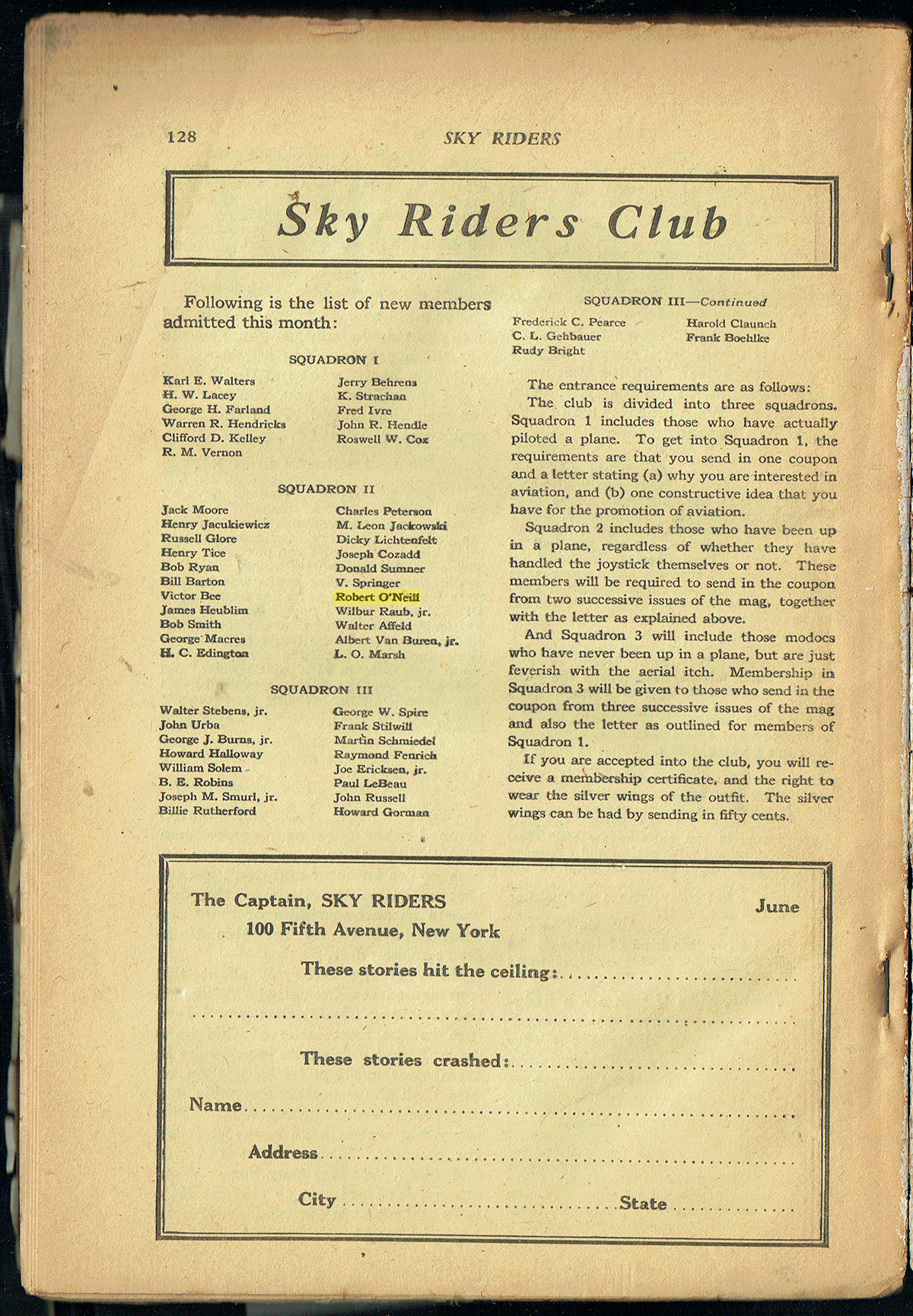 Robert was listed with the new members in the June 1930 issue.
(That’s the coupon at the bottom of the page.)
By the September 1930 issue, 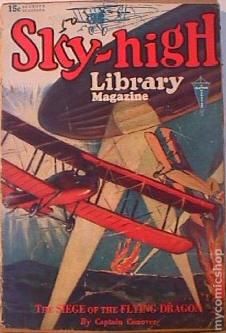 The Sky Riders Club had been combined with those members of the short lived Flying Corp Cadets which had been formed by readers of the first and sadly only issue of Clayton Magazine’s Sky High Library published in February 1930. The increase in new memberships allowed them to drop the price of the silver wings pin from 50¢ to 25¢ (September, 1930)
Sadly, Sky Riders published their final issue in May 1931.

The Club page from the February 1931 issue with angular wings logos for both the SKY RIDERS CLUB and FLYING CORP CADETS.

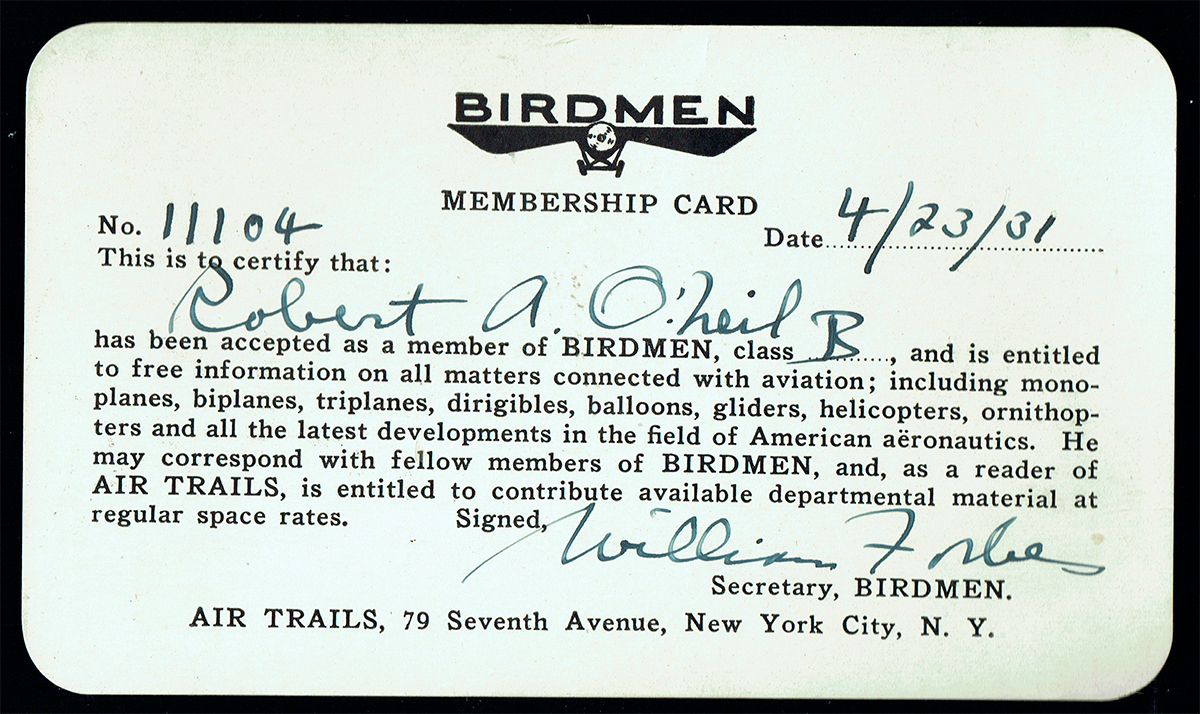
Robert had also joined the Flying Aces Club. The FAC is so ubiquitous, I thought it best to cover the two clubs cards we had not seen before. Plus, the FAC itself could fill a whole month of posts to cover all they had to offer. Here is a comparison of the four cards Robert included in the scrapbooks.

The FLYING ACES CLUB card measures: 2.5″ x 4″; the SKY RIDERS CLUB card is:
2.75″ x 4.5625″; while the BIRDMEN CLUB card measures: 3″ x 5.125″.

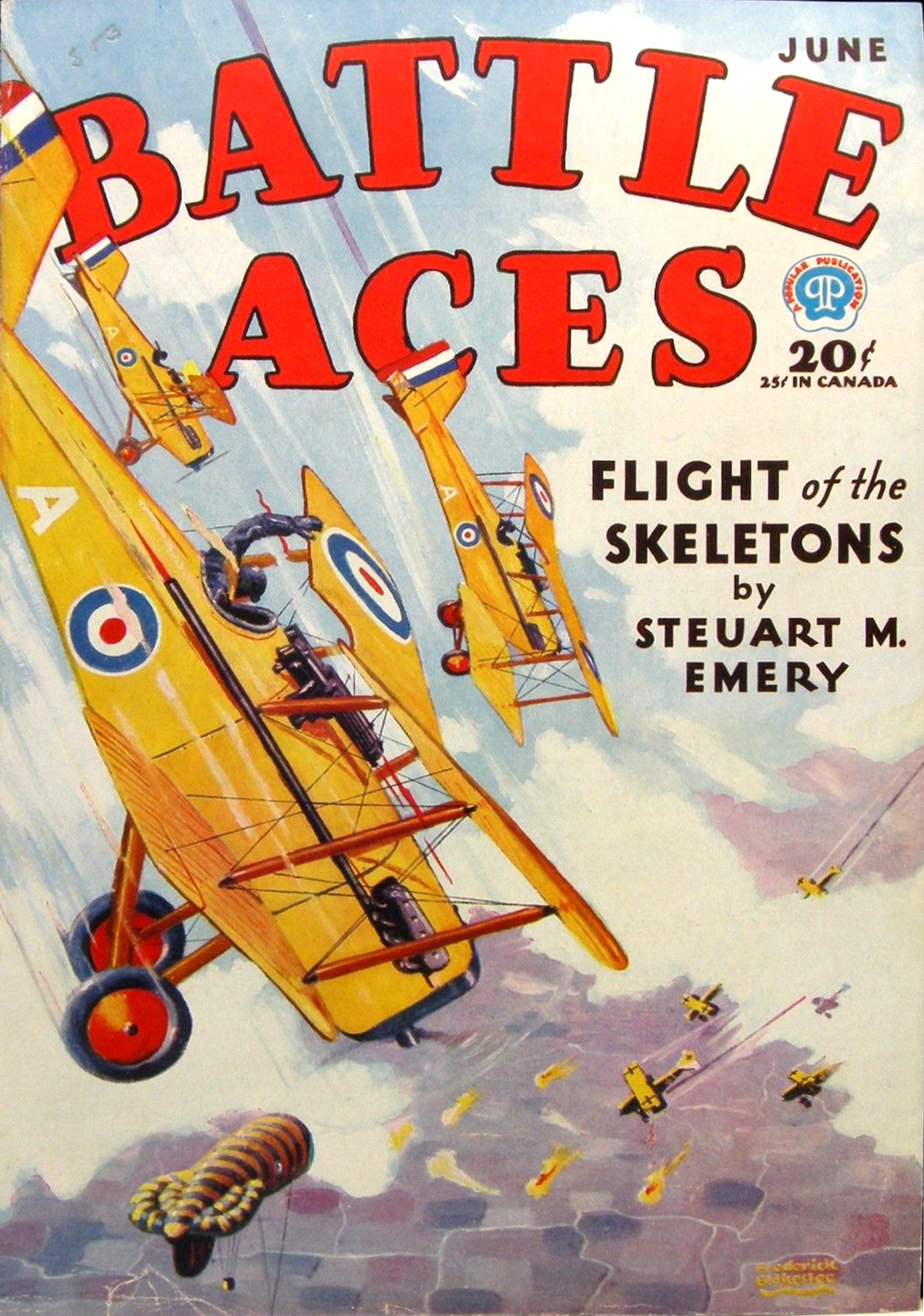
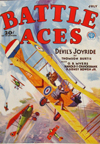
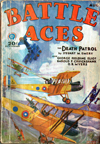
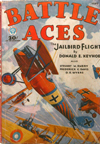
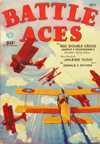
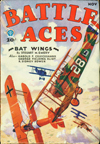
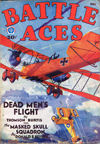
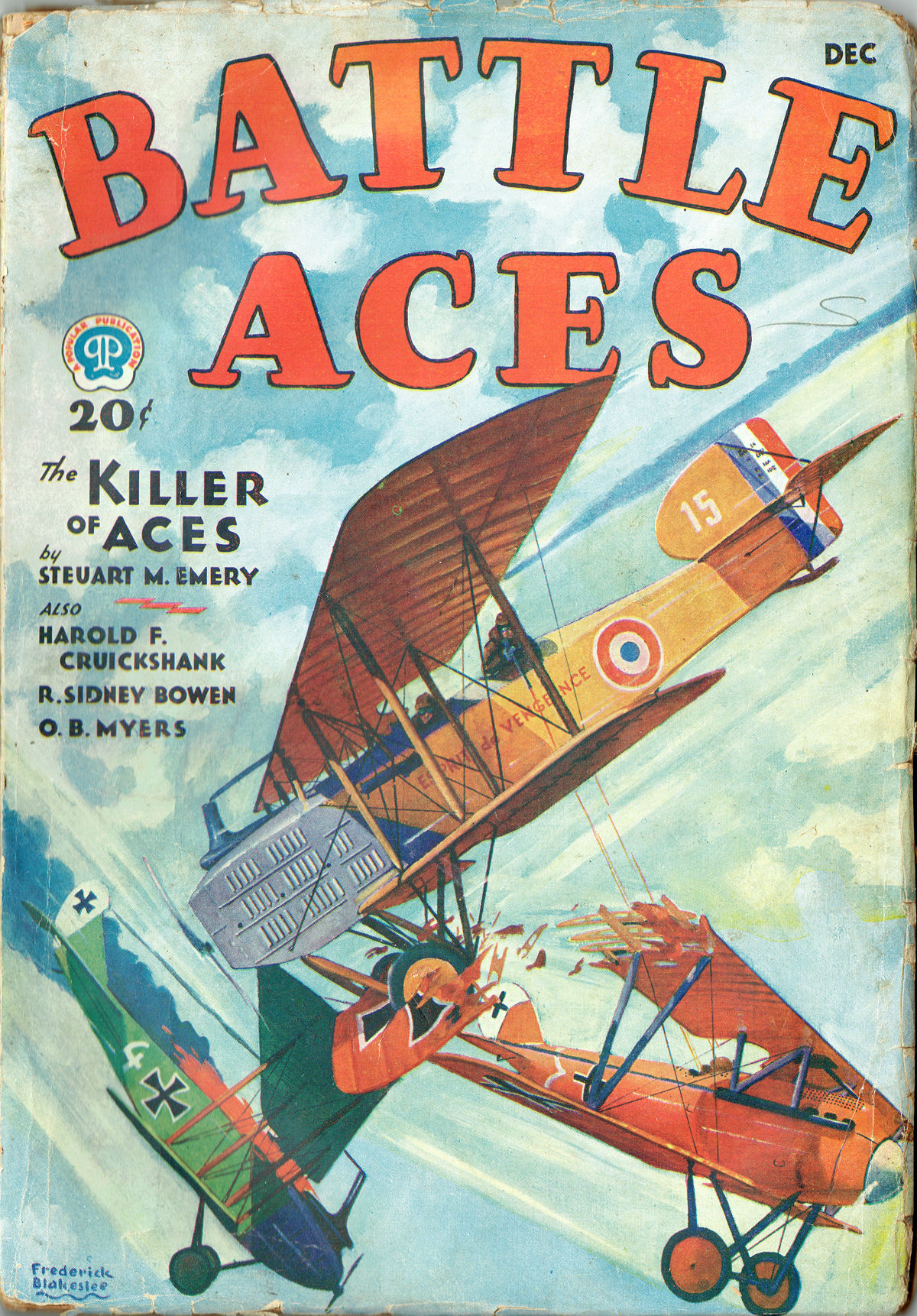
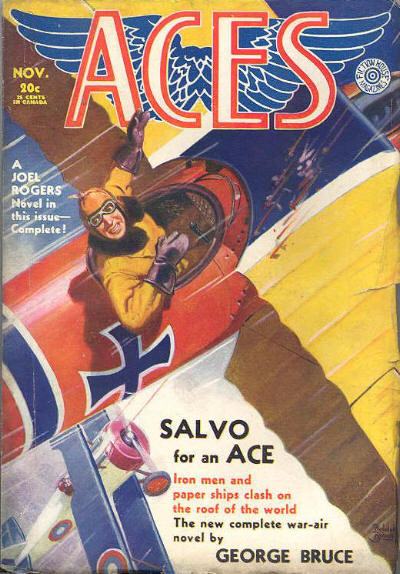 by H.P.S. Greene. Henry Paul Stevens Greene wrote aviation tales from the late 20’s to the early 40’s for magazines like Wings, Air Stories, Sky Fighters and, the magazine this story appeared in—Aces.
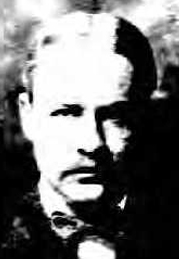 Henry Paul Stevens Greene was born in Boston, Massachusetts, on October 28, 1892, the son of Amy Bodwell Stevens and Henry Brooks Greene. (According to his own genealogical research, both the Bodwell and Stevens families were active in the American colonial and revolutionary periods.)
  Canada’s very own
 of our twelve tales from the Christmas 1931 issues, and what better way to go out, than with a story from the ever-reliable Arch Whitehouse! Always a crowd-pleaser, Whitehouse wrote hundreds of tales for the air pulps with many featuring series characters. Possibly his longest running series was Buzz Benson! Buzz was featured in every issue of Sky Birds starting with the February 1930 issue. When Sky Birds closed up shop, Buzz moved over to Flying Aces where he continued for two more years.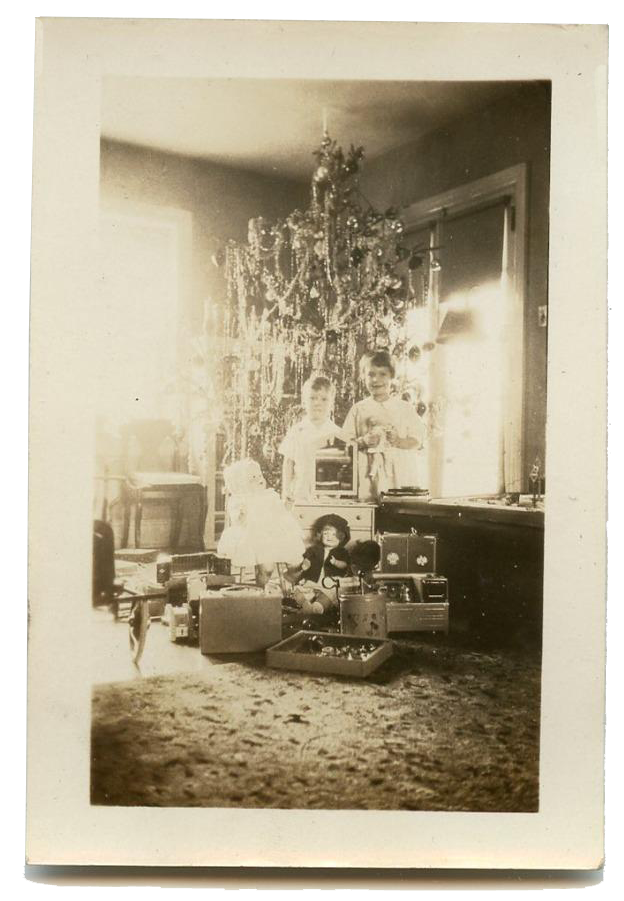
 the mantle with care, in hopes that St. Nicholas soon will be there. But we still have time for one more story before the big day—and this time it’s an actual Christmas themed story by Edgar L. Cooper.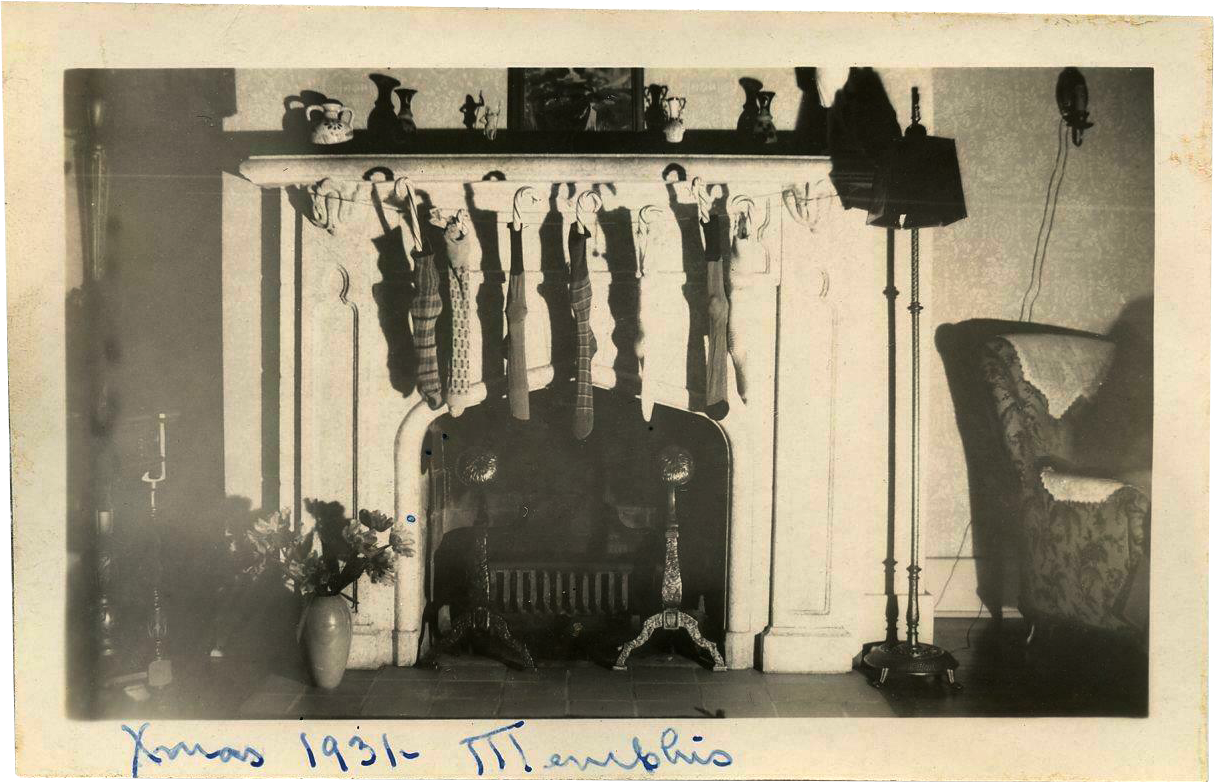
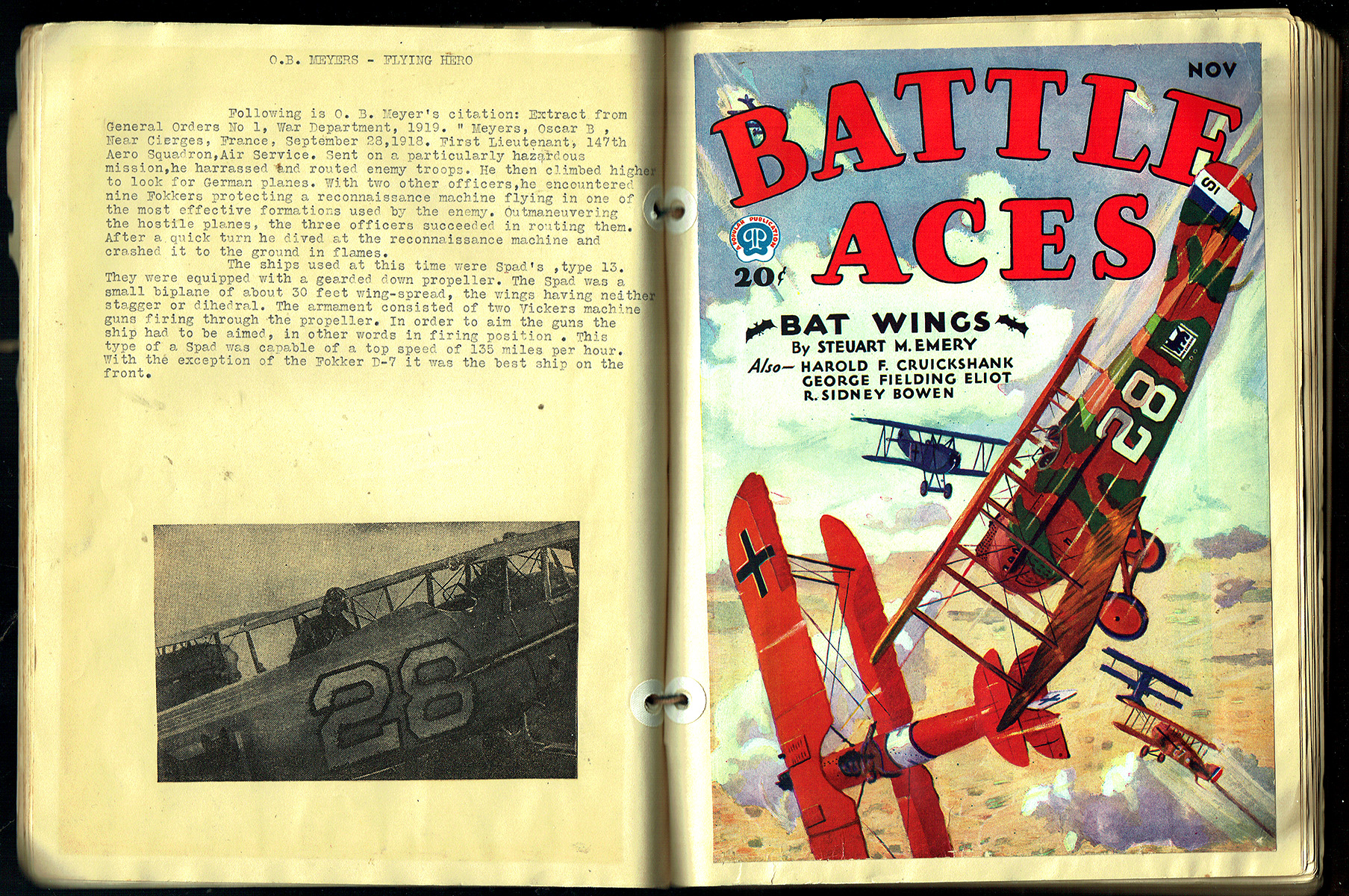
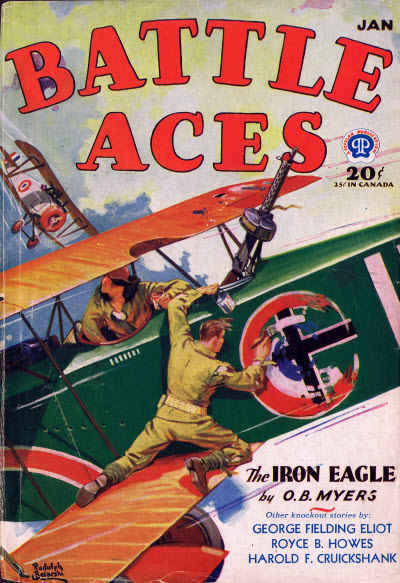
 O.B. Myer’s didn’t really have any series characters. The few recurring characters he did have in the pages of Dare-Devil Aces, we’ve collected into a book we like to call “The Black Sheep of Belogue: The Best of O.B. Myers” which collects the two Dynamite Pike and his band of outlaw Aces stories and the handful of Clipper Stark vs the Mongol Ace tales. If you enjoyed this story, you’ll love these stories!
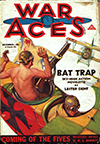 poignant story from the prolific pen of Robert Sidney Bowen. Bowen was a war pilot of the Royal Air Force, as well as the editor of one of the foremost technical journals of aviation in addition to penning hundreds of action-packed stories for the pulps.
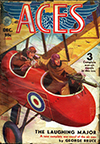 a story from the highly prolific George Bruce. Bruce, a former pilot, began writing in the 1920’s and became noted for his aerial war stories—several publications even bore his name. In the 1930’s and ’40’s he transitioned into screenwriting for Hollywood action films and then into tv in the 1950’s and ’60’s.