“Lives of the Aces in Pictures – Part 34: Lt. Rudolph von Eschwege” by Eugene Frandzen
Back with another 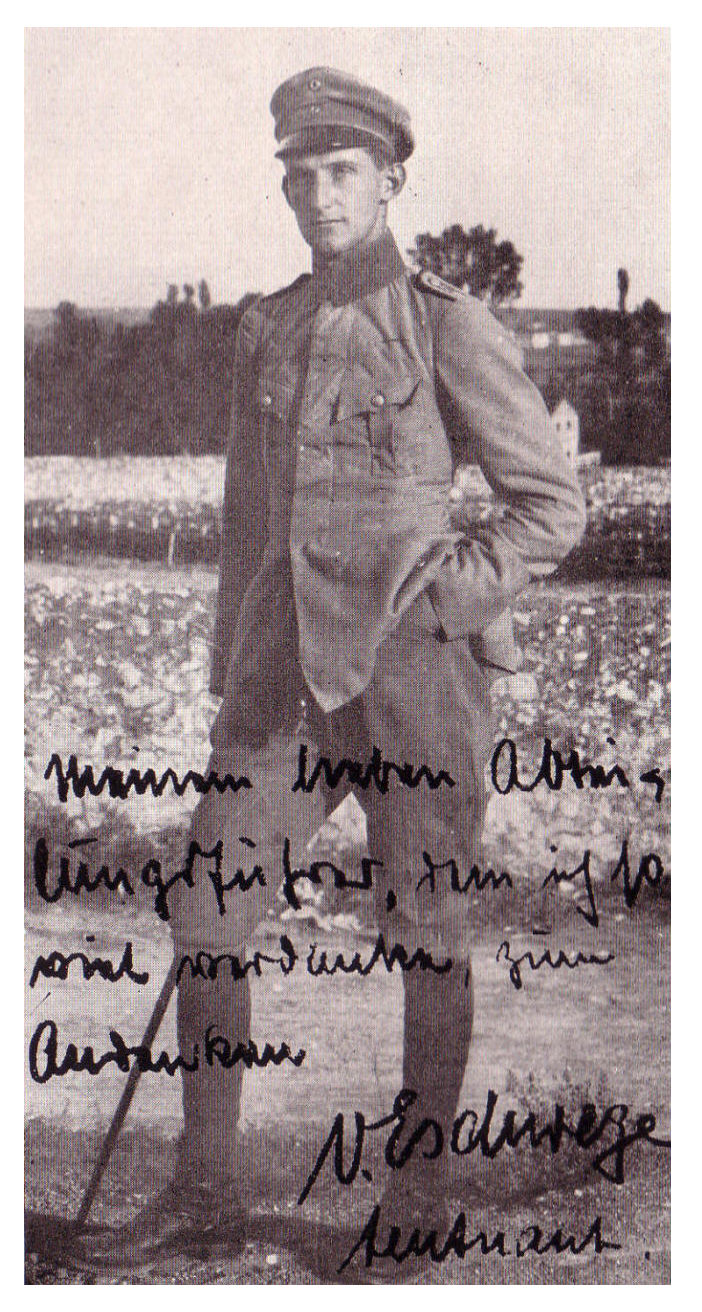 of Eugene Frandzen’s “Lives of the Aces in Pictures” from the pages of Flying Aces Magazine. The series ran for almost four years with a different Ace featured each month. This time around we have the April 1935 installment featuring the illustrated biography of the “German Eagle” himself—Lieutenant Rudolph von Eschwege!
Rudolph von Eschwege, known as the Eagle of the Aegean, was a German Ace who fought on the lesser known Balkan front and based at Drama, Greece. However, von Eschwege had been enlisted in the army before the war, and first saw combat with the 3rd Mounted Jaeger Regiment on the Western Front. It was several months later that he would take pilot training and transfer to aviation. First with a reconnaissance unit until he was commissioned in the Autumn of 1916 and tranfered to the Macedonian Front.
Unlike on the Western Front, German aircraft in Macedonia were greatly outnumbered. And young von Eschwege was given a tall order. He was responsible for protecting all German aircraft as well as intercepting any identified Allied aircraft along 37 miles of the Struma River and 62 miles of the Aegean coast—and he was also supposed to protect the Bulgarian 10th Division from aerial attacks. All this essentially on his own. With the odds against him—where Allied craft outnumbered Central Powers 10 to 1—Eschwege managed to carve out a fierce reputaion in the air. He is credited with 20 confirmed and 6 unconfirmed victories.
He was killed in action on the 21st of November 1917 when he attacked a British observation balloon that had been fitted with a dummy observer and 500 pounds of high explosives.
“Lives of the Aces in Pictures – Part 33: Lieut. Scaroni” by Eugene Frandzen
Back with another of Eugene Frandzen’s “Lives of the Aces in Pictures” from the pages of Flying Aces Magazine. The series ran for almost four years with a different Ace featured each month. This time around we have the March 1935 installment featuring the illustrated biography of Italy’s First-Ranking Living Ace (at the time of publication (second over-all for Italy during WWI)—Lieutenant Silvio Scaroni!
Scaroni is credited 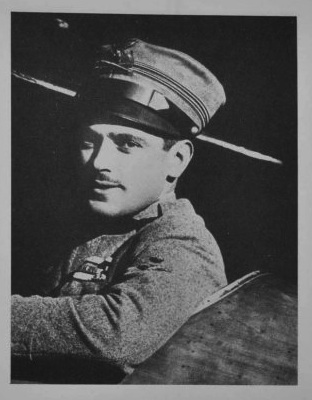 with 26 victories and an additional six unconfirmed! He is beat by the great Francesco Baracca who is credited with 34 victories, but Baracca did not survive the war. Scaroni did and went on to help establish a flying school for the Chinese Air Force at Loyang and set up an aircraft plant to produce Fiat fighters and Savoia-Marchetti bombers under license.
When WWII came along, it was General Scaroni who commanded the Italian air forces against France at the outset of Italy’s involvement and later transfered to Sicily in charge of units fighting against Malta. On September 8th, 1943 Scaroni decided to stop his war and hid in a small town near Garda lake until the end of the war. He entered the reserve after the war ending his career in 1958 with the rank of “Generale di Squadra Aerea.”
He passed away on 16 February 1977. He was 83 years old.
“Lives of the Aces in Pictures – Part 32: Wendell W. Rogers” by Eugene Frandzen
Back with another of Eugene Frandzen’s “Lives of the Aces in Pictures” from the pages of Flying Aces Magazine. The series ran for almost four years with a different Ace featured each month. This time around we have the February 1935 installment featuring the illustrated biography of that famous Canadian Ace—Captain William Wendell Rogers!
RFC Captain Rogers is credited with nine aerial victories. All these accomplished while flying Nieuports. His most famous victory was singlehandedly shooting down an enormous Gotha G bomber piloted by Blue Max winner Hauptmann Rudolf Kleine—the two crew members, the Pilot Lt von der Nahmar and rear gunner, Lt.Werner Bulowius chose to jump out while Hauptmann Klein remained aboard and went down with the ship.
Canada Veterans Hall of Valour sketches out his later life:
For his achievement, Rogers was awarded the Military Cross (MC) and a special commendation from General Trenchard, Head of the RFC. Shortly afterwards he took up instructional duties with the RAF in Canada for the rest of the war.
Coming to Saint John N.B. in 1924, Rogers was soon active in promoting a Flying Club and the city’s first airport, constructed at Millidgeville.
Rogers first operated a General Motors agency in Saint John N.B. In 1933 he joined the Irving Oil Company in charge of their trucking operations. In 1934 management of the Saint John Motor Line was added to his duties and in 1940 he became President of SMT (Eastern) Ltd.
In October 1938 he was appointed Commanding Officer of No. 117 RCAF Fighter Squadron (non permanent) with the rank of Squadron Leader and there was a rush of applications to join the unit, which had been established in Saint John.
He married Sally Head of Charlottown PEI and they had two sons; Frederick and Lloyd. In 1949, with his two sons, he established a plastic manufacturing business under the firm name of Rogers Bros., Ltd. On January 11, 1967 he died in Saint John hospital after a long illness.
“Lives of the Aces in Pictures – Part 31: Oswald Boelcke” by Eugene Frandzen
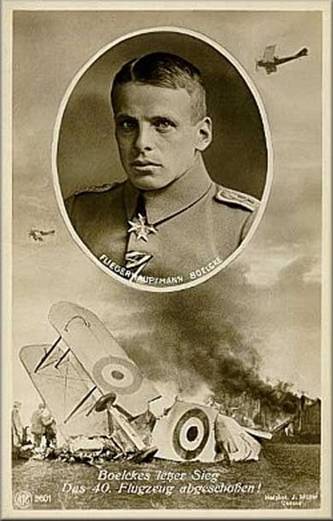 Back with another of Eugene Frandzen’s “Lives of the Aces in Pictures” from the pages of Flying Aces Magazine. The series ran for almost four years with a different Ace featured each month. This time around we have the January 1935 installment featuring the illustrated biography of Hauptmann Oswald Boelcke!
Boelcke is regarded by many as the father of air combat—he developed a series of rules known as the Dicta Boelcke that espoused fighter tactics based upon aircraft formation rather than upon the characteristics of any individual machine. By 1916 Boelcke had amassed more ‘kills’ than any other German pilot—40, many above the Verdun battlefield. And had a chest full of awards and honors. Sadly, it his death is a result of not following his own rules of engagement—which mandated never to close in on a single combatant when others are also pursuing it—as he crashed into one of his fellow ships while trying to avoid a French pilot.
“Lives of the Aces in Pictures – Part 30: Captain Frederick McCall” by Eugene Frandzen
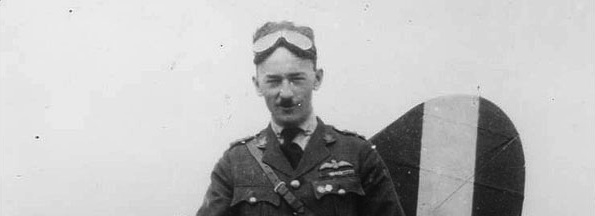
Here’s another of Eugene Frandzen’s “Lives of the Aces in Pictures” from the pages of Flying Aces Magazine. The series ran for almost four years with a different Ace featured each month. This week we have his illustrated biography from the December 1934 issue featuring that famous Canadian Ace—Captain Frederick McCall!
By the end of the great war, McCall had become Canda’s fifth most successful flying aces with 35 confirmed and two unconfirmed victories. He was awarded the Distinguished Service Order, Military Cross & Bar and the Distinguished Flying Cross!
After the war he went into civil aviation, trying his hand at Barnstorming and stunt flying as well as founding a pair of aviation companies. In 1920 he founded McCall Aero Corporation Limited which flew commercial freight and passengers and opened up regions of Canada that had previously been hard to reach. He later founded Great Western Airways in the late ’20’s once again flying cargo hither and yon. Including flying 200 quarts of nitroglycerin from Shelby, Montana to Calgary! On another occasion, he ignored all bad weather reports to fly a much needed doctor to the Skiff oil fields to treat two seriously injured workers. All the while, McCall worked to encourage the formation of Canadian flying clubs!
With the arrival of the Second World War McCall was recalled to service with the Royal Canadian Air Force as a Squadron Leader, based at numerous western Canadian bases.
McCall passed away in Calgary, Alberta on the 22nd of January 1949. He was 52.
“Lives of the Aces in Pictures – Part 29: Oberleutnant Max Immelmann” by Eugene Frandzen
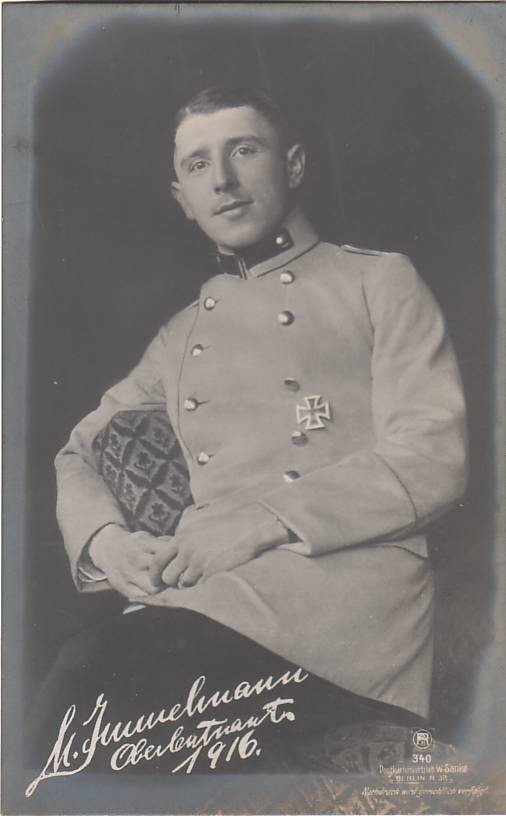 Here’s another of Eugene Frandzen’s “Lives of the Aces in Pictures” from the pages of Flying Aces Magazine. The series ran for almost four years with a different Ace featured each month. This week we have his illustrated biography from the November 1934 issue featuring Der Adler von Lille—The Eagle of Lille—Oberleutnant Max Immelmann!
Max Immelman was the first German World War I flying Ace. He was a pioneer in fighter aviation and the first aviator to win the Pour le Mérite awarded by Kaiser Wilhelm II—Prussia’s higest order of merit. His name has become synonymous with with a common flying tactic—the Immelmann turn—in which the plane performs a simultaneous loop and roll thus allowing him to dive back at a pursuing plane!
Credited with seventeen (although some would dispute this and say fifteen) kills to his name, Immelmann met his fate on the 18th of June 1916 when he was shot down by British pilot George McCubbin.
“Lives of the Aces in Pictures – Part 28: Major Andrew McKeever” by Eugene Frandzen
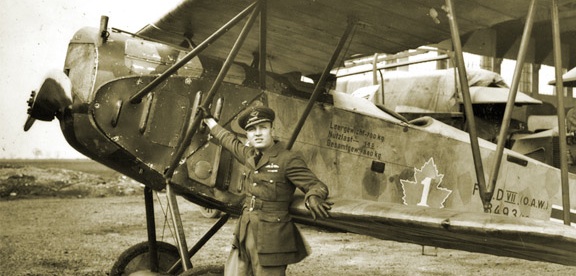 Here’s another of Eugene Frandzen’s “Lives of the Aces in Pictures” from the pages of Flying Aces Magazine. The series ran for almost four years with a different Ace featured each month. This week we have the his illustrated biography from the October 1934 issue, that famous Canadian Ace—Major Andrew McKeever!
Major Andrew Edward McKeever is the RFC/RAF’s leading two-seater fighter pilot ace scoring 31 victories with seven different gunners/observers. He was awarded a chest-full of awards—The Distinguished Service Order, Military Cross & Bar, Distinguished Flying Cross, and from France, the Croix de Guerre.
With the end of the war, McKeever accepted a job managing an airfield at Mineola, New York. Before he could start work, he was involved in an auto accident in his home town of Listowel on September 3rd, breaking his leg. Over the following weeks, complications set in—he died of cerebral thrombosis on Christmas Day, 1919.
“Lives of the Aces in Pictures – Part 26: Lt. Thomas Hitchcock, Jr.” by Eugene Frandzen
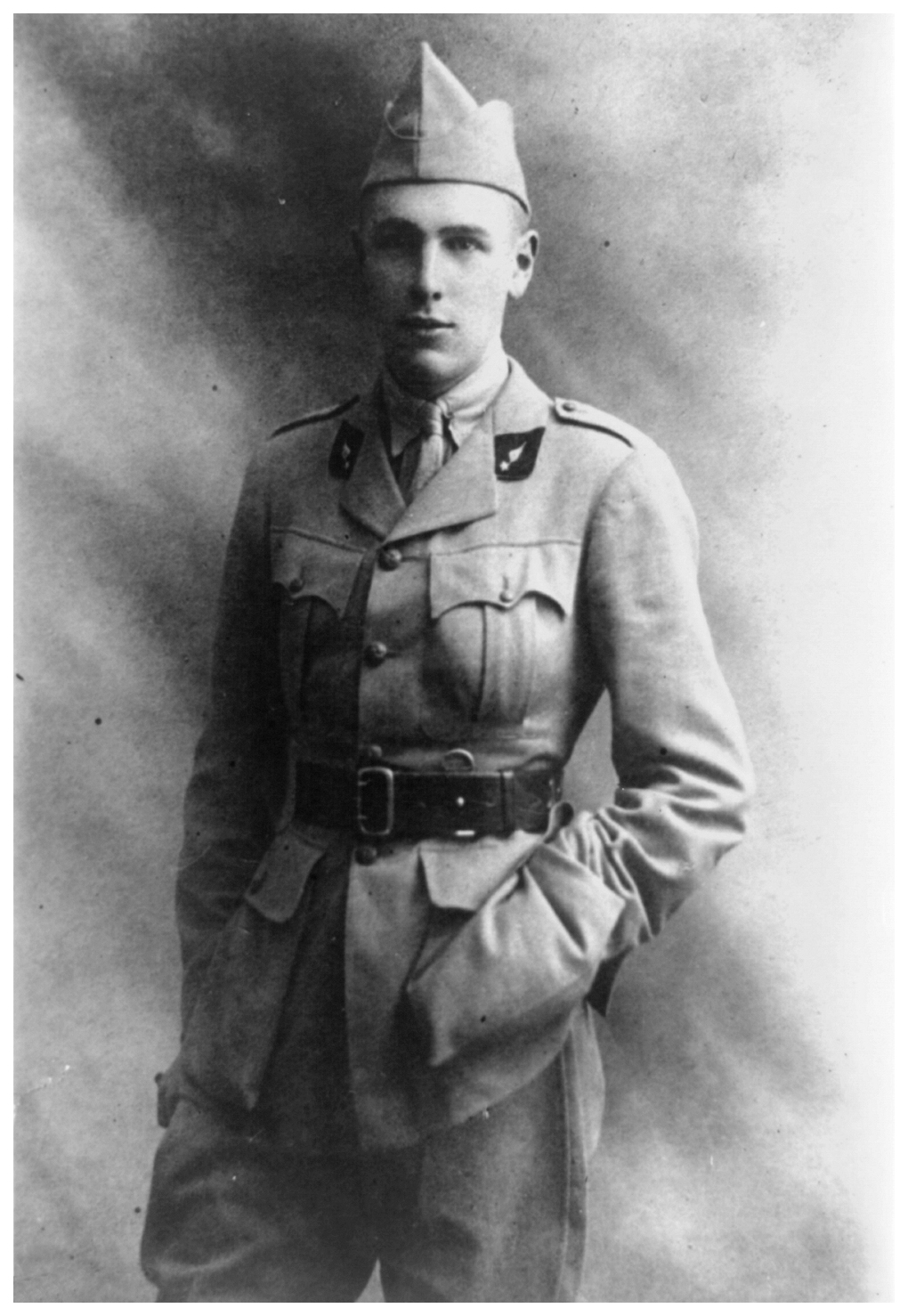 Here’s another of Eugene Frandzen’s “Lives of the Aces in Pictures” from the pages of Flying Aces Magazine. The series ran for almost four years with a different Ace featured each month. This week we have the August 1934 installment which pictorialized the life of Lt. Thomas Hitchcock, Jr., Yank flyer!!
Hitchcock, rejected by the American forces due to his age, enlisted with the Lafayette Esquadrille where he was decorated for bringing down two German flyers. Captured in March of 1918 when he fell behind enemy lines while in a tangle with three Boche planes, he managed to escape by jumping from a train near Ulm and walked 80 miles through hostil territory to reach the Swiss border.
Hitchcock was a whiz on the polo field as well as in the air—leading the U.S. team to victory in the 1921 International Polo Cup. He carried a 10-goal handicap from 1922 to 1940 and led four teams to U.S. National Open Championships. In 1990 he was inducted posthumously into the Museum of Polo and Hall of Fame.
It is said that F. Scott Fitzgerald even based two characters on Thomas in two of his novels. He turned all his virtues to vices in The Great Gatsby for the character of Tom Buchanan in 1925 and later used him as inspiration for Tommy Barban in Tender is the Night (1934).
Hitchcock served as a Lieutenant Colonel in the U.S. Army Air Forces in World War II and was assignedas an assistant air attache to the US Embassy in London. In this capacity he was instrumental in the development of the P-51 Mustang fighter plane. Sadly he lost his life while test piloting the plane near Salisbury, Wiltshire, England in 1944. He was 44.
“Lives of the Aces in Pictures – Part 24: Captain Quigley” by Eugene Frandzen
Back with another of Eugene Frandzen’s “Lives of the Aces in Pictures” from Flying Aces Magazine. The series ran for almost four years with a different Ace featured each month. This time we have the June 1934 installment which pictorialized the life of that great Canadian Ace—Captain Francis Granger Quigley!
Private Quigley enlisted in 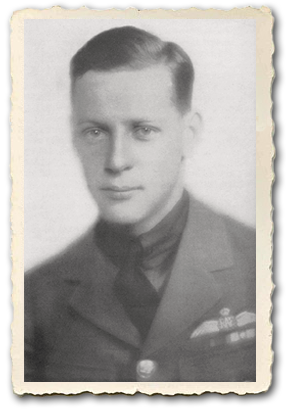 December 1914 and served with the 5th Field Company of the Canadian Army Engineers on the Western Front. He transfered to the RFC in September of 1917 where he was assigned to the 70th Squadron RFC. By this time he had made the rank of Captain and flying a Sopwith Camel, he is credited with 33 victories! He earned the Distinguished Service Order, the Military Cross and the Military Cross with Bar!
Wounded in March of 1918 when a bullet shattered his ankle, he was sent to Le Touquet Hospital to recover. He finished his convalescence in Canada where he served as an instructor at Amour Heights. Requesting a return to action in France when his ankle had heeled, Guigley came down with the influenza on the way back to England. He died in a hospital two days after his ship docked in Liverpool.
“Lives of the Aces in Pictures – Part 23: William P. Erwin” by Eugene Frandzen
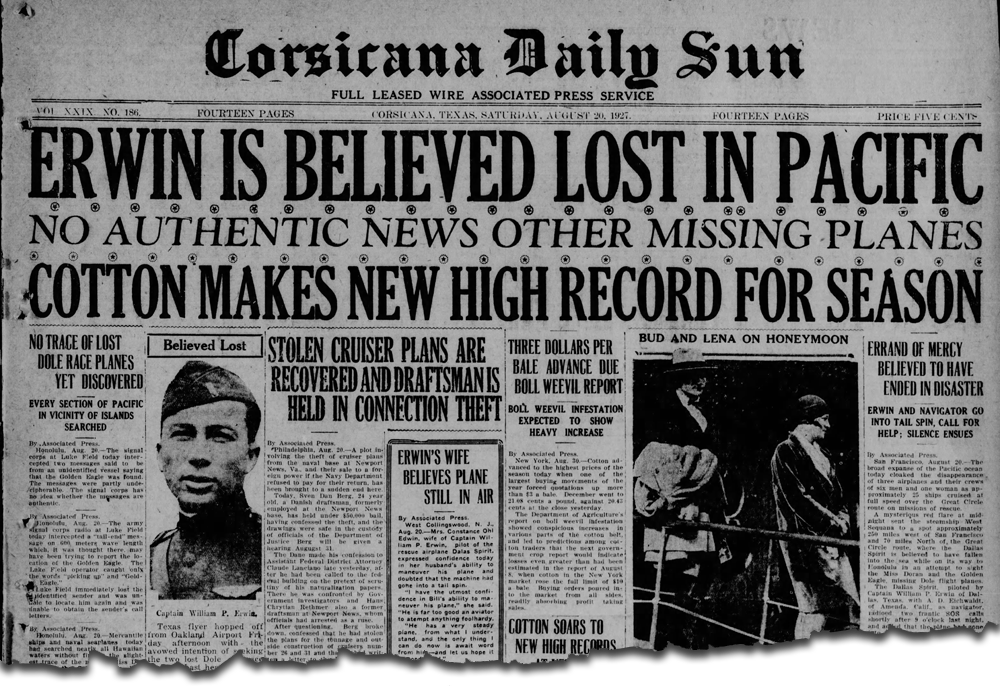
Back with another of Eugene Frandzen’s Lives of the Aces in Pictures from Flying Aces Magazine. The series ran for almost four years with a different Ace featured each month. This week it’s Lt. William Portwood Erwin, featured in the May 1934 issue.
Erwin was assigned to the 1st Observation Squadron in July of 1918. Flying Salmson 2A2s, he and his observers are credited with eight victories! He was awarded the Distinguished Service Crossfor extrodinary heroism in action in the Chateau-Thierry and St Mihiel Salients theaters. And for a dangerous infantry liaison mission at night that he had volunteered for—on his third day with the 1st Observation, he recieved the French Croix de Guerre!
He continued in aviation after the war, conducting a flying school at Love Field, Dallas.
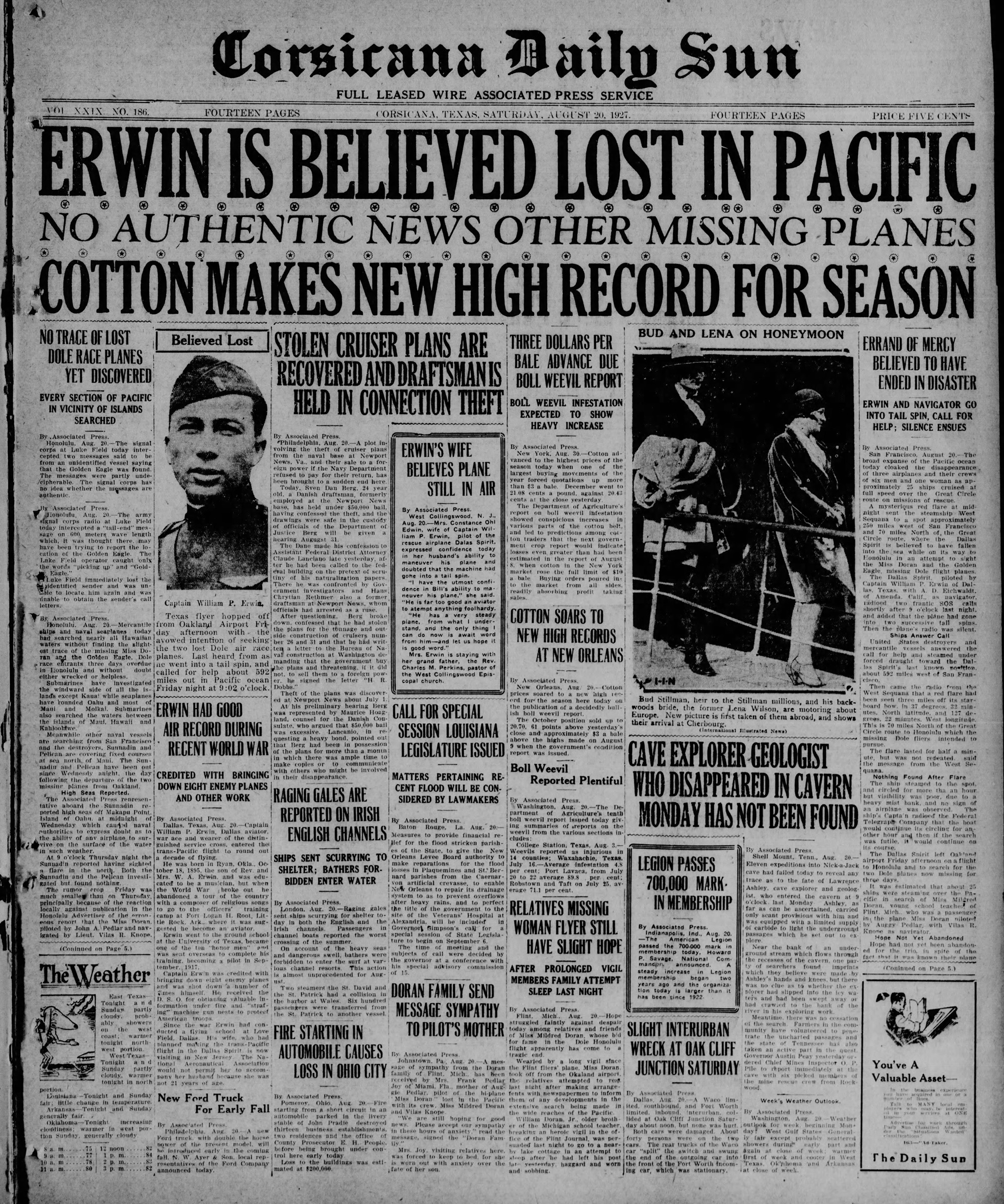
The Dole Air Race of 1927—a race from California to Hawaii. While searching for two lost air race planes and their passengers, he was last heard radio that his plane went into a tail spin and he called for help about 592 miles out in the Pacific Ocean. His plane, “Dallas Spirit” and its occupants were never found.
“Lives of the Aces in Pictures – Part 22: Major Reed G. Landis” by Eugene Frandzen
From May 1932 through March 1936, Flying Aces ran a pictorial feature illustrated by Eugene Frandzen on the ” Each month they featured a different ace from The Great War—telling his story. Very similar to Alden McWilliams’ “They Had What It Takes” which would run in the magazine after LOTAIP had run it’s course. When Flying Aces was a traditional pulp magazine size of 7×10″, it was a two page feature, but when they changed formats and went with a bedsheet size, the feature became one page.
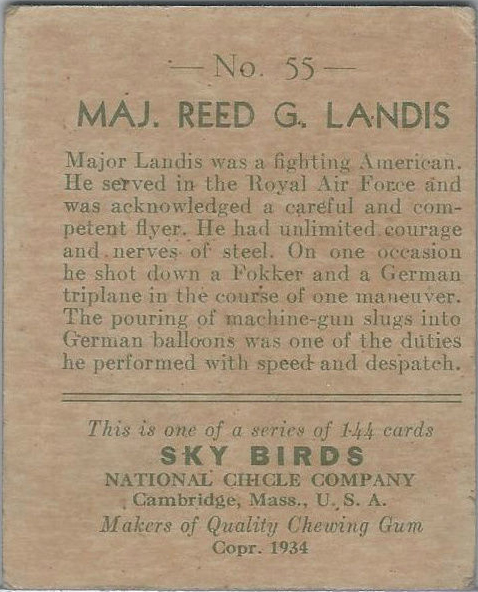
This week we have the twenty-second installment featuring the American aviation Ace, Major Reed Gresham Landis! Landis was flying with the RFC when he scored his dozen victories, all from an S.E.5. Landis was awarded the British Distinguished Flying Cross and the American Distinguished Service Cross. He would survive the war and go on to become chairman of the American Legion during the 1920’s, but returned to service in 1942 where he rose to the rank of colonel—stationed in Washington, D.C.
He passed away May 30th, 1975, aged 78 near Hot Springs, Arkansas.