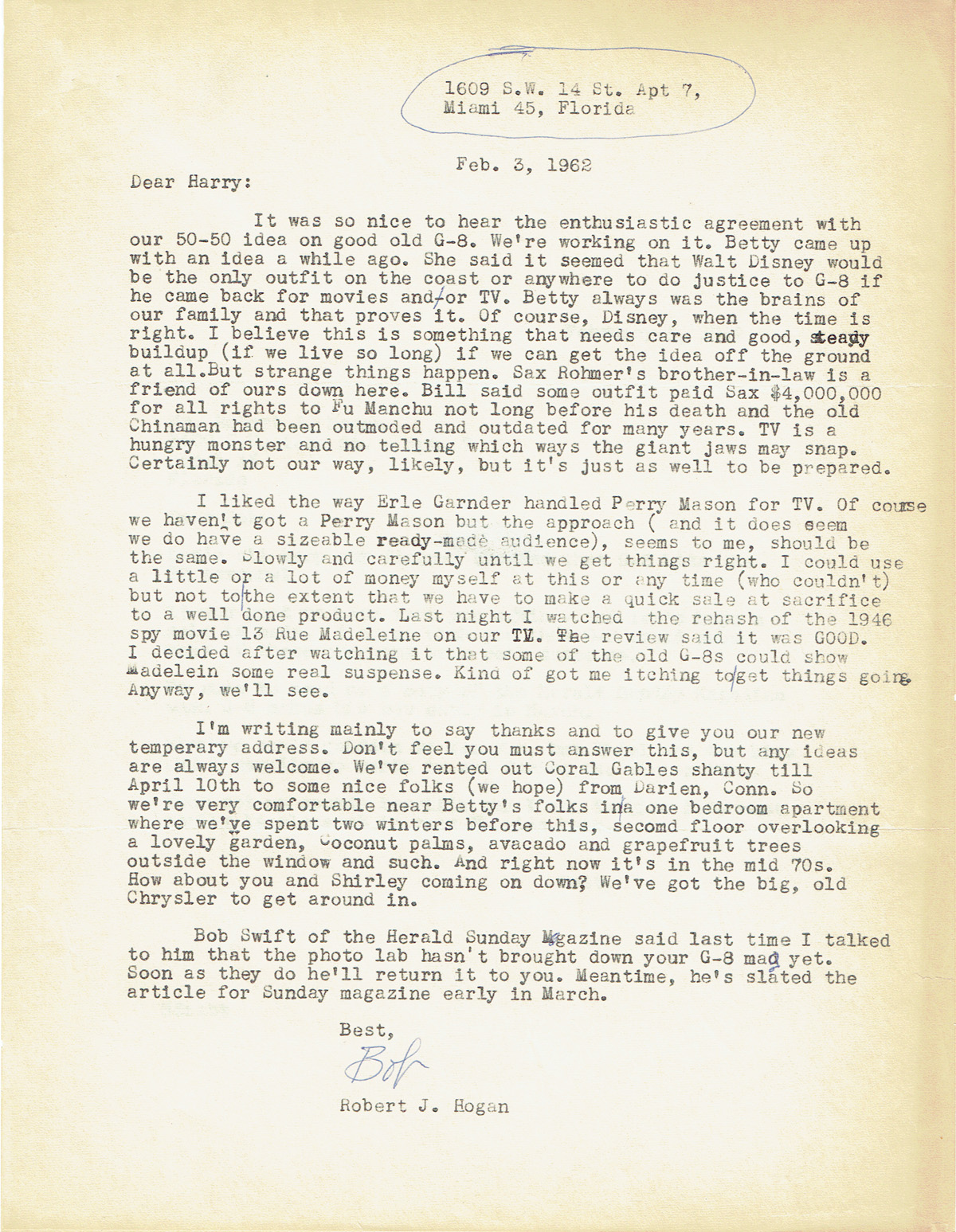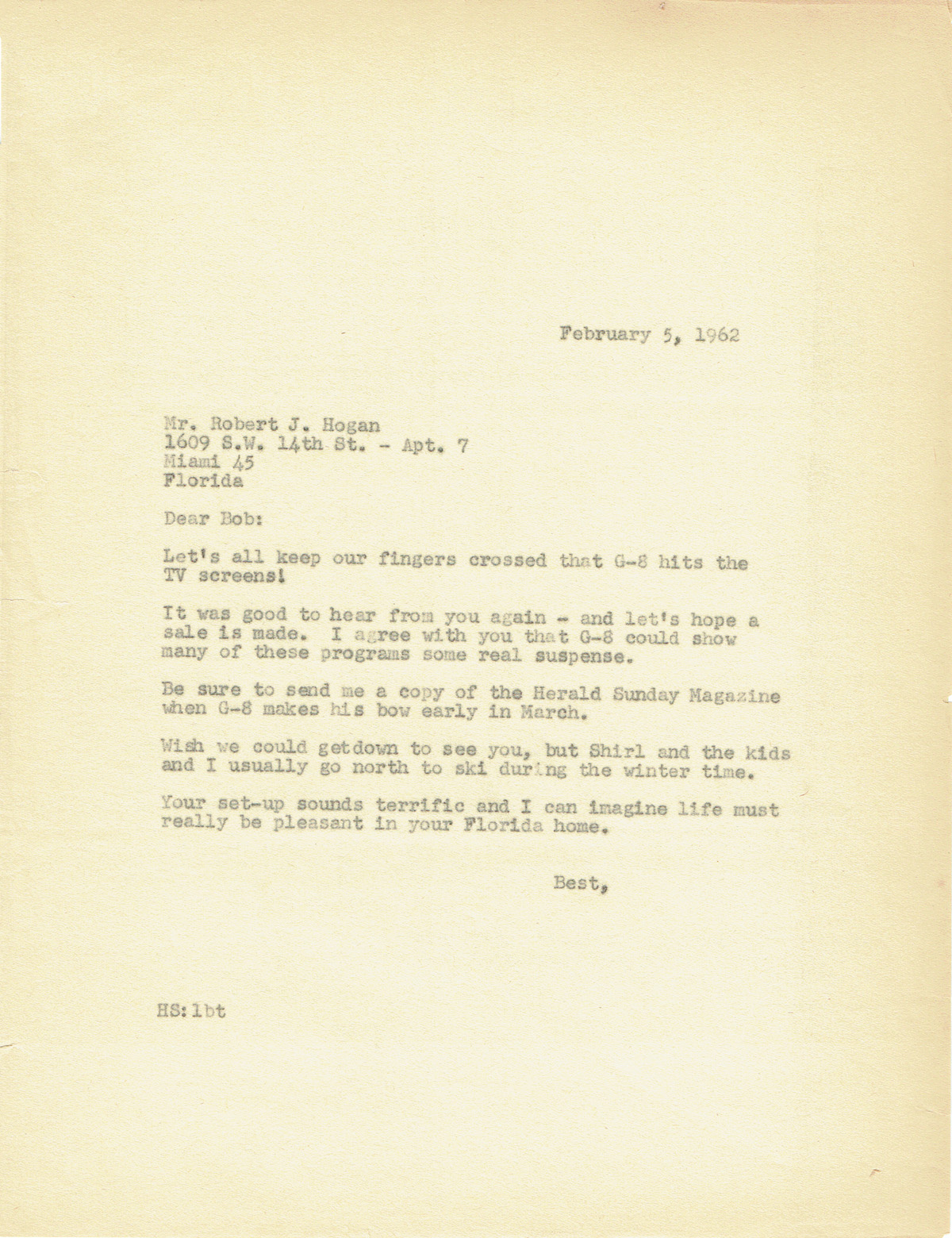




“Above the Fog” by Erle Stanley Gardner
THIS week we have 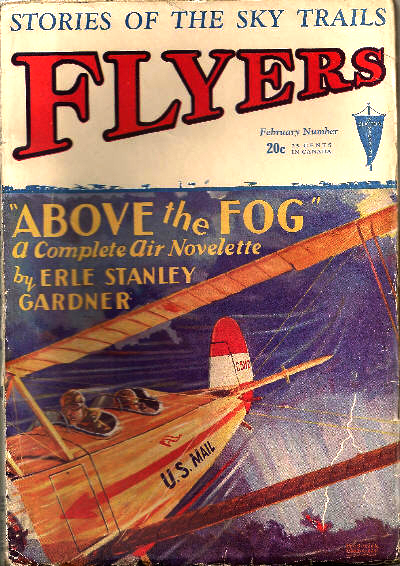 a story by the one and only Erle Stanley Gardner! Yes, the Erle Stanley Gardner. Gardner, of course, best known for his Perry Mason stories, wrote numerous other novels and shorter pieces both under his own name and a slew of pseudonyms for both books and magazines. He was also wrote numerous nonfiction books that were mostly narrations of his travels through Baja California and other regions in Mexico. According to wikipedia, Gardner was “the best-selling American author of the 20th century at the time of his death.”
When a beautiful woman drops out of the swirling mists of fog looking for directions at the Oakland airport, she accidentally leaves behind a purse whose contents may or may not be linked to at least one murder and who knows what else—and it sends Dave Flint on a mission to find the girl and return the bag—even if it means his life! From the pages of the February 1930 issue of Flyers, it’s Erle Stanley Gardner’s “Above the Fog!”
There may be no adventure left on the ground these days, but above the fog. . . .
- Download “Above the Fog” (February 1930, Flyers)
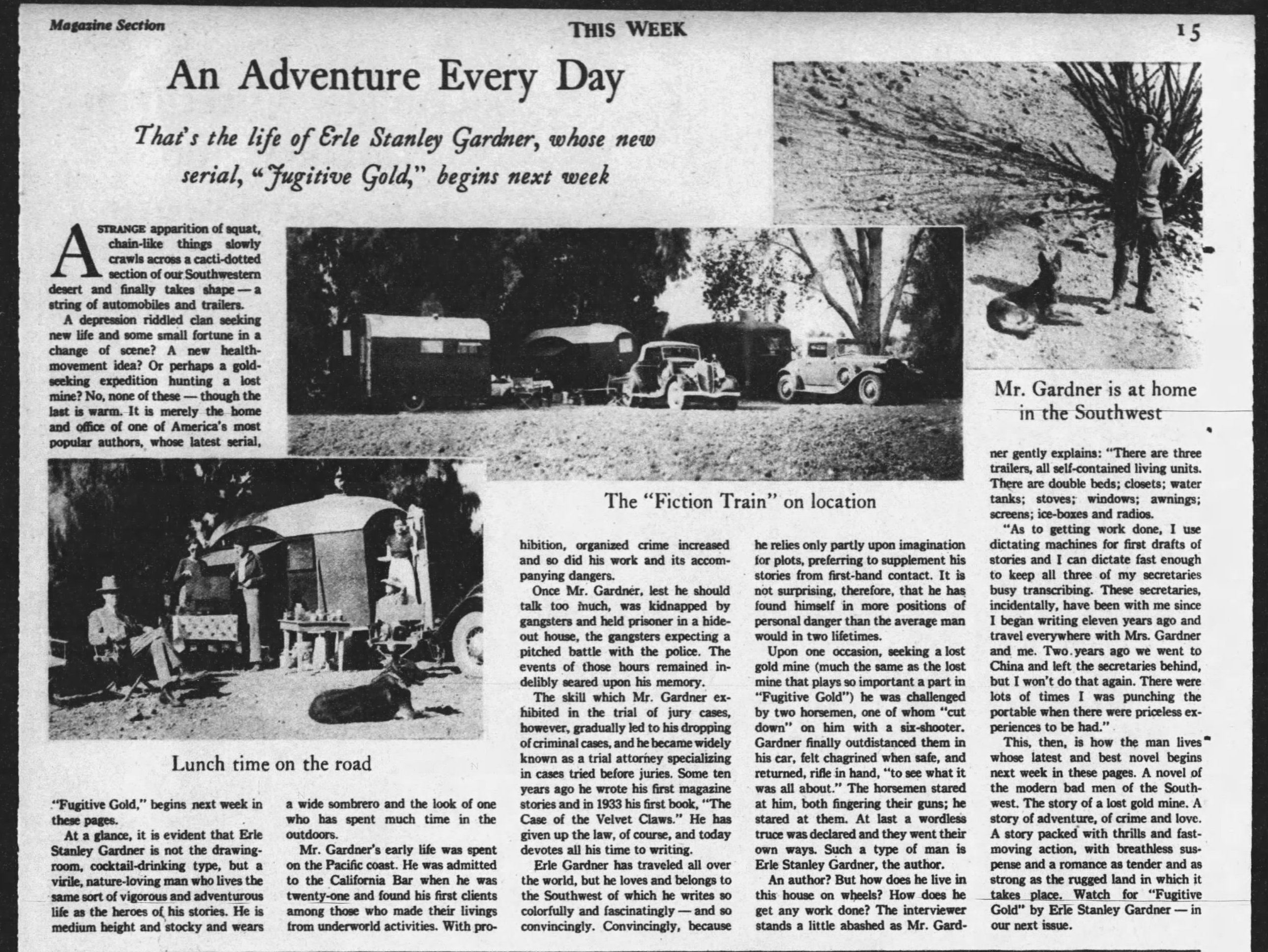
AS A bonus, here’s a brief article about Erle Stanley Gardner that appeared in the pages of the newspaper magazine This Week, the week prior to the supplement serializing his latest novel Fugitive Gold!
An Adventure Every Day
That’s the life of Erle Stanley Garner, whose new serial,
“Fugitive Gold,” begins next week
 A STRANGE apparition of squat, chain-like things slowly crawls across a cacti-dotted section of our Southwestern desert and finally takes shape—a string of automobiles and trailers.
A depression riddled clan seeking new life and some small fortune in a change of scene? A new health-movement idea? Or perhaps a gold-seeking expedition hunting a lost mine? No, none of these—though the last is warm. It is merely the home and office of one of America’s most popular authors, whose latest serial, “Fugitive Gold.” begins next week in these pages.
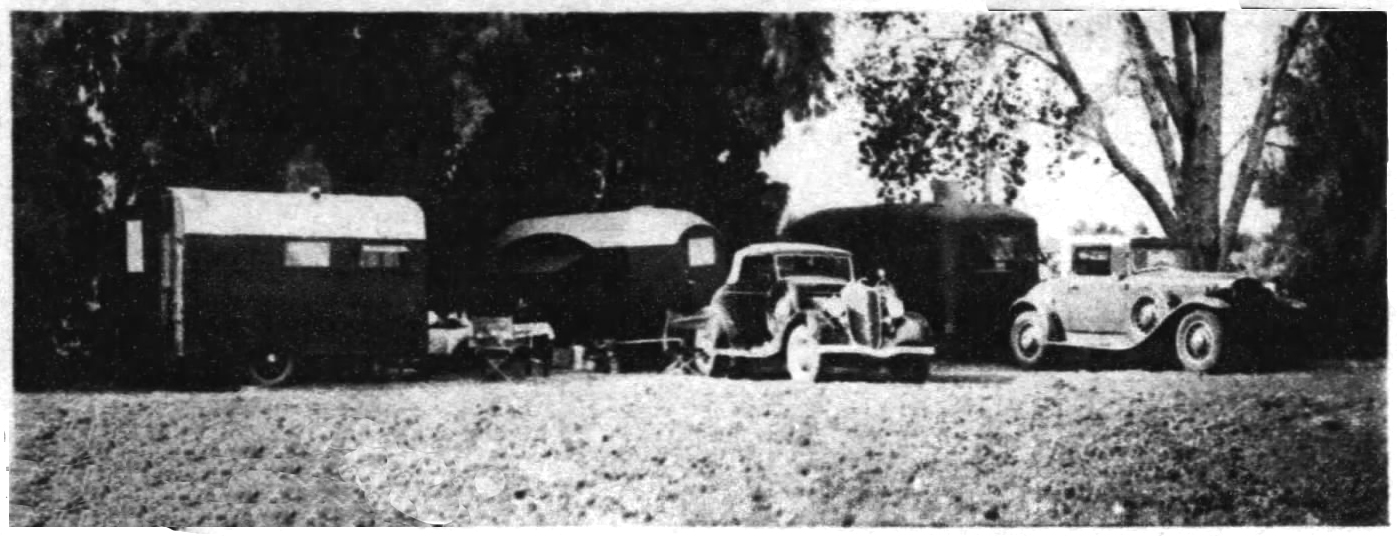
The fiction train on location.
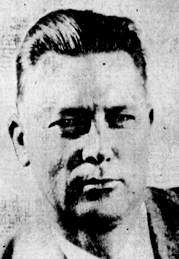
At a glance, it is evident that Erle Stanley Gardner is not the drawing-room, cocktail-drinking type, but a virile, nature-loving man who lives the same sort of vigorous and adventurous life as the heroes of his stories. He is medium height and stocky and wears a wide sombrero and the look of one who has spent much time in the outdoors.
Mr. Gardner’s early life was spent on the Pacific coast. He was admitted to the California Bar when he was twenty-one and found his first clients among those who made their livings from underworld activities. With prohibition, organised crime increased and so did his work and its accompanying dangers.
Once Mr. Gardner, lest he should talk too much, was kidnapped by gangsters and held prisoner in a hideout house, the gangsters expecting a pitched battle with the police. The events of those hours remained indelibly seared upon his memory.
The skill which Mr. Gardner exhibited in the trial of jury cases, however, gradually led to his dropping of criminal cases, and he became widely known as a trial attorney specializing in cases tried before juries. Some ten years ago he wrote his first magazine stories and in 1933 his first book, “The Case of the Velvet Claws.” He has given up the law, of course, and today devotes all his time to writing.
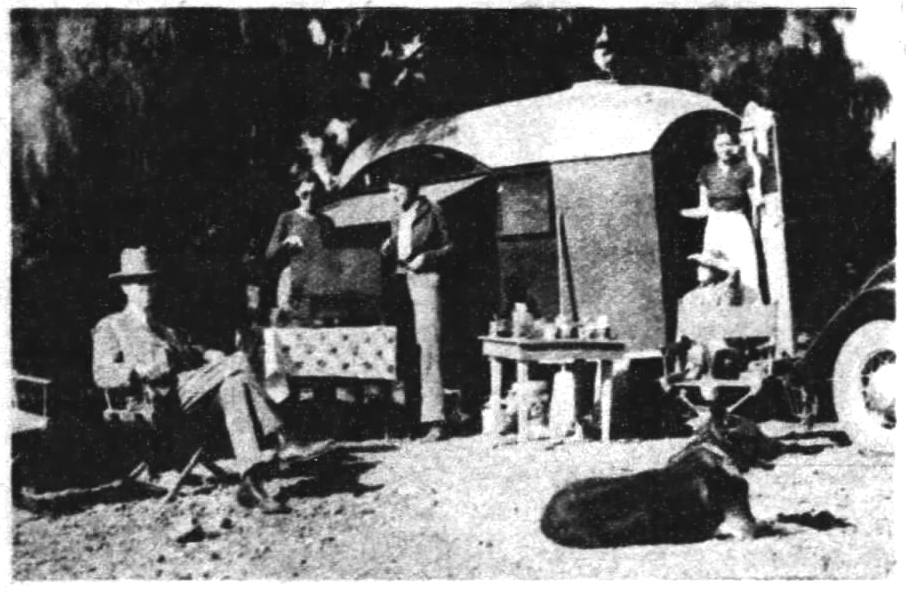
Lunch time on the road.
Erle Gardner has traveled all over the world, but he loves and belongs to the Southwest of which be writes so colorfully and fascinatingly—and so convincingly. Convincingly, because he relies only partly upon imagination for plots, preferring to supplement his stories from first-hand contact. It is not surprising, therefore, that he has found himself in more positions of personal danger than the average man would in two lifetimes.
Upon one occasion, seeking a lost gold mine (much the same as the lost mine that plays so important a part in “Fugitive Gold”) he was challenged by two horsemen, one of whom “cut down” on him with a six-shooter. Gardner finally outdistanced them in his car, felt chagrined when safe, and returned, rifle in hand, “to see what it was all about.” The horsemen stared at him, both fingering their guns; he stared at them. At last a wordless truce was declared and they went their own ways. Such a type of man is Erle Stanley Gardner, the author.
An author? But how does he live in this house on wheels? How does he get any work done? The interviewer stands a little abashed as Mr. Gardner gently explains: “There are three trailers, all self-contained living units. There are double beds; closets; water tanks; stoves; windows; awnings; screens; ice-boxes and radios.
“As to getting work done, I use dictating machines for first drafts of stories and I can dictate fast enough to keep all three of my secretaries busy transcribing. These secretaries, incidentally, have been with me since I began writing eleven years ago and travel everywhere with Mrs. Gardner and me. Two years ago we went to China and left the secretaries behind, but I won’t do that again. There were lots of times I was punching the portable when there were priceless experiences to be had.”
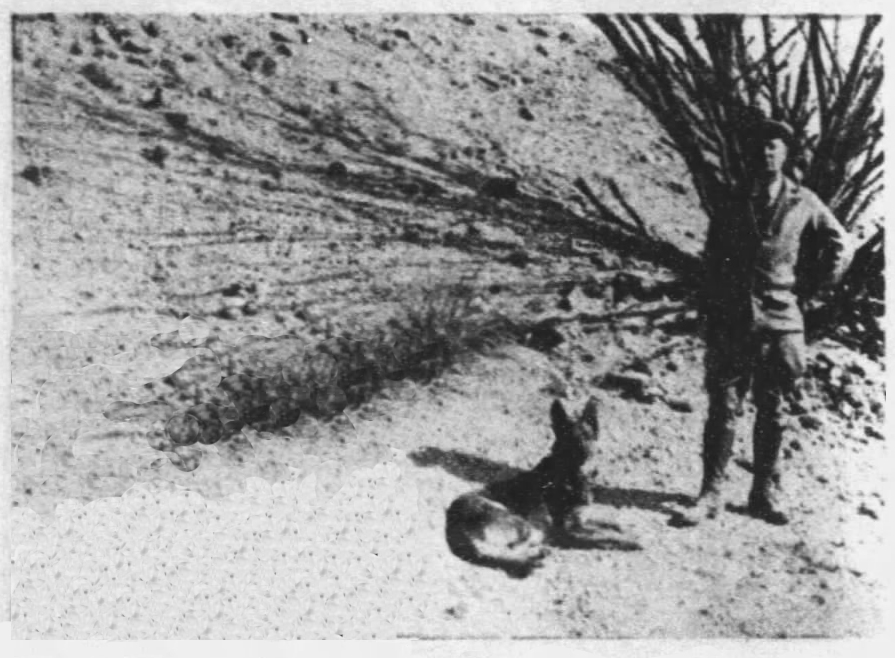
Mr. Gardner is at home in the Southwest.
This, then, is how the man lives whose latest and best novel begins next week in these pages. A novel of the modern bad men of the Southwest. The story of a lost gold mine. A story of adventure, of crime and love. A story packed with thrills and fast-moving action, with breathless suspense and a romance as tender and as strong as the rugged land in which it takes place. Watch for “Fugitive Gold” by Erie Stanley Gardner—in our next issue.
- Download “An Adventure Every Day” (May 19, 1935, This Week)