YOUNG Ralph Oppenhiem was a curious and inventive boy who was educated in various public and private schools. The most unique school he attended was, without a doubt, the Old Orchard School in Leonia, New Jersey.
The Old Orchard School was a day and boarding school for little boys and girls between the ages of four and eight. Run from 1912 to 1925, there were never more than twelve children enrolled at any one time. The children were given every opportunity to develop all their capacities to the fullest extent possible. Special attention was paid to health, music, dancing, handicrafts and the care of pets with regular school work systematically pursued as the child was ready for it.
While at play or in the process of daily living, those habits that are always valuable in life were stressed—concentration, construction, self-reliance, helpfulness, thrift, forming right judgments, organizing a democratic society, and the like were engendered in an atmosphere of a well-organized home, where each child could pursue his own interests, or where all could pull together to achieve some communal task.
The school was run by Anna G. Noyes out of her own home. Anna had been raising and educating her own boy Leonard since birth—what had started out with Anna keeping track of young Leonards health and aspect every minute of every day since birth in an effort raise a healthy boy—the results published in a book, “How I Kept My Baby Well” (Warwick & York, Inc. 1913)—had become something more as Leonard got older and was in need of constructive and systematic training.
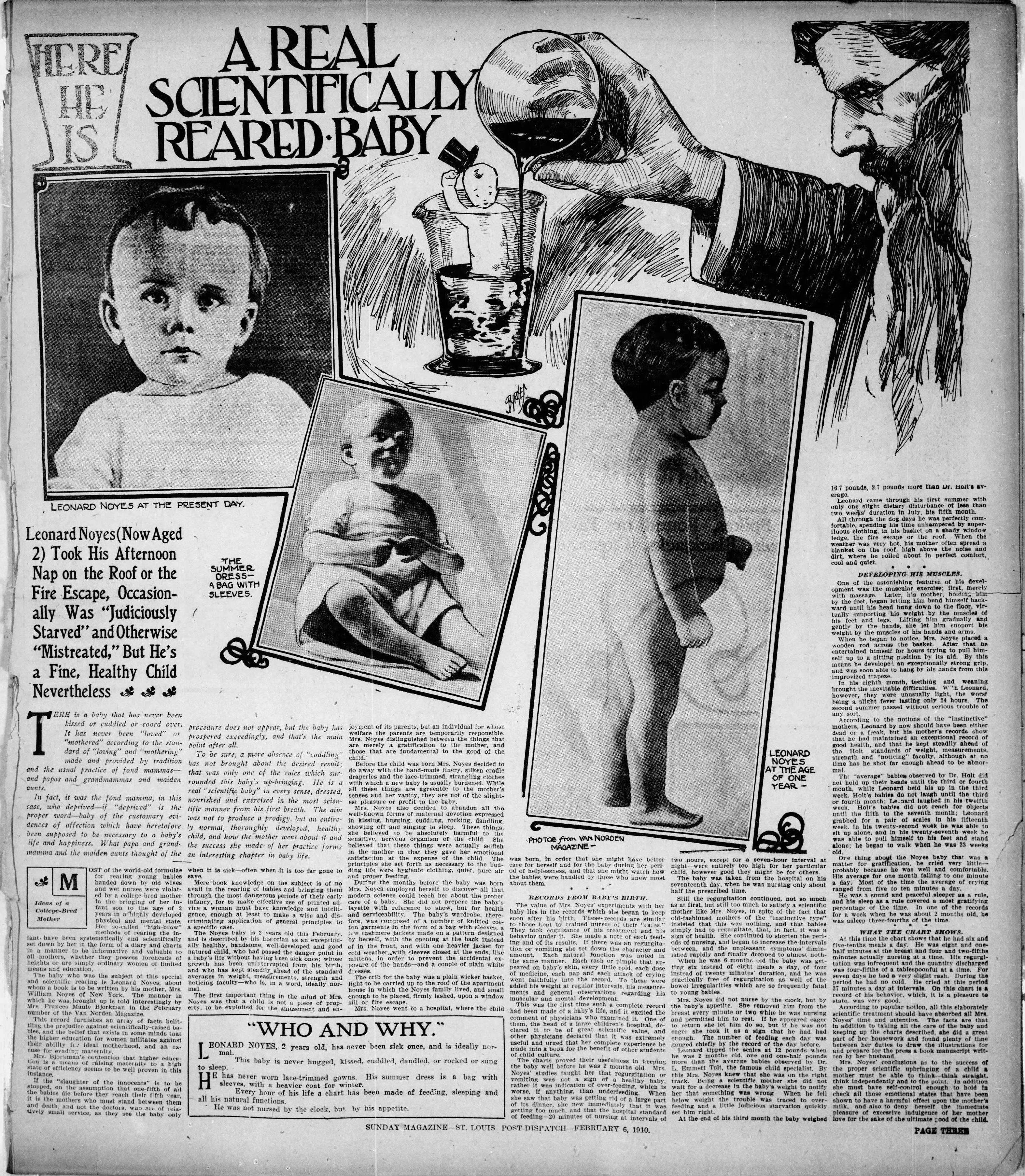
HERE HE IS! An article about Leonard, age 2, The Scientifically Raised Child. From the St. Louis Post Dispatch’s Sunday magazine. February 6th, 1910.
She was determined that her son would not be handicapped by the environment of the city so Anna, the boy, and her husband William Noyes, a professor at Columbia University, took up residence in Leonia on the New Jersey side of the Palisades, and continued educating young Leonard in a scientific way.
Since young Leonard is an only child, Mrs. Noyes formed a little school with a few children from the neighborhood, for she says that no child should be brought up alone, as It makes for selfishness.
“I intend,” she said, “to have three other children come and live with me and then get ten more to attend my school in the garden and in this porch room. That will give Leonard the proper association, for no child should be In the continual company exclusively of adults.”
Mrs. Noyes says that it is an era of Individualism, and that it should start at the very beginning of life.
“Public schools keep a child’s mind back to the level of the dullest scholar in the class, and that’s why we left New York, where my boy would have been in a class of forty-six children and in a school where the windows and doors had to be closed in order that the street traffic would not interfere with the teacher hearing their lessons.
“We are only just beginning to understand the necessity of the individually and specially trained child, and until it becomes generally understood and adopted we may continue with the mediocre minded and have the education problems which have been with us in the past.”
During the summer and at gardening time Mrs. Noyes takes the children out of doors and teaches them the values of color and of size through the practical methods of making them pick the peas, beans and other garden truck.
“Children,” she says, “are too soon put In an abstract world, and the only way to make the child mind fully comprehend and grasp things is in the physical way. A child can much sooner know shades of reds through watching cherries or berries grow ripe than through placing before him blocks of various colors. Every act of childhood can be made pleasant and agreeable and at the same time serve a useful, practical purpose.”
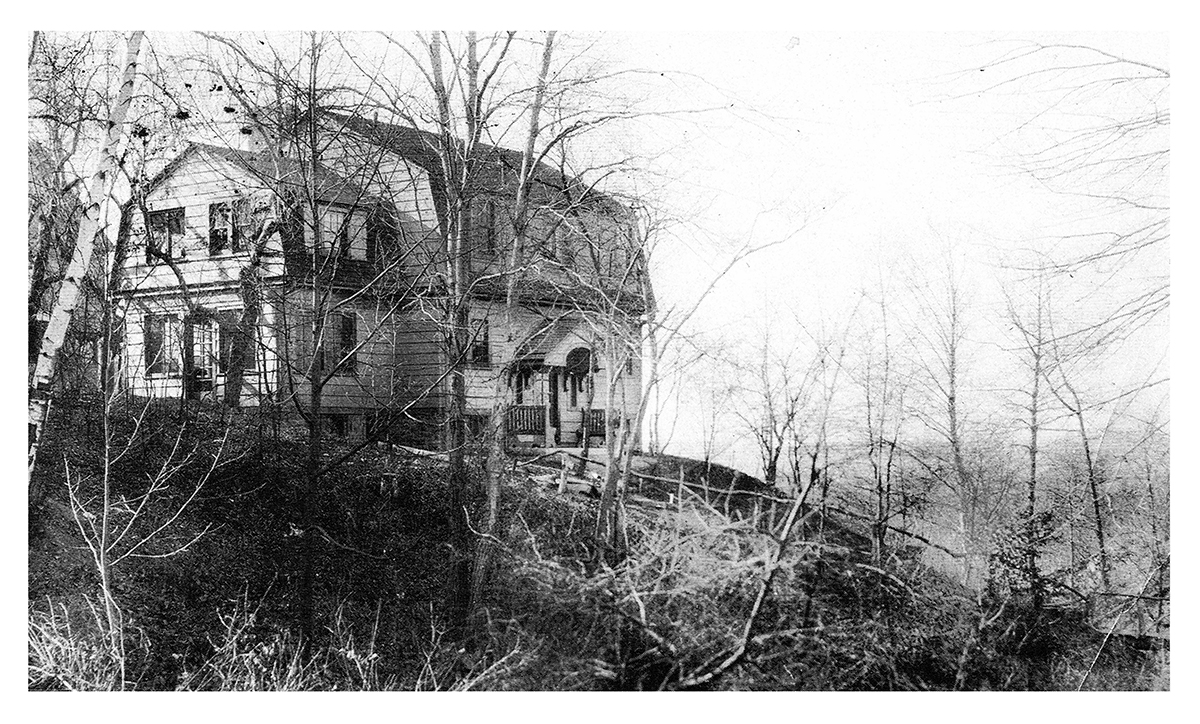
THE OLD ORCHARD SCHOOL, 223 Leonia Avenue. From 1912 to 1925, Anna G. Noyes operated an exclusive day school for city children out of her Leonia home, which overlooked the Hillside Avenue brook.
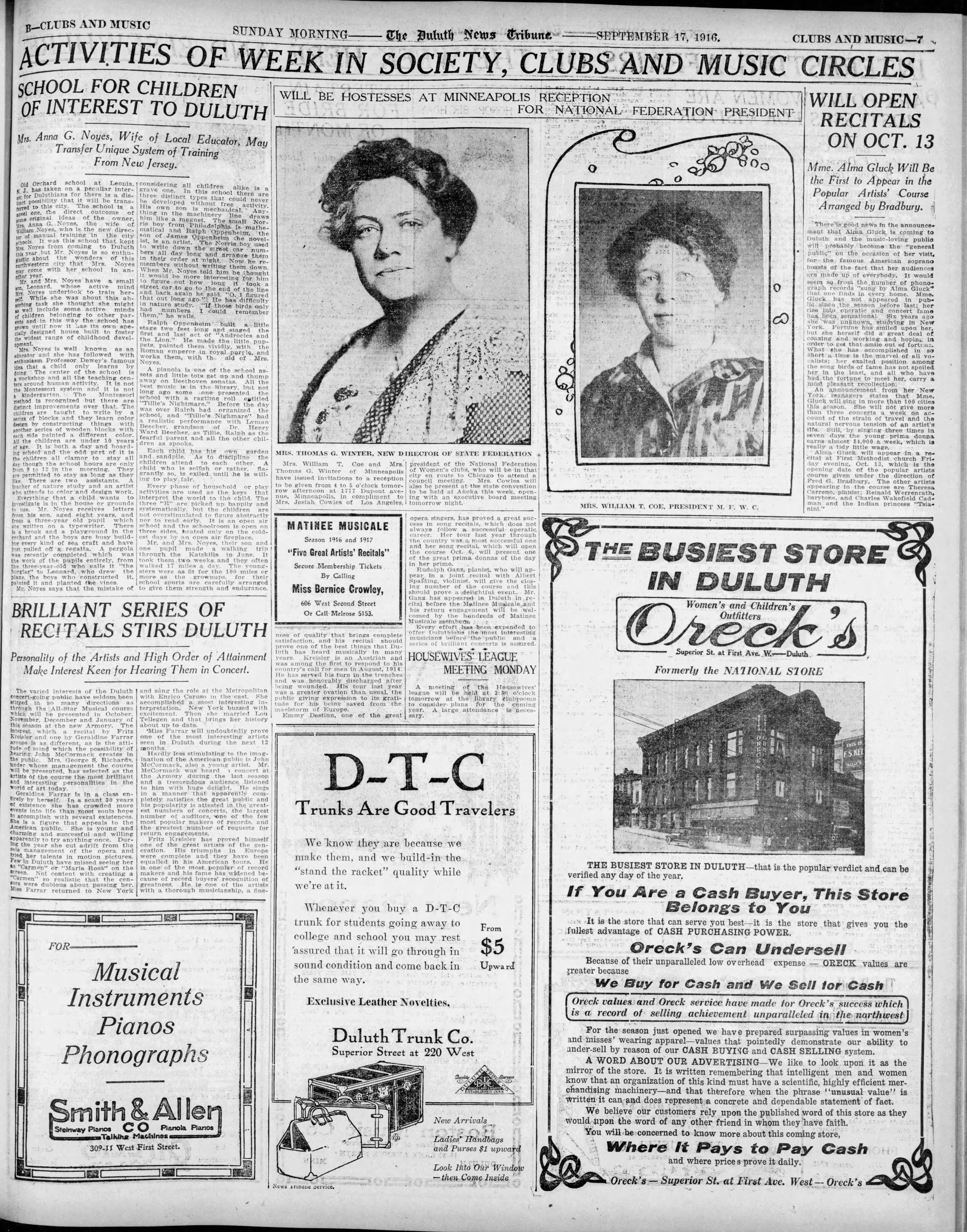
Ralph Oppenheim attended the Old Orchard School as a boy. Living in New York at the time, he boarded at the school from roughly 1914 to 1916 or ‘17. in fact, he’s even mentioned in an article about the school that ran in the Duluth News Tribune in 1916 doing what else—putting on a puppet show!
SCHOOL FOR CHILDREN OF INTEREST TO DULUTH
Mrs. Anna G. Noyes Wife of Local Educator, May Transfer Unique System of Training From New Jersey.
The Duluth News Tribune, Duluth, MN • 17 September 1916 • p.7
Old Orchard school at Leonia N.J. has taken on a peculiar interest for Duluthians for there is a distinct possibility that it will be transferred to this city. The school is a novel one, the direct outcome of some original ideas of the owner. Mrs. Anna G. Noyes, the wife of William Noyes, who is the new director of manual training in the city schools. It was this school that kept Mrs. Noyes from coming to Duluth this year but Mr. Noyes is so enthusiasitic about the wonders of this northwestern city that Mrs. Noyes may come with her school In another year.
Mr. and Mrs. Noyes have a small son, Leonard, whose active mind Mrs. Noyes undertook to train herself. While she was about this absorbing task she thought she might as well Include some active minds of children belonging to other parents and in this way the school has grown until now it has its own specially designed house built to foster the widest range of childhood development.
Mrs. Noyes is well known as 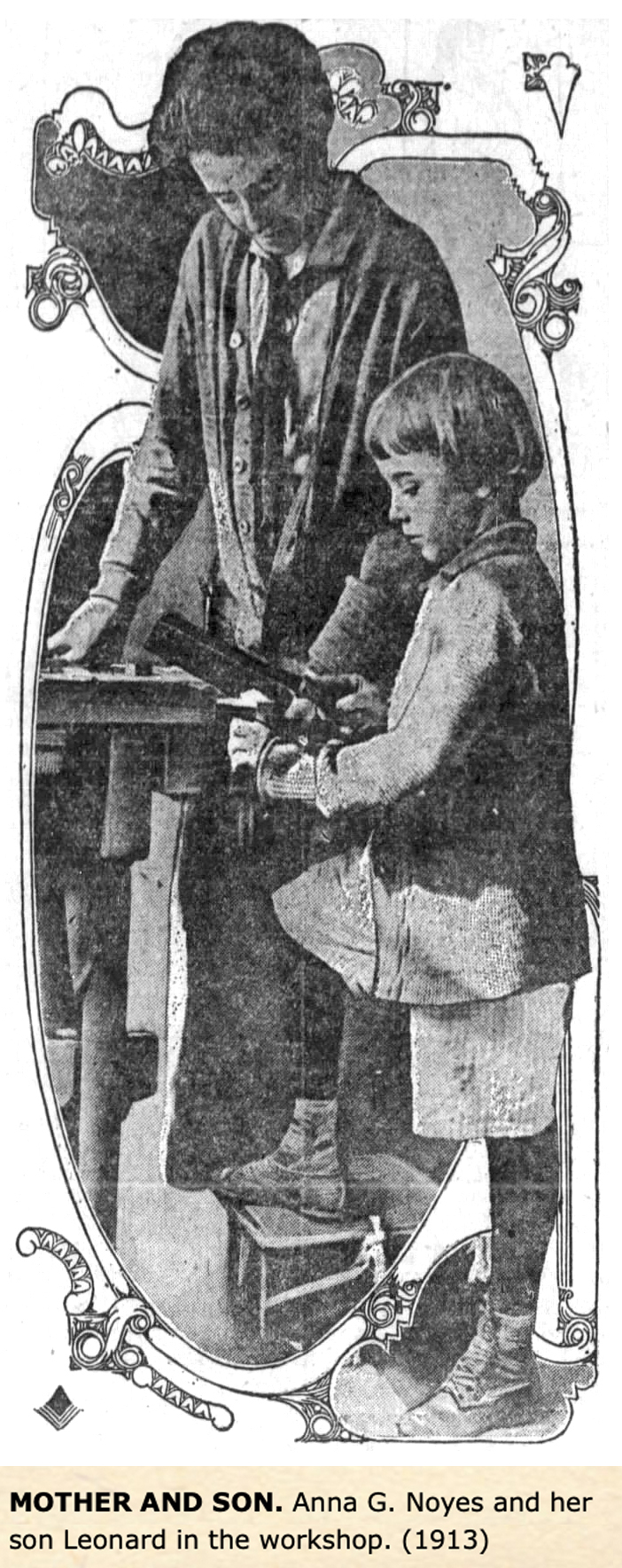 an educator and she has followed with enthusiasm Professor Dewey’s famous Idea that a child only learns by doing. The center of the school is a workshop and all the teaching centers around human activity. It is not the Montessori system and it is not a kindergarten. The Montessori method is recognized but there are distinct improvements over that. The children are taught to write by a series of blocks and they learn color design by constructing things with another series of wooden blocks with each side painted a different color. All the children are under 10 years of age. It is both a day and boarding school and the odd part of it is the children all clamor to stay all day though the school hours are only from 9 to 12 in the morning. They are permitted to stay as long as they like. There are two assistants. A teacher of nature study and an artist who attends to color and design work.
Everything that a child wants to investigate is in the house or grounds to use. Mr. Noyes receives letters from his son. aged eight years, and from a three-year old pupil which are written on a typewriter. There is a brook and a playground in the orchard and the boys are busy building every kind of sea craft and have just pulled off a regatta. A pergola was recently completed which was the work of the pupils entirely, from the three-year-old who calls it “the burglar” to Leonard, who drew the plans, the boys who constructed it, painted it and planted the vines.
Mr. Noyes says that the mistake of considering all children alike is a grave one. In this school there are three distinct types that could never be developed without free activity. His own son is mechanical. Anything in the machinery line draws him like a magnet. The small Noris boy from Philadelphia is mathematical and Ralph Oppenheim, the son of James Oppenheim the novelist, is an artist. The Norris boy used to write down the street car numbers all day long and arrange them inter order at night. Now he remembers without writing them down. When Mr. Noyes told him he thought it would be more interesting for him to figure out how long it took a street car to go to the end of the line and back again he said. “O, I figured that out long ago.” He has difficulty in nature study. “If those birds only had numbers I could remember them,” he wails.
Ralph Oppenheim built a little stage two feet long and staged the first and last act of “Androcles and the Lion.” He made the little puppets, painted them vividly, with the Roman emperor in royal purple, and works them, with the aid of Mrs. Noyes.
A pianola is one of the school assets and little tots get up and thump away on Beethoven sonatas. All the best music is in the library, but not long ago some one presented the school with a ragtime roll entitled “Tillie’s Nightmare.” Before the day was over Ralph had organized the school, and ‘’Tillie’s Nightmare” had a realistic performance with Lyman Beecher, grandson of Dr. Henry Ward Beecher, as Tillie. Ralph as the fearful parent and all the other children as spooks.
Each child has his own garden and sandpile. As to discipline the children attend to each other. A child who is selfish or rather, flagrantly so, is exiled until he is willing to play fair.
Every phase of household or play activities are used as the keys that interpret the world to the child. The three “R” are picked up happily and systematically, but the children are not overstimulated to figure abstractly nor to read early. It is an open air school and the schoolroom is open on three sides, heated only on the coldest days by an open air fireplace.
Mr. and Mrs. Noyes, their son and one pupil made a walking trip through the Katskllls in June. It took them two weeks and they often walked 17 miles a day. The youngsters were as fit for the 100 miles or more as the grownups. for their school sports are carefully arranged to give them strength and endurance.
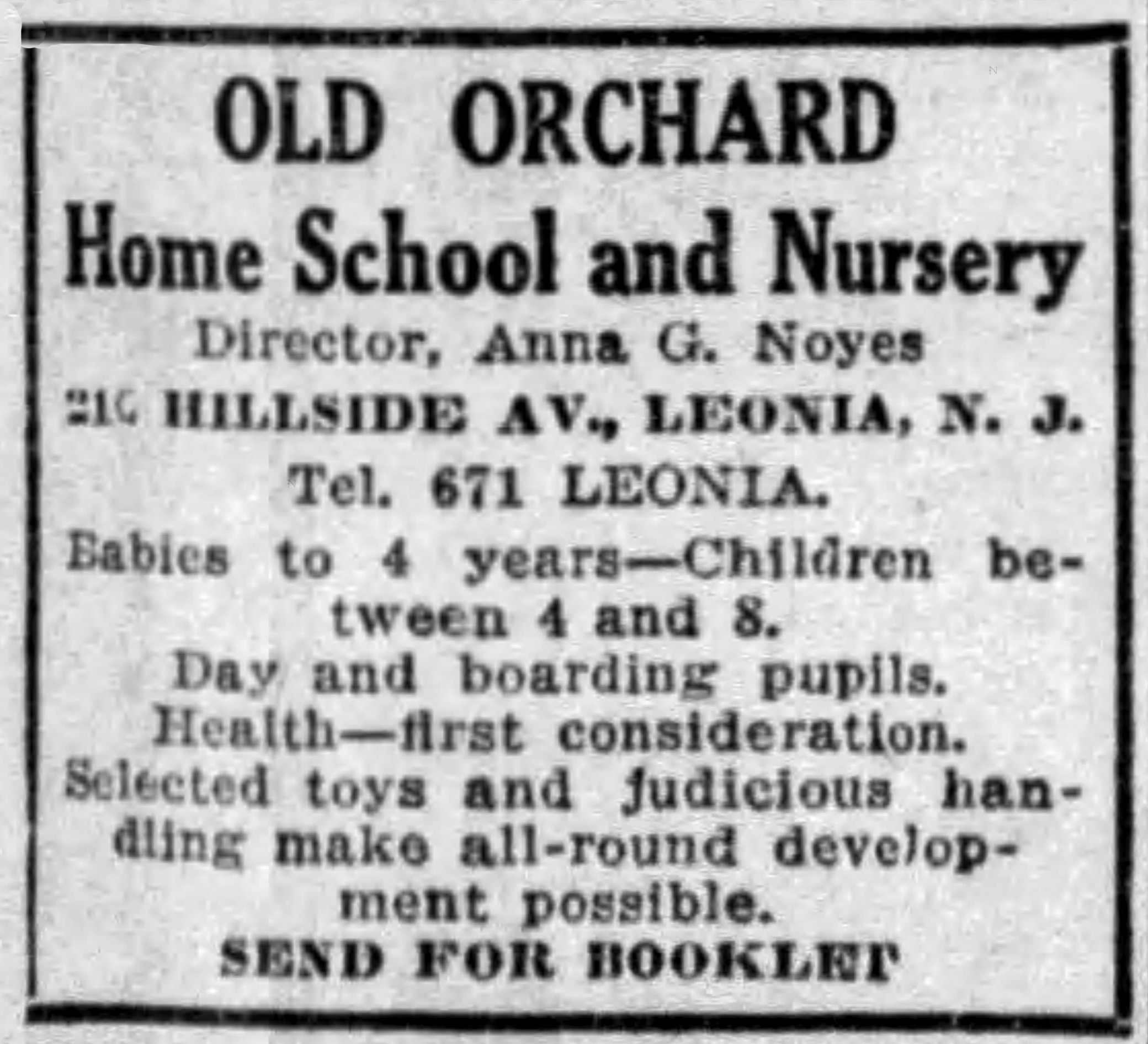
AD FOR THE SCHOOL run in the Hackensack Evening Record November 25th, 1921.





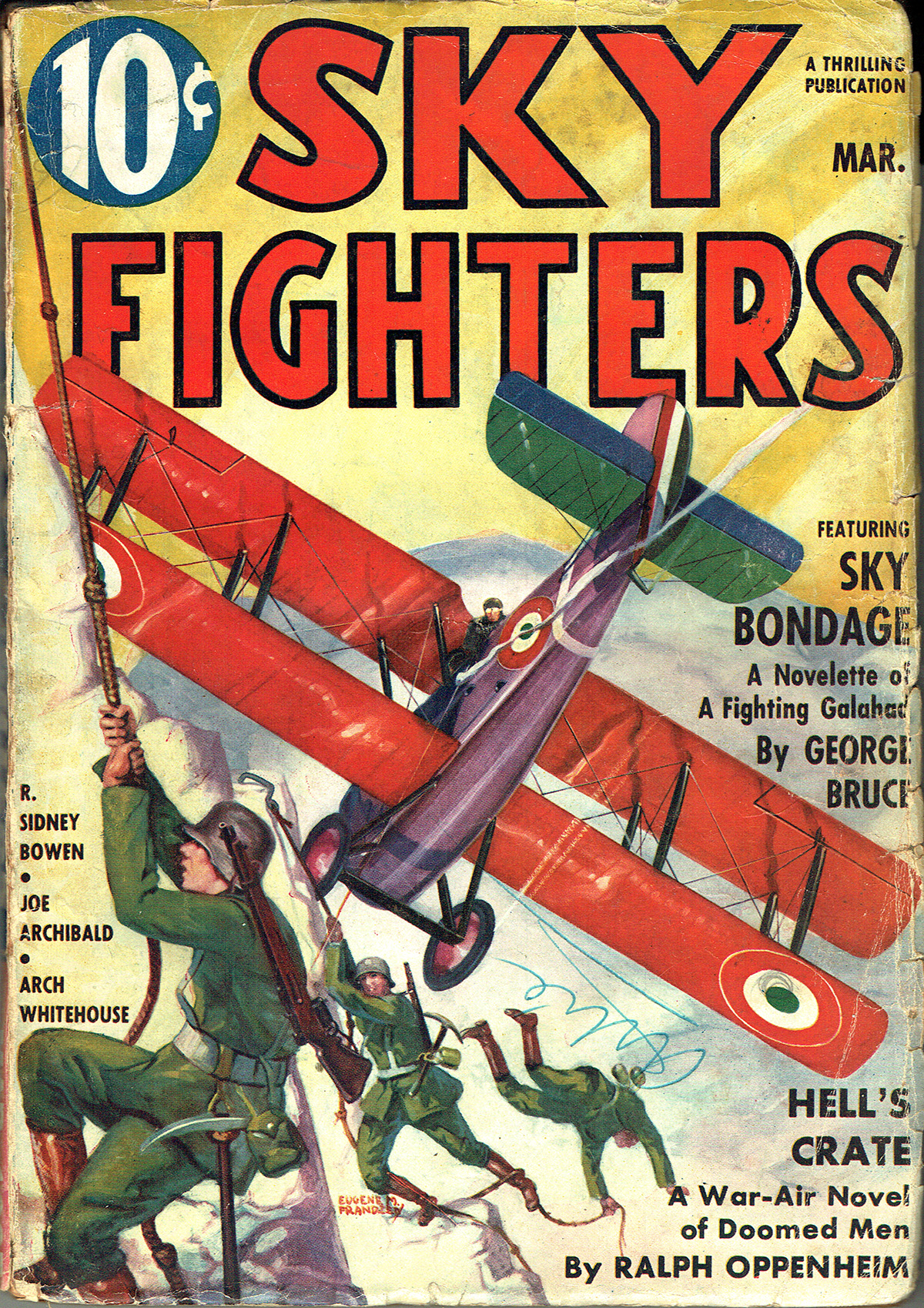 Mosquito Month we have a non-Mosquitoes story from the pen of Ralph Oppenheim. In the mid thirties, Oppenheim wrote a half dozen stories for Sky Fighters featuring Lt. “Streak” Davis. Davis—ace and hellion of the 25th United States Pursuit Squadron—was a fighter, and the speed with which he hurled his plane to the attack, straight and true as an arrow, had won him his soubriquet.
 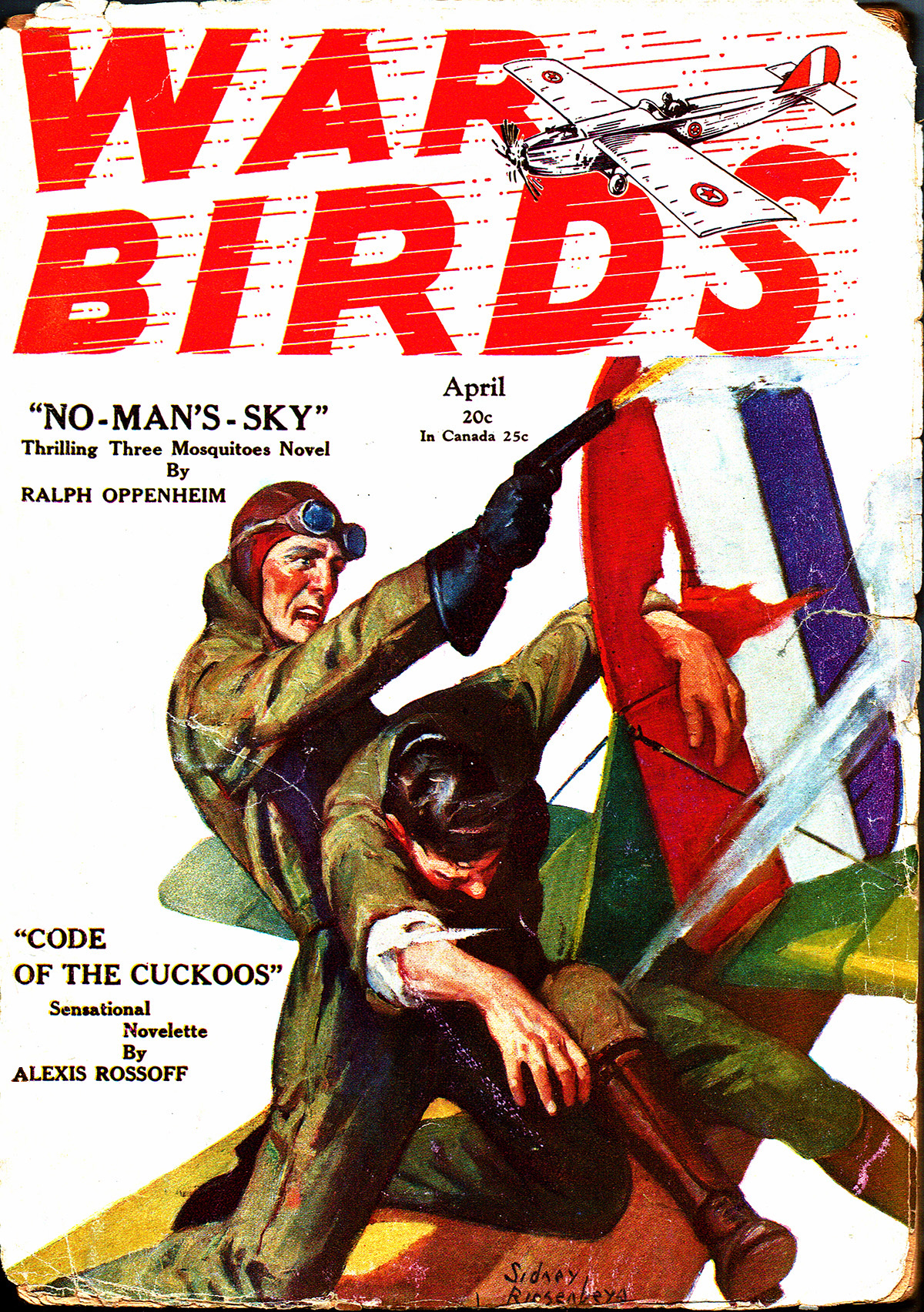 get things off the ground with Oppenheim’s very first Three Mosquitoes tale from the pages of War Stories from July 1927! This premier tale finds the inseparable trio separated following a stunting attack on the front line trenches that resulted in Carn and Travis going down behind enemy lines and captured and an humiliated Kirby being sent down to ferrying new ships to their assigned fields. Mindless, boring work for the beaten Ace—his instructions are to avoid all altercations and steer far clear of any action what so ever. Especially since the plane he’s flying and those of the other ferried ships have no guns! But that doesn’t stop Kirby when he sees the Block brothers sniffing around the very secluded forrest the Allies are amassing troops and supplies—he tries to find a way to stop them from getting that information back across the lines without the benefit of guns!
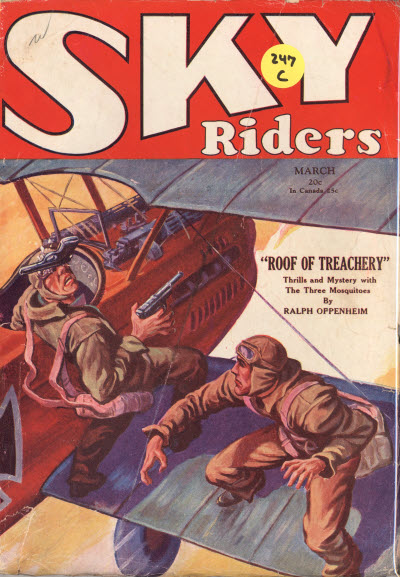 the second of three Three Mosquitoes stories we’re presenting this month. This week it’s “Roof of Treachery” from the March 1930 issue of Sky Riders. The city of Remiens could not be taken. It is continuously ranged and shelled and whole battalions of crops are sent in to take it, but they all die in the undertaking. Pilots are sent over during these skirmishes, but they never return. The Brass turn to The Three Mosquitoes to try to find the secret behind Remiens’ invulnerability just hours before a great push is set to take the town. Can they discover it’s deadly secret in time?
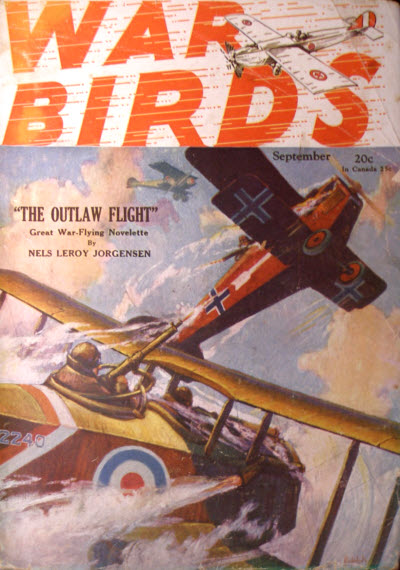 the first of three Three Mosquitoes stories we’re presenting to celebrate Ralph Oppenheim’s inseparable Trio this month. To get the ball rolling, it’s “Crashing Through” from the pages of the September 1928 War Birds in which Kirby is tasked with delivering a much needed load of ammunition to a rag tag group of troops valiantly trying hold a ridge until reinforcements arrive!