



“Sky Fighters, January 1934″ by Eugene M. Frandzen
Eugene M. Frandzen painted the covers of Sky Fighters from its first issue in 1932 until he moved on from the pulps in 1939. At this point in the run, the covers were about the planes featured on the cover more than the story depicted. On the January 1934 cover, It’s a battle of the Allied piloted Sopwith Camels against the German Albatross DVs!
The Ships on the Cover
THE SHIPS on this  month’s cover are the Sopwith Camel and the Albatross D.V. Both were outstanding in their class during the World War.
The Sopwith Camel was a single-seater tractor biplane which had such fine fighting qualities that the pilots of the Royal Air Force gave this ship credit for the successful end of the war in the air. Many of the best known British aces flew Camels at some time in their careers.
A Tricky Little Scout
Collishaw alone brought down over twenty enemy aircraft in this ship out of his sixty confirmed victories. Barker flew a Camel over the Alps at the head of a British squadron which utterly routed the Austrian air forces. Many American squadrons were equipped with Sop Camels. George Vaughn and Elliott White Springs ran up their victories in them. Despite the effectual qualities this little scout possessed, it had plenty of tricks. It was the doom of many novices, but in the hands of an experienced pilot its trickiness could be turned to an advantage.

It had a tendency to rotate the plane instead of the propeller. However, there wasn’t a ship at the front which could out-maneuver it below ten thousand feet. At that height it made 113 m.p.h. It was equipped with a Clerget motor of 130 h.p. The maximum height was 9 feet, length 18 feet 9 inches and the span 28 feet. It could climb to 10,000 feet in twelve minutes.
Two Albatross D-5’s pitted against two Sopwith Camels is a fight in which either side may win. Much depends on the pilot.
An Exciting Fight
In the fight pictured on this month’s cover the Albatross scouts are in a bad way. One is a smoker trying vainly to shed the persistent Camel on his tail. The other has his guns blazing down at an enemy machine-gun nest. The broadside he is receiving from the Camel barging in from his side is dangerously close. Theoretically those two Albatross’ should have the bulge on the slower Camels. But the Boche ships are heavier, harder to jerk around. Those little Camels have been flashing in and out, lashing the Germans with Vickers slugs; completing a dangerous maneuver and being set for another before the foe could get organized.

Family Tree of the Albatross
The Albatross D-5 brought to the front in 1918 had a long line of ancestors. The beginning of its family tree was in the dim past—the days of the “Taube” school of airplane design in 1911. From those Taube-like types of monoplanes through the slow moving biplanes of early war days, mostly two-seaters, to the trim ship on the cover was a big jump. The Albatross scout of 1915 had a speed of 80 m.p.h. with its Mercedes 130 h.p. engine. The Albatross D-5 pushed along at from 135 to 140 m.p.h. without any trouble at all. Its Mercedes motor was stepped up to 220 h.p. by that time.
When any of these husky German ships were attacked the Allied aviators treated them with plenty of respect.
Sky Fighters, January 1934 by Eugene M. Frandzen
(The Ships on The Cover Page)
Next time, Mr. Frandzen features the Hanriot 3 C.2 and the giant L70 Class Zeppelin!
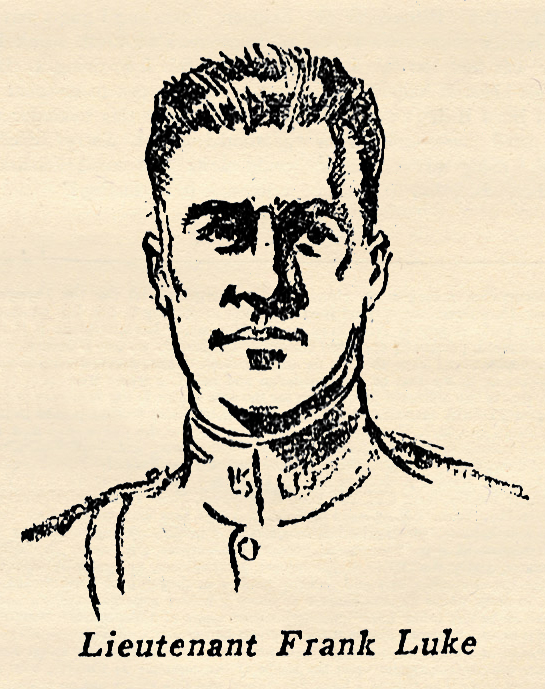 much the name means to those few who knew how he fought and died. His front line career was short, hectic and dynamic. He blazed across the war-torn skies of France like a flaming meteor. Very few people ever heard of Luke during his short but Sensational career on the Western Front. His fame and name came after he died. He is recognized now as the most courageous, the most audacious war bird that ever handled a control stick and pressed the Bowden triggers mounted on it. Only Eddie Rickenbacker topped him in the final list of American Aces after the War was ended. Rickenbacker was officially credited with 26 victories. Frank Luke had 21. But the comparison is hardly fair to Luke, for Rickenbacker was on the front for almost six months, while Luke’s front line career lasted only a little over two weeks. Even in that short space of time he had worked up to the top and was the American Ace of Aces when he died. There is no telling what, score he would have run up, if fortune had been more in his favor. The story below he told to Sergeant John Monroe, who was a favorite of his.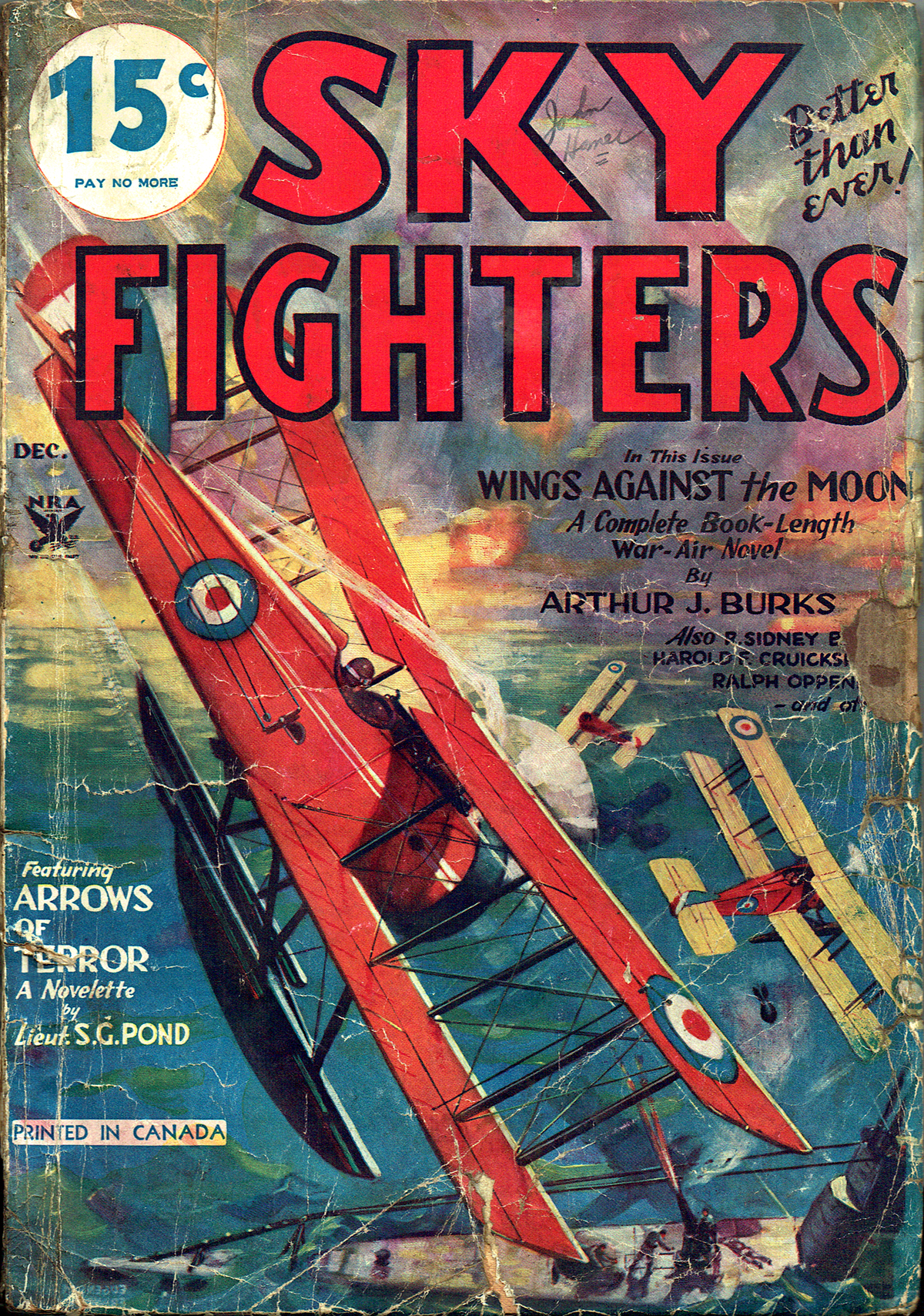
 another of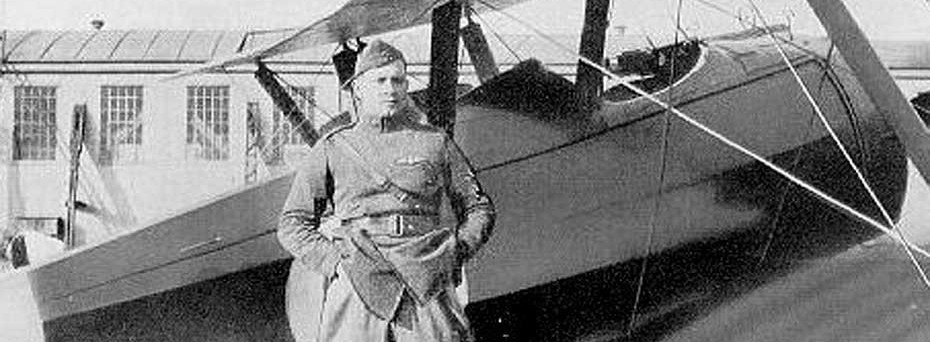
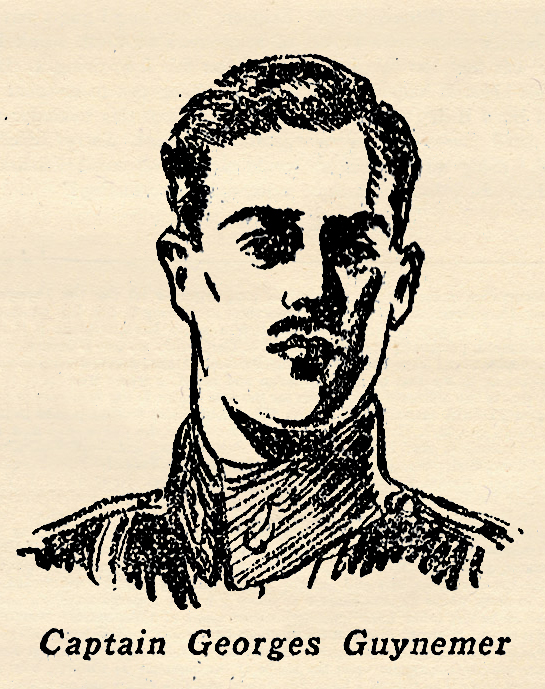 French flier, was the moat spectacular and colorful of all the flying Aces. Young, tall, slender, but in very poor physical health, he was a veritable demon in the air, He had absolutely no regard for his own personal safety. Time after time be attacked single-handed whole squadrons of enemy planes. On the ground he was shy, reserved, and spoke very few words to anyone. Whenever he came to Paris on his very infrequent leaves from the front to secure medical aid, the whole city was decorated in festive attire in his honor. He was the toast of the boulevards, the darling of the French populace. And the whole world mourned his passing when he died, shot down by a comparatively obscure German pilot, who got in a chance shot from exceedingly long range. The German pilot, Wisseman, never knew until afterward that it was the great Guynemer that he had shot down. When Guynemer passed mysteriously into the blue, he was officially credited with 57 enemy aircraft and universally recognized as the Ace of Aces of all the armies.

